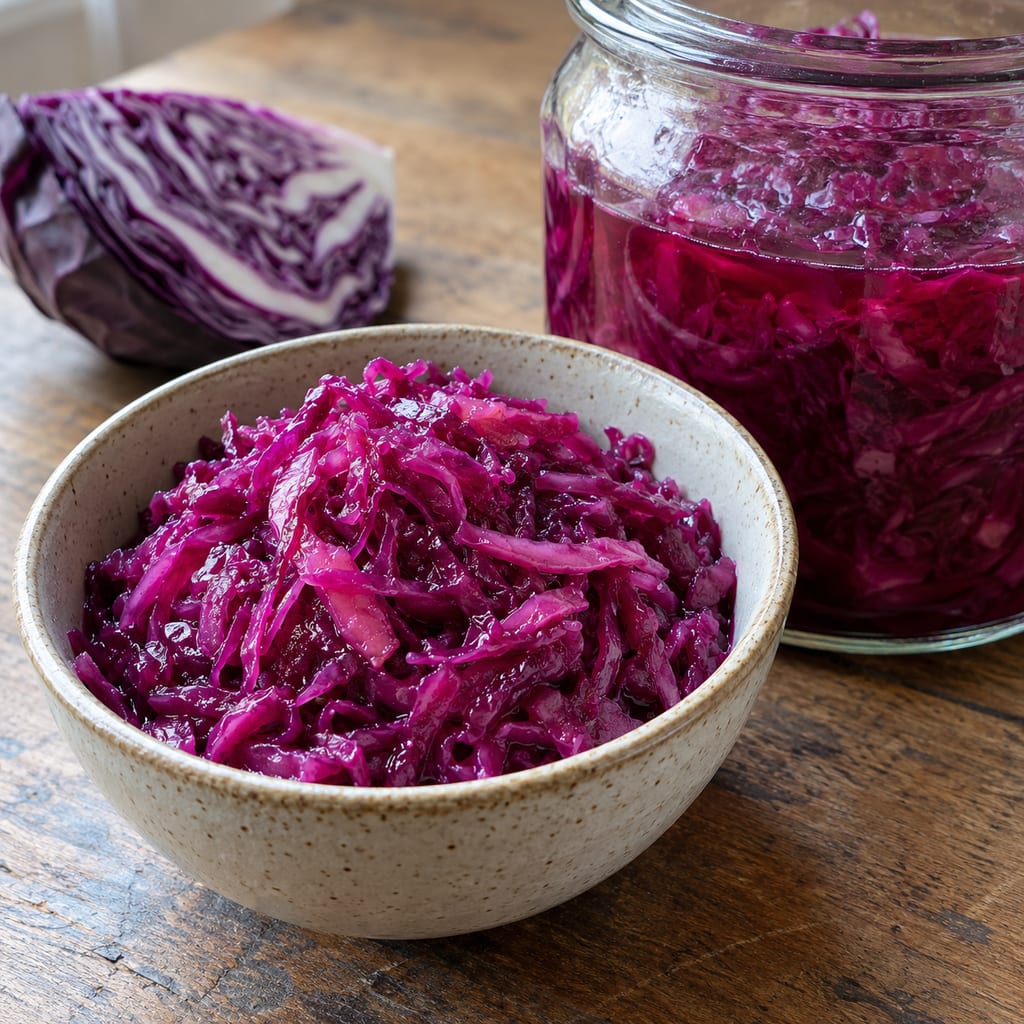
Red cabbage sauerkraut
Red cabbage shredded, salted and fermented in its own brine; the pigment gives a deep violet kraut with a sharper flavour than the white-cabbage form.
 FermenteaWhere food goes to change
Equipment · Jars, pots and crocks
Gärtopf · water-channel crock · Gärtopf mit Wasserrinne · zelňák · nádoba na kvašení zelí
A movable stoneware sauerkraut crock with a fitted lid, ceramic weights and a water-filled rim channel. German sources call it a Gärtopf; Czech sources document the related zelňák or nádoba na kvašení zelí.
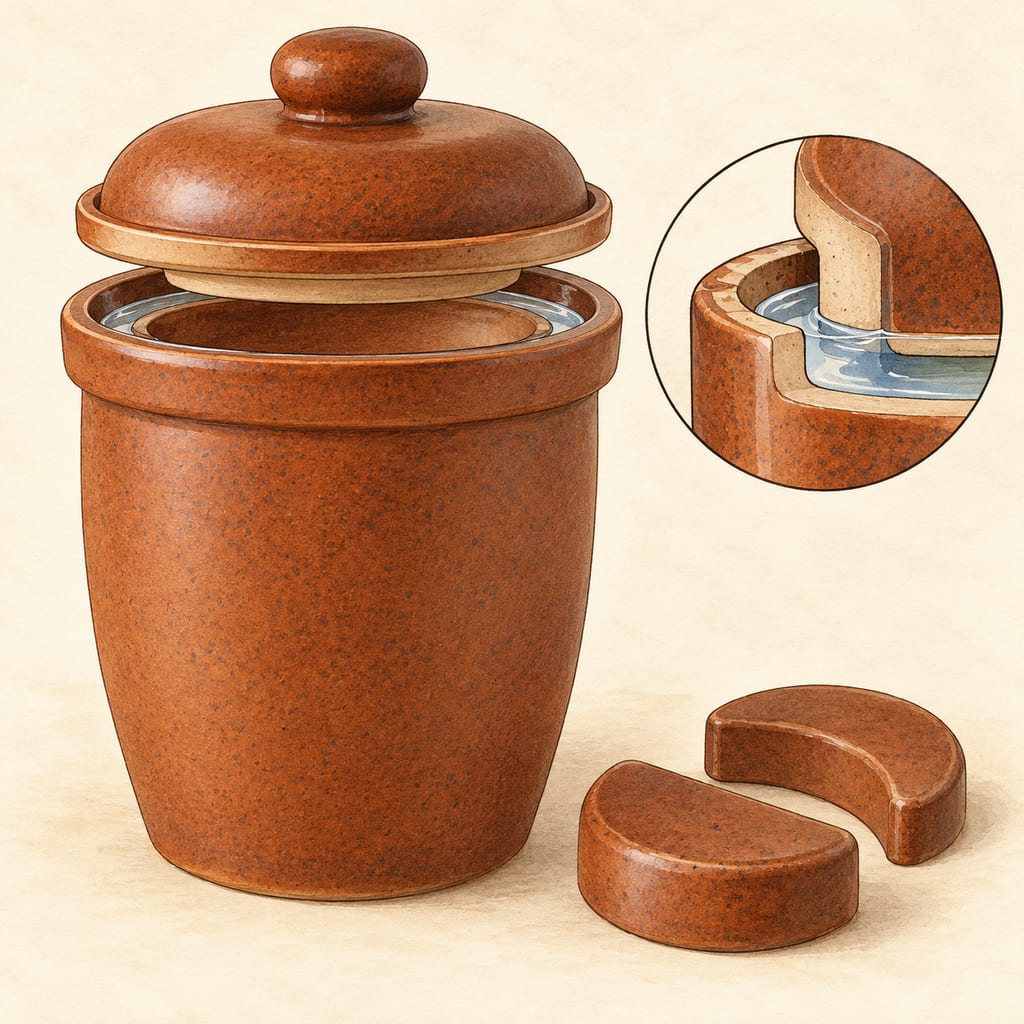
Gärtopf means fermentation pot or crock in German. The subject here is a movable glazed stoneware jar made for vegetable ferments, commonly supplied with a lid and ceramic weights. In the water-seal form, a broad channel runs around the crock's mouth and the lid's lower edge sits in that trough. Water in the channel closes the gap. The lid is part of the crock's working geometry: it is not an ordinary flat cover resting loosely across the opening.
The central-European vessel atlas distinguishes this current traditional-style crock from other ceramic pots and warns against reading a modern water-channel design back into ancient European pottery. A maker's present catalogue confirms the form—stoneware body, lid, water trough and weights—but the sources do not identify the first potter, first model or first date of use. The maker says its family began selling stoneware and ceramics roughly 80 years ago; this is a company-history statement, not proof that the gutter design itself is that old.
Salted vegetables release liquid as they are packed and pressed. The ceramic weights hold the food below that brine, where less oxygen reaches it. The water-filled rim channel addresses the opening above the food: gas made during fermentation can bubble out through the water while the water barrier limits air entering from outside. Virginia Cooperative Extension describes the same practical distinction between a simple crock and a specialized gutter-and-lid design, and notes that the channel has to remain filled for the seal to work.
These parts serve different purposes. The weights keep vegetables submerged; the water channel closes the rim; the stoneware body contains the batch. The crock does not set salt concentration, temperature or fermentation endpoint, and it does not make an untested method safe. Follow a tested recipe for the food itself. The maker's design is documented for sauerkraut and other vegetables, but the particular combination of lid and gutter should not be assumed of every ceramic fermenting pot.
Current examples are made and sold by ceramic producers. One German maker offers crocks in several sizes and colours, but the exact capacity and dimensions belong to each model; this equipment record therefore gives no single size for the whole class. The same producer documents a glazed stoneware body, a matching lid and two half-moon weights. Other ceramic crocks may have different finishes, weights or closures, so inspect the product rather than treating the category name as a complete specification.
Before filling, wash the crock, lid and weights with hot soapy water and rinse them well. Pack food according to its tested method, fit the weights so the vegetables remain below their brine, and add water to the rim channel. Avoid lifting the lid unnecessarily and check that the water has not evaporated. Clean and inspect the vessel after use; a damaged or deeply pitted food-contact surface is harder to clean and may make the vessel unsuitable.
The word stoneware names a fired ceramic body, not a guarantee that every vintage pot has a safe glaze. Virginia Cooperative Extension warns that lead-containing paint or glaze, found on some crocks made before the 1970s, can leach into food, especially under acidic conditions. For an old or unidentified crock, establish that the food-contact glaze is suitable before fermenting in it. Do not infer safety from a traditional appearance, an intact lid or a maker's general description of stoneware.
The water seal also has a simple operating limit: without water in the channel, the rim is no longer sealed in the way this design intends. The available sources do not establish a universal service life, a repair method for damaged glaze, or a cleaning chemical suitable for every finish. Use the manufacturer's instructions for the particular vessel and replace it if its food-contact surfaces are compromised.
German-language makers call the vessel a Gärtopf; a water-channel model may be specified as a Gärtopf mit Wasserrinne. The German maker documented above sells a movable stoneware form with lid and ceramic weights. In Vienna, the fermentation shop Augora lists a German-made handmade Gärtopf with a water channel for sauerkraut and limits shipping to Austria. An Austrian recipe publisher likewise gives a white-cabbage sauerkraut method using a mini Gärtopf and water in its rim gutter. These sources show contemporary Austrian availability and German-language use; they do not show the crock is made in Austria or establish a distinct Austrian design.
A Czech National Museum of Agriculture encyclopedia entry is titled “Nádoba na kvašení zelí” (vessel for fermenting cabbage). It describes a traditional barrel-shaped ceramic pot with handles and a deep water groove around its neck. A 2021 Charles University thesis uses zelňák for a ceramic sauerkraut crock, with a two-part ceramic weight, fitted lid and water poured into the groove. Together these Czech records support both the descriptive term and the colloquial search name, and show that vessel shape can differ from the straight-sided German maker's model.
The documented connection is the water-seal function, not a single design shared unchanged across national borders. The linked white-cabbage and red-cabbage sauerkraut recipes on Fermentea are suitable uses of this crock; they are not presented as specifically Austrian or Czech regional variants, and the equipment is not required by either recipe.
Gärtopf is the German name used for a fermentation crock. A current German stoneware maker describes the crock with lid, broad water trough and two-piece weight, and says its family began selling stoneware and ceramics roughly 80 years ago. That dates the firm's account, not the invention of the water-channel crock. The available evidence supports a modern German-made form and contemporary international sale; it does not establish a single origin date or an unbroken ancient tradition for this particular rim design. Czech-language documentation adds a related sauerkraut crock: the National Museum of Agriculture Prague describes a traditional barrel-shaped ceramic vessel with handles and a deep water groove, and a Charles University thesis calls a ceramic cabbage crock a zelňák and describes a lid, weights and water in its groove. An Austrian Vienna retailer lists a German-made Gärtopf mit Wasserrinne for sauerkraut and ships within Austria; an Austrian recipe publisher also uses the term Gärtopf for its sauerkraut method. These records establish connected vocabulary and contemporary/recorded use, not one standardized design, separate Austrian invention or an origin date.
The water gutter must remain filled to maintain the water seal; if it dries out, the closure no longer limits outside oxygen as intended.
Source →Lead-containing glaze on some older crocks can leach into acidic food. Do not use a crock of uncertain glaze composition for fermentation unless its food-contact safety is established.
Source →The listed maker is based in Wallhausen; this identifies one documented producer, not an origin for every Gärtopf.
A Vienna retailer lists a German-made Gärtopf with water channel for sauerkraut and ships only within Austria; an Austria-based recipe publisher documents a Gärtopf sauerkraut method. This supports contemporary availability and use, not Austrian manufacture or a distinct historical design.
A Czech museum encyclopedia describes a traditional sauerkraut vessel with a deep water groove; a Charles University thesis uses the term zelňák for a ceramic crock. These document Czech-language terminology and described use, not a specific manufacturing locality or uniform countrywide form.
Red cabbage shredded, salted and fermented in its own brine; the pigment gives a deep violet kraut with a sharper flavour than the white-cabbage form.
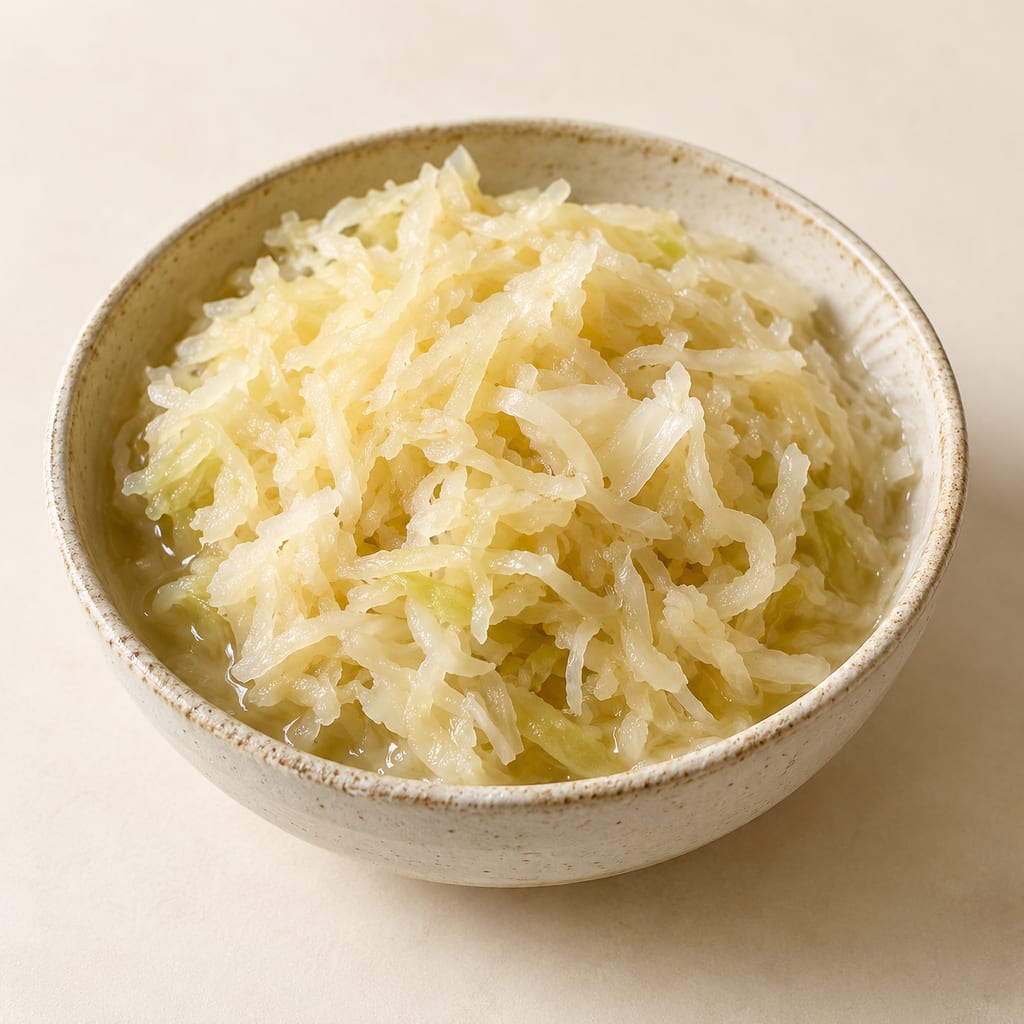
A Penn State Extension crock method mixes 5 lb of shredded cabbage with 3 tablespoons of canning or pickling salt, packs it under its own brine and ferments it in a covered container.
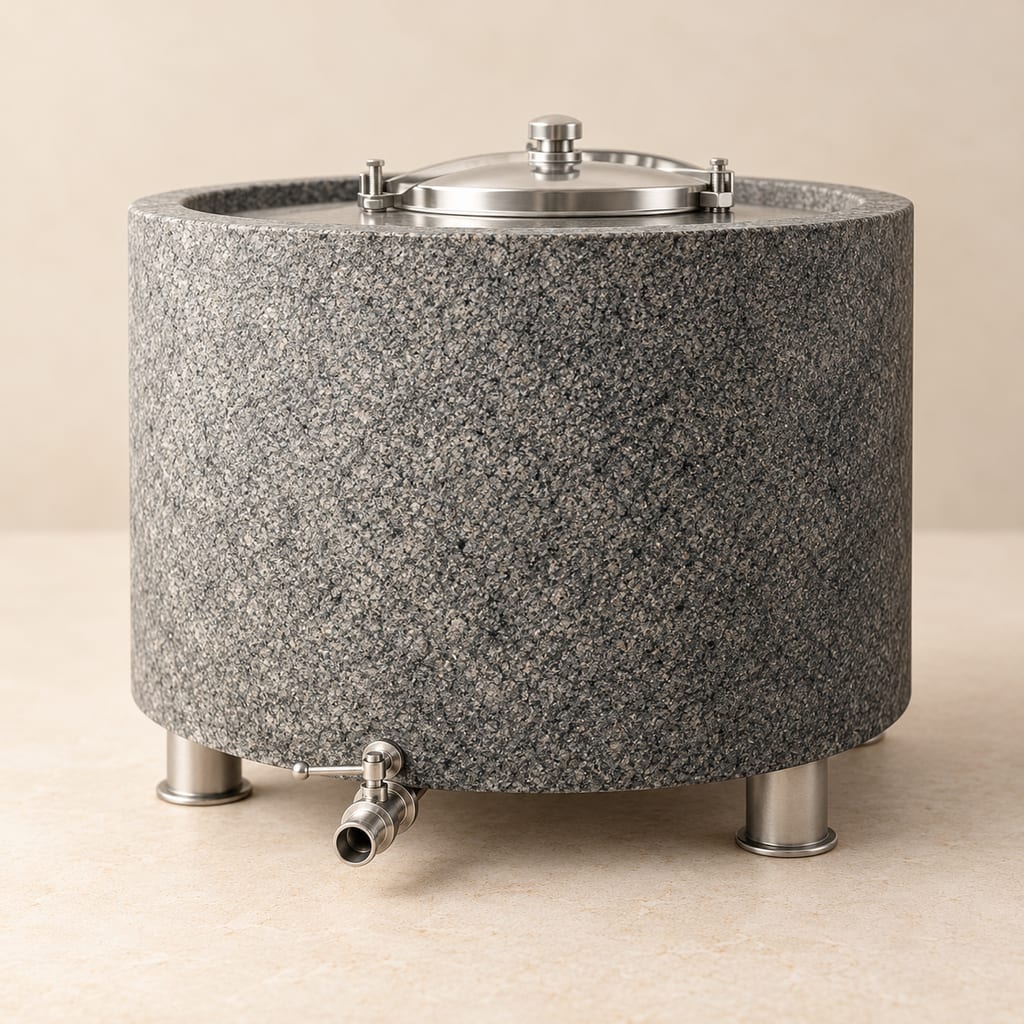
A wine fermentation and maturation tank carved from a single granite block, with a thick mineral shell and fitted metal closures and taps.
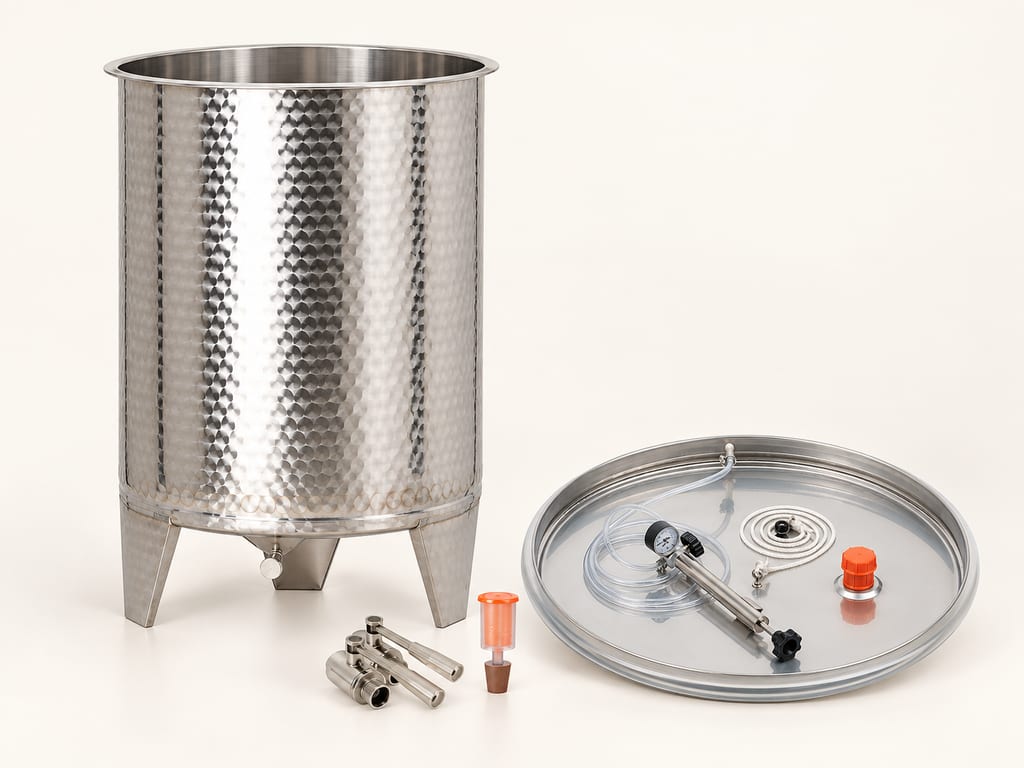
A floating-lid tank is an open-top vessel whose separate lid rests at the liquid level. In contemporary stainless-steel models, an inflatable perimeter seal reduces the air space above a variable volume of wine, cider or juice.

A modern electric countertop machine that heats, chops and stirs food in one mixing bowl. Cookidoo lists Thermomix models for making powidl and quince membrillo, although the full methods are not public on the pages reviewed.
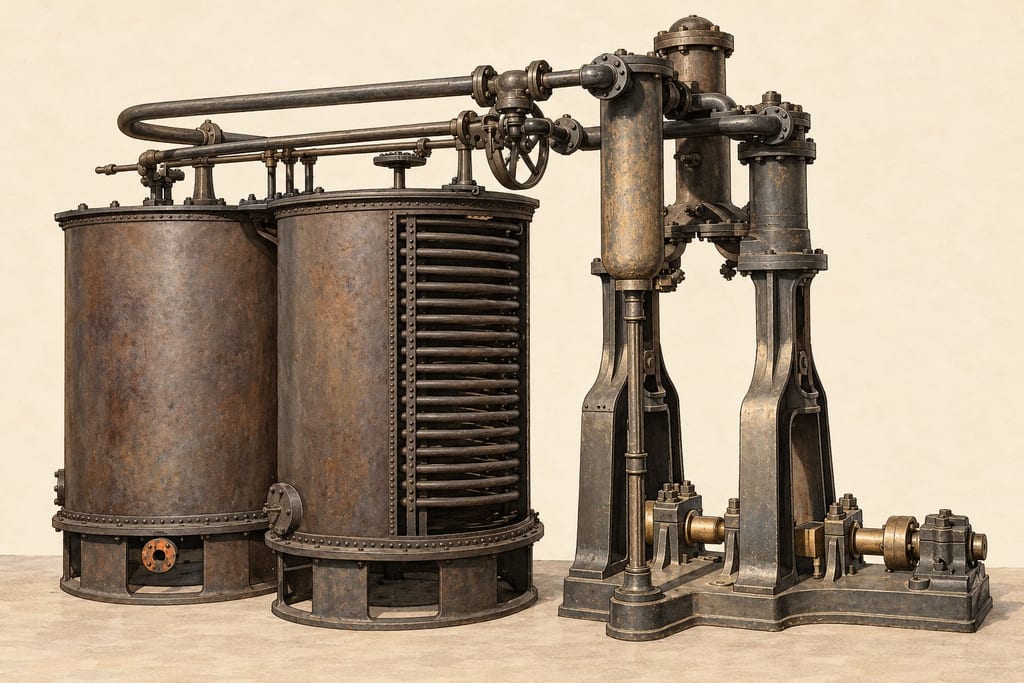
Linde’s 1876 ammonia-compression machine entered service at the Dreher brewery in Trieste in January 1877. Its cylinders and pipework mark the move from seasonal ice toward machine-made cold for brewing.
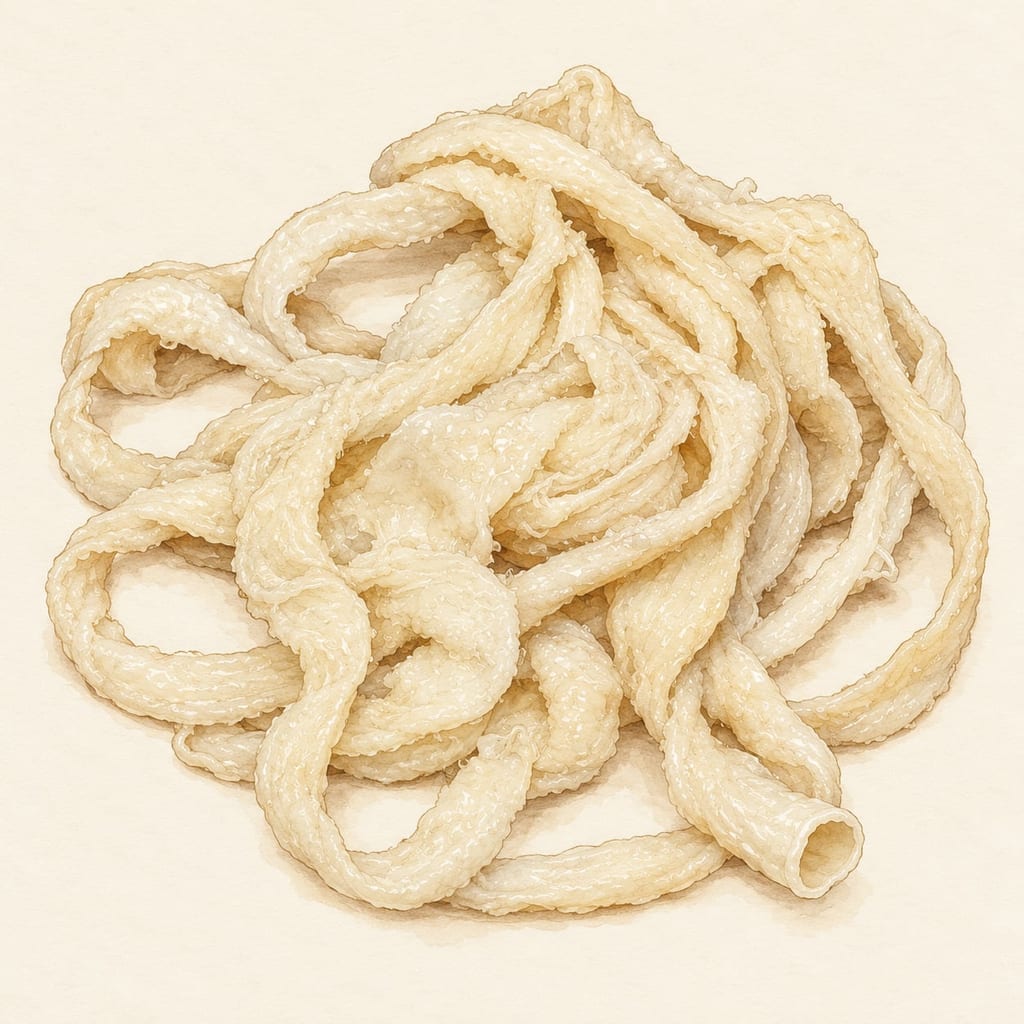
A natural sausage casing is a cleaned animal intestine or, for some products, another prepared organ used as an edible envelope. Its anatomy shapes the sausage, while diameter and material affect stuffing and drying.
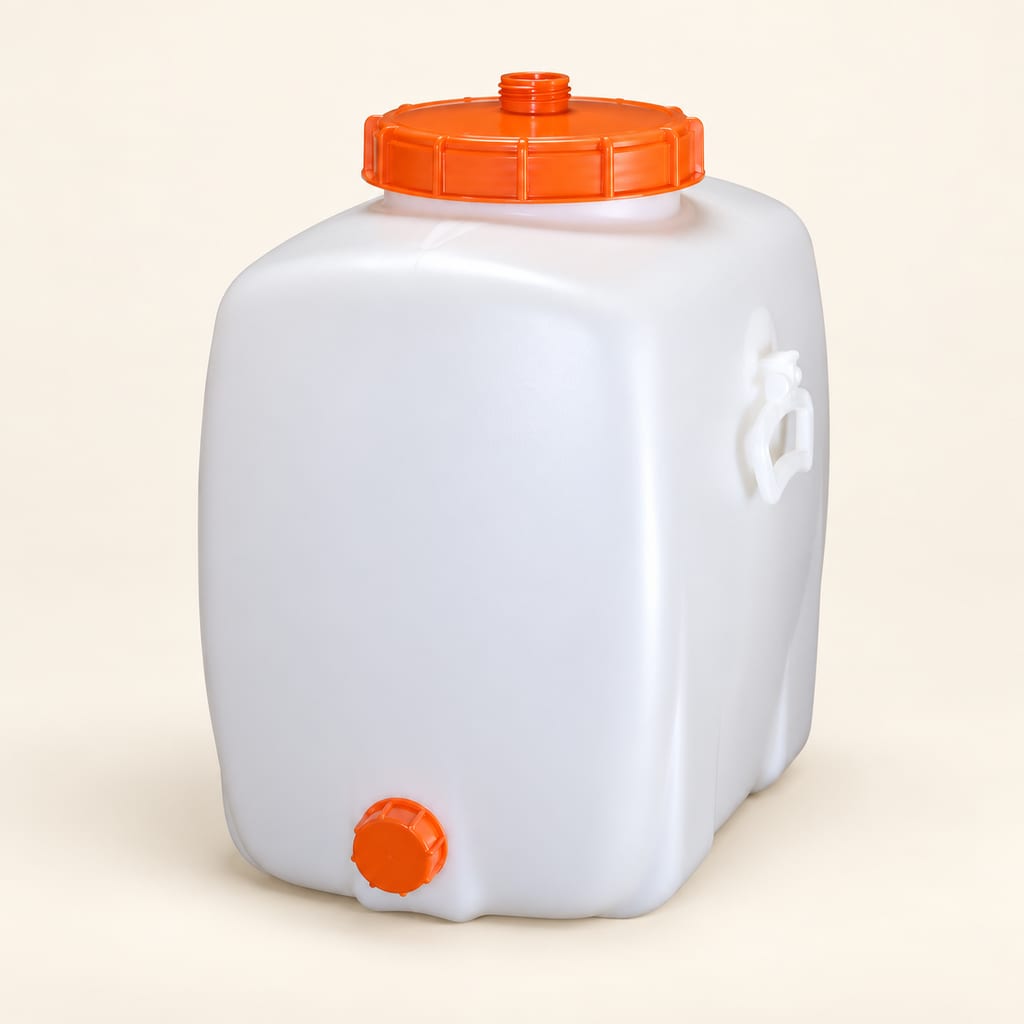
An oval, broad-shouldered polyethylene vessel sold by Speidel as a beverage barrel. Its 60-litre example has a large closure, molded side grips and a lower outlet cap; it is distinct from an open homebrew pail and a coopered wooden cask.
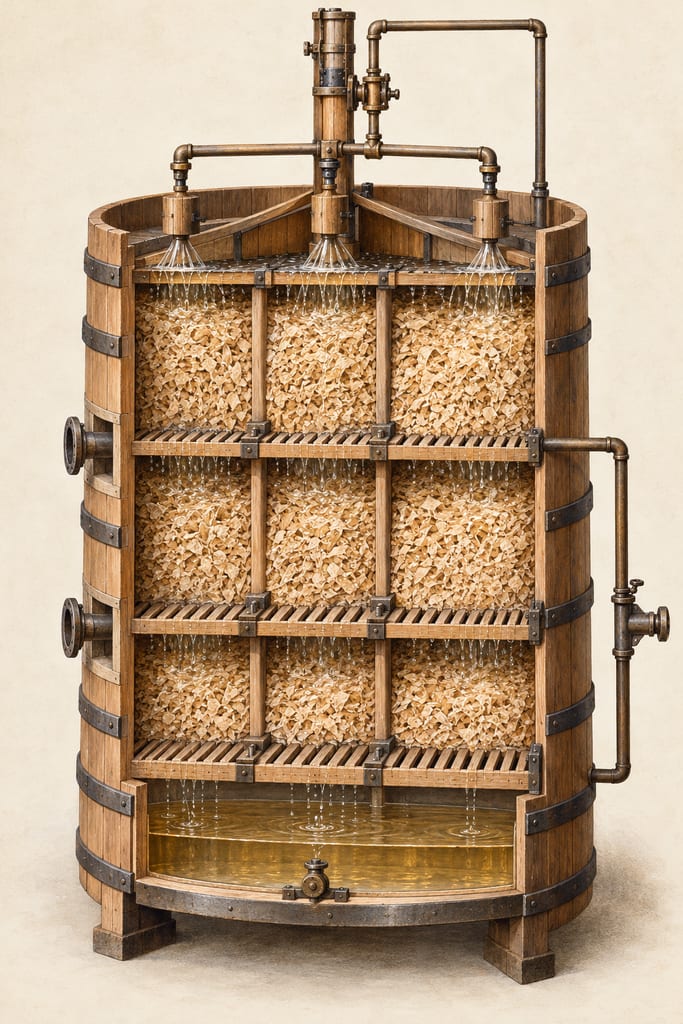
An upright packed bed speeds vinegar acetification by wetting a bacteria-bearing carrier with alcoholic liquid as air rises through it.
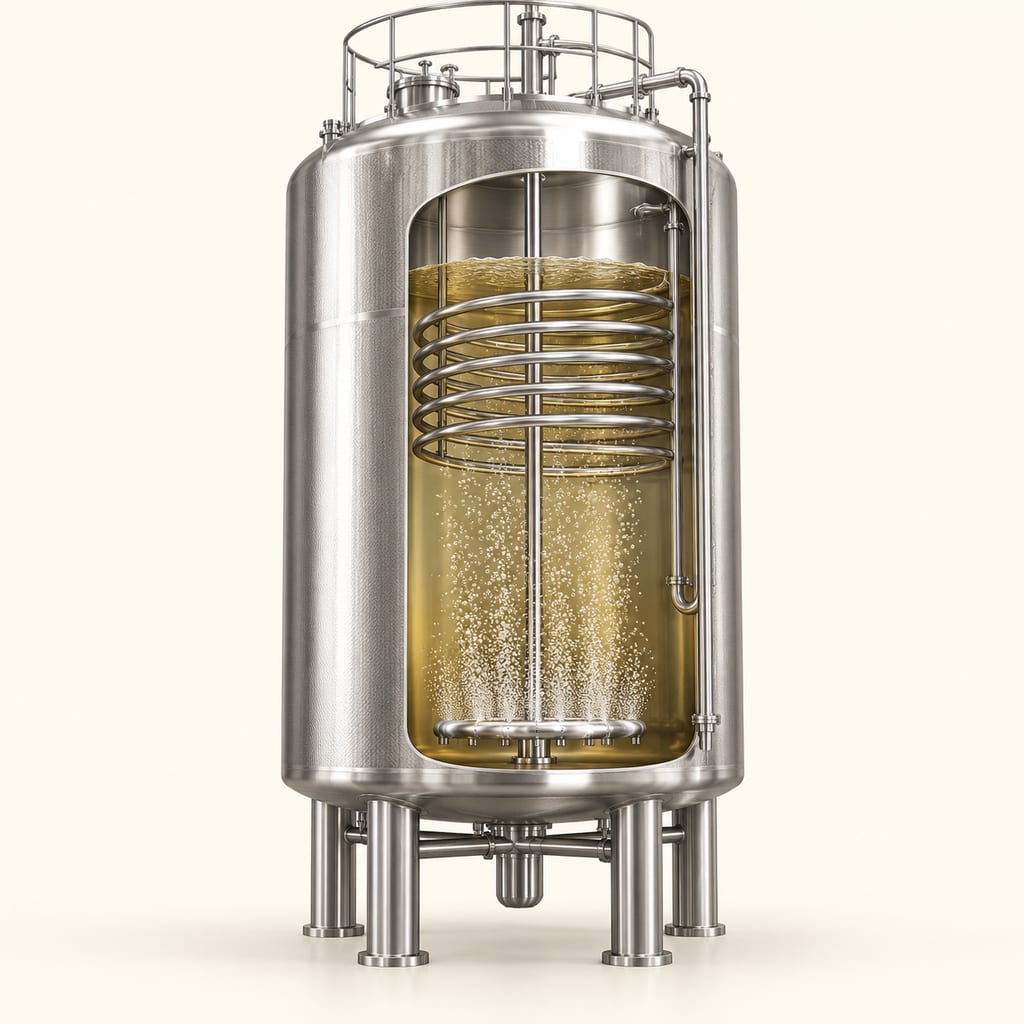
An industrial vinegar fermenter disperses air below the liquid surface, combining submerged acetification with cooling, foam control and process monitoring.

Soft, spreadable Calabrian pork sausage made with a great deal of red chilli and fatty pork, stuffed into natural casings, sometimes smoked and matured while staying soft.

A way to add independent temperature logging to an existing food dehydrator without changing its built-in controls or protections. It is a monitoring method, not a rewiring plan.

Pleurotus cystidiosus is the abalone mushroom, a cultivated oyster-type fungus with dark brown caps that grows more slowly and is more demanding than other Pleurotus species.

A dark, balanced vinegar from Emilia-Romagna made by combining cooked or concentrated grape must with wine vinegar, then acetifying and refining it in wood under a protected specification.

A living dairy inoculum that starts controlled cream fermentation, developing acidity and aroma before sour cream or cultured butter is finished.

A small electric incubator holds jars at a selected temperature for yogurt and other documented warm food preparations. Controls, capacity and vessel arrangement vary by model.

Adygean salt is a seasoned table salt associated with Adygea and the wider North Caucasian culinary tradition. Salt is blended with garlic and a variable selection of herbs and spices; the exact mix depends on the named style and maker.

The African Caesar-group mushroom, Amanita masasiensis, is a wild ectomycorrhizal species of central and southern African woodlands, eaten locally. The genus contains deadly poisonous species, so identification needs care.
No community contributions have been published for this entry yet.
Sign in to contribute. Published comments and photos are free to read.
MS-SteinzeugForm · Materials · History · Geography · Acquisition
About MS-SteinzeugThe maker describes a stoneware fermentation crock with lid, broad water trough and two-piece stone weight; its family says Nikolaus Schmitt began selling stoneware and ceramics roughly 80 years ago; products are sold worldwide. The company history does not date invention of the gutter design.
Cited in: The Gärtopf and its water-channel lid; How the crock controls the fermentation space; Choosing, using and caring for one; Names and regional evidence from Germany, Austria and Czechia
Virginia Cooperative Extension, Virginia TechFunction · Care · Limits · Safety
Vegetable Fermentation (FST-328P)Ceramic crock covers and water-filled rim gutters; water in the groove provides a seal that keeps oxygen out; avoid disturbing the lids; wash equipment in hot soapy water; chipped, cracked or pitted surfaces can be difficult to clean; lead-containing glaze on some crocks, often those made before the 1970s, can leach into acidic food; weights keep vegetables submerged.
Cited in: How the crock controls the fermentation space; Choosing, using and caring for one; Glaze and material limits
MS-SteinzeugForm · Materials · Use · Manufacture
Fermentation crock / sauerkraut crock - reliefThe maker lists a glazed stoneware crock for sauerkraut, sour beans, cucumbers and other pickled vegetables, offered in 7- and 10-litre sizes for this model; product page gives the maker address in Wallhausen, Germany. These specifications are model-specific.
Cited in: Names and regional evidence from Germany, Austria and Czechia
Národní zemědělské muzeum Praha (National Museum of Agriculture Prague)Form · Materials · Terminology · Geography
Encyklopedie strojů a nářadí: ZahradnictvíThe 2011 Czech-language encyclopedia entry “Nádoba na kvašení zelí” describes a traditional barrel-shaped ceramic sauerkraut vessel with handles and a deep water channel around the neck; salted cabbage is packed and pressed inside. It supports Czech documentation of this form, not a unique invention or every vessel's exact construction.
Cited in: Names and regional evidence from Germany, Austria and Czechia
Charles University, Faculty of EducationTerminology · Use
Jídlo jako lék i jed: Stravování a jeho působení na imunitu a kvalitu života (Food as a medicine and poison)In a 2021 thesis section on home-fermented foods, the author calls a ceramic cabbage-fermenting pot a zelňák and describes its two-part ceramic weight, fitted lid and water poured into a groove. Used only as a source for Czech-language terminology and described equipment, not for health claims or a historical origin.
Cited in: Names and regional evidence from Germany, Austria and Czechia
Augora FermenteRegional terminology · Availability · Use
Handgemachter Gärtopf | Zubehör zum Fermentieren kaufenA Vienna-based fermentation retailer lists a German-manufactured handmade stoneware Gärtopf with a water channel for sauerkraut and says the item ships only within Austria. This establishes contemporary Austrian retail and German-language use, not Austrian manufacture or historical origin.
Cited in: Names and regional evidence from Germany, Austria and Czechia
Gute Küche Medien GmbH (GuteKueche.at)Regional terminology · Documented preparation · Use
Sauerkraut im Gärtopf selber machenAn Austrian recipe publisher located in Stinatz describes a current white-cabbage sauerkraut recipe using a mini Gärtopf; its method seats the lid and fills the rim gutter with water. This documents contemporary Austrian-language recipe use, not a separate national pot design.
Cited in: Names and regional evidence from Germany, Austria and Czechia