A heated mixer, not a traditional vessel
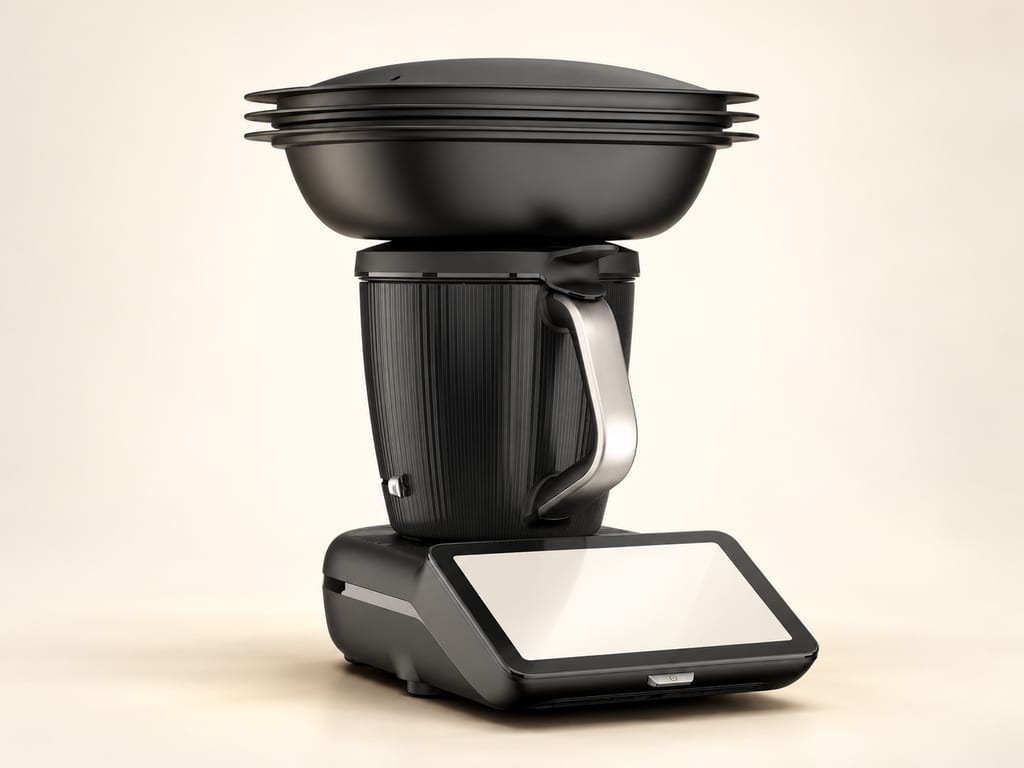
A heated cooking mixer combines a powered mixing bowl with controlled heating. The machine can chop or blend ingredients and then keep them moving while they cook, bringing preparation and heating into one countertop appliance. Thermomix is one branded example of this broader equipment type. Vorwerk dates the VM2000, its first heated mixer, to 1971; the company's history describes it as a development from a cold mixer that could blend and heat in the same appliance. Current models are a later generation, with digital controls and model-specific accessories. This is a modern household adaptation for food preparation, not an ancient or traditional fermenting vessel.
The class name refers to a function rather than one fixed machine. A Thermomix TM7 has an integrated touchscreen base, ribbed mixing bowl, mixing knife, lid and Varoma steaming accessory, while other generations differ in their controls and accessories. A current US manufacturer page presents the TM7 as a product example; it should not be read as a complete specification for every heated mixer.
Sources for this section
Fruit pastes in the official recipe listings
Two Cookidoo listings document the type in long-cooked fruit preparations. The German-language Powidl page marks TM7, TM6 and TM5 compatible; its public summary gives 2,000 g of plums, 40 minutes of preparation and eight hours total, with three screw-top jars as the yield. The Spanish-language Dulce de membrillo casero page marks TM7, TM6, TM5 and TM31 compatible; it lists quince, sugar and lemon, 15 minutes of preparation and seven hours total. Those total durations are not a stated heating time. Both pages say the recipe is designed for a particular device-and-accessory combination and caution that results are not guaranteed without the specified equipment.
The listings make the intended role clear at a high level: a heated mixer is used in recipes for cooking fruit into a thick paste. The pages reviewed expose the ingredients, model compatibility and elapsed time, but not the step-by-step instructions unless the reader registers. They do not document exact speeds, temperature settings, lid position, venting or a maximum paste batch. The equipment page therefore links the relevant preparations without reproducing guessed machine instructions.
Sources for this section
Why stirring and capacity matter
As fruit purée thickens, less free liquid remains to circulate and the paste can become harder to move. The research dossier reasons that a continuously stirred layer is less likely to sit undisturbed on the heated bowl surface. That is a process explanation, not a tested result for every model or a quoted Cookidoo instruction. A thicker mixture may also place a different load on a motor than a thin soup. The public recipe listings do not provide the machine settings or a maximum batch for these pastes, so neither a setting nor a batch size should be inferred from the total time or ingredient quantity alone.
For the TM7 specifically, Vorwerk's technical support page gives the mixing bowl a maximum capacity of 2.2 litres and the Varoma set with tray a total capacity of 6.8 litres. The TM7 is listed at 33.6 cm high, 25.3 cm wide and 40.5 cm deep, with a mass of 8.6 kg. These are useful model-specific reference figures, but a bowl's nominal volume is not a safe fill line for every thick paste, and none of these values applies to TM6, TM5, TM31 or another heated mixer. Check the instructions for the exact model and accessory combination.
Sources for this section
Model, factory and care notes
A TM7 is not made at one single site according to Vorwerk's description. The company locates research and development in Wuppertal, Germany, says key components such as the motor and mixing blades are manufactured at its Wuppertal-Laaken plant, and places final TM7 production in France at Cloyes-sur-le-Loir and nearby Donnemain-Saint-Mamès. These facts describe the TM7 only; they do not establish where each previous Thermomix generation or another maker's heated mixer was produced.
The manufacturer gives TM7-specific cleaning advice: its mixing bowl, lid and accessories are dishwasher-safe, while the base is wiped with a damp cloth and its ventilation openings kept clear. The appliance's history starts with a heated mixer in the early 1970s, but its contemporary operation depends on exact generation, firmware, accessories and manufacturer instructions. Where a recipe's method is unavailable, the reader should consult the official, model-matched instructions rather than transfer an assumed technique from another machine.
Sources for this section
History
Vorwerk's history dates its heated-mixer line to the VM2000, launched in 1971. The company describes the first design as combining mixing and heating; current Thermomix models are a later development of that appliance idea.
Equipment details
SizeThere is no single size for the type. Vorwerk lists the TM7 at 33.6 cm high × 25.3 cm wide × 40.5 cm deep and 8.6 kg; those figures apply to that model only.
PowerElectric This is an electrically powered appliance type; motor and heating specifications vary by model. The TM7 is one current example, not a specification for every heated mixer.
How you get oneBought, manufactured Factory-made countertop appliances sold through manufacturer and distributor channels. Accessory fit and instructions depend on the exact model and region.
CareFor the TM7, Thermomix USA says the mixing bowl, lid and accessories are dishwasher-safe and the base unit should be wiped with a damp cloth; it also advises keeping ventilation openings clear. These are TM7 care notes, not instructions for every model. Follow the manual supplied for the exact machine and accessories.
Made of
- Stainless steel — TM7 mixing knife/blade
A model-specific component identified by the manufacturer; bowl and housing materials vary across models and are not generalized here.
Limits
The public Cookidoo listings reviewed show compatible models, ingredients and total elapsed times, but do not expose the full cooking steps without registration. They therefore do not establish the heating profile, stirring speed, lid or venting arrangement, or how much of the listed total time is active heating.
Source →The official TM7 technical page gives a 2.2 L maximum mixing-bowl capacity. A bowl's nominal capacity does not establish the safe or effective batch size for a thick paste, and the figure must not be applied to TM6, TM5, TM31 or unrelated machines.
Source →The research dossier describes continuous stirring as a reason to keep thick fruit purée moving against the heated bowl surface. This is process reasoning, not a measured comparison or a manufacturer statement about these recipes; no specific setting or batch limit is inferred.
Source →Places
Germany
Manufacture · Country evidenceVorwerk says the TM7's R&D is in Wuppertal and named key components are made at its Wuppertal-Laaken plant. This is specific to the documented TM7 and does not establish the manufacture of every model in this equipment type.
France
Manufacture · Country evidenceVorwerk locates TM7 final production in France, at Cloyes-sur-le-Loir and nearby Donnemain-Saint-Mamès. This does not establish the factory for every Thermomix generation or other heated mixers.