
Home equipment crafts
Fruit extraction and concentration: juice, butters, pastes and syrups
Fruit becomes juice, butter, paste or syrup in two moves: get the liquid out, then drive the water off. Steam juicers, slow cookers, microwaves and freezers each do one of those moves well, and none does both.
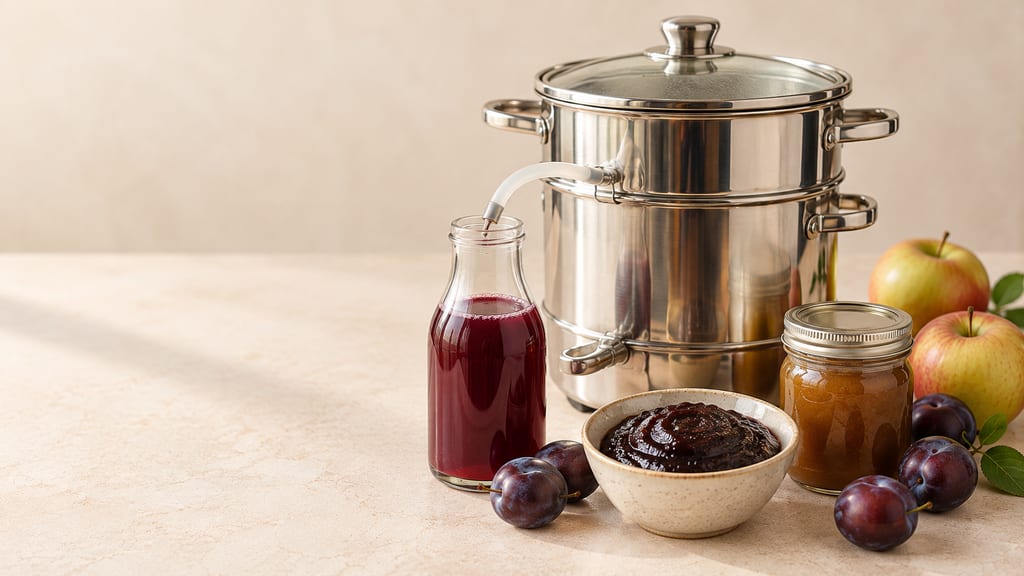
Juice from a steam juicer, plum butter and apple butter: fruit drawn out and cooked down to keep.
Two jobs: separating and boiling down
The sweet fruit preparations that households made each autumn rest on two operations. Extraction gets juice, pulp or dissolved sugar out of the fruit and leaves skins, seeds and fibre behind. Concentration takes water out of what was extracted until it is thick, sweet or set enough for its purpose. Apple butter, powidl, membrillo, date syrup, grape pekmez, jelly and maple syrup are all combinations of these two jobs, done in a different order and to a different end point.
Home appliances are usually good at one job and poor at the other. A steam juicer separates juice and removes no water. A pressure cooker softens fruit fast in a sealed pot, which keeps the water in. A covered slow cooker is built to stop food drying out. A shallow open pan, an oven tray and an uncovered microwave bowl are the tools that actually lose water. A freezer does a third thing: it separates a clear liquid from a gel by growing ice.
The second job is the larger one. Fruit butter can be thickened on the stove, in the oven, in the microwave or in a slow cooker, and each route is mostly a different way of managing evaporation. In date syrup, boiling off the water is the costly stage in fuel and equipment. Maple syrup is the extreme: sap at about two percent sugar takes 43 gallons to make one gallon of syrup.
Steam, drip or press: getting the juice out
There are three home routes to juice: the drip method, the steam juicer, and electric or manual extractors. The drip method crushes the fruit, boils it with a little water while stirring against scorching, and simmers it soft, at 85–99 °C; overcooking destroys the fresh flavour. The pulp then drips through a jelly bag or cheesecloth for hours. Squeezing the bag forces fine pulp through and clouds the juice, so it is left alone.
A steam juicer does the same in one stack of pans: a bottom pan of water on the stove, a collector with a central cone and a clamped hose, and a perforated basket of fruit under a lid. Steam rises through the cone into the fruit, juice runs into the collector, and the hose is unclamped to drain it, after half an hour to an hour depending on the load. Nothing needs peeling. A handful of marbles in the water pan rattles when the water runs low. Six and a half cups of berries give up most of their juice in 30 minutes, with 15 more if the fruit still holds juice.
The juice comes out clear because nothing is crushed. Steam condenses on the cold fruit, the cells soften and burst, and juice drains by gravity through the remaining fruit, which acts as a filter. That matters for chokecherries, whose pits, stems and leaves contain cyanogenic compounds: the pits must not be crushed, and a steam juicer leaves them whole in the basket. On the stove, 4 cups of chokecherries simmered in 1 cup of water without crushing the seeds and dripped through a damp jelly bag give about 2 cups of juice per pound. Mechanical extractors work on raw fruit, so their juice is heated to boiling before canning; presses are covered in Mills, presses and extractors at home. The collector is what makes a steam juicer: an ordinary steamer basket over boiling water has nowhere to gather the juice apart from the condensing steam, so it does not deliver uncontaminated juice, and any pressure-free steam-extraction assembly used in its place needs the same separate collector and drain.
None of these routes preserves anything. Juice for the shelf goes through a tested water-bath process, and steamed juice, though it comes out hot, still goes into a boiling-water canner when it becomes jelly or syrup. Sugar, pectin, reduction and storage are later decisions.
Pectin: what the juice carries into a jelly
Jelly shows the two jobs working together. A jellied product needs fruit, pectin, acid and sugar in the right ratio. Pectin is the substance that makes fruit gel; acid helps the gel and the flavour; sugar is both part of the gel and the preservative. Jelly fruits fall into three groups. Sour apples, crabapples, currants, quinces and plums other than Italian plums have enough pectin and acid to gel with sugar alone if they are not overripe. Ripe apples and chokecherries may need acid or pectin; pears, peaches, strawberries and Italian plums always do.
Extraction decides how much pectin reaches the jelly. Pectin from under-ripe or over-ripe fruit will not gel, so a jelly made without added pectin uses about a quarter slightly under-ripe fruit to three quarters ripe. Skins and cores stay in, because pectin is concentrated there. Hard fruit gets up to a cup of water per pound and 20 to 25 minutes of simmering; berries and grapes 10 minutes or less. Excess boiling destroys pectin, and the juice is dripped, not pressed.
Jelly without added pectin is the honest test of a home-extracted juice. A pound of fruit should give at least a cup of clear juice; batches stay at 6 to 8 cups or less; apple jelly takes three quarters of a cup of sugar per cup of juice. The mixture boils hard to the jellying point: 104 °C at sea level, 4 °C above boiling water, less 1 °C per 1,000 feet of elevation. A cool spoon held out of the steam gives the same answer when two drops run together and sheet off. The temperature measures the water that has gone, because the more sugar left in solution, the higher it boils.
A homemade pectin extract needs care. Commercial pectin comes from apples or citrus; its powdered and liquid forms are not interchangeable, and tested recipes are written for standard 1.75-ounce boxes or 3-fluid-ounce pouches. A pectin-rich juice made at home from softened, strained apples or citrus is a useful way to study how fruit gels, but its strength varies from batch to batch and it cannot replace a specified commercial pectin one-for-one.
Fruit butter: four routes to the same thick spread
Fruit butter is pulp cooked down until it holds its shape: an old-fashioned spread with less sugar than jams and jellies, made from high-acid fruit, apple most often, and apricot, peach, pear, plum, quince and crab apple. Butters of Asian pears, figs, pumpkin and mangos have no research-based canning recipe and are refrigerated for up to four weeks or frozen. The fruit is cooked soft and pressed through a food mill or sieve; a basic recipe is 2 quarts of pulp, 4 cups of sugar and 2 teaspoons of cinnamon.
There are four ways to thicken it. On the stove, in small batches in a heavy 8–10 quart kettle with a broad flat bottom, because a thin kettle scorches. In the oven, in shallow pans at 135 °C, stirred now and then, which needs less watching. In the microwave, in small batches and a large container: 8 apples and a cup of cider in a 2-quart casserole, covered, 8–10 minutes on high with stirring every 3 minutes, milled, then 10–15 minutes uncovered with the sugar. And in a slow cooker on low for about 8 to 10 hours, stirred against scorching, with the lid ajar so moisture can escape; the butter thickens over the last few hours. Every route ends with the same tests: a spoonful rounds and shines, or holds its shape on a chilled plate without a ring of liquid.
A two-stage slow-cooker version cooks about 2½ pounds of apples covered on low for 10 hours in a 5-quart cooker with brown sugar, honey, cider and spice, purées them with an immersion blender, then takes the lid off for 1½ hours on high until thick. The 4 cups keep a week in the refrigerator.
A pressure multicooker splits the jobs differently. Five pounds of diced Gala apples with half a cup of water are pressure cooked on high for 20 minutes, mashed, then cooked on Sauté for 20 minutes with the vent open, stirred every five minutes, and blended. That recipe tells readers to "can safely" without giving a process.
The tested canning recipe for apple butter stays separate: 8 pounds of apples cooked in 2 cups of cider and 2 of vinegar, milled, cooked down with sugar and spice to the spoon test, and processed hot in a boiling-water canner, 5 minutes for half-pints or pints up to 1,000 feet. Only that formulation carries that process. A different fruit, sugar level, batch or cooking route is a product nobody has measured, so slow-cooker and pressure-cooker butters belong in the refrigerator or freezer.
Why a lid, a crock and a thick paste slow evaporation
Water leaves a pot as vapour from its surface, so evaporation depends on exposed area, heat reaching that surface, and whether the vapour can escape. A lid catches the vapour and drips it back. A deep vessel exposes little surface for its volume. A heavy crock heats slowly and holds its heat.
A slow cooker combines all three. A typical maker's booklet, for a 3.5-litre Crock-Pot, tells owners to cook with the lid on, not to lift it in the first two hours, to fill the stoneware between half and three-quarters full, and to use enough liquid to keep food from drying or burning. Those are rules for a stew. Fruit-butter recipes depart from them, one with the lid ajar throughout and another with it off for the last stage, and the same maker's crumble recipe lifts the lid partly for about 30 minutes to crisp the topping. Anyone adapting a butter should check their model's manual on running uncovered and on low fill.
A thickening purée also changes how heat moves. Thin pulp churns as it boils and carries heat up from the base. Thick butter barely moves, so the layer on the hot surface overheats and sticks. Each thickening route answers this: a broad heavy kettle spreads the heat, the oven warms the pan from all sides, and the microwave heats inside the food instead of through a hot base, so it hardly scorches. The last stage needs the most attention whatever the appliance.
A pressure cooker does the opposite job well: its sealed pot boils hotter and softens apples in 20 minutes but removes almost no water, which is why the multicooker recipe opens the vent for the reduction. Fast softening in a closed pot, then evaporation in an open one, is the pattern to copy. A slow cooker followed by an uncovered pan would follow it too, but that pairing has not been tried, and its time to the spoon test has to be found by trial.
Powidl and membrillo: pastes cooked until they stand
Powidl, from plums, and dulce de membrillo, from quince, push concentration further than butter. Powidl belongs to the Central European family of thick plum pastes, used as a filling for buns, dumplings and pastries, and has an Austrian home; membrillo is the firmer direction, a sliceable quince paste used in baking or served with cheese, with a following in Argentina as well as Spain. Both are made in Thermomix cooking mixers, which chop, heat and stir in one jug; the paste is moulded and set as a separate step.
The Thermomix powidl takes 2,000 g of fresh Zwetschken, plums, halved and pitted, with ¼ to ½ teaspoon of cinnamon, 25 g of rum, 60 g of homemade vanilla sugar and a little of a sweet seasoning blend, for three screw-top jars, on the TM7, TM6 and TM5, with 40 minutes of preparation in an 8-hour total. The only weighed sugar is about three percent of the fruit's weight, so most of the paste's sweetness is the plums' own sugar, concentrated as water leaves.
The Thermomix membrillo is the opposite formulation: 800 g of raw quince with skin, seeds removed, in 3–4 cm pieces, 800 g of sugar and one lemon peeled of all pith, for 1,600 g of paste, with 15 minutes of preparation in a 7-hour total, on the TM7, TM6, TM5 and TM31. Sugar matches fruit by weight, and quince is in the first jelly group, with enough pectin and acid to gel with sugar alone, which is why a quince paste can set once enough water has gone.
Water activity explains why sugar and evaporation keep such foods. It compares the vapour pressure of a food with that of pure water; most foods sit above 0.95, wet enough for bacteria, yeasts and moulds, and it is usually controlled with salt or sugar. Boiling fruit down leaves its sugars, from the fruit or the bag, more concentrated in less water. How long homemade powidl or membrillo keeps has not been established.
A stirring cooker adds attention: continuous stirring at controlled heat replaces hours at a pot where thick paste scorches. A lid kept on still slows evaporation, and a stiff paste loads the motor: the nominal jug volume does not mean the motor can move a full jug of paste. When reducing thick fruit, a low-speed stirring mode and venting the maker permits are what matter, and the settings should not be carried over to an unrelated heated soup blender. Neither paste has been tried in another cooking mixer.
Date syrup: water in, water out
Dates cannot be juiced like grapes. Their soluble solids are too concentrated to press out, so water is added to dissolve the sugar and the flesh is separated afterwards. For a concentrated product the water is only a temporary carrier, and because boiling it off costs fuel and equipment, producers add as little as they can.
Extraction is a matter of diffusion. A whole date in cold water gives up its sugar slowly; stirring and heat help, but not much; cutting or crushing increases the contact area. Blending dates and water thoroughly, as in a household mixer, reaches equilibrium almost at once but divides the flesh so finely that colloidal and pectin-like material is released and the juice becomes hard to separate.
Date syrup, known as dibs or rub, is probably the most common product made from dates. In the Gulf it has long appeared by accident, oozing from heaped bags of humid dates, a practice recorded as far back as the 17th century and yielding at most six percent of the dates' weight. Households and villages make it mainly for special occasions such as the Prophet's birthday or the birth of a child. In one Libyan village, 25 kg of dates were boiled with an equal weight of water over a wood fire for about an hour and a half, strained through a basket of halfa grass or palm leaflets, and the press-cake boiled again with fresh water, four extractions in all. The 40 kg of juice, at 28 °Bx, was filtered through cloth and boiled down for a few hours with a piece of date-palm fruit stalk in the pan "to avoid burning", which works like the pumice stones that stop a delayed, bumping boil from overheating a liquid. Drops on white sand told the cooks when to stop: drops that soaked in meant more boiling, drops that sat as little balls meant done. The batch gave 12.5 kg of deep red syrup at 67 °Bx for 140 kg of firewood and about 11 hours of work over two days. Other households thickened the pressed juice in the sun for a week, or, in southern Iraq, in open pans over several days.
A home version simmers dates in water, lets them cool, blends them, squeezes the mixture through cloth and, if wanted, reduces the strained liquid. It yields two ingredients: a strained sweetener in the dibs and silan family, and the date paste left in the cloth. Blending whole dates without separating the solids would give a third, different ingredient. A slow cooker could take the simmering and softening stage and a wide saucepan the finish, because a deep covered cooker limits evaporation; that pairing has not been tried. Blending first makes extraction fast and straining slow.
Grape pekmez: taking out acid before water
Grape molasses adds a chemical step that no appliance supplies. Pekmez is a Turkish product made mainly from grapes, boiled down without added sugar at the start of October, to at least 65 percent water-soluble solids under the Turkish standard. Grape must has a pH of 3 to 4, and boiling concentrates its acid along with its sugar. The traditional answer is pekmez earth, a white soil of more than 80 percent calcium carbonate. Heated with the must for 5 to 10 minutes, it brings the pH to about 6 to 6.5; calcium leaves as calcium tartrate, the cloudy colloids settle, and the clear must is drawn off before the long boil, during which the cook skims foam and stirs constantly against caramelising. Modern plants heat the must to 70 °C with calcium carbonate, clarify it and concentrate it under vacuum. Greek petimezi and Italian saba belong to the same family of grape-must syrups; like date dibs and silan, hibiscus cordials and tamarind concentrate, they combine extraction, heating and reduction.
Maple syrup: most of what you boil is water
American Indians are generally credited with discovering how to make syrup from maple sap, and maple products were traded locally well before 1620. Sap runs when a night below freezing gives way to a quick morning warm-up, a quart to a gallon per taphole each flow.
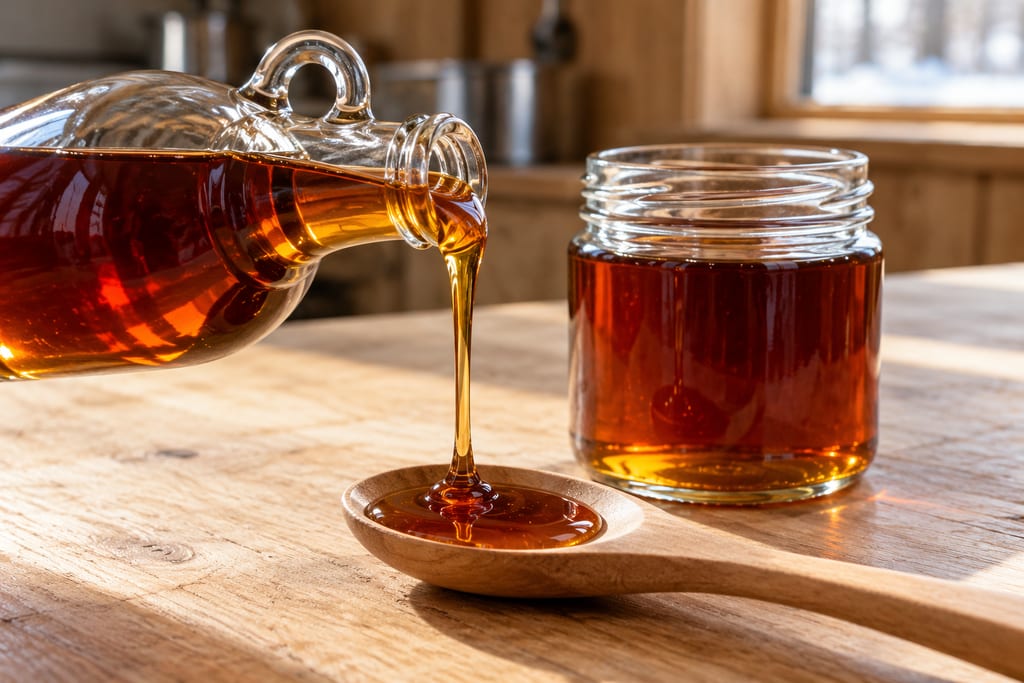
At two percent sugar, 43 gallons of sap make one gallon of syrup, and the boil both concentrates the sugar and develops colour and flavour. Small producers fill a pan, preferably large and shallow, top it up as water leaves, skim the foam, and finish when the boiling point rises; finished syrup boils 4 °C above the boiling point of water and holds at least 66 percent soluble solids by weight. It is filtered hot through wool or another filter cloth to remove sugar sand, and packed at no less than 82 °C against spoilage.
Reverse osmosis pushes water through membranes before boiling: sap concentrated from 2 to 4 percent needs 21 gallons per gallon of syrup instead of 43. Maple flavour develops only through heating, so membranes shorten the boil without replacing it. A Brix refractometer tracks the sugar, and boiling at home is viable only for small amounts.
Those numbers decide what a kitchen can do. Roughly 42 gallons of water leave as steam for every gallon of syrup from 2 percent sap, into whatever room holds the pan. A large electric vessel such as a brewing kettle could take the bulk preconcentration and a small shallow pan the finish, where the end point can be measured; shallow surfaces favour evaporation. The vessel's minimum fill and the sheer steam burden limit the convenience, the route has not been tried, and a kettle's own rules on minimum fill and boiling dry come first. A covered slow cooker is the wrong tool: it is built to keep water in.
Freezing to clarify: the gelatin method
A freezer can separate a clear liquid from a cloudy one. The traditional clarifier for stock is the egg raft. The first non-traditional technique chefs adopted was gelatin freeze-thaw clarification, pioneered for juices by the chef Wylie Dufresne.
The liquid takes 5 grams of gelatin per kilogram, rests in the refrigerator (at that concentration it does not visibly set), and is frozen solid in a 2-inch hotel pan. The block goes into a perforated pan lined with several layers of cheesecloth, set in a deeper pan, to thaw in the refrigerator, and what drips out is clear. Stock with natural gelatin can be frozen as it is; if it has too much, yield is poor, so a weak stock is frozen and reduced afterwards, when it can be boiled down a long way without turning gluey. Pectin-rich juices need less gelatin.
The failures show where the control lies. Too little time for the gelatin, or a block not frozen through, gives cloudy liquid; a warm kitchen melts the gelatin into the drip; a refrigerator at 0–1 °C thaws far too slowly. At best, thawing takes a day or two. The first liquid to thaw carries more sugar, acid and colour than the last, so a batch must be combined. Agar at 2 grams per kilogram makes a vegetarian version that can thaw at room temperature.
The mechanism is a slow sieve. Ice grows as nearly pure water and pushes the gelatin network, with the particles it holds, between the crystals; on thawing, meltwater and dissolved flavour drain away and the gel stays in the cloth. The freezer replaces skimming and raft management with waiting, saving labour rather than time, and the clear liquid has lost its gelatin and some body, so it is a different ingredient from the stock that went in.
Bubbles and rapid infusion: pressure without fermentation
Two appliances work liquids under gas pressure. A home carbonator dissolves carbon dioxide; it does not ferment, and it is not a way to keep a drink. A cream whipper charged with nitrous oxide speeds extraction; it does not age, ferment or preserve.
Carbonation depends on the machine accepting the liquid. Most SodaStream machines are designed to fizz water first and take the syrup afterwards, because sugar in the bottle makes the gas foam violently; fizzing juice or wine in them causes overflow and can void the warranty. The SodaStream MIX, launched in autumn 2025, locks the bottle with a dial and lets air back in step by step: juice or wine to the first line, two to five bursts depending on bottle size, then a slow release, closed again whenever the drink rises. Drinkmate machines carbonate almost any cold drink through a two-stage release valve, with the coldest liquid, half-filled bottles for foamy drinks, short bursts and slow venting, but not pulpy juice, which can block the valve. The two makers disagree about sugar: SodaStream says gas dissolves less easily in sweetened water, Drinkmate says sugary drinks absorb more. Both expect sweet drinks to foam. A brewer's keg on a CO2 regulator does the same job for larger volumes, with cold liquid and suitable pressure control. Clarity matters too: cloudy lime juice does not carbonate well.
Rapid infusion was devised by Dave Arnold, and iSi, the whipper's maker, credits him with it. Room-temperature spirit and herbs are charged with nitrous oxide in a cream whipper, swirled for 30 seconds, rested 30 seconds, vented quickly and strained. Pressure forces liquid and gas into the pores of the herbs; when it drops, the gas bubbles out and carries flavour with it. With orange peel, Thai basil and coriander leaf in rum, one minute tasted best and three minutes bitter and grassy. iSi's Rapid Infusion attachment works differently, with oil, vinegar or spirits and a rest of at least two hours before quick venting; the two methods are separate. Either way the whipper must be food-rated, with the approved infusion accessory and the correct cartridge; the botanicals must be edible, and storage of the infused liquid is a separate decision from extraction.
Neither appliance changes what the product is. A carbonated shrub is a shrub with gas in it, and a rapidly infused oil is an infused oil, with the botulism hazard of garlic and herbs in oil intact; What an appliance cannot reproduce sets out the controls. Warm extraction of syrups in sealed jars is covered in One bath, many small jars.
Related
Discussed in this article
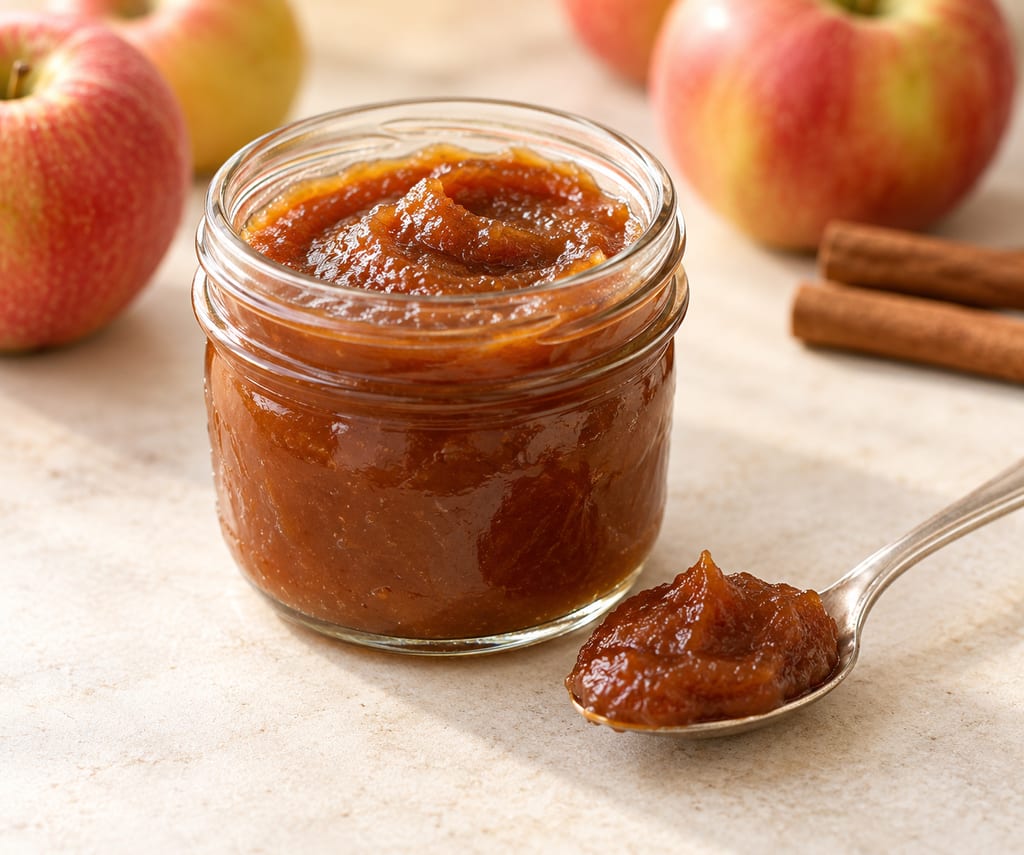
Apple butter, tested canning method
Apple butter is a smooth, concentrated apple preserve cooked with cider, vinegar, two sugars and spices, then hot-filled and processed in a boiling-water canner using the published jar-size and elevation schedule.
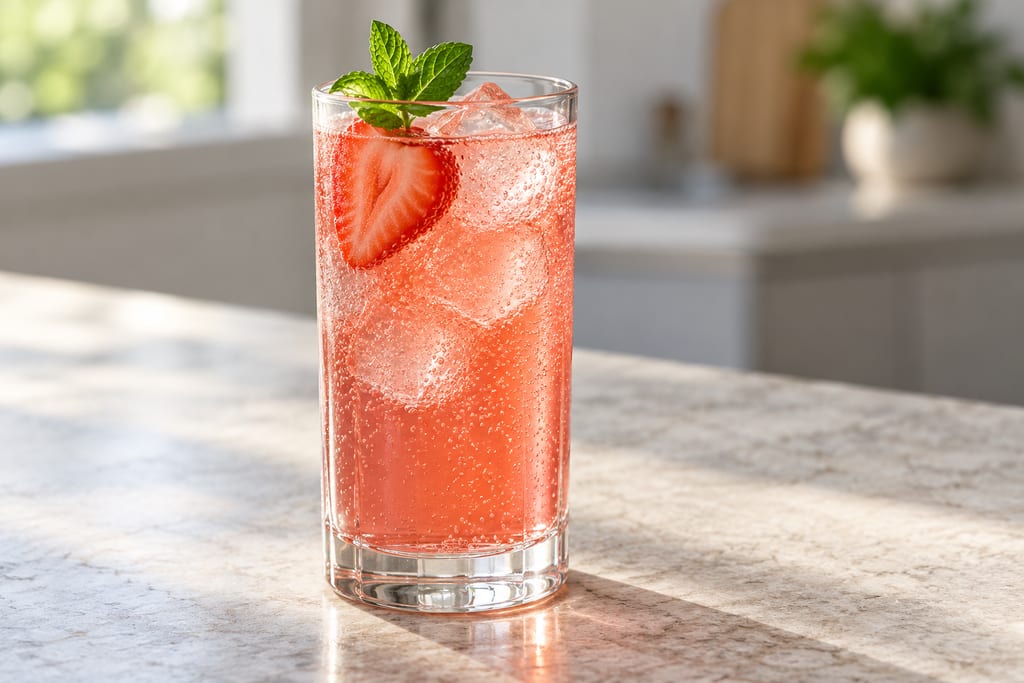
Carbonated cordial, shrub or juice
A cold finished drink charged with carbon dioxide in a home carbonator that accepts liquids other than water. Carbonating is not fermentation and does not preserve the drink.
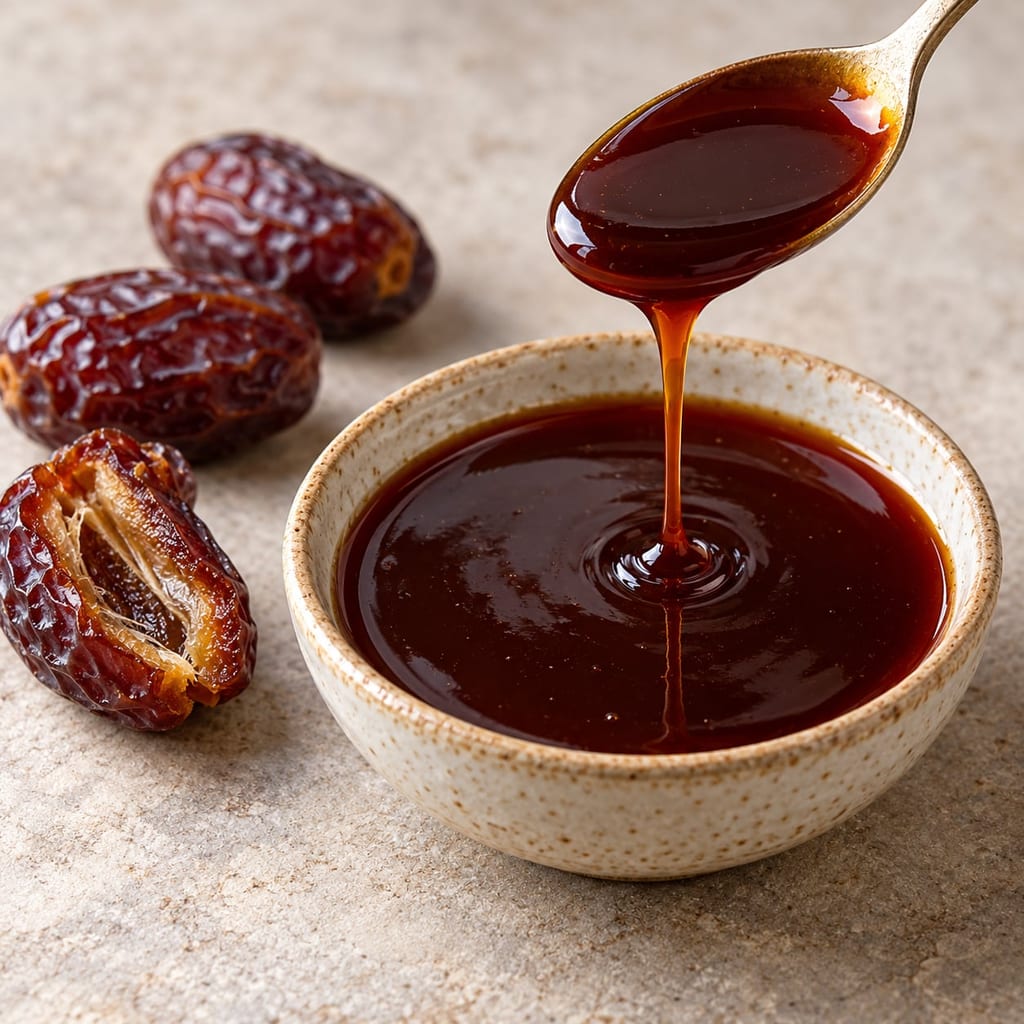
Date syrup and date pulp (dibs, silan family)
A thick, dark, very sweet syrup made from dates, known as dibs, rub, silan or date molasses. It sweetens tahini and desserts and glazes or sauces savoury dishes across the Middle East and North Africa.
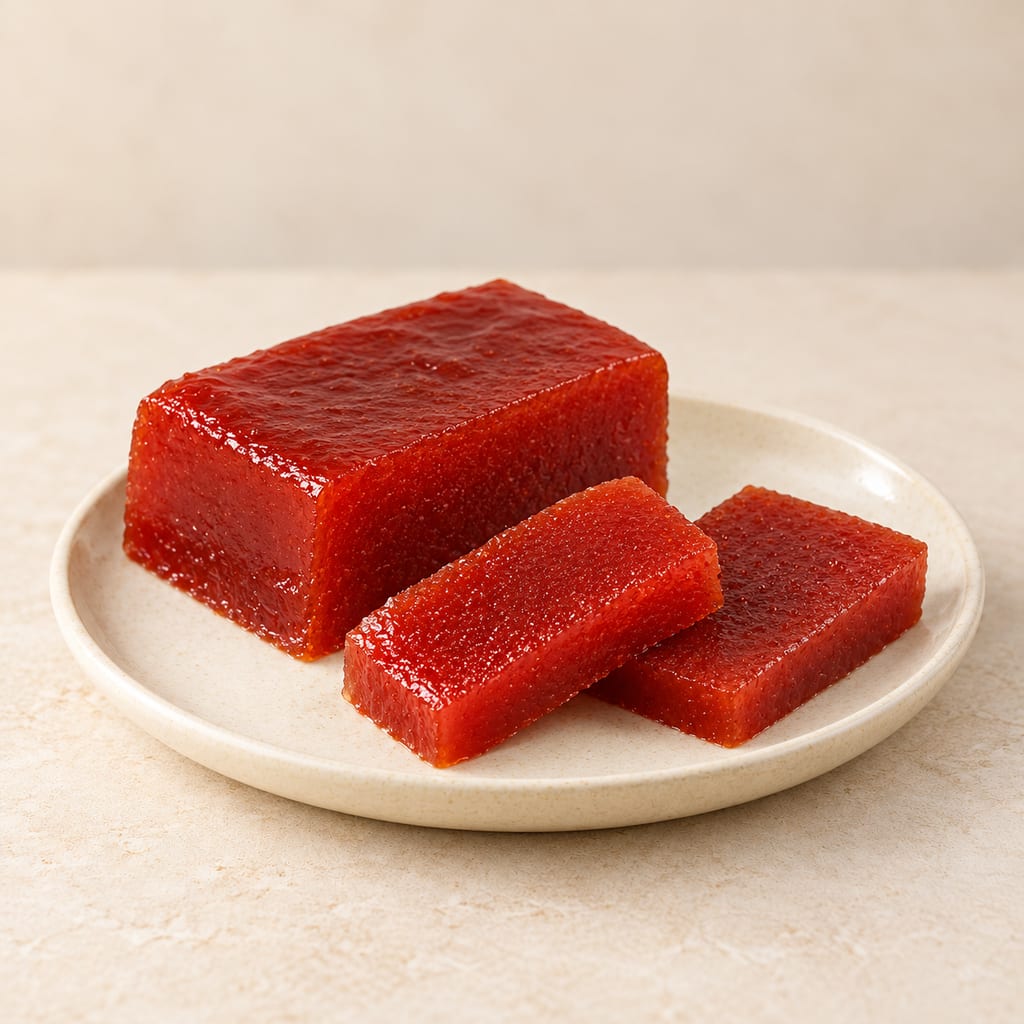
Dulce de membrillo, pressure-cooker method
Dulce de membrillo is quince cooked with sugar into a firm paste for slicing. This family method softens the fruit in a pressure cooker, then blends it and leaves it to set.
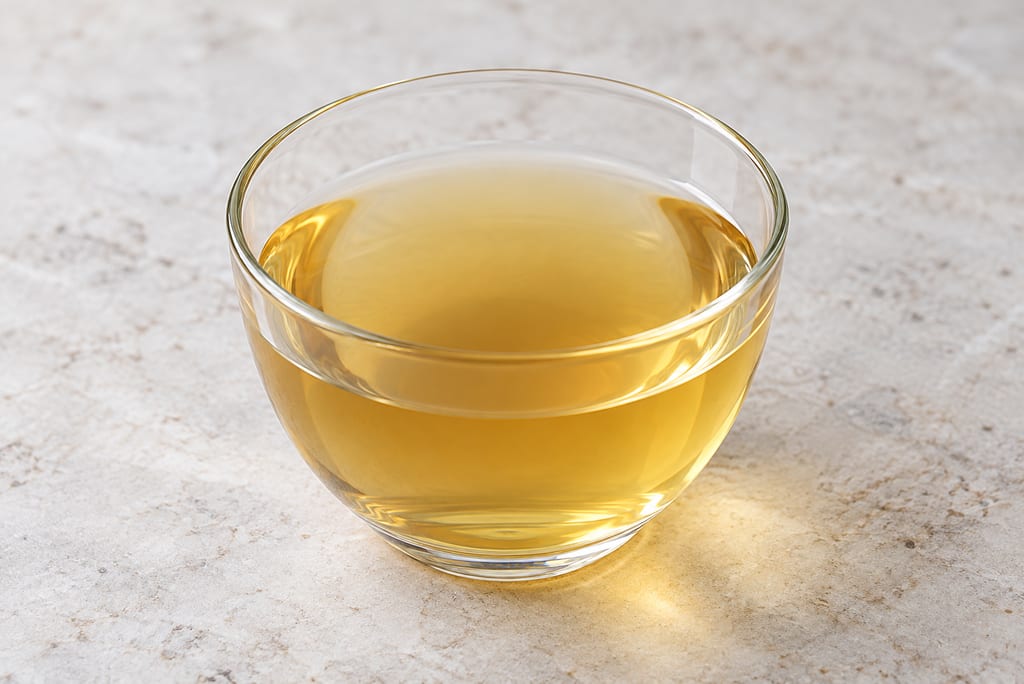
Freeze-thaw clarified stock or juice
A liquid set with a little gelatin, frozen solid, then thawed through cloth in the refrigerator so that clear liquid drips out and the cloudy gel stays behind.
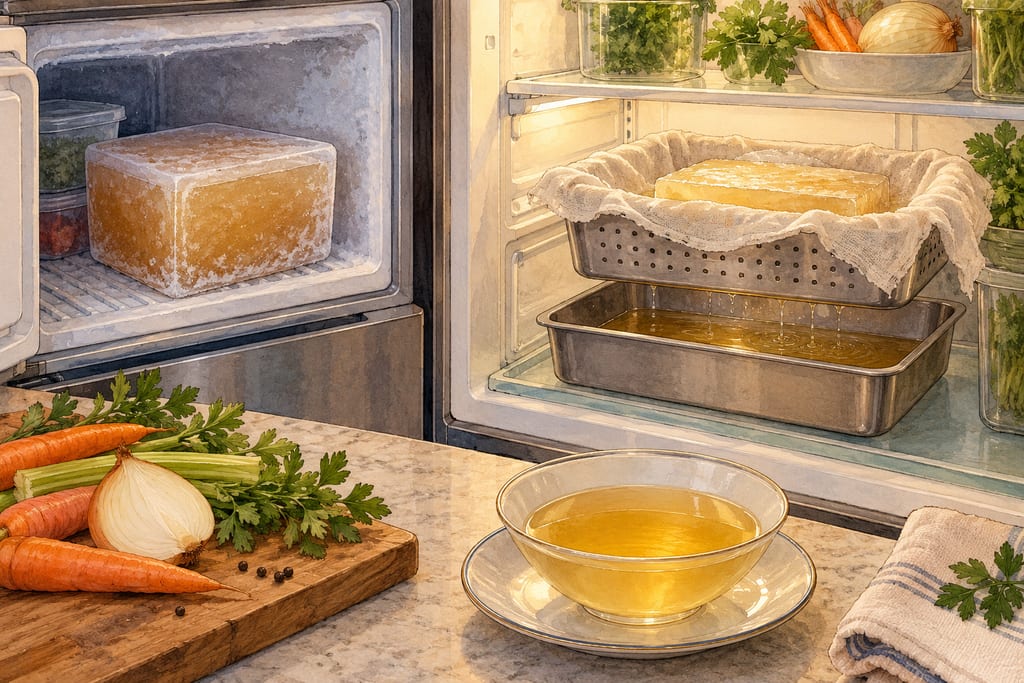
Freezer, fridge and cloth clarification set-up
A liquid set with 5 g gelatin per kg is frozen solid, then thawed in the refrigerator in a cheesecloth-lined perforated pan; the drip comes out clear.
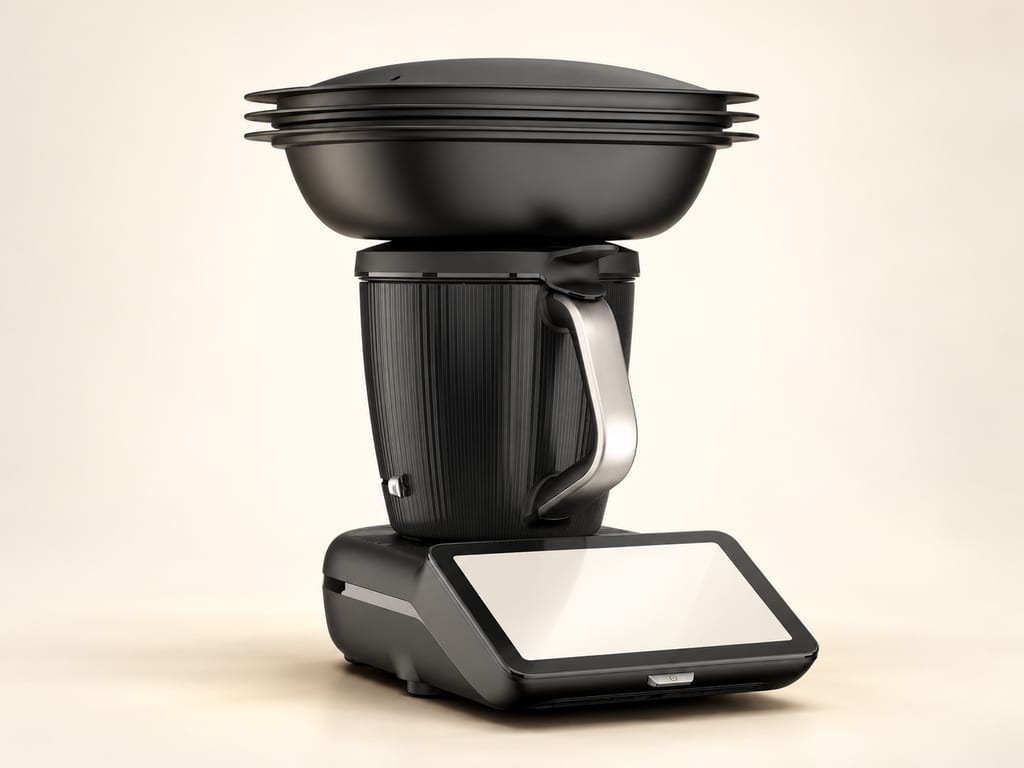
Heated cooking mixer (Thermomix type)
A modern electric countertop machine that heats, chops and stirs food in one mixing bowl. Cookidoo lists Thermomix models for making powidl and quince membrillo, although the full methods are not public on the pages reviewed.
Maple syrup (batch method)
Maple sap of about two percent sugar boiled down in a shallow pan until it reaches syrup density, the sugar concentration the standard defines, then filtered hot and packed hot.
Community
No community contributions have been published for this entry yet.
Share what you made
Sign in to contribute. Published comments and photos are free to read.
Sources
Oregon State University Extension Service, revised October 2025
Fruit butters (SP 50-304)Cited in: Two jobs: separating and boiling down; Fruit butter: four routes to the same thick spread; Why a lid, a crock and a thick paste slow evaporation
FAO Agricultural Services Bulletin No. 101, Rome, 1993
Date palm products, Chapter 3 (derived date products: date juice, date syrup)Cited in: Two jobs: separating and boiling down; Date syrup: water in, water out; Grape pekmez: taking out acid before water
University of Minnesota Agricultural Extension Service, Forestry No. 11-1976 (date read from OCR; probable)
Homemade Maple SyrupCited in: Two jobs: separating and boiling down; Maple syrup: most of what you boil is water
Oregon State University Extension Service, revised July 2024
Preserving foods: Fruit juice and apple cider (SP 50-455)Cited in: Steam, drip or press: getting the juice out
Oregon State University Extension Service, Home Food Safety and Preservation Program; first video by Utah State University Extension
Steam juicer (Library of Things), with the videos 'How to Use a Steam Juicer' and 'Water Bath Canning: Fruit Syrup'Cited in: Steam, drip or press: getting the juice out
Utah State University Extension (peer-reviewed fact sheet), 20 May 2026
Preserving the Harvest: How to Preserve ChokecherriesCited in: Steam, drip or press: getting the juice out
National Center for Home Food Preservation, University of Georgia (adapted from So Easy to Preserve, 6th ed., 2014)
Jellied Product IngredientsCited in: Pectin: what the juice carries into a jelly; Powidl and membrillo: pastes cooked until they stand
National Center for Home Food Preservation, University of Georgia (So Easy to Preserve, 6th ed., 2014)
Extracting Juice for JellyCited in: Pectin: what the juice carries into a jelly
National Center for Home Food Preservation, University of Georgia (USDA Complete Guide, 2015)
Making Jelly without added PectinCited in: Pectin: what the juice carries into a jelly
National Center for Home Food Preservation, University of Georgia (So Easy to Preserve, 6th ed., 2014)
Testing Jelly without Added PectinCited in: Pectin: what the juice carries into a jelly
N.C. Cooperative Extension, Lenoir County Center, 20 September 2021
Fall is the Season for Apples (recipe 'Slow Cooker Apple Butter')Cited in: Fruit butter: four routes to the same thick spread
Instant Pot
Apple ButterCited in: Fruit butter: four routes to the same thick spread; Why a lid, a crock and a thick paste slow evaporation
National Center for Home Food Preservation, University of Georgia (adapted from USDA Complete Guide to Home Canning, 2015)
Apple ButterCited in: Fruit butter: four routes to the same thick spread
Crock-Pot (Newell Brands), UK manuals
Crock-Pot SCV400RD 3.5L Slow Cooker instruction bookletCited in: Why a lid, a crock and a thick paste slow evaporation
Cookidoo (Vorwerk), German site
Powidl - CookidooCited in: Powidl and membrillo: pastes cooked until they stand
Cookidoo (Vorwerk), Spanish site
Dulce de membrillo casero - CookidooCited in: Powidl and membrillo: pastes cooked until they stand
U.S. Food and Drug Administration, inspection technical guide (content current as of 27 August 2014)
Water Activity (aw) in FoodsCited in: Powidl and membrillo: pastes cooked until they stand
The Kitchn (Apartment Therapy Media)
Date syrup (home recipe)Cited in: Date syrup: water in, water out
Food Science and Nutrition Studies 2(2), Scholink, 2018 (DOI 10.22158/fsns.v2n2p25)
Production and Characteristics of a Traditional Food: Molasses (Pekmez)Cited in: Grape pekmez: taking out acid before water
Utah State University Extension, with The Forest Farmers, LLC (date not printed)
044 - Maple Sap Collection and Sap Processing Systems (Utah Forest Facts)Cited in: Maple syrup: most of what you boil is water
Cooking Issues, the International Culinary Center's Tech 'N Stuff blog, 20 July 2010
Simple Agar Clarification: 1 Year Anniversary, Plus a Rundown of Current Clarification TechniquesCited in: Freezing to clarify: the gelatin method; Bubbles and rapid infusion: pressure without fermentation
SodaStream UK
can I fizz liquids other than water in my Sodastream?Cited in: Bubbles and rapid infusion: pressure without fermentation
Drinkmate USA (iDrink Products)
Drinkmate FAQsCited in: Bubbles and rapid infusion: pressure without fermentation
Cooking Issues, 11 August 2010
Infusion Profusion: Game-Changing Fast-N-Cheap TechniqueCited in: Bubbles and rapid infusion: pressure without fermentation
iSi GmbH (iSi Culinary)
Aromatise: What is Rapid Infusion?Cited in: Bubbles and rapid infusion: pressure without fermentation
Gaps
- The cooking temperatures, speeds, venting and maximum batch for cooking-mixer powidl and membrillo have not been published openly.
- The home date-syrup recipe's quantities and timings are not known.
- No measured reduction time exists for slow-cooker fruit butter at a stated fill with the lid ajar; the slow-cooker-to-pan, pressure-cooker-to-oven and brewing-kettle maple routes are untested.
- Home quantities for grape pekmez, and any method for petimezi, saba, hibiscus cordial or tamarind concentrate, have not been published.
- iSi's Rapid Infusion rest time (at least 2 hours) and Dave Arnold's 1-minute method differ.
- No shelf life is established for homemade powidl, membrillo, date syrup, steam-extracted juice or clarified stock.
- Apart from the tested stovetop apple butter, none of the slow-cooker, pressure-cooker, cooking-mixer or freezer routes has a validated canning process.
Updated 2026-10-27