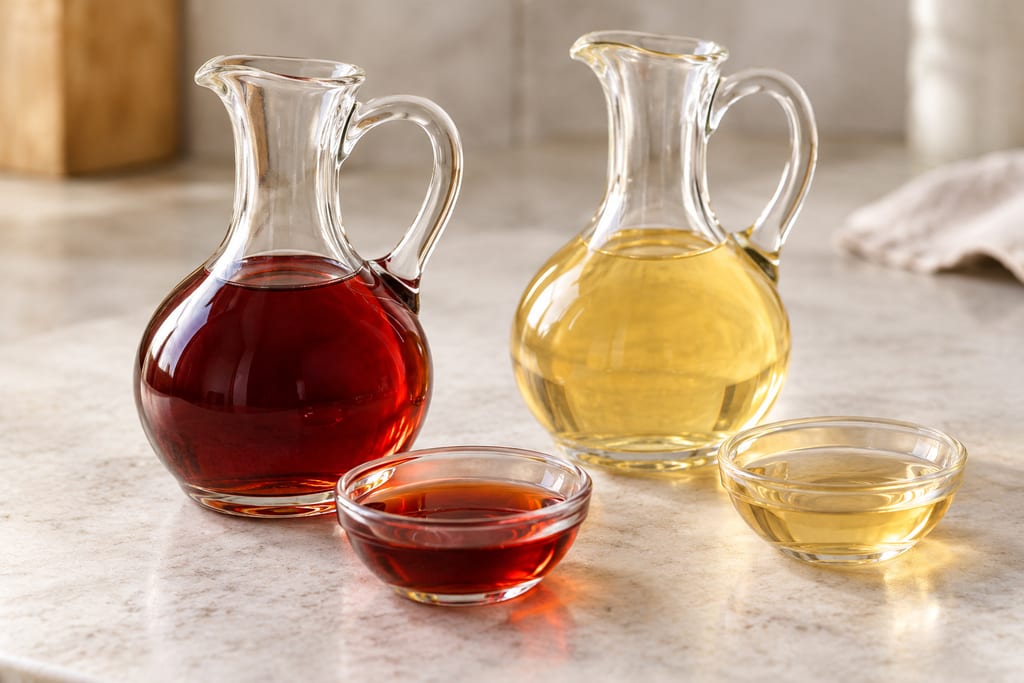
Wine Vinegar
Wine vinegar is made by the aerobic oxidation of wine's alcohol into acetic acid by bacteria, producing a sour, wine-derived condiment used in dressings, sauces, marinades and preserved foods.
 FermenteaWhere food goes to change
Ajvar-style roasted pepper relish
A small roasted red-pepper and eggplant relish with sunflower oil, wine vinegar, garlic and salt. It is a modern ajvar-style trial, not a validated winter preserve or a copy of a commercial formula.
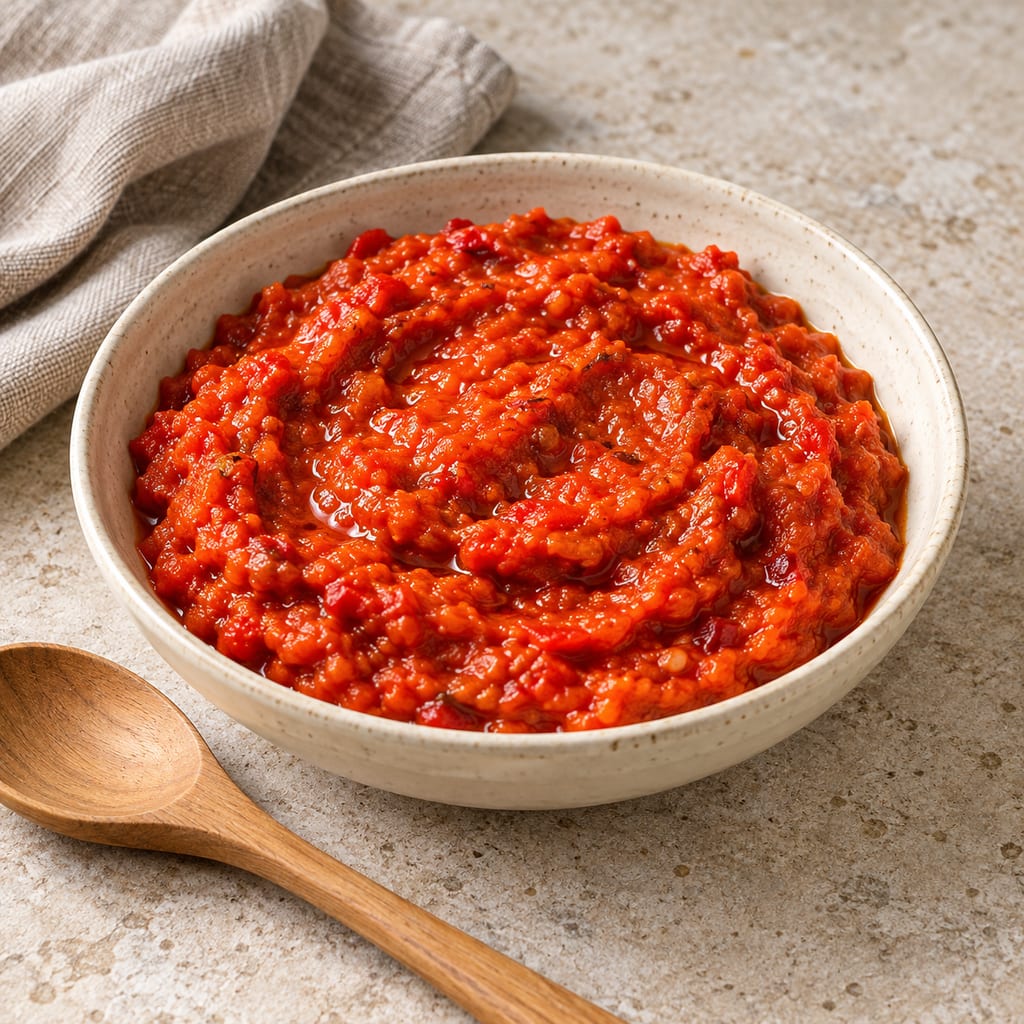
Ajvar is made in many household and commercial forms across the Balkans. FAO describes Macedonian pepper processing: peppers are roasted, peeled and cooked further with salt and oil; families vary the additions, sometimes using tomato, carrot or roasted eggplant. The word therefore names a family of pepper preparations rather than one fixed formula. This small batch uses red pepper and eggplant, with sunflower oil, wine vinegar, garlic and salt.
That distinction matters when comparing recipes. The linked Ajvar page documents a separate, much larger family batch and its historical and regional forms. This record keeps a smaller modern trial distinct: the measured formula comes from an archive-developed prototype, not from a source's traditional recipe, and the method has not been kitchen-tested. Its link to Ajvar says that the relish belongs to the same preparation family; it does not claim a Leskovac designation, a Macedonian household lineage or a tested commercial formula.
Roasting softens the pepper flesh and loosens its skin. Turning the vegetables exposes their surfaces to the oven heat; the target stated by the formula is blistered skin with softened flesh, not a calibrated internal temperature. Covering warm peppers for a short rest lets steam loosen the skin so it can be peeled away. Removing seeds and draining the flesh before weighing keeps loose liquid from simply being carried into the pan.
Cook the eggplant until tender and scoop out the flesh rather than measuring it raw. The recipe specifies 220 g of prepared pepper flesh and 45 g of cooked eggplant flesh. Those weights describe the material after its separate cooking and draining stages; they are not the weights of the raw vegetables to buy. Once weighed, the two cooked vegetables are minced or pulsed with the measured oil, vinegar, garlic and salt.
The final simmer concentrates the mixture as water evaporates. Stirring often helps keep the thickening paste moving across the pan rather than sitting in one hot spot. The source gives a 15–25 minute window and a spoonable texture cue, but not a final temperature, fixed evaporation rate or measured endpoint. A wide pan, the moisture left in the vegetables, and the size of the pieces all affect how quickly it thickens. The stated time is the archive's formula instruction, not a general Ajvar cook time.
This is a fresh cooked relish, not a winter preserve. The formula has no measured pH or water activity, microbial testing or validated heat process. A small amount of wine vinegar and a simmer add acidity and remove some water, but neither a sour taste nor a thick texture demonstrates that the relish can be kept at room temperature. The recipe therefore makes no canning or shelf-life claim.
Use the refrigeration instruction as a handling control: place the cooked relish promptly in a shallow clean container, refrigerate it within two hours, and keep the refrigerator at or below 40°F (4°C). FoodSafety.gov explains the two-hour rule and shallow-container cooling for leftovers. The National Center for Home Food Preservation explains that even for salsa, safe home canning depends on a research-tested formula and its stated vegetable-to-acid proportions. That guidance is not a canning method for this ajvar-style relish; it is why no process has been borrowed from a different food.
The formula's yield is estimated at 300 g before the last simmer. Evaporation lowers the finished amount, and the record gives no scale-up evidence or storage duration. Freezing may be considered for a fresh portion if its texture change is acceptable, but no duration or quality result has been tested for this specific mixture.
The formula starts with 220 g of prepared roasted red pepper and 45 g of cooked eggplant, a ratio of about 4.9 parts pepper to one part eggplant by weight. It adds 25 g sunflower oil, 7 g wine vinegar, 1 g minced garlic and 2 g salt. These are the quantities in the archive's own prototype. They are not measured out of a source recipe, and the page does not suggest changing them to make a pantry preserve.
Podravka's mild ajvar provides a useful commercial comparison, not a template: the current label lists 76% pepper, 12% eggplant, sunflower oil, alcohol vinegar, 2.6% tomato concentrate, salt, sugar, spices and hot feferon. The pepper-to-eggplant ratio on that label is about 6.3 to one. The home prototype is more eggplant-heavy by this simple comparison, adds garlic and wine vinegar, and omits tomato concentrate, sugar, spices and feferon. It is related by ingredient family, not a copy of the product or a reconstruction of its proportions.
The official product page describes the commercial blend's ingredients and uses but does not provide a home method or a tested small-batch conversion. The figures here describe a single untested trial. They should not be scaled by multiplying every line: a larger quantity changes how quickly a pan sheds moisture, how much surface area is exposed to heat and how long the mixture takes to concentrate.
Prepared red pepper supplies most of the mass and the recognizable red color. Roasting gives the flesh the cooked flavor associated with Ajvar and softens it enough to peel, grind and reduce. The FAO account documents roasting, peeling and further cooking as central steps in Macedonian pepper processing; this prototype uses those broad operations but sets its own weights and seasoning.
Cooked eggplant is a smaller but substantial part of this version. It makes the mixture less purely pepper-based and contributes soft flesh that can be pulsed into the spread. FAO notes eggplant as one of the additions some Macedonian families use, while the Leskovac protected specification sets out its own pepper-focused ingredient identity. That contrast shows why eggplant belongs to some Ajvar forms but cannot be assumed in every one.
Sunflower oil is incorporated gradually with the ground vegetables and gives the paste a smooth, glossy mouthfeel. The measured wine vinegar brings a tart note, but its 7 g quantity is not an acidification calculation. Garlic adds a savory aroma; salt seasons the vegetable mixture. None of these sensory roles establishes a fermentation stage or a safety endpoint. The recipe is cooked and non-fermented, and its texture cue is for eating quality only.
Ajvar is often introduced as a Balkan preserve, but household practices and commercial definitions vary by place and period. Miladina Monova's study follows Macedonian household cooking and its changing social context. It describes collective work around seasonal peppers and the role of preserving in household provisioning; it does not establish one national recipe or give the weights used here. The exact small-batch formula in this record has no independent historical attestation.
FAO's account of Macedonian peppers focuses on processing and the crop's place in food practice. A different regional reference, the Leskovac product specification, defines a protected local product through its own area, ingredients and operations. Its name applies to that specific designation, not to every pepper relish called Ajvar. This page links to the broader Ajvar record so readers can follow its sourced history and regional distinctions without mistaking this trial for one of them.
The link is a classification of relationship, not a claim of origin. This version is a contemporary kitchen-scale adaptation, with vinegar and garlic in a small formula and a refrigeration-only handling instruction. No source found for it describes a traditional family, protected product or place of invention.
Ajvar is used as a spread, relish or side dish. Podravka lists grilled foods, sandwiches, sausages, sauces, stews and soups among uses for its mild commercial product. Serbia's National Tourism Organisation describes it served with scrambled eggs and white cheese. These examples show how Ajvar can move from bread or a side plate into a cooked dish, but they do not prescribe a serving for every regional type.
This prototype's roast pepper and eggplant base suits bread, sandwiches or a small side portion. Because the garlic and vinegar quantities differ from commercial examples, its flavor should be described as this formula's own rather than as a universal Ajvar taste. The record does not establish an adjustment range; changing pepper type, eggplant ratio, oil, vinegar or salt would create a new formulation, and changing acid or vegetables would also change what could be said about preservation.
A small batch makes sense for trying the texture and seasoning while it is fresh, but it is not evidence of safe storage. The final amount varies as water leaves the pan, so serving portions should be based on the finished relish rather than the 300 g pre-simmer estimate.
The steps preserve what the formula actually specifies: roast, cover, peel, remove seeds, drain, measure the cooked flesh, mince or pulse, and simmer with frequent stirring. Roasting time is left to the physical cues in the instructions because the source gives no duration. The final simmer has a source-batch window, but no numerical temperature or final concentration. A spoonable consistency means the mixture has thickened to the desired texture; it does not show that an acidified or shelf-stable product has been made.
Ajvar production can demand long, steady cooking in larger household and commercial batches. That experience helps explain why stirring and water removal matter, but it cannot be transferred as a fixed two-hour rule to this smaller pan. The family formula elsewhere on the Ajvar page uses ten kilograms of peppers and reports roughly two hours of cooking; this trial starts with 265 g of prepared vegetable flesh and simmers for 15–25 minutes. The scale, vessel, raw material and process differ, so the timings should remain separate.
Where a preservation process is absent, the honest result is a fresh cooked relish with no established storage period. Do not infer shelf stability from vinegar, oil, salt, a reduced texture or a sealed container. Keep this formula refrigerated as directed and do not use it as a canning recipe. A tested process for another vegetable mixture cannot validate this one by resemblance.
The ingredient line names red peppers and eggplant but does not specify a cultivar, growing region or raw purchase weight. It gives weights for the cooked flesh after roasting, peeling and draining. That choice makes the formula repeatable at the stage it measures, while leaving the amount of raw produce needed open: different peppers shed different amounts of water and skin, and the eggplant flesh is weighed only after cooking.
The official Leskovac specification is more specific about its own regional product and its pepper varieties. Those details help explain what a protected local identity can mean, but they are not requirements for this home-style trial. Likewise, FAO's account records several Macedonian family additions, but it does not establish a universal list or endorse a particular proportion for this formula.
Do not assume that any change named in another Ajvar recipe fits these quantities. A different pepper, eggplant amount, chilli, tomato, vinegar or oil would change the composition and the eating result. The base formula is retained as written; this record has no tested substitution range. Its name signals a modern relish inspired by Ajvar, and the existing variant link points to that broader preparation without claiming that the two recipes are interchangeable.
Ajvar is made in varied Balkan household and commercial forms. FAO describes Macedonian pepper processing and notes that families differ in additions, including roasted eggplant. Podravka's commercial roasted-pepper ajvar lists pepper, eggplant, oil, hot pepper and salt. This small batch adds wine vinegar and garlic and is a modern untested adaptation, not a traditional or preserved formula.
Yield 300 g before final simmering · Scaling: source batch only
The formula contains moist vegetables, oil and garlic but has no measured pH, water activity, microbial test or validated heat process.
Hazard sourceTransfer promptly to a shallow clean container and refrigerate within two hours; keep the refrigerator at or below 40°F (4°C).
Control sourceDo not can or store this small-batch formula at room temperature; it has no tested acidification or processing schedule.
FAO documents Macedonian ajvar preparation; this modern home batch is not claimed as a local original or validated preserve.
Wine vinegar is made by the aerobic oxidation of wine's alcohol into acetic acid by bacteria, producing a sour, wine-derived condiment used in dressings, sauces, marinades and preserved foods.
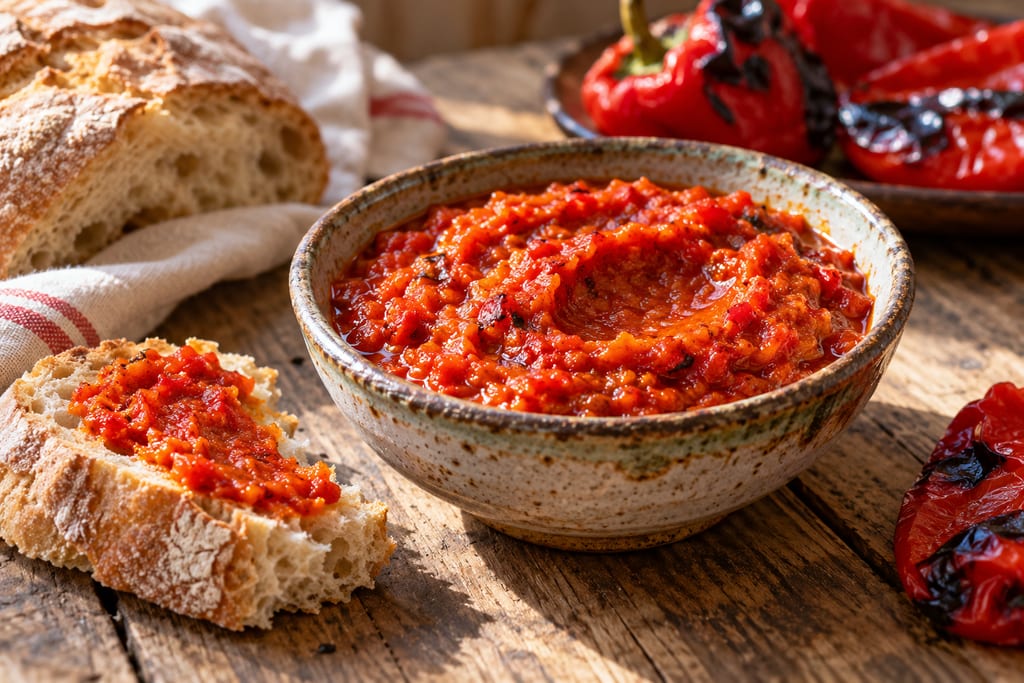
Ajvar is a cooked Balkan pepper preserve built around roasted red peppers, peeled, drained, ground and slowly fried with oil and seasoning. Leskovac’s protected version is a pepper specialty; regional versions vary.
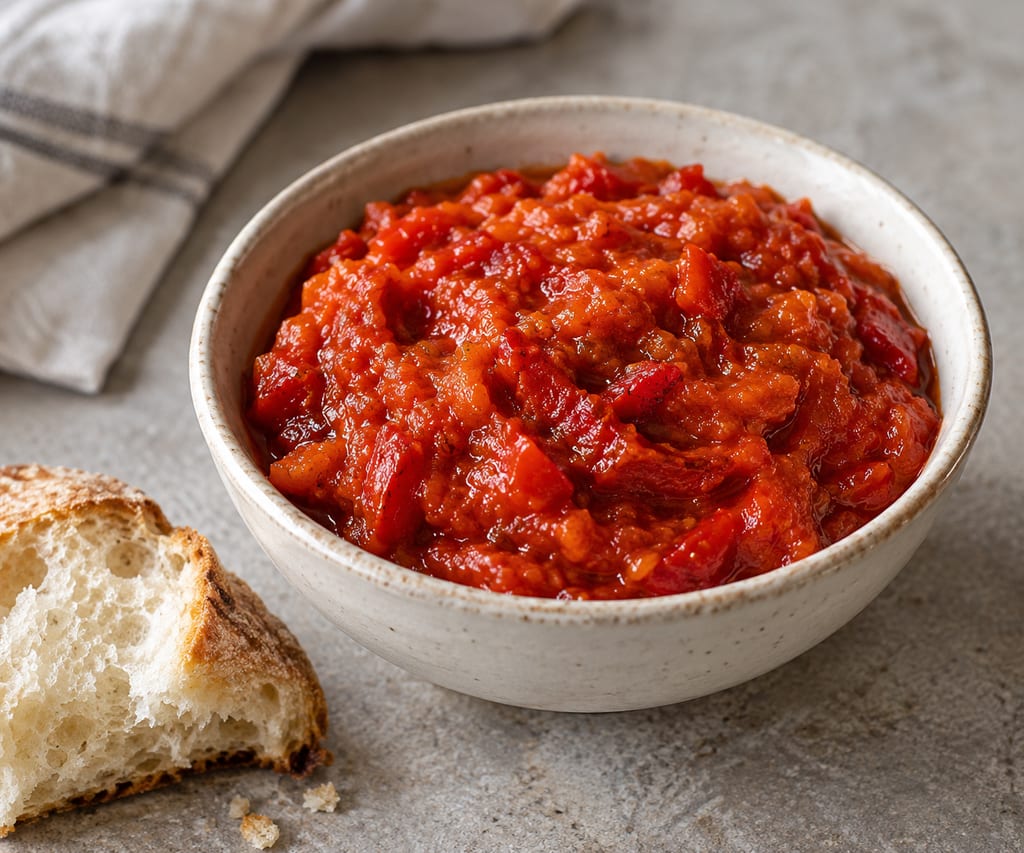
A Balkan relish of cooked peppers, tomatoes, aubergine and garlic in oil, sometimes made hot, served cold and named for its spiciness.
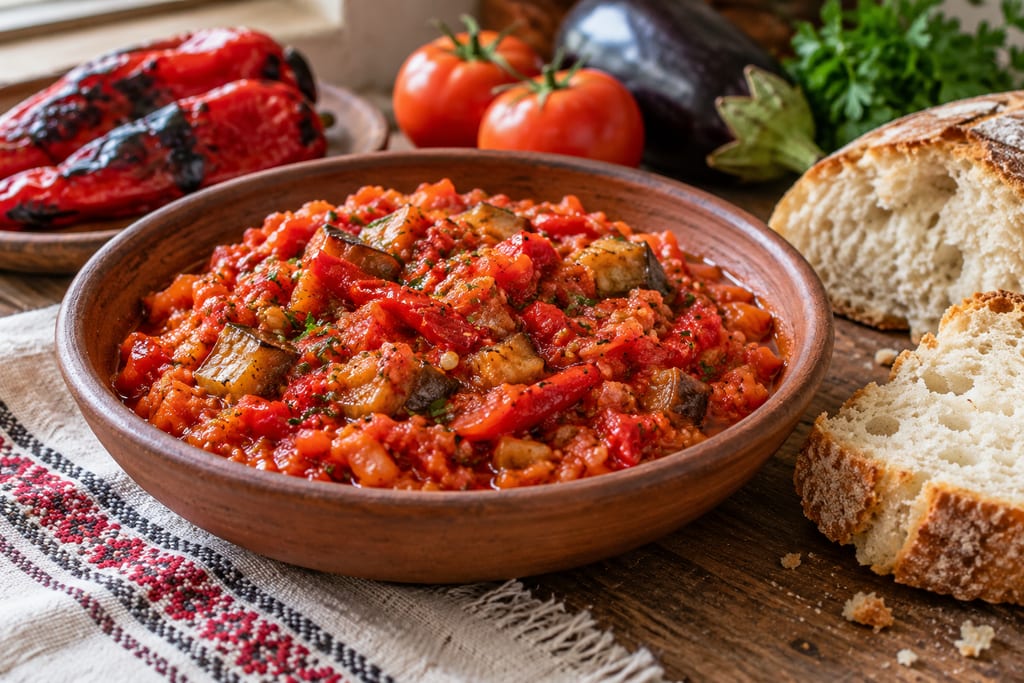
A Balkan relish of roasted red peppers and tomatoes, often with aubergine and garlic, cooked down into a spread for the winter store.
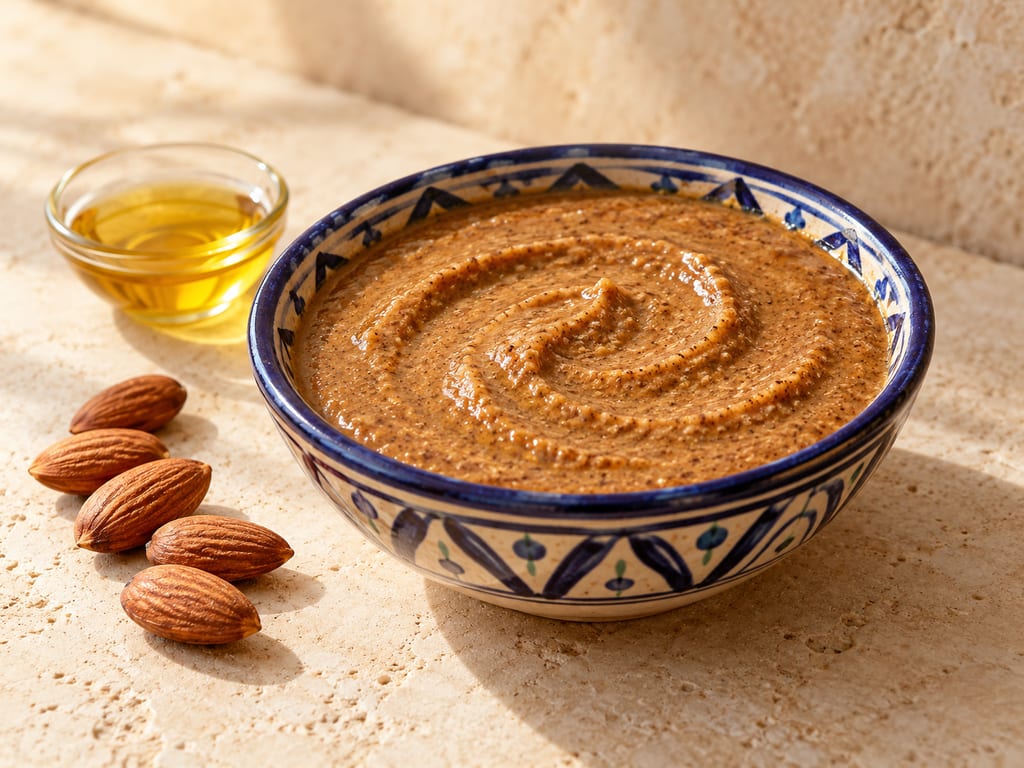
Amlou is a nutty, lightly sweet Moroccan spread of roasted almonds, culinary argan oil and honey. The almonds are ground first, then loosened with oil and sweetened; the balance can range from a thick spread to a dip.
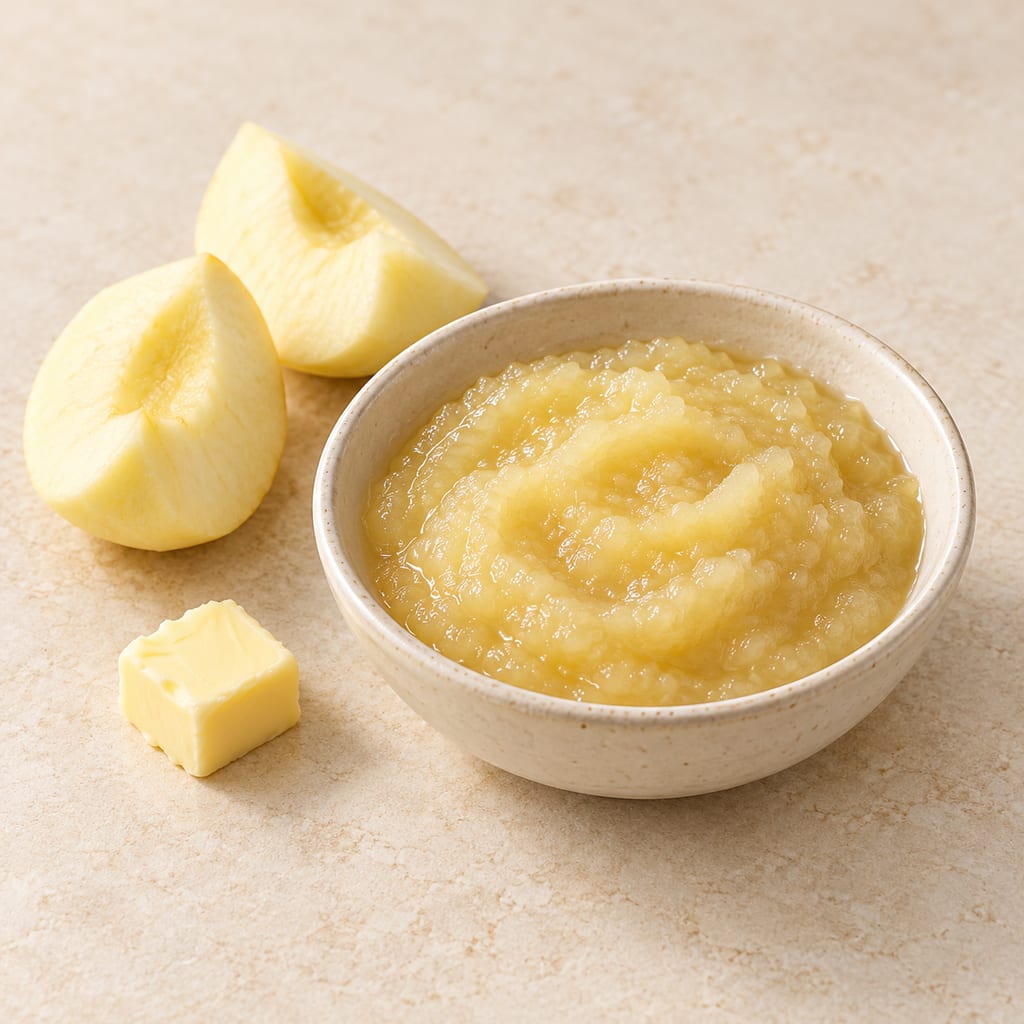
Apple sauce for goose and pork is a plain English accompaniment: cooked apples pulped with water, then sweetened with sugar and finished with a little butter.

A warm dip of garlic, anchovy and olive oil, often enriched with butter, that Piedmont serves over a flame with raw and cooked vegetables and bread.
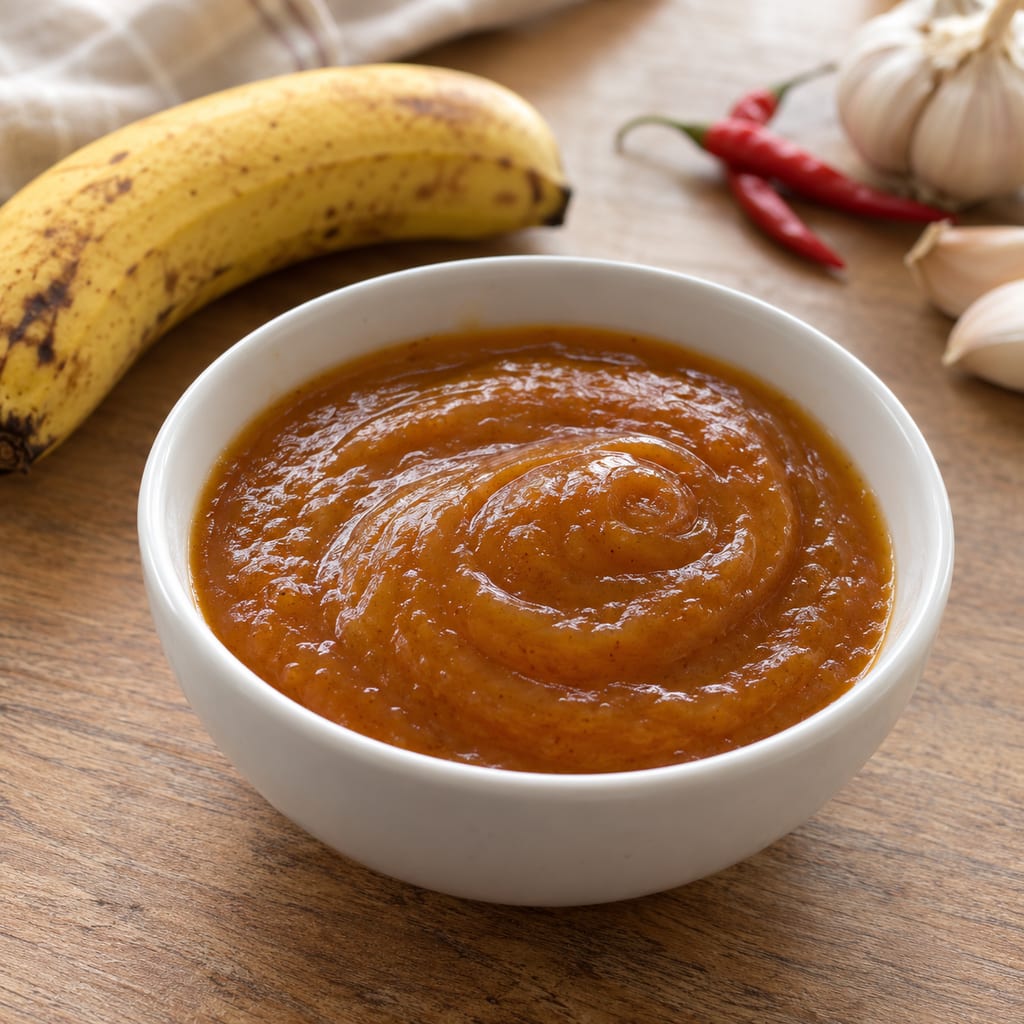
A sweet-hot table sauce of ripe banana simmered with vinegar, sugar, onion, garlic and fresh chilli, in the manner of Philippine banana ketchup. An untested development batch of about 500 g.
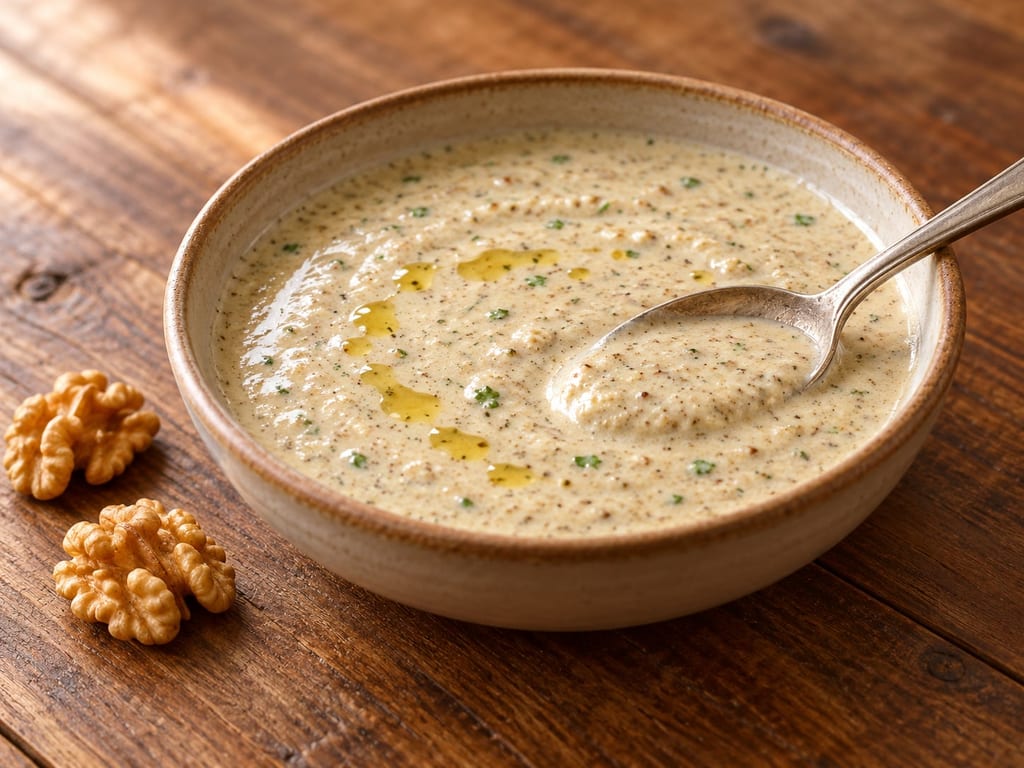
A Georgian walnut sauce of ground walnuts, garlic, vinegar and spices, thinned with water or broth. It is served with poultry, vegetables and bread, and is the sauce of the dish satsivi.
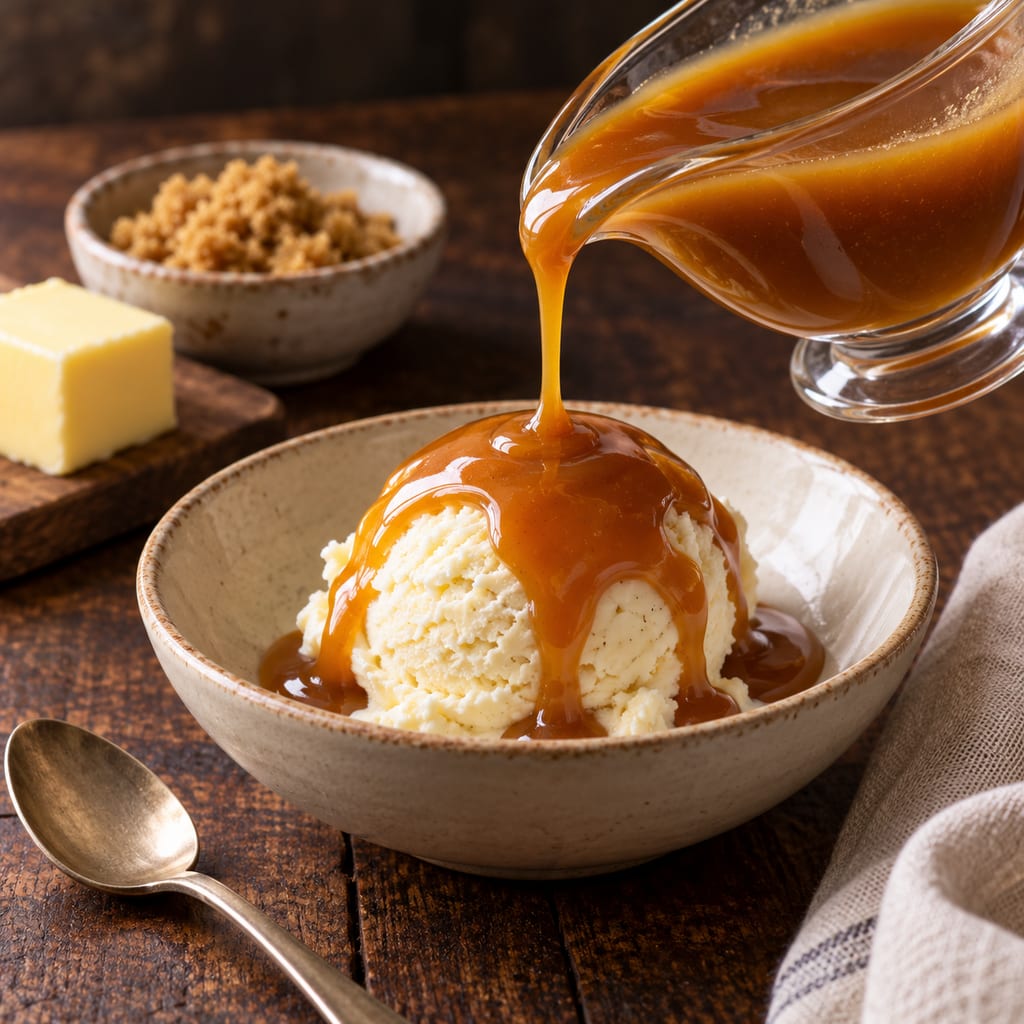
A pourable dessert sauce of brown sugar, butter and cream, with a little corn syrup and salt. It is the sauce form of the butterscotch confection and is made without water, unlike caramel.
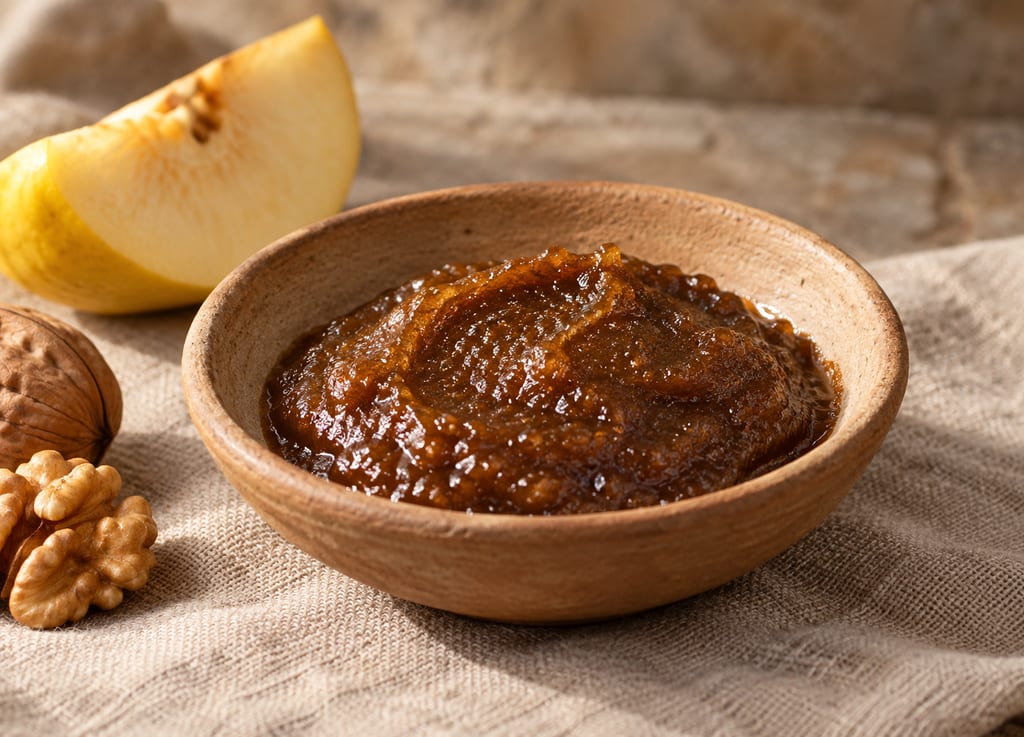
Byzantine murrī is a cooked imitation of murrī from the medieval Arabic repertoire, made from scorched honey, toasted bread, walnuts, quince, carob and spices rather than from a long grain fermentation.
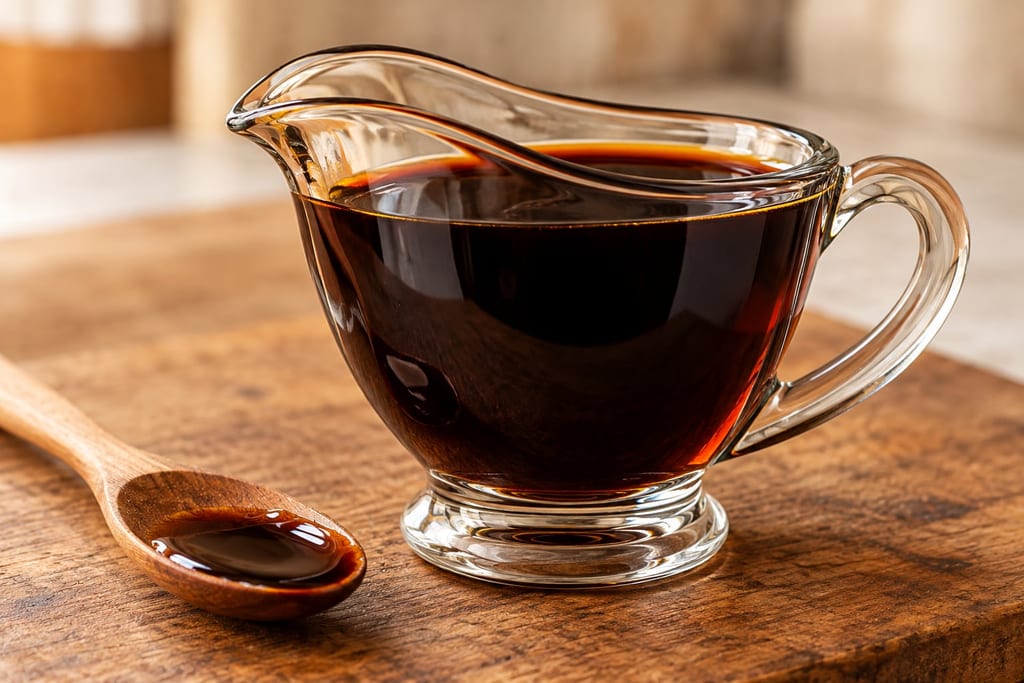
Caribbean browning is a dark liquid of deeply caramelised sugar, used in small amounts for colour and a smoky, bitter-sweet flavour in stews and black cake.
No community contributions have been published for this entry yet.
Sign in to contribute. Published comments and photos are free to read.
Food and Agriculture Organization of the United NationsHistory · Geography · Method · Variation
Transformation of the Macedonian pepperFAO describes roasting and peeling peppers for Macedonian ajvar and notes that some batches add roasted eggplant.
The source describes a food tradition and a process, not a tested recipe for this home batch.
Cited in: A pepper relish with a Balkan context; Roast, measure and simmer; How the ingredients shape the relish; Ajvar's histories are broader than this trial; Reading the method and its limits; Choosing vegetables for this exact version
PodravkaCommercial context · Ingredient family
Ajvar od pečenih paprika - ljutiPodravka's roasted-pepper ajvar lists roasted pepper, eggplant, sunflower oil, hot pepper and salt.
Its shelf-life and product-storage conditions do not validate the archive's different home formula.
Cited in: A pepper relish with a Balkan context; A deliberately small formula; How the ingredients shape the relish; Serving a concentrated pepper relish
USDA Food Safety and Inspection ServiceSafety
How do you know the temperature of your refrigerator?Refrigerators should be kept at 40°F (4.4°C) or below.
Cited in: No shelf-stability claim
USDA Food Safety and Inspection ServiceSafety
At what temperature should perishable foods be stored?Perishable foods should be kept refrigerated at 40°F or below.
FoodSafety.govSafety
4 Steps to Food SafetyPerishable foods should be refrigerated within two hours; leftovers should be put in shallow containers and refrigerated promptly.
FoodSafety.gov sets refrigerators at 40°F (4°C) or below and advises using an appliance thermometer.
Cited in: No shelf-stability claim; Reading the method and its limits
PodravkaCommercial comparison · Ingredients · Use
Ajvar – blagiPodravka's mild ajvar label lists pepper (76%), eggplant (12%), sunflower oil, alcohol vinegar, tomato concentrate (2.6%), salt, sugar, spices and hot feferon pepper; it describes use with grilled dishes, sandwiches, sausages and as an addition to sauces, stews and soups. Those proportions describe this commercial product, not the archive's home formula.
Cited in: A deliberately small formula; How the ingredients shape the relish; Serving a concentrated pepper relish; Reading the method and its limits
National Center for Home Food Preservation, University of GeorgiaSafety · Home preservation context
Canning Your Own Salsa RecipeThe National Center explains that safe canning assessment depends on the precise recipe and preparation method; vegetable proportions, acid and final acidity affect the process. That salsa guidance is used only to explain why this untested pepper-and-eggplant relish has no canning instructions; it does not validate this formula or transfer a salsa process to it.
Cited in: No shelf-stability claim; Reading the method and its limits
National Center for Home Food Preservation, University of GeorgiaSafety · Home preservation context
Ingredients for Salsa RecipesThe Center says safe home-canned salsa depends on the tested vegetable and acid amounts and directs users not to can salsa that does not follow a research-tested recipe. This caution is relevant only as preservation context; it does not validate this relish or transfer a salsa process to it.
Cited in: No shelf-stability claim; Reading the method and its limits
Berghahn Books / Max Planck Institute for Social AnthropologyHistory · Household use · Regional context
When the Household Meets the State: Ajvar Cooking and Householding in Postsocialist MacedoniaMonova's field study documents Macedonian household ajvar-making and its changes over time, including collective work and winter household provisioning. The study distinguishes household practices from a single universal recipe; it does not give the proportions of this small-batch adaptation.
Cited in: A pepper relish with a Balkan context; Ajvar's histories are broader than this trial
Intellectual Property Office of the Republic of SerbiaRegional context · Method · Sensory description
Leskovački domaći ajvar — product specificationThe protected Leskovac specification sets out its own local pepper-based ingredients, process and product qualities. It is a comparison for regional context only; it is not the formula or process for this small-batch relish.
Cited in: Ajvar's histories are broader than this trial; Choosing vegetables for this exact version
National Tourism Organisation of SerbiaServing · Culinary use
Authentic Tastes of SerbiaThe National Tourism Organisation describes ajvar served with scrambled eggs and white cheese, supporting a documented serving comparison rather than a claim about this recipe's origin.
Cited in: Serving a concentrated pepper relish