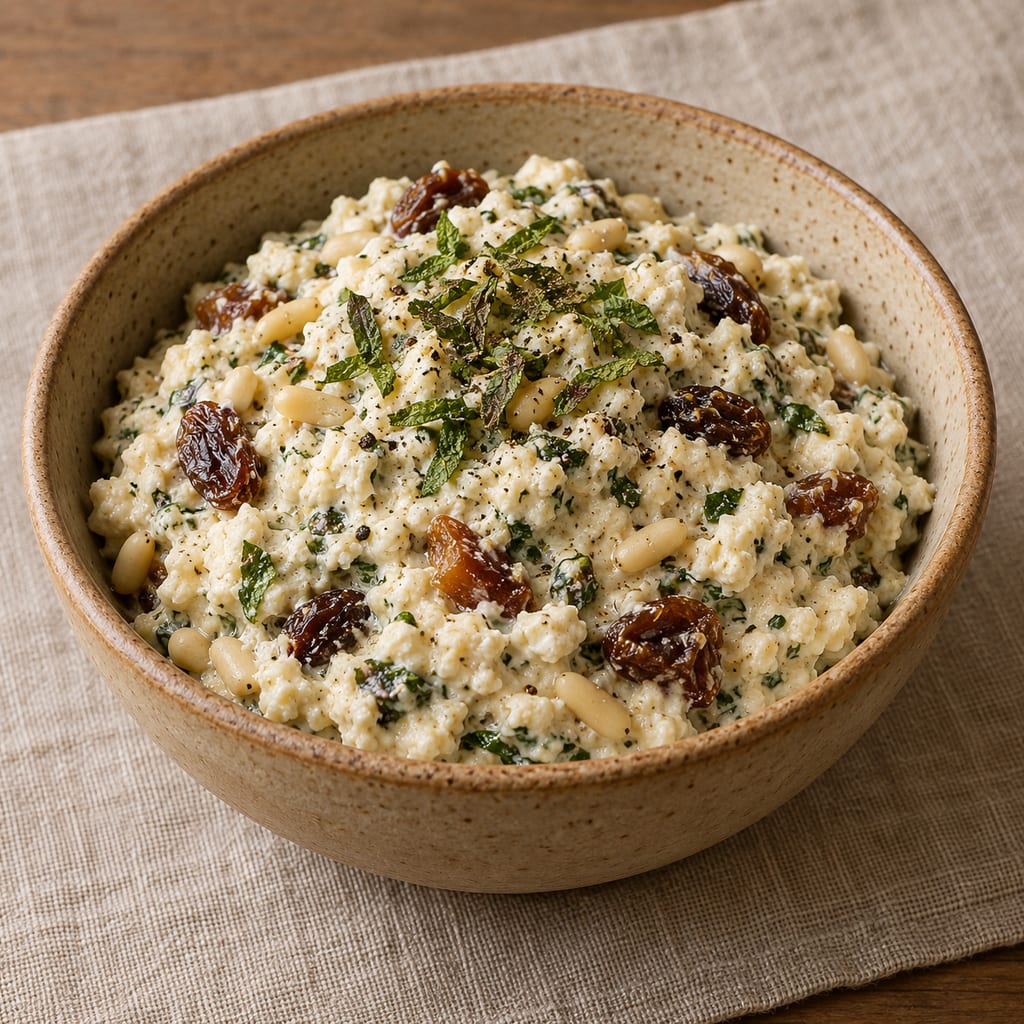
Hypotrimma
Hypotrimma was a Roman condiment in Apicius's cookery book, a mixture of ground pepper, herbs, nuts, dried fruit, cheese, honey and fish sauce.
 FermenteaWhere food goes to change
moretum · Roman moretum · Roman herb and cheese spread
Moretum was a pounded herb and cheese spread of ancient Rome, eaten with bread and named for the mortar in which it was made.
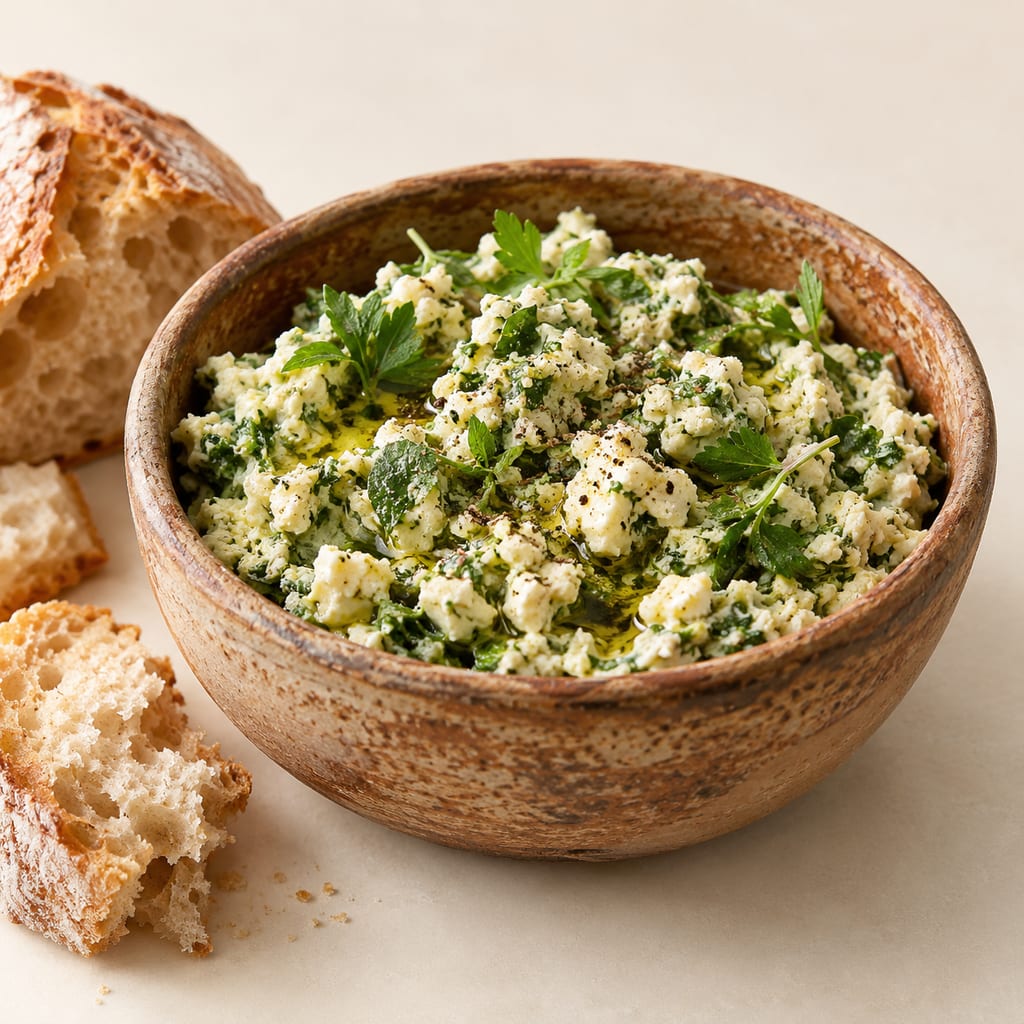
Moretum is known from a Latin poem of 122 dactylic hexameters in the Appendix Vergiliana, attributed to Virgil. The poem follows a farmer who rises before dawn and prepares his morning meal. Its centre is the pounding of herbs, cheese and oil in a mortar, which gives the dish its name.
The poem is partly a parody of praise for the rural life, so its detail should be read as literary. It still names a plausible set of ingredients for a Roman country meal.
Modern accounts give the core of moretum as herbs, fresh cheese, salt, oil and vinegar, with optional nuts. The poem's herbs include garlic, parsley, rue and coriander.
Later Roman writers vary the recipe. Columella describes walnuts in place of cheese and also mentions roasted sesame, pine nuts or almond kernels. Ovid's Fasti links a milk-based moretum with the worship of Magna Mater.
Modern cooks make moretum with ricotta and fresh herbs, often with a little garlic and olive oil. A pine nut version has been called a precursor of pesto, but that link needs a citation and is not established.
A modern reconstruction is not evidence of an ancient formula. The sources give no quantities, so any amount is the cook's own.
The poem mentions rue, but this modern preparation omits it: rue can be toxic and is particularly unsafe in pregnancy or lactation.
Moretum survives mainly as the subject of a Latin poem of 122 dactylic hexameters in the Appendix Vergiliana, attributed to Virgil. Columella (De re rustica 12.59) and Ovid (Fasti 4.367-372) also mention it. Scholars date the poem and its attribution with uncertainty.
Scaling: source batch only
Rue can cause poisoning when ingested; university guidance advises against internal use during pregnancy or lactation.
Hazard sourceThis is a historical dish reconstructed from literary sources. It is not a tested safety process; fresh dairy should be kept refrigerated when made today.
The poem names rue, but rue can cause poisoning and is particularly unsafe during pregnancy or lactation; omit it from this modern preparation.
Attested in Roman literature of the late republic and empire; the poem is attributed to Virgil and its date is disputed.
Hypotrimma was a Roman condiment in Apicius's cookery book, a mixture of ground pepper, herbs, nuts, dried fruit, cheese, honey and fish sauce.
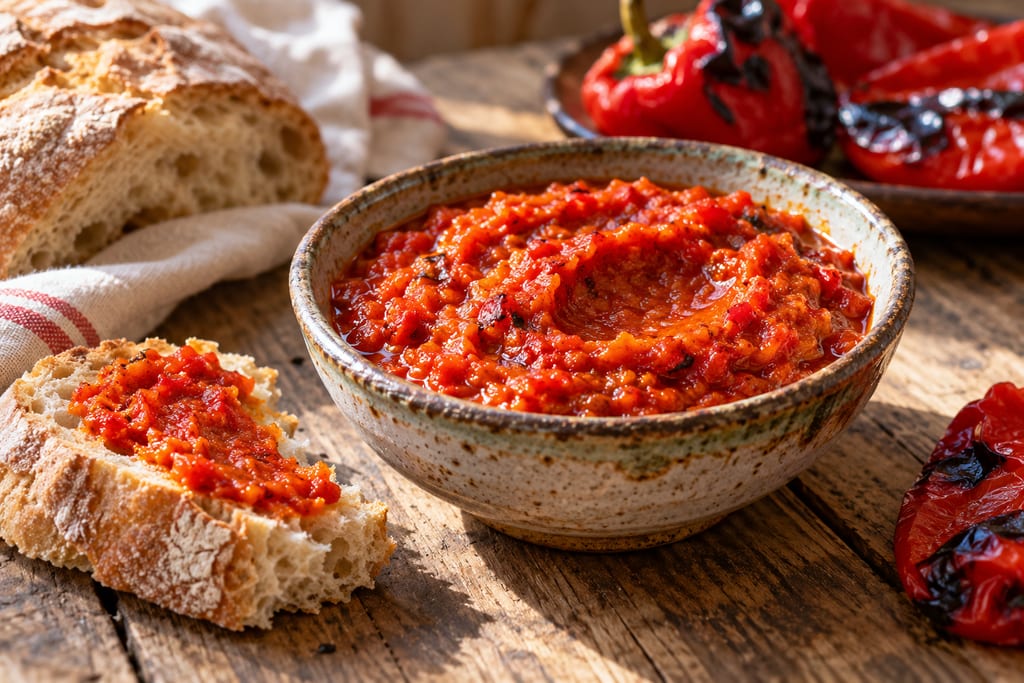
Ajvar is a cooked Balkan pepper preserve built around roasted red peppers, peeled, drained, ground and slowly fried with oil and seasoning. Leskovac’s protected version is a pepper specialty; regional versions vary.
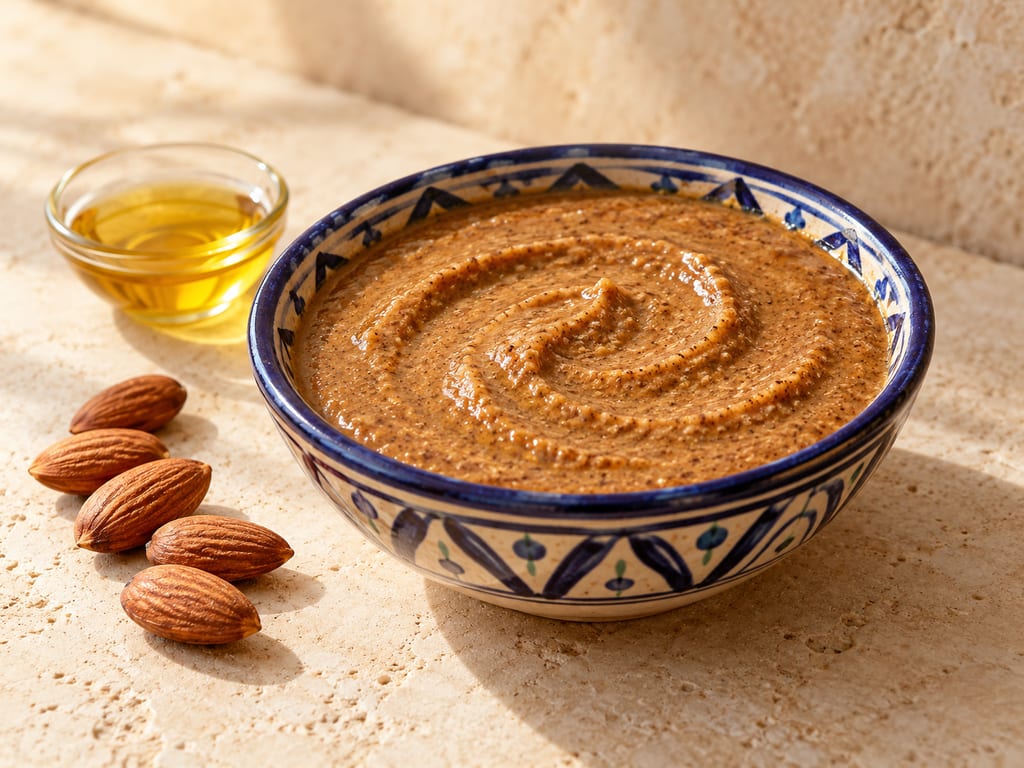
Amlou is a nutty, lightly sweet Moroccan spread of roasted almonds, culinary argan oil and honey. The almonds are ground first, then loosened with oil and sweetened; the balance can range from a thick spread to a dip.
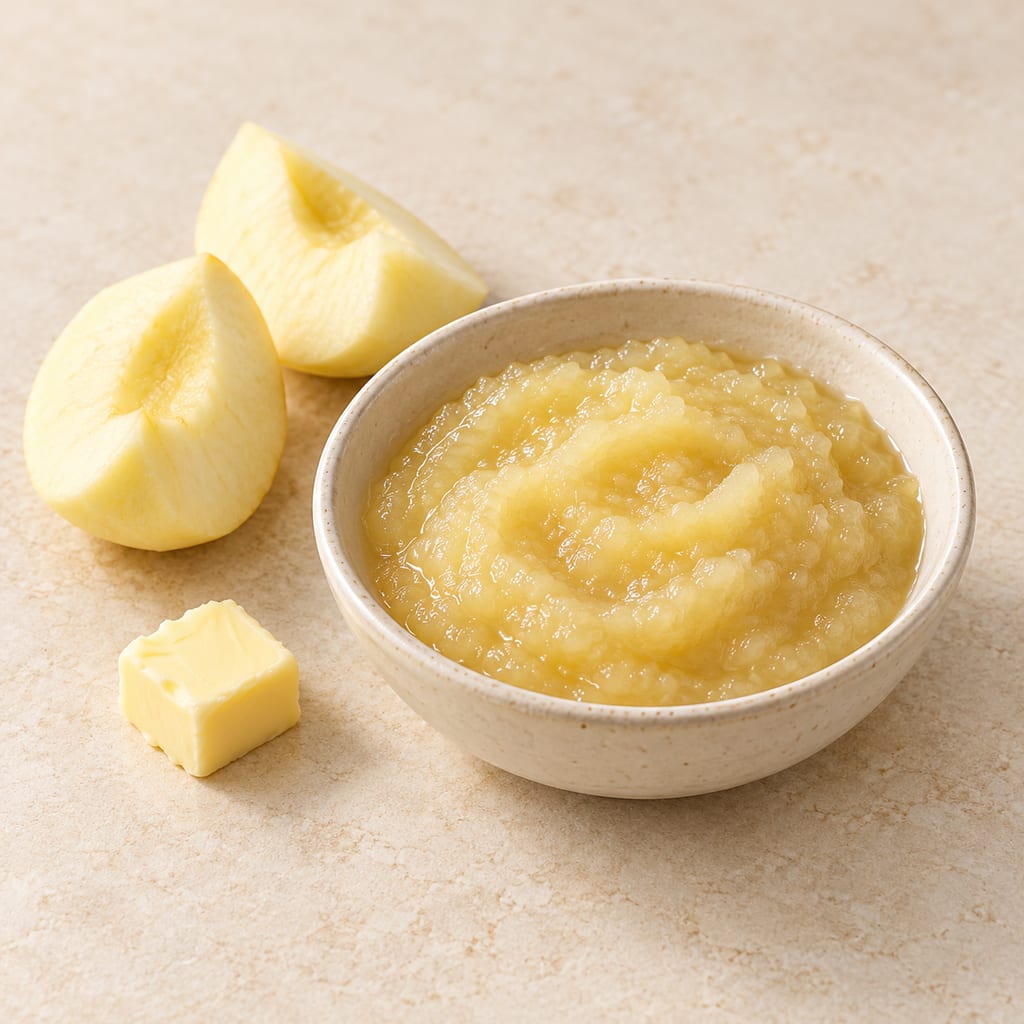
Apple sauce for goose and pork is a plain English accompaniment: cooked apples pulped with water, then sweetened with sugar and finished with a little butter.

A warm dip of garlic, anchovy and olive oil, often enriched with butter, that Piedmont serves over a flame with raw and cooked vegetables and bread.
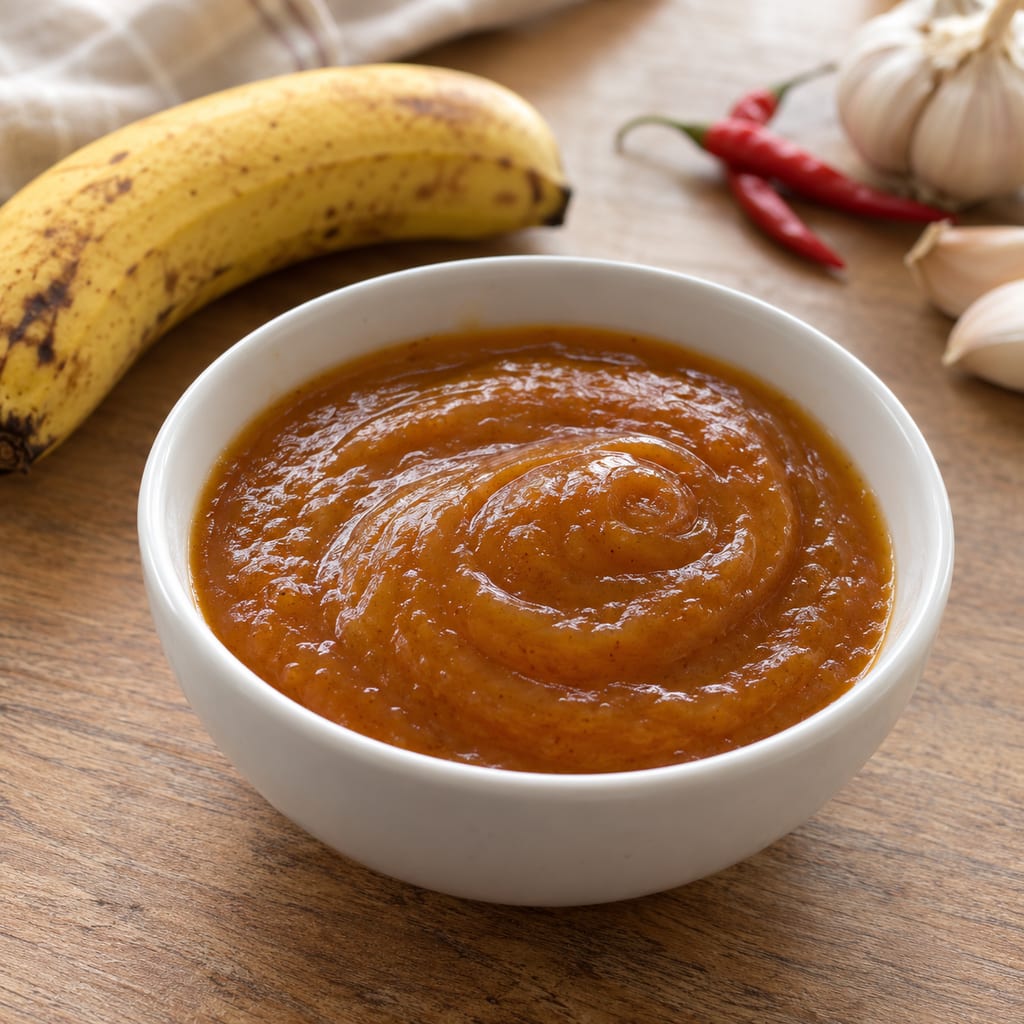
A sweet-hot table sauce of ripe banana simmered with vinegar, sugar, onion, garlic and fresh chilli, in the manner of Philippine banana ketchup. An untested development batch of about 500 g.
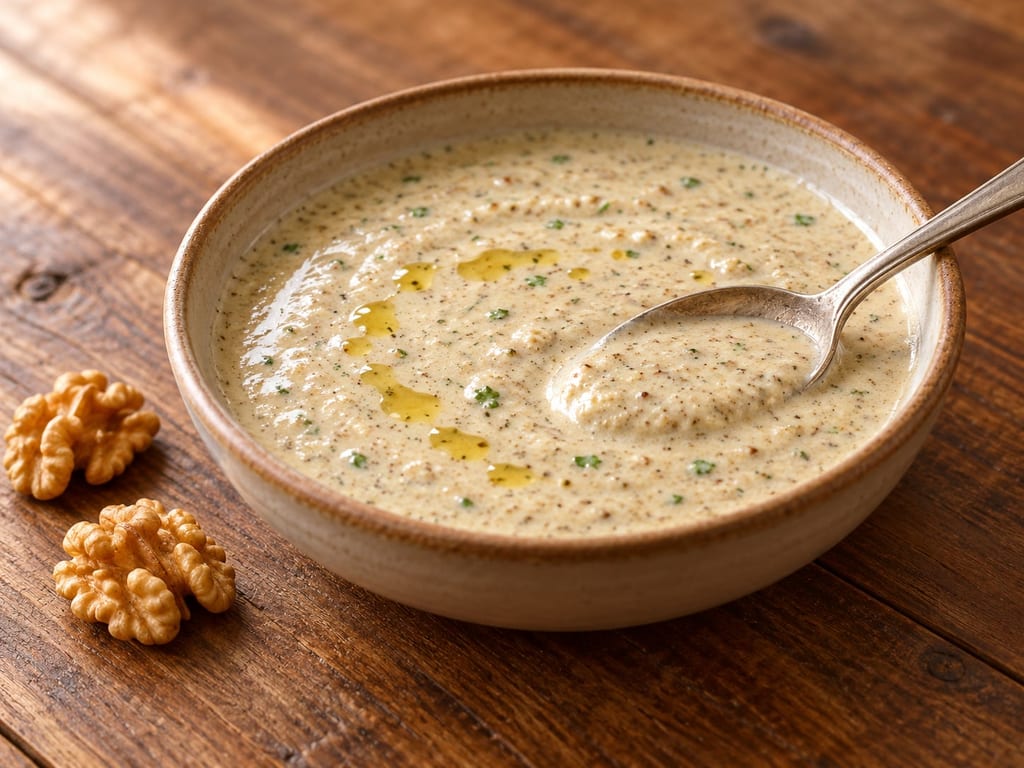
A Georgian walnut sauce of ground walnuts, garlic, vinegar and spices, thinned with water or broth. It is served with poultry, vegetables and bread, and is the sauce of the dish satsivi.
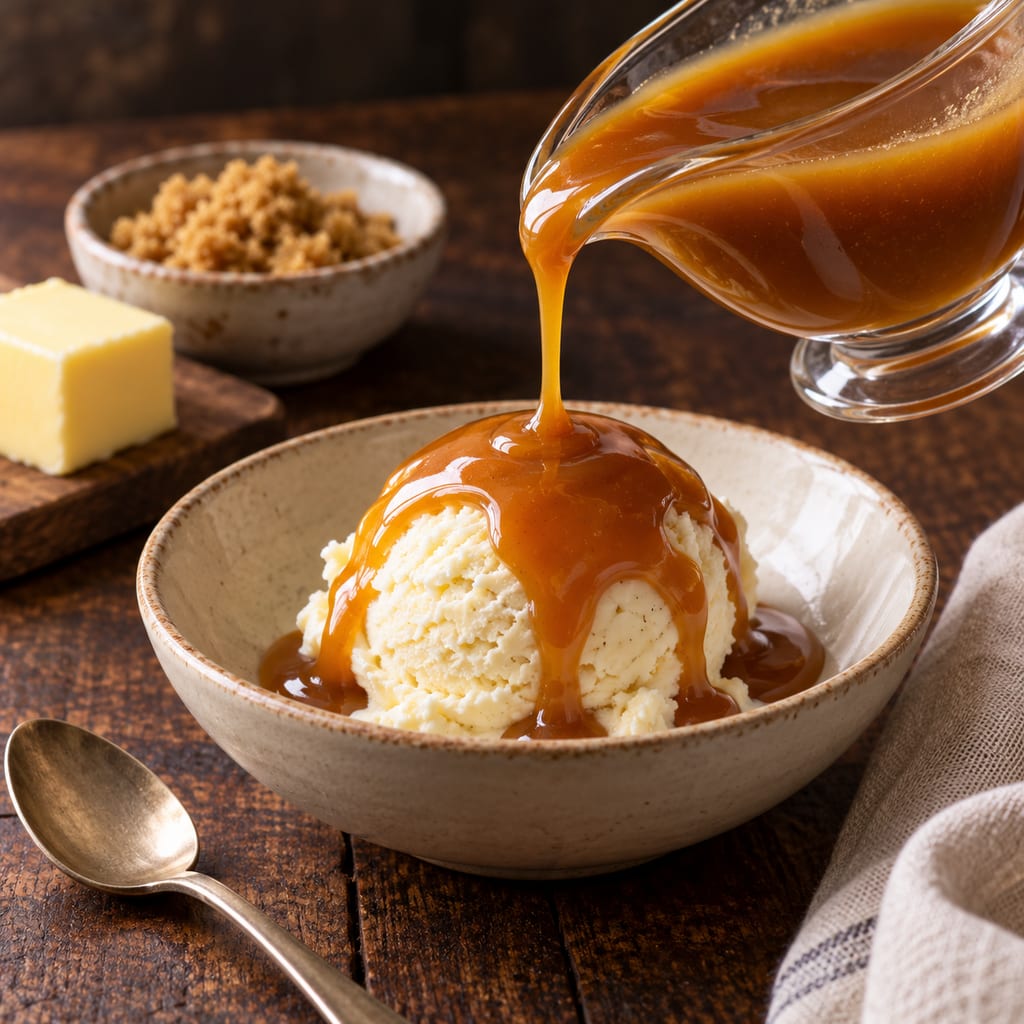
A pourable dessert sauce of brown sugar, butter and cream, with a little corn syrup and salt. It is the sauce form of the butterscotch confection and is made without water, unlike caramel.
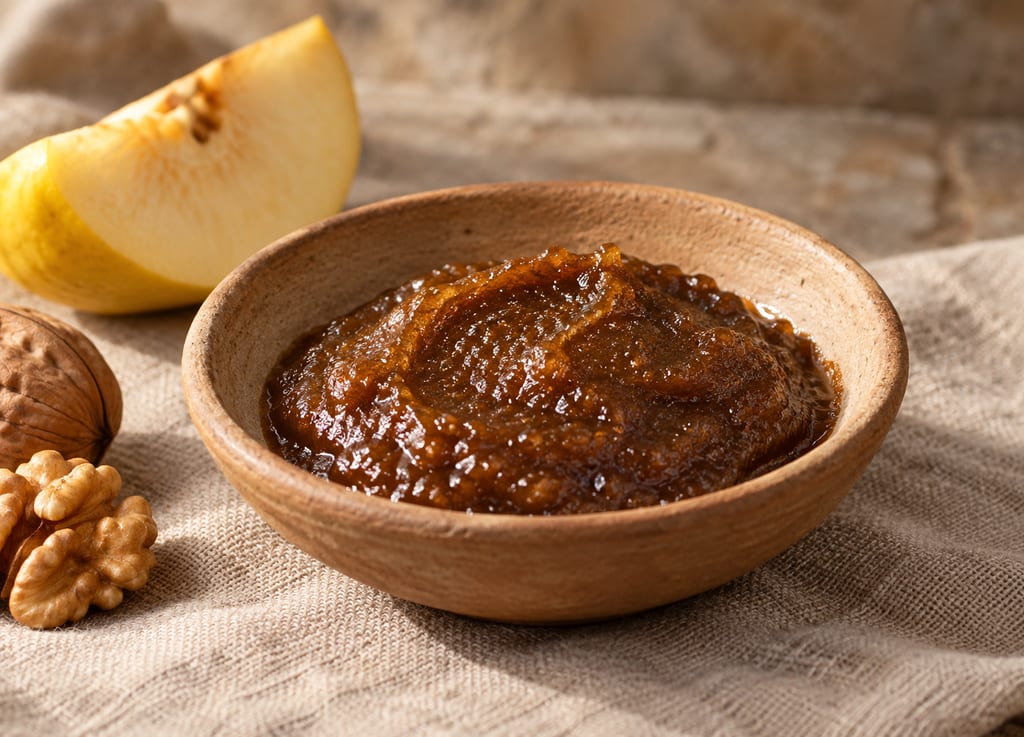
Byzantine murrī is a cooked imitation of murrī from the medieval Arabic repertoire, made from scorched honey, toasted bread, walnuts, quince, carob and spices rather than from a long grain fermentation.

At North Abydos in Egypt, a fixed early Dynastic brewery comprised parallel semi-subterranean installations with rows of ceramic mash vats; excavation reports revise their number, scale and estimated batch capacity.

Ají amarillo is the orange-yellow Peruvian chilli cultivar group of Capsicum baccatum, used to colour and season huancaína sauce and ají de gallina. Published heat estimates do not establish one range for the named cultivar.

Toasted almonds are whole sweet almond kernels dry-roasted until golden to brown. Heat replaces their marzipan note with a roasted, nutty one; they thicken and flavour romesco.

Kodiak salmon, halibut and cod cut as seg'aq and hung on an initaq rack to become tamuuq, with kac'amaasaq and kupcuunaq named as different results.

Aniseed is the dried ripe fruit of Pimpinella anisum, an aromatic Apiaceae spice commonly called a seed. It adds a sweet, warm aroma to breads such as Moroccan krachel and South African mosbolletjies, and is distinct from star anise.

A fixed Late Chalcolithic installation in Areni-1 cave combined a shallow clay pressing basin with a large jar set into the cave floor and storage vessels nearby.

Ripe avocado flesh is the soft, buttery, fat-rich pulp of Persea americana, eaten raw. It is low in acid, so it is a fresh ingredient that needs care in chilled dishes.

A portable dome and pan used over a hearth, with embers on the lid and heat from below. Regional peka and saç forms share this principle while differing in materials, pan shape and how the food is cooked.
No community contributions have been published for this entry yet.
Sign in to contribute. Published comments and photos are free to read.
WikipediaHistory · Method
MoretumAppendix Vergiliana poem of 122 hexameters attributed to Virgil
core ingredients herbs, fresh cheese, salt, oil and vinegar
Columella and Ovid mention moretum
Cited in: A farmer's breakfast in verse; Ingredients named by the sources; Modern readings
Tavola MediterraneaMethod
Columella's moretumColumella variant with walnuts in place of cheese
Cited in: Modern readings
University of Texas at El Paso Herbal SafetySafety
RueRue toxicity and advice against internal use during pregnancy or lactation.
Cited in: Modern readings