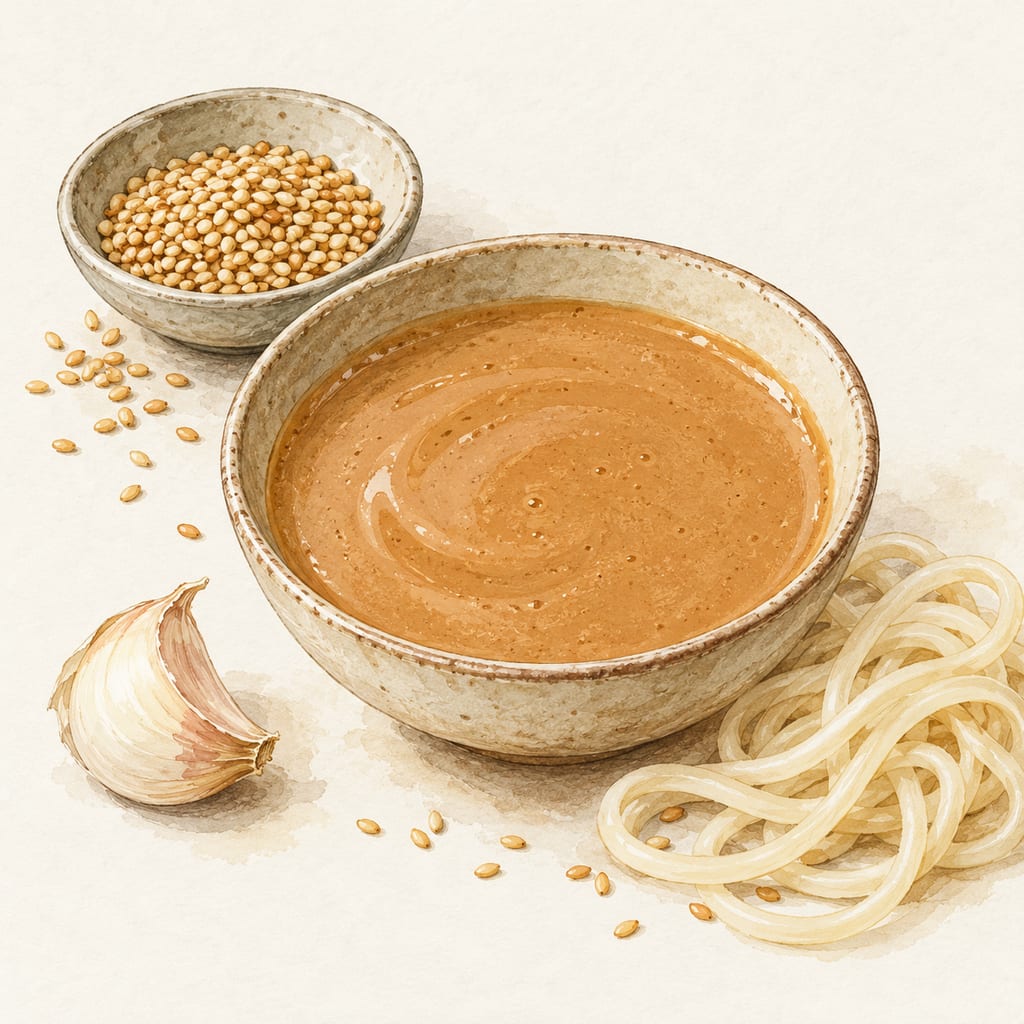
Roasted sesame sauce for noodles or hot pot
An untested sesame-paste sauce with soy, black vinegar, sugar, sesame oil and garlic, drafted for hot-pot dipping or noodles.
 FermenteaWhere food goes to change
Traditional method
镇江香醋 (Zhènjiāng xiāngcù, Chinese) · Zhenjiang black vinegar · Zhenjiang aromatic vinegar · Zhenjiang fragrant vinegar · Zhenjiang vinegar · Zhenjiang Xiang Cu · Chinkiang vinegar · Chinkiang black vinegar · Chinkiang aromatic vinegar · 镇江香醋 (Zhènjiāng xiāngcù, simplified Chinese) · 鎮江香醋 (Zhènjiāng xiāngcù, traditional Chinese) · 镇江醋 (Zhènjiāng cù, Chinese) · 镇江陈醋 (Zhènjiāng chéncù, Chinese, mature Zhenjiang vinegar) · 恒顺香醋 (Héngshùn xiāngcù, Hengshun producer's product) · 中国黑醋 (Zhōngguó hēicù, Chinese black vinegar; broader category) · 黑醋 (hēicù, Chinese black vinegar; broader category) · 黒酢 (kurozu, Japanese; broader black-vinegar category) · 鎮江香醋 (Chinkō kōzu, Japanese commercial designation)
Zhenjiang black vinegar is a Chinese glutinous-rice vinegar made by mixed-culture fermentation, solid-state acetification, roasted-rice extraction and ageing, giving a dark, savoury, mildly sweet condiment.
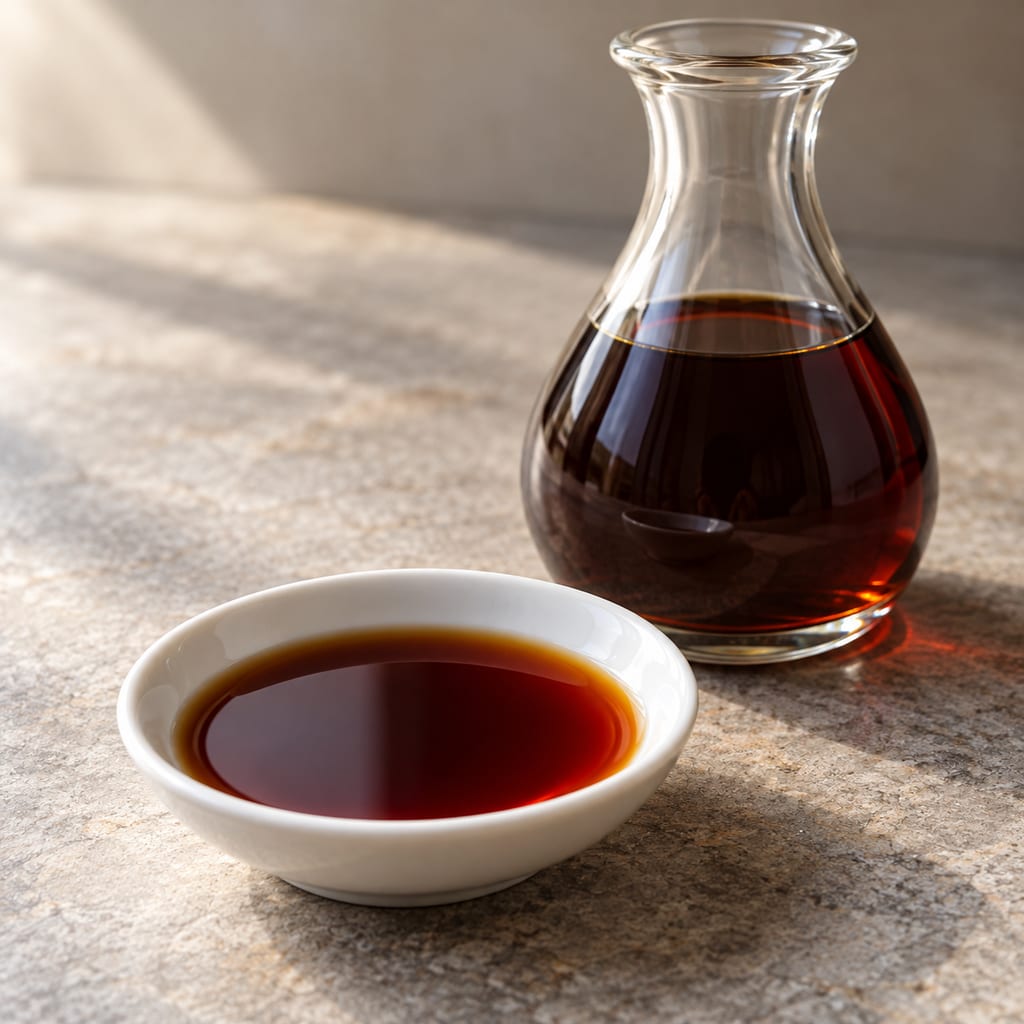
Zhenjiang aromatic vinegar, called Zhenjiang xiangcu in Mandarin and commonly sold internationally as Chinkiang black vinegar, is a dark Chinese cereal vinegar associated with Zhenjiang in Jiangsu Province. It is produced principally from glutinous rice, with wheat bran, rice husks, a cereal-based fermentation starter and roasted rice contributing to its manufacture. The finished liquid is dark reddish-brown to nearly black, with a strong fermented-grain aroma, pronounced acidity, savoury depth and a slight sweetness. Its flavour depends on successive microbial transformations, extraction from the fermented grain mixture, thermal processing and maturation.
The protected Chinese product is defined by the national geographical indication standard GB/T 18623-2011. A corresponding European protected geographical indication, registered in 2012, describes Zhenjiang Xiang Cu as a brewed rice vinegar with glutinous rice as the principal raw material. The registered European specification gives total acidity of 5.00–6.00 grams per 100 millilitres for its defined product range, alongside requirements for nonvolatile acids, amino acid nitrogen and reducing sugars. Those chemical characteristics distinguish it from a simple solution of acetic acid in water. They are product-specification values, not an assumption that every commercial bottle described informally as Chinese black vinegar complies.
The production method combines processes that require different microorganisms. Starch from cooked rice is hydrolysed into fermentable sugars by enzymes associated with cereal starters. Yeasts transform sugars into ethanol. Acetic acid bacteria then oxidise ethanol in a moist, aerated mixture of wine mash, wheat bran and rice husks. Lactic acid bacteria and other organisms contribute additional organic acids and flavour compounds. Finally, the vinegar is leached from the fermented solids, heated, clarified and aged.
Zhenjiang vinegar must be distinguished from Shanxi aged vinegar, which is characteristically associated with sorghum, and from Yongchun aged vinegar, associated with Fujian and red-yeast-rice processes. Chinese black vinegar is a broader culinary category encompassing different raw materials and production histories. Chinkiang is an older romanisation of Zhenjiang and is commonly used on exported products. Hengshun is a producer associated with Zhenjiang, not the botanical or microbial identity of the vinegar. Likewise, the term mature Zhenjiang vinegar describes an ageing category rather than a completely separate fermentation family.
The history of Zhenjiang vinegar must be separated from the much older history of rice vinegar in China. Regional and heritage accounts describe vinegar production around Zhenjiang as extending back approximately 1,400 years, sometimes connecting it with writings from the Liang dynasty. They show a long regional vinegar tradition; they do not show that the present recipe, starters or roasted-rice colouring were in use then. The available evidence for the named commercial speciality is much more secure in the nineteenth century. A county gazetteer printed in 1889 describes fragrant black vinegar from Jingkou, an older name associated with Zhenjiang, as a desirable commodity traded beyond the locality.
The best-known producer, Hengshun, dates itself to 1840, when Zhu Zhaohuai set up Zhu Hengshun Zaofang, at first a small wine-making workshop. A 2002 study in China Brewing, based on surviving business and licensing papers, dates the start of vinegar making to about ten years later, using leftovers from winemaking. A Jiangnan University history gives 1890 for the workshop's founding instead. This gives a more precise chronology than simply saying that Hengshun vinegar was invented in 1840. A Jiangnan University historical account gives 1890 for the workshop's founding, contradicting the documentary study and official heritage record.
During the nineteenth and twentieth centuries, Zhenjiang vinegar developed from local workshop production into an organised commercial industry. The fermentation technique became associated with glutinous rice, wheat-based starters, solid-state acetic fermentation and the addition of roasted-rice colour. Traditional producers maintained culture between batches by transferring part of an active vinegar fermentation to the next one. As production expanded, mechanical handling, improved vessels, process testing and microbiological selection were introduced. A People's Daily report from 1985 describes heavy investment in Hengshun's equipment, ceramic storage and bacterial research, so mechanisation was already being combined with the regional flavour.
The Chinese authorities granted geographical-origin protection to Zhenjiang vinegar in 2001. Hengshun's traditional brewing technique entered China's first national list of representative intangible cultural heritage in 2006. The European Union registered Zhenjiang Xiang Cu as a Protected Geographical Indication under Regulation 501/2012, dated 13 June 2012. The registration came into force on 4 July 2012. The United Kingdom subsequently carried the name into its own protected geographical indication register from 31 December 2020. These protections recognise origin, method and reputation; they do not show an unchanged recipe over centuries.
Zhenjiang vinegar is produced through a sequence of biochemical processes involving cereal enzymes, moulds, yeasts, lactic acid bacteria and acetic acid bacteria. Brewing yeast cannot ferment the starch in intact glutinous rice. Cooking gelatinises the starch, making it more accessible to enzymes. Traditional cereal starters, including daqu and other forms of qu, supply amylases that hydrolyse starch into dextrins, maltose and glucose. Proteases also break down rice and wheat proteins, releasing peptides and amino acids. The resulting sugars support alcoholic fermentation, principally by yeasts such as Saccharomyces cerevisiae, which convert fermentable carbohydrates into ethanol and carbon dioxide. Some processes carry out saccharification and alcohol formation concurrently rather than as completely separated stages.
Acetic fermentation begins when the alcoholic rice mash is combined with wheat bran, rice husks and an active vinegar starter. The mixture is called cupei or pei, meaning vinegar fermentation material. Bran provides nutrients and a surface for microbial growth; husks keep the moist mass relatively loose so that air can penetrate. Acetic acid bacteria oxidise ethanol first to acetaldehyde and then to acetic acid. This process requires oxygen because bacterial membrane-associated dehydrogenases transfer electrons through the respiratory system. Turning the solid material helps deliver oxygen and release metabolic heat. A study of the traditional process measured the fermenting material at about 40 to 46 C and 60 to 70% moisture in one industrial setting.
Lactic acid bacteria matter too. Studies repeatedly find Acetobacter and Lactobacillus-related organisms among the main members of the community. In a 2015 investigation of three production batches, the authors found closely matching patterns of bacterial succession and changes in sixteen major flavour metabolites. A 2016 metagenomic investigation identified 88 flavour-related compounds during acetic fermentation, including organic acids, sugars, amino acids and volatile substances. A 2022 study distinguished the contribution of three starters: jiuqu supplied organisms involved in initial saccharification, maiqu supplied important enzymes, and recycled vinegar pei helped establish acetic fermentation. These findings do not mean every detected species is an obligatory starter organism.
The finished acidity is chemically more complicated than a simple acetic acid solution. Lactic, succinic, pyroglutamic and other acids contribute to sourness and taste balance. Ethyl acetate and other esters contribute fruity or fermented aromas, while acetoin, diacetyl and related compounds can add buttery notes. Free amino acids provide savoury and sweet tastes and act as precursors for further aroma reactions. Roasted rice and subsequent heating encourage non-enzymatic browning, including Maillard reactions, which contribute colour and additional aromatic compounds. The sealed fermentation stage permits further changes even after the main oxygen-dependent acid production has ended. This combination of microbial metabolism, oxidation, heating and ageing produces the characteristic dark, complex vinegar.
Traditional production begins with glutinous rice, which is cleaned, soaked and steamed to gelatinise its starch. The rice is cooled before fermentation starter is introduced. The temperature matters because excessive heat can damage the organisms and enzymes needed for subsequent fermentation. Cereal starters break down starch, while yeasts produce an alcoholic rice mash. The Chinese national intangible-heritage description names a special wheat-based qu as a feature of Hengshun production. Jiangnan University additionally describes processes using xiaoqu-derived organisms and wheat qu, so starter practice differs between accounts.
The alcoholic mash is mixed with wheat bran and rice husks to make a moist, porous fermentation material. Mature vinegar pei or selected acetic acid bacteria are introduced, and the mixture is arranged for layered solid-state acetification. The heritage description reports turning the material daily to cool it, admit oxygen and distribute fermentation activity. Acetic acid bacteria progressively oxidise ethanol to acetic acid, while the mixed community produces additional organic acids and aroma compounds. After the main acetic stage, the mature pei is sealed for further conditioning. Sealing changes oxygen availability and favours different microbial and chemical processes.
In its traditional comparison, rice was soaked for 8–14 hours before steaming. Both the traditional and experimental processes used a seven-day alcoholic fermentation, approximately 9% alcohol in the diluted mash, and a ratio of glutinous rice, rice husks, wheat bran and vinegar starter of 1:1.7:0.8:0.5 by mass. The solid-state acetic stage lasted approximately twenty days, followed by seven days of sealed pei fermentation. Roasted rice goes in at 8%, and water leaches the vinegar out of the fermented solids. The raw liquid was boiled for thirty minutes before maturation in ceramic vessels for six months.
Traditional finishing includes adding roasted-rice colour, called chao mise, during extraction. The official Chinese standard describes rice roasted until very dark, then dispersed and cooked in water to produce a concentrated brown liquid. This contributes colour and roasted aroma; it is different from simply adding black food colouring. The extracted vinegar is clarified, heated and placed in storage vessels. The heritage description has the vinegar mature outdoors in pottery containers for at least six months, sometimes much longer. During storage, concentration, ester formation and other chemical changes continue. Industrial producers may modify equipment and starch preparation while preserving elements of the characteristic solid-state process. A named Zhenjiang protected product must still satisfy its applicable geographical and production requirements.
Zhenjiang vinegar belongs to the southern Chinese tradition of rice-based cereal vinegars, but the protected name refers to a particular geographical product rather than every dark rice vinegar. The protected production area includes Zhenjiang's Jingkou, Runzhou and Dantu districts, together with Danyang, Jurong, Yangzhong and the Zhenjiang Development Zone. The European product specification requires the preparation of fermentation starter and rice-wine broth, fermentation, vinegar extraction, heating and maturation to take place within that area. The use of locally associated rice, cereals and water forms part of its defined geographical character. A similar vinegar manufactured outside the region may resemble Zhenjiang vinegar in flavour without qualifying for its protected designation.
Different producers and production histories exist within the Zhenjiang tradition. Hengshun is the best-known brand; others include Jinshan, Jinshansi and Danyu. An account of Danyu production describes glutinous-rice wine prepared in earthenware vessels, followed by layered solid-state acetic fermentation using wheat bran and rice husks. The material is turned during fermentation, sealed after acid production and later leached with roasted-rice colour. These features overlap with the Hengshun technique, although individual producers may use different starters, equipment, process controls and maturation arrangements. The heritage description of Hengshun lists more than forty production operations, which is why no short recipe captures the commercial craft.
The registered European specification differentiates ordinary Zhenjiang Fragrant Vinegar, stored for more than 180 days, from Mature Vinegar, stored for more than 365 days. Studies comparing traditional and industrial Zhenjiang vinegars found changes in organic acids, phenolic compounds and other constituents during ageing. A 2020 aroma study found stronger caramel and butter notes in aged samples and named the compounds behind them. Longer maturation can change concentration, aroma and taste, but age alone does not guarantee that every batch will be superior.
Modern industrial adaptations include mechanised mixing, controlled cultures and alternative starch-gelatinisation methods. The 2024 dry-gelatinisation study compared a hot-air treatment of glutinous rice with traditional soaking and steaming. Its experimental process improved alcohol conversion efficiency and vinegar yield under the tested conditions, but also changed the balance of lactic acid and volatile compounds. Other Chinese black vinegars are separate traditions: Shanxi aged vinegar is strongly associated with sorghum, while Yongchun aged vinegar from Fujian uses a distinct rice and red-yeast-rice tradition. Japanese kurozu is likewise a broader food category, not an alternative geographical name for Zhenjiang vinegar.
Zhenjiang black vinegar is used as a table condiment and as an ingredient in cooked sauces, dressings and braised dishes. One of its best-known applications is as a dipping vinegar for Chinese dumplings. It can be served plain or combined with thinly sliced ginger, especially alongside soup dumplings such as xiaolongbao. Its fermented-grain aroma and mild sweetness complement meat and seafood fillings, while its acidity cuts through the richness of the accompanying fat. Zhenjiang vinegar is also the traditional accompaniment to hairy crab. The combination of crab, ginger and vinegar is especially associated with the cooking and eating traditions of the lower Yangtze region.
In cold dishes, Zhenjiang vinegar is used to dress cucumber, tofu, wood-ear mushrooms, noodles and cooked meat. It may be combined with soy sauce, sesame oil, garlic, ginger, sugar or chilli to suit the dish. The vinegar contributes acidity, roasted-cereal aroma and some residual sweetness, while the other seasonings adjust saltiness and heat. These preparations often require little or no cooking after the vinegar is added. Seasoned rice vinegars that contain Zhenjiang vinegar are different products: they may add sugar, salt or other ingredients.
In cooked dishes, black vinegar appears in sweet-and-sour sauces, braised fish, pork dishes, vegetable stir-fries and noodle preparations. It is useful where the sauce benefits from a combination of sourness and savoury cereal-derived flavour. During heating, some volatile compounds evaporate while nonvolatile acids, sugars and other solutes remain. Extended reduction can change both concentration and aroma. A producer's aged vinegar may therefore behave differently from a lighter, recently manufactured bottle. There is no single cooking temperature or addition time appropriate to every dish. Some recipes heat the vinegar as part of the sauce; others add a portion near the end to retain a more immediate aromatic character.
Zhenjiang vinegar can also be used to acidify vegetables or flavour prepared pickles, but this culinary use must be distinguished from validated preservation. A dressing containing vinegar may be intended for immediate eating or refrigerated storage rather than room-temperature storage. A braise made with black vinegar is not preserved by its acidity either. Its characteristic sourness comes from fermentation, but adding finished vinegar to a dish does not necessarily initiate another fermentation.
Finished Zhenjiang aromatic vinegar is dark reddish-brown, glossy and aromatic, with a clear roasted-rice and fermented-grain character. It tastes sour with some sweetness and a long savoury aftertaste. The protected European specification describes a product with measured total acidity, nonvolatile acidity, amino acid nitrogen and reducing sugars, rather than colour alone. Laboratory measurements of these constituents help distinguish correctly manufactured vinegar from a mixture that merely looks similar. The Chinese national standard also includes sensory requirements, chemical measurements and product grading.
During manufacture, poor saccharification can leave starch insufficiently converted into fermentable sugars, reducing alcohol production. Weak alcoholic fermentation then supplies too little ethanol for the acetic stage. In the solid-state phase, inadequate oxygen penetration can slow acid formation, while excessive heat or uneven moisture can change microbial activity. The traditional practice of turning the pei addresses oxygenation and temperature distribution, but the precise schedule depends on the process. A 2024 experimental study measured fermentation chemistry throughout production, including reducing sugars, total acidity, organic acids and free amino acids. Such measurements are more reliable indicators of process progress than elapsed time or a producer's expectation that the batch is finished.
The flavour profile continues to change during conditioning and ageing. Studies of Zhenjiang vinegar name acetic and lactic acids, acetoin, diacetyl, ethyl acetate, pyrazines and other aroma compounds as important contributors. A 2020 study used aroma recombination and omission tests to find which compounds shape the aroma of aged vinegar, including sotolon and tetramethylpyrazine. A separate 2022 study examined how melanoidins formed or modified during vinegar heating influence the retention and release of volatile compounds.
Commercial quality and safety require attention to raw cereals, cultures, sanitation, heating, contaminants, acidity and packaging. China regulates fermented vinegar as a food produced by microbial fermentation and prohibits describing products merely compounded from glacial acetic acid as brewed vinegar. Testing requirements address parameters including acidity, microorganisms, potentially toxic elements and aflatoxin B1. Wheat bran and wheat- or barley-containing starters also make allergen labelling relevant. Consumers should follow the manufacturer's storage instructions, keep opened bottles properly closed and reject products showing unexpected deterioration. Do not use homemade Zhenjiang-style vinegar for shelf-stable canning or pickling; its acidity and microbial state are unknown.
Hengshun's recorded founding year is 1840, when Zhu Zhaohuai set up a wine-making workshop in the Zhenjiang area. A 2002 study of surviving company records places the move into vinegar about ten years later. A county gazetteer printed in 1889 describes fragrant black vinegar from Jingkou, the old name for the Zhenjiang area, as a traded local speciality. These records date a nineteenth-century commercial tradition, not the start of local rice vinegar; the claim that the modern vinegar is 1,400 years old rests on no dated recipe.
Scaling: keep the mass ratio 1 : 1.7 : 0.8 : 0.5 (rice : husks : bran : starter).
The process uses multiple microbial groups and a mature solid-state starter. The published research characterises particular communities but does not provide a validated household starter preparation or pathogen-exclusion procedure.
Hazard sourceTraditional qu and seed pei are complex microbial materials. A list of microorganisms detected by sequencing is not a reproducible inoculation formula and does not establish the safety of arbitrary environmental moulds or bacteria.
Hazard sourceCereal substrates may be exposed to unsuitable mould growth or contaminated raw materials. Chinese vinegar inspection provisions include aflatoxin B1 among the parameters assessed in vinegar production.
Hazard sourceA batch may fail to reach the required total acidity if saccharification, alcoholic fermentation or aerobic acetification is inadequate. Sensory sourness and pH do not establish total acidity.
Hazard sourceSolid-state acetic acid bacteria require oxygen. The traditional heritage method turns the fermentation material to admit air and dissipate heat, but the study does not provide validated operating limits for small-scale equipment.
Hazard sourceLeaching, filtration, heating, vessel transfer and bottling introduce opportunities for contamination. A published boiling step does not validate the shelf life of every resulting packaged product.
Hazard sourceThe recipe uses wheat bran and traditional starters that may contain wheat and barley. A finished product cannot be assumed free of gluten or cereal allergens simply because starch has been fermented.
Hazard sourceHomemade vinegar of unverified acidity must not replace the specified commercial vinegar in tested home-canning or pickling processes.
Hazard sourceUse food-grade raw materials and established, traceable production starters under an appropriate food-safety management system.
Control sourceFor the documented laboratory process, adjust the alcoholic mash before solid-state acetification.
Control sourceMaintain appropriate aeration and temperature management during the solid-state acetic fermentation stage.
Control sourceMonitor the fermentation using suitable tests for alcohol, total acidity and relevant microbial and chemical quality parameters.
Control sourceFor a product intended to comply with the registered European Zhenjiang Xiang Cu PGI specification, verify the stated total acidity analytically.
Control sourceApply the registered maturation periods for the named product categories.
Control sourceWhere following the 2024 experimental method, heat the extracted raw vinegar as described by the researchers.
Control sourceUse commercial vinegar of the acidity required by the tested recipe when preparing shelf-stable pickles or canned foods.
Control sourceThis describes an industrial and research workflow, not a tested household recipe.
Do not collect wild moulds, substitute arbitrary koji or build a starter from a list of organisms found in studies.
Boiling for 30 minutes and ageing in pots do not make a home batch sterile or shelf stable.
The recipe uses wheat and may involve other cereal allergens in the starters.
A homemade imitation made outside the defined area cannot be sold as Zhenjiang Xiang Cu PGI.
Do not use homemade black vinegar for shelf-stable pickling or canning.
An untested sesame-paste sauce with soy, black vinegar, sugar, sesame oil and garlic, drafted for hot-pot dipping or noodles.
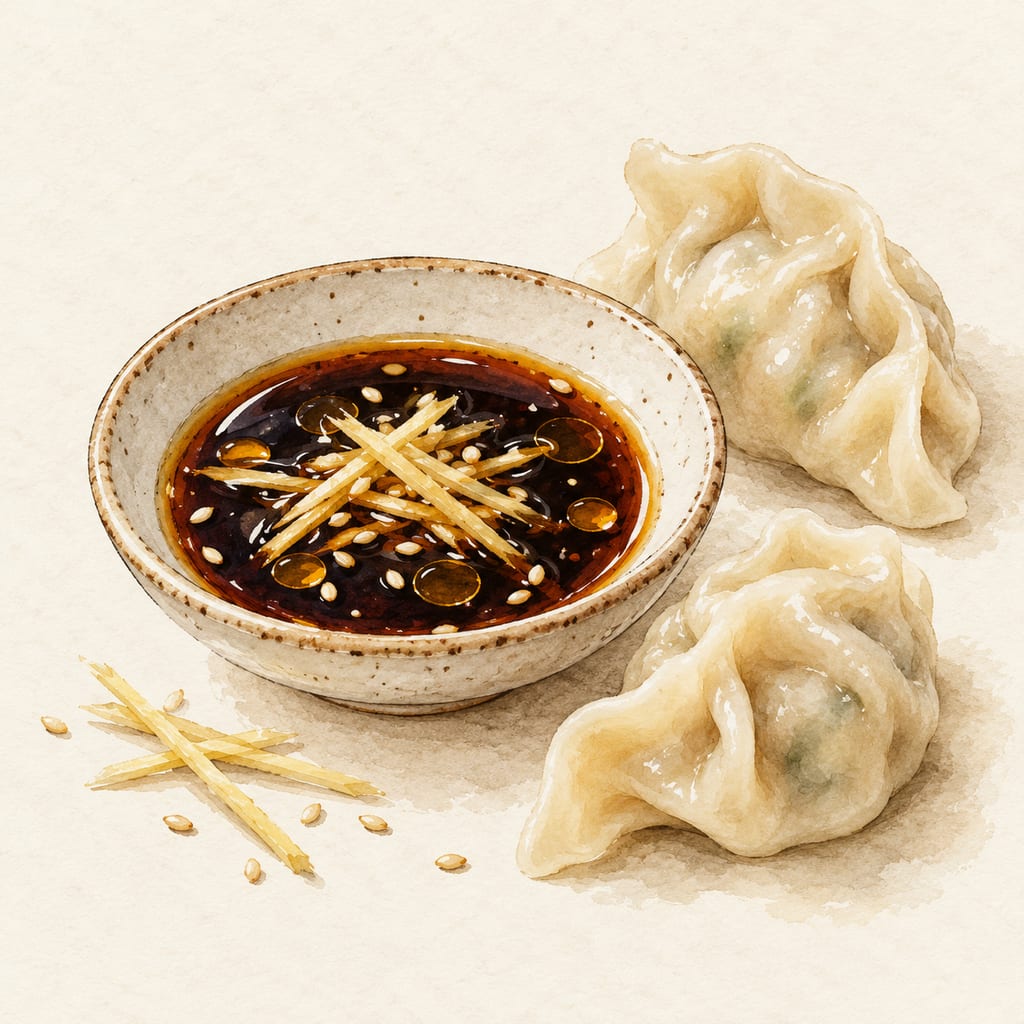
An untested small-batch soy and Zhenjiang black-vinegar dip with ginger and sesame oil, adapted as a modern accompaniment for dumplings or cooked vegetables.
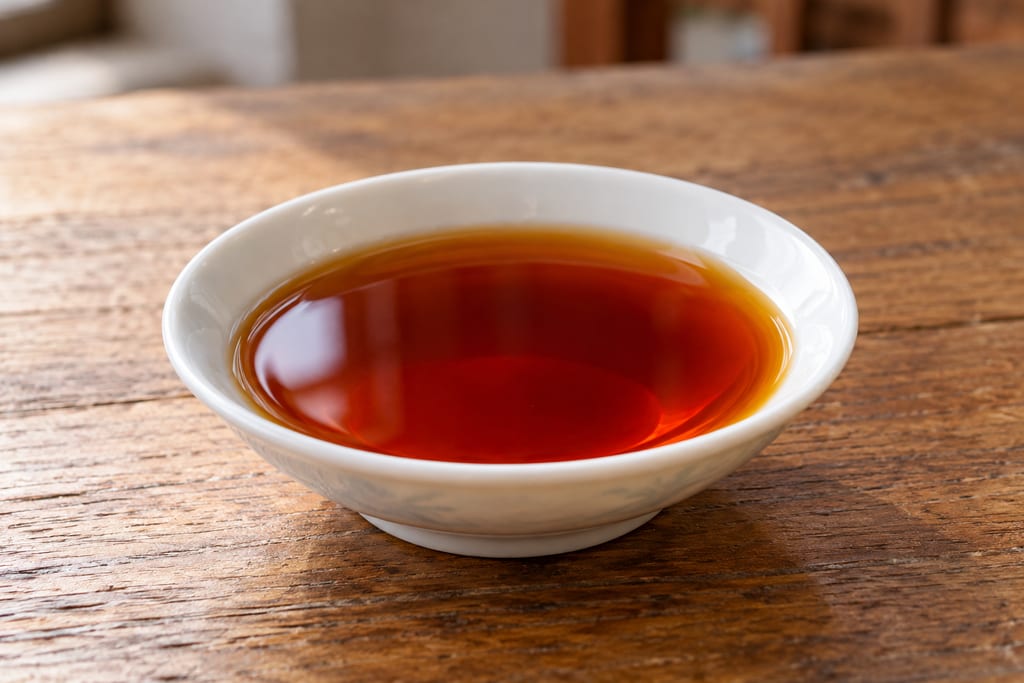
Tianjin grain vinegar of millet and sorghum made with daqu: liquid alcoholic fermentation, two-layer solid-state acetification, and at least three years of outdoor ageing of the grain mash.
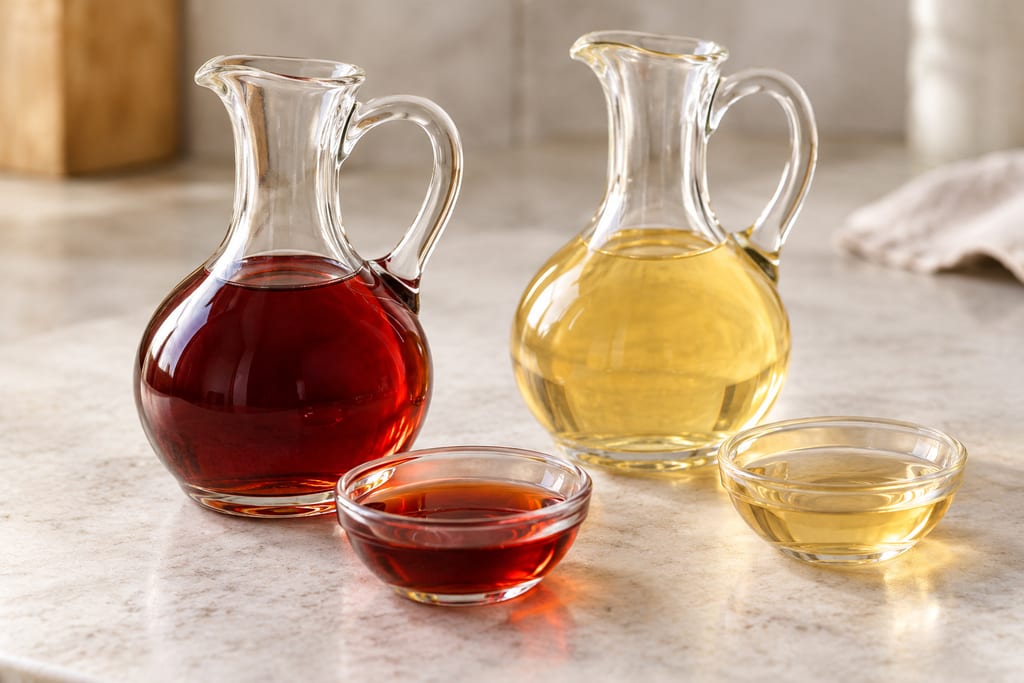
Wine vinegar is made by the aerobic oxidation of wine's alcohol into acetic acid by bacteria, producing a sour, wine-derived condiment used in dressings, sauces, marinades and preserved foods.
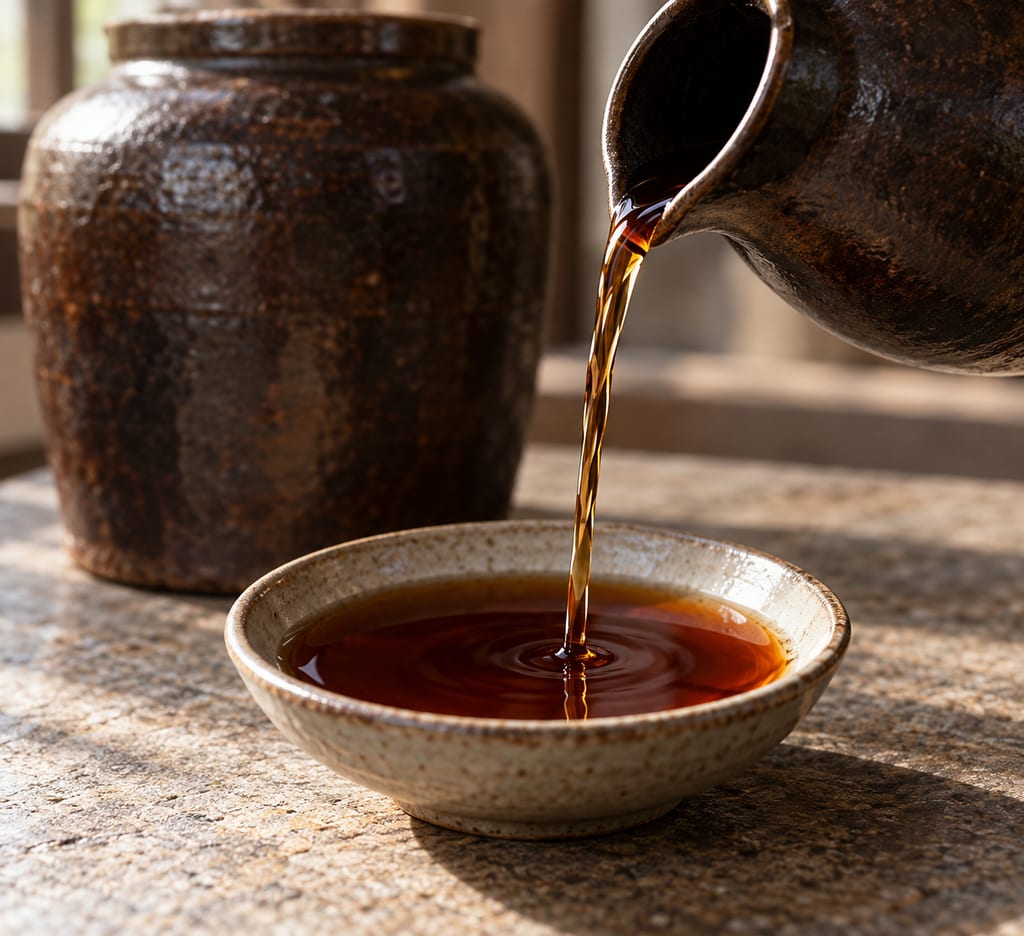
Dark Fujian rice vinegar: glutinous rice and red Monascus koji make a red rice wine, liquid acetification turns it to vinegar, and it ages at least three years.
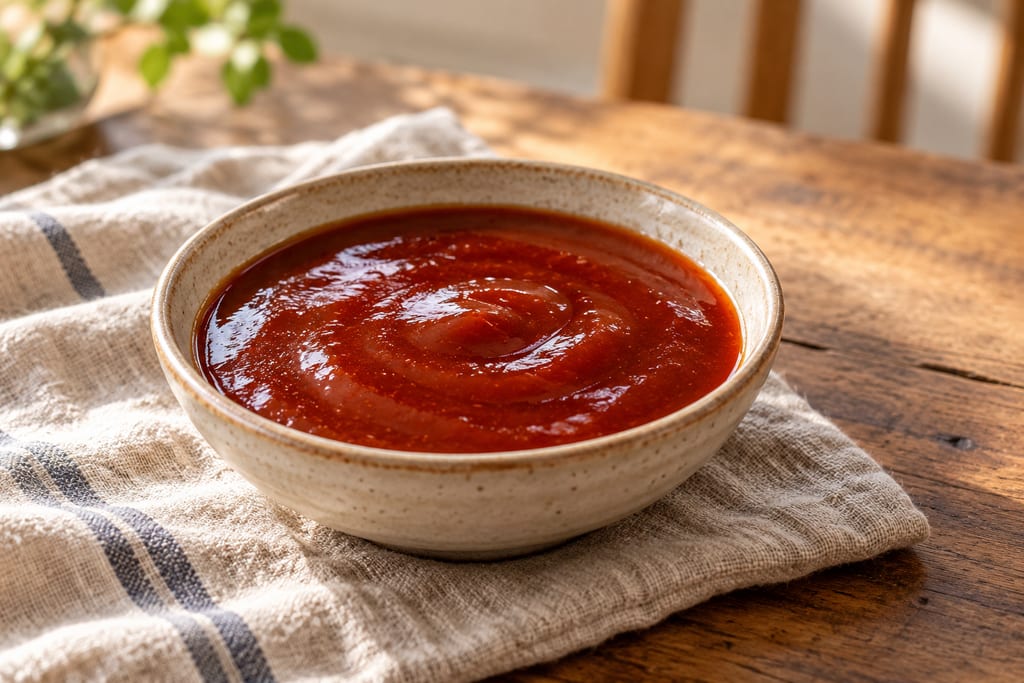
A smooth, tomato-based sweet-and-sour sauce of sugar, vinegar, tomato paste and soy sauce, thickened with starch for dipping or coating; it is not the sauce on Hangzhou's sweet-and-sour ribs.
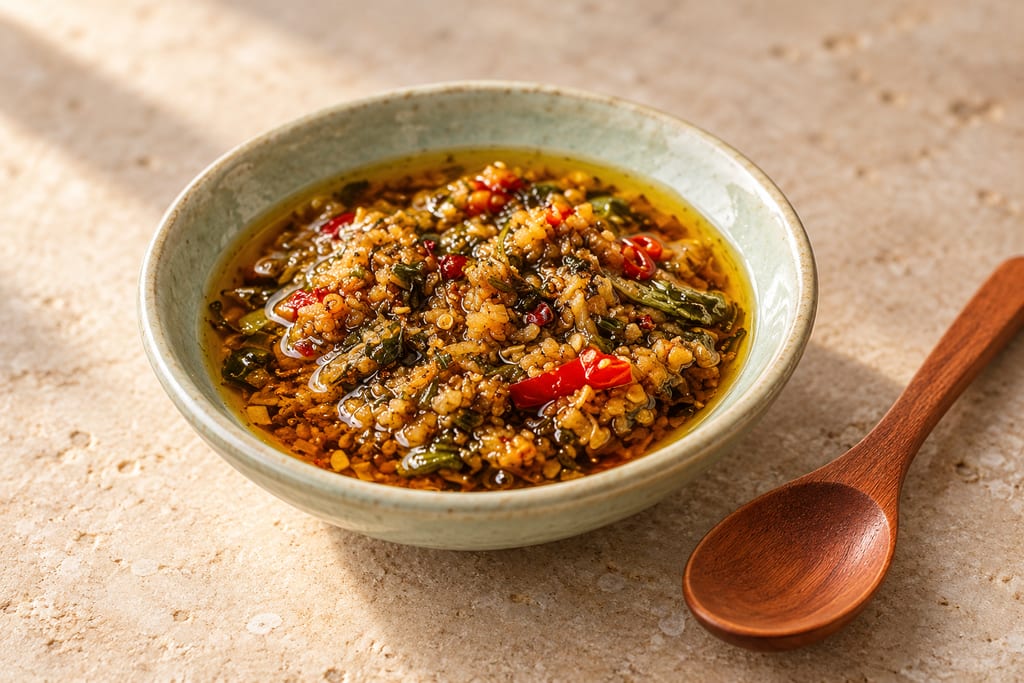
A Cantonese condiment of ginger, garlic, scallion and fresh chilli fried slowly in oil and seasoned with soy sauce, sugar, wine and salt, served over roast meats and poached chicken.
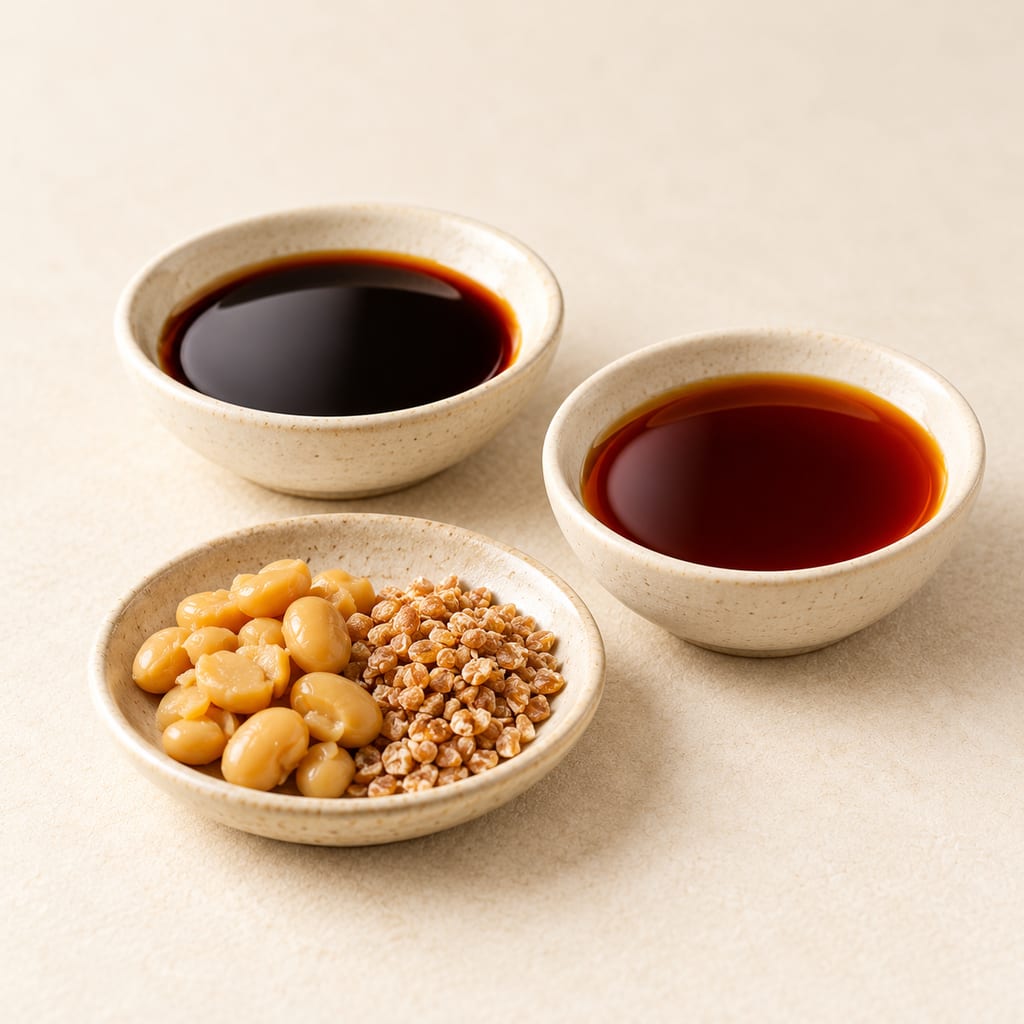
Jiangyou is the Chinese soy sauce family, an umbrella term for light, dark and seasoned sauces made by two main process families: high-salt liquid-state and low-salt solid-state brewing.
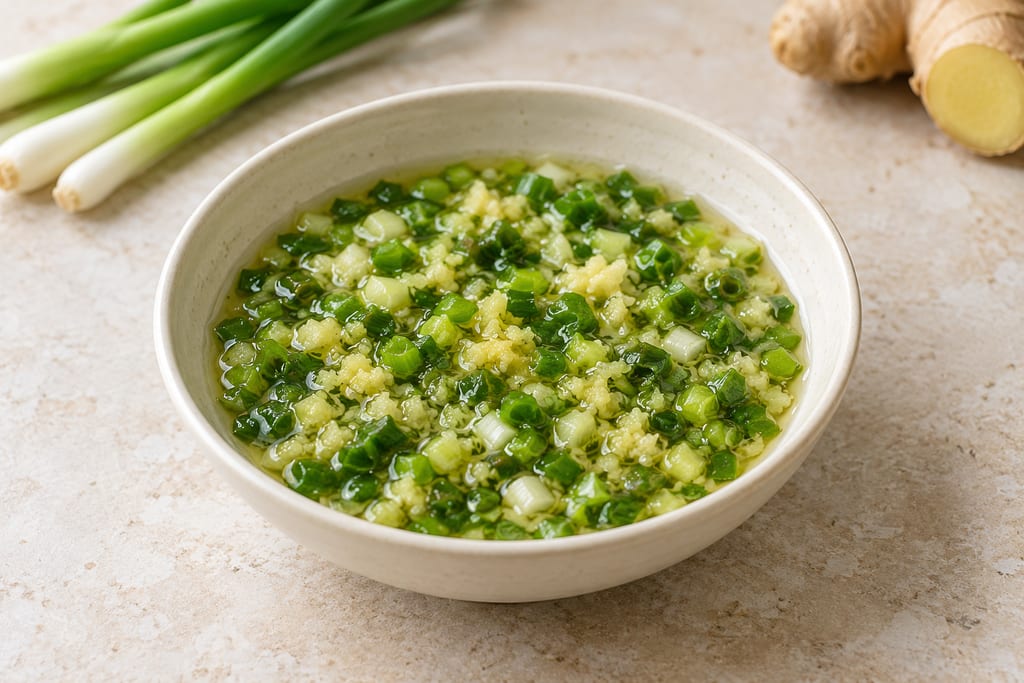
A raw Cantonese-style condiment of minced scallions, fresh ginger, vegetable oil and salt; it is mixed without heating and serves eight.
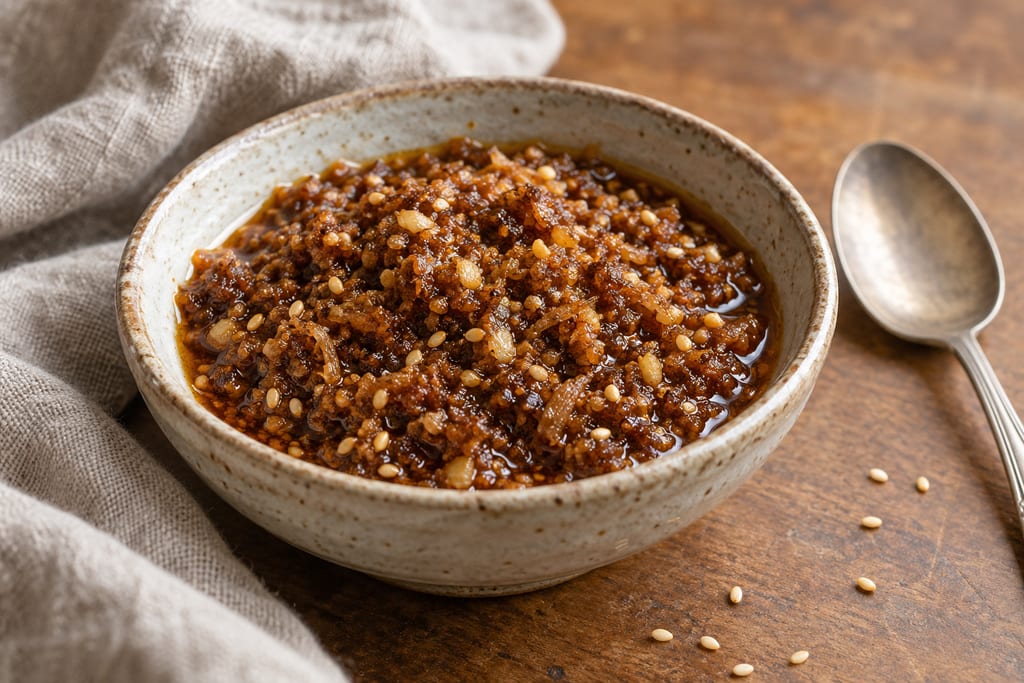
Shacha is a savoury, granular Fujian, Teochew and Taiwanese condiment of oil, garlic, shallot and dried seafood, often sold as Chinese barbecue sauce.
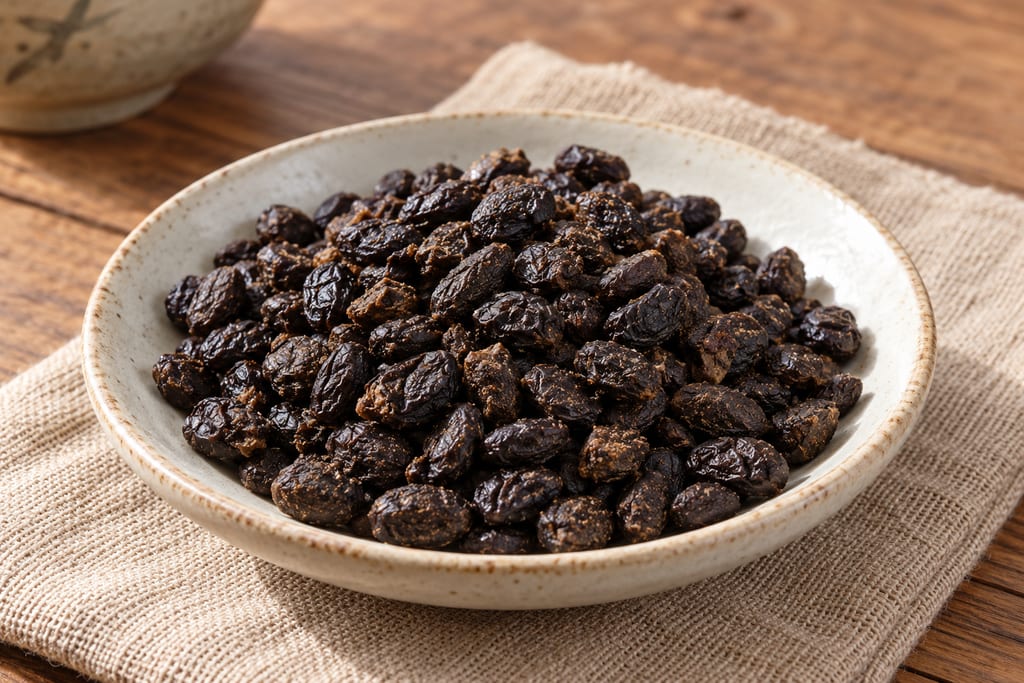
A Chinese fermented soybean condiment in which Bacillus-led bacteria, not moulds, drive the fermentation. Documented in Zunyi, Guizhou, and kept separate from mould-led douchi.
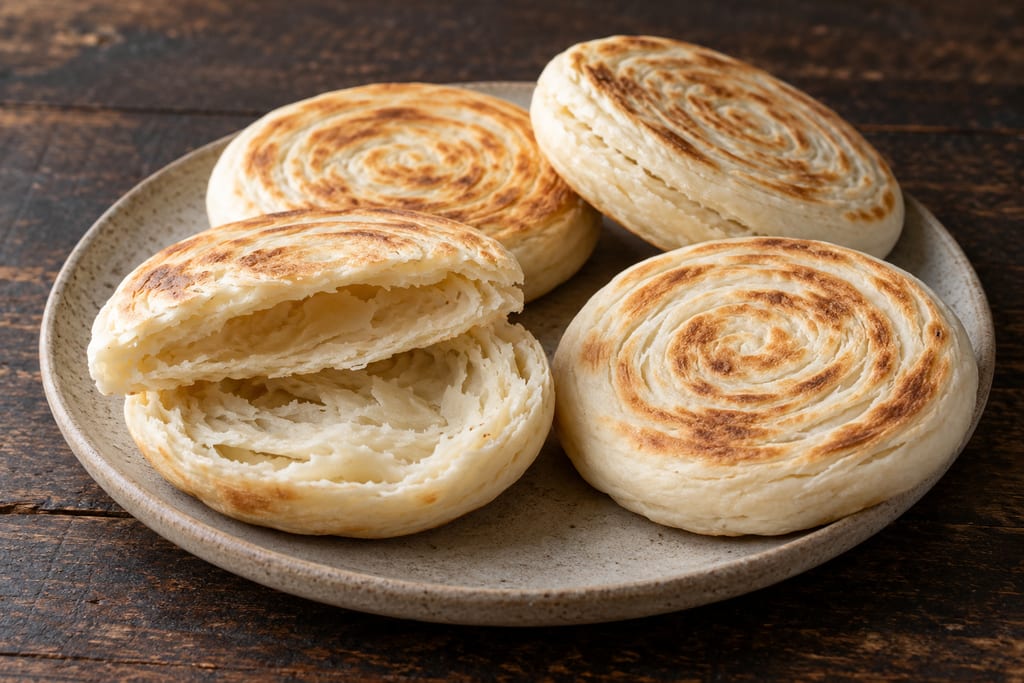
This Shaanxi-associated yeast flatbread uses a simple water dough, coiled shaping and a skillet bake. It is the bread used in roujiamo, not the filled meat dish.
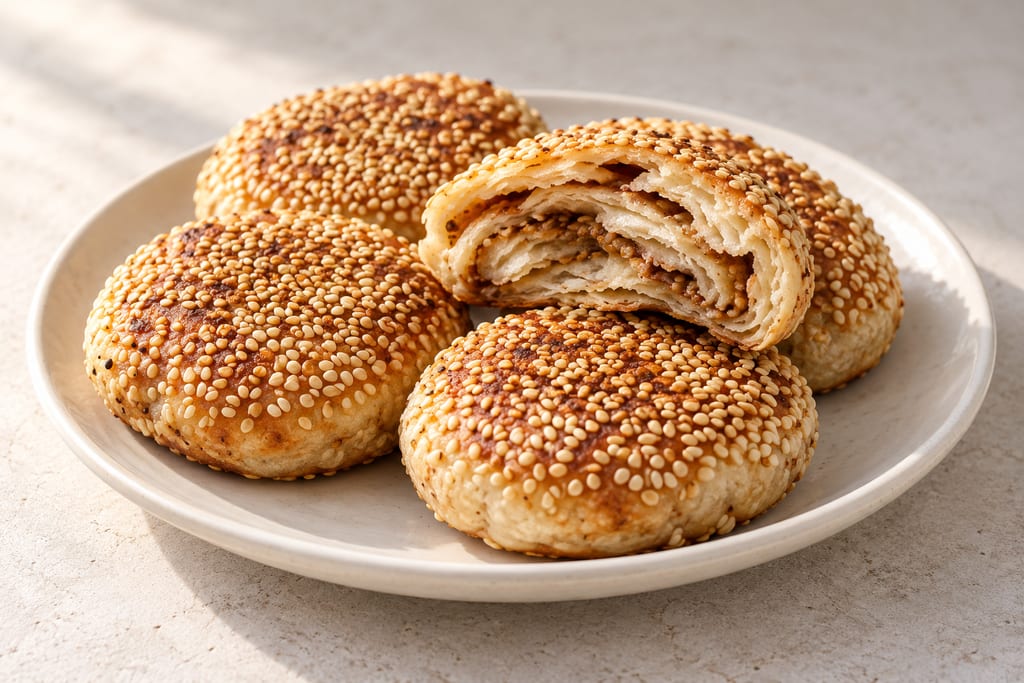
A Beijing-style yeast dough is layered with seasoned sesame paste, sealed into small buns, briefly pan-fried, seeded, and baked.

Protected Italian vinegar made only from cooked grape must, fermented and aged in a battery of wooden barrels for at least 12 years: sweet, sharp and syrupy.

A Dominican table and seasoning condiment of sour orange juice, mixed with lime and salt and bottled raw; garlic, oregano or a hot pepper may be added for meat or a spicier bottle.

Japanese reddish-brown vinegar from sake lees matured about three years, turned to vinegar by acetic bacteria; the vinegar of Handa and Edomae sushi rice.

A Swedish-style spirit vinegar made by fermenting neutral alcohol with live vinegar bacteria, with a separate guide to commercial ättika strengths.
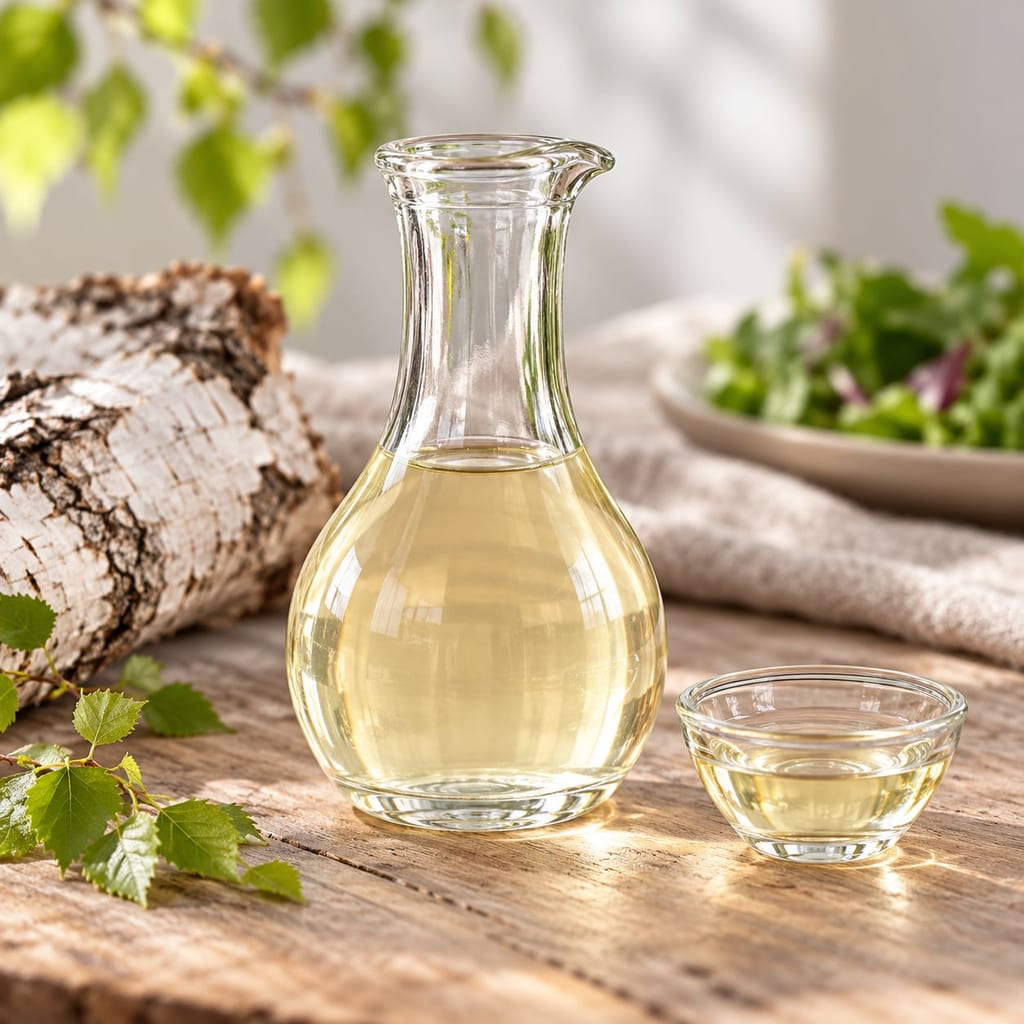
Vinegar from spring birch sap fermented to alcohol and then acetic acid, usually with added sugar or honey because the sap is so dilute; made in Sweden and described in older eastern European accounts.
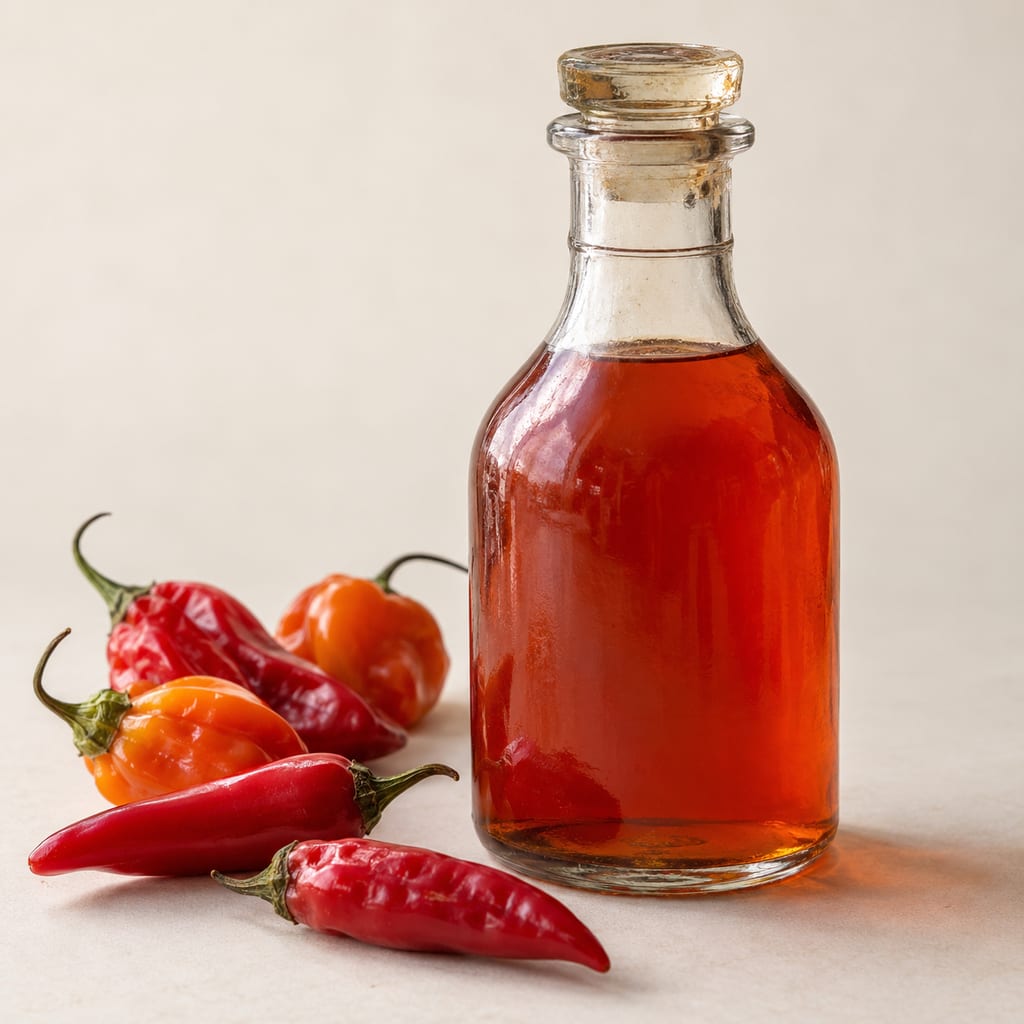
Mary Randolph's pepper vinegar: ripe pepper pods simmered in vinegar until the liquid is reduced to one quart, then strained for use in gravies and catsups. From The Virginia Housewife.
A Japanese mixed seasoning of vinegar, sugar and salt for sushi rice. Ratios vary with the rice batch and style; this version follows Marukan Vinegar's formula for two go of rice.
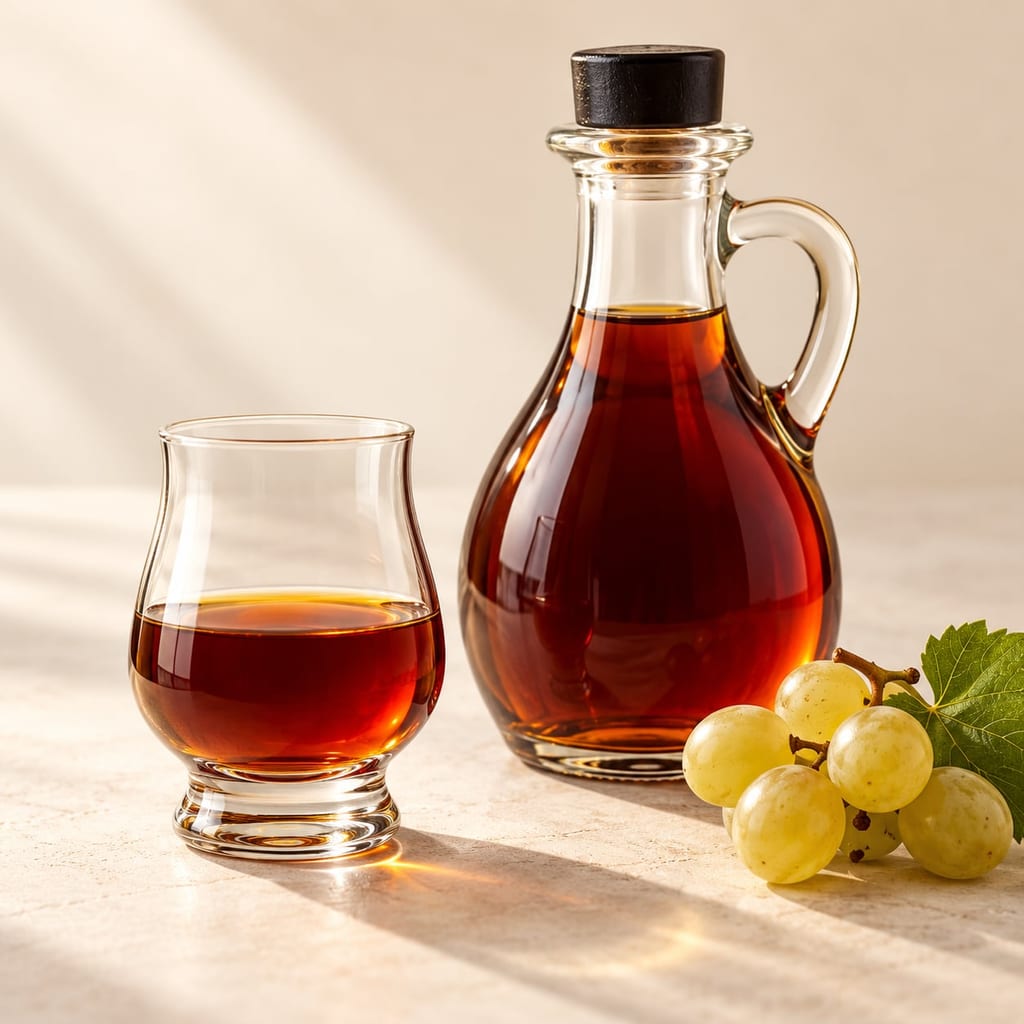
Vinagre de Jerez is made by acetifying eligible Jerez wines and ageing the vinegar in wood. Its protected name belongs to a defined Andalusian zone and a cellar tradition joining wine, oxygen, acetic bacteria and long ageing.

A Cap-Pelé boucanière is an Acadian herring-smoking building. The documented Willie Niles example is a one-storey wood-frame structure with a ridge smoke vent and interior bays for hanging fish-bearing cannes.

Achcharu is a family of Sri Lankan vinegar pickles made with mixed vegetables or seasonal fruit and a piquant spice dressing. This version is a quick, refrigerated, non-fermented mixed-vegetable pickle.

The acocote is a long, hollowed and dried gourd used to draw aguamiel from a mature maguey. It is a harvesting tool: the sap is transferred to a separate vessel before it ferments into pulque.

Adrak murabba preserves young ginger in sugar syrup, a sweet South Asian preparation recorded in Indian cookery and food-processing sources.

Parkia biglobosa seeds are fermented into regional West African seasonings, including nététou, iru, dawadawa and soumbala. The yellow fruit pulp is a separate food, and names and methods vary by place.

A refined common-wheat flour blended for a broad range of baking; its protein and behavior vary with wheat, milling and market.

The almond mushroom, Agaricus subrufescens, was cultivated in eastern North America in the 1800s, lost its market, and returned as a cultivated mushroom from Brazil, where it is grown under several names.
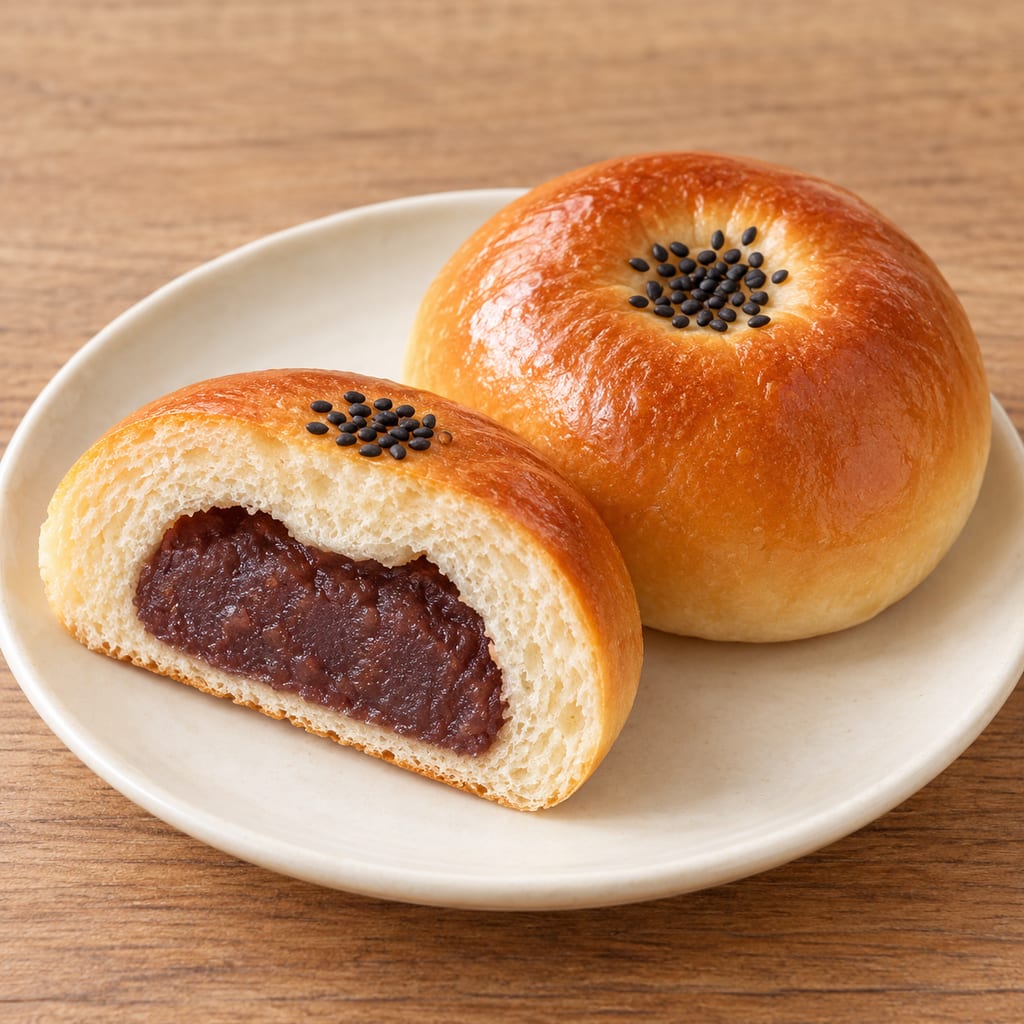
Anpan is a soft wheat bun filled with sweet red-bean paste and finished with egg wash and black sesame. This dough rises with commercial instant yeast.
No community contributions have been published for this entry yet.
Sign in to contribute. Published comments and photos are free to read.
Official Journal of the European Union, European CommissionReference
Commission Implementing Regulation (EU) No 501/2012 Registering Zhenjiang Xiang Cu as a Protected Geographical IndicationRegistration of Zhenjiang Xiang Cu as a protected geographical indication in 2012
Definition of the product as a brewed rice vinegar made principally from sticky rice
Description of its reddish-brown colour, roasted-rice aroma, mild sourness and slight sweetness
Minimum acidity amended to 5.00 g per 100 mL following Germany's objection to the original application
Registered chemical specifications for total acidity, nonvolatile acidity, amino acid nitrogen and reducing sugars
Ordinary fragrant-vinegar storage exceeding 180 days
Mature-vinegar storage exceeding 365 days
Required production materials including glutinous rice, wheat bran, rice husks, daqu and roasted rice
Use of regionally associated water
Production steps required to occur within the defined geographical area
Protected geographical area covering Zhenjiang and its associated districts
Distinction between a geographical product definition and a reproducible recipe
Cited in: What it is; History; How it is made and why each step matters; Regional and historical variations; How it is eaten; Reading results and problems
National Public Service Platform for Standards Information, State Administration for Market Regulation, ChinaReference
GB/T 18623-2011 — 地理标志产品 镇江香醋 (Product of Geographical Indication: Zhenjiang Vinegar)Identification of the Chinese national geographical-indication product standard
Standard number GB/T 18623-2011
Publication on 12 May 2011
Implementation on 1 November 2011
Replacement of GB 18623-2002
Identification of the Zhenjiang Vinegar Association and Jiangsu Hengshun Group among the drafting organisations
Current standards-register status
Existence of a subsequent proposed revision
Need to obtain the full standard for detailed analytical and grading requirements
Cited in: What it is; How it is made and why each step matters; Reading results and problems
Standing Committee of the Jiangsu Provincial People's CongressReference
镇江香醋保护条例 (Regulations on the Protection of Zhenjiang Aromatic Vinegar)Zhenjiang municipal vinegar-protection regulations approved on 29 July 2016
Definition of Zhenjiang aromatic vinegar as a locally produced fermented vinegar using characteristic traditional methods
Requirement for appropriate food-production licences and traceability
Use of glutinous rice, wheat bran and rice husks
Recognition of mixed saccharification, alcoholic fermentation and stratified solid-state acetic fermentation
Use of roasted-rice colour during vinegar extraction
Maturation in ceramic vessels for more than six months
Requirement to comply with relevant food-hygiene and product standards
Prohibitions on adulteration, non-food ingredients and false provenance
Legal distinction between authentic protected production and imitations
China Intangible Cultural Heritage Digital MuseumReference
镇江恒顺香醋酿制技艺 (Traditional Brewing Technique of Hengshun Zhenjiang Aromatic Vinegar)Inclusion in China's first national intangible cultural heritage list in 2006
Identification of Jiangsu Hengshun Vinegar Industry as the heritage safeguarding organisation
Traditional glutinous-rice and wheat-qu fermentation
Use of solid-state stratified acetification
Addition of wheat bran and rice husks to the alcoholic mash
Inoculation with established acetic acid bacterial fermentation material
Daily turning to manage temperature and oxygenation
Acetic fermentation extending over more than twenty days in the heritage description
Sealing of mature vinegar pei before extraction
Use of roasted-rice colour during extraction
Filtration, heating and ceramic-vessel maturation
Traditional maturation lasting at least six months and sometimes substantially longer
Description of more than forty individual manufacturing operations
Distinction between an intangible cultural heritage designation and a UNESCO inscription
Foods, MDPIReference
Investigation of Zhenjiang Aromatic Vinegar Production Using a Novel Dry Gelatinization ProcessDirect comparison between traditional steamed-rice processing and experimental dry gelatinisation
Traditional glutinous-rice soaking for 8–14 hours
Use of rinsing and steaming before alcoholic fermentation
Experimental use of 300°C hot air for 50 seconds in specialised equipment
Experimental use of 26.8 kg dry-treated rice and 13.9 kg added water
Addition of yeast powder without a reported universal inoculation quantity
Seven-day alcoholic fermentation cycle stated in the methods
Separate observed fermentation periods of five and six days reported in the results
Dilution of wine mash to approximately 9% alcohol
Mass ratio of glutinous rice, rice husks, wheat bran and vinegar starter of 1:1.7:0.8:0.5
Use of mature vinegar starter obtained from Hengshun
Approximately twenty days of stratified solid-state acetic fermentation
Seven days of sealed vinegar-pei conditioning
Reported addition of 8% roasted rice
Water extraction of raw vinegar from the fermented solids
Boiling the recovered vinegar for thirty minutes
Six-month maturation in ceramic vessels
Lack of controlled humidity and oxygenation during the reported traditional fermentation
Measurements of acidity, reducing sugars, ethanol, amino acids and volatile compounds
Experimental vinegar yield of 29.4 kg in the dry-gelatinisation arm
Reported improvements in conversion efficiency and yield under the experimental process
Differences in lactic acid and volatile compounds between the two methods
Cited in: What it is; How it works: microbes, enzymes and chemistry; How it is made and why each step matters; Regional and historical variations; Reading results and problems
Food Microbiology, ElsevierReference
Monitoring the Microbial Community During Solid-State Acetic Acid Fermentation of Zhenjiang Aromatic VinegarMicrobiological analysis of solid-state acetic fermentation
Identification of dominant microbial groups during Zhenjiang vinegar production
Microbial succession across the acetic fermentation stage
Interaction between fermentation conditions and bacterial populations
Evidence for changes in microbial composition rather than one permanent culture
Scientific distinction between culture detection and identifying an obligatory starter species
Food Microbiology, ElsevierReference
Batch-to-Batch Uniformity of Bacterial Community Succession and Flavor Formation in the Fermentation of Zhenjiang Aromatic VinegarStudy of three separate Zhenjiang vinegar production batches
High reproducibility of bacterial succession between batches
Comparison of vinegar-pei bacterial diversity during fermentation
Marked changes in bacterial community structure during the initial fermentation period
Recycling of mature vinegar-pei material as inoculum
Relationships between changes in microbial communities and flavour metabolites
Evidence for a complex fermentation ecosystem rather than a single isolated organism
Limitations of converting sequencing results directly into starter-culture recipes
Cited in: How it works: microbes, enzymes and chemistry; Reading results and problems
Scientific Reports, Nature PortfolioReference
Exploring Flavour-Producing Core Microbiota in Multispecies Solid-State Fermentation of Traditional Chinese VinegarInvestigation of Hengshun Zhenjiang vinegar batches sampled during 2014
Metagenomic and microbial-community analysis of solid-state acetic fermentation
Reported fermentation-pei temperatures of 34–46°C
Reported moisture contents of 60–70%
Eighteen-day acetic fermentation in the observed production batches
Detection of bacterial and fungal genera including Acetobacter and Lactobacillus
Analysis of 88 flavour-related metabolites
Statistical associations between microbial populations and flavour production
Experimental augmentation with Acetobacter pasteurianus
Distinction between measured association and proof that a detected organism is safe or required as a starter
Evidence that fermentation conditions vary between documented industrial operations
Cited in: How it works: microbes, enzymes and chemistry
Food Research International, ElsevierReference
Combined Effects of Fermentation Starters and Environmental Factors on the Microbial Community Assembly and Flavor Formation of Zhenjiang Aromatic VinegarStudy of microbial succession across four stages of Zhenjiang vinegar production
Different contributions of jiuqu, maiqu and mature seed pei
Jiuqu as an important contributor of organisms involved in saccharification
Maiqu as an important source of enzymes
Seed pei as an important inoculum for acetic fermentation
Associations between ethanol, temperature and acidity and microbial-community structure
Enrichment of organic acids and volatile metabolites during acetic fermentation
Further changes in lactic acid, acetic acid, acetoin and diacetyl during sealed fermentation
Differences between detected fungal organisms and deliberately selected safe food starters
Cited in: What it is; How it works: microbes, enzymes and chemistry; How it is made and why each step matters
Frontiers in Microbiology, Frontiers MediaReference
Metagenomics Profiling of the Microbial Community and Functional Differences in Solid-State Fermentation Vinegar Starter (Seed Pei) from Different Chinese RegionsComparison of mature vinegar-pei starters from different Chinese vinegar regions
Analysis of two Zhenjiang vinegar starters from different manufacturers
Differences in microbial composition between producers
Importance of moisture, pH and reducing sugars to microbial distribution
Occurrence of Acetobacter and Lactobacillus-related organisms
Evidence that seed pei is a complex microbial community rather than one standardised species
Why starter composition cannot be recreated safely from a published organism list
Frontiers in Microbiology, Frontiers MediaReference
Seasonal Environmental Factors Drive Microbial Community Succession and Flavor Quality During Acetic Acid Fermentation of Zhenjiang Aromatic VinegarInvestigation of seasonal variation during solid-state acetic fermentation
Relationship between environmental conditions and microbial succession
Effects of season on flavour-compound production
Evidence that ambient fermentation processes can change with environmental conditions
Limitations of assigning one universal fermentation temperature and microbial composition to all producers
Food Research International, ElsevierReference
Characterization of the Key Aroma Compounds in Aged Zhenjiang Aromatic Vinegar by Gas Chromatography-Olfactometry-Mass Spectrometry, Quantitative Measurements, Aroma Recombination and Omission ExperimentsChemical and sensory comparison of fresh and aged Zhenjiang vinegar
Quantification of 68 volatile compounds
Identification of 27 odorants with odour activity values above one
Increased caramel-like, buttery and complex aromas in the aged samples
Identification of sotolon in Chinese cereal vinegar
Evidence from aroma recombination and omission experiments
Important contributions of diacetyl, acetic acid, 2-methylpropanal, sotolon, trimethyloxazole, 3-methylbutanoic acid and tetramethylpyrazine
Evidence that maturation alters more than total acidity
Cited in: Regional and historical variations; How it is eaten; Reading results and problems
Food Research International, ElsevierReference
Effect of Changing the Melanoidins by Decoction on the Release of Volatiles in Zhenjiang Aromatic VinegarRole of melanoidins in the colour and aroma behaviour of Zhenjiang vinegar
Chemical changes caused by heating and decoction
Investigation of interactions between melanoidins and volatile aroma compounds
Differences in aroma retention and release before and after heating
Evidence that dark colour and roasted flavour involve chemical processes in addition to microbial fermentation
Distinction between experimental aroma chemistry and health-related claims
Cited in: How it is eaten; Reading results and problems
中国酿造 (China Brewing)Reference
从单照凭证看恒顺厂前期的发展轨迹 (The Early Development of Hengshun as Reflected in Historical Licences and Documents)Historical investigation of the early Hengshun enterprise
Use of surviving commercial licences and documentary records
Workshop foundation associated with Zhu Zhaohuai in 1840
Original activity as a wine-making workshop
Expansion into vinegar production approximately ten years later
Importance of separating a company's foundation from the beginning of a specific vinegar-production process
Cited in: History
State Administration for Market Regulation, ChinaReference
调味品生产许可证审查细则 (Detailed Rules for Reviewing Seasoning Production Licences)Documented inspection and testing categories for vinegar production
Assessment of total acidity
Testing for potentially toxic elements including arsenic and lead
Inclusion of aflatoxin B1 in vinegar inspection provisions
Microbiological testing including indicator organisms and specified pathogens
Assessment of nonvolatile acidity in solid-state fermented vinegar
Requirements concerning ingredients, additives and labels
Importance of formal food-production controls beyond traditional processing knowledge
Cited in: Reading results and problems
National Center for Home Food Preservation, University of GeorgiaReference
General Information on PicklingImportance of reliably measured acidity for food preservation
Guidance on commercially produced vinegar used in tested pickling recipes
Recommendation for 5% acidity vinegar where specified
Warning against homemade vinegar of unknown acidity
Importance of maintaining tested proportions of vinegar, food and water
Distinction between a culinary vinegar and a vinegar relied upon for shelf-stable preservation
Hazards from insufficient acidification of preserved foods
China Intangible Cultural Heritage websiteReference
Zhenjiang vinegar brewing technique (national intangible heritage project 14372)Cited in: What it is; History; How it works: microbes, enzymes and chemistry; How it is made and why each step matters; Regional and historical variations; How it is eaten
People's Daily archive (govopendata.com)Reference
People's Daily, 23 July 1985, page 2Cited in: History
Jiangnan UniversityReference
Zhenjiang vinegar historyCited in: History; How it works: microbes, enzymes and chemistry; How it is made and why each step matters
Foods (MDPI)Reference
Study of Zhenjiang aromatic vinegarCited in: What it is; How it works: microbes, enzymes and chemistry; How it is made and why each step matters; Regional and historical variations
PubMedReference
Study of Zhenjiang vinegar microbial communityCited in: How it works: microbes, enzymes and chemistry; How it is made and why each step matters
Molecules (MDPI)Reference
Study of Zhenjiang vinegar aroma compoundsCited in: Regional and historical variations; Reading results and problems
Penn State ExtensionReference
Acidifying canned products for safetyCited in: How it is eaten; Reading results and problems