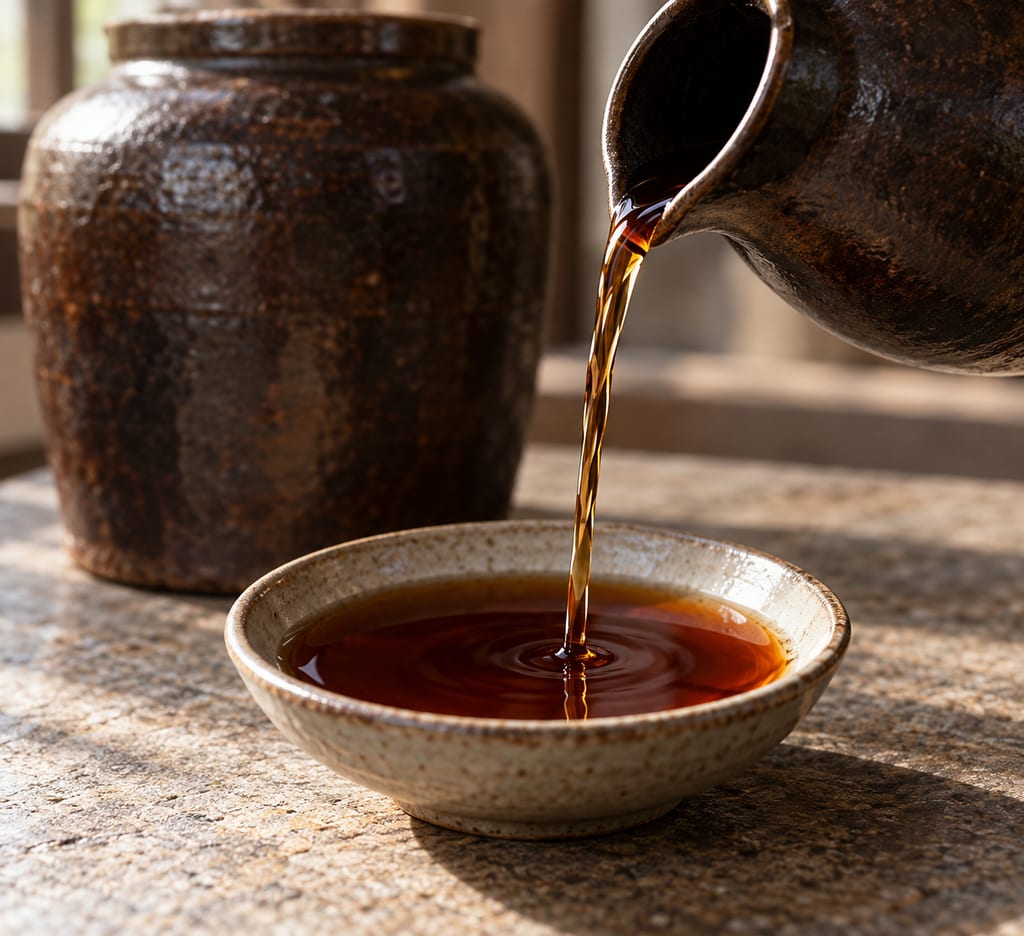
Yongchun aged vinegar
Dark Fujian rice vinegar: glutinous rice and red Monascus koji make a red rice wine, liquid acetification turns it to vinegar, and it ages at least three years.
 FermenteaWhere food goes to change
Traditional method
独流老醋 · Duliu Laocu · Duliu Lao Cu · Duliu Aged Vinegar · Duliu Mature Vinegar · Tianjin Duliu Vinegar · 独流醋 · 天津独流老醋 · 三伏老醋
Tianjin grain vinegar of millet and sorghum made with daqu: liquid alcoholic fermentation, two-layer solid-state acetification, and at least three years of outdoor ageing of the grain mash.
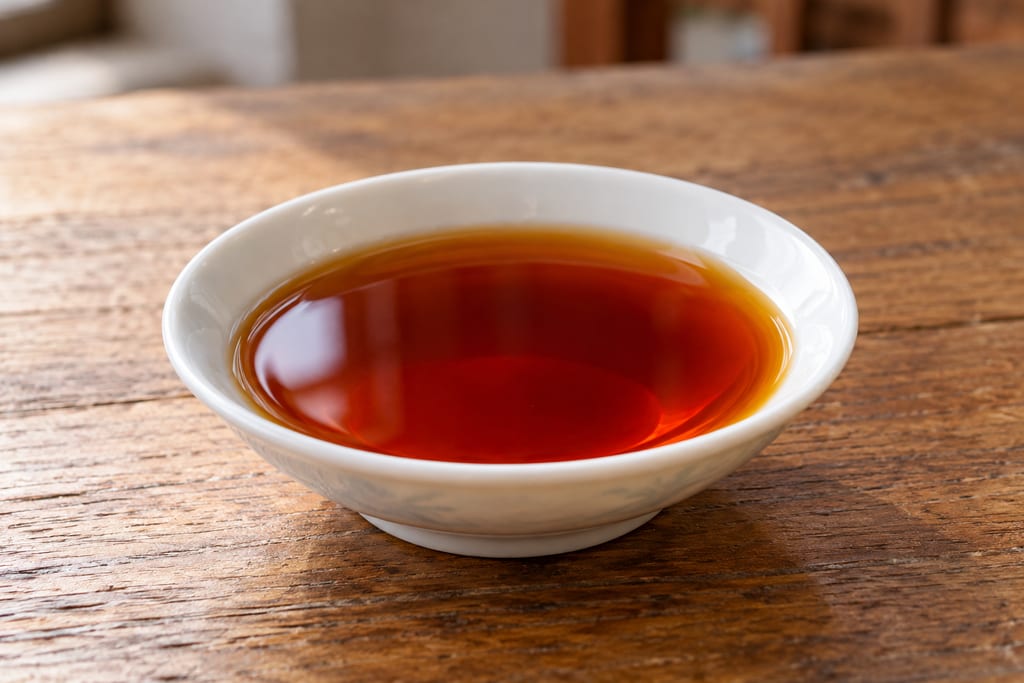
Tianjin Duliu mature vinegar, 独流老醋 (Dúliú lǎocù), is an aged Chinese grain vinegar from Duliu Town in Jinghai District, Tianjin. Grain starch is converted to sugar, fermented to alcohol, turned to acetic acid in a solid mash and then aged for years. The vinegar is amber to reddish brown, with a clear but rounded sourness, some sweetness and savoury grain aromas.
The principal grains are 黍米 (shǔmǐ), yellow millet (broomcorn millet, Panicum miliaceum), and sorghum, 高粱 (gāoliang). The starter is 大曲 (dàqū), traditionally made from wheat, barley and peas. Some makers also mention rice, and research describes bran and rice husks, which do different jobs and do not form one fixed grain mix.
Daqu is a solid, mixed-microbe starter. Its moulds make enzymes that break starch into sugars and its yeasts and other microbes help with the alcohol and the flavour. After the grain has been cooked and saccharified, the first fermentation is in a liquid mash, and the alcoholic liquid is then mixed with grain material for a low-moisture solid-state acetic fermentation done in two layers, upper and lower, that get different air.
The mature fermented grain is the 醋醅 (cùpēi), vinegar pei. It is aged outdoors in large ceramic vessels, turned and exposed to the seasons, and the vinegar is only drained from it after the full ageing. That differs from vinegars that are extracted first and aged afterwards in barrels.
The standard GB/T 19461-2008 separates 独流醋 (Duliu vinegar), made from pei aged at least one year, from 独流老醋 (Duliu aged vinegar), aged at least three years. It recognises labelled total acidities of 3.0, 3.5, 4.0 and 5.0 grams per 100 mL as acetic acid. Tianli is the best-documented maker and the safeguarding organisation for the craft, and a vinegar made the same way outside the protected area cannot claim the protected name.
Duliu lies near the meeting of the South Grand Canal, the Ziya River and the Daqing River, on routes that moved grain and goods between Tianjin, Beijing and the countryside. Heritage authorities describe wheat, millet, sorghum and legumes as local crops and link the water and seasons with the vinegar and alcohol workshops.
The earliest cited context is the Ming Jiajing edition of the Hejian Prefecture Gazetteer, compiled between 1522 and 1566. China's intangible heritage register cites it for vinegar preparation around the spring equinox and for 鱼酢 (yúzuò), an old word for sour-preserved fish. It points to a regional fermenting tradition and not to two-layer solid-state acetification with three years of outdoor ageing.
Tianli and the heritage accounts date the first organised Duliu vinegar workshop to 1665, the fourth year of the Kangxi reign, and the Ministry of Commerce gives 1665 as Tianli's founding. That is company heritage and not a series of production records. A well-known story has the Qianlong emperor tasting the vinegar on the Grand Canal in 1776 and ordering it for the court; it is a local tradition with no palace record behind it.
The commercial record is firmer later. A China Quality News overview quotes the 1905 Zhili provincial commercial survey as saying Duliu vinegar was sold in Tianjin, Henan and Shandong, reports a first-class award at a provincial exhibition in 1922, a Tianjin Yishi Bao article of 1932, and a Jinghai county gazetteer of 1934 calling it a celebrated product sold beyond the region.
Before 1949 the craft passed through family workshops and master and apprentice. The workshops joined a cooperative in 1952, production became part of a supply-and-marketing cooperative food factory in 1956, a dedicated aged-vinegar factory was organised in 1984, the Tianli trademark was registered in 1986 and the firm became a joint-stock company in 1998.
Original geographical-product protection came in 2002, followed by GB 19461-2004 and then GB/T 19461-2008, issued on 31 July 2008 and in force from 1 November 2008 and confirmed on review on 4 August 2025. Tianli became a China Time-Honored Brand in 2006, and in 2021 Duliu vinegar brewing entered the fifth national list of intangible heritage.
Four steps run in order: starch conversion, alcoholic fermentation, aerobic acetic fermentation and long ageing, each with its own organisms. Millet and sorghum supply starch and protein, and daqu supplies enzymes and microbes. The solid-state acetic stage is what makes Duliu what it is.
Daqu holds moulds, yeasts and bacteria. A 2013 study of real Tianjin Duliu production found Aspergillus, Saccharomycopsis and Pichia among the fungi in the starter and early fermentation. Alpha-amylases and glucoamylases cut gelatinised starch into dextrins and sugars and proteases free peptides and amino acids that feed microbes and later add savoury flavour. The mix varies with how the daqu is made and matured.
Yeasts then turn the sugars into ethanol and carbon dioxide, through glycolysis to pyruvate, acetaldehyde and ethanol. Tianli's account reports a liquid fermentation giving about 7 to 8 percent alcohol by volume, a producer's figure and not a rule.
For acetification the alcoholic liquid is mixed with bran and other grain material into a moist mass, the 醋醅 (cùpēi). Acetic acid bacteria oxidise ethanol to acetaldehyde and then acetic acid, with oxygen as the final electron acceptor, in outline C2H5OH + O2 giving CH3COOH + H2O. A dense grain mass takes up oxygen unevenly, so where the material sits changes what happens in it.
That is why the two layers matter. The upper layer is turned often and gets air; the lower layer keeps ethanol longer and supports different microbes. A 2026 multi-omics study found faster ethanol use, more acetic acid and more Acetobacter and Komagataeibacter in the upper layer, while the lower layer had more lactic acid bacteria and yeasts with higher lactic acid and several ethyl esters. Swapping the layers changed their behaviour. The ethanol was used 1.14 times as fast in the upper layer before the swap.
Lactic acid bacteria are important. Studies of 2013 and 2015 found Lactobacillus a major part of the fermenting pei with Acetobacter, a 2021 study found that adding Pediococcus acidilactici AAF1-5 improved fermentation, and the 2026 study used Lactobacillus helveticus and Acetobacter pasteurianus. These are research interventions and not traditional starters.
Ageing continues the change through oxidation, esterification, water loss and reactions among acids, alcohols, amino compounds and sugars. Ethyl acetate, ethyl lactate and phenethyl acetate add aromas, and lactic acid softens the acetic sharpness. The grain also supplies amino nitrogen and reducing sugars that give the vinegar a savoury, slightly sweet character.
Production starts with broomcorn millet and sorghum. They are moistened, cooked or steamed and cooled before inoculation so the starch is gelatinised and the daqu enzymes can work. The standard names the cereals but gives no fixed weight or ratio.
The starter is a daqu of wheat, barley and peas. GB/T 19461-2008 specifies natural summer fermentation of the daqu and storage for at least four months before use. It supplies saccharifying enzymes and fermenting microbes and cannot be swapped for ordinary baker's yeast.
Tianli mixes the prepared grain with water and daqu in fermentation vessels. The alcoholic stage is liquid with regular stirring and, in its 2023 account, lasts about seven days and ends at 7 to 8 percent alcohol by volume. Those are Tianli's values and not rules for every producer.
The mash is then combined with wheat bran and 高粱帽 (gāoliang mào), a sorghum-derived process material, to make the moist solid-state pei. Bran adds surface and structure and changes moisture and microbial activity. Research also describes rice husks in Duliu systems.
The pei ferments in two stages. Tianli turns the upper part daily for about fifteen days, with the producer reporting acidity above 7 g/100 mL in the pei by the end of the first phase, then exchanges upper and lower material for another fifteen days. A 2021 study documents the same two stages over thirty days, and the standard asks for at least twenty-five days of solid-state acetic fermentation within a cycle of about thirty-five days.
When acetification is done, salt is added to check further fermentation; the amount is not published. The pei goes into outdoor ceramic vessels and is turned and exposed to the seasons (翻晒陈酿). The pei must age at least one year for Duliu vinegar and at least three years for Duliu aged vinegar.
The vinegar is recovered by 淋醋 (líncù), percolating liquid through the aged pei. Tianli then heats the extract, lets it settle, gives it an industrial high-temperature treatment (its account mentions 135 degrees C without a holding time) and packs it. That figure is not a household pasteurisation instruction.
The finished vinegar is classified by total acidity at 3.0, 3.5, 4.0 or 5.0 g/100 mL, with other chemical limits. Grain amounts, starter percentage, temperatures, extraction volumes and yield are producer records, and the standard alone is not a reproducible home recipe.
Duliu Town in Jinghai is the geographical centre, and the name marks that origin and not a generic dark Chinese grain vinegar. The main split inside the protected product is between Duliu vinegar (pei aged at least one year) and Duliu aged vinegar (at least three), both under the same standard with the same basic sequence.
The four acidity classes, 3.0, 3.5, 4.0 and 5.0 percent, are finished-product strengths and not different methods. Higher classes carry extra limits for nonvolatile acids, reducing sugars and amino acid nitrogen, so a bottle should be identified by its label and analysis.
Grain mixes differ across sources. Heritage records stress yellow millet and sorghum with wheat, barley and peas in the daqu, Ministry of Commerce material mentions rice in Tianli's wider production, and university research describes sorghum, millet, bran and rice husks, which may refer to different stages or products.
Historically the fermentation ran in ceramic vessels with hand turning and then outdoor ageing. Modern makers can keep these steps with better cooking, stirring, filtration and filling equipment, and a 2025 study examined an industrial closed solid-state fermenter. That research does not show that every protected producer has dropped the two-layer process.
Experiments have added microbes on purpose. A January 2021 study found that Pediococcus acidilactici AAF1-5 shortened the experimental acetic fermentation by five days and raised several flavour compounds, and a later study tested Lactobacillus helveticus and Acetobacter pasteurianus at different depths. They are improvements under test and not the historic method.
Duliu is often named with Shanxi aged vinegar and Zhenjiang aromatic vinegar, which differ in grain, starter, acetic fermentation and ageing. Yongchun aged vinegar from Fujian is yet another type, based on red koji and liquid acetification.
Duliu aged vinegar is a sour seasoning of Tianjin and northern Chinese cooking. Its acetic sharpness comes with grain sweetness and savoury notes, and it is set out as a dip or cooked into dishes. Its flavour is concentrated, so the amount depends on the bottle's acidity and the food.
It is most often the dipping vinegar for 饺子 (jiǎozi) dumplings, alone or with garlic, chilli oil or soy sauce, where the acid cuts the fat of the filling. Similar dips go with steamed buns and other northern wheat foods.
Another use is 腊八蒜 (làbā suàn), garlic steeped in vinegar around the Laba festival, whose cloves can turn green. Modern accounts name Duliu aged vinegar as one that is used. The recipe, with its own amounts, garlic treatment and storage, is separate from the vinegar.
It dresses 凉拌菜 (liángbàn cài), cold vegetables, and 拌面 (bànmiàn), mixed noodles, balancing sesame paste, garlic and chilli. The strength matters, because the same spoonful of a 3.0 and a 5.0 percent bottle gives different acid.
It is also used in fish, stir-fries and braises, where it moderates richness and adds sourness, and where a neutral distilled vinegar would give acid with little aroma. Long heating drives off aroma, so adding it late keeps more.
The 16th-century reference to 鱼酢 (yúzuò), a sour-preserved fish, does not mean the modern three-year vinegar was used in it. The vinegar is also sold as a regional speciality and gift. Advertising sometimes credits aged vinegar with medicinal benefits, but amino acids or minerals in it do not show benefit from drinking it, and it is a seasoning.
Begin with the grain and the daqu. Grain must be sound and free of unacceptable contamination, and daqu is a controlled mixed starter and not any mould grown on grain. The four-month storage in the standard does not by itself show a given starter is safe, so raw-material testing and microbiological control still apply.
Cooking and saccharification must free enough sugar for yeast. Poor cooking, weak enzymes or an unsuitable microbial mix give little alcohol. Tianli reports about 7 to 8 percent alcohol by volume, a useful producer observation and not an acceptance limit, and measuring alcohol and residual sugar says more than bubbling or elapsed time.
The two-layer acetic stage brings its own control problems. Oxygen, moisture and microbial activity differ between the layers, and acid can come out uneven if they are not managed. Acetification also makes heat and acid that affect the organisms, and a 2021 study linked Acetobacter, Lactobacillus and Pediococcus abundance closely to conditions. Opportunistic or undesirable organisms have also been found in community surveys.
GB/T 19461-2008 gives four classes with total acidity of at least 3.0, 3.5, 4.0 and 5.0 g/100 mL as acetic acid. The minimum nonvolatile acids as lactic acid are 0.4, 0.5, 0.6 and 1.0 g/100 mL, minimum amino acid nitrogen 0.08, 0.10, 0.11 and 0.16 g/100 mL, and minimum reducing sugar as glucose 2.0, 2.0, 3.0 and 3.20 g/100 mL. All four classes need at least 6.0 g/100 mL soluble salt-free solids.
These measure different things. Total acidity is not pH, nonvolatile acids are not acetic acid, and amino acid nitrogen is not protein. The manufacturer's report of more than 7 g/100 mL in the fermenting pei does not apply to the extracted, bottled vinegar.
The standard describes an amber or brown-red, glossy, clear liquid with a strong aroma, mellow sourness, slight sweetness and savoury taste, with a little sediment allowed and no visible foreign matter. Fuzzy mould, a putrid smell or spoilage are not normal because mixed microbes are used, and appearance does not replace analysis.
Tianli's finishing is extraction, heating, settling and an industrial high-temperature treatment before packing, and the 135 degrees C it cites has no verified holding time. The standard asks for cool, dry storage away from sun, rain and harmful substances, with commercial minimum shelf lives of twelve months for bottled and six months for bagged vinegar, which are not valid for home batches.
As of October 2026 GB/T 19461-2008 is current. A newer general vinegar standard, GB/T 18187-2026, is published and takes effect on 1 September 2027. China's market regulator has said products assembled from glacial acetic acid cannot be sold as fermented vinegar. Homemade vinegar of unknown acidity must not replace specified vinegar in a tested pickling or canning recipe.
A Ming Jiajing gazetteer of Hejian Prefecture, compiled between 1522 and 1566, is cited for vinegar preparation around the spring equinox in the region. Tianli and the heritage accounts date the first Duliu vinegar workshop to 1665, and a story has the Qianlong emperor tasting it in 1776.
A 1905 provincial survey says Duliu vinegar sold in Tianjin, Henan and Shandong, and a 1934 county gazetteer calls it a celebrated product. Production was reorganised in 1952, the Tianli trademark was registered in 1986, geographical protection came in 2002, and the craft joined the national intangible heritage list in 2021.
Daqu is a controlled mixed starter, not any mould grown on grain, and its four-month storage does not by itself show safety.
Hazard sourceWeak enzymes or an unsuitable population leave too little ethanol for acetification.
Hazard sourceOxygen, moisture and microbial activity differ between the upper and lower layers, and acid can come out uneven.
Hazard sourceSurveys find undesirable organisms along with the useful ones, and DNA in a study does not make an organism a suitable inoculant.
Hazard sourceThe pei ages in the open for years, so vessels must be protected from foreign matter.
Hazard sourceThe 135 degrees C Tianli cites has no verified holding time and is not a household sterilisation schedule.
Hazard sourceHomemade vinegar of unknown acidity can leave pickles under-acidified.
Hazard sourceStore the daqu.
Control sourceRun the solid-state acetic fermentation.
Control sourceAge the vinegar pei.
Control sourceTotal acidity of the finished vinegar as acetic acid.
Control sourceNonvolatile acids as lactic acid.
Control sourceAmino acid nitrogen.
Control sourceReducing sugars as glucose.
Control sourceSoluble salt-free solids.
Control sourceVinegar must come from complete microbial fermentation.
Control sourceFor canning use vinegar of the acidity a tested recipe specifies.
Control sourceUse only a controlled daqu made from wheat, barley and peas and stored at least four months; do not use unidentified mould grown on grain.
Do not judge acidity by smell or taste; the youngest class needs at least 3.0 g/100 mL total acidity.
Do not use homemade vinegar of unknown acidity in canning or pickling; use commercial vinegar of the stated acidity.
Tianli's 135 degrees C treatment has no published holding time and is not a home pasteurisation method.
Discard a batch with fuzzy mould, a putrid smell or other spoilage.
The protected area; 1665 is a company heritage date.
Dark Fujian rice vinegar: glutinous rice and red Monascus koji make a red rice wine, liquid acetification turns it to vinegar, and it ages at least three years.
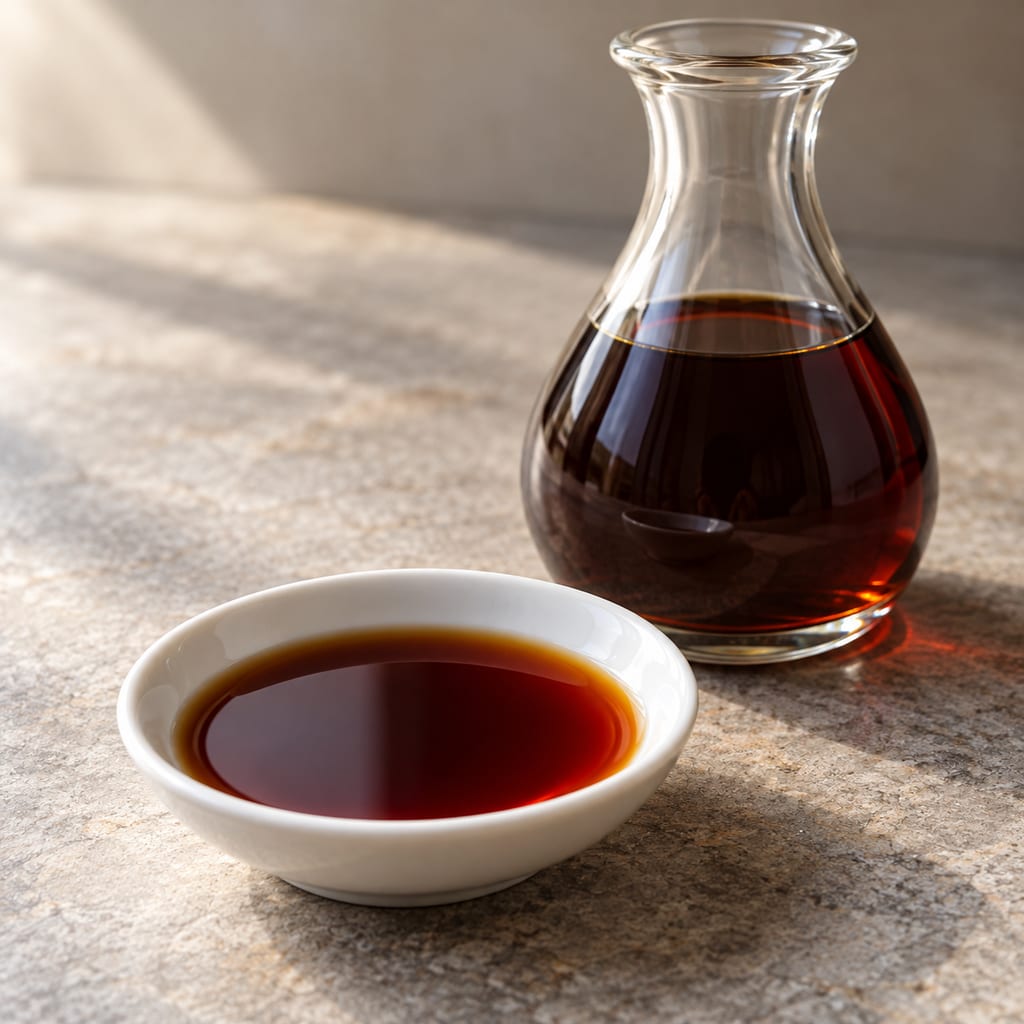
Zhenjiang black vinegar is a Chinese glutinous-rice vinegar made by mixed-culture fermentation, solid-state acetification, roasted-rice extraction and ageing, giving a dark, savoury, mildly sweet condiment.
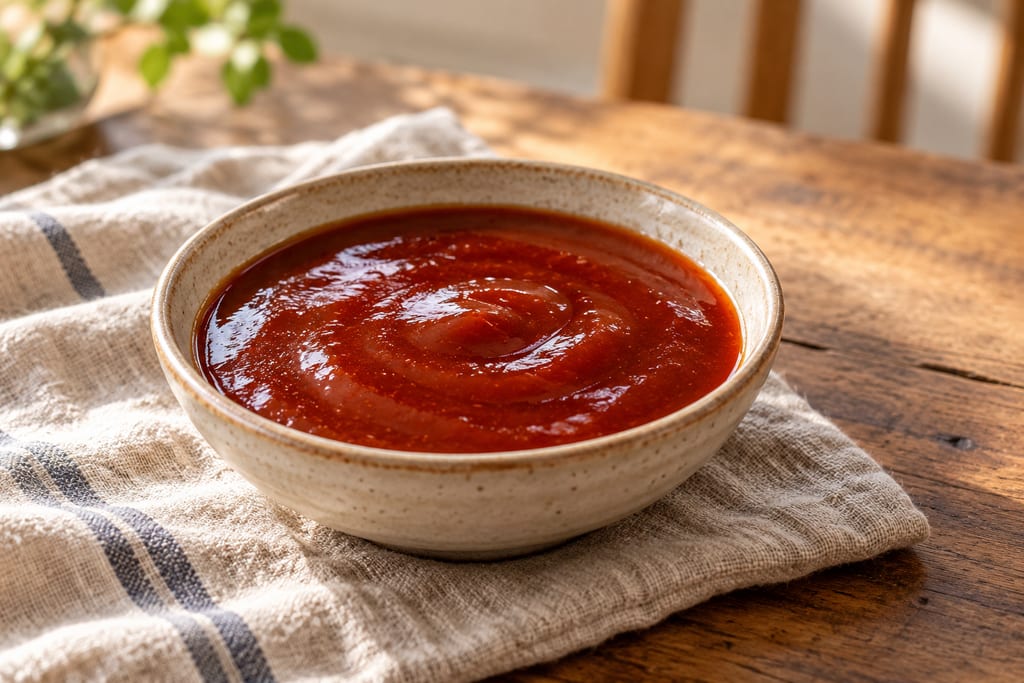
A smooth, tomato-based sweet-and-sour sauce of sugar, vinegar, tomato paste and soy sauce, thickened with starch for dipping or coating; it is not the sauce on Hangzhou's sweet-and-sour ribs.
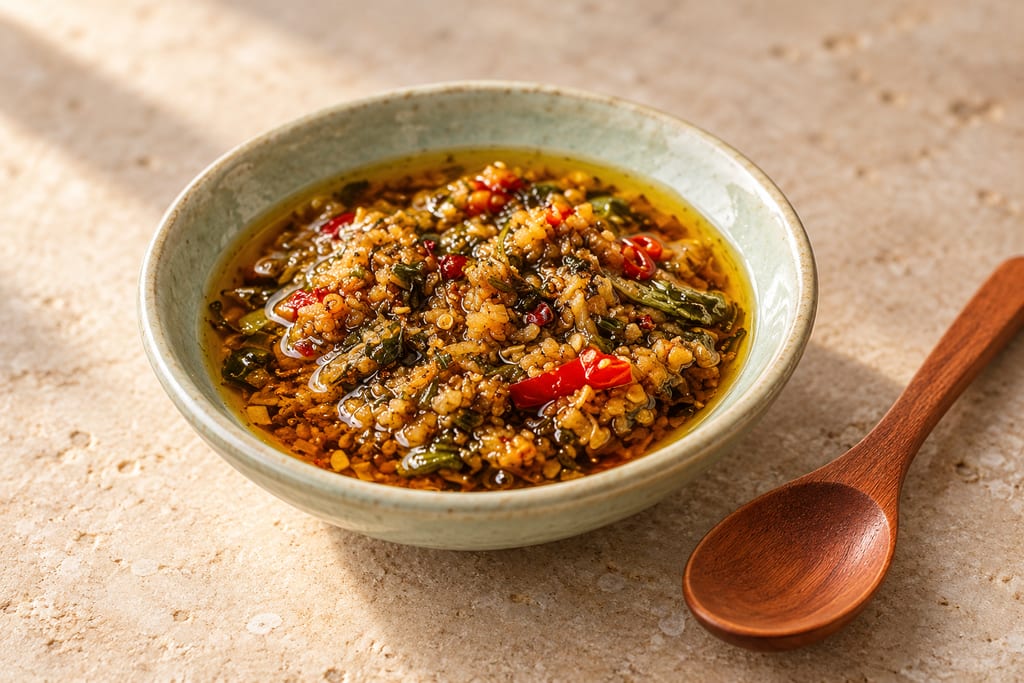
A Cantonese condiment of ginger, garlic, scallion and fresh chilli fried slowly in oil and seasoned with soy sauce, sugar, wine and salt, served over roast meats and poached chicken.
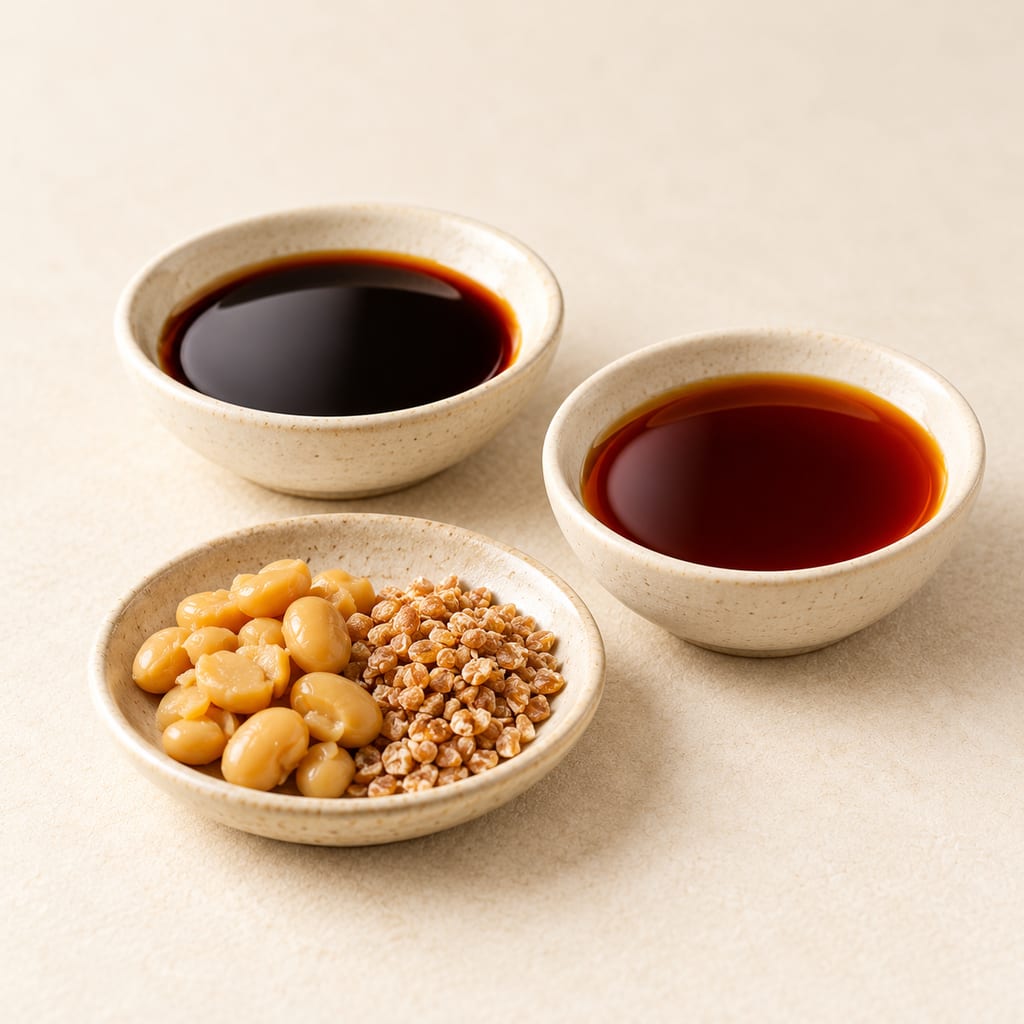
Jiangyou is the Chinese soy sauce family, an umbrella term for light, dark and seasoned sauces made by two main process families: high-salt liquid-state and low-salt solid-state brewing.
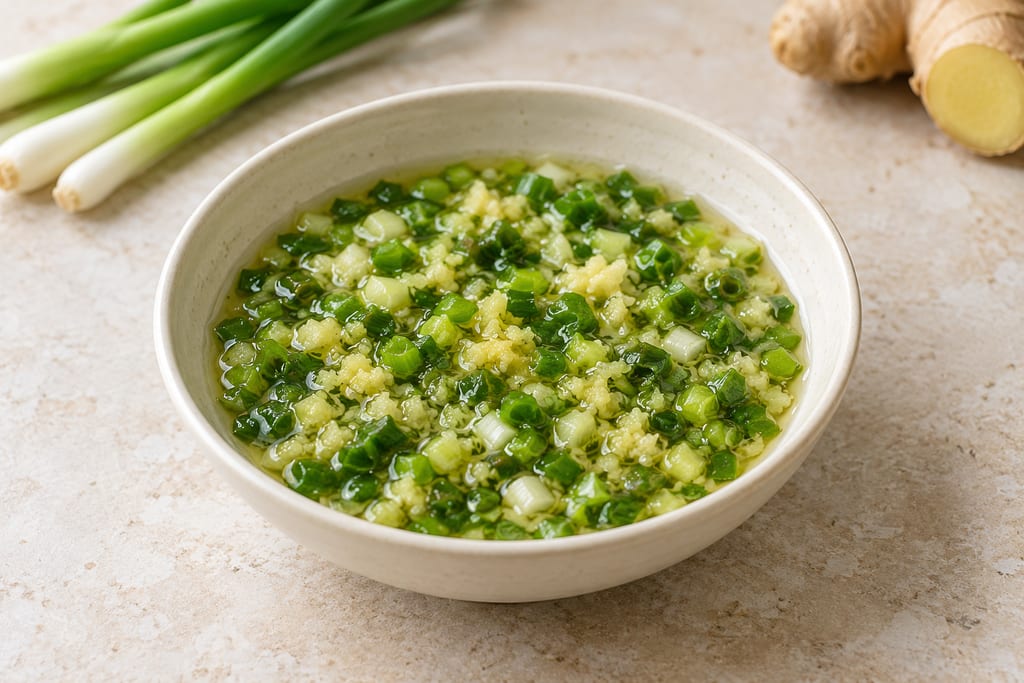
A raw Cantonese-style condiment of minced scallions, fresh ginger, vegetable oil and salt; it is mixed without heating and serves eight.
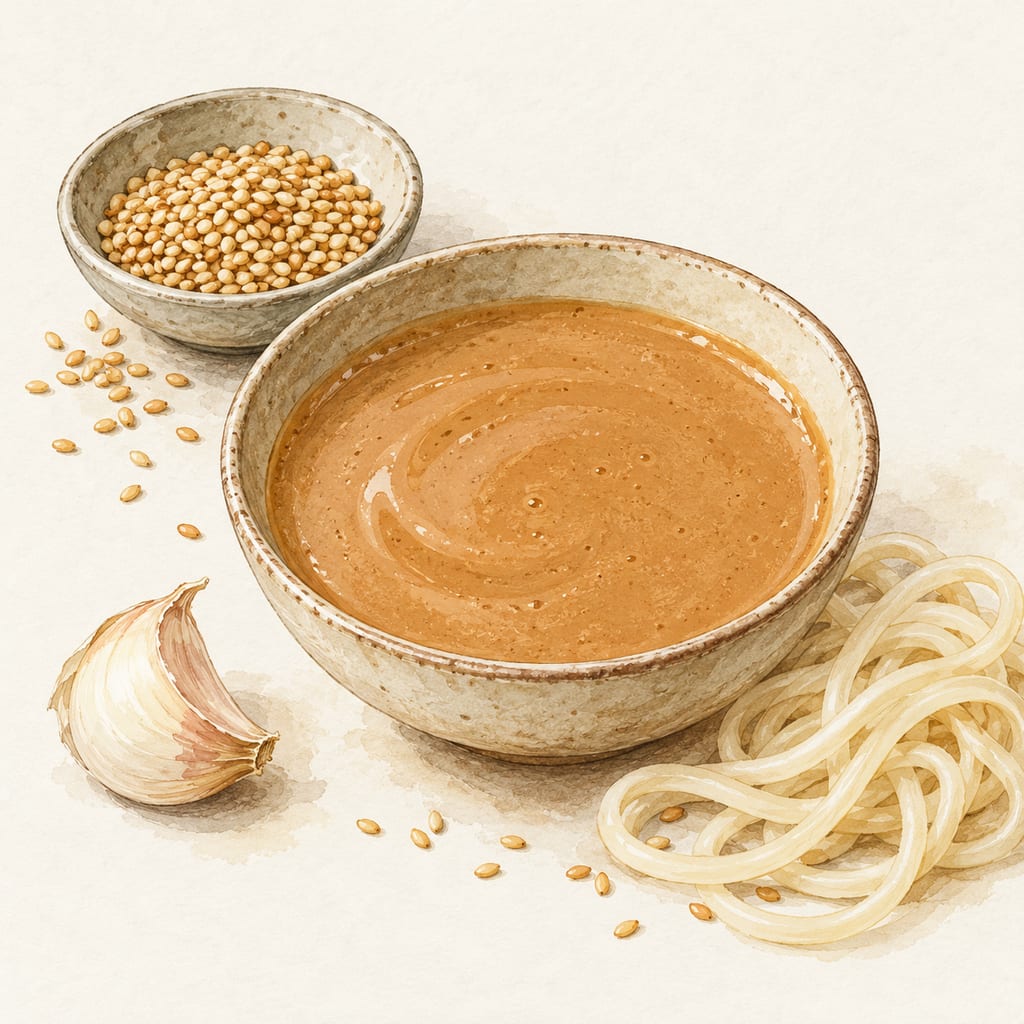
An untested sesame-paste sauce with soy, black vinegar, sugar, sesame oil and garlic, drafted for hot-pot dipping or noodles.
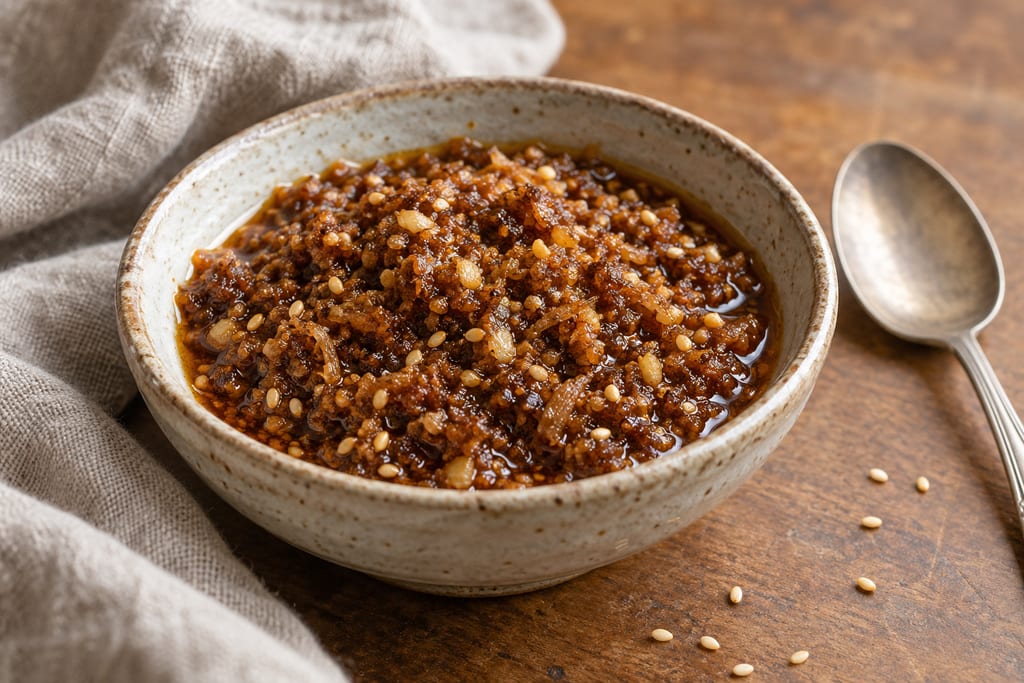
Shacha is a savoury, granular Fujian, Teochew and Taiwanese condiment of oil, garlic, shallot and dried seafood, often sold as Chinese barbecue sauce.
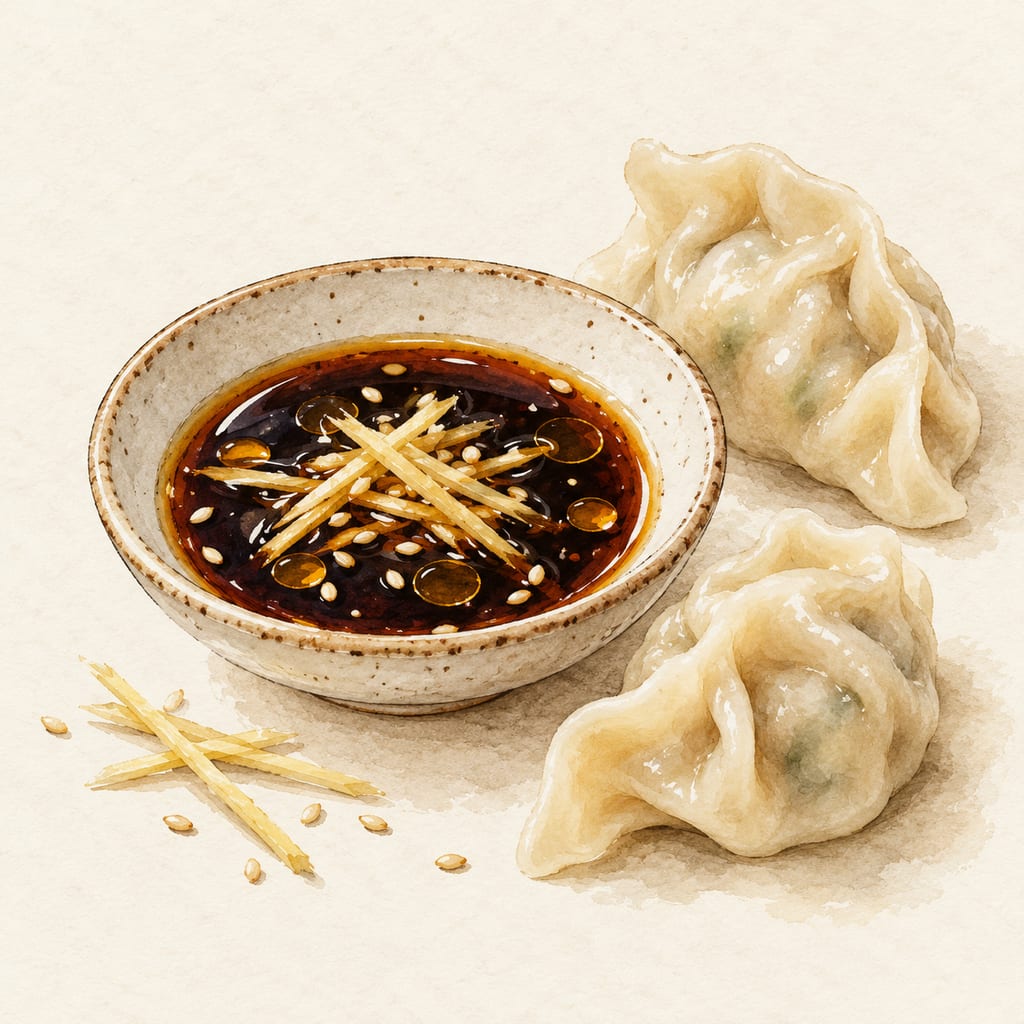
An untested small-batch soy and Zhenjiang black-vinegar dip with ginger and sesame oil, adapted as a modern accompaniment for dumplings or cooked vegetables.
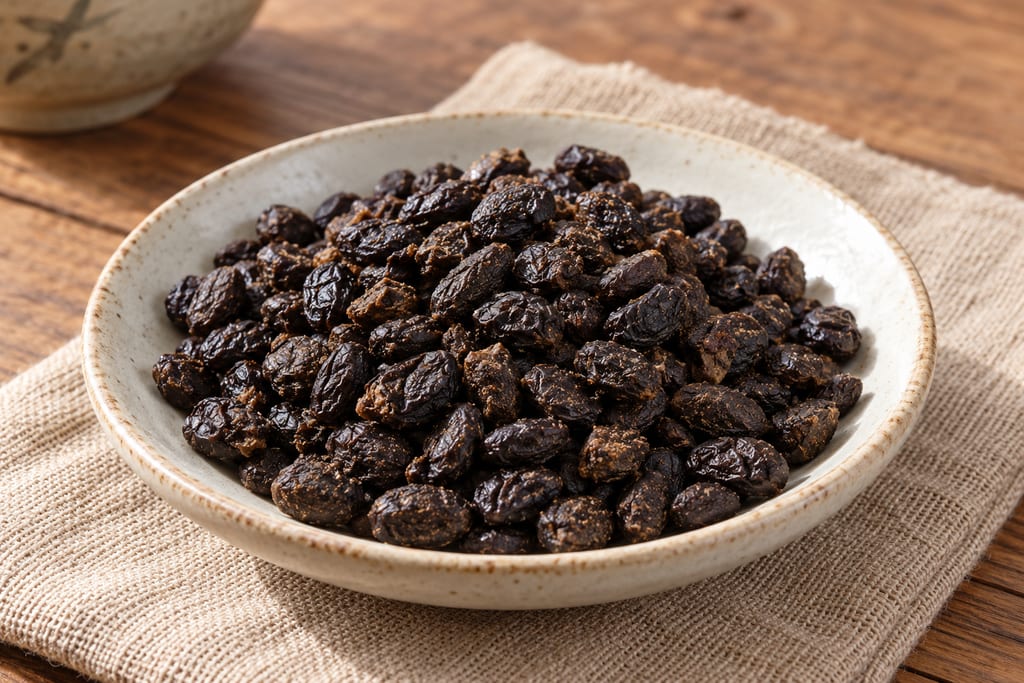
A Chinese fermented soybean condiment in which Bacillus-led bacteria, not moulds, drive the fermentation. Documented in Zunyi, Guizhou, and kept separate from mould-led douchi.

Protected Italian vinegar made only from cooked grape must, fermented and aged in a battery of wooden barrels for at least 12 years: sweet, sharp and syrupy.

A Dominican table and seasoning condiment of sour orange juice, mixed with lime and salt and bottled raw; garlic, oregano or a hot pepper may be added for meat or a spicier bottle.

Japanese reddish-brown vinegar from sake lees matured about three years, turned to vinegar by acetic bacteria; the vinegar of Handa and Edomae sushi rice.

A Swedish-style spirit vinegar made by fermenting neutral alcohol with live vinegar bacteria, with a separate guide to commercial ättika strengths.
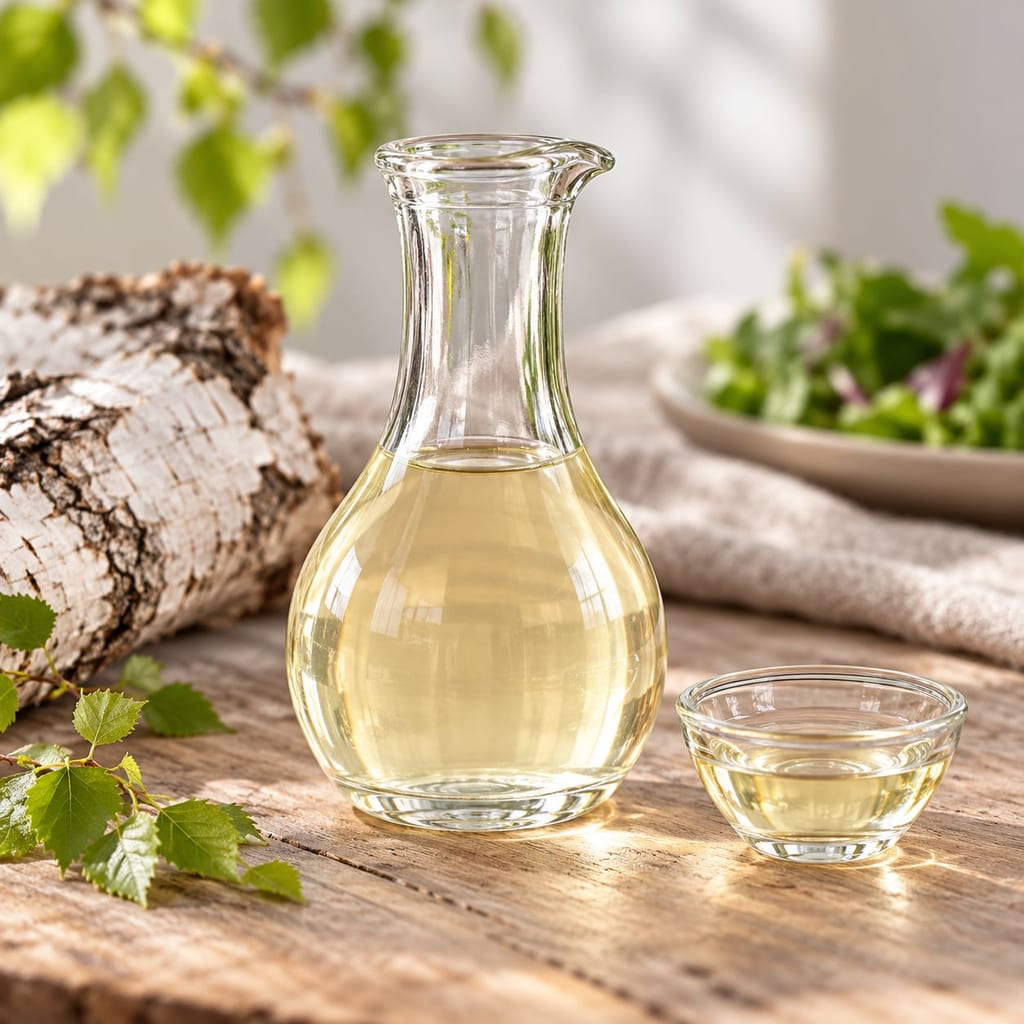
Vinegar from spring birch sap fermented to alcohol and then acetic acid, usually with added sugar or honey because the sap is so dilute; made in Sweden and described in older eastern European accounts.
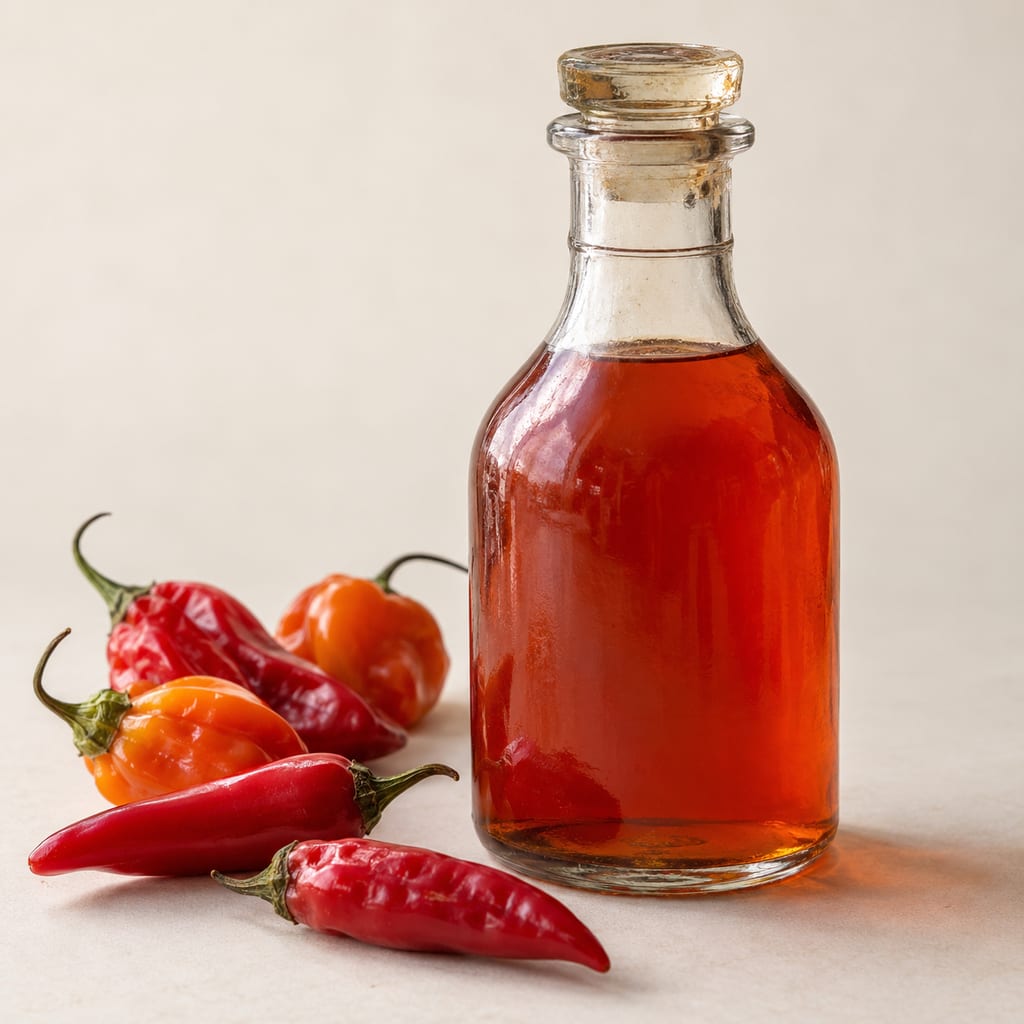
Mary Randolph's pepper vinegar: ripe pepper pods simmered in vinegar until the liquid is reduced to one quart, then strained for use in gravies and catsups. From The Virginia Housewife.
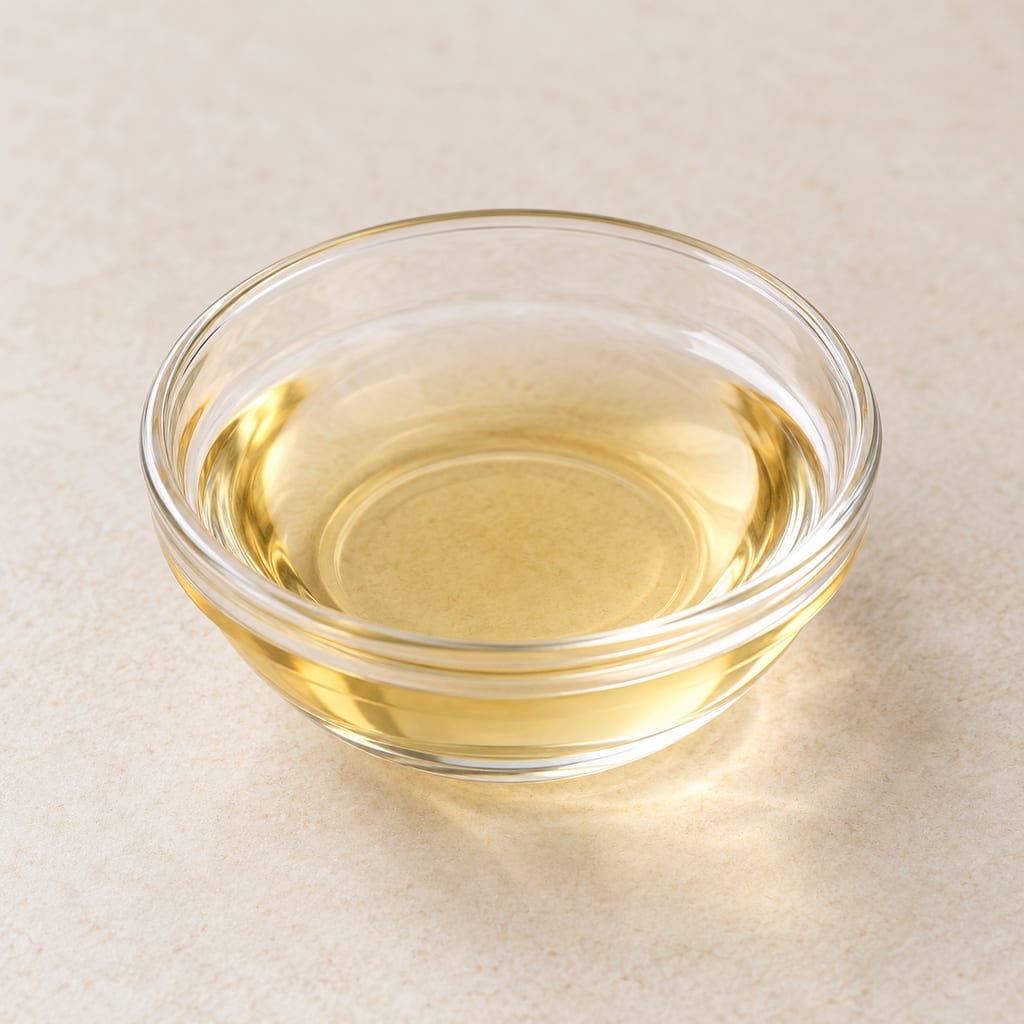
A Japanese mixed seasoning of vinegar, sugar and salt for sushi rice. Ratios vary with the rice batch and style; this version follows Marukan Vinegar's formula for two go of rice.
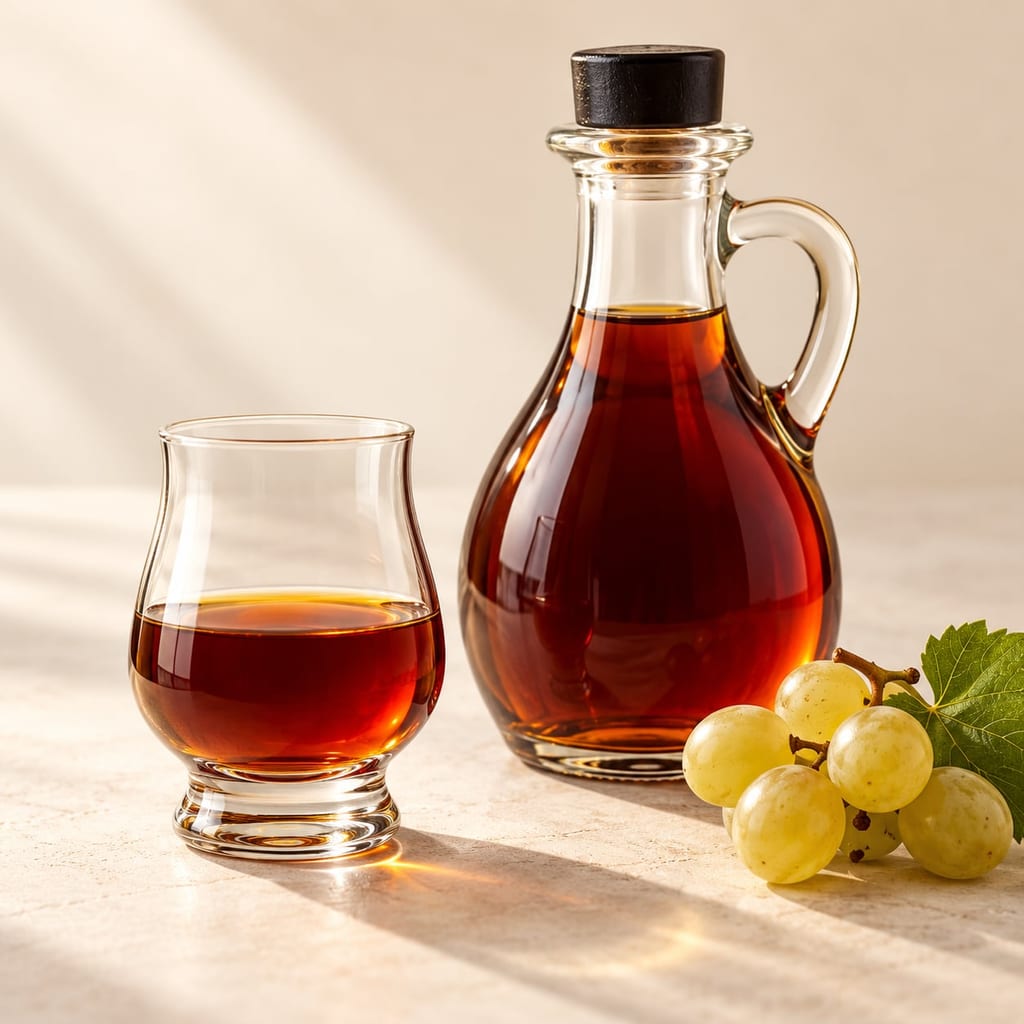
Vinagre de Jerez is made by acetifying eligible Jerez wines and ageing the vinegar in wood. Its protected name belongs to a defined Andalusian zone and a cellar tradition joining wine, oxygen, acetic bacteria and long ageing.

A gelling polysaccharide extracted from red seaweeds, sold as kanten strips or powder; it sets firm at a low concentration and stays solid until about 85 °C.

Cicerbita alpina is an alpine perennial whose tender shoots and leaves have been eaten raw or cooked. Sámi milk preparations and modern Carnian dishes are distinct uses, with serious identification and preservation limits.

Japanese skipjack tuna cooked, then repeatedly smoked and dried over a wood fire by the hand-fired tebiyama method into a hard block for shaving into dashi: the first stage of katsuobushi.

A yeast-raised wheat ring shaped from a firm dough, briefly boiled and baked. This source-batch formula gives a gently malted crust and a chewy crumb.

A warm dip of garlic, anchovy and olive oil, often enriched with butter, that Piedmont serves over a flame with raw and cooked vegetables and bread.

Bechamel is a white sauce of milk thickened with a butter and flour roux, one of the French mother sauces, and the base from which Mornay and other cheese and cream sauces are made.
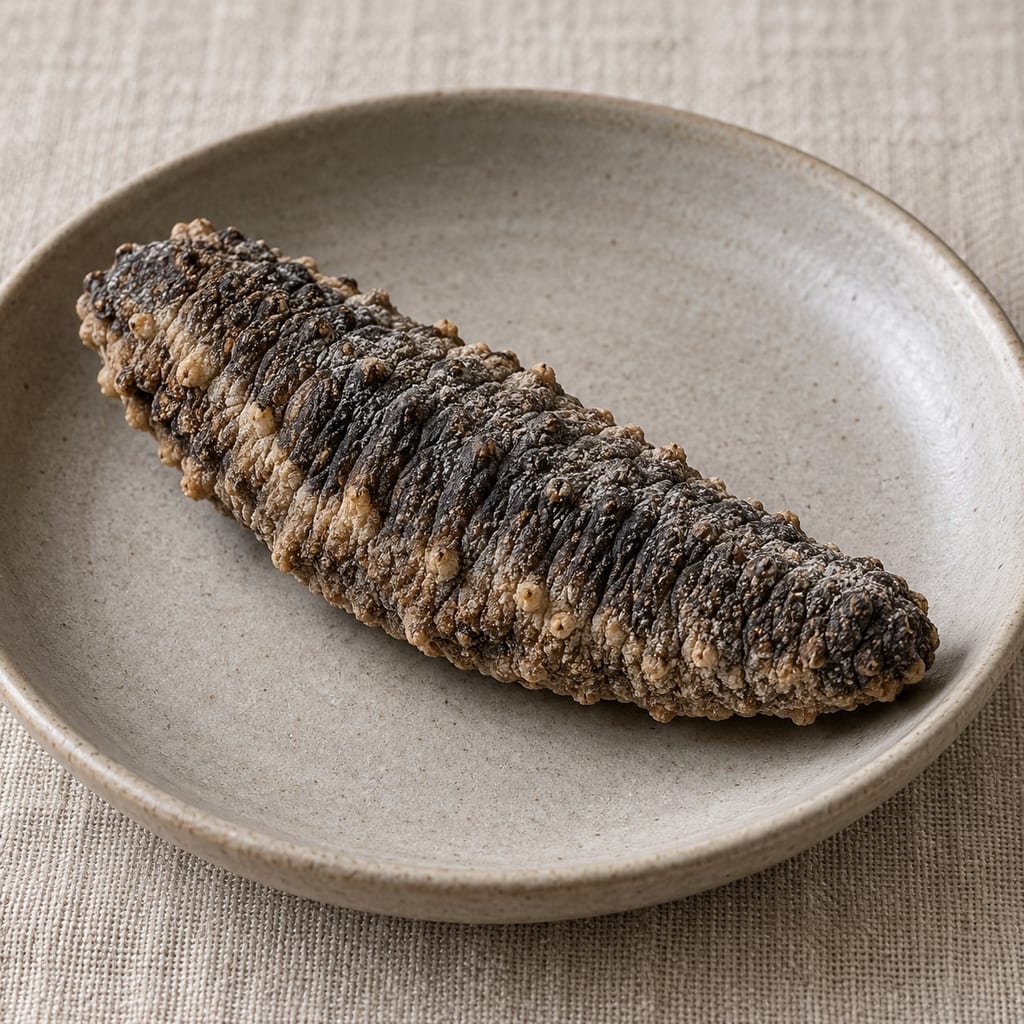
Sea cucumber cleaned, boiled and dried, sometimes with smoke, into a long-keeping trade product; Makassan processing in Arnhem Land is documented from at least the eighteenth century.
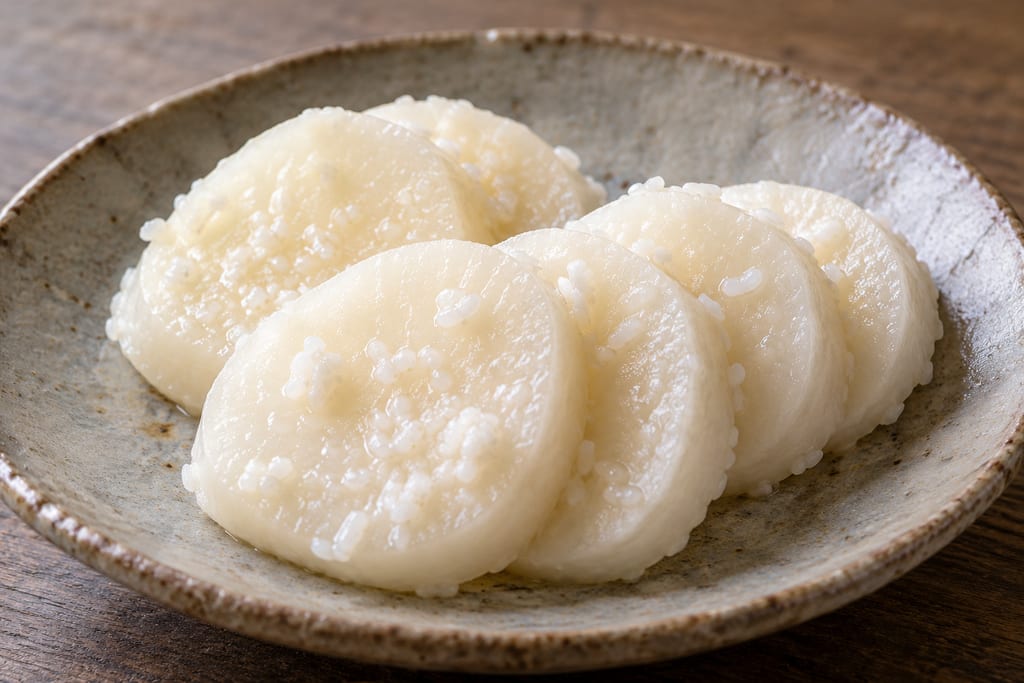
A sweet, crisp Japanese daikon pickle from Tokyo's Nihonbashi district, made by salting fresh radish and dressing it in rice koji, sugar or koji amazake without the heavy drying used for takuan.
No community contributions have been published for this entry yet.
Sign in to contribute. Published comments and photos are free to read.
Standardization Administration of ChinaMethod · Identity
GB/T 19461-2008 Product of geographical indication: Duliu (aged) vinegarOne year and three year ageing; acidity classes
Cited in: What it is; History; How it is made; Variations; Reading results and problems
General Administration of Quality Supervision, ChinaMethod · Safety
GB/T 19461-2008 full standardDaqu four months; 25 days of acetic fermentation; analytical limits; shelf life
Cited in: What it is; How it is made; Variations; Reading results and problems
China Food Safety NewsMethod
Tianli Duliu aged vinegarTianli process: seven days, 7 to 8% alcohol, two 15-day stages
Cited in: What it is; How it works: daqu, yeast and a two-layer mash; How it is made; How it is eaten and used; Reading results and problems
China Intangible Cultural Heritage NetworkHistory · Method
Vinegar brewing craft: Duliu aged vinegarJiajing gazetteer, 1665, 1776 story, 2021 listing
Cited in: What it is; History; How it is made; Variations; How it is eaten and used
Ministry of Commerce of the People's Republic of ChinaHistory
Tianli, China Time-Honored Brand1665 founding; rice in Tianli grains
Cited in: What it is; History; How it is made; Variations; How it is eaten and used
China Quality NewsHistory
Historical development of Tianjin Tianli Duliu aged vinegar1905 survey, 1922, 1932, 1934, 1952, 1956, 1984, 1986, 1998
Cited in: History; How it is made
China Quality NewsHistory · Use
Duliu aged vinegar: historical and commercial developmentCommercial reputation and uses
Cited in: History; How it is eaten and used
Bioresource Technology, 2013Microbiology
Exploring microbial succession and diversity during solid-state fermentation of Tianjin Duliu mature vinegarAspergillus, Saccharomycopsis and Pichia in daqu
Cited in: How it works: daqu, yeast and a two-layer mash; Reading results and problems
Food Science and Biotechnology, 2015Microbiology
Analysis of bacterial diversity during acetic acid fermentation of Tianjin Duliu aged vinegarLactobacillus and Acetobacter in the pei
Cited in: How it works: daqu, yeast and a two-layer mash; Reading results and problems
Frontiers in Microbiology, 2021Microbiology
Bioaugmentation by Pediococcus acidilactici AAF1-5 improves acetic acid fermentation of Duliu vinegarFive days shorter; two-stage 30-day arrangement
Cited in: How it works: daqu, yeast and a two-layer mash; How it is made; Variations; Reading results and problems
Food Research International, 2026Microbiology
Microbial functional differentiation and flavor formation across the layers of Duliu vinegar peiUpper and lower layers; 1.14 times faster ethanol use
Cited in: How it works: daqu, yeast and a two-layer mash; How it is made; Variations; Reading results and problems
Standardization Administration of ChinaSafety
GB/T 18187-2026 General rule for the quality of vinegarTakes effect 1 September 2027
Cited in: Reading results and problems
State Administration for Market RegulationSafety
Announcement on strengthening quality and safety supervision of soy sauce and vinegarGlacial acetic acid products are not fermented vinegar
Cited in: Reading results and problems
National Center for Home Food Preservation, University of GeorgiaSafety
General Information on PicklingUnknown-acidity vinegar in preserving
Cited in: Reading results and problems