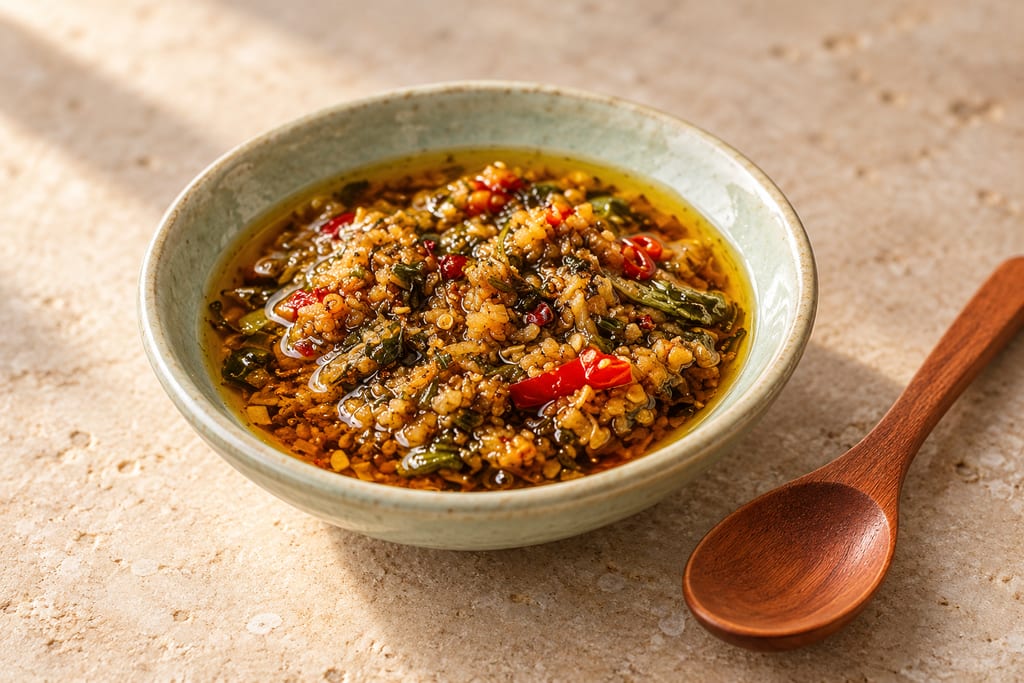
Cooked ginger-scallion oil with chilli
A Cantonese condiment of ginger, garlic, scallion and fresh chilli fried slowly in oil and seasoned with soy sauce, sugar, wine and salt, served over roast meats and poached chicken.
 FermenteaWhere food goes to change
Traditional method
Raw Ginger Scallion Oil · Raw ginger scallion sauce
A raw Cantonese-style condiment of minced scallions, fresh ginger, vegetable oil and salt; it is mixed without heating and serves eight.
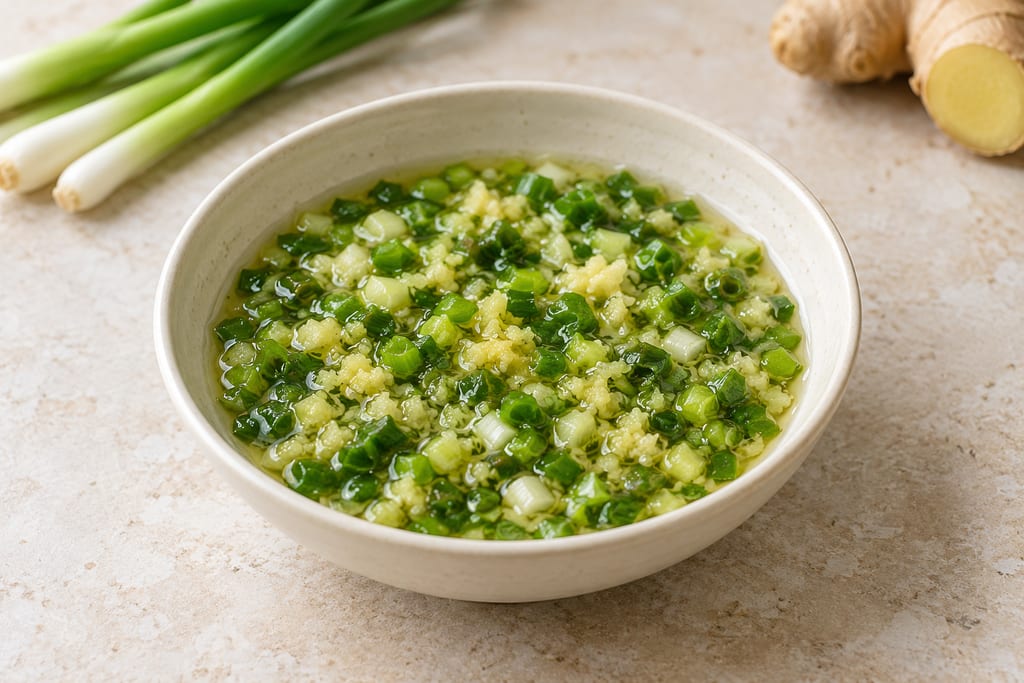
Raw ginger-scallion oil is a simple but important condiment in Cantonese cooking. It combines finely minced ginger, spring onions, vegetable oil and salt into a strongly aromatic sauce.
The name is commonly written 薑蔥油 in traditional Chinese characters or 姜葱油 in simplified characters, with Cantonese and Mandarin pronunciations differing by language.
In Mandarin, the expression can be rendered jiāng cōng yóu. Cantonese cooking often refers to related ginger-scallion sauces used with poached chicken and other foods.
The specific formulation here is raw. Neither the ginger nor scallions are intentionally cooked.
This distinguishes it from another common preparation in which very hot oil is poured over the chopped aromatics.
The raw version preserves a sharper, fresher flavour. It is particularly associated with Cantonese white-cut chicken, bai qie ji (白切雞 / 白切鸡).
Cantonese cuisine places great emphasis on the natural flavour and texture of fresh ingredients.
Cooking methods such as steaming and gentle poaching are used to preserve the characteristics of fish, poultry and vegetables.
A plain-looking dish may be carefully prepared to achieve a particular texture and flavour.
White-cut chicken is an excellent example.
The chicken is cooked gently and served in pieces, often with the skin intact.
Its seasoning can be comparatively restrained.
A strongly flavoured sauce is served separately so diners can adjust each bite.
Ginger-scallion oil performs that function.
The sauce contributes pungency, herbal freshness, salt and richness without requiring the chicken itself to be heavily seasoned.
The exact invention date of this condiment is unknown.
Its cultural identity is established through Cantonese cooking practice rather than a documented single inventor or founding year.
White-cut chicken is sometimes served with ginger, scallion and other condiments.
The meat is valued for tenderness and its natural flavour.
The skin contributes richness and texture.
Raw ginger-scallion oil cuts through that richness.
The combination also creates an aromatic contrast between gently cooked meat and uncooked plant ingredients.
The sauce can be spooned onto the chicken or used for dipping.
Some diners prefer a version seasoned only with salt.
Others add a little light soy sauce.
The source recipe explicitly describes dividing the raw sauce into two small bowls and adding soy sauce to one.
This is a useful example of variation at the table rather than a change to the underlying preparation.
Scallions — 4 tbsp finely minced, about 50 g — Fresh onion aroma
Fresh ginger — 3 tbsp finely minced, about 20 g — Pungency
Vegetable oil — ⅓–½ cup, approximately 80–120 mL — Carries aromatics and adds richness
Salt — ½ tsp, or to taste — Seasoning
Light soy sauce, optional — To taste in a separate portion — Savoury variation
The source lists eight servings, not a measured finished volume. Preparation metadata: approximately five minutes total.
The ingredient proportions are close to, but not identical with, the family's general description of approximately two parts scallion to one part ginger.
The measured recipe is retained as the canonical version.
Ginger is the rhizome of Zingiber officinale Roscoe.
Its flavour is produced by a combination of aromatic compounds and pungent substances.
Gingerols are important contributors to the pungency of fresh ginger.
Heat and processing can transform gingerols into other compounds, including shogaols under suitable conditions.
These compounds have different sensory characteristics.
A raw ginger sauce therefore tastes different from a cooked ginger sauce.
The source preparation deliberately avoids heating.
Finely mincing ginger increases the exposed surface area and releases its juices and aromatic components.
The resulting small pieces distribute throughout the oil.
If ginger is left in large chunks, the sauce becomes uneven and less pleasant to eat.
Scallions are immature or specially cultivated onions, generally belonging to Allium species, including Allium fistulosum and Allium cepa forms.
The green and white portions have different textures and flavour intensities.
The white part is usually firmer and can have stronger pungency.
The green tops contribute a fresher, more herbal onion character.
The source explicitly includes the white portions.
Finely mincing both produces a sauce with a balanced aromatic profile.
Like other alliums, scallions contain sulfur compounds that contribute to their characteristic flavour.
Cutting releases these compounds and changes their exposure to air.
The resulting fresh aroma is part of what makes the raw preparation distinctive.
Oil carries aromatic substances and changes how the sauce feels in the mouth.
Ginger and scallion contain compounds with different solubilities.
Some aroma compounds distribute more readily into fat than water.
Vegetable oil provides a medium that coats the food being seasoned.
It also softens the direct impact of the minced plant material.
Without oil, the combination would resemble a chopped ginger-and-onion relish.
With oil, it becomes a sauce that can be spooned or drizzled.
The original recipe permits a range of 80–120 mL.
The amount changes the consistency.
A lower volume produces a denser relish.
A higher volume makes the sauce more fluid.
The source allows adjustment according to preference rather than specifying one fixed viscosity.
The recipe instructs washing and thoroughly drying the scallions before chopping.
This has a practical mechanical purpose.
Wet scallions can be slippery and difficult to mince finely.
Excess surface water may also affect the texture of the finished oil mixture.
However, patting the scallions dry does not eliminate the water naturally present inside their tissues.
The mixture remains a moist, raw plant preparation dispersed in oil.
That distinction becomes important when considering storage safety.
1. Wash the scallions. Remove obvious debris and unsuitable material.
2. Dry the exterior. Pat the scallions thoroughly dry before chopping.
3. Slice finely. Cut the scallions into rounds, including the white portions.
4. Mince further. Continue chopping until the pieces are fine enough to measure approximately 4 tablespoons, about 50 g.
5. Prepare the ginger. Cut approximately ten thin rounds of fresh ginger.
6. Julienne and mince. Cut the rounds into fine matchsticks, then mince to produce approximately 3 tablespoons, about 20 g.
7. Combine the aromatics. Place the minced scallions and ginger in a suitable bowl.
8. Add oil and salt. Use ⅓–½ cup vegetable oil and ½ teaspoon salt, adjusting within the documented range.
9. Mix thoroughly. The raw ingredients should be distributed evenly through the oil.
10. Serve immediately. For the source's chicken service, divide the sauce between two bowls and add light soy sauce to one portion to taste.
No heating, fermentation or resting period is specified.
Hot-oil ginger-scallion sauce is closely related but sensorially distinct.
In the cooked version, hot oil is poured over chopped ginger and scallions, or the aromatics are cooked in oil.
The heat modifies sulfur compounds and other volatile substances.
The scallions soften and may develop a more rounded cooked aroma.
The ginger becomes less aggressively raw.
In some versions, chilli is included.
The raw recipe avoids these transformations.
Its purpose is to deliver sharp, fresh aromatics.
The two styles should be documented as related variants rather than treated as chemically identical.
They may accompany similar foods, but the eating experience differs.
Poached chicken has a relatively delicate flavour.
A strongly cooked sauce might dominate it.
Raw ginger-scallion oil adds aromatic intensity while leaving the chicken's flavour recognisable.
The oil also complements the chicken skin's fat.
Salt reinforces savouriness.
The fresh ginger provides an immediate pungent contrast.
This makes the condiment especially suited to food prepared with gentle heat and minimal browning.
The sauce's flavour is essentially a finishing element.
It is not primarily a marinade that must penetrate the meat.
The source identifies several uses beyond white-cut chicken.
The sauce can accompany grilled or pan-fried meat.
It can serve as a dip for tofu.
It can be mixed with cold noodles.
It can finish stir-fried leafy vegetables.
It can also be spooned over rice and a fried egg.
These combinations work because the sauce contributes intensity to relatively simple foods.
With tofu, ginger and scallion add flavour to a mild protein.
With rice, a small amount seasons a large volume of starch.
With leafy greens, the oil and aromatics complement vegetables that may otherwise be lightly seasoned.
The sauce is especially useful when served fresh, before the aromatic intensity declines.
Light soy sauce contributes salt, amino acids and other flavour compounds derived from soy-sauce fermentation.
The soy sauce is added to one portion rather than the whole batch.
This allows diners to compare the pure ginger-scallion character with a more savoury version.
Adding soy sauce also introduces water and changes the mixture's salt composition.
The final texture may become less purely oil-based.
The quantity is not specified.
It should remain listed as an optional addition to taste, rather than assigning an invented number of teaspoons.
Cantonese ginger-scallion condiments vary in the proportions of ginger and scallion.
Some are predominantly ginger.
Others contain more green onion.
Some use raw oil.
Others use hot oil.
Soy sauce may be added.
Certain versions include more salt or different aromatics.
The source's raw recipe represents one documented family preparation.
It does not establish that every Cantonese restaurant uses the same ratio.
The defining elements are the aromatic pair, oil and seasoning.
The sauce should contain finely minced ingredients rather than large chunks.
Uneven chopping produces bites dominated by ginger or scallion.
Too much oil relative to the aromatics can make the sauce thin and less intense.
Too little oil creates a dense chopped relish.
The source permits adjusting the oil within the stated range.
The sauce should smell fresh and strongly aromatic.
A bitter, rancid oil will compromise flavour.
Likewise, old or deteriorating scallions produce a poor result.
However, pleasant aroma does not establish safety during storage.
This is the most important technical limitation of the recipe.
Raw scallions and ginger contain moisture and are low-acid plant foods.
When mixed with oil and stored, oxygen availability can become restricted in parts of the mixture.
Fresh herbs and vegetables in oil can present a Clostridium botulinum hazard if held under unsuitable conditions.
The recipe source does not supply an acidification procedure, validated storage period or measured pH.
Therefore it should be treated as a fresh, promptly consumed condiment rather than a preserved oil.
The CDC advises refrigerating homemade oils containing garlic or herbs and discarding them after four days. Oregon State University provides similar warnings for low-acid vegetables in oil. Those are general safety recommendations, not proof that every raw ginger-scallion sauce is suitable for four full days.
For this recipe, preparing it for immediate use is the clearest documented culinary intention.
The publisher describes the raw version as a traditional Cantonese preparation and contrasts it with its own separate cooked, chilli-containing version. This recipe page does not date the practice or establish an origin.
Yield 8 servings · Scaling: source batch only
The publisher calls the raw preparation a Cantonese route; this supports a cuisine association, not a birthplace. The article also describes a separate soy-seasoned family variation.
A Cantonese condiment of ginger, garlic, scallion and fresh chilli fried slowly in oil and seasoned with soy sauce, sugar, wine and salt, served over roast meats and poached chicken.
A smooth, tomato-based sweet-and-sour sauce of sugar, vinegar, tomato paste and soy sauce, thickened with starch for dipping or coating; it is not the sauce on Hangzhou's sweet-and-sour ribs.
Jiangyou is the Chinese soy sauce family, an umbrella term for light, dark and seasoned sauces made by two main process families: high-salt liquid-state and low-salt solid-state brewing.
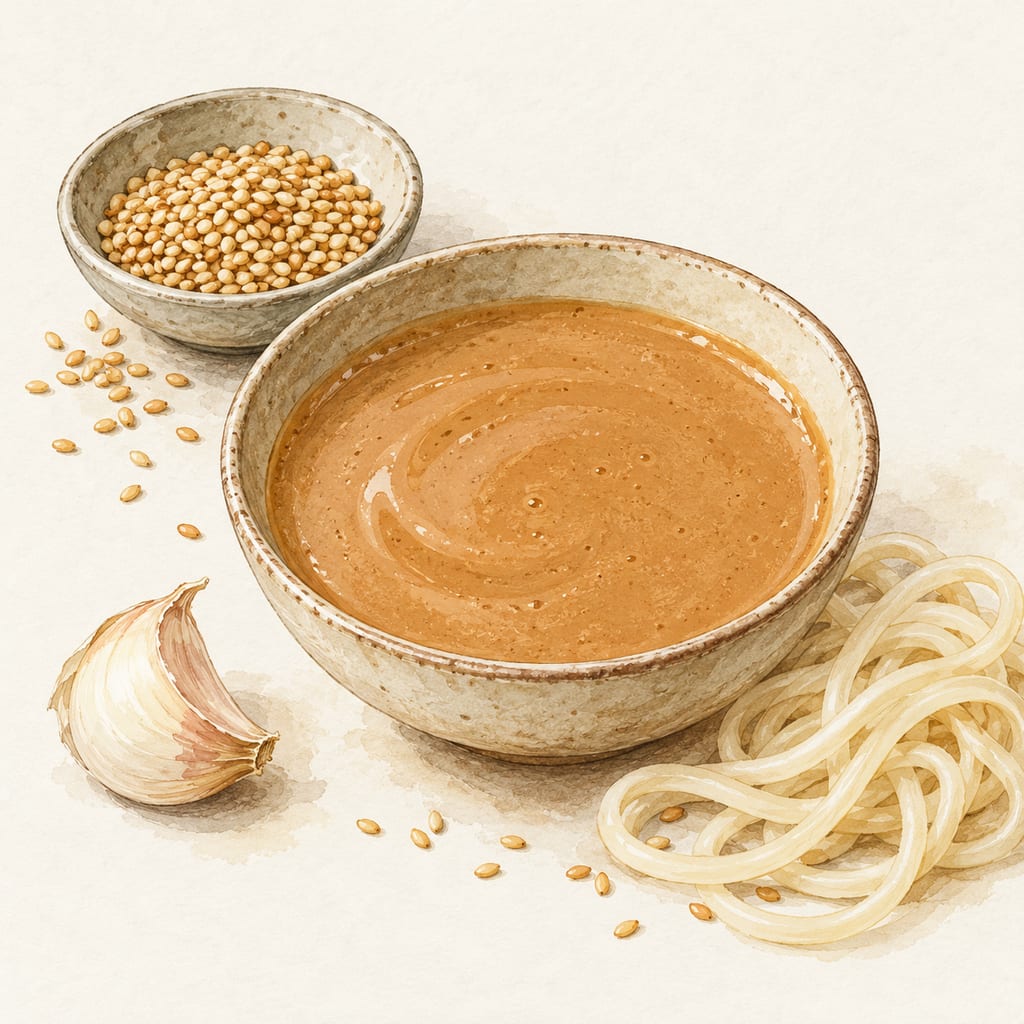
An untested sesame-paste sauce with soy, black vinegar, sugar, sesame oil and garlic, drafted for hot-pot dipping or noodles.
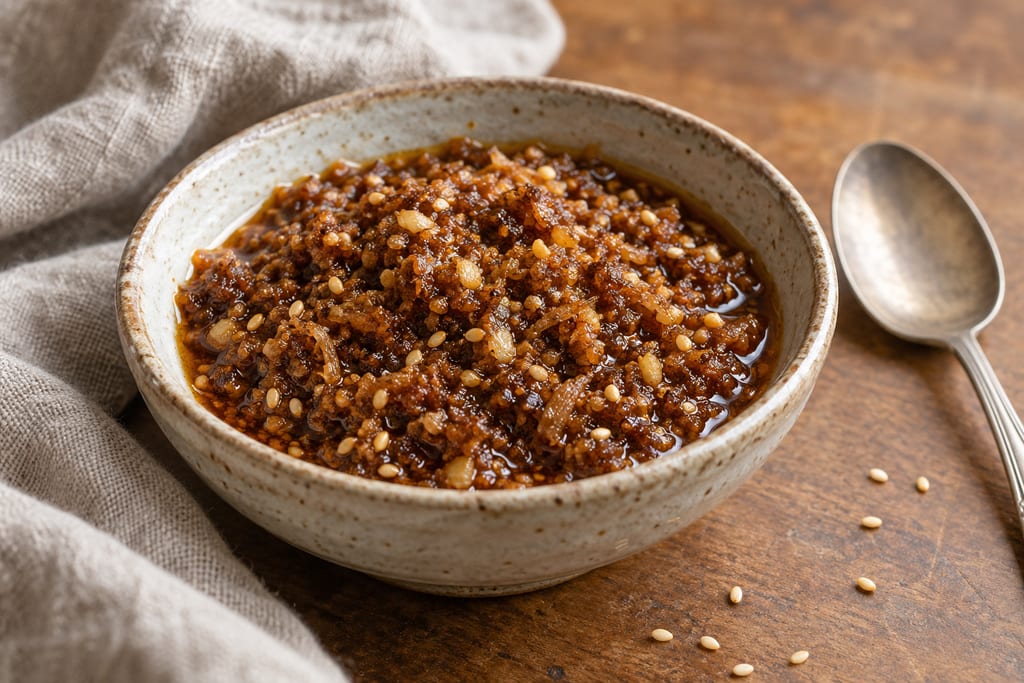
Shacha is a savoury, granular Fujian, Teochew and Taiwanese condiment of oil, garlic, shallot and dried seafood, often sold as Chinese barbecue sauce.
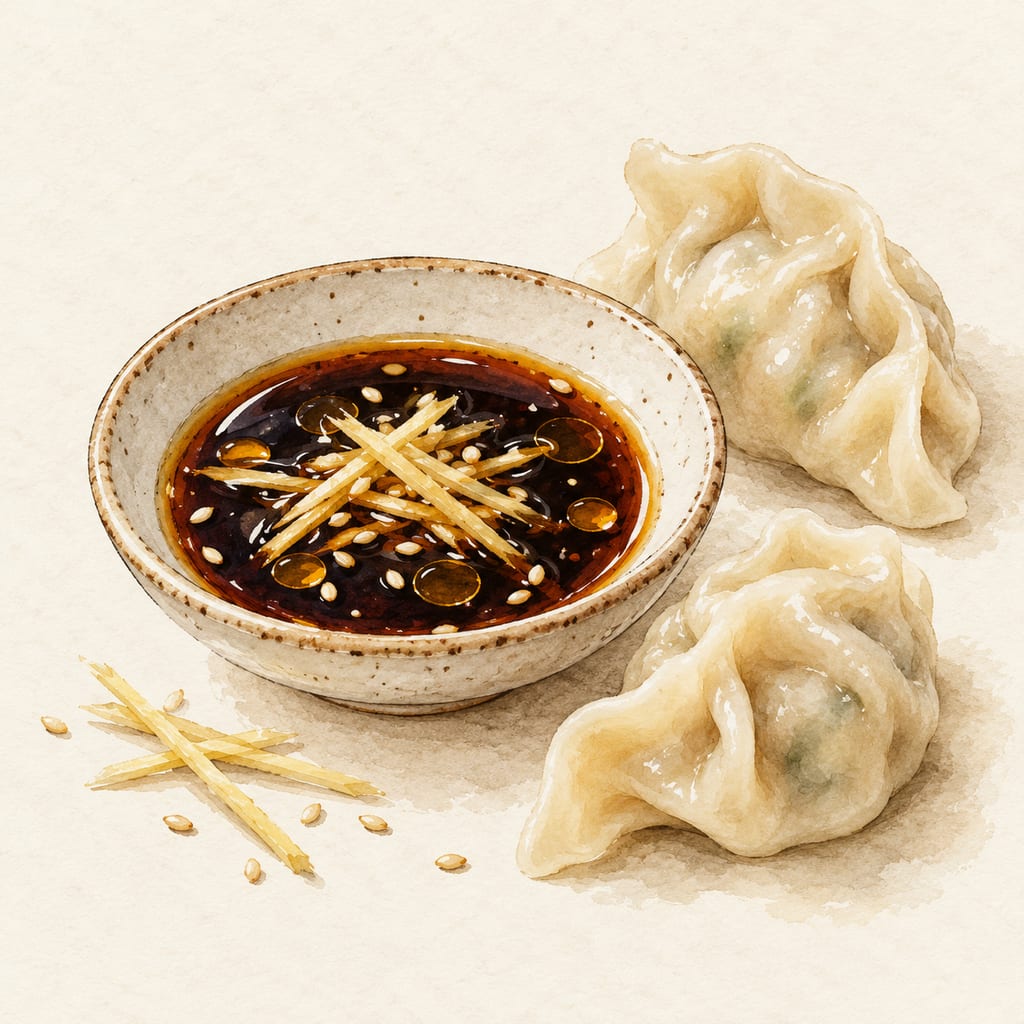
An untested small-batch soy and Zhenjiang black-vinegar dip with ginger and sesame oil, adapted as a modern accompaniment for dumplings or cooked vegetables.
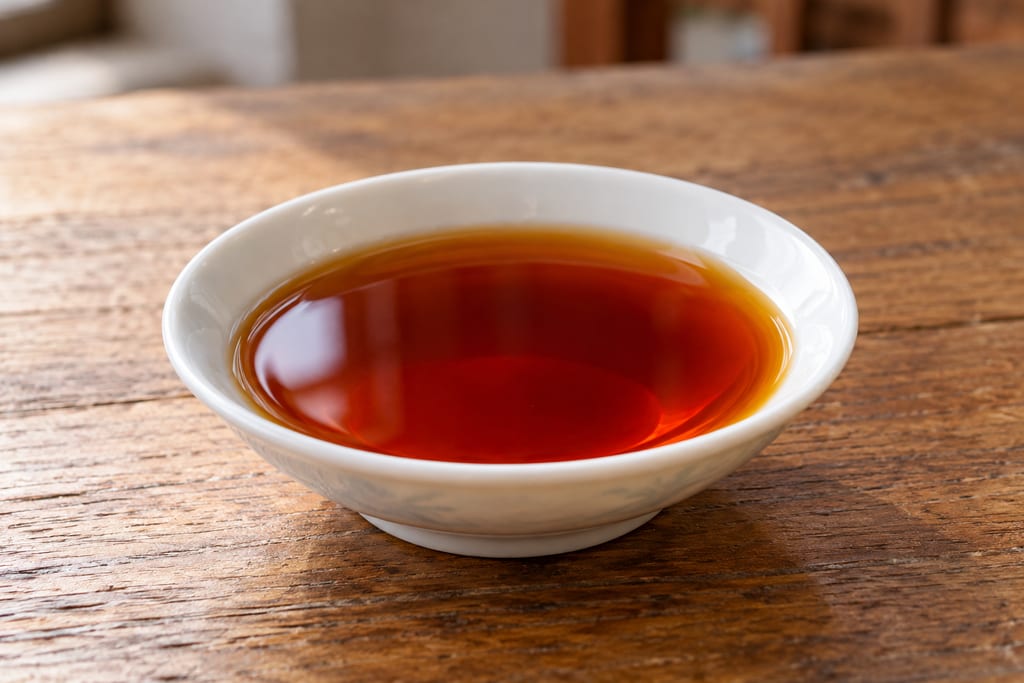
Tianjin grain vinegar of millet and sorghum made with daqu: liquid alcoholic fermentation, two-layer solid-state acetification, and at least three years of outdoor ageing of the grain mash.
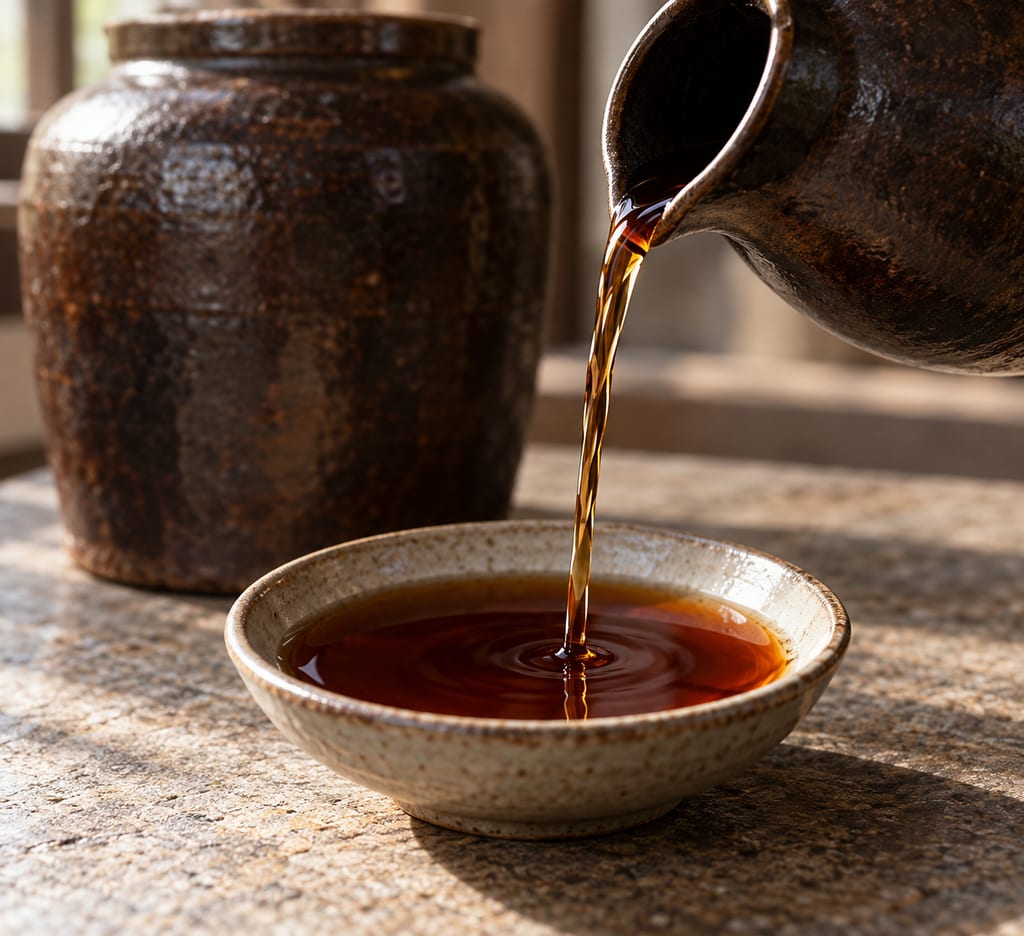
Dark Fujian rice vinegar: glutinous rice and red Monascus koji make a red rice wine, liquid acetification turns it to vinegar, and it ages at least three years.
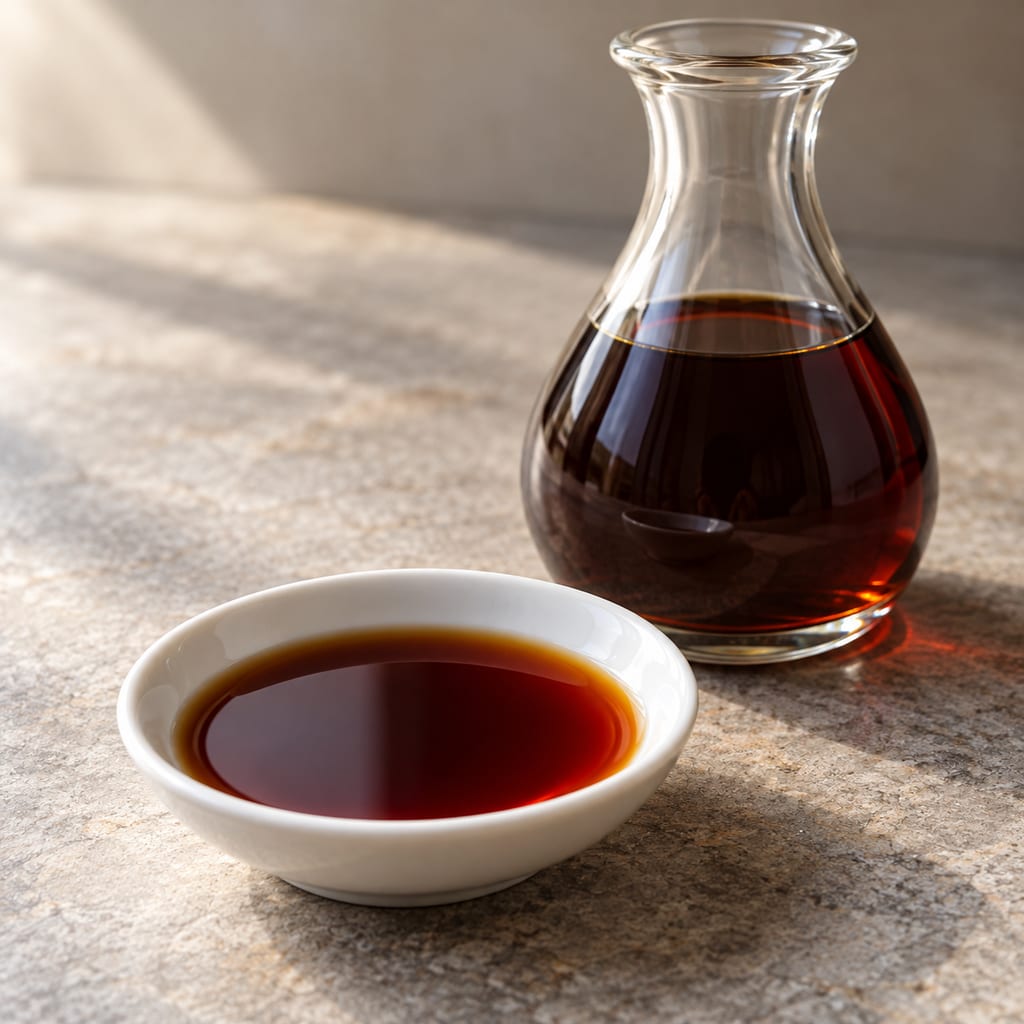
Zhenjiang black vinegar is a Chinese glutinous-rice vinegar made by mixed-culture fermentation, solid-state acetification, roasted-rice extraction and ageing, giving a dark, savoury, mildly sweet condiment.
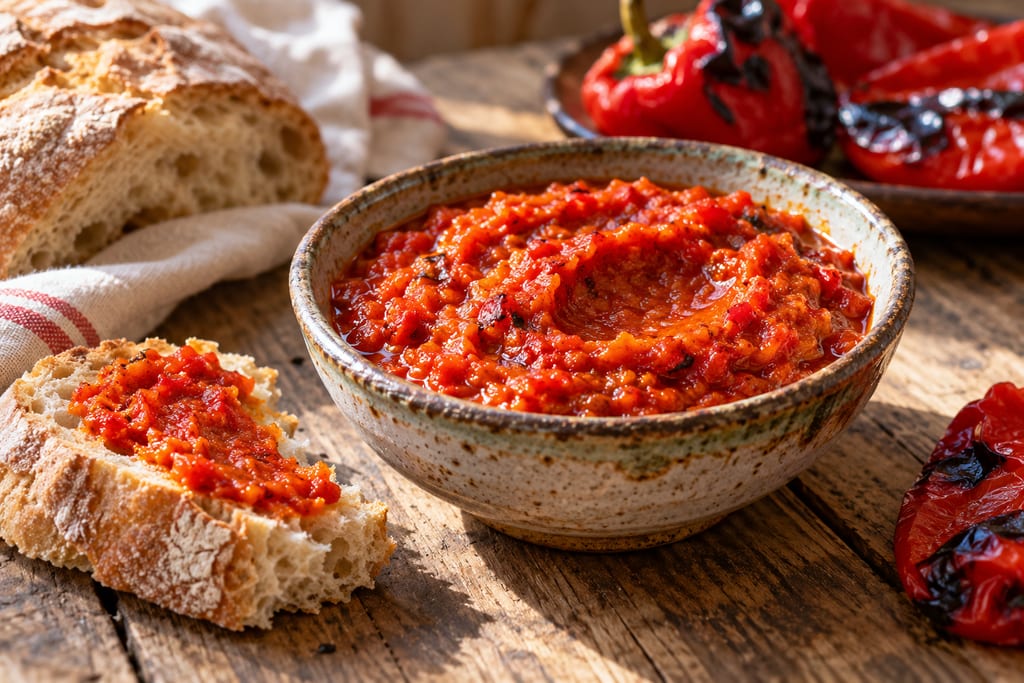
Ajvar is a cooked Balkan pepper preserve built around roasted red peppers, peeled, drained, ground and slowly fried with oil and seasoning. Leskovac’s protected version is a pepper specialty; regional versions vary.
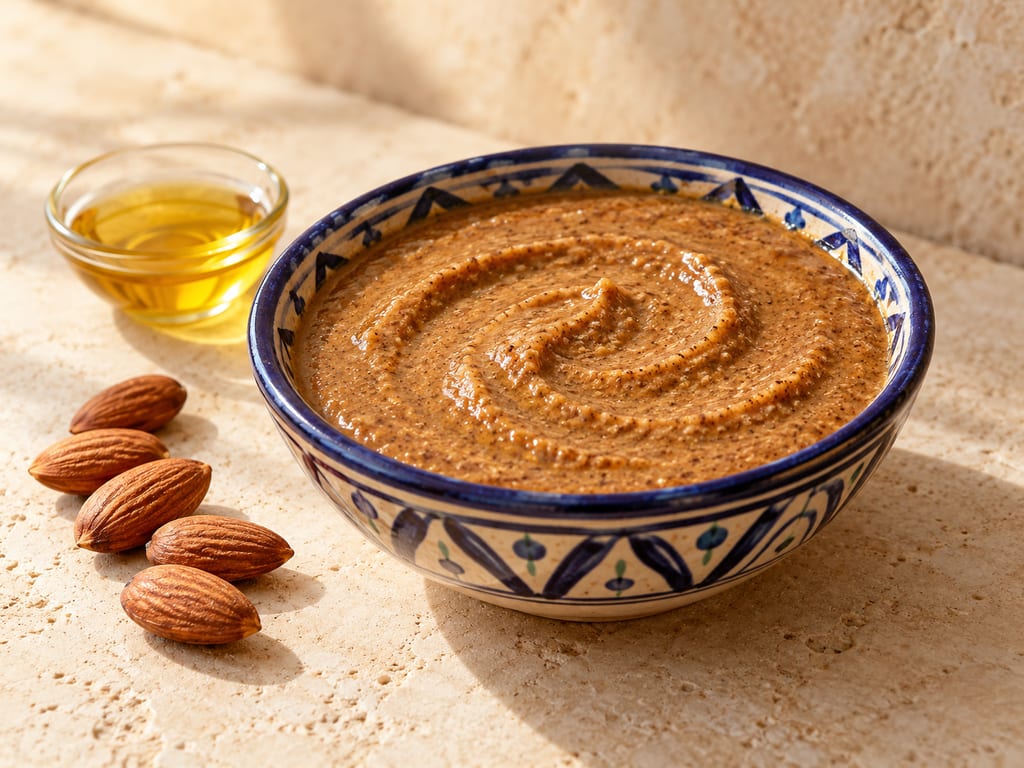
Amlou is a nutty, lightly sweet Moroccan spread of roasted almonds, culinary argan oil and honey. The almonds are ground first, then loosened with oil and sweetened; the balance can range from a thick spread to a dip.
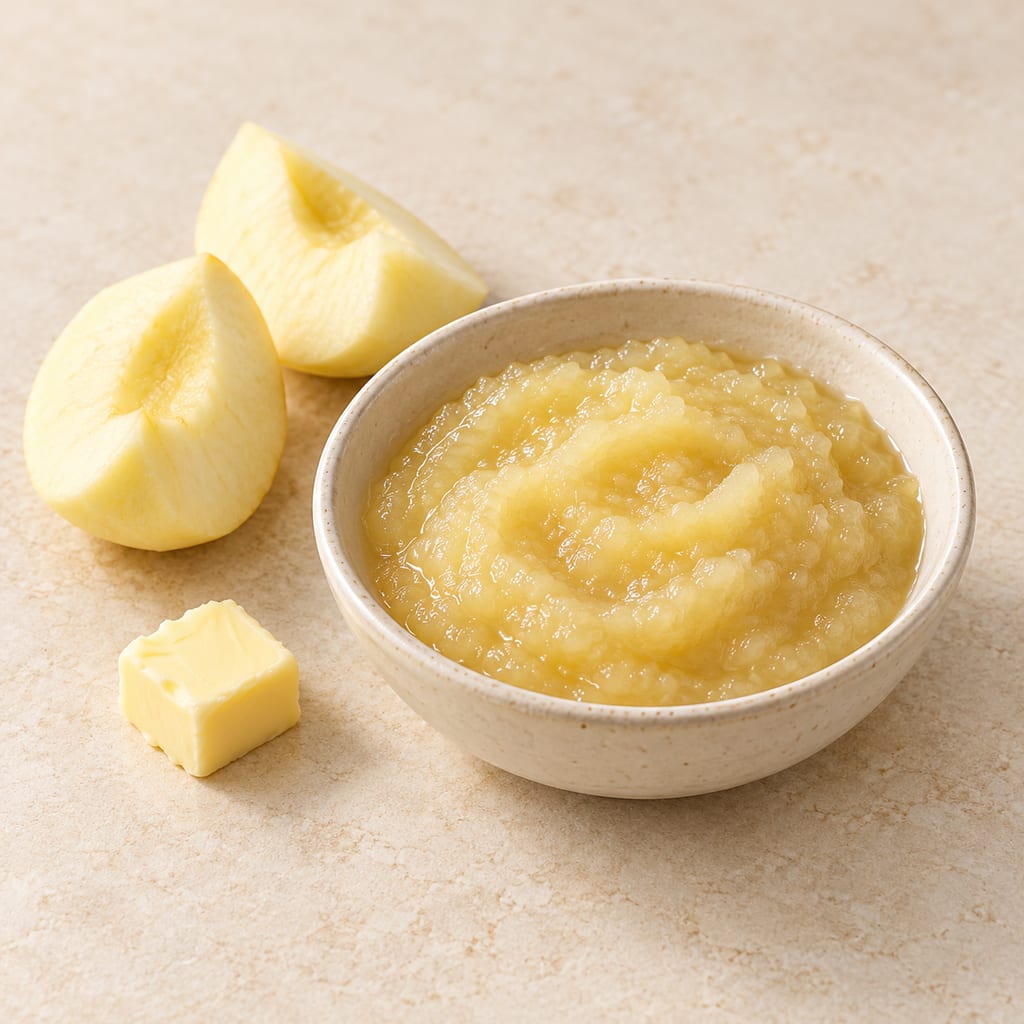
Apple sauce for goose and pork is a plain English accompaniment: cooked apples pulped with water, then sweetened with sugar and finished with a little butter.

A warm dip of garlic, anchovy and olive oil, often enriched with butter, that Piedmont serves over a flame with raw and cooked vegetables and bread.
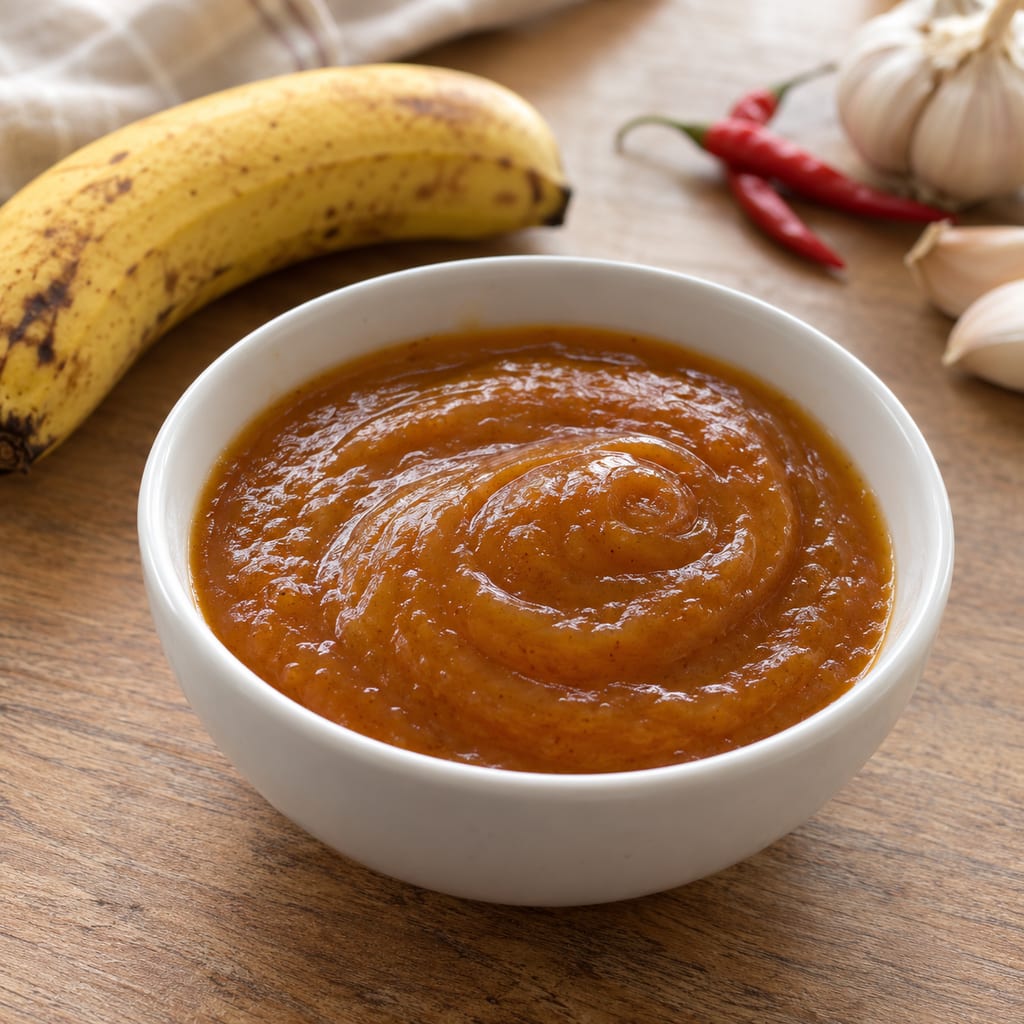
A sweet-hot table sauce of ripe banana simmered with vinegar, sugar, onion, garlic and fresh chilli, in the manner of Philippine banana ketchup. An untested development batch of about 500 g.
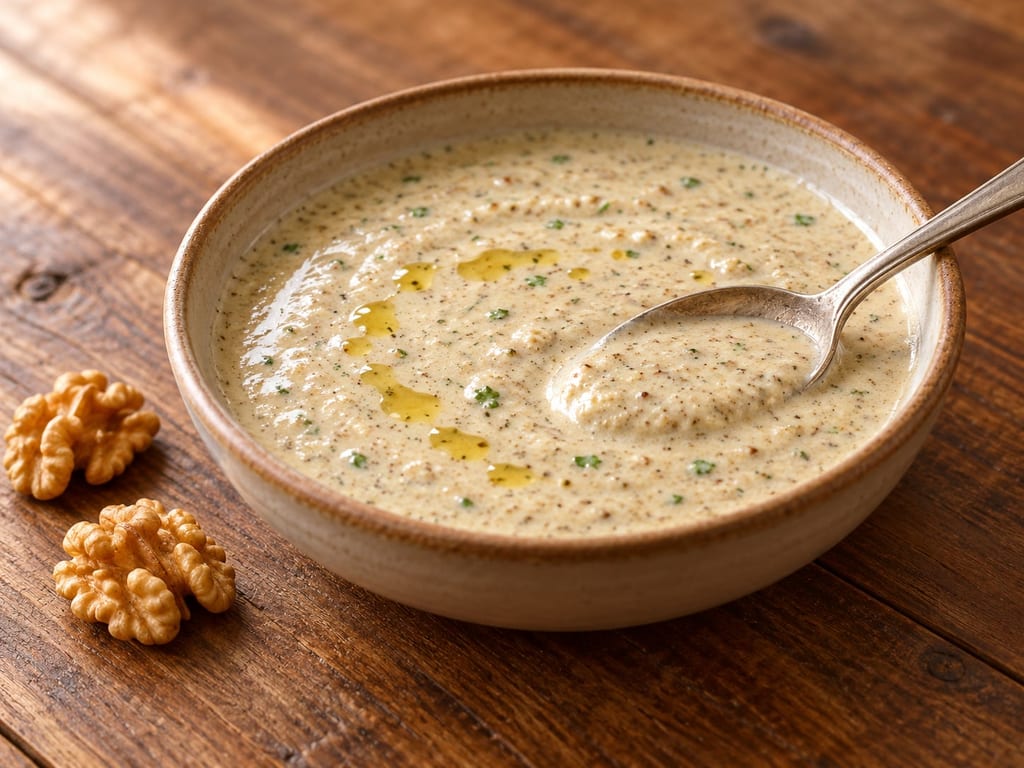
A Georgian walnut sauce of ground walnuts, garlic, vinegar and spices, thinned with water or broth. It is served with poultry, vegetables and bread, and is the sauce of the dish satsivi.
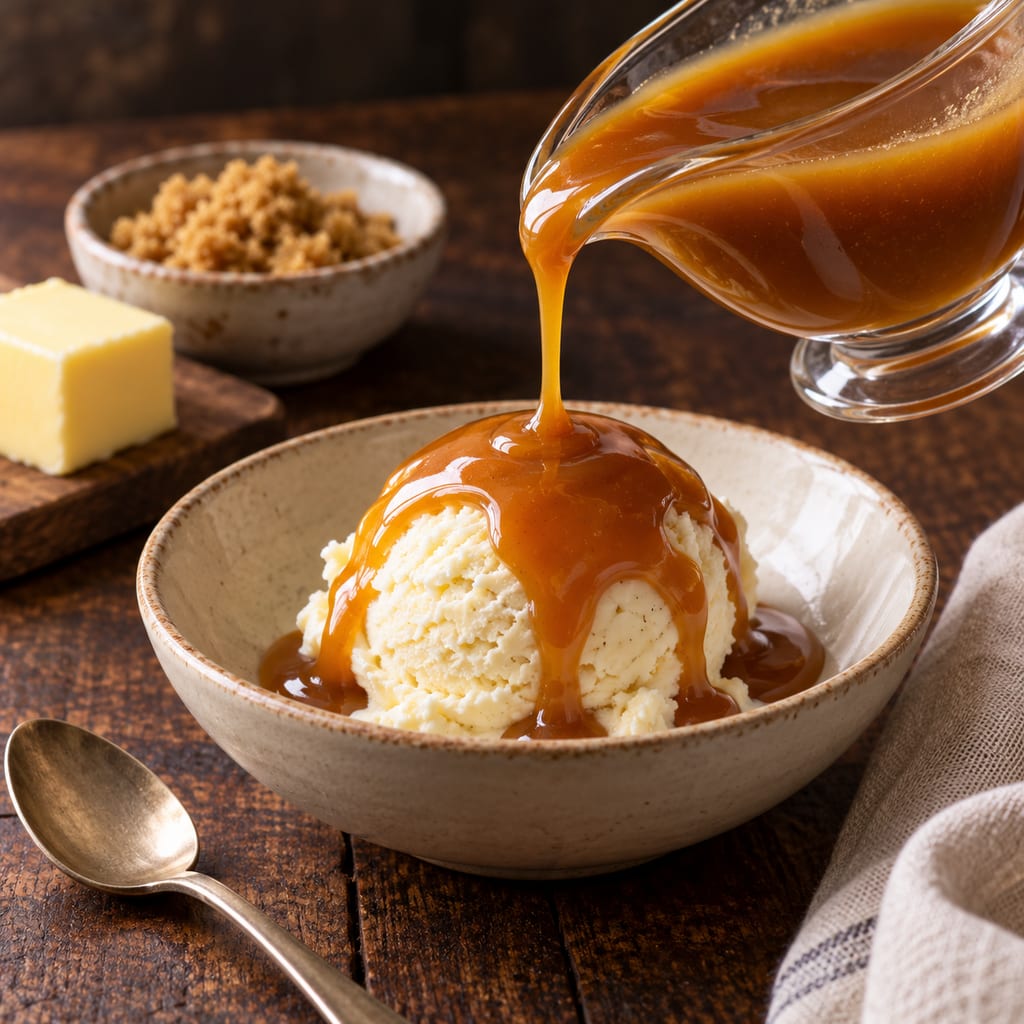
A pourable dessert sauce of brown sugar, butter and cream, with a little corn syrup and salt. It is the sauce form of the butterscotch confection and is made without water, unlike caramel.
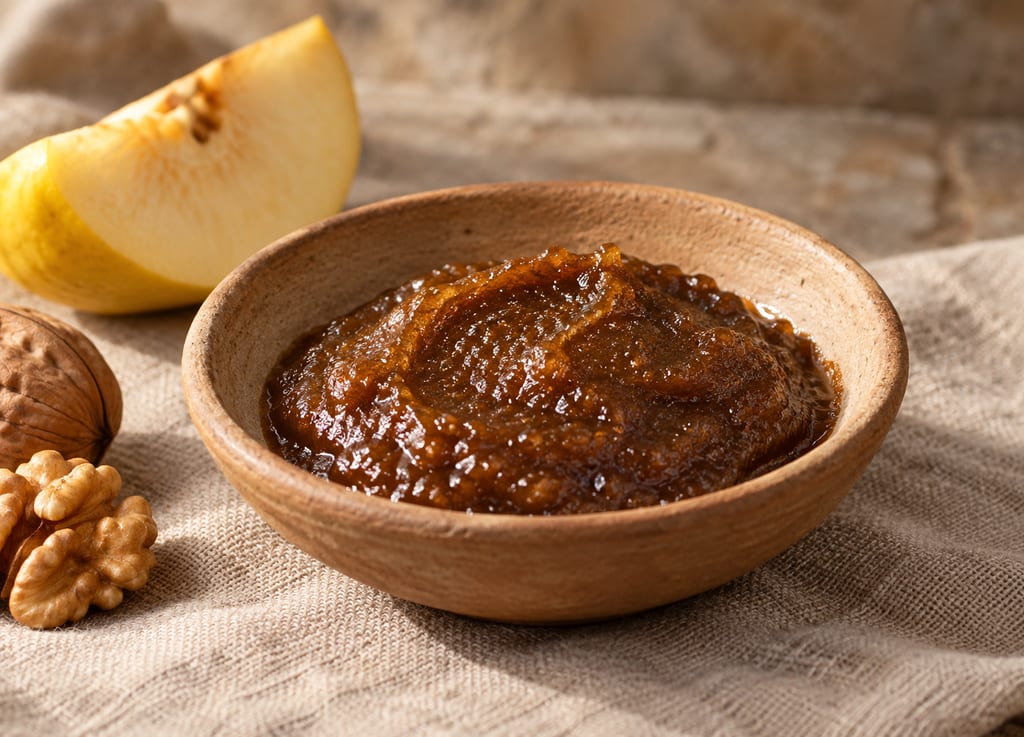
Byzantine murrī is a cooked imitation of murrī from the medieval Arabic repertoire, made from scorched honey, toasted bread, walnuts, quince, carob and spices rather than from a long grain fermentation.
No community contributions have been published for this entry yet.
Sign in to contribute. Published comments and photos are free to read.
The Woks of LifeInspiration · Recipe · Use · Geography
Raw Ginger Scallion OilFull page lines 50–79 describe raw versus cooked and soy-seasoned variations and uses; lines 82–97 describe prep and serving; current recipe card lines 113–138 states yield, time, quantities and method.
Cited in: Overview; The Cantonese culinary setting; The relationship with white-cut chicken; The ingredients; Ginger chemistry; Scallion chemistry; Why oil is necessary; Why the scallions are dried after washing; Preparing the raw sauce; Raw versus hot-oil ginger-scallion sauce; Why raw ginger-scallion oil works with poached chicken; Other culinary uses; The soy-seasoned variation; Regional and household differences; Quality and texture troubleshooting; Safety: fresh vegetables in oil
Made With LauContext
Made With Lau — Cantonese White-Cut ChickenCited by the written account for this record.
Cited in: The relationship with white-cut chicken; Why raw ginger-scallion oil works with poached chicken
Oregon State University ExtensionContext
Oregon State University Extension — Herbs and Vegetables in OilCited by the written account for this record.
Cited in: Safety: fresh vegetables in oil
CDCSafety
CDC — Botulism PreventionCited by the written account for this record.
Cited in: Safety: fresh vegetables in oil
Penn State ExtensionContext
Penn State Extension — How to Safely Make Infused OilsCited by the written account for this record.
Cited in: Safety: fresh vegetables in oil