Andong soju
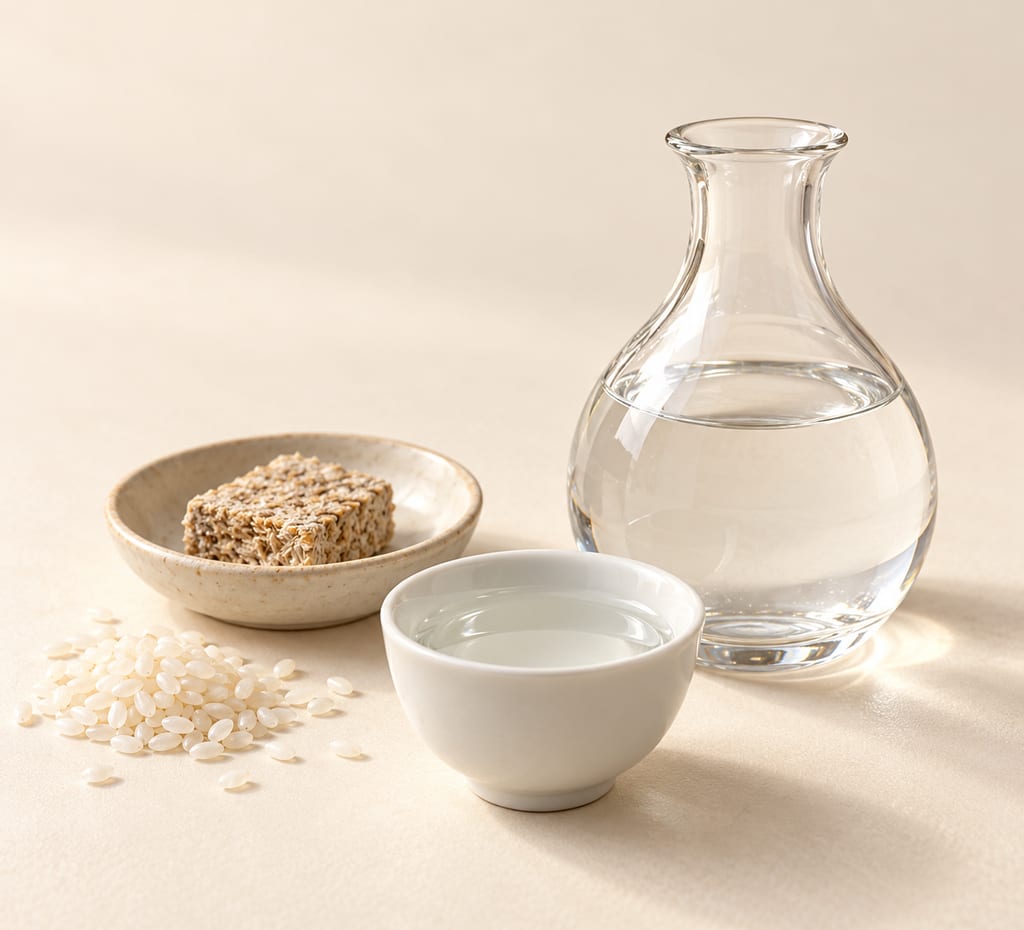
Andong soju is a rice spirit from North Gyeongsang, distilled from steamed rice and wheat nuruk. This method makes the starter before fermenting the rice mash in a jar.
 FermenteaWhere food goes to change
Traditional method
이화주 (梨花酒) · Ihwa-ju · Ihwa ju · Iwhaju · Yihwaju · Ewhaju · Leewhaju · 이화주 · 梨花酒 · 니화듀 · Pear-blossom wine · Pear-blossom rice wine · Korean spoonable rice wine · Korean thick rice wine
Thick, sweet Korean rice wine made with a rice-based starter called ihwagok and almost no added water, fermented into a paste that is eaten with a spoon or thinned with cold water.
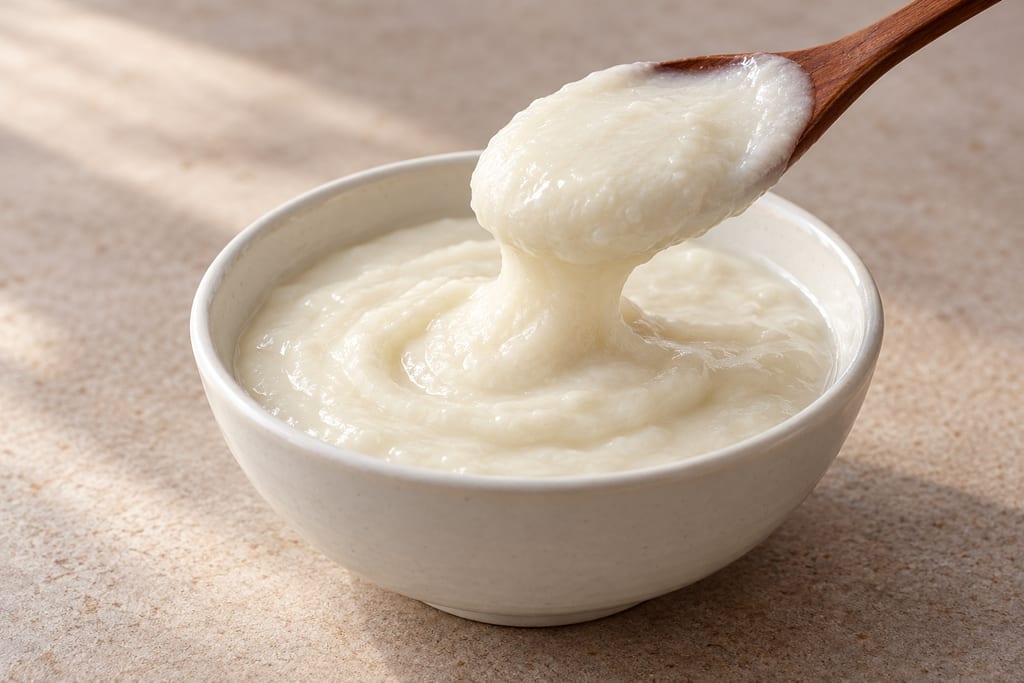
Ihwaju (이화주, 梨花酒) is a Korean rice wine so thick that it is eaten with a spoon. Cooked rice is mixed with a powdered rice starter called ihwagok (이화곡, also written ihwaguk) and very little brewing water. Over a couple of weeks the mass softens and turns sweet, slightly sour and alcoholic. It can be thinned with water for drinking. Korean reference works class it as a takju, a cloudy rice wine.
The name means pear-blossom wine, but the drink is not made from pears or blossoms. The name marks the season. The starter was made beforehand, in the first or second lunar month depending on the recipe, and the wine was brewed around the time the pear trees flowered. Nothing floral goes into the vessel. The fermented material is rice.
The starter is what sets ihwaju apart. Ihwagok is traditionally made from non-glutinous rice that is soaked, ground, shaped into small cakes and left to grow a working culture. Some old recipes wrap the cakes in mugwort and others lay them among pine needles. Those plants belong to starter making, not to the wine. The finished starter carries moulds and yeasts and the enzymes that turn rice starch into sugar and start alcoholic fermentation.
The rice itself varies by recipe. Historical texts use non-glutinous white rice, glutinous rice or a mixture. Many grind the rice to flour, shape it into ring-shaped cakes called gumeongtteok and mix them with starter. A high share of rice and almost no added water give the heavy, creamy body. Ordinary makgeolli thickened to a similar consistency is not ihwaju, because its starter and its fermentation differ.
Ihwaju has the reputation of a luxury wine of courtly and well-off households, partly because so much rice goes into so little drink. That does not mean ordinary households never made it. Modern Korean breweries make versions from spoonable paste to a softer, yoghurt-like wine. The name covers a family of methods, not one fixed texture, strength or culture.
Ihwaju belongs to medieval Korean drinking culture. The Encyclopedia of Korean Culture finds it in Goryeo-period writing, including Dongguk Isanggukjip, tied to the 13th-century writer Yi Gyu-bo, and the song Hallim Byeolgok, generally dated to the 13th century. These texts show that a drink called ihwaju was known among Korean liquors. They give no method, and they do not prove that the thick, spoonable wine of today was already standard.
The earliest detailed method is in Sangayorok, compiled around 1450 by the Joseon physician Jeon Sun-ui. It starts the starter in late winter and brews the wine as pear blossom nears. The starter rice is ground to flour, formed into pieces the size of duck eggs, wrapped in mugwort and kept in a warm place. After rounds of resting and turning, the pieces are broken, dried and ground to powder. The wine is made from cooked rice cakes and that powder, then matured in an earthenware vessel.
Sangayorok describes a connected process rather than just naming a drink. It gives quantities in the old measures mal and doe: five mal of rice for the starter, ten mal for the wine, and a further instruction involving five doe of starter powder. These are volume measures that vary by period, and they cannot be turned into metric weights without careful work. The text has the brewer check the vessel after three or four days for built-up warmth and open the wine around the fifteenth day of the fifth lunar month.
Later Joseon writers kept the tradition going. Suunjapbang (16th century), Eumsik Dimibang (17th century, by Jang Gye-hyang), Sallim Gyeongje and its enlarged successor, and 19th-century works such as Imwon Gyeongjeji each preserve a method, and Eumsik Dimibang gives more than one. Some use pine needles in place of mugwort. Others change how the rice is prepared, how much starter goes in, or what season to brew in. The same name does not mean the same recipe.
A 19th-century manuscript, Juchan, gives a clear second recipe. The starter is made when pear blossom opens, with rice-flour lumps laid among pine needles and dried after seven days. The wine uses powdered starter and cooked ring-shaped rice cakes: one mal four doe of starter for a normal batch, or one mal six doe for a sweeter one. It differs from the 15th-century account in both timing and starter preparation.
Modern interest centres on preservation, research and revival. A 1993 study reproduced a traditional method and examined its organisms and enzymes. A 2020 Kyung Hee University thesis compared traditional and improved methods and found large variation between batches. Breweries in Gyeonggi Province now sell ihwaju. Their products show that the tradition lives on, but they are modern work and should not be read back into the manuscripts.
Ihwaju is made by saccharification and alcoholic fermentation running together. Rice holds starch, not sugar. When rice flour is mixed with hot water and cooked, the starch granules swell and open up, so enzymes can reach them. The organisms in ihwagok make those enzymes and cut the starch into smaller carbohydrates and then into fermentable sugars. Yeasts turn part of that sugar into ethanol and carbon dioxide. Both jobs go on in the same thick mass, so sugar is being made and eaten at the same time.
A 1993 study of a reproduced ihwaju starter found Aspergillus oryzae and a yeast recorded as Hansenula sp. as the main cultured organisms, at about 1.2 million colony-forming units per gram each. That describes one starter, not every ihwagok. Hansenula is an older genus name whose species have since been reclassified, so the study does not identify a modern species. A 2020 thesis made ihwagok that held wild yeasts and lactic acid bacteria, which shows that different starter methods can grow different microbial communities.
Aspergillus oryzae is the enzyme-maker. Its alpha-amylase breaks the long starch chains into shorter dextrins, and other amylases, such as glucoamylase, release glucose that yeast can ferment. The 1993 study measured alpha- and beta-amylase and still found activity in wine matured for a year. Moulds in Korean rice starters also produce proteases, which free peptides and amino acids from the rice protein and feed the yeast.
The alcohol comes from yeast. Glucose passes through glycolysis to pyruvate, pyruvate decarboxylase turns pyruvate into acetaldehyde and carbon dioxide, and alcohol dehydrogenase reduces the acetaldehyde to ethanol. That last step recycles the NAD+ glycolysis needs to continue. Yeasts also make small amounts of higher alcohols and esters that add aroma. Lactic acid bacteria, where present, add organic acids and compete with other microbes. Which acid-formers live in historical ihwagok is not established, so organisms found in ordinary wheat nuruk should not be assumed here.
The small amount of added water shapes everything. Dense rice solids make a paste, not a free-flowing mash. As the enzymes work, the rice softens and soluble sugar builds up, and the texture reflects the balance of remaining starch, dextrins, water, ethanol and suspended rice. Little free liquid affects how nutrients and oxygen move and how heat leaves the mass. Old instructions to move or cool the mass when it grows warm fit that picture, since active microbes give off heat, but they are not a validated temperature-control method.
A 2020 Kyung Hee University thesis measured 11.86 to 13.53% alcohol by volume and 156 to 182 mg/mL reducing sugar in traditional-style test batches. A two-stage method gave 12.58 to 13.30% alcohol and 164 to 183 mg/mL reducing sugar. So ihwaju can be both strong and quite sweet. The spread between batches shows how much starter activity, water handling and method affect the result.
Traditional ihwaju starts with the starter. In the Sangayorok method, non-glutinous white rice is soaked overnight, ground to a fine flour and kneaded into firm pieces the size of duck eggs. The pieces are wrapped in mugwort, laid in a straw container in a warm room and turned at intervals. Then they are broken up, dried, ground and sieved. Making the starter ahead of time gives the enzyme-producing fungi and other organisms time to grow on the rice.
Mugwort and pine needles appear in different starter methods. Sangayorok uses mugwort. Juchan lays the rice-flour lumps among pine needles in a steamer kept somewhere cool. The plants help to separate the pieces and are part of the microbial surroundings. Their exact effect on which microbes grow, or on flavour, has not been tested for every method. They are not interchangeable preservatives, and their presence does not make a starter safe.
The rice for the wine is washed, ground and cooked separately. The classic shape is gumeongtteok, a ring-shaped cake with a hole in the middle. Cooking gelatinises the starch so that the starter's enzymes can reach it. Depending on the text, the cooked cakes are cooled or worked while warm, then kneaded with the powdered starter until it is evenly spread. Historical recipes add little or no free water to the fermenting mass. Water is still needed to wash, soak and cook the rice. The difference is between water used to prepare the rice and water added to the mash.
Sangayorok sets the wine out in detail. The starter begins with five mal of rice in the early second lunar month. The wine uses ten mal of white rice, made into fine flour and cooked cakes, and a later step combines rice with five doe of starter powder. The pieces go into an earthenware vessel with a space left in the middle. After three or four days the brewer checks for built-up heat and, if needed, takes out the mass, cools it and puts it back. The wine then rests somewhere cool until its opening date.
Juchan differs. It uses one mal of rice for the starter and two mal for the wine, with one mal four doe of starter powder, or one mal six doe for a sweeter result. The rice is made into cooked ring-shaped cakes and mixed with the starter while warm. The starter spends seven days among pine needles instead of Sangayorok's longer mugwort wrap. These are separate recipes, and their figures should not be merged.
The modern recipe from Korea's Rural Development Administration, which is the recipe given here, simplifies the process and starts from a ready-made starter. It uses 1 kg of non-glutinous white rice, 300 g of ihwagok and 1 g of yeast. The rice is ground fine, because a coarse flour would spoil the smooth texture a spoonable wine needs. A hot-water dough is shaped into ring-shaped cakes, crushed and cooled, then mixed with the powdered starter and held in a cloth-covered earthenware vessel at 15 to 20 °C for 15 to 20 days. The cloth keeps dust out and lets carbon dioxide escape. The recipe leaves out the water quantities, the point at which the yeast goes in, and whether the cakes are boiled or steamed. Historical recipes do cook them, so the gap is worth settling before you brew.
A 2020 study changed the process for consistency. It first grew the microbes in a wetter mixture of ihwagok and water, then added more rice for the alcoholic stage. This gave more even results than a copy of the traditional method. It is a modern adaptation, not what Sangayorok describes.
Ihwaju recipes differ more by manuscript, household and period than by modern province. Medieval writing gives the name. Joseon cookbooks give steadily more detail. Sangayorok, Suunjapbang, Eumsik Dimibang, Sallim Gyeongje, Jeungbo Sallim Gyeongje, Haedong Nongseo and Imwon Gyeongjeji vary in starter preparation, rice treatment, starter quantity and maturation. Each is a separate witness. None is the original Korean method.
Sangayorok, compiled around 1450, makes a relatively elaborate starter from non-glutinous rice flour shaped into small pieces and wrapped in mugwort. The starter develops over successive seven-day periods and is then dried. The wine uses cooked rice cakes, cooling and maturation. The early 19th-century Juchan recipe grows its starter for seven days among pine needles before drying and grinding it. The starter stage became shorter in the later text. That may be linked to changes in season and production method, but no text proves the reason.
Eumsik Dimibang, a 17th-century household cookbook associated with Jang Gye-hyang, holds several ihwaju methods. They differ in the ratio of rice to nuruk, how the rice dough is made and how the fermented mass is handled. One calls for 3 or 5 doe of powdered nuruk per mal of rice. One adds a good deal of glutinous rice for sweetness, and one allows brewing outside pear-blossom season. The Korea Traditional Knowledge Portal also keeps a version in old spelling, 니화듀. So neither the rice mixture nor the brewing season was fixed.
Sallim Gyeongje describes finely ground rice formed into ring-shaped cakes, cooked and cooled, mixed with powdered starter and packed into a jar. The Encyclopedia of Korean Culture reports that it separates a sweeter wine, made with more starter, from a clearer, stronger one, made with less. These are historical descriptions, not tested targets. The figures in different manuscripts cannot be safely combined by picking the most convenient ones.
Modern producers add more variation. Contemporary breweries make a dense, yoghurt-like ihwaju sold in small jars or bottles. The Sulseam brewery in Yongin makes one from Korean rice and a traditional starter, labelled 8% alcohol by volume. Other makers may use selected cultures, controlled temperatures, different rice proportions or a changed maturing schedule. These are modern interpretations, not evidence about how any old ihwaju was fermented.
Ihwaju should also be told apart from other thick Korean rice wines. Home-brewed creamy wines may use wheat nuruk, other rice starters or other methods. What defines ihwaju is its link to the pear-blossom rice starter and the historical brewing methods, not just a spoonable texture. How each variant was spread across Korea is not well recorded.
Ihwaju is eaten with a spoon. A well-made thick batch looks like a smooth rice paste or a dense, creamy porridge, not a pourable wine. It is often compared with yoghurt, though it contains no milk and is not a dairy ferment. The flavour combines rice sweetness, alcohol, fermentation acidity and the aroma of a rice starter. Depending on the recipe, it can taste sweeter and stronger than ordinary makgeolli.
Korean reference works and the modern recipe also describe thinning ihwaju with cold water before drinking, especially in summer. That makes a lighter drink that keeps the flavour of the fermented rice but changes the sweetness, acidity, strength and body. No standard dilution is recorded, so any ratio is a matter of taste. Some modern products are already soft and creamy and can be eaten as they are.
Ihwaju was tied to seasonal brewing around pear blossom. Korean historical writing treats it as an expensive rice wine, because a lot of rice went in and little water. It appears in Goryeo literary works and Joseon household manuscripts, which marks its place in Korean drinking culture. It is often linked with aristocratic households, but that is no evidence that only the court drank it.
Today ihwaju is sold as a traditional alcoholic speciality and presented as a spoonable, dessert-like wine. Sulseam packs it in small jars and suggests serving it with fruit and biscuits. Strength, starter and consistency differ from one product to the next, so check the label before assuming a serving method or a strength.
No standard list of dishes cooked with ihwaju is recorded, and no pairings are documented. Pairing it with fruit or desserts is a modern habit, not a feature of the old recipes. Its sweetness does not make it alcohol-free, and its creamy look is not a reason to treat it as yoghurt, rice pudding or a plain dessert.
You can follow an ihwaju fermentation by how the rice texture, sweetness, acidity and alcohol change, and by how active the starter is. As amylases break down the cooked starch, the rice mass softens and soluble sugar builds up. Yeast then consumes some of that sugar and makes ethanol and carbon dioxide. A sweet taste does not mean fermentation is finished, and a thick body says nothing about alcohol. The result depends on the rice, the starter's activity, the water content, the microbes present and how the wine is matured.
Starter quality is the biggest source of variation. In the 1993 study, Aspergillus oryzae and Hansenula sp. were isolated from the starter, and amylase activity was still measurable in wine aged for a year. The authors reported that this experimental product kept well without pasteurisation or preservatives. That is an observation about one product. It is not a shelf-life rule, and it does not show pathogen control, safe packaging or the safety of home-grown mould cultures.
The 2020 Kyung Hee thesis shows how uneven the fermentation can be. Traditional-style batches differed in saccharifying activity, alcohol, total acidity and reducing sugar, and alcohol ran from 11.86 to 13.53% by volume. A two-stage method, with extra water in a first growth stage and more rice added afterwards, gave steadier results. A historical recipe cannot be expected to behave the same way with a starter of unknown strength.
Watch for heat and for runaway starter growth. Old recipes have the brewer examine the mass when it warms and move or cool it. Temperature and mould growth were clearly practical worries for old brewers, but nothing in the historical recipes tells safe moulds from unsafe ones. Studies of Korean nuruk have found Aspergillus flavus alongside the useful fungi, and some Aspergillus strains make aflatoxins. A 2020 survey found raised total aflatoxin in 14 of 61 nuruk samples. Do not treat arbitrary mould as a substitute for a verified food-grade starter.
Cooked rice brings a different risk. Bacillus cereus spores occur in rice and survive cooking. If contaminated cooked rice is held somewhere that allows growth, some strains make toxins, including the heat-stable cereulide. The usual advice to chill cooked rice quickly cannot be applied directly to a long fermentation, which needs its own proven control. The historical recipes give no modern controls for pathogens, starter purity, safe cooling or toxin prevention.
Keep active fermentation and finished storage apart in your mind. Leftover sugar and live microbes can keep making alcohol and carbon dioxide after packaging, and cold slows this without necessarily stopping it. The studies set no universal finishing pH, safe alcohol level, pressure limit or storage time. If you see unexpected surface growth, a rotten smell or visible contamination, do not scrape it off or add more starter. Discard the batch.
Ihwaju appears by name in 13th-century Goryeo literature, including Dongguk Isanggukjip and the song Hallim Byeolgok. The earliest detailed method is in Jeon Sun-ui's Sangayorok, compiled around 1450. Joseon cookbooks give further versions. The 13th-century references name the drink but do not give its full make-up.
Traditional Korean grain starters can carry Aspergillus flavus, which makes aflatoxins. A 2020 survey of 61 nuruk samples found raised total aflatoxin in 14. A white colour or strong amylase activity does not show a starter is free of toxin.
Hazard sourceIhwagok is a living mould-and-yeast culture, not a purified enzyme. Korean nuruk has yielded both useful Aspergillus oryzae and hazardous Aspergillus flavus.
Hazard sourceRice can carry Bacillus cereus spores that survive cooking and grow in warm, moist rice. Some strains make toxins that cause vomiting or diarrhoea. The recipe has no step that controls this.
Hazard sourceThe recipe does not say whether the shaped cakes are boiled or steamed, and it lists yeast without saying when to add it. Under-cooked rice and an unplanned yeast addition both change how the batch ferments.
Hazard sourceA 2020 thesis found large differences in saccharifying power, acidity, alcohol and sugar between starter preparations and between batches. The same temperature and time can give different results with a different starter.
Hazard sourceIhwaju is an alcoholic wine, not a dessert. The 2020 thesis measured about 11.9 to 13.5% alcohol by volume in reproduced traditional batches. A commercial ihwaju is labelled 8%. Sweetness says nothing about strength.
Hazard sourceLive yeast keeps working on the remaining sugar, making more alcohol and carbon dioxide after the main fermentation. Refrigeration slows this but does not stop it, so a tightly closed container can build pressure.
Hazard sourceUse a traceable, food-grade ihwagok made for rice wine. Never try to rescue mouldy rice of unknown origin by trimming off the surface.
Control sourceUse a clean earthenware vessel, clean utensils and a clean cloth cover.
Control sourceHold the vessel at 15 to 20 °C for the whole fermentation. This is the published process range, not a validated pathogen limit.
Control sourceSettle the yeast addition and the rice-cooking question before brewing, and treat the batch as a trial until you have done so.
Control sourceMeasure acidity, alcohol and residual sugar rather than judging by smell, taste or look. The recipe gives no target values.
Control sourceRefrigerate the finished ihwaju, as the recipe directs, in a container that can vent gas. No refrigeration temperature or shelf life is established for home batches.
Control sourceIf you make ihwaju commercially, set supplier specifications for the starter and test it for mycotoxins.
Control sourceThis reproduces a government extension recipe. It is not a validated fermentation safety plan.
The recipe lists 1 g of yeast but never says when to add it or which strain to use.
No water quantity, soaking time, dough temperature or full rice-cooking method is given.
Do not use mouldy rice or an improvised culture in place of a food-grade ihwagok. Scraping off visible mould does not remove toxins already formed.
Fifteen to twenty days at 15 to 20 °C are production settings, not proof of safety.
Cooked rice and rice dough can grow unwanted bacteria, including Bacillus cereus, if handled carelessly.
A sweet taste, a white colour or a smooth yoghurt-like texture does not show the batch is safe.
Ihwaju contains alcohol. It is not dairy yoghurt or an alcohol-free rice dessert.
Fermentation makes carbon dioxide. Keep the cloth cover and do not swap it for an airtight, pressure-holding container.
No refrigerated shelf life or acceptance criteria are established. Alcohol, sugar and acidity values from studies or product labels are not guaranteed results of this recipe.
A country-level association. The historical texts name the drink and describe methods; none ties a recipe to a single town.
A current commercial producer of ihwaju. This is a modern reconstruction, not a historical origin.
Andong soju is a rice spirit from North Gyeongsang, distilled from steamed rice and wheat nuruk. This method makes the starter before fermenting the rice mash in a jar.
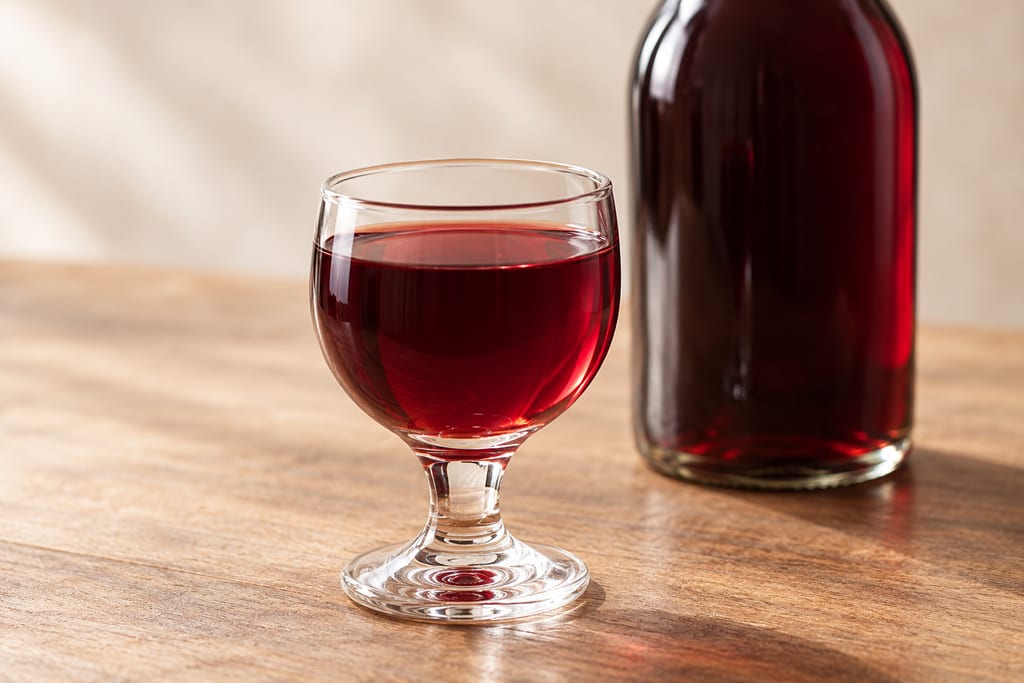
Korean black raspberry wine: crushed bokbunja berries with their seeds, sweetened to 20 °Brix, fermented 15 days at 25 °C with wine yeast, filtered and matured three months.
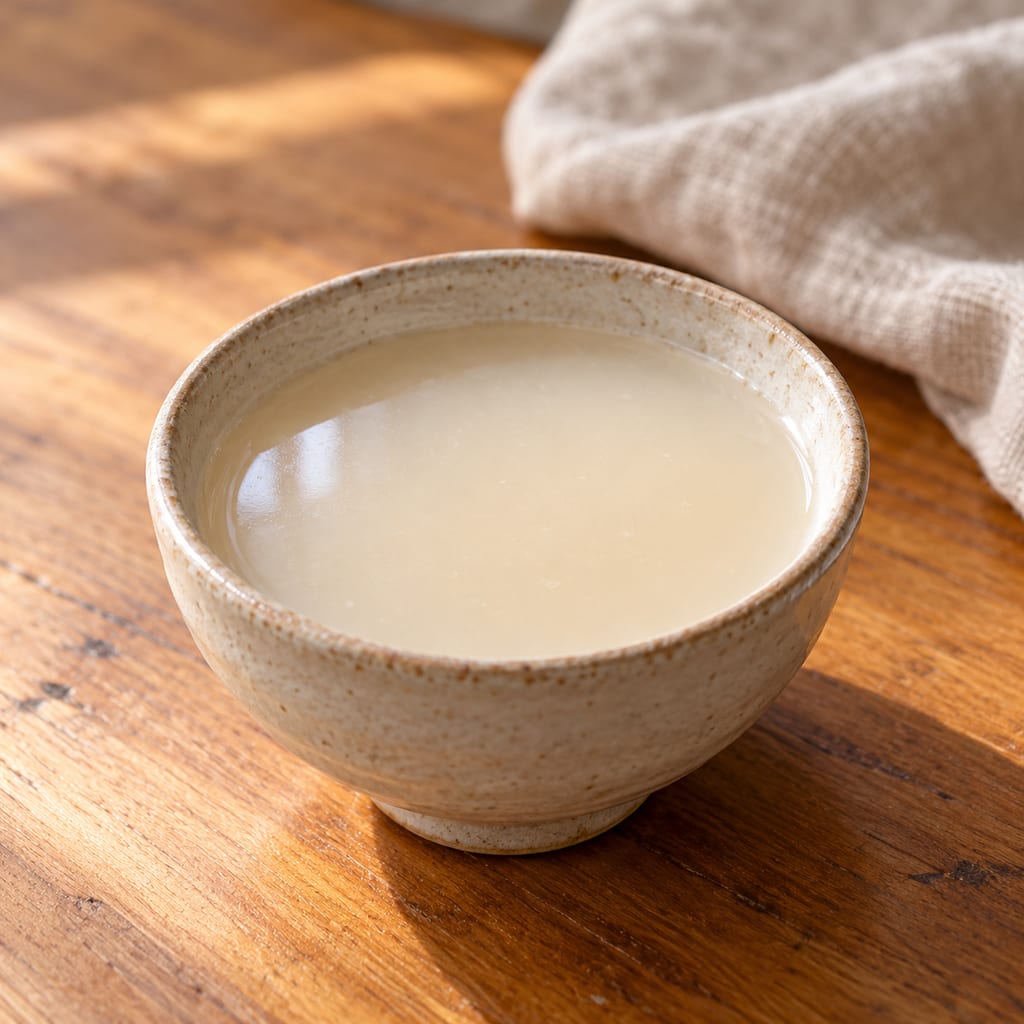
An alcoholic Korean rice drink of steamed glutinous rice and nuruk, mashed in a single stage and fermented for 7 to 14 days.
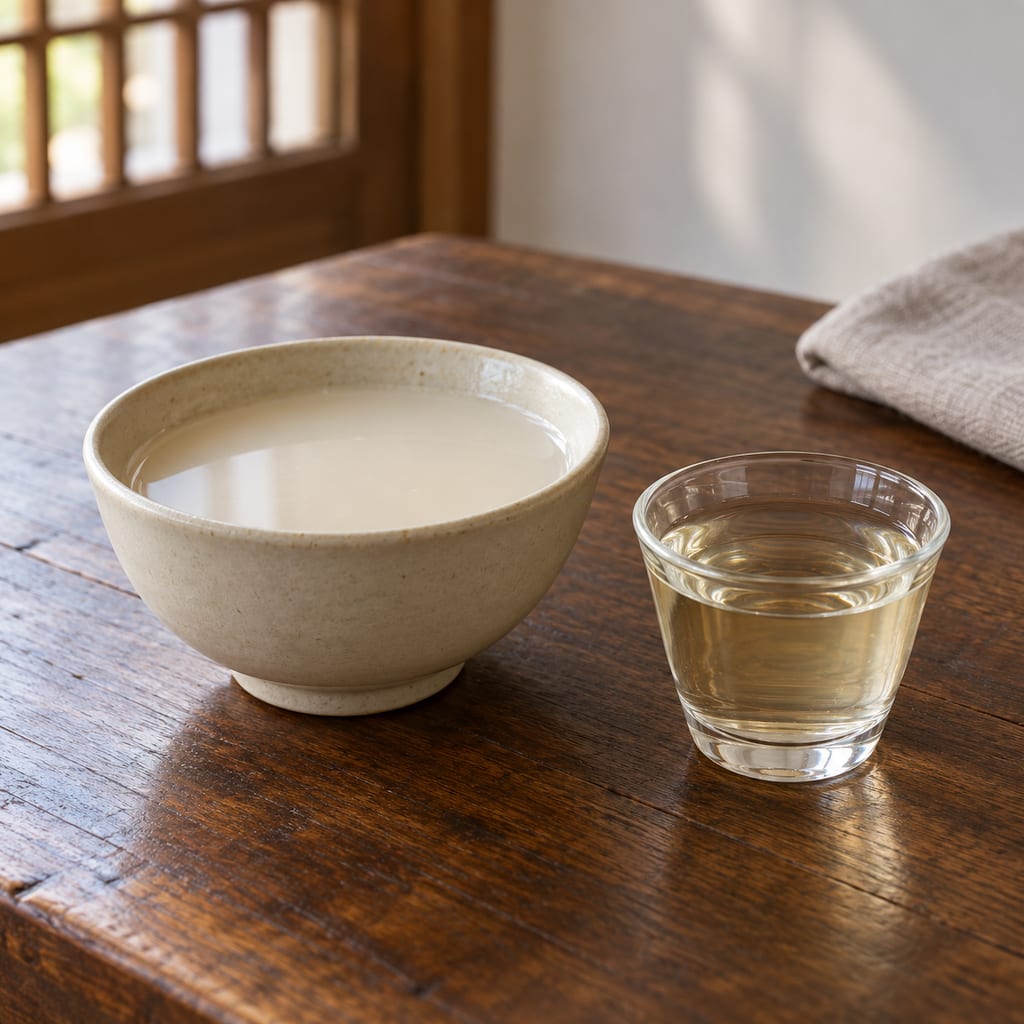
A Korean grain wine fermented from steamed rice, nuruk and yeast in two mash additions, drawn off clear as yakju or blended cloudy with rice solids and water as makgeolli.
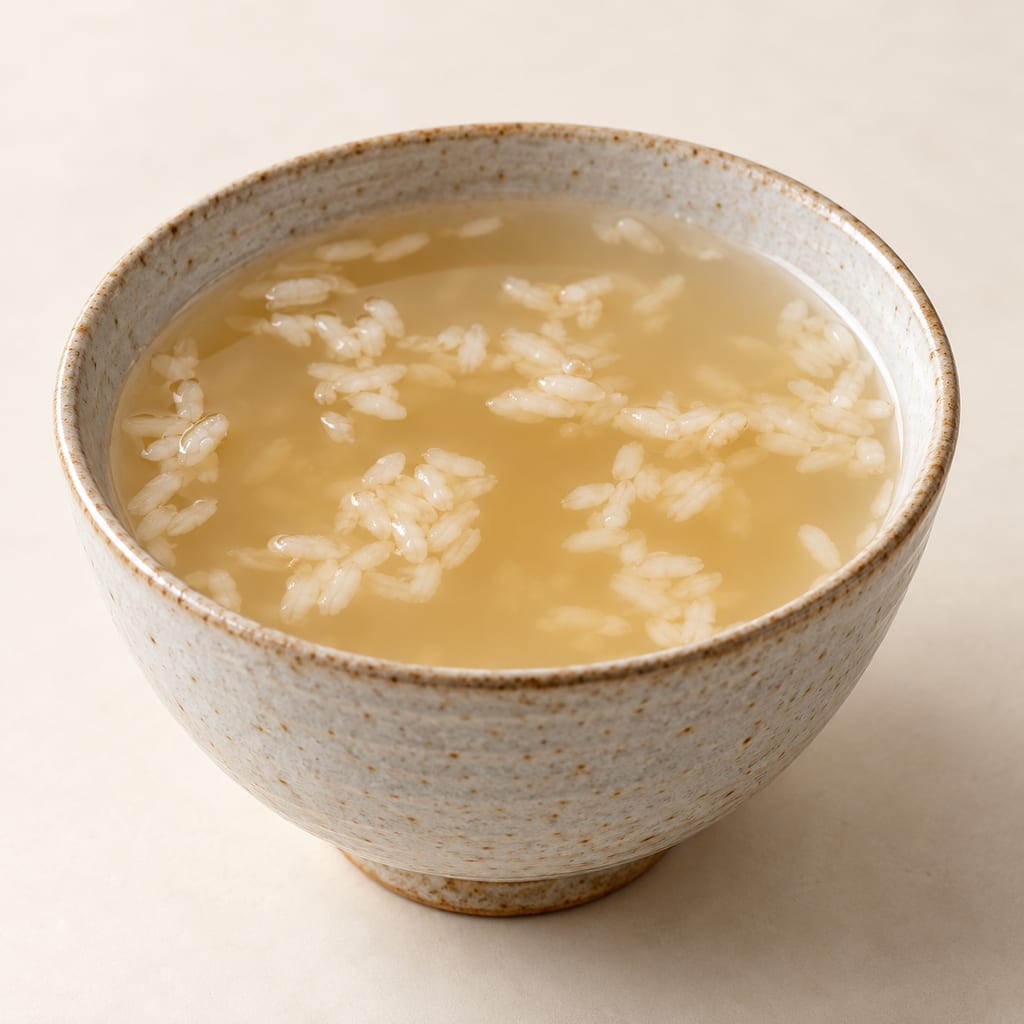
A Korean sweet rice drink made by holding cooked rice in water drawn off barley malt until the grains float, then boiling and chilling it.
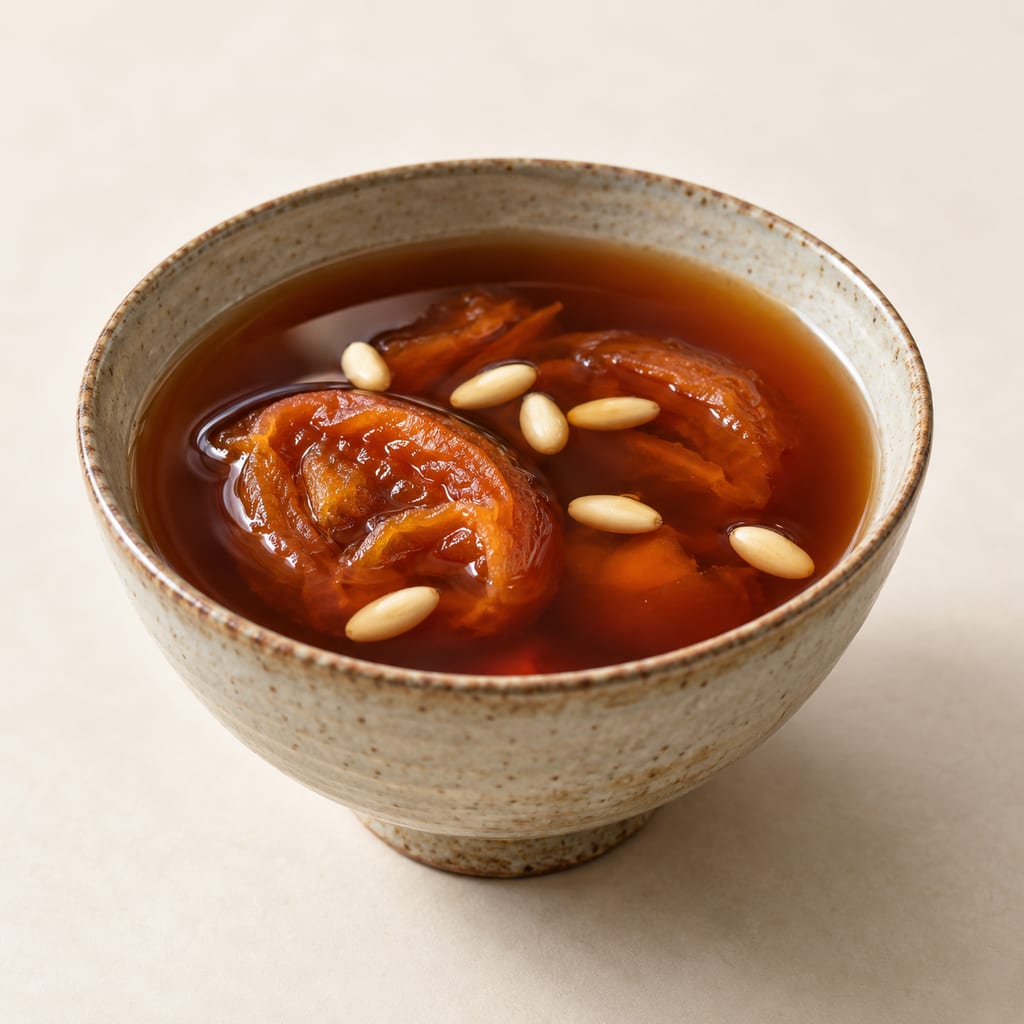
A chilled Korean dessert punch of cinnamon and ginger boiled in water, sweetened and poured over dried persimmons.
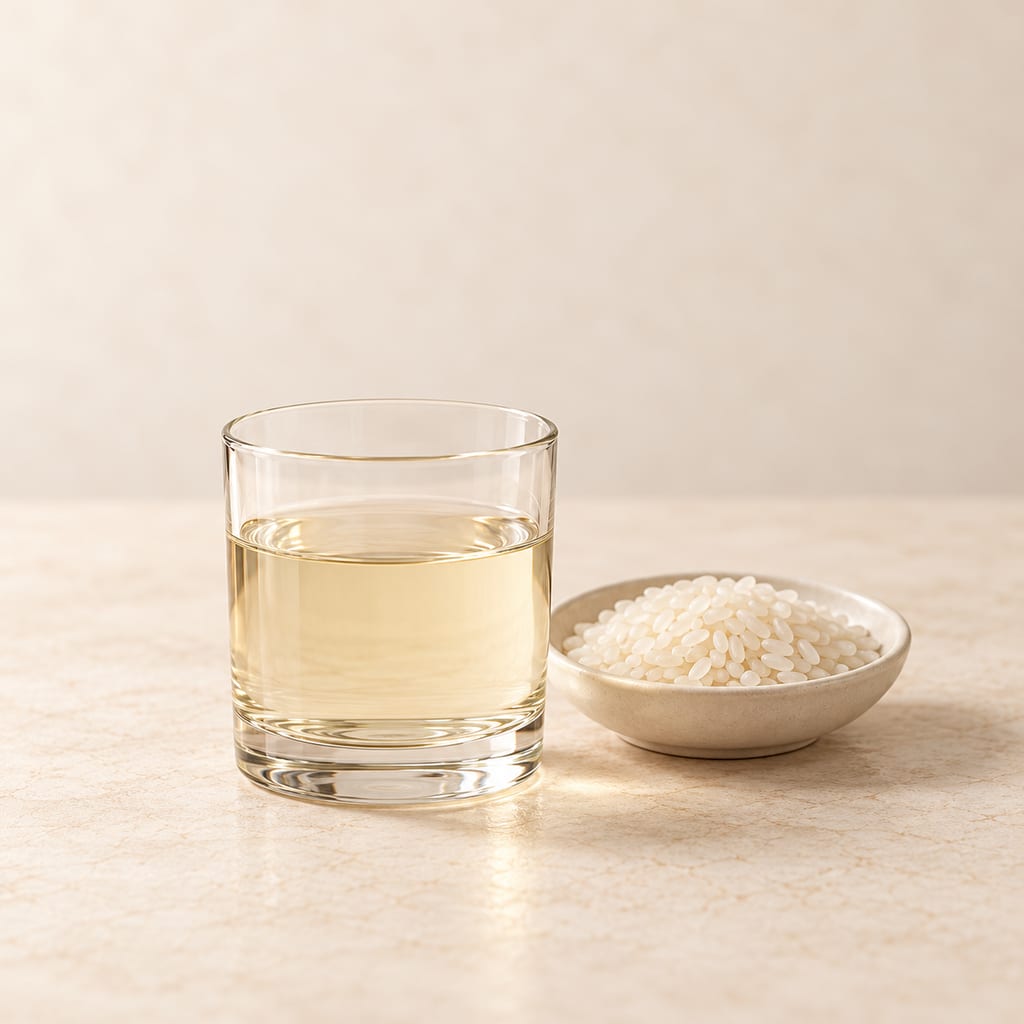
A 2021 study's white-rice yakju: steamed Hanareum rice ferments with rice-flour nuruk and takju yeast for 11 days, then the clear upper liquid is filtered and centrifuged.
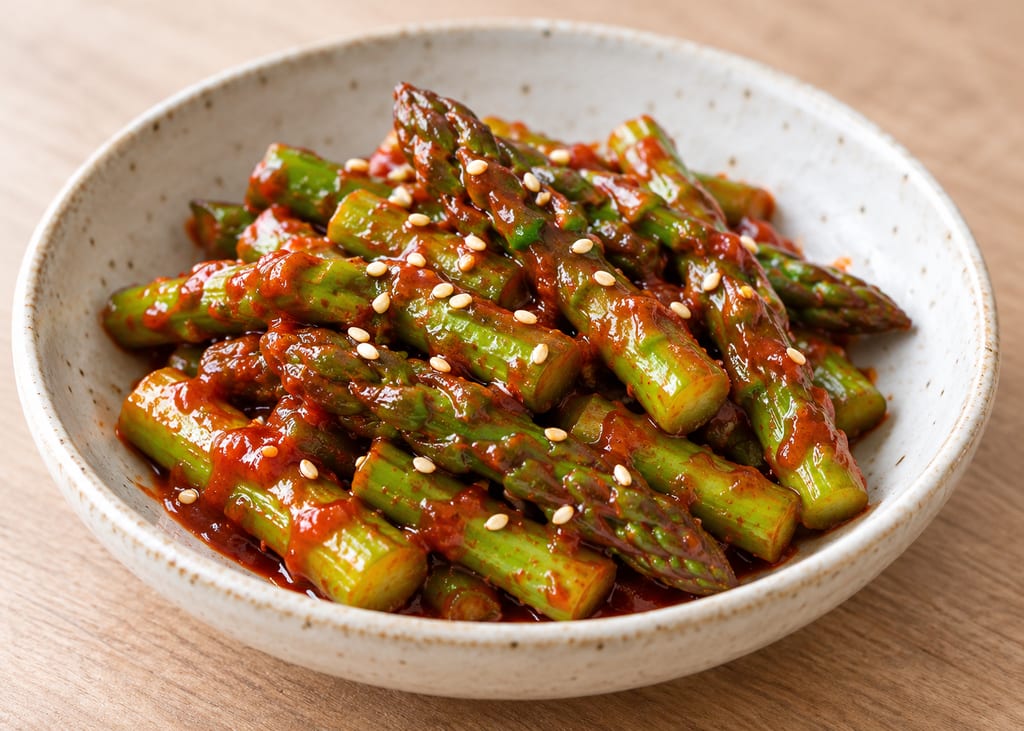
A Korean banchan of blanched asparagus dressed with a sweet-sour cho-gochujang sauce; Hyosun's version cools the spears in ice water before tossing.
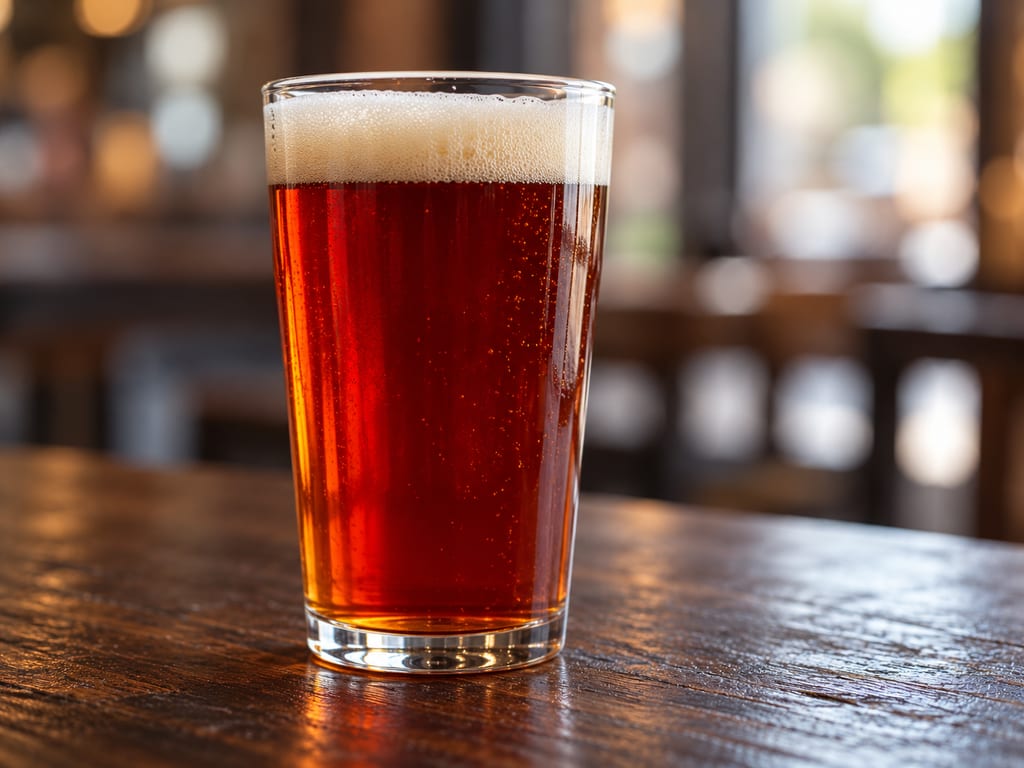
A deep amber-red American ale brewed from pale, Munich, CaraVienne and chocolate malts, bittered with Columbus hops and finished with Amarillo.
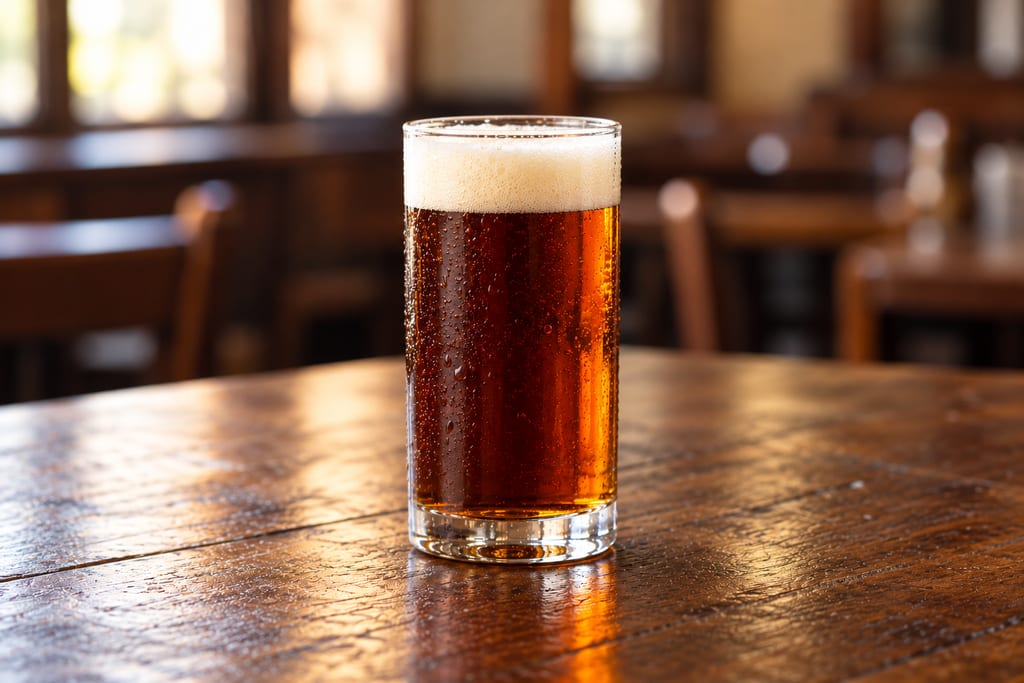
A source-specific modern extract adaptation of Düsseldorf Altbier, with specialty malts, two hop additions and an ale yeast. It is distinct from a brewery's commercial Altbier process and from Kölsch.
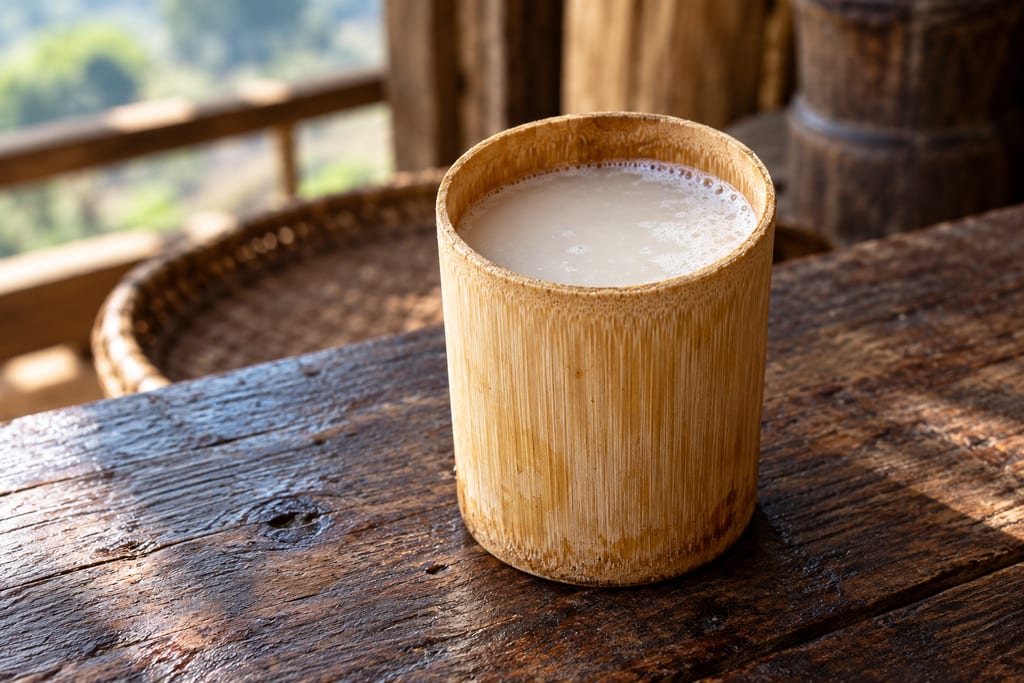
Angami rice beer from Nagaland. A surveyed method mixed cooked rice with piazu, fermented it for about four days in summer or a week in winter, then added water and filtered it. The starter ratio leaves the rice-weight basis unclear.
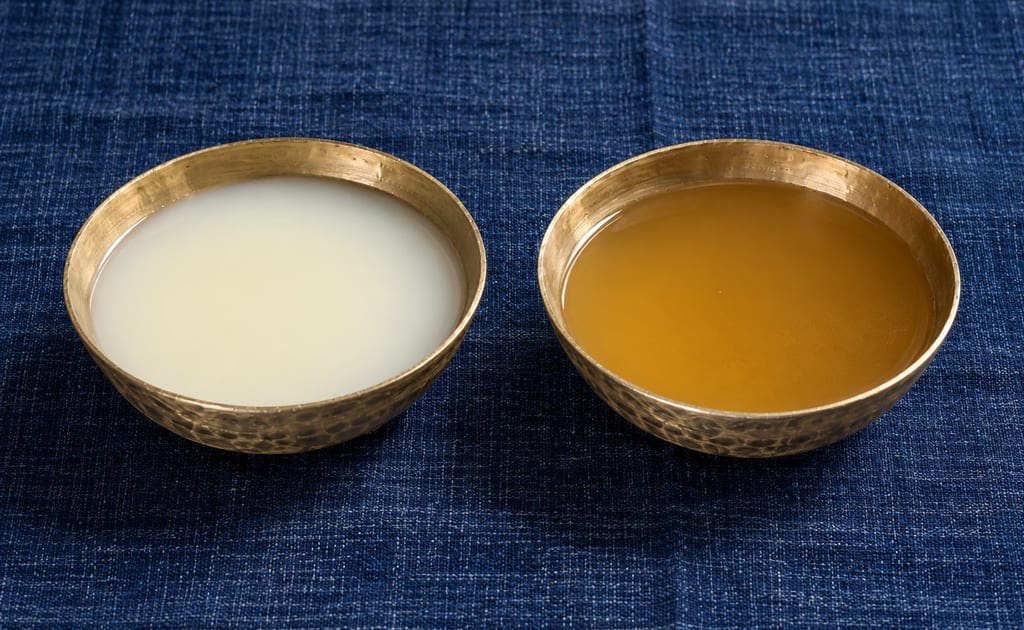
Apong names Mising rice beverages in Assam, including pale Nogin and ash-associated Po:ro. Sources describe distinct preparations and do not establish one unified household recipe or validated safety endpoint.
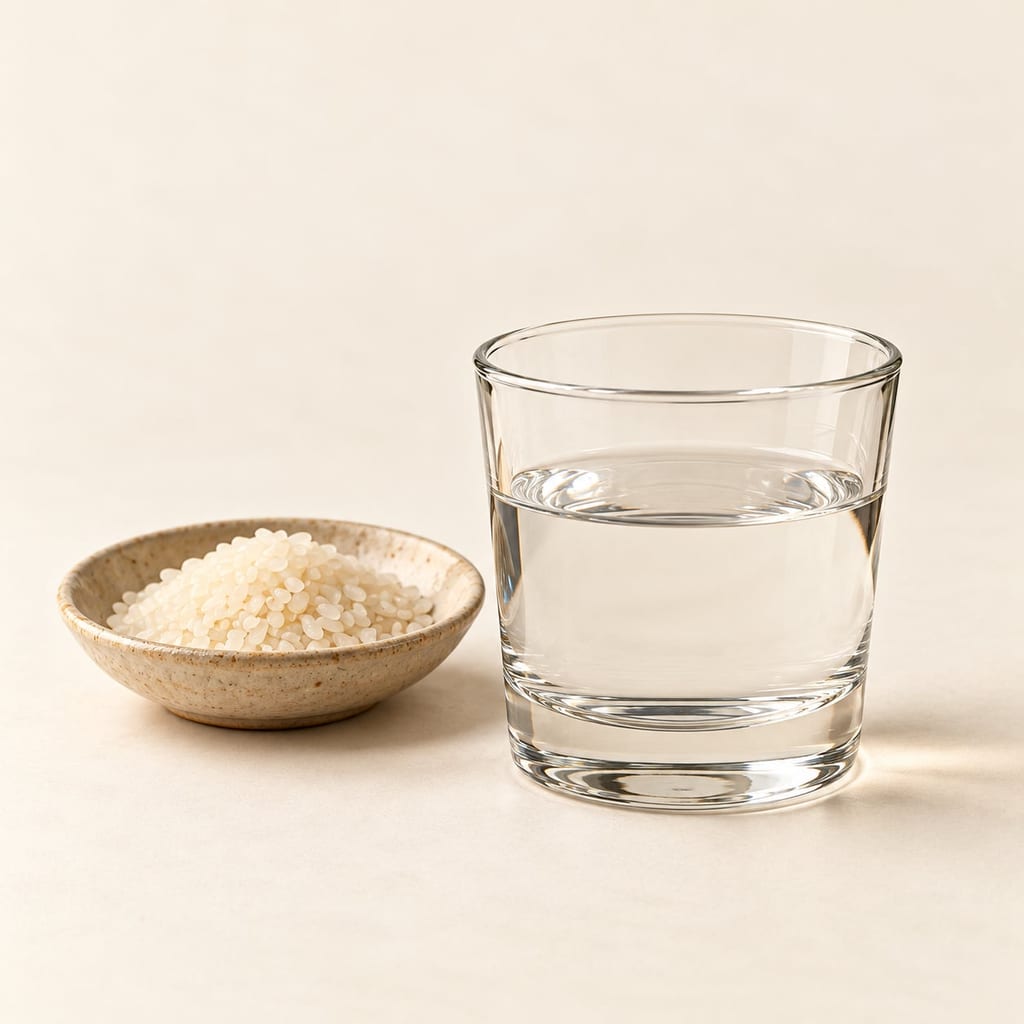
An Okinawan rice spirit made by turning all the rice into black koji, fermenting it with water and yeast, then pot-distilling and maturing the spirit.
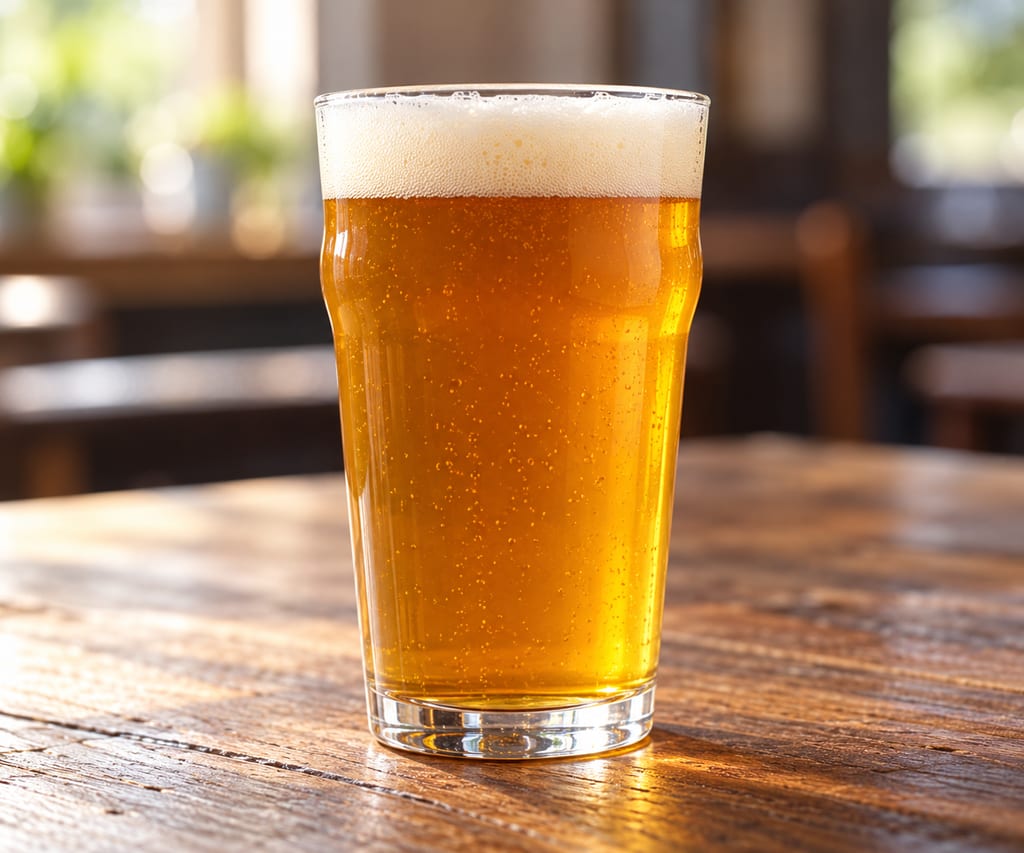
This is a process overview, not a complete batch recipe: key quantities, yield and packaging directions are absent. The AHA tutorial uses Hop Hammer Imperial IPA as an example; this page is not that full formulation.
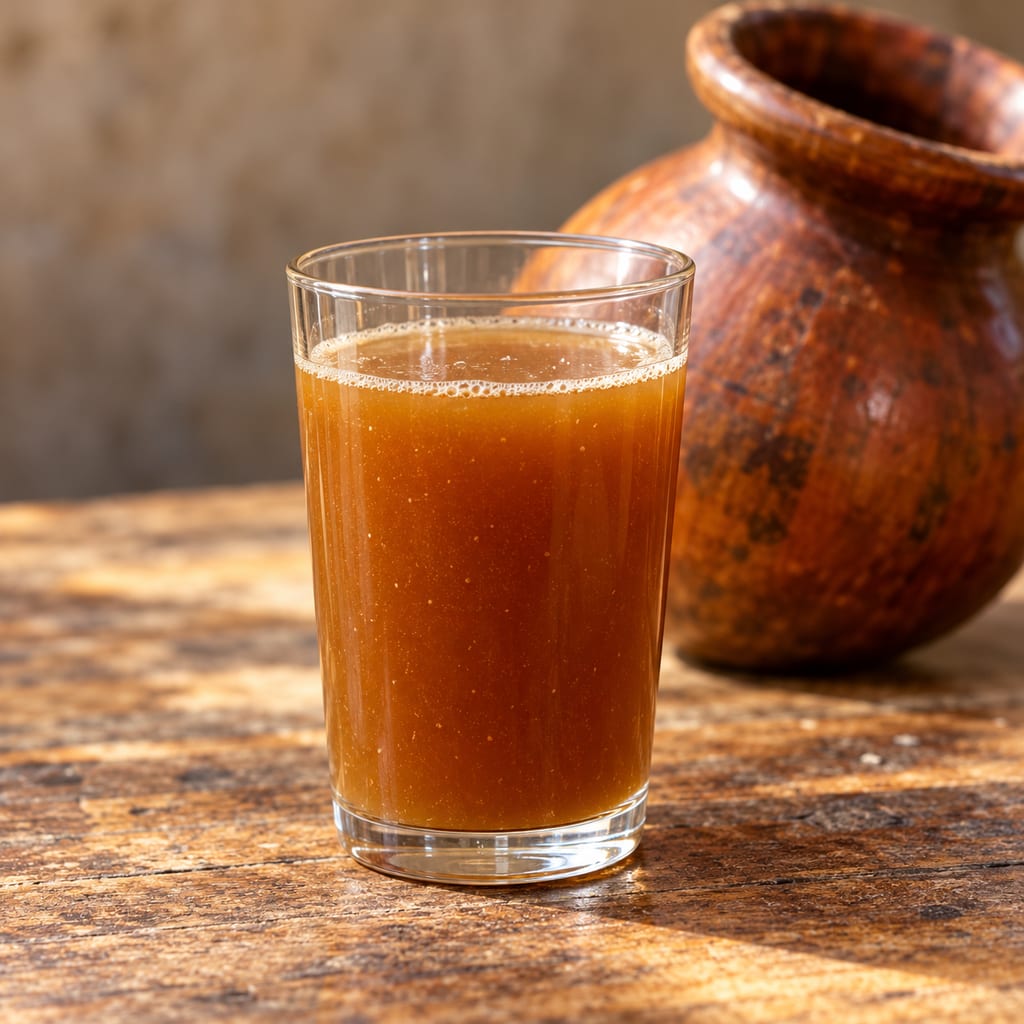
A darker Ethiopian maize tella, brewed from maize baked into a hot, dry kita pancake and then fermented in three stages with barley malt, gesho and water.
A Burkina Faso sorghum beer brewed from malted grain, soured by a spontaneous lactic stage and then fermented with a traditional yeast leaven.

Protected Italian vinegar made only from cooked grape must, fermented and aged in a battery of wooden barrels for at least 12 years: sweet, sharp and syrupy.
Airag is Mongolia’s fermented mare’s-milk drink, traditionally churned with saved starter in a reusable cowhide khokhuur.

Appam, or hoppers, are South Indian and Sri Lankan rice pancakes made from a fermented coconut-and-rice batter and cooked in a curved pan to a crisp lacy rim and a soft, spongy centre.
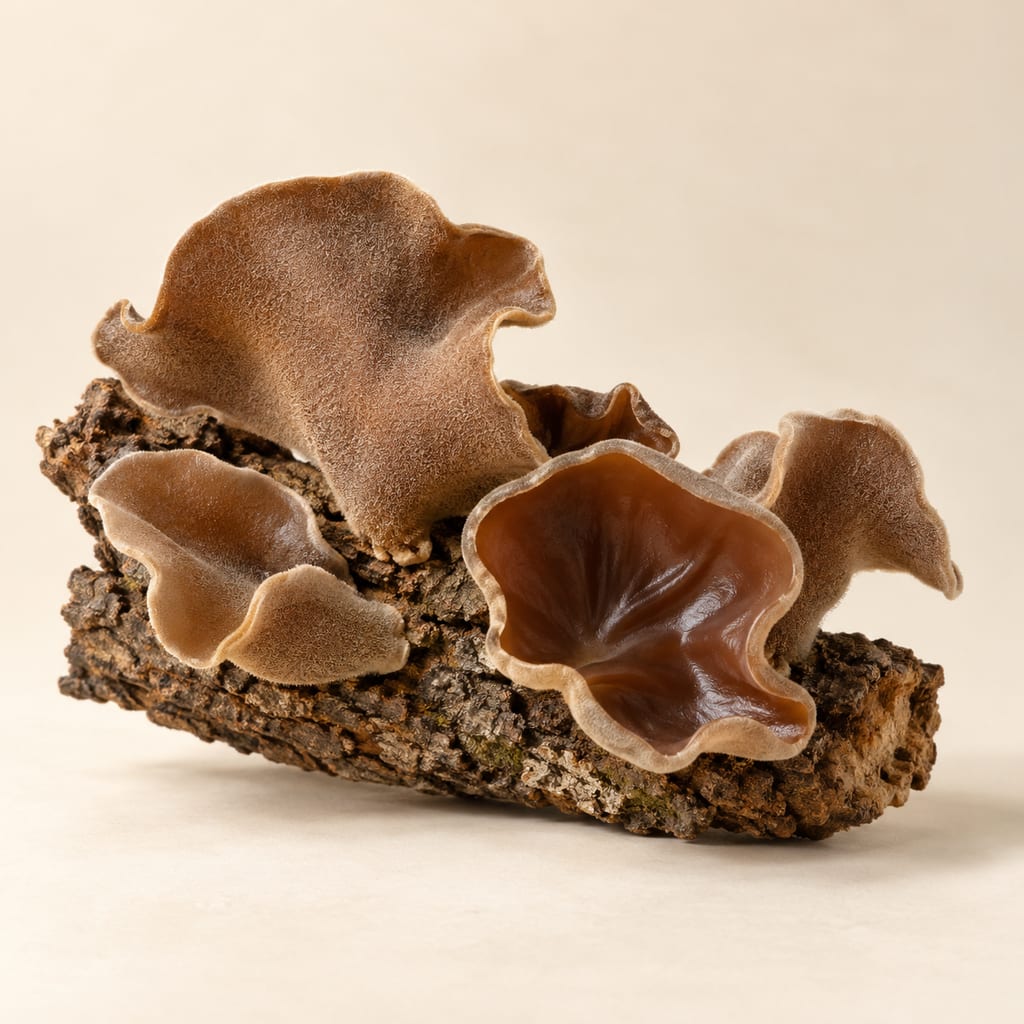
Auricularia tremellosa is a wood ear fungus of the genus that supplies most dried wood ear sold in China; its own food record is thin, and the culinary practice described here comes from the closely related wood ear species.
Ayran is Turkey’s cold, savoury yogurt drink: plain yogurt is loosened with water and lightly salted, then whisked smooth or aerated into a soft cap of foam.
A thin stone griddle used over an open hearth. Norwegian archaeology documents the established tradition from the early Middle Ages; a Viking-period origin is only a cautious suggestion linked to Shetland.

Crushed or milled barley cooked in water until the starch softens and the mixture thickens, the plainest way a northern household turned stored grain into a meal, here with apple and hazelnut.

Black carrot is the anthocyanin-pigmented Eastern carrot (Daucus carota var. atrorubens), the purple root that preceded orange types and still colours kanji and şalgam.
No community contributions have been published for this entry yet.
Sign in to contribute. Published comments and photos are free to read.
Green Magazine, Rural Development Administration, Republic of Korea, September 2022Method · Safety
부담없이 즐길 수 있는 우리 전통주 만들기 (Making Korean Traditional Alcoholic Beverages at Home)The modern recipe: 1 kg non-glutinous rice, 300 g ihwagok and 1 g yeast.
Rice washed, soaked, ground and sieved; hot-water dough shaped into ring-shaped cakes, crushed and cooled.
Starter ground and sieved, mixed in, and fermented in a cloth-covered earthenware vessel at 15 to 20 °C for 15 to 20 days.
Eaten with a spoon or diluted with cold water; refrigerated after fermentation.
No water quantity, yeast step or shelf life is given.
Cited in: What it is; How it's made and why each ingredient and step matters; How it's eaten and used
Rural Development Administration / National Institute of Agricultural Sciences, Republic of KoreaMethod
이달의 이슈 농업기술: 우리 전통주 만들기 (Agricultural Technology: Making Traditional Korean Alcoholic Beverages)The same ihwaju formulation: 1 kg rice, 300 g ihwagok, 1 g yeast.
Fermentation at 15 to 20 °C for 15 to 20 days.
Spoonable texture, optional dilution with cold water, refrigeration.
Cited in: How it's made and why each ingredient and step matters
Korea Traditional Knowledge Portal; historical text Sangayorok, circa 1450History · Method
Ihwaju (梨花酒): Historical Recipe from SangayorokFifteenth-century method: non-glutinous rice soaked overnight and ground, starter lumps the size of duck eggs wrapped in mugwort.
Successive seven-day periods, then drying, grinding and sieving the starter.
Ring-shaped rice cakes mixed with powdered starter and fermented in an earthenware vessel; the mass checked for warmth.
Original mal and doe quantities that need interpreting before any metric conversion.
Cited in: What it is; History; How it's made and why each ingredient and step matters; Regional and historical variations
Korea Traditional Knowledge Portal; historical text Juchan, early nineteenth centuryHistory · Method
Ihwaju (梨花酒): Historical Recipe from JuchanA second starter method, with rice-flour lumps kept among pine needles for seven days.
Ring-shaped cakes made from 2 mal of rice; 1 mal 4 doe of starter powder, or 1 mal 6 doe for a sweeter wine.
Earthenware vessel; no fermentation temperature or full schedule is given.
Cited in: What it is; History; How it's made and why each ingredient and step matters; Regional and historical variations
Korea Traditional Knowledge Portal; Eumsik Dimibang / Onjubeop culinary traditionHistory · Method
Ihwaju (니화듀): Historical Korean-Language Brewing RecipeThe historical spelling 니화듀.
Finely ground white rice made into ring-shaped cakes; 3 or 5 doe of powdered starter per mal of rice.
Glutinous rice may be added for sweetness; brewing outside pear-blossom season is recognised.
Cited in: Regional and historical variations
Academy of Korean Studies, Korean Studies Promotion ServiceHistory
이화주(梨花酒): Historical Dictionary Entry from the Annals of the Joseon Dynasty ProjectDefinition of ihwaju and its rice starter, made around pear-blossom season.
Review of the recipes in Sangayorok, Suunjapbang and Eumsik Dimibang.
Eumsik Dimibang version with 1 mal of white rice and 3 doe of starter; finished wine white and thick like porridge, diluted with water.
Recipes differ in season, rice treatment and starter proportion.
Cited in: History; Regional and historical variations
Encyclopedia of Korean Culture, Academy of Korean Studies, revised February 2023History · Method
이화주 (Ihwaju)Ihwaju as a cloudy rice wine made with rice nuruk.
The pear-blossom name, white colour and porridge-like body.
References in Goryeo and Joseon literature and in several recipe collections.
Cited in: What it is; History; How it's made and why each ingredient and step matters; Regional and historical variations; How it's eaten and used
Korean Journal of Food and Cookery Science, 9(4), 266-271, November 1993Science
Microbial and Enzymatic Properties Related to Brewing of Traditional EwhajuA reproduced traditional ihwaju and ihwagok.
Aspergillus oryzae and Hansenula sp. as the main cultured organisms, about 1.2 million colony-forming units per gram each.
Alpha- and beta-amylase activity measured, and still present in wine matured for a year.
These are findings for one reproduced starter, not a shelf-life or safety specification.
Cited in: History; How it works; Reading results and problems
Kyung Hee University Graduate School, Master's thesis, 2020; indexed by DBpiaScience · Safety
전통 쌀누룩(이화곡)을 이용한 고급 탁주(이화주)의 제조 방법의 개선 (Improvement of the Manufacturing Process of Traditional Ihwaju Using Rice Nuruk)Wild yeasts and lactic acid bacteria in prepared ihwagok.
Traditional-style batches reached 11.86 to 13.53% alcohol and 156 to 182 mg/mL reducing sugar.
Large variation between starters and batches.
A two-stage method gave 12.58 to 13.30% alcohol and 164 to 183 mg/mL reducing sugar with better consistency.
Cited in: What it is; History; How it works; How it's made and why each ingredient and step matters; Reading results and problems
Journal of Food Science, Institute of Food Technologists / Wiley, 2020Safety
Influence of Aflatoxin in Nuruk on the Safety of Starch-Based Alcoholic BeverageAflatoxin-producing Aspergillus flavus in traditional Korean nuruk.
Raised total aflatoxin in 14 of 61 nuruk samples.
Transfer of aflatoxin from starter into alcoholic drinks; appearance and fermentation performance do not show a starter is clean.
Cited in: Reading results and problems
Mycobiology, 39(4), 2011Science · Safety
Identification and Characterization of Useful Fungi with α-Amylase Activity from the Korean Traditional NurukAmylase-producing fungi isolated from Korean nuruk, including Aspergillus oryzae, Aspergillus flavus and Rhizopus oryzae.
Nuruk cannot be reduced to one harmless fungus. This is general nuruk evidence, not a test of every ihwagok.
Cited in: How it works; Reading results and problems
UK Government / Food Standards AgencySafety
Home Food Fact Checker: Cooked Rice and Bacillus cereusBacillus cereus spores occur in raw rice and survive cooking.
Cooked rice that is cooled or stored badly can grow bacteria and form toxin; reheating does not always make it safe.
Cited in: Reading results and problems
UK Health Security Agency, updated March 2026Safety
Bacillus Species (Food Poisoning)Bacillus spores in the environment, surviving cooking and growing when temperature control fails.
How Bacillus cereus causes food poisoning.
Cited in: Reading results and problems
Sulseam Co., Ltd., Yongin, Republic of KoreaHistory · Safety
IHWA: Rice Wine Product InformationA current commercial ihwaju made from Korean rice and a traditional starter.
Spoonable, concentrated rice texture; labelled 8% alcohol by volume; sold and kept refrigerated.
Serving suggestions with fruit and biscuits. Shelf life and strength are specific to this product.
Cited in: History; Regional and historical variations; How it's eaten and used
OhmyNews, Republic of Korea, 2019History
잔을 꺾지 마세요, 이 술은 떠서 드세요 (Do Not Tilt the Glass: Eat This Wine with a Spoon)Ihwaju served as a spoonable Korean rice wine with little added water.
A thick, yoghurt-like appearance, with photographs of the finished drink.
Cited in: How it's eaten and used