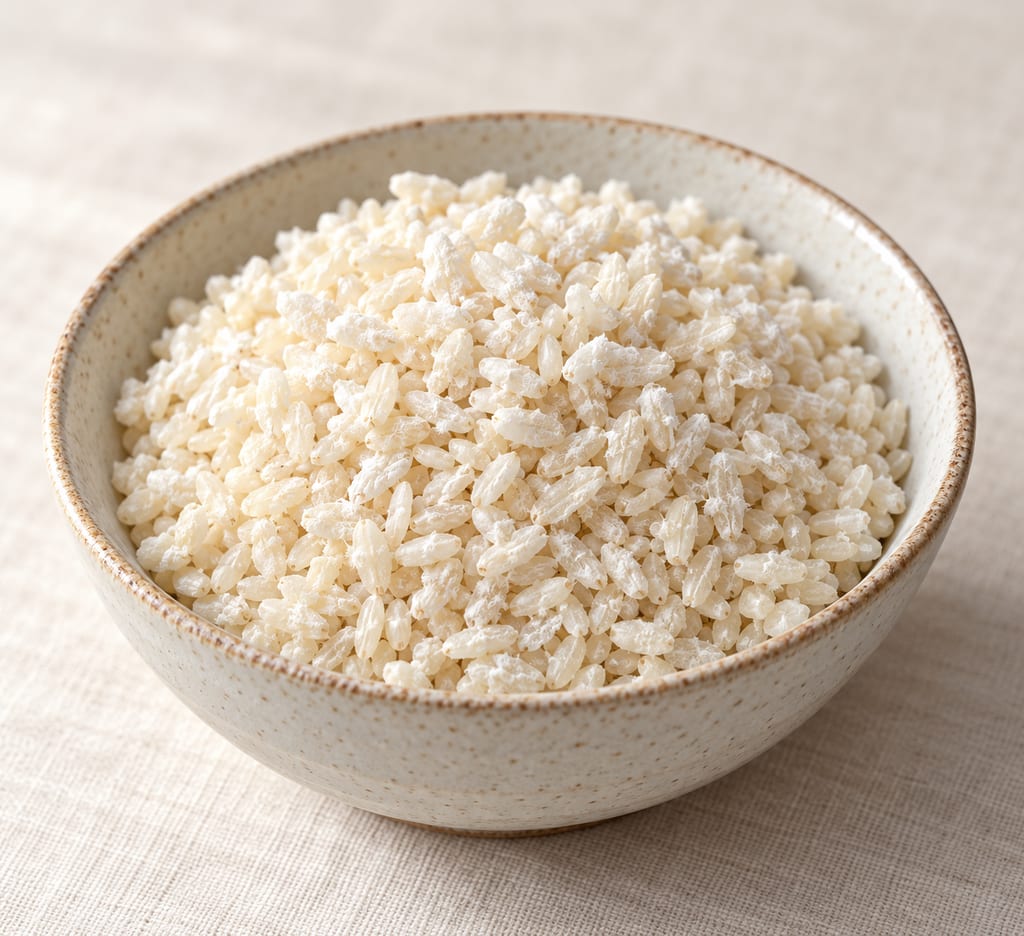
Ipguk
Ipguk (입국) is Korean steamed rice grown with a selected koji mould, used as an enzyme-rich starter in makgeolli and yakju. It is not the same product as traditional nuruk.
 FermenteaWhere food goes to change
Cultures
Korean nuruk is a grain-based starter used to ferment traditional Korean alcoholic drinks. Its microbial communities vary among samples, so the name does not specify one organism or standardized culture.
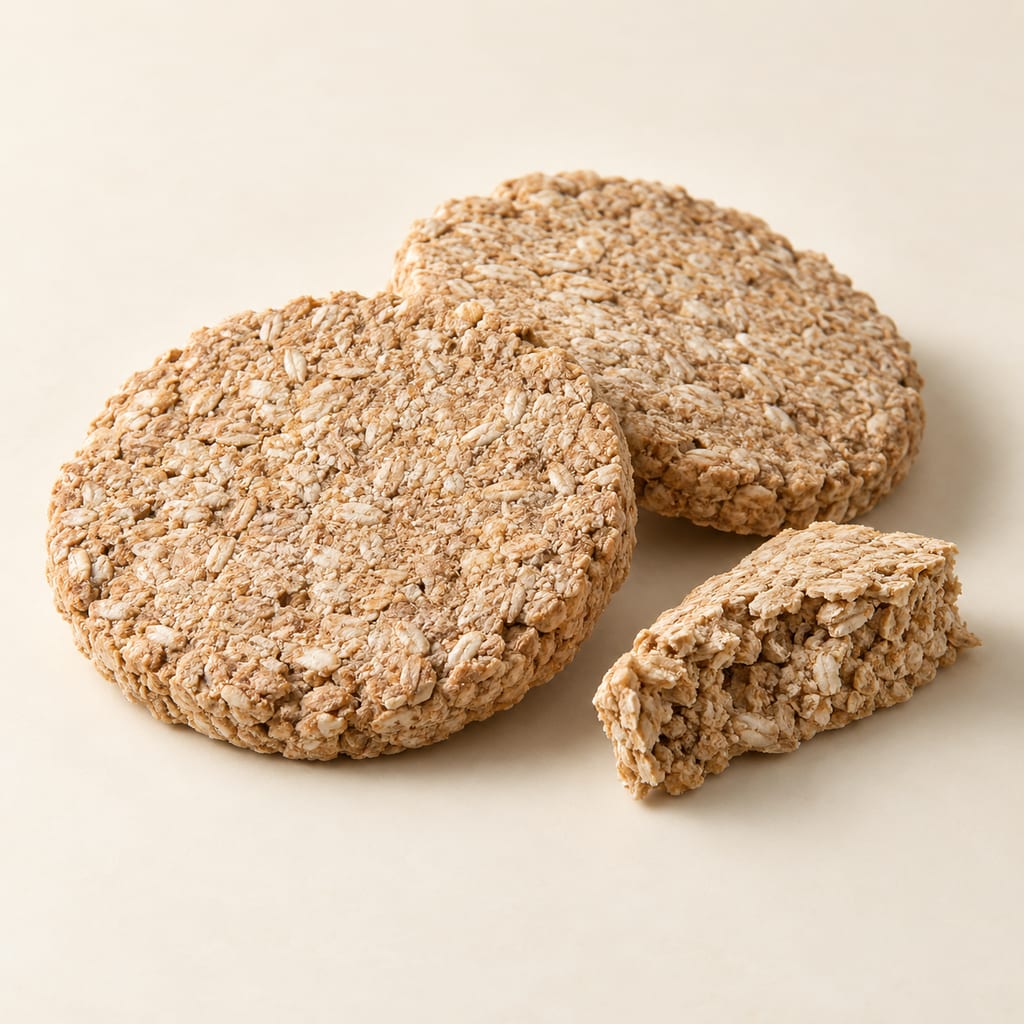
Korean nuruk (누룩) is a traditional starter used in Korean alcoholic fermentation. The Cultural Heritage Administration describes it as a starter made by germinating fungi on starchy grains. Korea.net describes microorganisms naturally present on grains as contributing to the starter and notes that its type and use affect the resulting drink's taste and aroma. These accounts identify a grain-based culture used in brewing; they do not provide a standardized formula.
The Academy of Korean Studies describes several materials, pressed-cake forms and loose-grain forms, with regional differences in shape and method. The name does not specify one organism or a fixed microbial blend.
The Academy of Korean Studies encyclopedia identifies the Goryeo dogyeong as the earliest Korean written reference to nuruk that it cites. It treats earlier nuruk as an inference from earlier records of alcohol, not as a surviving recipe. Its account also records historical seasonal production and regional differences; it does not establish a universal present-day calendar. The historical texts the encyclopedia cites were not inspected directly.
Nuruk names a category of starters rather than a defined pure culture. A 2013 study examined 42 nuruk samples collected from Korean provinces and found varied bacterial, fungal, yeast and lactic-acid-bacterial communities. Aspergillus oryzae appeared in 13 of the samples, while Saccharomyces cerevisiae was isolated from 18. Neither species is therefore a complete definition of every nuruk.
A 2022 study followed one wheat-based nuruk batch from Hamyang and reported changes in fungal and bacterial communities and enzyme activity during cultivation. That describes the research batch. The organisms detected are not recommendations for home inoculation, and the measured timeline is not a universal endpoint for the starter.
A Korean Cultural Center report describes one Busan brewery's traditional nuruk and quotes its producer about the local cakes and the fermentation room. The report contrasts traditional nuruk with ipguk, a separate and more standardised starter category. This local case does not define every Korean brewery or every commercial product.
The official cultural account connects nuruk with makgeolli, while government descriptions place it in the broader Korean traditional-liquor family. Published home-brewing accounts describe rice-beverage batches that use purchased nuruk, sometimes with added yeast. They show nuruk being used, not how it is made or stored. Existing preparations such as the published Korean nuruk rice wine and danyangju records name nuruk on their ingredient lines; their source-specific methods are not a universal specification for the starter. The starter is also distinct from rice-flour nuruk and from the wheat-specific nuruk record, each of which documents a narrower product or substrate.
In the 42-sample study, Bacillus cereus or Cronobacter sakazakii was reported in 13 samples. This finding is limited to the products tested and does not mean that all nuruk is contaminated. It does mean that the cultural name alone cannot establish the microbiological status of a particular starter. The sources give no validated home manufacturing process, release test, storage limit or handling controls, so none is supplied here.
Official Korean accounts describe nuruk as a starter for traditional alcoholic drinks. This country-scale association does not establish an origin or one regional practice.
A 2022 study followed one wheat-based nuruk batch from Hamyang; it locates that research batch, not an origin.
A Korean Cultural Center report describes one Busan brewery's traditional nuruk; it does not define every Korean brewery.
Ipguk (입국) is Korean steamed rice grown with a selected koji mould, used as an enzyme-rich starter in makgeolli and yakju. It is not the same product as traditional nuruk.
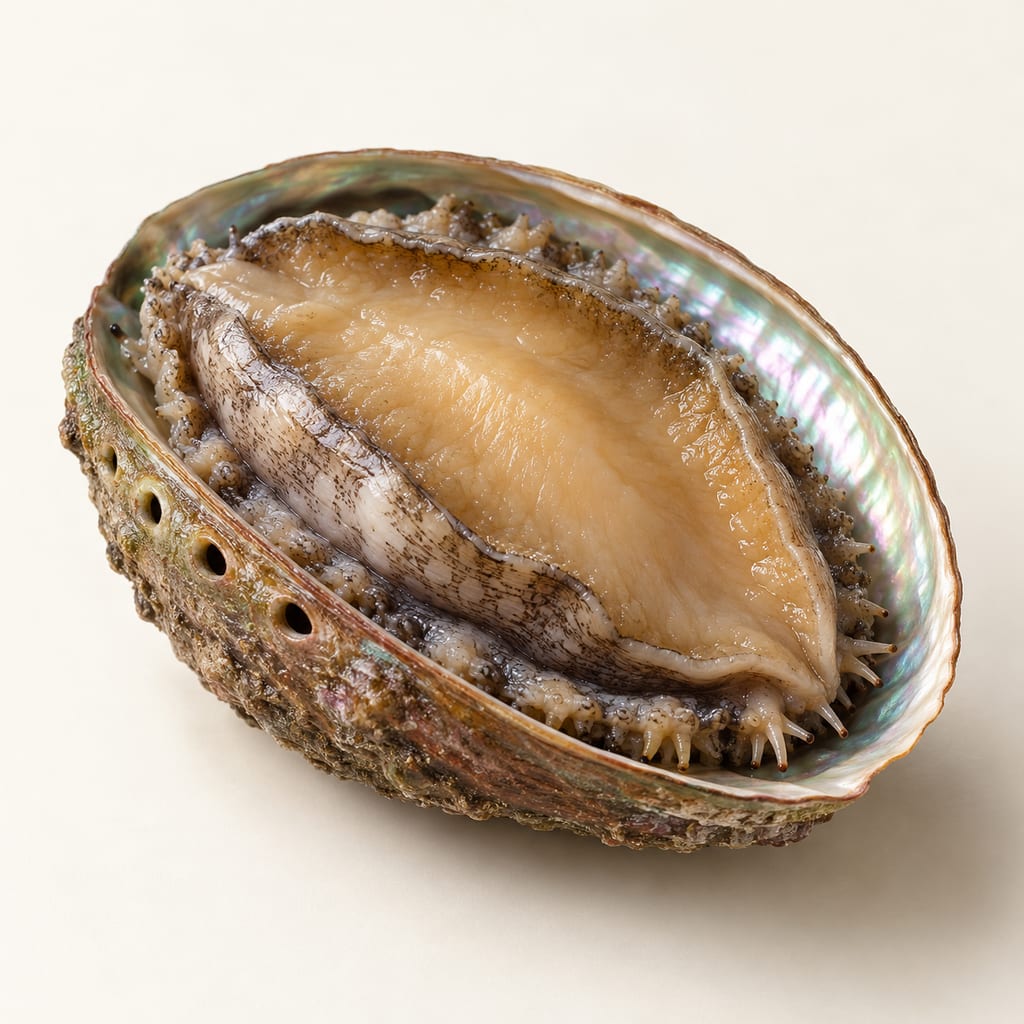
Abalone are marine snails valued for their broad muscular foot and distinctive shell. They are eaten fresh or dried and appear in documented Korean dishes and preserved seafood traditions.

Pleurotus cystidiosus is the abalone mushroom, a cultivated oyster-type fungus with dark brown caps that grows more slowly and is more demanding than other Pleurotus species.
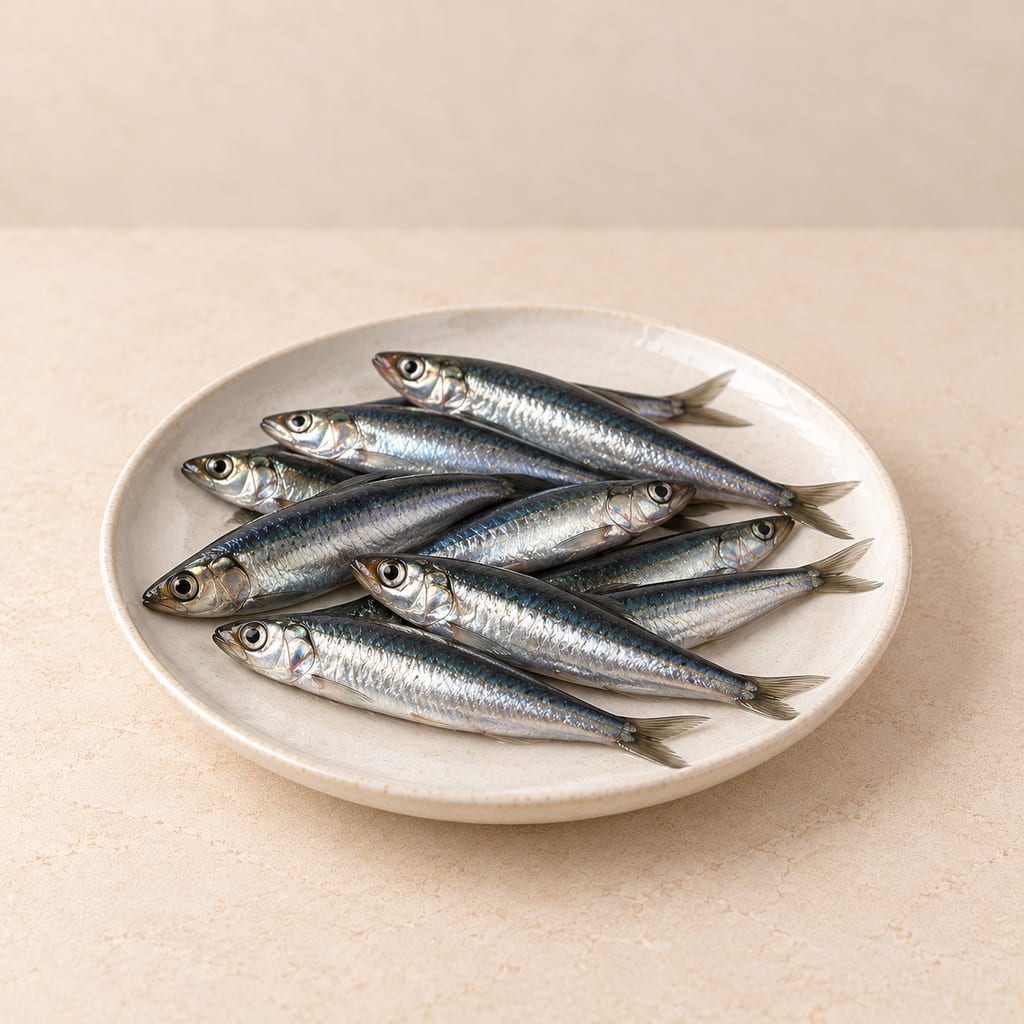
Anchovies are small schooling sea fish of the family Engraulidae, eaten fresh or dried and above all salted: as fillets in oil, whole salted fish or fish sauce.
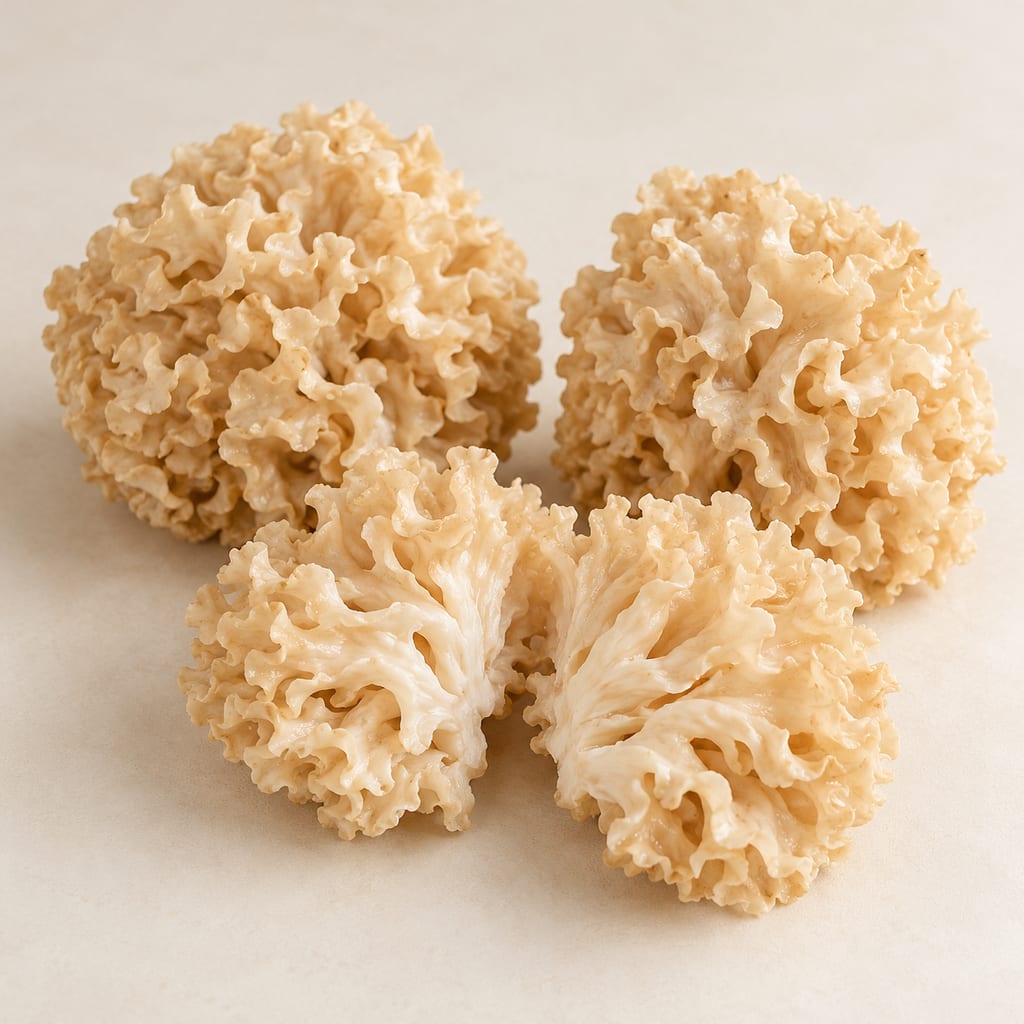
The Asian cauliflower mushroom, Sparassis latifolia, is a cultivated fungus with a frilled, fronded form that is eaten in China, Japan and Korea. Many Asian records under the name Sparassis crispa refer to this species.
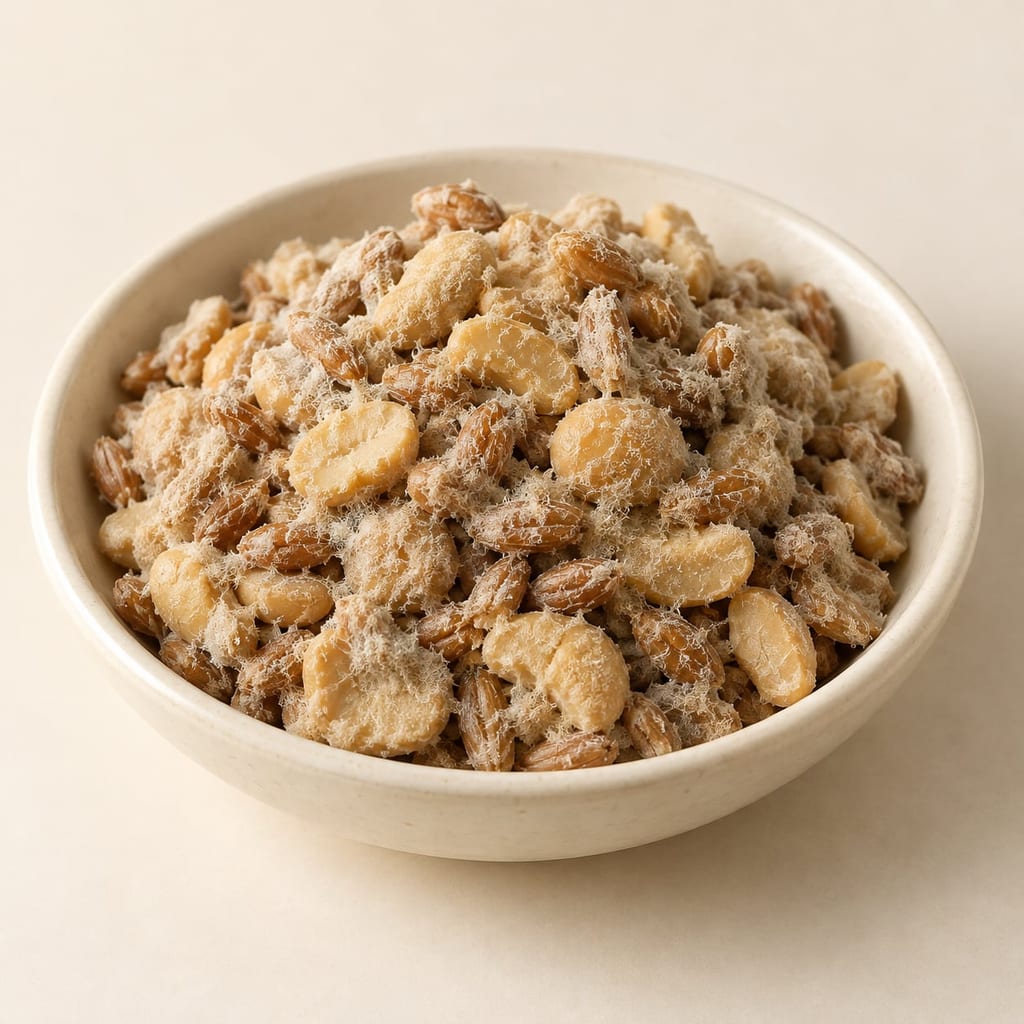
Aspergillus sojae is a koji mould of the Aspergillus flavus group, closely related to A. oryzae, used as a starter in soybean fermentations such as Korean meju, doenjang and ganjang.
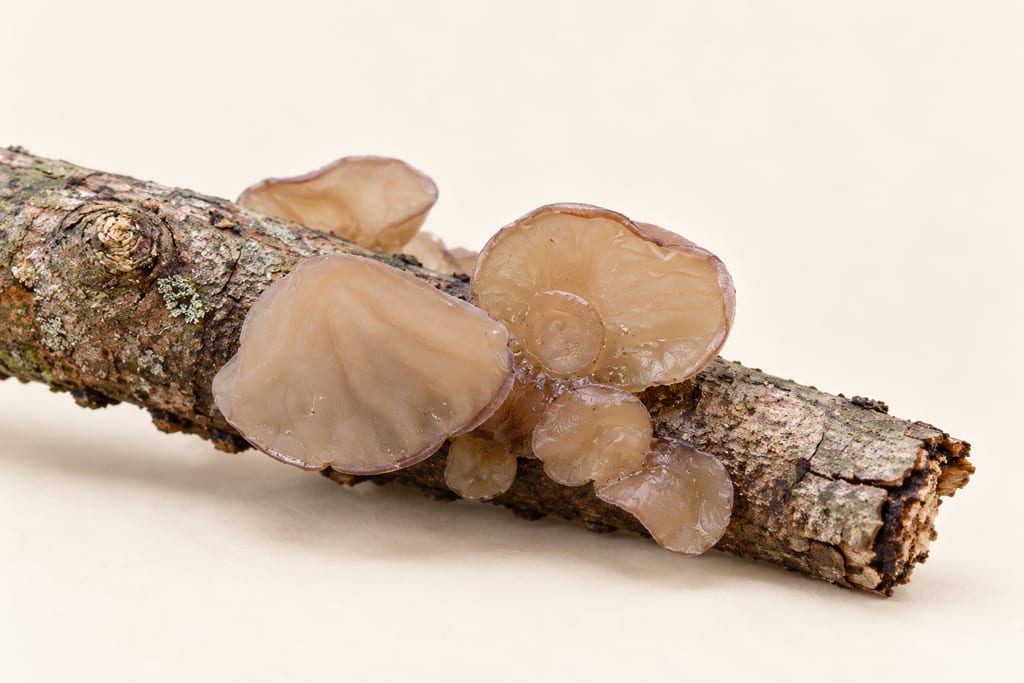
A small wood-decaying jelly fungus recognized as a distinct East Asian species. A Chinese edible-fungi catalogue lists it as edible, but species-specific preparation and safety evidence remain limited.
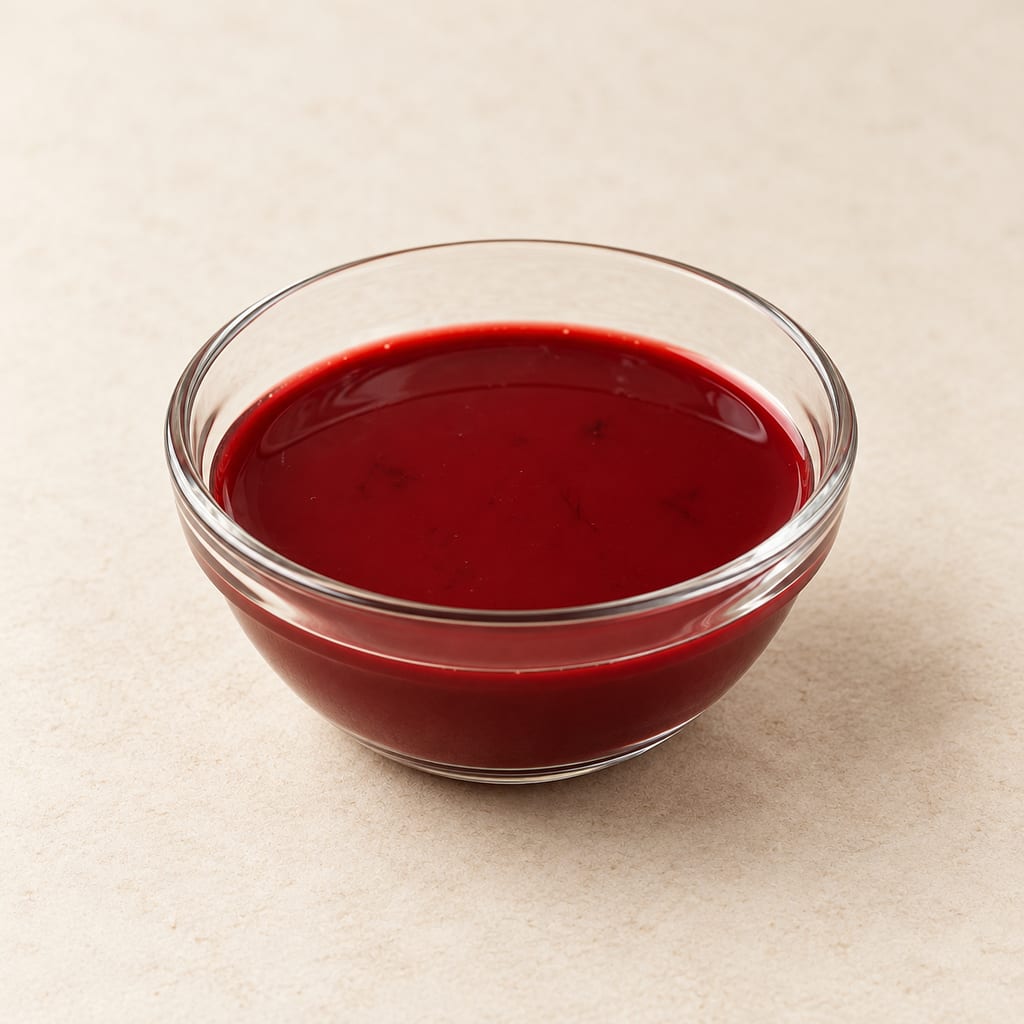
Animal blood is a perishable food material used fresh, coagulated, cooked, dried or processed into ingredients. Its uses range from grain-filled puddings to functional protein ingredients, each with distinct history and handling needs.
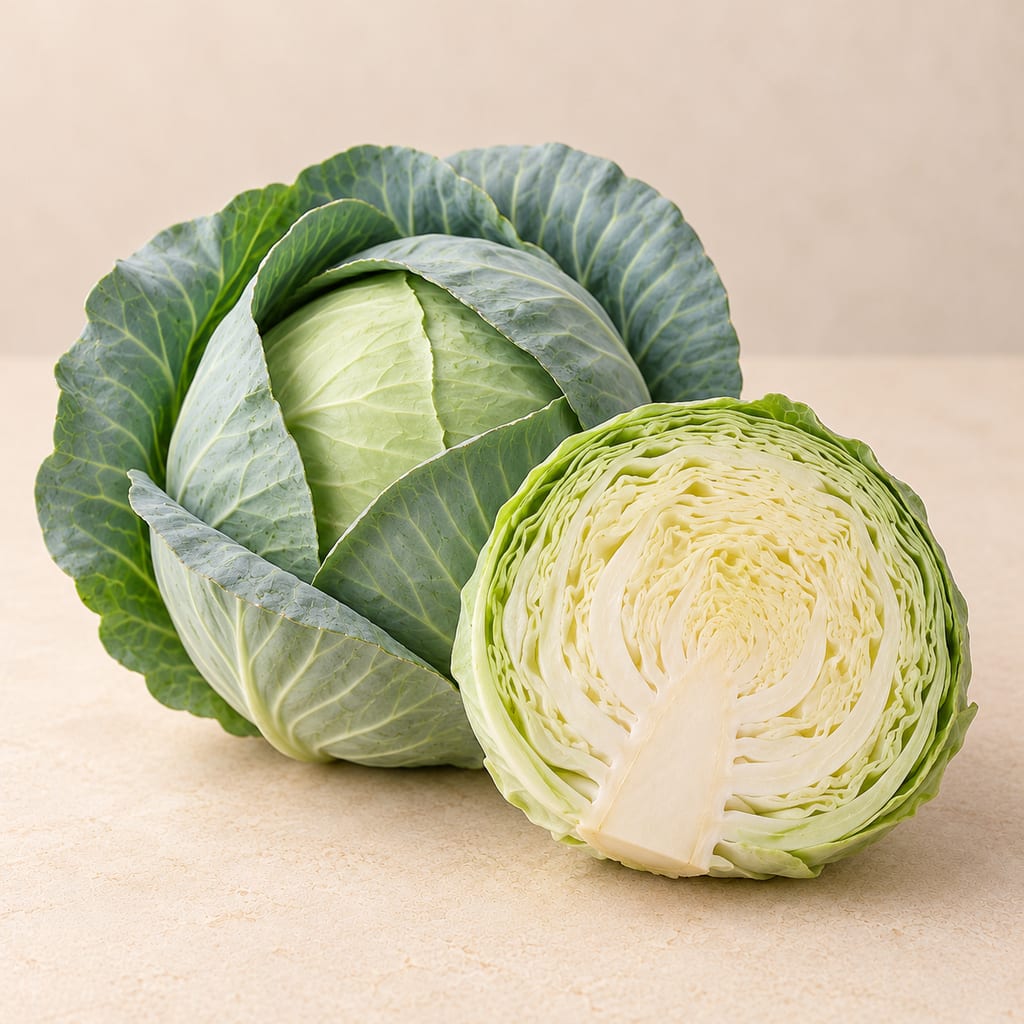
Cabbage is the dense leafy head of Brassica oleracea, a European vegetable that keeps for months and is the classic raw material for sauerkraut, with napa cabbage the base of kimchi.

Protected Italian vinegar made only from cooked grape must, fermented and aged in a battery of wooden barrels for at least 12 years: sweet, sharp and syrupy.
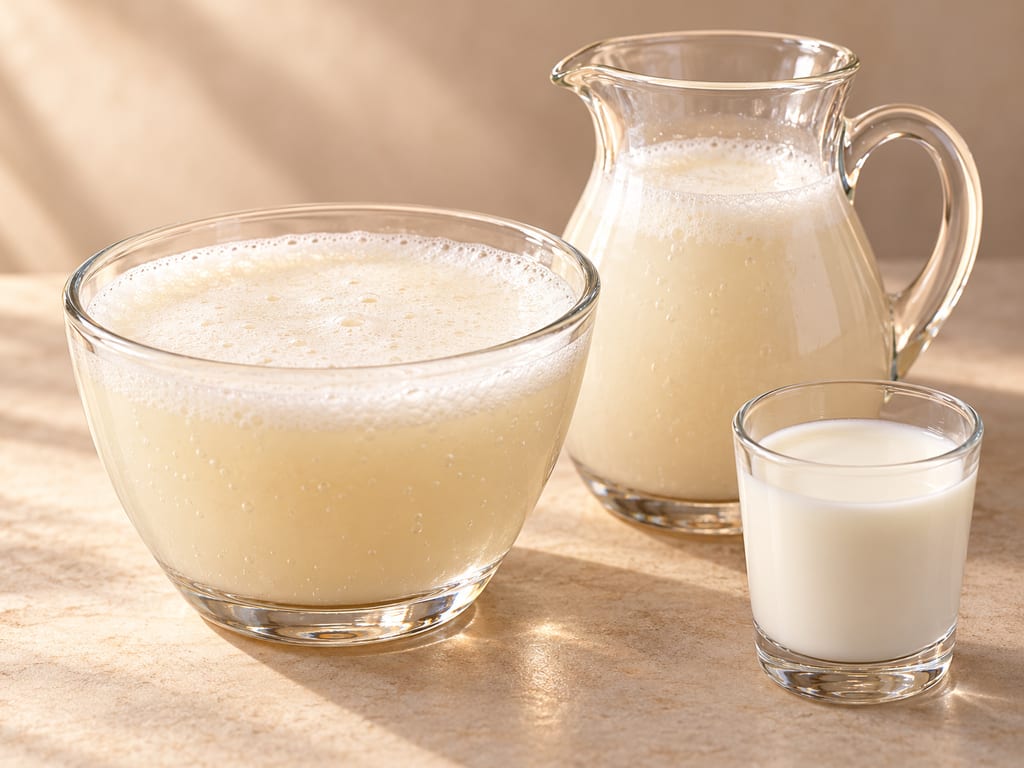
Airag is Mongolia’s fermented mare’s-milk drink, traditionally churned with saved starter in a reusable cowhide khokhuur.

Appam, or hoppers, are South Indian and Sri Lankan rice pancakes made from a fermented coconut-and-rice batter and cooked in a curved pan to a crisp lacy rim and a soft, spongy centre.
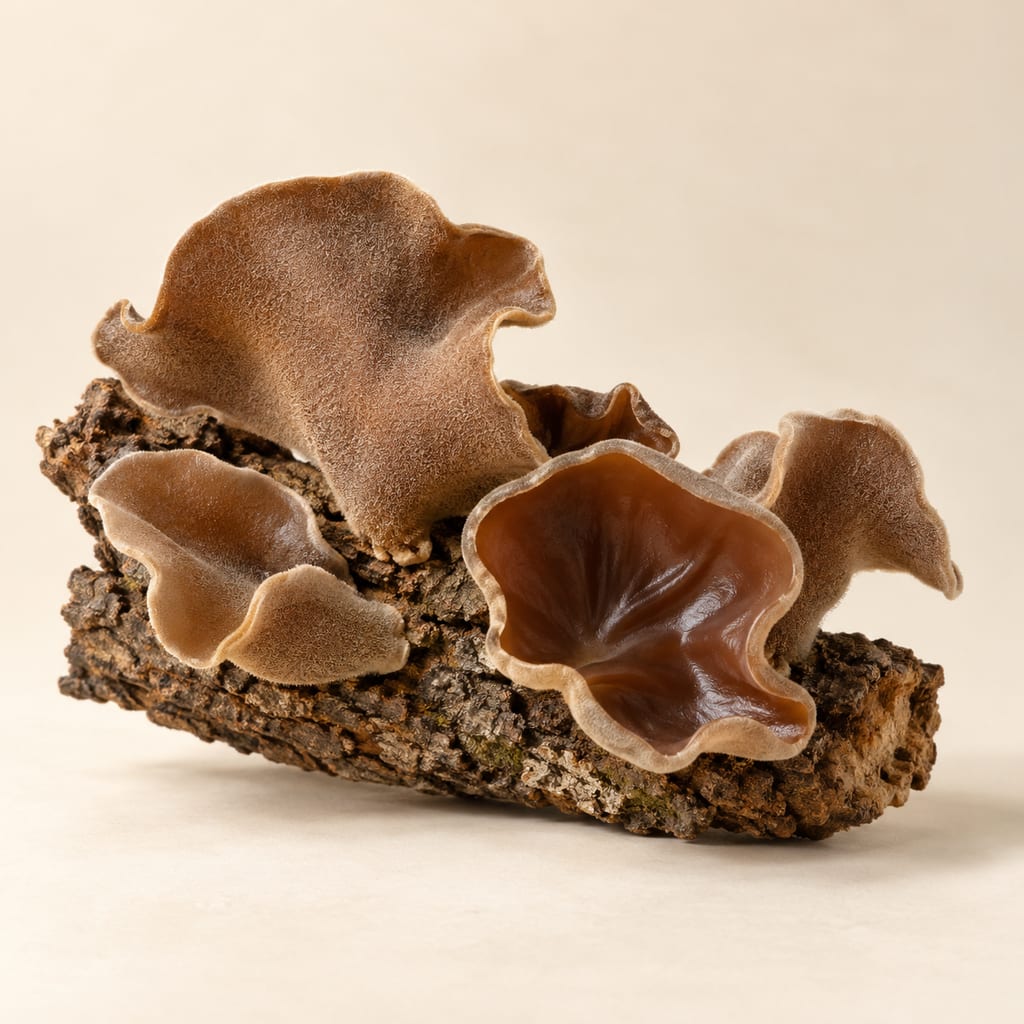
Auricularia tremellosa is a wood ear fungus of the genus that supplies most dried wood ear sold in China; its own food record is thin, and the culinary practice described here comes from the closely related wood ear species.

Ayran is Turkey’s cold, savoury yogurt drink: plain yogurt is loosened with water and lightly salted, then whisked smooth or aerated into a soft cap of foam.
A thin stone griddle used over an open hearth. Norwegian archaeology documents the established tradition from the early Middle Ages; a Viking-period origin is only a cautious suggestion linked to Shetland.

Crushed or milled barley cooked in water until the starch softens and the mixture thickens, the plainest way a northern household turned stored grain into a meal, here with apple and hazelnut.
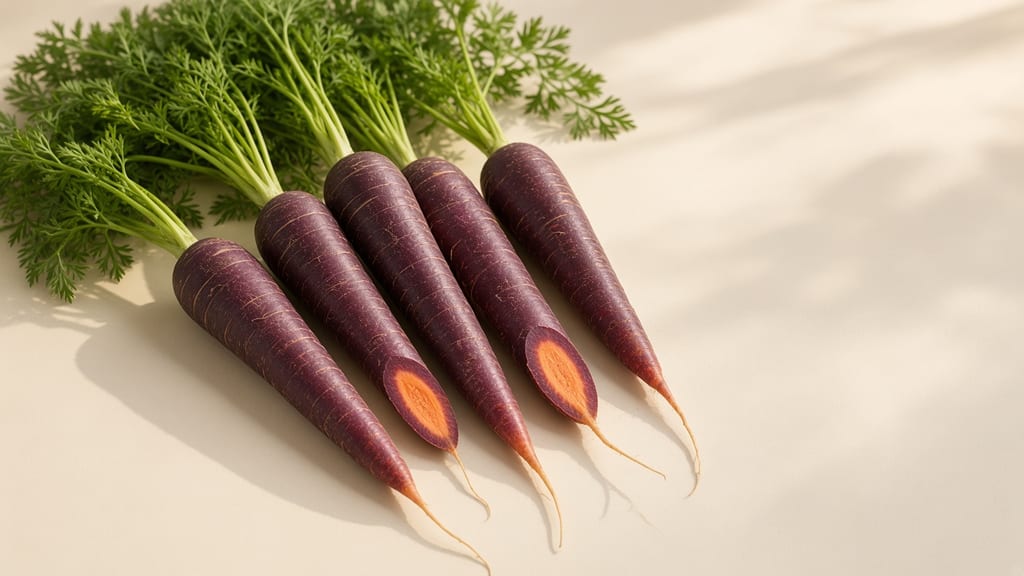
Black carrot is the anthocyanin-pigmented Eastern carrot (Daucus carota var. atrorubens), the purple root that preceded orange types and still colours kanji and şalgam.
No community contributions have been published for this entry yet.
Sign in to contribute. Published comments and photos are free to read.
Korea.net; Cultural Heritage AdministrationIdentity · Traditional use · Process
Makgeolli making and sharing to become national intangible cultural heritageDescribes nuruk as a fermentation starter made by germinating fungi on starchy grains in its account of makgeolli.
Describes a cultural practice of cooking rice, mixing it with water and nuruk, fermenting, and sieving; this does not define one starter recipe or establish an origin date.
Cited in: A Korean grain starter, not one species; Use in named preparations
Korea.net, official website of the Republic of KoreaIdentity · Function · Traditional use
Types and Brewing of Traditional LiquorsDescribes nuruk as a fermentation agent cultivated from microorganisms naturally present on grains and says type and application influence beverage taste and aroma.
Places nuruk in the wider Korean traditional-liquor system; it is a general cultural account, not a standardized production specification.
Cited in: A Korean grain starter, not one species; Use in named preparations
Journal of Microbiology and BiotechnologyMicrobiology · Variation · Safety evidence
Analysis of microflora profile in Korean traditional nurukResearchers analyzed 42 samples collected from Korean provinces and found varied bacterial, fungal, yeast and lactic-acid-bacterial communities; only 13 sampled products contained Aspergillus oryzae and Saccharomyces cerevisiae was isolated from 18.
The study reported Bacillus cereus or Cronobacter sakazakii in 13 of the 42 samples. These sample findings neither imply that all nuruk is contaminated nor validate an individual batch as safe.
Cited in: Communities vary among samples; Safety evidence and limits
Academy of Korean Studies, Encyclopedia of Korean CultureIdentity · History
Nuruk (누룩)Several materials, pressed cake and loose-grain forms, regional differences in shape and method.
Goryeo dogyeong as the earliest cited written reference; earlier nuruk is an inference; historical seasonal production and regional differences.
Cited in: A Korean grain starter, not one species; Historical records
Food Science and Preservation / The Korean Society of Food PreservationMicrobiology · Science
Analyses of microbial community and quality characteristics of nuruk2022 study of a wheat-based nuruk batch from Hamyang: fungal and bacterial communities and enzyme activity changed during cultivation.
Cited in: Communities vary among samples
Korean Cultural Center / Ministry of Culture, Sports and TourismCulture · Identity
Makgeolli, a drink associated with Korean lifeOne Busan brewery's traditional nuruk; contrast with ipguk, a more standardized starter category.
Cited in: Traditional nuruk and ipguk
The Korea TimesUse
How to brew Korean rice wine at homeHome rice-wine batch using purchased nuruk.
Cited in: Use in named preparations
Craft Beer & Brewing; recipe by Hana MakgeolliUse
Recipe: Hana Makgeolli DanyangjuMakgeolli batch using purchased nuruk, sometimes with added yeast.
Cited in: Use in named preparations