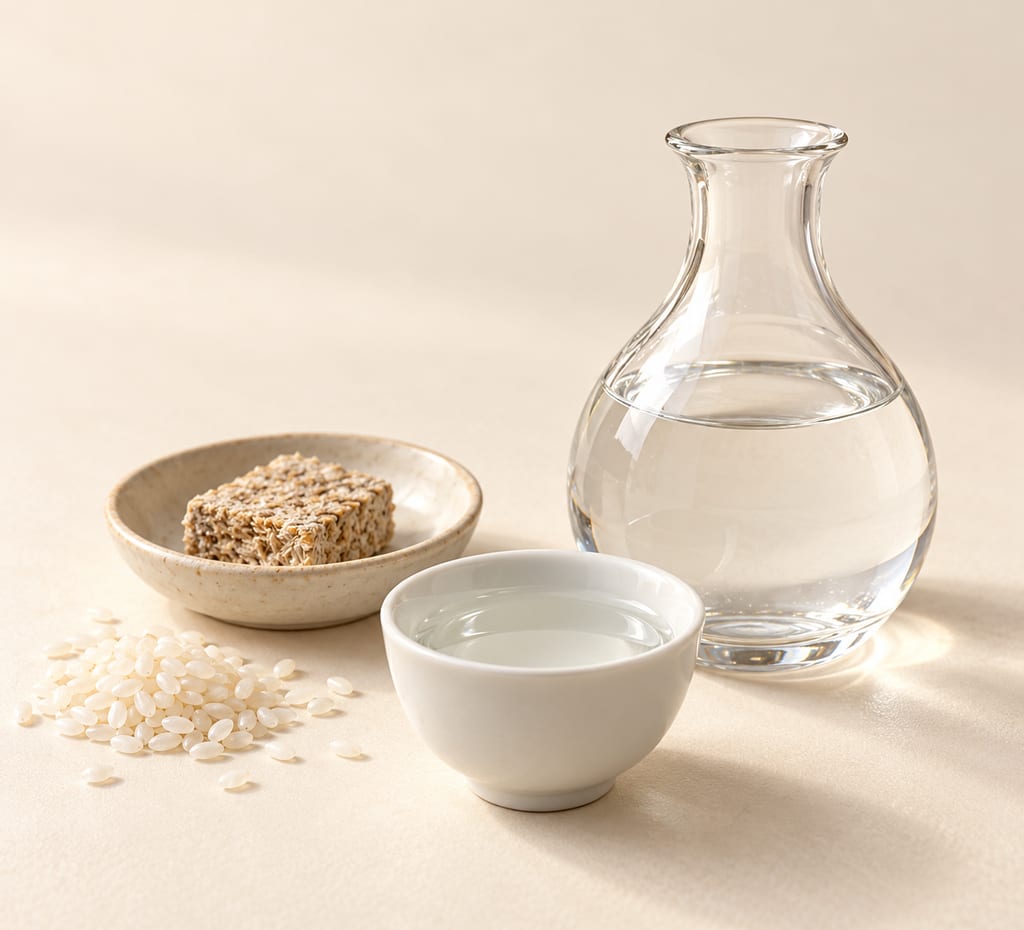
Andong soju
Andong soju is a rice spirit from North Gyeongsang, distilled from steamed rice and wheat nuruk. This method makes the starter before fermenting the rice mash in a jar.
 FermenteaWhere food goes to change
Modern method
Makgeolli · takju · yakju
A Korean grain wine fermented from steamed rice, nuruk and yeast in two mash additions, drawn off clear as yakju or blended cloudy with rice solids and water as makgeolli.
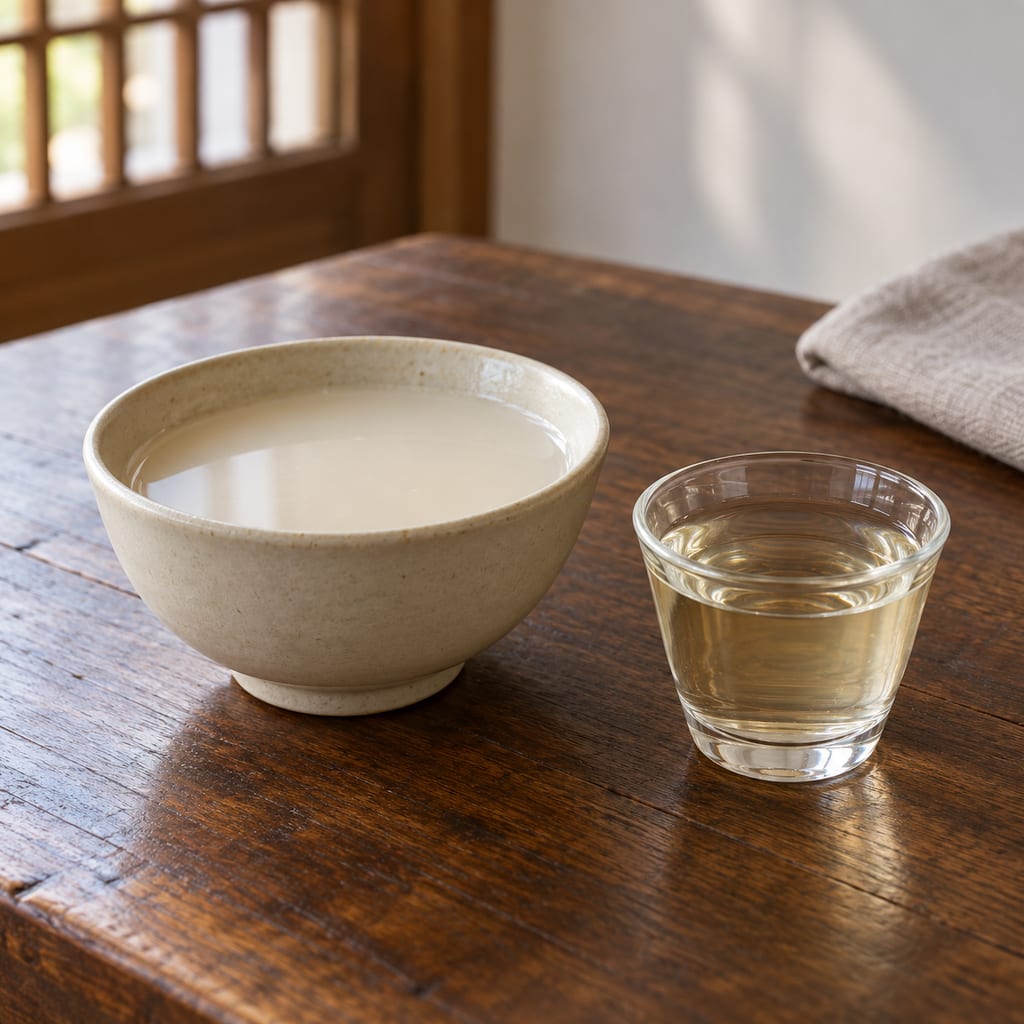
Makgeolli is a traditional Korean cloudy alcoholic drink made from grain, water and a fermentation starter known as nuruk.
Its most familiar appearance is opaque white or pale cream, resulting from suspended grain particles, microorganisms and other material remaining after relatively coarse filtration.
Yakju is a clear or refined Korean grain wine.
The two drinks can emerge from the same fermentation. The clear fraction is separated from the grain-rich mash, while the remaining cloudy liquid and solids can be diluted and strained to produce a makgeolli-style beverage.
This is the central idea of the recipe preserved here.
It uses sticky short-grain rice in two cooking stages, water, nuruk and additional yeast. A mixed rice mash is fermented before the liquid and solids are processed into distinct drinks.
The process does not require distillation.
Its alcohol is produced by fermentation of sugars derived from rice starch.
Rice is generally cultivated Oryza sativa. Short-grain sticky or glutinous rice is an amylopectin-rich form of that species, although the source does not identify a particular cultivar.
Despite the term rice wine, the process differs from grape-wine fermentation. Grapes contain readily fermentable sugars, whereas rice contains starch that must first be broken down by enzymes.
That makes nuruk essential to understanding the drink.
Fermented grain drinks have an extensive history on the Korean Peninsula.
Early written sources refer to alcoholic beverages, though the relationship between individual historical names and modern commercial categories requires interpretation.
The Samguk sagi, compiled during the Goryeo period in the twelfth century, records earlier Korean history and is frequently discussed in connection with traditional brewing.
Goryeo- and Joseon-period writing contains additional references to grain alcohol and brewing practices.
Joseon-era culinary works, including Eumsik dimibang and Gyuhap chongseo, preserve preparations relevant to traditional Korean fermented beverages.
These documents establish a deeper historical tradition. They do not establish that the exact modern formula of 1.5 kg sticky rice, 15 g nuruk and 10 g added yeast was used in an early Korean household.
The present recipe was described in a newspaper account published on 5 May 2013 after a traditional-liquor class associated with Kooksoondang Brewery.
That is its specific documentary provenance.
Traditional Korean rice-wine brewing historically ranged from household production to specialist commercial manufacture.
Different regions developed variations using their preferred grains, water, starter preparations and maturation practices.
Makgeolli acquired a particularly strong association with rural households and agricultural workers.
It was widely consumed as an accessible grain-based drink and has remained a familiar accompaniment to everyday Korean food.
Modern commercial versions may use different starter cultures, sweeteners, filtration processes and stabilisation technologies.
The category therefore includes both traditional-style living beverages and industrially processed products.
Nuruk is a traditional Korean grain-based fermentation starter.
It is not simply a packet of purified amylase, even though older casual recipe descriptions sometimes call it an enzyme.
Nuruk can contain moulds, yeasts, lactic acid bacteria and other microorganisms.
These organisms grow on the starter during its manufacture, producing enzymes and establishing a microbial community.
The composition depends on the grain, production environment, preparation process and particular starter.
Filamentous fungi in traditional starters can include members of Aspergillus and Rhizopus, among others.
Fermenting yeasts can include Saccharomyces species.
Lactic acid bacteria can contribute acidity and additional flavour transformations.
Different nuruk preparations can therefore yield substantially different aromas, fermentation rates and microbial profiles.
A controlled Japanese-style koji starter is not automatically interchangeable with traditional Korean nuruk.
Although both can supply starch-degrading enzymes, they may have different microbial diversity and enzymatic behaviour.
The published rice-wine formulation includes both nuruk and a separately added yeast ingredient.
That distinguishes it from traditional methods relying entirely on the indigenous yeast community within nuruk.
The yeast strain is not identified.
The defining chemistry is simultaneous starch conversion and alcohol production.
Cooked rice contains gelatinised starch.
Heating rice in water disrupts the organised structures of starch granules, making their carbohydrate chains more accessible to enzymes.
Enzymes derived from nuruk can hydrolyse starch into smaller sugars.
Amylases break down starch chains. Other enzymes can release glucose from intermediate carbohydrates.
Yeast then consumes available fermentable sugar and produces ethanol and carbon dioxide.
These processes can occur concurrently.
As enzymes release new sugar from starch, yeast converts some of it into alcohol.
That is fundamentally different from simply dissolving sugar into water and adding yeast.
The ratio of sugar production to sugar consumption affects the sweetness remaining in the mash.
Temperature, enzyme activity, microbial composition and grain preparation all influence the outcome.
Lactic acid bacteria may produce organic acids that shape the flavour.
The mash can develop sweet, sour, alcoholic and aromatic characteristics at the same time.
Proteolytic enzymes may also release amino acids and peptides from rice proteins, contributing nutrients and sensory compounds.
The physical separation of rice solids becomes increasingly visible as fermentation progresses.
However, stratification does not automatically demonstrate that every fermentable sugar has been consumed or that the beverage is microbiologically stable.
The documented recipe uses:
Ingredient — Quantity — Purpose
Short-grain sticky rice — 1.5 kg — Principal starch substrate
Water — 2 L — Mash and fermentation medium
Nuruk — 15 g — Saccharifying enzymes and mixed microorganisms
Yeast — 10 g — Additional alcoholic fermentation activity
The rice is divided into two stages.
The first uses 500 g; the second uses the remaining 1 kg.
The water is also divided into two additions of one litre each.
These quantities belong to the specific documented brewing class.
The rice must be cooked before fermentation to make its starch accessible.
The recipe uses two different cooked rice preparations. The initial rice is ground before steaming into a rice-cake-like material, while the later rice is steamed more conventionally.
This staged approach helps establish an active ferment before the larger rice addition.
The original article also says the batch may produce approximately 1.5 L clear yakju and 1.5 L makgeolli.
That is the article's reported yield, not an independently measured product mass balance.
It contains an internal inconsistency: its ingredient list specifies 1.5 kg rice, while a later cost discussion refers to two kilograms.
The primary ingredient list and detailed staged instructions agree on 1.5 kg, so that is the quantity retained here.
The inconsistency should remain documented instead of being resolved by silently increasing the rice.
A steamer lined with clean cotton cloth is required for both rice additions.
A grain grinder is used for the first-stage rice.
A five-litre fermentation jar is specified, together with a cover that permits fermentation gases to escape.
Cotton cloth and a sieve are used for final separation.
An accurate thermometer is useful because fermentation is maintained at 25–27°C.
The exact vessel material, sanitation process and jar-headspace specification are not provided.
The source warns against fastening the cover too tightly.
That is important because active fermentation generates carbon dioxide.
The equipment must be clean, and its food-contact surfaces should be sanitised appropriately.
1\. Wash the first rice portion. Measure 500 g sticky rice and wash thoroughly.
2\. Soak the rice. Leave it in water for two hours.
3\. Drain. Allow it to drain for approximately 30 minutes.
4\. Grind the rice. Reduce the soaked rice to a meal.
5\. Steam the meal. Place it in a cloth-lined steamer and steam for one hour. The result is a steamed rice cake similar in form to baekseolgi (백설기).
6\. Cool the cake. Let the cooked material cool before introducing the fermenting organisms. The source does not specify an exact post-steaming cooling temperature.
7\. Break into pieces. Tear the cooled rice cake into small pieces and transfer them into the fermentation jar.
8\. Add water. Pour in one litre water and mix the rice cake into the liquid.
9\. Add starter and yeast. Introduce 15 g nuruk and 10 g yeast, mixing thoroughly.
10\. Cover and begin fermentation. Use a cloth or loosely secured plastic covering that permits gas to escape.
11\. Maintain the specified conditions. Hold the jar at 25–27°C away from direct sunlight.
The published method also mentions using commercially prepared baekseolgi as a shortcut.
Such purchased rice cake may contain sugar or salt, which can change the composition of the ferment.
That shortcut is therefore not chemically identical to the documented plain-rice preparation.
The next stage introduces the remaining rice.
This form is called godubap (고두밥), a relatively firm steamed rice preparation used in Korean brewing.
1\. Measure the remaining 1 kg rice.
2\. Wash it thoroughly.
3\. Soak for two hours.
4\. Drain for approximately 30 minutes.
5\. Steam for one hour using a cloth-lined steamer.
6\. Allow the cooked rice to cool.
7\. Add it to the fermenting jar.
8\. Pour in the remaining one litre water and stir thoroughly.
The source allows a cooked-rice shortcut, but does not establish that different commercial rice products have identical moisture contents.
The use of freshly steamed rice gives better control over what enters the mash.
After the second rice addition, the mash is fermented for seven additional days.
The source specifies 25–27°C throughout this period and stirring once daily.
Fermentation develops gas and recognisable rice-wine aroma.
The mash gradually becomes less homogeneous.
A clearer yellowish liquid may gather toward the upper part of the vessel, while rice-rich material settles beneath.
The newspaper uses this separation as a cue to strain the mash, but it does not verify completion or safety.
It does not report a verified specific gravity, residual sugar, pH or microbiological endpoint for the batch.
Once the fermentation stage is complete, the two styles are separated.
For yakju: Collect the clearer liquid and filter it through cotton cloth. This produces the refined fraction.
For makgeolli: Use the cloudy remaining fraction, some of the rice paste and additional water, then strain through a sieve.
The amount of additional water for the makgeolli is not stated.
There is therefore no exact, source-verified dilution ratio.
One must not invent a water addition merely to reproduce a familiar commercial alcohol percentage.
The article presents yakju as commonly around 15–16% ABV and makgeolli as commonly around 6%, but those are general style descriptions, not analytical measurements of this particular batch.
The two outcomes differ not because one was independently fermented from scratch, but because they are separated and finished differently.
The terminology deserves careful treatment.
Takju literally identifies a cloudy or turbid alcoholic beverage.
Makgeolli is the best-known contemporary example. Its suspended solids contribute characteristic opacity and mouthfeel.
Cheongju refers to clear or refined grain alcohol.
Yakju is another important Korean category of clear fermented liquor.
The terms yakju and cheongju overlap in ordinary discussion but can be distinguished by commercial, legal or historical contexts.
The particular brewing-class article uses yakju for its clear fraction.
This recipe should retain that name rather than automatically renaming every clear rice wine cheongju.
The cloudy and clear styles can therefore be explained on one page without creating duplicate fermentation recipes.
Korean rice wine can be produced from rice, wheat or mixtures of grains.
Different nuruk preparations yield different enzyme profiles and fermentation behaviour.
The rice-cooking technique also matters. Steamed rice, rice cakes and other grain treatments alter starch availability and water absorption.
Some traditional brewing methods involve multiple additions of rice, starter or water over longer periods.
Commercial makgeolli may contain added sweeteners, including non-fermentable sweeteners, to produce a more persistent impression of sweetness.
Flavoured modern products use ingredients such as yuja, omija and other fruit materials.
Such additions change aroma, acidity and potentially fermentation behaviour.
Makgeolli from different Korean regions may be associated with particular brewing practices, local grains and water.
Those variants should not be treated as identical to the Kooksoondang classroom formula.
Makgeolli is generally cloudy, mildly acidic and often lightly sparkling.
Its flavour can combine grain sweetness, lactic acidity, yeast-derived aromas and a soft creamy mouthfeel.
Suspended rice material contributes body and appearance.
Yakju is clearer and may express more delicate grain and fermentation aromas without the same level of suspended solids.
Makgeolli is commonly served chilled in bowls or cups.
It has a particularly strong culinary association with Korean pancakes, including pajeon (파전), made with spring onions, and haemul pajeon (해물파전), containing seafood.
Another familiar pairing is bindaetteok (빈대떡), a savoury mung-bean pancake.
The combination of makgeolli and pancakes is especially associated with rainy days in contemporary Korean food culture.
Yakju can accompany a broad range of Korean dishes and may be served in smaller clear drinking vessels.
There is no compulsory pairing for either style.
During active fermentation, gas production and rice-wine aroma are expected.
The mash may change from a dense rice suspension toward a mixture of clearer liquid and settled solids.
The cloudy fraction remains intentionally turbid.
This should not be confused with accidental contamination.
Nevertheless, abnormal coloured mould growth, putrid odours or other obvious contamination are reasons to reject the batch.
Stirring and visual separation do not establish the absence of pathogens.
The absence of bubbling is not a calibrated measurement of residual sugar or product stability.
Because the source uses a mixed starter, microbial outcomes can vary between batches.
A major difficulty is that cooked rice is a nutrient-rich substrate. Poorly controlled preparation, cooling, inoculation or storage can create food-safety concerns.
The brewing sequence therefore needs careful hygiene and control.
Both yakju and makgeolli are alcoholic beverages.
The source does not measure the ABV of this exact batch.
The process also involves several days of warm holding, including repeated opening and stirring.
Clean equipment and good sanitation help reduce contamination risk but do not amount to a validated finished-product process.
The source does not specify a finished pH criterion, microbial testing schedule or validated refrigerated shelf life.
Makgeolli can remain biologically active after filtration if yeast and bacteria are present.
That can change alcohol, acidity and carbonation during storage.
Commercial stabilisation methods must not be assumed to apply to an unstabilised home-brewed batch.
Do not treat the product as shelf-stable or use unsuitable sealed bottles without a validated carbonation and storage method.
Editorial conclusion: This is one clearly documented two-stage rice fermentation yielding two different product styles. Preserve the common mash and explain the clear-versus-cloudy finish, while maintaining the original article's unresolved dilution and yield limitations.
The Korea Times reports a contemporary home method taught in a Korean traditional-liquor class. It describes yakju and makgeolli as styles made from one mash; this entry does not claim the formula is an ancient household recipe.
Yield 1.5 L each of yakju and makgeolli, as reported by source · Scaling: source batch only
Yeast and the nuruk culture ferment cooked rice; the article describes alcoholic yakju and makgeolli products but gives no alcohol measurement for this exact batch.
Hazard sourceCooked rice and a mixed starter are held through a multiday process; the recipe report is not a validated safety process.
Hazard sourceKeep the cover loose enough for fermentation gas to escape and clean brewing equipment carefully. The source provides no pH endpoint, measured batch ABV or refrigerator shelf life.
Control sourceThis is an alcoholic rice-wine process. The source gives typical alcohol estimates for each product style, not a test of this batch.
The article says home-batch consistency is not guaranteed; elapsed time and visible separation are not validated safety endpoints.
The recipe was taught at a Korean brewery's traditional-liquor class; the article does not identify a narrower preparation locality.
Andong soju is a rice spirit from North Gyeongsang, distilled from steamed rice and wheat nuruk. This method makes the starter before fermenting the rice mash in a jar.
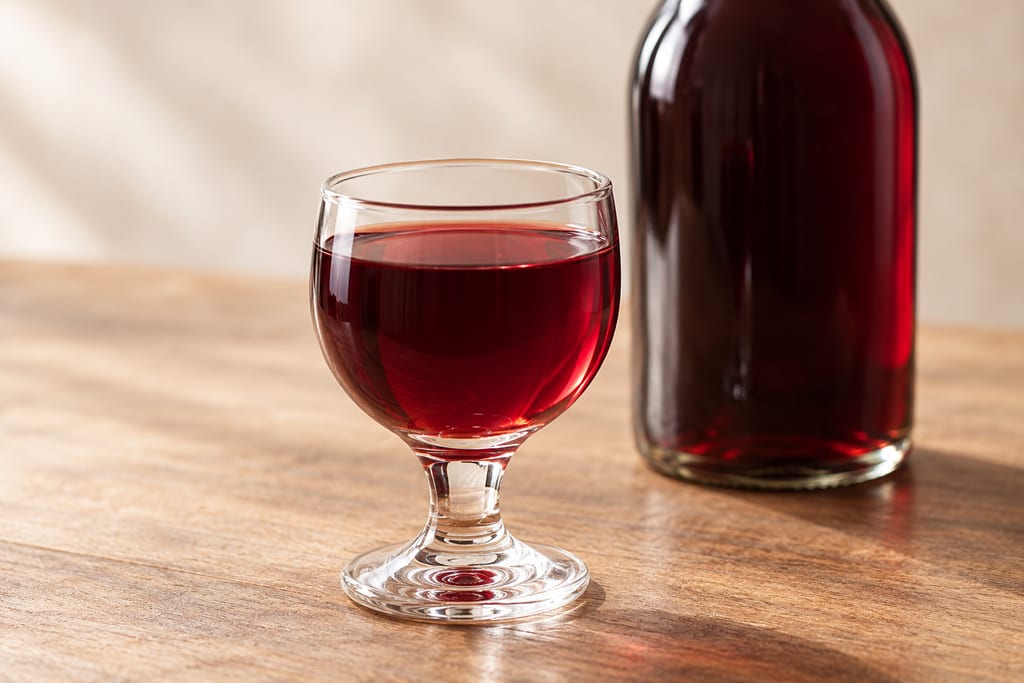
Korean black raspberry wine: crushed bokbunja berries with their seeds, sweetened to 20 °Brix, fermented 15 days at 25 °C with wine yeast, filtered and matured three months.
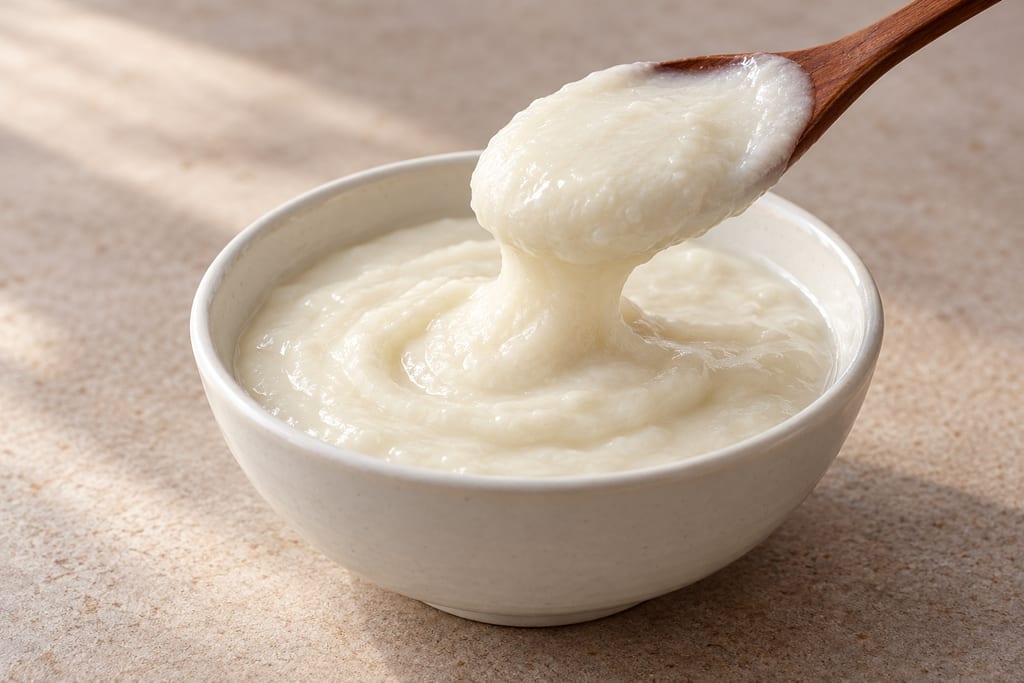
Thick, sweet Korean rice wine made with a rice-based starter called ihwagok and almost no added water, fermented into a paste that is eaten with a spoon or thinned with cold water.
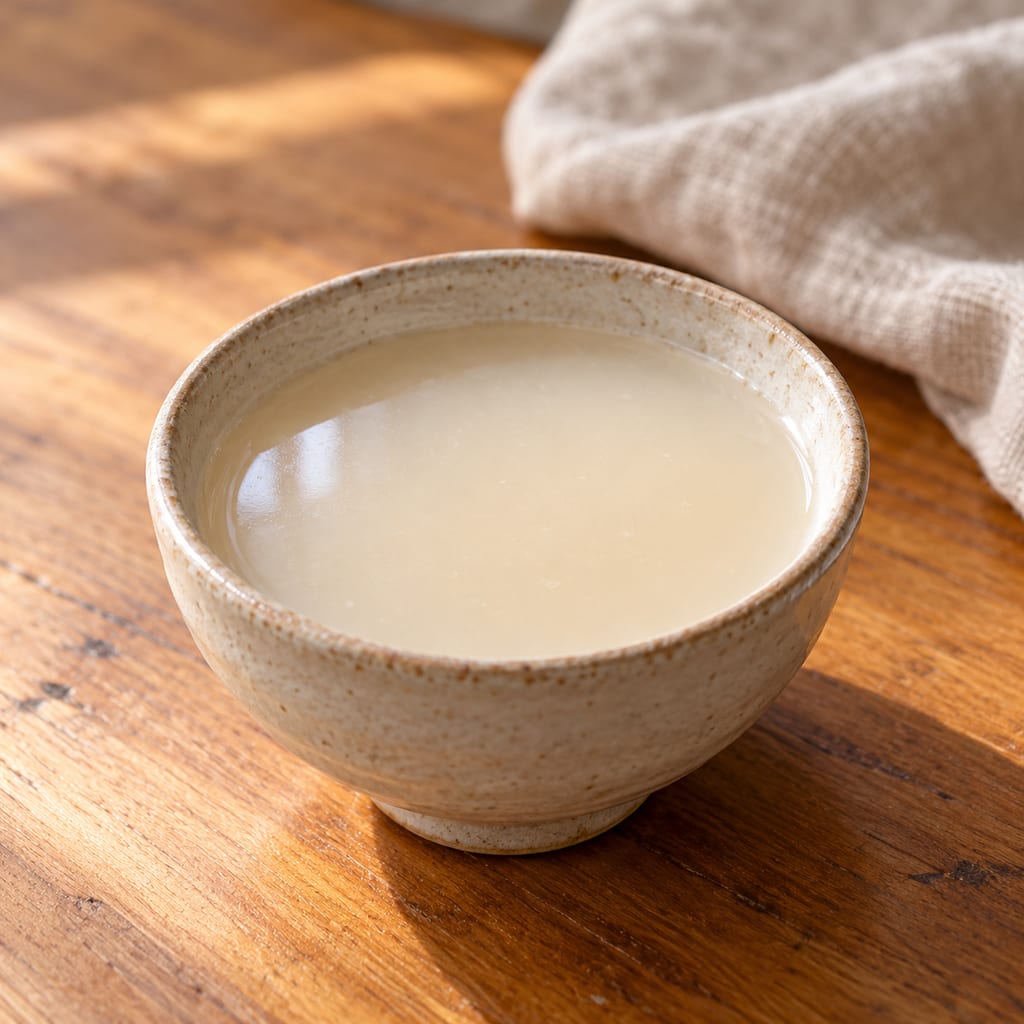
An alcoholic Korean rice drink of steamed glutinous rice and nuruk, mashed in a single stage and fermented for 7 to 14 days.
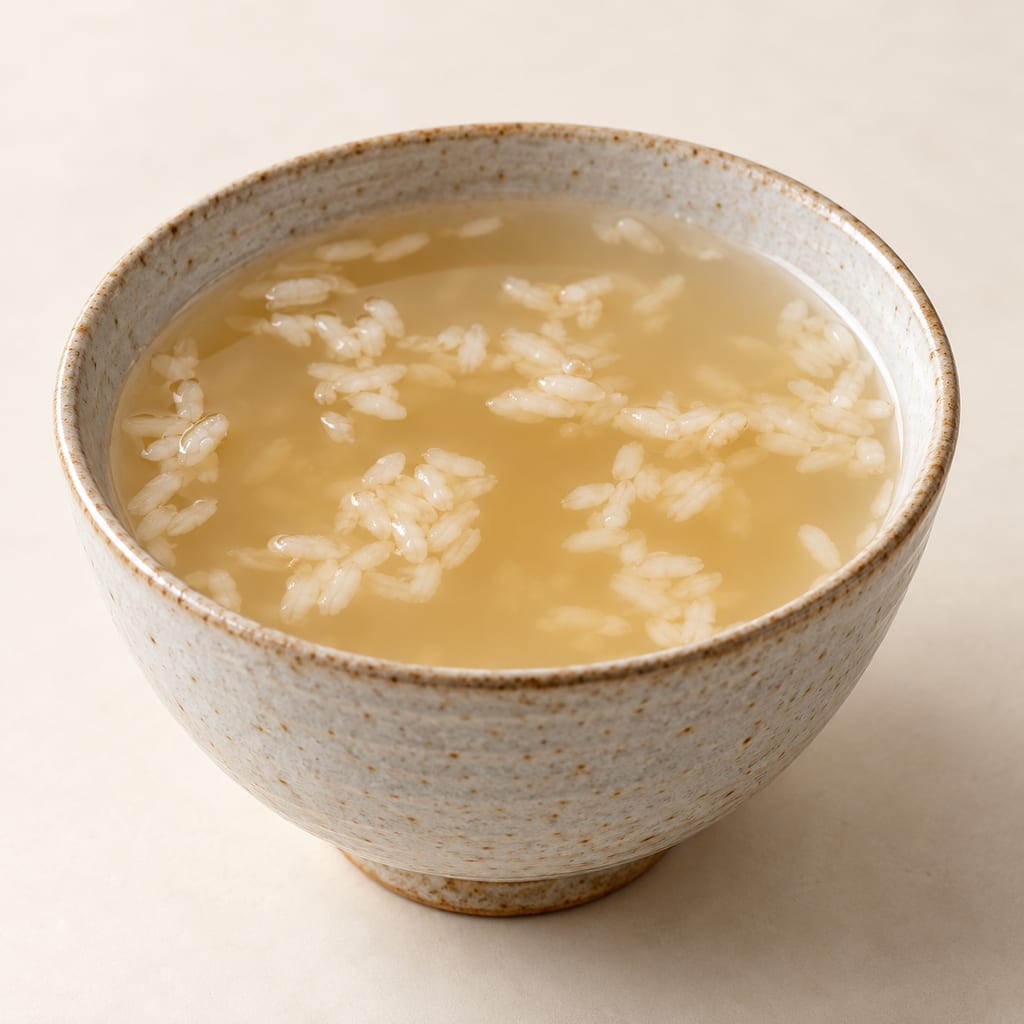
A Korean sweet rice drink made by holding cooked rice in water drawn off barley malt until the grains float, then boiling and chilling it.
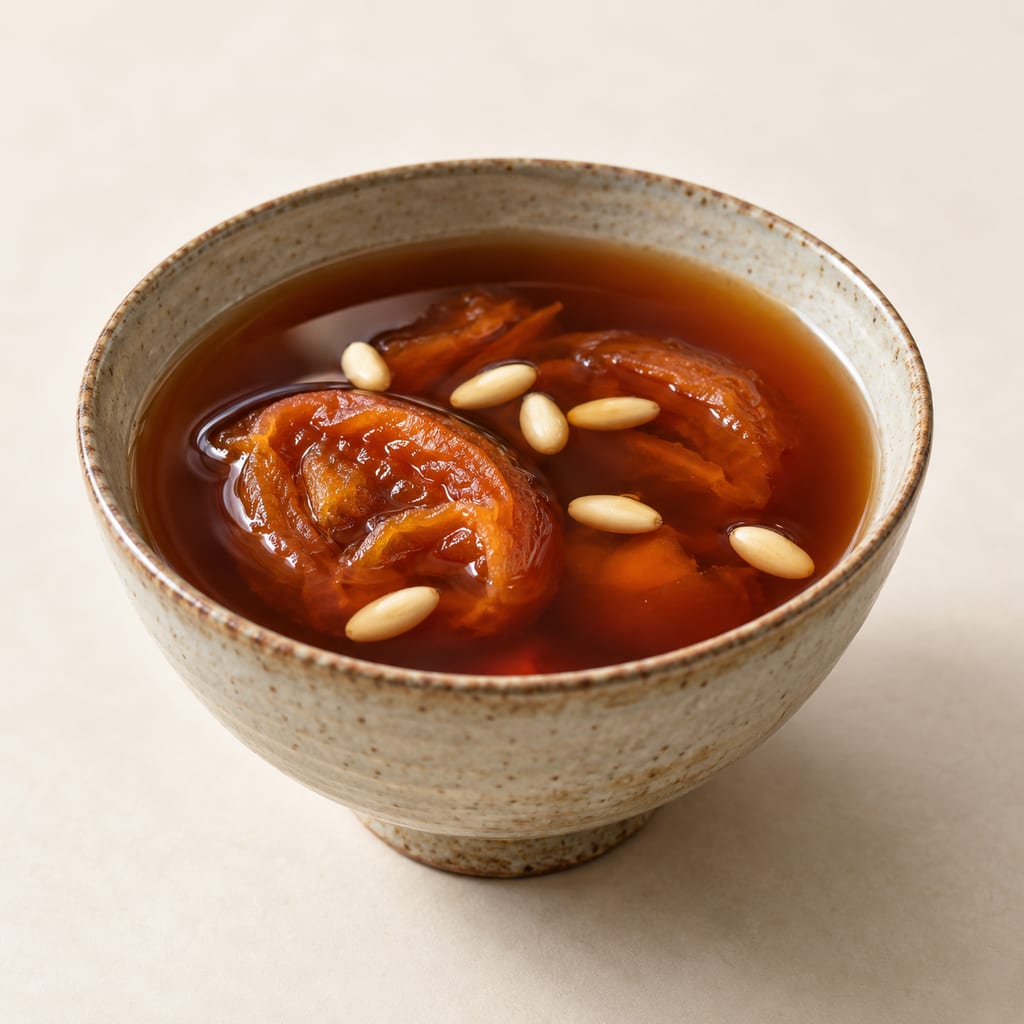
A chilled Korean dessert punch of cinnamon and ginger boiled in water, sweetened and poured over dried persimmons.
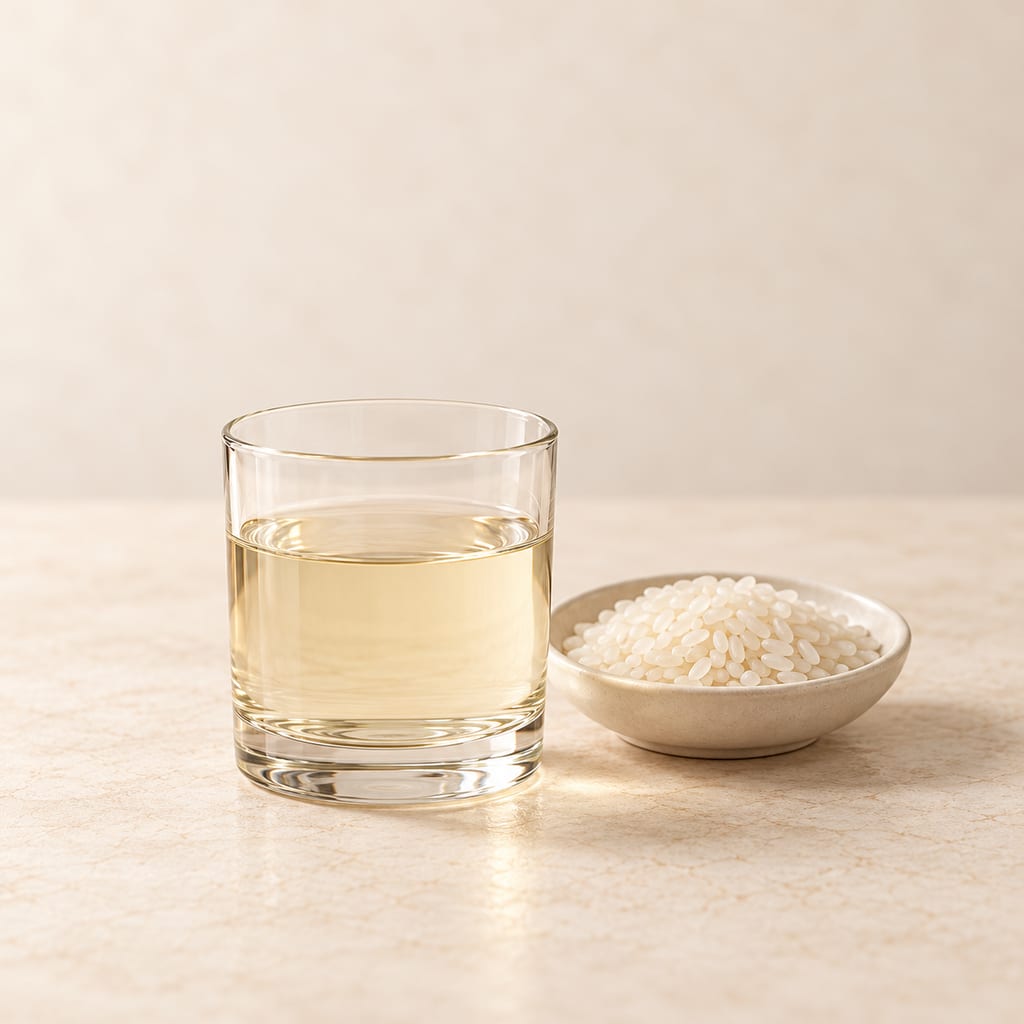
A 2021 study's white-rice yakju: steamed Hanareum rice ferments with rice-flour nuruk and takju yeast for 11 days, then the clear upper liquid is filtered and centrifuged.
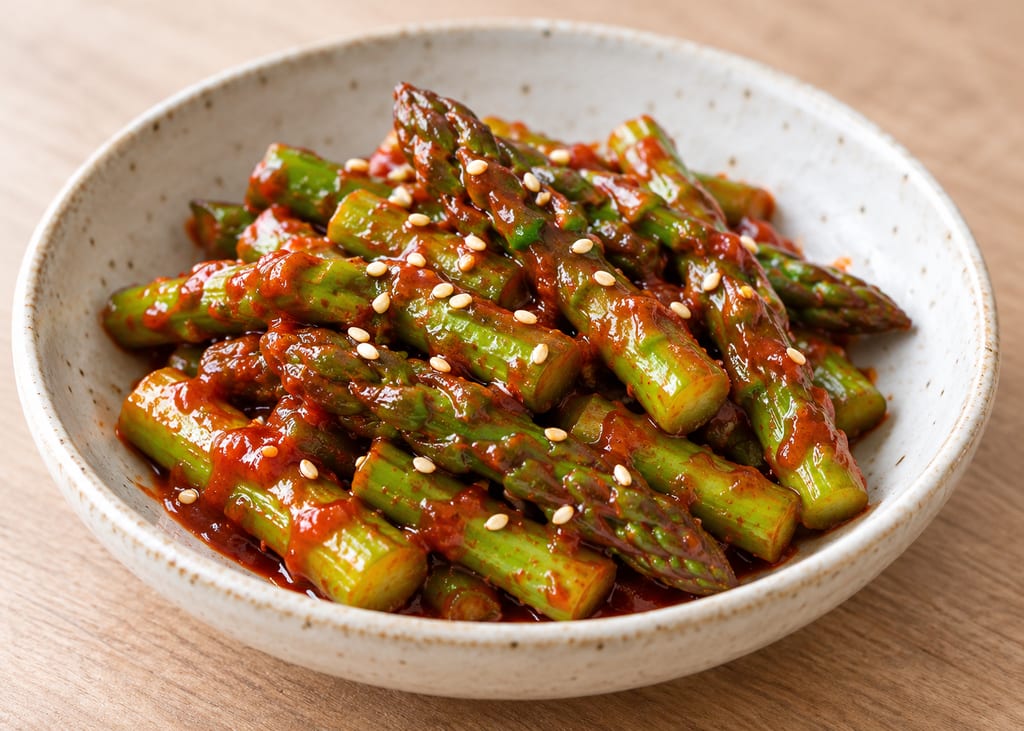
A Korean banchan of blanched asparagus dressed with a sweet-sour cho-gochujang sauce; Hyosun's version cools the spears in ice water before tossing.
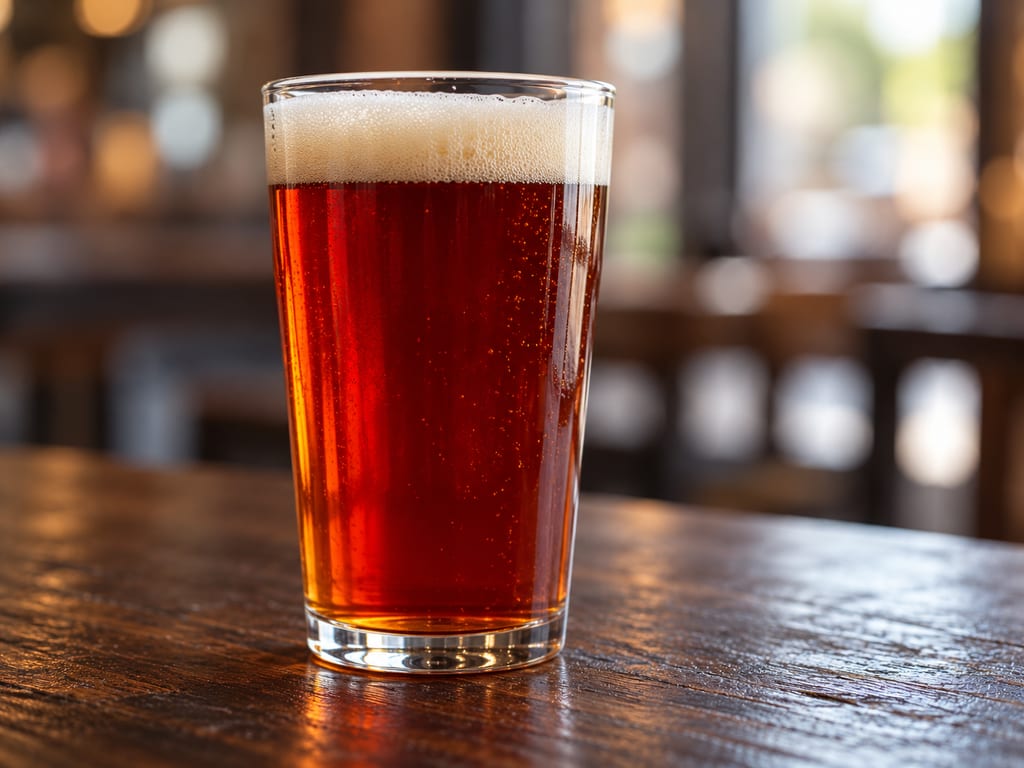
A deep amber-red American ale brewed from pale, Munich, CaraVienne and chocolate malts, bittered with Columbus hops and finished with Amarillo.

A source-specific modern extract adaptation of Düsseldorf Altbier, with specialty malts, two hop additions and an ale yeast. It is distinct from a brewery's commercial Altbier process and from Kölsch.
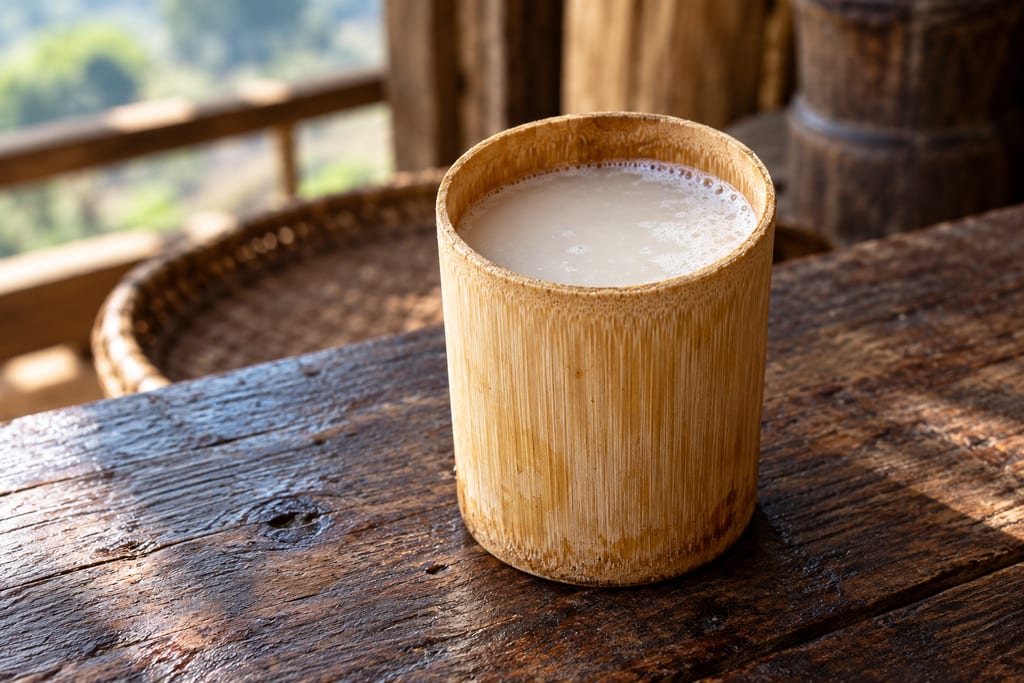
Angami rice beer from Nagaland. A surveyed method mixed cooked rice with piazu, fermented it for about four days in summer or a week in winter, then added water and filtered it. The starter ratio leaves the rice-weight basis unclear.
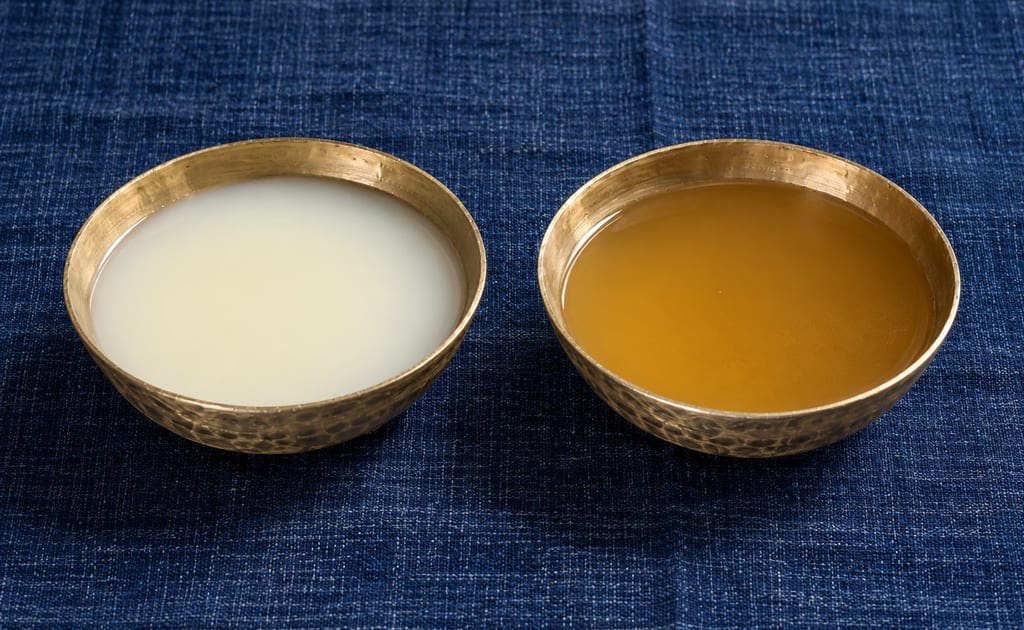
Apong names Mising rice beverages in Assam, including pale Nogin and ash-associated Po:ro. Sources describe distinct preparations and do not establish one unified household recipe or validated safety endpoint.
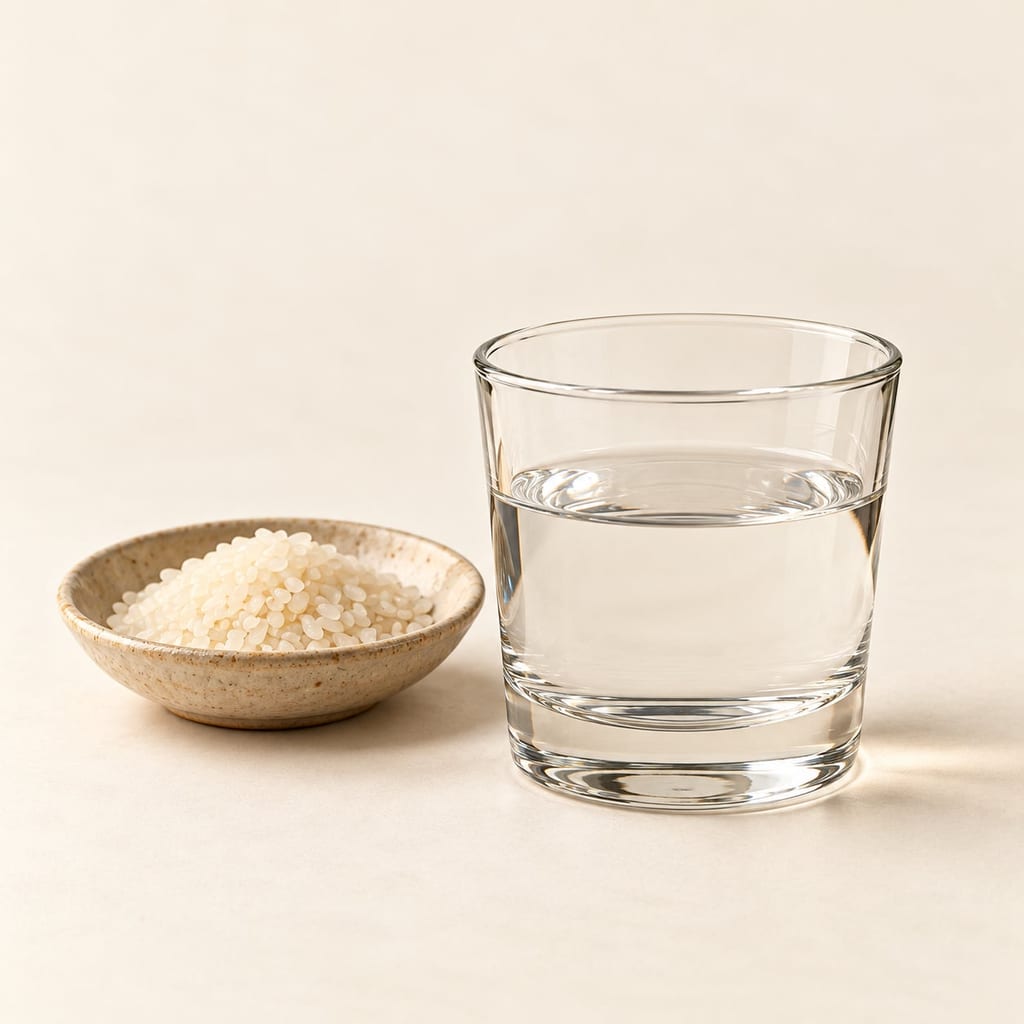
An Okinawan rice spirit made by turning all the rice into black koji, fermenting it with water and yeast, then pot-distilling and maturing the spirit.
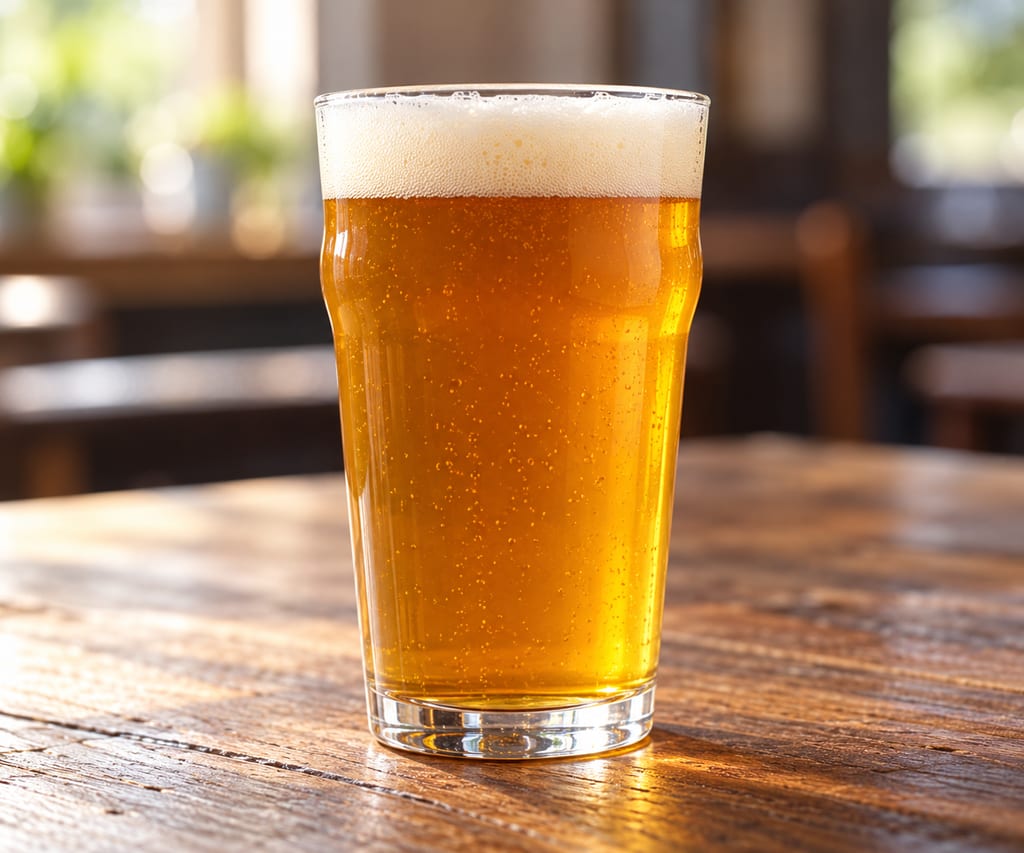
This is a process overview, not a complete batch recipe: key quantities, yield and packaging directions are absent. The AHA tutorial uses Hop Hammer Imperial IPA as an example; this page is not that full formulation.
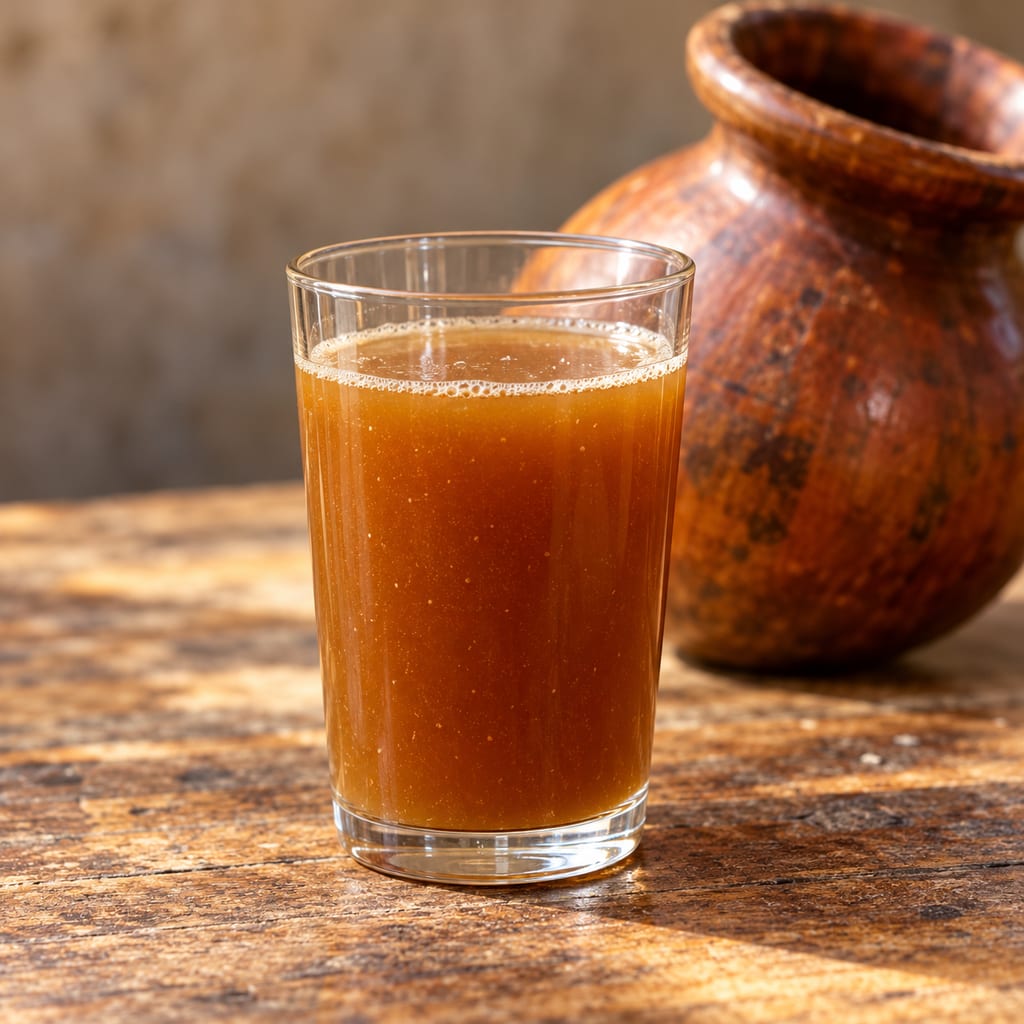
A darker Ethiopian maize tella, brewed from maize baked into a hot, dry kita pancake and then fermented in three stages with barley malt, gesho and water.
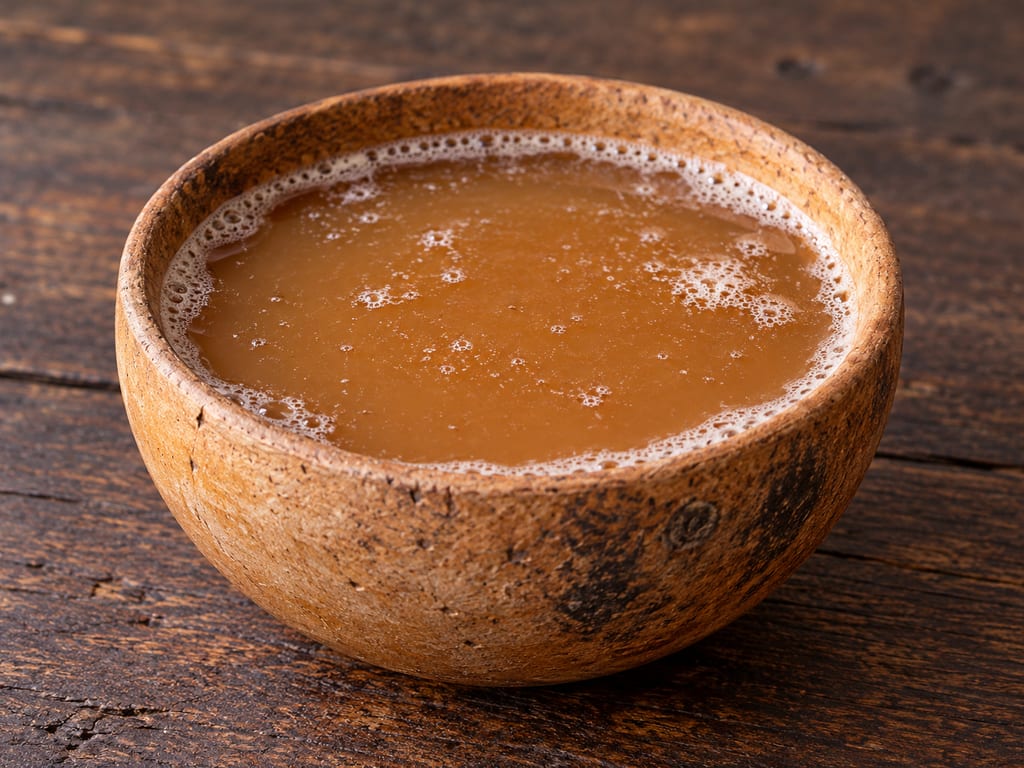
A Burkina Faso sorghum beer brewed from malted grain, soured by a spontaneous lactic stage and then fermented with a traditional yeast leaven.
No community contributions have been published for this entry yet.
Sign in to contribute. Published comments and photos are free to read.
The Korea TimesInspiration · Process · History
How to brew Korean rice wine at homeReporter learned the recipe at a Kooksoondang Brewery Korean traditional-liquor class
1.5 kg sticky rice, 2 L water, 15 g nuruk, 10 g yeast; two staged rice additions; ferment at 25–27°C for seven days after day one
One mash can be strained into clear yakju or cloudy makgeolli; source estimates 1.5 L of each and says household consistency is not guaranteed
Cited in: What it is; Ingredients; Equipment; First-day preparation: rice-cake starter mash; Second-day preparation: hard-cooked rice addition; Fermentation and separation; Recognising progress and problems; Safety and storage
Clemson Cooperative ExtensionSafety
Cleaning and Sanitation for the HomebrewerClean brewing equipment to reduce contamination during home fermentation
Cited in: Equipment; Safety and storage
Korea Tourism OrganizationInspiration
Makgeolli: The People's Brew with Unique Regional CharmsHistorical and regional context
Cited in: Historical background; Regional and modern variations; Flavour and serving
Korea.netInspiration
Types and Brewing of Traditional LiquorsDistinctions among makgeolli, yakju and cheongju
Cited in: What it is; What nuruk actually is; Makgeolli, takju, yakju and cheongju
Korean Ministry of Culture, Sports and TourismInspiration
The Rich Diversity of Korean SpiritsCultural background
Cited in: Historical background; Regional and modern variations
Food Research International, 2023Inspiration
Effects of Saccharification Agents on the Microbial and Metabolic Profiles of Korean Rice WineNuruk microbiology
Cited in: What nuruk actually is; Simultaneous saccharification and fermentation; Recognising progress and problems
Korea.netInspiration
Pairing Korean Food with Booze: MakgeolliTraditional food pairings
Cited in: Flavour and serving