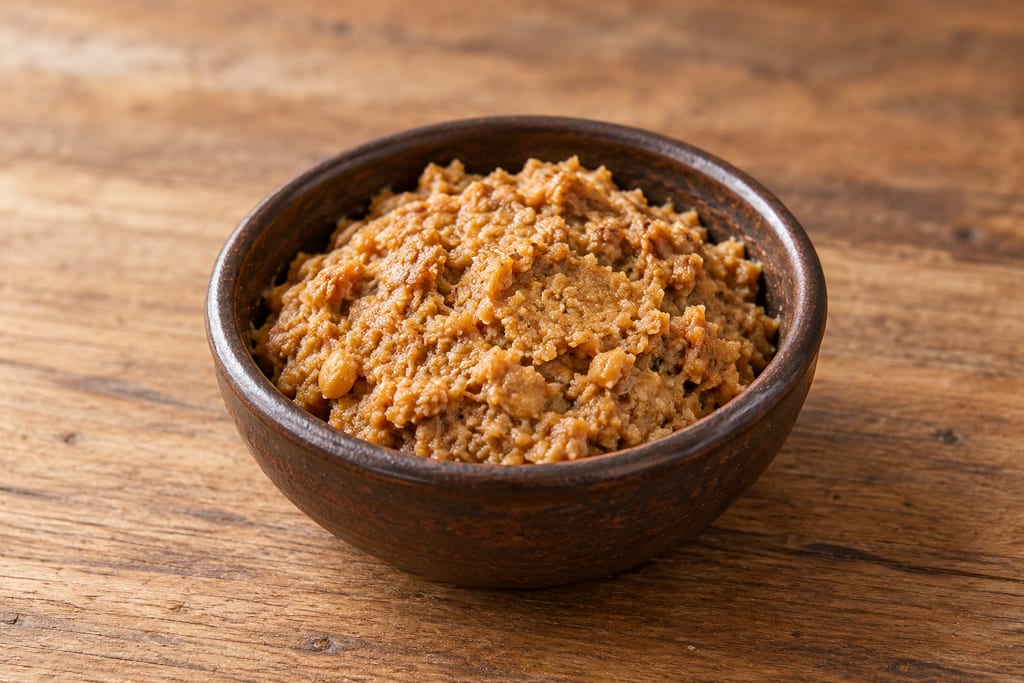
Doenjang
Doenjang (된장) is a Korean fermented soybean paste made by brining meju, separating ganjang, then mashing and aging the solids. This recipe follows one documented Sunchang processing study.
 FermenteaWhere food goes to change
쌈장 (ssamjang) · Ssamjang wrapping sauce · Ssamjang
Doenjang and gochujang stirred together with sesame oil and seeds, a little honey, water, raw garlic and spring onion: a thick, savoury sauce for lettuce wraps with rice.
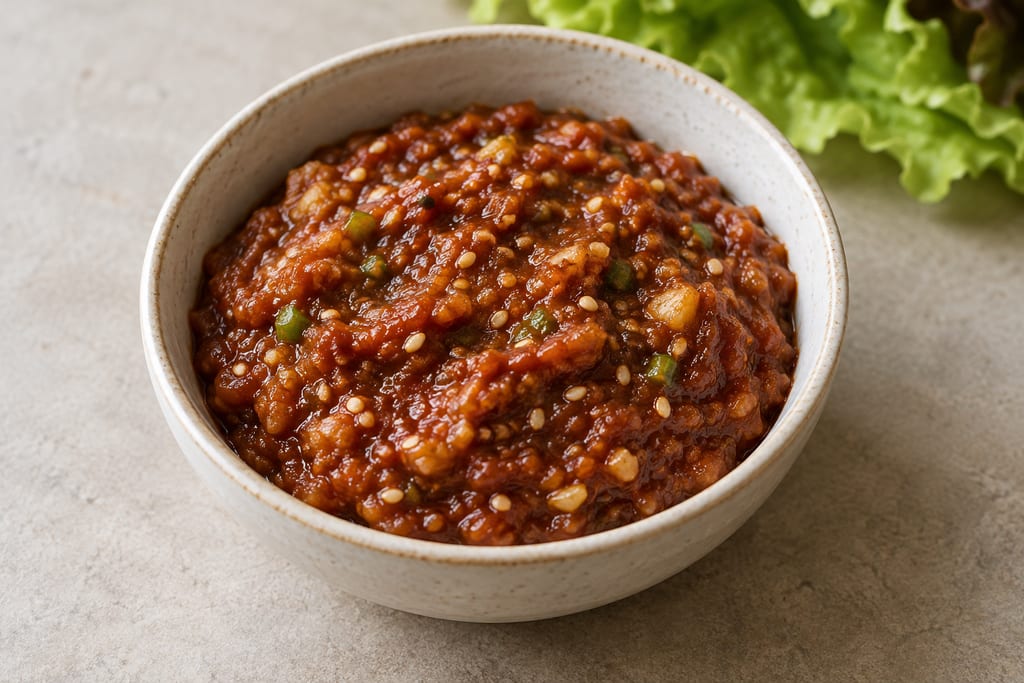
Ssamjang is the thick, savoury sauce for lettuce wraps: a little goes on the rice inside the leaf. It is a mixed sauce rather than a fermented one, made by stirring two fermented Korean pastes, doenjang (soybean paste) and gochujang (red chilli paste), together with sesame, a little sweetness and raw garlic and spring onion. Both belong to jang, the foundational fermented sauces and pastes of Korea, with ganjang, soy sauce, as the third. In 2024 UNESCO inscribed the knowledge, beliefs and practices of jang-making on its Representative List of the Intangible Cultural Heritage of Humanity. Its record describes the whole communal cycle of making, storing and eating jang, passed down within families, and notes that the sauces vary from one household to the next. Jang is a practice, not one universal recipe.
That variety is why this formula is written to be tasted and adjusted. Maangchi's ssamjang explicitly lets the ratio and the sweetness vary, and two jars of paste from different makers can differ markedly in salt and sweetness. The recipe uses bought pastes. Doenjang leads at 60 g, twice the 30 g of gochujang: the soybean paste sets the savoury, salty base, and the chilli paste adds heat, colour and some sweetness of its own. If your gochujang is already sweet, cut the 15 g honey or rice syrup. If your doenjang is exceptionally salty, add water a little at a time.
The useful distinction in Korean condiments is between making a fermented base and mixing a sauce from it. Ssamjang is mixed. So are chogochujang, gochujang sharpened with vinegar and sugar into a sour-sweet dip for seafood and vegetables; ganjang-based dipping sauces, soy seasoned with vinegar, chilli, sesame or aromatics, which are not the same thing as Korean soup soy sauce; and gyeoja sauces, the sweet-sour mustard dressings covered with the mustard recipes. Making doenjang or gochujang at home is a separate project that needs control of substrate, culture, salt, temperature and handling, and neither saltiness nor a pleasant smell is a safety test for it.
The rest of the formula builds aroma and texture. Water, 15 g, loosens the two pastes into something spreadable. Toasted sesame oil (10 g) and toasted sesame seeds (5 g) add a roasted note and a little crunch. Grated garlic (5 g) and finely chopped spring onion (10 g) go in raw, for sharpness. Taste the finished sauce the way it will be eaten, with rice in a lettuce leaf. A spoonful on its own is far stronger than the mouthful it seasons and will mislead you.
Those raw aromatics change how the sauce should be kept. An unopened jar of fermented paste comes with its maker's storage instructions; a mix of pastes, water, honey and fresh garlic and onion is a new food and inherits none of them. For a longer-lasting arrangement, keep the bought pastes in their own containers and stir fresh onion and garlic only into the portion for today's meal. That keeps each ingredient under its own label; it does not make the mixed sauce keep. The formula is untested: no test kitchen, no tasting against a Korean household ssamjang, no keeping trials. Keep the mixed sauce at 4°C or colder where practical and use it within 48 hours, a convention borrowed from leftovers guidance and never a measured shelf life, or sooner if a paste's own after-opening instruction is shorter. It contains soy and sesame; check the pastes' labels for wheat.
Household recipes for ssamjang differ in proportion and seasoning, and none of them is a standard. Maangchi's four-serving batch uses a quarter cup of doenjang to one tablespoon of gochujang, with one green onion, one garlic clove, a quarter cup of chopped onion, two teaspoons each of honey, sesame seeds and toasted sesame oil. Beyond Kimchee gives a separate six-serving mixture that adds mirim and garlic in its own proportions. Both are mixed in a bowl and served with rice, leafy wraps, vegetables or barbecue. They differ in sweetness and in what goes in with the pastes, and neither establishes a regional master recipe. The 150 g formula on this page is a third batch, not an average of those two.
None of these recipes describes a new fermentation of the finished mixture, and the sources do not identify the microbes in the particular doenjang and gochujang used. The recipe authors give refrigerated-holding advice for their own batches; no validation study of ssamjang storage was found.
The sauce belongs to ssam, the Korean practice of wrapping rice, meat or vegetables in a leaf and eating the parcel in one bite. Korea's Ministry of Culture, Sports and Tourism describes ssam in these terms and says its history is uncertain. The Joseon-era references it cites concern wrapping food in leaves, not the origin of ssamjang, so the sauce itself has no attested date here.
A 2024 inscription recognizes Korean jang-making as a living communal practice. It does not date ssamjang or establish the proportions of this development formula, which the supplied report identifies as a separate contemporary recipe.
Yield 150 g · Scaling: source batch only
The mixture includes raw garlic and spring onion. The supplied research archive offers 4 °C refrigeration and a 48-hour planning convention, not a measured or validated shelf life; follow any shorter after-opening instruction on the purchased pastes. This formulation has no room-temperature storage or home-canning validation.
Contains soy and sesame; check purchased paste labels for wheat.
This development formulation adapts the Korean ssamjang style. The country-level association does not claim that these exact proportions are traditional or that the formula originated in Korea.
Doenjang (된장) is a Korean fermented soybean paste made by brining meju, separating ganjang, then mashing and aging the solids. This recipe follows one documented Sunchang processing study.
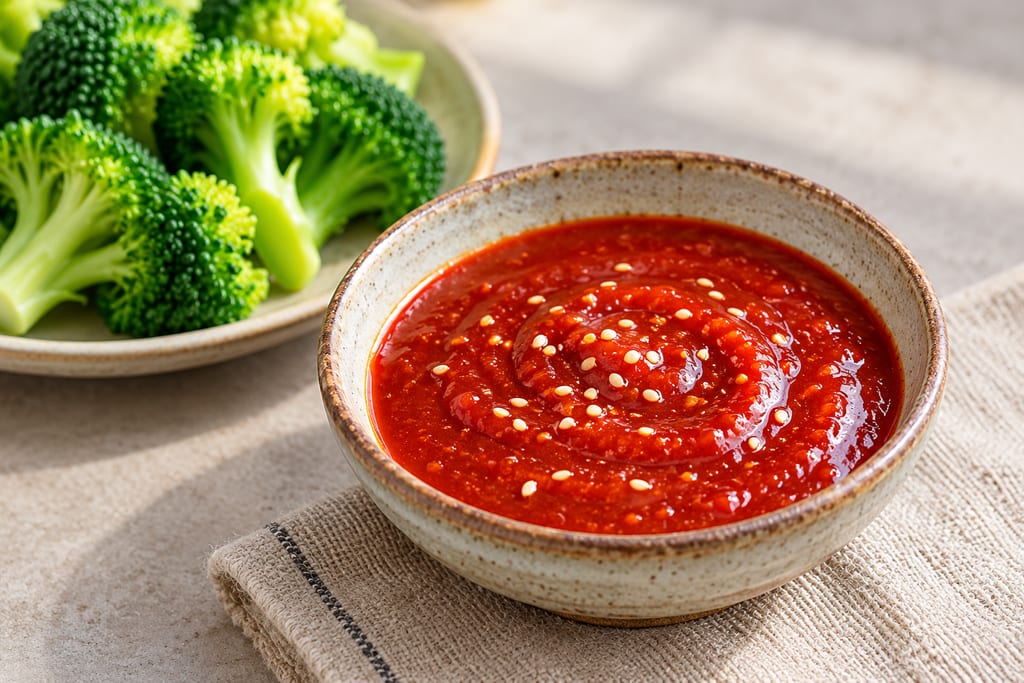
Chogochujang is a Korean sweet-sour sauce made by seasoning gochujang with vinegar and sugar. This development batch adds water and toasted sesame seeds, with optional garlic for the portion being served.
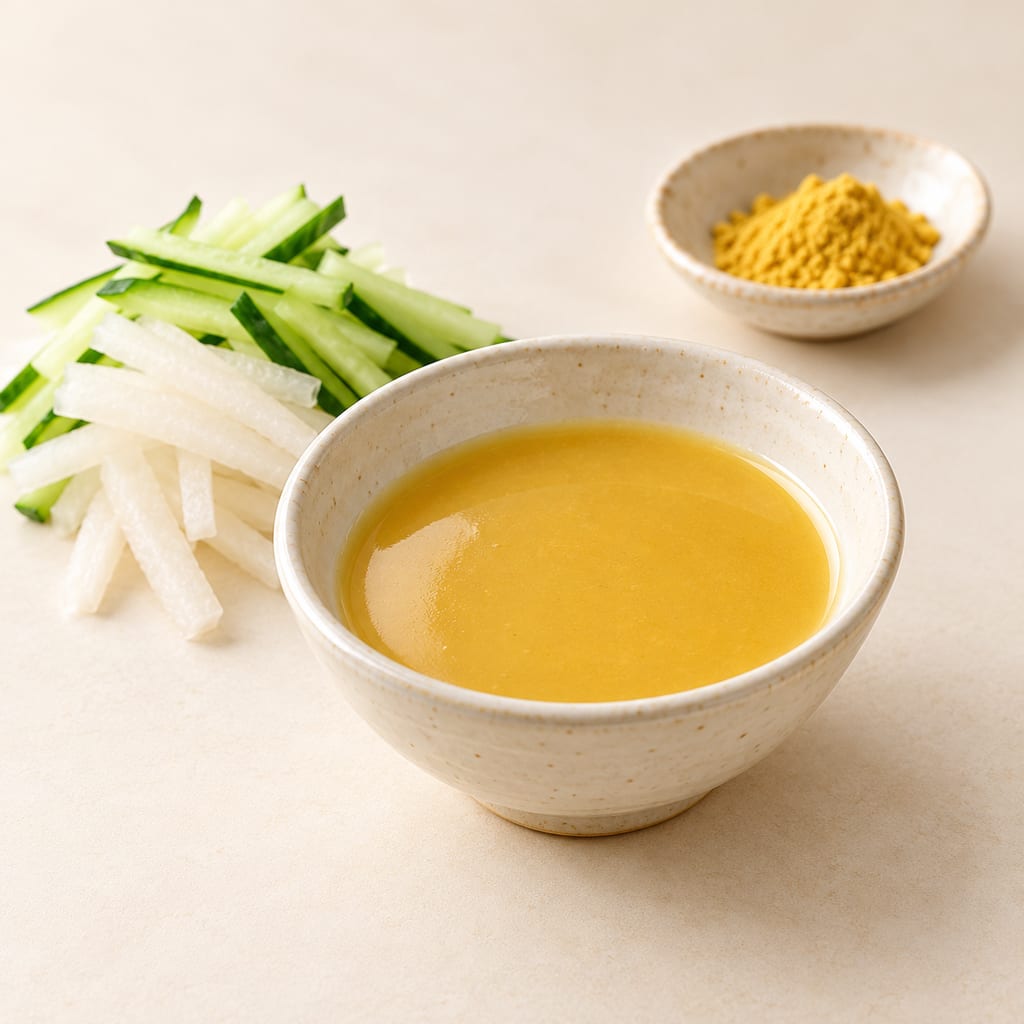
A fresh sweet-sour mustard dressing for cold cucumber and pear or a freshly prepared salad. Its gram-based proportions are original and are not copied from Maangchi’s gyeoja-naengchae recipe.
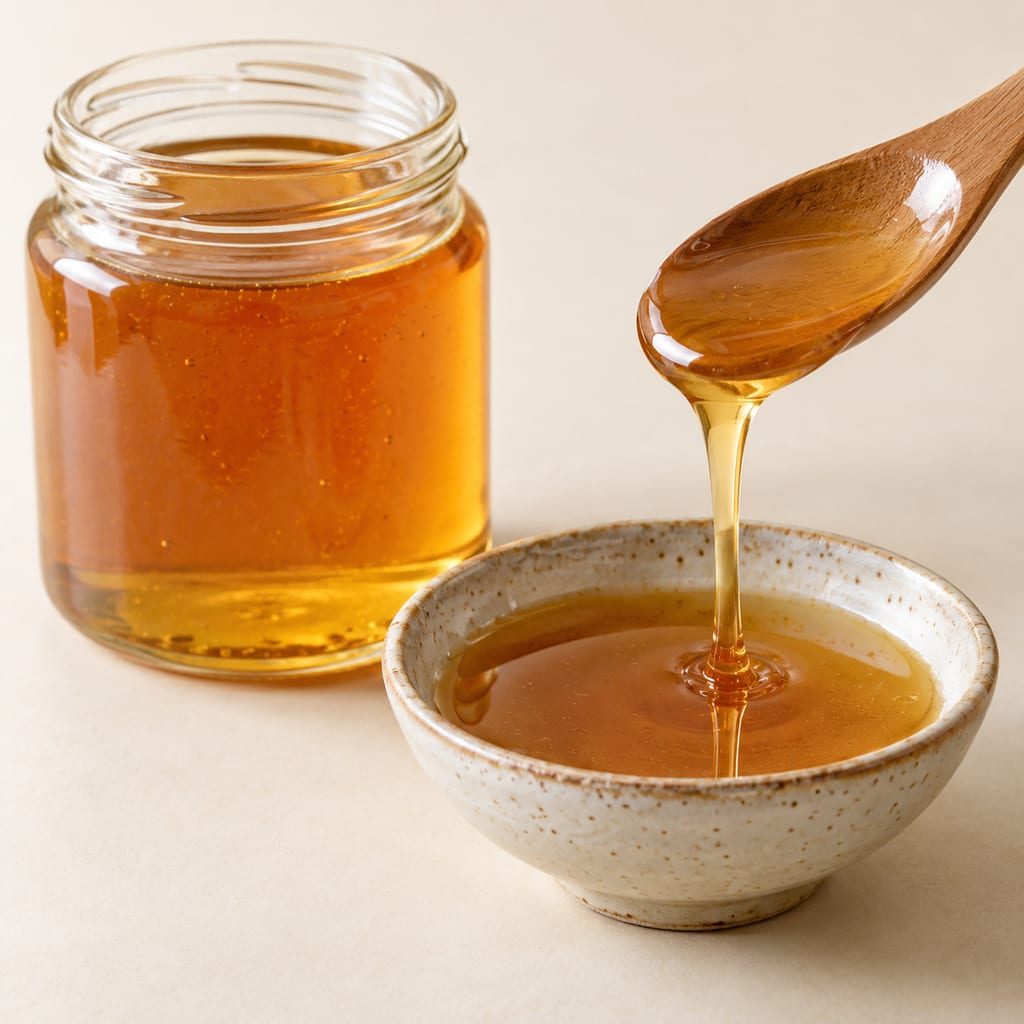
A Korean rice syrup: cooked rice is converted by barley malt in a long warm hold, strained, and the sweet liquid is boiled down until it pours like maple syrup.
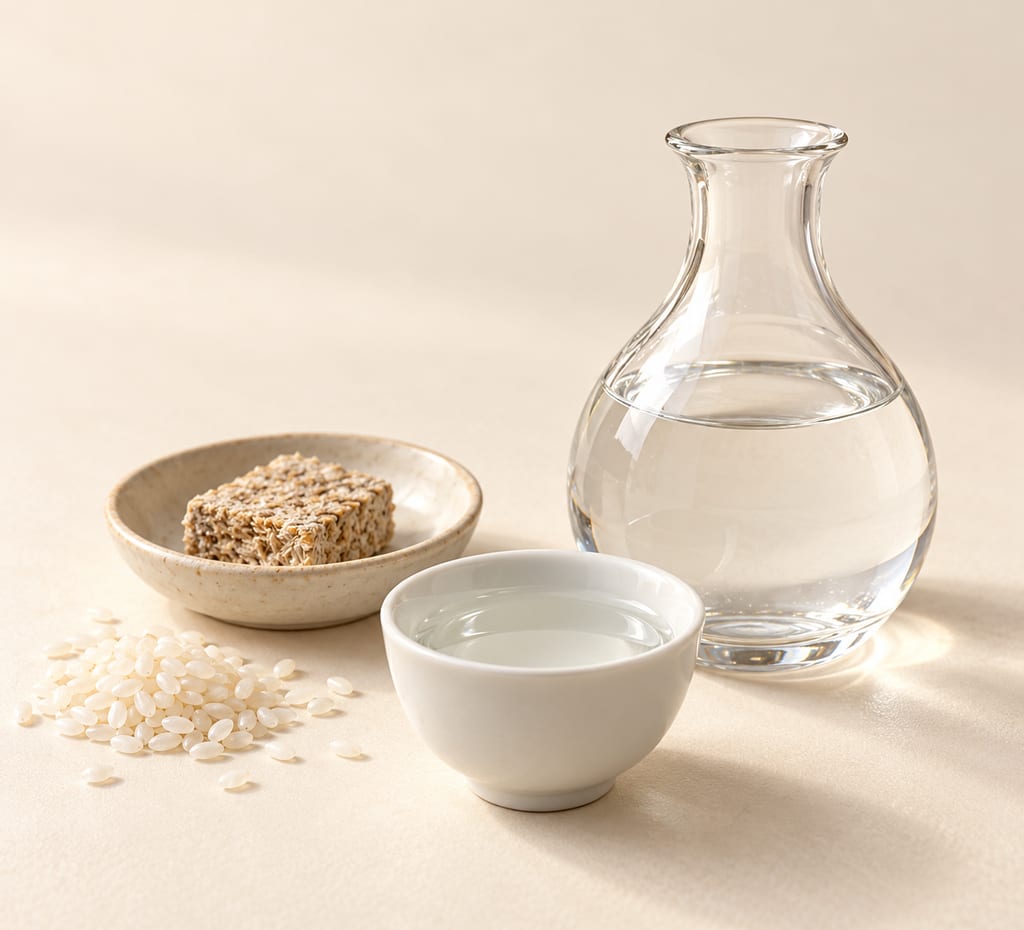
Andong soju is a rice spirit from North Gyeongsang, distilled from steamed rice and wheat nuruk. This method makes the starter before fermenting the rice mash in a jar.
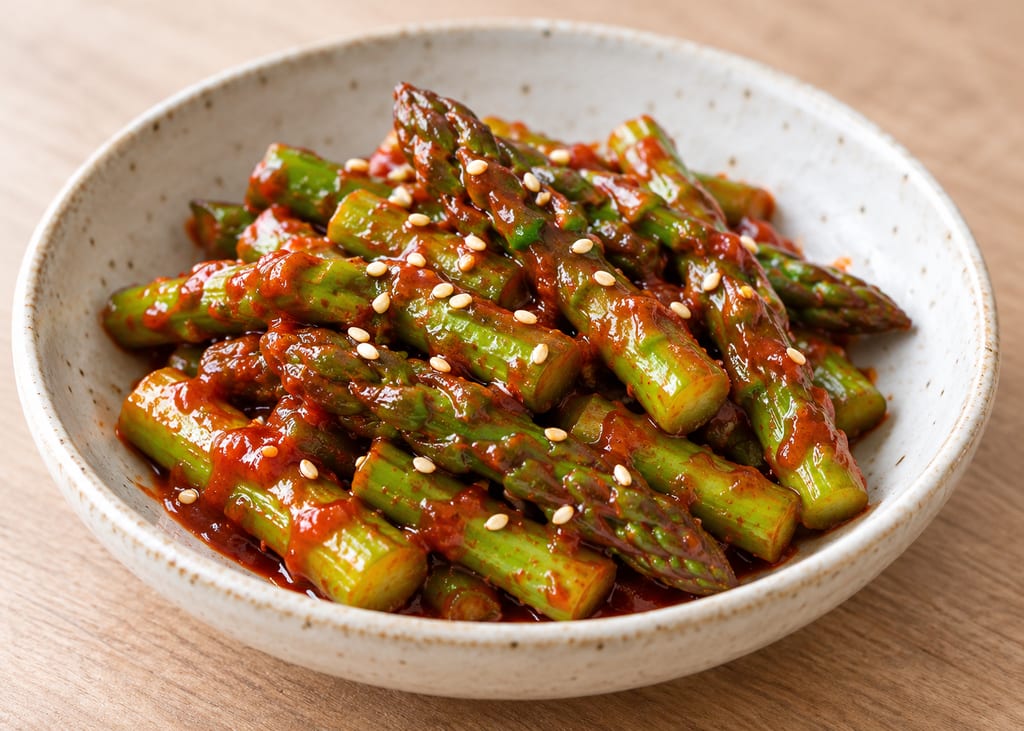
A Korean banchan of blanched asparagus dressed with a sweet-sour cho-gochujang sauce; Hyosun's version cools the spears in ice water before tossing.
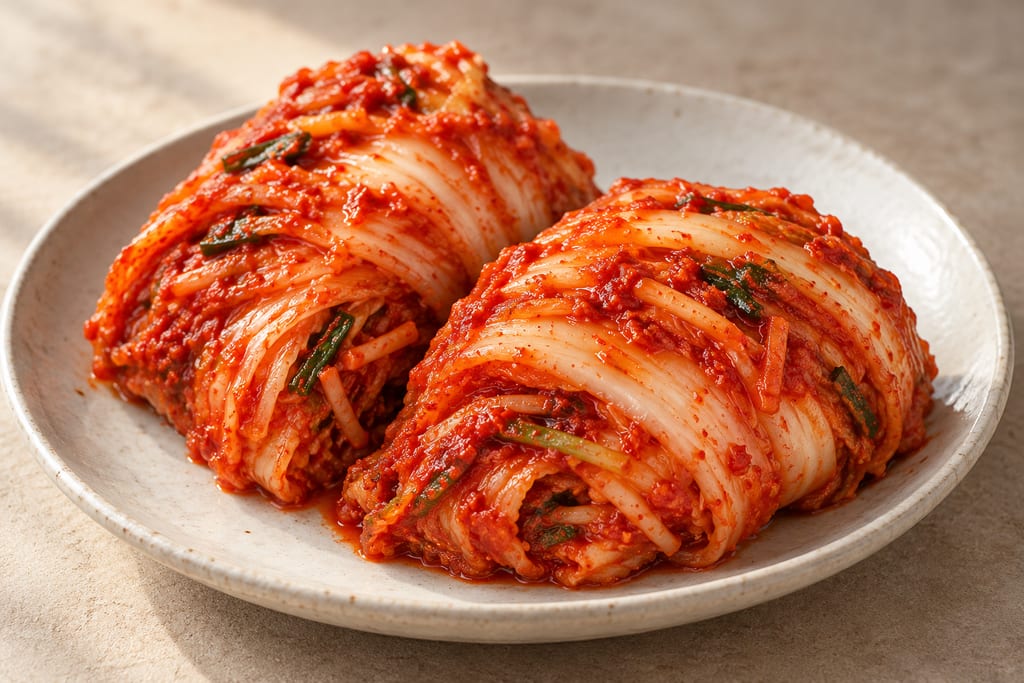
Napa cabbage salted, seasoned with a paste of gochugaru, garlic, ginger and salted seafood, and left to sour through lactic fermentation; Korea's everyday winter preserve.
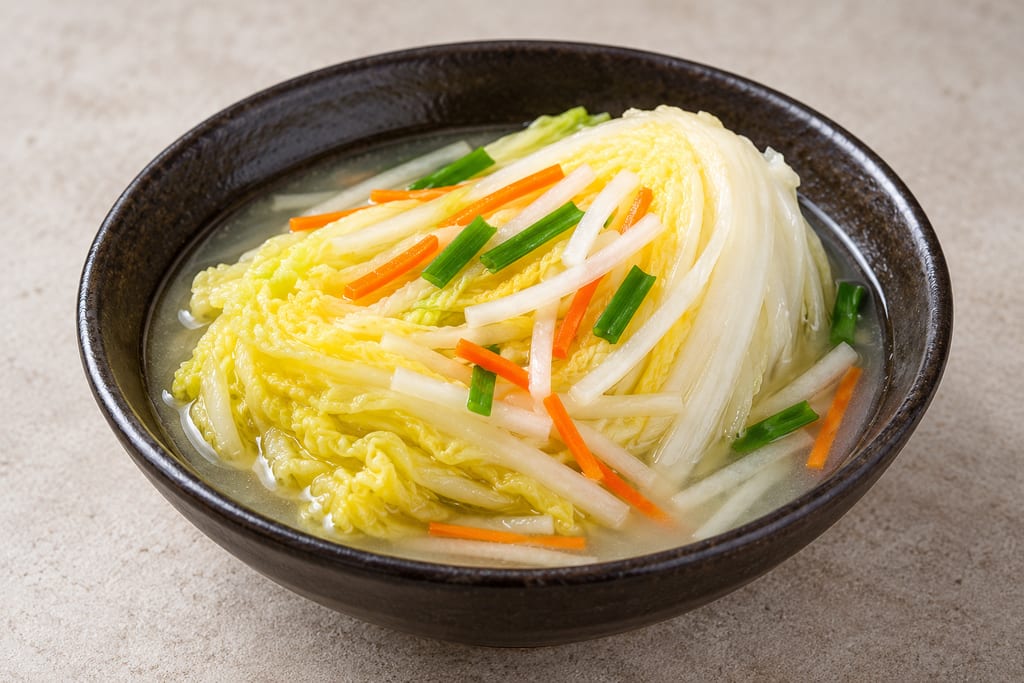
Napa cabbage is brined and filled with pear, radish, alliums, chives and fruit; this Korean kimchi omits red pepper flakes.
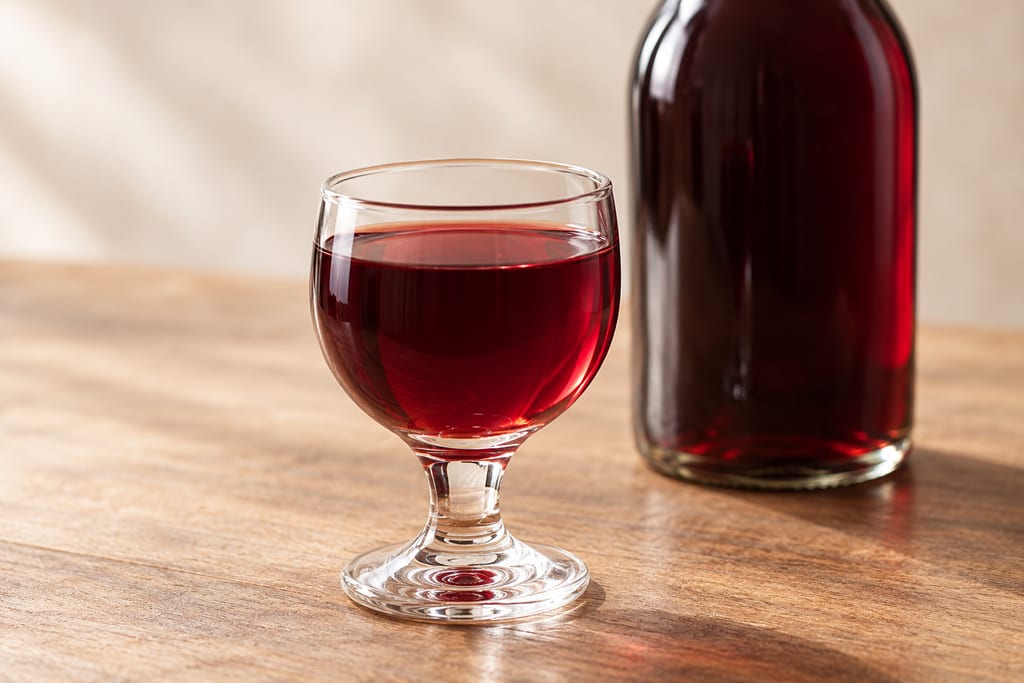
Korean black raspberry wine: crushed bokbunja berries with their seeds, sweetened to 20 °Brix, fermented 15 days at 25 °C with wine yeast, filtered and matured three months.
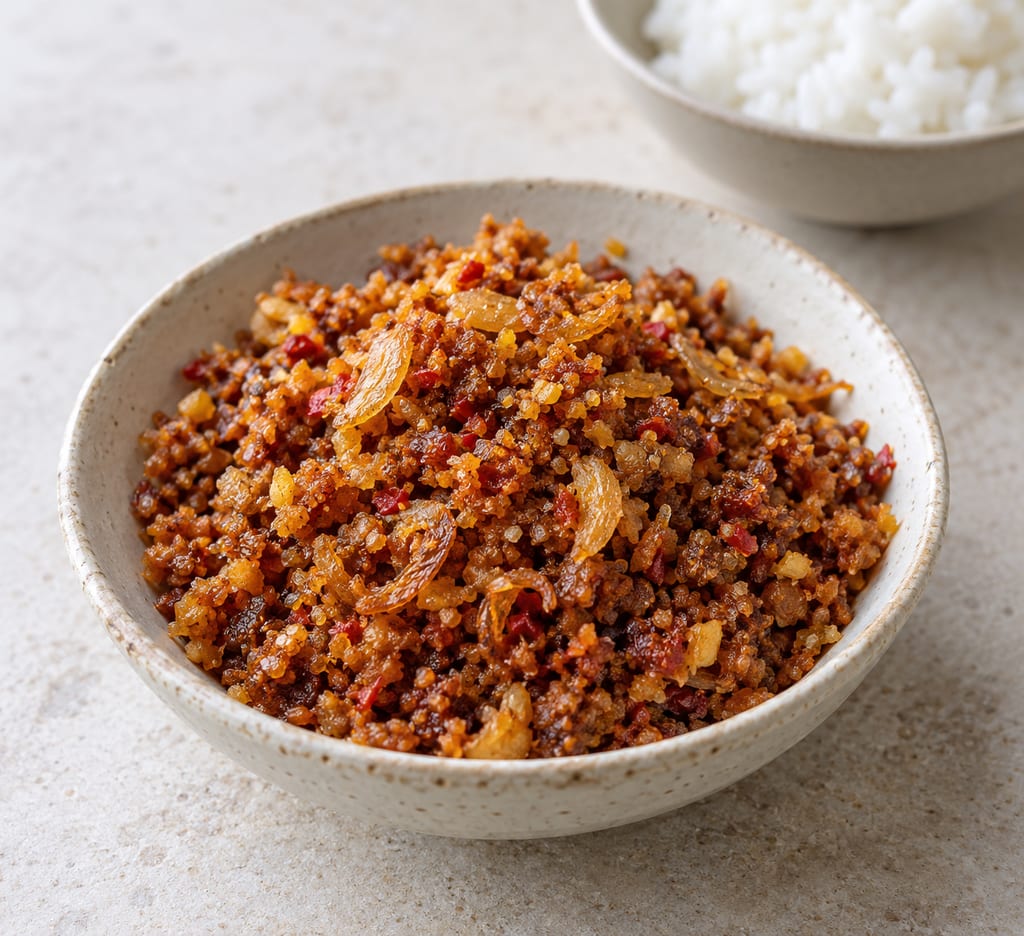
A Myanmar relish of dried shrimp, fried eschalot and garlic, chilli, turmeric, tamarind and ngapi. Naomi Duguid’s published recipe makes about 1 cup; it contains crustacean shellfish.
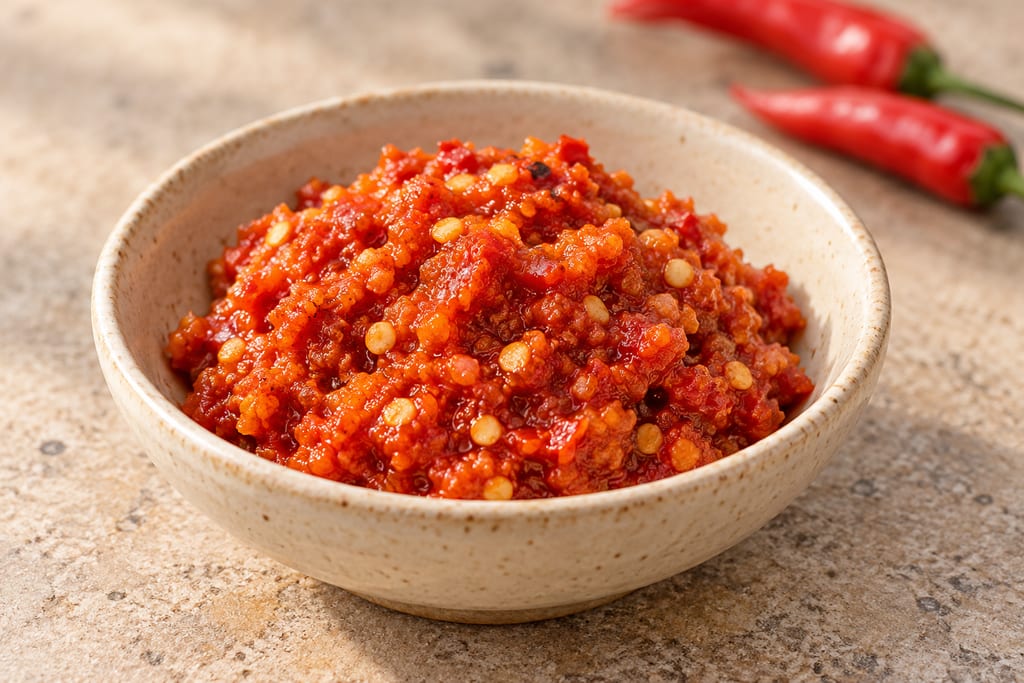
Dinanche, or donne' dinanche, is a Chamorro hot pepper paste of crushed chillies that Guam cooks use on its own or stir into fina'denne'. Its versions range from pepper alone to ones with eggplant, miso or coconut milk.
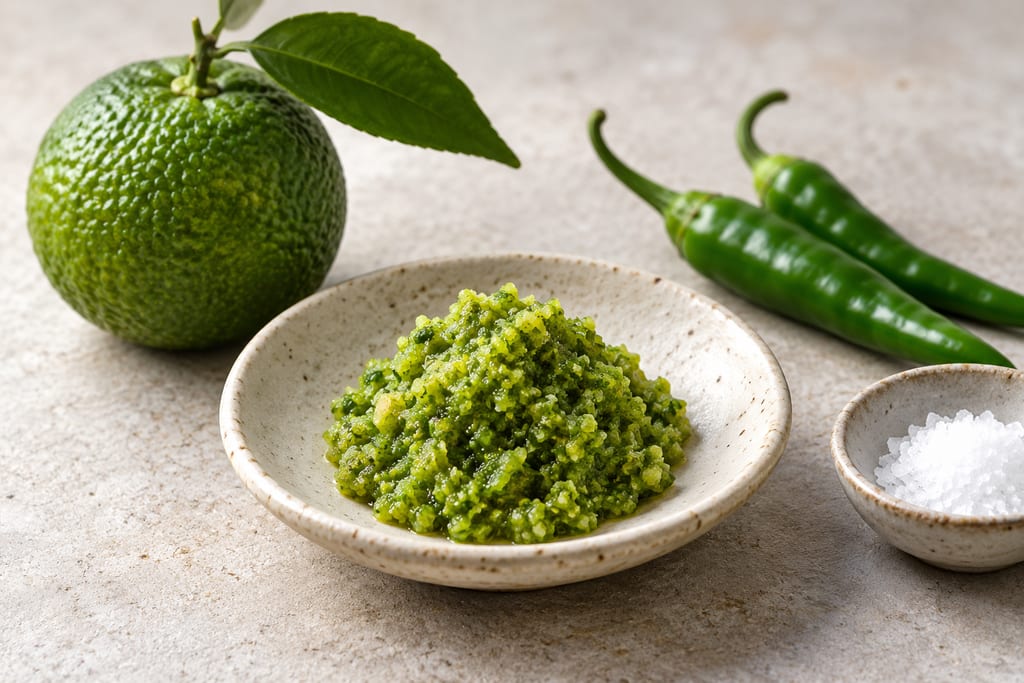
A fresh, uncooked yuzu and green chilli paste inspired by Kyushu’s yuzu kosho, made here as an untested small-batch seasoning rather than a preservation formula.
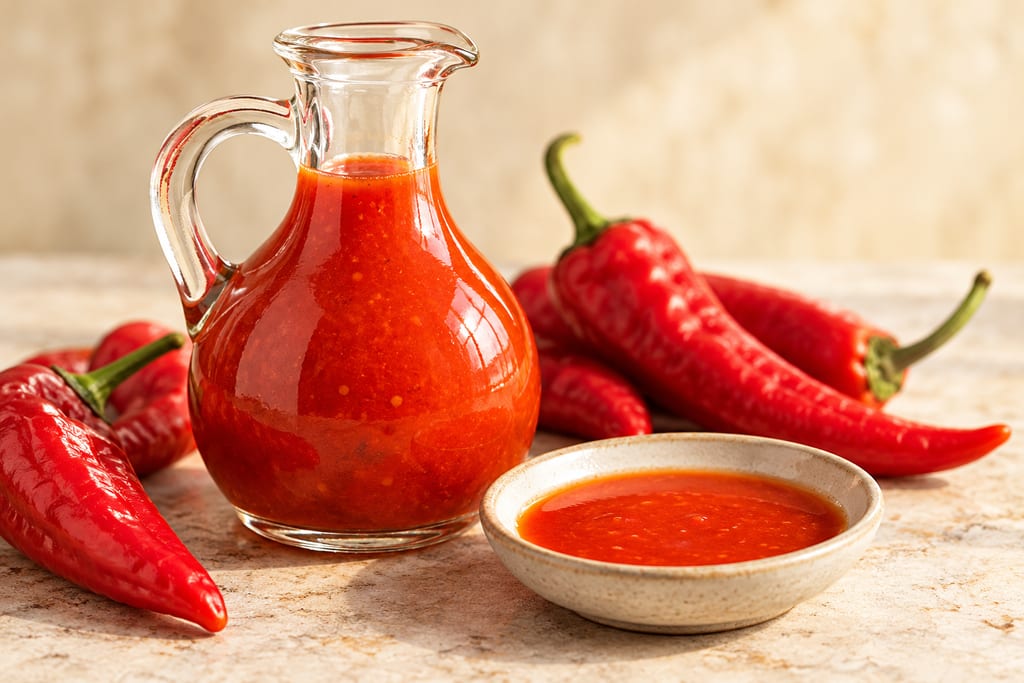
Fresh hot peppers ferment beneath a measured salt brine, then become a bright, tangy sauce blended from the peppers and their liquor.
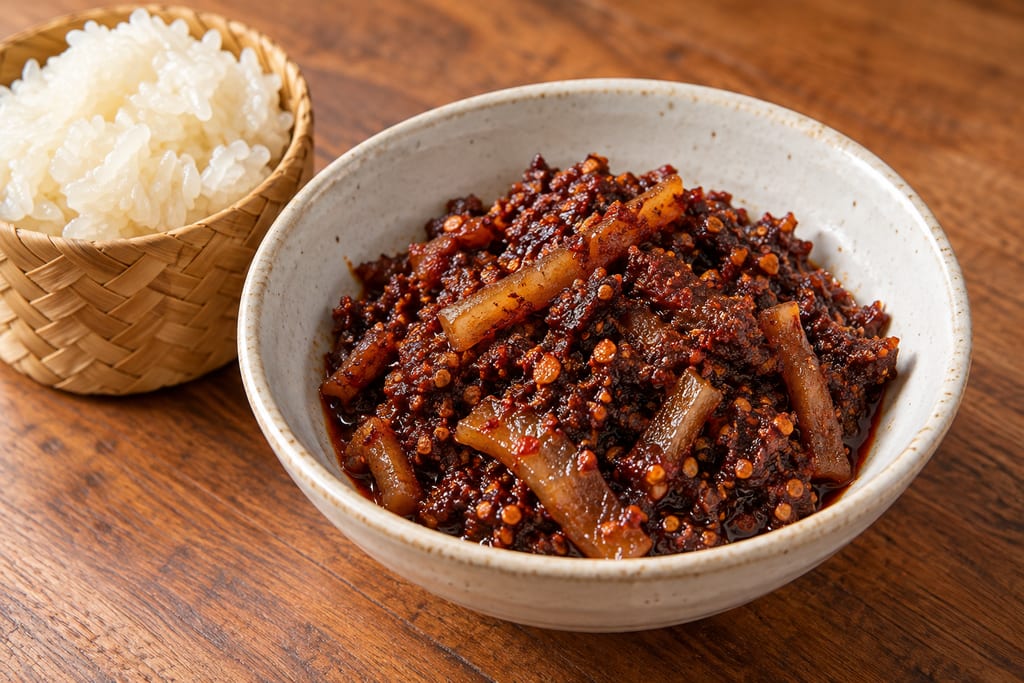
Jeow bong is a Lao paste of dried chilli, shallot, garlic and galangal cooked with buffalo or cow skin, a Luang Prabang specialty eaten with sticky rice and grilled meat.
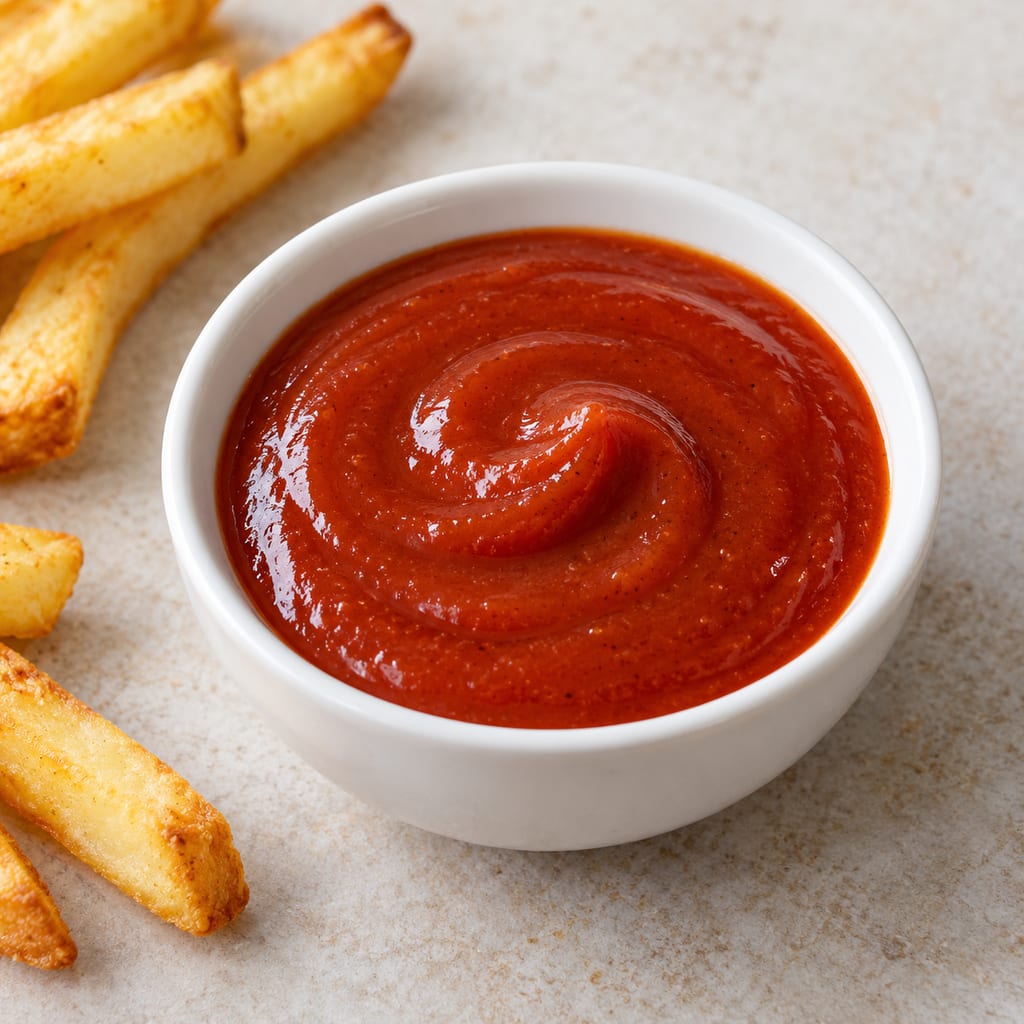
A modern tomato condiment sharpened with the spicy, savoury tang associated with kimchi; this measured version whisk-mixes prepared ketchup and commercial kimchi seasoning.
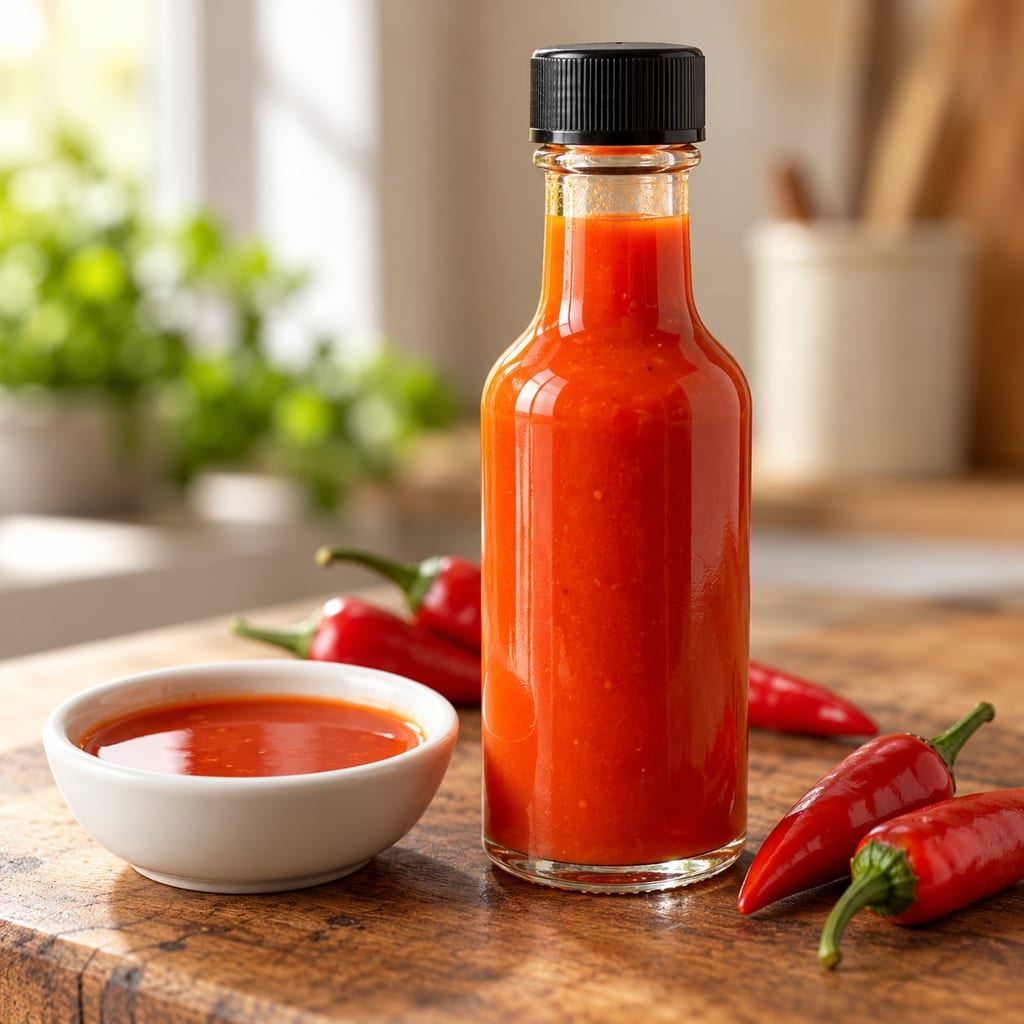
Documentary account of Louisiana pepper sauces, using TABASCO's published barrel-aged commercial process as one specific example; the source does not provide a validated home recipe.
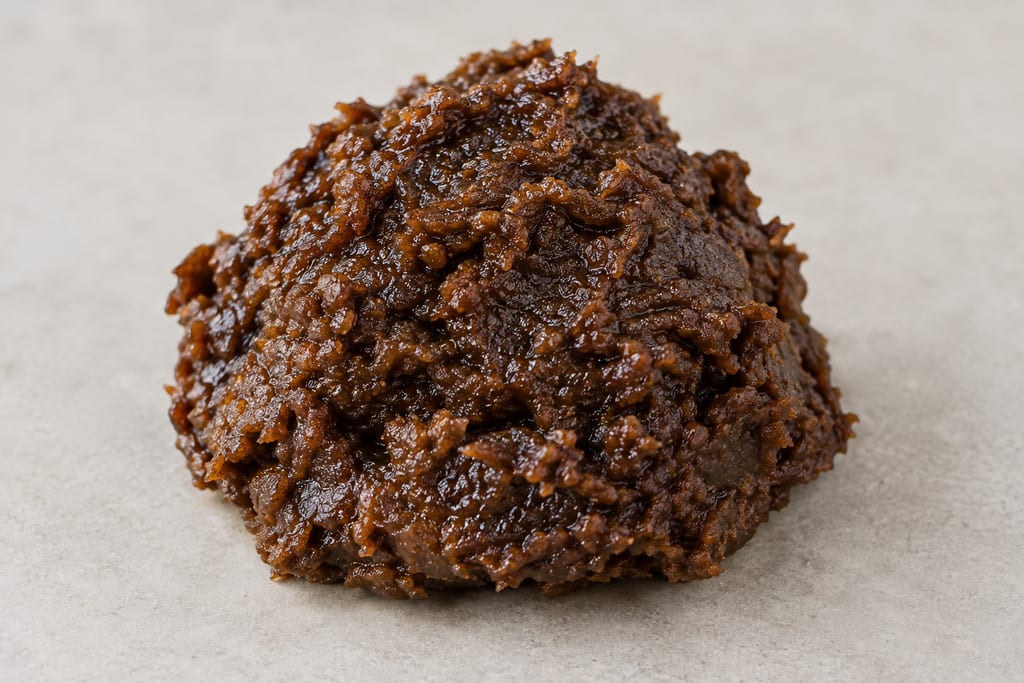
Maari is a Burkinabè baobab-seed condiment documented in producer studies. This is a non-instructional account, not a home recipe: sources vary, omit key process details and establish no validated safety control.
No community contributions have been published for this entry yet.
Sign in to contribute. Published comments and photos are free to read.
UNESCO Intangible Cultural HeritageHistory · Geography
Knowledge, beliefs and practices related to jang making in the Republic of KoreaUNESCO inscribed knowledge and practices related to jang-making in 2024; its account describes making, storing and consuming jang as a living communal practice with variation among households.
Cited in: Two jang and a handful of aromatics
MaangchiIdentity · Method · Uses · Variation
Ssamjang (Korean spicy dipping sauce)Maangchi identifies the Korean name as 쌈장 (ssamjang) and describes it as a Korean spicy dipping sauce.
The recipe uses doenjang, gochujang, garlic, green onion, honey, onion, sesame seeds and toasted sesame oil. Its ingredient list is not the 150 g development formula recorded here.
A four-serving batch uses 1/4 cup doenjang, 1 tablespoon gochujang, one green onion, one garlic clove, 1/4 cup onion, 2 teaspoons honey, 2 teaspoons sesame seeds and 2 teaspoons toasted sesame oil.
Cited in: Two jang and a handful of aromatics; Raw garlic changes the rules; Other published batches
Beyond KimcheeVariation · Uses
SsamjangA separate six-serving household batch that adds mirim and garlic with its own proportions; described as mixed in a bowl and served with rice, leafy wraps, vegetables or barbecue.
Cited in: Other published batches
Ministry of Culture, Sports and Tourism, Republic of KoreaHistory · Uses
Korea's food-wrapping tradition: ssamDescribes ssam as the practice of wrapping food in leaves and says its history is uncertain; cited Joseon-era references concern wrapping practice, not the origin of ssamjang.
Cited in: Wrapped in a leaf