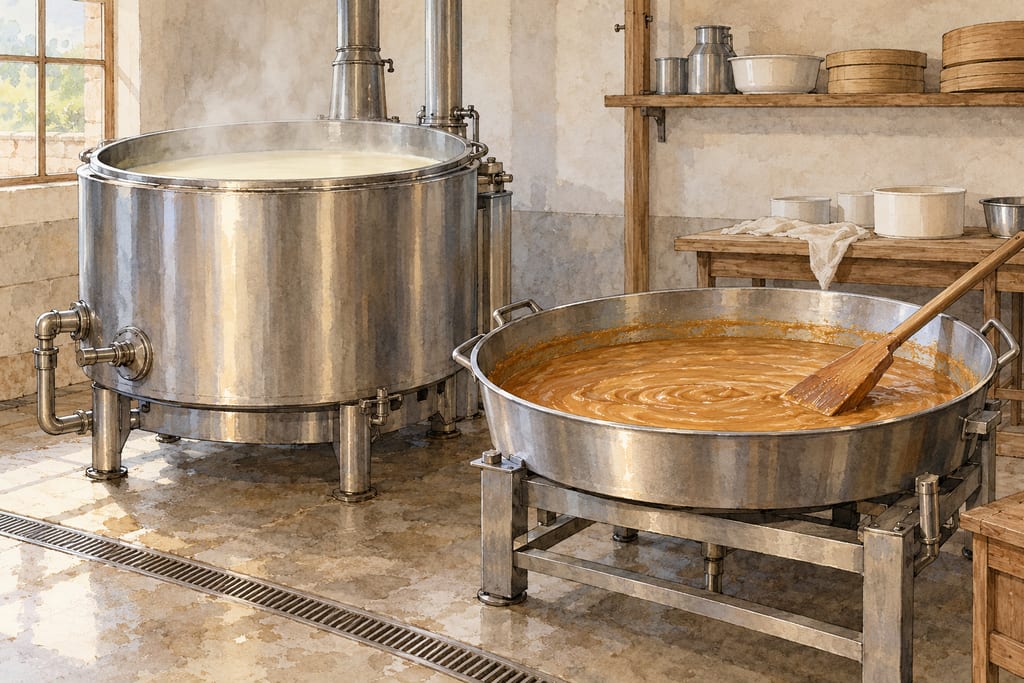
Brewer for bulk work and a finishing pan
The kettle heats and reduces a large volume of thin liquid such as whey; before it nears the brewer's minimum fill the batch moves to a wide pan for the thick, stirred finish.
 FermenteaWhere food goes to change
Modern method
쌀조청 · jocheong · rice syrup
A Korean rice syrup: cooked rice is converted by barley malt in a long warm hold, strained, and the sweet liquid is boiled down until it pours like maple syrup.
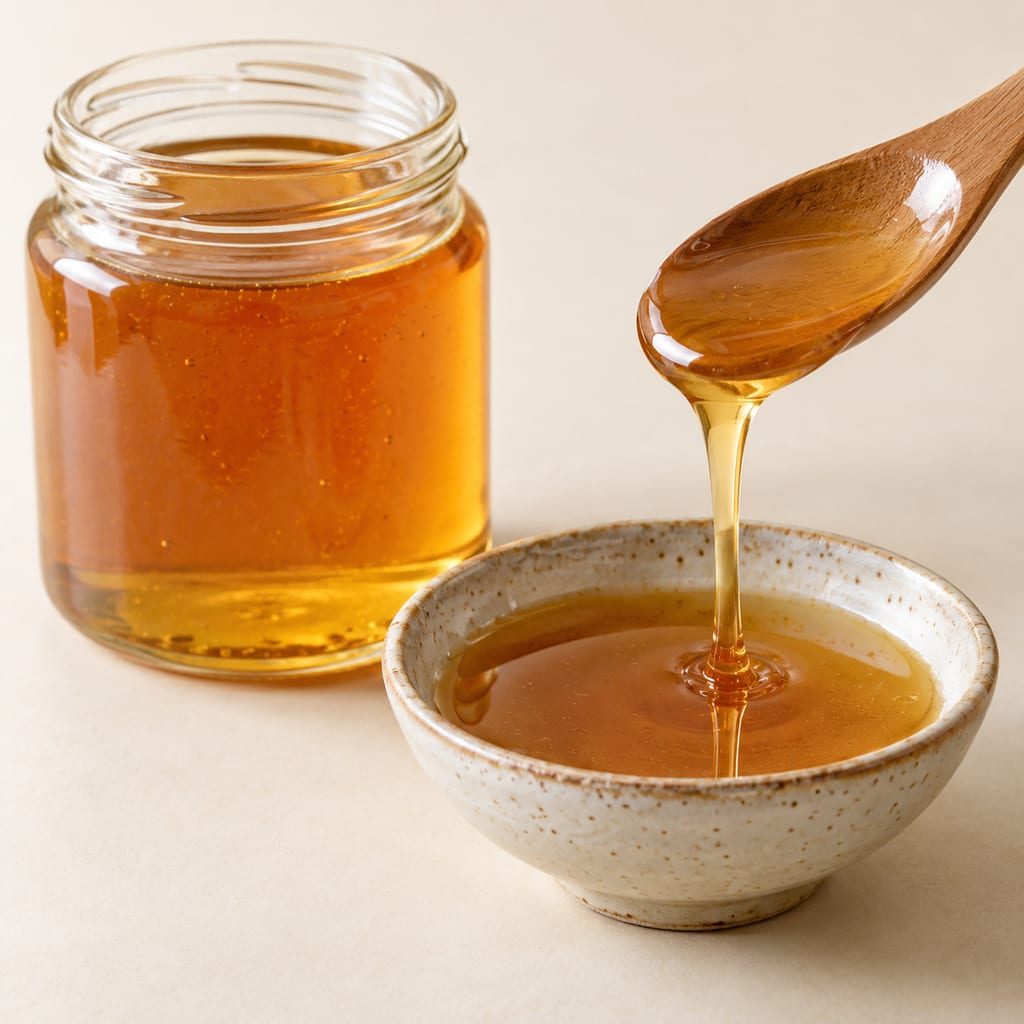
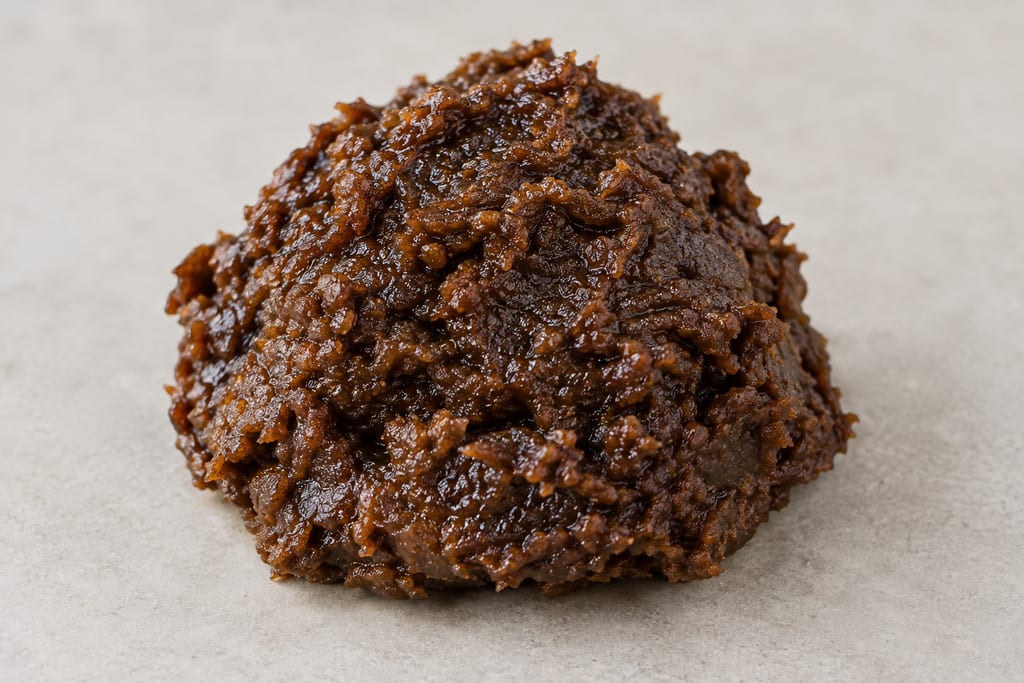
Ssal-jocheong is a Korean rice syrup, sold and made at home as a sweetener for drinks, desserts and seasoning. It is the thick, pale-amber counterpart of the thinner rice drink sikhye, made from the same two ingredients, cooked rice and barley malt powder. Where sikhye is served cold as a drink, the syrup is the concentrate: the sugars formed in the conversion are kept, and most of the water is boiled away.
The syrup is sweet because the malt's enzymes convert the rice starch into smaller sugars during the warm hold. The conversion is the stage that decides the flavour, and the boil that follows concentrates the result. Two separate stages therefore set the outcome, and each one has its own temperature and its own endpoint.
The cooked rice is spread into eight cups of water at about 140°F (60°C), and the barley malt powder is added before the lid goes on. After an hour the mixture has fallen to about 120-130°F (49-54°C), so it is reheated on medium heat for two to three minutes to 135-145°F (57-63°C) and then the heat is turned off. The reheating is repeated each hour. Over six hours in all the mixture spends its time between 110°F and 145°F (43-63°C), until the liquid is thin and sweet and the rice has broken down to the texture of wet paper.
The rice-cooker version follows the same logic on a warm setting, with the lid opened for the reduction. The temperature of that cooker's warm setting is not stated in the source, so the liquid itself has to be measured.
The mixture is strained through hemp cloth or doubled cheesecloth, twisting and squeezing the solids. About three and a half quarts of liquid come through, and the solids are discarded. The liquid is then boiled for 80 to 90 minutes, until a little more than a quart remains, and then for a further 10 to 20 minutes, until small foamy bubbles grow to about half an inch across and a thermometer reads 200-220°F (93-104°C).
At the endpoint the syrup falls from the spoon in a thick, steady stream, like maple syrup. An over-cooked syrup goes hard, and the source's remedy is to thin it with a little water and boil it again. The source gives its endpoint in bubbles, temperature and pour rather than as a measured sugar concentration, so the finished syrup's sugar content is not recorded here.
The finished syrup is poured into a glass or ceramic jar and refrigerated. The source gives a keeping time of up to three months in the refrigerator, which belongs to this method and this concentration. No yield for the rice-cooker version is given beyond about a cup and a half, and the scaling of the batch is not established.
A brewing kettle could carry the warm conversion, with the syrup finished in a wide pan; this is a proposed adaptation that has not been tested, and it is not part of the documented method above.
No dated source for ssal-jocheong was read for this page, so no period of attestation is recorded.
Yield 3.5 cup · Scaling: source batch only
The three-month refrigerated keeping time belongs to this method and this concentration. It does not transfer to a thinner or differently made syrup.
The endpoint is set by bubbles, a thermometer and how the syrup pours, not by a measured sugar concentration. Over-cooked syrup sets hard and is thinned with a little water and boiled again.
Association through a Korean cooking writer; not a claim of origin.
The kettle heats and reduces a large volume of thin liquid such as whey; before it nears the brewer's minimum fill the batch moves to a wide pan for the thick, stirred finish.
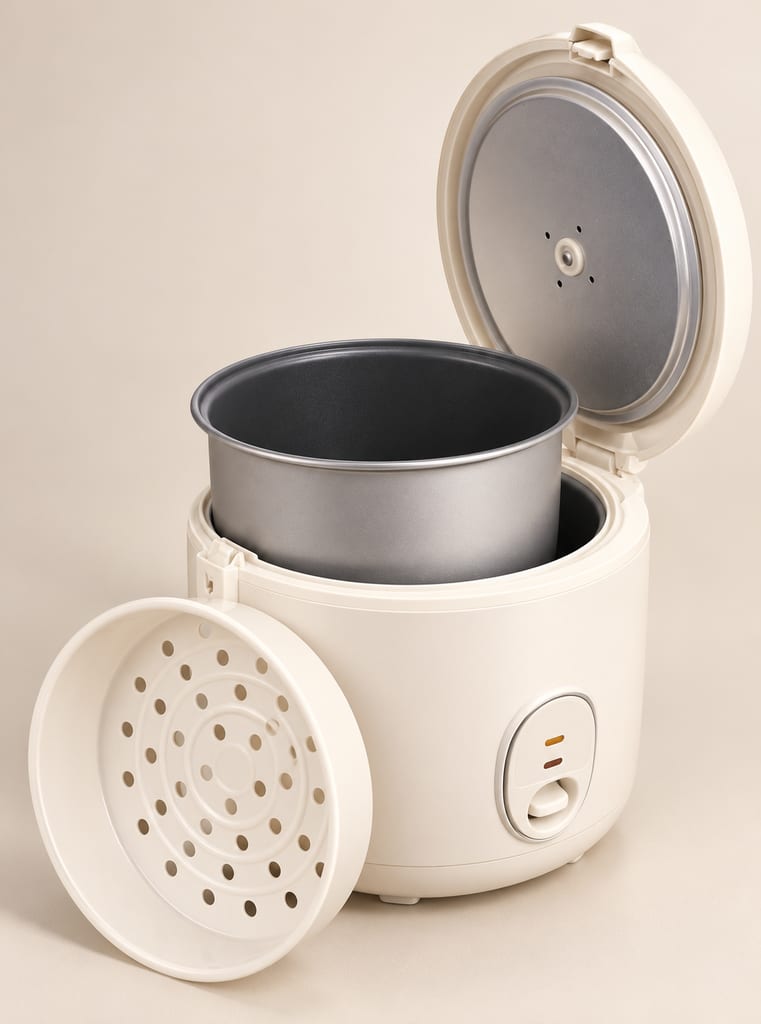
A modern electric pot that cooks rice and may provide a model-specific keep-warm stage. Documented Japanese and Korean recipes use it for koji amazake, sikhye and ssal-jocheong; measure warm settings rather than assume.
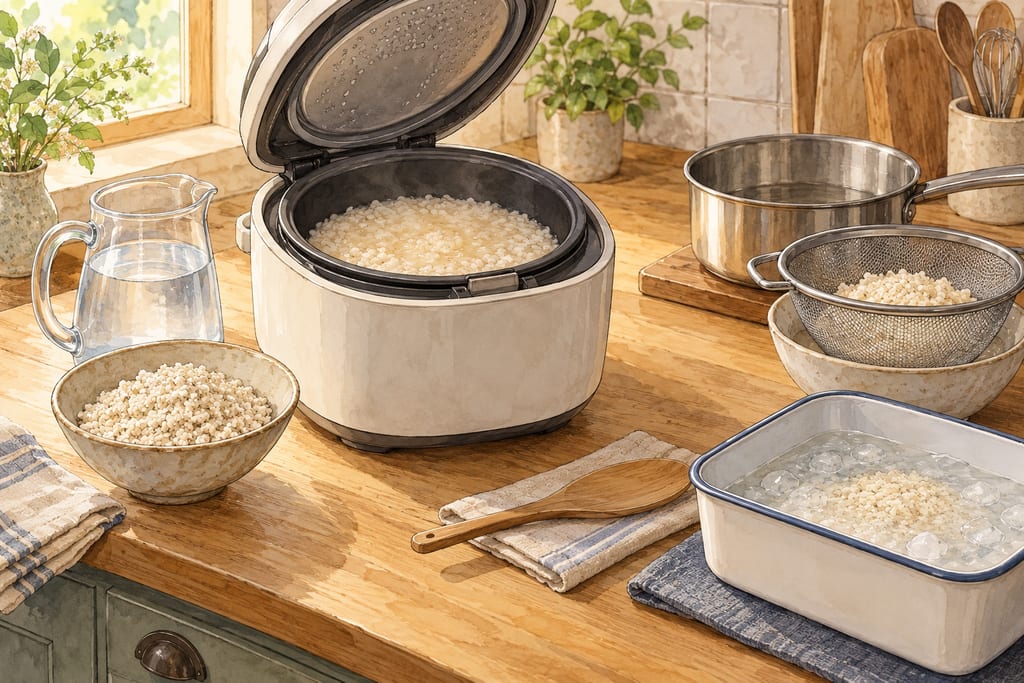
One rice cooker run as two stages: cook the rice, then add koji or malt water and hold it warm with the lid managed, before boiling, straining or chilling elsewhere.
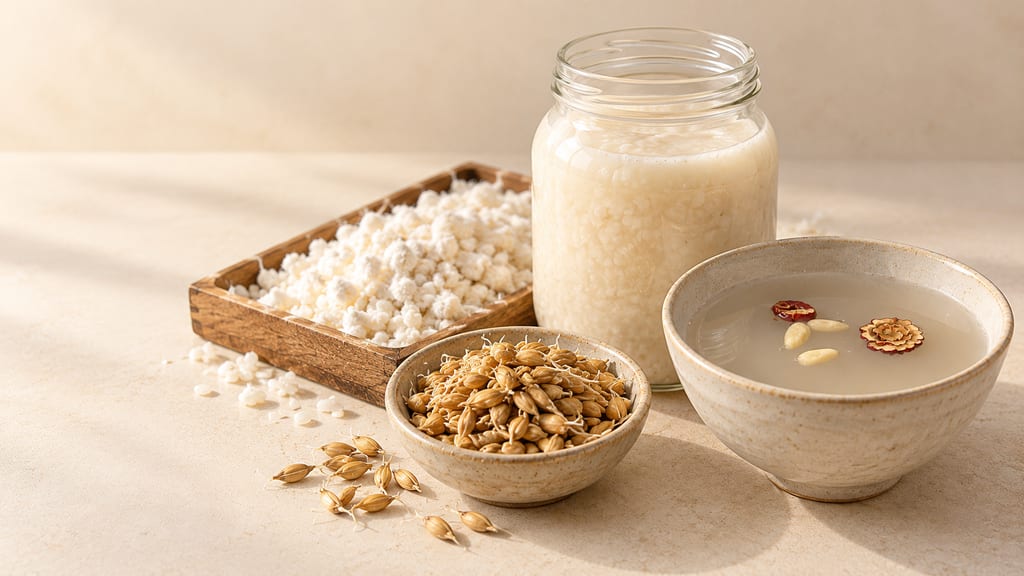
Amazake, sikhye and rice syrup turn cooked rice sweet with enzymes from koji or barley malt, held at the right warmth. Jiu niang and idli batter look similar but depend on living microbes, at very different temperatures.
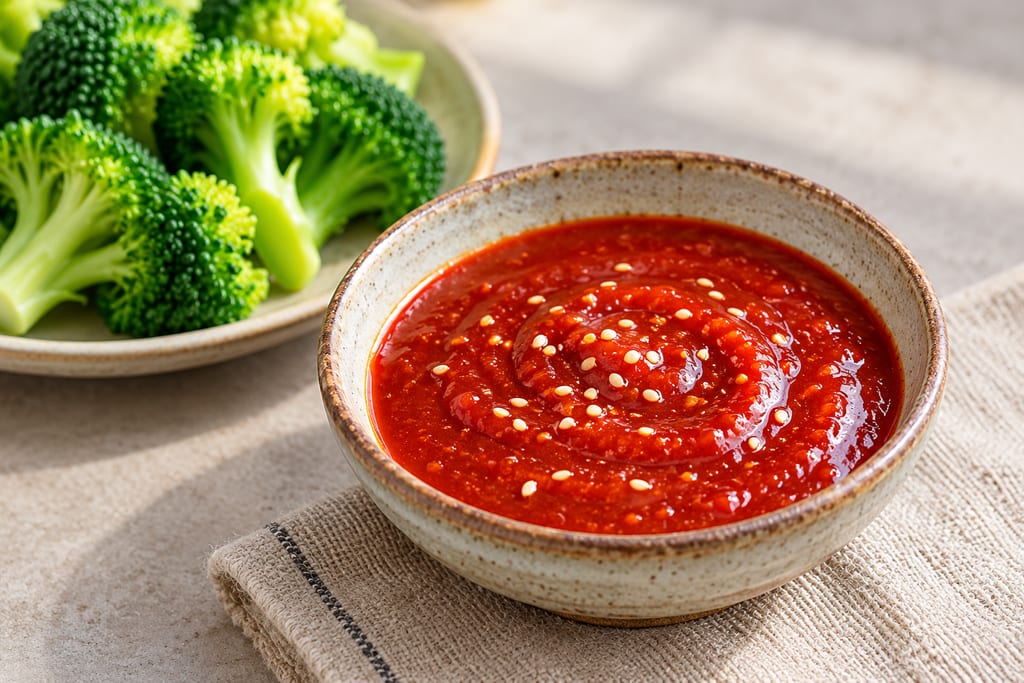
Chogochujang is a Korean sweet-sour sauce made by seasoning gochujang with vinegar and sugar. This development batch adds water and toasted sesame seeds, with optional garlic for the portion being served.
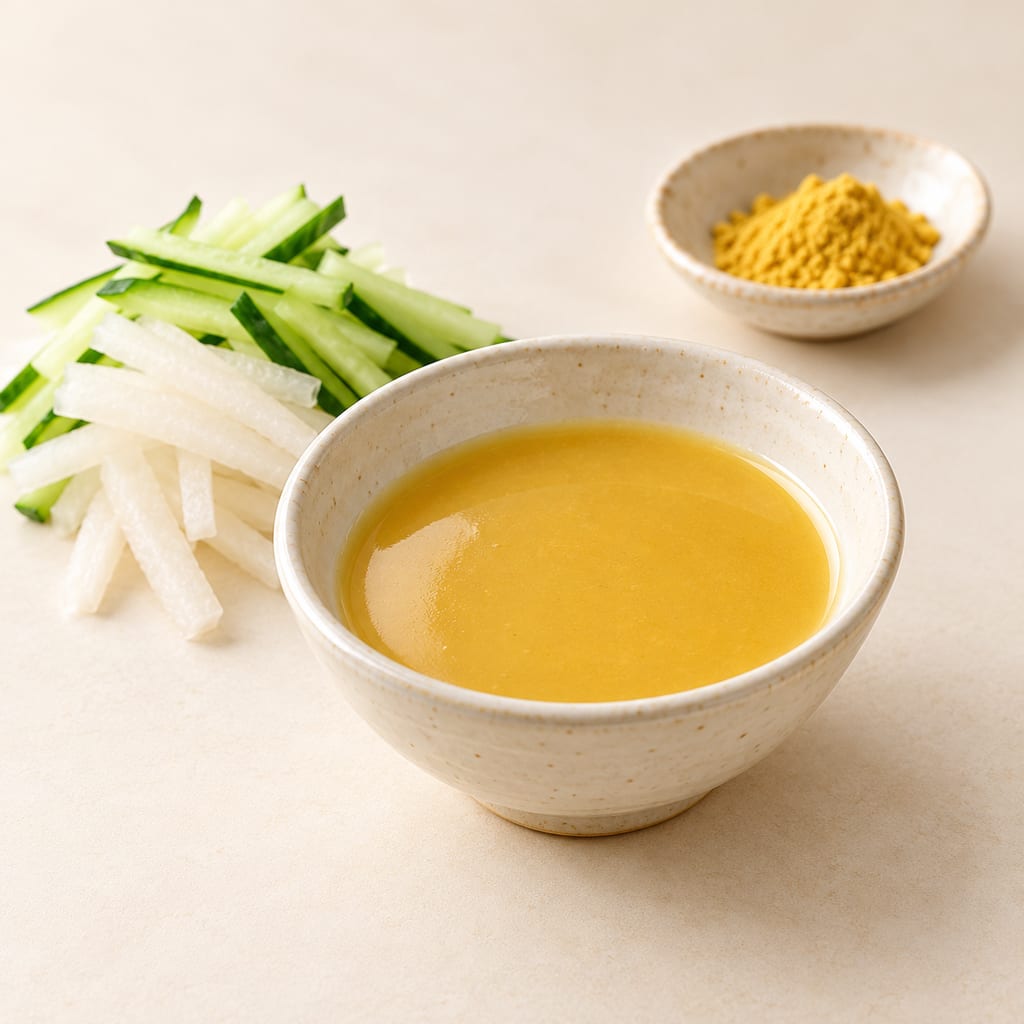
A fresh sweet-sour mustard dressing for cold cucumber and pear or a freshly prepared salad. Its gram-based proportions are original and are not copied from Maangchi’s gyeoja-naengchae recipe.
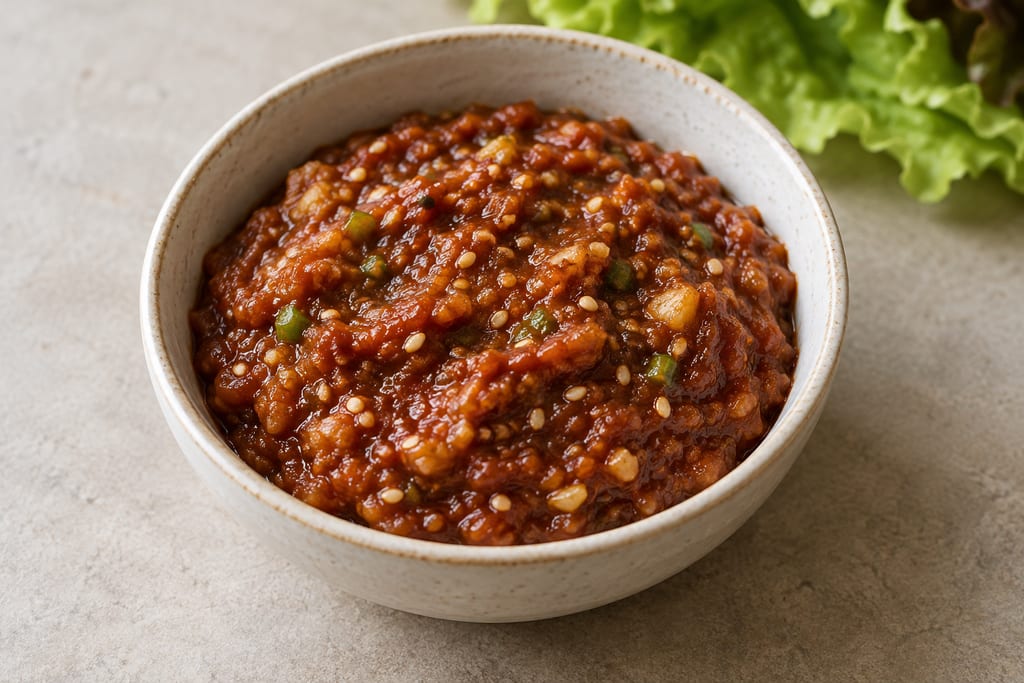
Doenjang and gochujang stirred together with sesame oil and seeds, a little honey, water, raw garlic and spring onion: a thick, savoury sauce for lettuce wraps with rice.
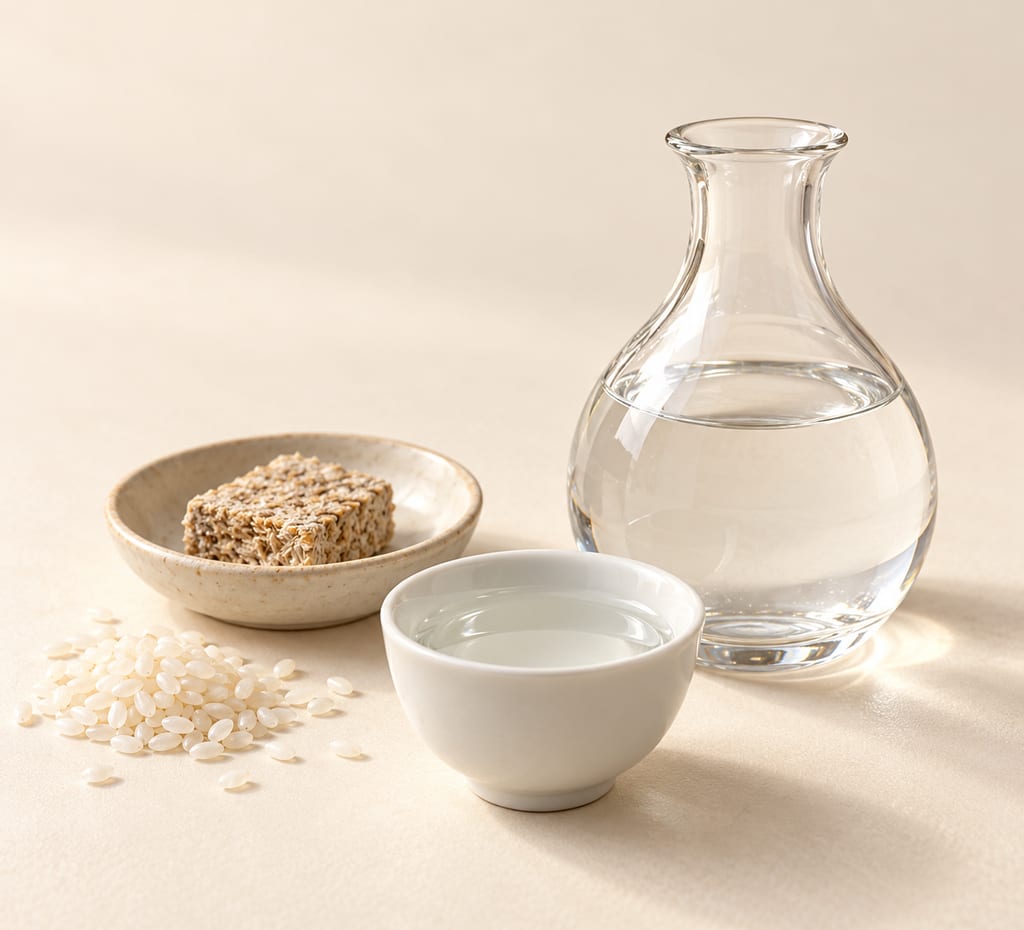
Andong soju is a rice spirit from North Gyeongsang, distilled from steamed rice and wheat nuruk. This method makes the starter before fermenting the rice mash in a jar.
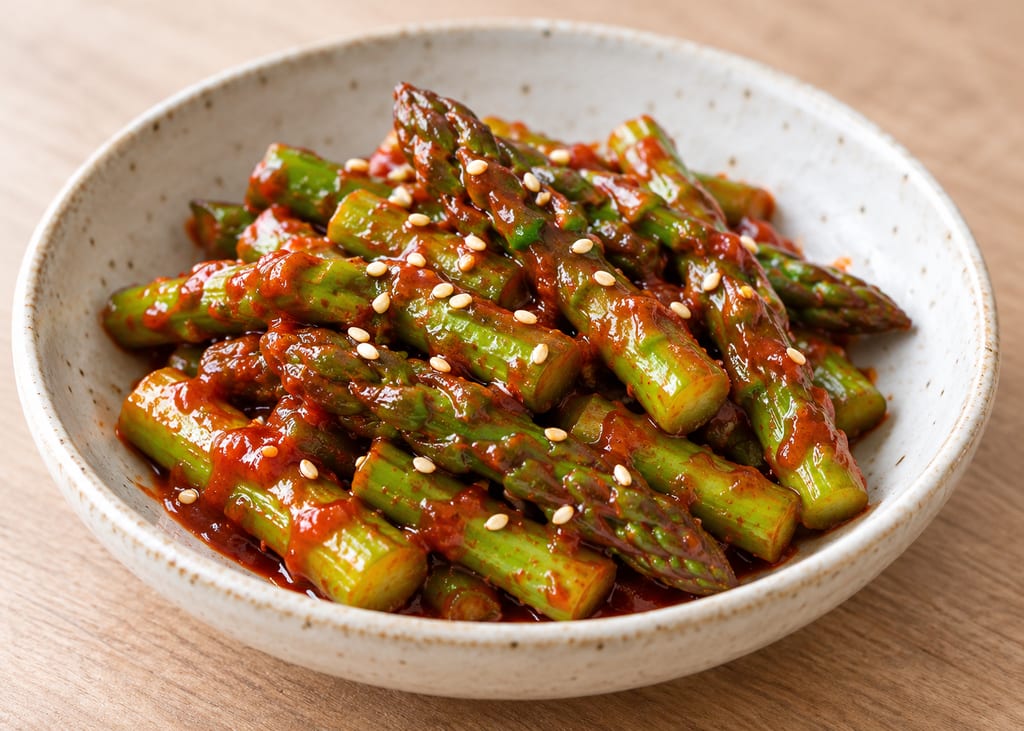
A Korean banchan of blanched asparagus dressed with a sweet-sour cho-gochujang sauce; Hyosun's version cools the spears in ice water before tossing.
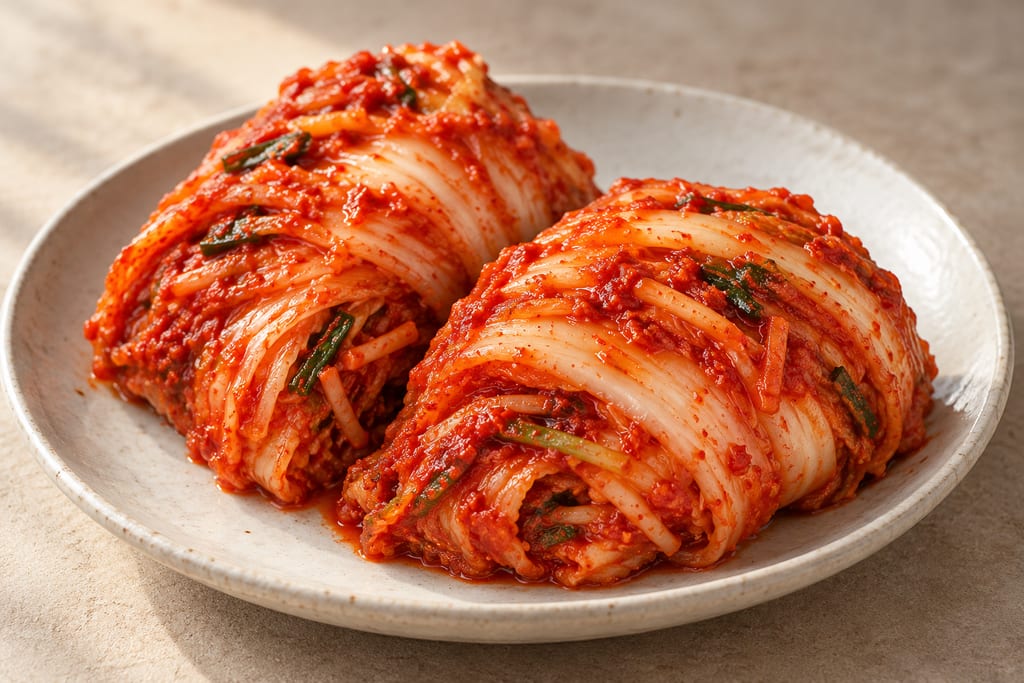
Napa cabbage salted, seasoned with a paste of gochugaru, garlic, ginger and salted seafood, and left to sour through lactic fermentation; Korea's everyday winter preserve.
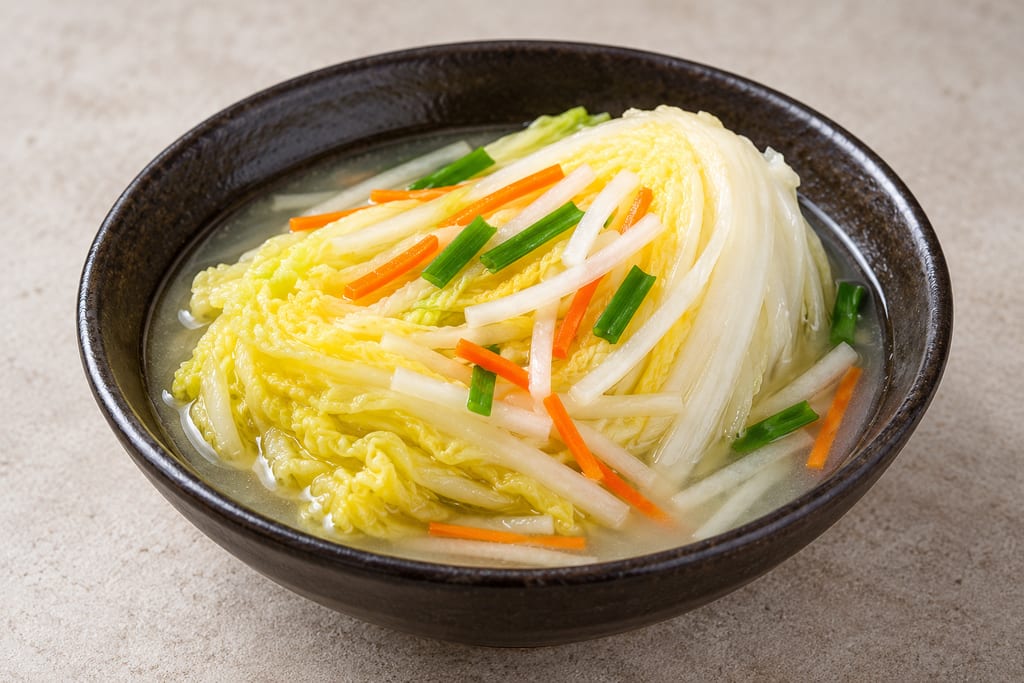
Napa cabbage is brined and filled with pear, radish, alliums, chives and fruit; this Korean kimchi omits red pepper flakes.
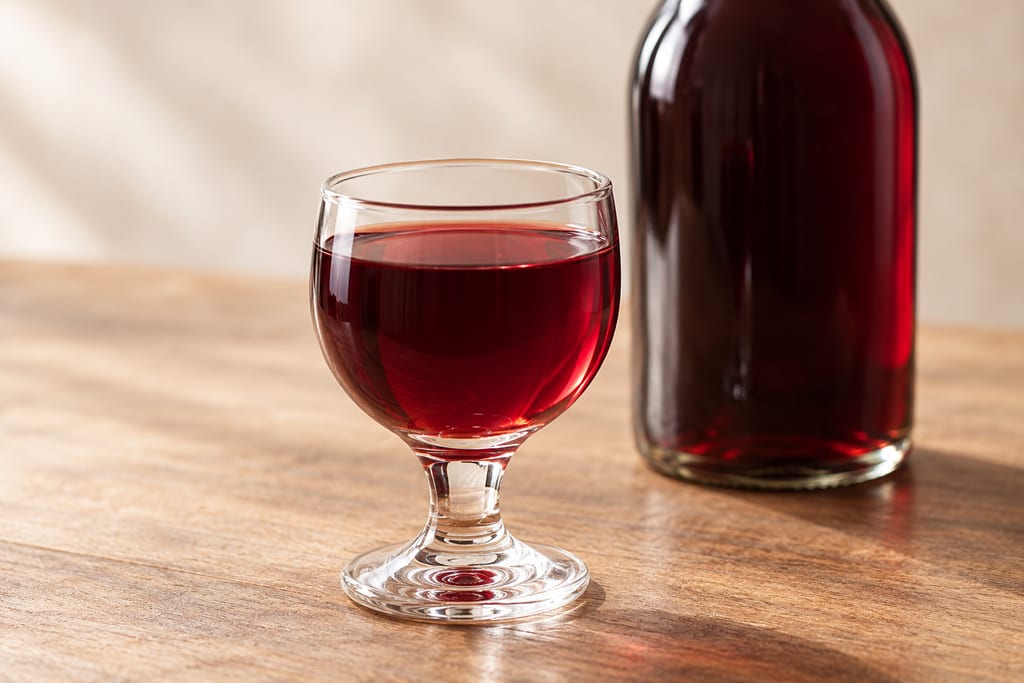
Korean black raspberry wine: crushed bokbunja berries with their seeds, sweetened to 20 °Brix, fermented 15 days at 25 °C with wine yeast, filtered and matured three months.
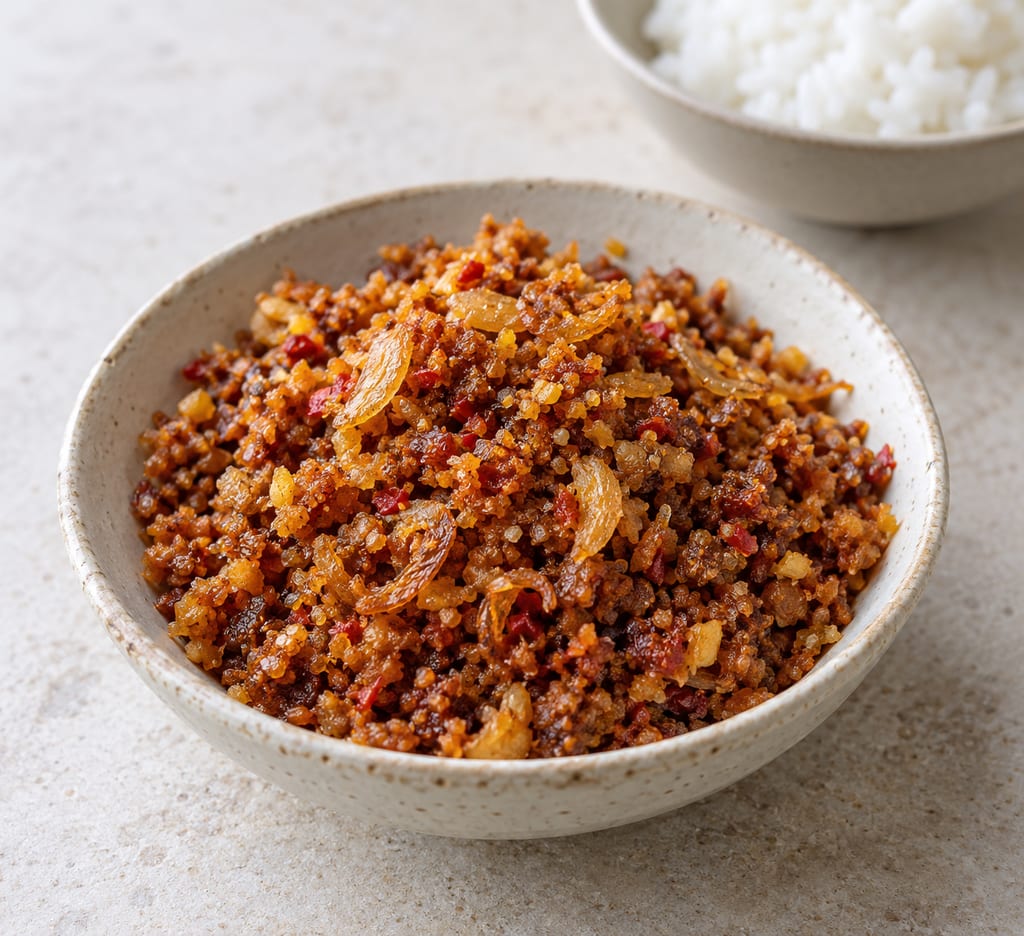
A Myanmar relish of dried shrimp, fried eschalot and garlic, chilli, turmeric, tamarind and ngapi. Naomi Duguid’s published recipe makes about 1 cup; it contains crustacean shellfish.
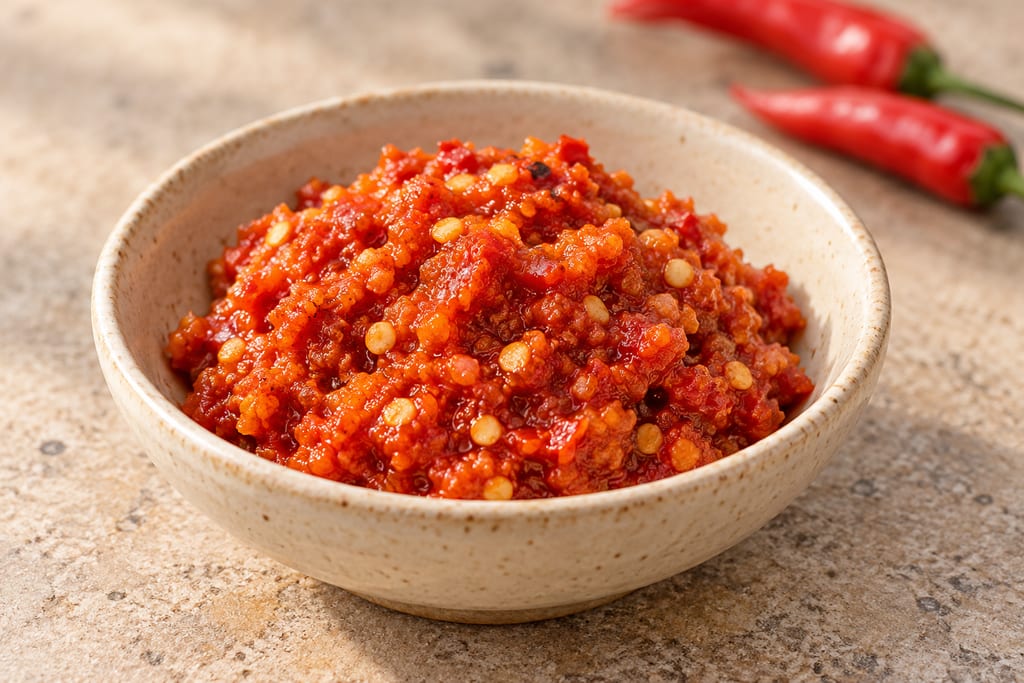
Dinanche, or donne' dinanche, is a Chamorro hot pepper paste of crushed chillies that Guam cooks use on its own or stir into fina'denne'. Its versions range from pepper alone to ones with eggplant, miso or coconut milk.
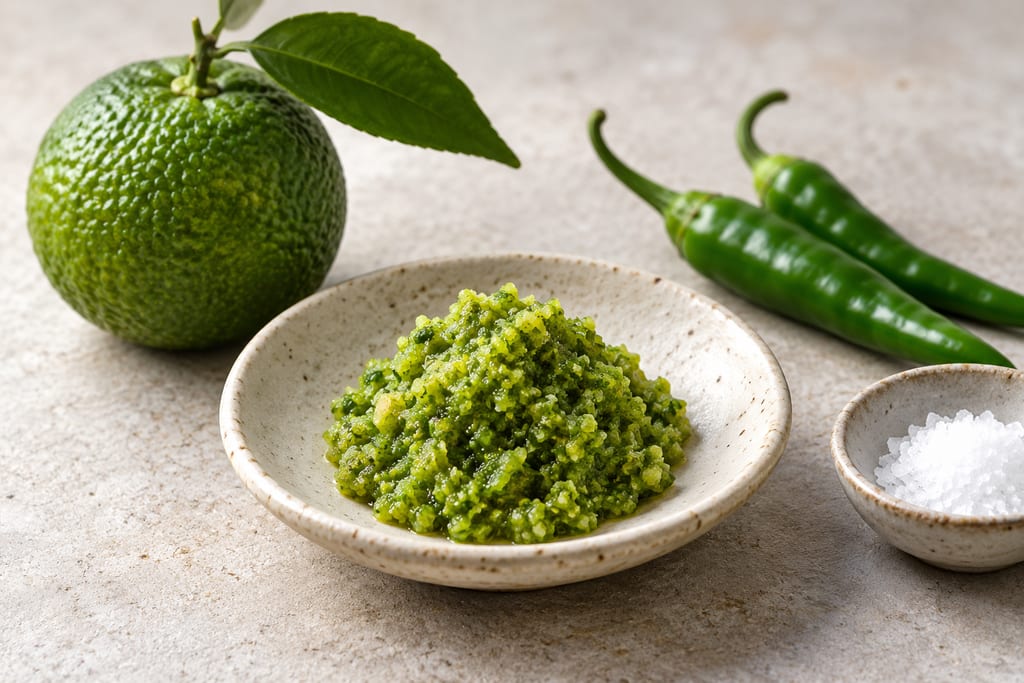
A fresh, uncooked yuzu and green chilli paste inspired by Kyushu’s yuzu kosho, made here as an untested small-batch seasoning rather than a preservation formula.
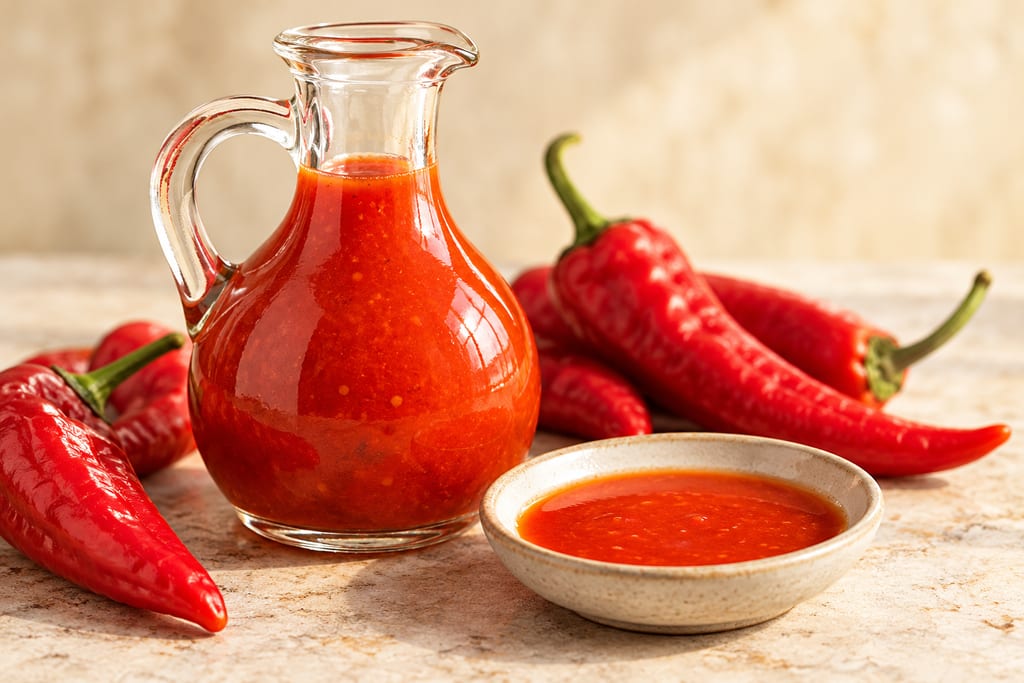
Fresh hot peppers ferment beneath a measured salt brine, then become a bright, tangy sauce blended from the peppers and their liquor.
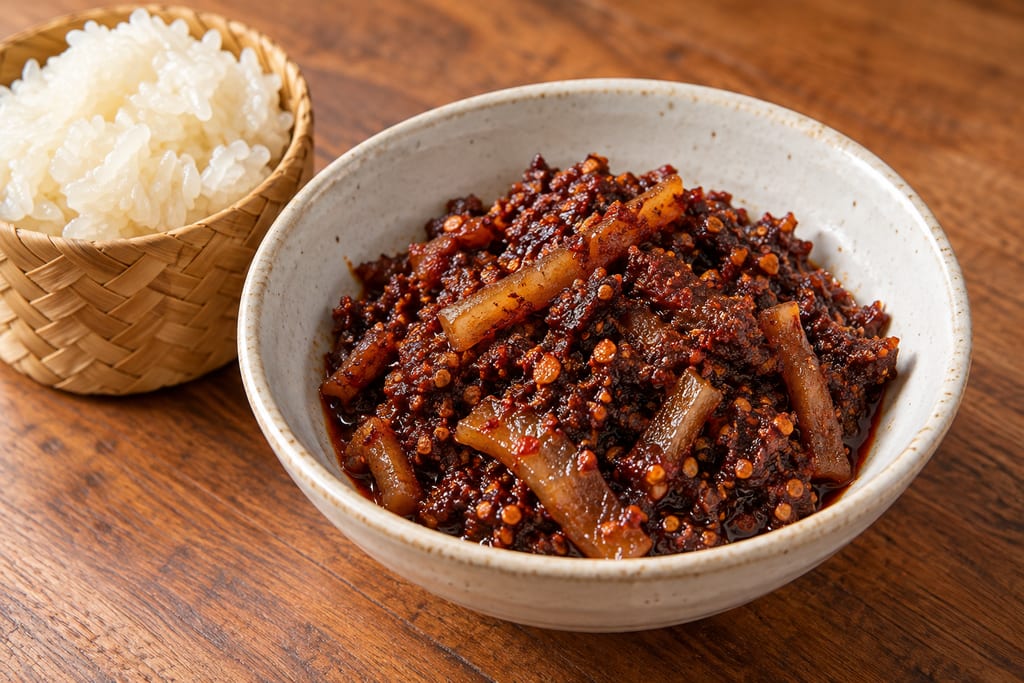
Jeow bong is a Lao paste of dried chilli, shallot, garlic and galangal cooked with buffalo or cow skin, a Luang Prabang specialty eaten with sticky rice and grilled meat.
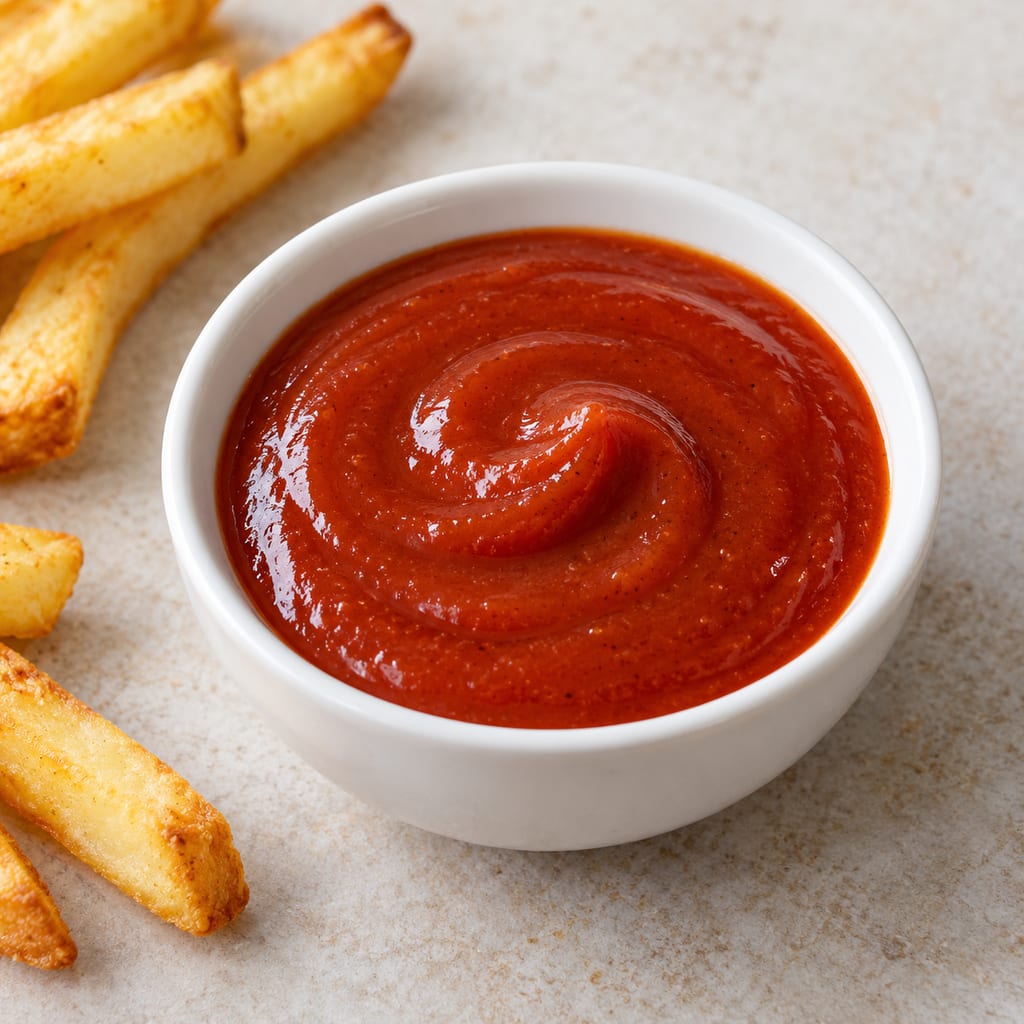
A modern tomato condiment sharpened with the spicy, savoury tang associated with kimchi; this measured version whisk-mixes prepared ketchup and commercial kimchi seasoning.
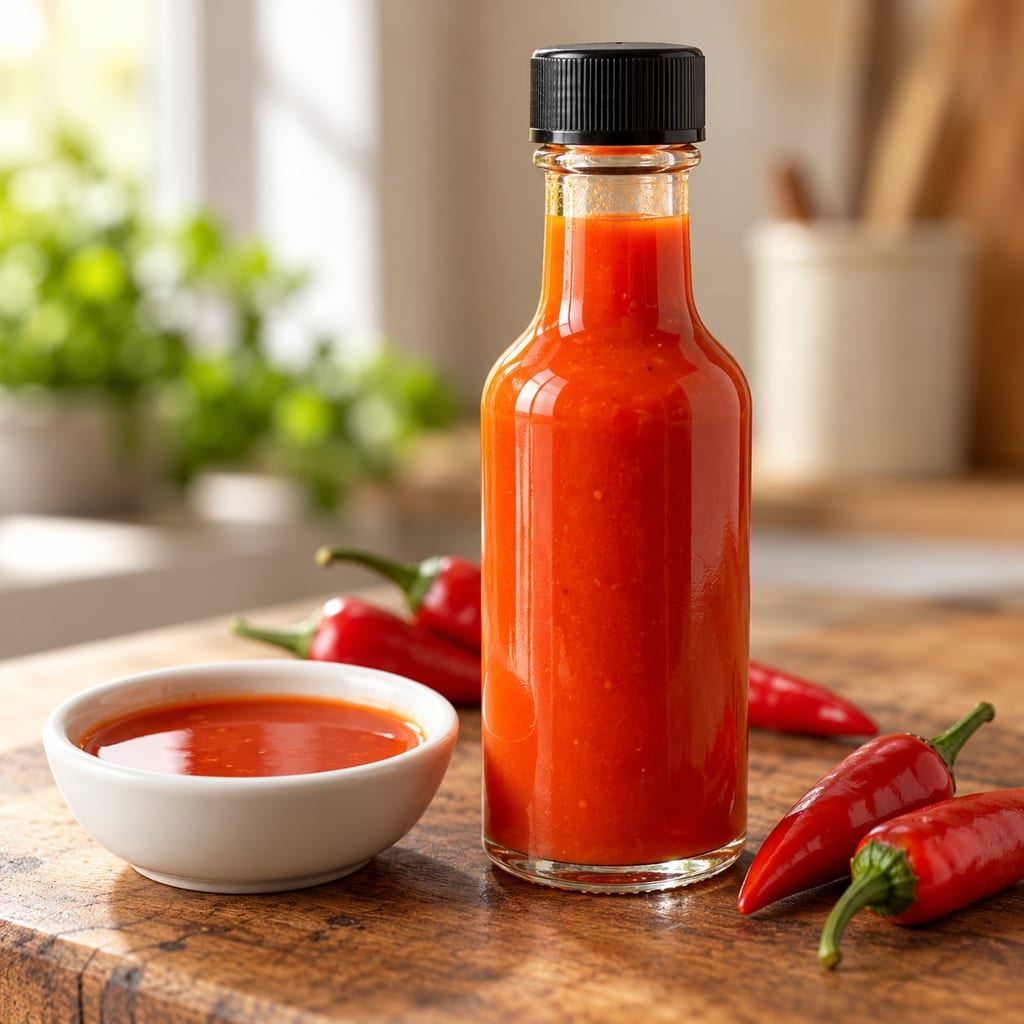
Documentary account of Louisiana pepper sauces, using TABASCO's published barrel-aged commercial process as one specific example; the source does not provide a validated home recipe.
Maari is a Burkinabè baobab-seed condiment documented in producer studies. This is a non-instructional account, not a home recipe: sources vary, omit key process details and establish no validated safety control.
No community contributions have been published for this entry yet.
Sign in to contribute. Published comments and photos are free to read.
MaangchiMethod · Storage
Homemade rice syrup (Ssal-jocheong) recipe by MaangchiStovetop and rice-cooker quantities, temperatures, times, endpoints, storage up to 3 months
Cited in: A sweetener made from rice and malt; The conversion hold; Straining, boiling and the endpoint; Storage and open questions