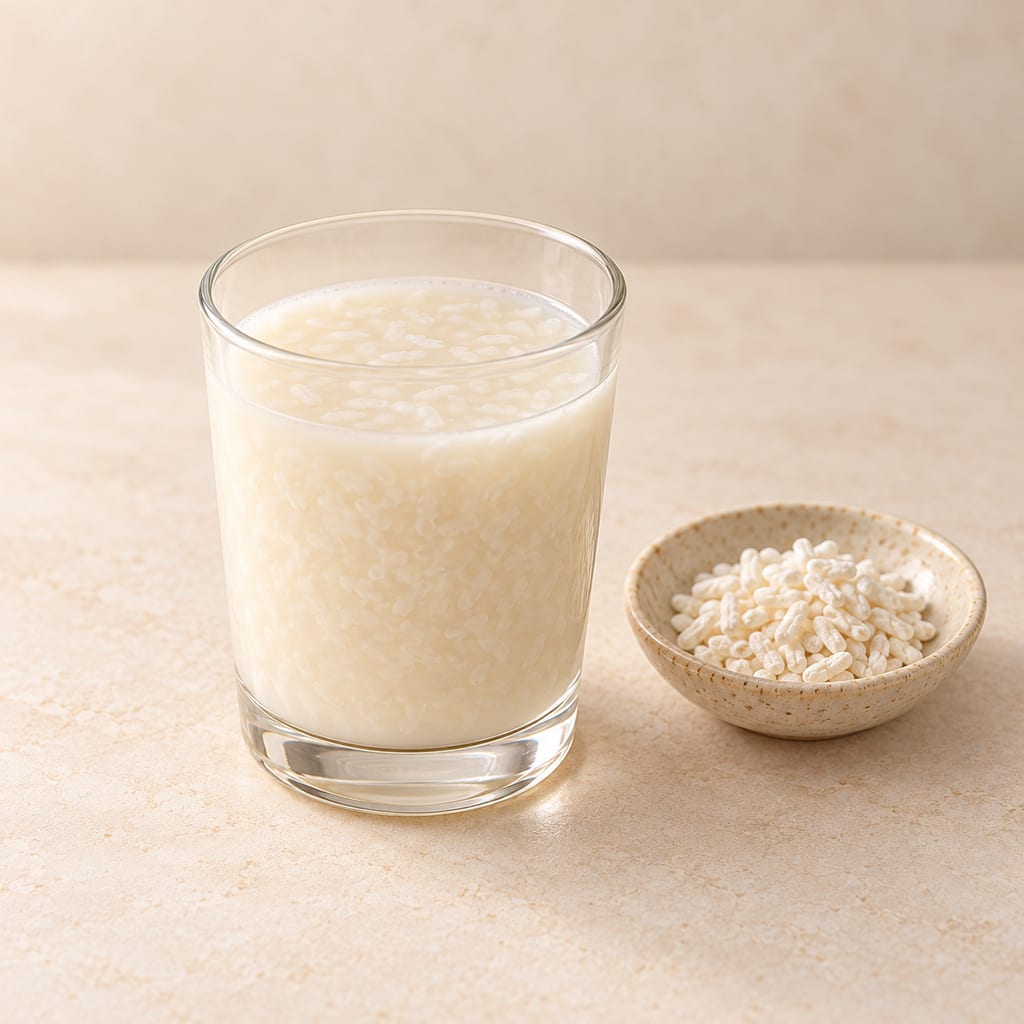
Rice-koji amazake
Cooked rice, rice koji and water are held warm for hours so koji enzymes turn the rice starch to sugars, giving a naturally sweet Japanese drink with no added sugar and no second fermentation.
 FermenteaWhere food goes to change
Built structures · All-in-one appliances
rice cooker enzyme hold
One rice cooker run as two stages: cook the rice, then add koji or malt water and hold it warm with the lid managed, before boiling, straining or chilling elsewhere.
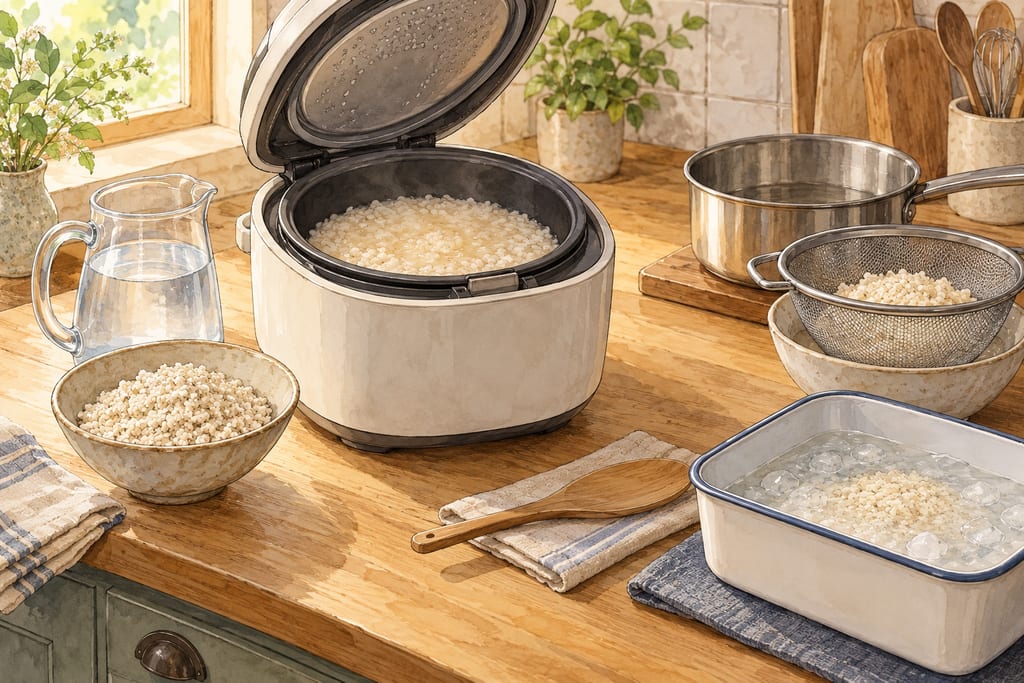
One rice cooker runs as two stages. The first cooks the rice, which gelatinises the starch so the enzymes can reach it. The second holds the mixture warm, with koji or malt amylases converting the starch to sugar. A third stage boils, strains or chills the result elsewhere.
The cooker does what it does well, cooking starch and holding warmth. The enzyme hold is a separate stage with its own temperature check.
The warm hold lets the enzymes work. Boiling ends the enzyme work. The hold temperature depends on how the cook handles the lid and switch, not on a programmed setpoint.
Amazake: cook the rice, cool it to about 60 °C, add koji, and hold at 50 to 60 °C for 5 to 10 hours.
Sikhye: cook the rice, add clear malt water, and warm for about 4 hours before boiling it in a pot.
Ssal-jocheong (rice syrup): warm for 6 hours, strain, then reduce the strained liquid in the cooker with the lid open.
Measure the mixture's temperature at each stage change and through the hold.
Do not add koji to porridge hotter than 70 °C: the enzymes are destroyed.
Some cookers switch to a hot keep-warm automatically after cooking. The Instant Pot Duo, for example, starts keep-warm for 10 hours at 63 to 78 °C unless it is turned off.
Cooking, saccharifying and microbial fermenting are different stages. This build covers only the first two.
The amazake, sikhye and ssal-jocheong methods are current home recipes from a Japanese manufacturer and a Korean cookery site. The rice-cooker versions are adaptations of those methods. The sources do not date the staged use.
A build is made where it stands: moving it means building it again.
Below 50 °C bacteria may increase, according to the amazake source.
Hazard sourceHold the koji amazake at 50 to 60 °C for saccharification, then store it cold.
Control sourceIf concerned about bacteria, bring the finished amazake to a boil.
Control sourceDo not add koji to porridge hotter than 70 °C: the enzymes are destroyed.
Check whether the cooker's keep-warm starts automatically after cooking, and turn it off if the stage needs a set temperature.
Documented for international use, with no single place of origin assigned.
Cooked rice, rice koji and water are held warm for hours so koji enzymes turn the rice starch to sugars, giving a naturally sweet Japanese drink with no added sugar and no second fermentation.
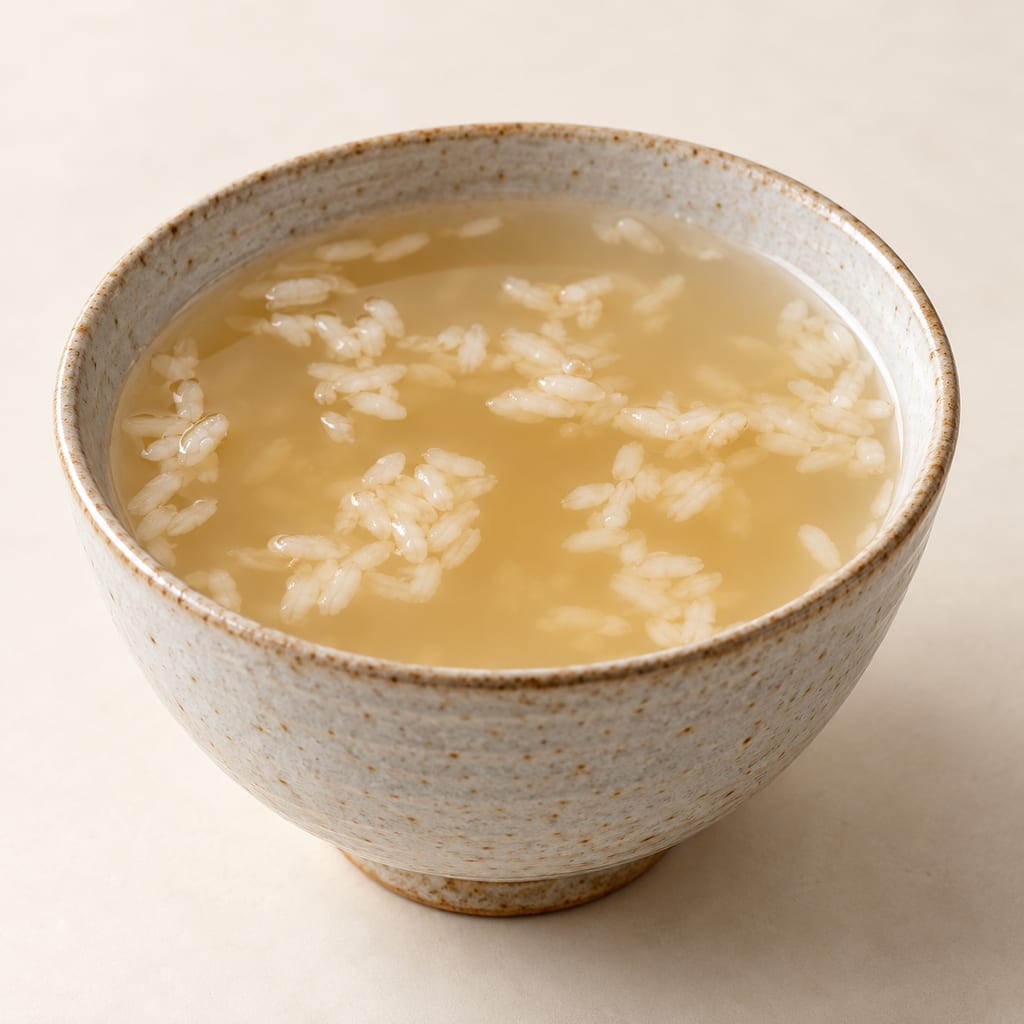
A Korean sweet rice drink made by holding cooked rice in water drawn off barley malt until the grains float, then boiling and chilling it.
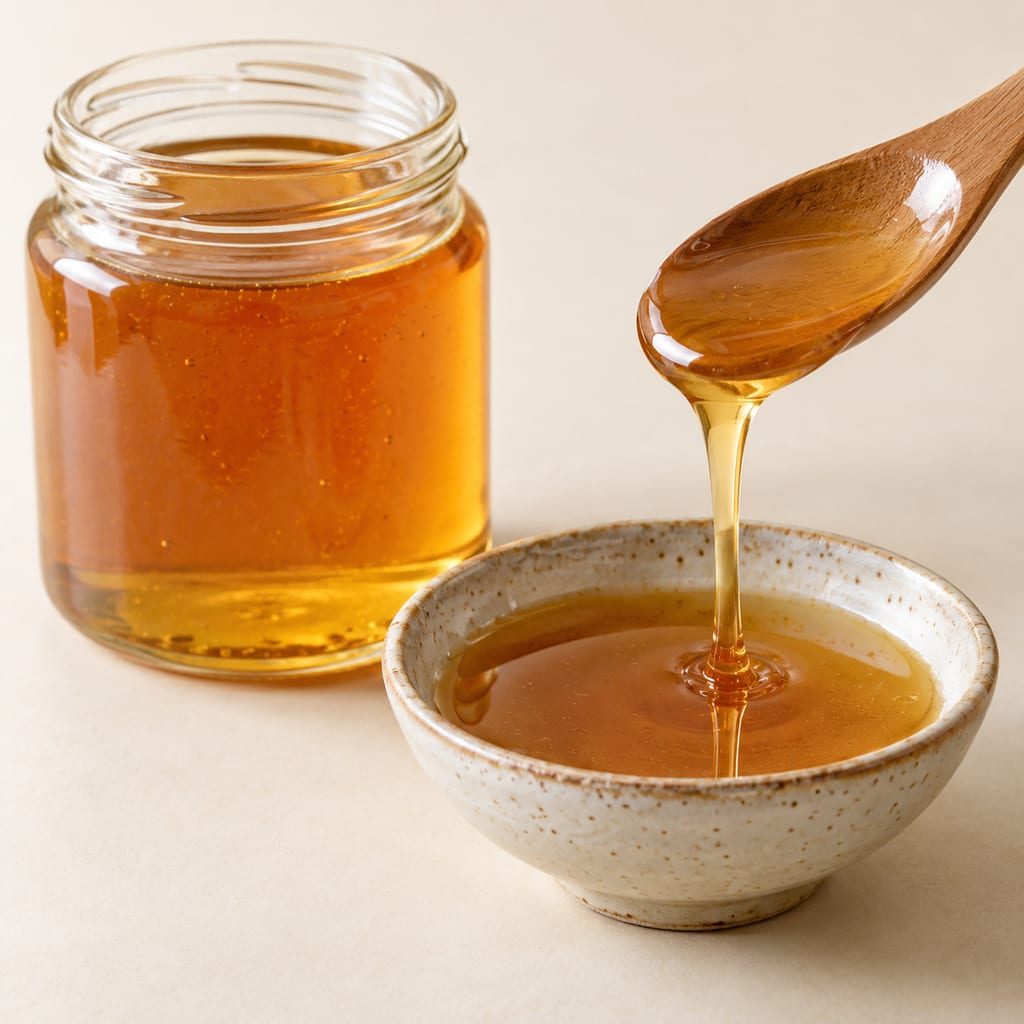
A Korean rice syrup: cooked rice is converted by barley malt in a long warm hold, strained, and the sweet liquid is boiled down until it pours like maple syrup.
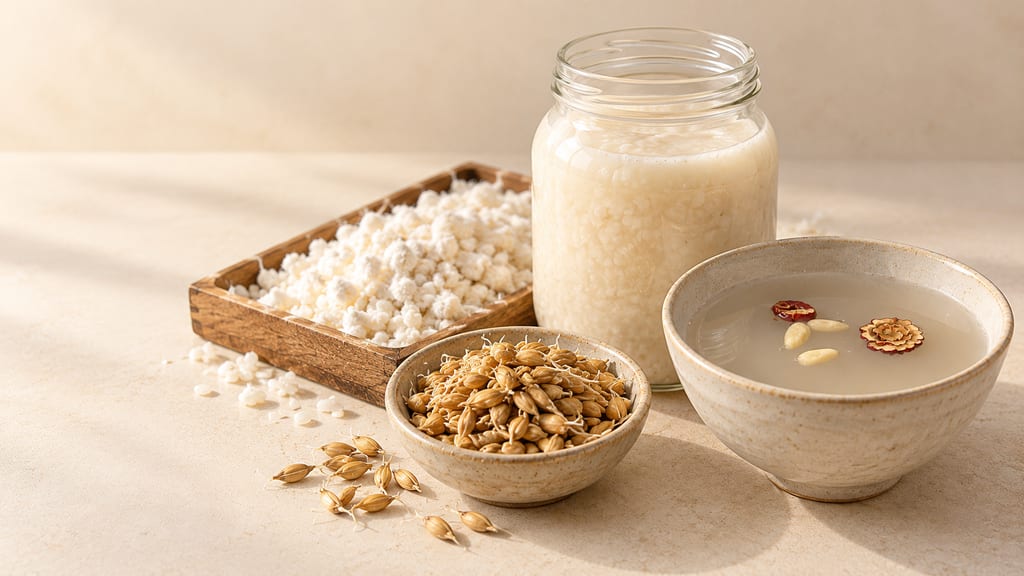
Amazake, sikhye and rice syrup turn cooked rice sweet with enzymes from koji or barley malt, held at the right warmth. Jiu niang and idli batter look similar but depend on living microbes, at very different temperatures.

Soft, spreadable Calabrian pork sausage made with a great deal of red chilli and fatty pork, stuffed into natural casings, sometimes smoked and matured while staying soft.

A way to add independent temperature logging to an existing food dehydrator without changing its built-in controls or protections. It is a monitoring method, not a rewiring plan.

Pleurotus cystidiosus is the abalone mushroom, a cultivated oyster-type fungus with dark brown caps that grows more slowly and is more demanding than other Pleurotus species.

A dark, balanced vinegar from Emilia-Romagna made by combining cooked or concentrated grape must with wine vinegar, then acetifying and refining it in wood under a protected specification.

A living dairy inoculum that starts controlled cream fermentation, developing acidity and aroma before sour cream or cultured butter is finished.

A small electric incubator holds jars at a selected temperature for yogurt and other documented warm food preparations. Controls, capacity and vessel arrangement vary by model.

Adygean salt is a seasoned table salt associated with Adygea and the wider North Caucasian culinary tradition. Salt is blended with garlic and a variable selection of herbs and spices; the exact mix depends on the named style and maker.

The African Caesar-group mushroom, Amanita masasiensis, is a wild ectomycorrhizal species of central and southern African woodlands, eaten locally. The genus contains deadly poisonous species, so identification needs care.
No community contributions have been published for this entry yet.
Sign in to contribute. Published comments and photos are free to read.
Marukome Co., Ltd.Method
糀甘酒の作り方|マルコメの糀甘酒|マルコメCited in: Overview; How it works; Documented uses; Measuring; Limits
Tanica ElectricMethod
甘酒「米麹」(かなの実験室)|発酵食品試作報告書|Tanica PressJournal of Fungi (MDPI)Method
Ingredients, Functionality, and Safety of the Japanese Traditional Sweet Drink AmazakeCited in: Limits
Instant PotMethod
Programmable Electric Pressure Cooker User Manual, Models IP-DUO60/80Cited in: Limits