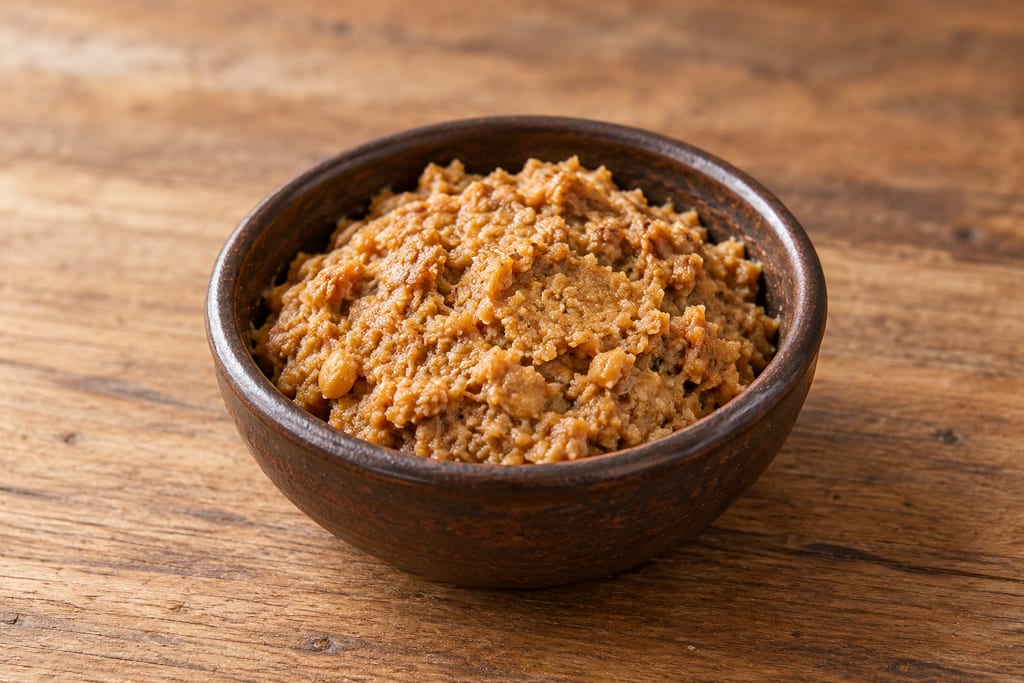
Doenjang
Doenjang (된장) is a Korean fermented soybean paste made by brining meju, separating ganjang, then mashing and aging the solids. This recipe follows one documented Sunchang processing study.
 FermenteaWhere food goes to change
Built structures · Terraces, platforms and stands
An outdoor platform where households arrange onggi jars for fermenting, aging and storing Korean jang sauces. Platform materials and layouts vary; no single standard design is established.
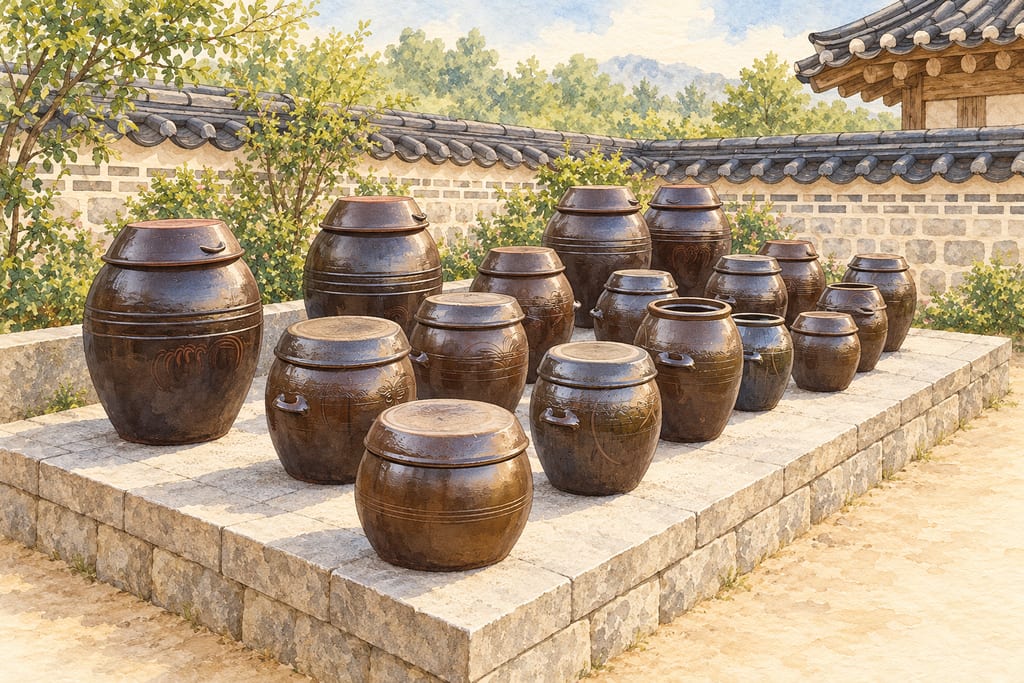
Jangdokdae (장독대) is the outdoor platform or terrace where onggi jars are arranged for keeping Korean jang. Korea.net describes it as a raised stone platform near the kitchen of a traditional home. The jars are individual vessels with their own lids; the platform is a built setting that makes a group of jars accessible outdoors.
The available sources show variation rather than a single blueprint. A platform may be stone or masonry, and the surrounding courtyard or wall depends on the household or institution. The name identifies the jar platform and its use, not a fixed dimension, number of jars or standardized architectural plan.
The platform holds onggi jars containing sauces such as doenjang, ganjang and gochujang. Korea.net describes brown clay jars used for fermented pastes and soy sauce, while UNESCO's 2024 intangible heritage entry identifies jang as fermented sauces including soybean paste, soy sauce and red chili paste.
The jar terrace is one part of a broader food practice. UNESCO describes jang-making as including preparation, fermentation, aging, storage and consumption, with recipes and traditions varying by household. It also documents community groups that make and keep sauces together on a community jangdokdae. The build page covers the platform; it does not substitute for the distinct methods of each sauce.
The Korea.net description emphasizes air circulation and sunlight, and the official Facts About Korea document similarly describes a well-ventilated place with sufficient sunlight. These sources convey the traditional siting principle but do not prescribe exact measurements, a fixed compass direction or a drainage system.
Examples are tied to particular sites. A Korea.net cultural feature shows jangdokdae at traditional homes in South Chungcheong Province and the Korean Folk Village in Gyeonggi Province. A separate photograph used here shows a contemporary installation at the Korean Cultural Center in Japan. None of those examples establishes a universal household layout or a historic date for every platform.
The sources do not give a standard construction sequence, exact platform dimensions or one required material. They also do not establish the origin date of jangdokdae, the age of a jar currently on a platform, or the contents of the photographed installation. This page keeps the documented general form separate from claims about a particular historic home.
The generated illustration is a source-guided editorial depiction of the raised platform and jar group. It is not a photograph, excavation record or reconstruction of the Korean Cultural Center courtyard. The linked photograph keeps its original credit and CC BY-SA 3.0 status and is shown separately from the generated hero.
Official Korean and UNESCO sources describe the practice of keeping jang in onggi jars on an outdoor platform, but do not date the origin of the jangdokdae as a built form.
A build is made where it stands: moving it means building it again.
This cultural description is not a structural design or construction plan; the sources provide no dimensions, load rating, tools or construction sequence.
Air circulation and sunlight are described as desired conditions, not quantified engineering standards. The sources document no fire or fuel process for the platform.
These sources describe Korean jang-making and storage practices at national scale; they do not pin one standard platform design to a particular locality.
Doenjang (된장) is a Korean fermented soybean paste made by brining meju, separating ganjang, then mashing and aging the solids. This recipe follows one documented Sunchang processing study.
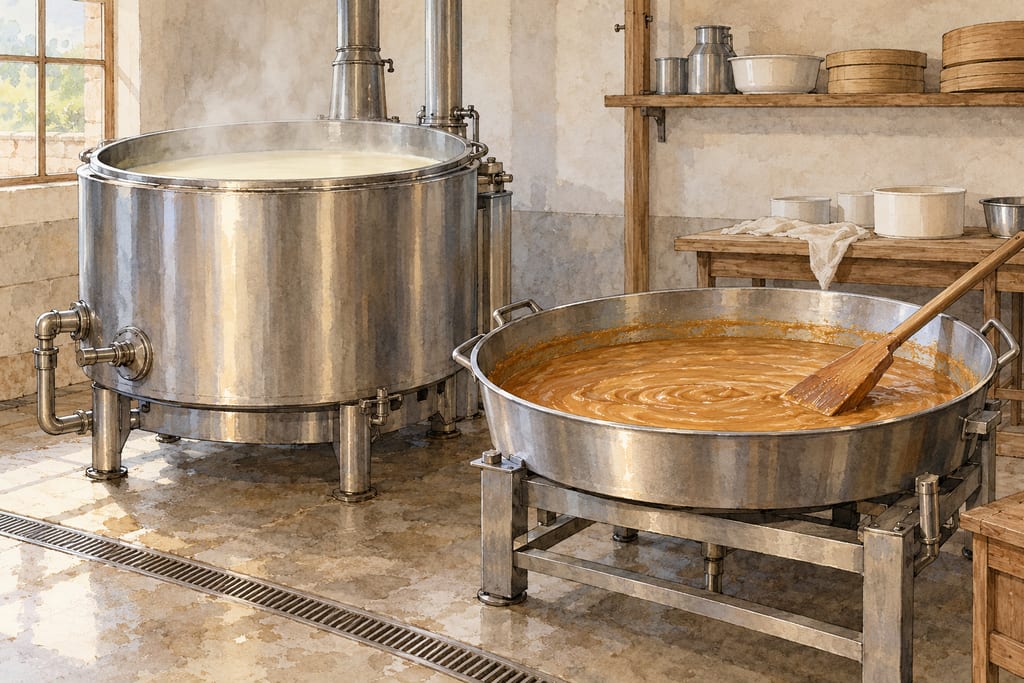
The kettle heats and reduces a large volume of thin liquid such as whey; before it nears the brewer's minimum fill the batch moves to a wide pan for the thick, stirred finish.
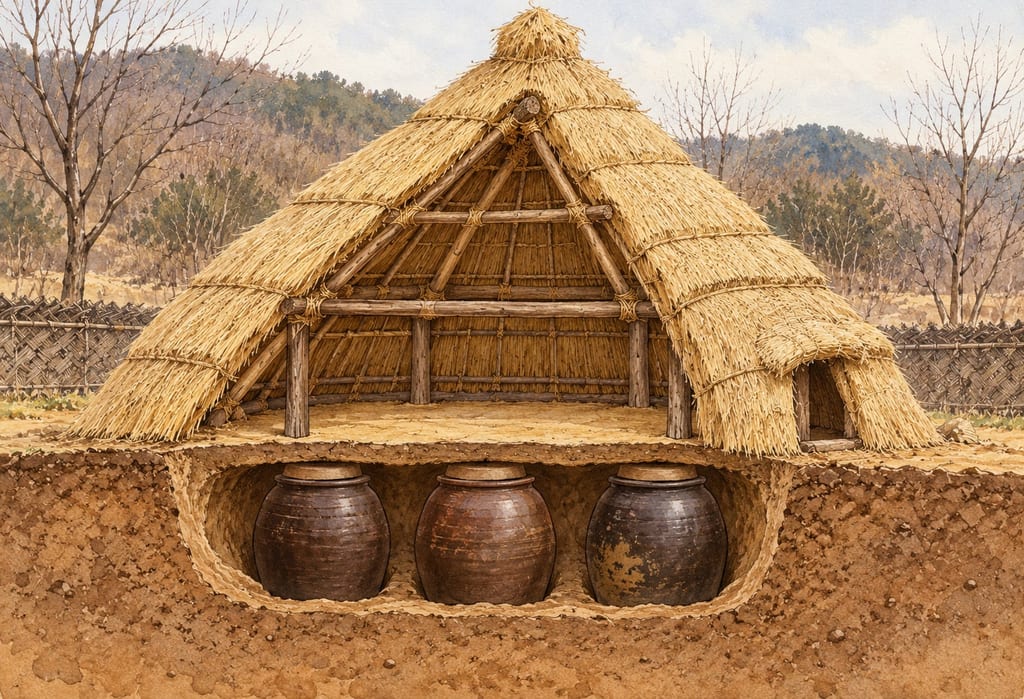
A Kimchi-gwang is a small storehouse built over buried kimchi jars. Korean references describe a framed, thatch-roofed shelter with a tight side entrance, mainly in Gyeonggi-do.
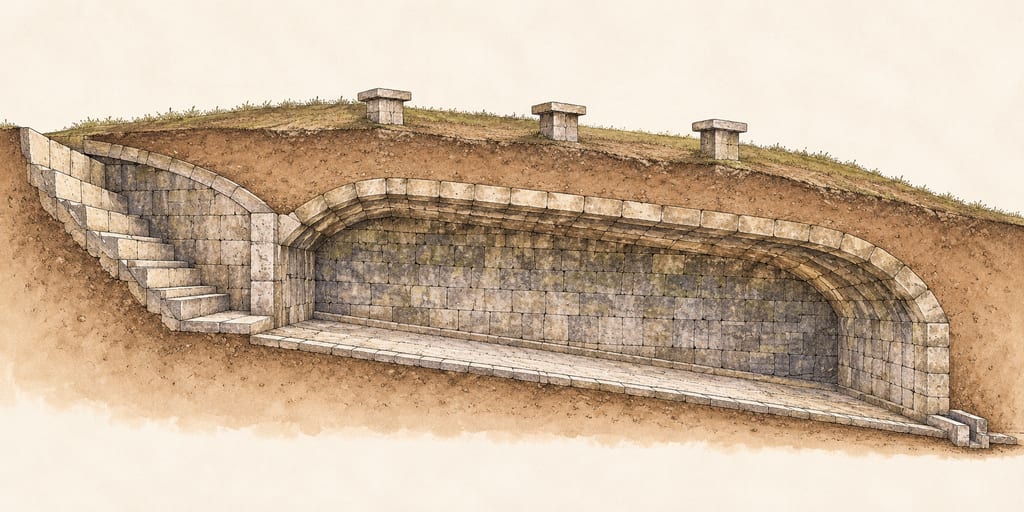
Gyeongju Seokbinggo is a Joseon-era semi-subterranean stone ice store at Wolseong in Gyeongju, Korea. The surviving stone structure dates to 1738 and was moved to its present site four years later.
No community contributions have been published for this entry yet.
Sign in to contribute. Published comments and photos are free to read.
Korea.net, Republic of KoreaForm · Use · Geography
January 2015, Korea Magazine, Vol. 11Describes the jangdokdae as an elevated stone platform near a traditional home's kitchen.
Describes ventilation, sunlight and brown onggi jars holding fermented sauces and condiments.
Cited in: A platform for a group of jars; Onggi and fermented sauces
Korea.net, Republic of KoreaUse · Form
Facts about KoreaDescribes jangdokdae as an area outside the kitchen for large brown-glazed jars holding soy paste, soy sauce and chili paste.
Describes ventilation and sufficient sunlight as desirable for the storage area.
Cited in: Outdoor placement and variation
Korea.net; feature in cooperation with the National Research Institute of Cultural HeritageForm · Geography
Onggi, traditional earthenware vessel in KoreaIdentifies the jangdokdae as the place by a traditional home where a family kept crocks and large ceramic vessels.
Shows examples at a traditional home in Nondan, South Chungcheong Province, and the Korean Folk Village in Yongin, Gyeonggi Province.
States that onggi shapes do not have one standard model.
Cited in: A platform for a group of jars; Outdoor placement and variation; What the evidence does not establish
UNESCO Intangible Cultural HeritageUse · History · Geography
Knowledge, beliefs and practices related to jang making in the Republic of KoreaThe 2024 inscription describes jang as fermented sauces including soybean paste, soy sauce and red chili paste.
The practice includes making, keeping and consuming jang; household practice and sauces vary.
The UNESCO photo captions describe a community jangdokdae where residents collectively keep jang.
Cited in: Onggi and fermented sauces
Wikimedia CommonsImage reference
Jangdokdae sauce-jar stand, Korean Cultural Center in JapanThe inspected photograph shows a raised platform with many lidded onggi jars of differing heights at a contemporary cultural-center courtyard.
File page states CC BY-SA 3.0; the image is linked with attribution.
Cited in: Outdoor placement and variation; What the evidence does not establish