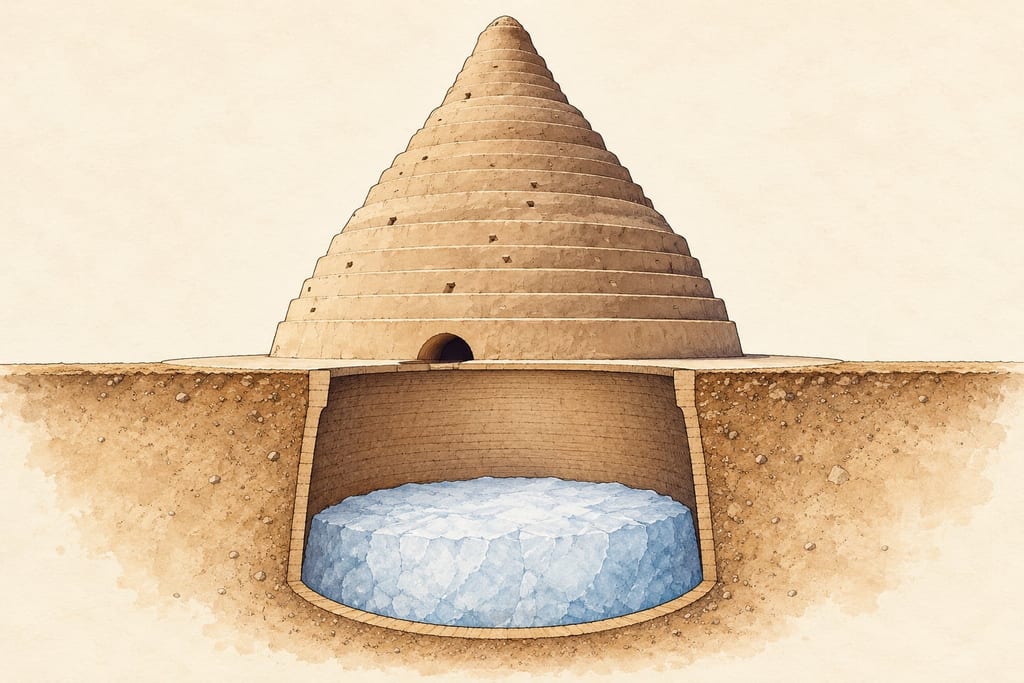
Yakhchāl (Iranian ice store)
A yakhchāl is an Iranian building or covered pit for storing ice harvested in winter for summer distribution. Its forms vary, and the sources do not show that it was a food cellar.
 FermenteaWhere food goes to change
Built structures · Place · Cold stores and coolers
석빙고 · Gyeongju Seokbinggo · Korean stone ice store
Gyeongju Seokbinggo is a Joseon-era semi-subterranean stone ice store at Wolseong in Gyeongju, Korea. The surviving stone structure dates to 1738 and was moved to its present site four years later.
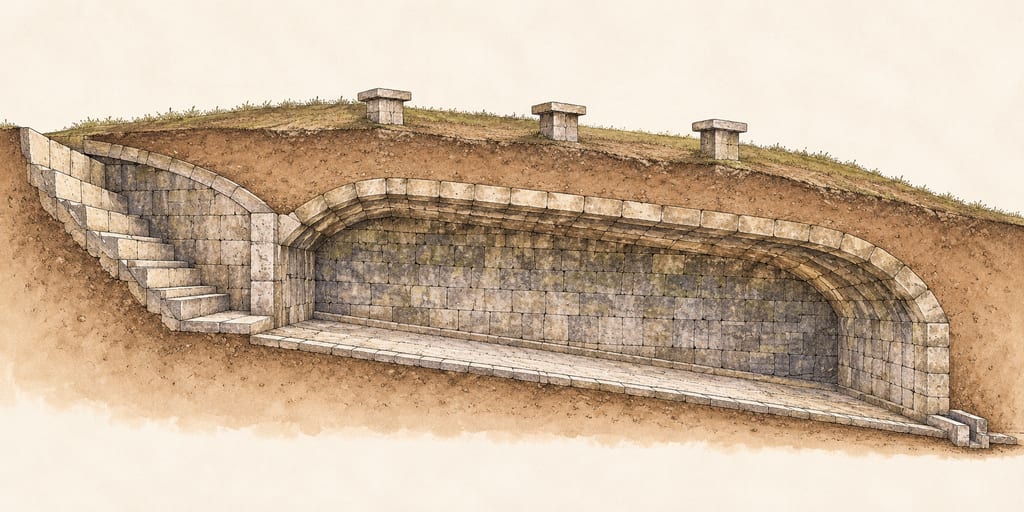
Seokbinggo means a stone ice store. Gyeongju’s surviving example stands along the northern side of the Wolseong fortress area, with its long axis running north to south. It held ice, rather than fermenting food or serving as an ordinary household cellar. The present monument belongs to the Joseon period.
An inscription on the stone stele and the entrance lintel records that Jo Myeong-gyeom rebuilt an earlier wooden ice store in stone in 1738. The inscription also records its relocation from a site to the west four years later. These dates describe the surviving Gyeongju building; they do not establish when Koreans first stored ice or when every seokbinggo type began.
The entrance is on the south side. Stairs descend from it into a long chamber partly set below ground. The roof forms a stone arch, and three openings connect its upper part with the outside air. Inside, the floor falls toward a drain so meltwater can run out. These visible features belong to this particular Gyeongju store and should not be treated as a plan for every Korean icehouse.
A 2022 study gives the chamber dimensions as 19.86 metres long, 5.94 metres wide and 4.97 metres from floor to the arched ceiling. Those measurements describe this monument, not a standard size. The photograph linked here shows its interior masonry and arch; it does not show ice, the exterior roof or an operating storage season.
The generated cutaway illustrates the documented relationship between the chamber and ground, entrance, roof openings and drainage. It is explanatory editorial art, not a measured construction plan or a reconstruction of the building's present excavated state.
The building is now a protected heritage site, not an active ice store. Researchers measured temperature and relative humidity at five interior points between October 2019 and October 2020 and sampled soil for a separate microbial dataset. Those modern readings document the environment of the monument and its conservation concerns; they are not measurements of an eighteenth-century ice-storage season or a food-safety process.
Gyeongju Seokbinggo and the Iranian yakhchāl are related by the broad task of holding winter ice for later use, but their regional histories and building forms differ. The link to the yakhchāl is a comparison of that storage function, not a claim that the structures share a design or cultural origin.
Point published in the official Gyeongju City heritage page's location map (lat/lng fields). Locates Seokbinggo itself rather than the wider city; it is a map reference point, not a separate survey of the interior.
A yakhchāl is an Iranian building or covered pit for storing ice harvested in winter for summer distribution. Its forms vary, and the sources do not show that it was a food cellar.
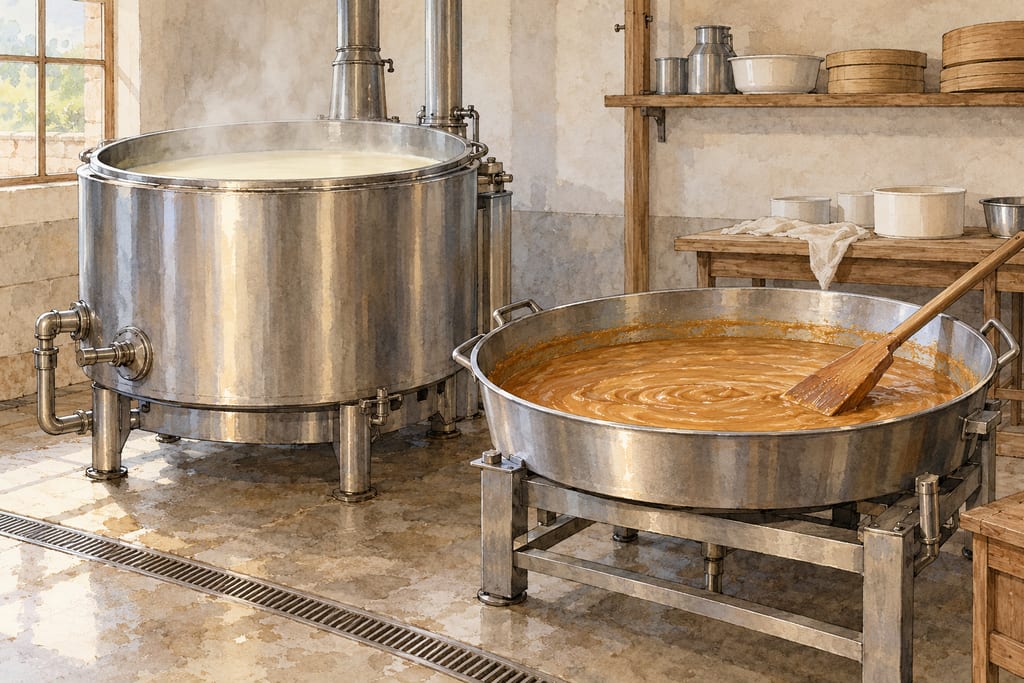
The kettle heats and reduces a large volume of thin liquid such as whey; before it nears the brewer's minimum fill the batch moves to a wide pan for the thick, stirred finish.
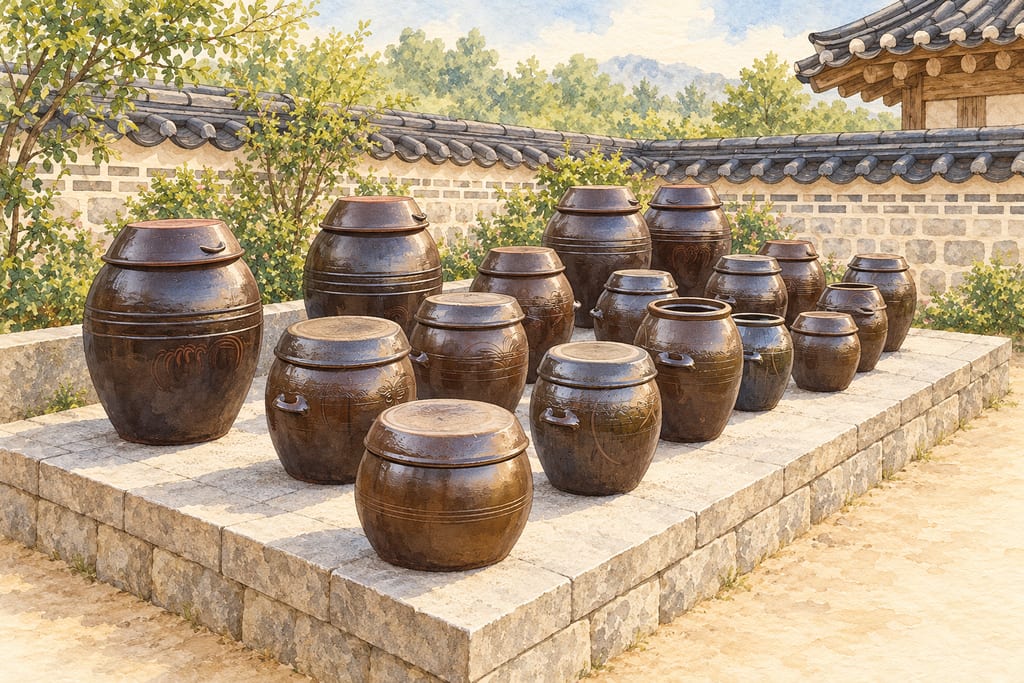
An outdoor platform where households arrange onggi jars for fermenting, aging and storing Korean jang sauces. Platform materials and layouts vary; no single standard design is established.
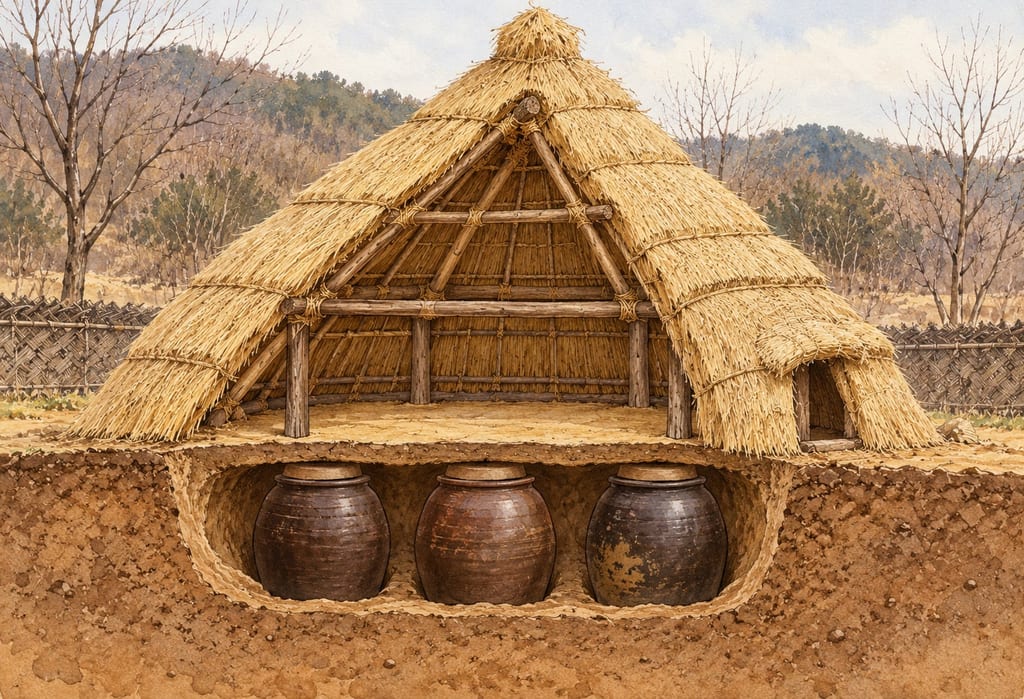
A Kimchi-gwang is a small storehouse built over buried kimchi jars. Korean references describe a framed, thatch-roofed shelter with a tight side entrance, mainly in Gyeonggi-do.
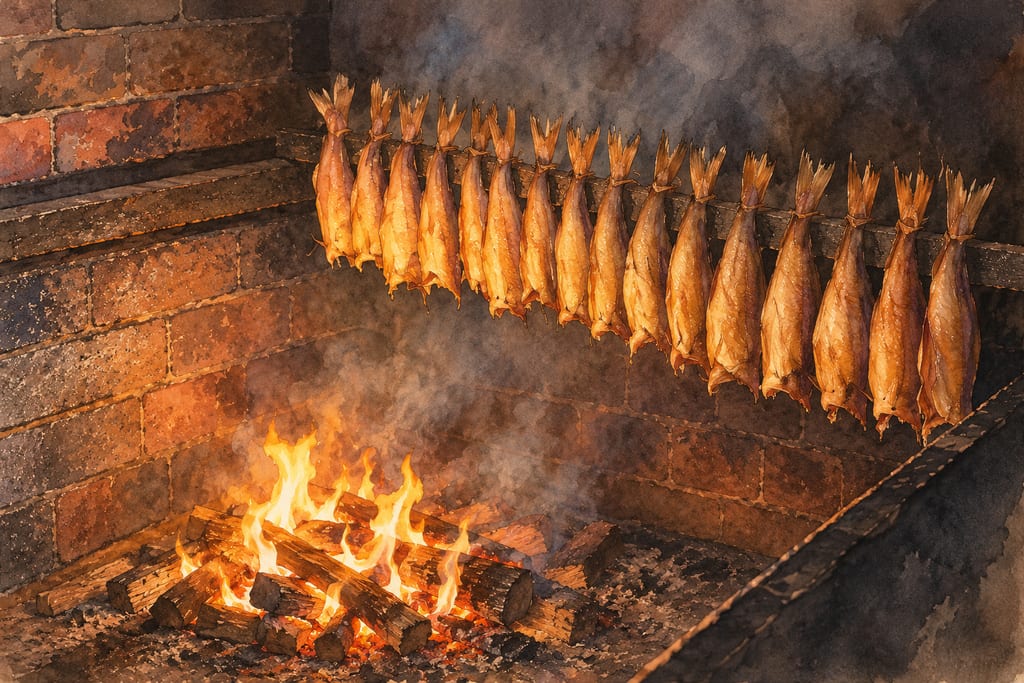
The Arbroath “barrel” is a hardwood-fired smoking pit with triangular rails and a cover. Its documented form belongs to the traditional hot-smoking of haddock around Arbroath and Auchmithie, Scotland.

Crisp battered white fish in warm corn tortillas with shredded cabbage, lime and fresh salsa. This home version draws on the Ensenada style without claiming to be a definitive historic formula.
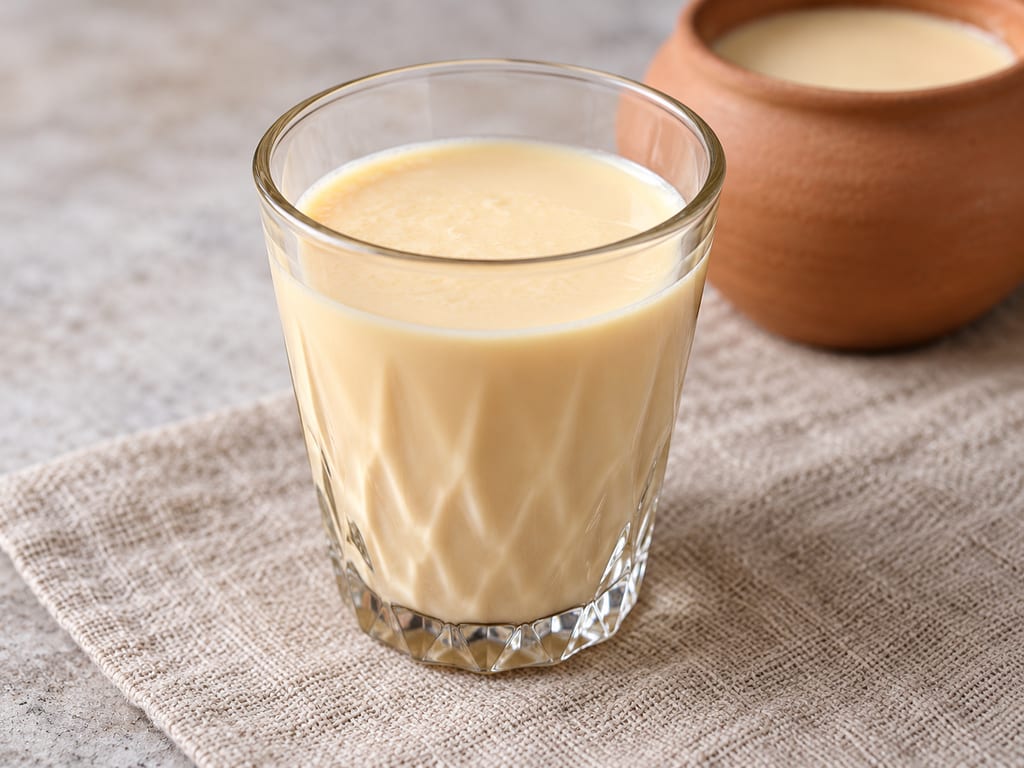
Baked milk is an Eastern European preparation of milk held at high heat for hours until it turns cream-coloured with a cooked, mildly sweet flavour, without any fermentation.

A coarse South African farmhouse sausage of beef with pork or mutton fat, defined by its coriander seasoning and cooked fresh over coals rather than preserved.
A flood-season pit store described for Omagua communities along the Amazon: manioc tubers were buried before inundation and recovered as waters receded. Its shape and lining are not recorded.
A temporary, in-place earthen oven used to cook camas with heat retained by fire-heated stones. The dimensions described here belong to one Kalispel-supervised reconstruction, not a universal form.

Chuño negro is a source-documented Andean potato-preservation practice. This entry records producer tradition; it is not a validated household process for making potentially toxic bitter potatoes safe.
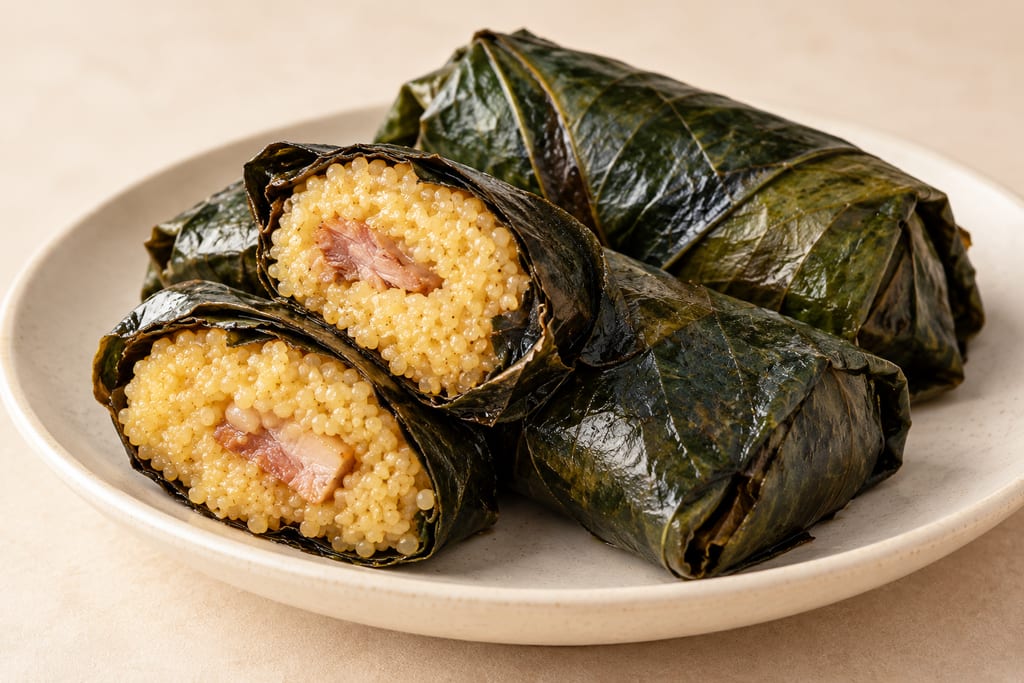
Cinavu is a Paiwan leaf-wrapped parcel built around millet or taro, meat and locally gathered leaves. It belongs to a food culture of harvest, hospitality and shared work, with village recipes differing in both filling and cooking time.

A gelling polysaccharide extracted from red seaweeds, sold as kanten strips or powder; it sets firm at a low concentration and stays solid until about 85 °C.

A Dominican table and seasoning condiment of sour orange juice, mixed with lime and salt and bottled raw; garlic, oregano or a hot pepper may be added for meat or a spicier bottle.

Cicerbita alpina is an alpine perennial whose tender shoots and leaves have been eaten raw or cooked. Sámi milk preparations and modern Carnian dishes are distinct uses, with serious identification and preservation limits.

Japanese skipjack tuna cooked, then repeatedly smoked and dried over a wood fire by the hand-fired tebiyama method into a hard block for shaving into dashi: the first stage of katsuobushi.

A Swedish-style spirit vinegar made by fermenting neutral alcohol with live vinegar bacteria, with a separate guide to commercial ättika strengths.

A yeast-raised wheat ring shaped from a firm dough, briefly boiled and baked. This source-batch formula gives a gently malted crust and a chewy crumb.

A warm dip of garlic, anchovy and olive oil, often enriched with butter, that Piedmont serves over a flame with raw and cooked vegetables and bread.

Bechamel is a white sauce of milk thickened with a butter and flour roux, one of the French mother sauces, and the base from which Mornay and other cheese and cream sauces are made.
No community contributions have been published for this entry yet.
Sign in to contribute. Published comments and photos are free to read.
Gyeongju City Cultural TourismFunction · Site · Form · History · Geography
경주 석빙고 (Gyeongju Seokbinggo)The structure is an ice store on the north side of Banwolseong/Wolseong in Gyeongju.
Its south entrance descends by stairs; the floor slopes for drainage; the roof is semicircular and has three vents.
The inscription records stone rebuilding in 1738 and relocation from a western site four years later.
Cited in: A Joseon ice store at Wolseong; A descending entrance and arched stone chamber; Heritage building and present-day measurements
Data in Brief 42 (2022), article 108308; National Research Institute of Cultural HeritageSemi subterranean form · Dimensions · Present condition
Semi-subterranean environment and soil metagenomic datasets of the Gyeongju Seokbinggo (stone ice storage) in South KoreaThe Gyeongju stone icehouse is a semi-subterranean stone building used to store ice in the 1700s.
The chamber is reported as 19.86 m long, 5.94 m wide and 4.97 m high to the arched ceiling.
Interior temperature and relative humidity were measured at five points from October 2019 to October 2020; these are present-day monument measurements.
Cited in: A descending entrance and arched stone chamber; Heritage building and present-day measurements
Wikimedia CommonsImage · Interior form · Rights
Korea-Gyeongju-Seokbinggo 3740-06.jpgThe photograph depicts the interior of Gyeongju Seokbinggo and was taken on 30 May 2006.
The Commons file is licensed CC BY-SA 3.0 or GFDL 1.2 or later; attribution and share-alike terms apply.
Cited in: A descending entrance and arched stone chamber