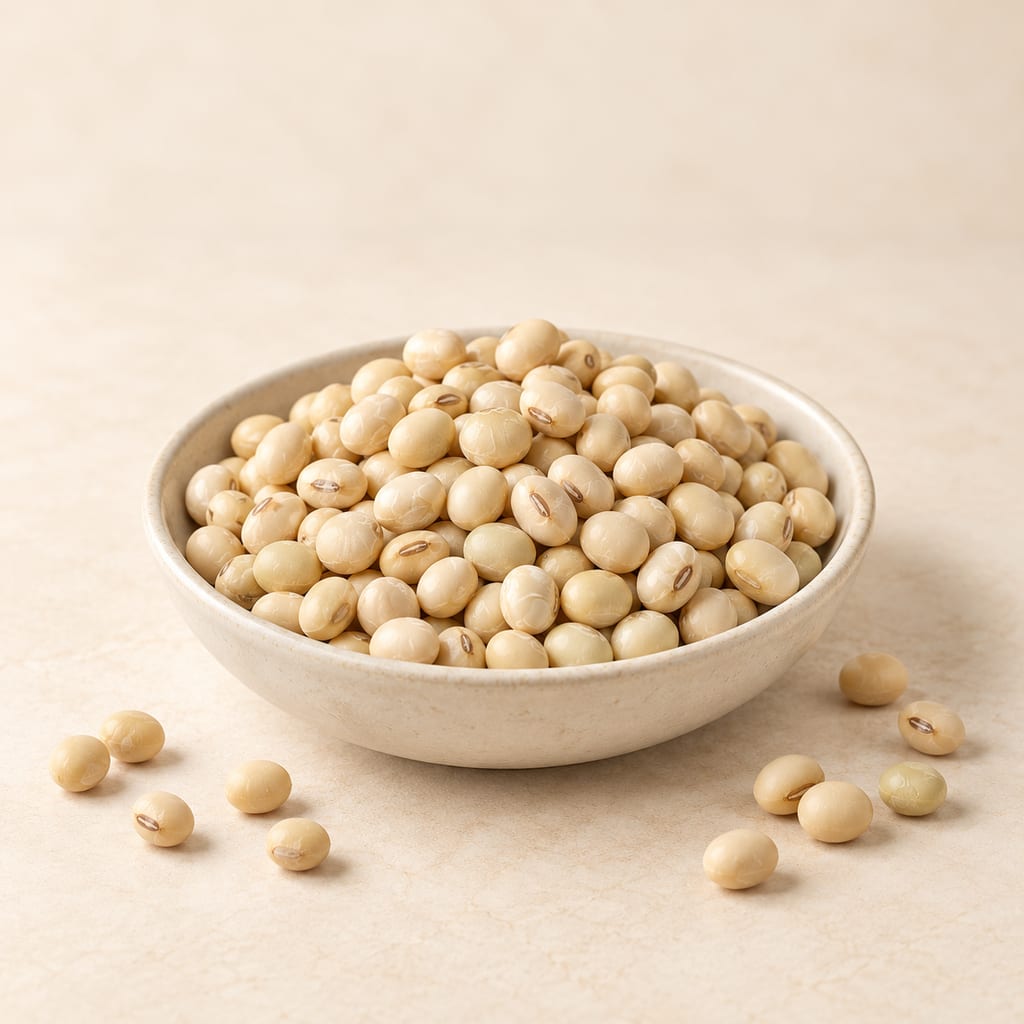
Soybeans
Soybeans are the mature dry seeds of Glycine max, about 40 percent protein and 20 percent oil, the substrate of tempeh, natto, miso, soy sauce and many other fermented foods.
 FermenteaWhere food goes to change
Modern method
豆豉 (dòuchǐ)
This controlled study protocol makes Aspergillus koji from soybeans and then ferments it with 4% salt. It uses a 150 g jar batch and a defined moisture target; the research method is not a validated home process.
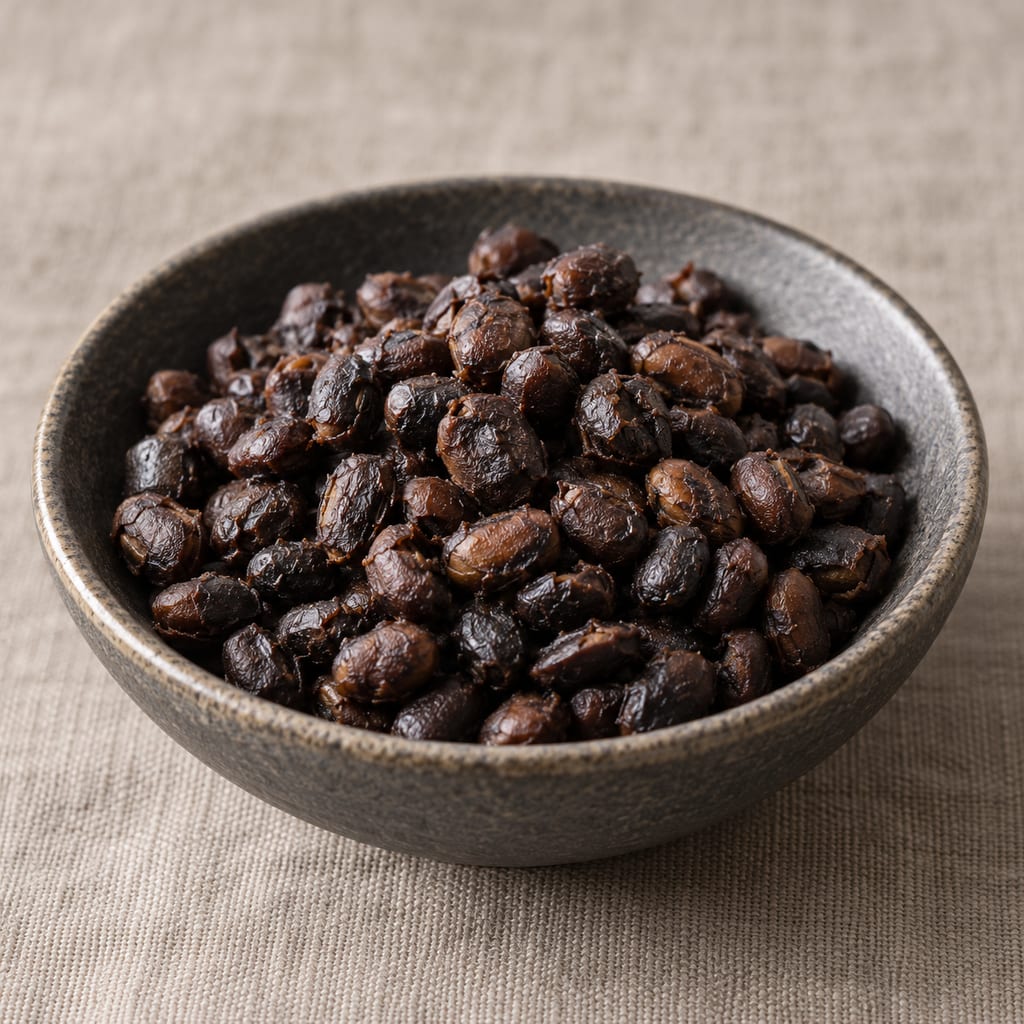
Douchi is a Chinese condiment made from fermented whole soybeans. The beans become deeply savoury through microbial activity and enzymatic breakdown, then develop additional flavour during salting and maturation.
In its familiar commercial form, douchi consists of individual dark, wrinkled, strongly flavoured beans. They are often chopped or mashed into sauces rather than eaten as a substantial dish on their own.
Despite the common English description fermented black beans, the ingredient should not be confused with black turtle beans (Phaseolus vulgaris). Traditional Chinese douchi is made from soybeans, Glycine max, frequently black-seeded varieties.
The experimental formulation here uses the food mould Aspergillus oryzae strain 3.951 and a deliberately low salt concentration.
It is based on a study of how fermented rice culture affects the biochemical and sensory properties of douchi.
The selected formula is the study's 0% fermented-rice-culture control, allowing the influence of soybean koji and subsequent fermentation to be considered without the rice-culture supplement.
This is not a universal traditional douchi recipe.
Soybean koji mixture — 150 g per experimental jar
Initial soybeans — Exact dry mass not specified
Koji organism — Aspergillus oryzae 3.951
Inoculation rate — 1% v/w spore suspension
Initial soaking — 6–8 hours at 20 ± 2°C
Steaming — 121°C for 20 minutes
Koji cultivation — 36 hours at 28 ± 2°C and 90% RH
Target moisture before second fermentation — Approximately 40%
Salt — 4% w/w of douchi qu
Fermented rice culture — 0%
Secondary fermentation — 15 days at 40 ± 2°C
Safety status — Laboratory method; requires process validation
Douchi belongs to an old Chinese tradition of preserving and transforming soybeans through microbial activity.
Its history is connected to the broader development of soybean foods, grain fermentation and salted condiments.
Archaeological and textual evidence indicates fermented soybean preparations existed in China well before modern industrial food production.
However, identifying the earliest use of the exact term douchi is not the same as proving that today's commercial manufacturing procedure existed unchanged at that time.
Historical Chinese texts use terms for fermented beans whose meanings and production methods evolved.
By later historical periods, fermented soybeans had become widely established as seasonings and ingredients.
Regional douchi traditions subsequently developed different flavours, textures and preserving techniques.
The best-known modern products include Yangjiang douchi from Guangdong and Tongchuan douchi from Sichuan.
These products differ in raw material, processing, moisture, aroma and maturation.
The experimental 2012 low-salt process was designed for food-science research, not as a reconstruction of a particular ancient method.
Mandarin pronunciation is dòuchǐ. Cantonese commonly renders the same characters as dau6 si6 in Jyutping.
In the Philippines, salted fermented black beans are commonly known as tausi, reflecting regional Chinese culinary influence.
The terminology should not be confused with Indonesian tauco or Japanese miso. These are related categories of fermented soybean condiment but differ substantially in consistency, production and use.
Soybeans provide protein, fat and carbohydrates for the fermentation.
The exact raw dry-soybean quantity corresponding to one experimental jar is not given.
The record specifies a 150 g portion of prepared douchi mixture, not 150 g of raw beans.
That distinction must be retained.
The mould is inoculated as a spore suspension at 1% v/w relative to soybeans.
Its principal function during koji cultivation is to produce enzymes that act on the cooked beans.
Proteases help release peptides and amino acids. Carbohydrate-degrading enzymes release smaller sugars.
This specific experimental strain should not be substituted with an unidentified mould isolated from commercial beans or the environment.
Salt is added at 4% by weight of douchi qu.
This is deliberately lower than many conventional salted soybean products.
Salt influences taste, enzyme activity and microbial growth.
A low-salt formulation may allow microorganisms to behave differently from those in a heavily salted product, which makes process control especially important.
Water is added to bring the soybean koji to approximately 40% moisture.
The exact added mass is not supplied.
It depends on the starting moisture of the prepared koji.
The published trial therefore uses a measured moisture target rather than a fixed water volume.
The selected control contains 0% fermented rice culture.
Other experimental batches included 5%, 10%, 15% and 20%.
Those variants belong to the same research family and can be compared, but they should not be combined indiscriminately into the control recipe.
The method requires soaking equipment, a means of steaming at 121°C, controlled koji incubation, moisture measurement, accurately identified inoculum and controlled secondary fermentation.
The 121°C treatment is not equivalent to ordinary boiling at atmospheric pressure.
A laboratory autoclave or suitably specified pressure-steaming system is required to reproduce it.
The study also used glass jars and controlled sealing arrangements.
A kitchen oven with a temperature dial is not a substitute for all these controls.
This is a research protocol. It is not a validated home method for producing a safe low-salt fermented soybean condiment.
Wash the soybeans.
Soak for 6–8 hours at 20 ± 2°C.
This hydrates the beans before steaming.
The recorded account does not give a universal water-to-bean ratio.
Drain and steam at 121°C for 20 minutes.
This softens the substrate and reduces competing microbial populations.
It also changes the protein and carbohydrate structure, allowing koji enzymes to access nutrients more effectively.
It does not make subsequent contamination impossible.
Cool the cooked beans to 30–35°C.
This prepares them for inoculation with the mould.
Adding a living culture to excessively hot material can reduce its viability.
Add Aspergillus oryzae 3.951 spore suspension at 1% v/w.
Mix the culture through the cooked beans.
The precise microbiological identity and suitability of the starter are essential.
The published trial does not validate arbitrary food-koji strains as interchangeable.
Incubate at 28 ± 2°C and 90% relative humidity for 36 hours.
This produces douchi qu, the enzyme-rich soybean koji used in the subsequent stage.
The mould grows on the cooked beans and produces extracellular enzymes.
Growth should be managed in a controlled food-production setting.
Add water until the koji reaches approximately 40% moisture.
Mix in salt at 4% w/w of douchi qu.
Do not add fermented rice culture for the control formulation.
Moisture measurement is important because the amount of water required depends on the condition of the koji.
Place 150 g portions of the mixture into glass jars.
Press the mixture to remove trapped air.
Seal using the experimental arrangement.
These operations create a particular microbial environment. They should not be copied into uncontrolled home fermentation without validation, especially in a low-salt product.
Incubate at 40 ± 2°C for 15 days.
This warm maturation period allows further biochemical changes.
The selected temperature is considerably higher than ordinary cool pantry storage.
On day seven, the experimental jars were inverted in a 40°C oven for three hours to drain leakage.
The jars were then returned to their usual orientation for the remainder of the process.
This unusual operation belongs to the laboratory method. It should not be simplified into casual jar inversion at home.
The experiment examined the resulting condiment's microbiology, chemistry and sensory characteristics.
It did not establish a general consumer shelf life or a validated household method for the control formulation.
There is no documented final dry yield because the product is not manufactured as a dried disc.
During koji cultivation, A. oryzae secretes enzymes into the cooked soybean substrate.
Proteases attack soy proteins and release shorter peptides.
Additional peptidases release free amino acids.
Some amino acids contribute directly to umami, sweetness or bitterness.
Other enzymes act on carbohydrates and fats.
The result is a chemically different substrate before the salt maturation even begins.
The mould's physical growth is therefore only one visible aspect of the process.
Its enzymatic activity is central to the flavour of the finished food.
After the koji is salted and adjusted to its target moisture, the microbial environment changes.
The organism that dominated the koji stage may no longer be the only microbiological influence.
Salt concentration, temperature, water availability and other organisms influence the secondary fermentation.
The experimental study compared how fermented rice culture additions altered yeast, lactic-acid bacteria and mould populations.
It also measured pH, total acidity, reducing sugars, amino nitrogen and free amino acids.
In supplemented batches, microbial counts shifted and acidity increased.
The published trial reported pH reduction toward approximately 4.7 in relevant treated groups.
That figure should not automatically be assigned to the 0% control, whose chemical trajectory was different.
Likewise, sensory preference for the 10% and 15% rice-culture treatments does not establish that the unsupplemented batch has the same flavour or safety properties.
The characteristic taste results from the accumulation and transformation of amino acids, peptides, organic acids and other compounds.
Glutamate contributes umami.
Some peptides add bitterness or complexity.
Carbohydrate conversion influences sweetness.
Salt shapes the overall sensory balance.
During extended maturation, volatile compounds develop that contribute fermented, roasted, earthy and savoury aromas.
Regional douchi producers may deliberately select conditions that produce a drier, more intense condiment or a moister bean with a softer interior.
A fermentation process therefore influences not just how long the beans can be stored but what kind of culinary ingredient they become.
Yangjiang in Guangdong is known for dark fermented black soybeans.
The product is especially familiar in Cantonese cooking and in black-bean sauces.
It may be used with garlic, chilli and other aromatics.
Tongchuan in Sichuan is associated with strongly flavoured fermented soybeans and long maturation traditions.
Some commercial descriptions emphasize moist beans and extended storage in suitable vessels.
These should not be treated as the same process as the 15-day laboratory preparation.
Douchi may be relatively dry and wrinkled or moister and softer.
The degree of dehydration influences handling, concentration and storage behaviour.
Different types may also use different moulds or bacterial communities.
Commercial douchi is commonly chopped, crushed or rinsed according to the needs of the dish.
It is often fried briefly with garlic and other aromatics before liquid ingredients are added.
A small amount can season a much larger dish.
Douchi can be combined with garlic, ginger and other flavourings and spread over fish before steaming.
The beans contribute savouriness without requiring a large quantity.
Cantonese steamed pork ribs with fermented black beans use douchi as part of the seasoning mixture.
Its concentrated flavour complements the fat and juices of the pork.
Douchi works with bitter melon, aubergine, green beans and other vegetables.
It provides a savoury contrast to sweetness or bitterness.
Commercial douchi can be crushed with garlic and other seasonings to create black-bean sauces.
A sauce may include considerably more water than the original preserved beans and should be handled as a perishable prepared condiment.
During koji production, unintended coloured moulds are a serious concern.
A visually plausible mould covering does not establish species identity.
During secondary fermentation, unusual slime, gas production, putrid odours and unexpected discoloration may indicate problems.
However, their absence does not guarantee safety.
The low salt concentration is particularly important.
An apparently successful aroma does not prove that pathogens, mycotoxins or biogenic amines are absent.
Douchi research identifies several hazards requiring control.
Some Aspergillus species, including certain strains of A. flavus and A. parasiticus, can produce aflatoxins.
Food-grade A. oryzae cultures must be properly identified and controlled.
It is unsafe to assume that an unknown mould is edible simply because it resembles a desired koji culture.
Fermentation can produce compounds such as histamine, tyramine and other biogenic amines.
The amount depends on microbial metabolism and the available amino acids.
Their presence cannot be reliably determined by tasting.
Four percent salt cannot be treated as a universal microbiological safety limit for warm, moist fermented soybeans.
This experimental formulation has not been validated as a household recipe.
Neither the observed pH of a different treatment nor the commercial reputation of traditional douchi establishes the safety of the selected control.
Low-salt douchi research helps explain how changing one part of a traditional fermentation affects an entire microbial system.
Adding fermented rice culture changes more than flavour.
It influences the competition among microorganisms and the accumulation of acids, amino acids and other metabolites.
The control process therefore serves a valuable scientific purpose, even though it is not ready to publish as an unrestricted do-it-yourself fermentation.
It demonstrates the importance of keeping the experimentally documented numbers intact rather than inventing an easy home substitute.
Douchi is a traditional Chinese salted fermented soybean food. This entry records a modern low-salt experimental method, not a general traditional formula.
Yield 150 g douchi mixture per jar · Scaling: source batch only
The research paper notes traditional douchi production can be contaminated by Aspergillus flavus or A. parasiticus, which can produce aflatoxins.
Hazard sourceThe same controlled study measured biogenic amines at multiple stages and found starter-dependent changes; a home batch has no such assay.
Hazard sourceUse an identified food-production A. oryzae culture and a process reviewed for douchi. Do not use wild mold, and do not treat the paper's lab results as home-process validation.
Control sourceThis is a low-salt research protocol, not a validated home recipe. The paper's measured biogenic amines and mold controls cannot be reproduced by smell, taste or visual inspection.
The study authors are affiliated with Chinese food science institutions; the paper documents a laboratory process rather than claiming a specific traditional locality.
Soybeans are the mature dry seeds of Glycine max, about 40 percent protein and 20 percent oil, the substrate of tempeh, natto, miso, soy sauce and many other fermented foods.
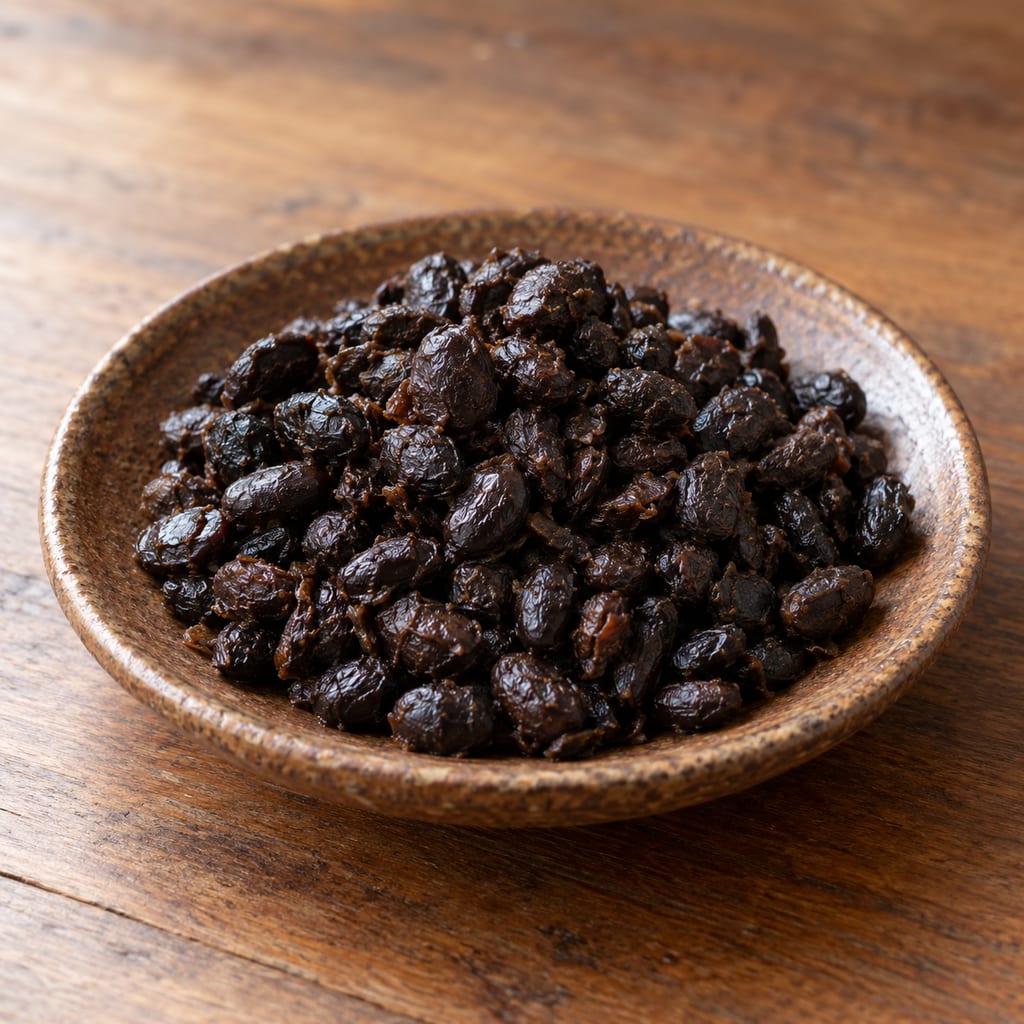
A Chinese fermented soybean condiment from Chongqing and Sichuan, made by growing Mucor-type mould on cooked beans, then salting and maturing them into dark, savoury, soft beans with a concentrated aroma.
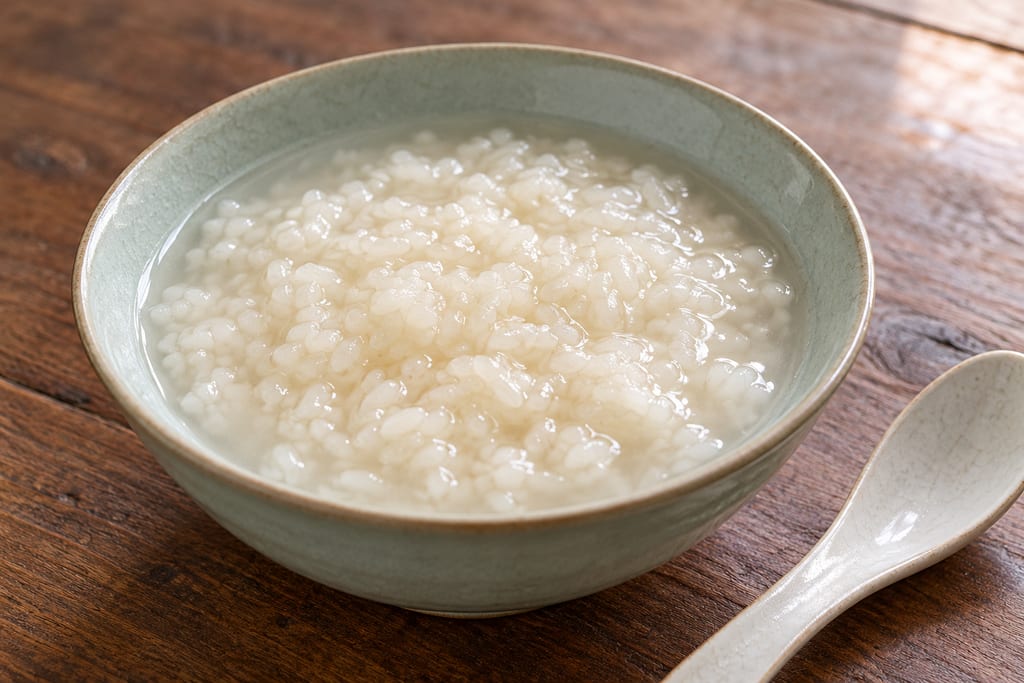
Chinese sweet fermented glutinous rice: steamed rice and a mixed jiuqu starter, where mould enzymes release sugar and yeast makes a little alcohol, eaten with its sweet liquid.
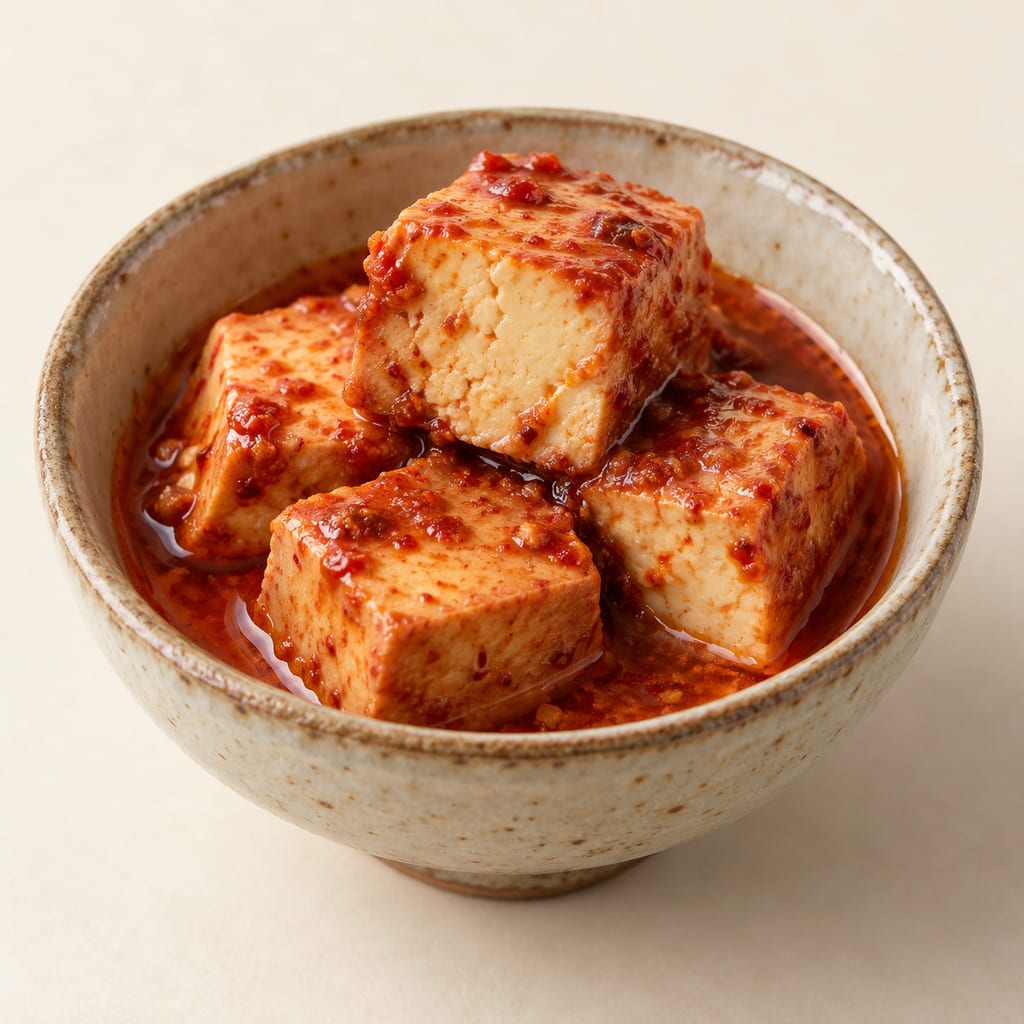
Sufu, or furu, is Chinese fermented tofu: bean curd is salted and ripened, often after a mould stage, into a soft, creamy, intensely savoury condiment.
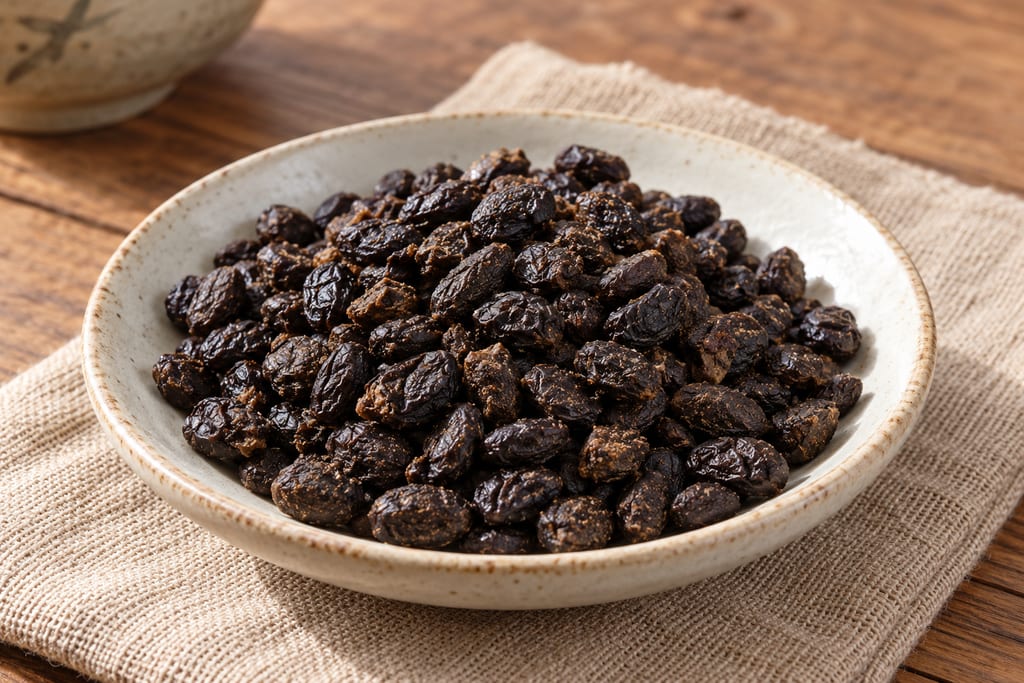
A Chinese fermented soybean condiment in which Bacillus-led bacteria, not moulds, drive the fermentation. Documented in Zunyi, Guizhou, and kept separate from mould-led douchi.
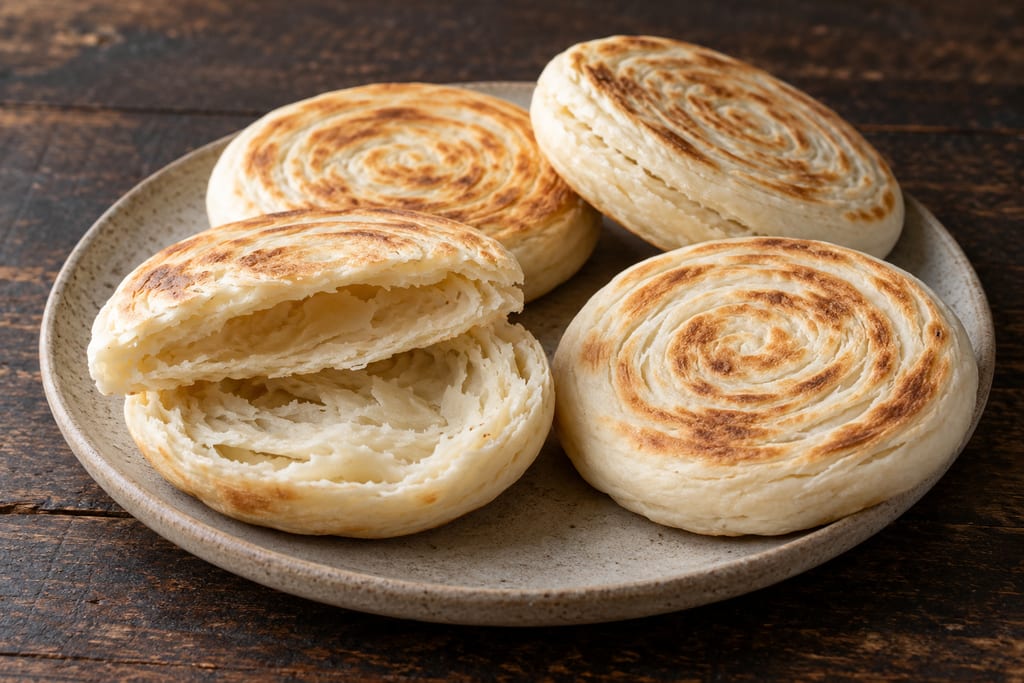
This Shaanxi-associated yeast flatbread uses a simple water dough, coiled shaping and a skillet bake. It is the bread used in roujiamo, not the filled meat dish.
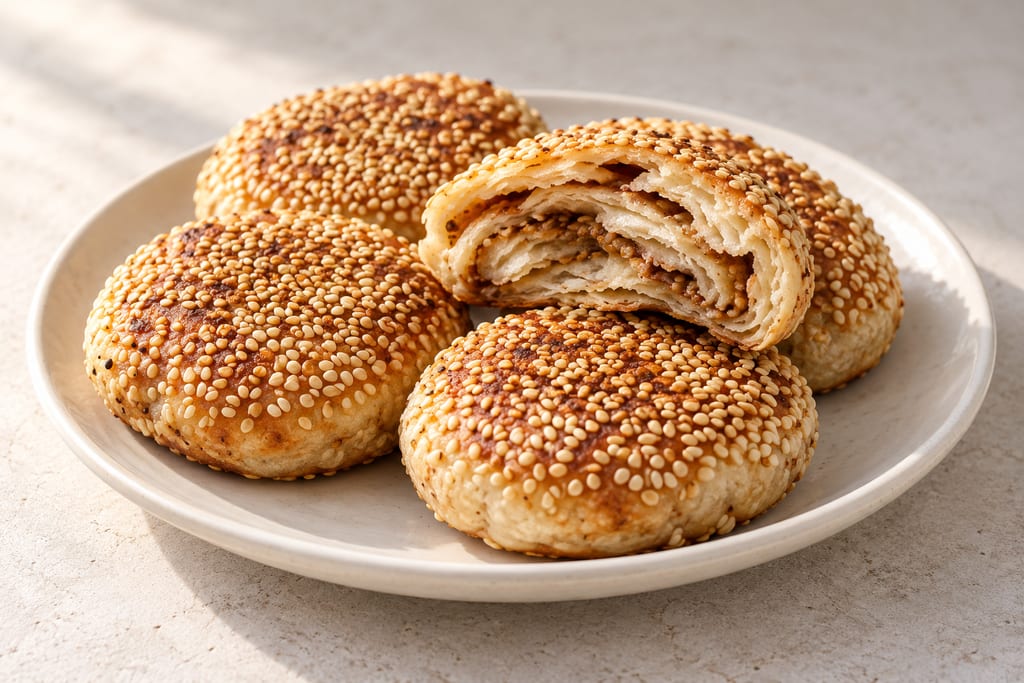
A Beijing-style yeast dough is layered with seasoned sesame paste, sealed into small buns, briefly pan-fried, seeded, and baked.
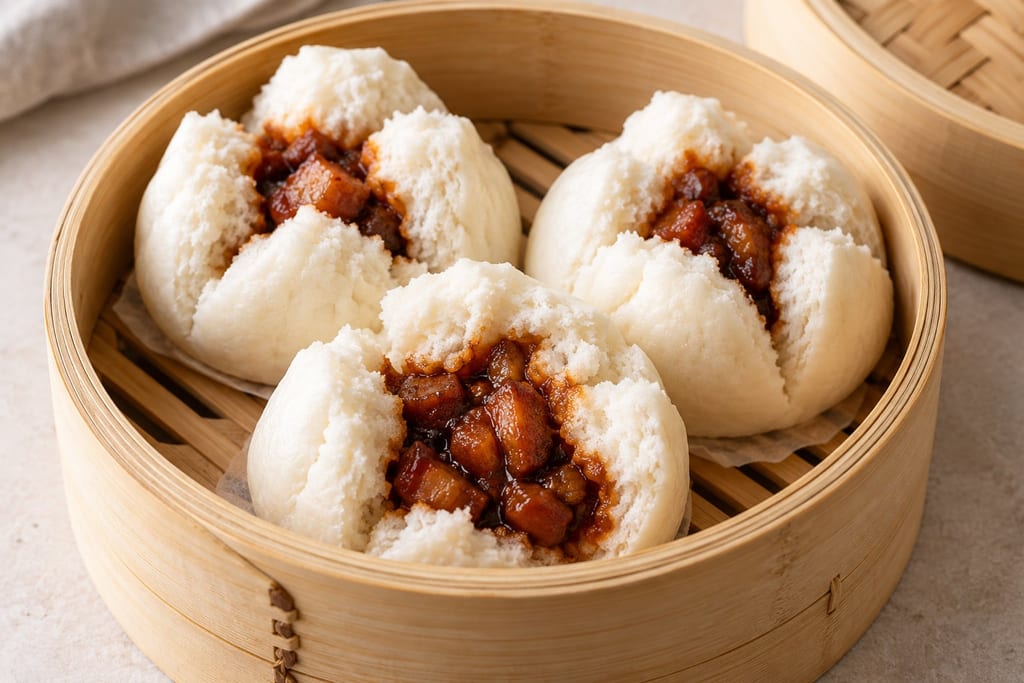
Fourteen fluffy steamed buns filled with cooked char siu and a thickened oyster-soy sauce.
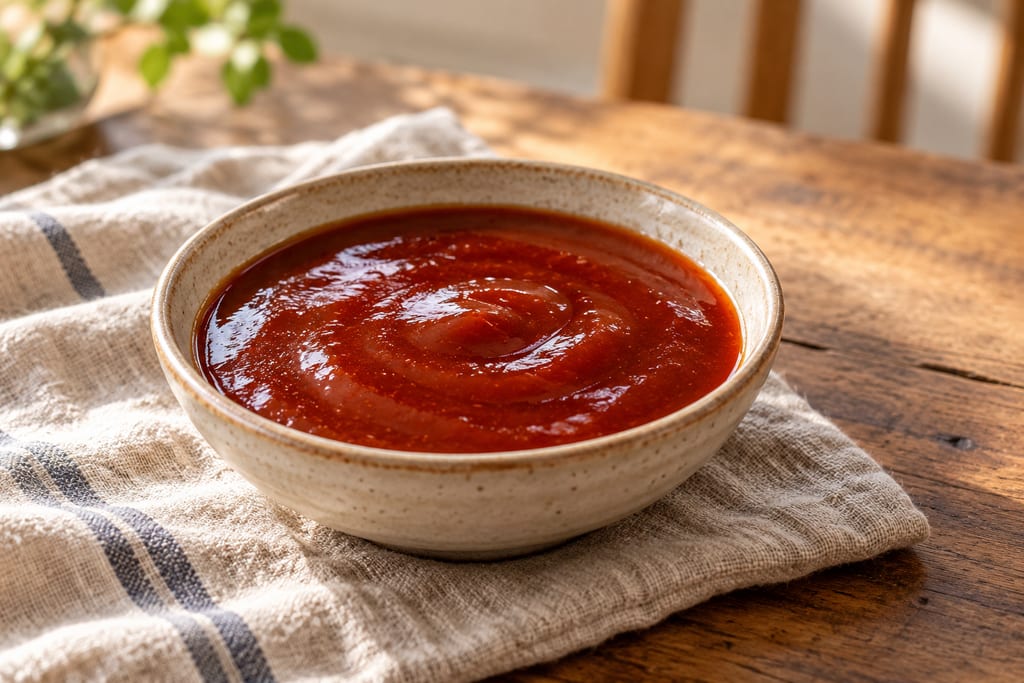
A smooth, tomato-based sweet-and-sour sauce of sugar, vinegar, tomato paste and soy sauce, thickened with starch for dipping or coating; it is not the sauce on Hangzhou's sweet-and-sour ribs.
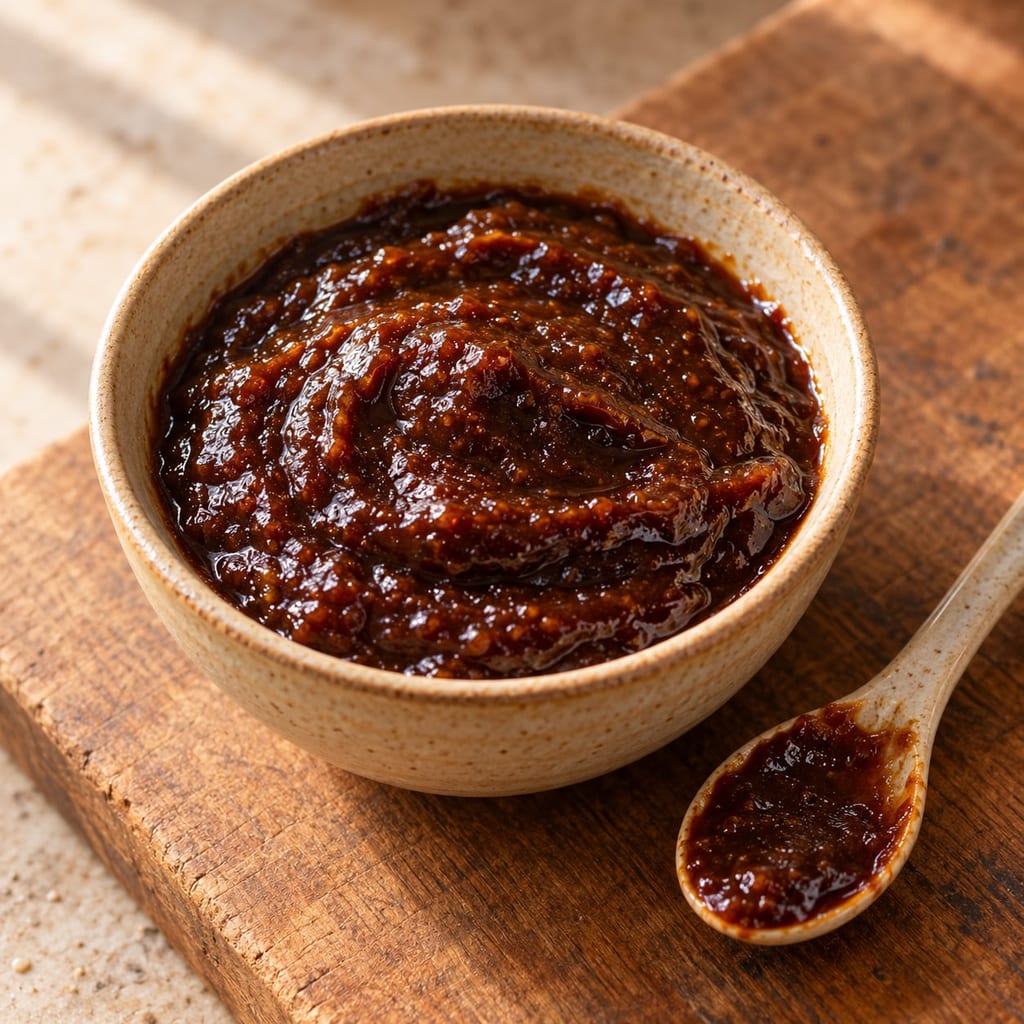
Chu hou is a sweet, savoury Cantonese paste of fermented soybeans, fermented bean curd, garlic, ginger and sesame, used mainly to braise meat.
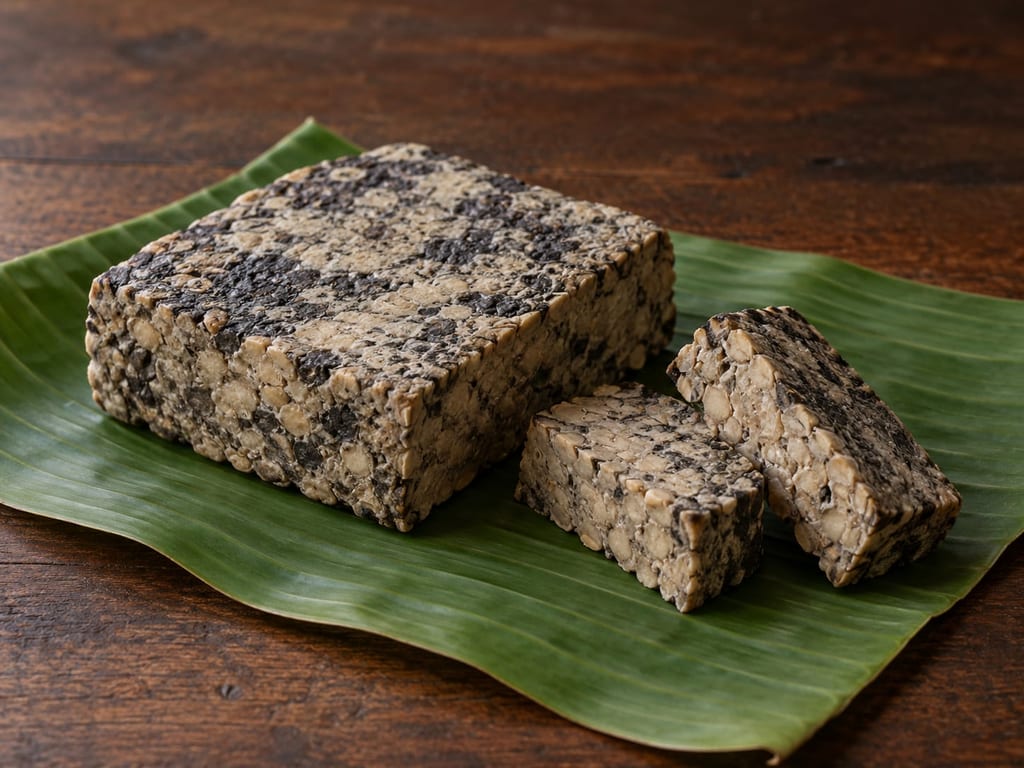
Black oncom is a mould-fermented cake made from defatted peanut cake, pressed to about 2 cm, steamed and then incubated for a day at ambient temperature.
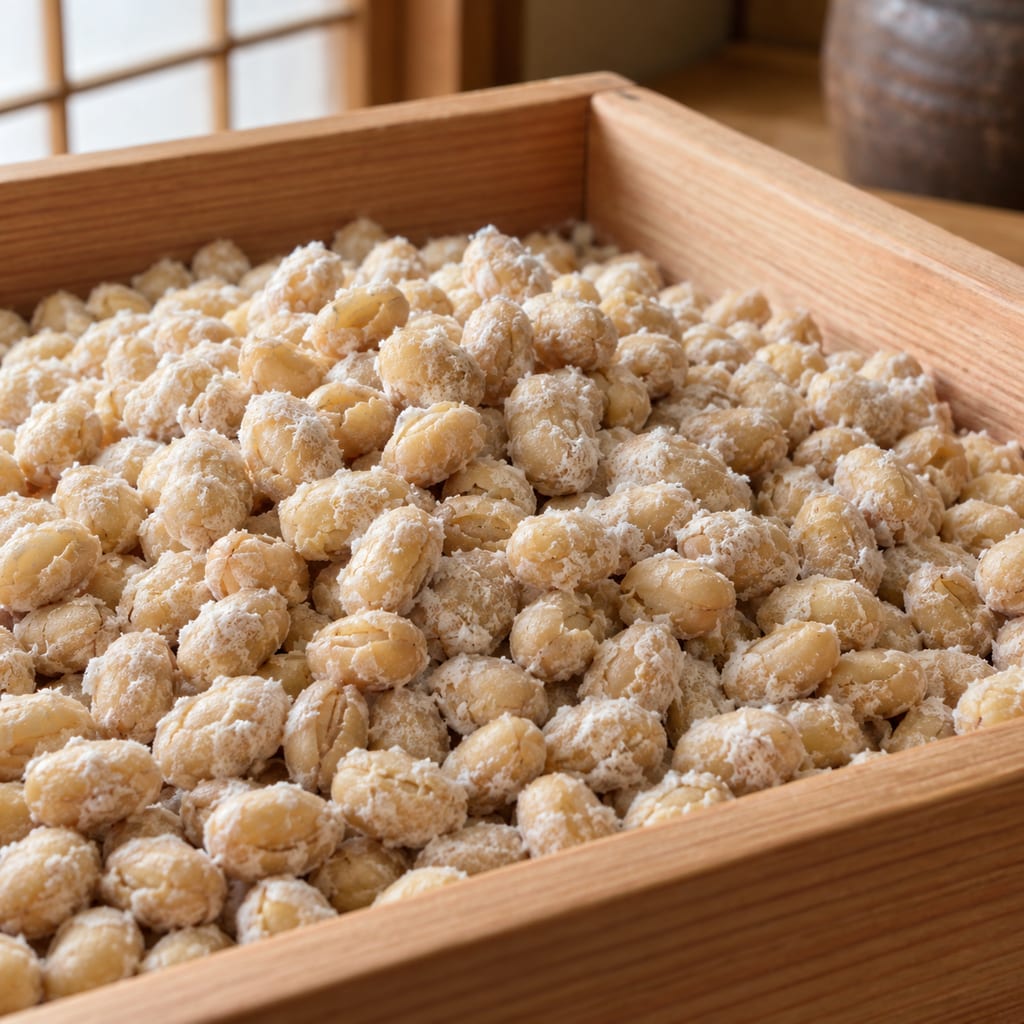
Japanese soybean koji: steamed soybeans, loose or formed into balls, grown over with Aspergillus mould to make the enzymes for mame-miso, tamari and regional soybean condiments.
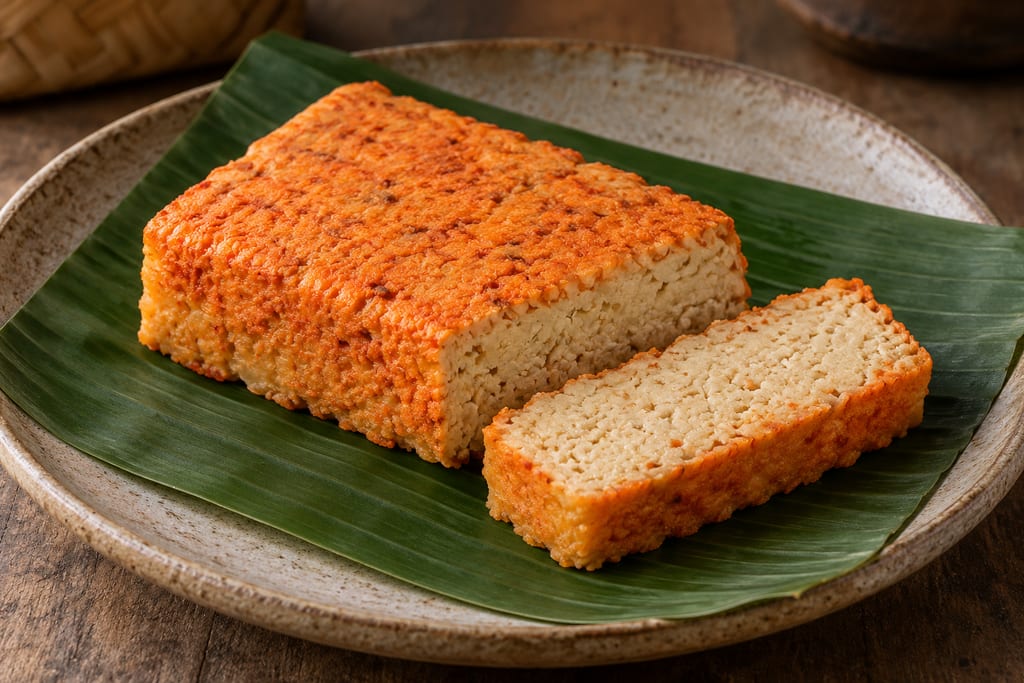
Red oncom is a West Javanese cake fermented from pressed soy pulp with a Neurospora starter, a little tapioca starch and vinegar. It is a different food from black oncom, made on another substrate with another mould.
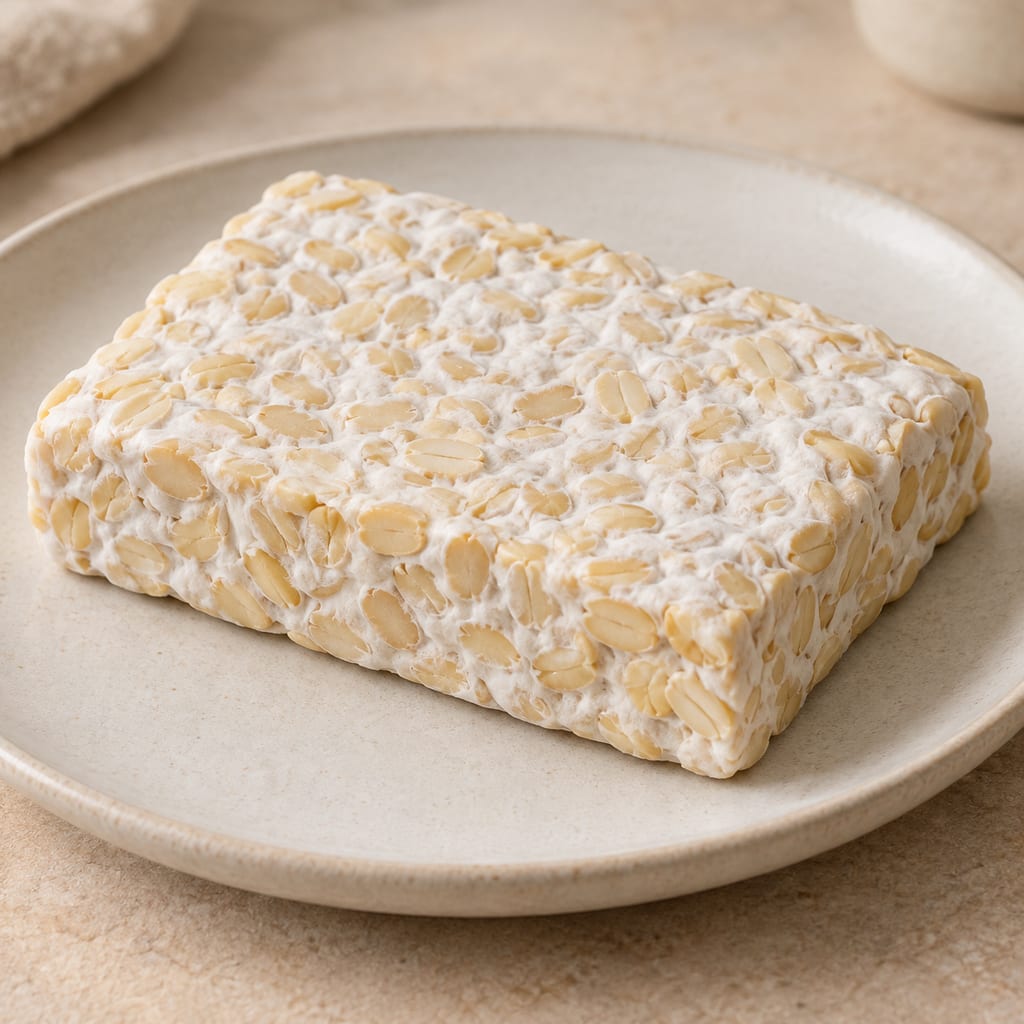
A two-cup soybean batch uses one Cultures for Health tempeh starter packet and vinegar. The supplier describes dehulling, a thin vented layer, controlled early incubation and attention to self-heating; it is not a validated home process.

An Okinawan fermented tofu: dried tofu cubes matured in rice koji, awamori and salt, traditionally with red Monascus koji, until the curd turns smooth and intensely savoury.
No community contributions have been published for this entry yet.
Sign in to contribute. Published comments and photos are free to read.
International Journal of Food Science and TechnologyInspiration · Process
Effect of fermented rice culture on the microbiological, biochemical and sensory characteristics of low-salt douchi1% A. oryzae 3.951 inoculum; 36 h koji at 28 ± 2°C/90% RH; 40% moisture target, 4% salt control, 150 g jars, 40 ± 2°C for 15 days and day-7 inversion
Cited in: What is douchi?; History: China's fermented soybean condiments; Names and culinary identity; Soybeans; Aspergillus oryzae 3.951; Salt — 4%; Water; Fermented rice culture — none; The first fermentation: what koji does; The second fermentation: what changes; Why douchi becomes savoury; Yangjiang douchi; Tongchuan douchi; Dry and moist forms; How to cook with douchi; Steamed fish; Pork ribs; Stir-fried vegetables; Sauces; Aflatoxins; Biogenic amines; Low-salt preservation; Why this recipe matters
Food Science and Human WellnessSafety · History
Comparative evaluation of commercial Douchi by different molds: biogenic amines, non-volatile and volatile compoundsTraditional contamination concern involving aflatoxin-producing molds and biogenic amine monitoring in douchi research
Cited in: History: China's fermented soybean condiments; Names and culinary identity; Why douchi becomes savoury; Why this recipe matters
BC Centre for Disease ControlSafety
Safety of fermented foods: Koji and misoUse of identified food cultures and need for process-specific review; guidance does not validate douchi
Cited in: Recipe at a glance; History: China's fermented soybean condiments; Names and culinary identity; Equipment; Documented preparation method; Stage 1 — Wash and soak; Stage 2 — Steam; Stage 3 — Cool; Stage 4 — Inoculate; Stage 5 — Cultivate douchi qu; Stage 6 — Adjust moisture and salt; Stage 7 — Portion; Stage 8 — Secondary fermentation; Stage 9 — Day-seven treatment; Stage 10 — Finished product; Recognising problems; Safety; Why this recipe matters
WileyReference
Wiley — Original study and abstractCited by the written account of this record.
Cited in: History: China's fermented soybean condiments; Names and culinary identity; Why douchi becomes savoury; Why this recipe matters
Wikimedia CommonsReference
Wikimedia Commons — Preserved Black Beans Image CollectionCited by the written account of this record.
Cited in: Recipe at a glance; Equipment; Documented preparation method; Stage 1 — Wash and soak; Stage 2 — Steam; Stage 3 — Cool; Stage 4 — Inoculate; Stage 5 — Cultivate douchi qu; Stage 6 — Adjust moisture and salt; Stage 7 — Portion; Stage 8 — Secondary fermentation; Stage 9 — Day-seven treatment; Stage 10 — Finished product; Why this recipe matters