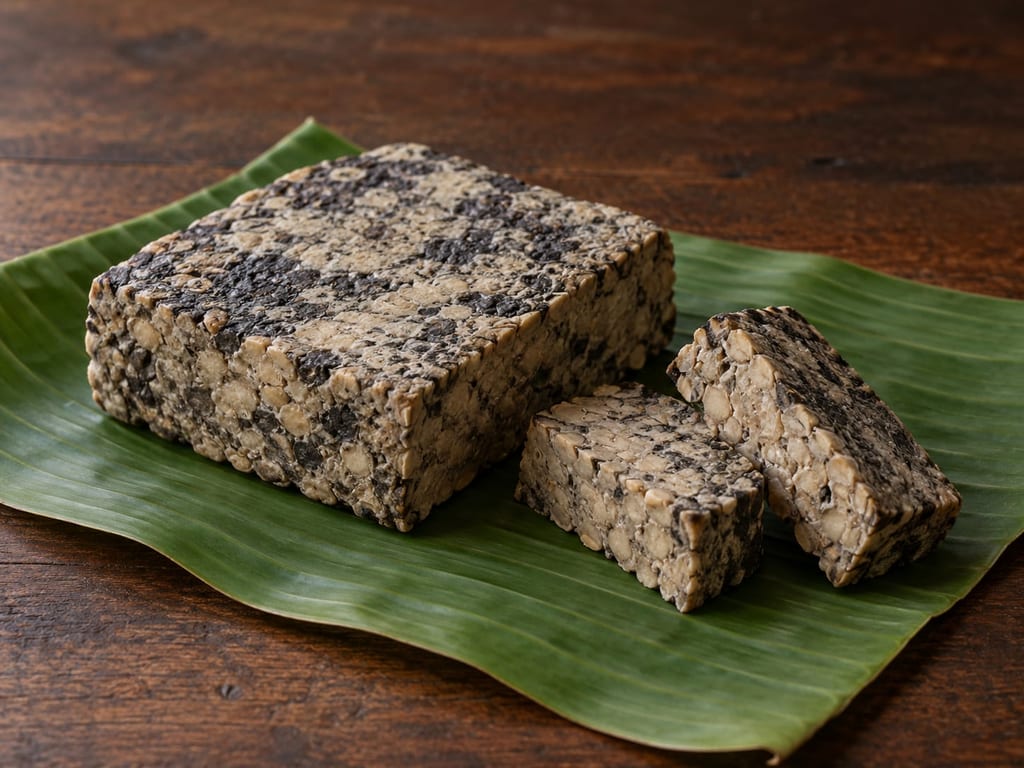
Black oncom from defatted peanut cake
Black oncom is a mould-fermented cake made from defatted peanut cake, pressed to about 2 cm, steamed and then incubated for a day at ambient temperature.
 FermenteaWhere food goes to change
Modern method
oncom merah
Red oncom is a West Javanese cake fermented from pressed soy pulp with a Neurospora starter, a little tapioca starch and vinegar. It is a different food from black oncom, made on another substrate with another mould.
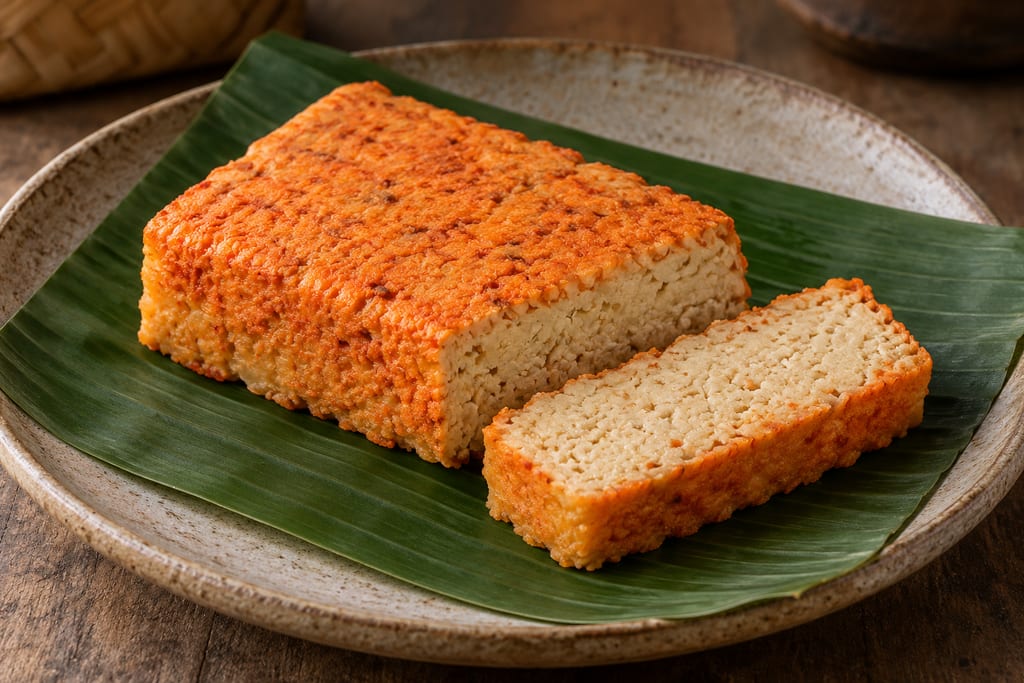
Red oncom, known in Indonesian as oncom merah, is a traditional fermented food especially associated with the Sundanese communities of West Java.
It is made from plant-based food-processing residues, frequently including tofu pulp or okara, which are transformed into cohesive cakes by the growth of selected moulds.
Its characteristic orange or reddish appearance comes from Neurospora cultures. These organisms can produce coloured spores and pigments while growing through the food substrate.
Red oncom is distinct from black oncom, or oncom hitam, which is more commonly associated with defatted peanut cake and fungi including Rhizopus and Mucor.
Both belong to the wider oncom tradition, but their different substrates and organisms justify separate preparation records.
The controlled formulation here uses pressed soybean pulp, tapioca starch, commercial vinegar and a measured starter containing three Neurospora species.
It reproduces a published experimental preparation, not a claim that every Sundanese household follows one recipe.
Substrate — 1 kg pressed soy pulp
Tapioca starch — 20 g per kg pulp
Commercial vinegar — 5 ml per kg pulp
Starter — 20 g per kg cake
Starter composition — N. sitophila, N. crassa, N. intermedia in equal spore proportions
Preliminary soybean boiling — 30 minutes
Hot-water extraction — 8:1 water-to-soybean ratio by volume
Mixture steaming — 1 hour
Fermentation — 25°C
Time treatments — 48, 72 and 96 hours
Finished yield — Not reported
Safety status — Experimental method; not validated for home production
Oncom is strongly connected with West Javanese food culture.
It is particularly associated with places including Bandung, Bogor, Sumedang and Subang.
Its importance is closely connected to the use of materials left over from making other foods.
In tofu production, soybeans are soaked, ground with water and separated into a liquid fraction and a fibrous residue.
Rather than discarding the residue, producers can use an appropriate fermentation to transform it into a new food.
This is not merely a recent sustainability idea. The use of byproducts is embedded in the region's culinary economy.
The exact invention date of red oncom is not securely established.
Modern scientific studies demonstrate its continuing manufacture and culinary significance, but do not prove a particular prehistoric or medieval origin.
The present research formulation uses soybeans associated with East Java and a controlled Neurospora culture.
The sourcing location of the beans should not be confused with the cultural origin of red oncom in West Java.
Okara contains insoluble fibre, residual protein, fat and other nutrients remaining after soybean extraction.
Its precise composition depends on the soybean variety and the way the milk was produced.
Fresh okara is highly perishable because it retains substantial moisture and nutrients.
Fermentation can modify its flavour and texture, but the raw material must be handled hygienically before inoculation.
Tapioca starch is derived from cassava, Manihot esculenta.
The starch contributes carbohydrate to the substrate and may influence its consistency.
Adding a small measured quantity changes the nutritional and physical environment available to the mould.
The research uses 20 g per kilogram of soy pulp.
It does not establish that every traditional red oncom preparation includes tapioca starch.
Vinegar provides acidity.
In the research, 5 ml commercial vinegar is mixed into each kilogram of pulp.
The original record does not give the vinegar's exact acetic-acid concentration.
Nor does it give a validated target pH after mixing.
Consequently, it would be incorrect to state that five millilitres of arbitrary vinegar guarantees a particular safety level.
The starter consists of equal-spore proportions of:
Neurospora sitophila
Neurospora crassa
Neurospora intermedia
The mixture is added at 20 g per kilogram of formed cake.
The quantity and identities belong to this experiment.
Colour alone cannot reliably establish the identity or purity of a wild mould culture.
Water is used during soybean preparation.
The published trial describes an 8:1 hot-water-to-soybean ratio by volume during extraction.
The initial dry soybean mass is not given in the record.
The final pulp weight depends on straining and pressing.
Preparation requires equipment for washing and boiling soybeans, blending with hot water, straining through cheesecloth, pressing the pulp, steaming, forming cakes and maintaining controlled fermentation temperature.
The research wrapped cakes in banana leaves.
Banana leaves are traditional food-contact materials in many Indonesian preparations, but their use does not remove the need for hygiene.
A controlled incubator was used to maintain the test temperature.
This procedure reproduces the reported experimental stages. It is not a validated household food-safety process.
Clean the soybeans and boil for 30 minutes.
Remove the hulls manually.
The aim is to prepare the material for grinding and extraction.
The initial dry soybean weight is not reported, so the recipe cannot be converted accurately into a fixed number of dry-bean servings.
Blend the prepared soybeans with hot water at an 8:1 water-to-soybean volume ratio.
The blending breaks down the cooked tissue and releases soluble components.
The resulting mixture contains both liquid and suspended solids.
Strain through cheesecloth.
Squeeze or press to separate the soybean milk from the pulp.
Retain the pressed pulp for the oncom.
The exact pressing pressure and final moisture content are not supplied.
Those omissions matter because moisture affects fungal growth and unwanted microbial competition.
For each kilogram of pressed pulp, mix in:
20 g tapioca starch
5 ml commercial vinegar
Distribute the ingredients uniformly.
This creates the substrate used for the research fermentation.
Steam the mixture for one hour.
Heat treatment changes the substrate and reduces microbial competition.
It does not make the food permanently sterile, particularly once cooling and handling begin.
Cool the material to room temperature.
Form into cakes.
The published trial record does not establish a universally required cake dimension or thickness.
The shape influences heat transfer, airflow and fungal growth, so an unrecorded thickness should not be invented.
Apply 20 g starter per kilogram of cake.
The inoculum contains the three specified Neurospora cultures in equal spore proportions.
Distribute the starter appropriately through the prepared substrate.
Wrap the inoculated material in banana leaves.
The leaves provide a physical wrapper and help shape the cakes.
They also affect moisture retention and gas exchange.
The recorded method does not provide a validated oxygen-transfer specification for this arrangement.
Incubate at 25°C.
The study compared 48-hour, 72-hour and 96-hour batches.
These are separate experimental treatments.
The recorded account does not establish one of them as a universal household safety endpoint.
The experimental work examined nutritional and antioxidant properties.
No universal finished yield or validated storage period is supplied.
The product should not be declared safe for unrestricted consumption solely because orange growth appeared.
Neurospora is a genus of filamentous fungi.
During growth, fungal threads called hyphae spread through the substrate.
A network of hyphae can help bind the material into a coherent cake.
The organism also produces enzymes that transform components of the pulp.
Proteolytic enzymes cleave residual soybean proteins.
The resulting peptides and amino acids can influence flavour and nutritional accessibility.
The process differs from ordinary cooking because enzyme activity continues over an extended period.
Enzymes act on carbohydrates and other substrate components.
Available starch and residual sugars contribute energy for fungal metabolism.
The added tapioca starch changes the balance of carbohydrate relative to protein and fibre.
The orange or red appearance is characteristic of certain Neurospora cultures.
However, pigment production is not an identification test.
Other microorganisms can produce coloured colonies, and contamination may coexist with the desired organism.
The colour is useful for describing the finished food, not proving safety.
The research investigated antioxidant-associated compounds at different fermentation durations.
Fermentation can alter the accessibility or concentration of phenolic compounds and other constituents.
A measured increase in laboratory antioxidant activity does not automatically establish a clinical health benefit from eating the food.
Common name — Oncom merah — Oncom hitam / hideung
Typical culture — Neurospora spp. — Rhizopus and sometimes Mucor
Typical substrate — Okara and other food-processing residues — Defatted peanut cake
Appearance — Orange or reddish — White, grey or darker sporulating surface
Principal region — West Java — West Java
Culinary use — Cooked dishes, sauces and snacks — Cooked dishes, sauces and rice
Traditional producers may use different combinations of raw materials. The table describes broad tendencies rather than absolute rules.
Oncom is usually cooked before serving.
It is an ingredient in several Sundanese dishes.
Combro is a fried cassava snack filled with a seasoned oncom mixture.
Its name is associated with the Sundanese phrase describing oncom inside.
The filling may include chilli, garlic, shallots and other seasonings.
The exterior provides a fried cassava texture around the savoury fermented filling.
Oncom can be cooked with chilli and aromatics to make a spicy relish or sauce.
The finished flavour depends on the amount of chilli, the oncom variety and the method of cooking.
In pepes oncom, seasoned oncom is wrapped in banana leaves and cooked, often by steaming or grilling.
The leaf wrapper contributes aroma and protects the filling during cooking.
Oncom can be mixed with vegetables including leunca, a small nightshade fruit used in Sundanese cuisine.
It may also feature in the sauces of vegetable dishes.
A successful controlled fermentation should show the intended growth and changes in cohesion.
The substrate may become firmer as hyphae bind the particles.
The flavour should develop beyond the plain taste of boiled soybean pulp.
But these qualities are insufficient to establish safety.
Visible orange growth does not prove that the correct Neurospora cultures are present without contamination.
A laboratory or commercial producer needs appropriate starter identification, environmental controls and product testing.
Possible causes include unsuitable substrate moisture, incorrect inoculum, temperature variation or poor culture viability.
The research record does not provide numerical correction procedures for each failure.
Irregular cake dimensions or inadequate starter distribution can create uneven fungal growth.
Growth inconsistent with the intended culture is a warning sign.
Do not attempt to identify a wild mould by colour alone.
Wet, poorly structured cakes can encourage unwanted bacterial growth.
Unpleasant decomposition odours indicate a problem, but pleasant aroma does not prove the absence of contamination.
Oncom is a moist, nutrient-rich fungal fermentation.
Published research has documented hygiene problems and coliform contamination among surveyed producers.
This does not make traditional oncom inherently unsafe; it demonstrates that hygiene and culture control matter.
Fresh soybean pulp is particularly perishable.
Heat treatment should be followed by appropriate handling, and the culture must be suitable for food production.
The research does not give a validated finished pH, water activity, pathogen limit or storage-life endpoint.
No homemade substitute should be inferred from the three experimental fermentation durations.
The safest practical option for ordinary cooking is to purchase food-grade oncom from a reputable producer and cook it appropriately.
Red oncom shows how fermentation can turn a food-processing byproduct into a valued ingredient.
Its importance is not limited to its protein content.
It has its own flavour, texture and place in Sundanese cooking.
The experimental use of different Neurospora species also reveals that the organism's identity influences fermentation outcomes.
Those details make red oncom an important subject for both culinary heritage and food-science research.
Red oncom is a documented West Javanese product made from tofu residue; this entry adapts a measured research process using a Neurospora blend.
Yield 1 kg pressed soy pulp formulation before starter (basis for source additions) · Scaling: source ratios only
Oncom is a moist mold-fermented soy-pulp cake; producer surveys report hygiene and coliform concerns in oncom production, and appearance cannot identify contaminants.
Hazard sourceUse only a food-production Neurospora starter with a documented identity and lot; do not backslop from an unidentified mold-covered cake or infer species by color.
Control sourceThis study method is not professionally validated. Orange growth is not enough to identify the culture, and the paper does not establish a home endpoint or storage period.
The review identifies red oncom as a West Javanese Sundanese food; this recipe uses an experimental formulation.
The study used Anjasmoro soybeans produced in East Java; this is sourcing evidence, not a recipe origin claim.
Black oncom is a mould-fermented cake made from defatted peanut cake, pressed to about 2 cm, steamed and then incubated for a day at ambient temperature.
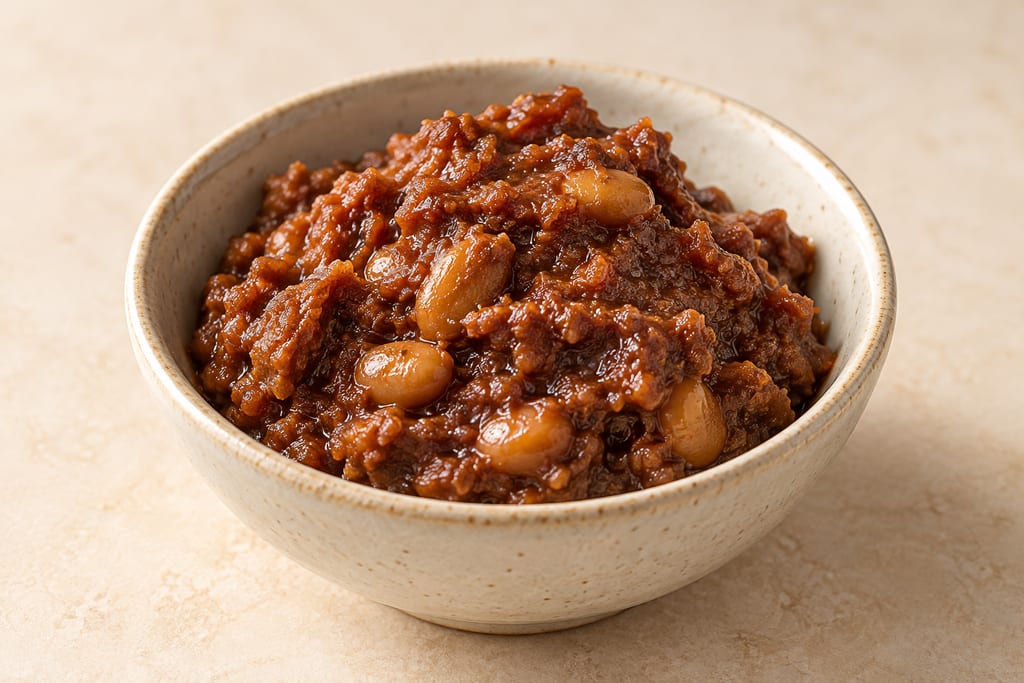
An Indonesian savoury soybean paste built in two stages: cooked beans and roasted flour carry a mould fermentation, then mature in salt brine into a thick, salty seasoning.
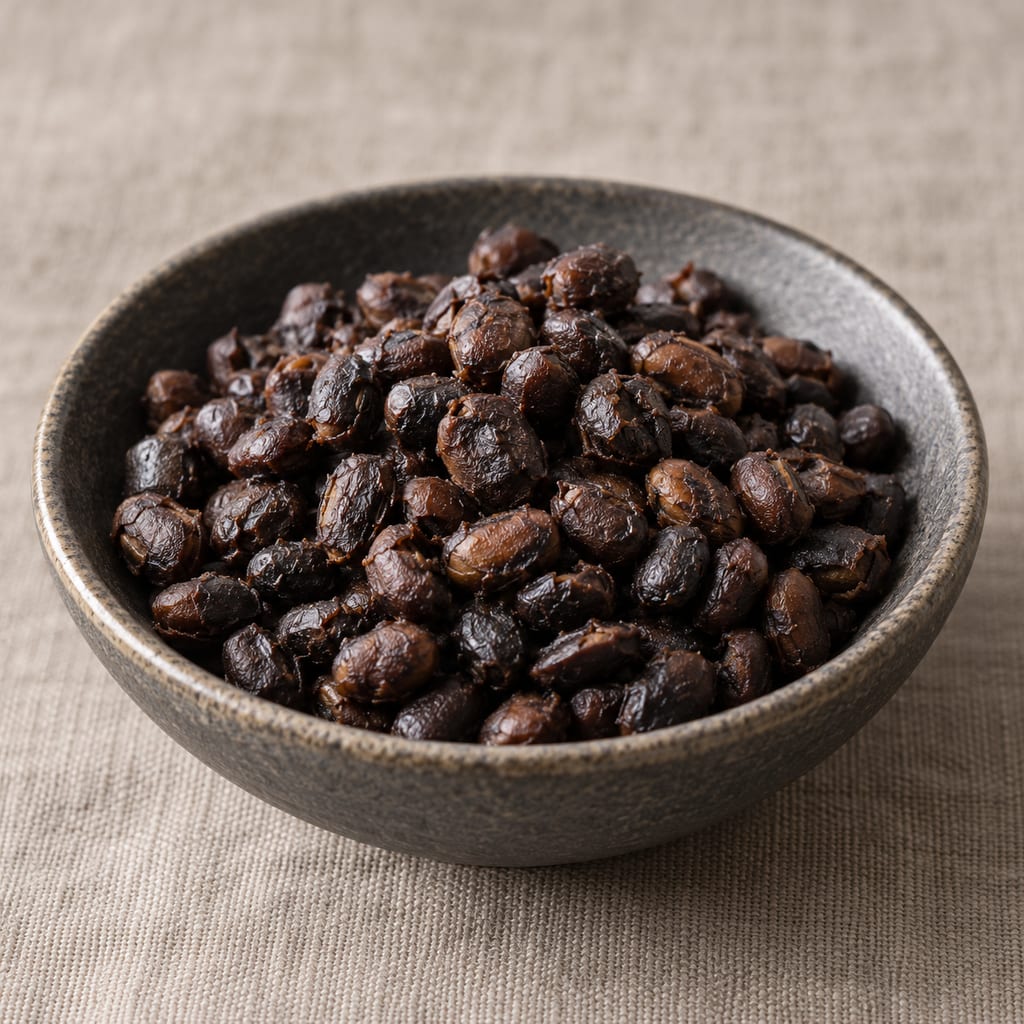
This controlled study protocol makes Aspergillus koji from soybeans and then ferments it with 4% salt. It uses a 150 g jar batch and a defined moisture target; the research method is not a validated home process.
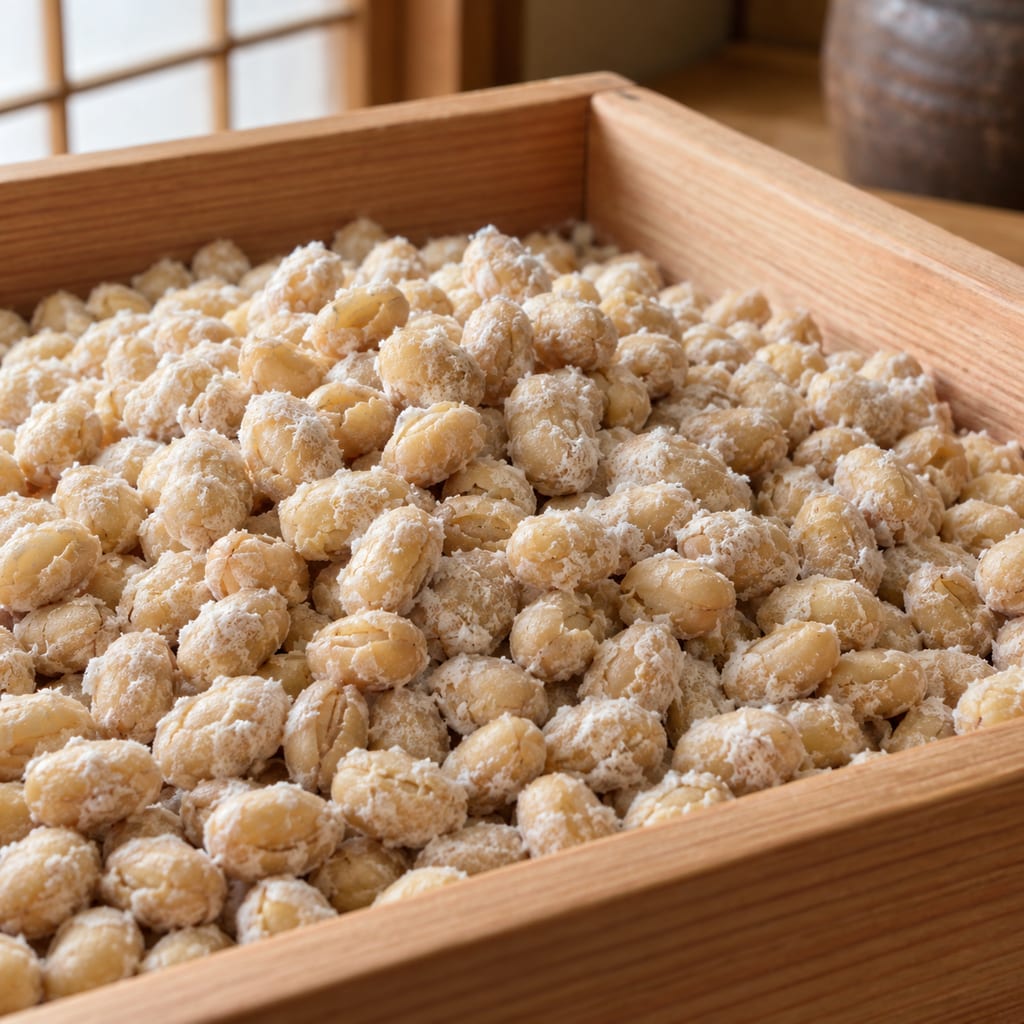
Japanese soybean koji: steamed soybeans, loose or formed into balls, grown over with Aspergillus mould to make the enzymes for mame-miso, tamari and regional soybean condiments.
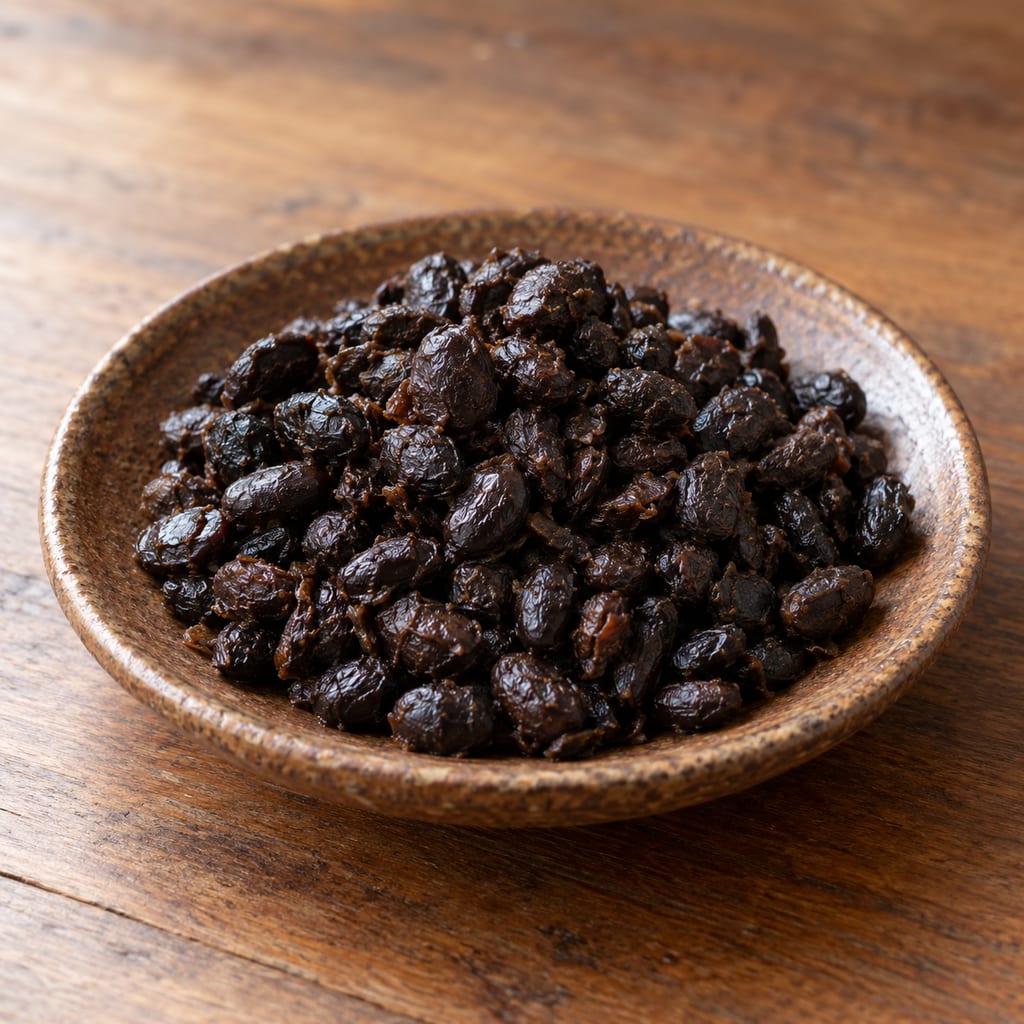
A Chinese fermented soybean condiment from Chongqing and Sichuan, made by growing Mucor-type mould on cooked beans, then salting and maturing them into dark, savoury, soft beans with a concentrated aroma.
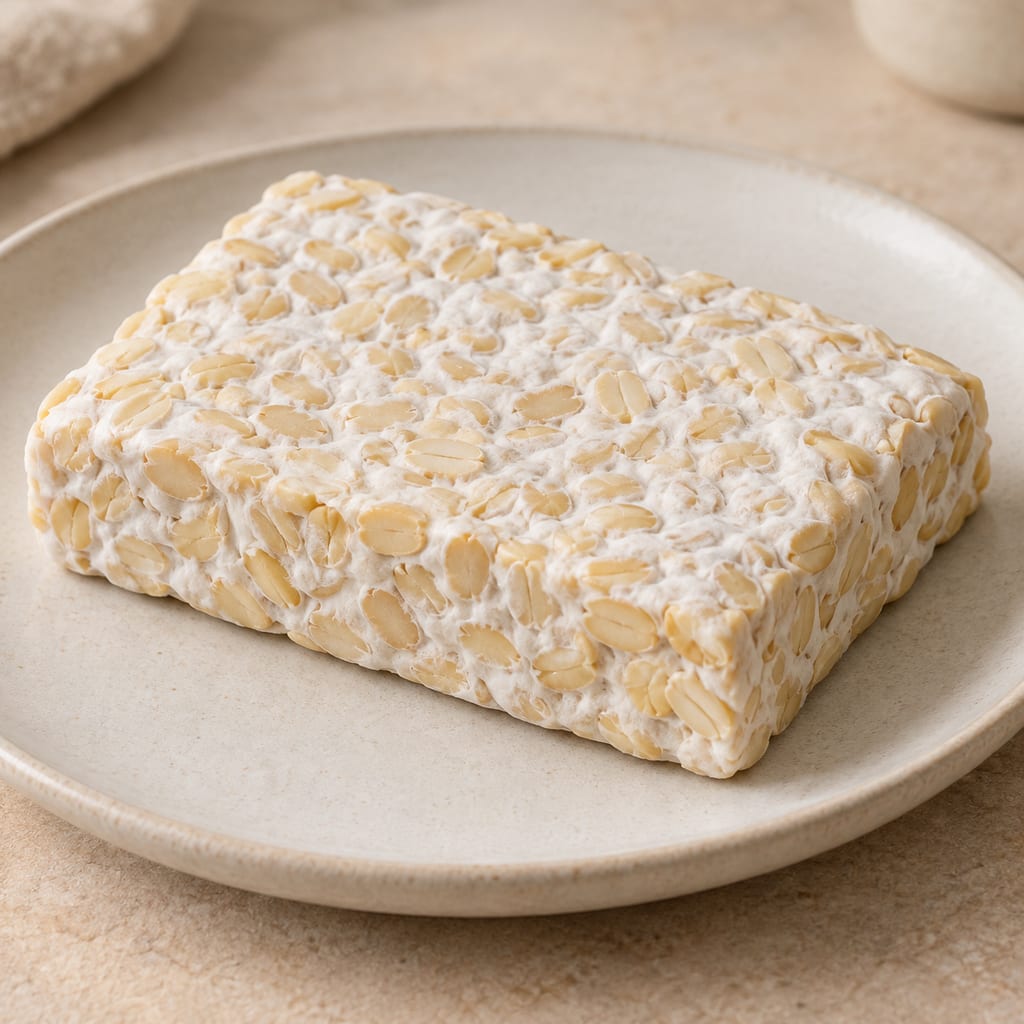
A two-cup soybean batch uses one Cultures for Health tempeh starter packet and vinegar. The supplier describes dehulling, a thin vented layer, controlled early incubation and attention to self-heating; it is not a validated home process.
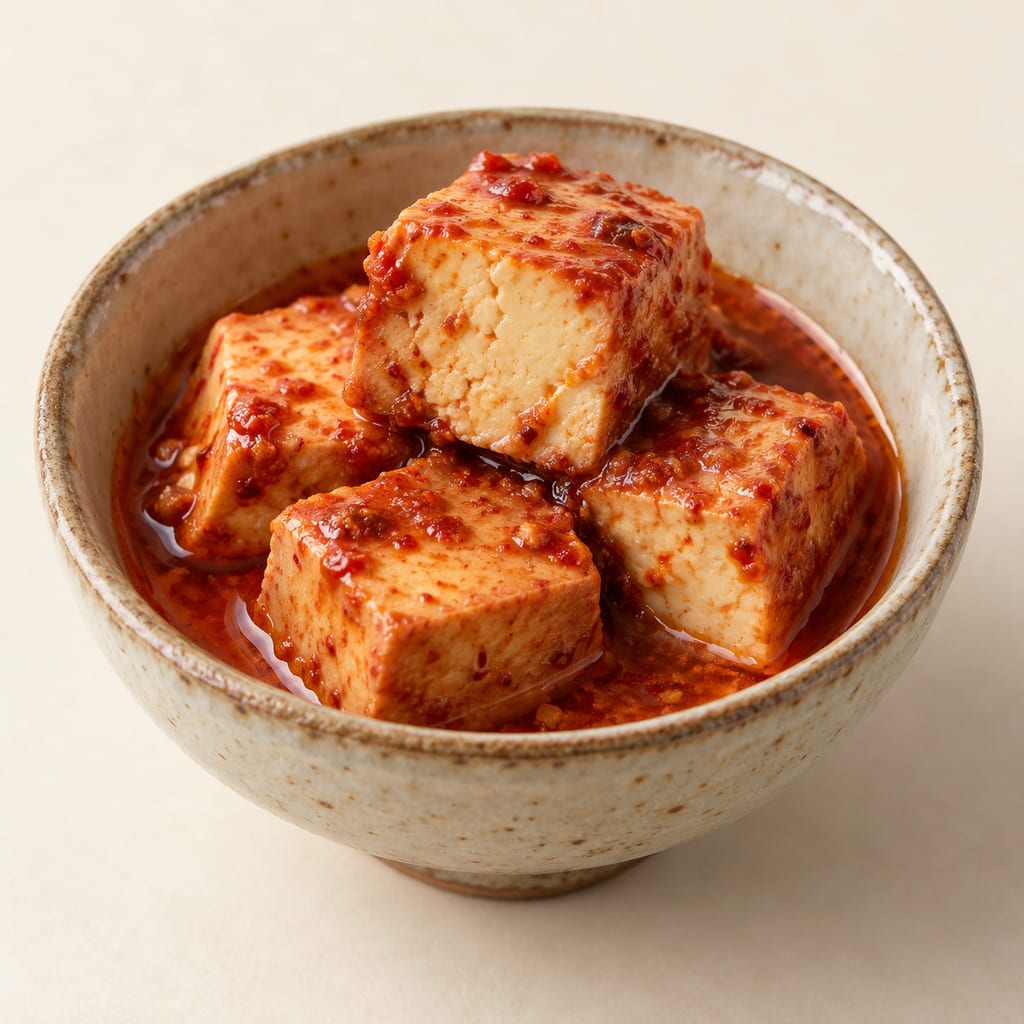
Sufu, or furu, is Chinese fermented tofu: bean curd is salted and ripened, often after a mould stage, into a soft, creamy, intensely savoury condiment.

An Okinawan fermented tofu: dried tofu cubes matured in rice koji, awamori and salt, traditionally with red Monascus koji, until the curd turns smooth and intensely savoury.
No community contributions have been published for this entry yet.
Sign in to contribute. Published comments and photos are free to read.
Food ResearchInspiration · Process
Antioxidant profile of red oncom, an Indonesian traditional fermented soyfood30-minute bean boil; 8:1 hot-water extraction; 20 g tapioca/kg soy pulp; 5 mL vinegar/kg; one-hour steam; 20 g/kg equal-parts Neurospora starter and 25°C tests at 48, 72 and 96 h
Cited in: What is red oncom?; History and place; Pressed soybean pulp — 1 kg; Tapioca starch — 20 g; Commercial vinegar — 5 ml; Neurospora starter — 20 g; Water; What the mould does; Protein breakdown; Carbohydrate transformation; Pigment formation; Antioxidant changes; Red and black oncom compared; Combro; Sambal oncom; Pepes oncom; Oncom and vegetables; What makes a good finished cake?; Weak growth; Uneven fermentation; Unwanted surface colours; Excessive moisture; Strong putrid odours; Why red oncom matters
Journal of Agriculture and Food ResearchHistory · Geography
The nutritional and economic potential of tofu dreg (okara) and its utilization for high protein food products in IndonesiaRed oncom's West Java/Sundanese association and distinction from black oncom
Cited in: History and place; Unwanted surface colours; Why red oncom matters
IPB University repositorySafety
Penerapan Sanitasi Higiene dan Cemaran Koliform pada Produksi Oncom di BogorObserved sanitation gaps and coliform contamination in surveyed oncom producers
Cited in: Recipe at a glance; History and place; Equipment; Documented production method; Stage 1 — Prepare soybeans; Stage 2 — Grind with hot water; Stage 3 — Separate the pulp; Stage 4 — Add tapioca and vinegar; Stage 5 — Steam; Stage 6 — Cool and form cakes; Stage 7 — Inoculate; Stage 8 — Wrap; Stage 9 — Ferment; Stage 10 — Use or assess the product; How red oncom is eaten; Unwanted surface colours; Safety; Why red oncom matters
BC Centre for Disease ControlSafety
Safety of fermented foods: Koji and misoIdentified mold starter guidance; does not validate oncom
Cited in: Safety
OncomReference
Oncom: A Nutritive Functional Fermented Food Made from Food Process Solid Residue — Applied Sciences, 2024Cited by the written account of this record.
Cited in: Recipe at a glance; Equipment; Documented production method; Stage 1 — Prepare soybeans; Stage 2 — Grind with hot water; Stage 3 — Separate the pulp; Stage 4 — Add tapioca and vinegar; Stage 5 — Steam; Stage 6 — Cool and form cakes; Stage 7 — Inoculate; Stage 8 — Wrap; Stage 9 — Ferment; Stage 10 — Use or assess the product; How red oncom is eaten; Unwanted surface colours; Why red oncom matters