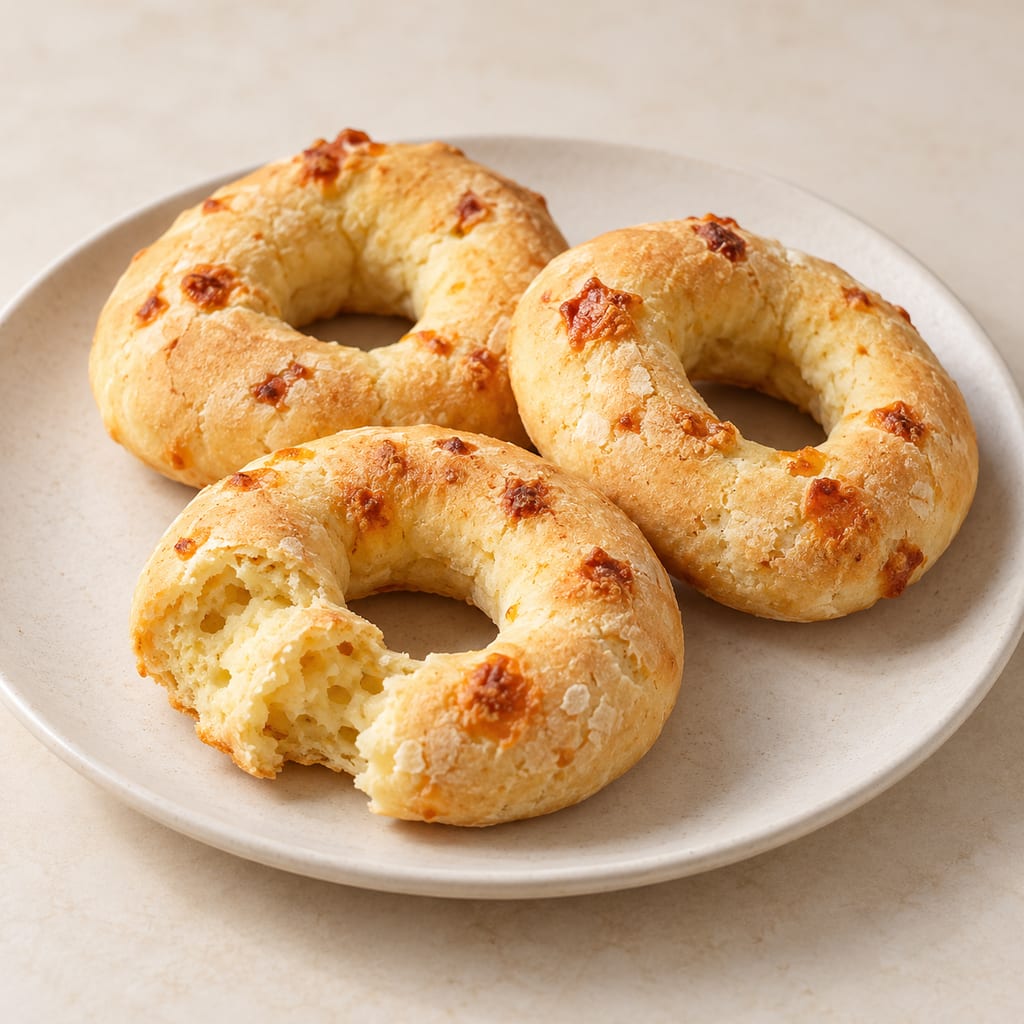
Paraguayan chipa: Laylita's version
Cassava-starch cheese rings made with mozzarella, eggs and milk, with optional anise. This modern version uses baking powder and no dough fermentation.
 FermenteaWhere food goes to change
Tapioca starch is the fine starch separated from cassava roots. Cheese breads such as pandebono and pão de queijo use cassava starch, but some recipes specify fermented sour starch. Whole-root cassava flour is a different ingredient.
Cassava has a long history in the Americas, but the crop's history is not the history of extracted starch. A FAO account describes early written references to cassava bread and later crop movement beyond the Americas; those passages do not show when cassava starch was first separated or when a cheese bread first used it. This page keeps those claims apart.
A United States Department of Agriculture bulletin published in 1900 includes a chapter on manufacturing starch from cassava. It is a dated record of technical and commercial interest, not evidence that the process began in 1900. Another FAO technical text notes that its original cassava-processing publication appeared in 1956 and later editions expanded it with new information.
Research on the Thai cassava industry records starch extraction plants in Chonburi in the 1920s, first using sedimentation, with milling introduced after the Second World War and exports growing in the 1950s. That history describes industrial development in Thailand. It does not establish an origin for cassava starch worldwide or date food traditions in South America.
The earliest specific product evidence located in this review is therefore limited to written technical records. The evidence does not support a single invention date, a universal first use in bread or a claim that one country's starch production represents all cassava-starch histories.
Tapioca starch is the separated starch fraction of cassava, Manihot esculenta Crantz. The United States Pharmacopeia defines it as starch granules separated from cassava tubers. Food and processing publications also call it cassava starch. Some English-language retail recipes use tapioca flour for the same fine baking ingredient. Common names vary by market, so a recipe's ingredient list and a product's label are more reliable than the word tapioca by itself.
The finished powder is pale and fine, with little of the fibre, protein and other root material found in whole-root cassava flour. The extraction process aims to separate and purify starch granules from the pulped root. Cassava flour is dried, milled root; it contains more of the root's non-starch material. Gari is yet another product, made by fermenting and dewatering cassava mash and then roasting it. Similar names and shared plant source do not make these ingredients interchangeable.
The crop is Manihot esculenta, a member of the spurge family Euphorbiaceae. This page is about the starch product, not a botanical profile of the crop, fresh roots or leaves. The botanical identity matters because cassava's products have distinct compositions, preparation stages and safety evidence. A bread recipe calling for starch is not a general instruction for handling a raw cassava root.
The starch starts inside cassava root cells, mixed with other plant material. In wet extraction, producers wash and peel roots, rasp or mill them to disrupt tissue, and mix the pulp with water. Straining removes fibres and coarse matter while the starch passes into the liquid. The suspension is purified by replacing the surrounding liquid with clean water and allowing granules to settle or separating them by mechanical means. Producers remove water, dry the starch and then grind or sieve it to the required grade.
These operations explain why starch and flour differ. Flour can be made by drying and milling the root; starch extraction adds a water-based separation and purification stage. The dried output from starch extraction has less of the root's non-starch matter. A sack of flour cannot be assumed to behave like purified starch, even when both products appear pale and powdery. Their moisture absorption, particle makeup and dough effects can differ.
Factories may use more efficient washing, rasping, sieving, sedimentation, centrifugal separation and drying equipment than a small producer. The specific machinery changes with scale and market. A technical account of extraction is not by itself a validated household process: water quality, root variety, process control and cyanogen reduction still matter. This article does not offer a do-it-yourself starch extraction procedure.
Starch is a carbohydrate built from glucose units. Cassava starch contains the polymers amylose and amylopectin, arranged in granules. Researchers describe granule shapes and sizes that vary among samples and growing regions. The visible powder is not a uniform set of identical particles: variety, growing environment and extraction can influence the starch's measured physical properties.
During cooking, water and heat cause starch granules to hydrate and swell. With continued heating and mixing, granules lose some of their ordered structure and release polymer chains into the surrounding water. The mixture thickens; after cooling, the chains can reassociate and the paste's texture may change. Food-science reviews call these related stages hydration, gelatinization, pasting and retrogradation. They are changes in starch structure, not fermentation.
The exact behavior depends on water, temperature, acidity, fat, salt, protein, fibre, cultivar and prior processing. A value measured in a laboratory suspension does not automatically predict the behaviour of a cheese-bread dough. Different breads combine the starch with different cheeses, eggs, liquids and mixing or heating steps. Follow a source-specific formula rather than applying one temperature or hydration rule to every tapioca-starch dough.
Many packages contain native, unfermented cassava starch. Some regional products instead ferment wet cassava starch before drying it. FAO documents sour starch production in parts of Colombia, where it is used for pan de bono. That fermentation changes the ingredient and its performance in baking; the name sour starch describes a particular product form, not the ordinary souring of a dough after mixing.
Sources use local and market terms differently. In Brazil, sweet and sour polvilho commonly distinguish starch forms, but a broad label such as cassava starch may not reveal which one a particular recipe expects. The term tapioca can also refer to pearls, flakes or cooked products made from starch rather than a fine dry powder. A cook should match the form and treatment specified by the recipe, and should not assume that a generic translation resolves the distinction.
Sour starch is linked with several cheese breads in the published literature, including pandebono, pan de yuca and pão de queijo. These foods have their own identities and regional variations. The existence of one shared ingredient does not make them the same recipe, and a formula written for one cannot be transferred without evidence.
Cassava starch is a central ingredient in several South American baked cheese breads, but each deserves its own account. FAO records sour cassava starch as a main ingredient in pan de bono in parts of Colombia. A University of Antioquia study describes pandebono as a traditional baked product associated with the Department of Valle del Cauca and tests how other tuber starches affect the finished product. The study's tested replacements are research variations, not proof that every substitute is traditional.
The sour-starch literature also names pan de yuca in Colombia and pão de queijo in Brazil. The names do not guarantee identical formulas, cheese, liquid, fat, leavening or starch treatment. A pan de yuca formula may specify cassava starch and use a different balance from a Brazilian pão de queijo. Recipes also adapt to available cheeses and commercial products, creating modern versions alongside local practice.
The bread atlas lists cuñapé in eastern Bolivia as a cheese bread made with cassava starch. The atlas is a lead, not a source for the history or exact local method. No independently inspected source in this review establishes the detail of that particular Bolivian formula, so this article does not repeat more specific claims about its preparation, serving occasions or variants.
Cassava starch also thickens sauces, gravies and cooked foods, contributes body to confections and binds ingredients in some processed foods. In Malaysia, an FAO processing guide describes its use in biscuits and cream sandwiches. These are distinct applications from cheese breads: the amount, starch modification and desired result vary with the product.
Starch is used in food and non-food production, including paper and textile processes and the manufacture of modified starches and glucose products. Historical industry descriptions note that much commercial starch output went to non-food uses. Those uses help explain the crop's value to processors, but they do not make industrial starch suitable for cooking. A food use requires an ingredient explicitly sold as food grade.
Starches from cassava, maize, wheat and potato all consist largely of starch polymers, yet their granule structures and performance differ. FAO notes that their physical properties are not identical. A product substitution can change thickening, dough handling or baked texture. These effects depend on formula and treatment, so a matching ingredient name is not a promise of identical results across brands or starch sources.
Start with a formula that names tapioca starch, cassava starch or tapioca flour, and check that the package is a food product rather than an industrial starch. When a recipe names sour starch or a specific regional product, a plain starch may not give the same result. If a package uses a different local term, read the product description or ask the seller rather than relying on a translation alone.
A contemporary home example is King Arthur Baking's Brazilian cheese-bun recipe. It lists 227 g (2 cups) tapioca flour or tapioca starch with butter, water, milk, salt, garlic and grated hard cheese, and reports a yield of 18 to 20 buns. The page describes mixing the ingredients, adjusting a very loose mixture with additional starch, portioning it onto a tray and baking. These details belong to that source's formula, not a general rule for every cheese bread.
That recipe is a useful home preparation because it names the ingredient and offers a complete source-specific sequence. It does not establish the traditional formula for pão de queijo in every household, and it does not supply a substitute formula for pandebono, pan de yuca or cuñapé. For those foods, use a source written for the named bread and preserve the stated starch type.
The fine dry starch should be kept dry in a closed container and protected from pests and kitchen contamination. FAO's technical account distinguishes wet extracted starch, dried starch and finished retail products; household powders are the last of those stages, not the wet starch described in processing diagrams. A damp or visibly contaminated package should not be used in a recipe.
Read the front and ingredient statements for the intended source and form. “Tapioca pearls” are formed particles and are not the same as the fine powder a bread dough uses. “Cassava flour” can describe milled root rather than purified starch. “Sour starch” indicates an additional fermentation stage in certain products. Where a package does not clarify which form it contains, the uncertainty matters for bread texture.
Do not assign a universal shelf life or storage temperature from this article. The inspected references do not establish one for all retail tapioca-starch brands, packaging and climates. Follow the package instructions and use product-specific date and storage information.
Cassava roots contain cyanogenic glycosides. The World Health Organization explains that these plant compounds can release cyanide and that the health effect depends on the amount of cyanide exposure. Codex describes different processing stages for cassava products and warns that an incomplete or unsuitable process may leave high residues. Processing must be specific to the product and source material.
Tapioca starch is separated from the root through wet processing, but this page has no laboratory result for any retail batch and does not certify any brand or supplier. The presence of a commercial label does not let this record attest to the cyanide level of an individual package. The proper food-grade product and recipe remain important.
For home baking, use starch sold for food and follow the package and chosen recipe. Do not substitute raw cassava, home-extracted cassava starch or an improvised root-detoxification process. A time, smell, taste, colour or familiar appearance from one cassava preparation does not prove another product or batch is safe. No numerical safety threshold or home testing instruction is offered here.
FAO documents sour starch as a main ingredient in pan de bono in parts of Colombia; this does not imply one country-wide formula.
A public scholarly abstract names pão de queijo among breads made with sour cassava starch; this row does not specify local formula variants.
A research chapter places early industrial starch extraction in Chonburi Province; this records manufacturing, not a product origin.
Cassava-starch cheese rings made with mozzarella, eggs and milk, with optional anise. This modern version uses baking powder and no dough fermentation.
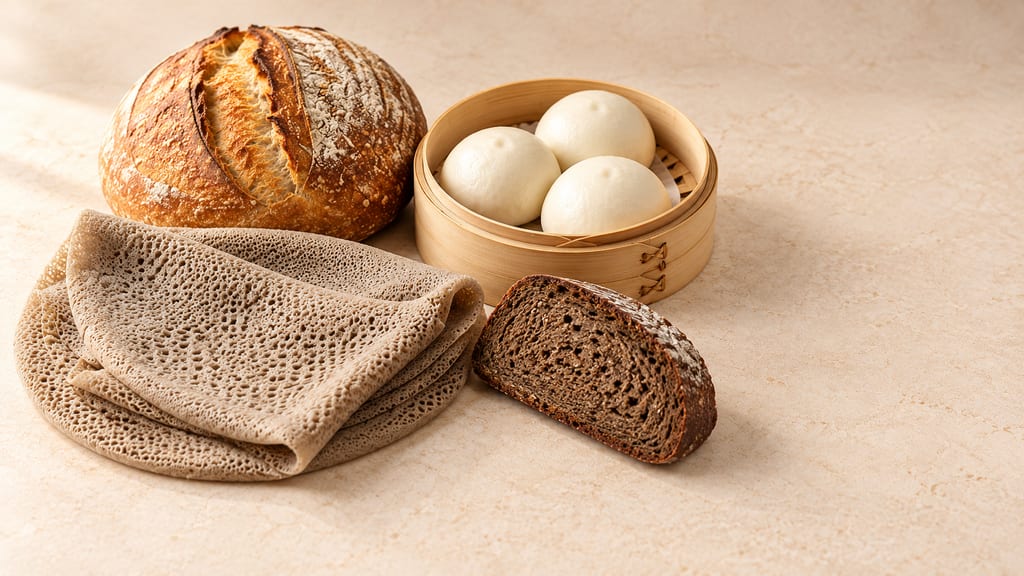
From the baguette and the steamed bun to injera, titiyas, Finnish rye and cassava bread: how grain, microbes and heat answer the question of what bread is for.
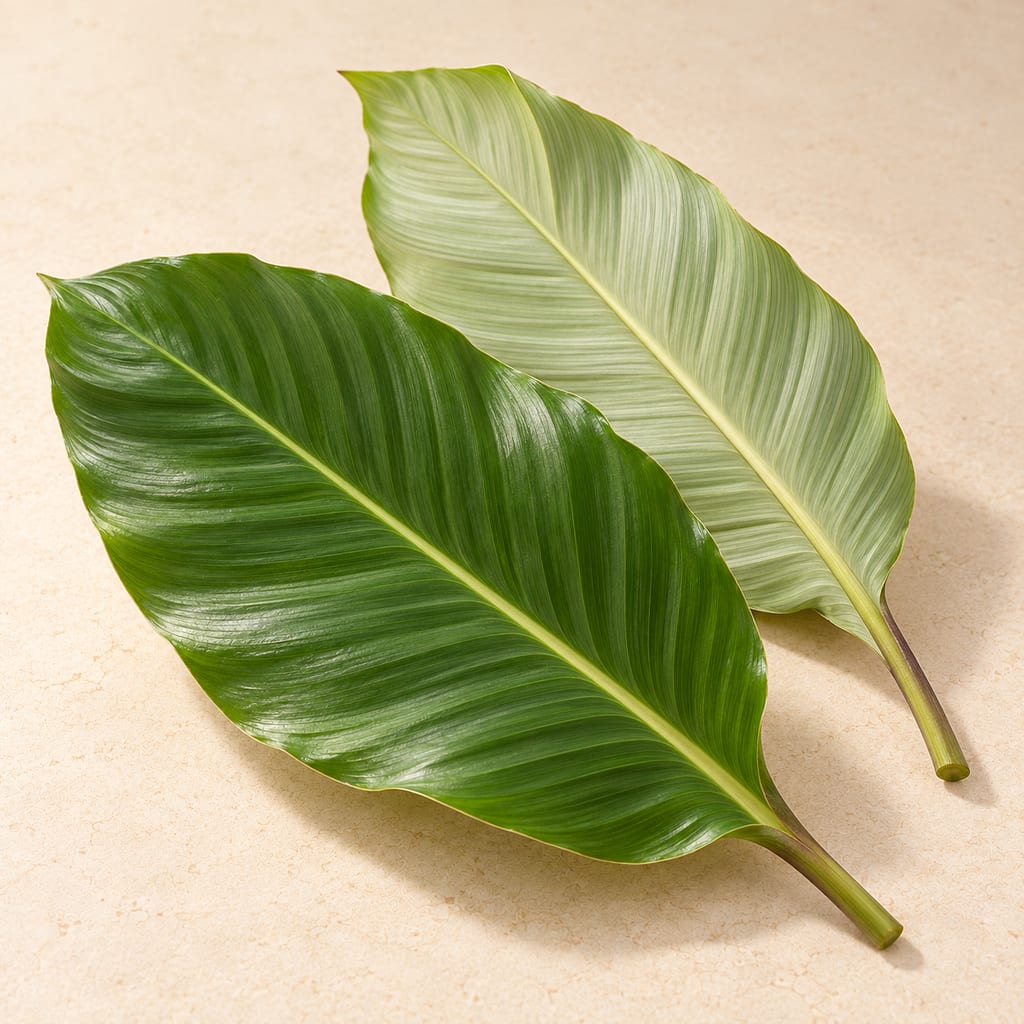
Bijao is the broad, durable leaf of Calathea lutea used in parts of Colombia as food-contact wrapping and lining. The common name also applies to other plants.
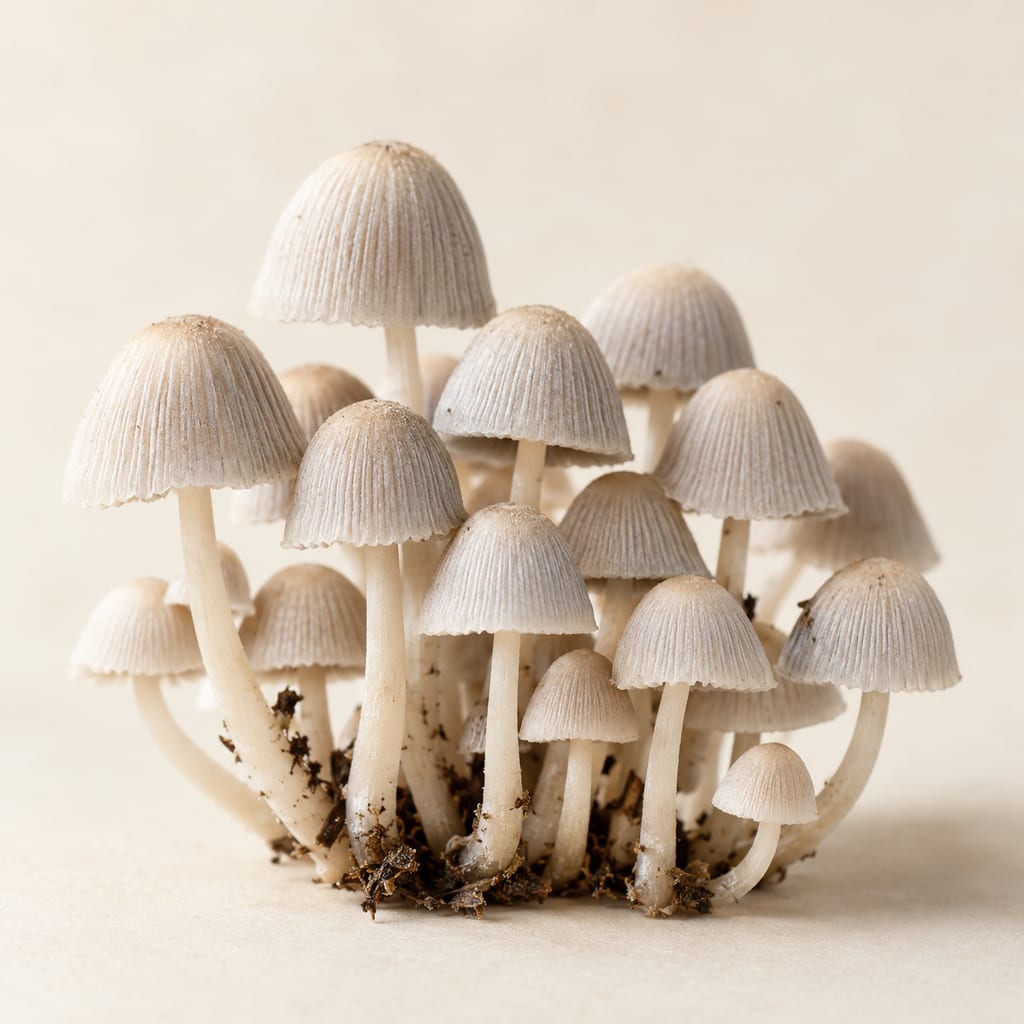
Coprinellus disseminatus is a small saprotrophic inky-cap mushroom that grows in clusters on wood and debris. A Congolese food-use record and a Colombian catalogue entry both call it edible, but neither describes its preparation.
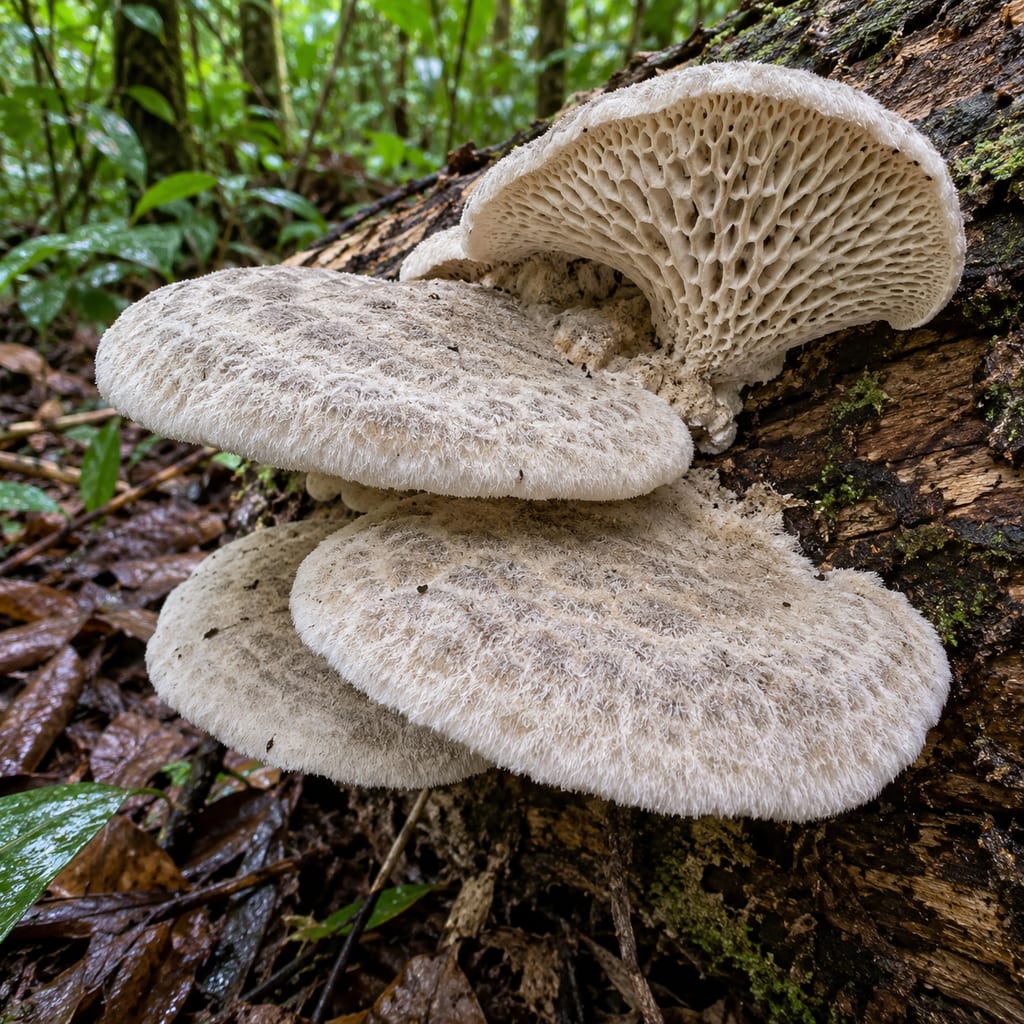
Favolus tessellatus is a tropical wood-decaying polypore with a tessellated cap and honeycomb pores. Brazilian sources record it as food, but the evidence does not establish one traditional recipe or a universal harvest season.
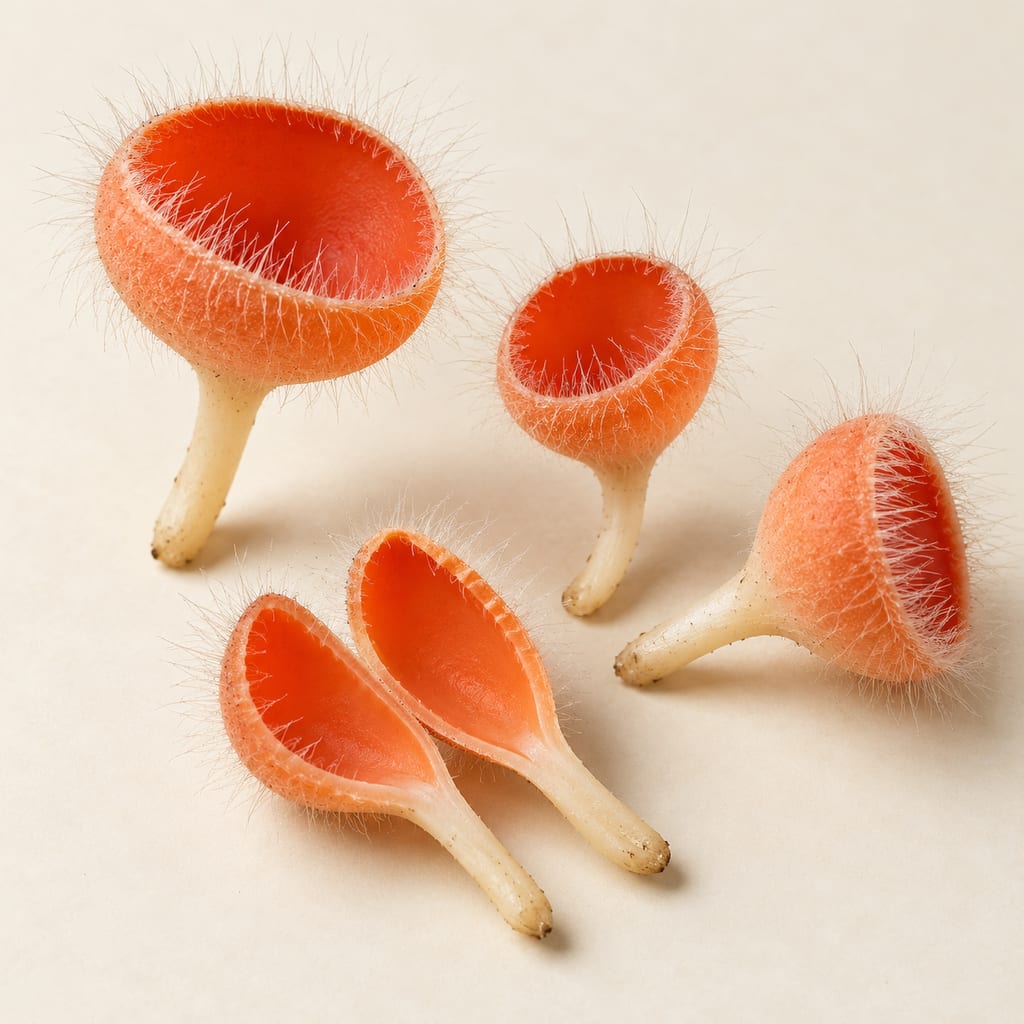
Cookeina tricholoma is a cup fungus of decaying wood, recorded as food in several tropical regions. Its food use is documented in ethnomycological reports, not established by a food-safety assessment.
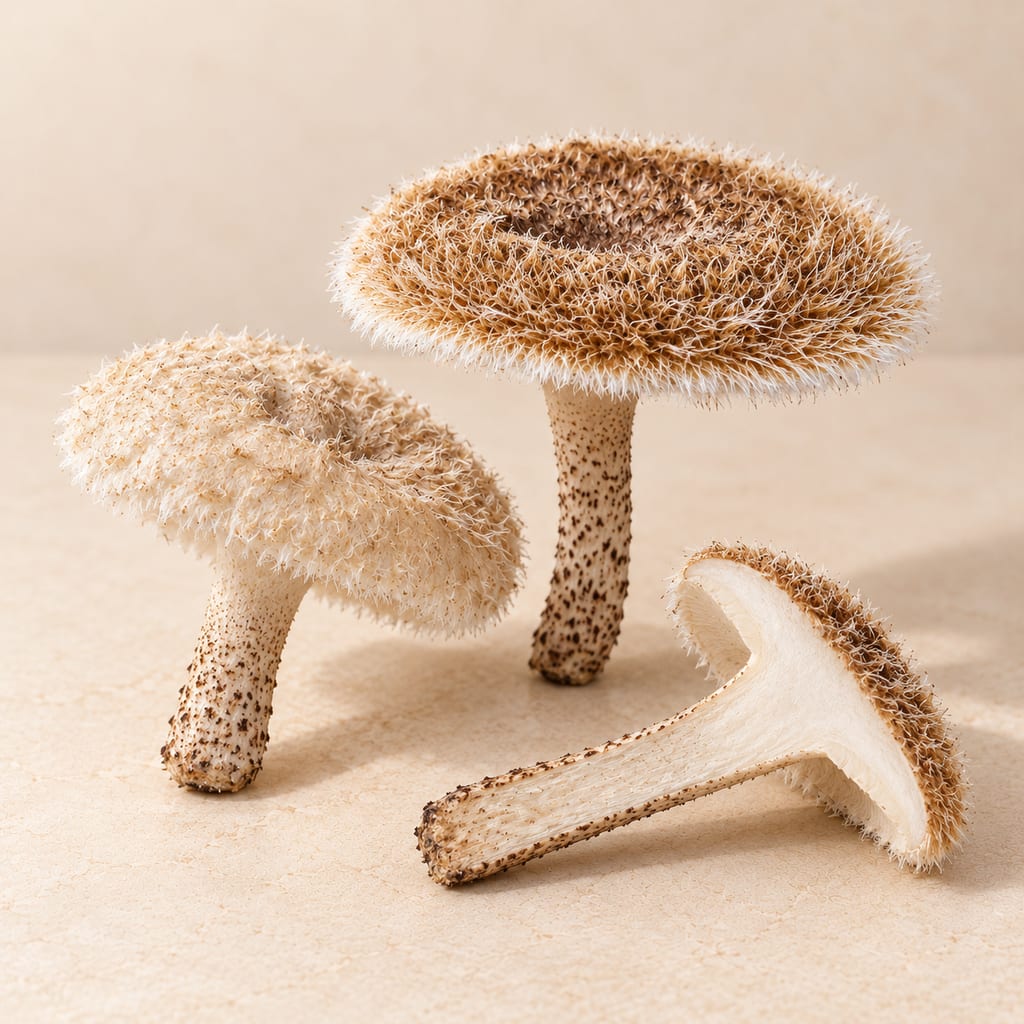
Lentinus berteroi is a sawgill mushroom of the tropical Americas, recorded as food in the Colombian catalogue and studied for cultivation in Brazil; a Brazilian food record for this species was not confirmed.
Crepidotus palmarum is a wood-dwelling fungus documented as food in Pauna, Boyacá, where local names include nacuma and orejas blancas; cultivation has also been studied.
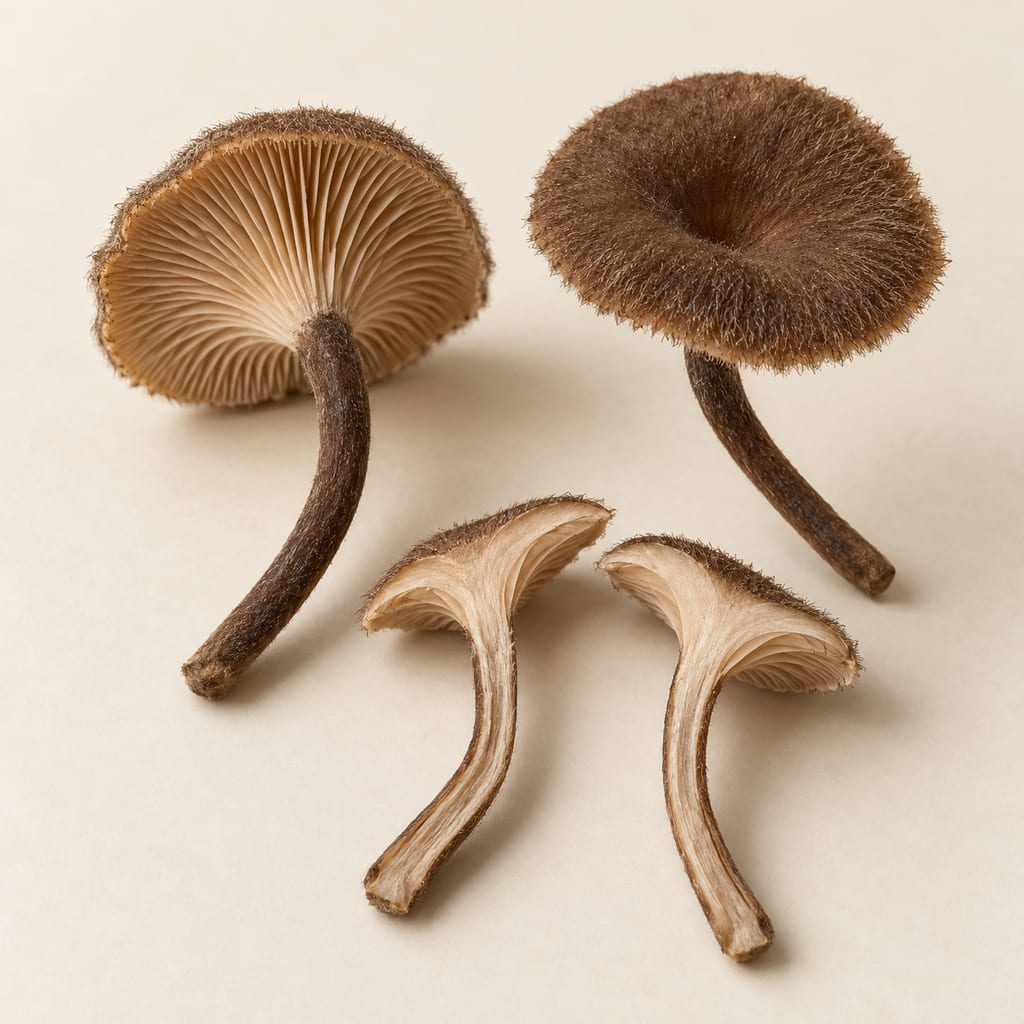
Panus neostrigosus is a wood-growing gilled fungus of Brazilian and Colombian tropical forests. A Yanomami food record exists, but sources disagree on whether it is edible, so no edibility verdict is given.
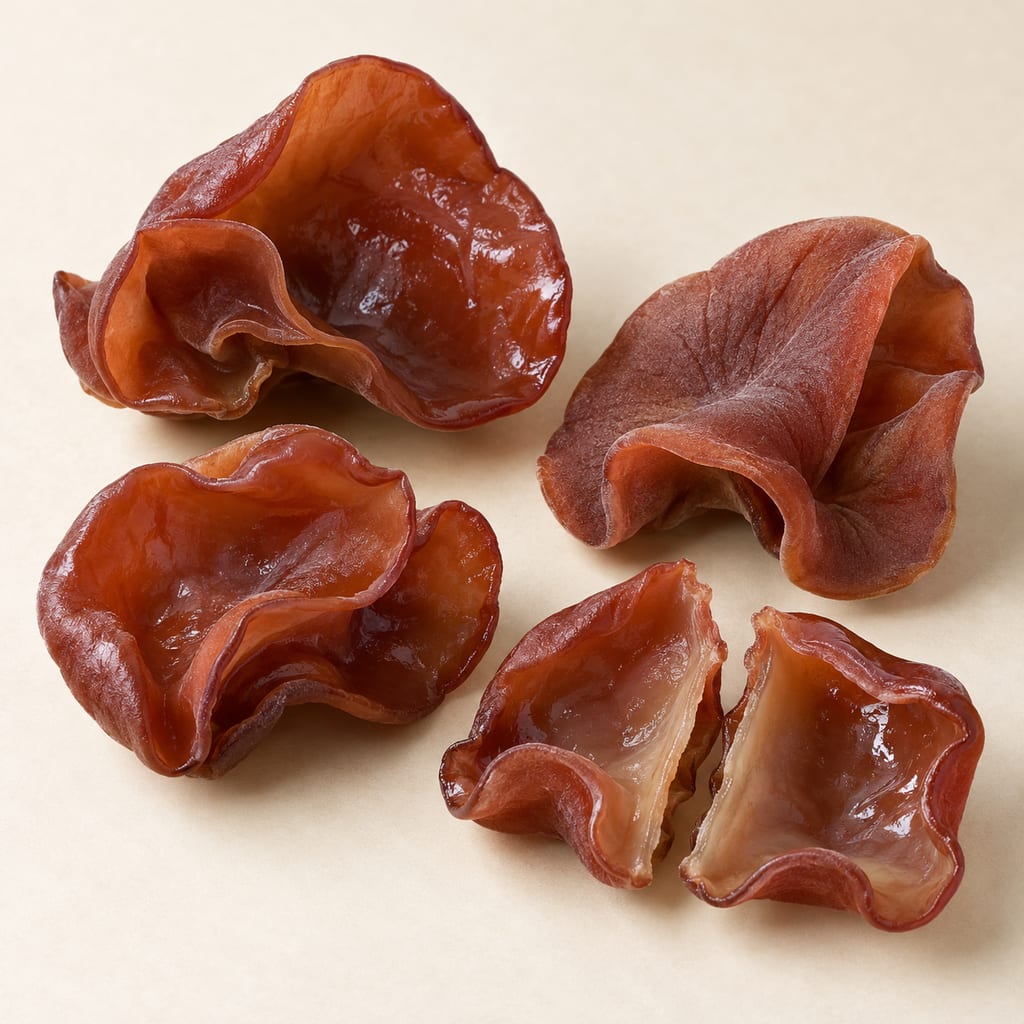
Reddish wood ear, Auricularia fuscosuccinea, is a gelatinous fungus that grows on wood in tropical forests. Records from Amazonian and other Neotropical communities describe it as food, but documented use is not a food-safety assessment.

A Cap-Pelé boucanière is an Acadian herring-smoking building. The documented Willie Niles example is a one-storey wood-frame structure with a ridge smoke vent and interior bays for hanging fish-bearing cannes.

Achcharu is a family of Sri Lankan vinegar pickles made with mixed vegetables or seasonal fruit and a piquant spice dressing. This version is a quick, refrigerated, non-fermented mixed-vegetable pickle.

The acocote is a long, hollowed and dried gourd used to draw aguamiel from a mature maguey. It is a harvesting tool: the sap is transferred to a separate vessel before it ferments into pulque.

Adrak murabba preserves young ginger in sugar syrup, a sweet South Asian preparation recorded in Indian cookery and food-processing sources.

Parkia biglobosa seeds are fermented into regional West African seasonings, including nététou, iru, dawadawa and soumbala. The yellow fruit pulp is a separate food, and names and methods vary by place.

Japanese reddish-brown vinegar from sake lees matured about three years, turned to vinegar by acetic bacteria; the vinegar of Handa and Edomae sushi rice.

A refined common-wheat flour blended for a broad range of baking; its protein and behavior vary with wheat, milling and market.

The almond mushroom, Agaricus subrufescens, was cultivated in eastern North America in the 1800s, lost its market, and returned as a cultivated mushroom from Brazil, where it is grown under several names.
No community contributions have been published for this entry yet.
Sign in to contribute. Published comments and photos are free to read.
United States PharmacopeiaIdentity
Tapioca StarchDefines tapioca starch as starch granules separated from cassava tubers.
Cited in: What the name means
Food and Agriculture Organization of the United NationsIdentity · Processing · History
Cassava flour and starchDescribes wet extraction, purification, dewatering, drying and finishing of cassava starch.
Distinguishes cassava flour from extracted starch and discusses the market term tapioca flour.
Cited in: What the name means; How producers separate starch from cassava; Buying and keeping the powder; Cassava safety and what this page cannot validate
Food and Agriculture Organization of the United NationsUse · Processing
Cassava processing: Utilization of cassava productsDescribes cassava starch and tapioca flour in food and non-food uses, including baked and gelatinized foods.
Discusses the effects of different starch granules and cassava starch use in Malaysian biscuits.
Cited in: What happens when starch is heated with water; Other food and manufacturing uses; Buying and keeping the powder
Food and Agriculture Organization of the United NationsGeography · Use · Processing
Save and grow: CassavaDocuments sour cassava starch production in parts of Colombia and its use in pan de bono.
Distinguishes sour fermented starch from other cassava products.
Cited in: Plain starch and sour starch are different forms; Cheese breads across regions
Vitae, Universidad de AntioquiaGeography · Use
Effect of tuber starch type on the sensory texture profile of traditional Colombian baked productsIdentifies pandebono as a traditional baked product associated with Colombia's Valle del Cauca and documents cassava starch in its formula.
Discusses pan de yuca as a Colombian baked product and tested starch substitutions as research variations.
Cited in: Cheese breads across regions
Universidade Estadual PaulistaHistory · Geography · Processing · Use
Review of sour cassava starch production in rural Colombian areasThe public abstract reports traditional sour-starch use in pan de yuca and pandebono in Colombia, and pão de queijo in Brazil.
The full article is access-restricted; this record uses only its public metadata and abstract.
Cited in: Plain starch and sour starch are different forms; Cheese breads across regions
King Arthur BakingHome preparation · Use
Brazilian Cheese Buns (Pão de Queijo)The published home recipe names tapioca flour or tapioca starch in its own formula.
The page reports its yield and baking directions for this particular formula; those details are not a universal formula.
Cited in: Using tapioca starch at home
United States Department of AgricultureHistory · Processing
The manufacture of starch from potatoes and cassavaA 1900 USDA bulletin includes a section on manufacturing starch from cassava.
Wikimedia Commons records the federal publication as public domain in the United States.
Cited in: A record of production, not an origin story
International Center for Tropical Agriculture and CIRADHistory · Geography · Processing
Cassava Flour and Starch: Progress in Research and DevelopmentThe chapter on Thailand records industrial cassava processing for starch in Chonburi Province in the 1920s, later starch milling, and post-war export growth.
The book documents technical research and production contexts beyond cassava's crop history.
Cited in: A record of production, not an origin story; Plain starch and sour starch are different forms
PolymersComposition · Processing · Use
Physicochemical Characterization and Properties of Cassava Starch: A ReviewReviews cassava starch granule structure, amylose and amylopectin, gelatinization, pasting and cooling-related changes.
Describes variation across samples and the effects of starch-to-water ratio and other ingredients on behavior.
Cited in: How producers separate starch from cassava; What happens when starch is heated with water; Other food and manufacturing uses
World Health OrganizationSafety
Natural toxins in foodIdentifies cassava among foods containing cyanogenic glycosides and explains that toxicity depends on cyanide exposure.
Cited in: Cassava safety and what this page cannot validate
Codex Alimentarius Commission, FAO and WHOSafety · Processing
Code of practice for the reduction of hydrocyanic acid (HCN) in cassava and cassava productsProvides product-specific cassava processing guidance and warns that an unsuitable or incomplete process may leave harmful residues.
Cited in: Cassava safety and what this page cannot validate
Food and Agriculture Organization of the United NationsHistory
Cassava processing: Acknowledgments, foreword, introduction and cassava cultivationThe FAO bulletin says its cassava-processing publication began in 1956 and was expanded in later editions.
Its account of cassava crop history does not date the origin of tapioca starch.
Cited in: A record of production, not an origin story
Cozinhando com Ciência, Universidade Federal de Santa CatarinaIdentity · Processing · Use
Polvilho: what is the difference between sweet and sour? Can one replace the other?Explains polvilho as cassava starch, distinguishes unfermented polvilho doce from fermented polvilho azedo, and describes their different baking behavior.
States that the two forms are not interchangeable in the cited cooking context.
Cited in: Plain starch and sour starch are different forms