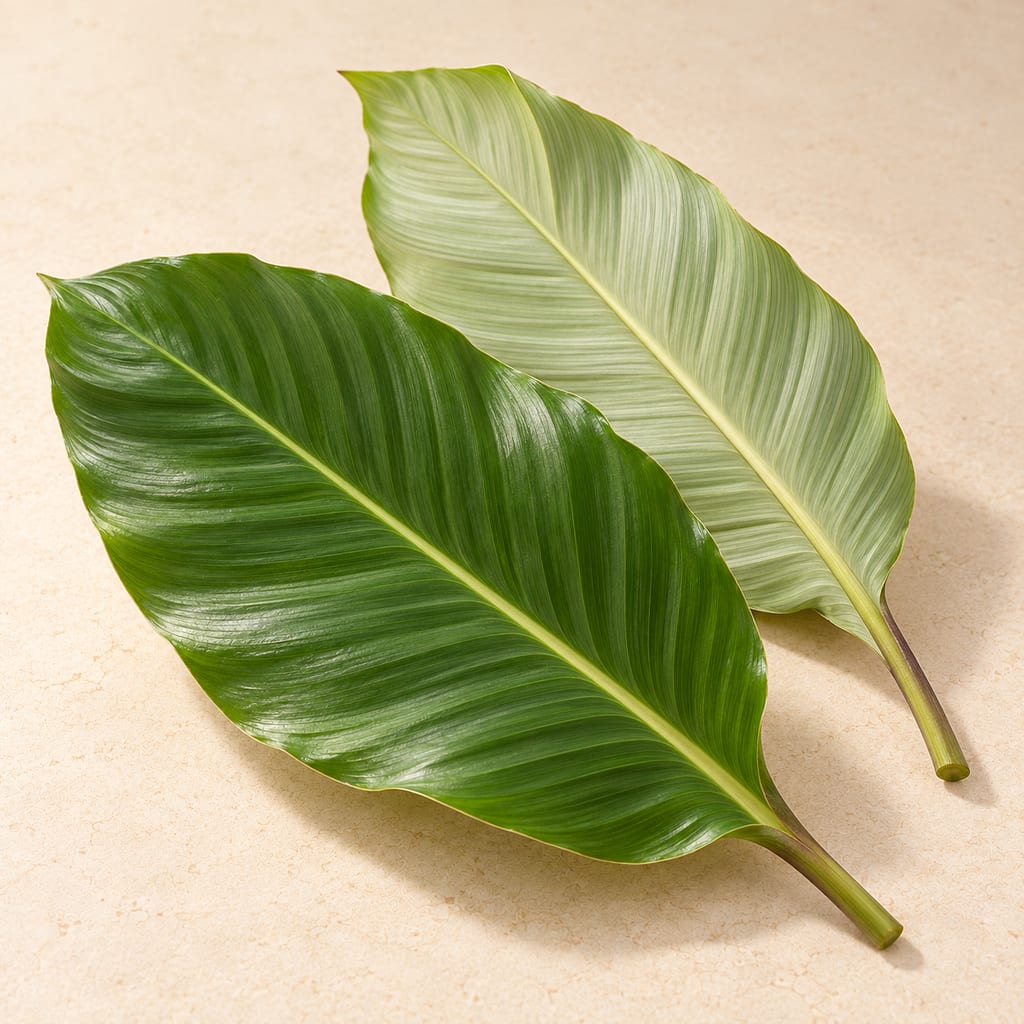
Bijao leaves (Calathea lutea)
Bijao is the broad, durable leaf of Calathea lutea used in parts of Colombia as food-contact wrapping and lining. The common name also applies to other plants.
 FermenteaWhere food goes to change
Mushrooms
Crepidotus palmarum is a wood-dwelling fungus documented as food in Pauna, Boyacá, where local names include nacuma and orejas blancas; cultivation has also been studied.
Crepidotus palmarum is a small white fungus that grows on dead wood in forest habitats. In the Pauna study, local names include nacumas and orejas blancas (“white ears”). A separate survey in Otanche uses nacumas for Favolus tenuiculus, a different fungus, so the common name alone does not establish species identity. The catalogue describes it as a wood saprotroph, which feeds on dead organic matter rather than on living trees.
The catalogue cautions against generalising from this species to the genus Crepidotus as a whole. Several Crepidotus species look alike, and precise local identification is required.
The catalogue lists the species as an important food fungus in a Boyacá field survey. University studies from the municipality of Pauna record residents of the Monte y Pinal area eating it, together with a related wild species, Auricularia fuscosuccinea.
A later survey of four Boyacá municipalities, San Mateo, Miraflores, Togüí and Pauna, ranked nacuma among the wild edible fungi of highest cultural importance. The sources read do not give recipes, quantities or seasons of use.
The UPTC study isolated strains of the fungus and tested growth conditions. The culture medium called EM supported mycelial growth at 25 degrees Celsius, and barley grain at 22 degrees Celsius supported high substrate colonisation, which is the step that produces spores. The work aimed to begin cultivating the species from isolated strains.
These results describe laboratory growth. They do not establish that the fungus is cultivated for food, and they are not a cultivation method for home use.
The sources read give no toxicity or safety information for nacuma. Local use in Pauna and Boyacá is a food-use record, not a safety assessment.
This record is not a guide to identifying wild fungi. Identify any specimen with an expert before eating it, because other white wood-dwelling fungi can be confused with it.
Locality from the Monte y Pinal area of Pauna in the UPTC study. The catalogue records Colombia as the region.
Bijao is the broad, durable leaf of Calathea lutea used in parts of Colombia as food-contact wrapping and lining. The common name also applies to other plants.
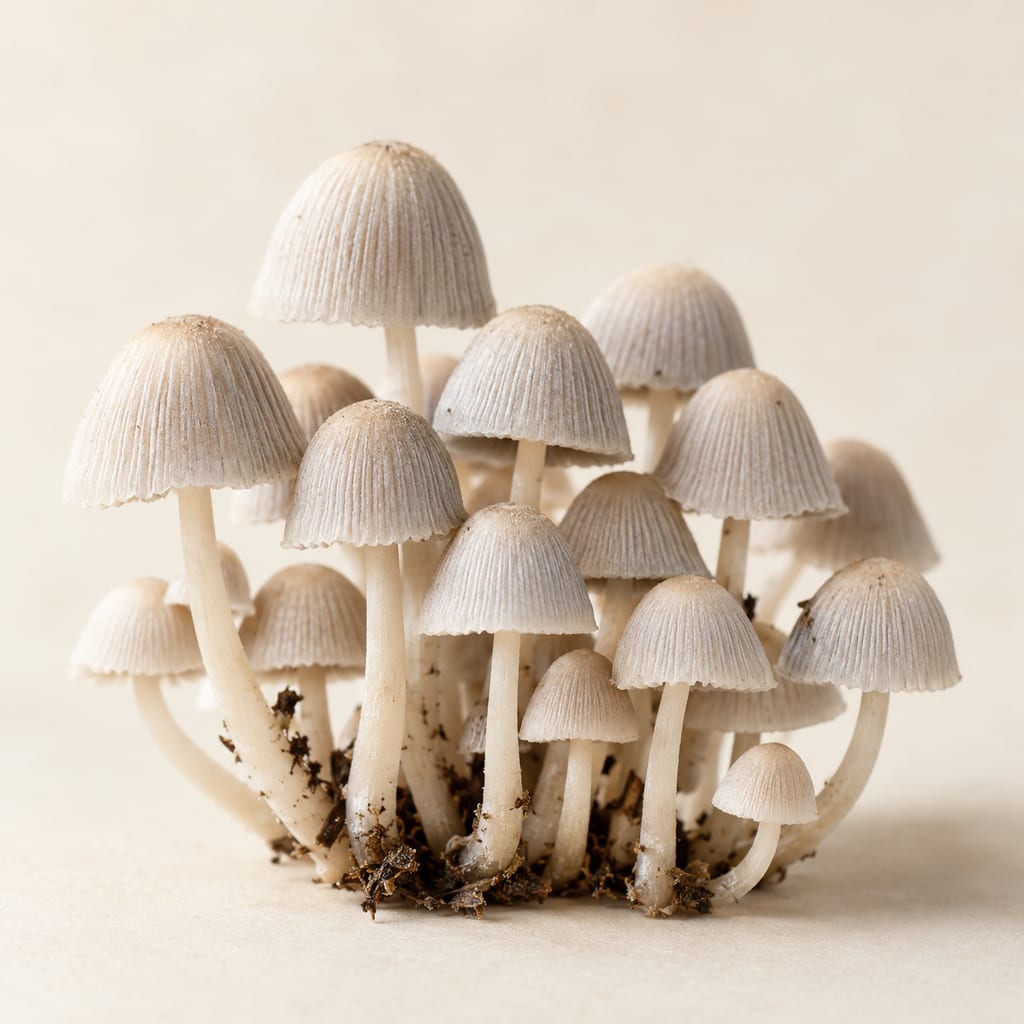
Coprinellus disseminatus is a small saprotrophic inky-cap mushroom that grows in clusters on wood and debris. A Congolese food-use record and a Colombian catalogue entry both call it edible, but neither describes its preparation.
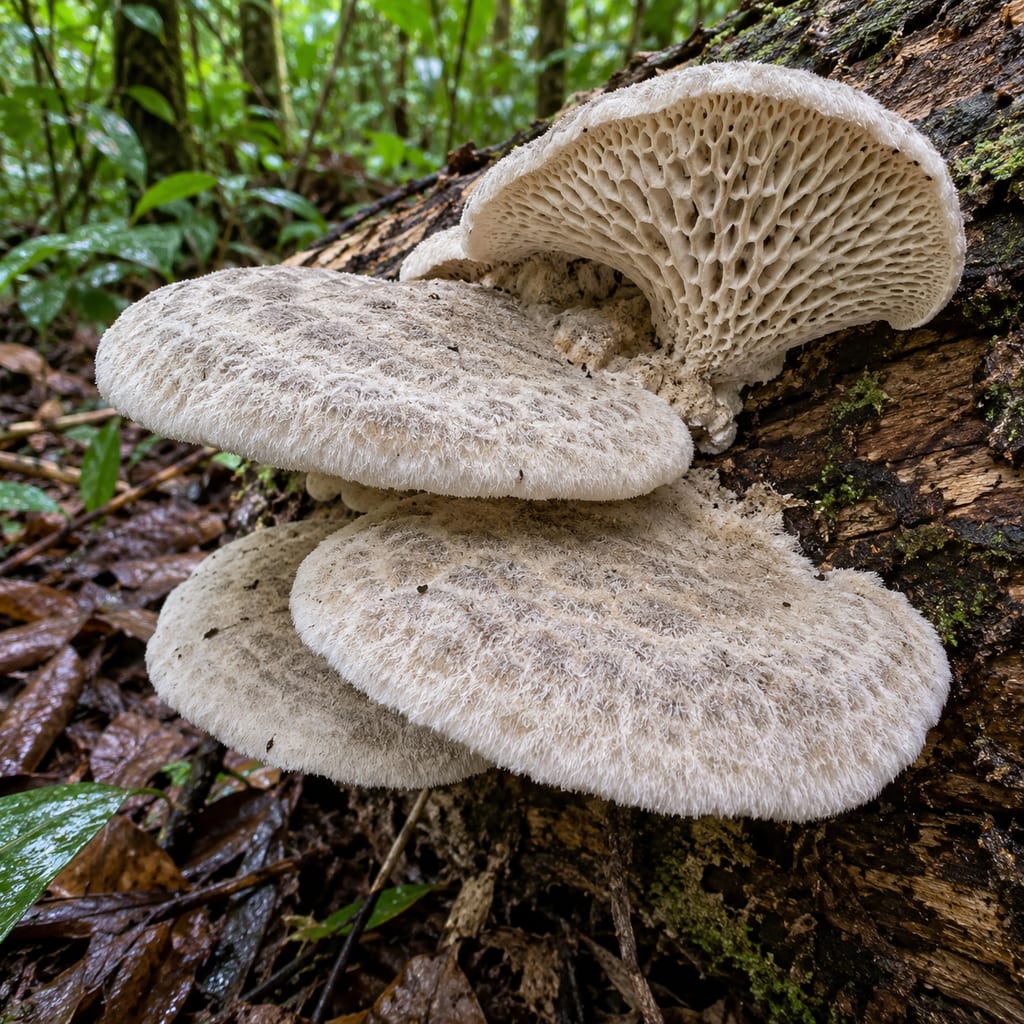
Favolus tessellatus is a tropical wood-decaying polypore with a tessellated cap and honeycomb pores. Brazilian sources record it as food, but the evidence does not establish one traditional recipe or a universal harvest season.
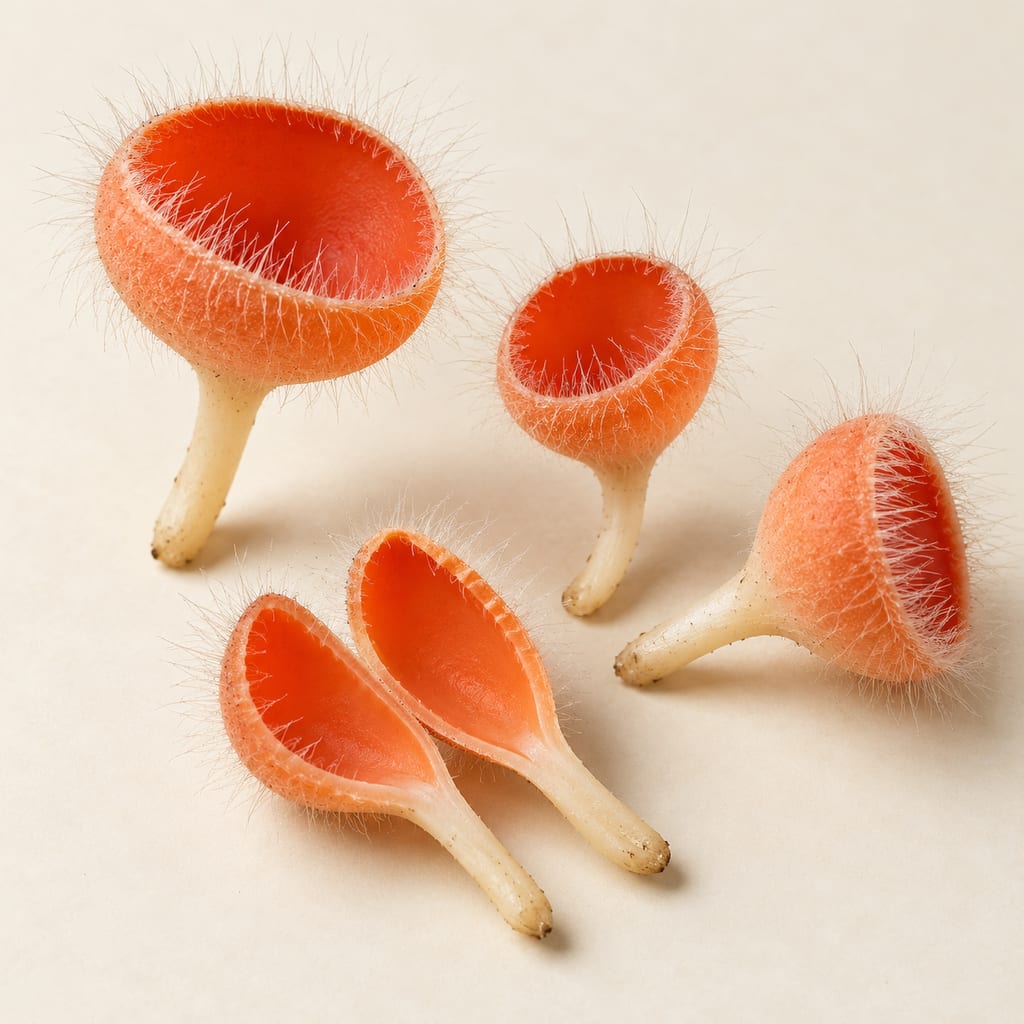
Cookeina tricholoma is a cup fungus of decaying wood, recorded as food in several tropical regions. Its food use is documented in ethnomycological reports, not established by a food-safety assessment.
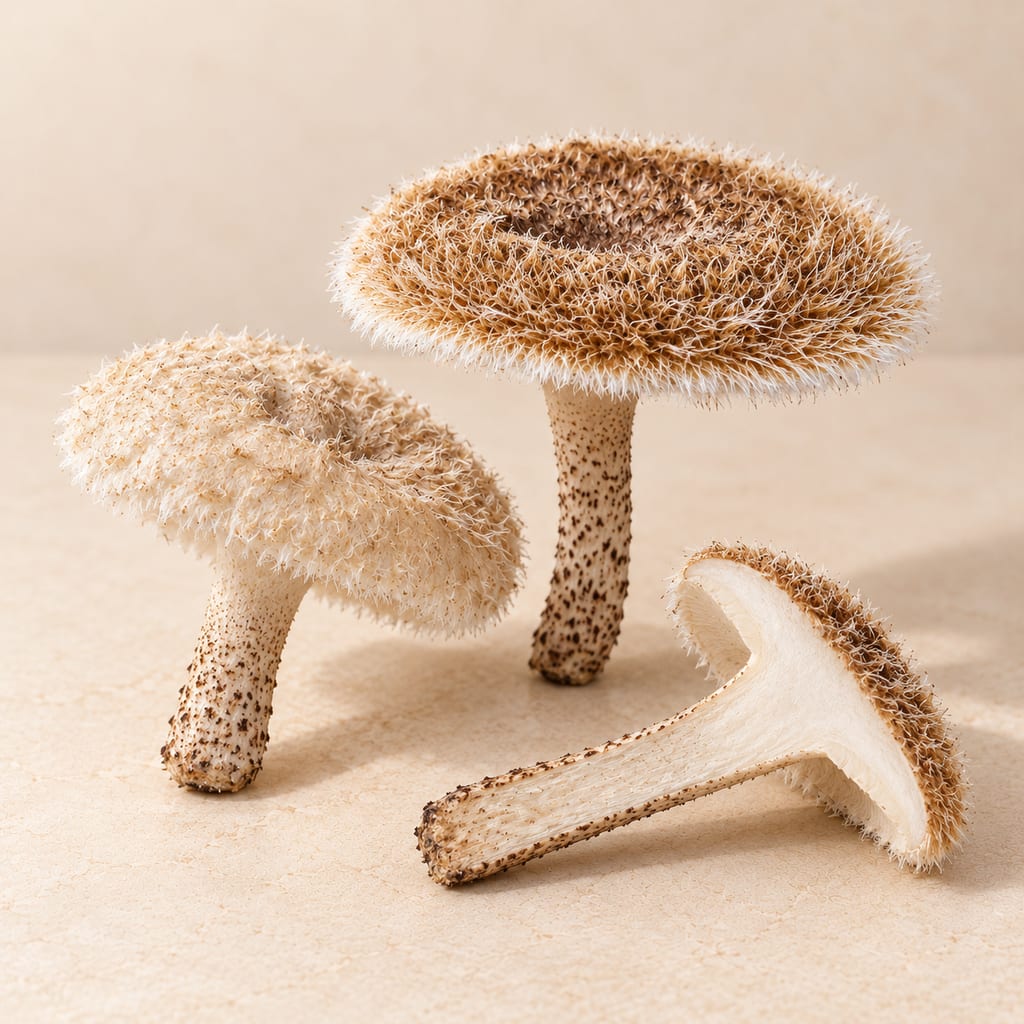
Lentinus berteroi is a sawgill mushroom of the tropical Americas, recorded as food in the Colombian catalogue and studied for cultivation in Brazil; a Brazilian food record for this species was not confirmed.
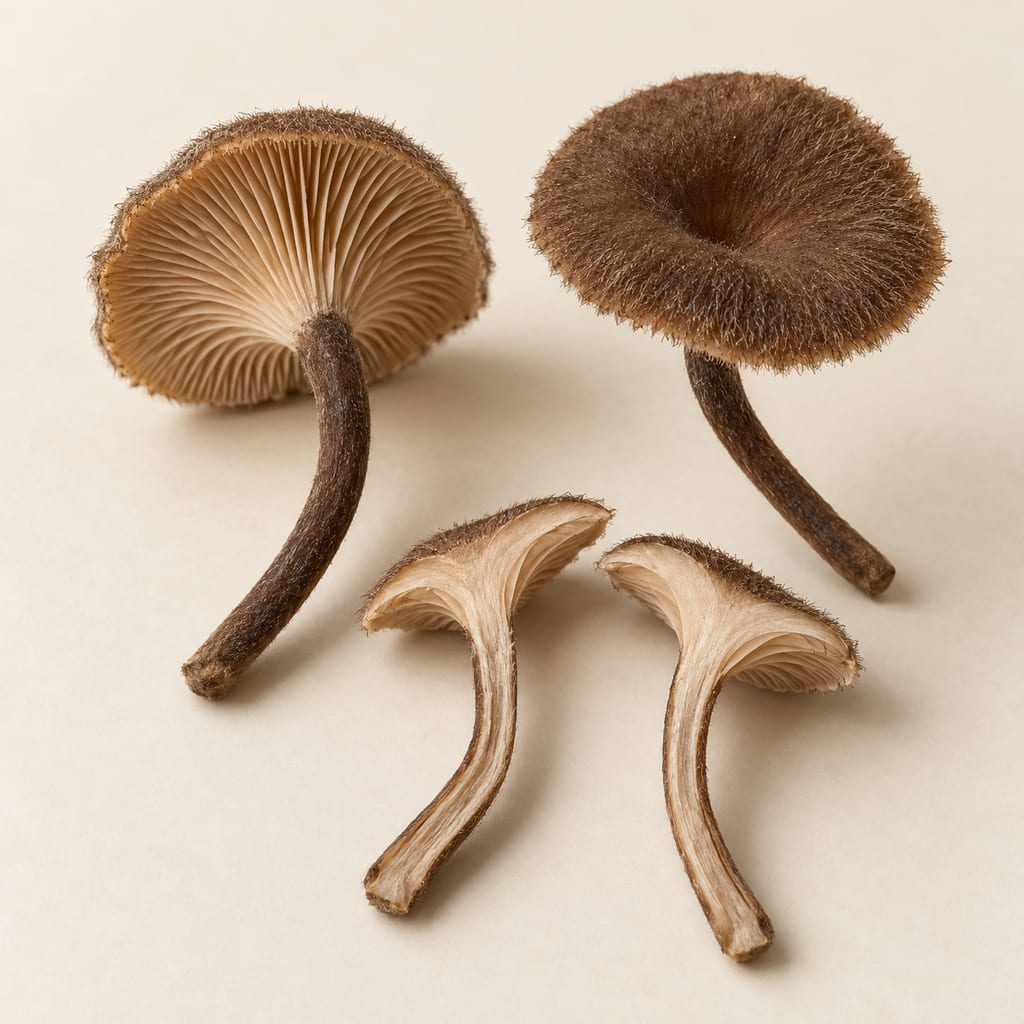
Panus neostrigosus is a wood-growing gilled fungus of Brazilian and Colombian tropical forests. A Yanomami food record exists, but sources disagree on whether it is edible, so no edibility verdict is given.
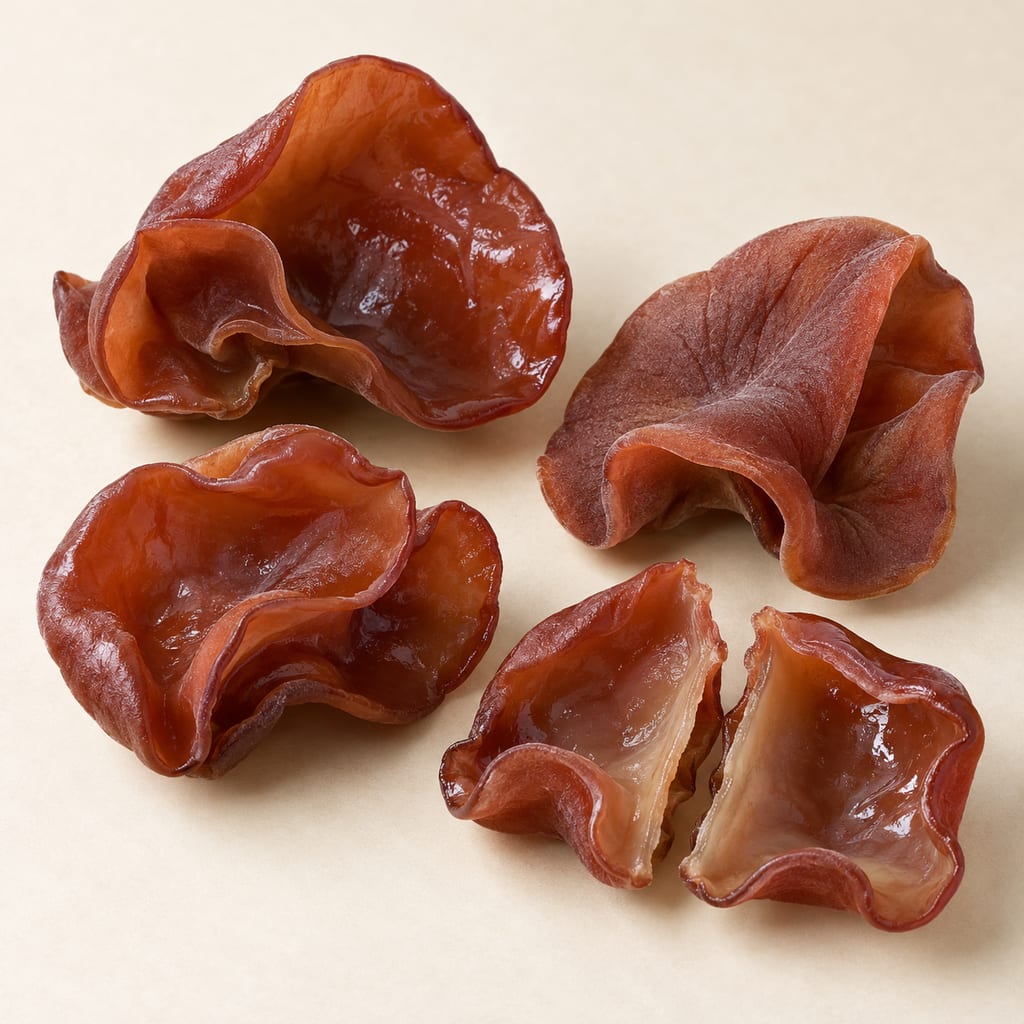
Reddish wood ear, Auricularia fuscosuccinea, is a gelatinous fungus that grows on wood in tropical forests. Records from Amazonian and other Neotropical communities describe it as food, but documented use is not a food-safety assessment.
Tapioca starch is the fine starch separated from cassava roots. Cheese breads such as pandebono and pão de queijo use cassava starch, but some recipes specify fermented sour starch. Whole-root cassava flour is a different ingredient.
No community contributions have been published for this entry yet.
Sign in to contribute. Published comments and photos are free to read.
Catalogue of Fungi of Colombia (colfungi)Identity · Food · Ecology
Crepidotus palmarum SingerFood mushroom known locally as nacumas or orejas blancas; eaten in rural communities of Pauna, Boyacá; wood saprotroph on dead wood; isolation and inoculum production tested
Cited in: What it is; Safety and identification
Revista Colombiana de Ciencias HortícolasFood · Cultivation
Aislamiento y producción de semilla de Auricularia fuscosuccinea (Mont.) Henn. y Crepidotus palmarum Sing. usados tradicionalmente en Pauna (Boyacá, Colombia)The authors identify C. palmarum as a fungus consumed by residents of Monte y Pinal, Pauna, and report laboratory isolation and spawn-production trials. The study’s cultivation parameters are laboratory findings, not household food instructions.
Cited in: Food use in Boyacá; Cultivation research; Safety and identification
Universidad Pedagógica y Tecnológica de Colombia (Ciencia Abierta)Food
UPTC survey of wild edible fungi in four Boyacá municipalitiesCultural importance ranking among wild edible fungi in San Mateo, Miraflores, Togüí and Pauna (search-result summary, full text not read)
Cited in: Food use in Boyacá
Etnobiología 12(3), 2014Identity · Food · Local names
Conocimiento y uso tradicional de hongos silvestres de las comunidades campesinas asociadas a bosques de roble (Quercus humboldtii) en la zona de influencia de la Laguna de Fúquene, Andes NororientalesTable 2 lists Crepidotus palmarum as nacumas/orejas blancas, edible, and reported from Pauna on decaying trunks in oak forest.
Cited in: What it is; Food use in Boyacá
Plantas y Hongos Útiles de Colombia project; Royal Botanic Gardens, Kew and Instituto de Investigación de Recursos Biológicos Alexander von HumboldtIdentity · Local names · Food
Una mirada a las plantas y los hongos útiles en tres áreas biodiversas de ColombiaThe Otanche survey identifies Favolus tenuiculus as orejas blancas or nacumas in local edible-fungi records; it is a separate taxon and locality, showing the common name is not taxonomically unique.
Cited in: What it is; Food use in Boyacá