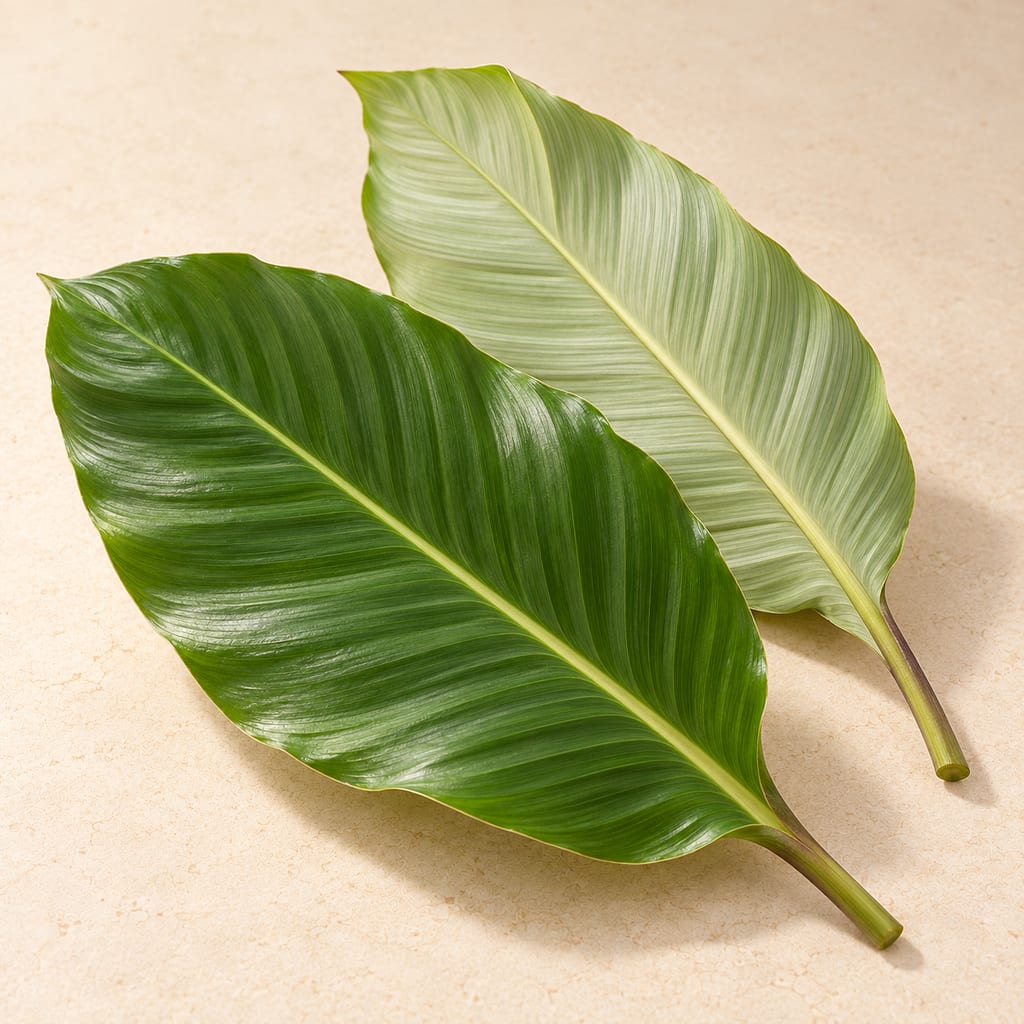
Bijao leaves (Calathea lutea)
Bijao is the broad, durable leaf of Calathea lutea used in parts of Colombia as food-contact wrapping and lining. The common name also applies to other plants.
 FermenteaWhere food goes to change
Other
Cookeina tricholoma is a cup fungus of decaying wood, recorded as food in several tropical regions. Its food use is documented in ethnomycological reports, not established by a food-safety assessment.
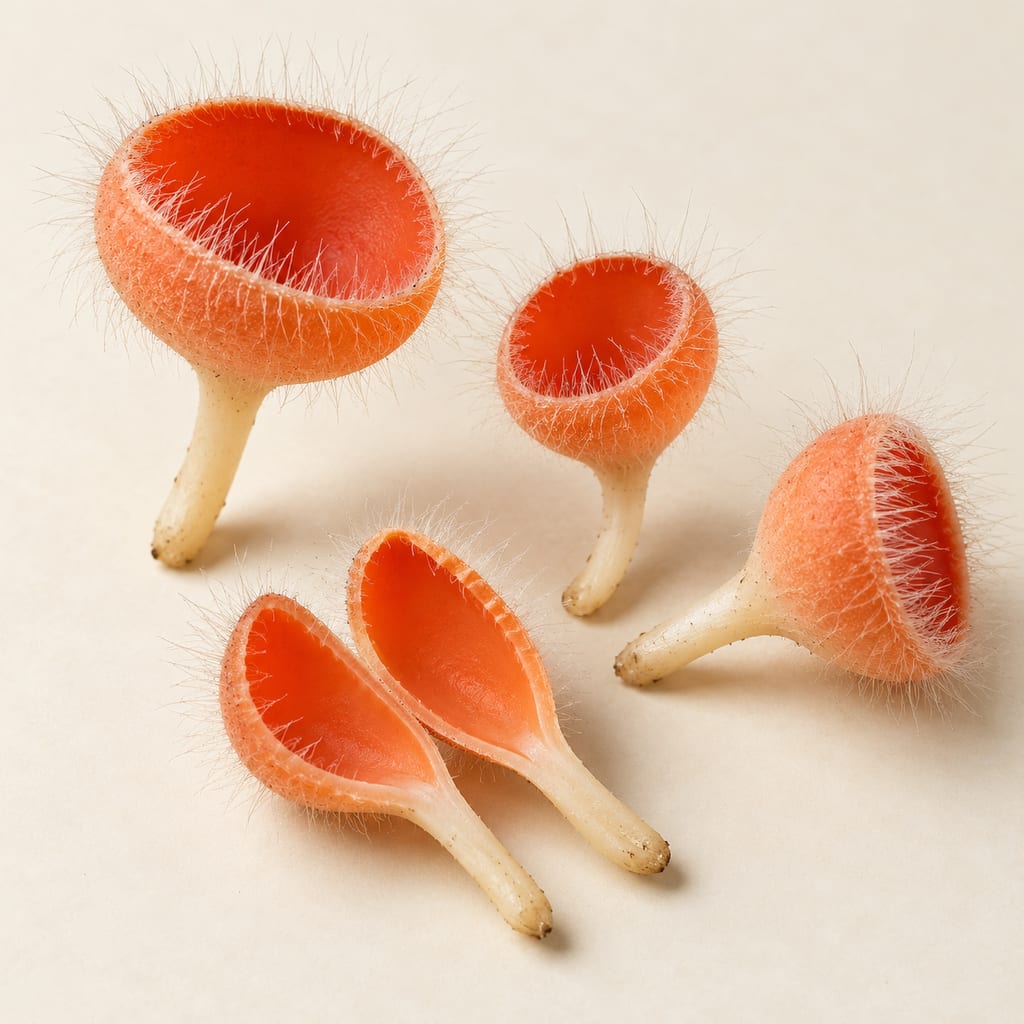
Cookeina tricholoma is a cup fungus that grows on decaying wood. The common name hairy tropical cup fungus is the catalogue's English label. The catalogue uses the name Cookeina tricholoma as a research name, with no blanket validation against current taxonomy, and it records no alias beyond it.
Colombian fungal catalogue entries list the species among food mushrooms and record a local name used by the Uitoto people. The Indonesian record and the Brazilian record come from separate sources and do not describe the same food tradition.
The catalogue records a tropical food-use report for this species, and the Colombian catalogue lists it among food mushrooms. A 2025 study in the Rumphius Pattimura Biological Journal reports that indigenous communities in Central Kalimantan, Indonesia, eat the species and use it medicinally, based on work with Dayak Maanyan mushroom enthusiasts.
The catalogue's supplied source for the Brazilian record is a 2024 study of wild edible mushrooms in Brazil. Its abstract counts 409 wild edible species, of which 41 have some record of consumption by part of the Brazilian population, but the abstract does not name Cookeina tricholoma. The species-level Brazilian record was therefore not confirmed from the abstract that was read.
A field-observation source notes that Cookeina tricholoma is sometimes mistaken for the related Cookeina speciosa, which is also described as edible. C. tricholoma usually has smaller cups and is covered in long, conspicuous whitish hairs. The catalogue's review label is food, market and specialist evidence, and it notes that documented occurrence and consumption do not establish a standardised food-safety assessment.
The sources read do not describe a preparation method, a cooking practice or a toxicity assessment for this species. Documented consumption is not a safety determination, and no edibility verdict follows from this page.
The Colombian catalogue lists the species among food mushrooms and records a Uitoto local name; the country-level record does not establish a precise locality.
Work with Dayak Maanyan mushroom enthusiasts; eating and medicinal use are reported in the 2025 study.
The catalogue's Brazilian food-use record is not confirmed at species level by the abstract read.
Bijao is the broad, durable leaf of Calathea lutea used in parts of Colombia as food-contact wrapping and lining. The common name also applies to other plants.
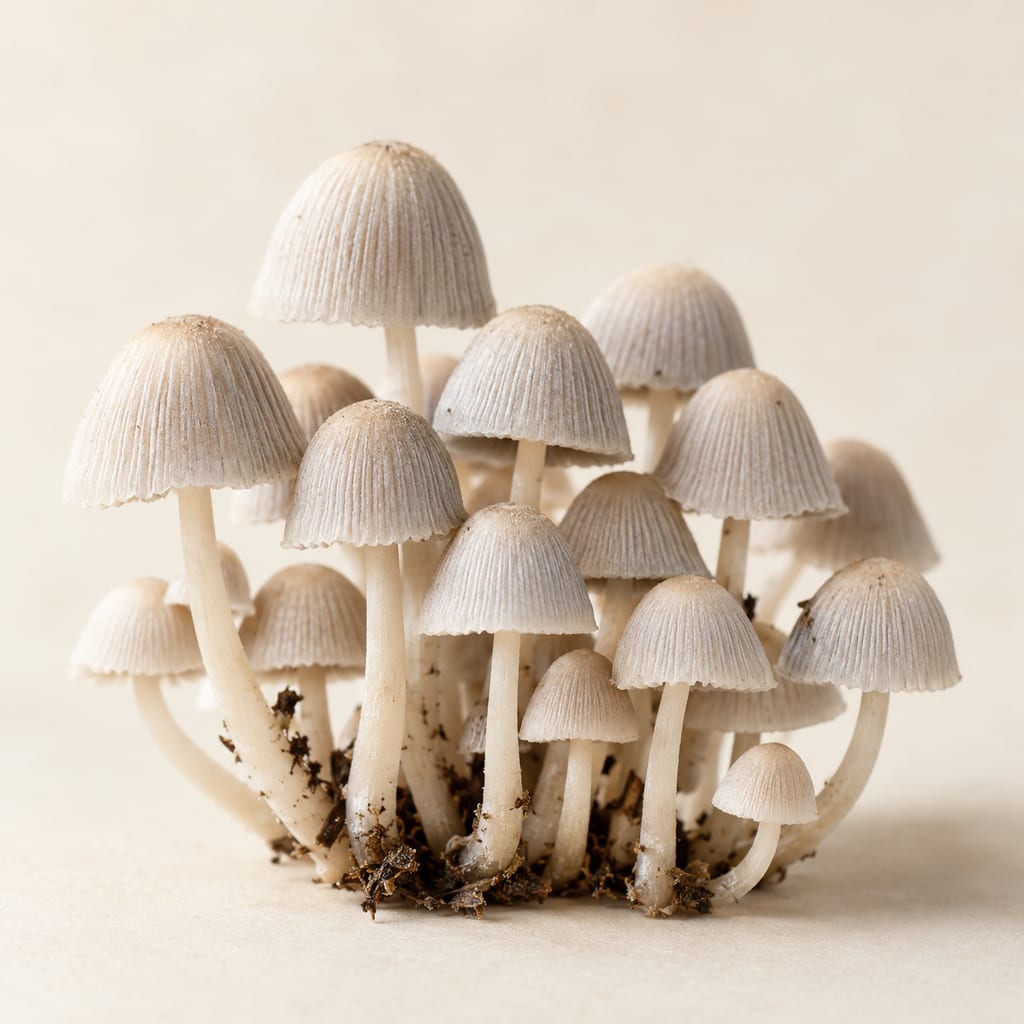
Coprinellus disseminatus is a small saprotrophic inky-cap mushroom that grows in clusters on wood and debris. A Congolese food-use record and a Colombian catalogue entry both call it edible, but neither describes its preparation.
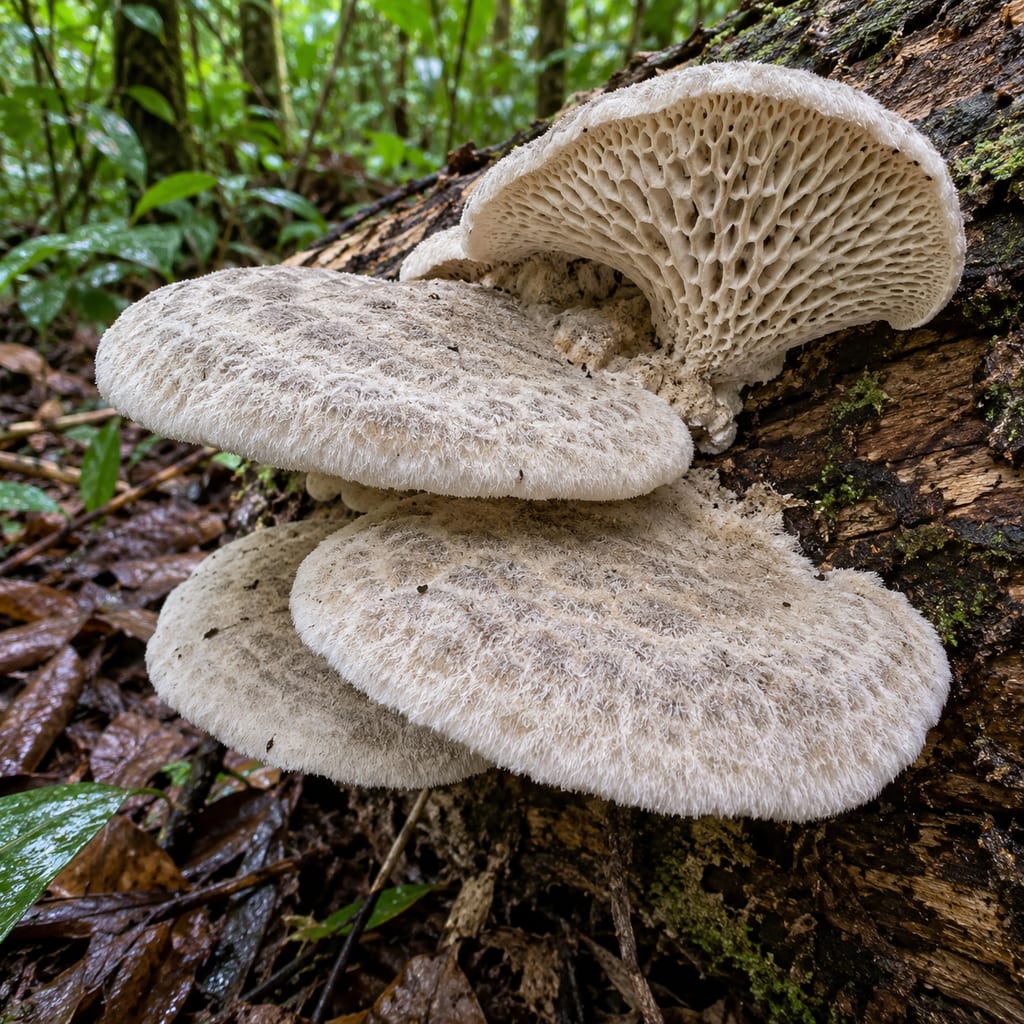
Favolus tessellatus is a tropical wood-decaying polypore with a tessellated cap and honeycomb pores. Brazilian sources record it as food, but the evidence does not establish one traditional recipe or a universal harvest season.
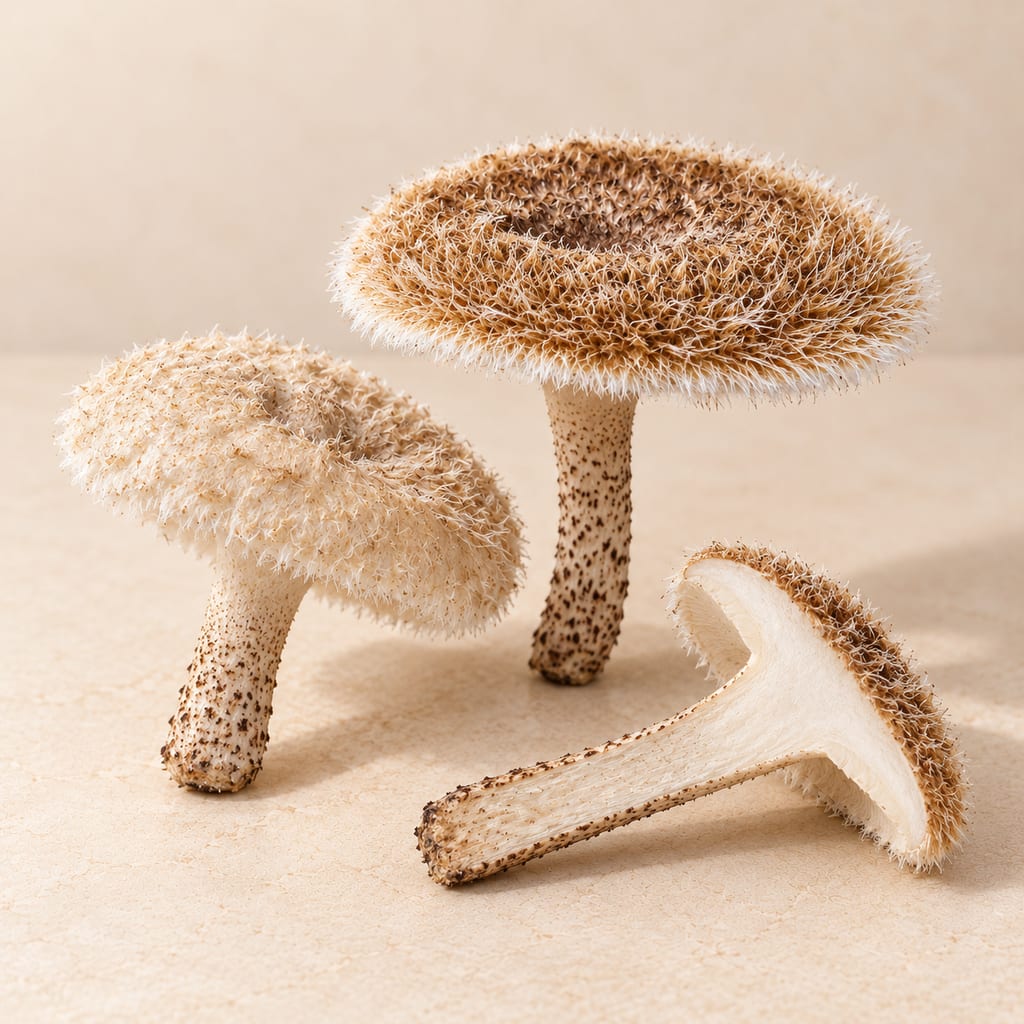
Lentinus berteroi is a sawgill mushroom of the tropical Americas, recorded as food in the Colombian catalogue and studied for cultivation in Brazil; a Brazilian food record for this species was not confirmed.
Crepidotus palmarum is a wood-dwelling fungus documented as food in Pauna, Boyacá, where local names include nacuma and orejas blancas; cultivation has also been studied.
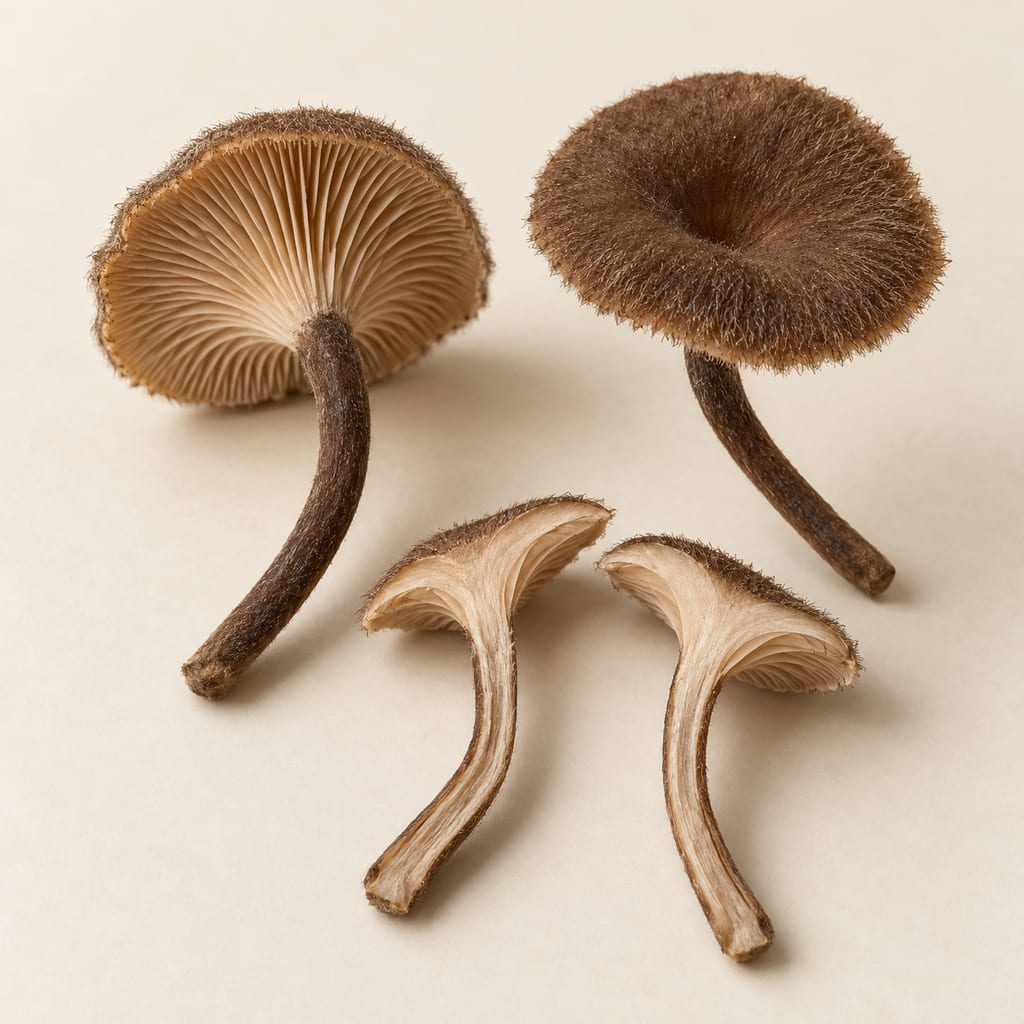
Panus neostrigosus is a wood-growing gilled fungus of Brazilian and Colombian tropical forests. A Yanomami food record exists, but sources disagree on whether it is edible, so no edibility verdict is given.
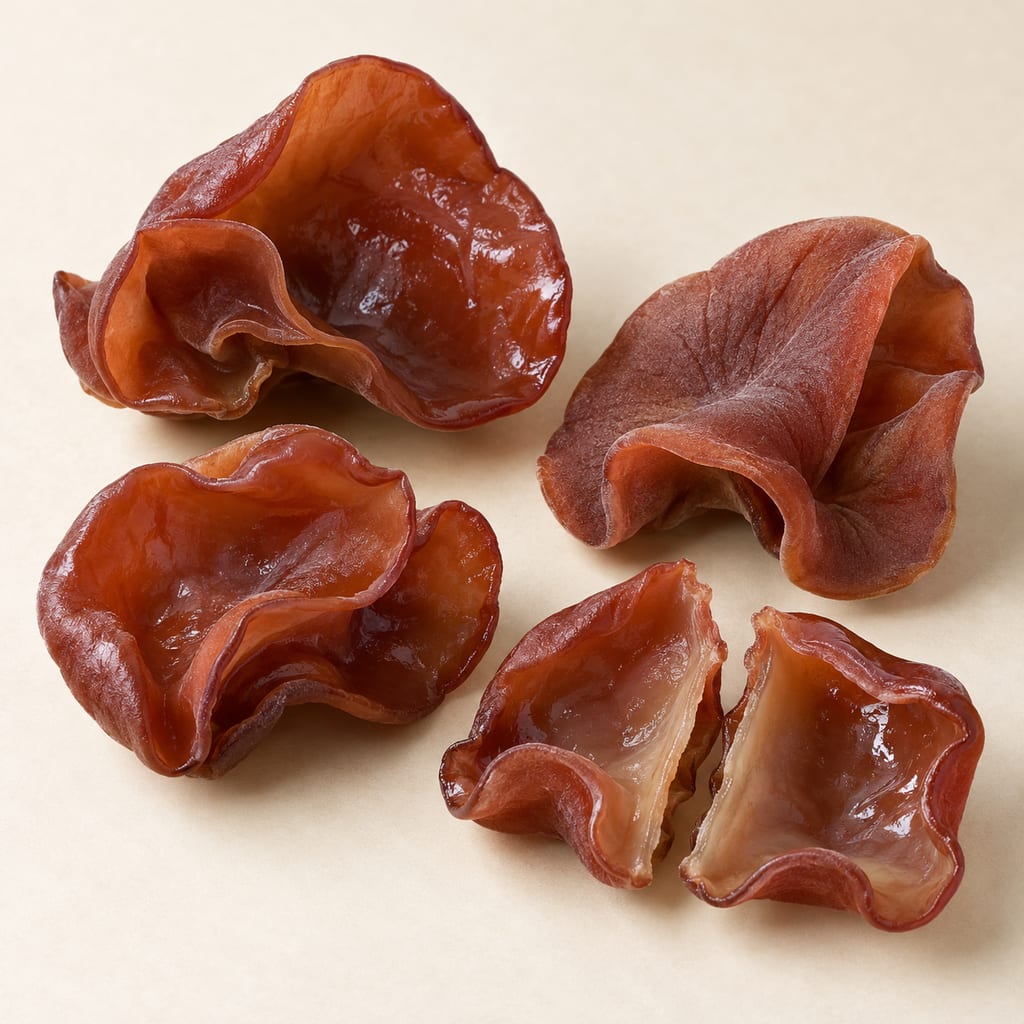
Reddish wood ear, Auricularia fuscosuccinea, is a gelatinous fungus that grows on wood in tropical forests. Records from Amazonian and other Neotropical communities describe it as food, but documented use is not a food-safety assessment.
Tapioca starch is the fine starch separated from cassava roots. Cheese breads such as pandebono and pão de queijo use cassava starch, but some recipes specify fermented sour starch. Whole-root cassava flour is a different ingredient.
No community contributions have been published for this entry yet.
Sign in to contribute. Published comments and photos are free to read.
Catalogue of Fungi of ColombiaTaxonomy · Food record
Cookeina tricholoma (Mont.) Kuntze, general informationListed among food mushrooms; a local name used by the Uitoto people is recorded.
Name recorded as Cookeina tricholoma (Mont.) Kuntze; the catalogue treats its identity as a research name.
Cited in: Identity and name; Food records; Identification and lookalikes; Preparation and safety
Rumphius Pattimura Biological JournalFood record · Medicinal use · Distribution
Distribution of Genus Cookeina and Ethnomycology in IndonesiaIndigenous communities in Indonesia eat the species and use it medicinally; the work was done with Dayak Maanyan mushroom enthusiasts in Central Kalimantan.
Cited in: Identity and name; Food records
IMA FungusFood record · Caution
Over 400 food resources from Brazil: evidence-based records of wild edible mushroomsThe abstract records 409 wild edible species in Brazil, 41 with some record of consumption; it does not mention Cookeina tricholoma.
Only 86 of the 409 species are consistently recorded from molecular data or nomenclatural types; 323 names need further taxonomic work.
Cited in: Food records; Preparation and safety