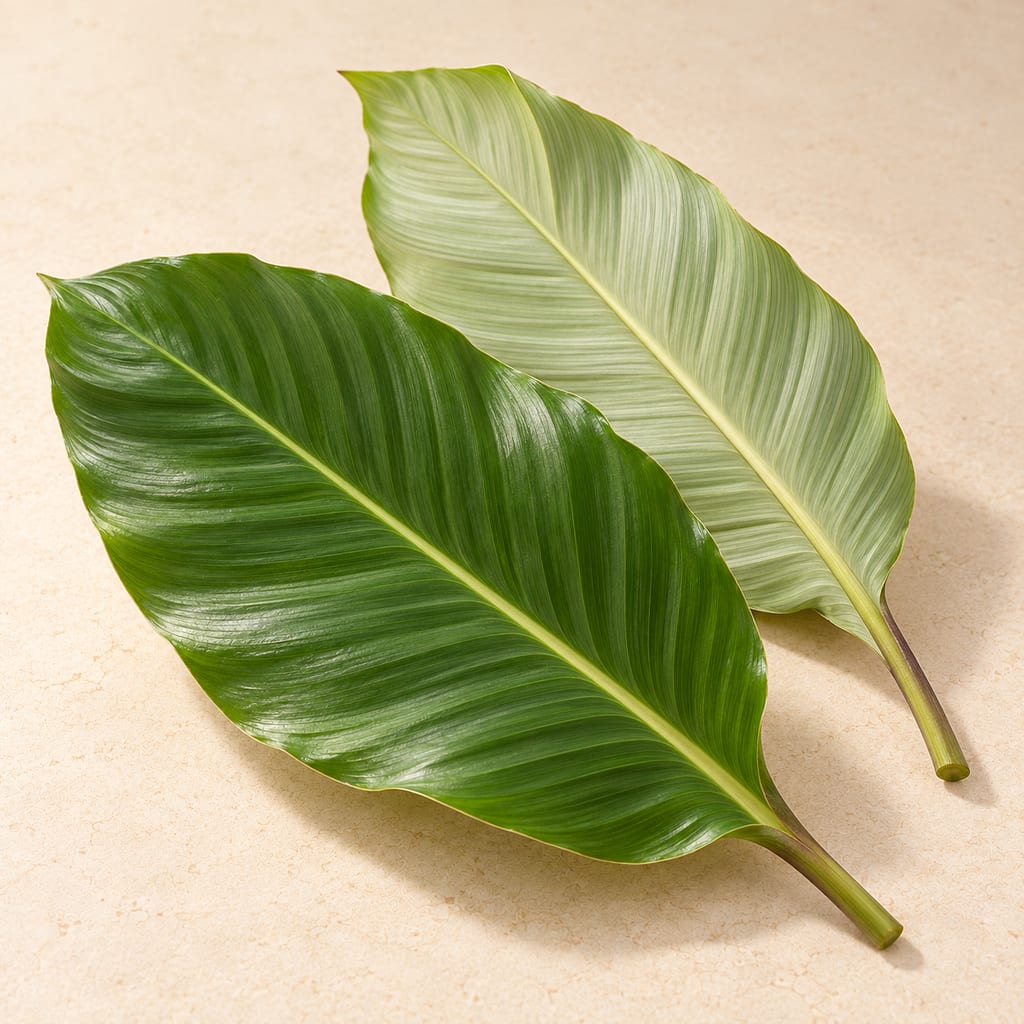
Bijao leaves (Calathea lutea)
Bijao is the broad, durable leaf of Calathea lutea used in parts of Colombia as food-contact wrapping and lining. The common name also applies to other plants.
 FermenteaWhere food goes to change
Mushrooms
Reddish wood ear, Auricularia fuscosuccinea, is a gelatinous fungus that grows on wood in tropical forests. Records from Amazonian and other Neotropical communities describe it as food, but documented use is not a food-safety assessment.
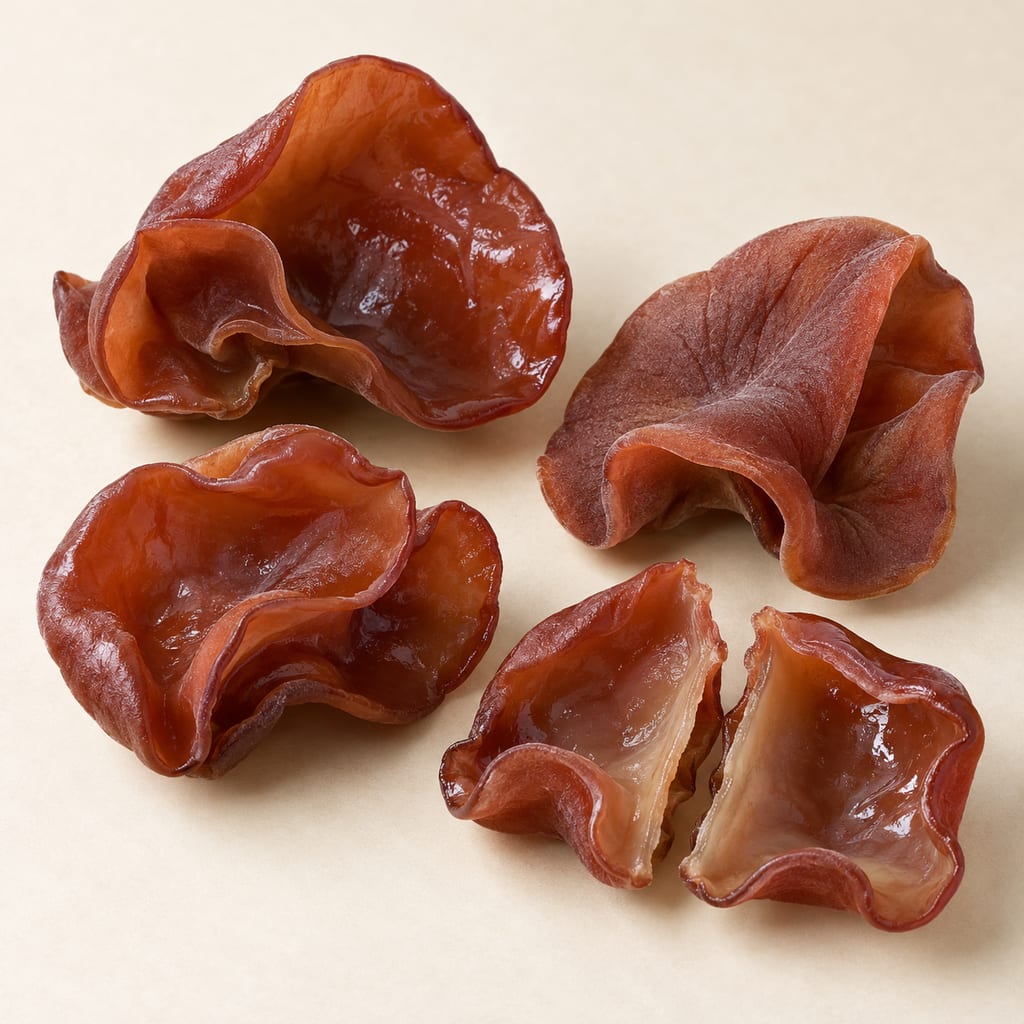
Reddish wood ear, Auricularia fuscosuccinea, is a jelly-textured fungus that grows on wood in tropical forests. The catalogue records it as a wild food with use in Brazil, Peru and Colombia.
The species belongs to Auricularia, the wood ear genus. The catalogue keeps the name as a research name and does not treat it as a reconciled accepted name.
The catalogue lists reddish wood ear as the English label and records no further alias. Older or regional names were not found in the sources reviewed in this pass.
The catalogue states that documented occurrence and consumption do not establish a standardized food-safety assessment.
Colombian records describe use by Uitoto and other Amazonian indigenous peoples, who cook the fungus in fish broth with meat, maraca seeds and mafafa leaves. A separate Colombian record notes rural communities in Boyaca serving it with chili.
The Brazilian food-use evidence in the catalogue is described as Indigenous Amazonian and other Brazilian use. The sources reviewed do not name the people or dish, so this page does not assign a specific Brazilian preparation.
A study funded by FAPESP produced basidiomata, the fruiting bodies, from two wild Brazilian strains of this species. That is a laboratory cultivation result. The sources do not describe commercial production.
The IUCN assessment places the species in the Amazon Forest, Atlantic Forest and Cerrado of Brazil, and records it mostly in the Atlantic Forest, a biodiversity hotspot where it is under pressure.
The catalogue lists supply as unknown, so it does not say whether the mushroom is gathered wild or from cultivation.
This page is not an identification guide. Documented food use and occurrence do not establish that the species is safe to eat in any preparation, and the catalogue does not supply a toxicity assessment.
Do not eat a wild fungus on the basis of this page. Confirm identity with an expert before eating any wild fungus.
The sources do not name the Brazilian Amazonian peoples who eat this species, do not describe preparation methods in Brazil, and do not establish how widely the fungus is eaten. Identity of the Colombian name match also needs confirmation against the taxonomic authority.
Colombian records describe use by Uitoto and other Amazonian indigenous peoples, and rural use in Boyaca. The sources do not give a locality for each use.
The catalogue records Indigenous Amazonian and other Brazilian food use. No named Brazilian Amazon group was found in this research pass.
Food-use context recorded in the catalogue. The sources give no locality or dish.
Bijao is the broad, durable leaf of Calathea lutea used in parts of Colombia as food-contact wrapping and lining. The common name also applies to other plants.
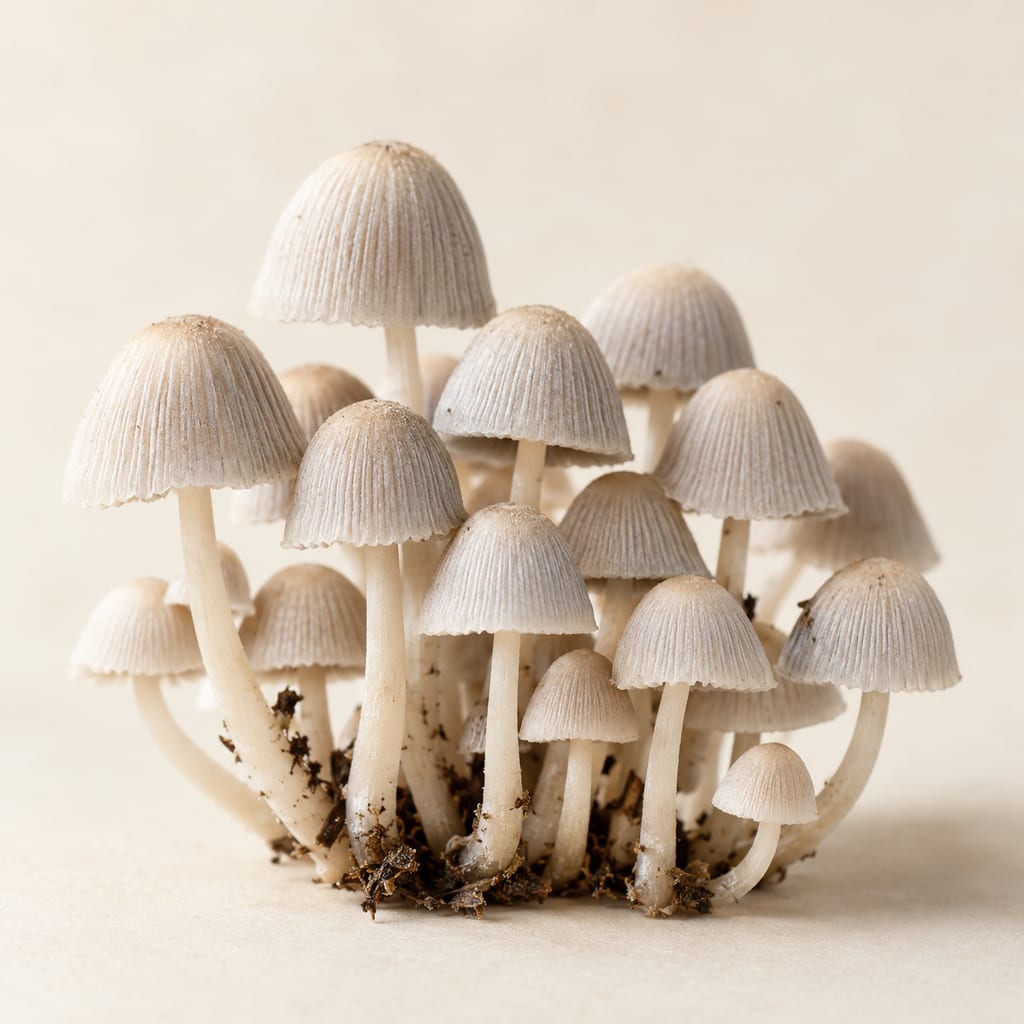
Coprinellus disseminatus is a small saprotrophic inky-cap mushroom that grows in clusters on wood and debris. A Congolese food-use record and a Colombian catalogue entry both call it edible, but neither describes its preparation.
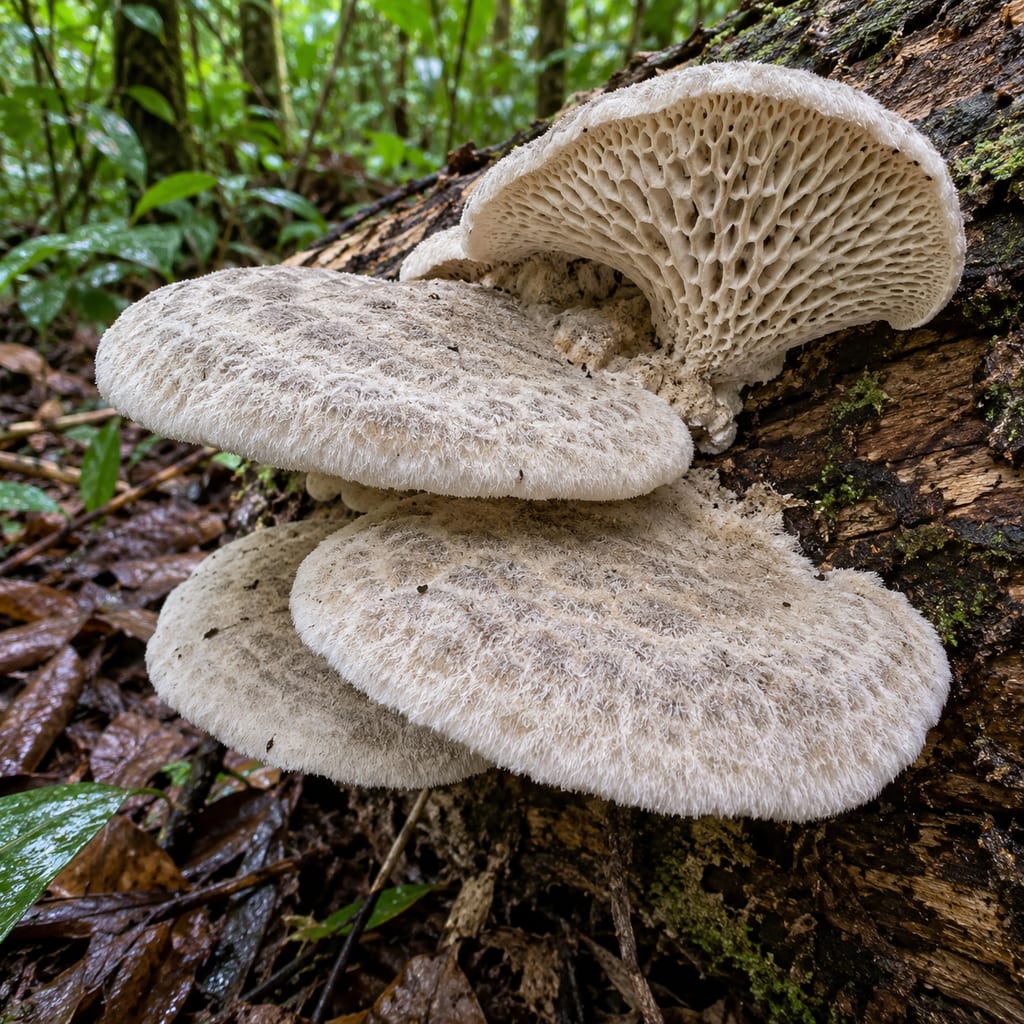
Favolus tessellatus is a tropical wood-decaying polypore with a tessellated cap and honeycomb pores. Brazilian sources record it as food, but the evidence does not establish one traditional recipe or a universal harvest season.
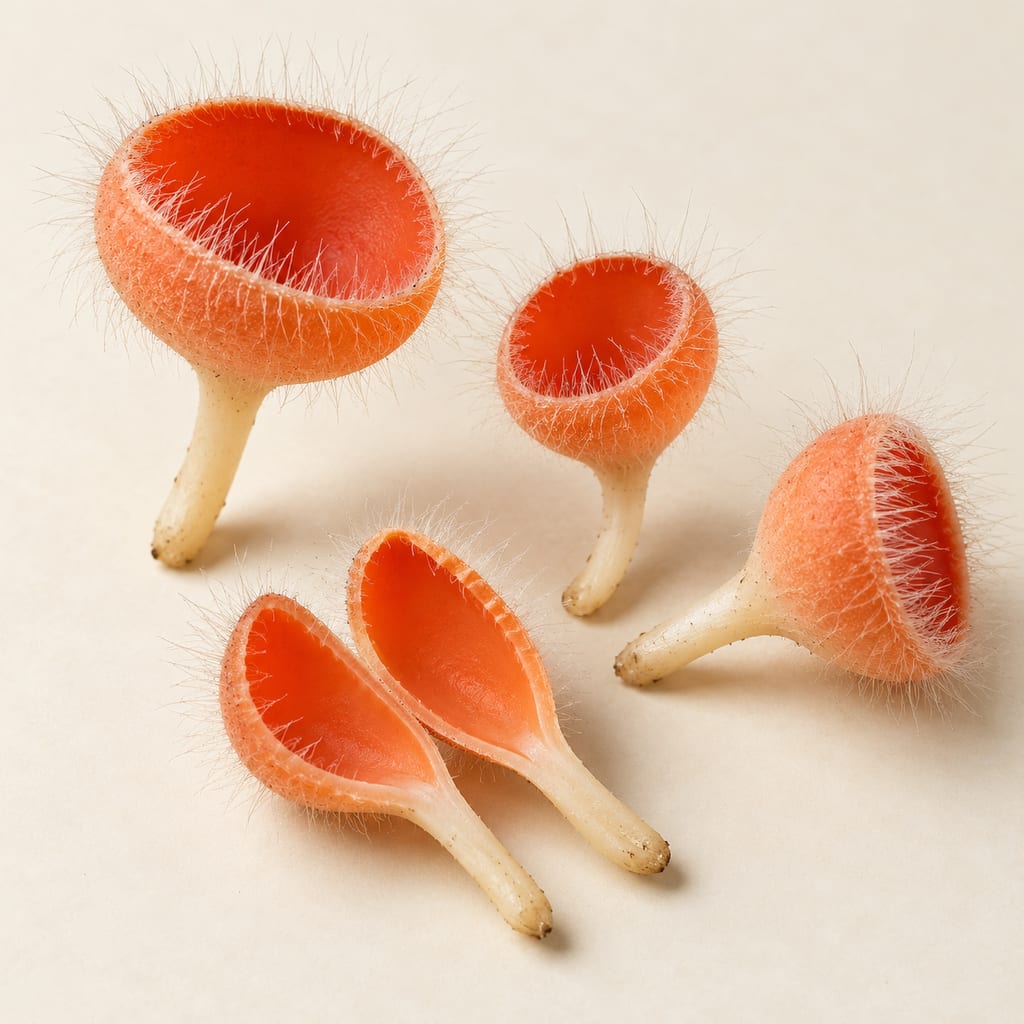
Cookeina tricholoma is a cup fungus of decaying wood, recorded as food in several tropical regions. Its food use is documented in ethnomycological reports, not established by a food-safety assessment.
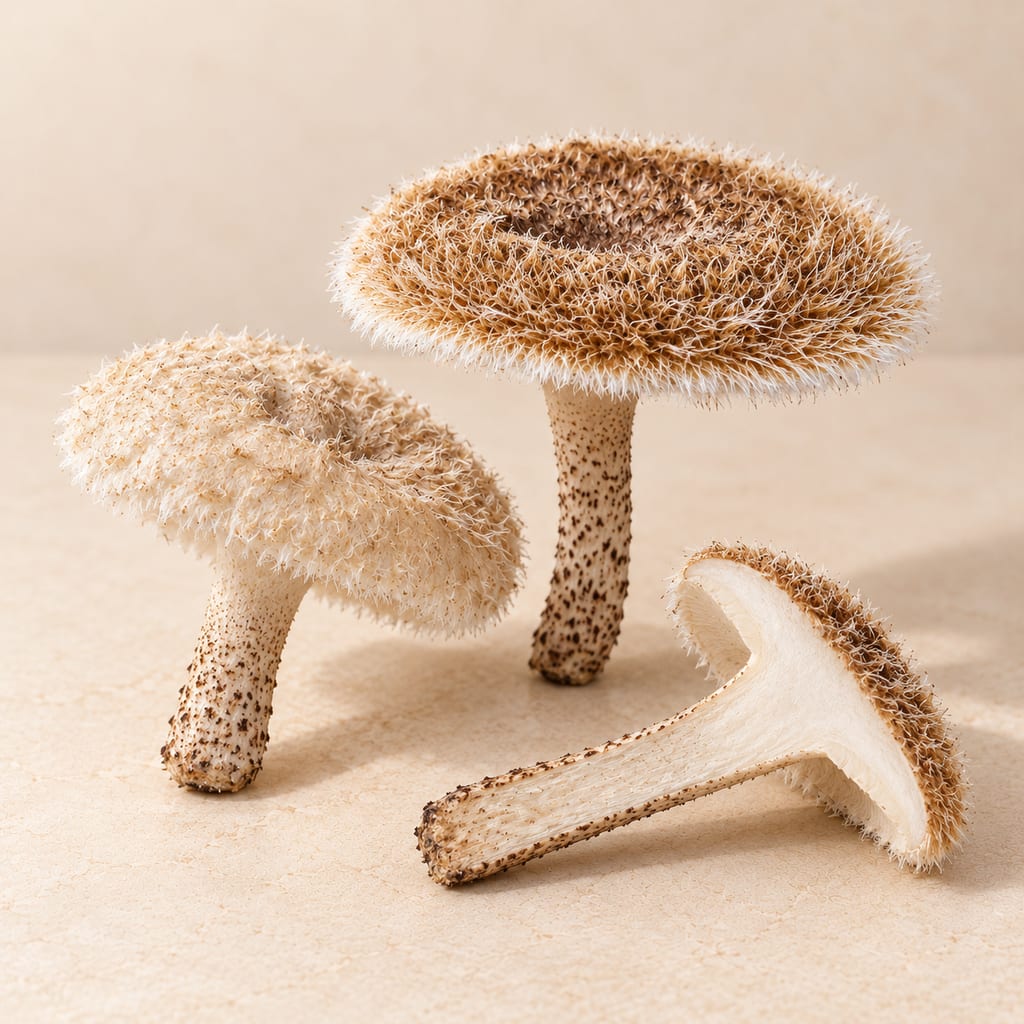
Lentinus berteroi is a sawgill mushroom of the tropical Americas, recorded as food in the Colombian catalogue and studied for cultivation in Brazil; a Brazilian food record for this species was not confirmed.
Crepidotus palmarum is a wood-dwelling fungus documented as food in Pauna, Boyacá, where local names include nacuma and orejas blancas; cultivation has also been studied.
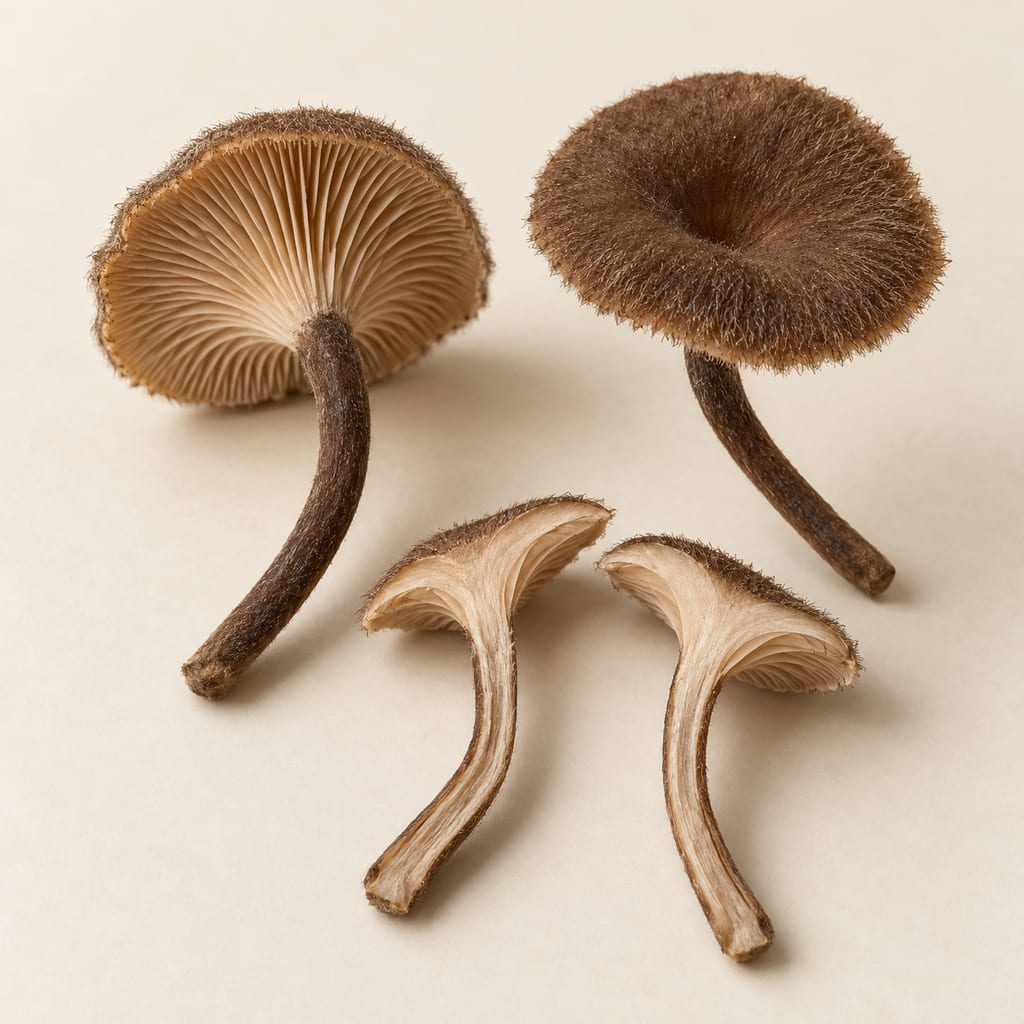
Panus neostrigosus is a wood-growing gilled fungus of Brazilian and Colombian tropical forests. A Yanomami food record exists, but sources disagree on whether it is edible, so no edibility verdict is given.
Tapioca starch is the fine starch separated from cassava roots. Cheese breads such as pandebono and pão de queijo use cassava starch, but some recipes specify fermented sour starch. Whole-root cassava flour is a different ingredient.
No community contributions have been published for this entry yet.
Sign in to contribute. Published comments and photos are free to read.
SpringerFood · Safety · Distribution
Brazilian edible fungi audit (Fungal Biology and Biotechnology, 2024)Catalogue audit of Brazilian edible-fungus records (2024); the record for this species is cited by the catalogue as S034 and was not re-read in full during this pass
Cited in: Overview; Names and taxonomy; Food use in the Neotropics; Identification and safety
Minciencias (Colombia)Food
Colombian fungal food-use record (Kujane, Minciencias)Catalogue citation S025 for the food-use record in Colombia
Cited in: Food use in the Neotropics
ColfungiFood · Identification
General information (Colombian fungal checklist entry)Colombian records: used by Uitoto and other Amazonian peoples, cooked in fish broth with meat, maraca seeds and mafafa leaves; in Boyaca served with chili. The name match with this entry is to be confirmed against the taxonomic authority.
Cited in: Food use in the Neotropics; Open questions
IUCNDistribution · Status
IUCN Red List assessment entryBrazil: found in Amazon Forest, Atlantic Forest and Cerrado; recorded mostly in the Atlantic Forest; used as food by traditional Neotropical communities
Cited in: Distribution and status
FAPESPCultivation
FAPESP research publication record on wild Brazilian edible fungiBasidiomata were produced from two wild Brazilian strains of this species in the study; the record is not a commercial cultivation claim
Cited in: Cultivation
WikipediaLead · Taxonomy
AuriculariaGenus context for the wood ears
Cited in: Overview; Names and taxonomy