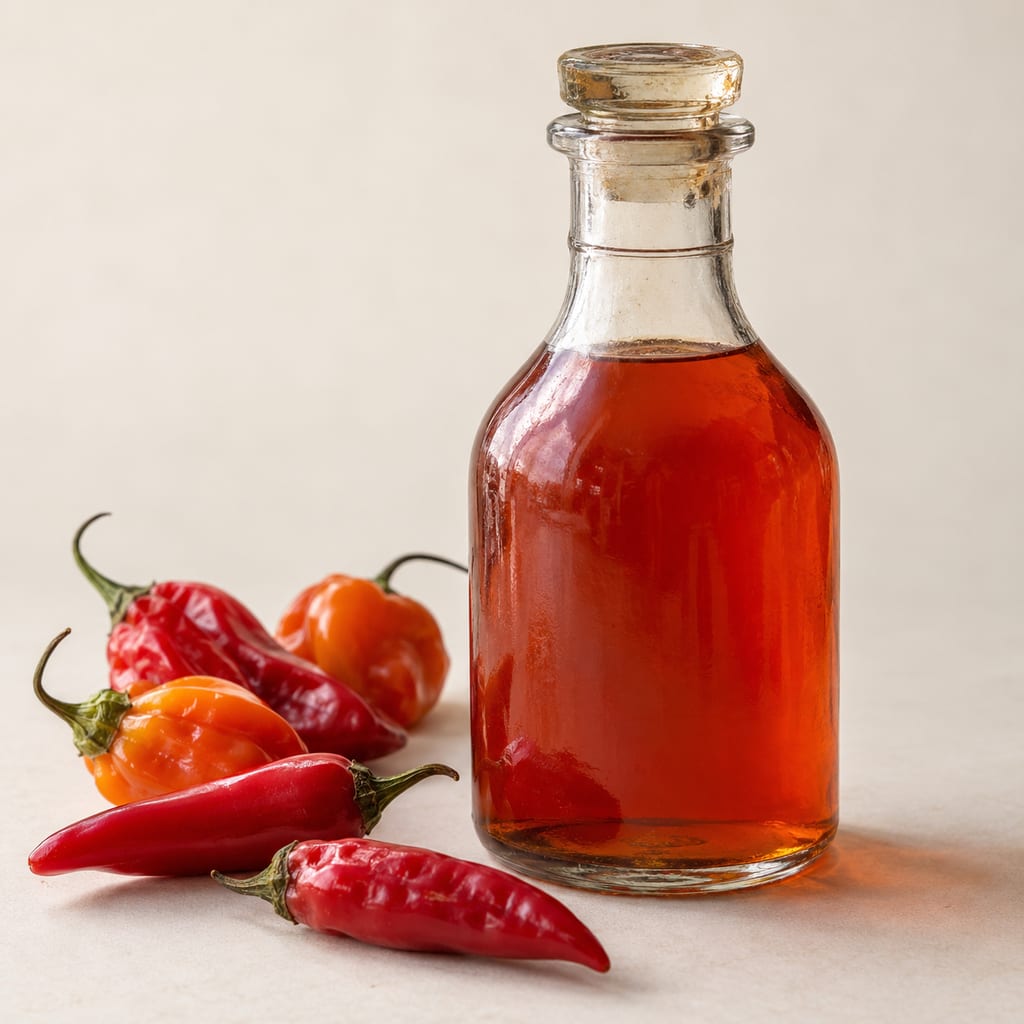
Pepper vinegar
Mary Randolph's pepper vinegar: ripe pepper pods simmered in vinegar until the liquid is reduced to one quart, then strained for use in gravies and catsups. From The Virginia Housewife.
 FermenteaWhere food goes to change
Tomato soy, The Virginia Housewife
Mary Randolph's tomato soy, a tomato condiment and not soybean sauce: tomatoes salted in layers for three days, boiled for a day, passed through a sieve and spiced with cloves, allspice, black pepper and cayenne.
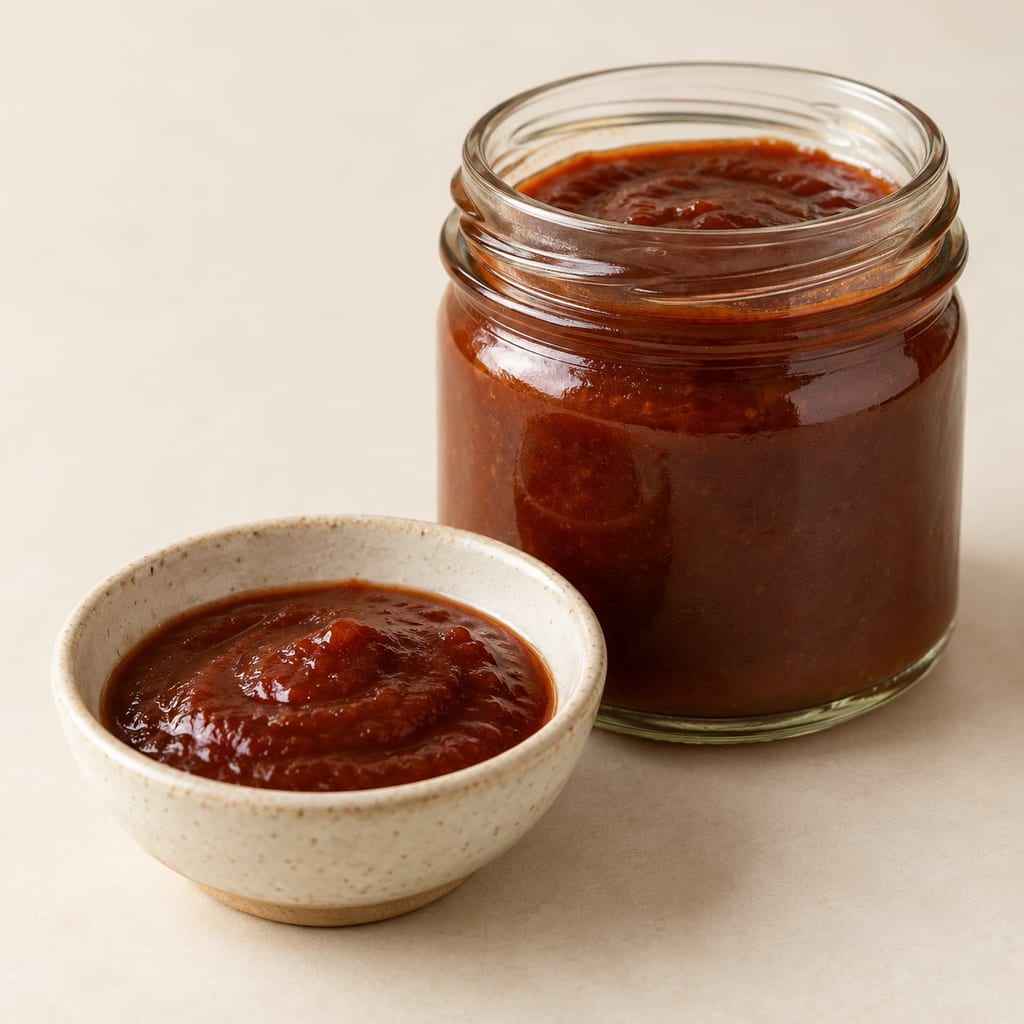
Tomato soy is a thick, spiced tomato condiment made in quantity. Randolph's version starts from a bushel of tomatoes, which is far larger than a household batch today, and it is cooked for most of two days. The name has nothing to do with soybeans. The catalogue that supplied this topic makes the same point.
The finished liquid is poured into bottles and kept. It is closer to a long-cooked tomato sauce with strong spice than to a table ketchup, and the source gives it as one of several preparations for keeping tomatoes through the season.
The tomatoes are sliced without skinning and layered in a tub with salt and sliced onions. After three days they go into a large iron pot and boil from early morning until night, stirred constantly. The mixture is then sieved, and the liquor is returned to the pot with the spices.
Boiling the spiced liquor slowly through a second day reduces it. The liquid is cooled, bottled and corked. Randolph writes that it keeps well when boiled slowly and sufficiently, and that a batch which ferments must be boiled again.
Randolph gives tomato soy next to tomato catsup, pepper vinegar and mushroom catsup in the pickles and catsups part of the book. Read together, these recipes show a Virginia kitchen making tomato and pepper condiments before bottled ketchup became common.
The recipe is evidence for the book's own method. It is not a record of a single origin.
Randolph writes that tomato soy will keep for many years if it is boiled slowly and enough, and it gives a reboil instruction for a batch that ferments. Those are the book's statements. The page does not test them, and it gives no acidity figure, shelf life or safety check.
Do not follow the storage advice as a modern preservation method. The large batch size and the long boil are part of the historical record, not guidance for a home kitchen.
Randolph's tomato soy is one of the tomato condiments in The Virginia Housewife, listed in the pickles and catsups section beside pepper vinegar and mushroom catsup. The consulted text is the 1860 edition on Project Gutenberg. The first edition was printed earlier; the text here is not compared with it. The name is a tomato condiment, not soybean sauce.
Recipe in a Virginia household book; it attests the recipe in that book, not an origin.
Mary Randolph's pepper vinegar: ripe pepper pods simmered in vinegar until the liquid is reduced to one quart, then strained for use in gravies and catsups. From The Virginia Housewife.
This is a process overview, not a complete batch recipe: key quantities, yield and packaging directions are absent. The AHA tutorial uses Hop Hammer Imperial IPA as an example; this page is not that full formulation.

Ajvar is a cooked Balkan pepper preserve built around roasted red peppers, peeled, drained, ground and slowly fried with oil and seasoning. Leskovac’s protected version is a pepper specialty; regional versions vary.

Amlou is a nutty, lightly sweet Moroccan spread of roasted almonds, culinary argan oil and honey. The almonds are ground first, then loosened with oil and sweetened; the balance can range from a thick spread to a dip.

Apple sauce for goose and pork is a plain English accompaniment: cooked apples pulped with water, then sweetened with sugar and finished with a little butter.

A warm dip of garlic, anchovy and olive oil, often enriched with butter, that Piedmont serves over a flame with raw and cooked vegetables and bread.

A sweet-hot table sauce of ripe banana simmered with vinegar, sugar, onion, garlic and fresh chilli, in the manner of Philippine banana ketchup. An untested development batch of about 500 g.

A Georgian walnut sauce of ground walnuts, garlic, vinegar and spices, thinned with water or broth. It is served with poultry, vegetables and bread, and is the sauce of the dish satsivi.

A pourable dessert sauce of brown sugar, butter and cream, with a little corn syrup and salt. It is the sauce form of the butterscotch confection and is made without water, unlike caramel.

Byzantine murrī is a cooked imitation of murrī from the medieval Arabic repertoire, made from scorched honey, toasted bread, walnuts, quince, carob and spices rather than from a long grain fermentation.

A Cap-Pelé boucanière is an Acadian herring-smoking building. The documented Willie Niles example is a one-storey wood-frame structure with a ridge smoke vent and interior bays for hanging fish-bearing cannes.

Achcharu is a family of Sri Lankan vinegar pickles made with mixed vegetables or seasonal fruit and a piquant spice dressing. This version is a quick, refrigerated, non-fermented mixed-vegetable pickle.

The acocote is a long, hollowed and dried gourd used to draw aguamiel from a mature maguey. It is a harvesting tool: the sap is transferred to a separate vessel before it ferments into pulque.

Adrak murabba preserves young ginger in sugar syrup, a sweet South Asian preparation recorded in Indian cookery and food-processing sources.

Parkia biglobosa seeds are fermented into regional West African seasonings, including nététou, iru, dawadawa and soumbala. The yellow fruit pulp is a separate food, and names and methods vary by place.

Japanese reddish-brown vinegar from sake lees matured about three years, turned to vinegar by acetic bacteria; the vinegar of Handa and Edomae sushi rice.

A refined common-wheat flour blended for a broad range of baking; its protein and behavior vary with wheat, milling and market.

The almond mushroom, Agaricus subrufescens, was cultivated in eastern North America in the 1800s, lost its market, and returned as a cultivated mushroom from Brazil, where it is grown under several names.
No community contributions have been published for this entry yet.
Sign in to contribute. Published comments and photos are free to read.
Project GutenbergMethod · History
The Virginia Housewife; Or, Methodical CookTomato soy: a bushel of ripe tomatoes sliced and salted in layers with half a pint of salt and three sliced onions per layer, left three days, boiled a day, sieved, spiced with an ounce of cloves, a quarter pound each of allspice and whole black pepper and a small wine glass of cayenne, bottled after a day's cooling; reboil if it ferments.
Cited in: Overview; Method in the source; Place in the book; Storage and limits