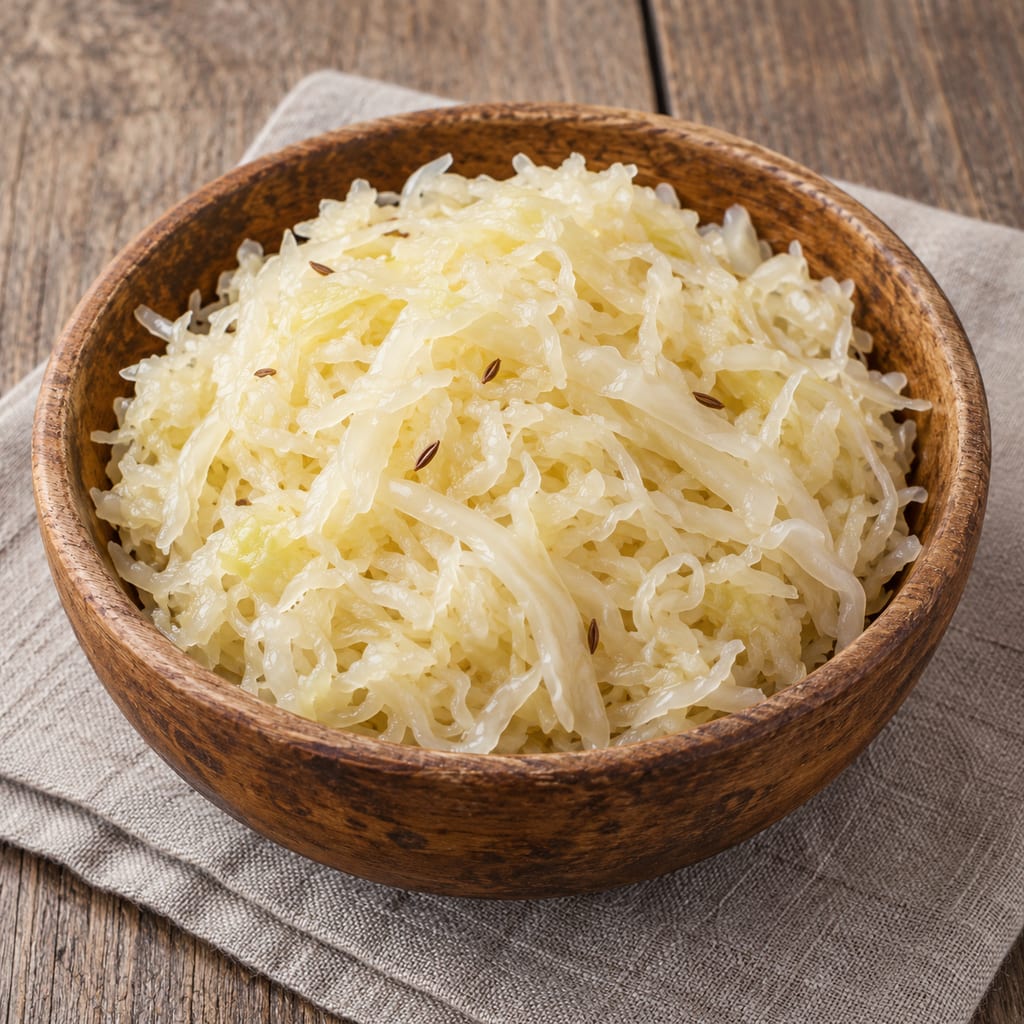
Kysané zeľí
Kysané zeľí is Czech sour cabbage: shredded cabbage layered with salt and caraway and pressed in a wooden barrel. The regional account is descriptive and gives no validated salt ratio or endpoint.
 FermenteaWhere food goes to change
Traditional method
Valašská kyselica
A Valašsko sauerkraut soup with smoked bones, cream and seasonings. The meat is simmered, removed from the bone and returned to the soup after frying with onion.

Valašská kyselica is a traditional sour cabbage soup associated with Valašsko, or Moravian Wallachia, in eastern Czechia.
It is a substantial soup whose characteristic acidity comes from fermented cabbage, kysané zelí. Versions commonly contain meat or smoked ingredients, cream, potatoes, mushrooms or various combinations of these foods.
The recipe recorded here uses smoked bones with attached meat, sauerkraut, cream, flour, onion, garlic and seasonings.
Its distinctive method begins by simmering the smoked ingredient to make a broth. The meat is then removed from the bones, chopped and fried with onion before being returned to the soup.
The cream is combined with flour to thicken the broth.
This particular preparation was published by Czech Radio on 31 March 2020 under the title Tradiční valašská kyselica.
It is important to distinguish the precise documented recipe from the wider dish family. The source does not list potatoes, although potatoes are common in other Valašská kyselica recipes.
The smoked ingredient is named uzené křížové kosti. The original does not explicitly identify the animal species or establish an exact English retail butcher's-cut equivalent. Its Czech wording should be retained.
Moravian Wallachia lies in eastern Moravia, in the area associated with the Beskid Mountains and the Carpathian landscape.
Its food traditions reflect agriculture, pastoral activity, forestry and the need to preserve food through winter.
Cabbage was a practical crop because it could be cultivated in relatively cool conditions and fermented for long-term use.
Fermenting cabbage transformed a fresh seasonal vegetable into a stored food whose acidity and flavour differed substantially from raw cabbage.
Sauerkraut could be kept in suitable storage vessels, often ceramic crocks, and used across the colder months.
The resulting cabbage was particularly useful in soups.
It could provide acidity, flavour and vegetable substance even when other fresh produce was scarce.
Historical household variations in Valašsko were influenced by what people had available.
Some preparations contained meat, while others relied mainly on cabbage, potatoes, dairy products or mushrooms.
The inclusion of sausage and larger quantities of smoked meat also depended on household circumstances and the availability of preserved animal products.
Czech Radio's regional food coverage describes kyselica as a dish that could be eaten not only at lunch but also for breakfast or supper.
Its filling character made it suitable for households where substantial food was needed before physical work.
The name kyselica derives from the idea of sourness, reflecting the defining character of fermented cabbage.
Related Czech names include zelňačka and zelnica, but these terms do not always describe identical regional preparations.
The exact earliest date of Valašská kyselica is not established by the 2020 source.
A soup can be traditional without a surviving medieval recipe that proves when its present name or complete ingredient combination first appeared.
CZECH RADIO SOURCE FORMULATION
Ingredient — Quantity
Uzené křížové kosti, smoked bones with meat — 400 g
Sauerkraut / kysané zelí — 300 g
Onion — 1
Cream — 250 mL
Fine wheat flour — 50 g
Bay leaf — 1
Whole black pepper — Unspecified
Allspice — Unspecified
Marjoram — Unspecified
Garlic — Unspecified
Salt — Unspecified
Oil or lard — Unspecified
Water — Enough to cover the smoked ingredient; exact volume not stated
The source does not specify a total yield or number of portions.
It does not quantify the initial simmering time, pepper, allspice, marjoram, garlic, salt, oil or lard.
It also does not prescribe a numerical cooking temperature.
These gaps should remain in the recipe rather than be filled with typical quantities from unrelated versions.
Uzené means smoked.
Křížové kosti describes a bone category rather than a specific modern UK or US retail product name.
In the original recipe, the bones retain enough meat that it can be removed after simmering.
The exact species is not provided.
This matters because smoked bones can be sold from different animals and may have different cooking-status requirements.
The source's culinary endpoint is that the meat separates readily from the bones.
That indicates sufficient softening for the intended recipe, but it is not a validated internal-temperature endpoint.
The bones contribute flavour to the cooking liquid.
Connective tissues, marrow-associated compounds and residual meat may influence the broth, depending on the original cut.
The smoke flavour also passes into the liquid.
The precise intensity depends on how heavily the original meat was smoked.
Sauerkraut, made from cabbage (Brassica oleracea Capitata Group), provides the central sour flavour.
Its acidity is largely the result of lactic acid produced during fermentation.
Cream softens the acidity and gives the soup a richer mouthfeel.
Fine wheat flour, made from Triticum aestivum, thickens the soup when heated.
Onion, Allium cepa, develops savoury sweetness during frying.
Garlic, Allium sativum, contributes pungency and aroma.
Bay leaf, usually Laurus nobilis, provides herbal compounds that infuse into the broth.
Allspice, Pimenta dioica, contributes warm, complex aromatic notes.
Black pepper, Piper nigrum, adds pungency.
Marjoram, Origanum majorana, is a familiar herb in Czech and central European soups.
Oil or lard provides the fat for frying the onion and chopped meat.
Salt adjusts the final flavour, but the original smoked ingredient and sauerkraut may already contain significant salt.
A large cooking pot is needed for simmering the smoked bones.
A strainer is required to separate bones and whole spices from the broth.
A knife and chopping board are needed for the onion, cabbage and cooked meat.
A frying pan is required for the meat-and-onion stage.
A whisk or blender is used to combine cream and flour.
The original recipe instructs blending them, rather than simply sprinkling dry flour into the soup.
Stage 1 — Prepare the smoked ingredient
Place 400 g uzené křížové kosti in a suitable cooking pot.
The source does not specify chopping, washing or soaking the smoked bones beforehand.
Stage 2 — Cover with water
Add sufficient water to cover the smoked ingredient.
No exact volume is provided.
The finished broth concentration will therefore depend partly on the amount of water used and evaporation during cooking.
Stage 3 — Add aromatics
Add whole black pepper, allspice, one bay leaf, marjoram, salt and garlic.
The quantities are unspecified apart from the bay leaf.
Stage 4 — Simmer
Cook the mixture until the meat separates readily from the bones.
The original does not provide a numerical duration.
The degree of tenderness is its culinary indicator.
Stage 5 — Strain
Remove the bones and whole spices from the broth.
Retain the cooking liquid.
Do not discard the meat attached to the bones; it is used later.
Stage 6 — Prepare the sauerkraut
Cut 300 g sauerkraut into shorter pieces.
This makes it easier to distribute through the soup and eat with a spoon.
The recipe does not specify rinsing the sauerkraut.
Stage 7 — Add the cabbage
Place the chopped sauerkraut into the strained broth.
The source does not give a separate period for cooking the cabbage before thickening.
Stage 8 — Prepare the cream thickener
Combine 250 mL cream with 50 g fine wheat flour.
Blend until smooth.
This mixture is a form of zátřepka, a flour-and-liquid thickener used in Czech cooking.
Stage 9 — Thicken the soup
Add the cream-and-flour mixture to the soup.
Cook for ten minutes.
The source supplies this duration but no numerical temperature.
Stirring helps distribute the flour and avoid lumps.
Stage 10 — Remove the meat
While the soup cooks, separate the softened meat from the bones.
Chop the meat finely.
Discard the bones after ensuring that the usable meat has been recovered.
Stage 11 — Prepare the onion
Chop one onion.
The original does not specify the size of the pieces.
Stage 12 — Fry meat and onion
Heat oil or lard in a pan.
Fry the chopped onion with the recovered smoked meat.
The amount of fat and frying duration are not specified.
Stage 13 — Return to the soup
Add the fried onion and meat mixture to the soup.
Stage 14 — Final simmer
Cook for another ten minutes.
This is the second explicitly timed ten-minute stage.
Stage 15 — Season and serve
Finish with salt, black pepper, marjoram and garlic according to taste.
The original does not provide garnishing or serving-temperature measurements.
The soup itself is not fermented during preparation, but its principal vegetable ingredient is.
Sauerkraut is produced through lactic acid fermentation of cabbage.
The cabbage is typically shredded and salted before being held under conditions that favour lactic acid bacteria.
Salt draws water from the cabbage through osmotic effects.
The released liquid forms a brine that helps create the appropriate environment for fermentation.
The salt concentration, temperature, cabbage composition and available microorganisms all influence the outcome.
During fermentation, lactic acid bacteria consume sugars naturally present in the cabbage.
Early fermentation commonly involves Leuconostoc species, including Leuconostoc mesenteroides.
These organisms can produce lactic acid, acetic acid and carbon dioxide.
As acidity develops, more acid-tolerant organisms become prominent.
Species within Lactiplantibacillus and Levilactobacillus can play important roles.
The succession is not identical in every batch.
Research published in 2026 demonstrated that fermentation temperature, scale and cabbage source can substantially alter which organisms dominate.
This is particularly important when distinguishing traditional food names from actual microbiological outcomes.
The sauerkraut used in kyselica therefore represents an already completed preservation process.
The soup recipe does not begin with raw cabbage or prescribe fermentation conditions.
Heating sauerkraut changes both flavour and microbiology.
The original lactic acid remains present to some degree, although its concentration in the soup depends on dilution and the other ingredients.
Heat softens the cabbage and changes its texture.
Volatile aroma compounds may be released during cooking.
The acidity combines with fat, meat flavours and spices to produce the characteristic soup profile.
Heating also reduces the viability of many microorganisms present in the fermented cabbage.
Therefore, a cooked kyselica should not automatically be described as a live probiotic food.
Its cultural connection with fermentation is clear, but live-culture content after cooking is not established.
The cream-and-flour mixture is central to this version.
Flour starch thickens the soup when heated in the watery broth.
Cream provides dairy fat, proteins and a richer flavour.
Dispersing flour in cream before adding it reduces the risk of dry flour clumps.
During cooking, the starch granules hydrate and swell.
The soup becomes thicker and more opaque.
Because the broth contains acid from sauerkraut, the dairy component also requires careful mixing to maintain a smooth texture.
The original does not give a measured acidity or final viscosity.
Its two ten-minute cooking stages are culinary instructions rather than proof of a particular food-safety endpoint.
Valašská kyselica has many household variations.
Some include potatoes, while others do not.
Some use smoked sausage or larger pieces of meat.
Others rely on mushrooms, particularly dried mushrooms when fresh ingredients are unavailable.
Czech Radio's broader coverage also describes versions using milk, cultured dairy products or cream.
The sourness can vary with the sauerkraut and whether its brine is included.
Some versions are thick and almost stew-like.
Others are relatively thin and broth-based.
The recipe in this record is distinctive because it uses smoked bones to produce stock, then recovers and fries the meat before returning it to the soup.
It also contains no potatoes in the ingredient list.
Adding potatoes would create a legitimate different version, but they should not be silently included in this original.
Kyselica is a substantial soup.
In Valašsko, it belongs to traditional everyday food culture as well as restaurant menus offering regional specialities.
It may be served as a main meal rather than merely a small starter.
Bread is a common accompaniment to related hearty soups, but the source does not specify a bread type or quantity.
The soup's characteristic balance combines acidity from sauerkraut, savouriness from smoked meat and spices, and richness from cream.
Its texture should be thick enough to feel substantial without becoming a solid paste.
The particular smoked-bone version is intended to make use of both the meat and the flavour extracted from the bones.
During the first stage, the cooking liquid should acquire flavour from the smoked ingredient and seasonings.
The meat should soften sufficiently to be removed from the bones.
The source's tenderness cue is qualitative.
After adding sauerkraut, the broth becomes more acidic.
The cream-and-flour mixture should thicken the soup as it heats.
If flour is insufficiently dispersed, lumps may form.
If the pot is heated too aggressively, the dairy mixture may behave unevenly or stick to the bottom.
Frying the recovered meat and onion should develop flavour without burning them.
The final soup should have a recognisable sour-cabbage character, balanced against smoked meat and cream.
Excessive salt can result from the combination of smoked ingredients, sauerkraut and seasoning.
Unexpected decomposition, spoiled meat or visibly contaminated ingredients are reasons not to proceed.
The original source does not identify the animal species or processing status of the smoked bones.
A purchased smoked bone may require cooking, and its specific instructions must be followed.
The source's instruction to cook until meat separates from the bone is a texture cue, not a measured internal-temperature endpoint.
Because the dish contains animal products and cream, it should be handled as a perishable cooked food.
Sauerkraut acidity does not guarantee that the finished mixed soup is microbiologically safe at room temperature.
The recipe gives no finished pH, water activity or validated storage life.
Cooling, refrigeration and reheating should follow appropriate current food-safety guidance.
This recipe is suitable for documenting a traditional regional meal, not for establishing an untested preservation or shelf-stable soup process.
The title calls the dish Valašská kyselica. The published recipe is a contemporary serving use for an already-smoked ingredient; it does not establish that this dish was cooked in the specific broad chimneys described in regional ethnography.
Scaling: not applicable
The Czech recipe names “uzené křížové kosti” but gives no animal species, exact retail cut, package status or storage directions. Czech public-health guidance and EFSA give general hygiene advice but do not classify this ingredient.
Hazard sourceUse the purchased smoked ingredient according to its label for cooking status, storage and use-by; the source recipe gives none of these details. Czech public-health advice includes separating raw meat from ready-to-eat food, washing hands and utensils, and following manufacturer storage directions.
Control sourceEFSA consumer guidance recommends refrigeration below 5°C for perishable foods and careful separation/handling. This is general advice and does not determine storage for the unnamed smoked bone.
Control sourceThe source identifies a smoked bone but not its species or whether a purchased item is ready-to-eat or requires cooking. “Simmer until the meat falls away” is the recipe’s texture cue, not a measured safety endpoint.
No maturation stage is part of this cooking recipe.
The source title associates this soup with Valašsko; it does not establish a unique origin or a tie to a particular historical smokehouse.
Kysané zeľí is Czech sour cabbage: shredded cabbage layered with salt and caraway and pressed in a wooden barrel. The regional account is descriptive and gives no validated salt ratio or endpoint.
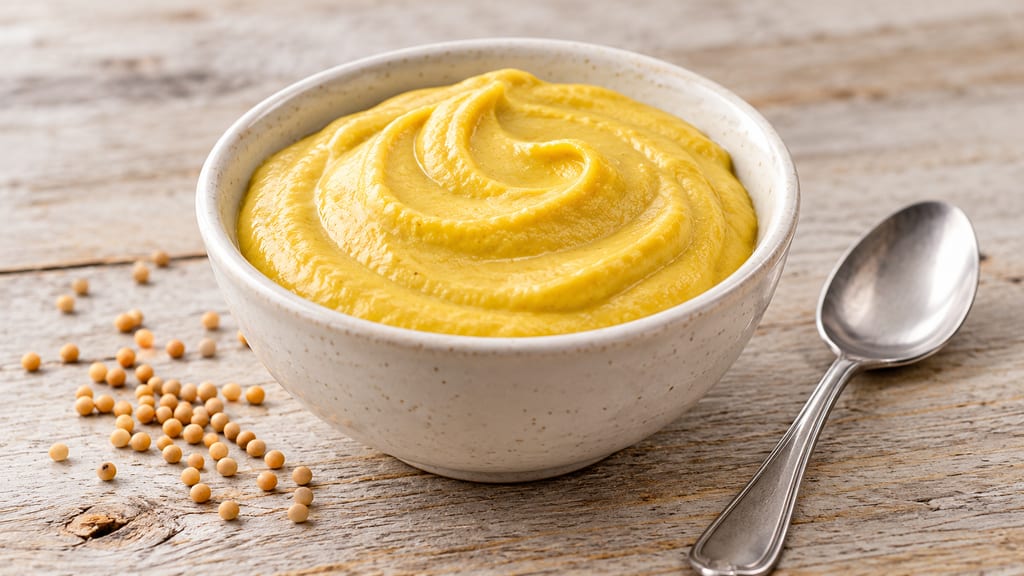
A mild, creamy Czech-style table mustard made from ground seed, vinegar, water, salt and a little sweetness. This home version follows a Czech Television formula and is not a copy of SPAK’s proprietary product.
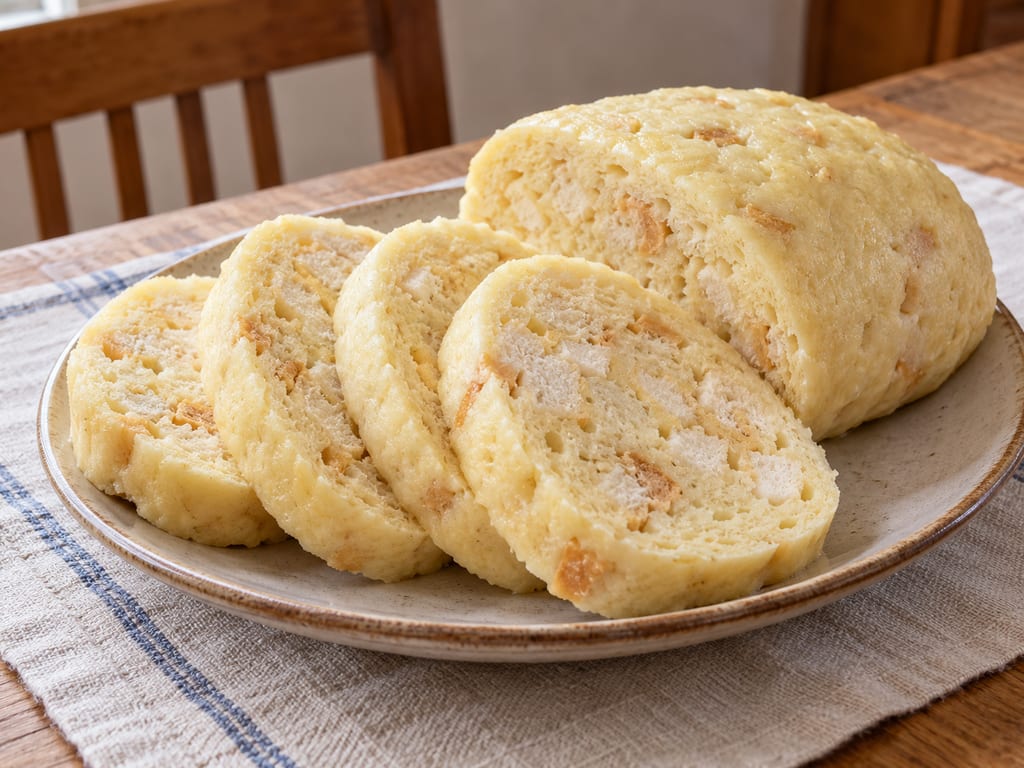
Czech houskové knedlíky are yeast-raised flour dumplings studded with stale white roll cubes, shaped as logs and steamed until tender for serving with sauce.
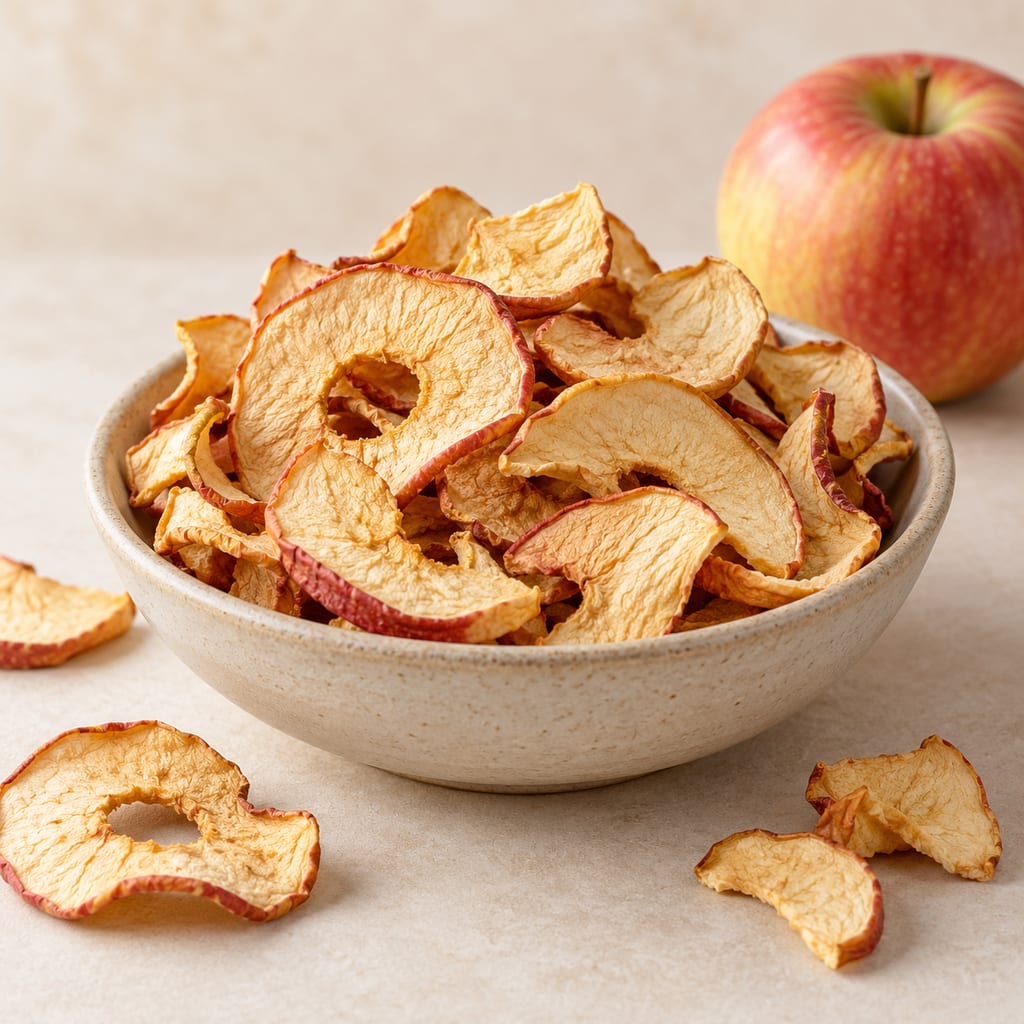
Křížaly are Czech dried apple or pear pieces. The name has regional meanings beyond apple slices, and drying practice varies by place and dryer.

Meat-trim koji garum is a savoury liquid seasoning made by holding meat scraps with rice koji, salt and water at steady warmth before straining the mash.
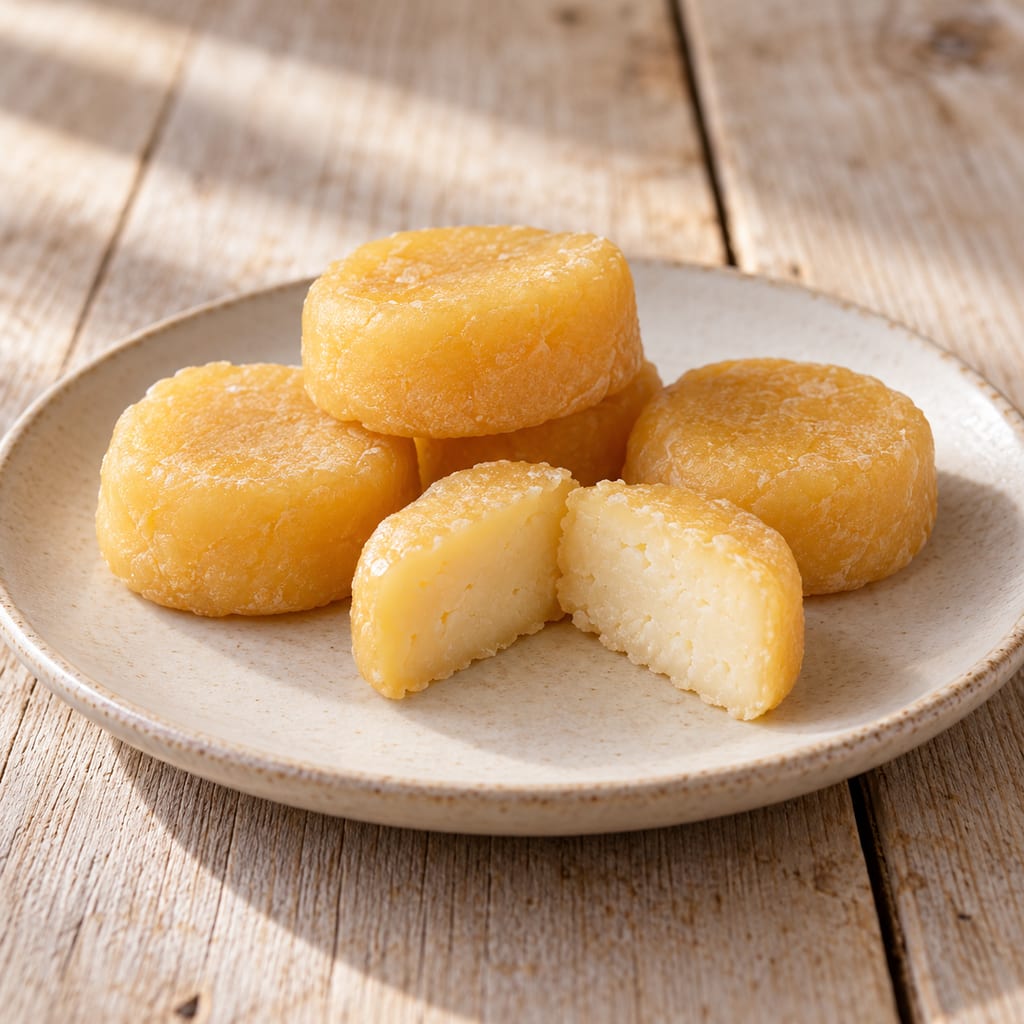
A ripened Czech table cheese made from skimmed acid-set curd, salted, cultured and ripened from the surface inward, with a golden smear and a paler centre.

Pracharanda is finely reduced dried pear used as a topping on porridge, dumplings and cakes in Czech sources. Accounts of its preparation differ.

Whole mackerel brined for up to a day, then hot-smoked over beech and alder until the oily flesh takes colour and smoke, in a Czech smokehouse recipe.
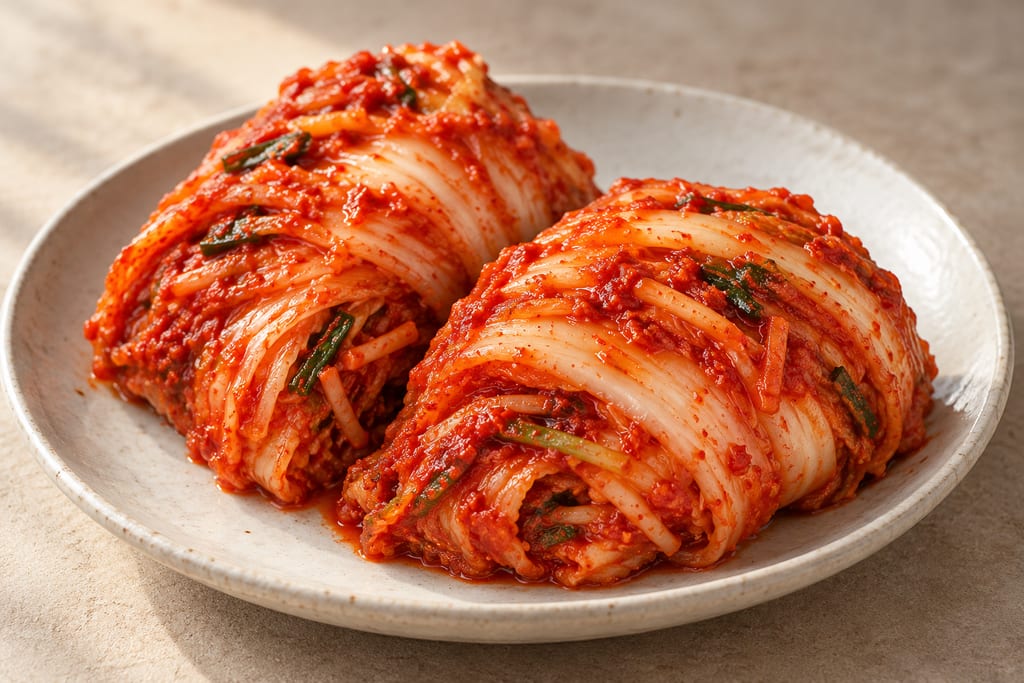
Napa cabbage salted, seasoned with a paste of gochugaru, garlic, ginger and salted seafood, and left to sour through lactic fermentation; Korea's everyday winter preserve.
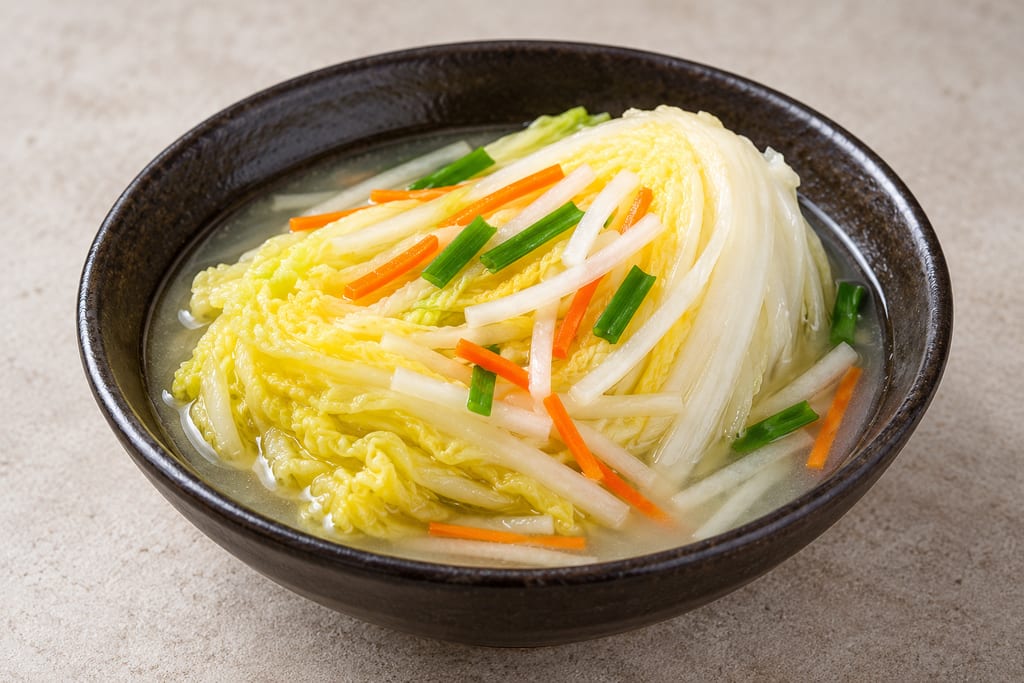
Napa cabbage is brined and filled with pear, radish, alliums, chives and fruit; this Korean kimchi omits red pepper flakes.
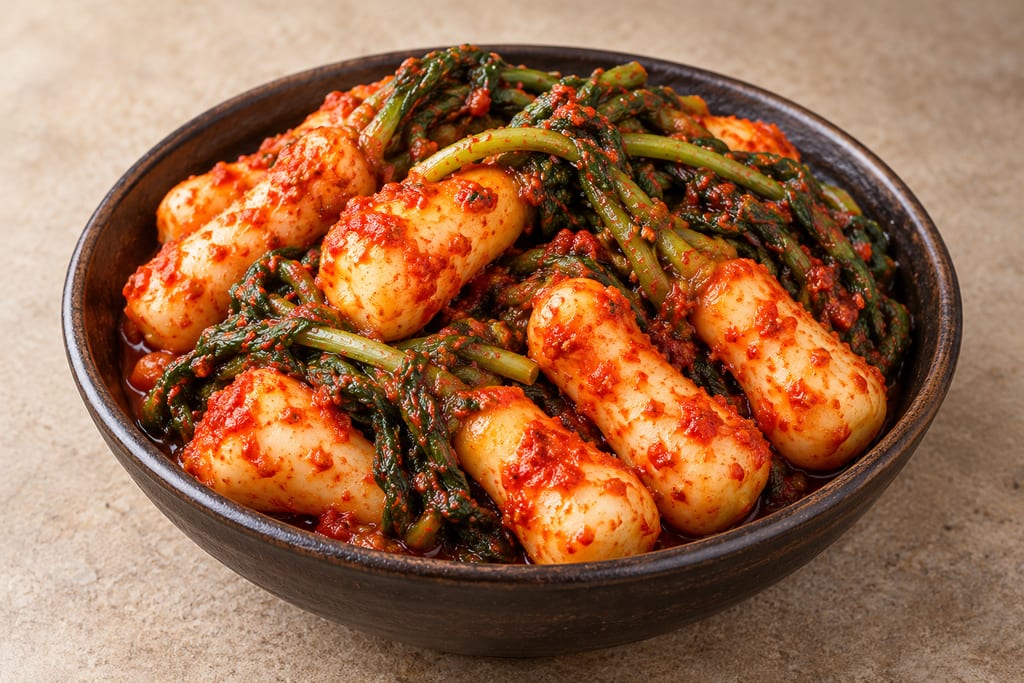
Small ponytail radishes keep their greens attached and ferment in a flour-and-chile seasoning paste.
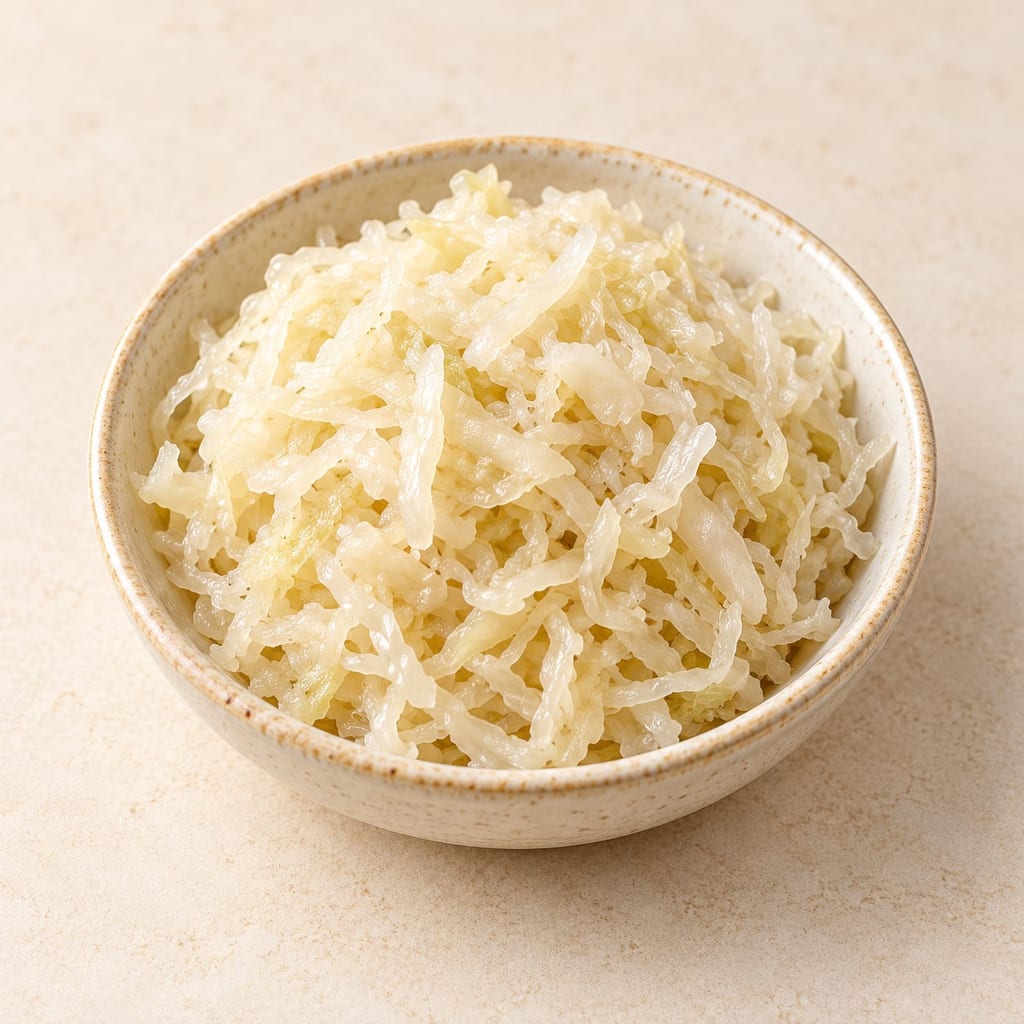
Finely cut cabbage fermented with salt in vats by natural lactic fermentation, a protected Alsatian product sold raw or cooked after fermentation.
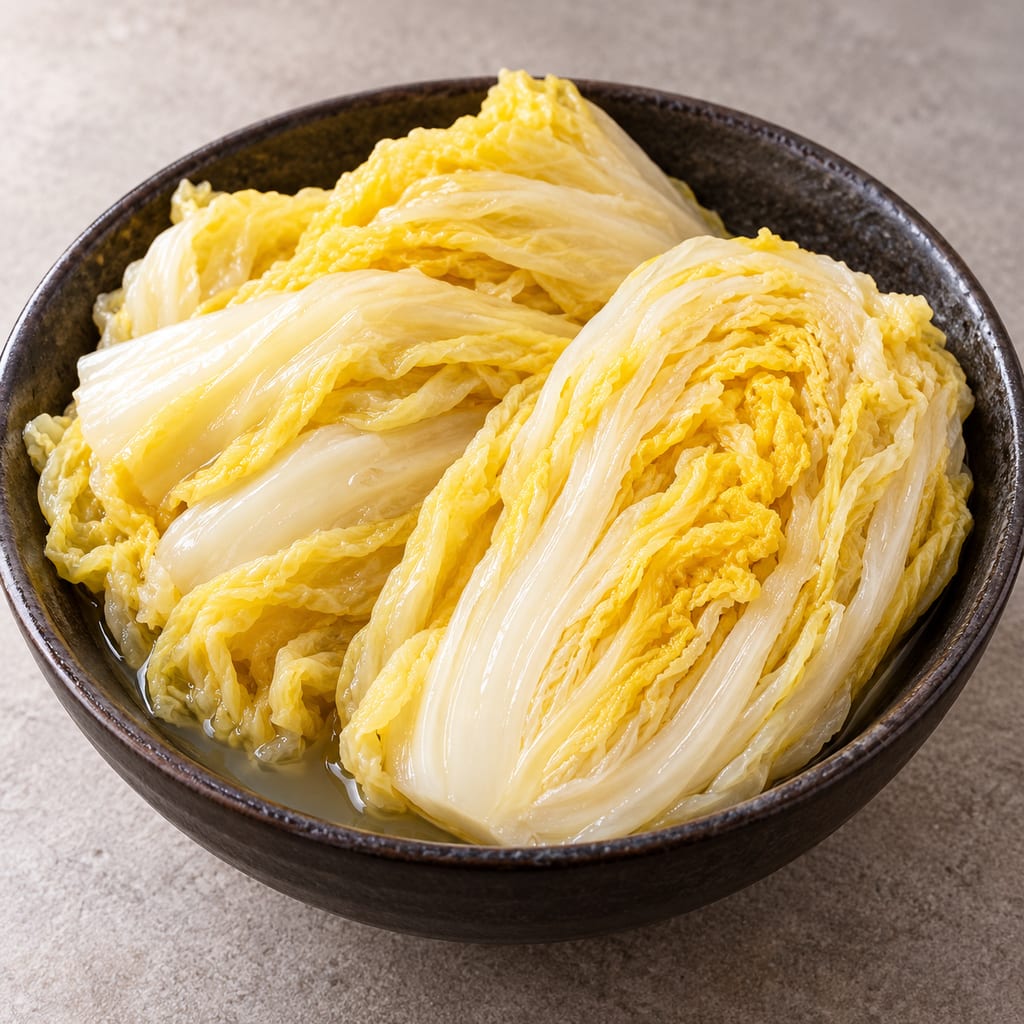
Napa cabbage fermented in a salt brine in Northeast China, traditionally in large ceramic or glass jars, until it turns sour.
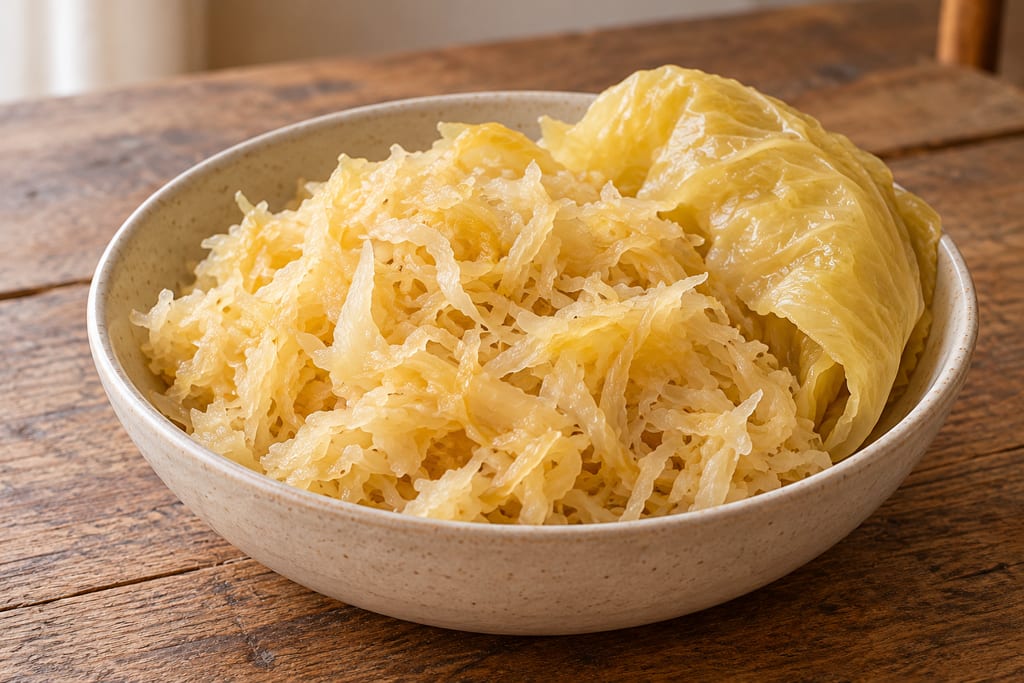
Serbian sour cabbage from the Futog area, made from the autochthonous Futoški cabbage population and registered as a protected product in 2008. It is a subset of general Serbian kiseli kupus.
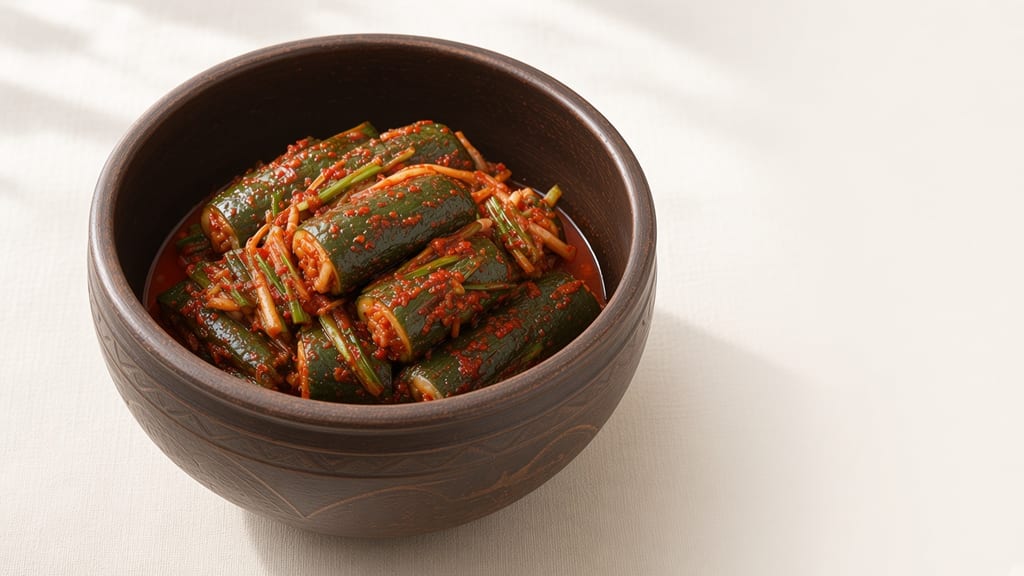
Hwanggwa damjeo is a cucumber kimchi from Yu Jung-rim's Jeungbo sallim gyeongje of 1766. Slit cucumbers are packed with chilli powder and garlic, scalded with hot salted water and sealed overnight.
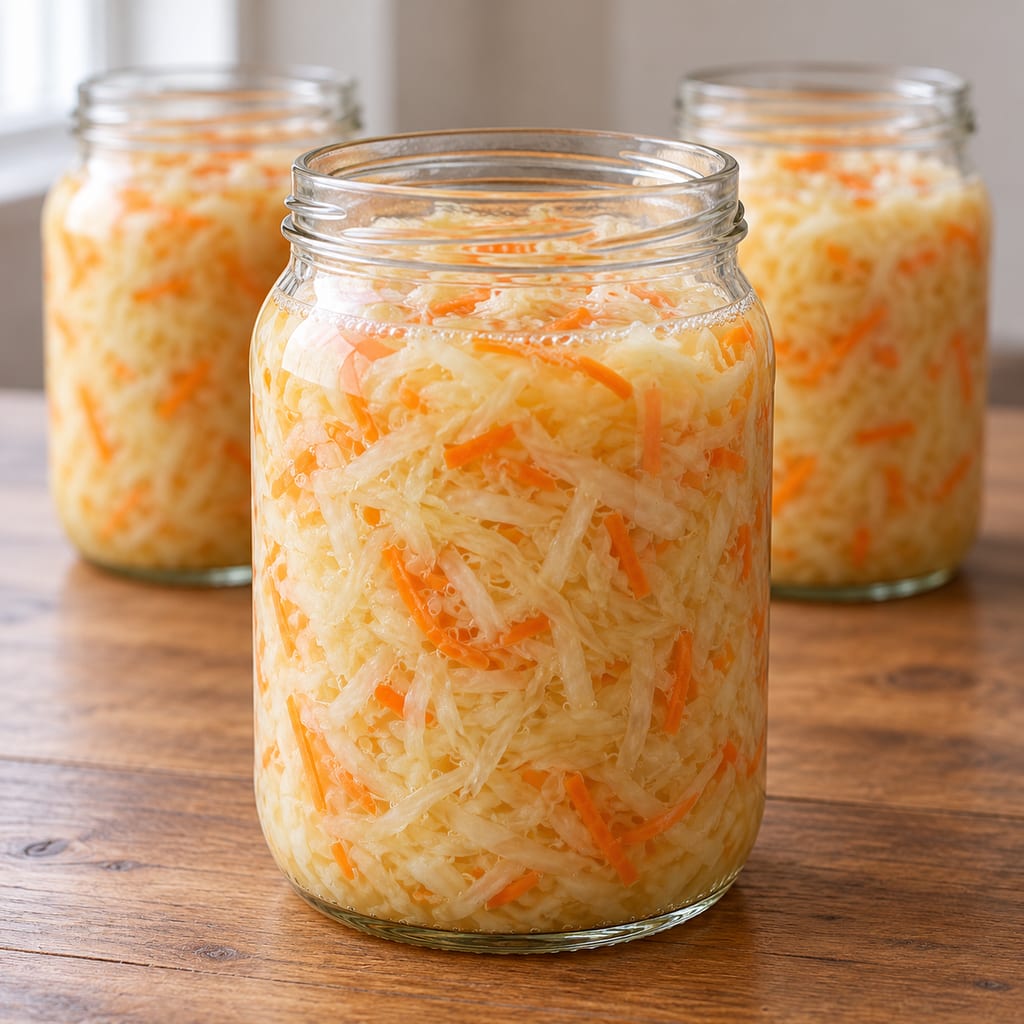
Shredded cabbage and grated carrot are salted to 20 g/kg, rested, packed into three jars and monitored during a creator-reported eight-day fermentation; measured temperature is not given.
No community contributions have been published for this entry yet.
Sign in to contribute. Published comments and photos are free to read.
Český rozhlas (Czech Radio), Rádio Praha; authors Štěpánka Duchková and jpSource recipe
Tradiční valašská kyselicaFull Czech recipe block: ingredient list and all preparation stages. No species or exact English retail cut is identified for “uzené křížové kosti.”
Cited in: What it is; Moravian Wallachia and the history of kyselica; Ingredients; Understanding the smoked ingredient; Why the other ingredients matter; Equipment; Method; How the cream thickener works; Regional variations; How it is eaten; Recognising progress and problems
European Food Safety Authority (EFSA)Consumer food safety guidance
Food poisoningThe Listeria section identifies cold cuts, smoked fish and ready-to-eat meals as example categories; states that contamination may occur after cooking and that Listeria can grow at refrigerator temperatures; recommends consumer hygiene, separation, refrigeration below 5°C, prompt consumption and respecting use-by dates. This is general advice, not an assessment of any W06 product or recipe batch.
Cited in: Food safety and storage
Státní zdravotní ústav (Czech State Institute of Public Health)Consumer food safety guidance
Listerióza – základní informace o onemocněníThe “Prevence” section advises household hygiene, thorough cooking of food, keeping raw meat separate from ready-to-eat food, hand and utensil washing, and following manufacturer storage directions. It does not identify the species or cooking status of the smoked ingredient in the Czech Radio recipe.
Cited in: Food safety and storage
Český rozhlasHistory · Variation
Valašskou kyselicu si oblíbí každý!Regional food traditions and variations.
Cited in: What it is; Moravian Wallachia and the history of kyselica; Understanding the smoked ingredient; Regional variations; How it is eaten
ISAPPProcess science
Consensus statement on fermented foodsLactic-acid bacterial fermentation ecology.
Cited in: The fermentation behind the sauerkraut; What heating does to fermented cabbage
Qiao and Gänzle (2026)Process science
From phyllosphere to fermentation: Impact of fermentation scale and temperature on sauerkraut fermentationCited in: The fermentation behind the sauerkraut; What heating does to fermented cabbage
Microbiology SpectrumProcess science
Microbiome composition and biochemical changes during sauerkraut fermentationCited in: The fermentation behind the sauerkraut