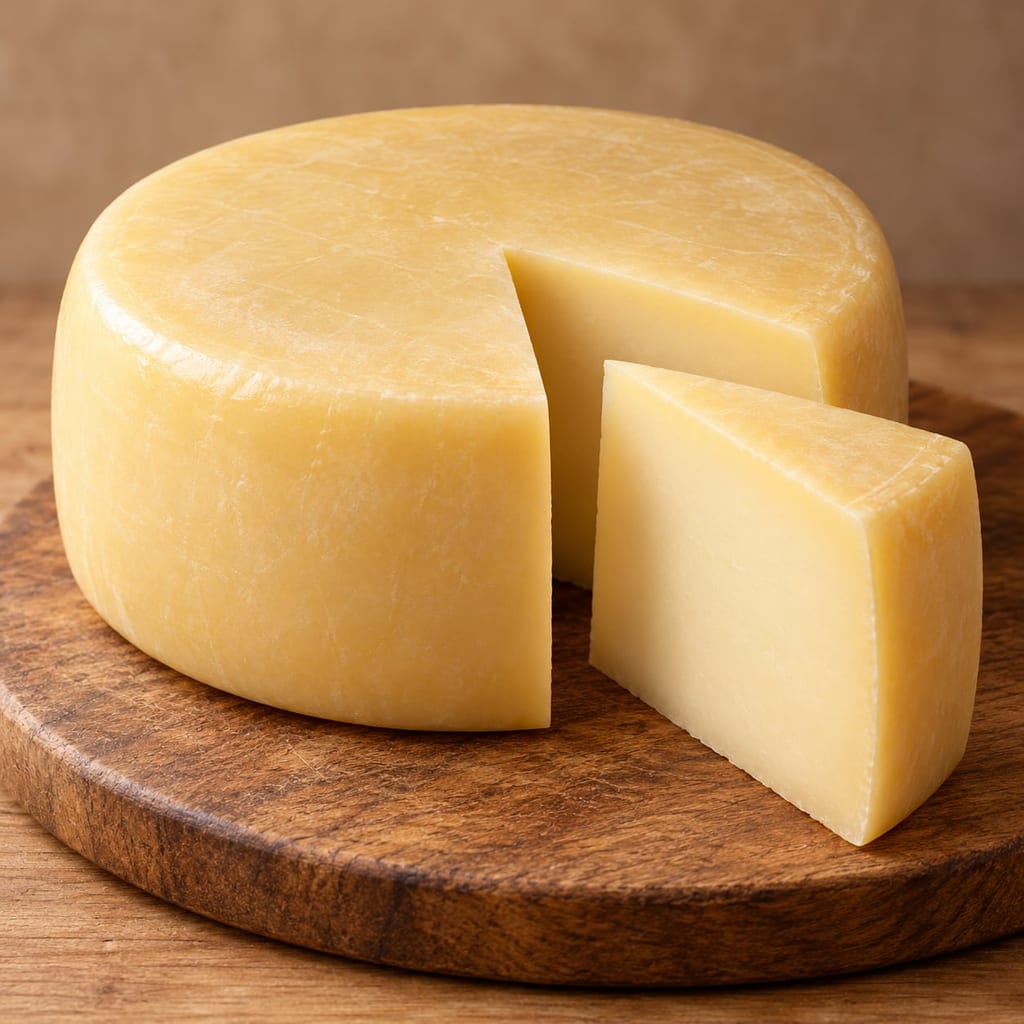
Kashkaval, traditional sheep-milk method
Kashkaval is a firm sheep-milk cheese whose acidified curd is worked in hot brine. This large-batch method finishes with repeated dry salting, wax coating and cool ripening.
 FermenteaWhere food goes to change
Substrates
Unpasteurized sheep milk with its natural fat retained, documented as the starting milk for Kashkaval. Seasonal composition affects curd behavior; raw status does not establish microbiological safety.
Raw whole sheep milk is a liquid dairy ingredient from the domestic sheep, Ovis aries, with its natural fat retained and without pasteurization. Each part of the name answers a different question. Sheep identifies the animal, whole distinguishes the material from skimmed milk, and raw describes its heat-treatment status. None of those words supplies a fixed protein analysis, a breed, a farm, or a guarantee about the organisms present. The material is the starting milk, before it becomes a cultured drink, a curd or a ripened cheese.
The distinction matters particularly in cheese-making. Fat, casein and minerals enter the vat together, and the maker's treatment changes how they are retained in curd or lost with whey. Sheep milk generally contains more fat and protein than cow or goat milk, making it a concentrated substrate for cheese and yoghurt. That comparison describes a broad pattern, not a specification for every delivery. Composition changes with the flock, feed, environment and stage of lactation, as well as with the animal species.
Whole and raw are separate properties. Retaining fat does not establish that milk is unpasteurized, and the absence of pasteurization does not establish that cream has been retained. A recipe that explicitly calls for raw whole sheep milk is therefore narrower than one that says sheep milk alone. Preserving that distinction helps explain the formulation without turning another dairy product into an assumed equivalent. It also keeps the milk's initial state separate from the heating or fermentation that may follow later in the recipe.
Sheep dairying has a history much older than modern retail milk. In a study published in 2022, Ashley Scott and colleagues examined dietary proteins preserved in ancient dental calculus from the Caucasus and neighboring steppe regions. The hardened deposits on teeth held molecular evidence of foods that had otherwise disappeared. Milk proteins could be identified, and some peptide sequences allowed the investigators to distinguish sheep from other dairy livestock. This made it possible to ask which animals people were milking, rather than simply whether they kept animals.
In the North Caucasus, sheep-milk proteins accompanied the earliest sampled Eneolithic pastoralism. During the fourth millennium BC, the examined Maykop and early Yamnaya individuals also showed a focus on sheep dairying. Later samples indicated a broader dairy economy incorporating goat and cattle milk. These changes suggest that the uses of a herd could shift with livelihoods and environmental circumstances. Animals provided more than one resource, and the presence of cattle bones alone did not necessarily mean that cattle supplied the milk people consumed. The distinction links the history of a food to the particular animal resources used to produce it.
The evidence is striking because it survives inside the people who ate the food. Bone assemblages can show which livestock were present, while dental proteins add a more direct dietary connection. The investigators used comparisons among milk-protein sequences and considered the limits of taxonomic resolution. Some peptides were more informative than others. The reconstruction is therefore based on a collection of molecular observations, rather than the identification of a recognizable ancient jar of sheep milk.
This history does not determine whether those meals contained fresh milk, cheese or another dairy preparation. Nor can it establish the fat level, heat treatment or fermentation schedule of a modern ingredient. Its contribution is more fundamental: sheep milk formed part of pastoral food economies, and its role could be distinguished from the use of other livestock. A present-day cheese vat belongs to a long history of using milk beyond the needs of a lamb, even though its exact product specifications are recent and local.
That perspective also makes room for change. Dairying was not one unaltered practice transmitted intact across every landscape. The study's sequence of sheep-focused and more diverse dairying points to adaptation within pastoral life. Sheep milk's culinary history is consequently tied to herd management and movement as well as to named cheeses. The archaeological record supports that broad story while leaving the exact forms of many ancient dairy foods unknown.
The Mediterranean region and the Near East remain important settings for sheep dairying. Dairy breeds include Awassi, East Friesian and Lacaune, while many sheep systems also produce meat, fiber and other resources. A dairy flock is therefore part of a wider agricultural arrangement. The type of animal selected, the available grazing and the timing of lambing and milking influence the milk supply. A breed name can describe one part of that arrangement, but it does not replace a measurement of the actual milk.
Seasonal change is visible in the ingredient itself. A study of raw milk from Dalmatian Pramenka flocks in Croatia followed composition and rennet-gel behavior through lactation. Protein, casein, fat, total solids and ionic calcium changed as lactation advanced. The investigators collected bulk milk from family farms and measured the milk as well as the curds formed under controlled conditions. Their approach links the flock's production cycle to a question a cheese-maker recognizes: why does milk from the same kind of animal not always make the same curd?
The result is a reason to treat milk as a variable food material rather than a fixed blend of water and solids. A seasonal increase in one constituent can accompany changes in others. Casein and fat do not operate as independent ingredients simply added to a neutral liquid; their amounts and balance influence a structure that also contains water and minerals. The natural variation can matter even when the milk has not been standardized, skimmed or blended with another species.
Milk carries fat globules and casein particles within an aqueous phase that also contains lactose, minerals and whey proteins. Casein is particularly important to the framework of a rennet curd. The milk-clotting enzyme changes the protective surface of casein micelles, allowing them to associate into a network. Calcium participates in the interactions within and between these protein structures. The result traps some of the milk's other components and begins the separation between curd and whey.
A set gel and a drained cheese are different stages. Syneresis is the expulsion of whey from the curd network. Cutting, stirring, warming and subsequent handling act on a structure that has already formed, changing how water and dissolved material can leave it. The milk's composition helps determine how that structure responds, but the method remains part of the outcome. The same starting milk can be made into foods with different moisture and texture because it is handled differently after coagulation.
The Croatian study makes the balance between fat and casein especially clear. Higher fat content was associated with weaker measured gels and less syneresis under the study's conditions, while a higher casein-to-fat ratio was associated with stronger gels and greater whey expulsion. The authors discuss fat held within a continuous casein framework and the way that fat can affect its mechanical behavior and drainage. Richer milk is therefore not simply a promise of a firmer curd. Richness and network strength describe different properties.
The investigators also found that calcium's relationship with gel strength was not a simple unlimited increase. Its effects depended on the milk environment, and the reported correlations between composition and gel properties were modest. Those observations are useful precisely because they resist an easy prediction from one label word. They do not supply a calcium-addition schedule or establish what every sheep-milk cheese will do. The experiment concerns its sampled milk and measurement method, while a particular cheese requires its own controlled procedure.
The linked Kashkaval method documents raw whole sheep milk as the initial material. Its sequence then moves through milk maturation, starter and rennet addition, coagulation, cutting, stirring and warming. These operations do different jobs. Starter activity contributes acid development, while rennet establishes the curd. Cutting and subsequent handling promote whey separation. The ingredient name explains what entered the vat, but the order of operations explains how that liquid becomes a workable cheese mass.
Kashkaval belongs to the pasta-filata family of cheeses, in which suitably matured curd is heated and worked. In the documented method, the drained curd matures before it is sliced, dipped into hot brine, kneaded and molded. Acid development and the later hot-working stage are connected parts of that method. Heating at the stretching stage is not the same event as pasteurizing the starting milk before coagulation. Keeping those stages distinct prevents the description raw milk from becoming misleading shorthand for a process with no subsequent heat.
After shaping, the documented cheese is cooled, salted and may be cured. These stages change the food further: it is no longer merely the milk that supplied the solids. The FAO account places Kashkaval among Mediterranean cheese-making practices and describes production in Cyprus, Lebanon and Tunisia, with a Bulgarian historical association. That geography concerns the documented cheese tradition. It does not identify the farm, breed or country of origin of every batch of raw whole sheep milk used to make it.
Other sheep-milk foods reveal different choices. Sheep milk's high solids make it suitable for cultured milk and yoghurt as well as cheese, while cheeses can retain different amounts of fat, water and salt. A stretched cheese, a fermented milk and a drained curd do not ask the same things of the starting material. Their variety helps explain why the milk deserves an ingredient identity of its own, rather than being described solely through one finished cheese or assigned one universal culinary behavior.
Selection begins with explicit identification: sheep milk, the retained-fat state, and whether it has been pasteurized. A supplier's actual treatment and composition are more useful than an assumption based on a farm image or the appearance of a jar. Milk can look similar across different species and processes. The sources for this entry do not establish a universal fat minimum for whole sheep milk, a conversion to cow milk or a substitute ratio for the linked cheese. Those would require a separate product specification and tested formulation.
Raw milk can carry harmful bacteria, including Salmonella, E. coli and Listeria. Pasteurization is a public-health treatment intended to kill dangerous bacteria; neither whole-fat status nor a sheep origin removes that concern. A historical cheese description is not a validation that its fermentation, hot-working or curing reliably controls every hazard. Handling and any recipe assessment must address the actual milk and complete process. No safety claim is inferred from the milk's traditional use, its richness or its eventual transformation into cheese.
Sheep milk contains milk proteins and lactose. It should not be presented as free of dairy allergens or milk sugar because it comes from a different animal. The reviewed source does not identify a supplier-specific storage life, microbiological test result or transport specification for the milk in the linked recipe. Those details remain with the actual supply and its documented handling instructions. The catalogue preserves the raw whole form while leaving those unprovided measurements and limits unstated.
Milk; contains lactose. No species-based allergen-free claim.
Ancient sheep-dairying dietary-protein evidence; exact raw/whole state unknown.
Dalmatian Pramenka raw-milk lactation and gel study, not universal milk provenance.
FAO historical association of linked Kashkaval tradition, not origin of all sheep milk.
Kashkaval is a firm sheep-milk cheese whose acidified curd is worked in hot brine. This large-batch method finishes with repeated dry salting, wax coating and cool ripening.
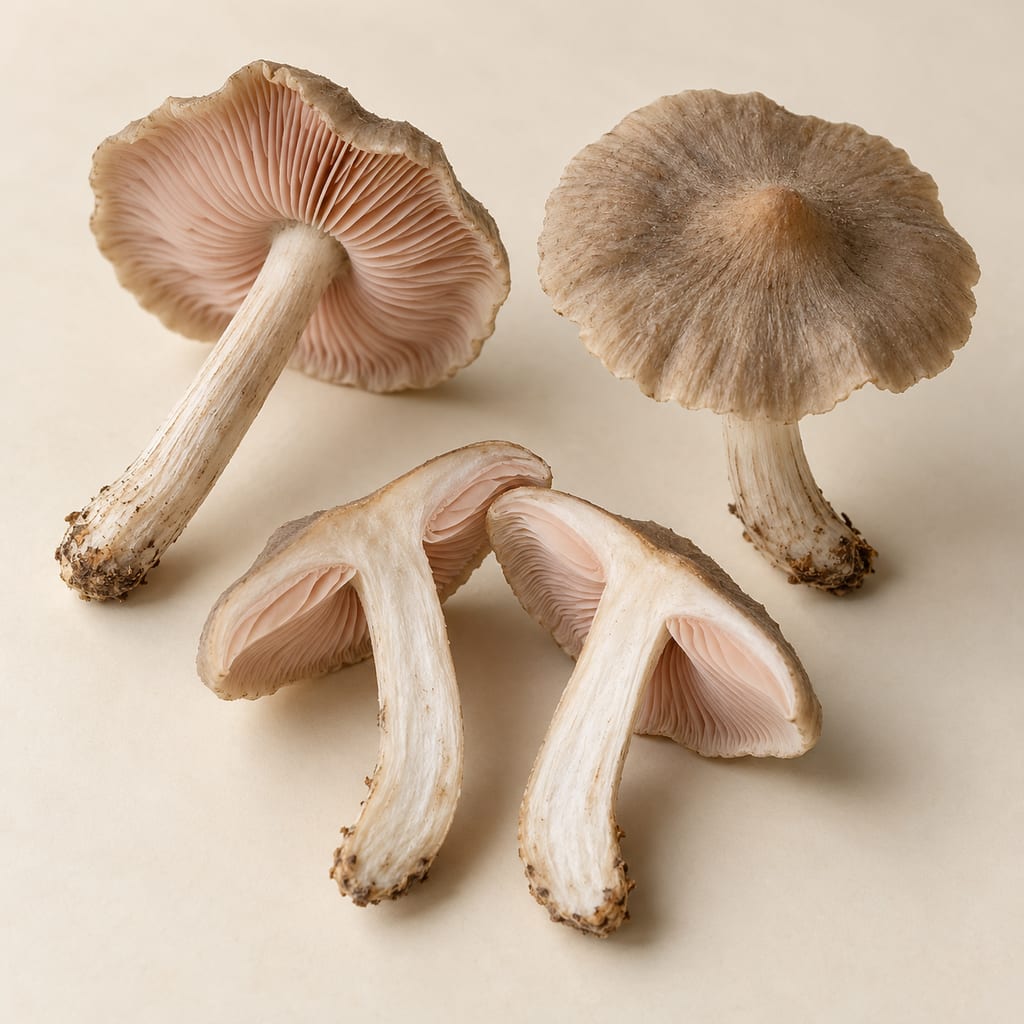
A spring pink-spored mushroom associated with Rosaceae. European food use is documented, alongside a Turkish poisoning report and unresolved species-complex records in Mexico.
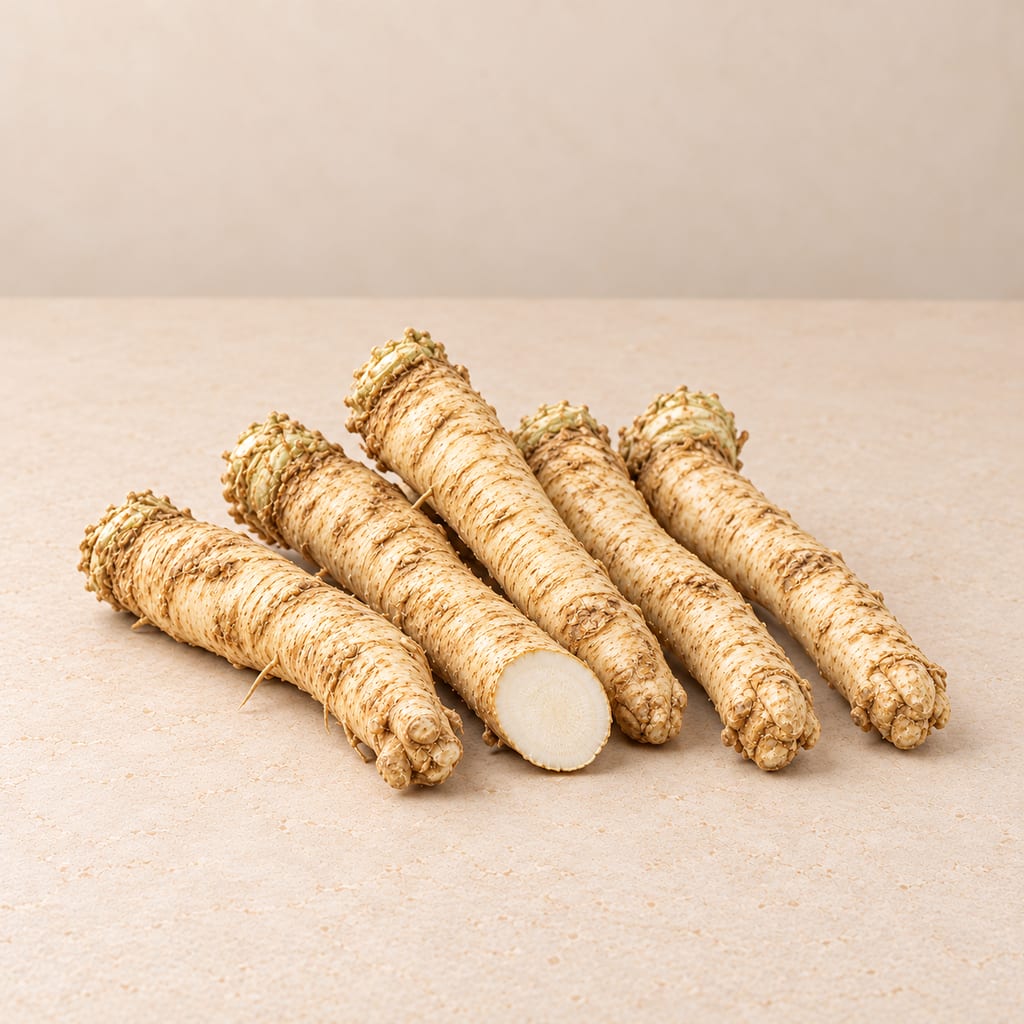
Horseradish is the long white root of Armoracia rusticana, a perennial of the mustard family. Grated, it releases a sharp, nose-clearing heat that vinegar fixes in the sauce.
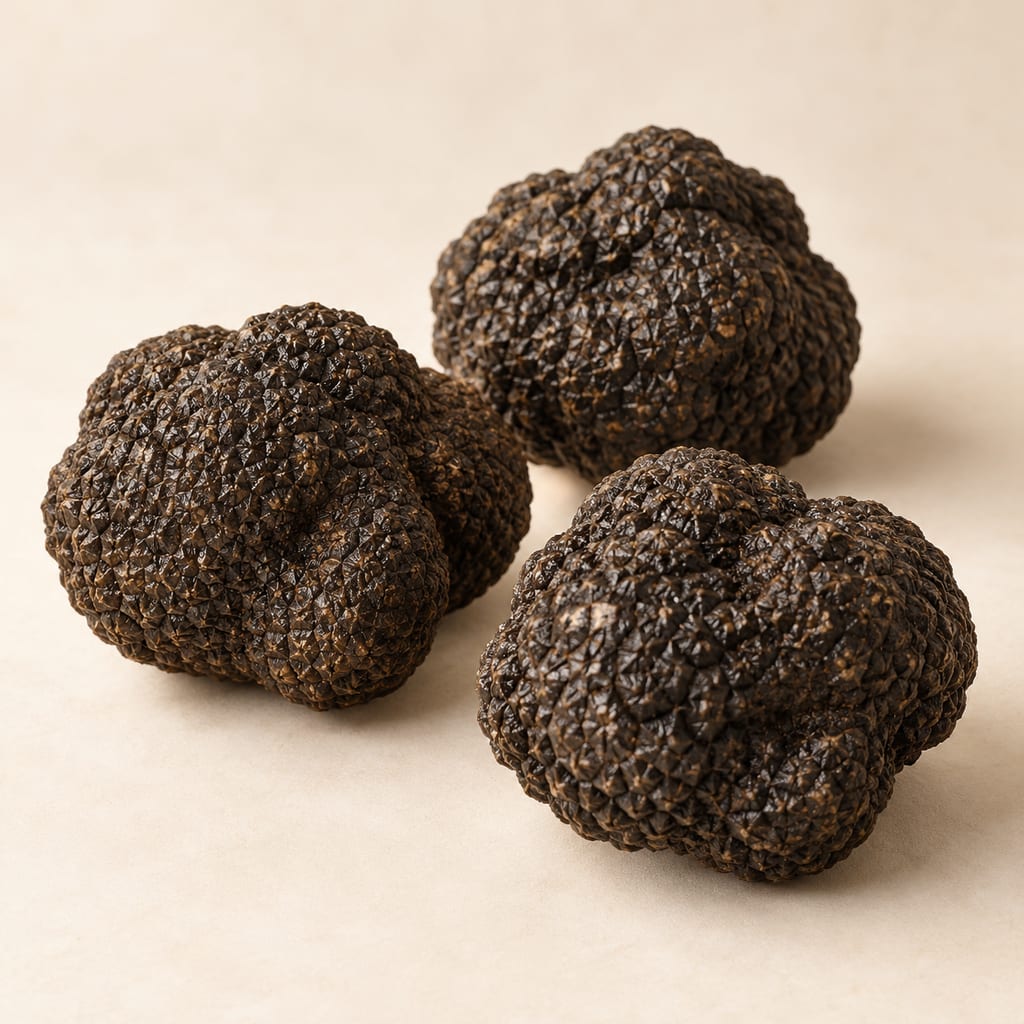
Tuber melanosporum is the Périgord black truffle, a mycorrhizal fungus of southern Europe grown in inoculated oak and hazel orchards and used as a high-value aromatic seasoning.
A cleaned pig caecum forms the broad, closed-end casing used for Slavonski kulen and Baranjski kulen. Its shape, preparation and regional names differ from other pig intestines.
No community contributions have been published for this entry yet.
Sign in to contribute. Published comments and photos are free to read.
FAOIdentity · History · Science · Handling · Use
The technology of traditional milk products in developing countries: KashkavalThe Kashkaval account names raw whole sheep milk and describes culture, rennet coagulation, curd handling, acid maturation, hot-brine working, molding, salting and curing.
Cited in: Milk with its animal and treatment still specified; Why the stages matter in Kashkaval; Selecting and handling an unpasteurized dairy ingredient
Nature Ecology & EvolutionIdentity · History · Science · Handling · Use
Emergence and intensification of dairying in the Caucasus and Eurasian steppesAncient dental-calculus milk proteins document sheep dairying in the North Caucasus, including a fourth-millennium BC sheep-focused pattern. They cannot identify ancient milk as raw and whole.
Cited in: A pastoral history recorded in teeth
FAOIdentity · History · Science · Handling · Use
Small ruminantsSheep supply milk and other agricultural outputs. Mediterranean and Near Eastern dairy systems include Awassi, East Friesian and Lacaune breeds.
Cited in: Flocks, seasons and the material in the vat
Food Technology and BiotechnologyIdentity · History · Science · Handling · Use
Effect of Sheep’s Milk Composition on Strength and Syneresis of Rennet-Induced Milk Gel During LactationRaw Dalmatian Pramenka milk changes during lactation. Controlled gel tests relate composition, fat/casein balance and calcium to firmness and whey expulsion without predicting every cheese batch.
Cited in: Flocks, seasons and the material in the vat; Building a curd from a liquid
FAOIdentity · History · Science · Handling · Use
Milk compositionSheep milk generally has high fat, protein and total solids and contains lactose. Breed, diet, lactation and environment affect composition.
Cited in: Milk with its animal and treatment still specified; Why the stages matter in Kashkaval; Selecting and handling an unpasteurized dairy ingredient
Tetra PakIdentity · History · Science · Handling · Use
The chemistry of milkCasein micelle destabilization, calcium interactions and network formation explain rennet coagulation and subsequent whey separation.
Cited in: Building a curd from a liquid
US Food and Drug AdministrationIdentity · History · Science · Handling · Use
Raw MilkUnpasteurized cow, sheep and goat milk can carry Salmonella, E. coli and Listeria. Pasteurization is a public-health treatment; traditional use does not establish pathogen control.
Cited in: Milk with its animal and treatment still specified; Selecting and handling an unpasteurized dairy ingredient