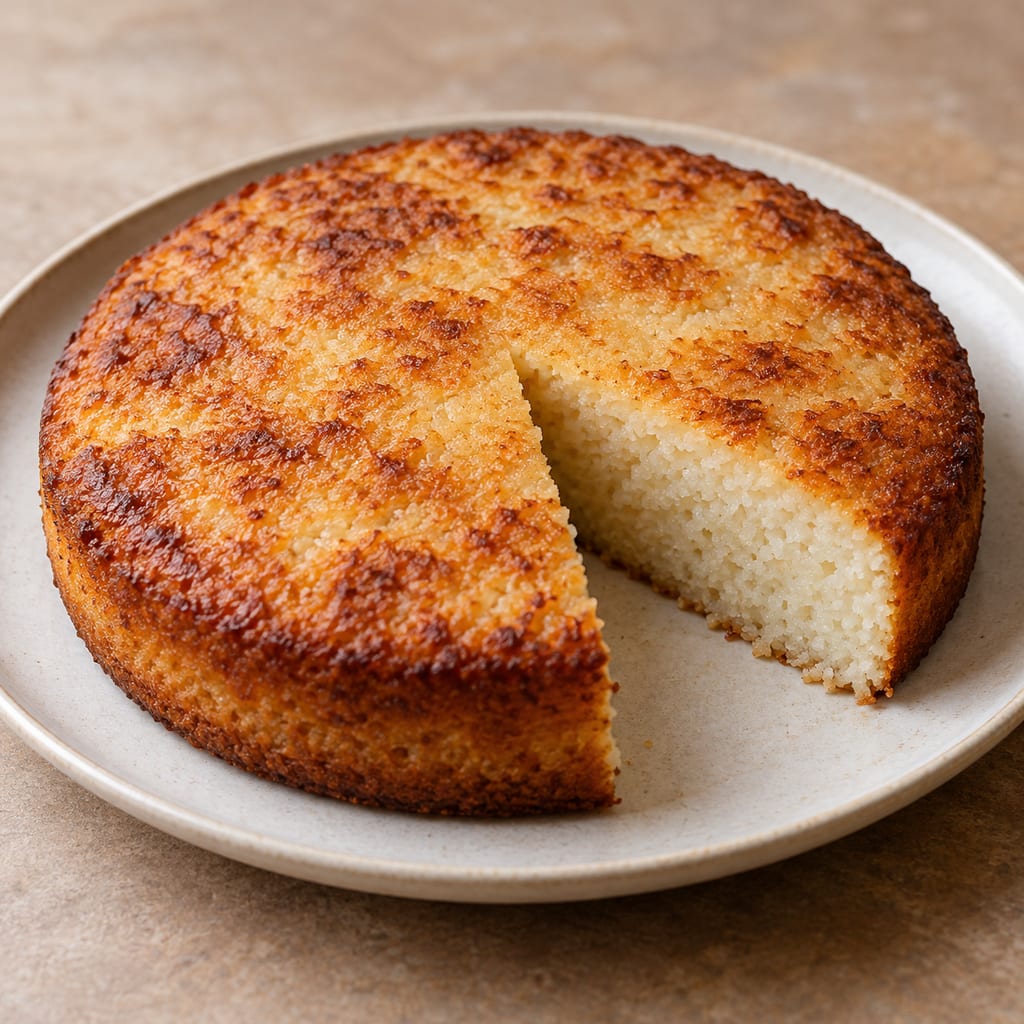
Mkate wa sinia (Mombasa rice and coconut cake)
Fauzia’s Mombasa mkate wa sinia blends soaked rice with coconut milk, sugar, cardamom and yeast, then sets it covered on the hob and browns the top under a grill.
 FermenteaWhere food goes to change
Traditional method
Uji wa wimbi
A thin, sour porridge of western Kenya made by fermenting unroasted finger-millet flour in water for a day or two, then diluting it and cooking it through.
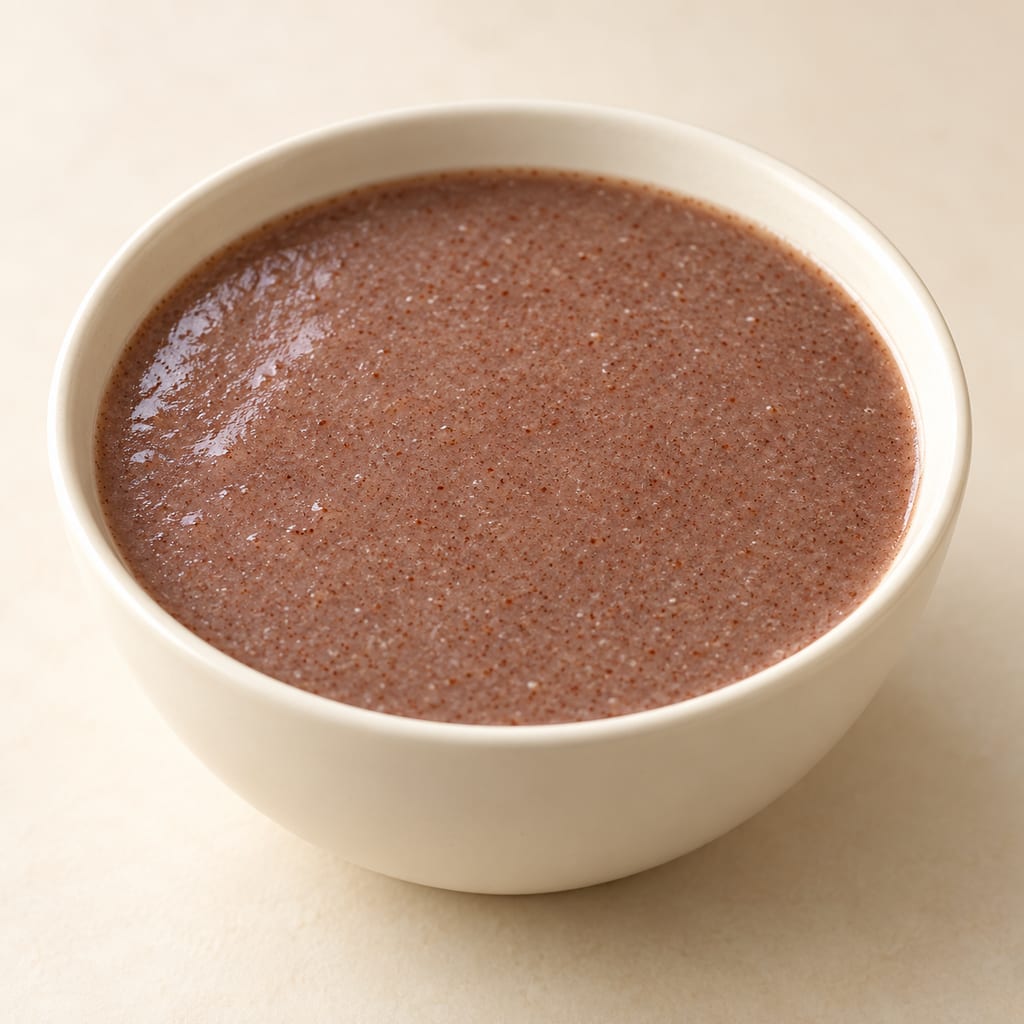
Uji is an important Kenyan cereal porridge consumed at breakfast and throughout the day.
It may be made from maize, millet, sorghum or mixtures of cereals and other flours. Some versions are unfermented, while others develop a pleasantly sour character through spontaneous fermentation.
This recipe concerns fermented finger-millet uji, known in Swahili as uji wa wimbi.
Uji means porridge, while wimbi refers to finger millet.
Finger millet is Eleusine coracana (L.) Gaertn., a small-seeded cereal belonging to the grass family, Poaceae.
The grain is also known in English as African finger millet or ragi, although ragi is particularly associated with South Asian usage.
Finger millet produces a distinctive brown or reddish-brown flour, giving many finger-millet porridges a darker appearance than maize-based equivalents.
The fermented version combines cereal flavour with organic acids produced during microbial activity.
The final cooking stage thickens the slurry and produces a smooth porridge that may be drunk from a cup or eaten with a spoon.
Millet cultivation has deep roots in African agriculture.
Finger millet is associated with eastern Africa and has subsequently become an important crop in parts of South Asia.
The existence of ancient millet cultivation does not, by itself, establish the age of the particular fermented uji preparation.
The precise date when communities in western Kenya began fermenting finger-millet porridge has not been established.
Modern documentation does demonstrate that the food is widely recognised across the region.
A study involving focus groups in ten western Kenyan counties investigated traditional knowledge of uji, its ingredients, preparation and consumption.
The research identified finger millet as a preferred cereal for an unblended uji flour.
Uji serves as an everyday food and refreshment, including breakfast and consumption at other times of day.
It is also culturally associated with feeding children and people needing easy-to-consume cereal foods.
However, the nutritional role of uji does not mean that an uncontrolled spontaneously fermented batch is automatically appropriate for infants or vulnerable consumers.
The exact ingredient quality, processing and safety remain important.
Finger millet is a nutritious cereal with its own composition of starch, protein, fibre and minerals.
Unlike refined white flour, whole-milled finger millet includes more of the grain's outer structures.
This contributes colour and influences the texture of the cooked porridge.
The grain's starch gelatinises during heating, creating viscosity.
The type of milling affects how much water is absorbed and how smooth the cooked product becomes.
A finely milled flour produces a different texture from coarse or gritty material.
The present recipe specifies unroasted, whole-milled finger-millet flour.
Roasting would alter the flour's aroma and its prior exposure to heat. That may also change microbial activity.
It should therefore not be introduced into the measured process without identifying it as a separate variant.
Mixing flour with water creates a moist environment in which microorganisms can act on available nutrients.
Spontaneous fermentation depends on microorganisms associated with the ingredients, equipment and surrounding environment.
Lactic acid bacteria can convert sugars into organic acids, giving the mixture its sour character.
Yeasts may also participate, producing other metabolites and modifying flavour.
In some cereal fermentations, enzyme activity changes the distribution of carbohydrates and other nutrients.
Fermentation may alter the availability of particular minerals or reduce certain antinutritional compounds, but such effects depend on the process.
No quantified nutritional improvement for this exact 300 g recipe is supplied in the source.
The fermentation stage is distinct from cooking.
Once the mixture is heated, starch gelatinisation changes the physical structure of the food, while the earlier fermentation has already produced much of its characteristic taste.
This is why adding acid to cooked porridge is not an exact replacement for fermenting the flour before cooking.
Source-derived household-size formulation
The 300 g flour amount is a documented calculation from a research concentration range, not an independently measured traditional household recipe.
The initial slurry is 30–40 g flour per 100 mL.
Using 300 g flour with 1 L water represents the 30 g per 100 mL end of that range as a formulation basis.
The final target is approximately 8–10% flour concentration, expressed as weight per volume.
An additional 2 L water gives a nominal concentration close to 10% before accounting for changes in volume during fermentation and cooking.
This is a mathematical adaptation, not a reported measured final yield.
Unroasted finger-millet flour — 300 g — Main cereal substrate
Water for fermentation slurry — 1 L — Supports the initial fermentation
Additional dilution water — Approximately 2 L — Adjusts final porridge concentration
Previously fermented uji — Not used in this version — Optional starter in some methods; no sourced dose
A mixing bowl, whisk or stirring paddle, food-safe fermentation vessel, cooking pot and suitable utensils are needed.
A thermometer is useful for observing the warm fermentation conditions.
The source does not require a specialised incubator or laboratory instrument for its traditional description.
However, it does describe a temperature range, so a household attempting to follow it should not assume that any ambient temperature will produce the same result.
Fermentation 24–48 hours at 25–35°C · Cooking 10–15 minutes
Prepare the slurry. Place 300 g finger-millet flour in a clean vessel. Add 1 L potable water gradually, stirring or whisking to disperse the flour. Avoid large dry lumps that would hydrate unevenly.
Ferment the mixture. Maintain the slurry under the documented warm conditions of 25–35°C for 24–48 hours. This preparation relies on spontaneous fermentation rather than a measured starter dose. A sour aroma may develop as the microbial community produces acids.
Prepare for cooking. Stir the fermented slurry to recombine settled flour and liquid. Dilute toward the documented final concentration of 8–10% weight per volume. For the 300 g flour formulation, the proposed total volume is approximately 3 L, requiring around 2 L additional water.
Heat and stir. Bring the preparation to the cooking stage while stirring continuously, especially as the starch begins to gelatinise. The source also describes introducing slurry into boiling water. The exact distribution of the dilution water between the pot and slurry is not separately specified.
Finish cooking. Continue cooking and stirring for 10–15 minutes until the porridge develops a smooth, appropriately thick consistency. This is the documented cooking interval, not an independently validated pathogen-control schedule.
Serve promptly. The finished uji is consumed as cooked porridge. The source does not specify a reliable post-cooking room-temperature storage period for this batch.
Uji is generally thinner than a stiff maize porridge.
Its characteristic drinking or spooning consistency comes from the relationship between cereal solids and water.
The amount of flour in the original fermentation slurry is comparatively high.
That concentrated slurry is subsequently diluted before cooking.
The distinction matters because using the final 10% concentration throughout fermentation would create a different initial microbial and physical environment.
Similarly, fermenting a thick dough and thinning it only after cooking would not reproduce the documented process.
The calculation used here is intended to make the reported solids concentration practical for a 300 g quantity.
It should not be confused with a measured final volume or yield.
Fermented cereal slurries commonly contain mixed microbial populations.
Lactic acid bacteria are particularly associated with sour cereal porridges because they produce lactic acid.
Other bacteria and yeasts may occur.
The balance depends on the flour, water, fermentation conditions and whether a previous batch is used as an inoculum.
The current method is spontaneous, so a specific starter species cannot be assigned to it without microbiological testing.
The observed fall in pH and development of sourness are consistent with fermentation.
However, sourness alone is not a reliable indicator that all undesirable organisms have been suppressed.
The source does not provide a validated final pH limit, microbial reduction requirement or alcohol measurement.
These gaps should remain visible in any commercial or educational publication.
Traditional cereal fermentations sometimes use a small amount of previously fermented slurry to accelerate the next batch.
This practice is called backslopping.
The previous batch introduces microorganisms already adapted to the cereal environment.
Backslopping can make fermentation more consistent in some situations, but it can also perpetuate undesirable microorganisms if the source material is contaminated.
The reviewed research identifies backslopping as a recognised way to accelerate uji fermentation.
However, it does not specify an addition quantity for this particular formula.
Accordingly, this recipe omits it rather than inventing a dose.
Any version using a starter should be recorded separately as a validated process variation.
Kenyan uji is made in numerous ways.
Maize, finger millet and sorghum are all established cereals for porridge preparation.
Composite flours may also contain other cereals or cassava.
Changing the flour affects the food's colour, flavour, starch behaviour and nutritional composition.
The present recipe is specifically finger-millet uji from western Kenya.
A maize-based or mixed-grain version belongs to the wider uji family but should not be described as the same formula.
Some producers use warm water, added sugar or previously fermented slurry to influence fermentation.
The published research discusses these methods, but the current record follows the spontaneous flour-and-water preparation.
Uji is commonly consumed at breakfast.
It may also be taken as a refreshment or light meal later in the day.
Because it is a cooked cereal food, it can be served in a cup or bowl.
The texture ranges from thin and drinkable to thicker and more spoonable.
It is sometimes sweetened, but the amount depends on personal preference and is not specified in the measured recipe.
The sourness of fermented uji distinguishes it from a plain, freshly cooked millet porridge.
That acidity can provide a pleasing contrast to the underlying grain flavour.
The porridge is also valued for its convenience: it requires no chewing and can be consumed as a simple meal.
However, cultural familiarity must not be mistaken for laboratory confirmation that a particular household ferment is safe for all consumers.
A fermented slurry may develop a sour aroma and changes in consistency.
The flour can settle during standing, so separation is not necessarily abnormal.
Stirring before cooking redistributes the cereal solids.
The cooked porridge should be smooth rather than containing large dry lumps.
A raw flour taste may indicate inadequate cooking, although sensory impressions are not a validated heat-treatment measurement.
Unwanted fuzzy growth, putrid odours, unusual discoloration or evidence of contamination should lead to rejection.
A mixture that has stood beyond the documented fermentation period should not automatically be regarded as a stronger or better version.
Spontaneous cereal fermentation introduces variability.
The raw flour may carry microorganisms, while water and utensils can contribute contamination.
Fermentation may reduce pH, but it does not necessarily eliminate toxins or spores.
The recipe's final cooking stage is important, but it is not presented in the source as a validated pathogen-reduction endpoint.
Cooked cereal porridges can also deteriorate after preparation if handled or stored inadequately.
The source recommends prompt consumption and provides no validated shelf life for the prepared batch.
No alcohol result is available.
For a household or commercial producer, the safe approach is to regard the recipe as a documented traditional preparation requiring appropriate hygiene and process assessment, rather than as a guaranteed safe procedure simply because its times and temperatures are recorded.
The paper records uji as a widely consumed Kenyan thin porridge and reports focus-group knowledge from ten counties in western Kenya. It describes uji as a refreshing drink consumed at different times of day; this record does not claim a date or single place of origin.
Scaling: source batch only
The source describes spontaneously fermented uji and warns that it can deteriorate rapidly or develop mould if fermentation continues; its acidity observations are not a validated safety endpoint.
Hazard sourceKeep fermentation within the source's 24–48-hour method, cook the slurry before serving, and prepare it for prompt consumption; the source does not establish a validated pathogen control limit.
Control sourceUse clean food-contact equipment for mixing and fermenting; sanitation does not establish a safe endpoint for spontaneous uji.
Control sourceThe source's pH change and sour aroma are process observations, not proof of safety.
The record has no alcohol measurement or validated household storage life.
Final dilution is set by the source's 8–10% w/v concentration range, not a fixed water addition.
The study documents uji knowledge through focus groups in ten counties in western Kenya and identifies finger millet as the preferred unblended flour. This is a regional association, not an origin claim.
Fauzia’s Mombasa mkate wa sinia blends soaked rice with coconut milk, sugar, cardamom and yeast, then sets it covered on the hob and browns the top under a grill.
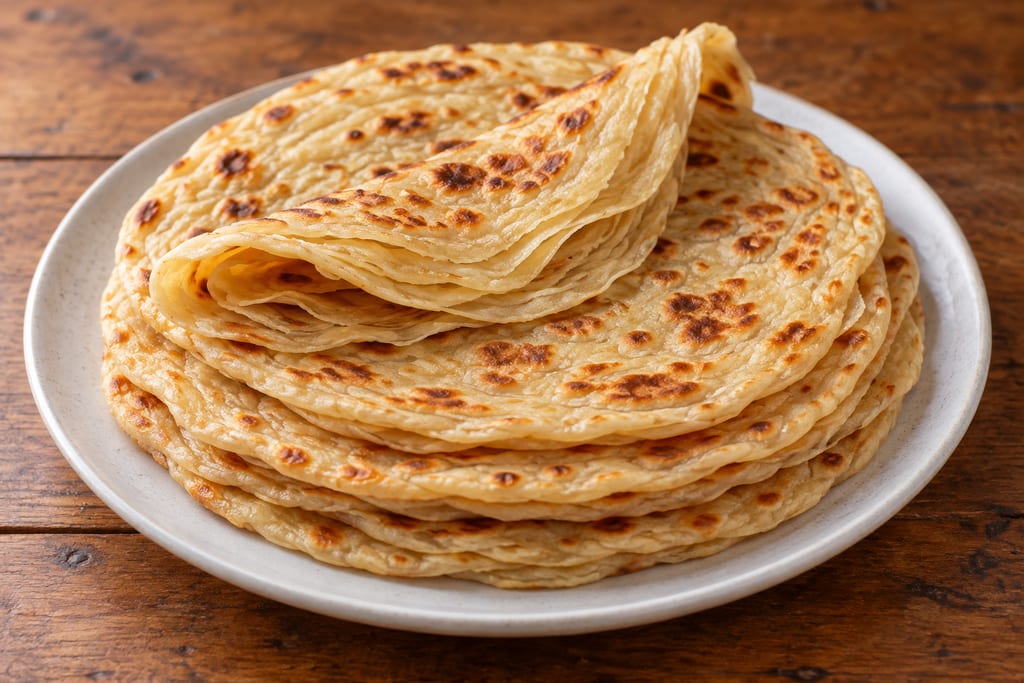
Six Kenyan layered wheat flatbreads, pleated with ghee, coiled and cooked on a griddle.

A Kenyan mandazi made with self-raising flour, lemon and optional cardamom, cut into triangles and deep-fried. This baking-powder-raised version is distinct from yeast-raised coastal mahamri.
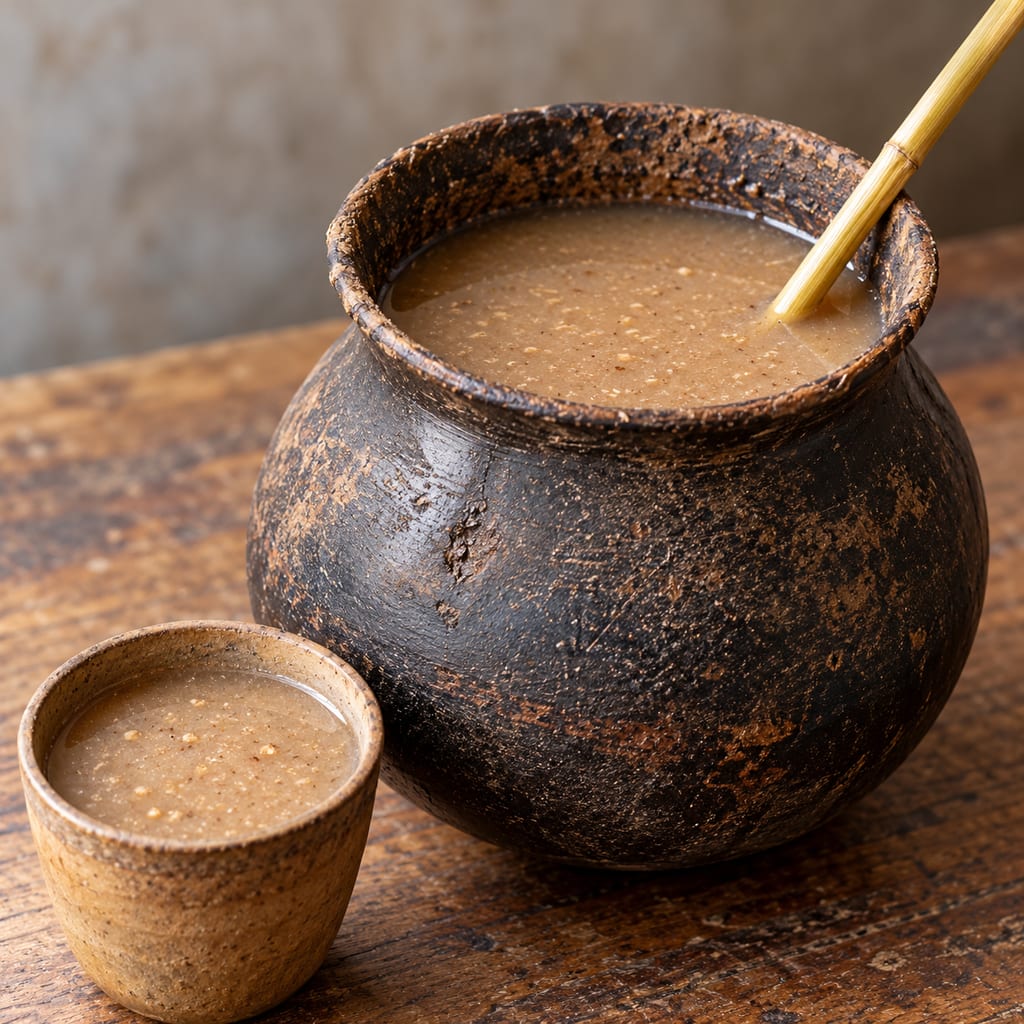
An opaque Kenyan maize beer: fermented maize paste is roasted into tsimbale, then mixed with finger-millet malt called kimera at ten to one and fermented a second time.
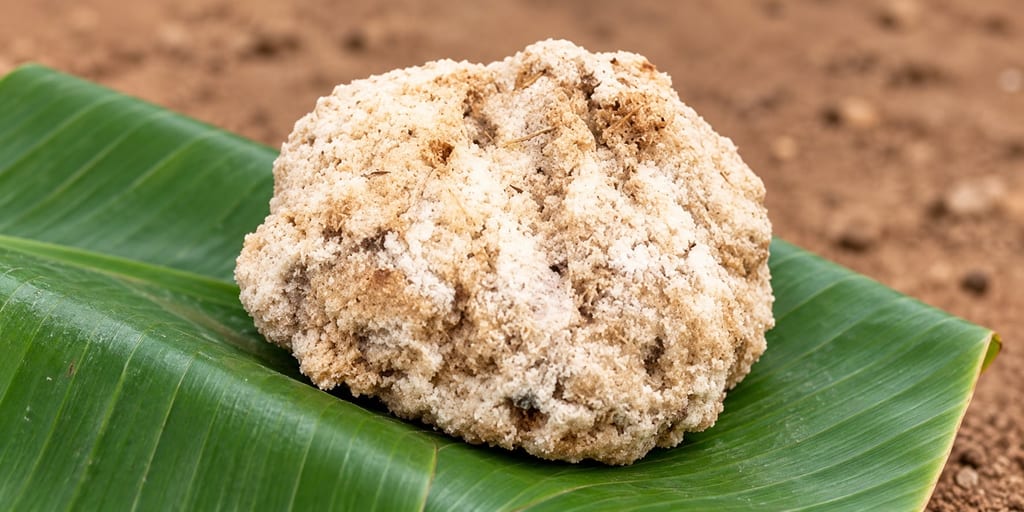
Nzoia River reed salt is a Bukusu seasoning made by leaching and evaporating the ash of mature muchua reeds. Its sources document a local method, but provide neither a measured formula nor verified mineral composition.
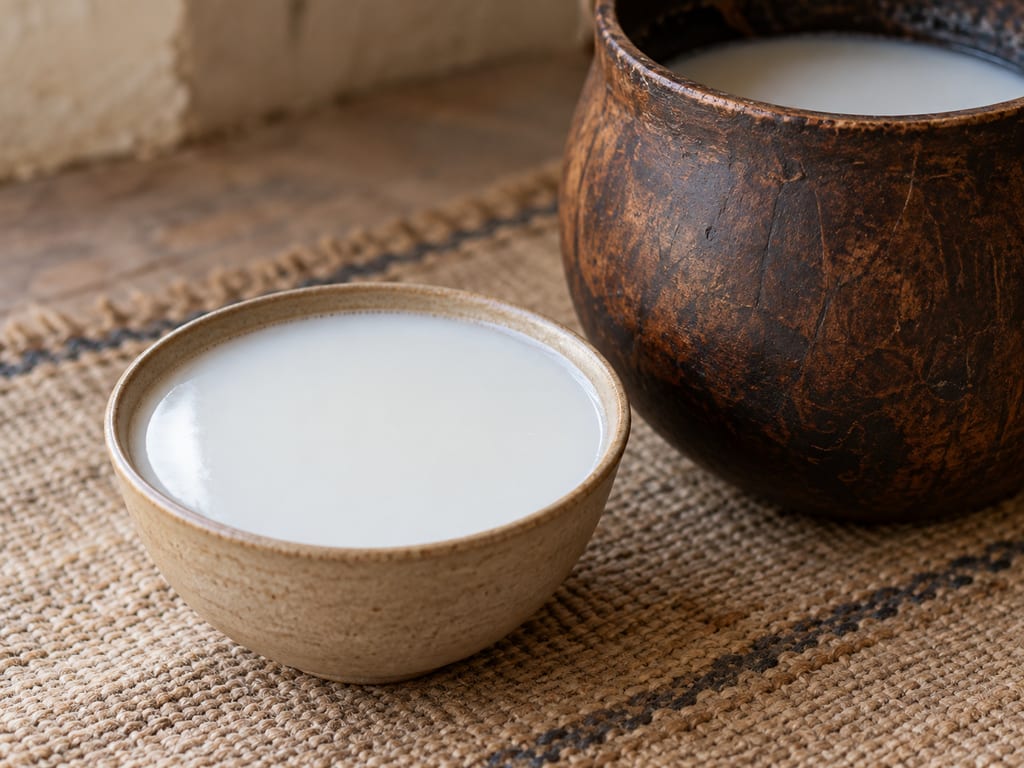
Suusac is a traditional fermented camel-milk drink of Somali pastoral communities in Kenya and Somalia, soured spontaneously in smoke-treated vessels into a thin, acid, smoky milk.
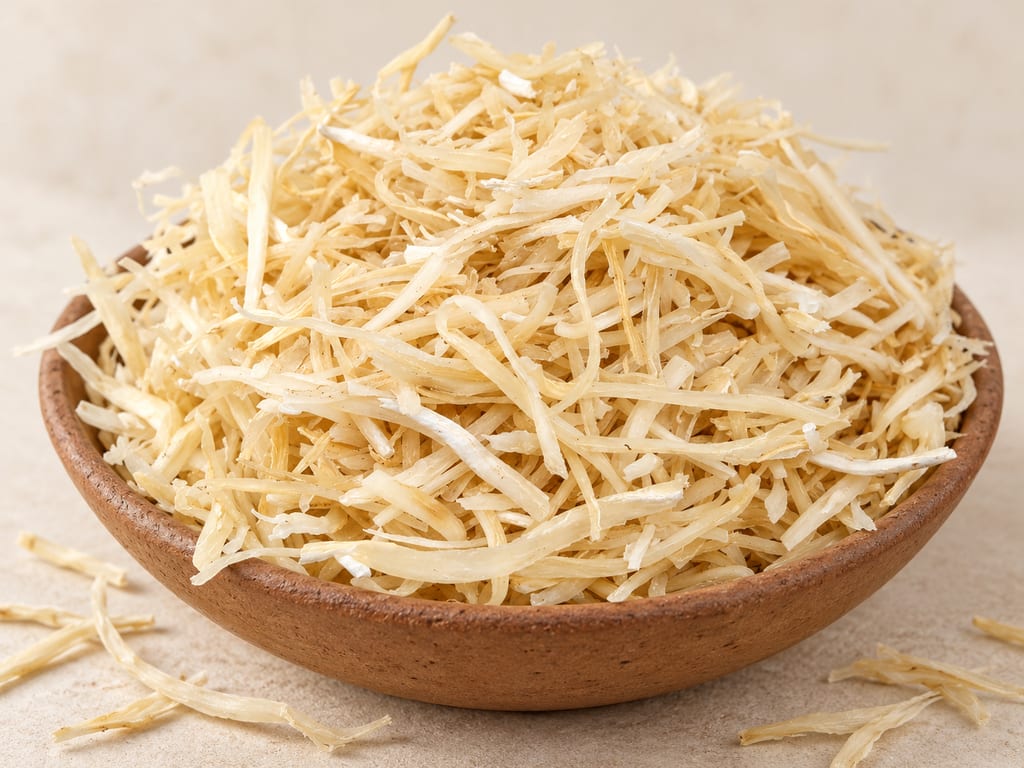
Abacha is a fermented cassava-strip preparation from southeastern Nigeria, sold wet or dried and later rehydrated for meals such as African salad.
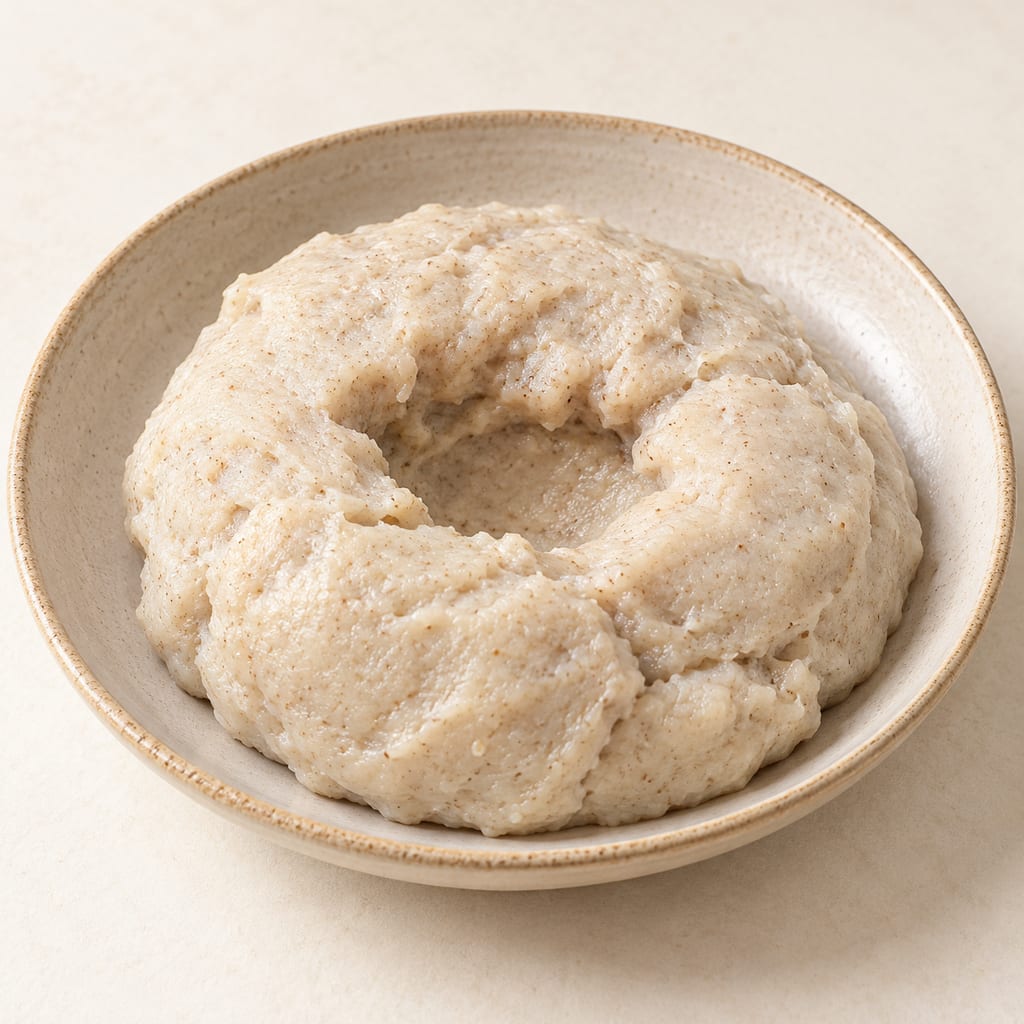
Aceda is Sudan’s firm cereal porridge, commonly made from sorghum and shaped into a smooth mound. Some versions use fermented dough; fermentation is not universal.

Ghanaian sour cassava dough fermented with traditional inoculum and drained during fermentation. It is used as a base for cooked foods such as banku and akple; process variants and safety outcomes differ.

Appam, or hoppers, are South Indian and Sri Lankan rice pancakes made from a fermented coconut-and-rice batter and cooked in a curved pan to a crisp lacy rim and a soft, spongy centre.
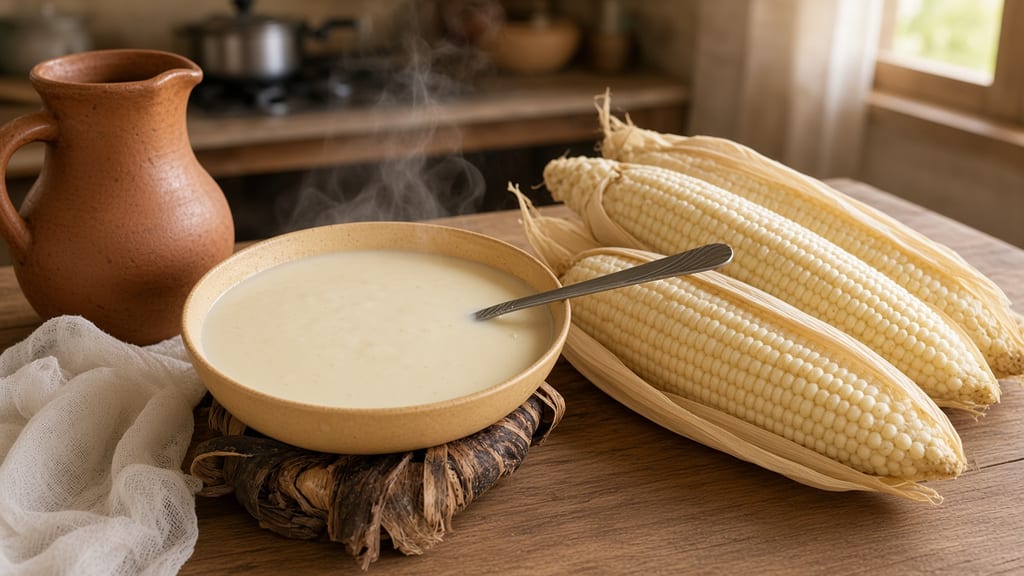
A hot, sour maize drink from Tabasco made from maize that is not lime-cooked. The ground grain sours for half a day, then makers strain it and boil it until thick.
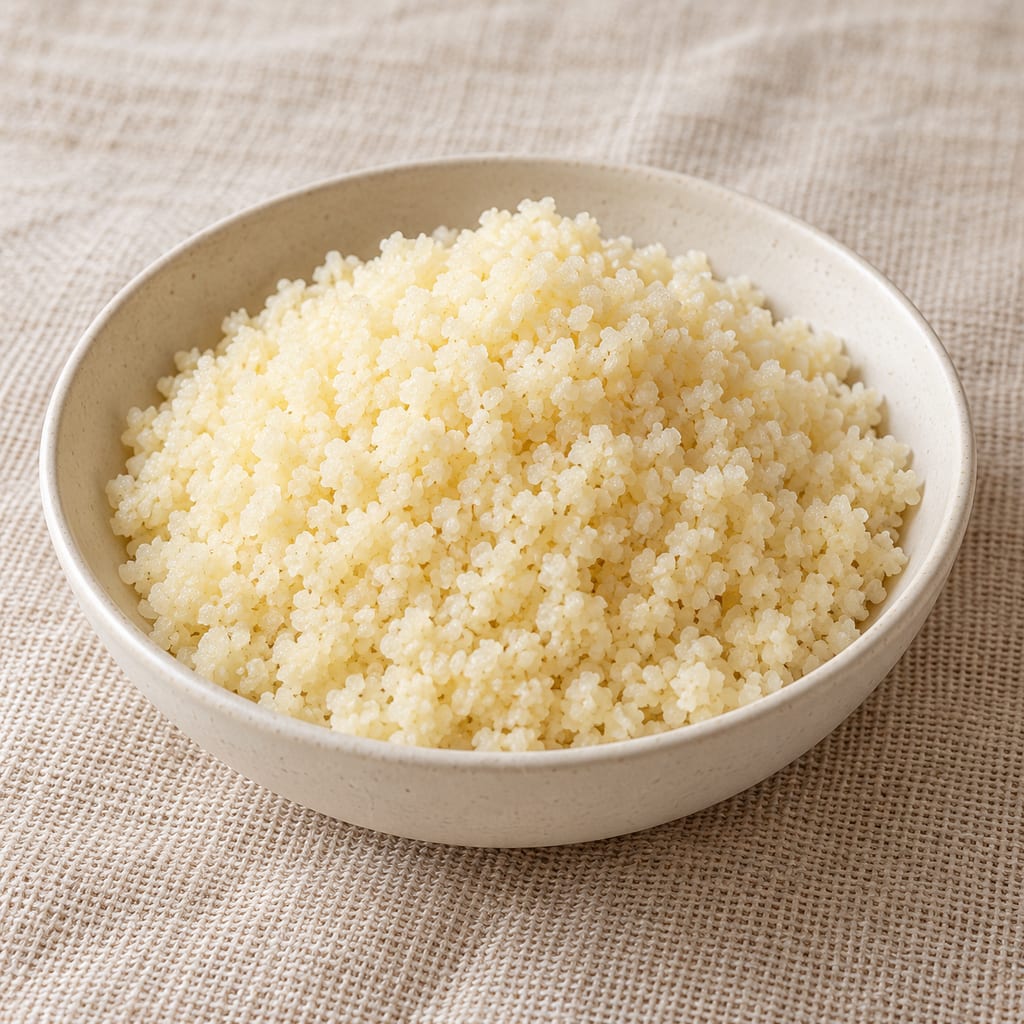
Ivorian cassava semolina: grated cassava is fermented overnight with a traditional inoculum, pressed, sieved into granules, dried and steamed. Documented in a 2006 field study; no sole original process is established.
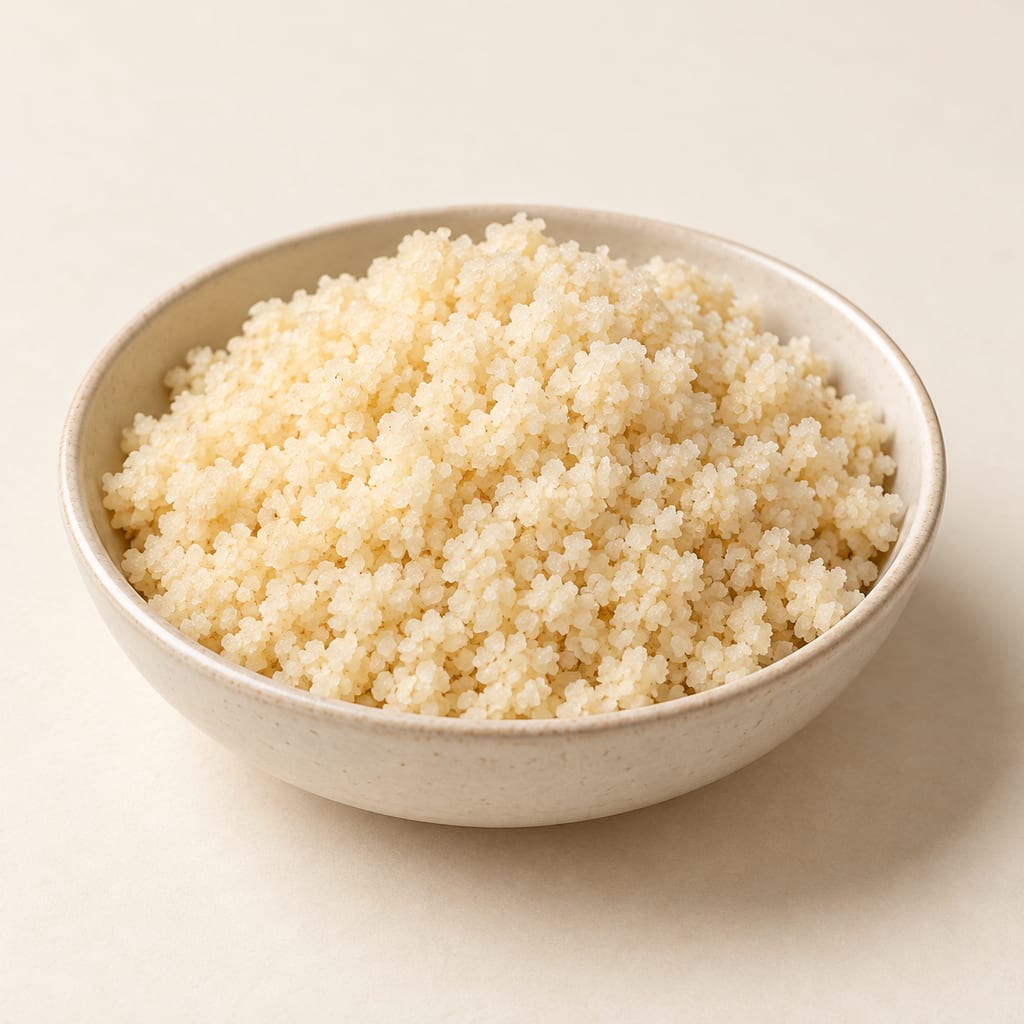
Attiéké is an Ivorian staple of grated cassava fermented with a traditional inoculum, then pressed, sieved, granulated, dried and steamed into fine couscous-like grains.

Crushed or milled barley cooked in water until the starch softens and the mixture thickens, the plainest way a northern household turned stored grain into a meal, here with apple and hazelnut.
No community contributions have been published for this entry yet.
Sign in to contribute. Published comments and photos are free to read.
African Journal of Food ScienceInspiration · Process · Location · Culture · Safety
Indigenous technical knowledge and formulations of thick (ugali) and thin (uji) porridges consumed in KenyaThe article reports western Kenyan focus groups in ten counties and identifies unblended finger millet as a preferred uji flour.
It describes fermented uji as a flour-and-water slurry at 30–40 g/100 ml, spontaneously fermented warm at 25–35°C for 24–48 h.
For cooking, the article reports dilution to 8–10% w/v flour concentration, addition to boiling water while stirring, and cooking for 10–15 minutes.
It describes fermented uji as short-lived and advises cooking and drinking it promptly; the article does not validate a home safety endpoint.
Cited in: A traditional sour porridge; Cultural and historical background; Why finger millet is different; Why ferment the flour before cooking?; Ingredients; Equipment; Method; Consistency and dilution; The microbiology; Backslopping as a variant; Regional and ingredient variations; How uji is eaten; Signs of proper development; Safety and storage
Clemson Cooperative ExtensionSafety
Cleaning and Sanitation for the HomebrewerGeneral cleaning and sanitation practices for food-contact equipment; it does not validate this cereal fermentation.
Cited in: Safety and storage
Eastern African traditional fermented foods and beveragesHistory · Safety · Method
Eastern African traditional fermented foods and beverages — Review of processing and safetyReview of processing and safety
Cited in: A traditional sour porridge; Cultural and historical background; Why finger millet is different; Why ferment the flour before cooking?; Ingredients; Equipment; Method; Consistency and dilution; The microbiology; Backslopping as a variant; Regional and ingredient variations; How uji is eaten; Signs of proper development; Safety and storage
Healthy Living KenyaMethod
Healthy Living Kenya — Fermented uji culinary preparationFermented uji culinary preparation
Cited in: A traditional sour porridge; Why finger millet is different; Why ferment the flour before cooking?; Ingredients; Equipment; Method; Consistency and dilution; The microbiology; Backslopping as a variant; Regional and ingredient variations; How uji is eaten; Signs of proper development
