
Airag
Airag is Mongolia’s fermented mare’s-milk drink, traditionally churned with saved starter in a reusable cowhide khokhuur.
 FermenteaWhere food goes to change
Equipment · Skins and bladders
khokhuur · хөхүүр · khökhüür
The khokhuur is a traditional Mongolian airag vessel made from prepared cowhide. Its flexible leather body holds mare’s milk while it is churned with a separate wooden buluur paddle.
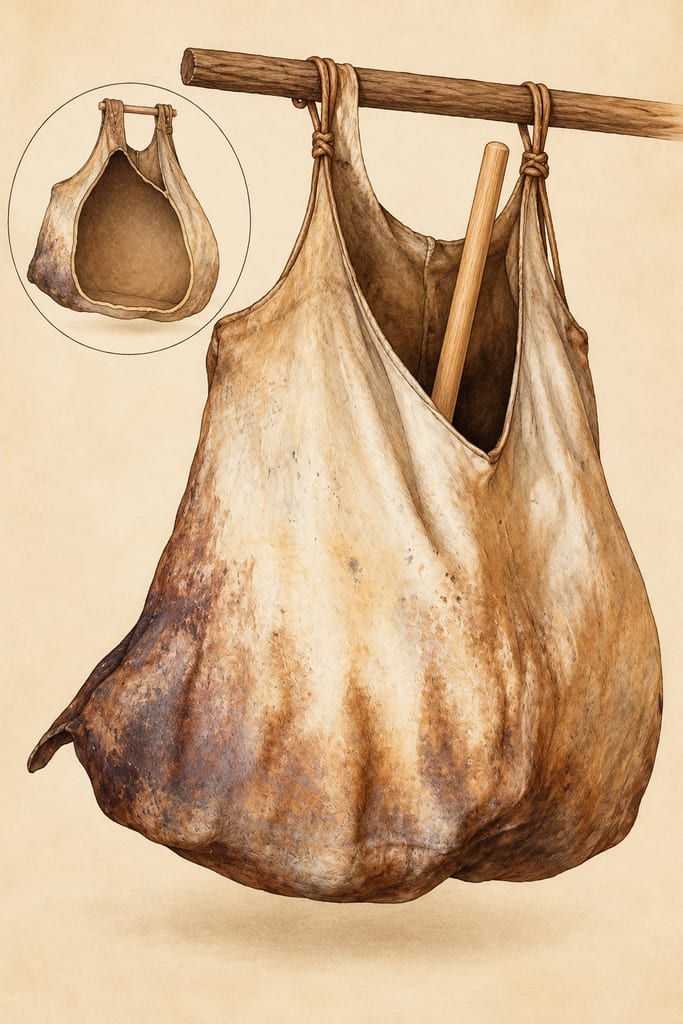
Khokhuur (also transliterated khökhüür) is the flexible cowhide vessel at the centre of a traditional Mongolian way of making airag, fermented mare’s milk. The heritage record treats it as a distinct piece of equipment alongside the buluur, a wooden churning paddle, and the khovoo, a kibble. Those implements are associated with the process but are not parts of the bag itself.
The Mongolian National Center for Cultural Heritage describes making the vessel from prepared cowhide: the hide is soaked, its filament removed, then wind-dried and smoked until it becomes flexible leather. The inventory describes a mouth, neck, corner, body and cords. This is a soft-sided hide container, not a rigid jar or a sausage casing. The source does not provide a universal pattern, dimensions or seam layout, so those details should not be treated as fixed.
UNESCO describes the khokhuur holding mare’s milk while it is repeatedly churned with a starter retained in the vessel. The entry names the buluur as the paddle used for this work and records more than 500 churns in the basic method it describes. It presents the bag and the making practice together: the vessel is part of a living household and herding tradition, not just a generic container for dairy.
The hide forms a flexible enclosure around the liquid, while the separate paddle moves the contents. The sources document the use, but do not quantify how the hide affects temperature, oxygen transfer or flavour. Those effects should not be inferred from the material alone.
Mongolia's cultural-heritage inventory gives a capacity range of 40 to 100 litres. The range describes documented khokhuur vessels and should not be read as a specification for every example. It also describes a wooden buluur paddle, confirming that churning is done with a separate tool.
UNESCO records the associated skills as knowledge passed between generations and inscribed the practice on its Representative List in 2019. That is a date of recognition, not a securely established starting date for the bag's shape or use. The inventory names cowhide, flexible leather and cords; it does not establish a standard finished-vessel cleaning or storage procedure. A maker’s instructions are needed for practical care.
UNESCO records the airag-making tradition as intergenerational knowledge and inscribed it in 2019. That inscription date documents recognition, not the invention or earliest date of the vessel.
Country-level sources document khokhuur in Mongolia's airag tradition; they do not identify a single place of origin.
Airag is Mongolia’s fermented mare’s-milk drink, traditionally churned with saved starter in a reusable cowhide khokhuur.
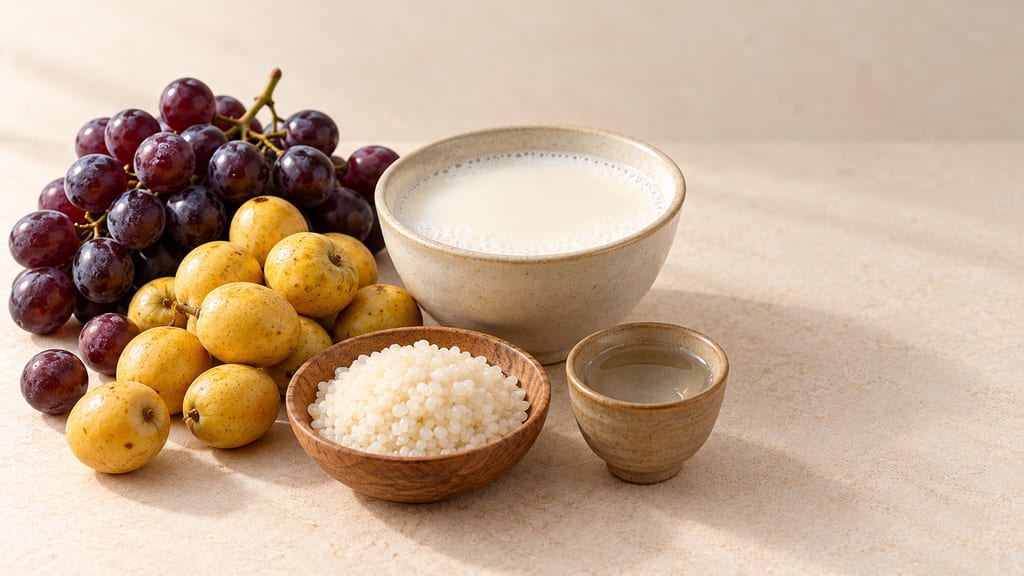
A marula harvest, a rice mash and a bowl of fermented mare’s milk reveal different ways to make alcohol, and different kinds of knowledge behind the drink.
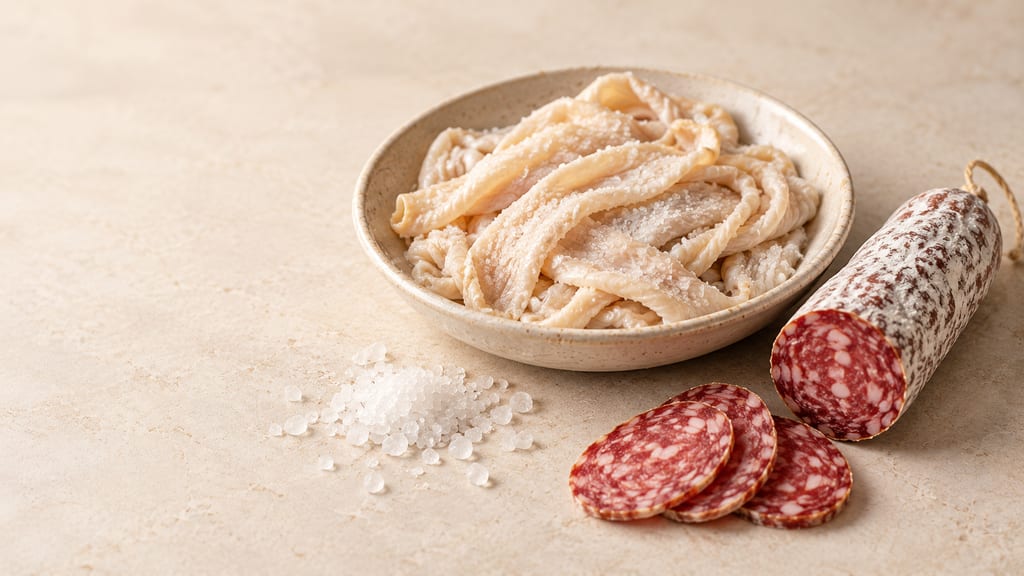
Gut, stomach, bladder, caul and skin have held food for as long as recipes have been written down. Which part of the animal a cook chose still decides a food's shape, how it dries and smokes, and how it is eaten.
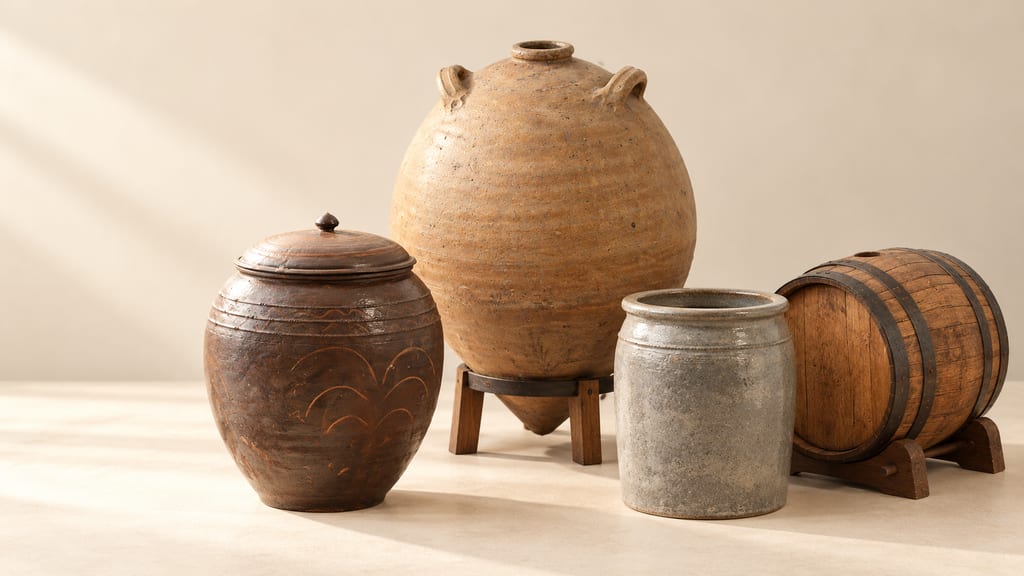
Jars, barrels, skins, leaves, pits and whole rooms decide much of what happens to fermented and cured food. This is how a container works on its contents, and how people in different places chose theirs.
No community contributions have been published for this entry yet.
Sign in to contribute. Published comments and photos are free to read.
UNESCO Intangible Cultural HeritageTraditional use · Craft · Cultural history
Traditional technique of making Airag in Khokhuur and its associated customsThe khokhuur is a cowhide vessel for traditional airag, a fermented mare's-milk beverage.
The related buluur is a paddle and the khovoo a kibble.
The described method repeatedly churns milk in the khokhuur with starter left inside; UNESCO specifies over 500 churns.
The skills are inherited between generations; the element was inscribed in 2019.
Cited in: A vessel made from hide; Used for making airag; Range, craft and continuity
National Center for Cultural Heritage under the Ministry of Culture of Mongolia, via ichLinks MongoliaMaterials · Form · Capacity · Craft
Traditional technique of making Airag in Khokhuur and its associated customsThe vessel is prepared from cowhide soaked to remove filaments, wind-dried and smoked into flexible leather.
The described vessel has a mouth, neck, corner, body and cords.
The inventory reports a 40–100 litre capacity range and distinguishes the wooden buluur paddle.
Cited in: A vessel made from hide; Range, craft and continuity