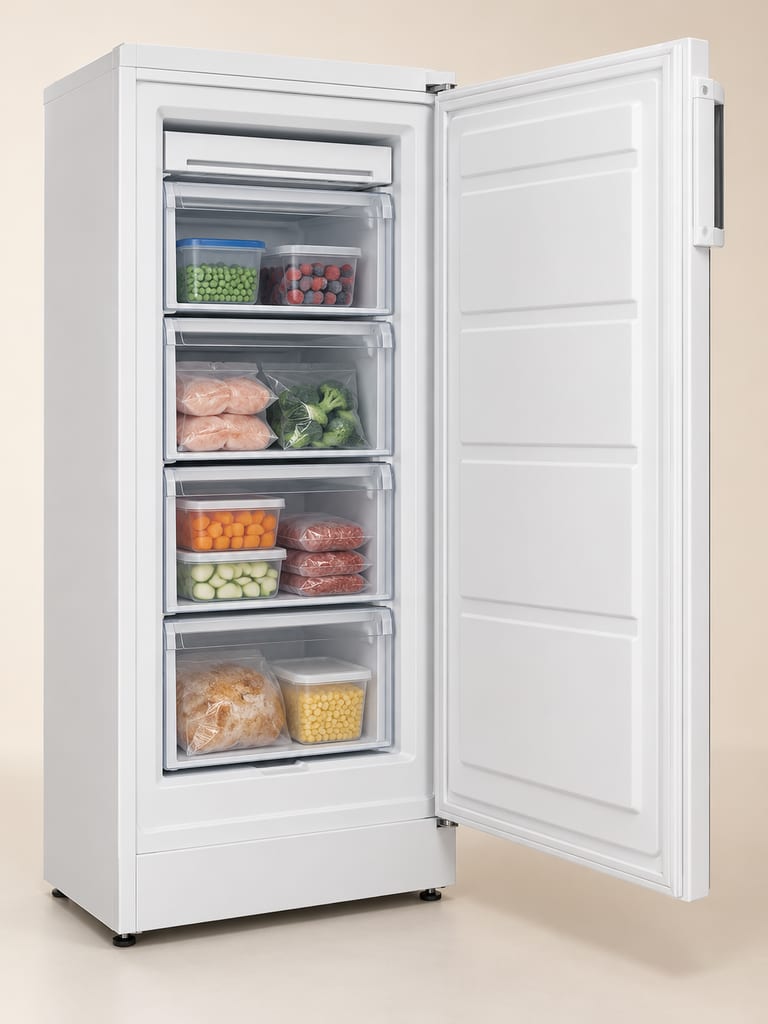
Freezer
A household freezer holds food in a frozen state for storage and selected texture or separation work; its batch-storage role differs from industrial equipment that freezes individual pieces separately.
 FermenteaWhere food goes to change
Modern adaptation
steam juicer juice · juice for jelly and syrup
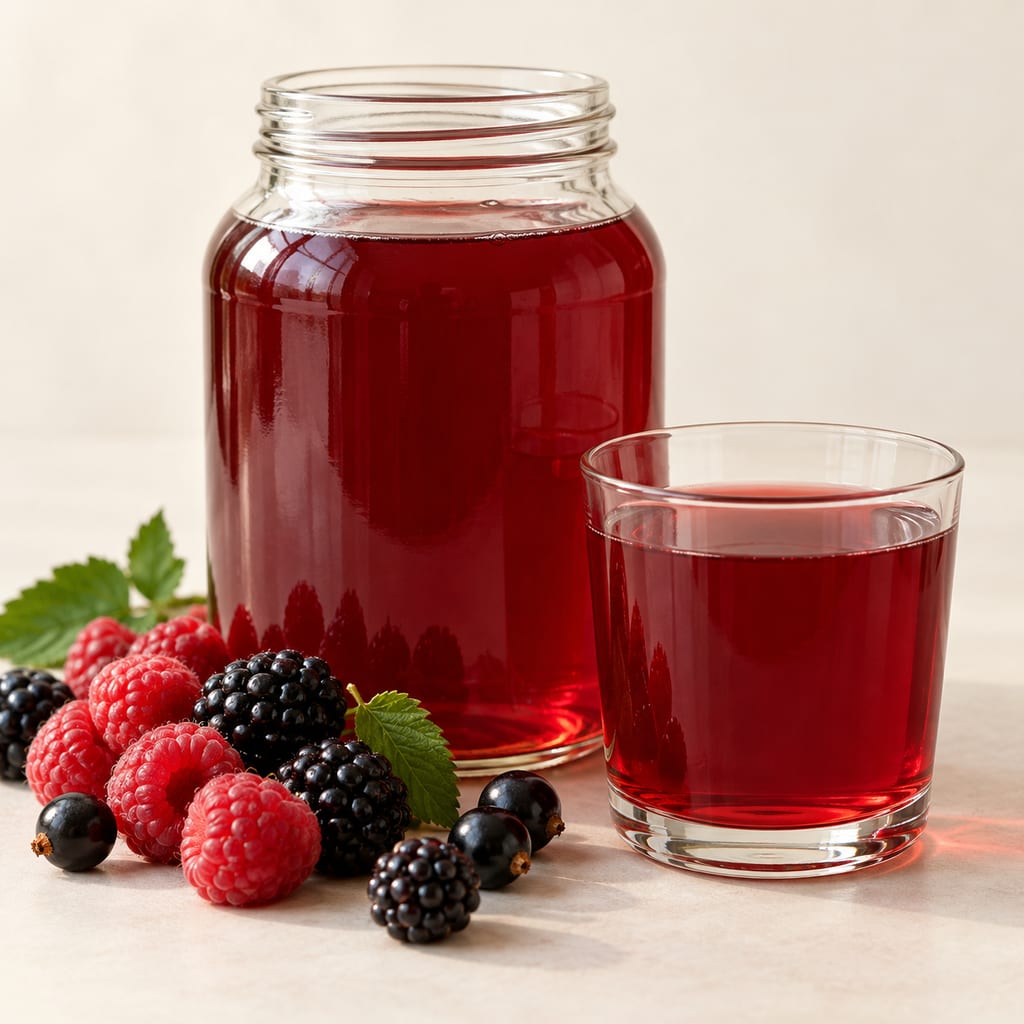
Clear juice that a stacked steam juicer draws out of ripe fruit by steam alone, without crushing it. It is the base for jelly, syrup or cordial and still needs its own keeping step.
A steam juicer is three stacked parts: a water pan on the stove, a collector with a central cone and a clamped hose, and a perforated basket with a lid. Water boils in the bottom pan, steam rises through the fruit in the basket, and the juice runs down the cone into the collector and out through the hose. Oregon State's extension page for its library-of-things steam juicer describes the parts and the basic use, and its videos show the routine with berries.
Because nothing is pressed, the juice comes out clear and the pits and pulp stay in the basket. The juice is hot as it drains, and the juicer maker's instructions govern assembly. The Oregon State video notes that marbles in the bottom pan rattle when the water runs low.
Berries are rinsed and put in the basket; peeling is not needed. The Oregon State demonstration steams for 30 minutes, drains the juice, and steams for another 15 minutes if the fruit still holds juice. Utah State gives half an hour to an hour depending on the load.
Chokecherries get their own rule. Utah State's peer-reviewed fact sheet says to use only ripe fruit with stems and leaves removed and not to crush the pits, because crushed pits can release cyanide. Its stovetop alternative simmers 4 cups of cleaned chokecherries with 1 cup of water until very tender, then drips the mash through a damp jelly bag or several layers of cheesecloth without twisting or pressing. The fact sheet gives about 2 cups of juice per pound.
The juice is an intermediate. It can be used at once for jelly or syrup, refrigerated, or frozen. The sources give no refrigerated keeping time for fresh steam juice, so the cook should use it soon and freeze the rest. Frozen juice is packed with 2-inch headspace in glass or plastic jars.
Shelf storage needs a tested process. Oregon State's juice bulletin gives boiling-water bath times for pints and quarts of fruit juice and for half-gallon jars, by elevation. Steam extraction itself is not a preservation step. An optional berry syrup, from the USDA recipe shown in the Oregon State video, combines 5 cups of the juice with 6¾ cups of sugar and is processed for 10 minutes once the water boils, with the elevation adjustment the source gives.
Current extension material describes the steam juicer as a library-of-things item. No dated history was researched.
Scaling: source batch only
Crushed chokecherry pits can release cyanide, so the pits must stay whole and the stems and leaves must be removed.
Hazard sourceThe juice drains hot from the hose of the steam juicer.
Hazard sourceUse only ripe chokecherries, with leaves and stems removed, and do not crush the pits.
Control sourceProcess juice for shelf storage in a boiling-water bath, using the Oregon State schedule for the jar size and elevation.
Control sourceSteam extraction is not a preservation process.
Shelf-stable juice needs the tested water-bath process; fresh juice is refrigerated or frozen.
Where the documented steam-juicer and chokecherry methods were published; not a claim of origin.
A household freezer holds food in a frozen state for storage and selected texture or separation work; its batch-storage role differs from industrial equipment that freezes individual pieces separately.
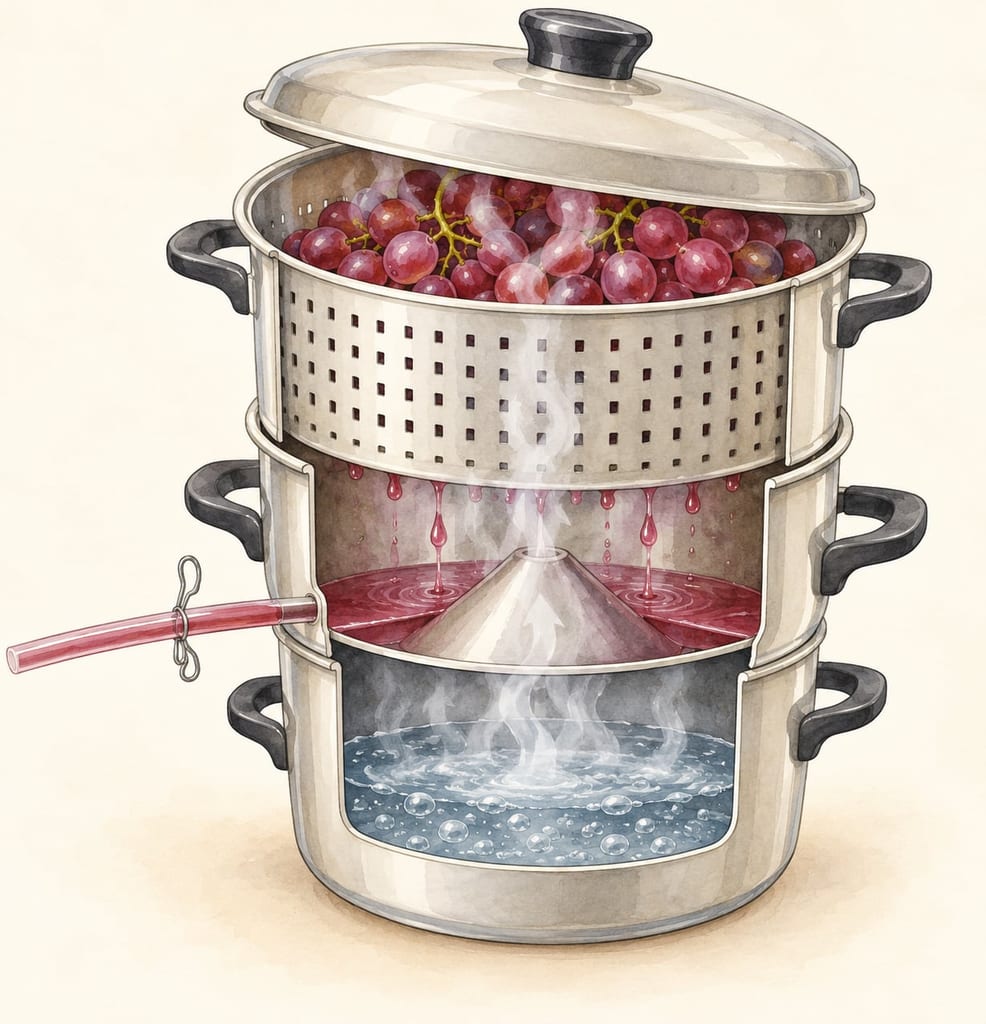
A steam juicer stacks a water pan, juice collector and perforated fruit basket so steam releases juice that drains through an outlet hose. It extracts juice; it does not itself concentrate or preserve it.
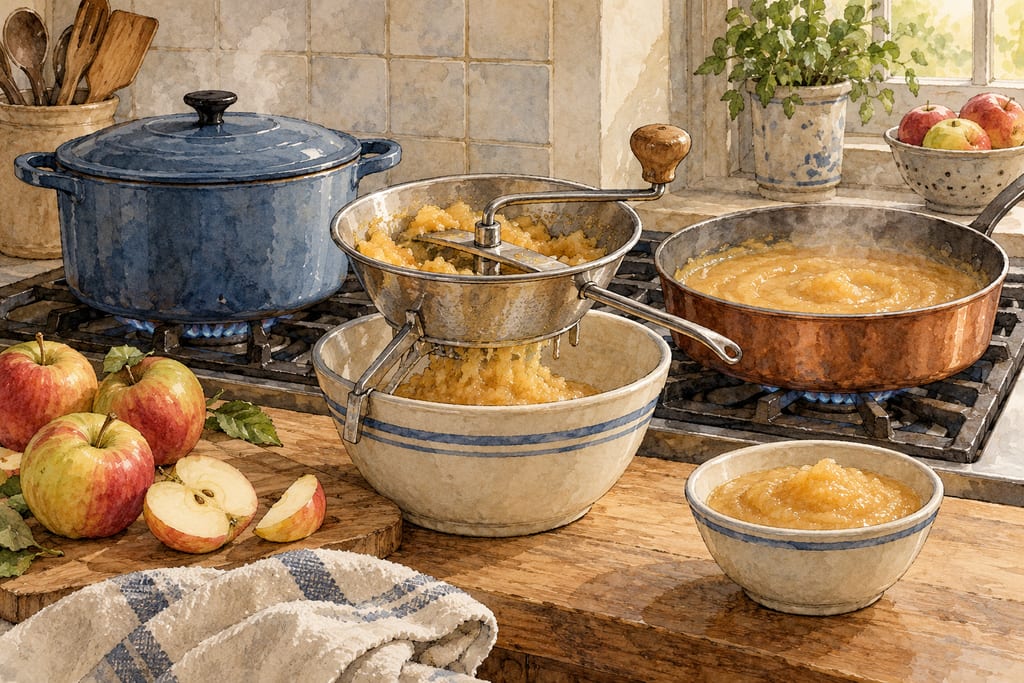
Each appliance does the stage it is good at: a closed pot to soften, a mill or cloth to separate, an open pan or freezer to concentrate or clarify.
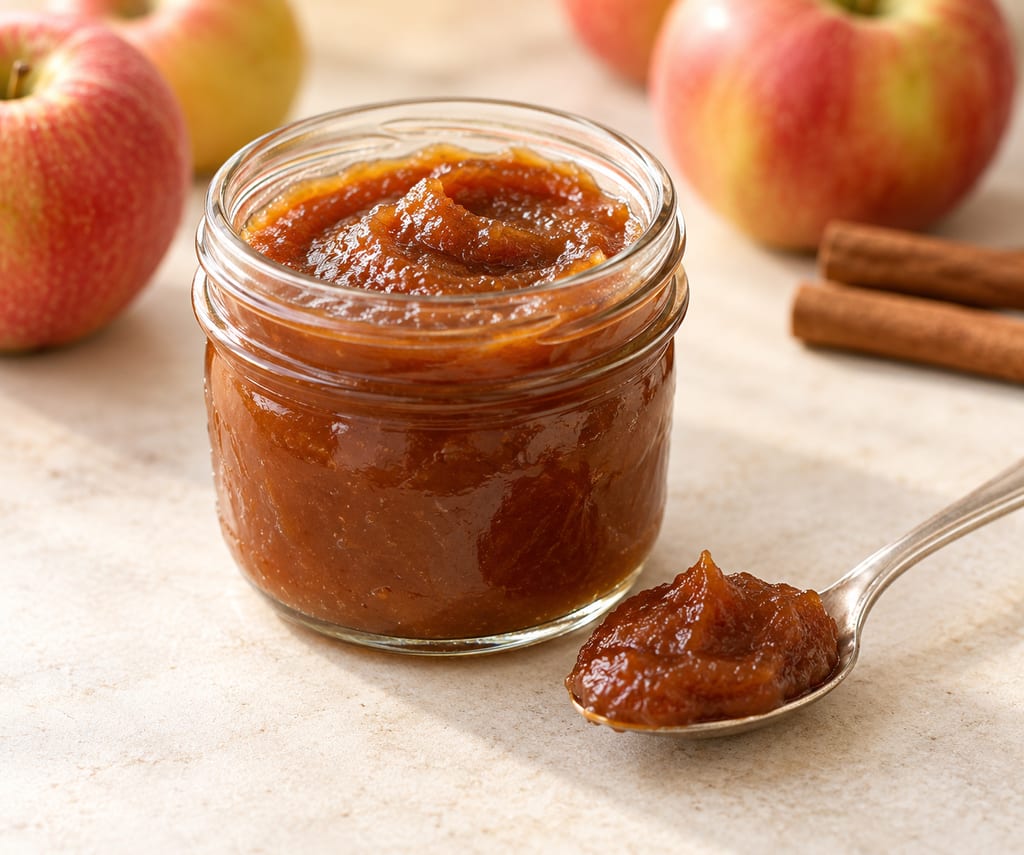
Apple butter is a smooth, concentrated apple preserve cooked with cider, vinegar, two sugars and spices, then hot-filled and processed in a boiling-water canner using the published jar-size and elevation schedule.
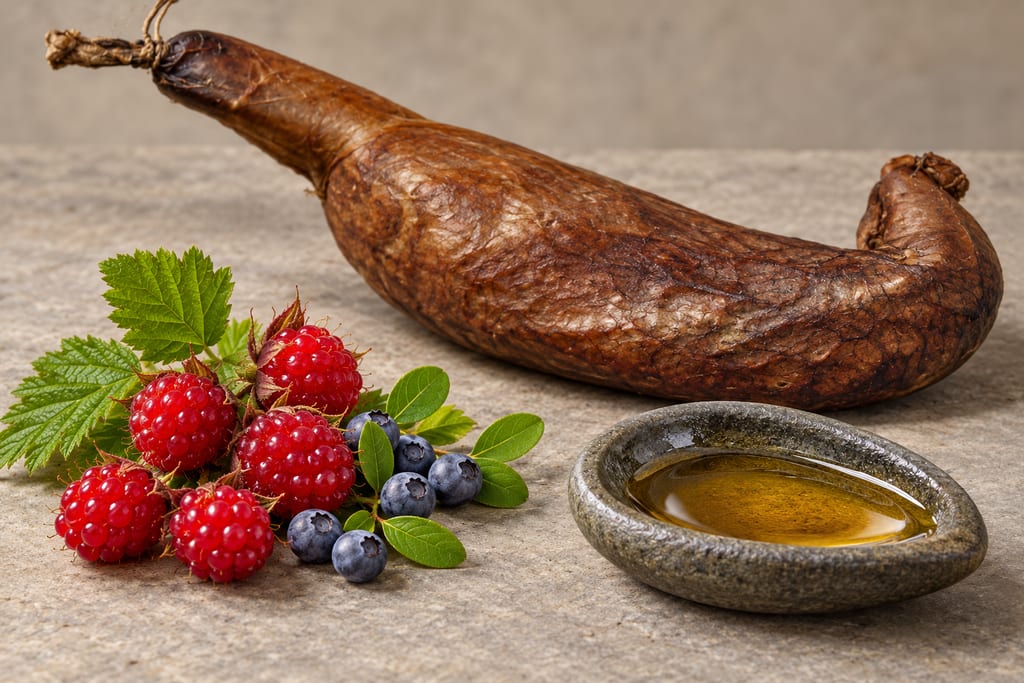
Berries, greens and fish eggs were kept in seal oil by Indigenous Alaskan communities. The oil seals the food from air, and the result depends on preparation and the surrounding conditions.
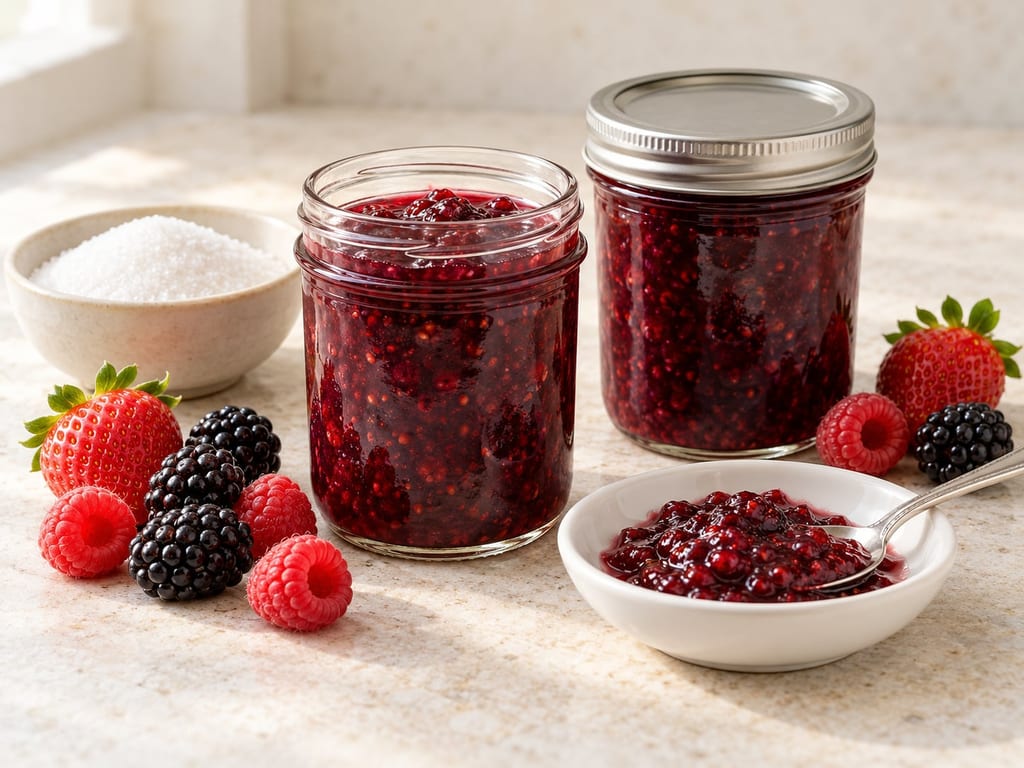
A NCHFP berry jam made without added pectin: crushed berries and sugar are cooked to the desired gel point, hot-filled into sterile half-pint or pint jars, and processed in a boiling-water canner.
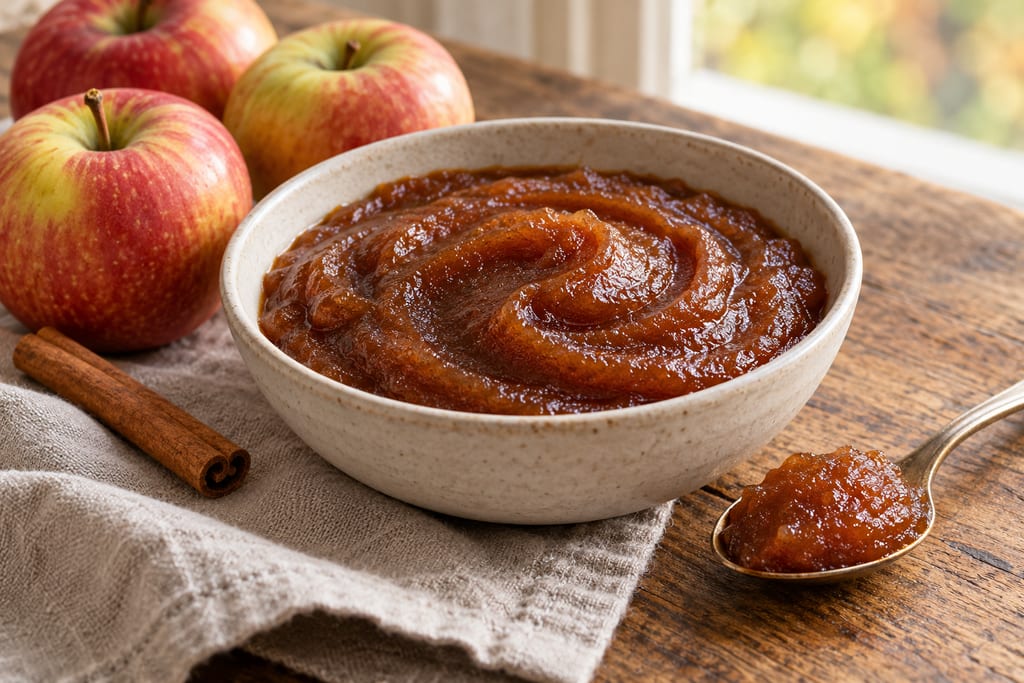
A smooth fruit pulp cooked down with sugar and spice until it holds its shape on a spoon, made by three documented routes in a slow cooker, a microwave or an electric multicooker.
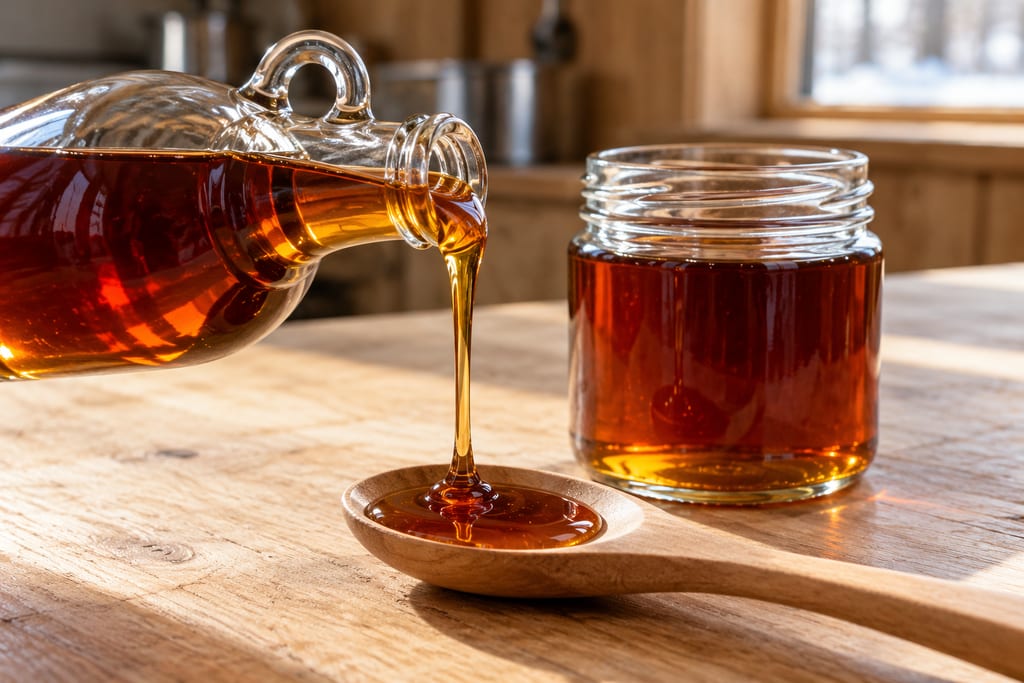
Maple sap of about two percent sugar boiled down in a shallow pan until it reaches syrup density, the sugar concentration the standard defines, then filtered hot and packed hot.
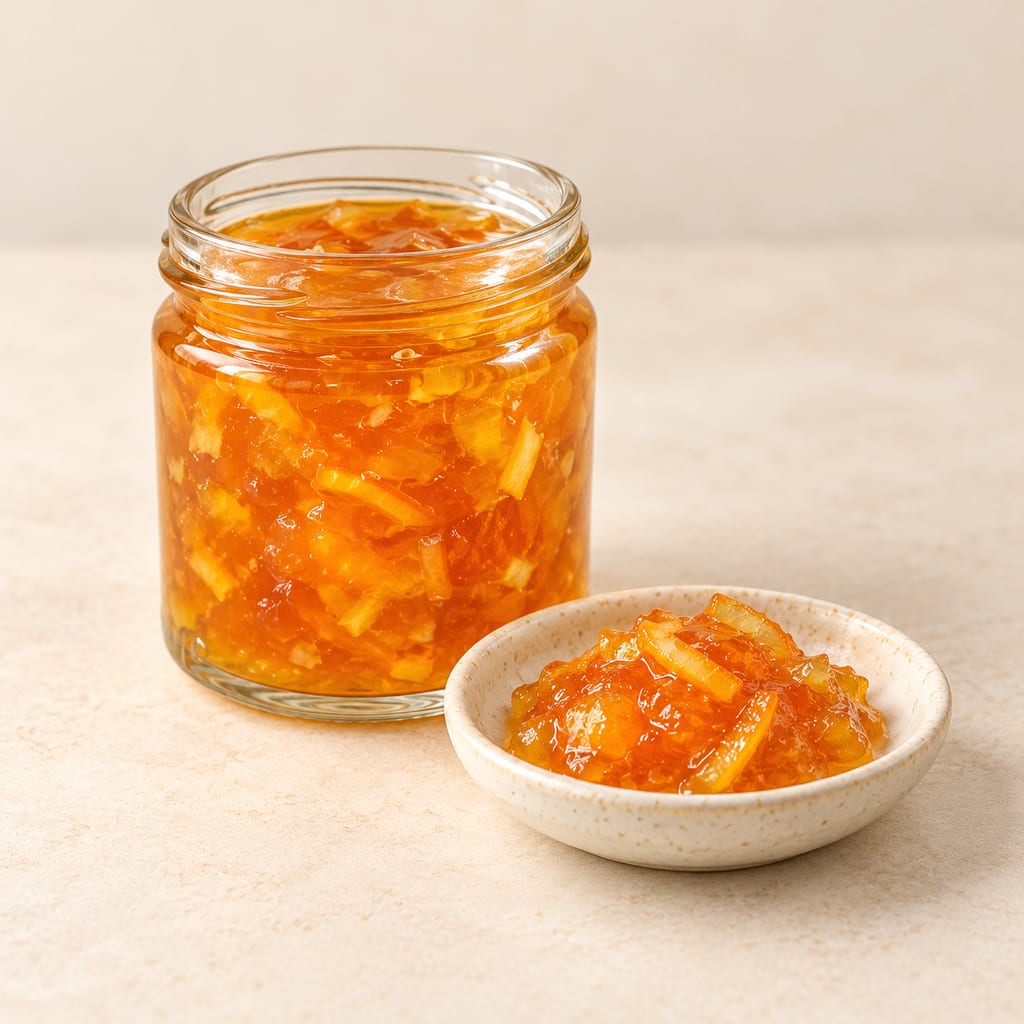
Orange marmalade suspends thin strips of citrus peel in a sweet gel. This navel-orange batch includes pulp and lemon and is preserved in a boiling-water canner.
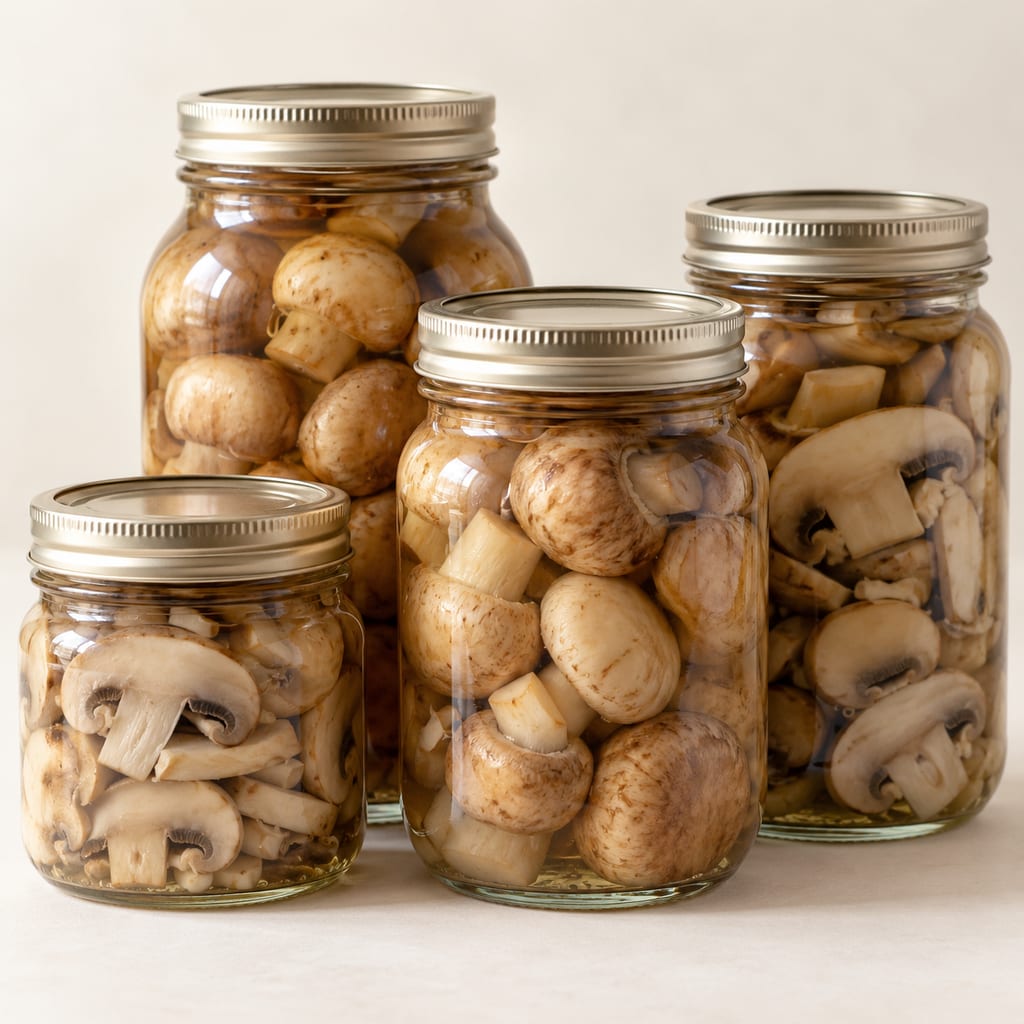
Whole or sliced domestic mushrooms packed hot in jars with fresh water and processed in a pressure canner, the tested home method for a low-acid vegetable.
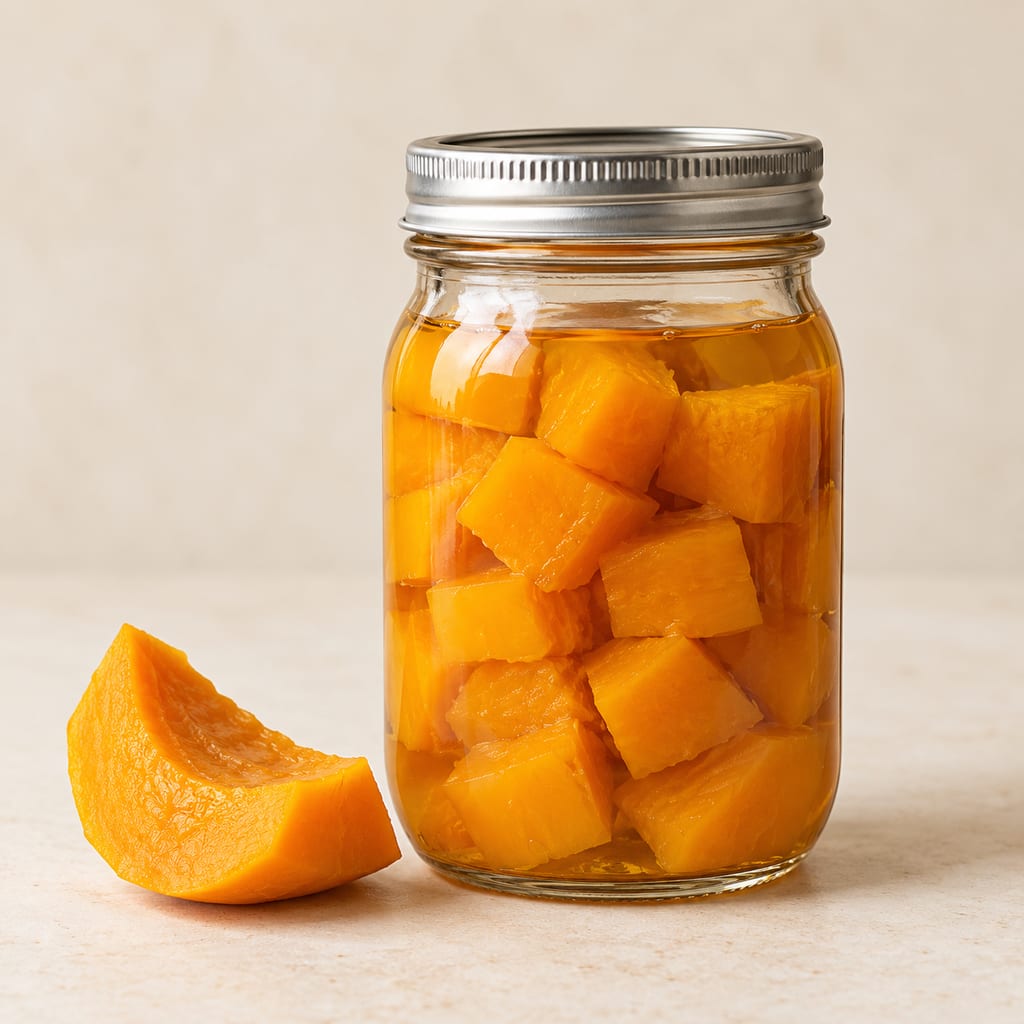
Plain pumpkin cubes hot-packed in water and pressure-canned for later cooking. The pieces stay intact during canning; mash them only after opening.

Aam panna is a tart Indian summer drink made by cooking unripe green mango until its flesh softens, then blending the pulp with sweetener, salt and spices and diluting it with water.
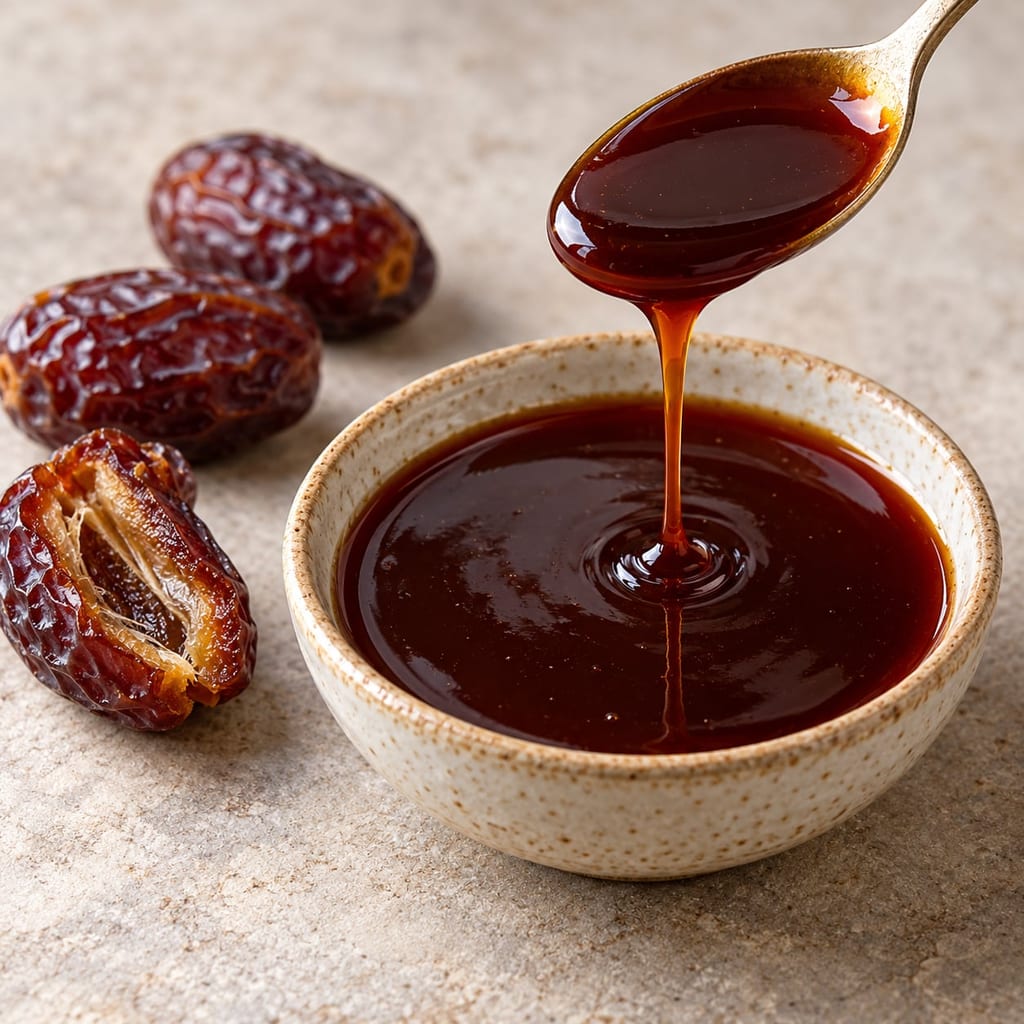
A thick, dark, very sweet syrup made from dates, known as dibs, rub, silan or date molasses. It sweetens tahini and desserts and glazes or sauces savoury dishes across the Middle East and North Africa.
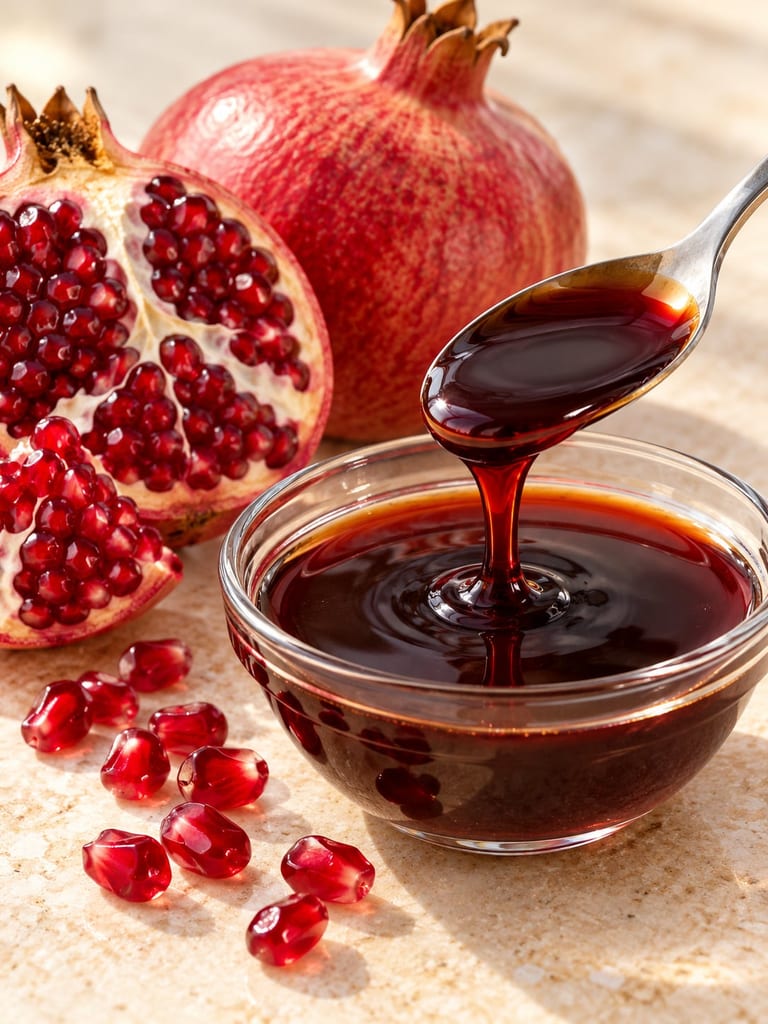
The registered Hatay method presses pomegranate arils and slowly concentrates the strained juice. Its 100 kg source batch and experienced-producer endpoint are retained; no home-scale time or shelf-life is inferred.
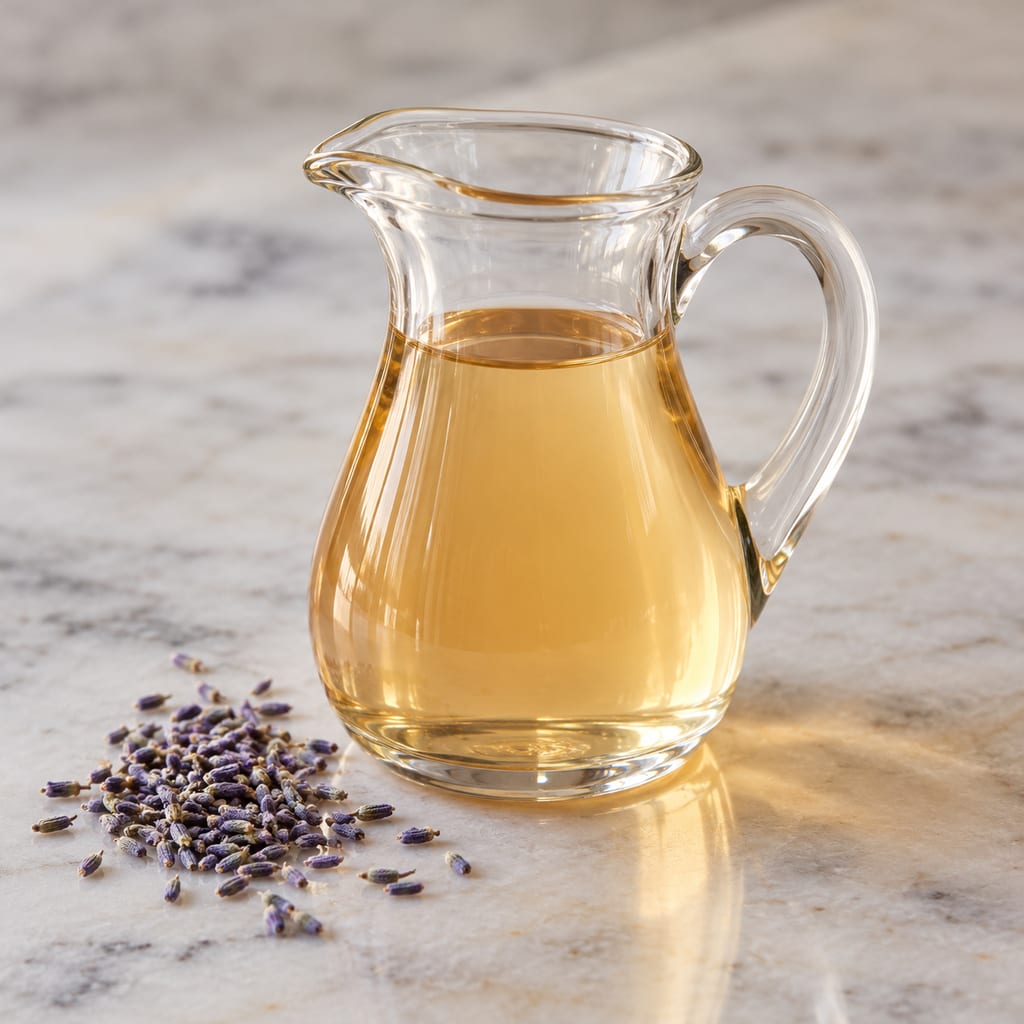
Sugar syrups flavoured by holding botanicals, sugar and water in sealed bags in a 135°F (57°C) water bath for an hour, then cooling and refrigerating; several can share one bath.
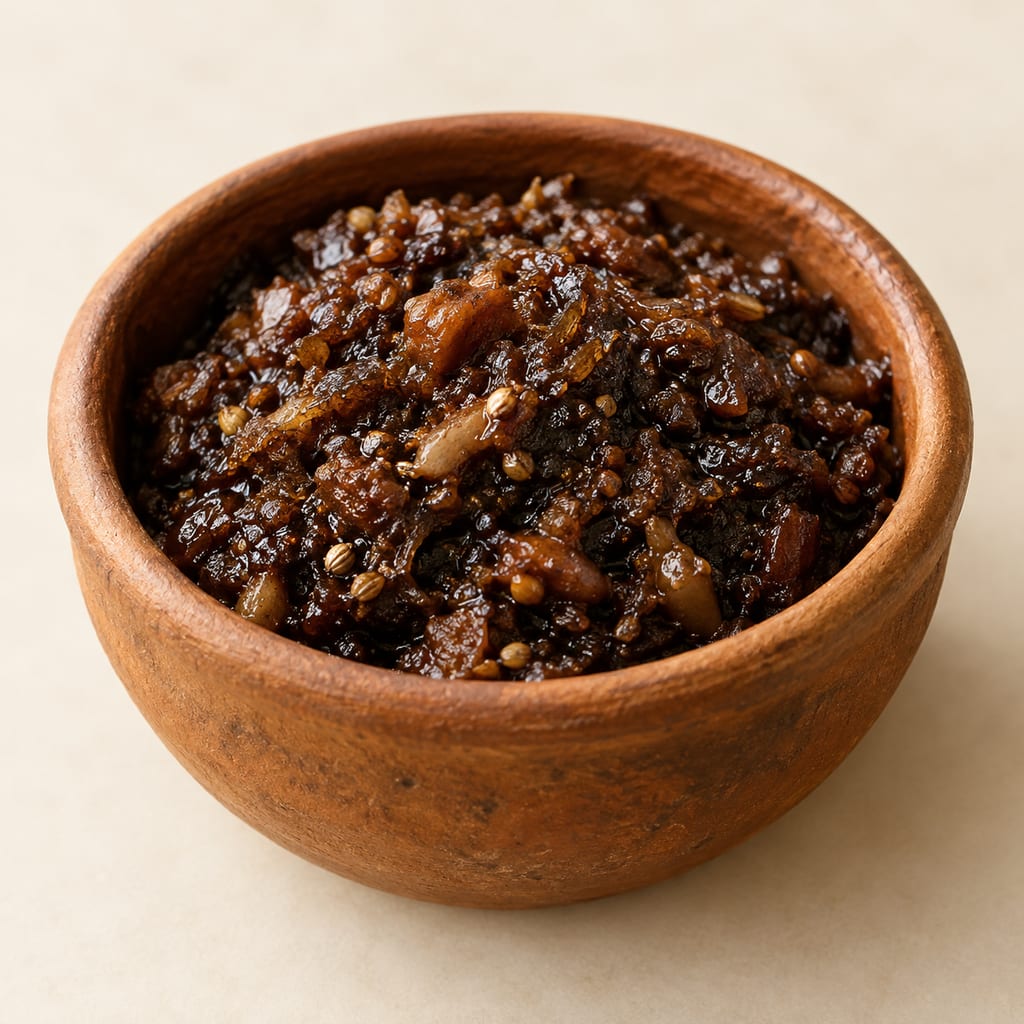
Must murri was a medieval Andalusi and North African seasoning of baked wheat dough, grape must and aromatics, cooked slowly in an oven.
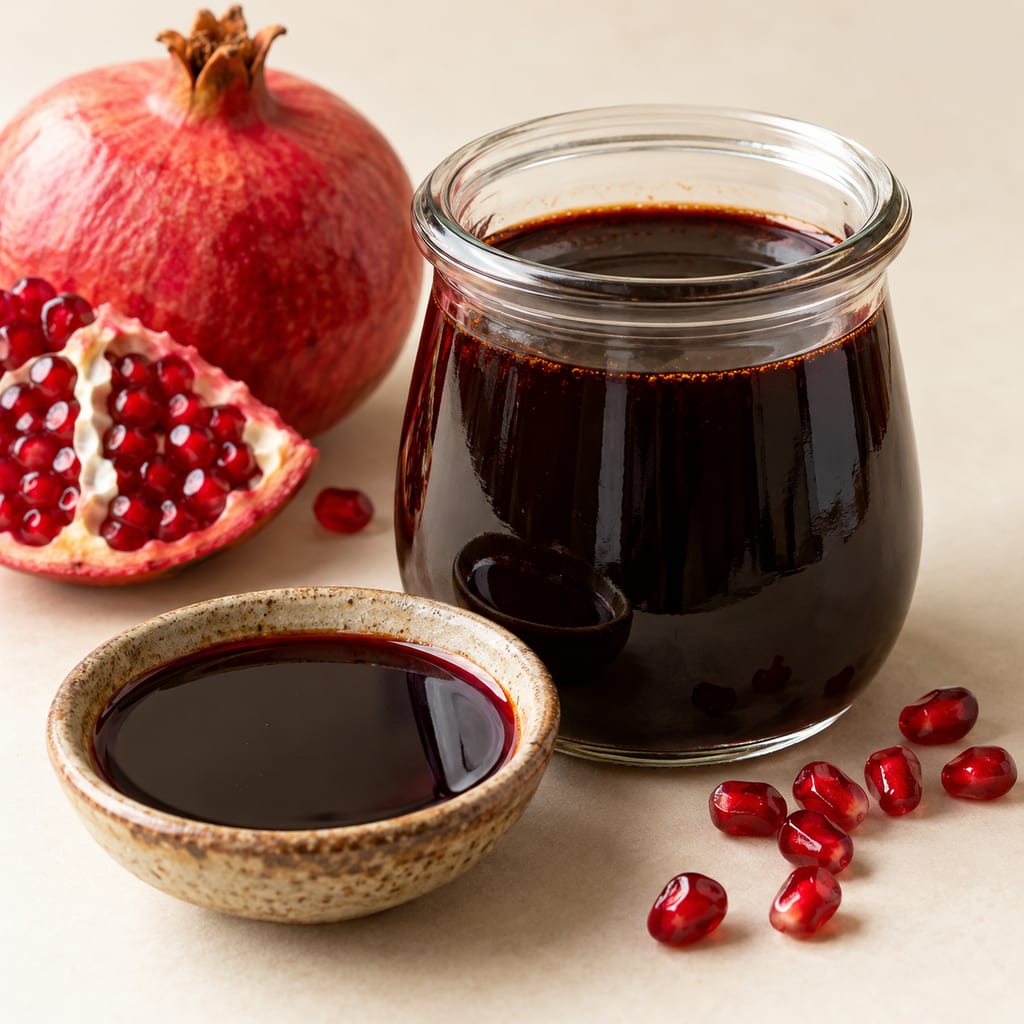
A thick, sour condiment made by reducing pomegranate juice over heat until it is concentrated, used across the Middle East, the South Caucasus and the Balkans in dressings, stews and grilled dishes.
No community contributions have been published for this entry yet.
Sign in to contribute. Published comments and photos are free to read.
Oregon State University Extension Service, Home Food Safety and Preservation Program; first video by Utah State University ExtensionMethod · Equipment
Steam juicer (Library of Things), with the videos 'How to Use a Steam Juicer' and 'Water Bath Canning: Fruit Syrup'Steam juicer parts and use; the berry steps (steam 30 minutes, then 15 more if needed); the berry syrup recipe
Cited in: Juice without crushing; Steaming the fruit; Keeping the juice
Utah State University Extension (peer-reviewed fact sheet, 20 May 2026)Method · Safety
Preserving the Harvest: How to Preserve ChokecherriesChokecherry pit hazard; stovetop alternative; about 2 cups of juice per pound
Cited in: Steaming the fruit
Oregon State University Extension Service (revised July 2024)Method · Storage
Preserving foods: Fruit juice and apple cider (SP 50-455)Juice canning and freezing; drip extraction temperatures of 185 to 210 °F
Cited in: Keeping the juice