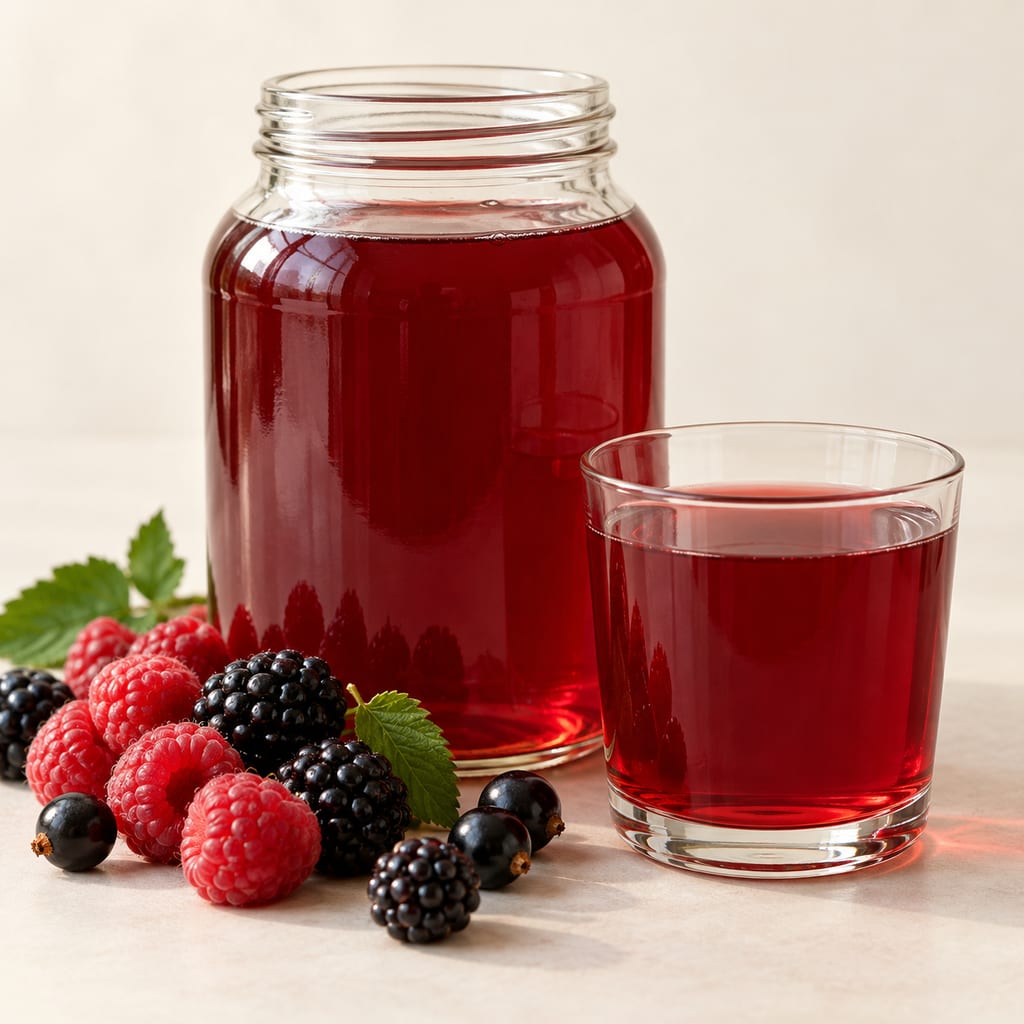
Steam-extracted fruit juice
Clear juice that a stacked steam juicer draws out of ripe fruit by steam alone, without crushing it. It is the base for jelly, syrup or cordial and still needs its own keeping step.
 FermenteaWhere food goes to change
Equipment · Steam juicers
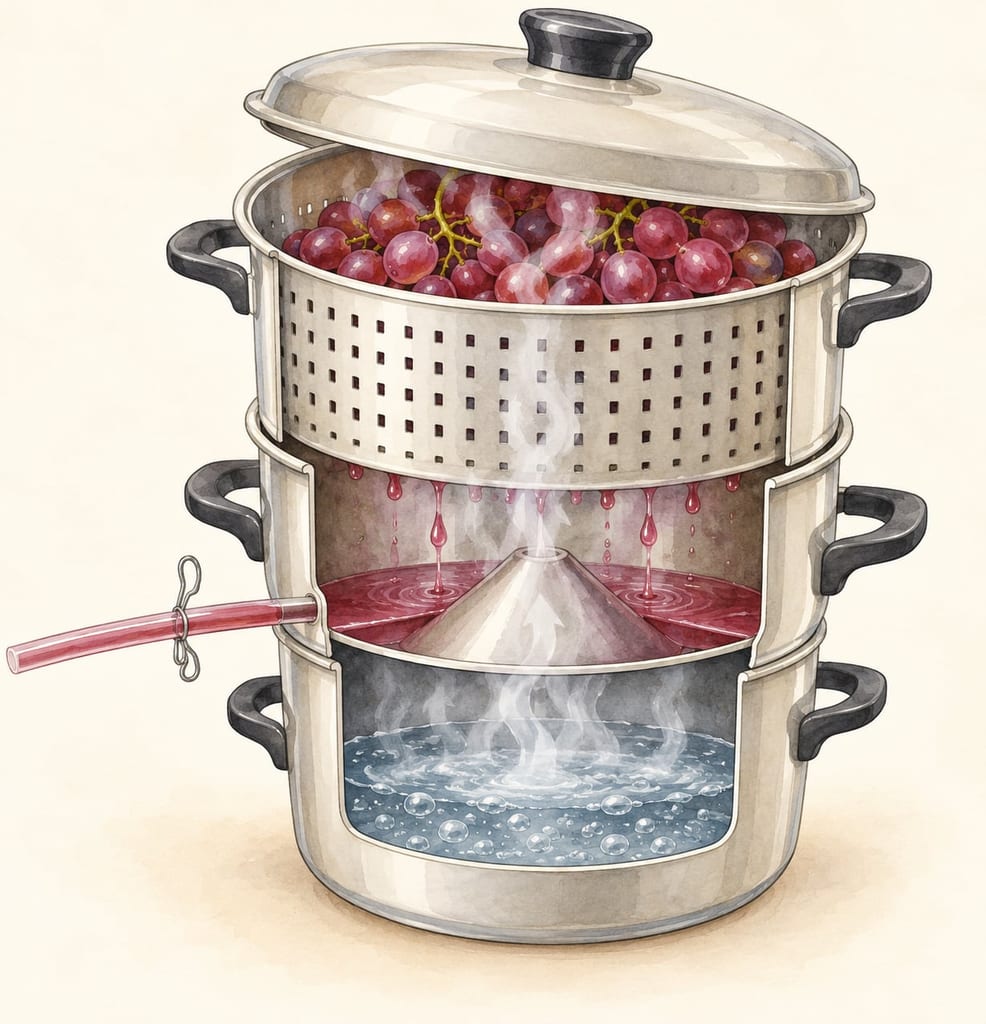
A steam juicer stacks a water pan, juice collector and perforated fruit basket so steam releases juice that drains through an outlet hose. It extracts juice; it does not itself concentrate or preserve it.
The steam juicer is a manufactured stovetop appliance documented in contemporary United States food-preservation teaching. Oregon State University Extension includes it in library lending and staff training, while an Oregon page hosts a demonstration by Utah State University Extension. A Wikimedia Commons photograph from 2012 records one Kochstar 766 model. These examples establish modern use, not invention: the consulted material gives no inventor, first date, or exclusive regional origin. Designs and availability vary by model and location.
The working stack has three functional sections. Water heats in a pan at the bottom. Above it, a collector receives the juice and carries an outlet hose closed by a clamp. The perforated basket sits at the top with the fruit under a lid. A cone in the collector gives steam a path upward into the fruit. As the fruit heats, released liquid drains back down into the collector and can be directed through the hose into a container. The upper basket retains fruit and solids; unlike a press, this arrangement does not extract juice by squeezing a packed mass. The reference photograph shows one manufacturer's particular proportions and materials, not a standard to copy across all models.
Grapes, berries, apples, pears and tomatoes are among the fruits and vegetables named for steam juicing by Extension educators. The basket keeps produce together while steam softens it and liquid drains into the reservoir; the demonstration notes that peeling is not necessary for the fruit examples it shows. Different batches and models behave differently, so the maker's directions govern loading and run time. The collected juice can be served or become a starting ingredient for jelly or syrup. Those later foods require their own recipe: the juicer does not add sugar or pectin, boil juice down, or establish a shelf-stable seal. A separate tested process is needed when preserving juice or a preserve for room-temperature storage.
The appliance is a set of vessels rather than a complete preservation system. OSU and USU instructions caution that models differ; the exact assembly, water level, loading and handling should follow the individual manufacturer's manual. The sources do not establish universal materials, capacity, dimensions or a common outlet design. One fruit-specific example shows why the equipment cannot replace preparation knowledge: Utah State Extension advises using ripe chokecherry juice or pulp, removing leaves and stems, and avoiding crushed pits. The steam juicer can release juice without grinding the pits, but the user still has to follow the fruit-specific guidance and a tested preservation recipe. Boiling water, escaping steam and drained juice are hot enough to scald, so take care when opening the stack and handling the hose or collector.
The consulted sources document contemporary steam juicers and extension teaching but do not establish an earliest attestation, inventor or place of origin.
The juicer boils water and releases hot steam and juice; hot liquids and steam can scald.
Hazard sourceAssemble and operate the exact model according to its manufacturer's instructions; models differ.
Control sourceHandle the hose, collector and drained juice as hot during and after extraction.
Control sourceSteam juicing extracts juice but is not by itself a validated shelf-stable preservation process. Use a tested preservation recipe and its complete process.
A steam juicer extracts juice but does not concentrate it; further reduction or recipe ingredients are separate processes.
Source →Juice extraction is not a validated canning process. Shelf-stable juice or preserves require a tested recipe and its processing instructions.
Source →For chokecherries, fruit preparation must avoid crushing pits and must exclude leaves and stems; this is fruit-specific guidance, not a general design feature of the juicer.
Source →Country-level modern documentation from Oregon and Utah Extension; no birthplace or exclusive regional tradition is claimed.
Clear juice that a stacked steam juicer draws out of ripe fruit by steam alone, without crushing it. It is the base for jelly, syrup or cordial and still needs its own keeping step.
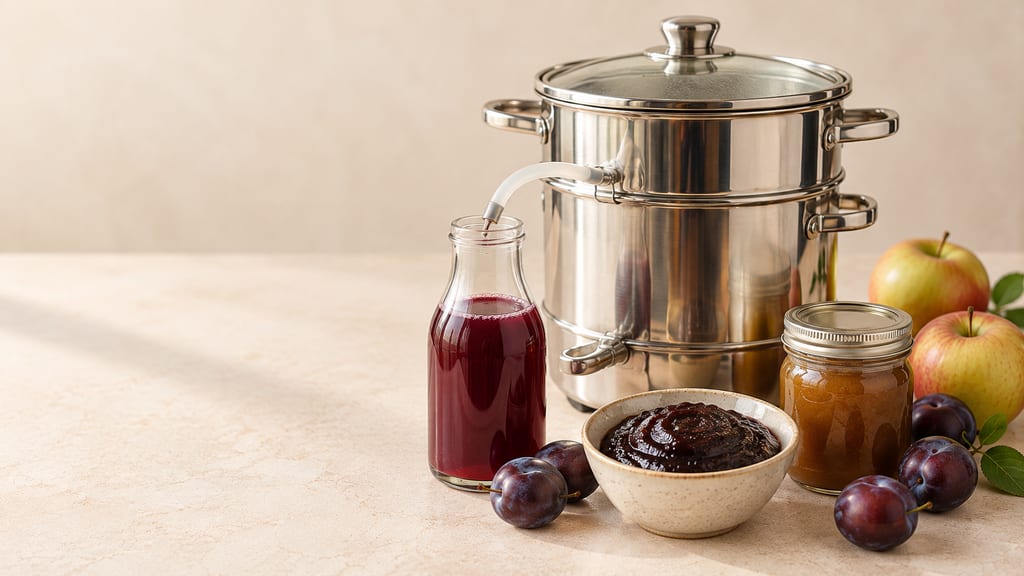
Fruit becomes juice, butter, paste or syrup in two moves: get the liquid out, then drive the water off. Steam juicers, slow cookers, microwaves and freezers each do one of those moves well, and none does both.
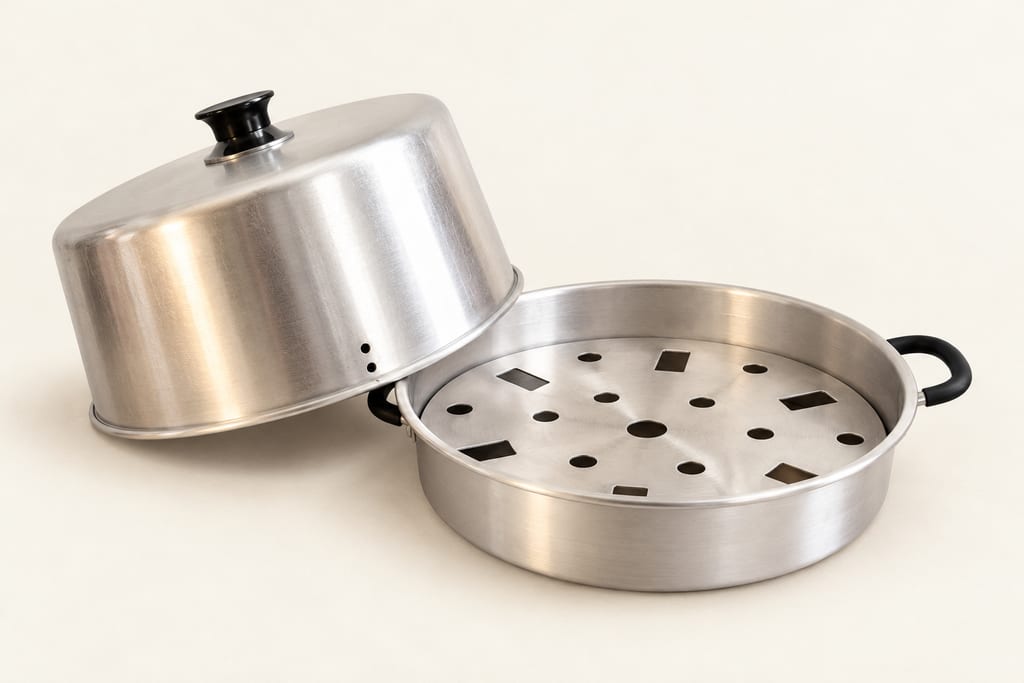
A shallow rack base and tall vented cover process jars in atmospheric steam. NCHFP limits the method to tested high-acid or acidified recipes requiring no more than 45 minutes, including altitude adjustment; this is not pressure canning.
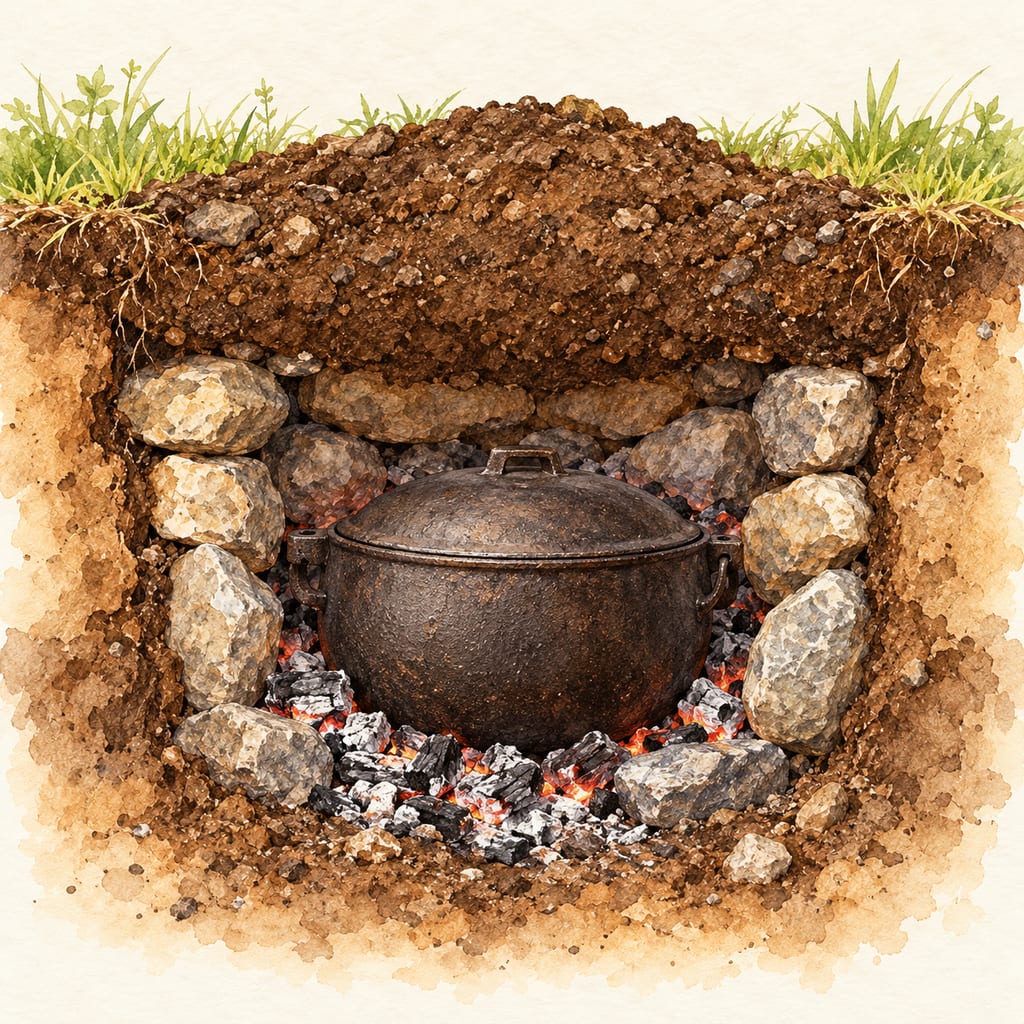
A covered iron vessel used in Maine bean-hole cooking, set into a preheated stone-lined pit and buried for a slow cook.
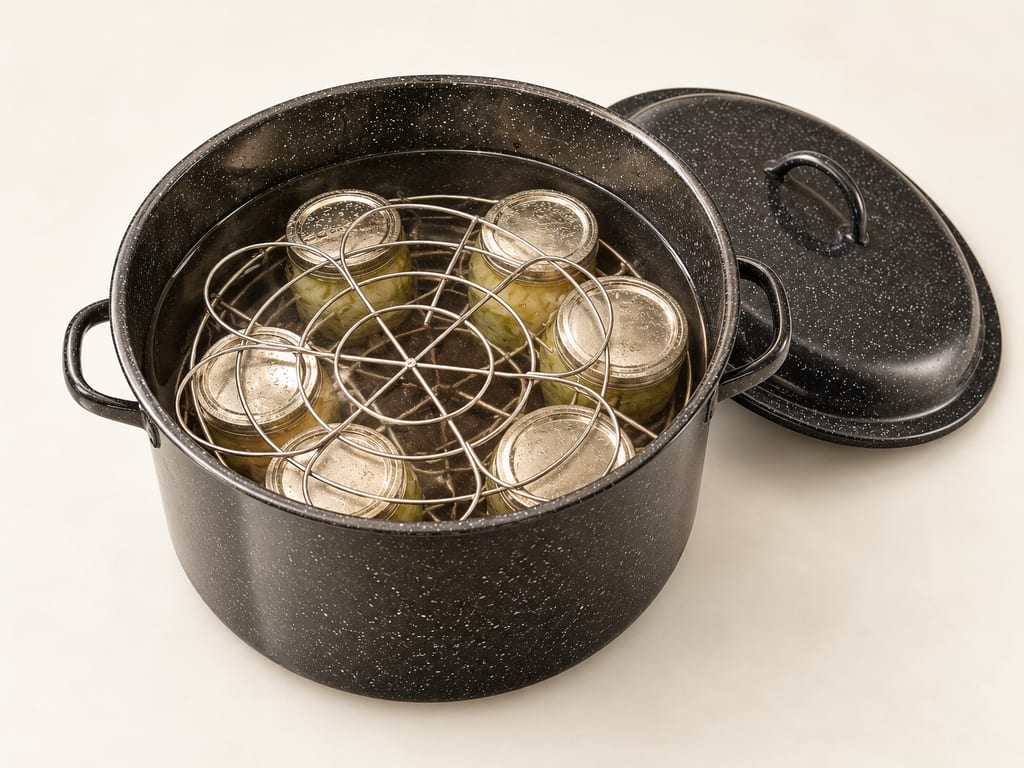
A deep, lidded pot with a removable rack processes jars beneath boiling water. It is intended for foods with tested boiling-water processes; low-acid foods require pressure canning.
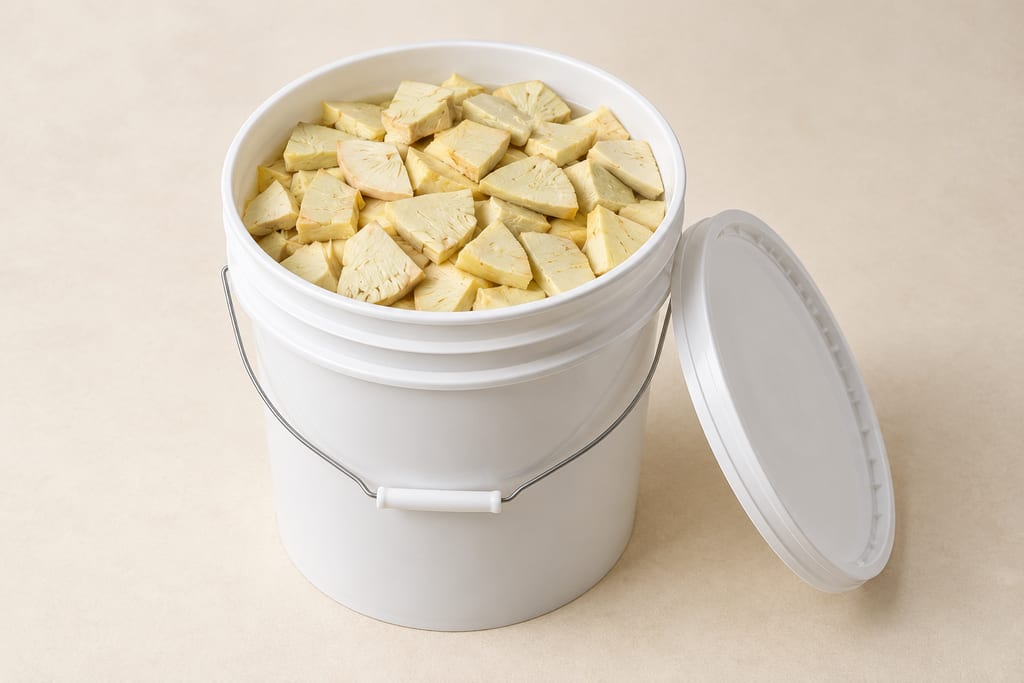
A contemporary household enclosure for preparing mā, fermented breadfruit, documented in Hawai‘i using food-safe buckets, coolers or large sealable bags in place of a pit.
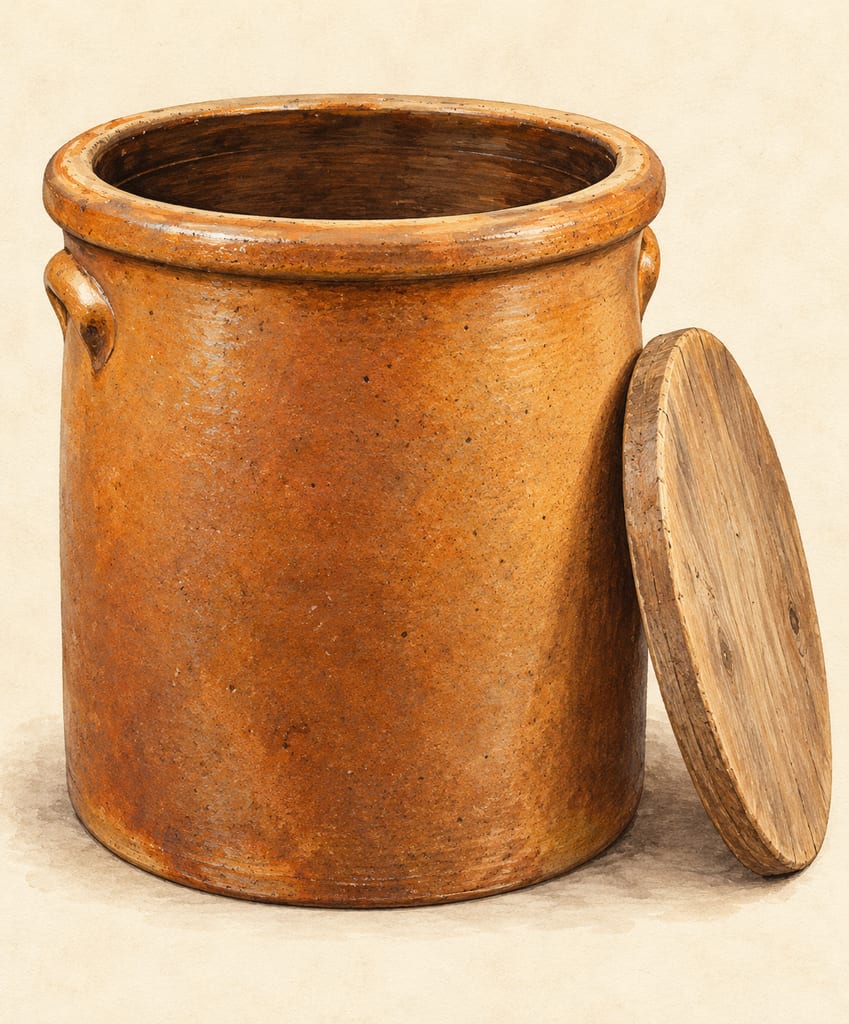
Containers for salt-curing fish and meat range from broad-mouthed stoneware crocks to tubs, cut-down barrels and chests. Their material, depth, cover and ability to retain or drain liquid shape how the food sits in salt or brine.
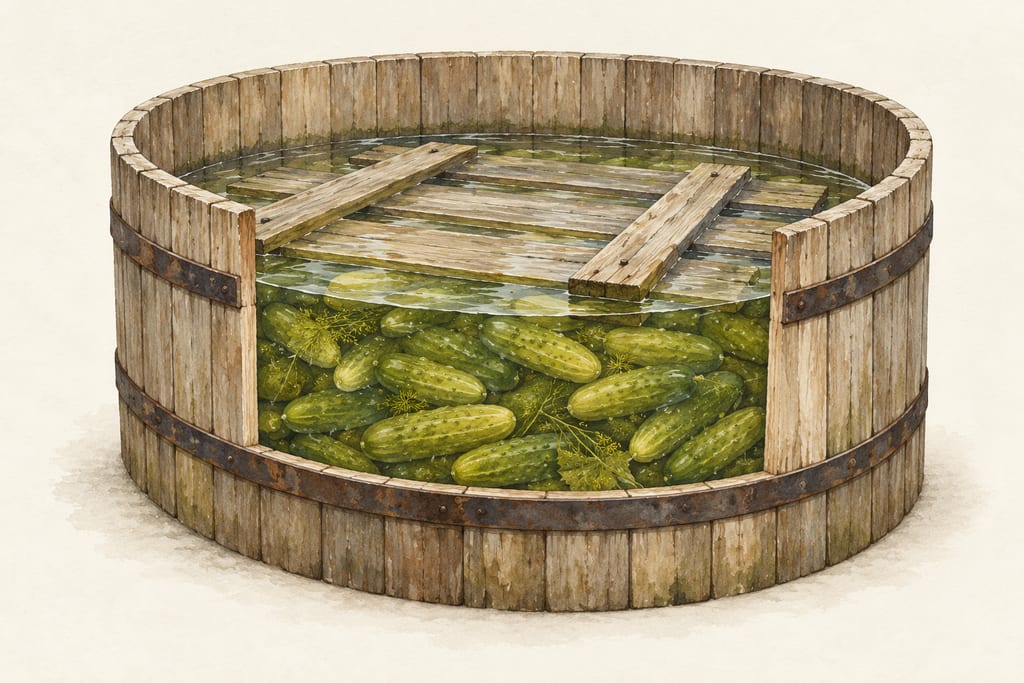
A bulk brining vat holds cucumbers and other vegetables under cover brine for fermentation and storage. North Carolina sources document a mid-century wooden tank yard and later outdoor fiberglass systems.
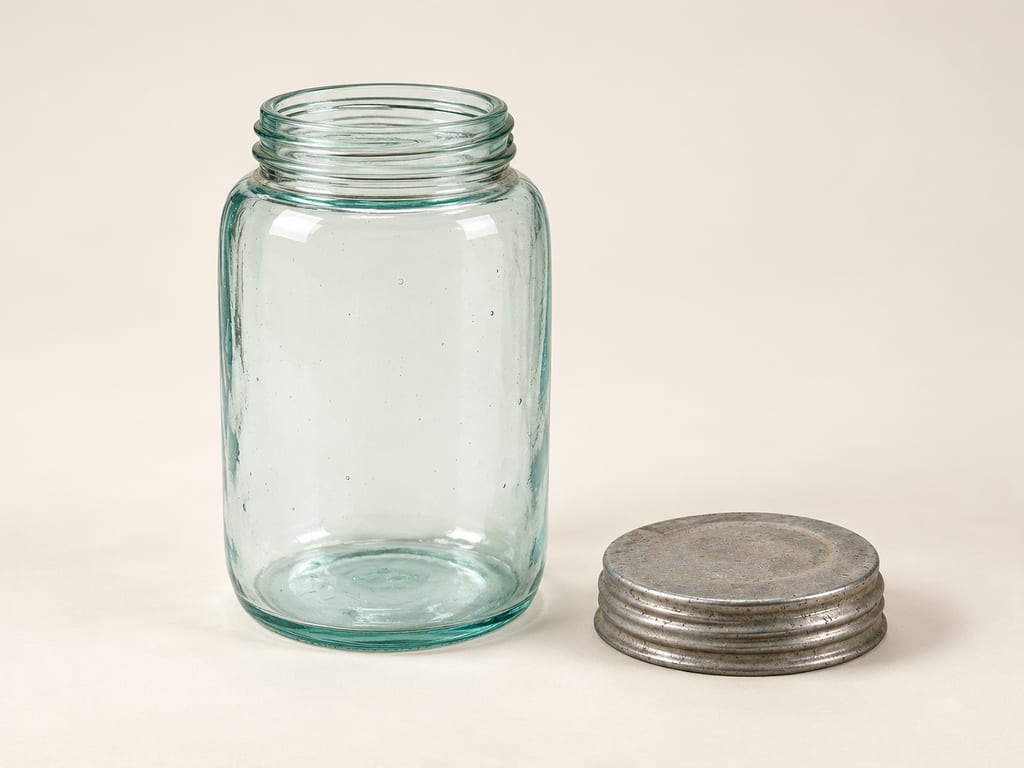
Threaded, heat-processing jars hold food and a fitted lid during a tested canning process; jar size and process belong to the specific recipe.
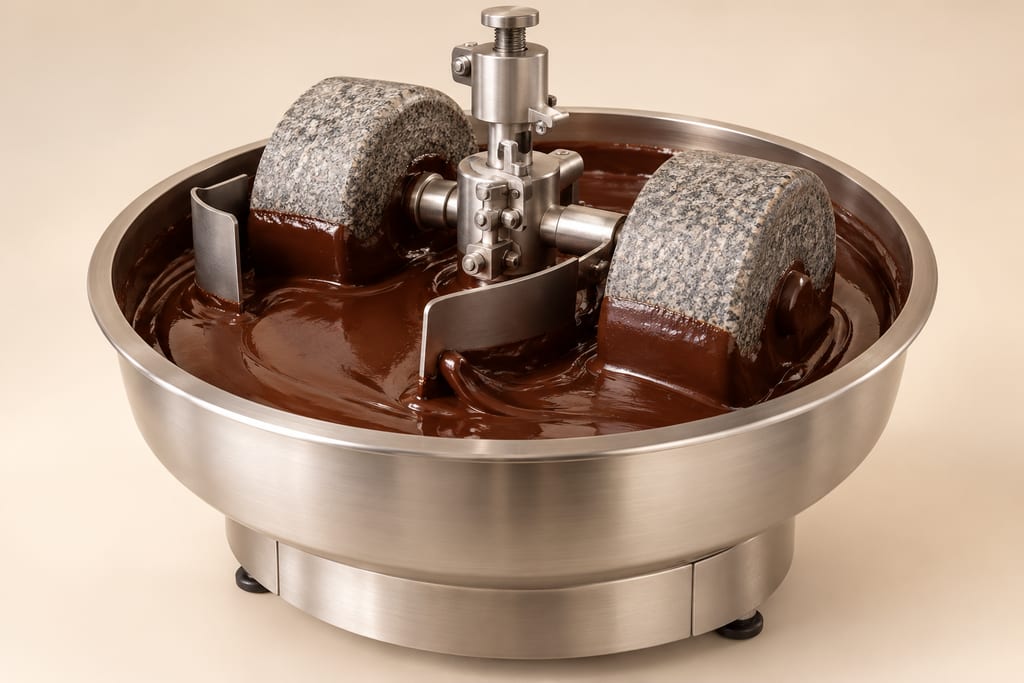
A chocolate refiner or melanger uses powered rotation and stone rollers to refine cocoa mass. Some models also process nut and seed pastes; design, material and operating limits vary.

Soft, spreadable Calabrian pork sausage made with a great deal of red chilli and fatty pork, stuffed into natural casings, sometimes smoked and matured while staying soft.

A way to add independent temperature logging to an existing food dehydrator without changing its built-in controls or protections. It is a monitoring method, not a rewiring plan.

Pleurotus cystidiosus is the abalone mushroom, a cultivated oyster-type fungus with dark brown caps that grows more slowly and is more demanding than other Pleurotus species.

A dark, balanced vinegar from Emilia-Romagna made by combining cooked or concentrated grape must with wine vinegar, then acetifying and refining it in wood under a protected specification.

A living dairy inoculum that starts controlled cream fermentation, developing acidity and aroma before sour cream or cultured butter is finished.

A small electric incubator holds jars at a selected temperature for yogurt and other documented warm food preparations. Controls, capacity and vessel arrangement vary by model.

Adygean salt is a seasoned table salt associated with Adygea and the wider North Caucasian culinary tradition. Salt is blended with garlic and a variable selection of herbs and spices; the exact mix depends on the named style and maker.

The African Caesar-group mushroom, Amanita masasiensis, is a wild ectomycorrhizal species of central and southern African woodlands, eaten locally. The genus contains deadly poisonous species, so identification needs care.
No community contributions have been published for this entry yet.
Sign in to contribute. Published comments and photos are free to read.
Oregon State University Extension Service; includes a Utah State University Extension demonstrationForm · Method · Uses · Safety
Steam juicerThe appliance is assembled from a water pan, a juice-collecting section with a cone, hose and clamp, and a strainer basket with a lid.
Steam rises through the collector cone into fruit; released juice drains into the collector and exits through the hose.
Grapes, berries, apples, pears, tomatoes and other fruit or vegetables are demonstrated or named as possible uses.
Extraction in the demonstrated model takes about half an hour to an hour depending on fruit quantity; model instructions vary and must be followed.
Juice can be served, used in jelly or preserved separately using a water-bath method.
Cited in: A modern appliance with no single documented birthplace; Three sections and a gravity-fed juice path; Fruit juice, not a finished preserve; Use, variation and limits
Oregon State University Extension ServiceModern use · Acquisition
Library of Things resourcesSince 2018, OSU Extension has advised local libraries about purchasing steam juicers, trained staff in their proper use and care, and provided safety sheets and workshops.
Participating Oregon libraries lend food-preservation equipment, with availability varying by location.
Cited in: A modern appliance with no single documented birthplace
Oregon State University Extension ServiceMethod · Limits · Preservation
Preserving foods: Fruit juice and apple cider (SP 50-455)Fruit is held in a retaining basket and juice drops into a reservoir with a tube outlet.
Steam juicing is an extraction method; preservation is addressed as a separate step.
The guidance says to follow manufacturer instructions for a steam juicer.
Cited in: Three sections and a gravity-fed juice path; Fruit juice, not a finished preserve; Use, variation and limits
Utah State University ExtensionFruit specific safety · Uses
Preserving the Harvest: How to Preserve ChokecherriesSteam juicing is listed as an optional juice-extraction method for chokecherries.
Use ripe chokecherry juice or pulp, remove stems and leaves, and do not crush pits because pits, stems and leaves contain cyanogenic compounds.
Jams, jellies and syrups require tested preservation methods; steam extraction alone does not make them shelf-stable.
Cited in: Use, variation and limits
NHSSafety
Burns and scaldsScalds are caused by hot liquids or steam.
Cited in: Use, variation and limits
Wikimedia CommonsImage reference
Dampfentsafter Kochstar 766The photograph, dated 27 May 2012, identifies one Kochstar 766 model and shows its particular stacked basket, collector, water pan and outlet hose arrangement; it does not establish a universal design.
Cited in: A modern appliance with no single documented birthplace; Three sections and a gravity-fed juice path
Oregon State University Extension ServiceJuice use · Preservation
Making berry syrups at homeFresh or frozen berry, cherry, apple and grape juices can be used to make syrups.
The guide describes steam juicing as an extraction method, with fruit in a perforated basket and juice draining to a reservoir through an outlet tube.
The guide distinguishes extracted juice from subsequent recipe steps for making and preserving syrup.
Cited in: Fruit juice, not a finished preserve