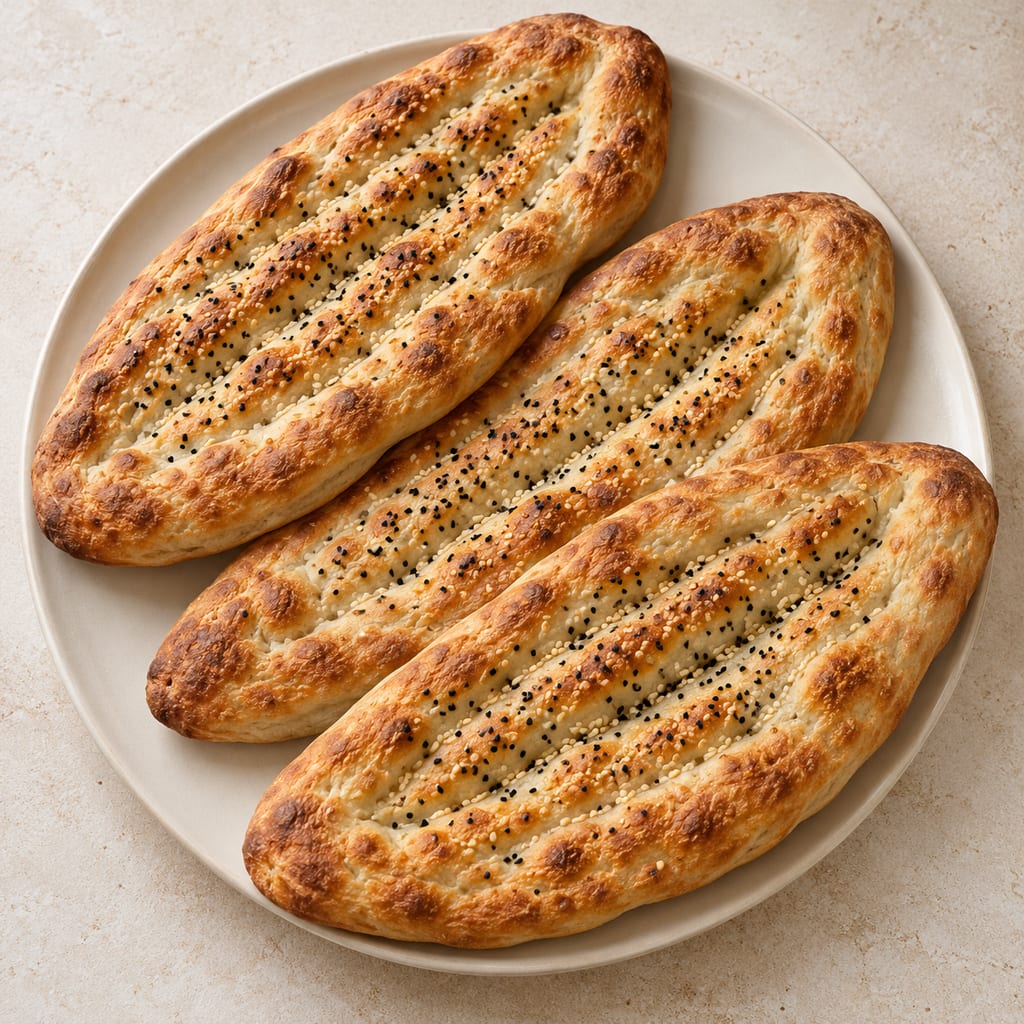
Afghan naan
A long oval Afghan wheat bread, leavened with yeast, grooved along its length and baked until crisp outside and chewy within.
 FermenteaWhere food goes to change
Modern adaptation
lahm bi‘ajeen · lahmacun
A yeast-raised 8-inch flatbread topped with an evenly spread onion, tomato, pepper and spiced ground-beef mixture. This version follows a Palestinian family recipe shared with Amira Ibrahim and adapted for home baking.
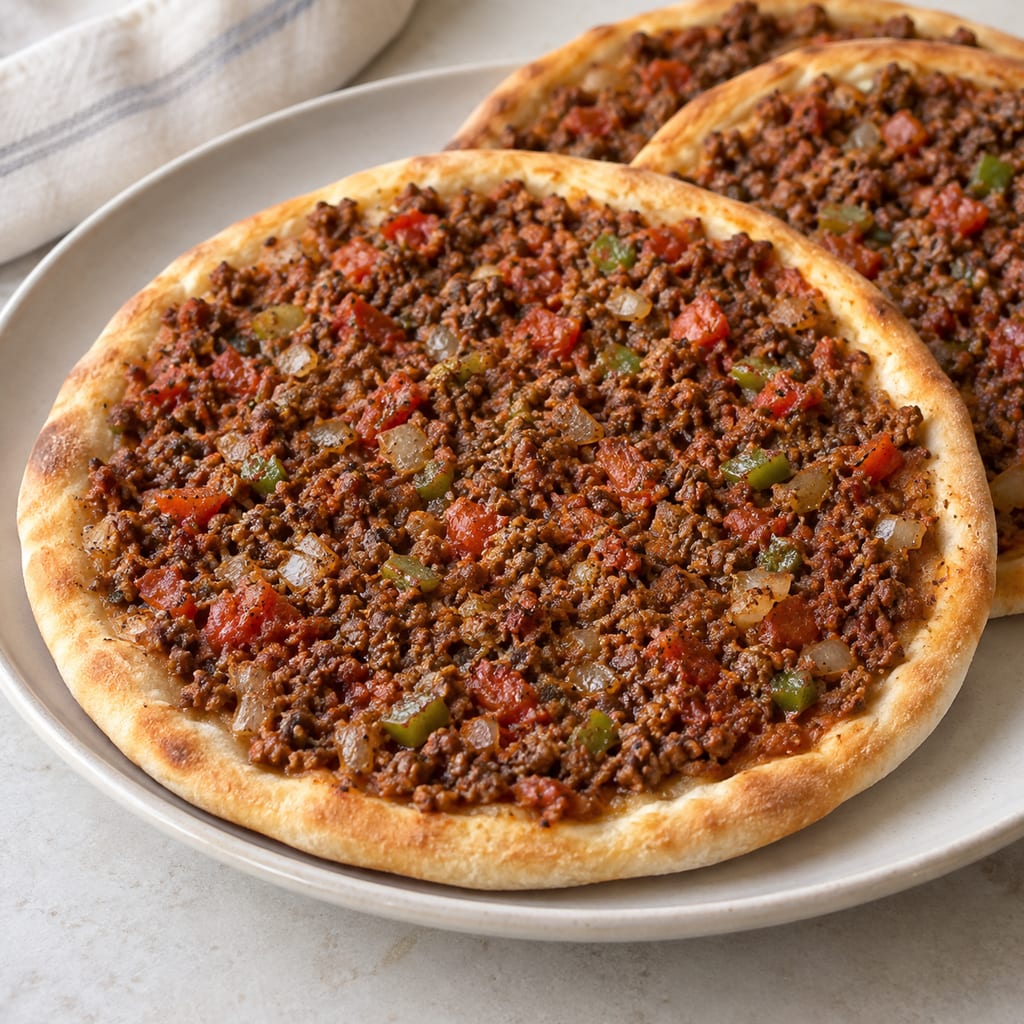
Amira Ibrahim presents this measured preparation as a recipe shared by a Palestinian friend. Her page describes sfiha broadly as a Levantine meat-topped bread and mentions versions in several neighboring countries. This record follows the particular eight-piece formula and open-disk method on her page; it does not treat sfiha, lahm bi‘ajeen and lahmacun as exact equivalents in every regional tradition.
The source names neither the friend nor a town, and it does not date the recipe's origin. The geography and history here therefore describe the source's attribution, not a birthplace or a universal definition.
The dough combines active dry yeast, a little sugar, warm water, all-purpose flour, powdered milk, salt and olive oil. The author recommends the powdered milk for softness but says it can be left out. The dough rests until doubled; the recipe lists about an hour, with the time varying by kitchen temperature.
For this topping, onion, tomato and green pepper are pulsed until slightly chunky before the pastes, molasses, seasoning and oil are mixed in. Ground beef is folded through last. Amira's note allows lamb or a beef-and-lamb combination, but the listed 1-pound batch is beef. The mixture is spread thinly and evenly over eight 8-inch disks rather than piled in the centre.
The source uses a 400°F oven, first baking on the lower rack for 12–15 minutes until the bottoms lightly brown, then broiling on high for 2–3 minutes. Those times and the color cue describe the source method; they are not proof that ground beef is safe. USDA guidance sets 160°F for ground beef and allows an angled or sideways probe for thin burgers. Use a thin-probe thermometer to check the topping, then continue baking if needed.
Keep raw beef cold until mixing and assembly, avoid cross-contamination, and do not taste the raw filling or dough. Refrigerate cooked leftovers promptly and follow the cited cold-storage and reheating guidance.
Lebanon Traveler's 2024 souk feature places sfiha among foods to try in Baalbeck's market, where it describes butcher shops, bakeries and spice sellers. It mentions tannour bread separately. This records a named Lebanese market setting for sfiha alongside the Palestinian family attribution of the recipe used here.
The market account supplies no matching ingredient list, size or cooking schedule. It therefore does not make this eight-inch, ground-beef home version a Baalbeck recipe or establish a shared origin for every regional form. The measured preparation remains Amira Ibrahim's adaptation.
Amira Ibrahim describes this measured version as a Palestinian friend's recipe that she adapted for home baking. The source discusses several regional names and versions; it does not establish a single origin or make them equivalent in every community.
Yield 8 8-inch sfihas · Scaling: source batch only
Ground meat can carry pathogens throughout the mixture; browning alone does not establish a safe endpoint.
Hazard sourceUncooked flour can carry germs and should not be tasted before baking.
Hazard sourceGround meat mixture and cooked meat pies need prompt chilling and cold storage.
Hazard sourceCook the ground beef topping to 160°F (71°C), checked with a food thermometer; for a thin meat layer, insert a thin probe from the side or at an angle. Continue baking if it has not reached the endpoint.
Control sourceKeep raw ground beef at 40°F (4°C) or below. Refrigerate or freeze it promptly; if refrigerated, use within 1–2 days. Prevent raw-meat contact with ready-to-eat food and wash hands, utensils and surfaces after handling.
Control sourceDo not taste unbaked dough. Bake it fully and wash hands, bowls, utensils and counters after handling flour and raw dough.
Control sourceRefrigerate cooked leftovers within 2 hours, or within 1 hour above 90°F (32°C), keep the refrigerator at or below 40°F (4°C), use cooked meat leftovers within 3–4 days or freeze, and reheat to 165°F (74°C).
Control sourceContains wheat and ground beef; powdered milk is optional. The source permits ground lamb or a beef-and-lamb mixture as a variation.
Amira Ibrahim describes sfiha as a Levantine dish and reports that this particular recipe came from a Palestinian friend. The source gives no town or place where the friend prepared it; names and regional versions are not treated as interchangeable.
A long oval Afghan wheat bread, leavened with yeast, grooved along its length and baked until crisp outside and chewy within.
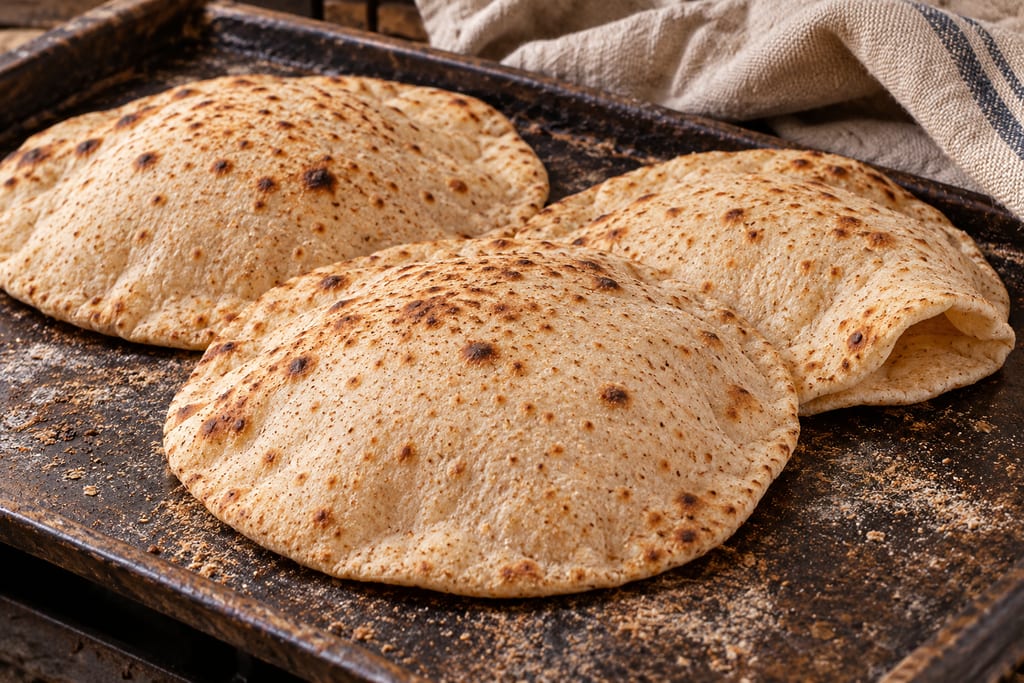
This home adaptation of Egyptian aish baladi uses a refrigerated yeast biga, whole-wheat dough, bran dusting and a very hot baking surface to make 16 pocketed rounds.
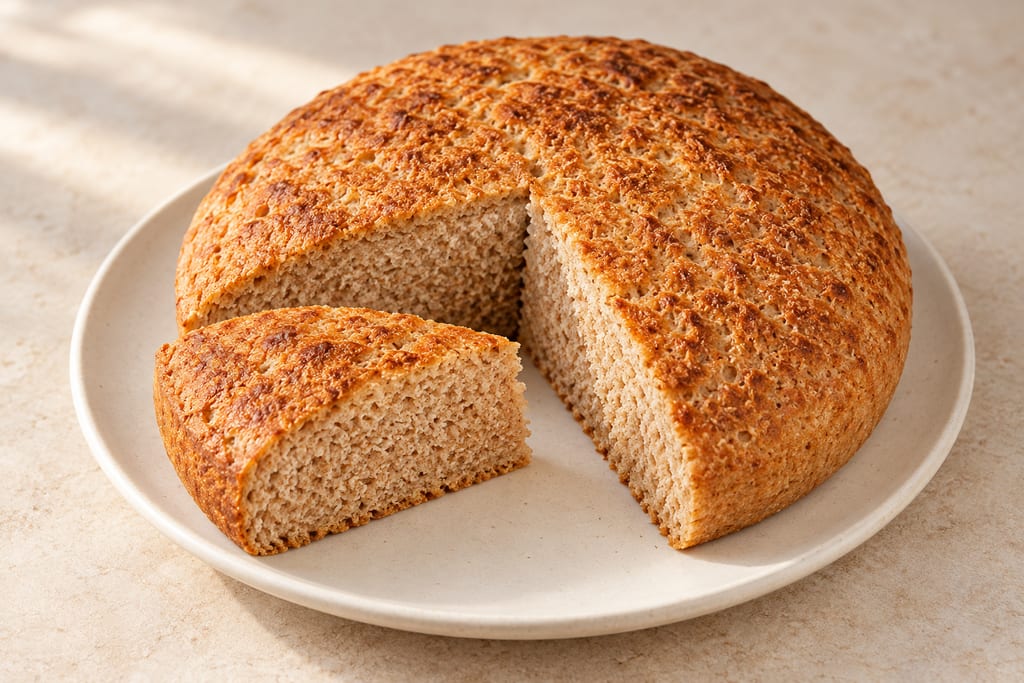
This oven-baked Amdo balep uses yeast, whole-wheat and white flour, a long covered rise and a two-sided bake in a heavy oven-safe pot.
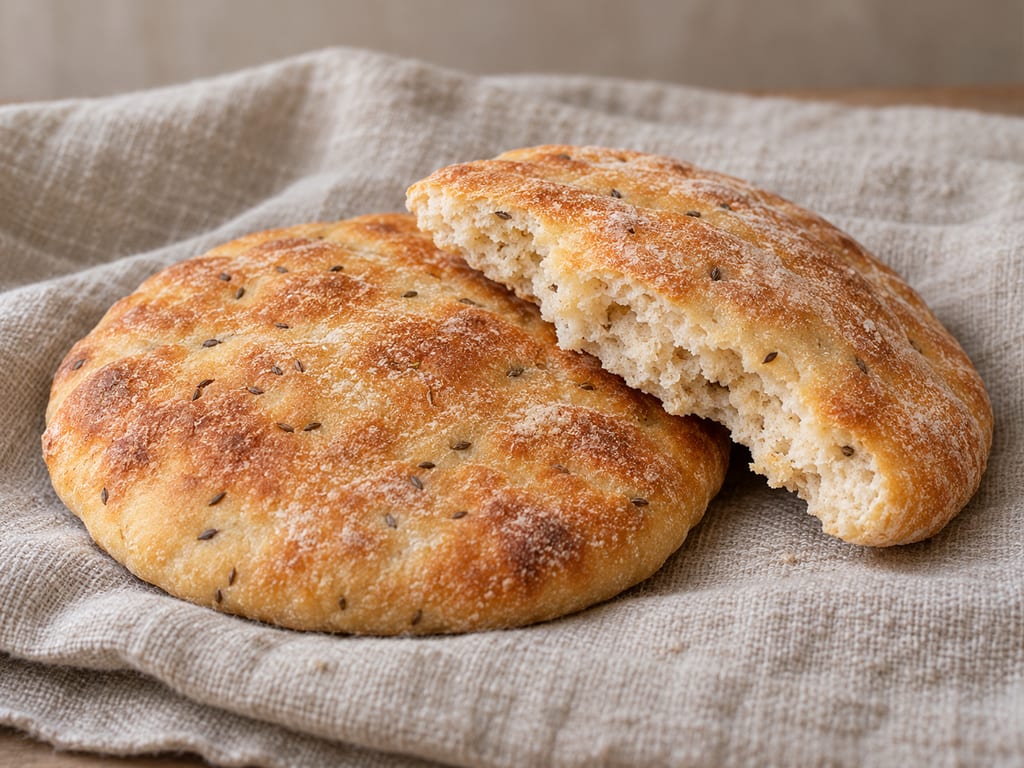
A measured, yeast-raised Ayacucho chapla home method shared by Thermomix Peru presenter Roxanna Salaverry. It makes thin, anise-scented rounds baked at 240°C; the historic qunchu-leavened form is documented separately.
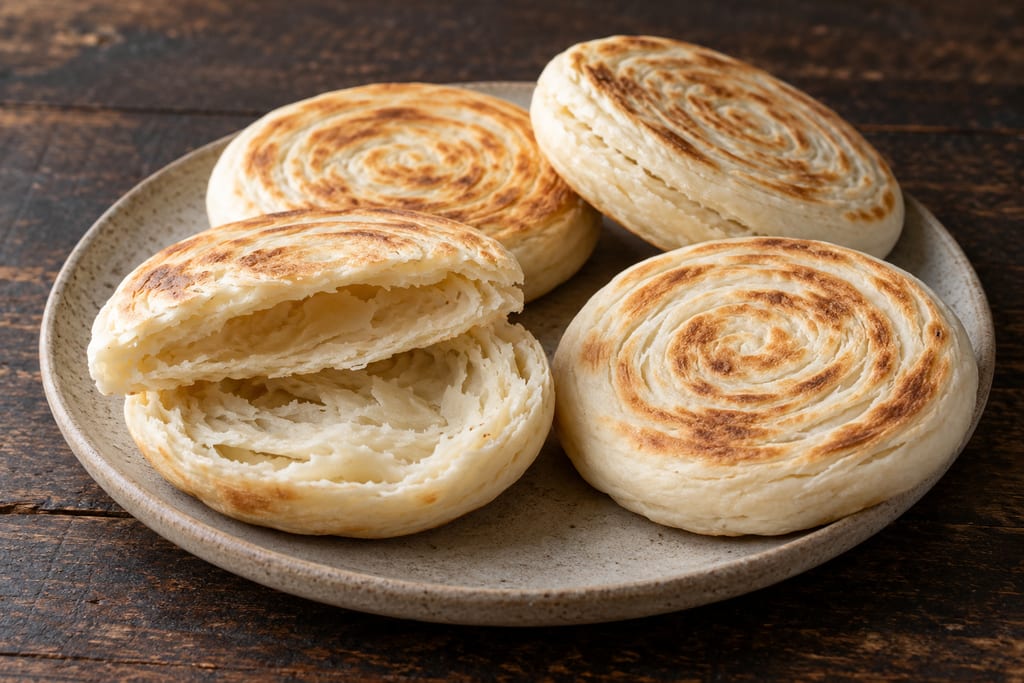
This Shaanxi-associated yeast flatbread uses a simple water dough, coiled shaping and a skillet bake. It is the bread used in roujiamo, not the filled meat dish.
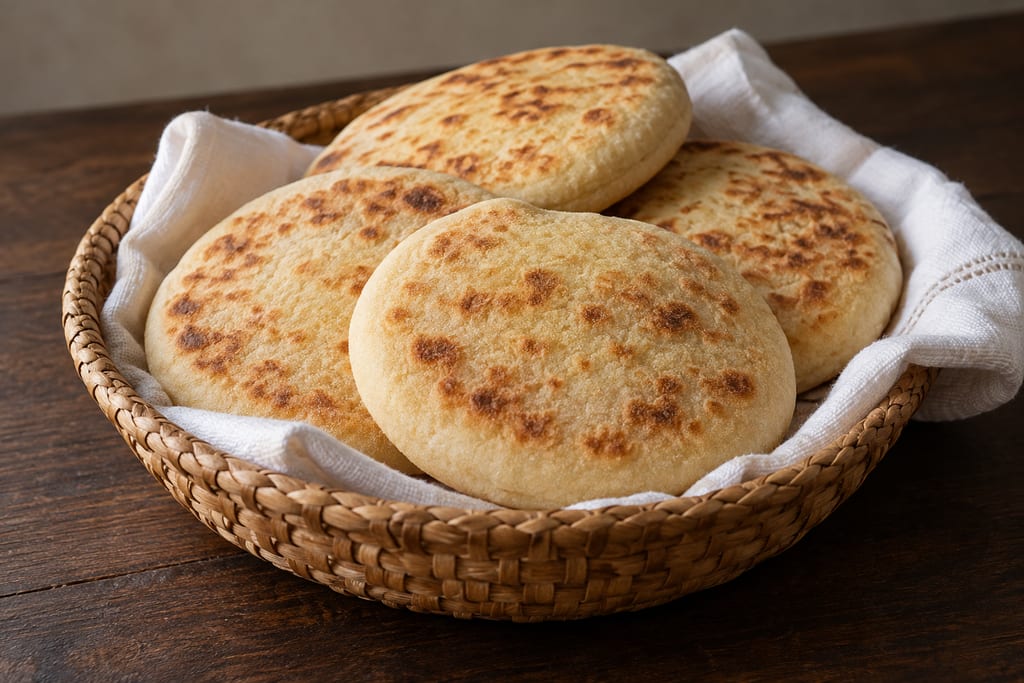
A Moroccan yeast-raised semolina pocket bread cooked on a dry pan or griddle; this measured batch makes about twenty 4-inch rounds.
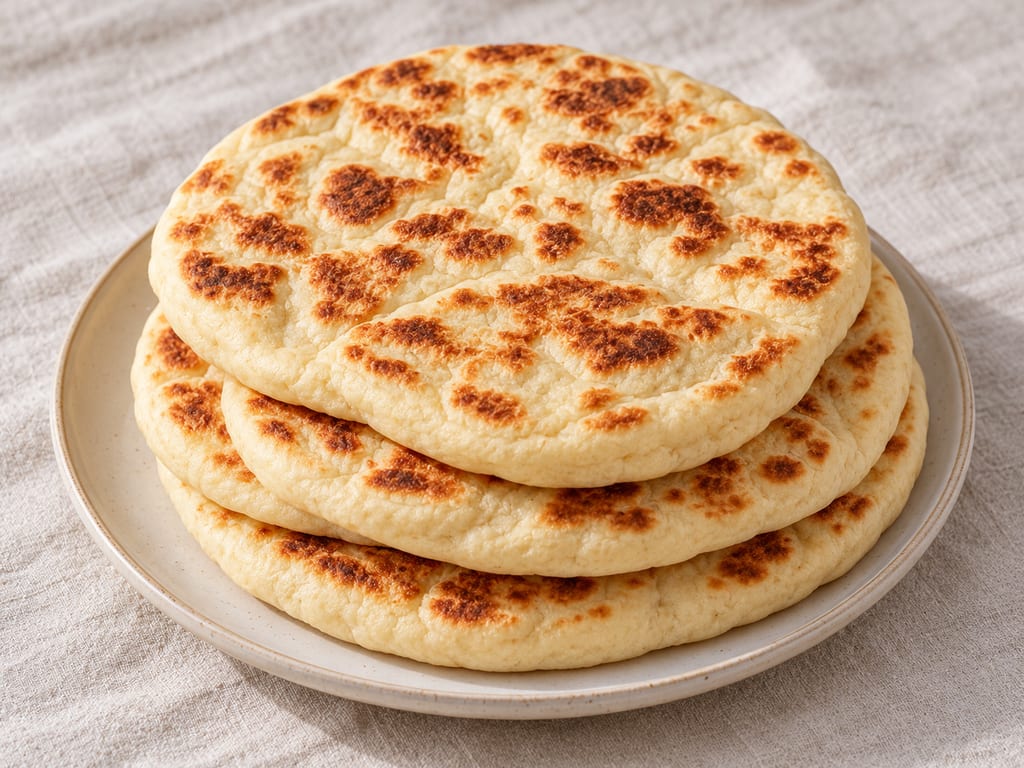
This Turkish bazlama uses yeast, plain yogurt and olive oil for a soft dough cooked in a skillet. Shape it into twelve small or six larger rounds, flip as bubbles appear, and wrap the breads to keep them soft.
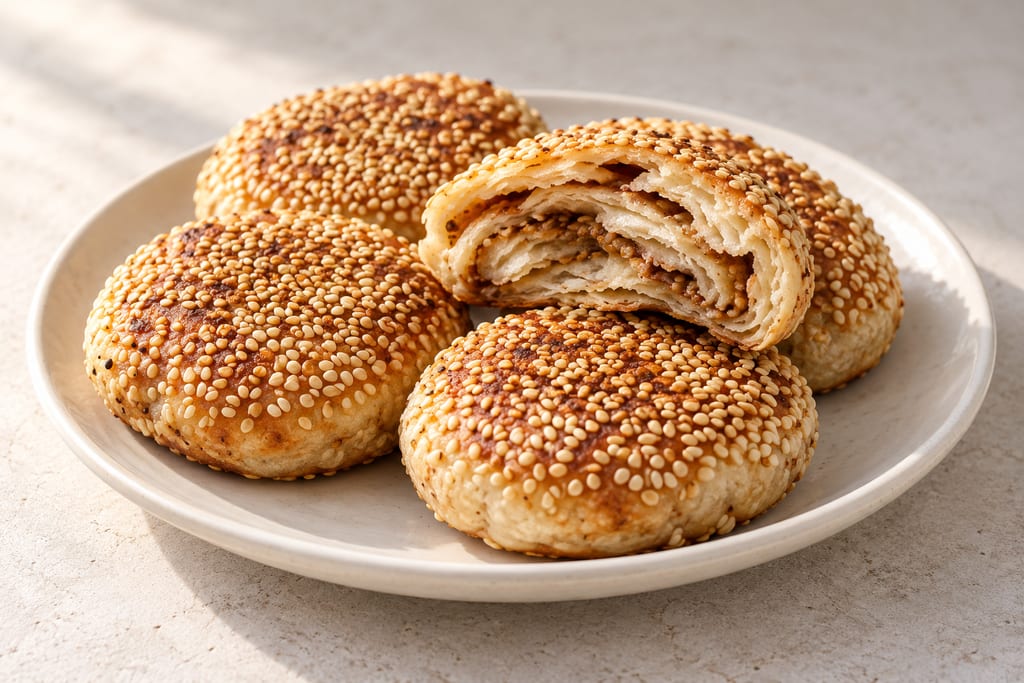
A Beijing-style yeast dough is layered with seasoned sesame paste, sealed into small buns, briefly pan-fried, seeded, and baked.
No community contributions have been published for this entry yet.
Sign in to contribute. Published comments and photos are free to read.
Amira's PantryRecipe · Method · Foodways
Sfiha (Lahmacun)Amira Ibrahim identifies the measured recipe as one shared with her by a Palestinian friend, and describes the dough as yeast-raised.
The dough formula is 2 teaspoons active dry yeast, 1 teaspoon sugar, 1 cup warm water, 3 cups (405 g) all-purpose flour, 2 tablespoons powdered milk, 1 teaspoon salt and ¼ cup olive oil; the powdered milk may be omitted.
The topping uses 1 large onion (about 300 g), 2 medium tomatoes (280 g), 1 green bell pepper (200 g), tomato paste, pepper paste, pomegranate molasses, salt, seven-spice, black pepper, olive oil and 1 pound ground beef; the source note permits lamb or a beef-and-lamb mix.
The recipe portions the dough into eight 8-inch rounds, spreads one eighth of the topping on each, bakes at 400°F on the lower rack for 12–15 minutes until the underside is lightly browned, then broils on high for 2–3 minutes.
The source lists one hour for the rise, one hour cooking time and 2 hours 30 minutes total; it recommends chilling leftover sfiha but gives no storage duration.
The author describes sfiha as Levantine and mentions versions across Jordan, Syria, Palestine, Lebanon, Turkey and Armenia without establishing an origin date.
Cited in: A Palestinian family recipe recorded by Amira Ibrahim; One dough and one measured topping; The source bake and the meat endpoint; A separate Baalbeck market association
USDA Food Safety and Inspection ServiceFood safety
What is the best way to determine that hamburgers are safely cooked?Ground beef should reach 160°F (71°C), checked with a food thermometer; color is not reliable. For thin burgers the probe may be inserted at an angle or sideways.
Cited in: The source bake and the meat endpoint
USDA Food Safety and Inspection ServiceFood safety
What is a thermocouple thermometer?A thin-probe thermocouple thermometer can accurately read thin foods and responds within seconds.
USDA Food Safety and Inspection ServiceFood safety
How do you store ground beef at home?Keep ground beef at 40°F or below and use refrigerated ground beef within 1–2 days, or freeze for longer storage.
Centers for Disease Control and PreventionFood safety
Raw Flour and DoughUncooked flour may carry germs; do not taste raw dough, and wash hands, bowls, utensils and surfaces after handling raw flour or dough.
FoodSafety.govFood safety
4 Steps to Food SafetyRefrigerate perishable food within 2 hours, or within 1 hour above 90°F; keep the refrigerator at or below 40°F; use cooked leftovers within 4 days or freeze; reheat leftovers to 165°F.
Cited in: The source bake and the meat endpoint
USDA Food Safety and Inspection ServiceFood safety
How do I keep my foods safe to eat?Keep raw meat and its juices away from ready-to-eat food. Wash hands, cutting boards, dishes, counters and utensils with hot soapy water after raw-meat contact.
Lebanon TravelerCultural context · Regional association
Top 10 Souks in LebanonThe 9 August 2024 feature with culture enthusiast Nadine Chemali describes Baalbeck's souk as containing butchers, bakeries and spice shops, and names sfiha and tannour bread among local foods.
This supports a contemporary Baalbeck market association, not the origin or formula of Amira Ibrahim's Palestinian friend's eight-piece home version.
Access limitation: the publisher-indexed result supplied the dated byline and Baalbeck passage; direct opening returned HTTP 502. The narrow association is retained with that limitation, not claimed as a full-page inspection.
Cited in: A separate Baalbeck market association
Wikimedia CommonsImage rights research
Safeha, a Lebanese dish of Baalbek, 2017.jpgBdx own-work photograph is explicitly CC BY-SA 4.0, not PD/CC0; excluded, no original downloaded or visual acceptance claimed.
Wikimedia CommonsImage rights research
Sfiha.jpgCarioca own-work Brazilian sfiha photograph offers GFDL and migrated CC BY-SA 3.0, not PD/CC0; excluded, no original downloaded or visual acceptance claimed.