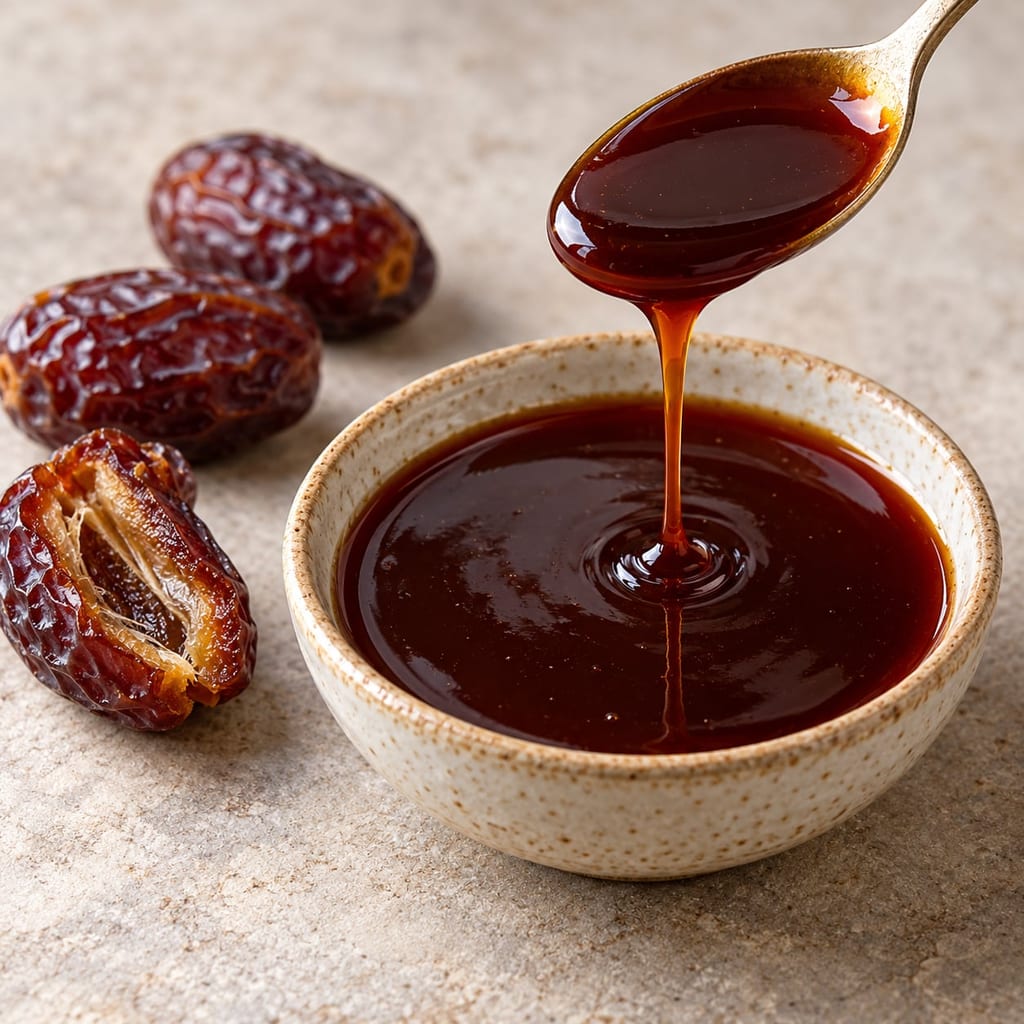
Date syrup and date pulp (dibs, silan family)
A thick, dark, very sweet syrup made from dates, known as dibs, rub, silan or date molasses. It sweetens tahini and desserts and glazes or sauces savoury dishes across the Middle East and North Africa.
 FermenteaWhere food goes to change
Sugar sources
Dates are the sugar-rich fruit of the date palm, eaten soft or dried and used whole, pitted, as syrup or as paste. In sauces and chutneys they add sweetness and body.
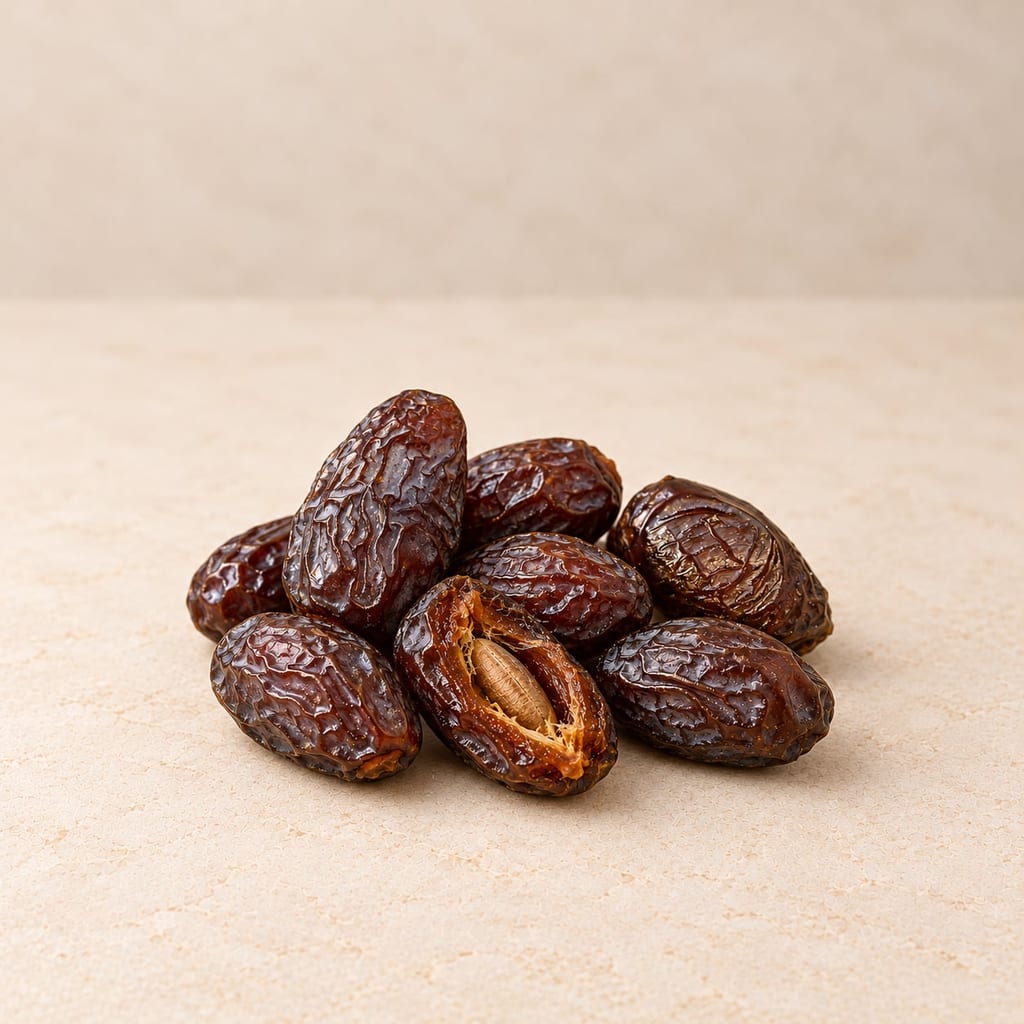
A date is the fruit of the date palm, Phoenix dactylifera, a single-seeded berry with a fleshy outer layer, a thin membranous layer around the seed and a long, grooved stone inside. The fruit is oblong and varies enormously: from 2 to 60 grams in weight, 18 to 110 millimetres in length and 8 to 32 in width, in colours that run from yellow to black and in a consistency that runs from soft to dry. The stone weighs from under half a gram to about 4 grams. A date used in cooking is usually the ripe fruit, sold whole with the stone in, pitted, chopped or pressed into a paste.
The Hebrew name for the palm and its fruit is tamar, which is also the name of one of the three ripeness stages described below and a first name for women in Israel. In Arabic the fruit is tamr (تمر) and in Persian khormā (خرما). This page covers the fruit as it is gathered and dried. Date syrup, date paste, date sugar, date vinegar and date wine are made from it and are separate foods.
The exact origin of the date palm is lost in antiquity. No truly wild plant has ever been found, and its progenitor is thought to be Phoenix reclinata of tropical Africa, Phoenix sylvestris of India, or a hybrid between them, both of which have palatable but inferior fruit. Cultivation reaches back to about 4000 BC in Mesopotamia, where the trunks and fronds of date palms roofed the houses of the Sumerians, Akkadians and Babylonians, and to the Nile valley, where the palm became important somewhat later, about 3000 to 2000 BC. Archaeological finds of date cultivation are older still elsewhere: at Mehrgarh in western Pakistan around 7000 BCE, and in eastern Arabia between 5530 and 5320 calBC. The ancient Egyptians used the fruit to make date wine and ate dates at harvest. The date is as much a tree of the desert as of the table: oases depend on it, and its shade shelters the crops grown beneath.
From these centres the palm spread along two routes. One ran from Mesopotamia through Iran to the Indus valley and Pakistan. The other ran from Egypt toward Libya, the Maghreb and the Sahel, where the first date oases were established in Tunisia (Djerid), Algeria (Souf, Oued Rhir, Tidikelt and Saoura), Morocco (Tafilalet and the Draa valley) and Mauritania (Adrar). Planting in the Sahara began in the last centuries before the Common Era, made possible by irrigation, and reached its height in the fifth and sixth centuries, when commercial camel traffic through the desert became possible. The date belt now runs from the Indus valley to the Atlantic, and date palms have been newly planted in southern California.
The date has a place in religion and language that few fruits share. Phoenicia, the Greek and Roman name for the part of the Levant that included Tyre and Sidon, means “land of palms”, and ancient coins of Tyre and Sidon bear the palm. The Hebrew tamar became a symbol of grace and elegance. The Quran mentions the date and the date palm in 17 of its 114 suras. When Muslims break the fast at the evening meal in Ramadan, it is traditional to eat a date first, and sparkling date juice is drunk in some Islamic countries as a non-alcoholic alternative to champagne on special occasions and religious times.
The date palm is dioecious: male and female flowers grow on separate trees. The male palm produces the pollen and the female palm the fruit. In an orchard the female trees are pollinated by hand with pollen cut from selected males, because male palms grown from seed vary a great deal in vigour and pollen quality. A good male palm gives enough pollen for about 50 females, and Algerian males have been measured at an average of 740 grams of pollen a year, with 500 grams regarded as a good regular yield. The pollen grain is a few hundredths of a millimetre across, with a mean diameter between 16 and 30 microns depending on the male.
Climate sets the limits of the crop. The northern limit of date cultivation in Asia is about 32°N in the Indus valley and 35°N in Iraq, and the southern limit in the Sahara is about 17°N. A rainy end to the season can ruin the harvest: rain damages the fruit through rotting, fermentation and insect infestation, so growers protect ripening bunches with wax-covered paper or nylon sleeves.
FAOSTAT records 9.95 million tonnes of dates in 2024, from 1.38 million hectares, up from 6.43 million tonnes in 2000 and 1.85 million tonnes in 1961. The largest producers are Saudi Arabia (1.93 million tonnes), Egypt (1.75 million), Algeria (1.34 million) and Iran (1.18 million), followed by Pakistan (604,000 tonnes), Iraq (587,000), Sudan (443,000), Oman (401,000), Tunisia (400,000) and the United Arab Emirates (334,000). Four countries grow about 62 percent of the world’s dates.
The map has shifted. Algeria’s harvest rose from 95,000 tonnes in 1961 to 365,616 in 2000 and 1.34 million in 2024, and Tunisia’s from 36,300 to 400,219 tonnes. Iraq, which harvested 932,000 tonnes in 2000, harvested 587,190 in 2024. Morocco, the home of the Medjool, grew 111,887 tonnes, Israel 80,000 tonnes (from 600 in 1961) and the United States 56,650 tonnes. The world’s date area grew from 241,000 hectares in 1961 to 1.38 million in 2024, while the average yield stayed near 7 tonnes per hectare (7.7 in 1961, 7.2 in 2024), so the growth in output came from planting more palms.
The same date is sold at three stages of development, and they behave like three different ingredients. At the khalal stage the fruit has reached physiological maturity but is hard and crisp, bright yellow or red, with a moisture content of 50 to 85 percent; it is perishable, and only varieties low in tannin at this stage are marketed in it. At the rutab stage it has partly browned, its moisture has fallen to 30 to 45 percent and its fibres have softened; it is still perishable and delicate. At the tamar stage the colour has deepened from amber to dark brown, the moisture has fallen below 25 percent and down to 10 percent or less, and the texture ranges from soft and pliable to firm or hard.
The stage gathered depends on the variety, the climate and the market. A well-matured rutab, handled with care, is one of the most appreciated forms in which dates are eaten and gives the grower the highest return, although it is made in short bursts, highly perishable and expensive to move. Deglet Nour and Medjool are the main commercial varieties harvested at rutab. Fruit at the tamar stage is non-perishable in the sense that micro-organisms cannot grow on it; it is the stage of most Dayri, Halawy, Khadrawy, Thoori and Zahidi dates, and it is the one for preservation, year-round eating and products such as cakes, sauces and compotes.
A date is about 70 percent carbohydrate, most of it sugar, with a moisture content between 15 and 30 percent depending on variety and maturity. The flesh contains 60 to 65 percent sugar, about 2.5 percent fibre, about 2 percent protein, and less than 2 percent each of fat, minerals and pectin substances. The ash of the fruit is half potassium by weight, followed by chlorine, magnesium, sulphur and phosphorus, and the sodium content is very low, about 1 milligram per 100 grams.
USDA analysis gives the same picture for the two dates found in shops. Medjool dates have 21.3 grams of water, 1.81 grams of protein, 0.15 grams of fat, 75 grams of carbohydrate and 6.7 grams of fibre per 100 grams, with 277 kilocalories and 696 milligrams of potassium. Deglet Noor dates have 20.5 grams of water, 2.45 grams of protein, 0.39 grams of fat, 75 grams of carbohydrate and 8 grams of fibre, with 282 kilocalories and 656 milligrams of potassium.
The kind of sugar differs between types of date. In a table of 51 varieties grown in the United States, the soft dates have total sugars averaging 78 percent of dry weight, almost all of it reducing sugars (glucose and fructose, the invert sugars), with sucrose averaging 1 percent. The semi-dry dates average 60 percent reducing sugars and 17 percent sucrose, and the dry dates 41 percent reducing sugars and 36 percent sucrose. Deglet Nour and Thoori are the common varieties in which about half the sugar is sucrose. Deglet Nour is a semi-dry date, and Medjool a soft one.
The Medjool is the large, soft date of the export trade. It comes from the Tafilalet area of Morocco, where it was the principal export date from the seventeenth century and was sold in fancy gift boxes at Christmas in Paris, Madrid and London. It was introduced to the United States in 1927 and to Israel in 1934. The fruit is very large, 20 to 40 grams, about 5 centimetres long and 3.2 centimetres across, with an amber rutab stage and a transparent dark brown to black tamar stage. The flesh is firm, meaty and thick, 5 to 7 millimetres, with little fibre, brownish amber and translucent, and the taste is sweet but not concentrated. Production at the time of the varietal description was under 5,000 tonnes a year, mostly in the Coachella Valley and Bard in California, Morocco and Israel, with small amounts in Mexico, Namibia and South Africa.
Deglet Nour is a semi-dry date: harvested in tens of thousands of tonnes a year in Algeria, Israel, Tunisia and the United States, and sold on the branch as well as loose. Sugar crystallisation, a defect of some varieties, does not occur in it. Many other varieties are grown: Dayri, Halawy, Khadrawy, Thoori and Zahidi are harvested dry at the tamar stage, and Barhee, Khalas, Hayany and Zaghlool are sold fresh at khalal.
Date syrup, called dibs or rub in Arabic and silan in Hebrew, has been used for thousands of years and was abundant in the desserts of ancient Mesopotamia. The Book of Deuteronomy lists honey among the bounties of the Holy Land, and rabbinic texts such as the Jerusalem Talmud and Sifre read this as date honey, not bee honey. A storage jar marked with a palm tree, found in a building destroyed in the siege of Jerusalem in 586 BCE, indicates that date honey was kept there. The first-century historian Josephus, describing the oases of Jericho, noted that the better kinds of dates, when pressed, yield an excellent honey not much inferior in sweetness to other honey, and a date press from the same period was found at Qumran.
The syrup is still a staple. It is thick, dark brown and very sweet, rich in glucose and fructose, and widely used in Middle Eastern, North African and South Asian cooking: with asida, a porridge-like dessert, in Libya, to sweeten tahini at breakfast in Iran and Iraq, in the Algerian pancake baghrir, in a rub for chicken and potatoes, as a sauce for stuffed vegetables and in the semolina cake basbousa. In Morocco date syrup is the most common processed date product, made from surplus fruit of lower grades that the food industry does not take, and analyses of syrups from six Moroccan varieties found sugars, mainly glucose and fructose, predominant, a high ash content rich in potassium, calcium, sodium and magnesium, and malic, succinic, acetic, citric and oxalic acids. The high levels of hydroxymethylfurfural and the high water activity of those syrups suggest an unrefined process and limited keeping quality.
The date is processed into a long list of other ingredients: whole pitted dates, macerated chips, date paste and date paste mixtures, extruded and diced pieces, dehydrated dates and date flour; ready-to-eat foods such as date nut rolls, stuffed and chocolate-coated dates, jams, date butter and caramel; and derived products such as juice, syrup, liquid sugar, vinegar and fermentation products. Chopped dates are also the base of English puddings such as sticky toffee pudding and Christmas pudding. Each is a separate food with its own method.
In savoury cooking the date gives a sauce sweetness and body. HP Sauce, the British brown sauce, has a tomato base blended with malt and spirit vinegar, sugars including molasses, dates, cornflour, rye flour, salt, spices and tamarind; the original recipe of 1895 listed tamarind and raisins, and dates are in the sauce on sale today. Otafuku’s okonomi sauce, on sale in Hiroshima since 1952, is made from a blend of vegetables, fruits and spices in which dates are the signature ingredient, with a deep mellow sweetness that comes from the fruits and vegetables; the company marked 2 December 2024 as Dates Day with a news item titled “50 Years of Otafuku’s Journey with Dates”.
In India, date and tamarind chutney is the sweet-sour sauce of the chaat stall. A Maharashtra school cookery text for Class IX makes it from half a bowl of seedless tamarind, a bowl of jaggery, five seedless dates, dry ginger, black salt and chilli powder: the tamarind is boiled in water and squeezed to a pulp, the dates are cooked in water, the two are ground together and strained, and the jaggery and spices are added and heated until thick. A hospitality-training text uses 100 grams each of tamarind, pitted dates and jaggery, softened in warm water for 15 to 20 minutes, ground to a fine paste and sieved, and keeps it in the refrigerator for up to a month. A journalist’s account of chaat says that the sweet-sour date and tamarind chutney, with a mint and coriander one, is what gives chaat its name, from the Sanskrit for to lick, and calls the story that Shah Jahan’s physicians invented the dish apocryphal.
The date is a preserved food by nature. With 60 to 65 percent sugar and a moisture content of 10 percent or less at the tamar stage, it is too dry and too sweet for micro-organisms to grow on, which is why tamar dates keep for long periods. The same sugar makes the fruit a substrate for fermentation when it is wet: rain on ripening bunches causes rotting and fermentation in the field, and the date products listed by the food industry include vinegar and fermentation products, among them wine, alcohol and organic acids. The ancient Egyptians made date wine, and date vinegar was a traditional product of the Middle East.
Date syrup resists some bacteria for reasons other than its sugar. A laboratory study found that date syrup is rich in polyphenols (605 milligrams per 100 grams, of which 357 are tannins) and that the syrup and the polyphenols extracted from it are bacteriostatic against Escherichia coli and Staphylococcus aureus, with minimum inhibitory concentrations of 30 and 20 milligrams per millilitre; the syrup’s high sugar content did not significantly contribute. At lethal concentrations the syrup acted as a prooxidant, generating hydrogen peroxide. The study measured laboratory cultures, not a jar of food, so it does not make syrup a safe-keeping preservative.
Dates keep well because they are dry and sugary, but not indefinitely. Tunisian research reports that dates stored at a humidity of 26 percent or higher need a temperature of 0°C and keep for 6 to 8 months; below 26 percent they can be stored for more than a year, and below 20 percent they can be stored at 25°C for up to a year. High sugar combined with high humidity tends to make the fruit spoil. Medjool and other long-keeping varieties are held commercially at -18°C, which reduces water loss, sugar crystallisation and skin separation. Dates sold fresh at the khalal stage, such as Barhee and Zaghlool, are stored at 1°C, where their life rises from a few weeks to 6 to 8 weeks.
Sugar crystallisation is a quality defect in which sugar separates inside the fruit. It comes from broken cell walls or torn skin letting water move in or out of the fruit, and the risk rises when the moisture exceeds 20 percent. Dates are washed because they grow in the field and pick up sand and soil, and fumigated against insects before long storage. For the home cook, the practical choices are stage and type: a soft, moist Medjool or a firmer Deglet Nour, whole or pitted, in a pack that keeps moisture in. Dates are not among the nine major food allergens defined in US law.
Early cultivation is dated from palm timbers in Sumerian and Babylonian buildings; the wild origin of the palm is unknown.
Date culture became important in Egypt somewhat later than in Mesopotamia.
Home of the Medjool variety and its principal export date from the seventeenth century.
A main producing area of Medjool dates, alongside Bard in California.
Home of Otafuku okonomi sauce, which names dates as a signature ingredient; it does not imply that dates are grown in Japan.
Dates are cooked with tamarind and jaggery into the sweet-sour chutney of Indian cookery.
The largest producer in 2024, 1.93 million tonnes.
A thick, dark, very sweet syrup made from dates, known as dibs, rub, silan or date molasses. It sweetens tahini and desserts and glazes or sauces savoury dishes across the Middle East and North Africa.

From sour breads and milk to savoury seeds, cassava staples and living beers, African fermentation follows the crop, the community and the work of transformation.
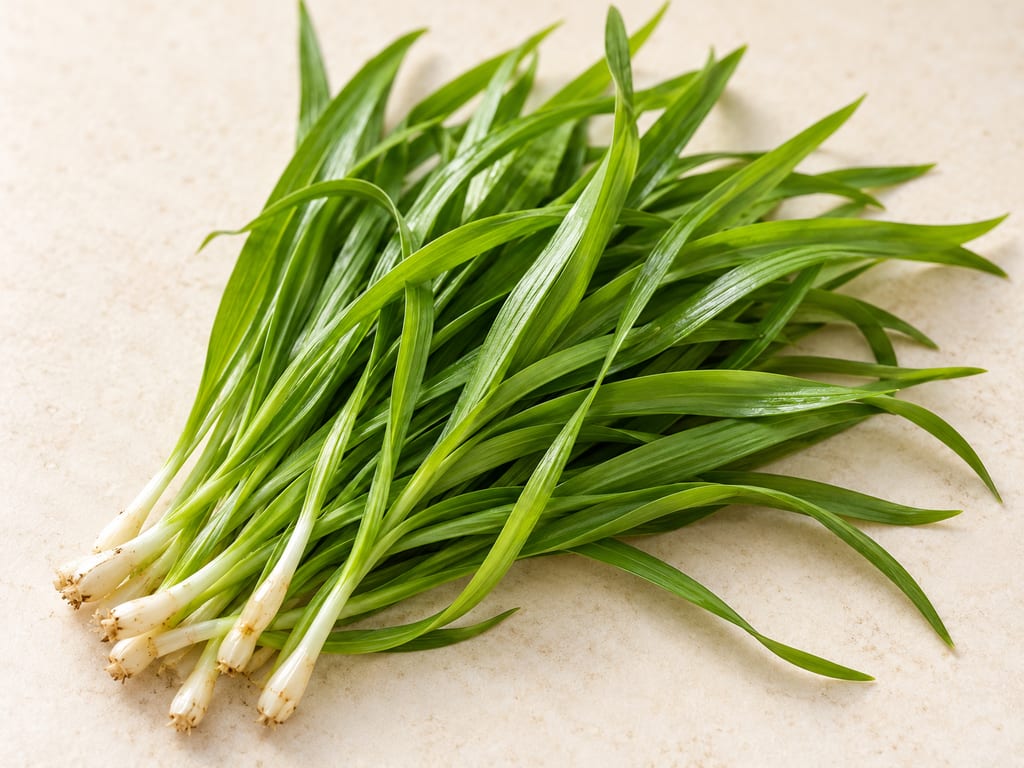
Few-flowered garlic (Allium paradoxum) is a bulbous perennial native from eastern Ukraine through the Caucasus to Iran. Its leaves and, in some documented traditions, stems, bulbs or bulbils are eaten fresh, cooked or preserved.
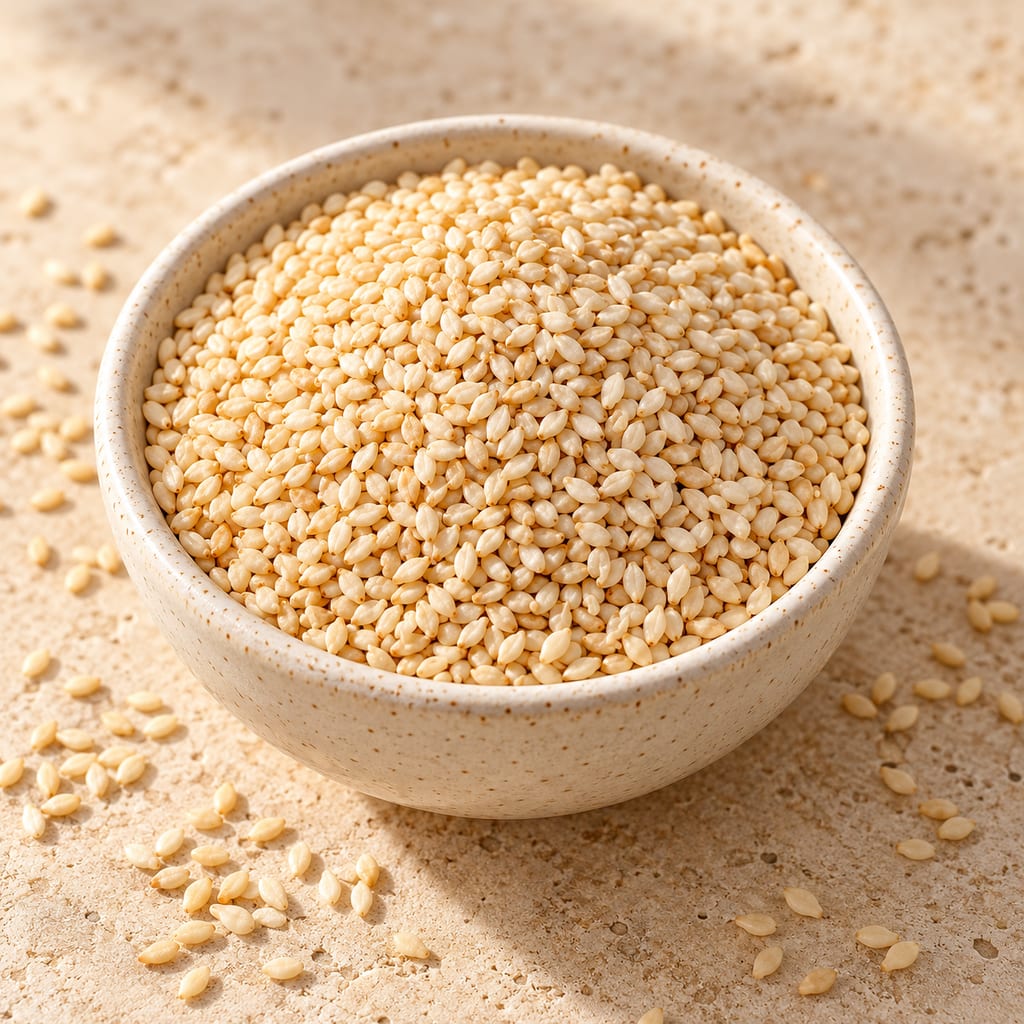
Sesame seed, from Sesamum indicum, is about half oil and is eaten whole, ground into paste or pressed into oil. It was a crop of South Asia by the Harappan period and reached Mesopotamia before 2000 BC.
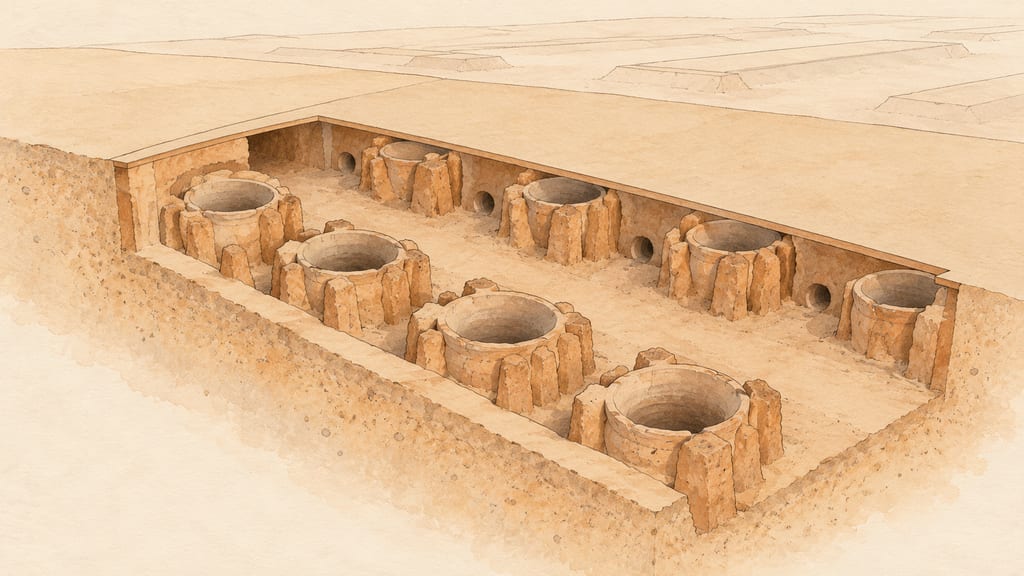
At North Abydos in Egypt, a fixed early Dynastic brewery comprised parallel semi-subterranean installations with rows of ceramic mash vats; excavation reports revise their number, scale and estimated batch capacity.
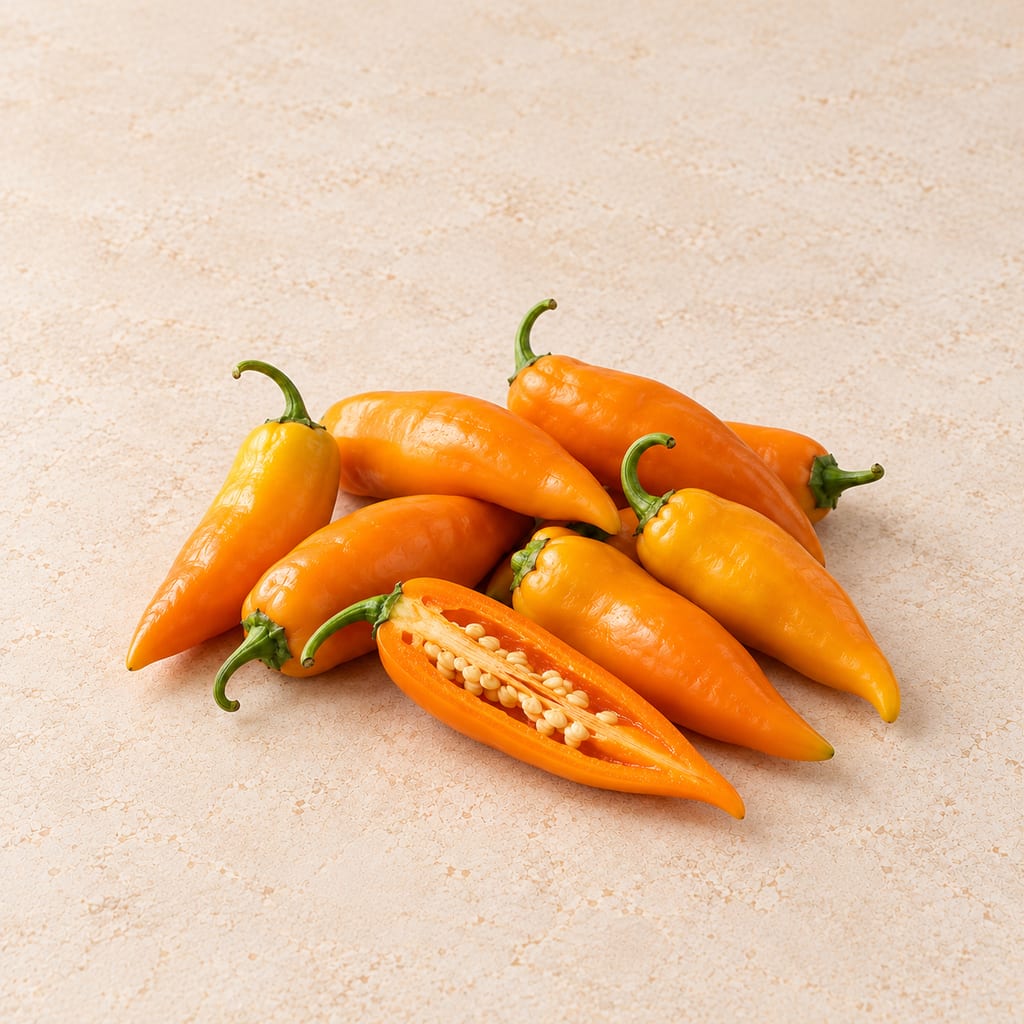
Ají amarillo is the orange-yellow Peruvian chilli cultivar group of Capsicum baccatum, used to colour and season huancaína sauce and ají de gallina. Published heat estimates do not establish one range for the named cultivar.

Toasted almonds are whole sweet almond kernels dry-roasted until golden to brown. Heat replaces their marzipan note with a roasted, nutty one; they thicken and flavour romesco.

Kodiak salmon, halibut and cod cut as seg'aq and hung on an initaq rack to become tamuuq, with kac'amaasaq and kupcuunaq named as different results.

Aniseed is the dried ripe fruit of Pimpinella anisum, an aromatic Apiaceae spice commonly called a seed. It adds a sweet, warm aroma to breads such as Moroccan krachel and South African mosbolletjies, and is distinct from star anise.
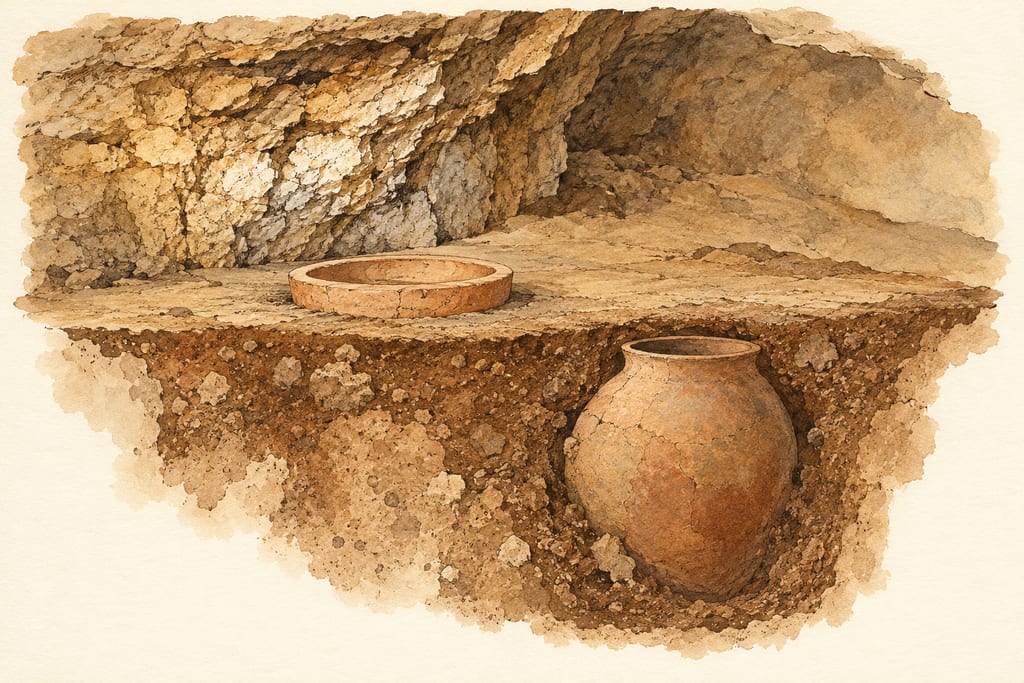
A fixed Late Chalcolithic installation in Areni-1 cave combined a shallow clay pressing basin with a large jar set into the cave floor and storage vessels nearby.

Ripe avocado flesh is the soft, buttery, fat-rich pulp of Persea americana, eaten raw. It is low in acid, so it is a fresh ingredient that needs care in chilled dishes.
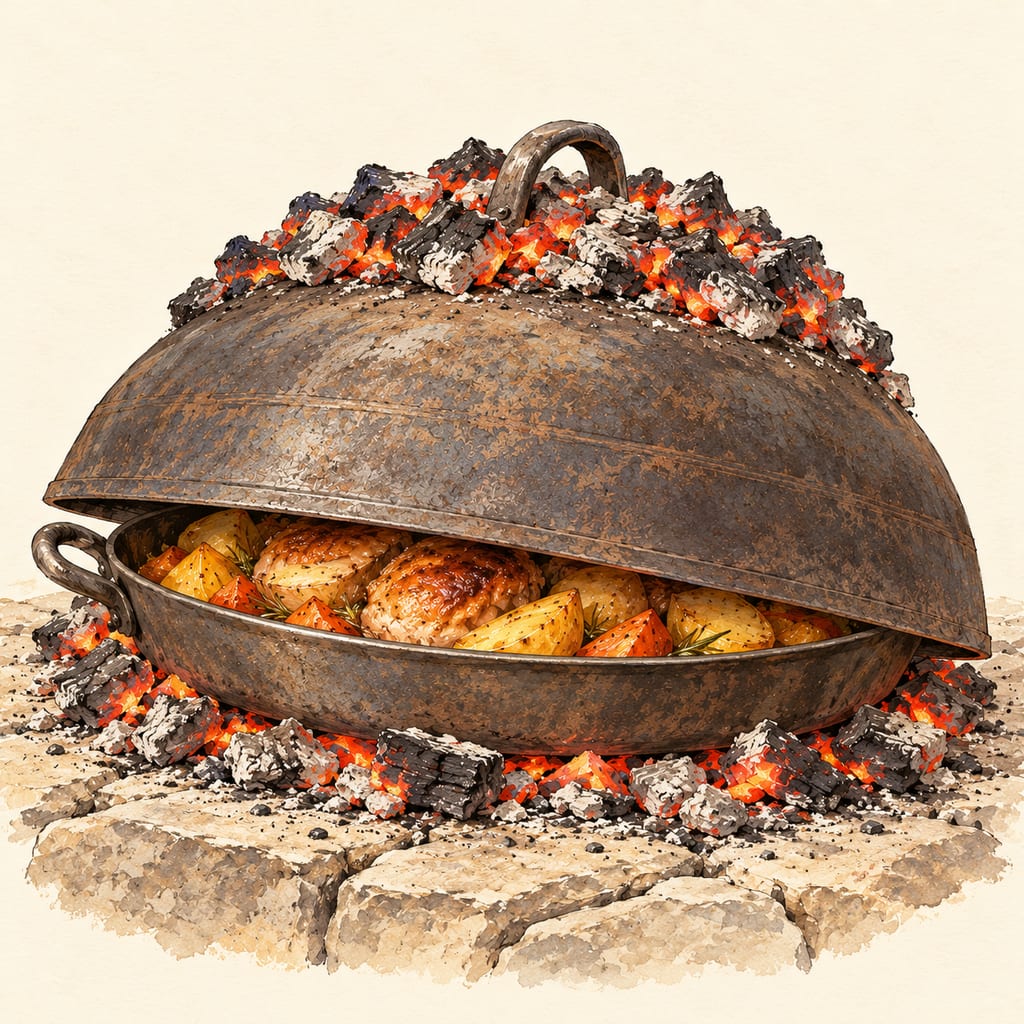
A portable dome and pan used over a hearth, with embers on the lid and heat from below. Regional peka and saç forms share this principle while differing in materials, pan shape and how the food is cooked.
No community contributions have been published for this entry yet.
Sign in to contribute. Published comments and photos are free to read.
Food and Agriculture Organization of the United NationsIdentity · History · Method
Date Palm Cultivation (FAO Plant Production and Protection Paper 156 Rev. 1)Whole book: origin, geography, nutrition, trade, pollination, harvest and packinghouse management
Food and Agriculture Organization of the United NationsIdentity
Chapter I: Botanical and systematic description of the date palm (FAO Paper 156 Rev. 1)Dioecious palm; fruit a one-seeded berry; range of fruit and seed weight, length and width; Medjool variety description (Tafilalet, USA 1927, Israel 1934, 20 to 40 g)
Cited in: The fruit and its names; A palm that needs help to fruit; Medjool, Deglet Nour and the others
Food and Agriculture Organization of the United NationsHistory · Composition
Chapter II: Origin, geographical distribution and nutritional values of date palm (FAO Paper 156 Rev. 1)Origin lost in antiquity; no wild plant; cultivation by 4000 BC in Mesopotamia and 3000 to 2000 BC in Egypt; spread to Maghreb and Sahel; nutritional composition and sugar tables by date type; list of date products
Cited in: The fruit and its names; Where the date palm came from; A palm that needs help to fruit; What is inside: sugar, mostly; Dates in sweets, syrup and the old sweeteners; Dates in fermentation and preservation
Food and Agriculture Organization of the United NationsEconomics
Chapter III: The economic importance of date production and international trade (FAO Paper 156 Rev. 1)World production 1.8 Mt in 1961, 2.8 Mt in 1985, 5.4 Mt in 2001
Cited in: Where dates are grown today
Food and Agriculture Organization of the United NationsMethod
Chapter VIII: Pollination and bunch management (FAO Paper 156 Rev. 1)Dioecious species; male pollen quantities; one good male for 50 females; pollen grain diameter 16 to 30 microns
Cited in: A palm that needs help to fruit
Food and Agriculture Organization of the United NationsMethod · Storage
Chapter IX: Date harvesting, packinghouse management and marketing aspects (FAO Paper 156 Rev. 1)Khalal, rutab and tamar stages and moisture; rutab varieties; Medjool production; storage moisture and temperature research; sugar crystallisation; washing, fumigation, protection from rain
Cited in: Three stages of ripeness; Medjool, Deglet Nour and the others; Dates in fermentation and preservation; Choosing and keeping dates
U.S. Department of Agriculture, FoodData CentralComposition
Dates, medjool (FDC 168191, SR Legacy)Per 100 g: 21.3 g water, 1.81 g protein, 0.15 g fat, 75 g carbohydrate, 6.7 g fibre, 277 kcal, 696 mg potassium
Cited in: What is inside: sugar, mostly
U.S. Department of Agriculture, FoodData CentralComposition
Dates, deglet noor (FDC 171726, SR Legacy)Per 100 g: 20.5 g water, 2.45 g protein, 0.39 g fat, 75 g carbohydrate, 8 g fibre, 282 kcal, 656 mg potassium
Cited in: What is inside: sugar, mostly
City of Hiroshima, The Hiroshima BrandUse
Otafuku Okonomi SauceOn sale since 1952; blend of vegetables, fruits and spices with dates as signature ingredient; sweetness from fruits and vegetables
Cited in: Dates in sauces and chutneys
Otafuku Sauce Co., Ltd.Use
Otafuku Sauce Co., Ltd. (English site)News item of 2 December 2024: “December 2nd is Dates Day: 50 Years of Otafuku’s Journey with Dates!”
Cited in: Dates in sauces and chutneys
Food and Agriculture Organization of the United NationsEconomics
FAOSTAT Crops and livestock products: dates (bulk download, 2025 release)Dates: world 9,946,598 t on 1,379,351 ha in 2024; 6,428,511 t in 2000; 1,852,592 t in 1961; Saudi Arabia 1.93 Mt, Egypt 1.75 Mt, Algeria 1.34 Mt, Iran 1.18 Mt, Pakistan 604,243 t, Iraq 587,190 t; Tunisia, Morocco, Israel and USA figures
Cited in: Where dates are grown today
Wikipedia, citing Goor (1967, Economic Botany), Magness (2024) and Taylor (2006)History · Use
Date syrup (Rub)Date syrup used for thousands of years; Mesopotamian desserts; Deuteronomy honey read as date honey in rabbinic texts; storage jar from Jerusalem 586 BCE; Josephus on date honey; date press at Qumran; uses in Libya, Iran, Iraq, Algeria and elsewhere
Cited in: Dates in sweets, syrup and the old sweeteners
WikipediaHistory · Use
Date palmMehrgarh around 7000 BCE and eastern Arabia 5530 to 5320 calBC; Egyptian date wine; date vinegar a traditional Middle Eastern product; sparkling date juice; eating a date first at the Ramadan fast; sticky toffee and Christmas puddings
Cited in: Where the date palm came from; Dates in sweets, syrup and the old sweeteners; Dates in fermentation and preservation
Frontiers in Microbiology, via PubMed CentralPreservation
The Antibacterial Activity of Date Syrup Polyphenols against S. aureus and E. coliDate syrup polyphenols 605 mg/100 g; bacteriostatic against E. coli and S. aureus; MIC 30 and 20 mg/mL; sugar did not contribute significantly; prooxidant action
Cited in: Dates in fermentation and preservation
Journal of Food Composition and Analysis (Bouhlali et al., 2020)Composition
Nutritional, mineral and organic acid composition of syrups produced from six Moroccan date fruit (Phoenix dactylifera L.) varietiesDate syrup the most common processed date product in Morocco, from surplus lower-grade fruit; mainly glucose and fructose; high ash; organic acids; high HMF and water activity
Cited in: Dates in sweets, syrup and the old sweeteners; Dates in fermentation and preservation
U.S. Food and Drug AdministrationSafety
What is a major food allergen?The nine major food allergens: milk, egg, fish, crustacean shellfish, tree nuts, wheat, peanuts, soybeans, sesame
Cited in: Choosing and keeping dates
WikipediaUse
HP SauceHP Sauce has a tomato base with malt and spirit vinegar, sugars, dates, cornflour, rye flour, salt, spices and tamarind; 1895 original recipe with tamarind and raisins
Cited in: Dates in sauces and chutneys
Maharashtra State Bureau of Textbook Production (Balbharati)Use
Cookery Textbook for Differently able Student, Class IXTamarind chutney: half bowl tamarind, one bowl jaggery, five seedless dates, dry ginger, black salt and chilli; tamarind boiled, dates cooked, ground and strained
Cited in: Dates in sauces and chutneys
NIMI, Directorate General of Training, IndiaUse
Food Production (General), 1st Semester, Trade PracticalTamarind dates chutney: 100 g each of tamarind, pitted dates and jaggery; soak 15 to 20 minutes; refrigerate up to a month
Cited in: Dates in sauces and chutneys
The Indian ExpressHistory
Finger-lickin’ good: story of chutney in IndiaChaat finished with a sweet-sour date and tamarind chutney; Shah Jahan origin story described as apocryphal
Cited in: Dates in sauces and chutneys