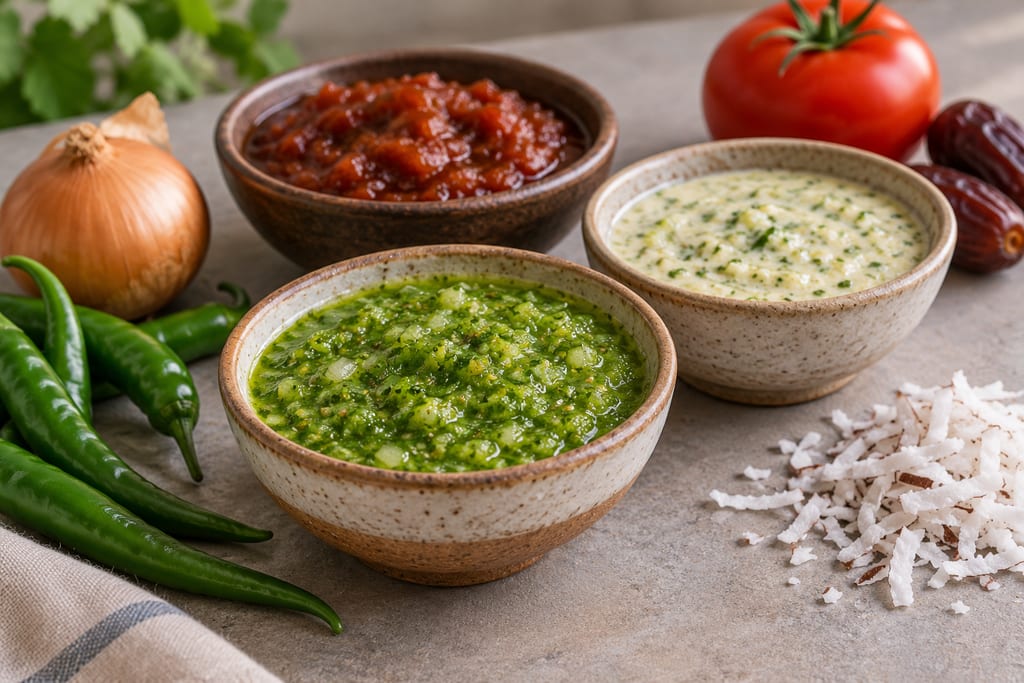
Basbaas
Basbaas is the Somali word for chilli and the name of a family of hot sauces served at the table, so each diner can set the heat. Green, coconut and tomato-based versions are all called basbaas.
 FermenteaWhere food goes to change
Shigni · Basbaas alla-bari
Shidni, also called shigni, is a Somali tomato, chilli and tamarind sauce. An everyday version is fried for about five minutes; a festive chutney with dates and mango cooks for about two hours under the name basbaas alla-bari.
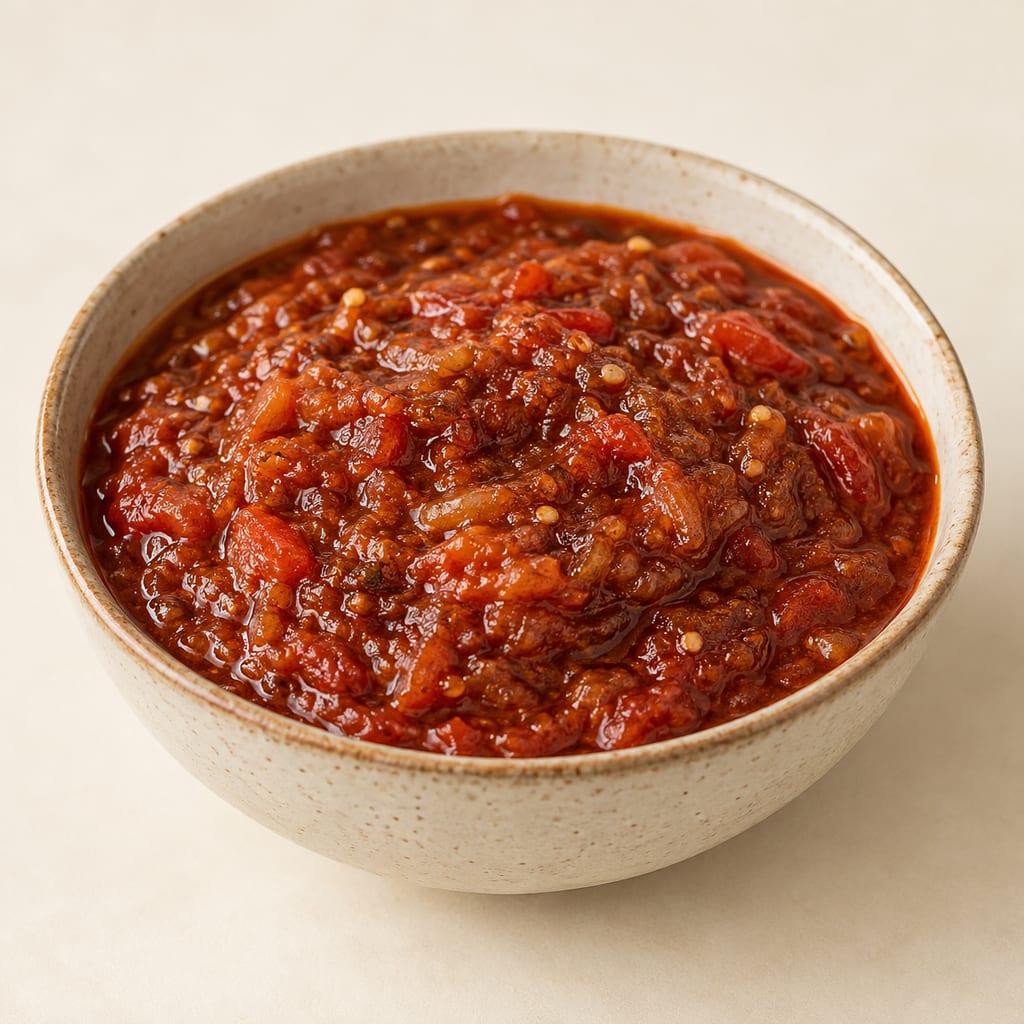
Shidni is a Somali chilli and tomato sauce built on tamarind. The name is used for at least two preparations. In the everyday form, the sauce is blended and then fried for a few minutes, and it sits beside almost every meal. In the festive form, the Xawaash chutney, the same names are used for a much longer cooked chutney that includes dates and mango. The Xawaash page calls that chutney not everyday food and ties its name, Basbaas Alla-bari, to alla-bari, a large prayer gathering followed by a feast.
Keeping the two forms apart matters to a cook. The everyday sauce is fried for about five minutes. The festive chutney cooks for about two hours and is finished with sugar and vinegar, and its keeping claims belong to that method alone.
The everyday method starts by blending tamarind paste, diced tomato, green chillies, garlic and salt until smooth. The tamarind is the source of the sauce's sourness. Tamarind pods are soaked and squeezed to make a thick, acidic paste, and the paste carries the tang that the tomato and chilli alone would not give. Tamarind grows in tropical East Africa, including southern Somalia.
The blended mixture is then heated in oil for about five minutes, with the pan covered because the sauce spatters. The source does not give a storage time for this version, and no keeping period is recorded here.
The Xawaash version is a larger recipe. It blends an onion, garlic, green pepper and water, then tomatoes, dates, mango and coriander, and heats canola oil with a spice mix in a large pot. The purée goes in at once, followed by tomato paste, salt and softened tamarind. The pot cooks on low for two hours, stirred about every thirty minutes, then gets sugar and white vinegar and five more minutes. The page omits chilli in this version, although it notes that Somalis usually make the sauce spicy.
The page says the oil helps the chutney caramelise and acts as a preservative, and that it keeps in the fridge for several months. Those are the page's own statements; the sources reviewed give no independent test of that keeping time. The same page names Achaari as the Brava name, made with dates and tamarind or mangoes and tamarind.
The everyday sauce is a popular accompaniment that appears with nearly every meal, and the same source notes it works as a dip for chips. Some cooks add dates; others leave out both the dates and the tamarind.
For less heat, remove the membrane and seeds. If the sauce is too hot, the advice is to drink milk or yoghurt rather than water. The sources give no further safety rule for the everyday sauce.
The everyday version gives no storage time, no yield and no validated keeping period. The festive chutney has no measured yield in its source either. No dated source for the origin of shidni has been found, and the link between the Somali sauce and the tomato-chilli sauces of other regions is not established by the sources reviewed.
Shidni is a current Somali sauce and chutney; no dated origin is recorded. The name Basbaas alla-bari links it to alla-bari, a large prayer gathering followed by a feast, and the Xawaash page says the chutney is usually served on special occasions.
Scaling: not stated
Remove the membrane and seeds for less heat; if the sauce is too hot, the source advises milk or yoghurt rather than water.
Hazard sourceThe sauce spatters while frying, so the pan is covered.
Hazard sourceThe everyday version gives no storage time; no safe keeping period is established for it.
Both pages describe Somali use; neither gives a locality. The Xawaash page places its Brava name Achaari separately.
Basbaas is the Somali word for chilli and the name of a family of hot sauces served at the table, so each diner can set the heat. Green, coconut and tomato-based versions are all called basbaas.
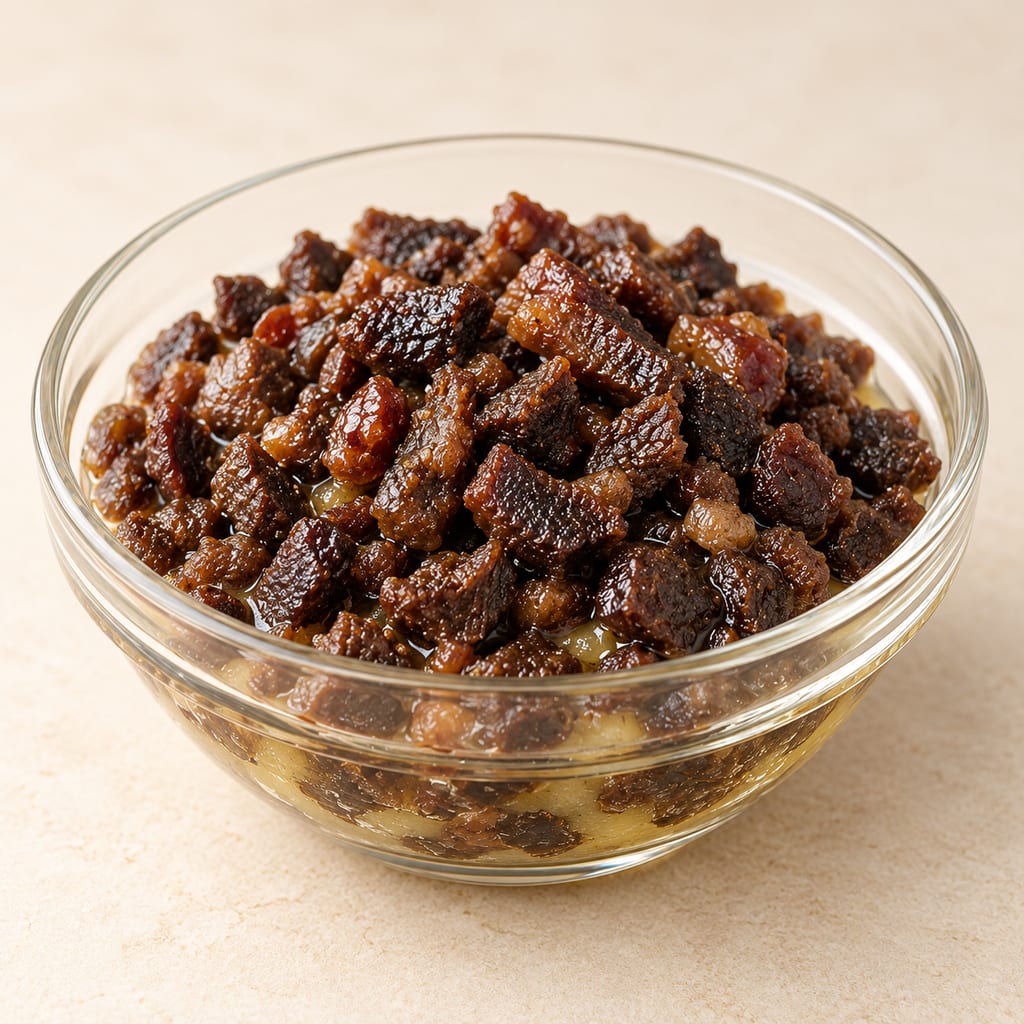
Odka, also called muqmad, is Somali meat that is dried, cut small, fried and kept under fat. It is a dried-meat preserve whose keeping depends on the whole sequence.
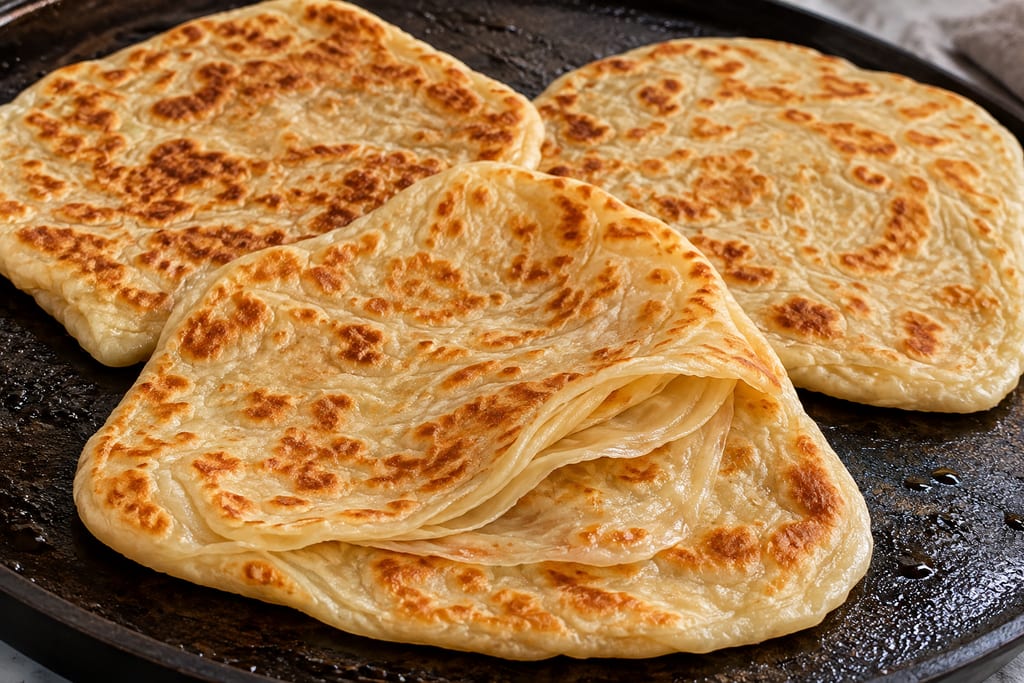
An unleavened Somali wheat flatbread made by oiling and folding soft dough into layers, then griddle-cooking it until browned.
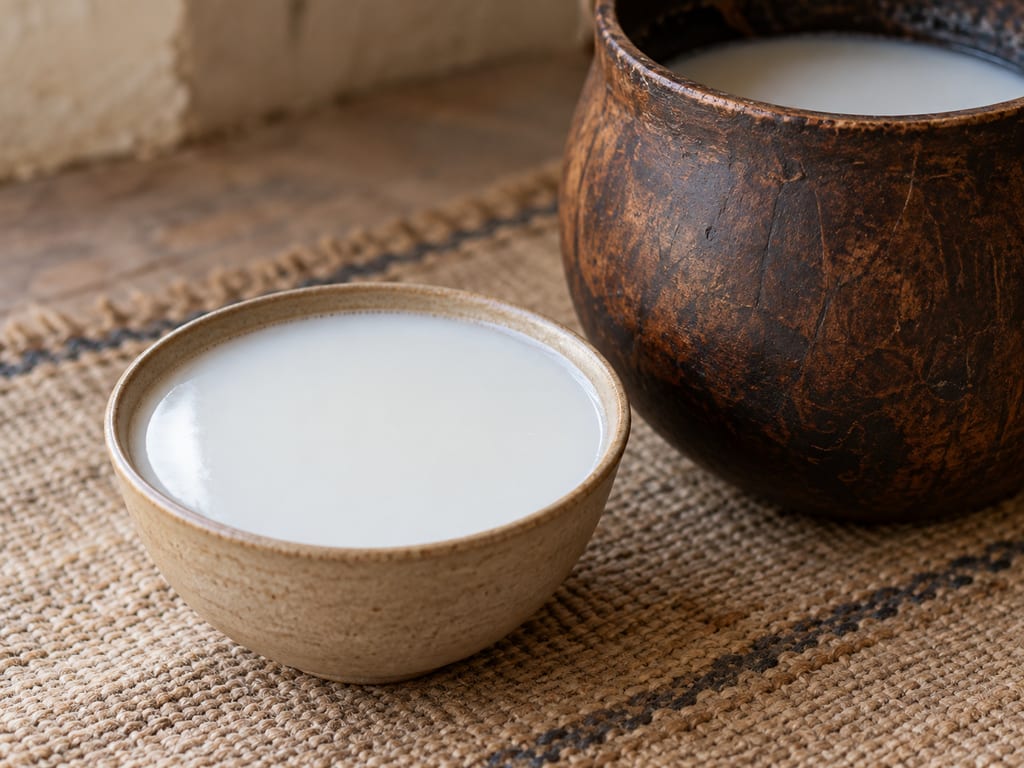
Suusac is a traditional fermented camel-milk drink of Somali pastoral communities in Kenya and Somalia, soured spontaneously in smoke-treated vessels into a thin, acid, smoky milk.
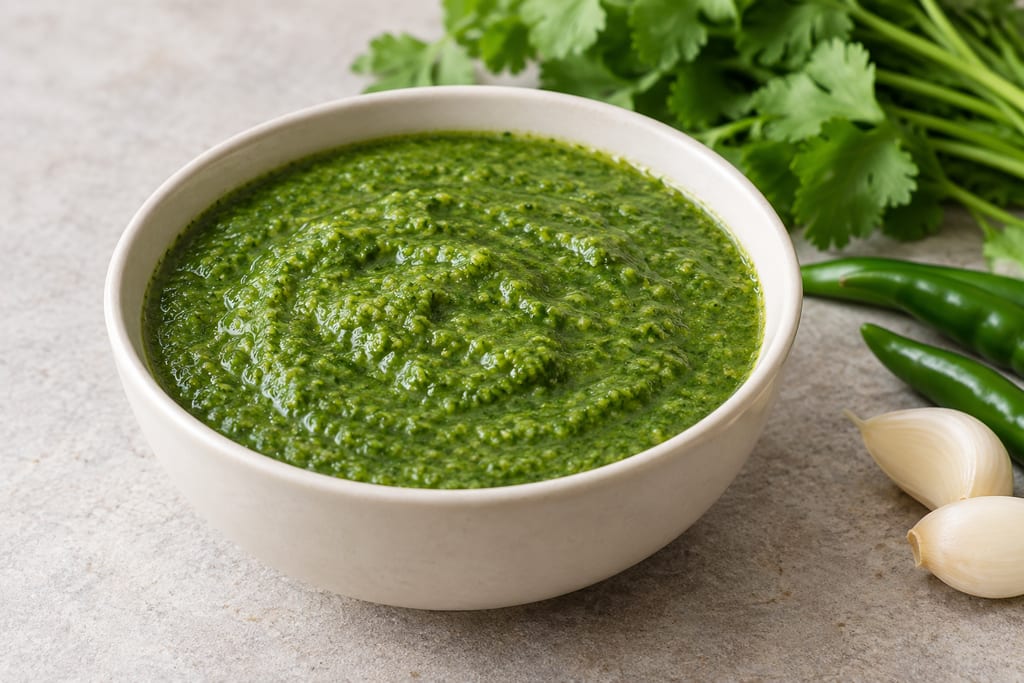
Afghan coriander chatni is a sharp, hot herb sauce with garlic and vinegar. A 2008 Afghanistan manual records green or red pepper and optional walnut; heat and household versions vary.
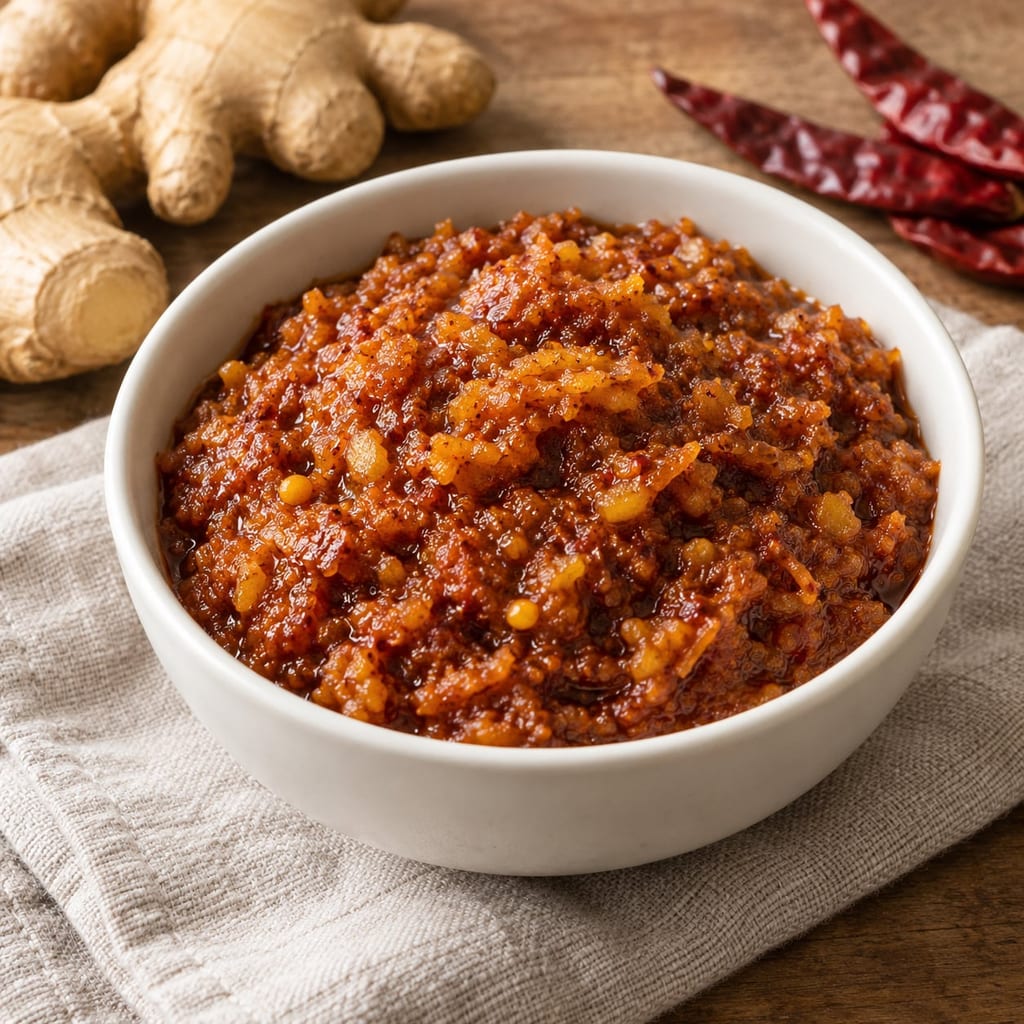
An Andhra ginger-and-urad chutney in which browned dal and briefly fried ginger and chillies are cooled, then ground with jaggery to a coarse paste.
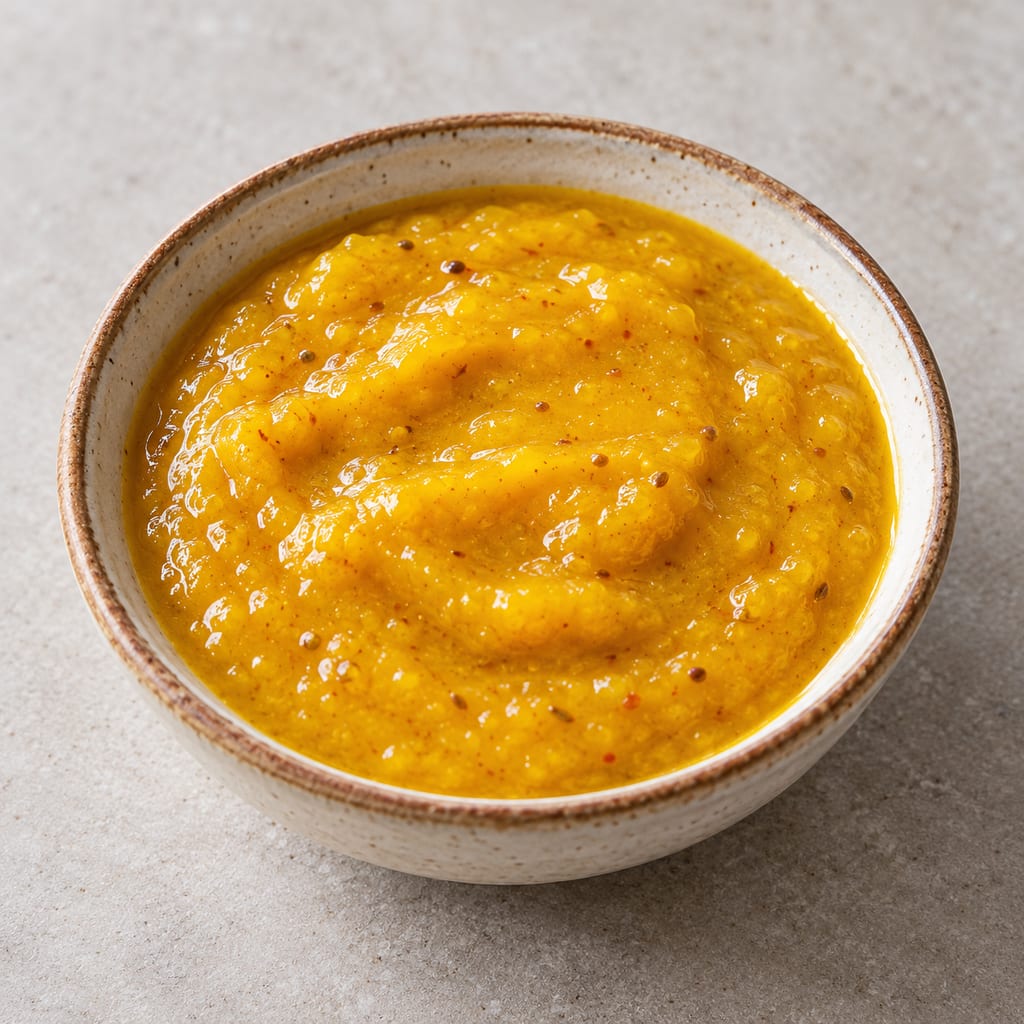
This cooked amba follows a Jewish Food Society recipe that simmers ripe mango with onion, garlic, mustard seed and warm spices into a tangy Middle Eastern condiment.
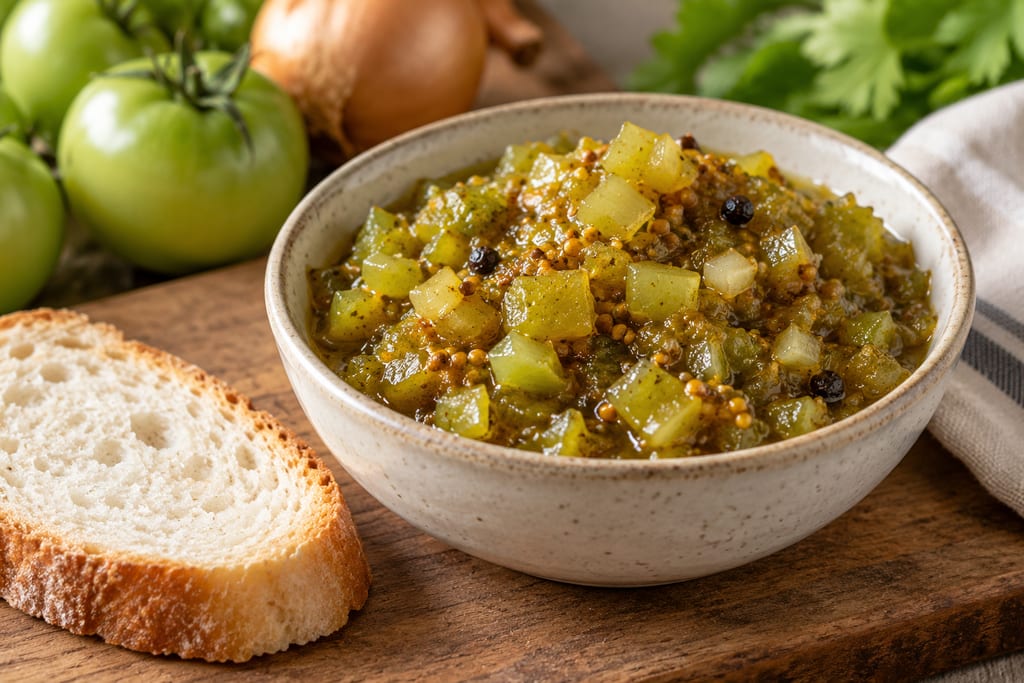
Australian green tomato pickles and relishes vary. This partial version follows ABC Western Victoria’s 2018 pickle recipe, not Beerenberg’s commercial formula. Sources document examples from 1944 onward, not a single origin.
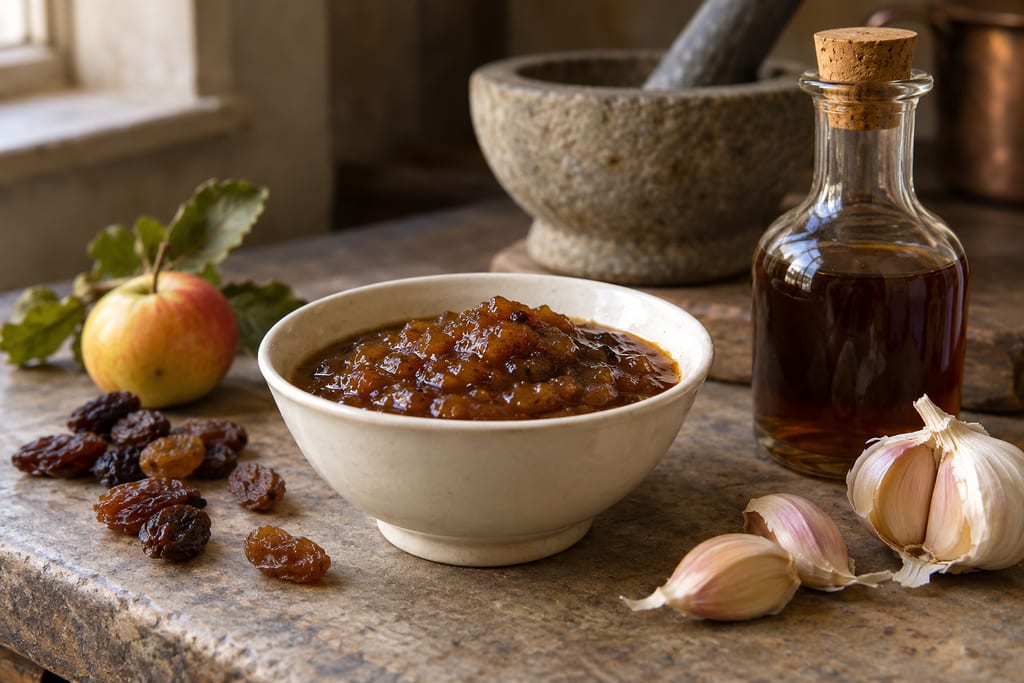
Eliza Acton's Bengal receipt for chetney sauce: stoned raisins and a hard acid fruit pounded with brown sugar, ginger, salt, cayenne and garlic, then thinned with vinegar to the consistence of thick cream.
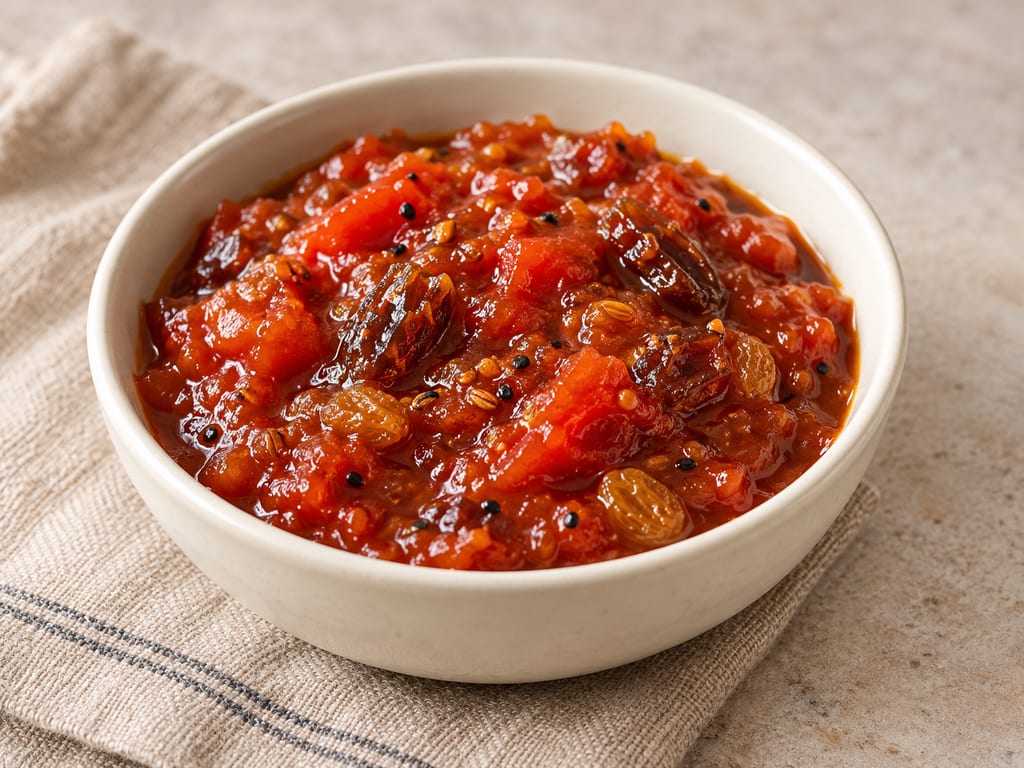
A cooked Bengali meal chutney combining tomatoes, dates, raisins, ginger and panch phoron.

A spicy South African vegetable relish of onion, carrot, pepper, tomato, curry seasoning and beans, cooked briefly and served warm or cold beside pap and grilled meat.
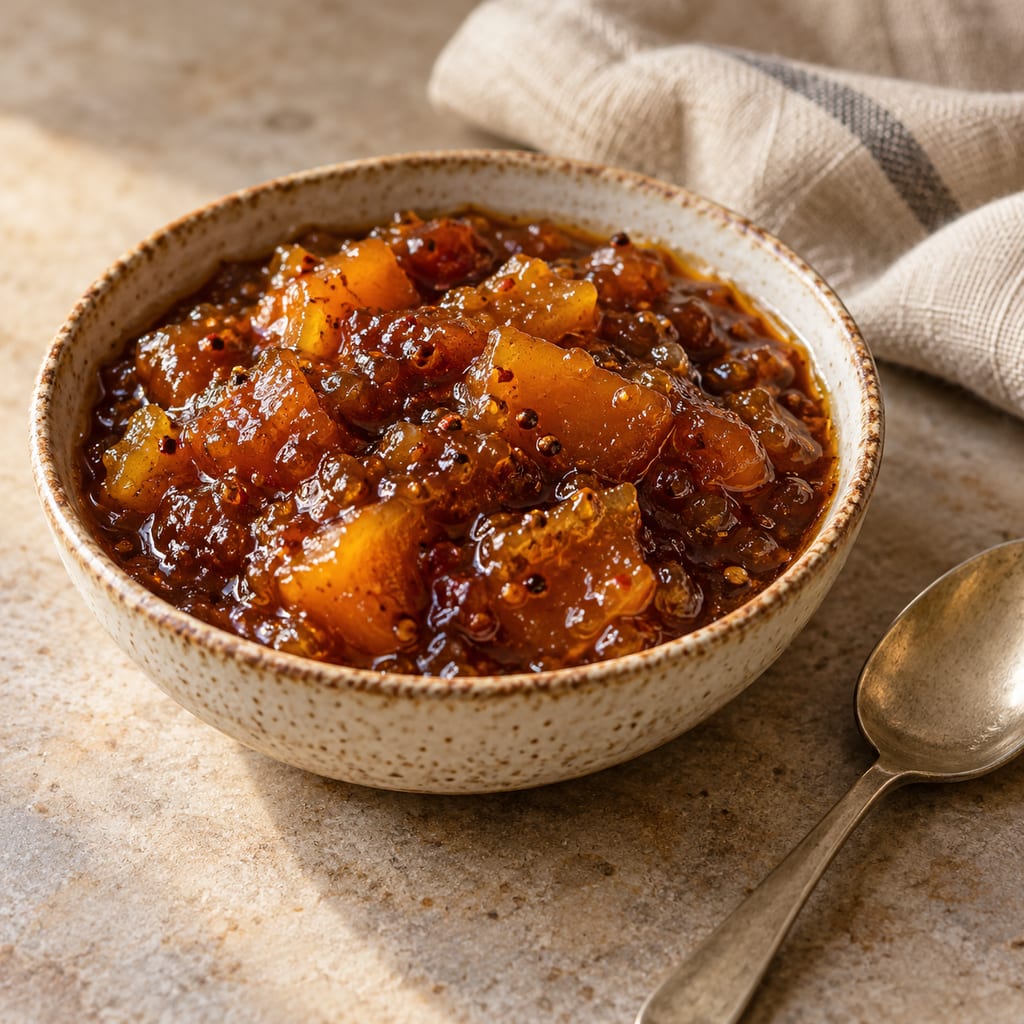
A broad account of cooked chutney traditions: fruit or vegetables combined with sugar, spices and sometimes acid, often boiled into a thick condiment. This record is historical and process context, not a formula or storage recipe.
No community contributions have been published for this entry yet.
Sign in to contribute. Published comments and photos are free to read.
Africa on the BlogMethod · Ingredients · Use · Heat
Shidni (Somali chilli sauce with tamarind)Ingredients: 3 tablespoons tamarind paste, 3 diced tomatoes, 6 green chillies, 2 or 3 garlic cloves, salt, 1 tablespoon olive oil.
Blend all but the oil, heat the oil, cook the mixture about five minutes, cover the pan because it spatters.
Everyday sauce eaten with nearly every meal; some cooks add dates; tamarind is soaked and squeezed to a paste.
Remove membrane and seeds for less heat; milk or yoghurt rather than water if too hot.
Cited in: Two names, two kinds of sauce; The everyday sauce; Eating it and handling the heat; What the sources leave open
XawaashHistory · Names · Method
Somali Chutney (Xawaash)Names: Shidni, Shigni, or Basbaas Alla-bari; the name links to alla-bari, a prayer gathering followed by a feast.
Festive method: dates, mango, tomato paste, tamarind, oil, sugar, vinegar; cook on low for two hours.
Oil acts as a preservative; the page says the chutney keeps in the fridge for several months.
Brava name Achaari, made with dates and tamarind or mangoes and tamarind.
Cited in: Two names, two kinds of sauce; The festive chutney; What the sources leave open