Basbaas
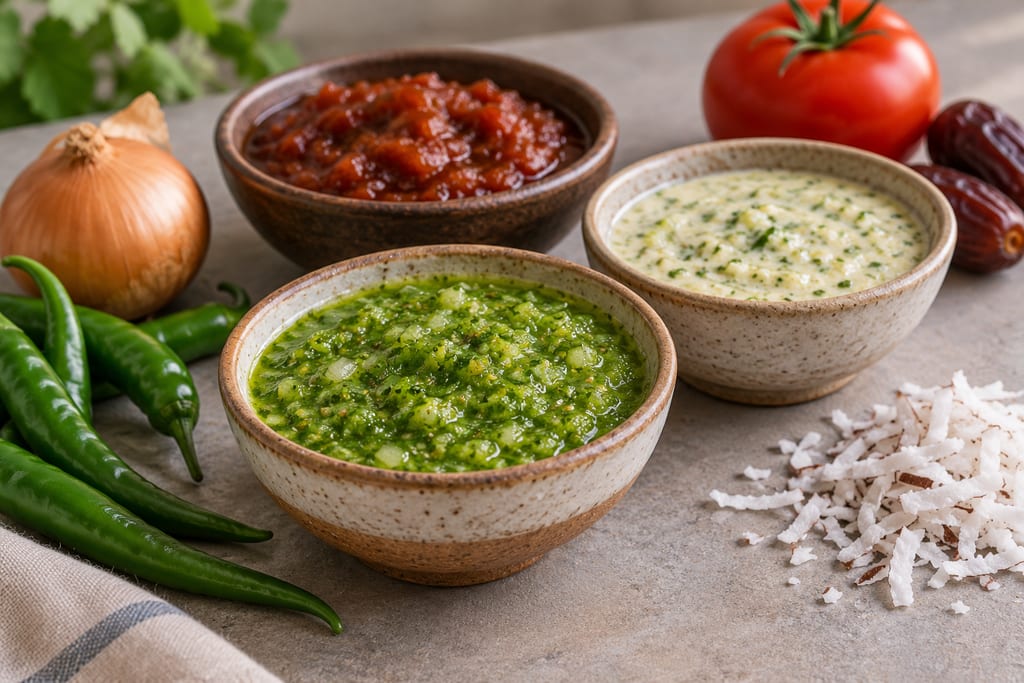
Basbaas is the Somali word for chilli and the name of a family of hot sauces served at the table, so each diner can set the heat. Green, coconut and tomato-based versions are all called basbaas.
 FermenteaWhere food goes to change
Muqmad · Odka · Oodkac
Odka, also called muqmad, is Somali meat that is dried, cut small, fried and kept under fat. It is a dried-meat preserve whose keeping depends on the whole sequence.
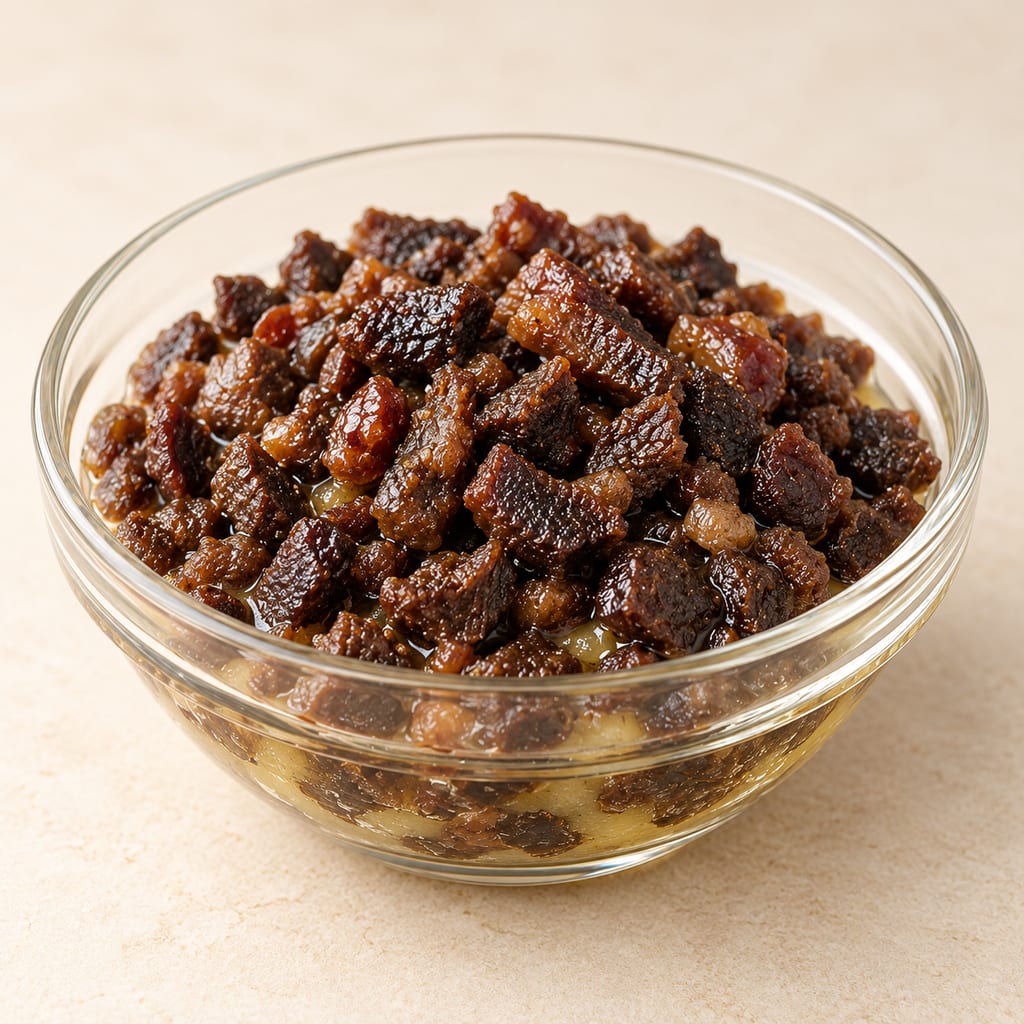
Muqmad, known in Somali as odka, is meat preserved by a sequence of three operations. The meat is dried, cut into small pieces and fried, and then kept with fat. Each operation does a different job. Drying removes a large part of the water that would otherwise let the meat spoil. Frying cooks the dried pieces. The fat then protects them while they are stored.
Accounts treat the sequence as the preservation method. A dried meat that is not fried and not kept with fat is a different product, and the fat is not a sealant that would keep fresh meat on its own.
Drying is the first control on water. Cutting the dried meat into small pieces gives the frying an even surface to work on. Frying adds heat to a product that has already lost much of its moisture. The storage fat then covers the pieces and keeps air from them.
The catalogue describes this as a combination of substantial water removal, cooking and a protective medium. It is not a regional name for ordinary dried meat. No figure is recorded for it. The account does not record the drying time, the frying temperature or the proportion of fat, so this page gives none of them.
The catalogue places odka in traditional eastern Africa and names the Somali form. The practice has no recorded date, and its beginning cannot be fixed. Related Somali preparations are recorded in a heat-processing study. A muqmad entry there describes lean meat, fresh or previously dried, heated with little or no added water until much of its moisture leaves, then combined with separately rendered camel fat, salt and optional pepper or garlic. The two accounts differ in detail, so the names should be read as close relatives rather than as one fixed recipe.
Accounts describe how odka is made and stored. They do not describe how it is served, on what occasions it is eaten, or how long a stored batch is kept in use.
The catalogue states that these historical descriptions are not processing instructions. No shelf life, drying duration, frying temperature or safety criterion is recorded here. Smell, colour and taste do not show that a stored batch is safe, and a batch that has spoiled or shows mould or off smells should be discarded.
Odka is documented as a Somali practice in the catalogue's account of traditional eastern African preservation. No dated source is given.
Country-level only. The source names Somali odka and the catalogue places the practice in eastern Africa; it gives no locality.
Basbaas is the Somali word for chilli and the name of a family of hot sauces served at the table, so each diner can set the heat. Green, coconut and tomato-based versions are all called basbaas.
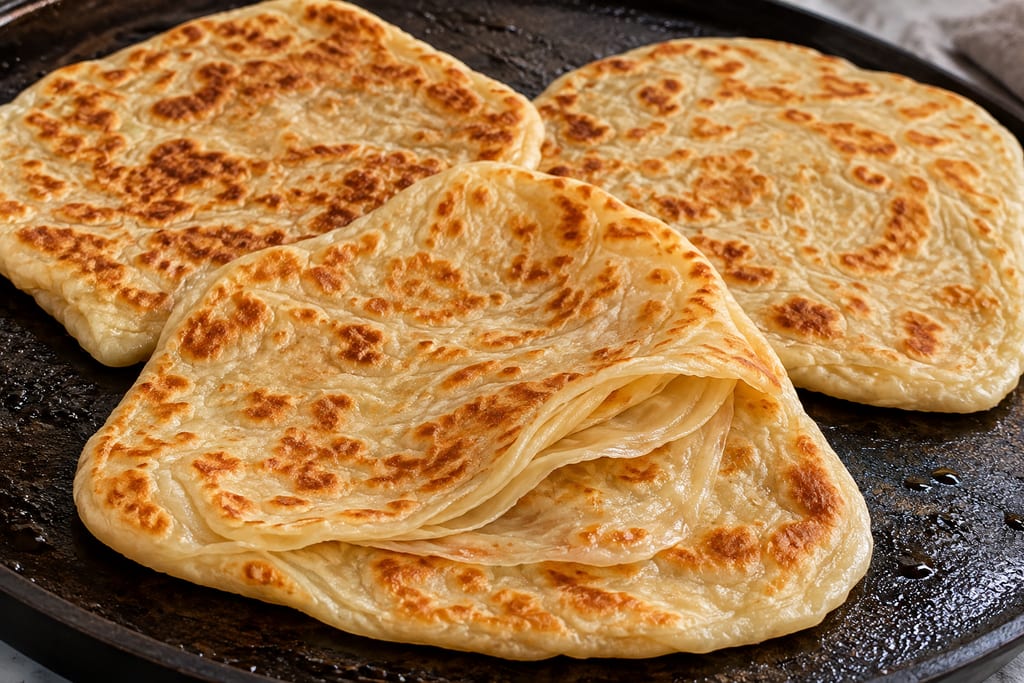
An unleavened Somali wheat flatbread made by oiling and folding soft dough into layers, then griddle-cooking it until browned.
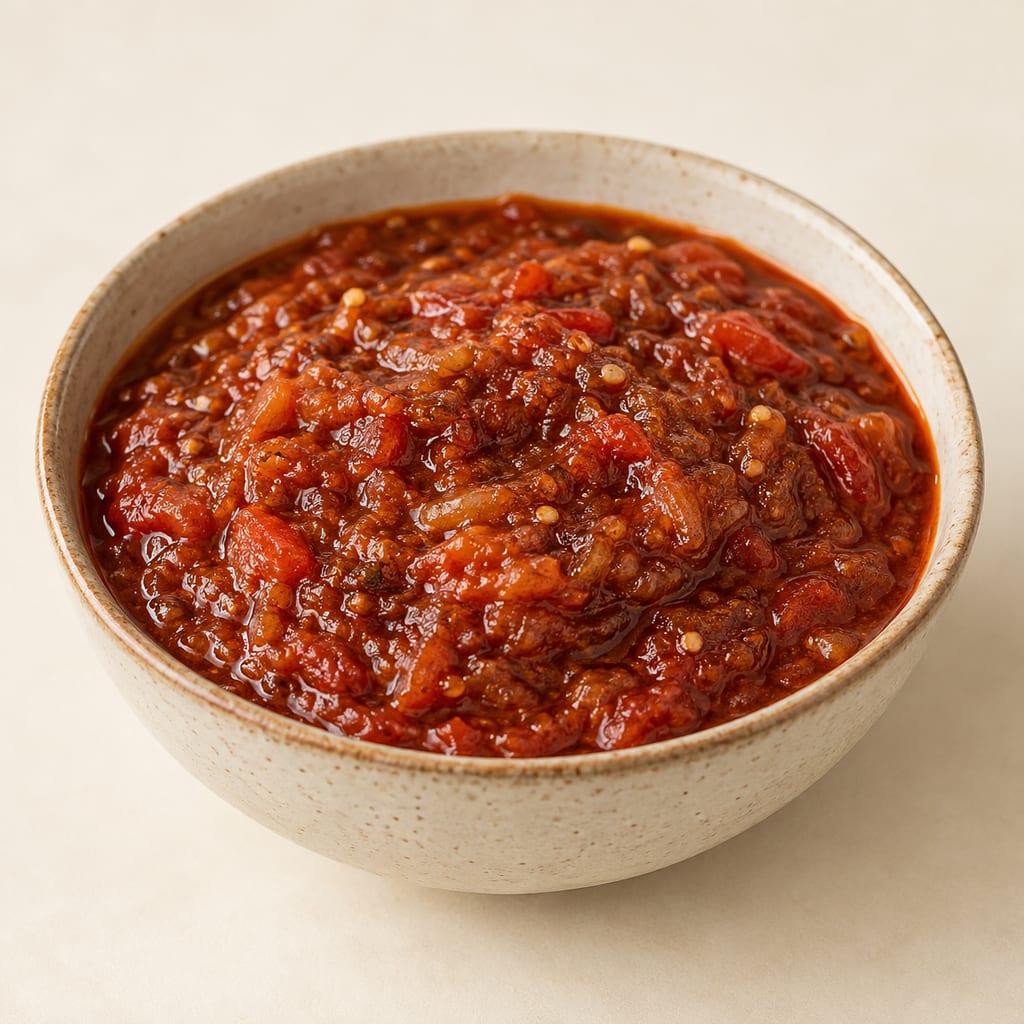
Shidni, also called shigni, is a Somali tomato, chilli and tamarind sauce. An everyday version is fried for about five minutes; a festive chutney with dates and mango cooks for about two hours under the name basbaas alla-bari.
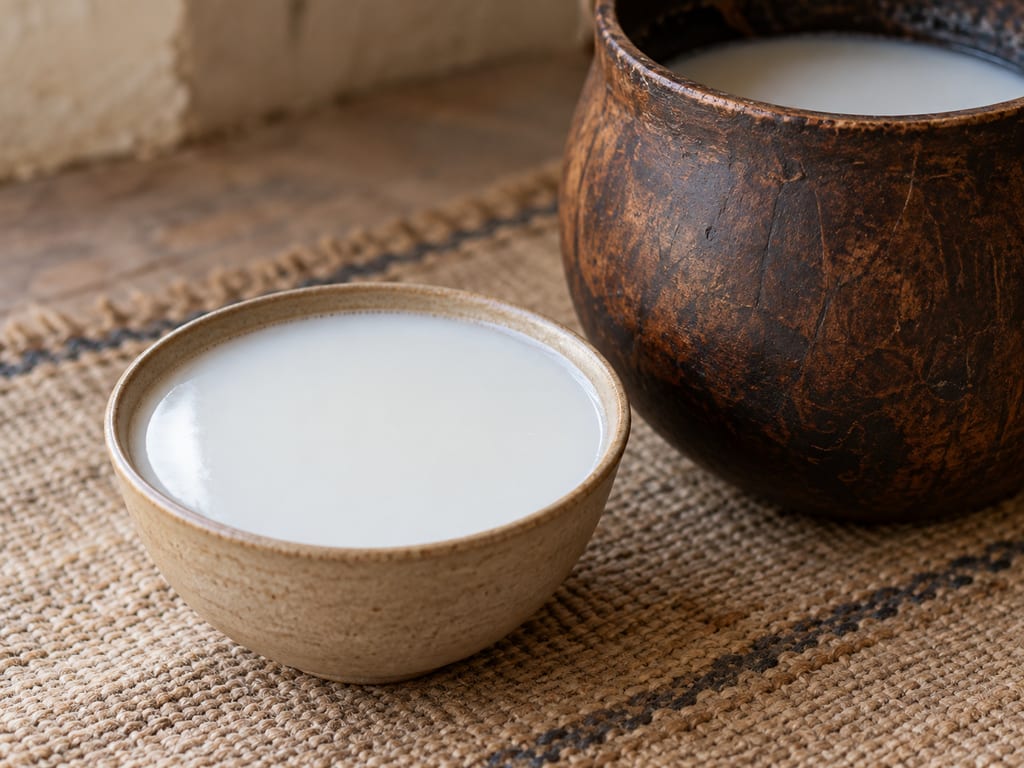
Suusac is a traditional fermented camel-milk drink of Somali pastoral communities in Kenya and Somalia, soured spontaneously in smoke-treated vessels into a thin, acid, smoky milk.
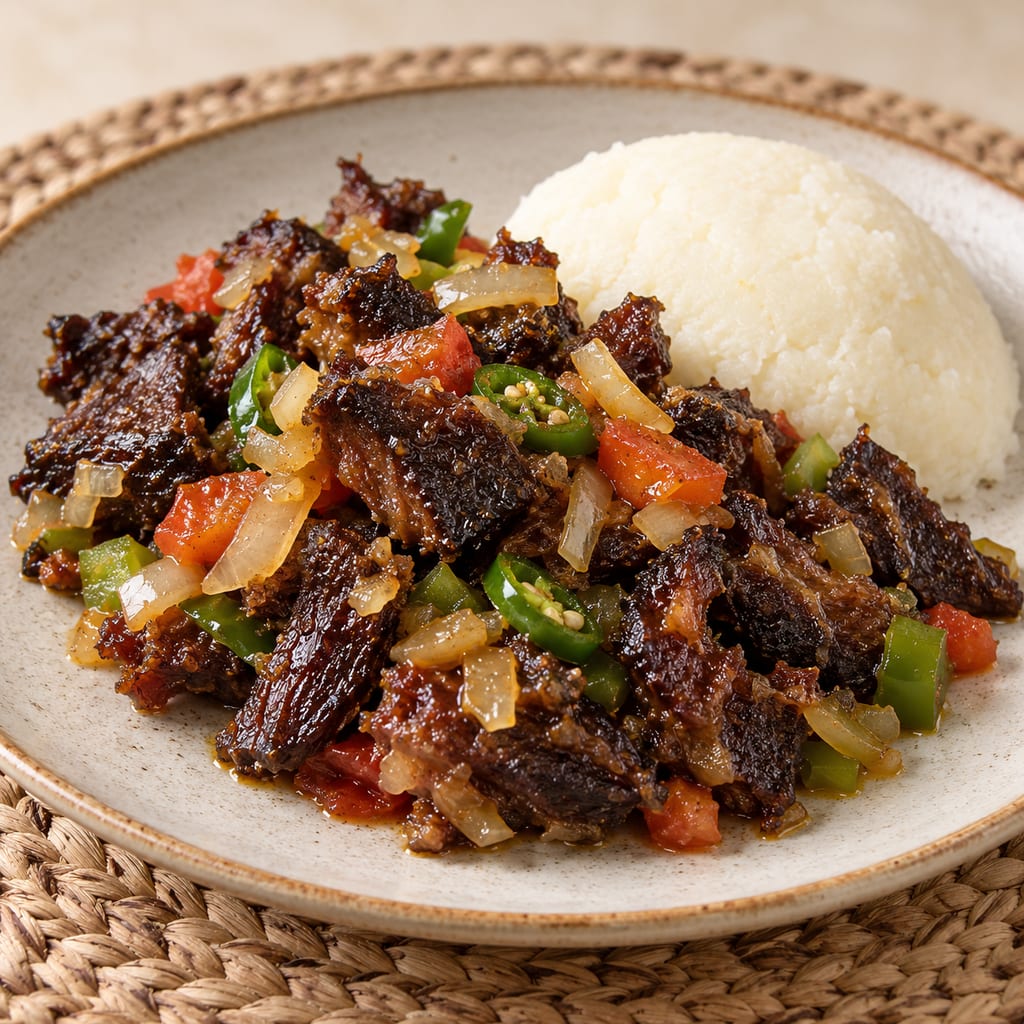
Alina Magano Johannes’s Oondhingu is a family dish from Onyaanya, Oshikoto, in northern Namibia: softened dried beef fried with vegetables and served with pap.
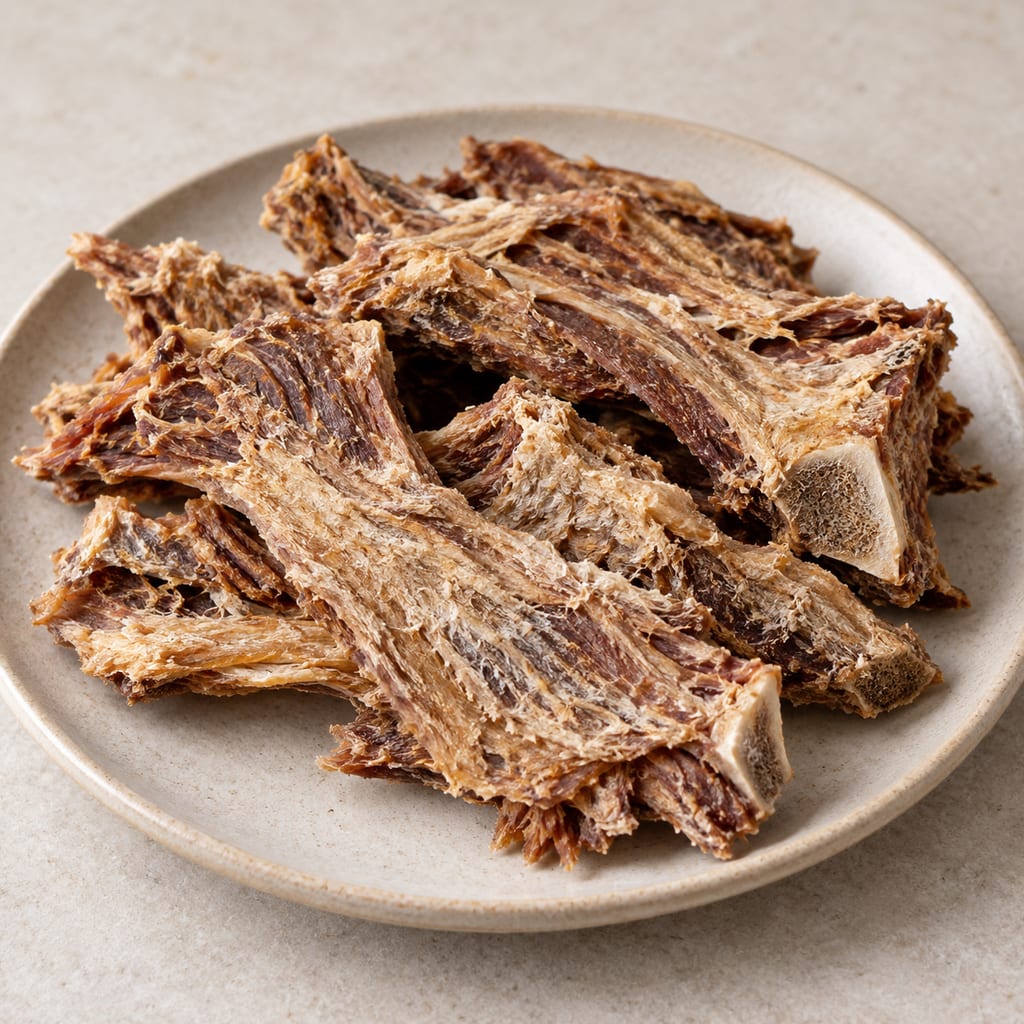
Alpaca charqui is Andean dried meat, made from camelid meat exposed to hot sun by day and frost by night at high altitude, the ancestor of the modern word jerky.
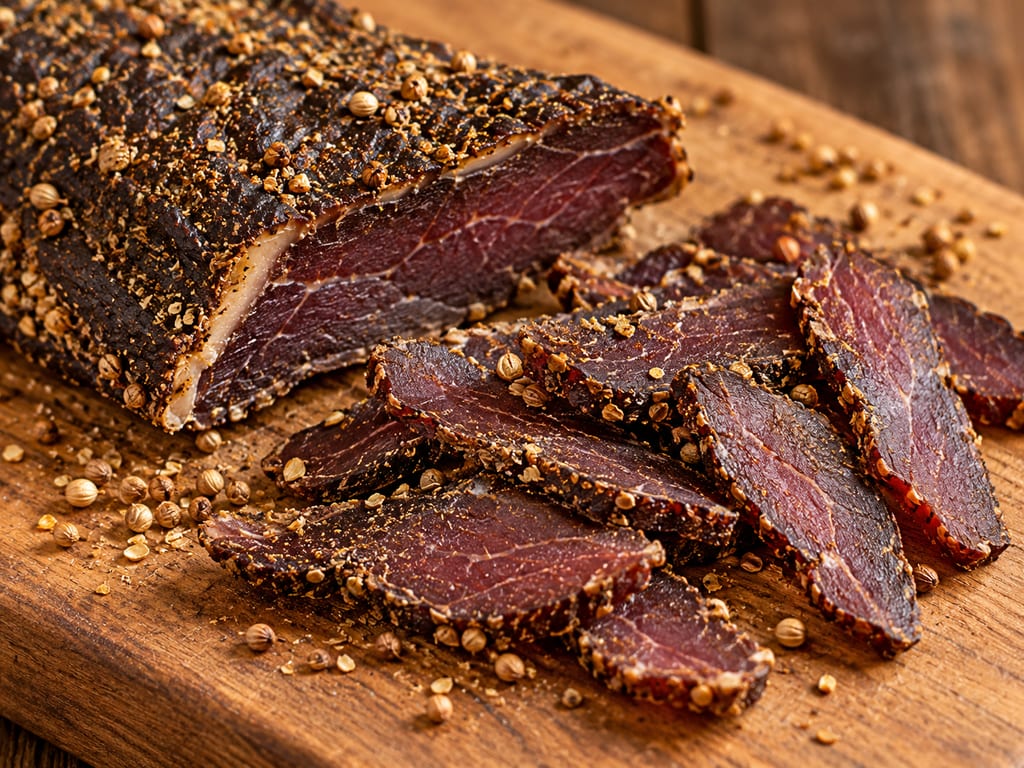
Strips of whole-muscle beef or game seasoned with salt, vinegar, roasted coriander and pepper and air-dried without cooking, sold anywhere from soft and moist to hard and very salty.
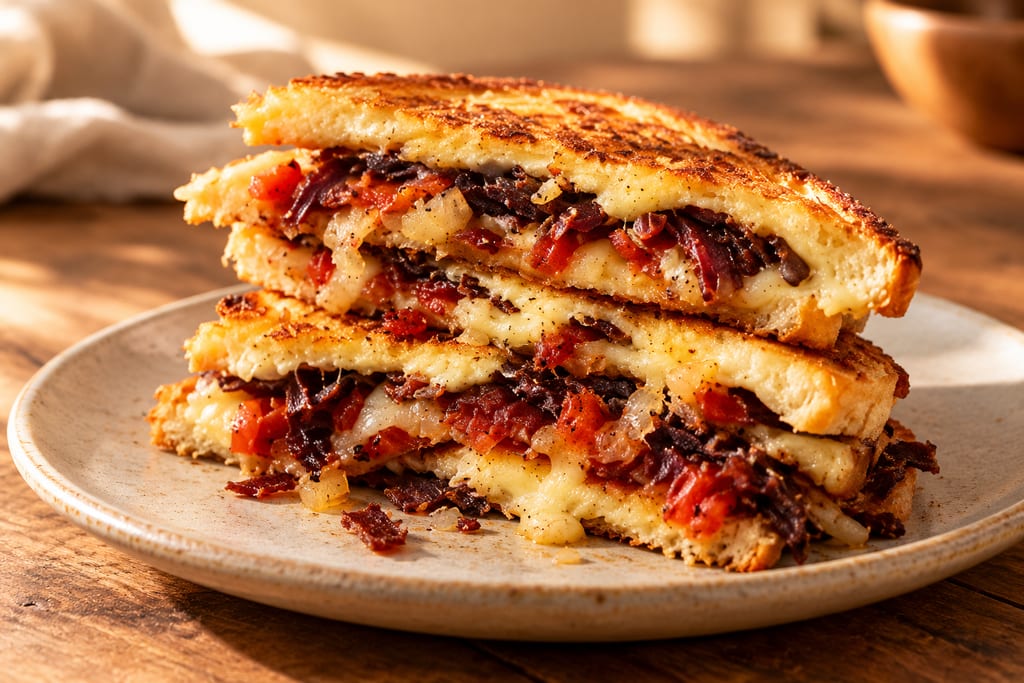
Chopped biltong, sweet onion, cream cheese and Cheddar fill bread toasted in a hinged grid over gentle coals, then finished with biltong dust.
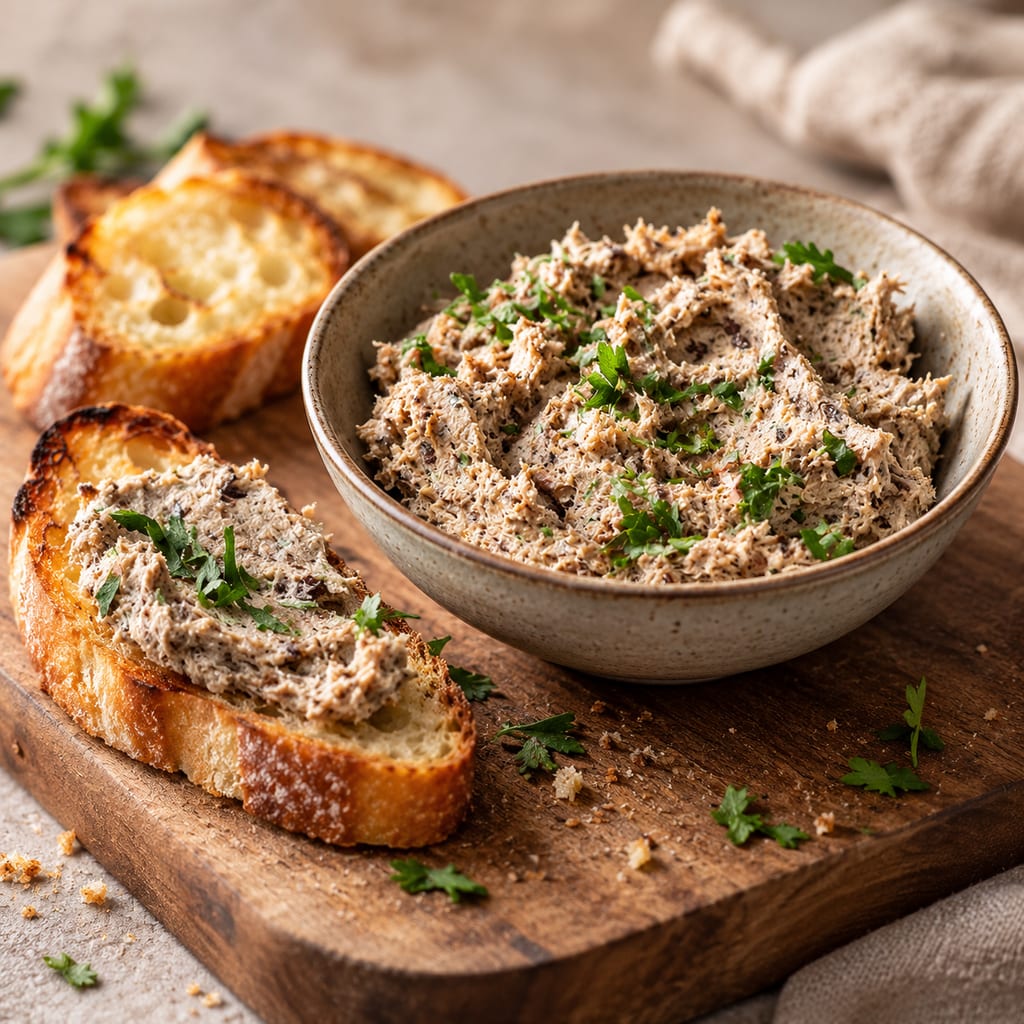
A cold biltong spread with sour cream, mayonnaise, mustard, lemon and herbs; serve it with crackers, crostini or bread.

Biltong, bacon and vegetables simmer in tomato-herb stock, then join cooked pasta, milk, cream and Cheddar in this outdoor potjie.
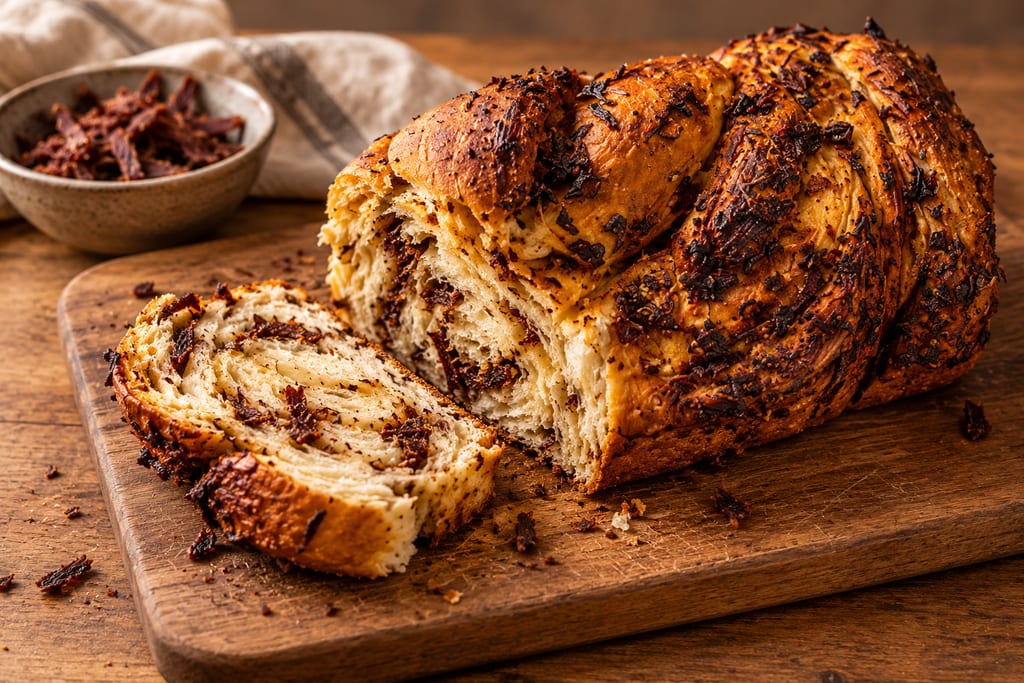
Yeasted bread wrapped around biltong, tomato pesto, Cheddar and feta, split lengthwise into a braid and baked; served with chilli-biltong butter.
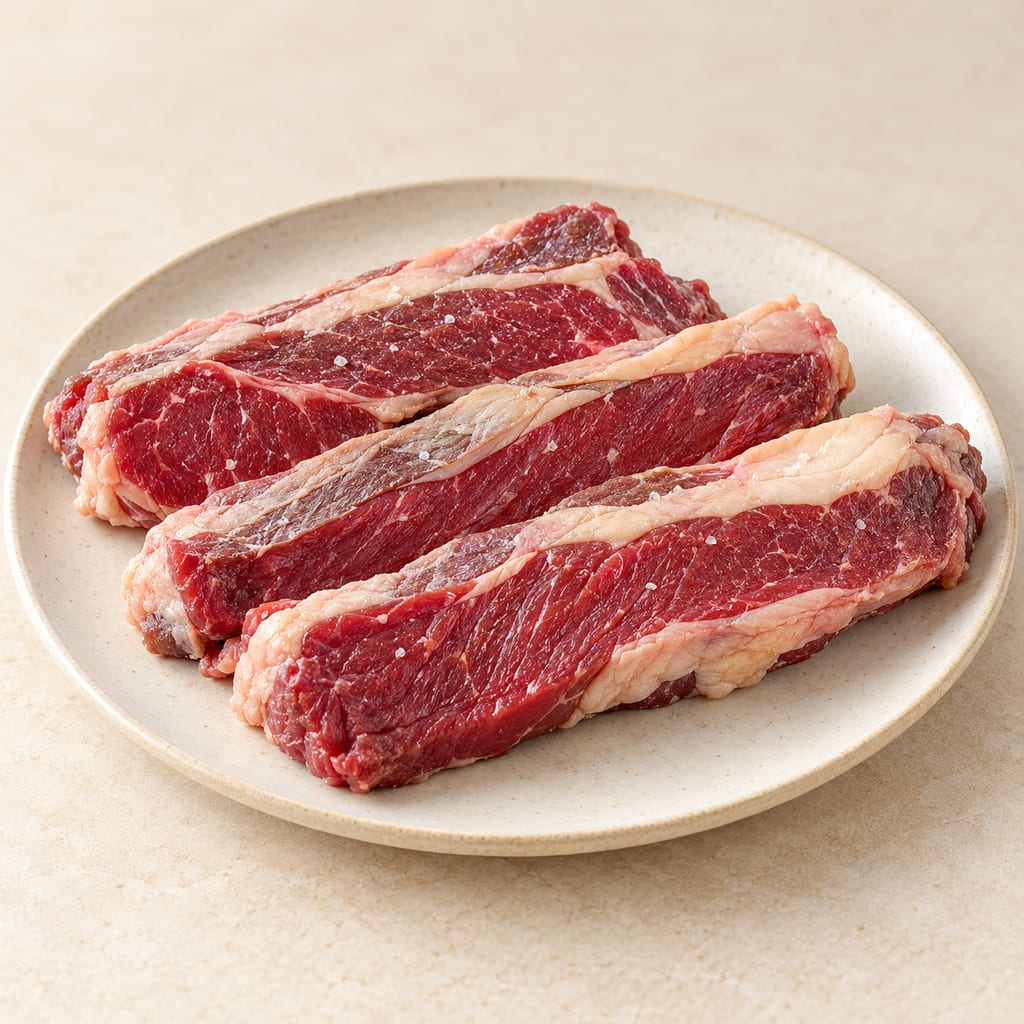
Beef given limited salt and partial surface drying, a short-keeping Brazilian meat that is much less durable than fully dried charque and is treated as a cold-chain product.
No community contributions have been published for this entry yet.
Sign in to contribute. Published comments and photos are free to read.
Food and Agriculture Organization of the United NationsMethod · History
FAO document x6932e02Somali odka: meat dried, cut small, fried and stored with fat.
The combination of substantial water removal, cooking and a protective medium is the point of the practice.
Cited in: What odka is; Why the stages matter; Setting and history; Eating and use; Limits of the record