Basbaas
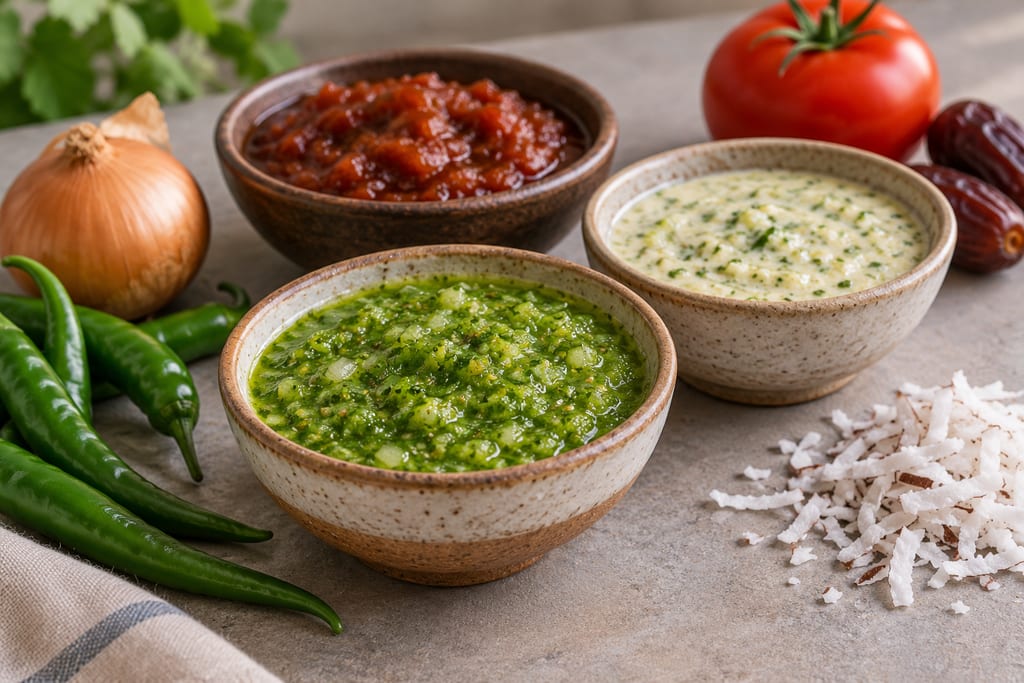
Basbaas is the Somali word for chilli and the name of a family of hot sauces served at the table, so each diner can set the heat. Green, coconut and tomato-based versions are all called basbaas.
 FermenteaWhere food goes to change
Modern method
Sabaayad · Sabayad
An unleavened Somali wheat flatbread made by oiling and folding soft dough into layers, then griddle-cooking it until browned.
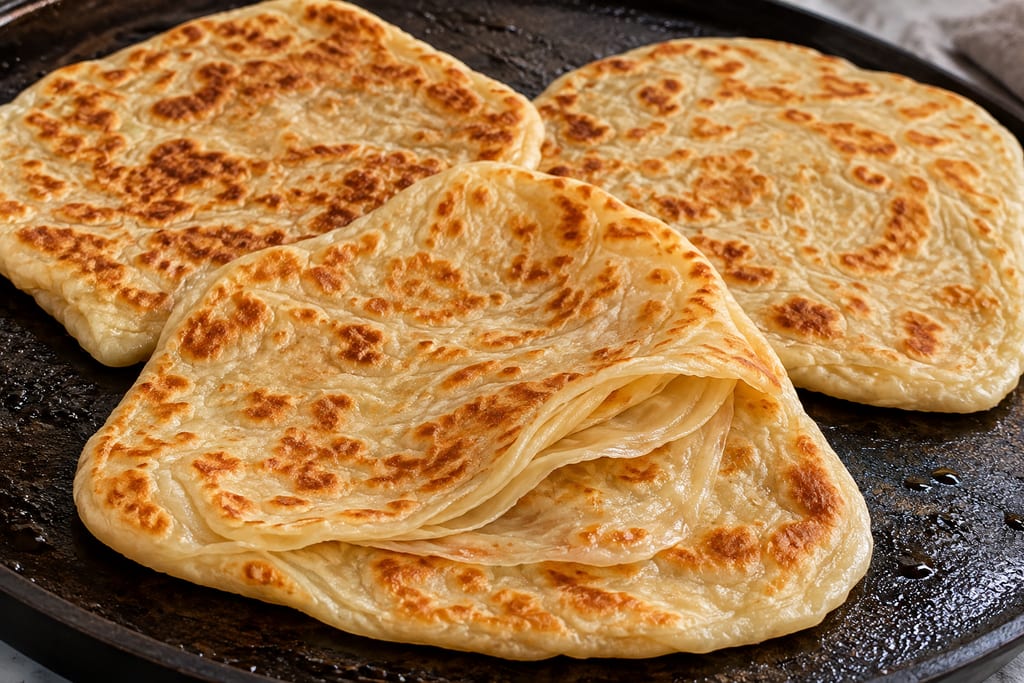
Sabaayad is a wheat flatbread shaped by folding oiled dough rather than by pouring batter onto a pan. In the basic version recorded here, the ingredients are plain flour, water, salt and oil. The dough is rolled thin, brushed with oil, folded into a square and rolled once more. On the griddle it browns in patches and may puff slightly, while the folds leave a tender, layered interior.
The name appears in variant spellings, including sabayad. The Somali food blog that supplies this formula calls it a Somali flatbread and describes eating it with tea, stews and sauces, or with sweet accompaniments such as honey, butter and sugar. These serving choices show its range from a savoury meal bread to a simple snack. They do not require changing the base dough.
A childhood recollection by novelist Nadifa Mohamed places sabaayad beside fried liver in a Somali breakfast during the 1980s. She remembers smoke from a charcoal stove and bread being served by family. That account makes the meal vivid, but it represents one household memory rather than a rule for Somali breakfasts. It also records a period of scarcity, so the remembered food sits within family life and difficult conditions, not only culinary nostalgia.
The dough starts with 3 cups of all-purpose plain flour, a teaspoon of salt, 2 tablespoons of oil and an initial cup of water. The water goes in gradually because the amount a flour takes up varies. Add it by the tablespoon until the dough feels soft; if it clings to the hands or bowl, dust lightly with flour rather than adding a large handful at once.
Kneading for 5–10 minutes smooths the dough so it can stretch without tearing during rolling. The 30-minute covered rest gives the flour time to absorb water and lets the dough relax. That makes it easier to flatten into a circle. This is a rest for handling, not a fermentation: the basic formula contains no yeast, sourdough starter or other leavener.
Oil on the rolled surface helps separate the folds. Bring the edges toward the centre, fold the remaining sides over, then roll the packet out again. The repeated layers distinguish this technique from a single flat sheet of dough. Keep the rolling flour light. Excess flour can stay between the folded surfaces and make them dry rather than soft; the source only calls for a lightly floured surface.
The source rounds each portion to about 8 inches before folding and again after folding. The first circle creates the layers, and the second rolling evens the square packet into a griddle-ready round. The exact edge shape is less important than keeping a similar thickness from centre to rim, so each bread cooks at a similar rate.
A medium-hot griddle or heavy skillet cooks the flatbread one at a time. A little oil keeps the surface from sticking and helps the exterior brown. Turn the bread after the first side has developed golden patches, then cook the other side. It may puff slightly and develop a crisp, browned surface. Because the recipe gives neither a fixed cooking time nor a measured surface temperature, use the browning as a quality cue and cook the layered centre through.
Heat control matters because the dough has several layers. A pan that is too hot can darken the outside before the folded centre is cooked; one that is too cool can dry the bread while it waits for colour. Cook the bread through, and reduce the heat if the surface browns too quickly. Drain briefly on paper towels and serve warm.
The griddle is a practical home tool, while the rest of the method relies on a rolling pin, a bowl and clean hands. The formula yields eight large breads, so the cook can work one at a time without crowding the pan. The source gives no reliable basis for multiplying the batch; make another batch rather than storing a large quantity of dough at room temperature.
Sabaayad belongs to a wider Somali bread table, but it should not be merged with every regional flatbread. A scientific field study describes laxoox or canjeero as a fermented batter bread, with a sour taste and porous, spongy structure. The plain Sabaayad formula here is made from a kneadable, unleavened dough that is folded and griddled. They differ in leavening, dough consistency and cooking technique even when both may accompany meals.
Other Sabaayad recipes add whole-wheat flour, sourdough, yeast or extra enrichments. Those are meaningful versions, not ingredients to blend into this plain formula. The basic recipe’s simplicity makes its structure easy to understand: dough strength comes from wheat and kneading, the rest makes it easier to roll, and oil-folding produces the layers. Changing the flour or adding a leavener alters that balance.
The sources do not establish when Sabaayad first appeared or whether one folding pattern is universal. A contemporary formula and a personal family memory can document how people make and eat the bread without settling its origin or the full range of Somali household practice.
Serve Sabaayad warm with tea, stew or a sauce. For a sweet breakfast or snack, roll it with butter and sugar or drizzle it with honey. The plain dough is a useful base because its folds work with both savoury and sweet accompaniments without requiring a filled centre.
Flour is raw until the flatbread is cooked. Avoid tasting the dough, wash hands and utensils after handling it, and clean the work surface. Use a utensil to turn the bread on the hot griddle and keep hands away from the pan and its oil. Serve the bread cooked through; the recipe does not state a core temperature or exact cooking time, so neither is added here.
A 2009 Somali food blog records a plain flour, water, oil and salt recipe. Novelist Nadifa Mohamed recalls sabaayad alongside fried liver as part of a childhood breakfast in Somalia in the 1980s. These are modern documentation and one personal memory, not a dated origin account.
Yield 8 flatbreads · Scaling: source batch only
Raw flour can carry germs. Do not taste the uncooked dough; wash hands and clean bowls, utensils and work surfaces after handling it.
Hazard sourceThe flatbreads cook one at a time on a hot, lightly oiled pan; oil and pan surfaces can burn.
Hazard sourceDo not eat raw dough; cook the flatbread through and clean hands and equipment after handling raw flour.
Control sourceUse only a little pan oil, cook one bread at a time, and turn it with a utensil while keeping hands clear of the hot pan.
Control sourceA Somali food writer documents the recipe, and novelist Nadifa Mohamed recalls sabaayad in a Somali childhood breakfast. These support a country-level association, not a single place of origin.
Basbaas is the Somali word for chilli and the name of a family of hot sauces served at the table, so each diner can set the heat. Green, coconut and tomato-based versions are all called basbaas.
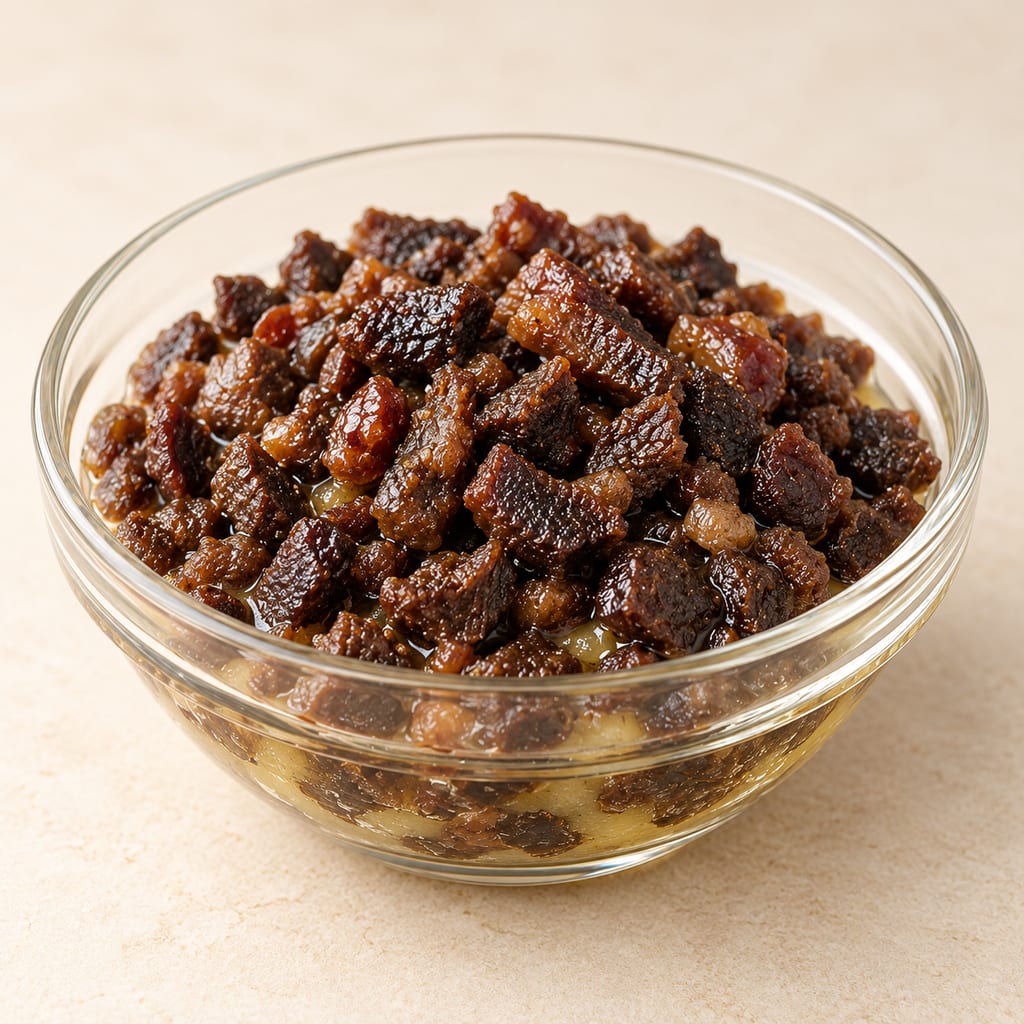
Odka, also called muqmad, is Somali meat that is dried, cut small, fried and kept under fat. It is a dried-meat preserve whose keeping depends on the whole sequence.
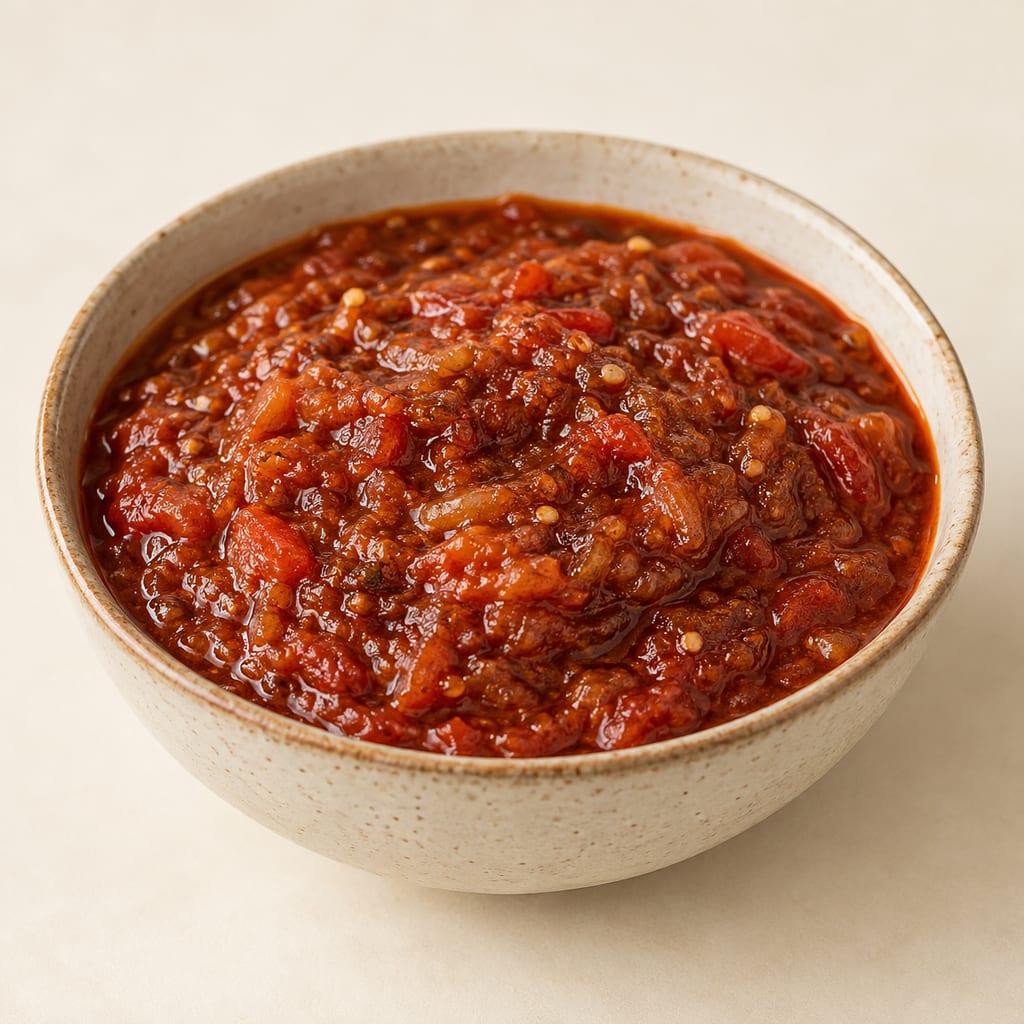
Shidni, also called shigni, is a Somali tomato, chilli and tamarind sauce. An everyday version is fried for about five minutes; a festive chutney with dates and mango cooks for about two hours under the name basbaas alla-bari.
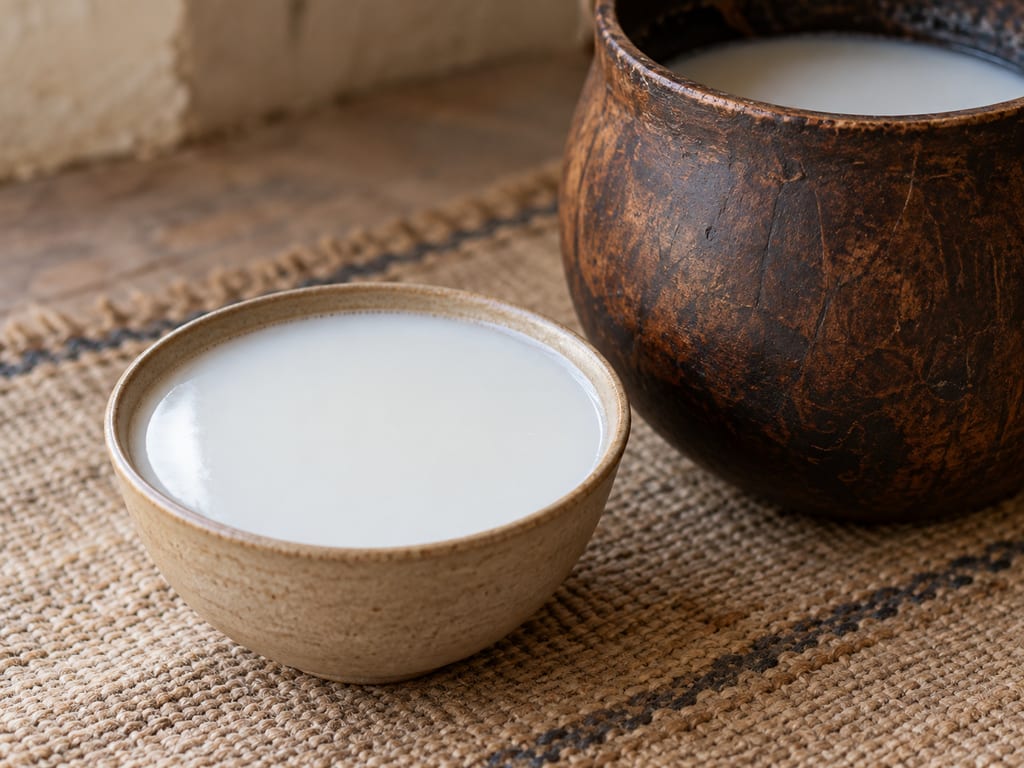
Suusac is a traditional fermented camel-milk drink of Somali pastoral communities in Kenya and Somalia, soured spontaneously in smoke-treated vessels into a thin, acid, smoky milk.
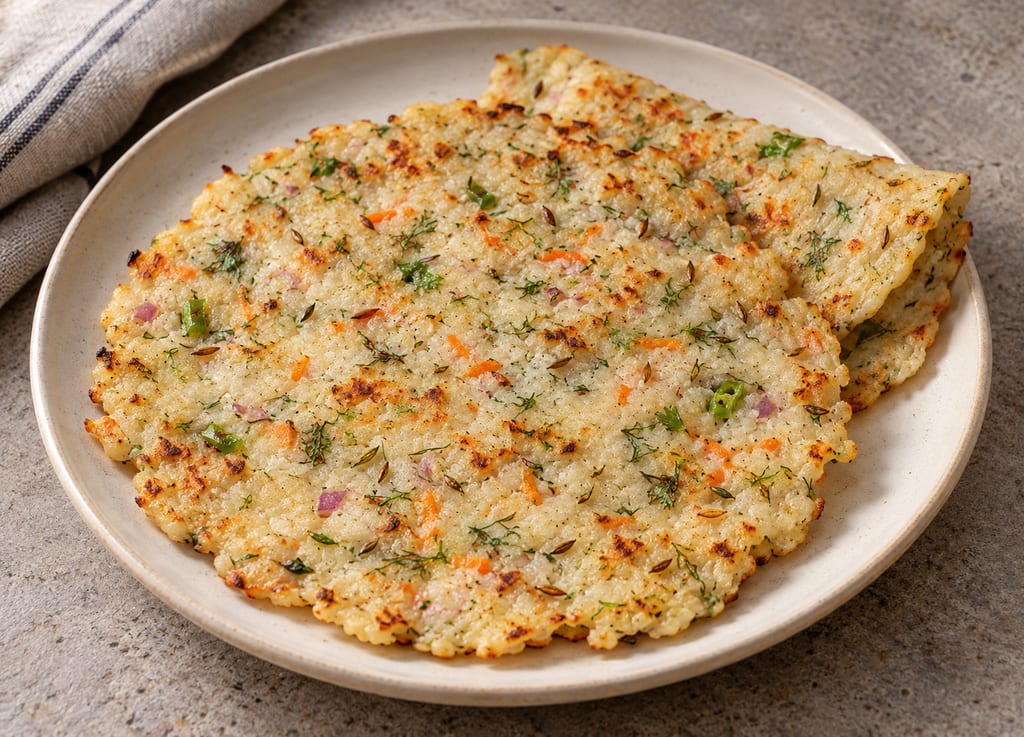
This Karnataka-style akki rotti mixes fine rice flour with vegetables, coconut, herbs and spices, then hand-pats and griddle-cooks the dough.
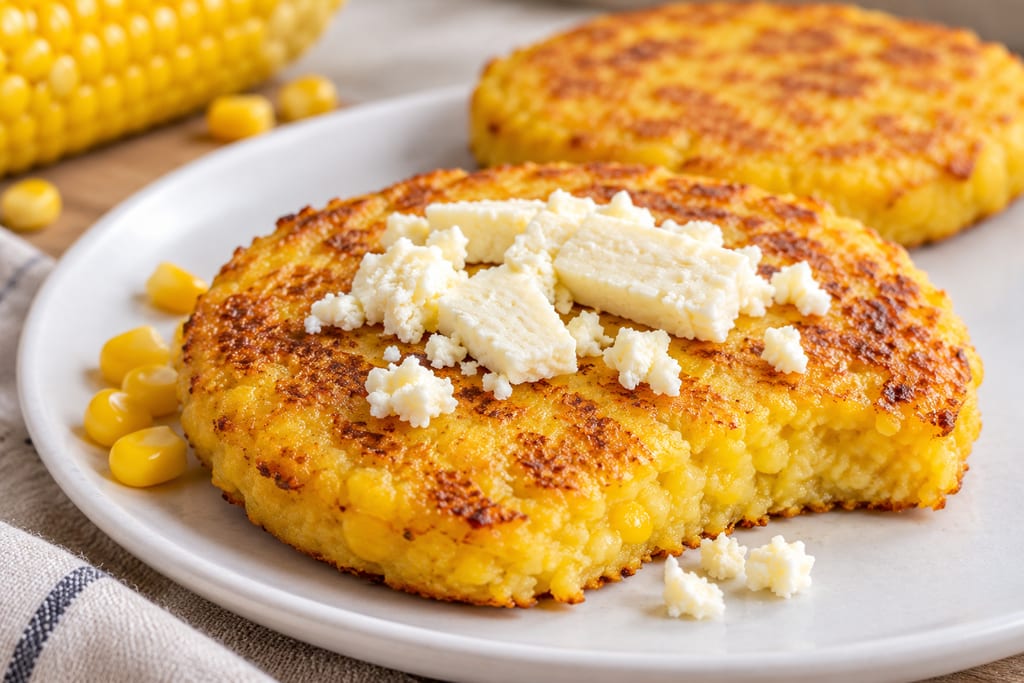
A Colombian Andean griddle cake made from fresh sweet-corn batter, cooked in butter and served with white cheese.
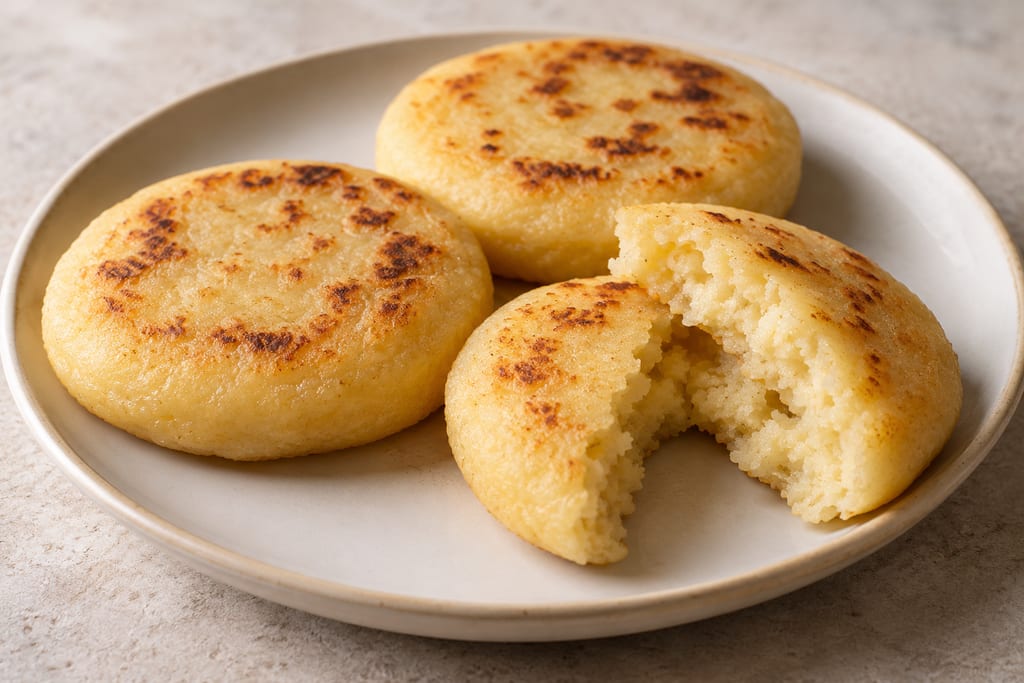
This household version combines precooked corn flour, warm water and salt, then cooks thick rounds on a lightly oiled skillet or griddle. It is one source-specific arepa method, not a universal Colombian or Venezuelan formula.
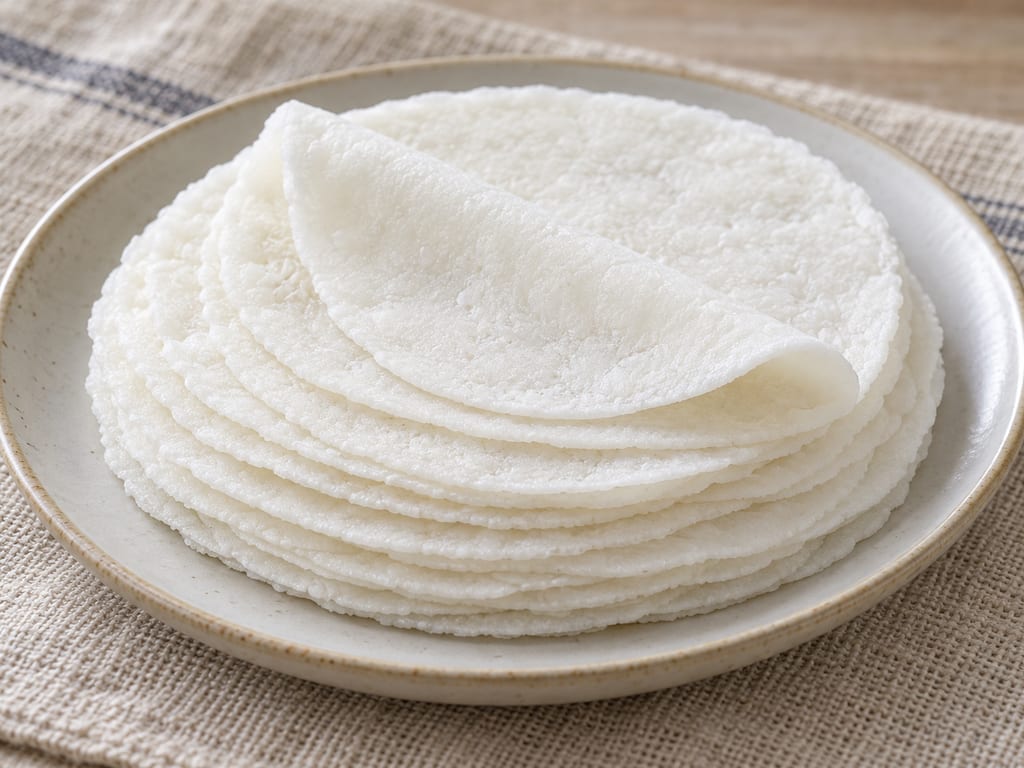
Thin Malabar rice-flour rounds made from roasted rice flour cooked into salted boiling water, kneaded after cooling, and rolled to about 1 mm. They cook on a hot griddle without taking on colour.
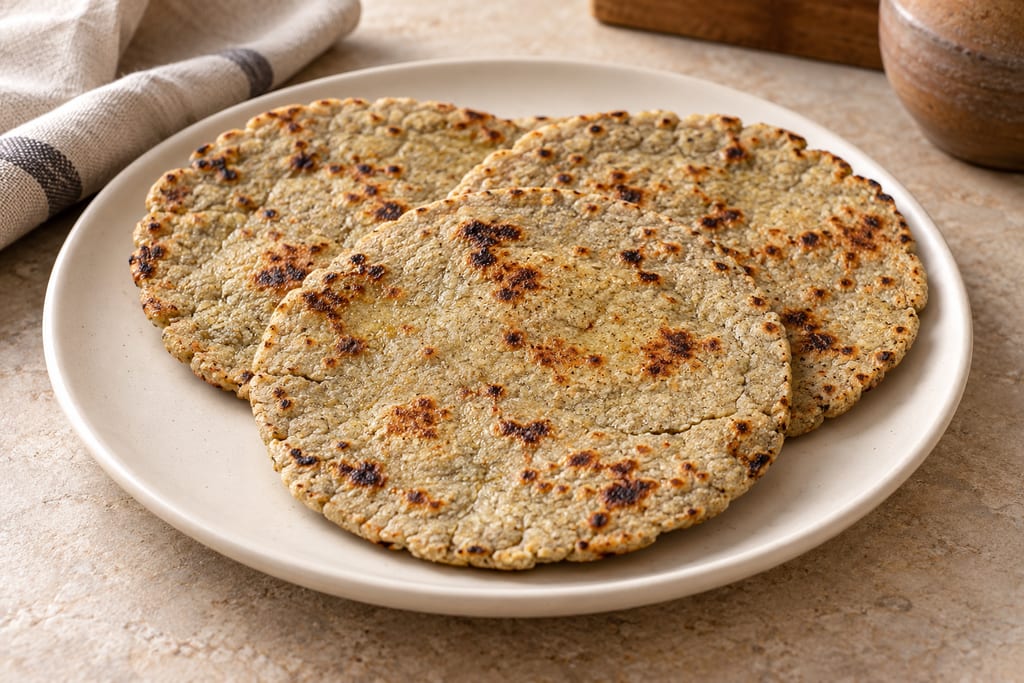
A pearl-millet flatbread shaped between sheets and cooked on a hot tawa. This home batch makes eight.
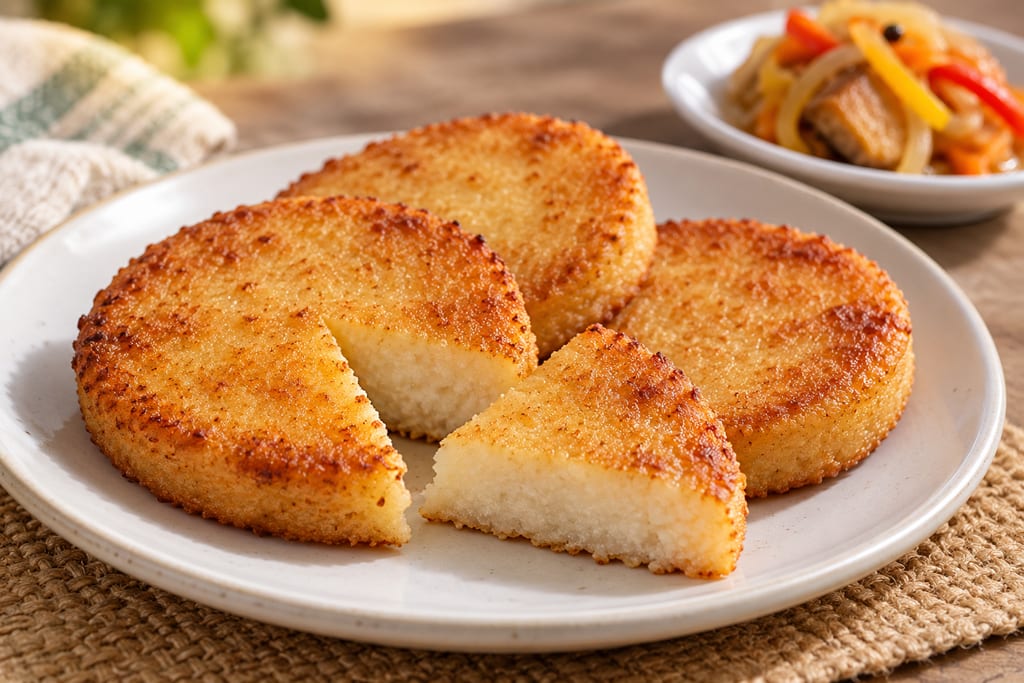
A serving method for approved, prepared bammy rounds: soak them in coconut milk and refry until golden. It does not process raw cassava.
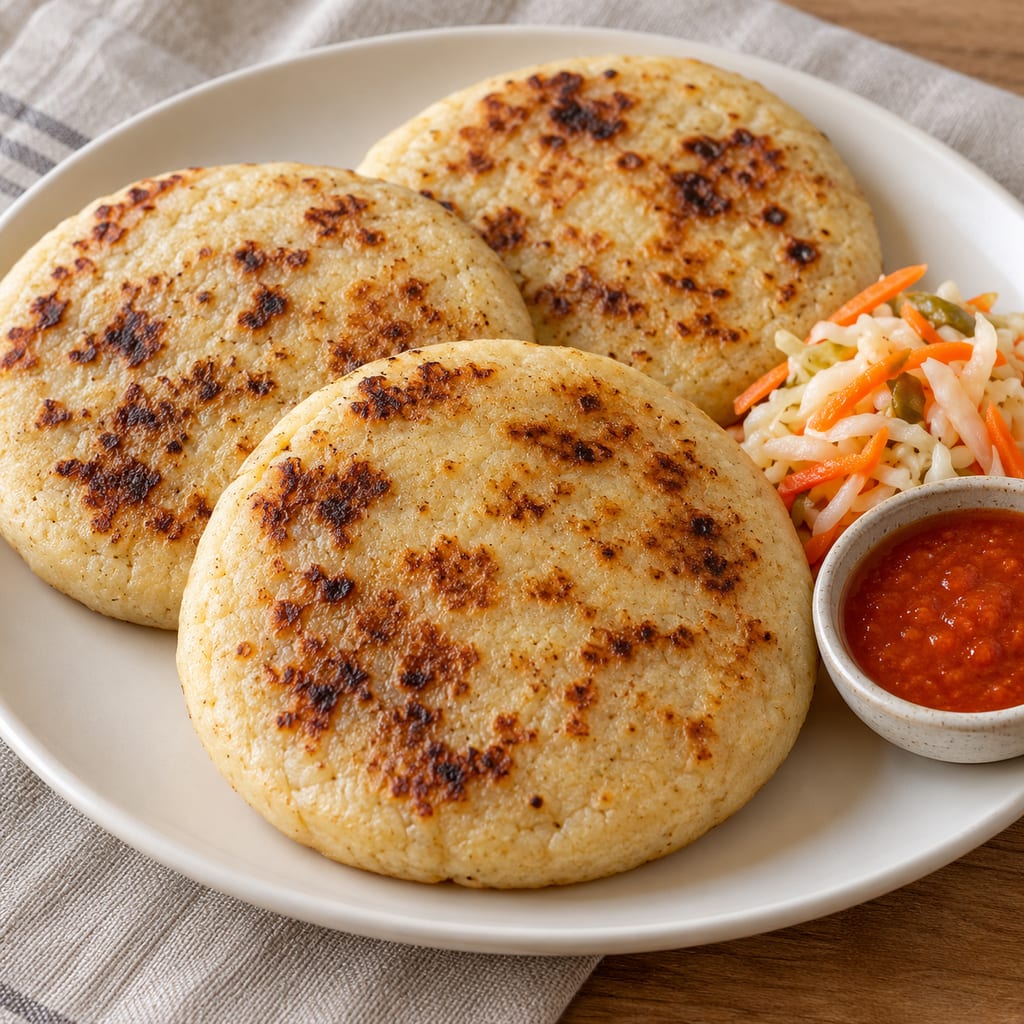
Salvadoran-style masa harina cakes filled with refried beans and cheese, sealed and cooked on an oiled skillet.
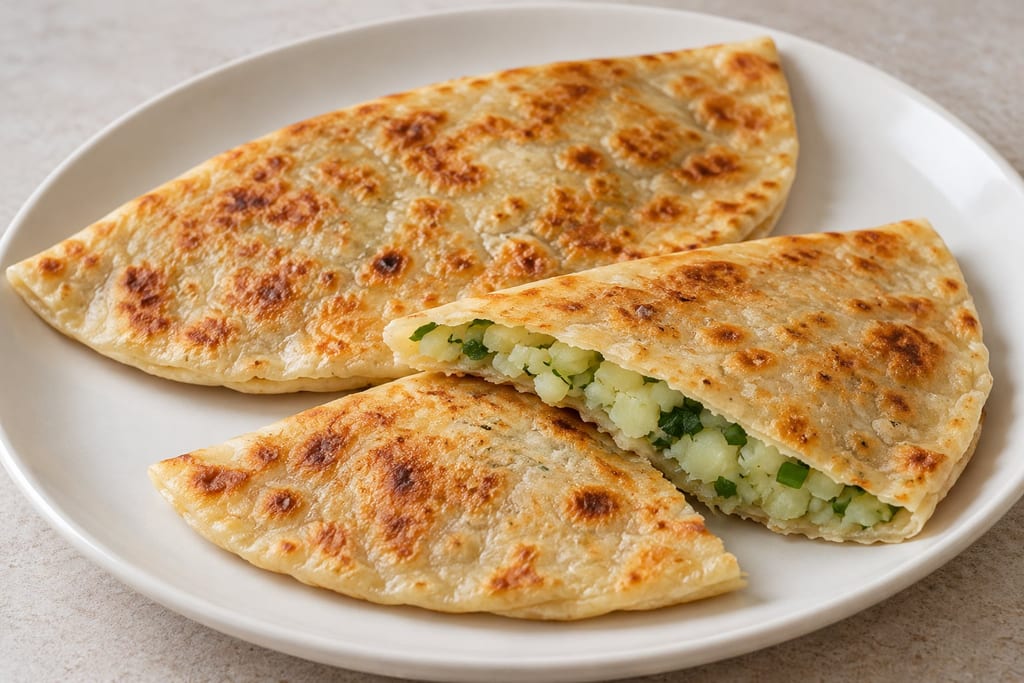
A thin, unleavened Afghan flatbread filled with mashed potato, scallion and cilantro, folded and pan-browned. This version uses a dough made from scratch.
No community contributions have been published for this entry yet.
Sign in to contribute. Published comments and photos are free to read.
My Somali FoodMethod · History
Sabaayad: FlatbreadBasic formula: 3 cups plain flour, 1 tsp salt, 2 tbsp oil, 1 cup water with more added as needed, plus oil and flour for rolling.
Knead 5–10 minutes, rest covered for 30 minutes, divide into eight, roll, oil-fold into squares, roll again and cook over medium heat until golden on both sides.
The writer describes sabaayad with tea, stews and sauces, or rolled with butter and sugar or honey.
Cited in: A folded flatbread for a Somali table; A dough that rests, then folds; Cooking on a griddle; Related breads, different methods; Serving and handling
SomalilandCurrent.com (reprinted from ExtraCrispy)History
What’s for Breakfast in Somalia?Mohamed recalls sabaayad with fried liver in a childhood breakfast in Somalia during the 1980s and describes the bread as flaky and cooked over charcoal in that memory. It is one personal recollection, not a universal household pattern.
Cited in: A folded flatbread for a Somali table; Related breads, different methods
Centers for Disease Control and PreventionSafety
Raw Flour and DoughCDC advises not tasting raw flour or dough, cleaning after handling it, and cooking dough products as directed.
Cited in: Cooking on a griddle; Serving and handling
Journal of Ethnic FoodsHistory
A survey of laxoox/canjeero, a traditional Somali flatbread: production stylesDescribes laxoox/canjeero as a fermented, sour, spongy Somali batter bread and distinguishes that style from other bread types in the region. This supports a distinction from the unleavened folded-dough Sabaayad recipe, not Sabaayad's own history.
Cited in: Related breads, different methods