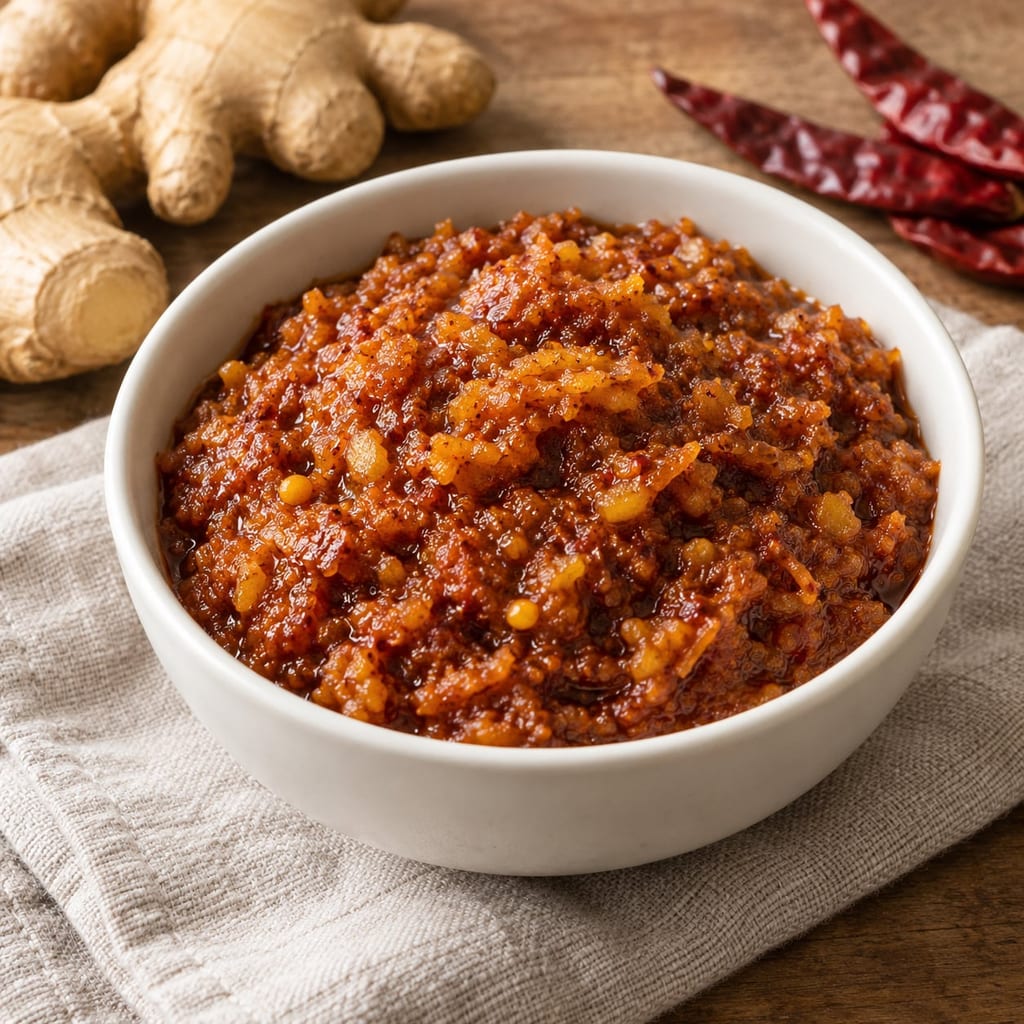
Allam pachadi
An Andhra ginger-and-urad chutney in which browned dal and briefly fried ginger and chillies are cooled, then ground with jaggery to a coarse paste.
 FermenteaWhere food goes to change
Modern method
Tamarind-date chutney · imli-khajur chutney · khajur ni chatni · tamarind date chutney · चिंचेची चटणी · खजूर चिंचेची चटणी
A sweet-sour cooked chutney of tamarind, dates, jaggery, ginger and roasted cumin. An untested measured batch is given beside four documented Indian formulas and their storage claims.
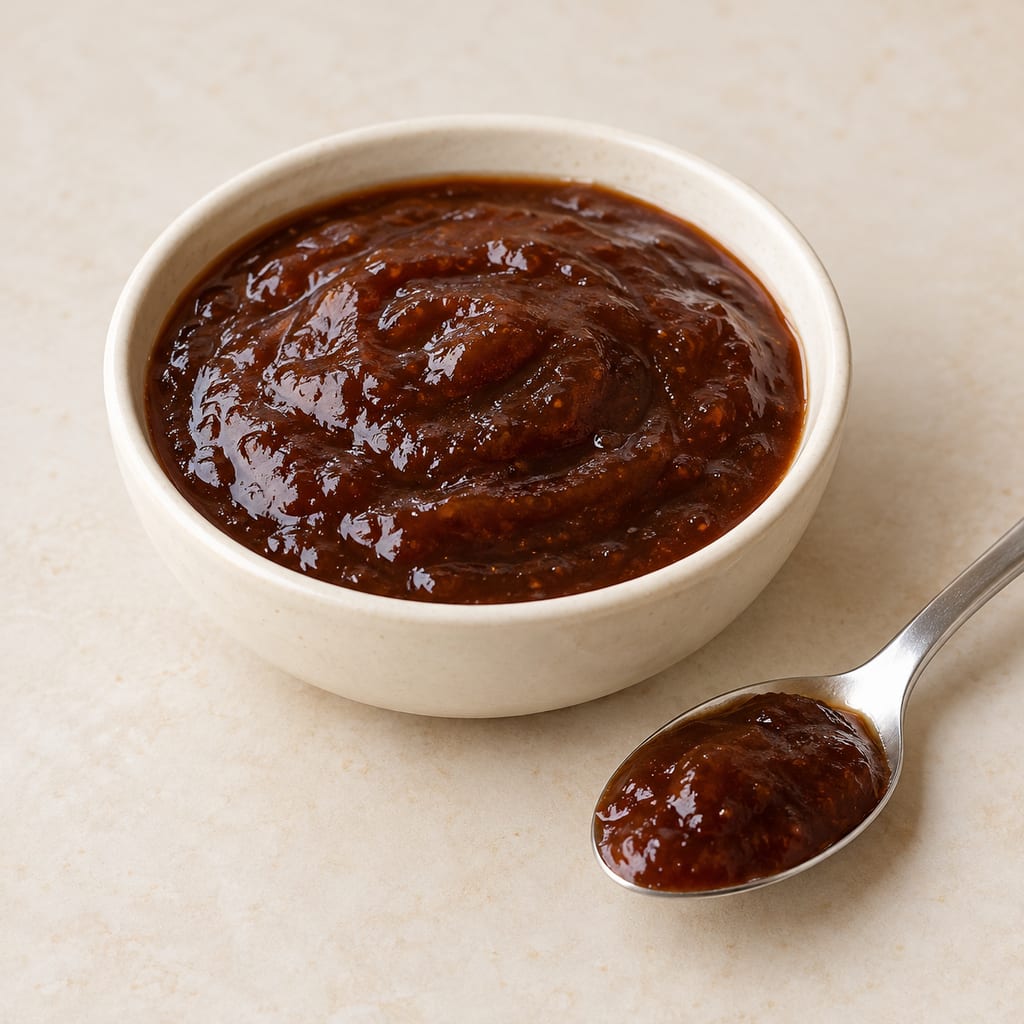
Indian school and hospitality-training texts document cooked chutneys made with tamarind, dates and jaggery. Their methods and proportions differ: one softens and extracts tamarind, cooks dates separately, then grinds, strains and thickens; another softens the fruits before grinding and sieving. Neither gives this exact formula.
The batch below is an original development formula from the supplied research report. Its measurements have not been tested, and it is not a transcription of either published recipe. The consulted material does not establish a first historical mention, precise birthplace or single standard recipe for tamarind-date chutney.
Balbharati's 2019 Class IX cookery text, from Maharashtra, lists half a bowl of seedless tamarind, one bowl of jaggery, five dates, dry ginger, black salt and chilli. It boils the tamarind in a bowl of water, cools and squeezes it, cooks the dates separately, grinds and strains the mixture, adds jaggery and spices and heats until thick. It does not give the bowl size, the water for the dates, a cumin quantity that appears only in the method, or a yield.
The hospitality-training text from NIMI uses 100 g each of tamarind, dates and jaggery. Task 4 says to soften the tamarind and dates in a little warm water for 15 to 20 minutes, or to microwave for a minute or boil them to hurry it, and then to grind with the jaggery and sieve. It gives no water quantity, cooking time or yield.
Two Marathi household pages differ again. Webdunia's fasting version uses two cups of dates, half a cup each of tamarind and jaggery, chilli, cumin, ginger and rock salt, boiling the dates soft before combining and straining. Ruchira's 2008 page gives a soak-and-blend option and a quick-boil alternative. Their amounts and stages are separate formulas, not variations of one batch, and none of them is the development batch above.
Each source says something about keeping time, and none supports it. The NIMI text prints refrigeration for up to a month with no later heating step. Ruchira claims at least three weeks in the fridge. Balbharati's next page prints '1/4 sodium benzoate' per kilogram and says the chutney lasts a year, but gives no unit after the 1/4 and no complete process, so it cannot be used as preservation advice. These are publisher statements, not storage studies.
The Food Safety and Standards Authority of India has a commercial chutney category with composition specifications; that is a product standard, not a home recipe, and does not validate any of these formulas.
Combine the measured dates, prepared single-strength pulp, water, one sweetener and spices. Simmer until the dates soften, blend, and return to gentle heat only if a smoother or thicker texture is wanted. Add water gradually to adjust consistency.
The estimated starting mass is about 400 g and the report estimates twenty minutes; neither finished yield nor cooking time was measured. No numerical simmer temperature or preservation endpoint is provided. Concentrated tamarind products vary, so follow their package directions before weighing prepared pulp.
This moist cooked condiment is perishable. Cool promptly and refrigerate within the general Food Standards Agency cooling guidance. The report's 48-hour window is borrowed general leftover advice, not a tested shelf life for this chutney. Freeze portions promptly if longer storage is needed, using safe freezing and defrosting guidance.
Do not can or keep this formula at room temperature: no measured acidity, water activity, heat process or validated preservation method supports that use. The storage claims printed in the comparison texts are not adopted as advice.
An Indian Express feature quotes food historian Pushpesh Pant and explicitly calls a Shah Jahan origin story for chaat chutneys apocryphal. The reviewed material identifies no first tamarind-date recipe and establishes no origin for chutney.
Indian school-cookery and hospitality-training texts document different cooked tamarind-date chutney formulas. The inspected material does not establish the first attestation or a single origin. This recipe is a modern, untested development batch.
Yield 400 g approximate starting mass · Scaling: source batch only
Hot mixtures can release steam and splash during blending.
Hazard sourceUse a blender rated for hot liquids or let the mixture cool before blending; keep clear of escaping steam.
Control sourceCool promptly and refrigerate within 1-2 hours; general leftover guidance of 48 hours or freezing is a conservative handling convention, not chutney-specific validation.
Control sourceWash fresh produce under running water and use clean hands and equipment.
Control sourceUntested development formula; no acidity, water activity, heat process or storage study supports canning or room-temperature storage.
The 48-hour window is borrowed general leftover guidance, not a validated chutney shelf life. Do not use smell or taste to assess safety.
Use single-strength tamarind pulp. Prepare concentrates according to product instructions rather than substituting gram-for-gram.
The one-month, three-week and one-year storage claims printed in the documented formulas are publisher statements, not validated home guidance.
Indian cookery and hospitality-training texts document related chutneys. The measured batch here is a modern untested adaptation, not a source transcription or birthplace claim.
An Andhra ginger-and-urad chutney in which browned dal and briefly fried ginger and chillies are cooled, then ground with jaggery to a coarse paste.
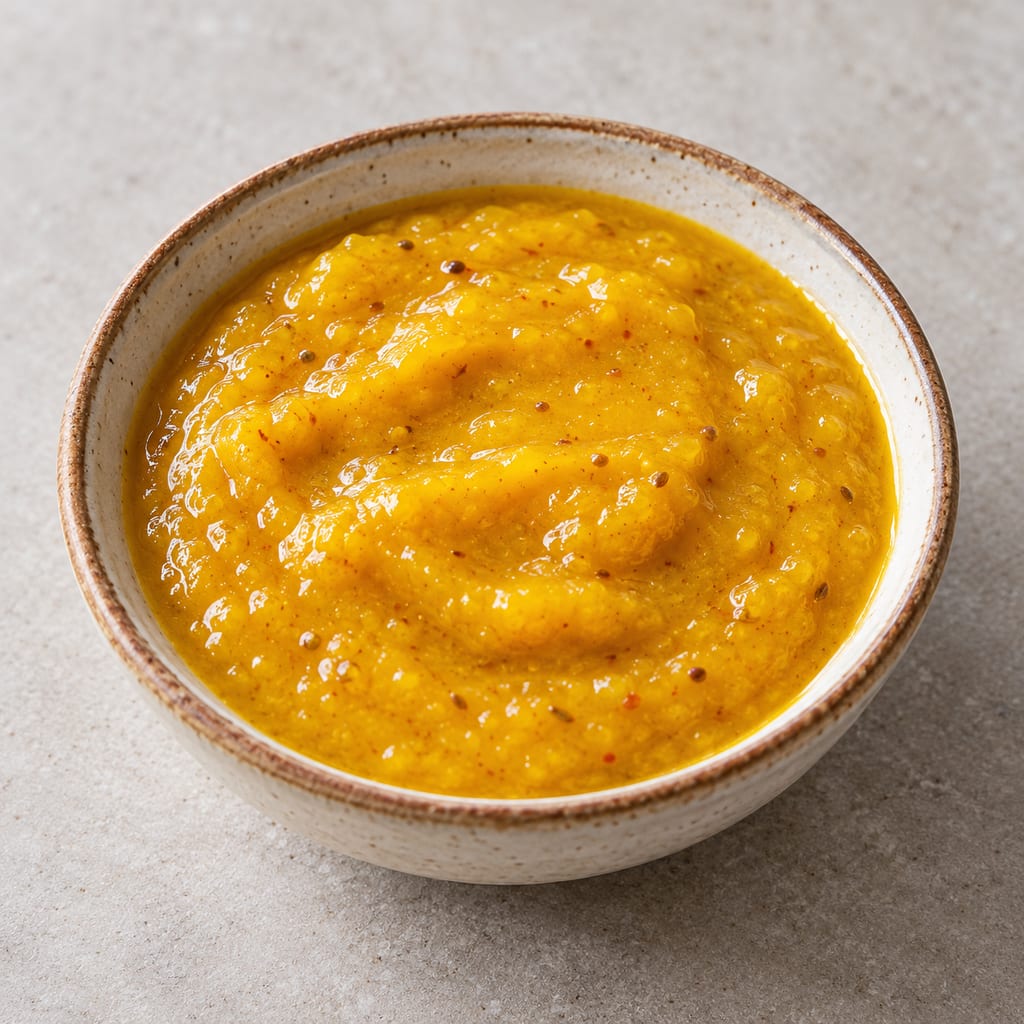
This cooked amba follows a Jewish Food Society recipe that simmers ripe mango with onion, garlic, mustard seed and warm spices into a tangy Middle Eastern condiment.
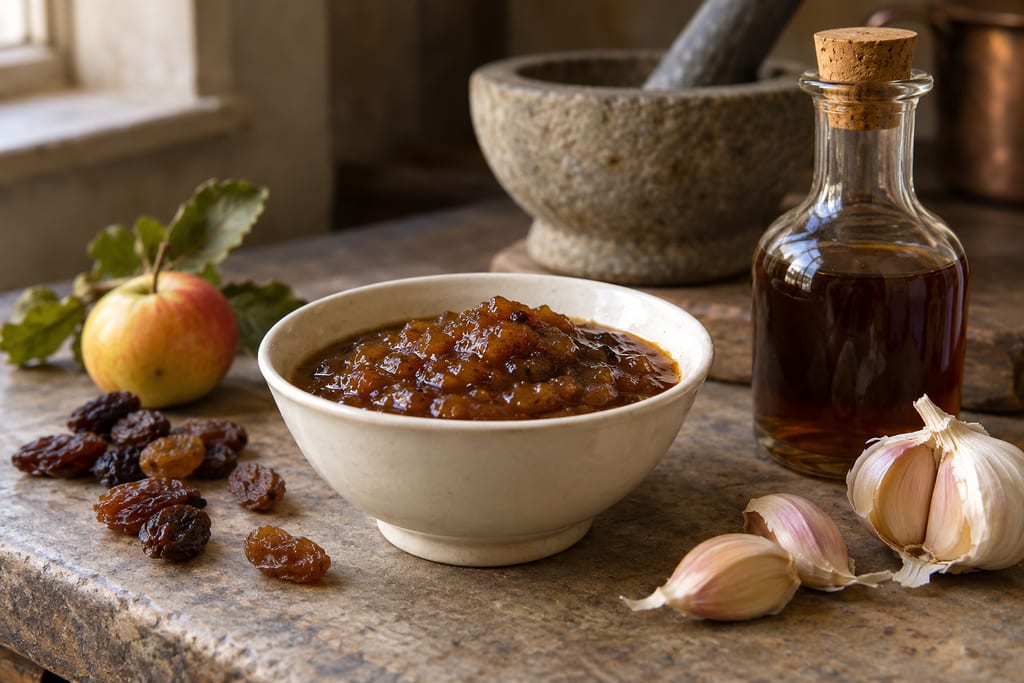
Eliza Acton's Bengal receipt for chetney sauce: stoned raisins and a hard acid fruit pounded with brown sugar, ginger, salt, cayenne and garlic, then thinned with vinegar to the consistence of thick cream.
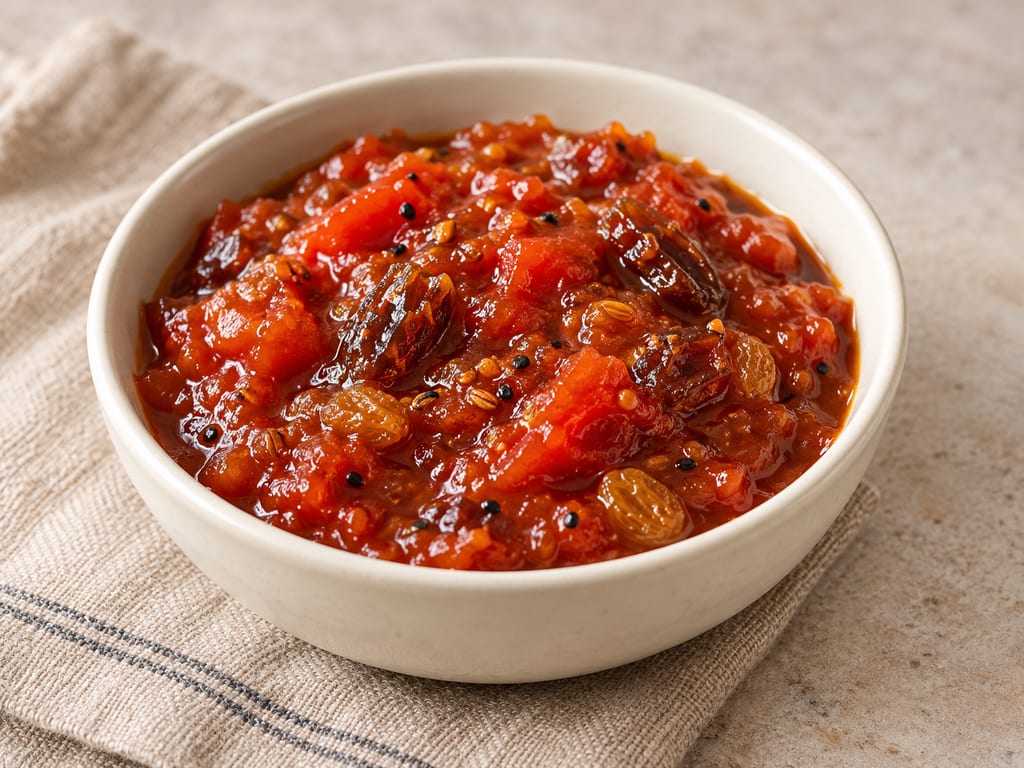
A cooked Bengali meal chutney combining tomatoes, dates, raisins, ginger and panch phoron.
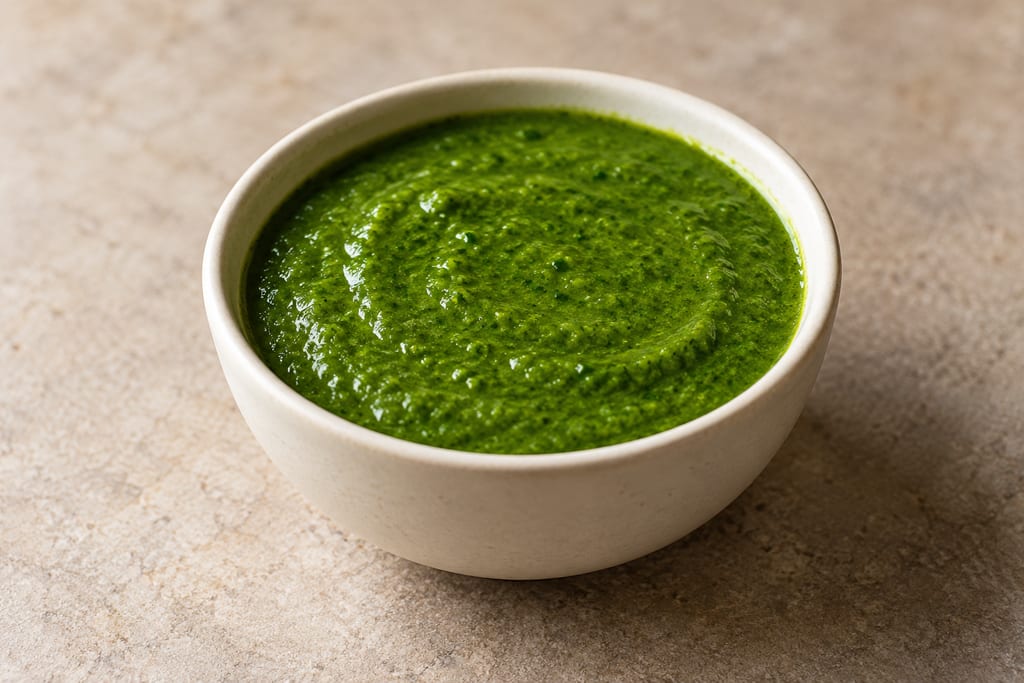
A cold-blended coriander and mint chutney with ginger, green chilli and optional cumin and lemon; the author serves it with snacks, chaat and sandwiches.
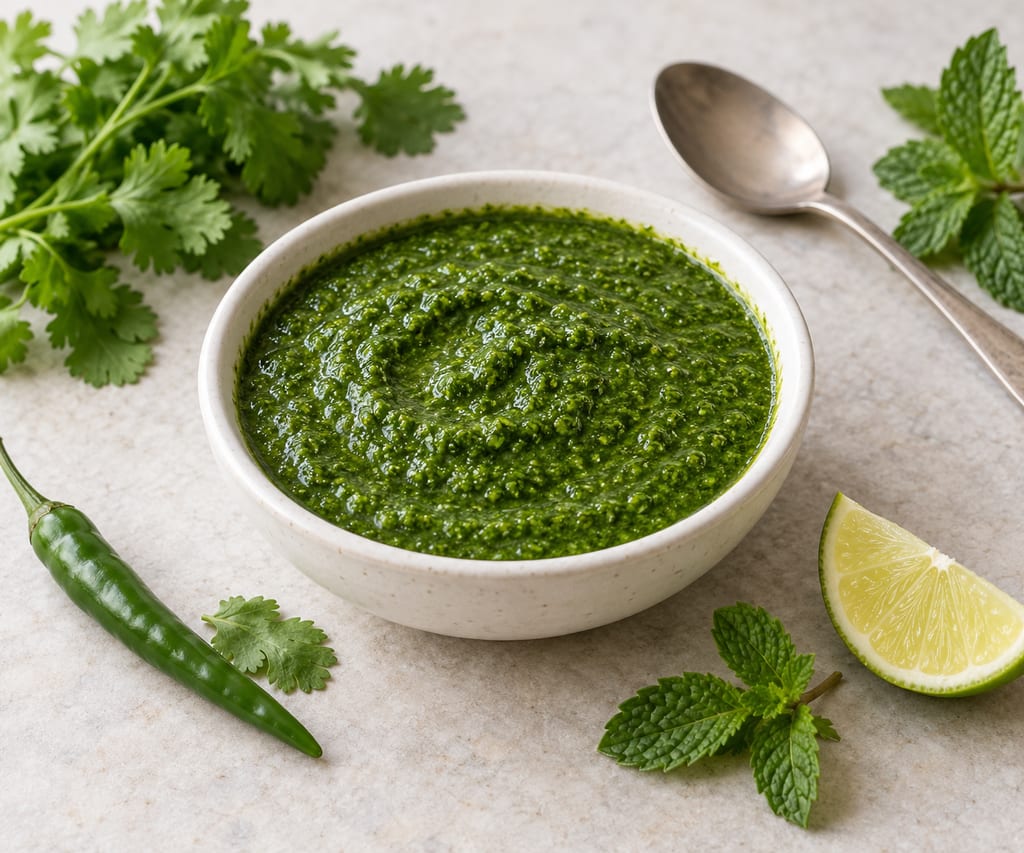
A fresh, uncooked green chutney blended from coriander, mint, chilli and citrus. This measured development batch is untested and intended for prompt serving.
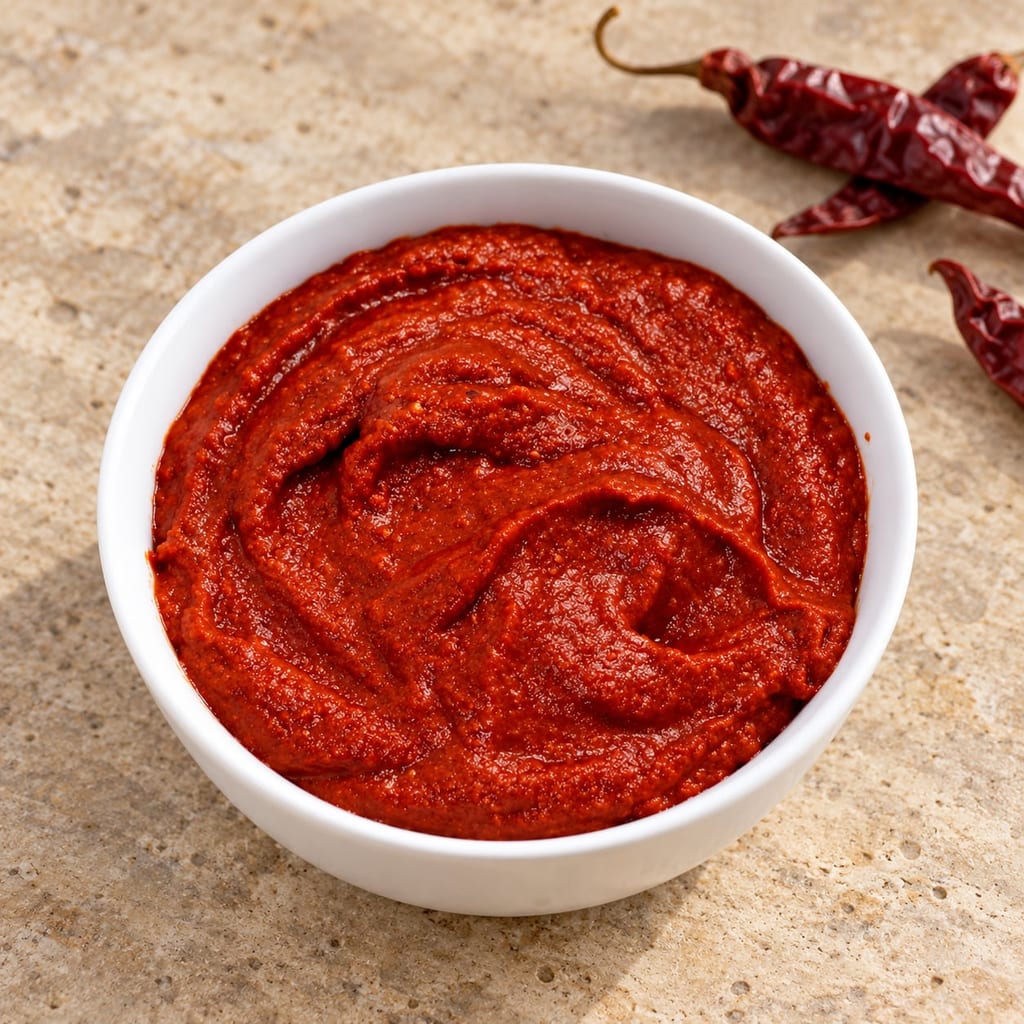
Recheado is a red Goan spice paste of Kashmiri chillies, garlic and spices ground in vinegar, best known as the stuffing for fried fish such as mackerel.
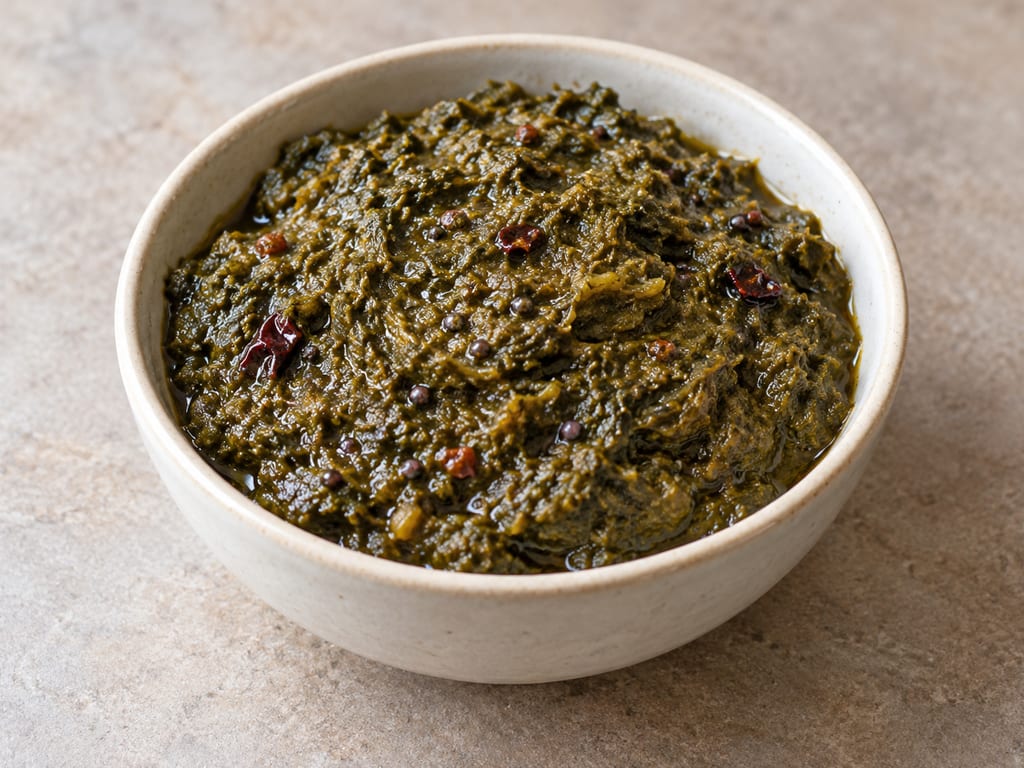
A hot, sour Andhra chutney of gongura (sorrel) leaves cooked soft and ground with fried dried chillies, garlic and onion, then finished with a hot tempering of dals, mustard and curry leaves.
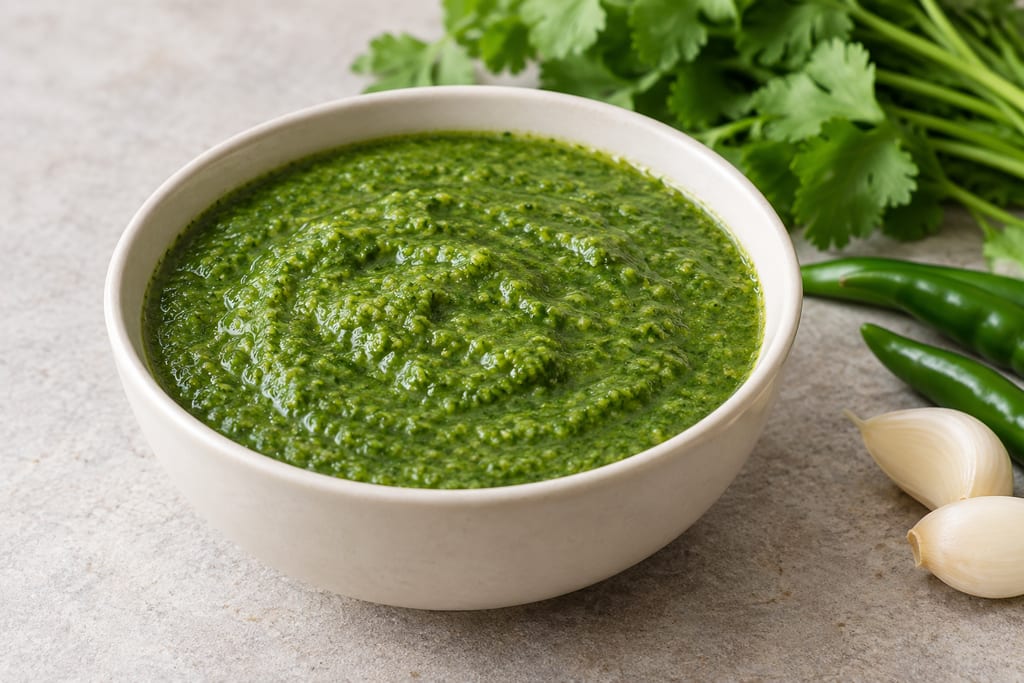
Afghan coriander chatni is a sharp, hot herb sauce with garlic and vinegar. A 2008 Afghanistan manual records green or red pepper and optional walnut; heat and household versions vary.
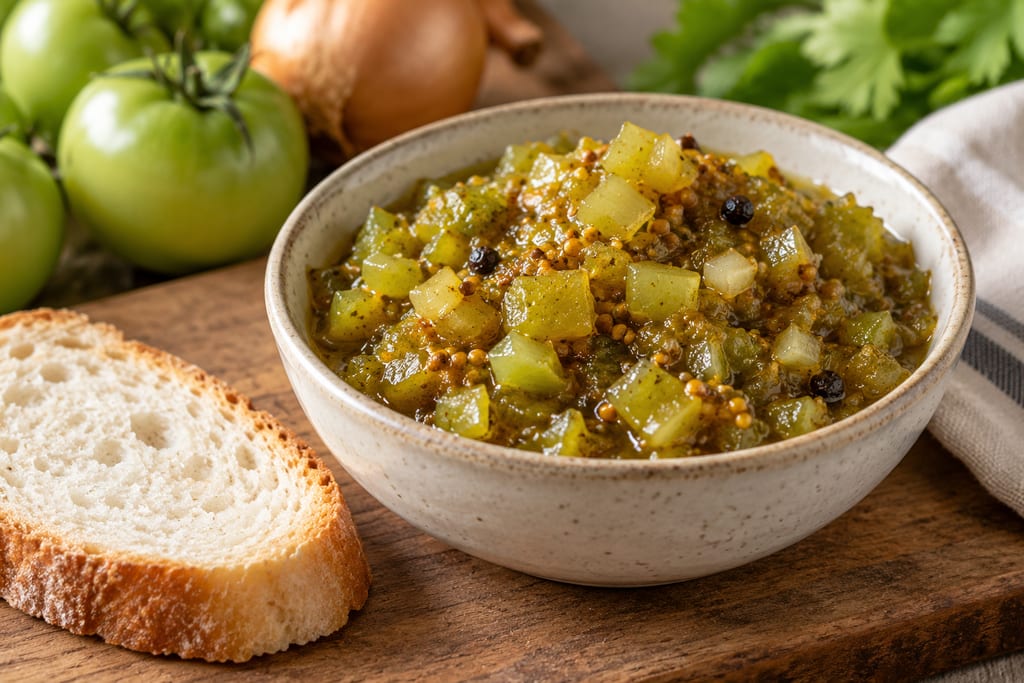
Australian green tomato pickles and relishes vary. This partial version follows ABC Western Victoria’s 2018 pickle recipe, not Beerenberg’s commercial formula. Sources document examples from 1944 onward, not a single origin.

A spicy South African vegetable relish of onion, carrot, pepper, tomato, curry seasoning and beans, cooked briefly and served warm or cold beside pap and grilled meat.
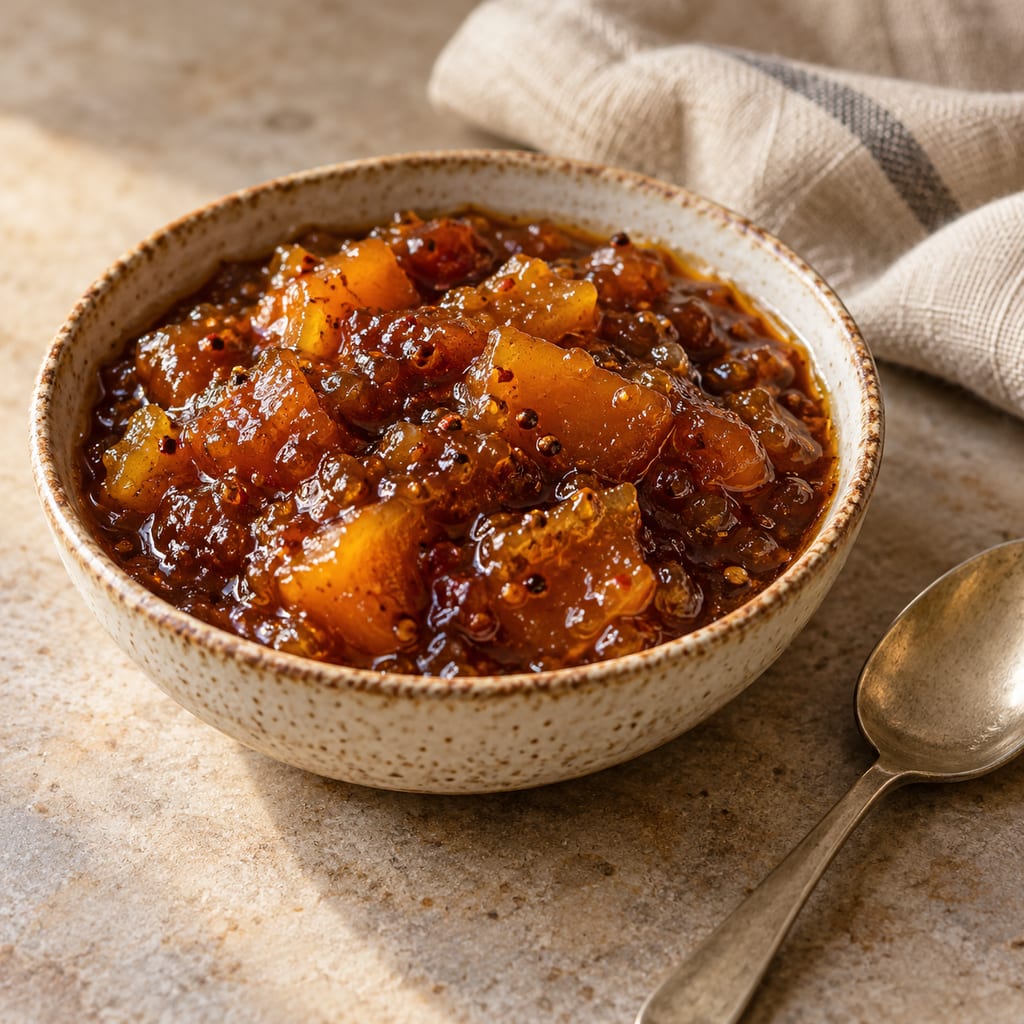
A broad account of cooked chutney traditions: fruit or vegetables combined with sugar, spices and sometimes acid, often boiled into a thick condiment. This record is historical and process context, not a formula or storage recipe.
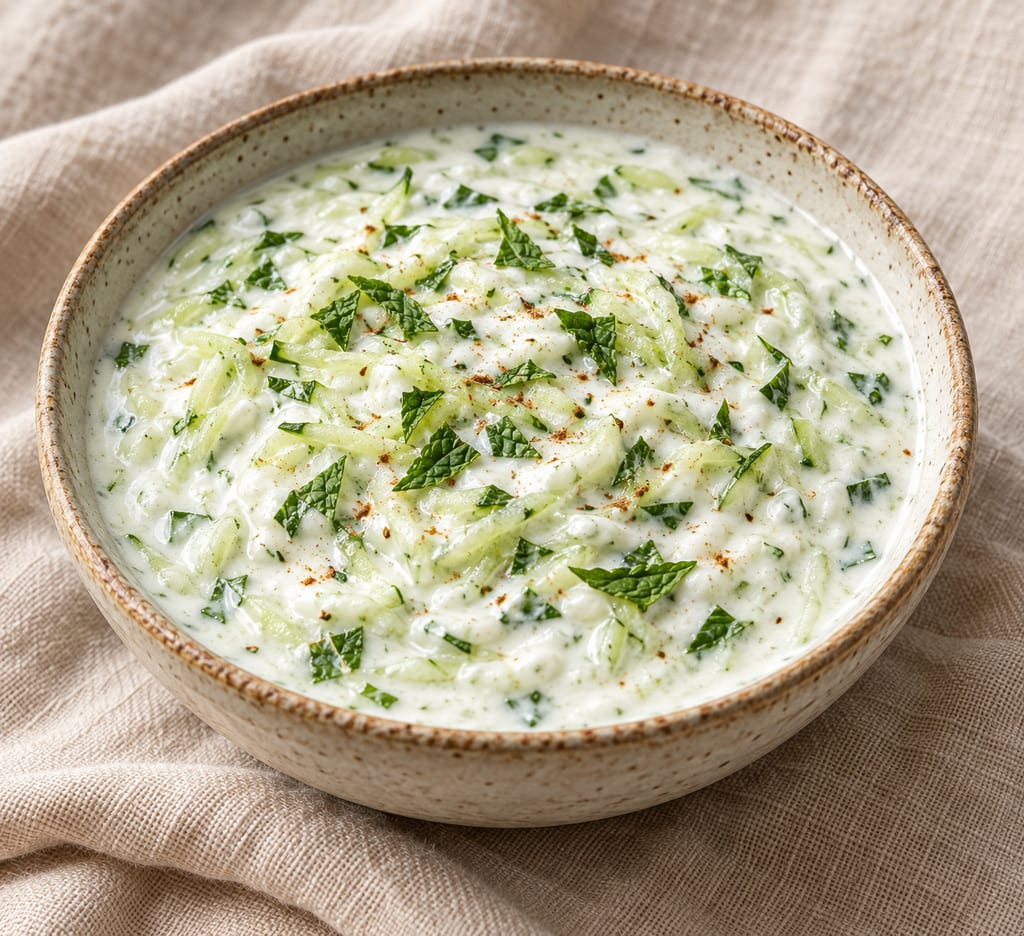
Cucumber and chopped herbs are folded into plain yoghurt with salt and roasted cumin for a cool South Asian accompaniment to spiced food.
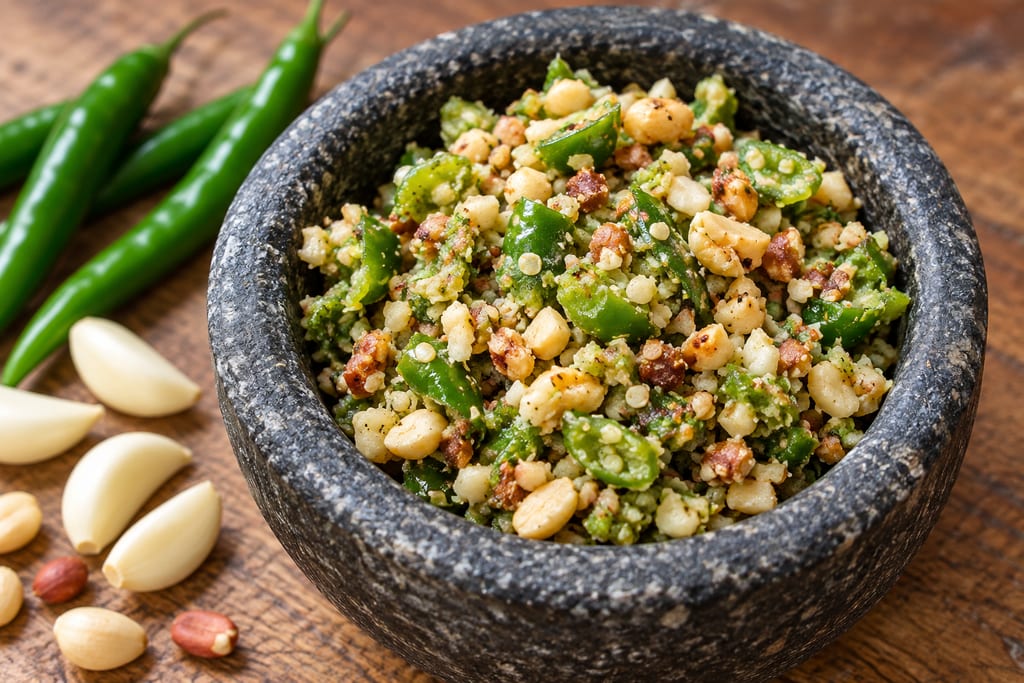
A fresh Maharashtrian thecha of green chillies, peanuts and garlic, roasted separately in the same oil and crushed with salt. Optional coriander joins the pan before grinding; serve with bhakari.
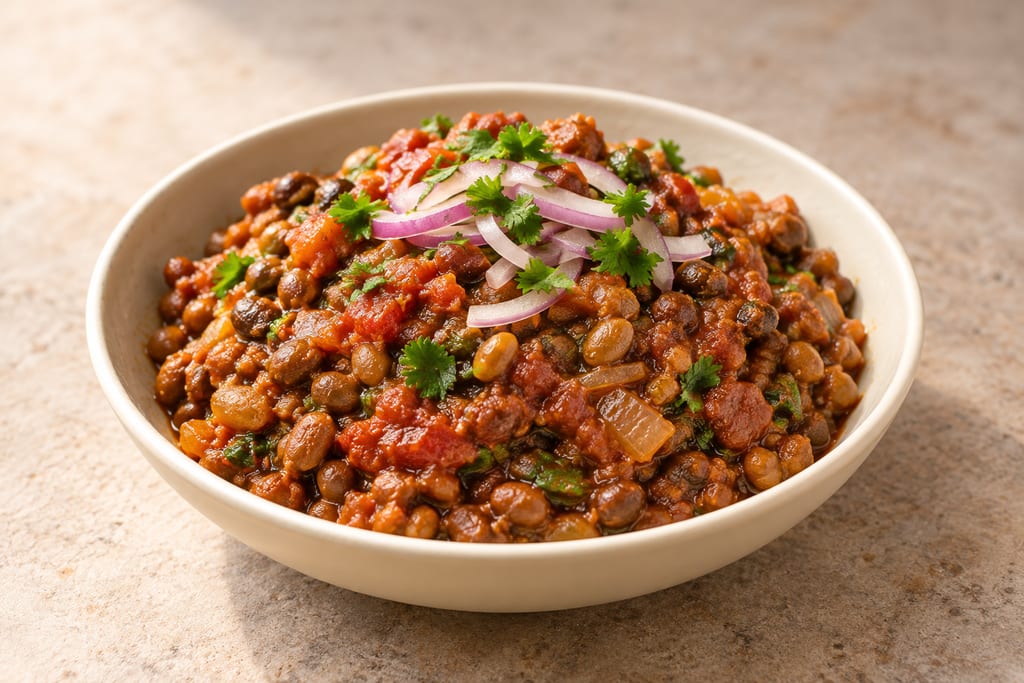
Kinema ra golbheda ko achar combines already-fermented soybean kinema with tomatoes, onion, garlic and spices, finished with sesame powder and fresh garnish, and is eaten with rice or toast.
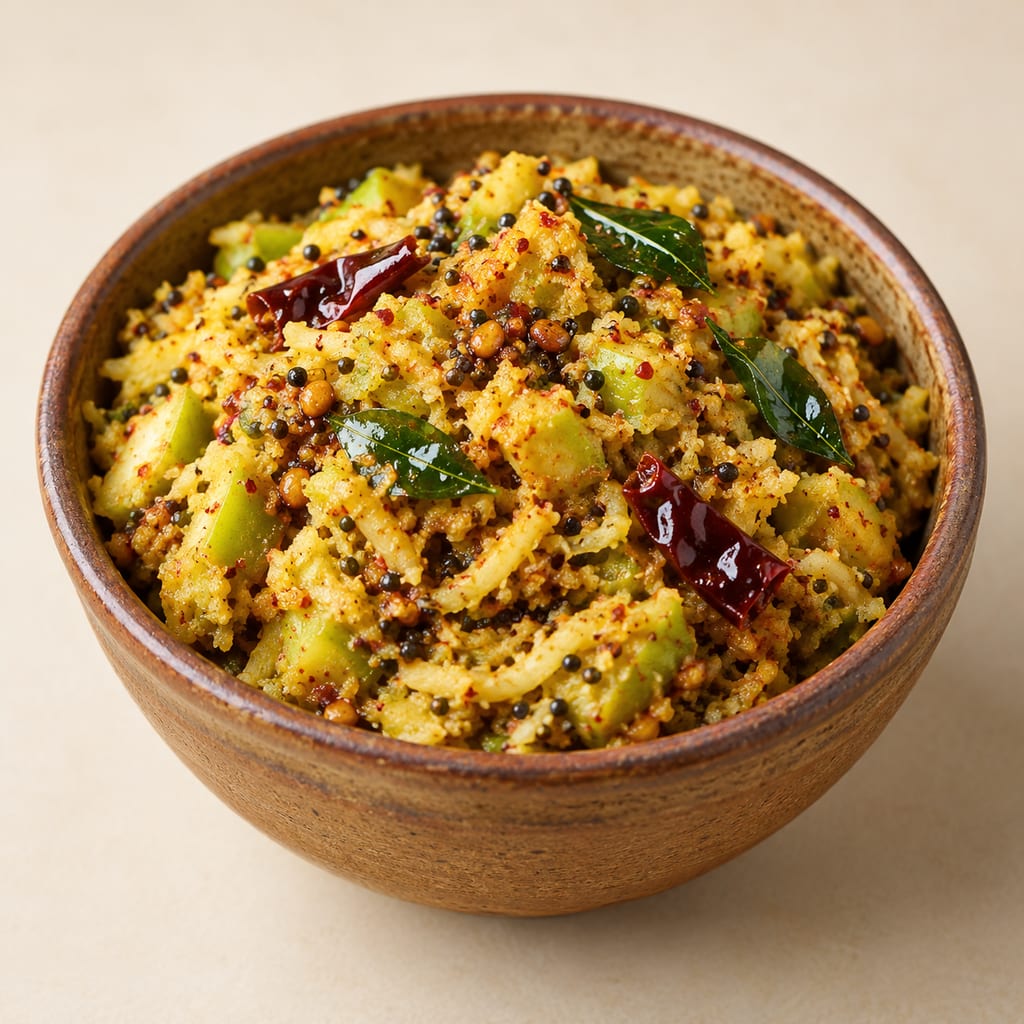
A Telugu coconut and raw mango pachhadi with a separately fried spice mixture.
No community contributions have been published for this entry yet.
Sign in to contribute. Published comments and photos are free to read.
Balbharati / eBalbharatiHistorical context · Comparison
Cookery Textbook for Differently able Student, Class IXThe 2019 textbook lists half a bowl of seedless tamarind, one bowl jaggery, five dates, dry ginger, black salt and chilli; tamarind boiled in one bowl of water, cooled and squeezed, dates cooked separately, ground and strained, jaggery and spices added, heated until thick.
Bowl size, date-cooking water, a cumin quantity and yield are missing.
The next page prints '1/4 sodium benzoate' per kilogram and says the chutney lasts a year, with no unit and no complete process; not used as preservation advice.
Cited in: A family of cooked tamarind-date sauces; Four documented formulas; Storage claims that do not hold up; Simmer, blend and adjust
Bharat Skills / NIMI, Ministry of Skill Development and EntrepreneurshipHistorical context · Comparison
Food Production (General), 1st Semester, Trade PracticalTask 4: 100 g each of tamarind, dates and jaggery; soften tamarind and dates in a little warm water for 15-20 minutes, or microwave for one minute or boil to speed it, then grind with jaggery and sieve.
Prints refrigeration up to a month; no later heating step appears. A training-text statement, not a validated shelf life.
Cited in: A family of cooked tamarind-date sauces; Four documented formulas; Storage claims that do not hold up; Simmer, blend and adjust
Webdunia MarathiComparison
उपासाची खजूर चिंचेची चटणी / Fasting date-tamarind chutneyTwo cups dates, half cup each tamarind and jaggery, chilli, cumin, ginger and rock salt; dates softened by boiling, combined and strained.
Cited in: Four documented formulas
Ruchira Recipes in MarathiComparison · Storage
चिंचेची चटणी (Tamarind Chutney)A 2008 page giving a soak-and-blend option and a quick-boil alternative.
Claims at least three refrigerated weeks, with no storage study.
Cited in: Four documented formulas; Storage claims that do not hold up
The Indian ExpressHistorical context
Finger-lickin' good: story of chutney in IndiaThe article characterizes a Shah Jahan/chaat origin story as apocryphal; it does not establish a date or origin for tamarind-date chutney.
Cited in: A family of cooked tamarind-date sauces; Origin
Food Standards AgencySafety
How to chill, freeze and defrost food safelyCool cooked food and refrigerate within 1-2 hours; general leftover advice is use within 48 hours or freeze. This is not chutney-specific validation.
Cited in: Cool and refrigerate
U.S. Food and Drug AdministrationSafety
Safe Food HandlingGeneral safe food handling guidance; here it supports cautious handling of hot mixtures during blending.
Cited in: Cool and refrigerate
U.S. Food and Drug AdministrationSafety
Selecting and Serving Produce SafelyWash fresh produce under running water; washing may reduce but does not eliminate bacteria.
