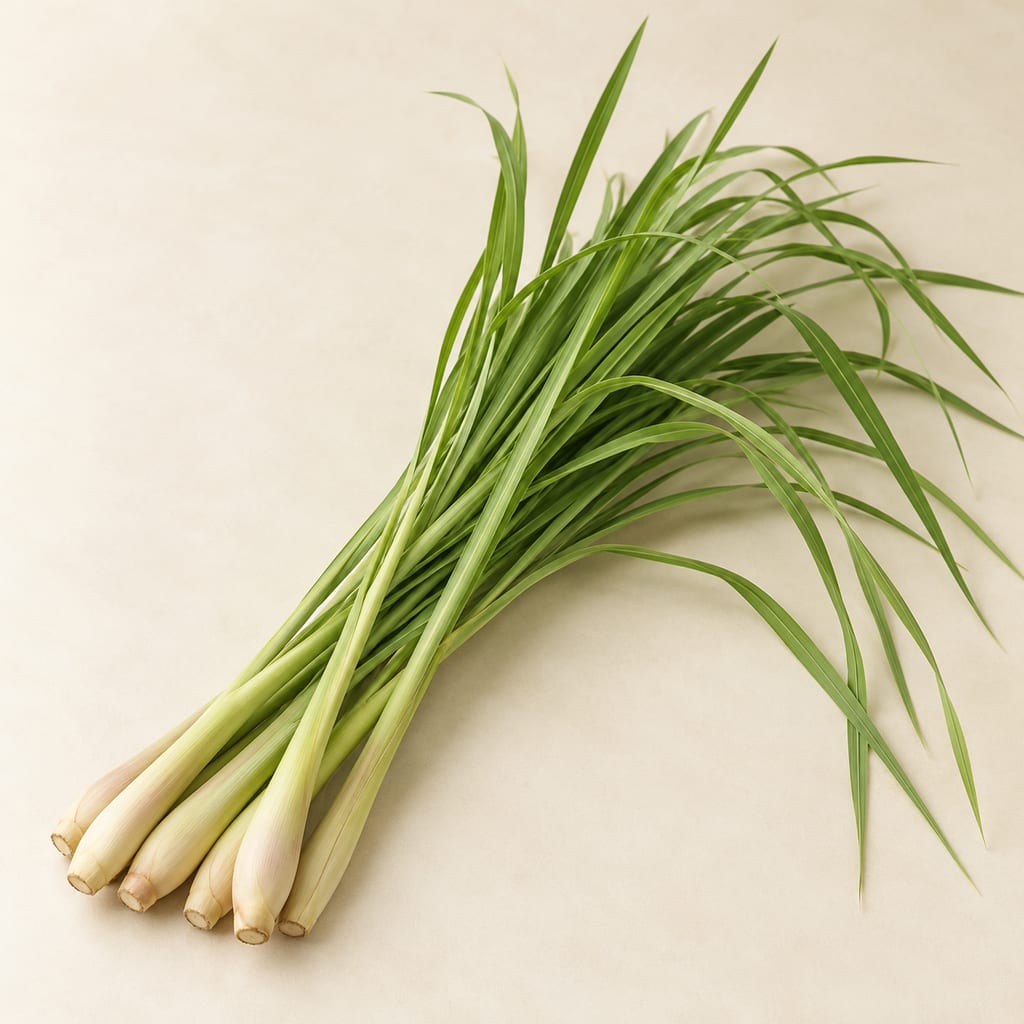
Lemongrass
Lemongrass is Cymbopogon citratus, a tropical grass whose lemon-scented stalks and leaves flavour cooking across South and Southeast Asia. The common name also covers other Cymbopogon species.
 FermenteaWhere food goes to change
Acids
Tamarind pulp is the sweet-sour flesh of Tamarindus indica. It brings a tartaric-acid-led fruit flavour to chutneys, sauces and drinks; water content and sourness vary across forms and brands.
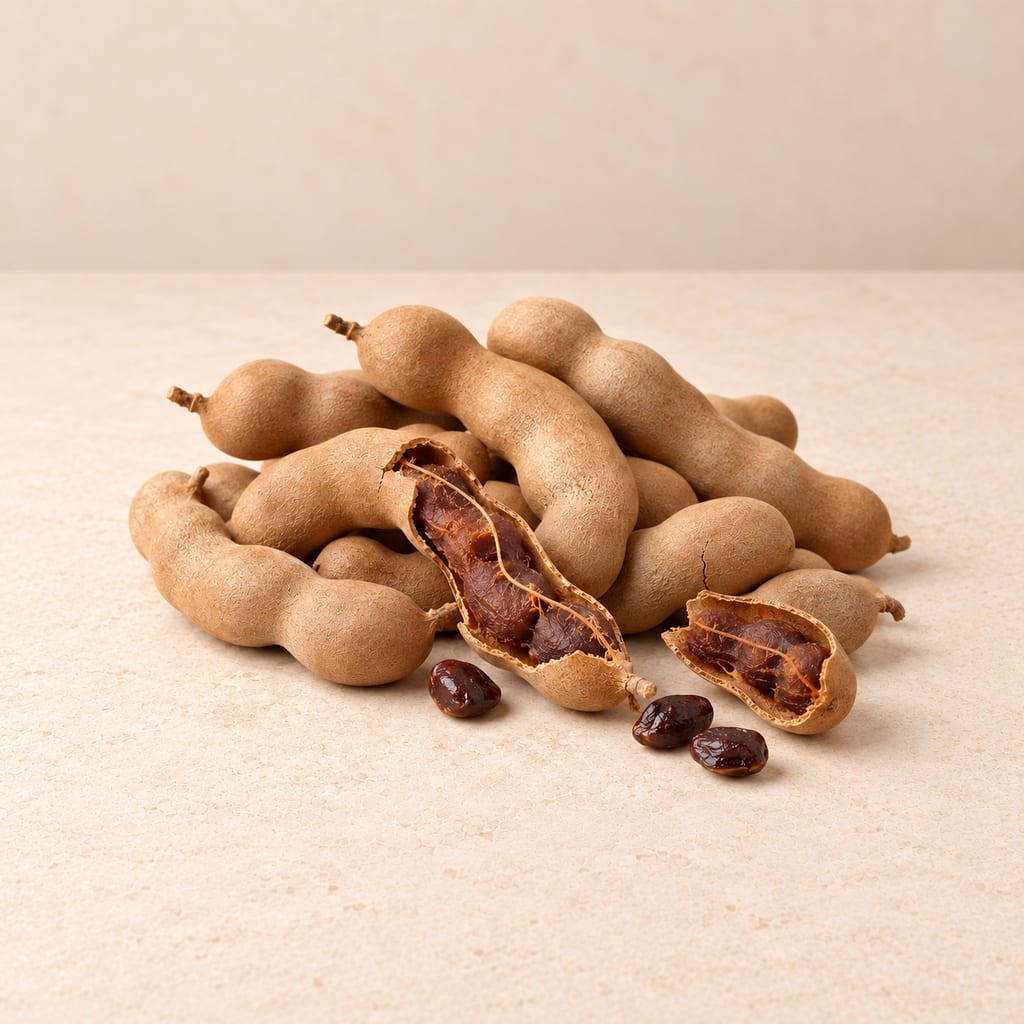
The tree and fruit have several regional names. The University of Melbourne's plant-name database records Hindi imli, Tagalog sampalok and Malay asam jawa. These names refer to Tamarindus indica; they do not identify a particular processing form.
Tamarind pulp is the brown, sticky flesh inside the pods of Tamarindus indica, a tall leguminous tree. The pods are 12 to 15 centimetres long, with a hard brown shell. Inside, the flesh clings to a stringy network of fibres and wraps a set of glossy brown seeds: six to twelve in the pods of Asian trees, one to six in African and West Indian ones. The flesh is sweet and sour at once, and it turns brown or reddish brown as it matures. Weighed out, the pod is roughly 55 percent pulp, 34 percent seed and 11 percent shell in one Brazilian sample; Other accounts give wider ranges, with pulp at 30 to 55 percent, shell and fibre 11 to 30 percent and seed 33 to 40 percent, which shows how much the proportions vary between trees.
The fruit is sold whole or processed into forms that differ in water content and texture. Pressed blocks may retain seeds and fibres; seedless paste and concentrated pulp are also sold. Ready-to-use pulp has already been diluted to a working strength. Water content and sourness vary between brands, so equal weights can contribute different amounts of tartness.
In fermented foods, tamarind pulp commonly supplies sour fruit flavour alongside the fermented ingredient. It is also used in chutneys, sauces, drinks and sweet preserves. The fruit's sweetness and acidity make it useful in both savoury and sweet preparations.
Morton describes tamarind as native to tropical Africa and growing wild across the Sudan. At Sadia in the Seno Plain of central Mali, charred tamarind remains were found at a settlement occupied from about 750 to 1300 CE, among remains of other gathered or tended tree fruits. The find documents use of the fruit there; it does not establish where a pulp preparation began.
Tamarind was adopted in India so long ago that it is often taken for an Indian native. The name reflects the journey. Persians and Arabs, who knew it from India, called it tamar hindi, the Indian date, and that phrase became both the common and the generic name of the tree. The Egyptians knew the fruit, and the Greeks did by the fourth century BCE. It reached tropical America, Bermuda, the Bahamas and the West Indies much earlier than Hawaii, where one of the first trees was planted in 1797.
Today India remains the leading producer, with over 59,000 hectares and about 200,000 tonnes of fruit a year in one recent count and about 250,000 tonnes in older accounts. Thailand has the largest plantations among the ASEAN countries, ahead of Indonesia, Myanmar and the Philippines, and Mexico holds more than 4,400 hectares. India has a long record of exporting processed pulp to Western markets, with recent annual shipments to the United States of over 10,000 tonnes.
Tamarind is a large evergreen or semi-evergreen tree, 25 to 30 metres tall in the best conditions, with a crown that can spread 12 metres. A deep root system lets it do well in semi-arid country. It does best where annual rainfall runs from 500 to 1,500 millimetres and temperatures run between 25 and 45 degrees Celsius, though it tolerates up to 4,000 millimetres of rain if the soil drains. An optimal soil pH runs from 6.0 to 8.5, and trees have been grown on sodic soils with high exchangeable sodium.
Trees can be raised from seed, which stays viable for months and germinates in about a week, or from cuttings, shield budding, side-veneer grafting or air layering. Seed-grown trees are slow: bearing begins in the fourth year in Madagascar, the fifth in Mexico and after ten to fourteen years in India. A mature tree gives 150 to 225 kilograms of fruit a year and bears abundantly until it is 50 or 60 years old. Grafted collections in India have been catalogued for traits such as pod length, pulp weight and acidity, and the variation is large: breeders find pulp weight and pod weight among the most variable features, so two trees in one orchard can give pulp of different yield and sourness.
The pods are harvested late. They can stay on the tree for up to six months after they mature, drying to 20 percent moisture or less, and a dry pod is easier to shell and keeps better. For fresh sale, the stalks are clipped rather than the fruit knocked down with poles, which damage leaves and flowers and crack shells. The sour type dominates the world supply, at about 95 percent of production. The sweeter types are a small group of selections: Makham waan from Thailand and Manila Sweet from the United States, along with red-fleshed trees that some regions prize.
Pulp has to be separated from shell, fibre and seed, and each tradition does it differently. Shelling by hand takes about eight man-hours for 45 kilograms of pods. Puerto Rican industry broke the shells, agitated the fruit in tanks with water at a ratio of one part fruit to one and a half or two parts water for five to seven minutes, screened out shell and seed, and then pasteurised and canned the pulp. A laboratory method used for brewing soaked sanitised ripe pods in water for two hours and pushed them through a pulper with a 1.5 millimetre screen before freezing the result. A home Brazilian method soaks the shelled fruit for 10 to 12 hours, strains it and boils it with sugar, one cup to two cups of pulp, for 15 to 20 minutes.
Several documented methods use salt and drying. One Indian method mixes pulp, with or without seeds, with about 10 percent salt and presses it into blocks; the blocks are wrapped and steamed or sun-dried. A Java method rolls salted pulp into balls, then steams and dries them before storing them in stone jars. Shelled fruit has also been layered with sugar in boxes or barrels. The cited accounts describe these methods but do not give a measured storage duration.
Because the strength of a pulp depends on how much water was added and how much shell and fibre was removed, a measured amount of one brand does not equal the same weight of another. The sourness of a recipe should be adjusted by taste against the strength of the product on hand.
Tamarind pulp is an unusual fruit flesh: very acidic and very sugary at once. Per 100 grams of ripe edible pulp there are 28 to 52 grams of moisture, 5.6 grams of fibre and 67 grams of carbohydrate, of which 30 to 41 grams are invert sugars, glucose and fructose in a ratio of about 70 to 30. Analyses of the raw fruit give 57.4 grams of sugars and 31.4 grams of water per 100 grams. The acid is chiefly tartaric, with smaller amounts of acetic, formic and malic acids; tamarind is called the most abundant natural source of tartaric acid. A single Brazilian pulp, made by soaking and sieving ripe fruit, measured pH 2.97, titratable acidity of 5.32 grams of tartaric acid per 100 grams, and 25.35 degrees Brix. These numbers describe a pulp that is strongly acid and holds about a quarter of its weight in dissolved solids. They come from one sample and will move with cultivar, ripeness and the water used to extract the pulp.
The fruit also carries pectin, at a recoverable yield of about 2.5 percent, and polyphenols and tannins. Red-fleshed types contain the pigment chrysanthemin. The seeds are about 63 percent starch with 4.5 to 6.5 percent oil; they are not part of the pulp, and the seeds are soaked and boiled before they are eaten.
Tamarind brings a sweet-sour fruit taste to sauces that may also contain fermented ingredients. A study measured one Brazilian pulp at pH 2.97, with titratable acidity of 5.32 g tartaric acid per 100 g and 25.35 °Brix. Those measurements describe the tested sample, not every pulp or a finished sauce. Tamarind appears in Worcestershire-style sauces and other commercial blends, but its presence alone does not establish how a product was preserved.
In brewing, tamarind pulp has been tested as a flavouring in a Saison-style beer, with 15 grams per litre first added either during fermentation or during maturation. Panels preferred the beer to which it was added during maturation, and 75 percent of panellists said they would buy it. In the next round, 20, 40 and 60 grams per litre were added during maturation: the beers measured 7.1 to 7.6 percent alcohol by volume against 6.1 percent for the control, bitterness near 29 to 31 IBU, and the tasters liked 20 grams per litre best for its balance of acidity, aroma and flavour, while the larger doses left more residual acidity and lowered acceptance. Esters and terpenes rose, including ethyl octanoate, phenethyl acetate, citronellol and linalool, which read as fruity, floral and citrus notes. At that stage the yeast has slowed down, so much of the fruit sugar was not fermented, and the beers finished with a higher real extract the more pulp was added.
Published descriptions record salt-block and sugar-layered methods, as well as drying in some preparations. They do not report a measured shelf life for ready-to-use pulp. Tamarind fish, a seafood pickle described in Indian food literature, uses the pulp as a souring ingredient.
Morton notes that reddish pulp is prized in some regions. To use a pressed block, the fruit may be soaked and strained to separate flesh from fibre and seeds; a Brazilian method soaks shelled fruit before straining.
Morton reports that separated pulp keeps well but can be affected by mould during refrigerated storage. The sources cited here do not report a tested storage period for ready-to-use pulp.
Tamarind pulp is the souring agent of a large part of South and Southeast Asian cooking. In India it goes into chutneys, curries and sauces, and into a seafood pickle. In the Philippines the fruit sours sinigang and the leaves sinampalukan; in Indonesia it sours sayur asem. Sweetened tamarind turns up as candies, including Pulparindo and the Philippine champóy na sampalok, and as sharbat syrup. In the West its main presence is as an ingredient of bottled sauces such as Worcestershire and HP.
As a drink, a few shelled pods steeped in water with a spoonful of sugar make a cool refresher, and a stronger version is steeped for several days in hot sugar syrup. The same fruit is made into syrup, jam, jelly, sherbet, ice cream and wine.
The quantities for tartaric acid and Brix come from a single Brazilian pulp; other pulps will differ. Shelf lives for pulp, blocks and balls are not established and are not given.
The cited account gives tropical Africa as the tree's native range; it does not identify the birthplace of a pulp preparation.
Charred tamarind remains at an occupied settlement attest to use of the fruit, not a pulp-making method.
A published account describes salted tamarind-pulp blocks in India; this is a country-level preparation association.
A published account describes salted pulp rolled into balls, steamed and dried in Java.
The cited source records sweet-tamarind selections and regional cultivation; this is not an origin claim.
The cited source documents tamarind cultivation in Mexico; this is not an origin claim.
Lemongrass is Cymbopogon citratus, a tropical grass whose lemon-scented stalks and leaves flavour cooking across South and Southeast Asia. The common name also covers other Cymbopogon species.
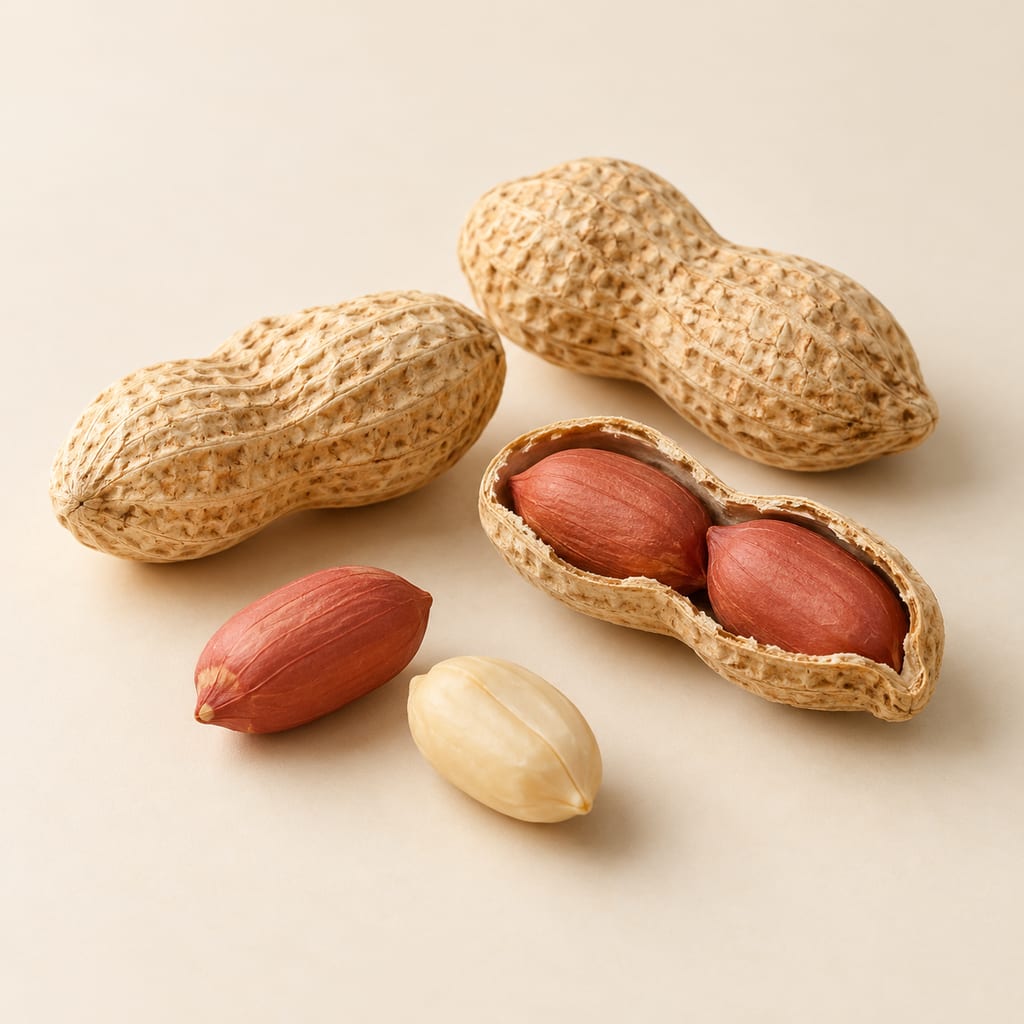
Peanuts are the edible seeds of Arachis hypogaea, a cultivated legume. They are eaten whole, roasted and ground, and peanut oil-press cake is a separate byproduct used in some fermentations.
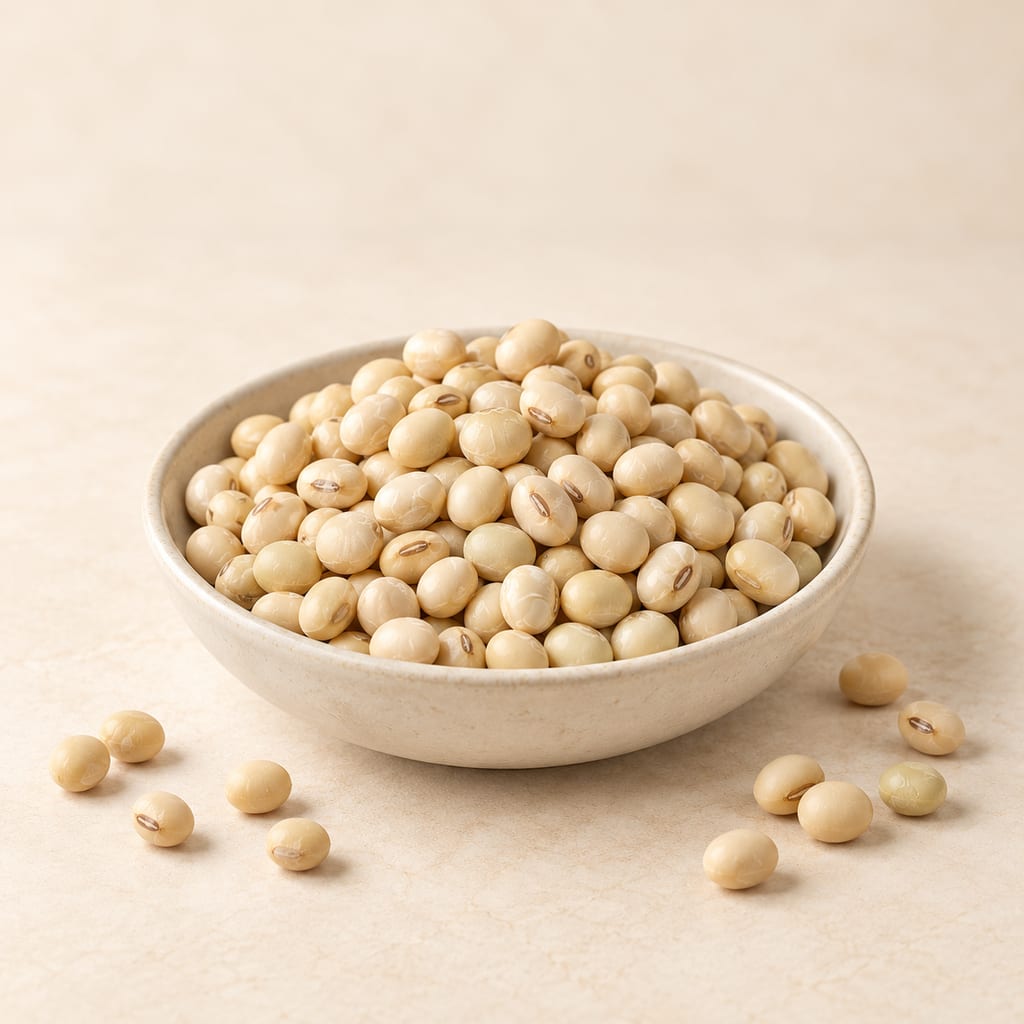
Soybeans are the mature dry seeds of Glycine max, about 40 percent protein and 20 percent oil, the substrate of tempeh, natto, miso, soy sauce and many other fermented foods.

At North Abydos in Egypt, a fixed early Dynastic brewery comprised parallel semi-subterranean installations with rows of ceramic mash vats; excavation reports revise their number, scale and estimated batch capacity.

Ají amarillo is the orange-yellow Peruvian chilli cultivar group of Capsicum baccatum, used to colour and season huancaína sauce and ají de gallina. Published heat estimates do not establish one range for the named cultivar.

Toasted almonds are whole sweet almond kernels dry-roasted until golden to brown. Heat replaces their marzipan note with a roasted, nutty one; they thicken and flavour romesco.

Kodiak salmon, halibut and cod cut as seg'aq and hung on an initaq rack to become tamuuq, with kac'amaasaq and kupcuunaq named as different results.

Aniseed is the dried ripe fruit of Pimpinella anisum, an aromatic Apiaceae spice commonly called a seed. It adds a sweet, warm aroma to breads such as Moroccan krachel and South African mosbolletjies, and is distinct from star anise.

A fixed Late Chalcolithic installation in Areni-1 cave combined a shallow clay pressing basin with a large jar set into the cave floor and storage vessels nearby.

Ripe avocado flesh is the soft, buttery, fat-rich pulp of Persea americana, eaten raw. It is low in acid, so it is a fresh ingredient that needs care in chilled dishes.

A portable dome and pan used over a hearth, with embers on the lid and heat from below. Regional peka and saç forms share this principle while differing in materials, pan shape and how the food is cooked.
No community contributions have been published for this entry yet.
Sign in to contribute. Published comments and photos are free to read.
Purdue University Center for New Crops and Plant Products (NewCROP)History · Production · Processing
Tamarind (Julia F. Morton, Fruits of Warm Climates)Native to tropical Africa, wild across the Sudan; adopted in India long ago; tamar hindi; known to the Egyptians and to the Greeks by the 4th century BCE.
Pulp composition per 100 g and invert sugar content; pulp, shell and seed proportions; yield and bearing age; propagation methods.
Salted pulp blocks in India (about 10 percent salt), Javanese salted balls, Puerto Rican pulping and canning, sugar-layered shipment, Brazilian soaking method.
Uses: chutneys, curries, sauces, tamarind fish, beverages, syrup, jam, wine.
Cited in: The sour fruit flesh of an African tree; Where tamarind came from, and how it became Indian; How the tree grows and the pods ripen; How the pulp is made, packed and kept; What the pulp is made of; What tamarind does in fermentation and preservation; Choosing and handling; Where it is used; Notes
BMC Plant BiologyProduction · Cultivation · Composition
Characterization and evaluation of tamarind (Tamarindus indica L.) germplasm: implications for tree improvement strategiesNative to tropical Africa; the name derives from Arabic Tamar-E-Hind.
Rainfall and temperature range, soil tolerance, sodic soils.
Sour types are 95 percent of global output; India about 59,000 hectares and 200,000 tonnes; exports to the United States over 10,000 tonnes a year.
Most abundant natural source of tartaric acid.
Large variation in pulp weight and pod weight between genotypes.
Cited in: Where tamarind came from, and how it became Indian; How the tree grows and the pods ripen; What the pulp is made of
Foods (MDPI)Composition · Fermentation
Development and Characterization of Craft Beers Prepared with the Use of Tamarind (Tamarindus indica L.) PulpPod composition about 55 percent pulp, 34 percent seed, 11 percent shell; organic acids tartaric, acetic, formic, malic.
One pulp measured pH 2.97, titratable acidity 5.32 g tartaric acid per 100 g, 25.35 degrees Brix; extraction by soaking and sieving.
Saison beer trials: addition at maturation preferred, 20 g/L best balance, higher doses raised residual acidity; alcohol, esters and terpenes.
Cited in: The sour fruit flesh of an African tree; How the pulp is made, packed and kept; What the pulp is made of; What tamarind does in fermentation and preservation
Archaeological and Anthropological SciencesHistory · Archaeology
Agricultural diversification in West Africa: an archaeobotanical study of the site of Sadia (Dogon Country, Mali)Site occupied about 750 to 1300 CE; charred tamarind remains among gathered tree fruits.
Cited in: Where tamarind came from, and how it became Indian
University of Melbourne, School of Agriculture and Food SystemsIdentity
Sorting Tamarindus NamesHindi imli, Tagalog sampalok and Malay asam jawa are names recorded for Tamarindus indica.
Cited in: The sour fruit flesh of an African tree