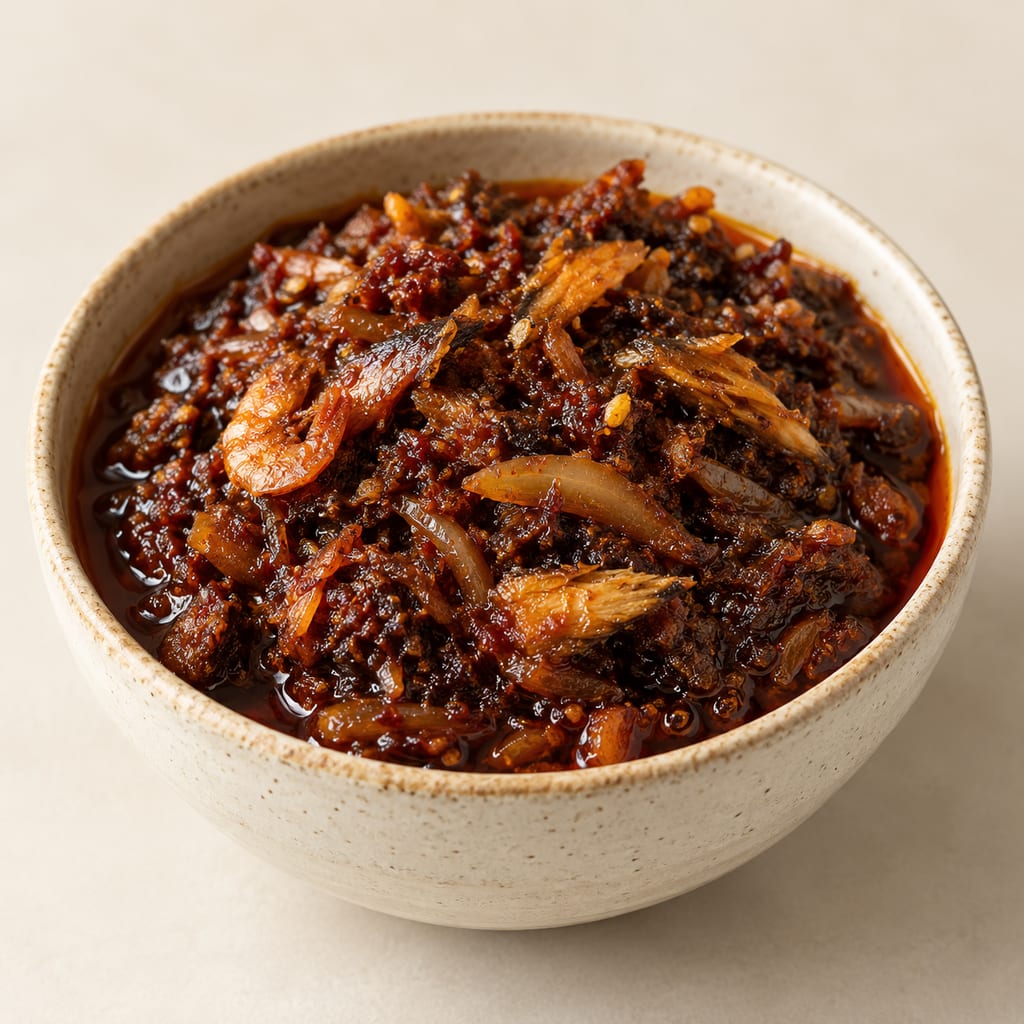
Zoe Adjonyoh’s seafood shito (Guardian batch)
A seafood shito variant by Zoe Adjonyoh, using dried prawn and smoked fish in a cooked chilli and onion base.
 FermenteaWhere food goes to change
Traditional method
Ghanaian black pepper sauce · Shitor · Shitor din · Black pepper sauce · Ghanaian shito
Shito is a hot Ghanaian pepper condiment with fish-rich, oil-cooked and fresh pepper forms; this measured version follows a recipe collected in Ghana’s Northern Region.
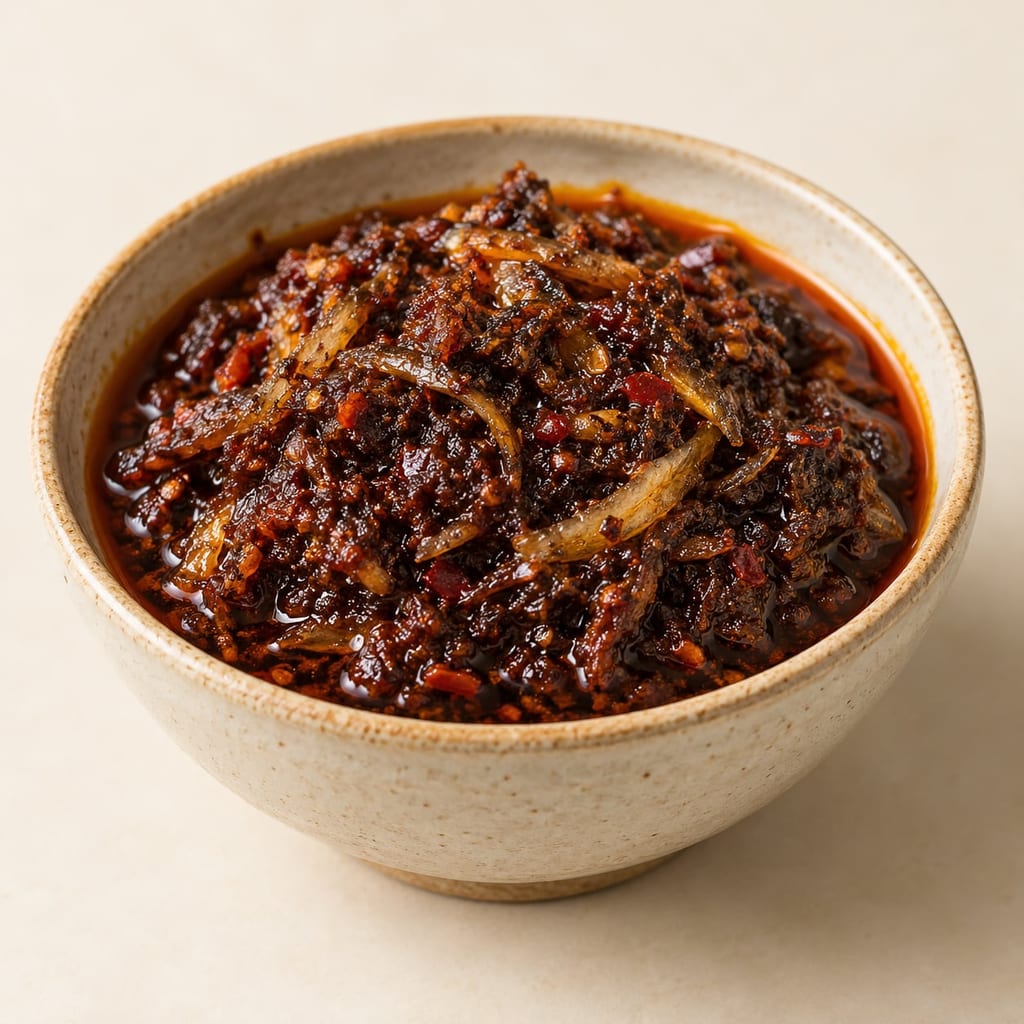
Shito is a Ghanaian hot pepper sauce served as a condiment. A KNUST thesis describes oil-cooked forms built from pepper, fish or dried seafood, aromatics and spices. It also records a fresh, oil-free form made by pounding pepper, onion, tomato and salt in an asanka, a traditional earthenware mortar. The sauce is not one fixed formula: the thesis reports that fish and spice blends vary between regions and villages.
The thesis attributes an original version to the Ga, but does not give a date for the condiment's beginning. Its historical references are secondary summaries rather than a dated earliest record. The page therefore keeps the first attestation unknown instead of assigning a century or precise birthplace. The Ga association is documented as an attribution, not presented as a settled date of invention.
The word is sometimes translated as pepper or black pepper sauce in English-language sources. That name can mislead readers who expect Piper nigrum: the recipes cited here use hot Capsicum peppers. The KNUST thesis distinguishes red shitor tsulu from green kpakpo shito by pepper colour, while its fresh-ground version and the oil-fried seafood versions differ in method as well as appearance.
The 2015 AVRDC World Vegetable Center collection Traditional Recipes from the Northern Region of Ghana includes a recipe titled Shito. It lists 300 mL vegetable oil, 140 g fresh onion, 250 g fresh tomatoes, 50 g dry whole hot pepper, 40 g ginger, 50 g fish powder, 10 g bouillon tablet, 200 mL water and salt to taste. The book says its recipes are designed to serve four people. It does not state a recipe-specific yield or give a tested scale-up method.
The printed preparation calls for pounding dry pepper with fresh ginger, pounding dry fish, grinding tomatoes and hot pepper, and chopping onion. The list gives dry whole pepper and fish powder, while the method refers again to pounded pepper and dry fish. It does not explain whether those steps mean extra quantities or describe the listed ingredients in two forms. This account keeps that ambiguity visible rather than adding ingredients or inventing a clarification.
For cooking, the recipe heats oil, adds chopped onion and tomato, then adds the ground vegetables, salt and bouillon. It covers the pan until the water has evaporated, adds the pounded pepper, then the fish powder, and calls for steady stirring to prevent burning. Its endpoint is a dark-brown colour. The recipe gives no cooking time or temperature, and colour alone is not a validated safety measure.
Chef Zoe Adjonyoh describes shito as a hot chilli condiment whose heat and texture vary among makers, and as one that works as a side sauce, marinade, dip, dressing, spread or topping. Her recipe, taught by an aunt and adapted for a restaurant context, makes about 500 g. It combines oil, red onions, garlic, guinea pepper, ginger, green kpakpo shito peppers, tomato purée, stock, chilli powder, dried prawn, shrimp or crayfish, smoked-fish powder, black pepper and salt.
The method cooks the ingredients in stages and uses oil rising to the surface as a cue. The sauce is then cooled and jarred with an oil layer of about 1 cm on top, and the recipe says to refrigerate it for up to a month. That storage statement is the author's own and is not a validated shelf life, and the printed yield of about 500 g was not measured against the ingredient amounts. This is one cook's recipe and not a national specification.
Ackah, Baidoo and Appiah studied one company's vegetable shito, made with soybean oil and soy flour, and validated a HACCP system for its production. The line dehydrates and cooks the product, cools it and seals it in hermetic sachets, which are 10 g packs with an ambient storage claim. Those figures and the process validation apply only to that formulation and factory line. They do not describe a home process, and they say nothing about fish-based shito.
The formula uses 50 g of dry whole hot pepper, but the cookbook names no pepper cultivar or measured heat level. The result will depend on the specific peppers and how they are handled. Other documented forms use fresh pepper instead, including a green variant, so shito's colour and intensity are not uniform.
Fish powder and ginger make this version different from a simple fresh pepper mash; onion, tomato and the substantial listed oil are cooked together before the final additions. The source does not quantify salt beyond 'to taste' or give a final texture specification. A red or dark fried sauce and a fresh green pepper mixture should be treated as meaningful preparations, not as a single batch that can be substituted without changing flavour and method.
The KNUST account lists shito with banku, akple, gari, kenkey and boiled rice and compares its role to ketchup, hot sauce or chilli oil. It also notes its use with plain or fried rice. These examples describe a versatile table condiment; they do not establish a fixed serving rule.
Fish is an explicit ingredient in the measured recipe. The KNUST account lists dried fish and prawns or other crustaceans among common ingredients in other shito versions. People with a fish or crustacean-shellfish allergy need to avoid the relevant ingredient; the U.S. FDA identifies fish and crustacean shellfish, including shrimp, as major food allergens.
A 2017 KNUST food-quality thesis sampled 30 commercially bottled shito products from the Tema Metropolis. In that sample set, the author reported mould counts from 10³ to 4.4 × 10⁴ CFU/g against a cited Ghana Standards Authority value of 1.0 × 10² CFU/g and reported trace aflatoxin G1 and B2 in one sample. Those findings apply to the products tested, not to every shito or the recipe here. They show why the name, dark colour, oil content or a commercial-style texture cannot by themselves validate a preservation process.
The cookbook's instructions to cook until water has evaporated and the sauce becomes dark brown provide no measured time, temperature, pH or water-activity control. No validated storage duration or room-temperature stability is established here. Keep those gaps explicit; do not extend the recipe's shelf life based on smell, taste, appearance or oil coverage.
The Ghana Standards Authority catalogue lists GS 240:2017, Spices and Condiments - Specification for Shito (Pepper Sauce), second edition, seven pages. The text of the specification was not obtained here, so its clauses are not described. The KNUST thesis compares its mould counts with a value from an earlier GSA 240:2001, and nothing available shows that the 2017 edition keeps that limit. Local requirements for food safety, storage and labelling therefore remain open.
Shito is documented as a Ghanaian hot pepper sauce. A KNUST thesis attributes a traditional version to the Ga and notes that fish, spices and preparation vary by region and village; it also describes a fresh, oil-free pepper, onion and tomato form pounded in an asanka. This is a secondary account, not a dated origin claim. A 2015 Ghana cookbook records a separate measured fried version in a collection of recipes from the Northern Region; that placement documents the formula there, not a northern birthplace.
Yield 4 servings · Scaling: source batch only
The method has no validated time, temperature, pH, water activity or storage endpoint. A 2017 KNUST study reported mould and trace aflatoxins in a sample among the commercial bottled shito products it tested; that result is specific to its sample set, not evidence about every shito or this home recipe.
Hazard sourceThis formula contains fish powder; other shito variants may contain shrimp or other crustaceans.
Hazard sourceThis recipe is not a validated preservation process. The source gives no tested pH, water activity, time, temperature or storage life; do not treat dark colour or oil coverage as proof that it is shelf-stable.
Contains fish. Some shito variants contain shrimp or other crustaceans; check ingredients and avoid them if you have an allergy.
The sources document shito as Ghanaian and in Ghanaian food use. The recipe collection's Northern Region scope identifies where this particular formula was collected, not where shito originated.
A seafood shito variant by Zoe Adjonyoh, using dried prawn and smoked fish in a cooked chilli and onion base.
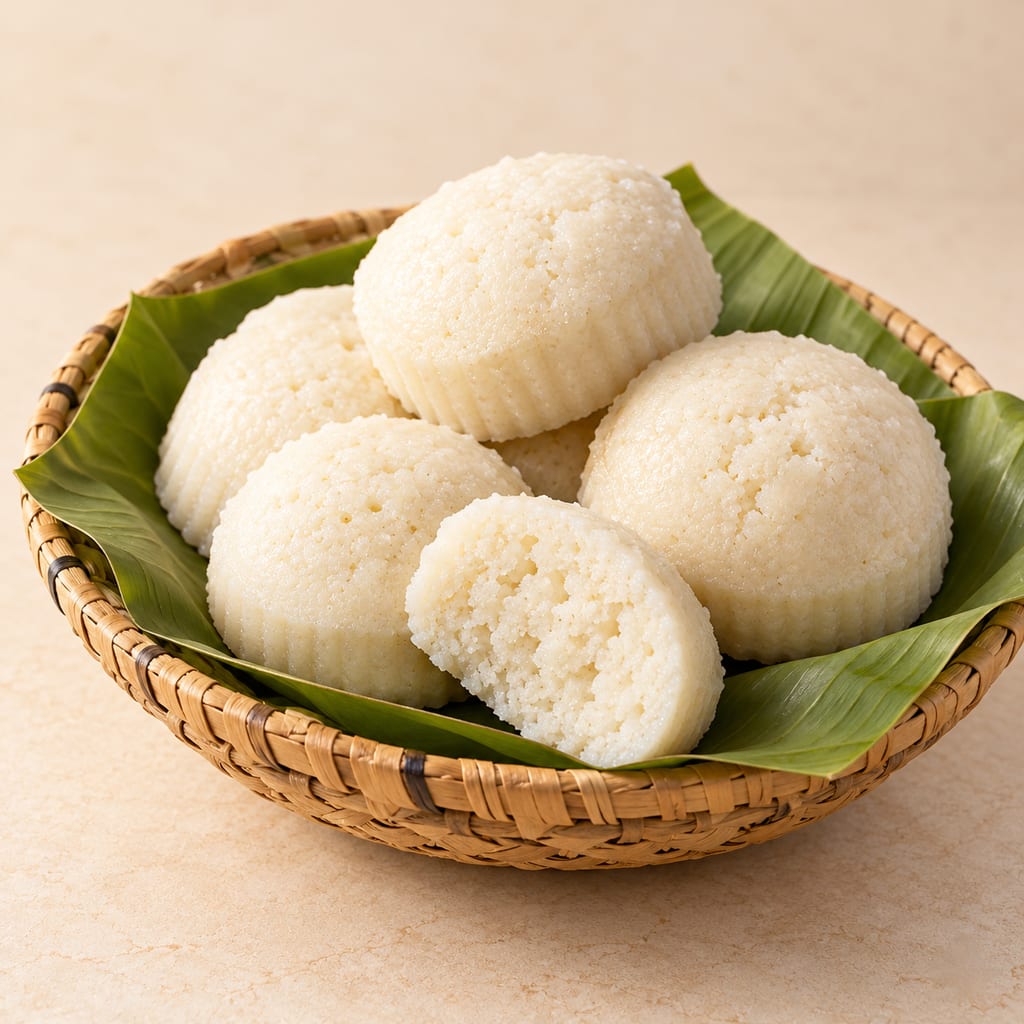
Soft, lightly tangy steamed cereal bread documented across Benin and Togo. This page gives one measured rice-flour research method; maize-based Ablo and mixed-grain versions remain distinct traditions.
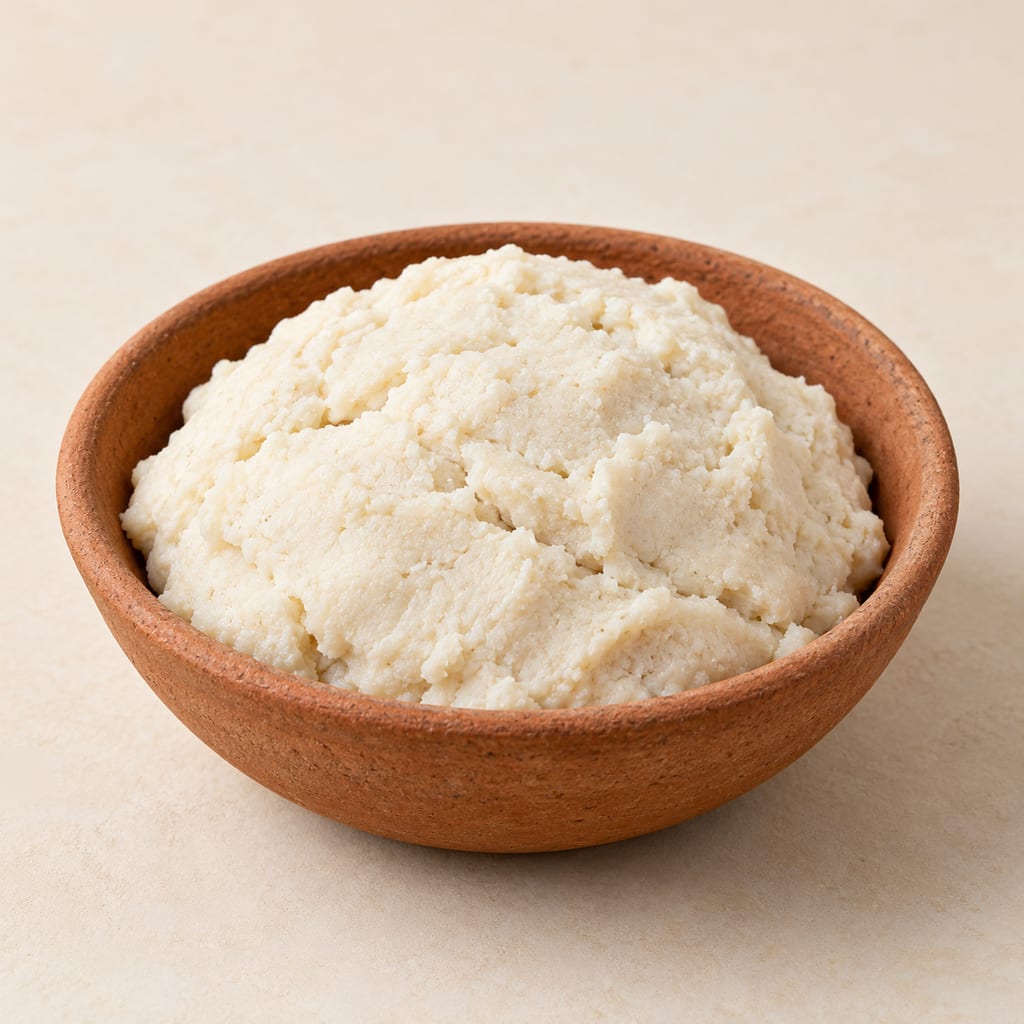
Ghanaian sour cassava dough fermented with traditional inoculum and drained during fermentation. It is used as a base for cooked foods such as banku and akple; process variants and safety outcomes differ.
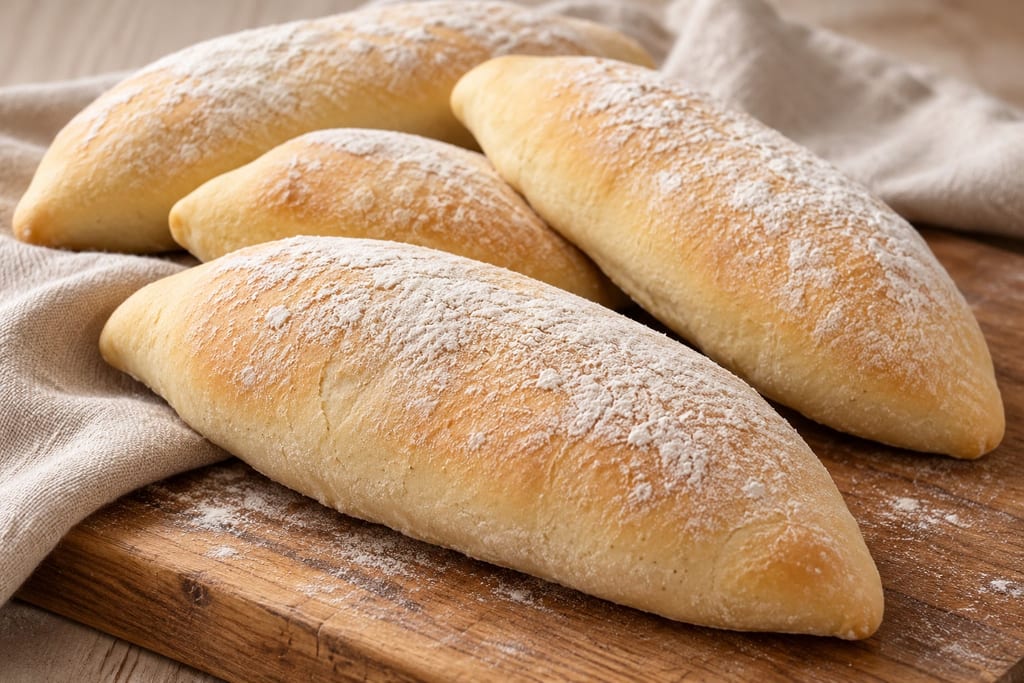
Lightly sweet Ghanaian wheat loaves with nutmeg, a long single proof and a crisp warm crust.

Koobi is Ghanaian salted and dried tilapia. Sources differ on the brief ripening stage and drying period, and do not establish a single validated household process. This entry records documented variants and their limits.
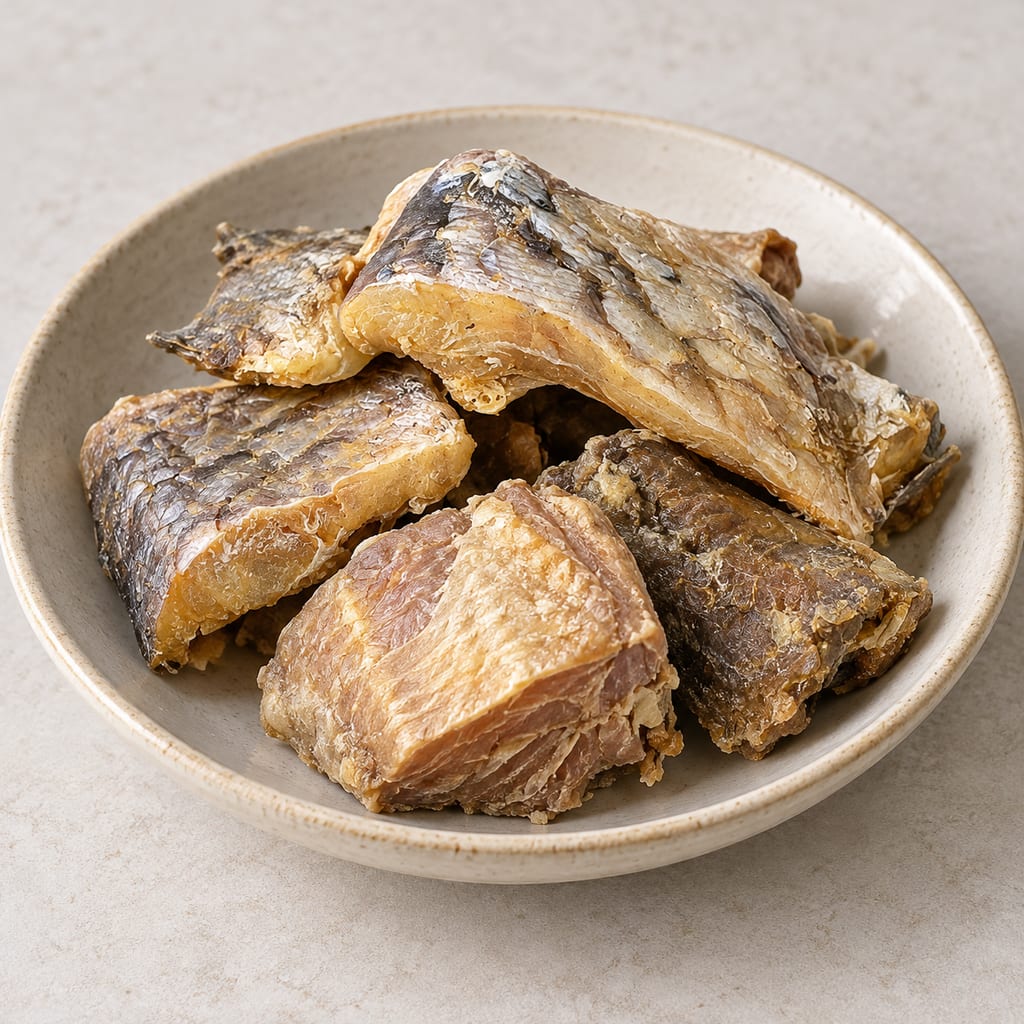
Momone is a Ghanaian salted and fermented fish condiment made from varied marine fish. Historical surveys describe both semi-dried and drier products, with salting and drying methods differing across coastal communities.
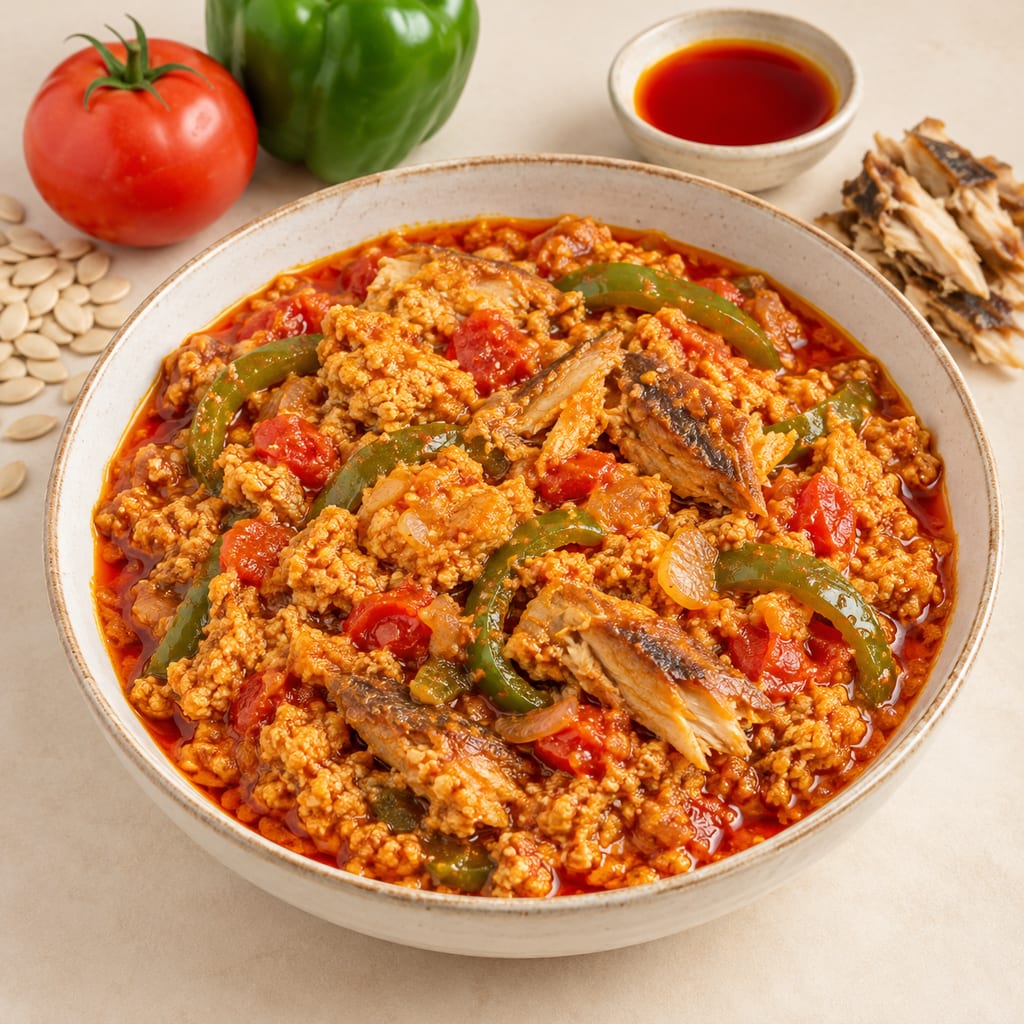
Ghanaian agushie stew combines melon-seed paste with tomatoes, peppers, palm oil and smoked fish, and is served with rice, yam or plantain.
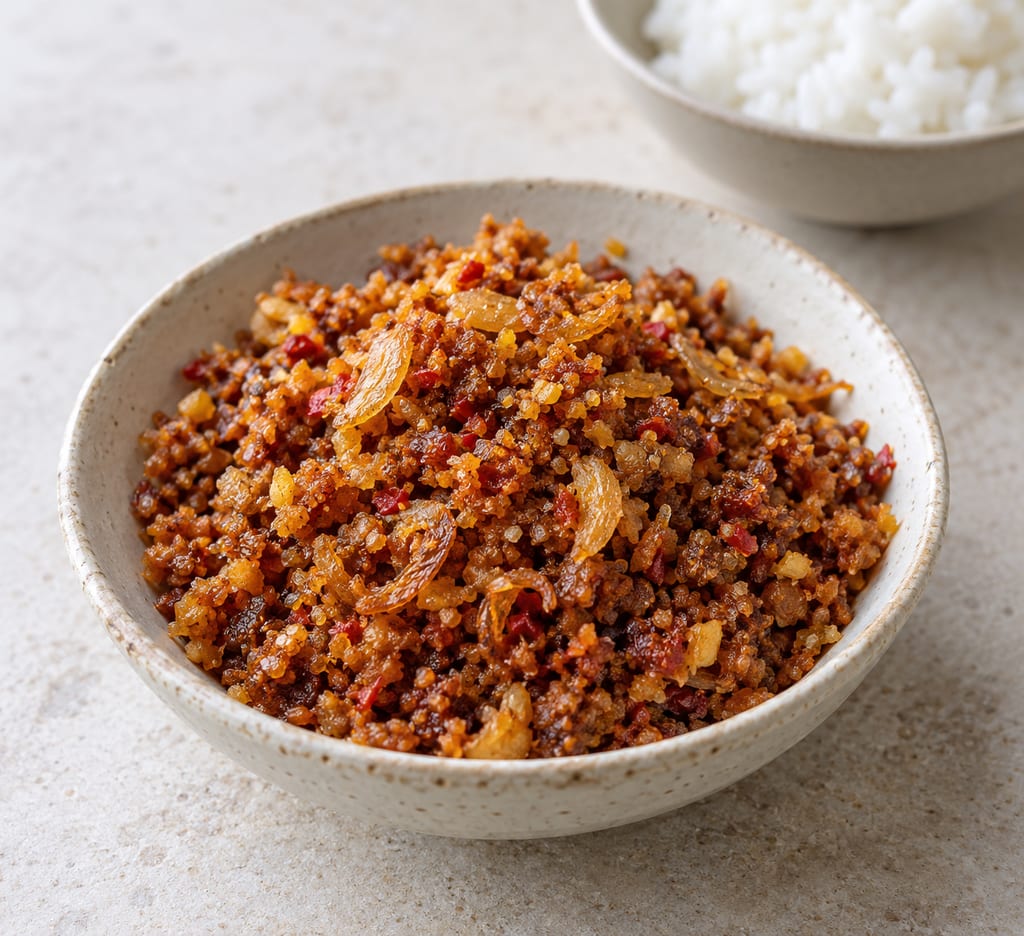
A Myanmar relish of dried shrimp, fried eschalot and garlic, chilli, turmeric, tamarind and ngapi. Naomi Duguid’s published recipe makes about 1 cup; it contains crustacean shellfish.
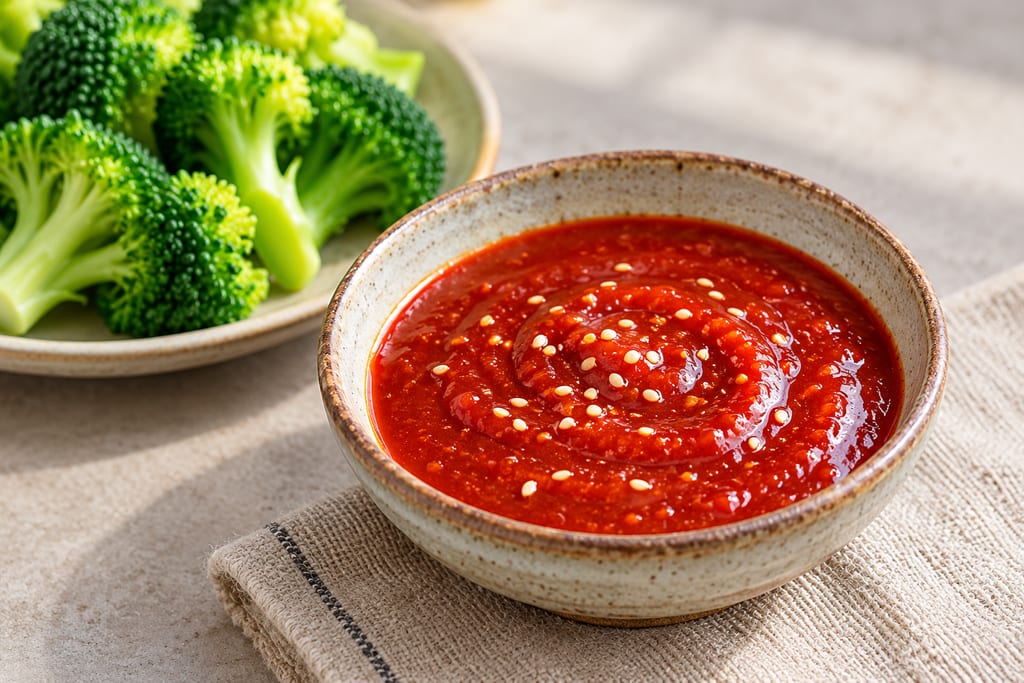
Chogochujang is a Korean sweet-sour sauce made by seasoning gochujang with vinegar and sugar. This development batch adds water and toasted sesame seeds, with optional garlic for the portion being served.
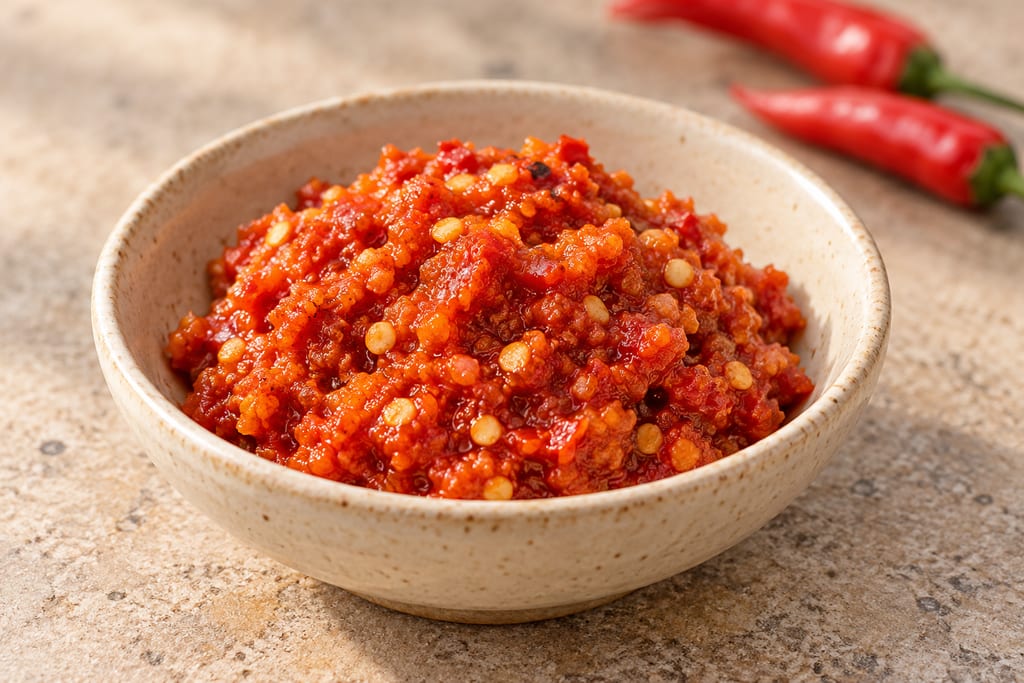
Dinanche, or donne' dinanche, is a Chamorro hot pepper paste of crushed chillies that Guam cooks use on its own or stir into fina'denne'. Its versions range from pepper alone to ones with eggplant, miso or coconut milk.
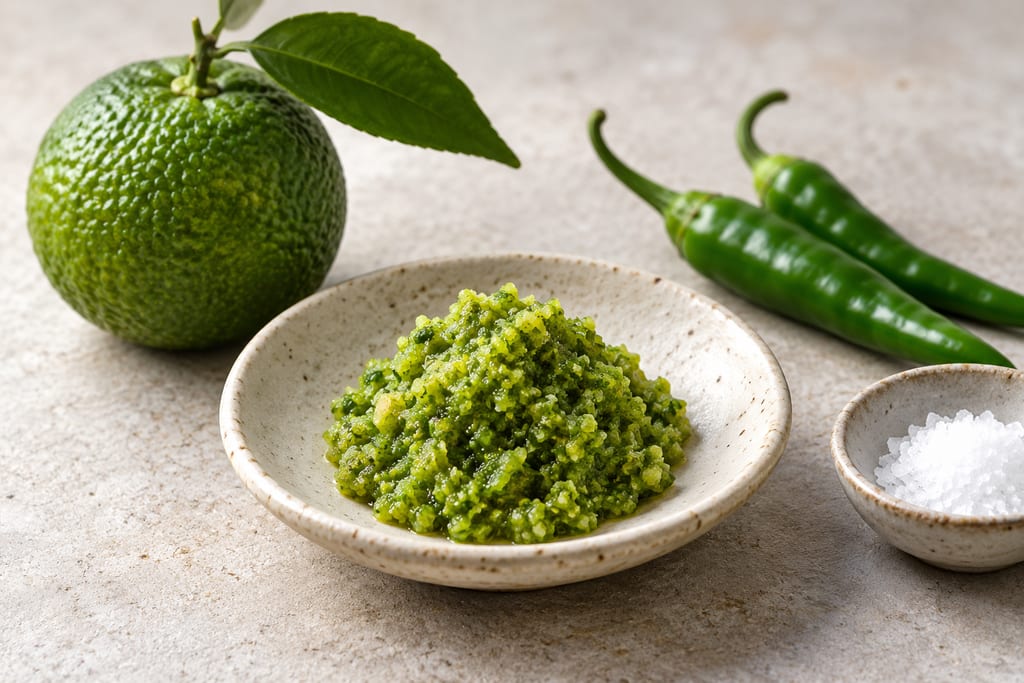
A fresh, uncooked yuzu and green chilli paste inspired by Kyushu’s yuzu kosho, made here as an untested small-batch seasoning rather than a preservation formula.
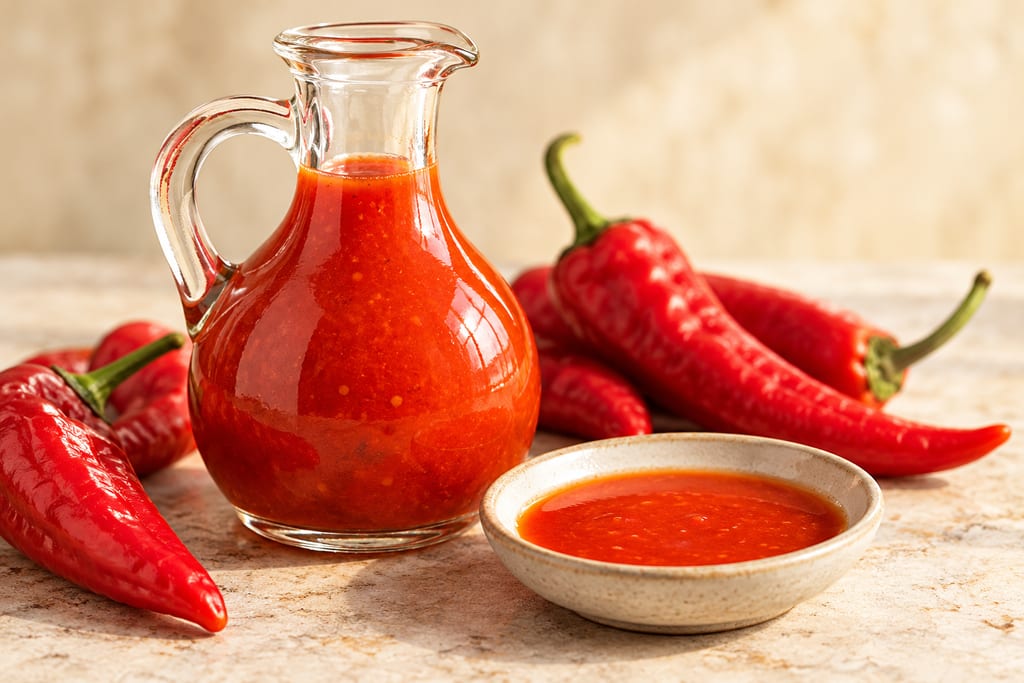
Fresh hot peppers ferment beneath a measured salt brine, then become a bright, tangy sauce blended from the peppers and their liquor.
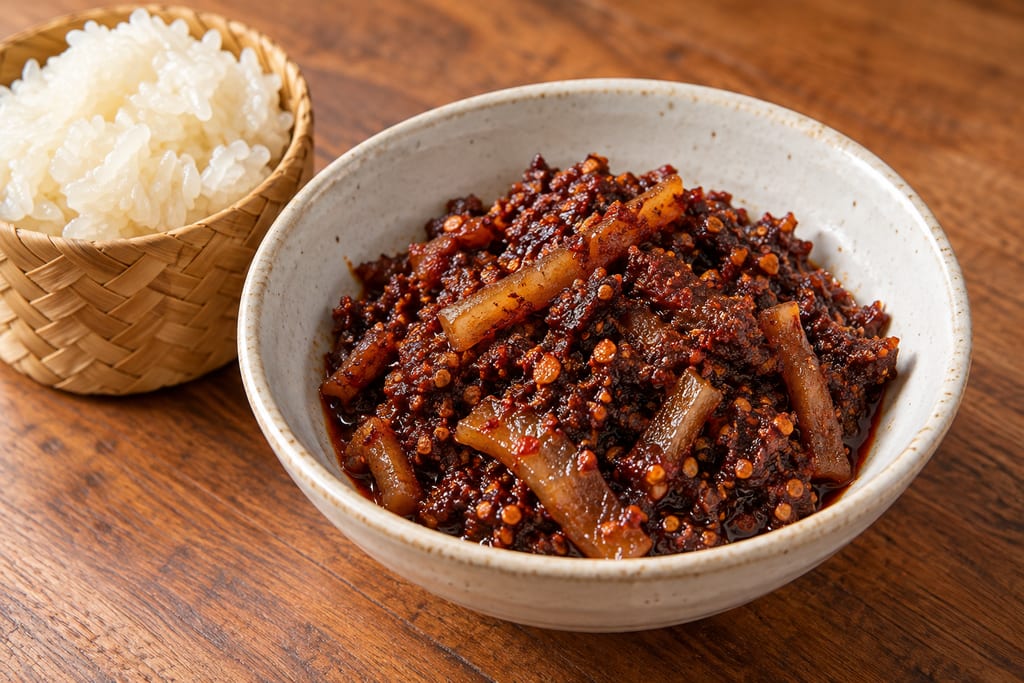
Jeow bong is a Lao paste of dried chilli, shallot, garlic and galangal cooked with buffalo or cow skin, a Luang Prabang specialty eaten with sticky rice and grilled meat.
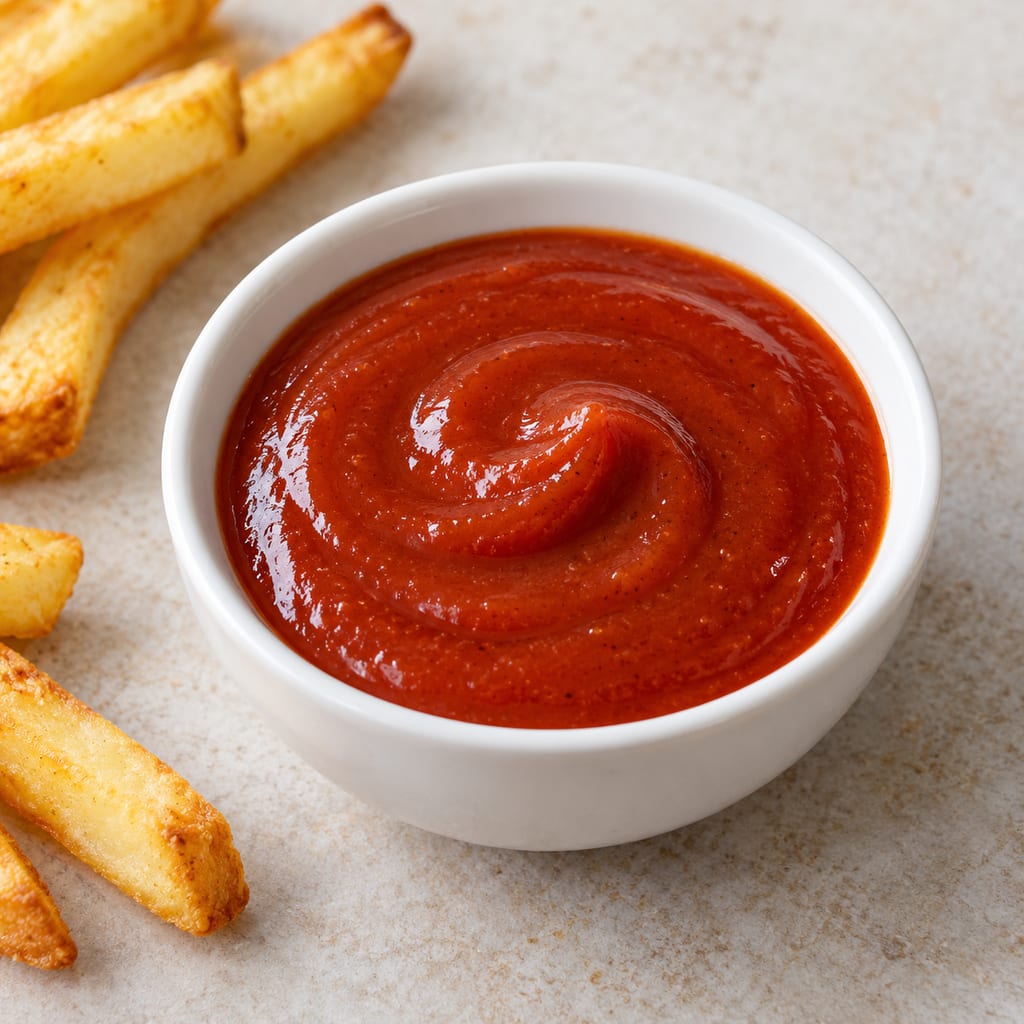
A modern tomato condiment sharpened with the spicy, savoury tang associated with kimchi; this measured version whisk-mixes prepared ketchup and commercial kimchi seasoning.
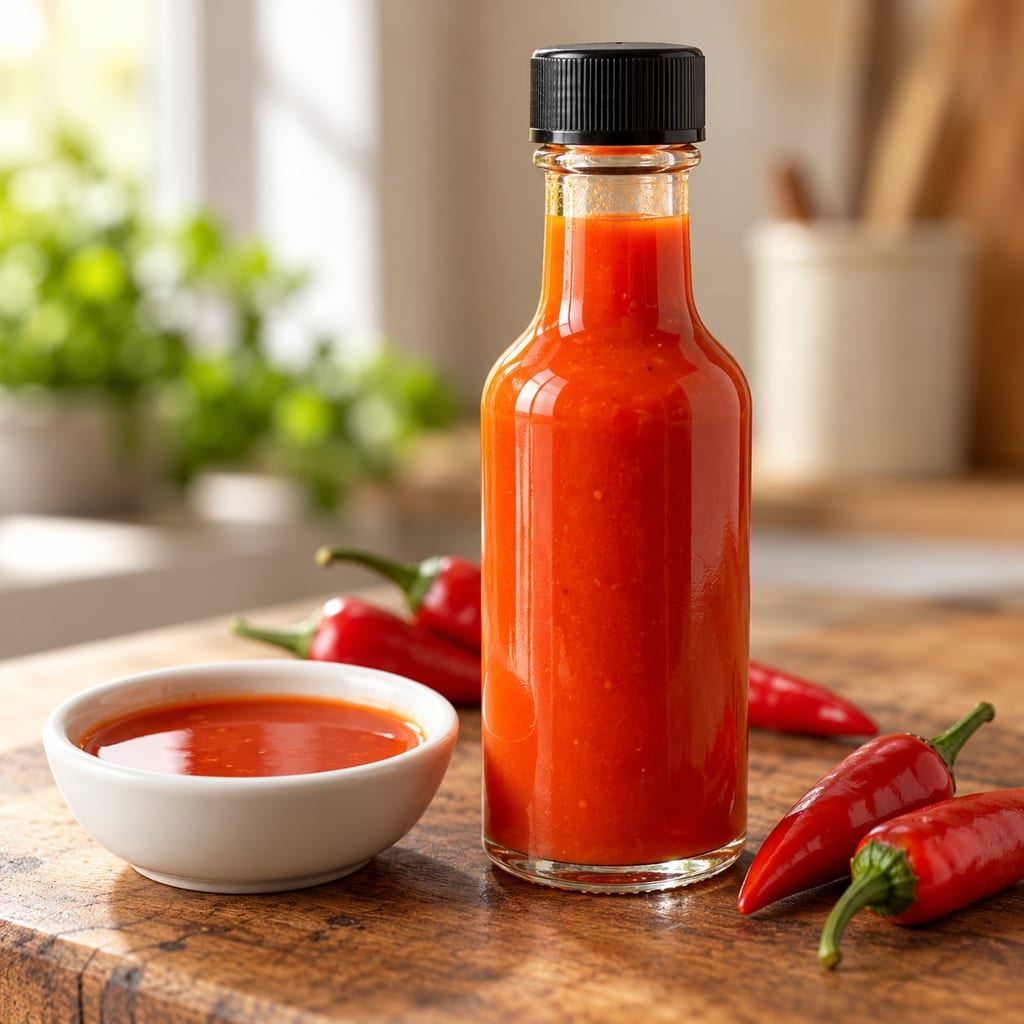
Documentary account of Louisiana pepper sauces, using TABASCO's published barrel-aged commercial process as one specific example; the source does not provide a validated home recipe.
No community contributions have been published for this entry yet.
Sign in to contribute. Published comments and photos are free to read.
AVRDC – The World Vegetable CenterInspiration · Method · Ingredients · Geography · Use
Traditional Recipes from the Northern Region of GhanaThe Shito recipe lists 300 mL vegetable oil, fresh onion, fresh tomatoes, dry whole hot pepper, ginger, fish powder, bouillon, water and salt to taste.
The preparation and cooking sequence pound, grind and chop ingredients, cook until the water evaporates, stir in pepper and fish powder, and finish at a dark-brown colour.
The book says its recipes are designed to serve four and avoids time references because heat sources and temperatures vary; its Northern Region scope does not establish this condiment's origin.
Cited in: A measured recipe from a regional collection; Heat, flavour and serving
Kwame Nkrumah University of Science and TechnologyHistory · Geography · Use · Safety
Evaluation of Filamentous Mould and Aflatoxin Contamination in Processed Bottled “Shito” Sold in the Tema MetropolisThe thesis describes Ghanaian oil-cooked fish and pepper sauce, reports regional variation, attributes a tradition to Ga people, and also records a fresh pepper, onion and tomato form pounded in an asanka.
The study tested 30 commercial bottled samples from Tema; its reported mould counts and trace-aflatoxin findings are limited to that sample set and do not validate this recipe.
Cited in: A Ghanaian pepper condiment with several forms; Heat, flavour and serving; Seafood and preservation limits
U.S. Food and Drug AdministrationSafety
Food Allergies: What You Need to KnowThe FDA lists fish and crustacean shellfish, including shrimp, among the major food allergens.
Cited in: Seafood and preservation limits
The GuardianMethod · Use
A Ghanaian recipe for fish and chipsShito described as a hot chilli condiment varying in heat and texture
Seafood recipe ingredients and staged cooking, about 500 g
Cool, jar under an oil layer of about 1 cm and refrigerate up to a month
Cited in: A restaurant-trained seafood version
Journal of Food QualityMethod · Safety
Validating a HACCP System for the Production of Vegetable ShitoOne company's soybean-oil and soy-flour vegetable shito
Industrial dehydration, cooking, cooling and hermetic sachet packing
10 g packs and ambient storage claim apply to that product
Cited in: Vegetable shito made in a factory
Ghana Standards AuthoritySafety
2018 Catalogue of Ghana StandardsGS 240:2017, Spices and Condiments - Specification for Shito (Pepper Sauce), second edition, seven pages
Cited in: The Ghana standard