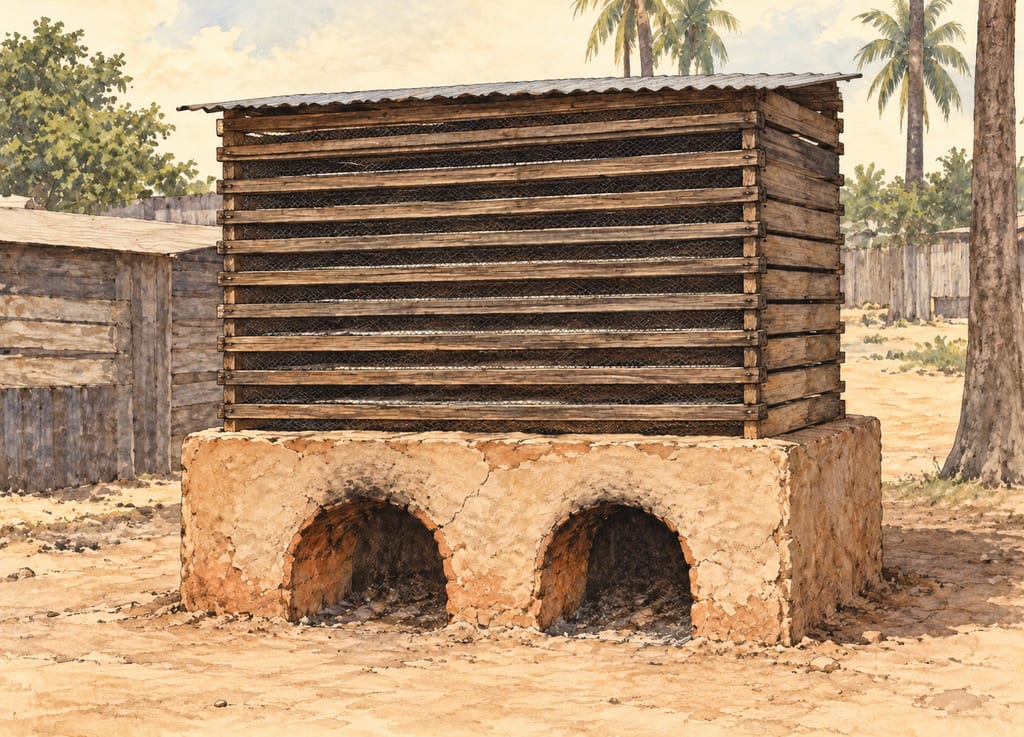
Chorkor smoker
The Chorkor, also called the Kagan smoker in early FAO documentation, pairs a low rectangular mud/clay oven with stacked removable wooden-frame, wire-mesh trays. FAO records its use at Chorkor, Ghana, from 1971.
 FermenteaWhere food goes to change
Modern method
Smoked fish and Agushie stew (Akatoa stew) · Agushie stew with smoked fish · Akatoa stew
Ghanaian agushie stew combines melon-seed paste with tomatoes, peppers, palm oil and smoked fish, and is served with rice, yam or plantain.
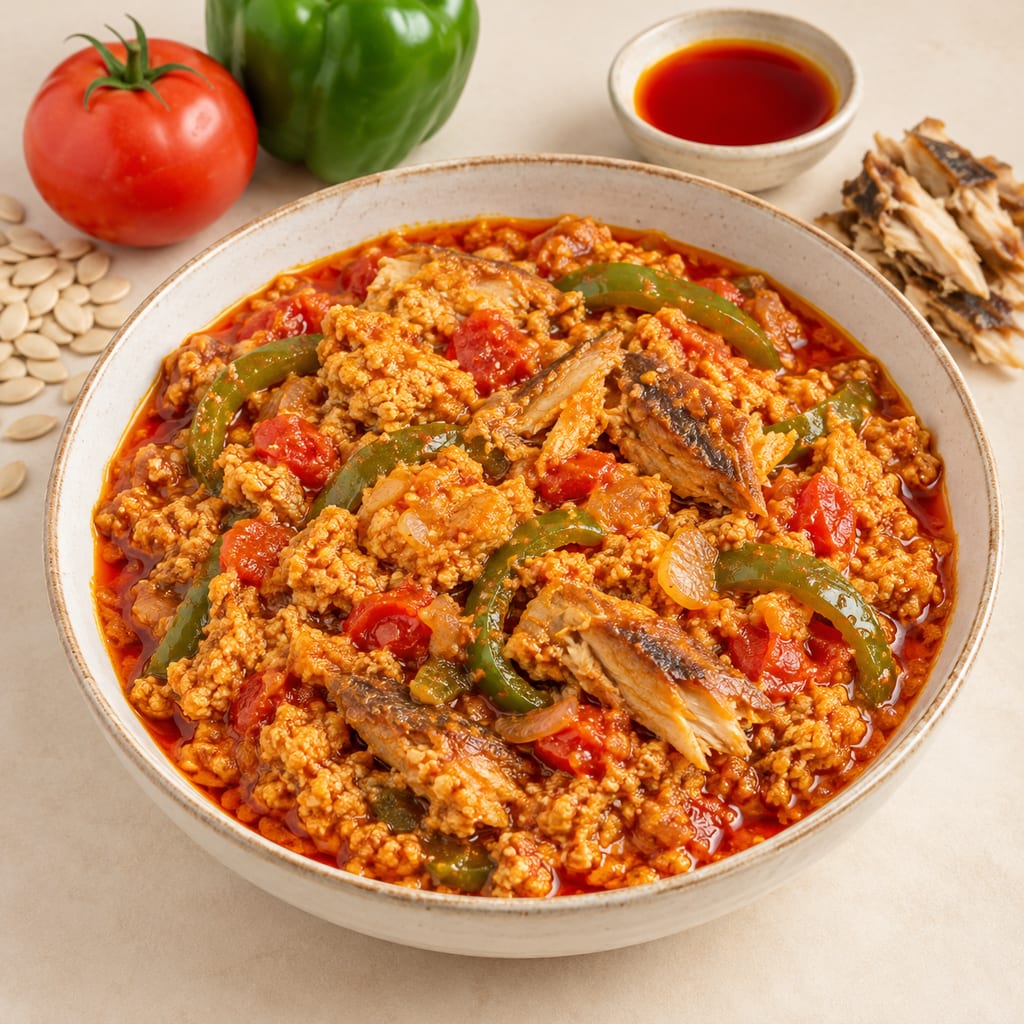
Smoked fish and agushie stew is a Ghanaian dish built around ground melon seeds, tomatoes, peppers, palm oil and smoked fish.
Its texture is distinctive. The ground seeds are blended with water to create a thick paste, which is added to the simmering stew and allowed to set before being stirred.
This produces soft, substantial pieces of cooked seed paste within the sauce.
The result differs from a completely smooth purée.
The cooked agushie contributes richness, texture and a nutty flavour, while the smoked fish provides savoury intensity.
Tomatoes and peppers create the surrounding sauce.
The dish is commonly served with plain rice, boiled yam or plantain.
It is not a fermented recipe, although it uses preserved fish and may be served with fermented or otherwise processed starchy foods.
The original recorded recipe was published by Berlinda Entsie in Pulse Ghana on 25 March 2021. Closely related versions have also appeared in other Ghanaian food publications.
Ghanaian English — Agushie stew, agushi stew
Fante — Akatoa froyie
Akan — Akatoa, akitua — melon seed names in some usage
Ga and Ewe usage — Agushie
Nigerian English — Egusi stew — related family
The word agushie refers to edible melon or gourd seeds used in cooking.
The botanical identification is not uniform.
Relevant crops include Cucumeropsis mannii and forms of Citrullus cultivated for their seeds.
The source recipe does not identify the particular plant species from which the purchased agushie seeds were obtained.
It is therefore more accurate to describe the ingredient as food-grade agushie melon seeds than to assign a single unsupported scientific name.
Melon-seed stews form an important part of West African cooking.
Different communities developed preparations using ground seeds to enrich soups and stews.
These seeds provide fat and protein, which contribute substantial body to dishes that might otherwise be primarily vegetables and liquid.
In Ghana, agushie is also used in other foods, including green-leaf stews.
The cooking tradition therefore involves an ingredient shared across several dish families.
Smoked fish is another important element of Ghanaian food culture.
Smoking and drying extend the usefulness of fish catches and allow seafood to reach consumers beyond the immediate fishing community.
Fish-processing techniques are particularly significant along the Ghanaian coast and around inland fishing areas, including Lake Volta.
The combination of seeds and smoked fish is consistent with these wider culinary and preservation traditions.
However, the exact date when akatoa stew first appeared is not established.
The 2021 published recipe is a modern attestation.
It does not prove that the precise measurements or sequence were used in an earlier historical century.
Agushie seeds contain oils, proteins and carbohydrates.
Grinding breaks the seed tissues and releases their components.
When the ground seeds are mixed with water, they form a suspension or thick paste.
Heating changes this structure.
Seed proteins denature and can aggregate into a more coherent mass.
Water-binding components influence the final consistency.
This helps explain why the agushie paste can set into identifiable soft curds or lumps when added to hot stew.
The resulting texture depends on how finely the seeds were ground, the amount of water used and how the paste is disturbed during cooking.
A very thin mixture behaves differently from a thick paste.
The source specifically instructs cooks not to stir immediately after adding the agushie, allowing it to set.
That instruction is central to the dish.
Fish flesh contains proteins, fat and flavour compounds.
Smoking adds characteristic aromas produced by the interaction of wood smoke with the surface of the fish.
Phenolic and carbonyl compounds contribute smoky flavour.
Drying during smoking may also concentrate the fish's existing taste.
The finished fish can contribute substantial savoury depth to a stew even when it is not the largest ingredient by volume.
Different species have different properties.
Mackerel is comparatively fatty and richly flavoured.
Herring also contributes a strong fish flavour and may have substantial fat.
Salmon produces a different texture and aromatic profile.
Tuna is relatively lean in many preparations.
The source explicitly permits several species rather than prescribing one.
This means the recipe has a built-in regional and practical flexibility.
However, the amount of smoked fish is not given.
It should not be invented merely to produce a neat shopping list.
Fish smoking is an important preservation method in Ghana.
Traditionally, fish may be processed using ovens and smoking structures developed for local conditions.
The Chorkor smoker is one well-known technology associated with Ghanaian fish processing.
It uses a cooking chamber and trays to expose fish to heat and smoke.
Other improved technologies have been developed to address fuel use, smoke exposure and contamination.
Research has identified polycyclic aromatic hydrocarbons, or PAHs, as a potential hazard in smoked foods.
These compounds can form when organic material undergoes incomplete combustion.
In some smoking arrangements, fat dripping onto flames can also contribute to unwanted smoke constituents.
The FAO-Thiaroye processing technique and improved Ghanaian smoking ovens seek to reduce such hazards.
The present stew recipe starts with purchased smoked fish.
It does not teach fish smoking or establish a particular smokehouse process.
The safest choice is fish produced and handled under appropriate food-safety controls.
The quantities below retain the source recipe's measured values. The original publisher does not specify a finished yield or the amount of fish.
The shrimp powder and shrimp stock cube are alternatives, not ingredients that must both be added.
Ground agushie can replace whole seeds, but the source does not give a separate measured quantity for pre-ground seed meal.
Palm oil contributes colour, richness and flavour.
The source specifies approximately 60 ml.
Use food-grade palm oil suitable for cooking.
The precise flavour varies with refining and processing.
Tomatoes contribute moisture, acidity and sweetness.
As they cook, their tissues soften and release liquid.
They help form the base of the stew.
The source permits fresh Scotch bonnet, bird's-eye chilli or similar hot peppers.
The amount is left to preference.
Different chillies have different levels of pungency, so substitution can significantly change the result.
Bell peppers are added near the end.
They contribute a sweeter, less pungent pepper flavour and some texture.
Ground dried shrimp contributes concentrated seafood flavour.
A commercial shrimp stock cube is offered as an alternative.
Both may add significant salt.
Use properly processed smoked fish.
Remove bones before incorporating it into the stew.
If the fish is particularly dry, its texture may change as it absorbs sauce.
The original recipe does not specify whether the fish should be soaked beforehand.
Use a saucepan or heavy cooking pot, knife, chopping board, blender or food processor, spoon and suitable serving utensils.
A lid is important because the source uses covered simmering.
A food thermometer is advisable when reheating fish or ensuring that the dish is properly cooked.
Clean utensils are especially important when working with smoked seafood.
Peel and slice the two onions.
Dice the four tomatoes.
Finely chop the selected hot pepper.
Mince the optional garlic.
Slice the two bell peppers and reserve them for the later stage.
Remove unwanted skin, large bones and other unsuitable material.
Break the fish into manageable pieces.
Keep the pieces relatively substantial if a chunky finished stew is desired.
The source does not specify an exact piece size.
Place ¼ cup (60 ml) palm oil in the saucepan.
Heat it sufficiently to cook the onions.
The source does not give a numerical oil temperature.
Avoid excessive smoking or burning.
Add the sliced onions, minced hot pepper and optional garlic.
Cook until the onions soften.
The source does not give a fixed duration.
The objective is to develop flavour and soften the onion without scorching the ingredients.
Add the diced tomatoes and prepared smoked fish.
Distribute the ingredients through the oil and aromatics.
Add approximately ½ teaspoon salt.
Introduce either one heaped teaspoon ground dried shrimp or one shrimp stock cube.
Mix thoroughly.
Cover the pot.
Simmer for 8–10 minutes.
The tomatoes should soften and the fish should heat through.
The source gives a sensory description rather than a measured internal food temperature.
For safe handling, use the appropriate food-safety guidance discussed below.
Place 1 cup whole melon seeds into a blender.
Add approximately ½ cup water and ¼ teaspoon salt.
Blend until the mixture becomes smooth and creamy.
If starting with commercially ground agushie, mix the meal with water and salt to make a thick paste.
The source does not provide a separate quantity for the ground-seed version.
Lower the cooking heat beneath the tomato-and-fish mixture.
This reduces vigorous movement before the agushie is added.
Introduce the agushie mixture into the pot.
Do not stir immediately.
Cover the pot and allow the paste to cook gently until it begins forming a set mass.
The source does not give an exact duration for this stage.
Once the agushie has set, add the sliced bell peppers.
Stir carefully.
The paste may separate into substantial soft pieces, creating the characteristic stew texture.
If the mixture is excessively thick, add a little water.
A splash is called for, without a specified volume.
Do not claim a precise amount.
Taste only after the ingredients have been cooked safely.
Adjust salt as necessary.
Because smoked fish and dried shrimp can already be salty, additional salt may not be needed.
Serve hot with plain rice, boiled yam or plantain.
The original recipe does not provide measured quantities for these accompaniments.
The agushie paste behaves differently from ordinary flour.
As it heats, seed proteins and other components change structure.
If the cook stirs vigorously before the paste has had time to set, the mixture may disperse throughout the sauce.
That creates a relatively uniform thickening effect.
If allowed to set first, the paste can form identifiable curds or lumps.
These give the stew its characteristic body.
Neither texture is necessarily inedible, but the original recipe deliberately aims for set agushie pieces.
A separate Ghanaian recipe allows the seed paste to be cooked in advance before adding it to the sauce.
That is a meaningful variant, not an instruction included in this particular method.
The Fante name connects the dish with a particular Ghanaian linguistic and culinary context.
It describes a stew in which agushie is central.
Some recipes include salted tilapia or additional smoked fish species.
Others add tomato paste.
A 2016 Pulse Ghana version uses an additional stage of lightly browning fish and provides a longer simmering period for the melon-seed paste.
Kontomire stew uses green leaves, often from cocoyam, alongside ingredients that can include ground melon seeds and smoked fish.
It is a related but distinct dish.
Nigerian egusi preparations also use ground melon seeds.
Their texture, ingredients and serving traditions can differ considerably.
It would be inaccurate to call every Ghanaian agushie stew simply a Nigerian egusi soup under another name.
The stew can accompany plain rice.
It is also served with boiled yam or plantain.
These starchy foods balance the strongly flavoured sauce.
The seed paste contributes richness, while smoked fish adds concentrated savoury flavour.
A portion of stew can therefore season a much larger amount of relatively mild starch.
The dish may be served as part of a family meal.
Some cooks prefer substantial agushie lumps, while others favour a more finely distributed texture.
The source's method deliberately retains identifiable pieces.
The agushie fails to set: The paste may be too thin, or it may have been disturbed before heating sufficiently.
The stew becomes excessively dry: Water has evaporated or the seed paste absorbed more liquid than expected.
The fish breaks apart: Stirring may be too vigorous after the fish has softened.
The sauce becomes overly salty: Smoked fish, shrimp powder and stock cubes can each contribute salt.
The onions burn: The initial palm oil may have been too hot.
The agushie tastes raw or floury: Continue cooking rather than relying solely on the setting of its surface.
The fish has an unusual spoiled odour: Discard it. A normal smoke aroma must not conceal deterioration.
Use smoked fish from a reliable producer.
Different smoked fish products have different cooking and storage histories.
Cold smoking does not necessarily cook fish fully.
If the product requires cooking, follow its supplier's directions.
General FDA guidance advises that most finfish should reach 145°F (63°C) internally.
The original stew recipe's 8–10-minute simmer is not a measured safety endpoint.
Remove fish bones carefully, especially when serving children.
Dried shrimp and smoked fish are recognised allergens.
Ground melon seeds may also be unsuitable for individuals with relevant seed allergies.
Keep the finished stew under suitable hot-holding conditions or cool and refrigerate promptly.
Do not leave the cooked seed-and-fish mixture at room temperature for extended periods.
The original recipe is complete enough to prepare the basic stew, but it omits the weight and species of smoked fish.
It also lacks an exact setting time for the agushie paste and a fixed finished yield.
Those omissions should remain visible in the finished record.
The precise historical origin of the dish is not established.
Its identity rests on the documented Ghanaian culinary practice and the relationship between melon-seed paste, smoked fish and the tomato-based sauce.
Berlinda Entsie’s Pulse Ghana page is dated 25 March 2021 and identifies this as a Ghanaian stew. It does not establish an earliest attestation, local origin or a Chorkor connection.
Scaling: source batch only
The source permits several finfish choices but does not quantify the fish or identify how it was smoked. It gives a sensory phrase rather than a measured internal endpoint.
Hazard sourceFDA consumer guidance says most seafood should reach an internal temperature of 145°F (63°C). The recipe source does not provide a thermometer endpoint, and this general finfish guidance does not validate every smoked-fish option or the source batch.
Control sourceThe page’s “no longer smelling raw” wording is not a measured safety endpoint. It gives no fish quantity or selected species, and no storage time for the finished stew.
The page identifies this as a Ghanaian dish but gives no more precise recipe locality.
The Chorkor, also called the Kagan smoker in early FAO documentation, pairs a low rectangular mud/clay oven with stacked removable wooden-frame, wire-mesh trays. FAO records its use at Chorkor, Ghana, from 1971.

Koobi is Ghanaian salted and dried tilapia. Sources differ on the brief ripening stage and drying period, and do not establish a single validated household process. This entry records documented variants and their limits.
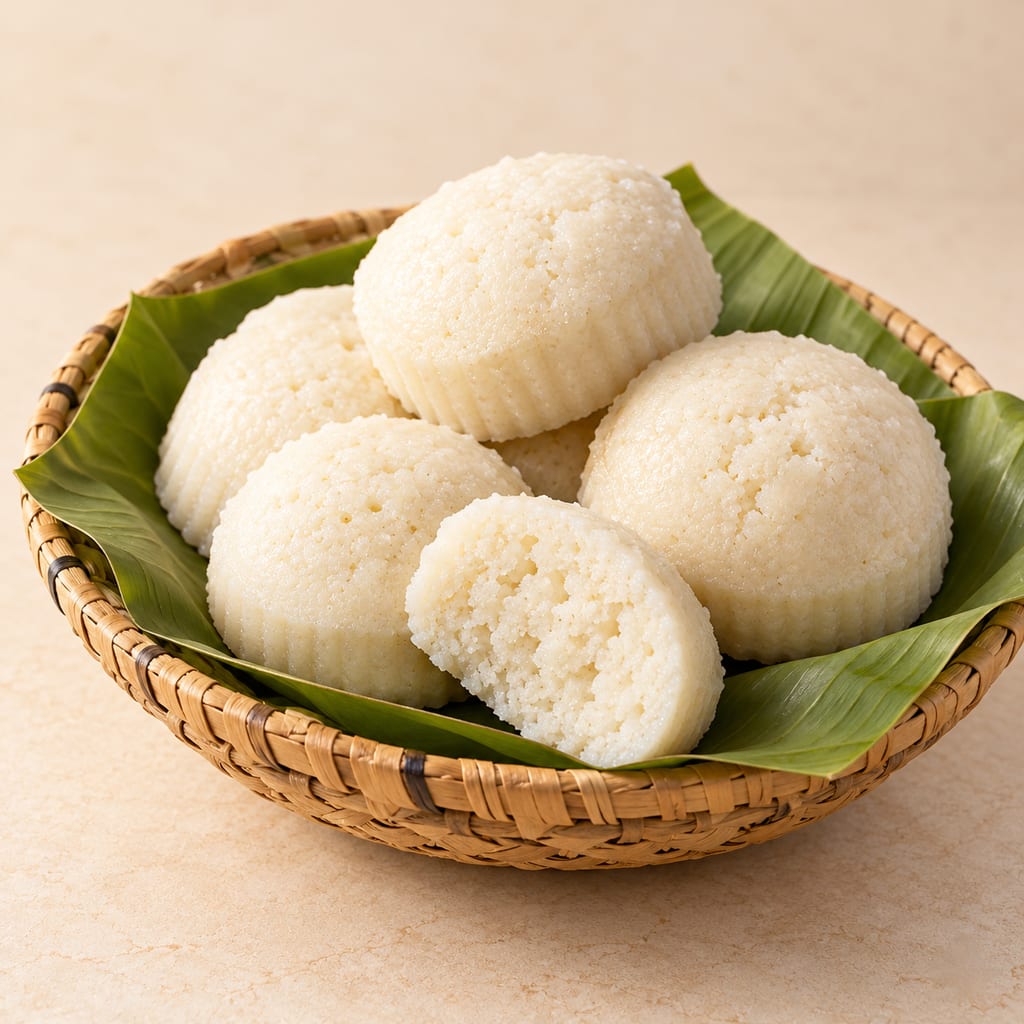
Soft, lightly tangy steamed cereal bread documented across Benin and Togo. This page gives one measured rice-flour research method; maize-based Ablo and mixed-grain versions remain distinct traditions.
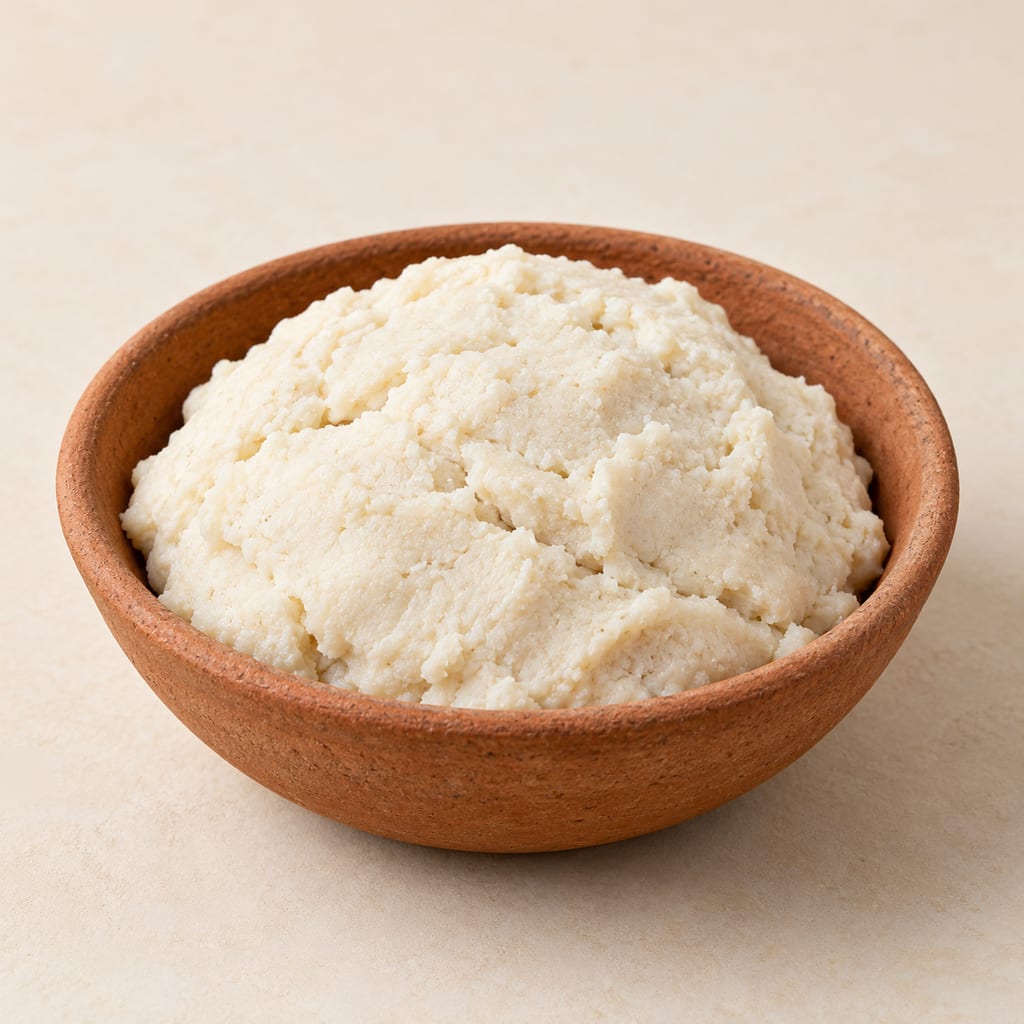
Ghanaian sour cassava dough fermented with traditional inoculum and drained during fermentation. It is used as a base for cooked foods such as banku and akple; process variants and safety outcomes differ.
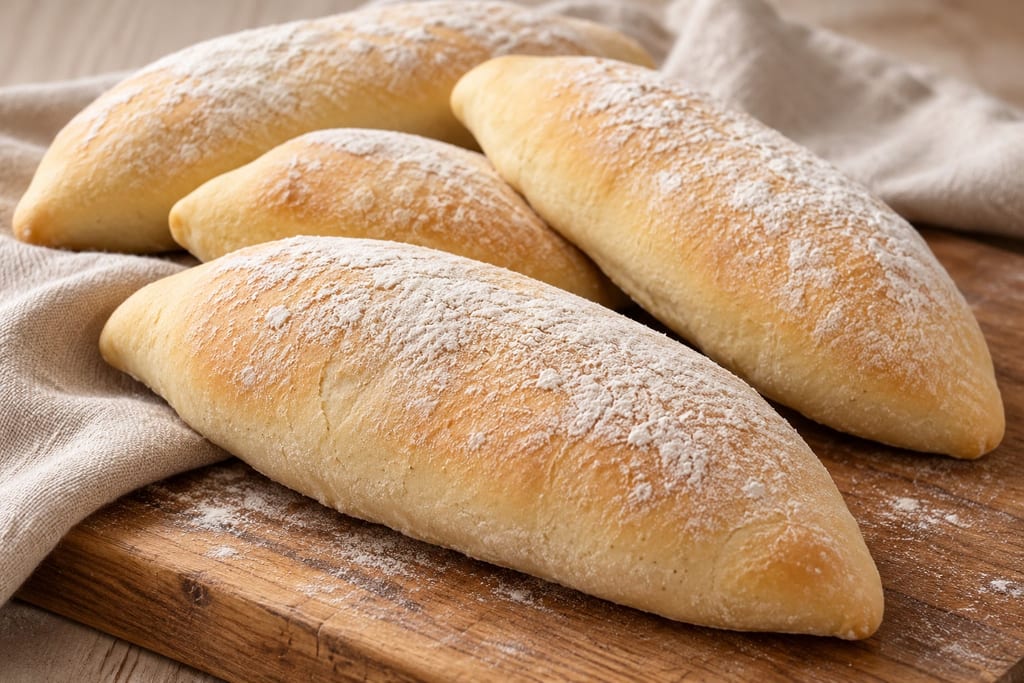
Lightly sweet Ghanaian wheat loaves with nutmeg, a long single proof and a crisp warm crust.
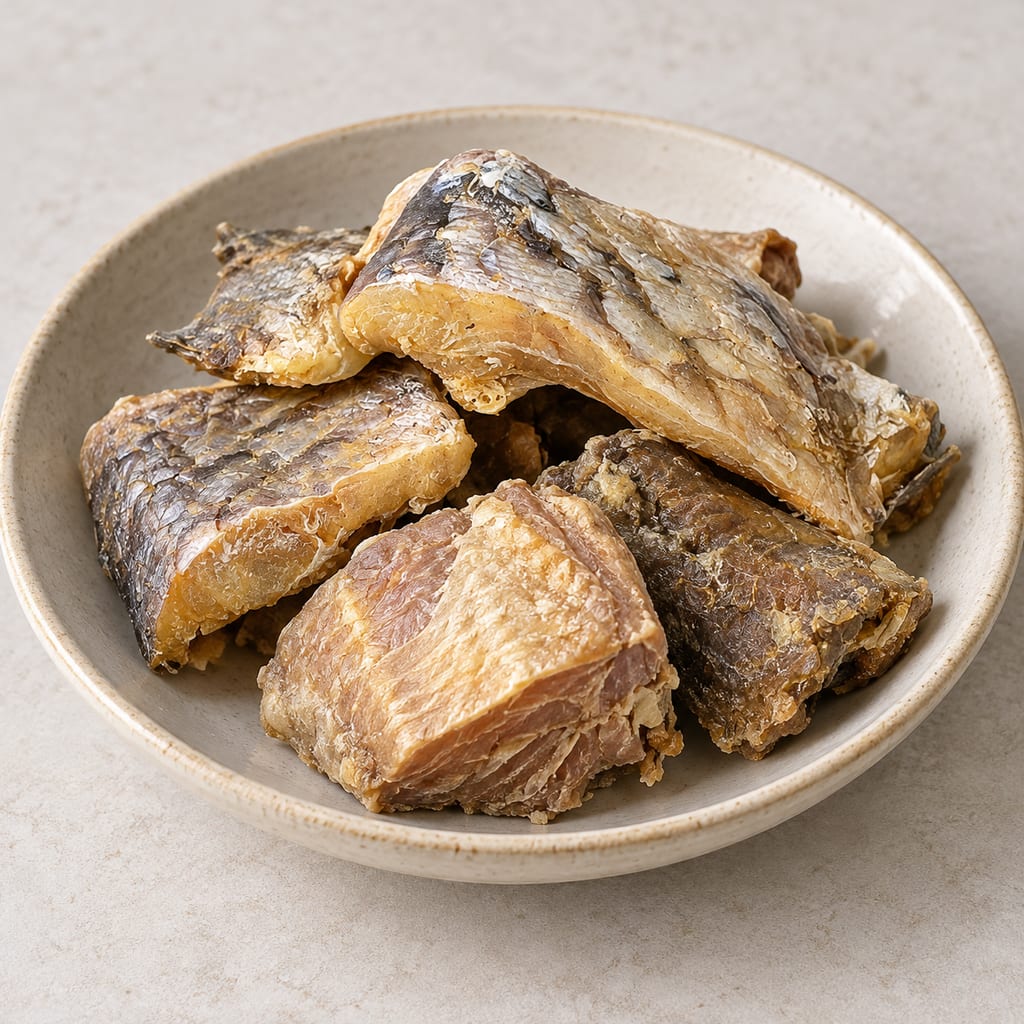
Momone is a Ghanaian salted and fermented fish condiment made from varied marine fish. Historical surveys describe both semi-dried and drier products, with salting and drying methods differing across coastal communities.
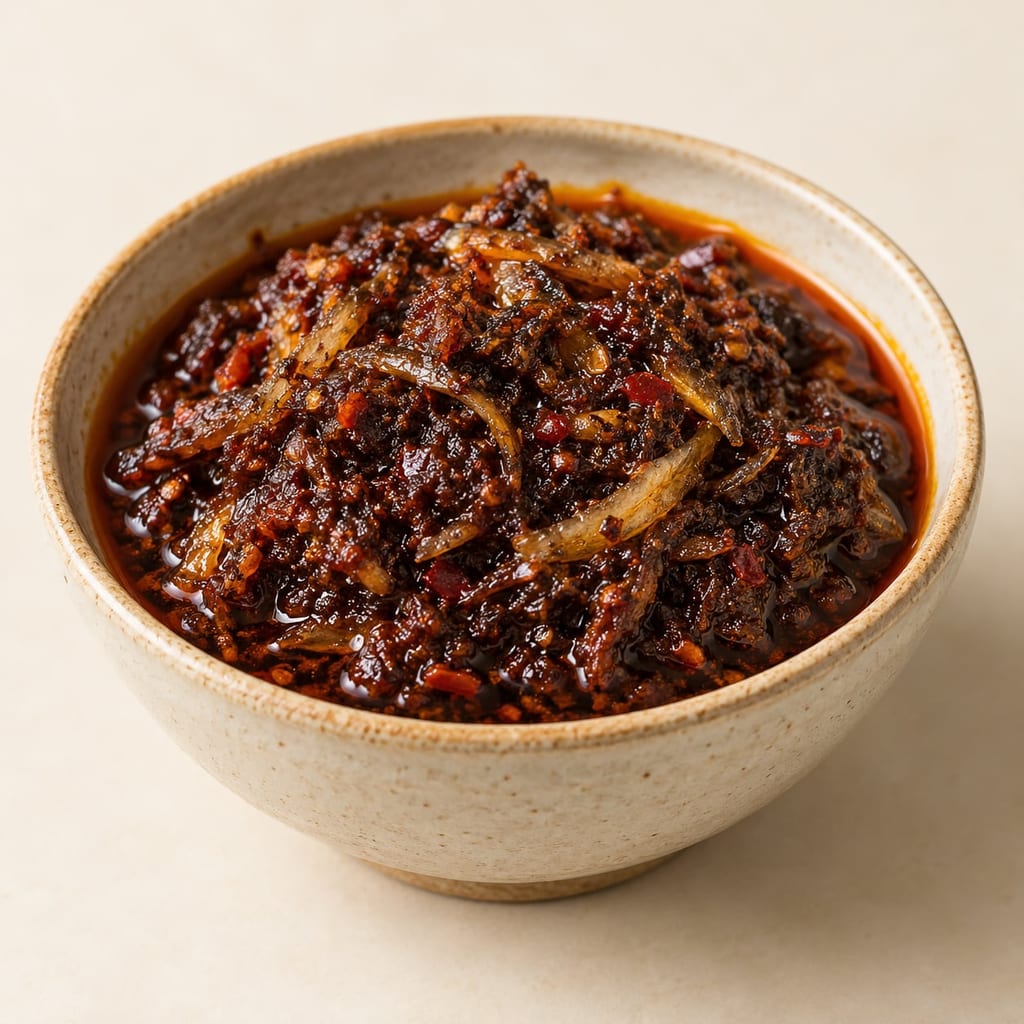
Shito is a hot Ghanaian pepper condiment with fish-rich, oil-cooked and fresh pepper forms; this measured version follows a recipe collected in Ghana’s Northern Region.
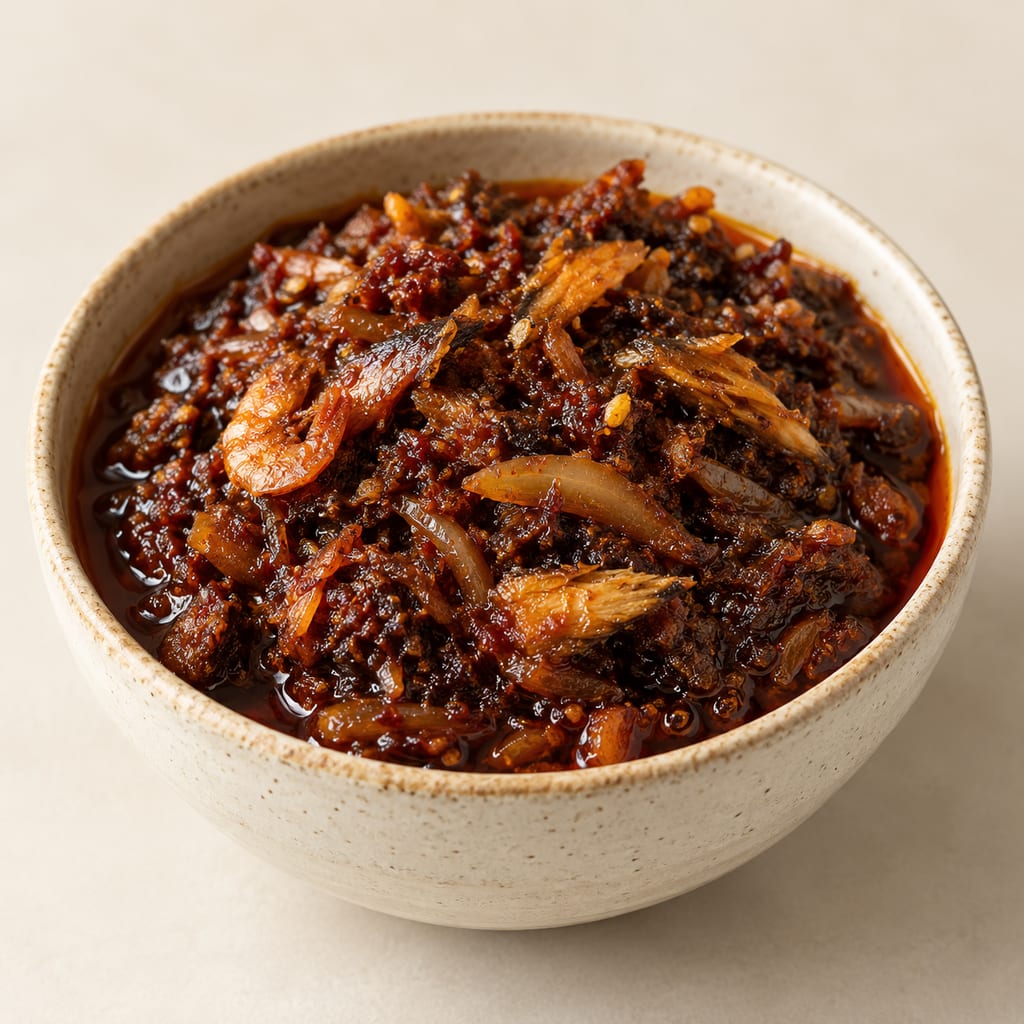
A seafood shito variant by Zoe Adjonyoh, using dried prawn and smoked fish in a cooked chilli and onion base.

Japanese skipjack tuna cooked, then repeatedly smoked and dried over a wood fire by the hand-fired tebiyama method into a hard block for shaving into dashi: the first stage of katsuobushi.
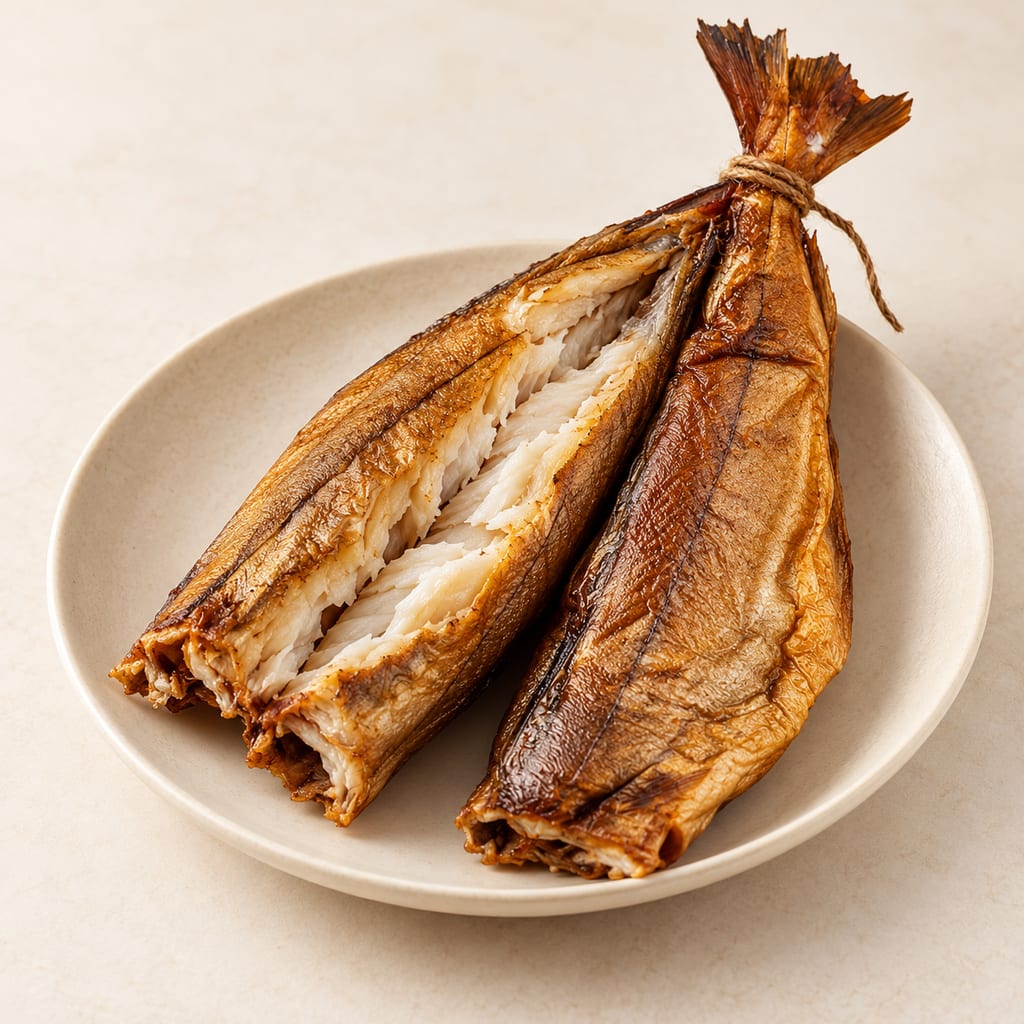
Arbroath smokies are whole haddock dry-salted, paired by the tail and hot-smoked in a protected coastal area. Their recorded history links Auchmithie and Arbroath, though the exact origin is unsettled.
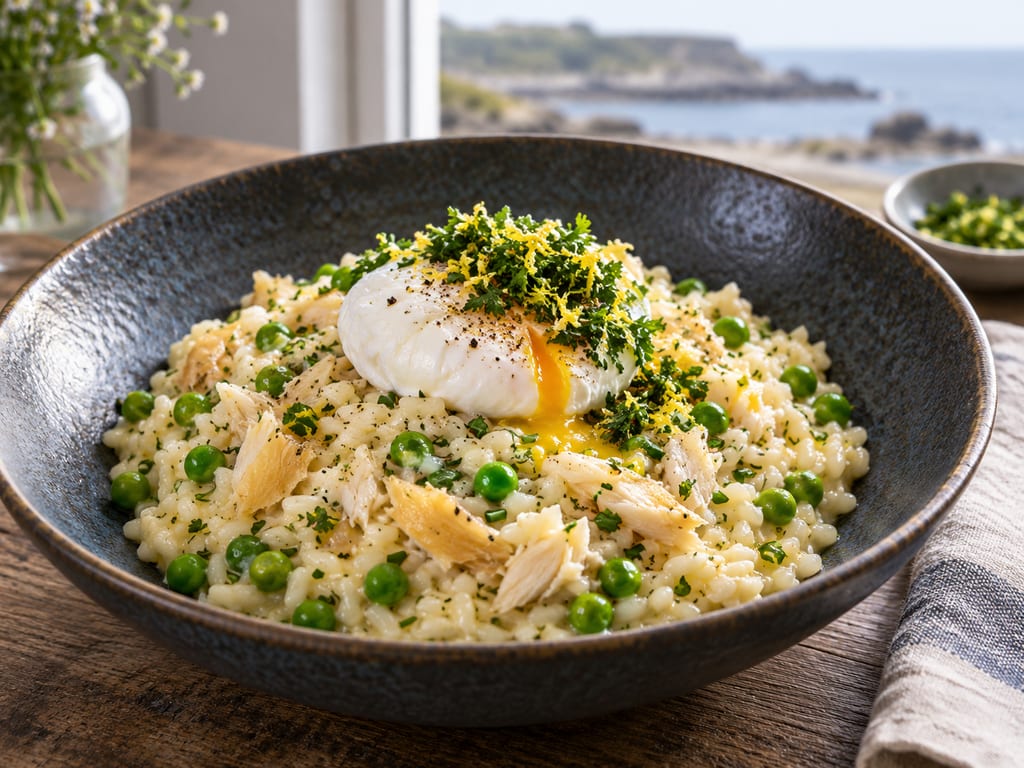
A four-serving risotto published in the 2014 Arbroath Smokie Trail booklet and credited to Hayley Wilkes. It cooks with finished Arbroath smokies; it does not describe smoking fish.
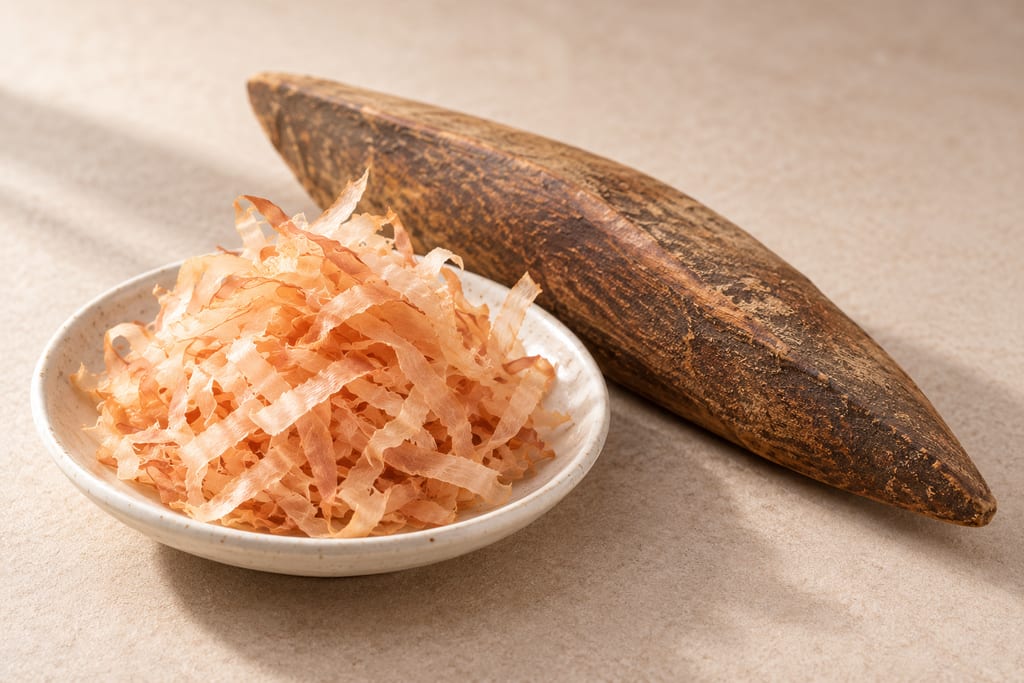
Katsuobushi is skipjack tuna cooked, smoked and dried into a hard block that is shaved into flakes for dashi and toppings. Some styles stop at the smoke-dried stage; others receive carefully managed mold maturation.
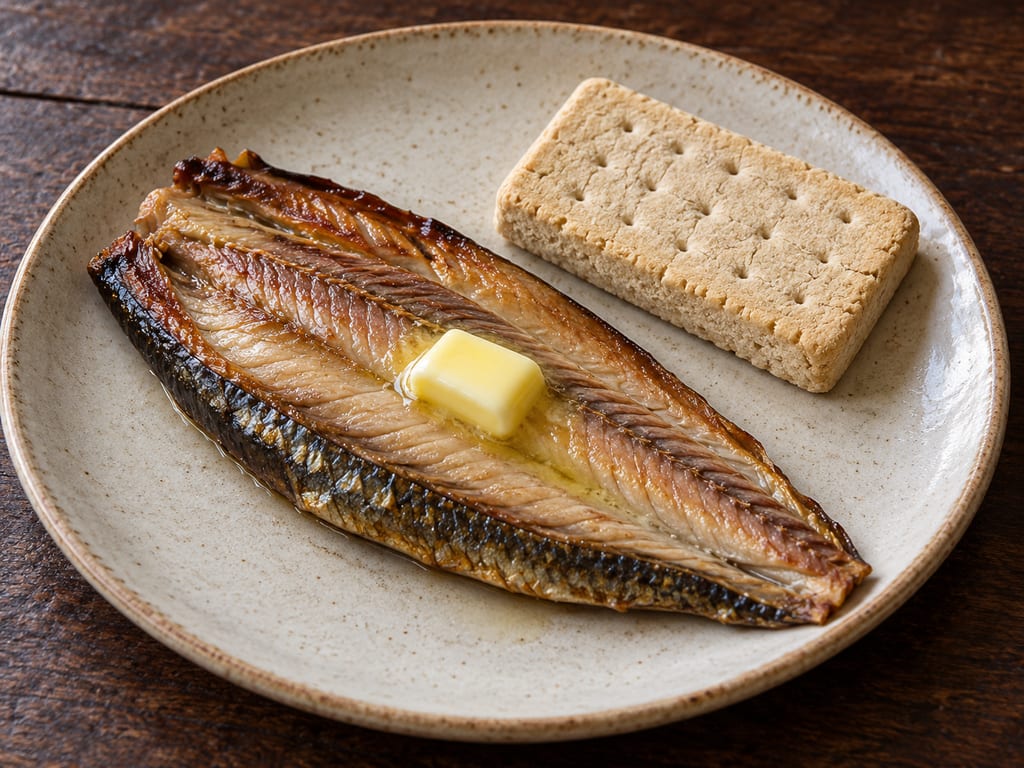
A Victorian way with Great Yarmouth bloaters: the lightly salted, cold-smoked whole herring is broiled and served with fresh butter and a warmed captain's biscuit.
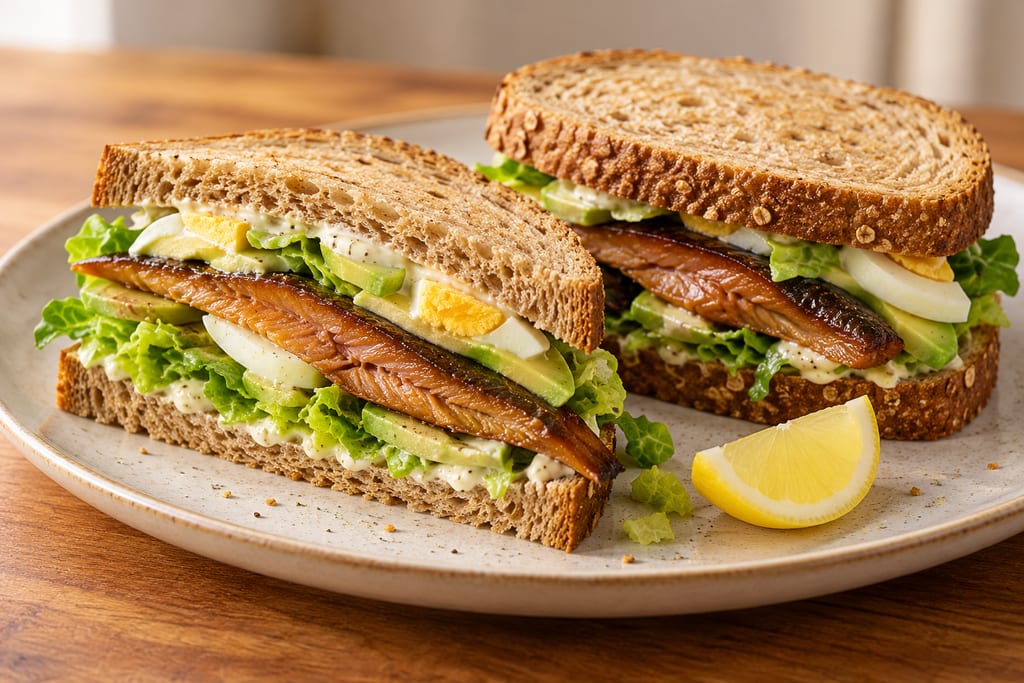
A warm club sandwich of oak-smoked Craster kipper fillets layered with soft-boiled egg, romaine, avocado and lemon mayonnaise on brown bread.
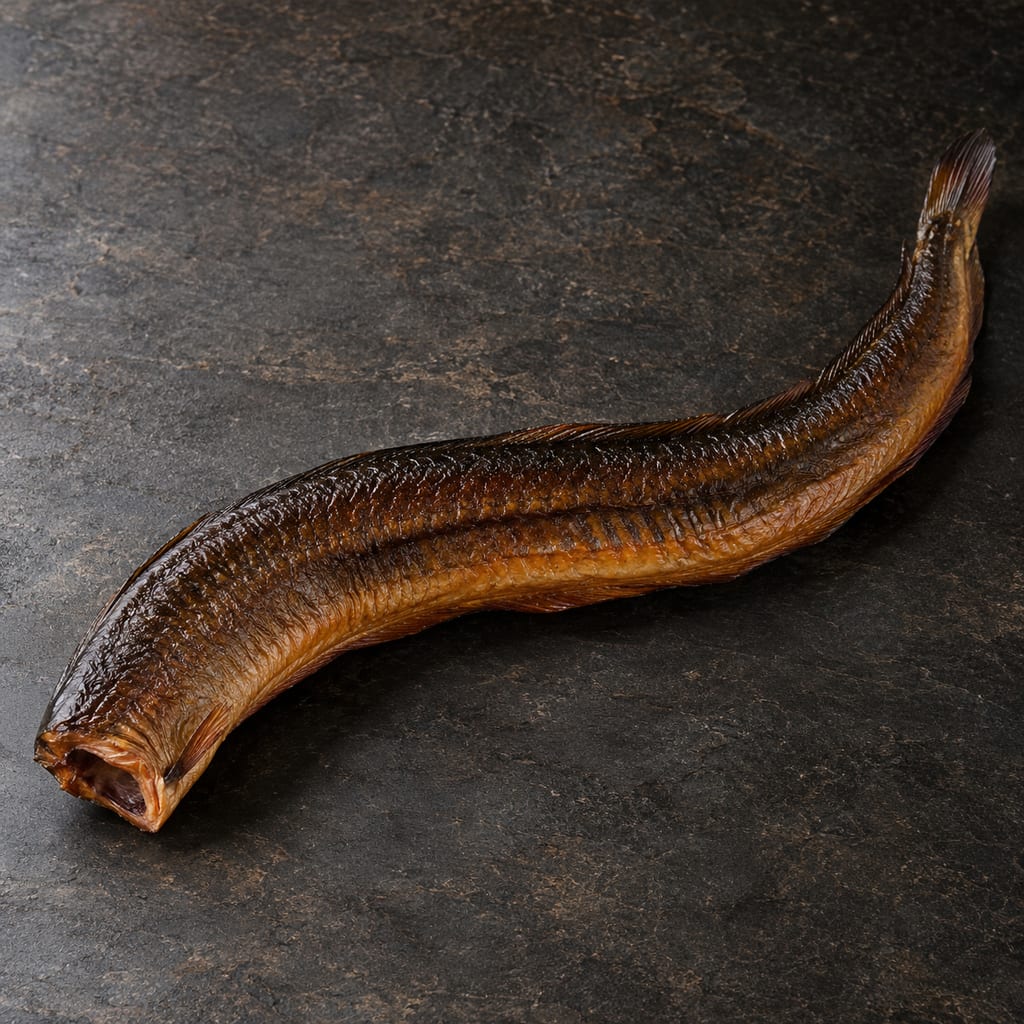
Short-finned eels, kooyang, smoked for a sustained period in the hollows of large trees at Budj Bim in south-western Victoria, a combined heat, smoke and drying method of the Gunditjmara people.
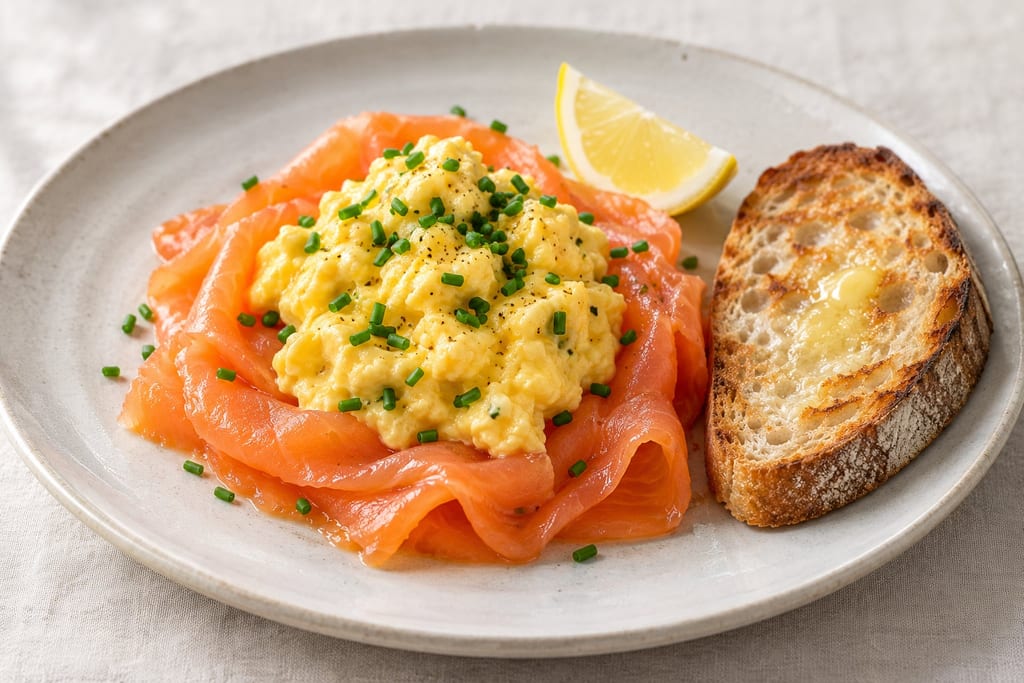
Softly scrambled eggs enriched with cream and butter, served with cold-smoked salmon, chives, lemon and sourdough toast as a British breakfast dish.
No community contributions have been published for this entry yet.
Sign in to contribute. Published comments and photos are free to read.
Berlinda Entsie / Pulse GhanaRecipe
DIY Recipes: How to make Smoked fish and Agushie stew (Akatoa stew)Partial source batch: ingredient list and five method stages. The method includes about 1/2 tsp salt in the fish/tomato stage, 1/4 tsp in the melon paste, about 1/2 cup water for blending, 8–10 min covered simmer; smoked-fish amount, yield and total time are absent.
The Pulse Ghana page identifies a smoked-fish and agushie stew and supplies ingredients and five ordered cooking stages; it does not give smoked-fish quantity or yield.
The covered tomatoes and smoked fish simmer for 8–10 minutes; the source says to continue until they are cooked through.
Cited in: What is smoked fish and agushie stew?; Names and ingredients; Historical and regional context; Agushie seed chemistry; Why smoked fish changes the stew; Ghanaian fish-smoking traditions; Ingredients; Palm oil; Tomatoes; Hot pepper; Bell peppers; Dried shrimp; Smoked fish; Equipment; Stage 1 — Prepare the vegetables; Stage 2 — Prepare the smoked fish; Stage 3 — Heat the palm oil; Stage 4 — Soften the aromatics; Stage 5 — Add tomatoes and fish; Stage 6 — Season; Stage 7 — Simmer; Stage 8 — Prepare the agushie paste; Stage 9 — Use ground seeds if preferred; Stage 10 — Reduce the heat; Stage 11 — Add the paste; Stage 12 — Finish the texture; Stage 13 — Adjust consistency; Stage 14 — Final seasoning; Stage 15 — Serve; Why the seed paste is not stirred immediately; Akatoa froyie; Ghanaian agushie stew; Kontomire stew; Nigerian egusi soup; How the stew is eaten; Troubleshooting; Food safety; What remains uncertain
U.S. Food and Drug AdministrationSafety
Selecting and Serving Fresh and Frozen Seafood SafelyG
e
n
e
r
a
l
c
o
n
s
u
m
e
r
g
u
i
d
a
n
c
e
s
a
y
s
m
o
s
t
s
e
a
f
o
o
d
s
h
o
u
l
d
r
e
a
c
h
1
4
5
°
F
(
6
3
°
C
)
;
t
h
i
s
i
s
n
o
t
a
r
e
c
i
p
e
-
s
p
e
c
i
f
i
c
e
n
d
p
o
i
n
t
o
r
v
a
l
i
d
a
t
i
o
n
o
f
t
h
e
u
n
s
p
e
c
i
f
i
e
d
s
m
o
k
e
d
-
f
i
s
h
o
p
t
i
o
n
s
.
Cited in: Names and ingredients; Ingredients; Equipment; Stage 1 — Prepare the vegetables; Stage 2 — Prepare the smoked fish; Stage 3 — Heat the palm oil; Stage 4 — Soften the aromatics; Stage 5 — Add tomatoes and fish; Stage 6 — Season; Stage 7 — Simmer; Stage 8 — Prepare the agushie paste; Stage 9 — Use ground seeds if preferred; Stage 10 — Reduce the heat; Stage 11 — Add the paste; Stage 12 — Finish the texture; Stage 13 — Adjust consistency; Stage 14 — Final seasoning; Stage 15 — Serve; How the stew is eaten; Troubleshooting; Food safety
Biscuits and LadlesMethod
Biscuits and Ladles — Smoked fish and agushie stewrelated Ghanaian preparation
Cited in: Names and ingredients; Ingredients; Equipment; Stage 1 — Prepare the vegetables; Stage 2 — Prepare the smoked fish; Stage 3 — Heat the palm oil; Stage 4 — Soften the aromatics; Stage 5 — Add tomatoes and fish; Stage 6 — Season; Stage 7 — Simmer; Stage 8 — Prepare the agushie paste; Stage 9 — Use ground seeds if preferred; Stage 10 — Reduce the heat; Stage 11 — Add the paste; Stage 12 — Finish the texture; Stage 13 — Adjust consistency; Stage 14 — Final seasoning; Stage 15 — Serve; How the stew is eaten; Troubleshooting
Ghana Broadcasting CorporationContext
Ghana Broadcasting Corporation — Egushi Stewregional ingredient variation
Cited in: Names and ingredients; Historical and regional context; Ghanaian fish-smoking traditions
University of GhanaHistory · Context
University of Ghana — Melon-seed crop classificationagushie botanical names and terminology
Cited in: Names and ingredients; Historical and regional context; Ghanaian fish-smoking traditions
FAOMethod · Safety
FAO — Improved fish smoking technology in Ghanasmoke-processing safety
Cited in: Names and ingredients; Ingredients; Equipment; Stage 1 — Prepare the vegetables; Stage 2 — Prepare the smoked fish; Stage 3 — Heat the palm oil; Stage 4 — Soften the aromatics; Stage 5 — Add tomatoes and fish; Stage 6 — Season; Stage 7 — Simmer; Stage 8 — Prepare the agushie paste; Stage 9 — Use ground seeds if preferred; Stage 10 — Reduce the heat; Stage 11 — Add the paste; Stage 12 — Finish the texture; Stage 13 — Adjust consistency; Stage 14 — Final seasoning; Stage 15 — Serve; How the stew is eaten; Troubleshooting; Food safety