Radish and daikon
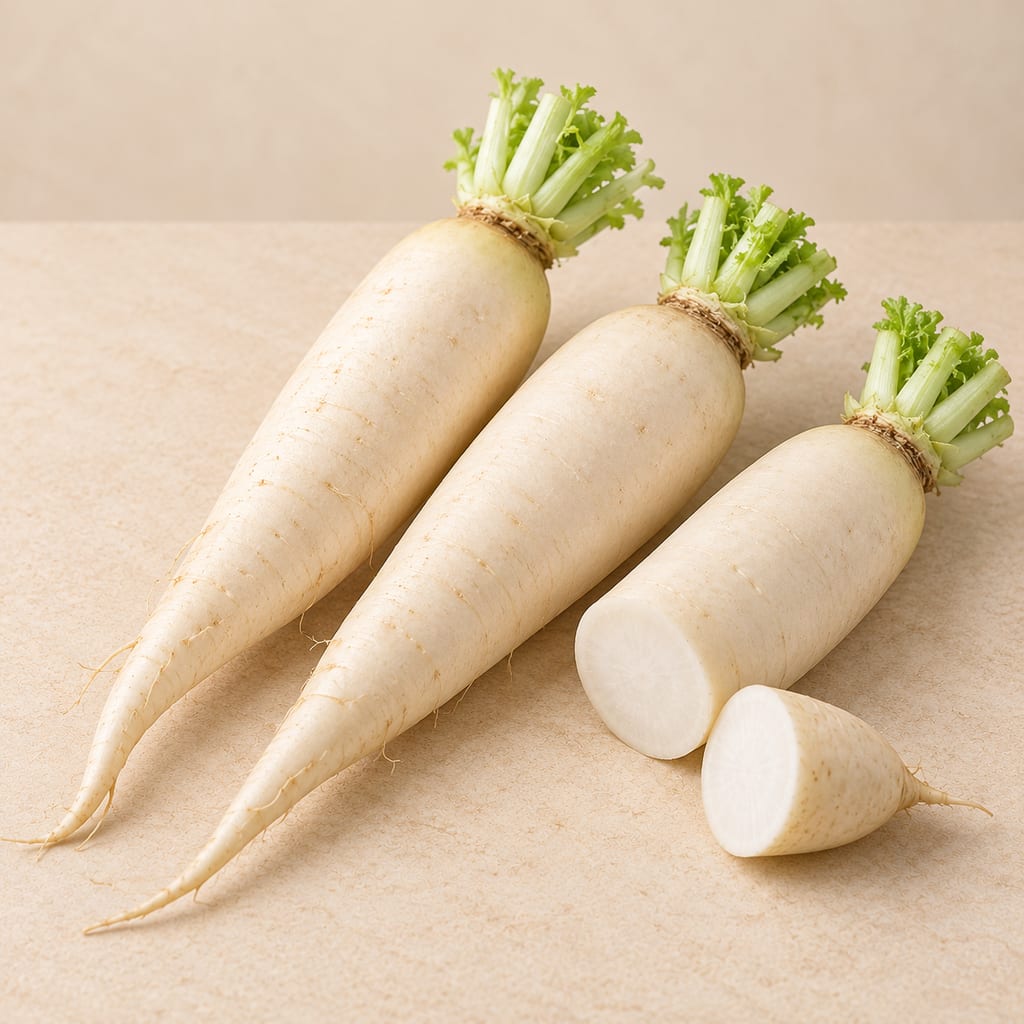
Radish and daikon are the crisp, peppery roots, leaves and seed pods of Raphanus sativus, fermented as kimchi, takuan and sinki and eaten raw across Asia and Europe.
 FermenteaWhere food goes to change
Modern method
빠른 동치미 (quick dongchimi)
A modern broth-forward radish-water kimchi cooks apples and onion into the fermentation liquid.
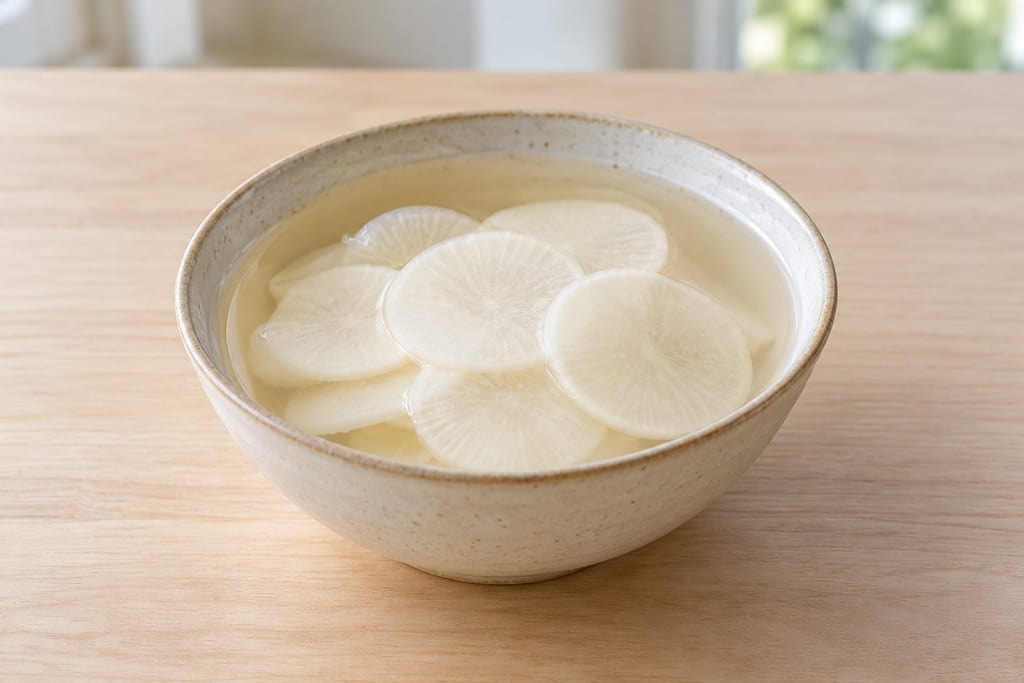
Dongchimi (동치미) is a Korean water kimchi traditionally made with radish and a lightly seasoned liquid.
It is particularly associated with late autumn and winter, when Korean radishes are firm, sweet and suitable for preservation.
Unlike heavily seasoned red cabbage kimchi, dongchimi is valued for its crisp radish and refreshing broth.
The recipe here is a modern quick-fermenting variation that deliberately produces a large quantity of liquid.
Its Korean name is 빠른 동치미, meaning quick dongchimi.
The formula was developed by Maangchi for Maangchi's Real Korean Cooking, with the objective of producing plenty of broth and relatively little solid radish.
That is a meaningful distinction from some traditional whole-radish preparations, where the proportion of vegetables is much higher.
The broth is made by cooking apples and onion in water, straining away the solids and combining the liquid with salted radish.
Garlic, ginger, green chilies and gochugaru are held in a cloth pouch.
The result is a cleanly flavored water kimchi with natural apple sweetness and a relatively delicate orange-tinted broth.
Its principal purpose is not simply to preserve radish. The liquid is intended for drinking with meals or using as the base of cold Korean noodle soup.
Korean radish, mu (무), is a cultivated form of Raphanus sativus.
Compared with many long white daikon varieties, Korean radishes are often shorter, broader and relatively dense, though cultivars vary.
The recipe permits either Korean radish or white radish.
The apple is Malus domestica.
Its variety matters because sweetness, acidity and aroma differ between cultivars.
The source specifies sweet apples but does not require a particular named variety.
Onion is Allium cepa; garlic is Allium sativum; ginger is Zingiber officinale.
Gochugaru, or 고춧가루, is Korean dried red-pepper flake, generally produced from cultivated Capsicum annuum.
Dongchimi literally belongs to the Korean kimchi family but is distinct from baechu-kimchi, the familiar napa-cabbage preparation.
The word mulkimchi (물김치) describes water kimchi more generally.
Dongchimi is a named type within that larger category.
Dongchimi is associated with Korean winter food preservation.
Radishes harvested in cooler weather can have a pleasing sweet flavor and firm texture.
Traditional recipes vary in the size of the radishes, the amount of added liquid and the use of aromatic ingredients.
Some preparations preserve small whole radishes, while others use pieces.
The precise historical origin of dongchimi is not established by the modern recipe source.
Its association with winter kimchi traditions is well supported, but there is no basis for assigning the exact apple-broth formulation to a particular historical century.
The specific quick recipe was published online in 2020, with an update in 2021.
It is explicitly a modern cookbook development.
That modern status does not make it an inauthentic Korean food. It means the recipe's history should be described accurately as an adaptation within an older tradition.
The use of apples allows a mildly sweet broth without relying entirely on added refined sugar.
The source also emphasizes the recipe's suitability for cold noodle dishes.
Apples contain sugars, organic acids, pectin and aromatic compounds.
Cooking them in water extracts some of these substances.
Blending first increases the surface area and exposes more fruit tissue to the water.
The apples are not simply sliced and left in the fermenting jar.
They are cooked with onion, strained and discarded as solids.
This creates a comparatively smooth broth without large apple pieces.
The process contributes sweetness and flavor but does not make the broth sterile once raw radish and seasonings are introduced.
Cooking also changes pectin and other plant components, while some delicate volatile aromas may be reduced.
The purpose is a flavored extraction rather than a fresh apple salad incorporated into kimchi.
Garlic, ginger, green chilies and gochugaru are placed into a cloth pouch.
This allows flavor and some soluble or suspended material to enter the liquid while preventing the finished broth from being filled with chopped aromatics.
The pouch is squeezed after immersion.
The liquid gradually takes on color from the chili flakes.
The result is cleaner in appearance than a preparation where all the pepper and minced vegetables circulate freely.
The cloth must be suitable for food contact and clean.
The pouch does not sterilize its contents or prevent microbial activity.
Use a one-gallon glass jar or suitable food-grade container, a large pot, food processor, strainer and clean cotton cloth or double-folded cheesecloth.
A large bowl is required for salting the radish.
The container should safely accommodate fermentation gas.
A suitable pH meter is useful when acidification is being monitored.
The source does not specify a numerical fermentation temperature.
Prepare the radish. Peel 2 lb radish.
Cut into thin discs. The source does not specify an exact disc thickness.
Salt the radish. Mix the discs with 3 tablespoons kosher salt.
Place them in the one-gallon fermentation vessel.
Leave for at least 2 hours. The radish will release some liquid as salt affects the plant tissues.
Heat the broth water. Bring 14 cups water to a boil over medium-high heat in a large pot.
The separate ¼ cup water is listed in the original ingredient quantity, but the published instructions do not clearly allocate it to a distinct numbered stage.
Prepare the apple-onion purée. Core and chop 1–1½ lb sweet apples and 1 large onion.
Process them into a purée. Add the optional 1 teaspoon flour if using it.
Cook the broth. Transfer the purée into the boiling water.
Cover and simmer for 20 minutes. Remove from the heat.
Cool thoroughly. Allow the broth to cool.
This matters because hot broth would alter the raw radish texture and could reduce desirable microorganisms on the later ingredients.
Strain. Line a large strainer with clean cotton cloth or doubled cheesecloth.
Pour in the apple-onion mixture. Gather the cloth and squeeze to extract as much liquid as practical.
Discard the remaining pulp. Salt the broth.
Stir the remaining 3 tablespoons kosher salt into the strained liquid.
The total salt addition for the complete recipe is now 6 tablespoons.
Prepare the seasoning pouch. Mince 2 green chilies, 4 garlic cloves and 1 tablespoon peeled ginger.
Combine with 2 tablespoons gochugaru inside a clean cloth pouch.
Combine. Pour the cooled broth over the salted radish.
Immerse the seasoning pouch. Squeeze it gently in the liquid until the broth becomes orange-tinted and flavored by the aromatics.
Ferment. Leave the container at room temperature for 2–3 days, using a closure suitable for active fermentation.
The source gives no numerical temperature or validated final pH.
Appropriate acidity monitoring is necessary when the process is relied upon for preservation.
Refrigerate and serve. When adequately fermented, refrigerate.
Serve cold with radish pieces and broth.
The liquid is also intended for cold kimchi noodle soup.
The raw radish introduces naturally occurring microorganisms.
Lactic acid bacteria are important participants in kimchi fermentation.
They use available carbohydrates and produce organic acids.
As acidity increases, the broth develops its characteristic sourness.
The apple broth contributes soluble sugars, which can influence microbial activity.
The radish itself also contains carbohydrates.
Some kimchi-associated microorganisms are heterofermentative and can generate carbon dioxide alongside organic acids.
This can produce slight effervescence.
The fermentation does not need to produce a strongly sparkling beverage to be successful.
The balance of sourness, sweetness and aroma changes with temperature and time.
A warm environment can accelerate microbial activity, but it can also alter flavor and create additional safety concerns if uncontrolled.
The original recipe's two-to-three-day schedule is therefore descriptive rather than a universal guarantee.
The radish is salted but not cooked.
Its cell walls retain much of the structure responsible for crunch.
The cold serving temperature further emphasizes its crisp texture.
Extended fermentation can gradually soften vegetable tissue as acidity and enzymatic activity change the cellular structure.
The desired balance is a crisp radish with enough acidity to give the broth a refreshing sourness.
The source does not define a numerical texture endpoint.
A radish that has become extremely soft or slimy is not the intended product.
Traditional dongchimi may use smaller whole radishes or larger vegetable portions.
It is often associated with winter preparation and comparatively pale, refreshing liquid.
The quick apple-broth version deliberately changes the proportion between radish and broth.
It also uses cooked apple and onion extraction to establish sweetness and flavor before fermentation.
This is not a minor seasoning substitution.
The broth-production method is central to the recipe's identity.
Both versions belong to the dongchimi family, but the modern adaptation has a different production objective.
Dongchimi is usually served cold.
It works particularly well with meals containing rich or strongly seasoned foods.
Examples include bulgogi, japchae and fish dishes.
It can also accompany steamed sweet potatoes, where the sour broth contrasts with the vegetable's sweetness and dry texture.
The liquid is especially useful for cold noodle soup.
Radish discs can be cut into smaller pieces or matchsticks before serving.
The original recipe describes serving both radish and broth rather than treating the liquid as waste.
This makes the process different from fermenting vegetables primarily to drain and cook them later.
Successful dongchimi develops a pleasantly sour broth and retains recognizable radish texture.
Some cloudiness may occur.
The color may vary according to the pepper flakes and apples used.
A change in apple variety can influence the final broth's color, as well as its sweetness.
Bubbles and sour aroma are possible indicators of activity, not proofs of safety.
Unexpected mold, putrefaction, excessive slime or signs of contamination indicate a problem.
The source does not provide a validated final pH for this exact recipe.
The original publication recommends keeping the finished dongchimi refrigerated and using it over approximately 2–3 weeks.
That is a culinary recommendation, not an independently validated commercial shelf-life limit.
The fermentation schedule does not identify a precise room temperature.
For modern production, the acidity and microbiological stability should be measured.
Clean water, suitable equipment and safe pressure management are important.
Do not regard the cooked apple broth as sufficient to sterilize the finished product, since the radish and seasoning pouch are introduced afterward.
Author calls it a broth-forward recipe developed for a cookbook, distinct from the traditional large-radish version.
Yield 1 US gallon · Scaling: source batch only
Poor brine coverage or contaminated equipment can compromise vegetable fermentation; this recipe has not been professionally validated.
Hazard sourceUse clean food-grade equipment, keep produce submerged where the method uses brine, and follow established acidity-monitoring guidance. No recipe-specific validated endpoint is supplied.
Control sourceThe author names it Korean radish-water kimchi and says she developed this recipe for a cookbook.
Radish and daikon are the crisp, peppery roots, leaves and seed pods of Raphanus sativus, fermented as kimchi, takuan and sinki and eaten raw across Asia and Europe.
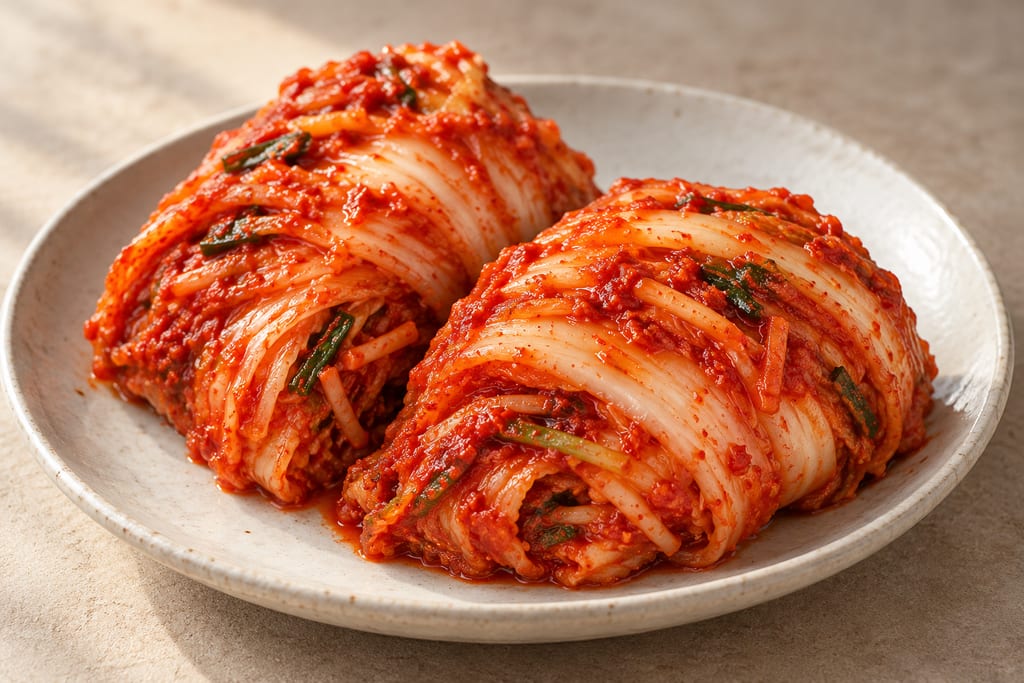
Napa cabbage salted, seasoned with a paste of gochugaru, garlic, ginger and salted seafood, and left to sour through lactic fermentation; Korea's everyday winter preserve.
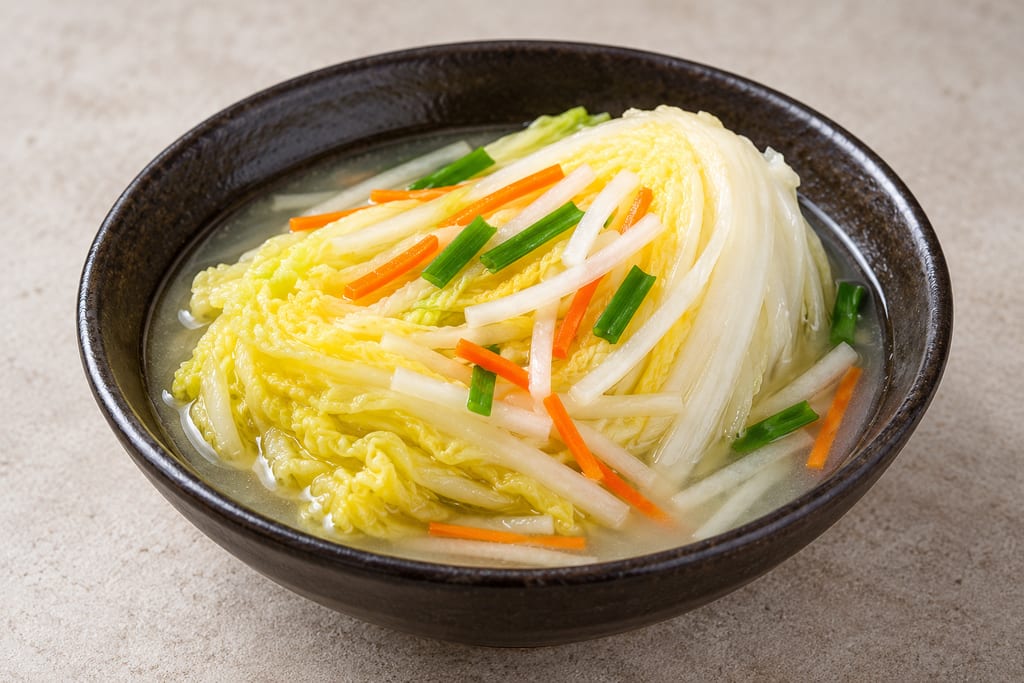
Napa cabbage is brined and filled with pear, radish, alliums, chives and fruit; this Korean kimchi omits red pepper flakes.
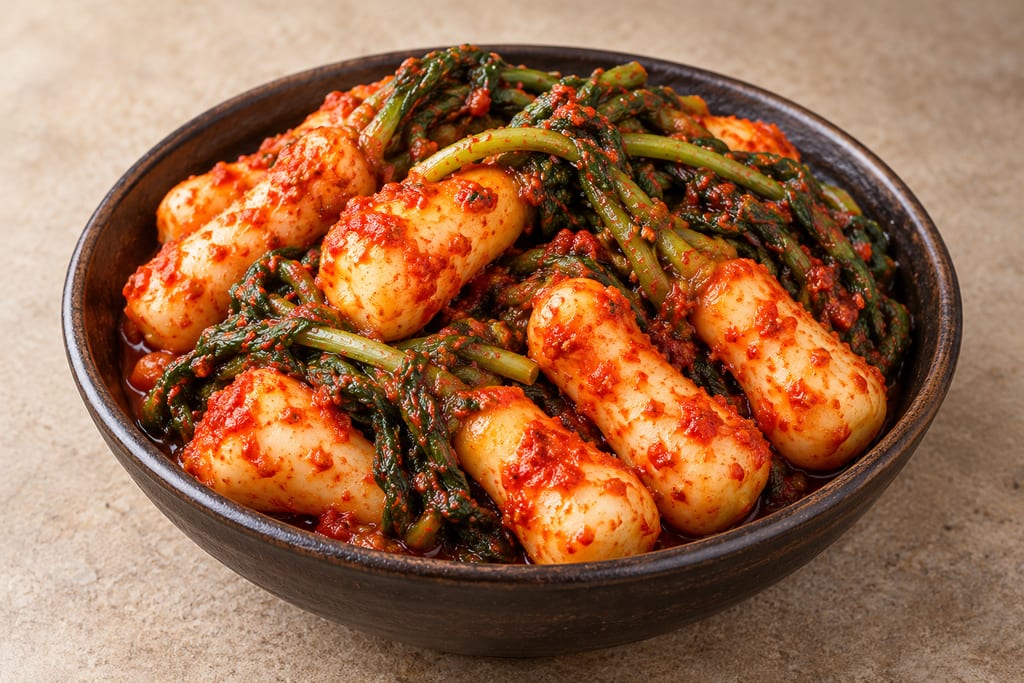
Small ponytail radishes keep their greens attached and ferment in a flour-and-chile seasoning paste.
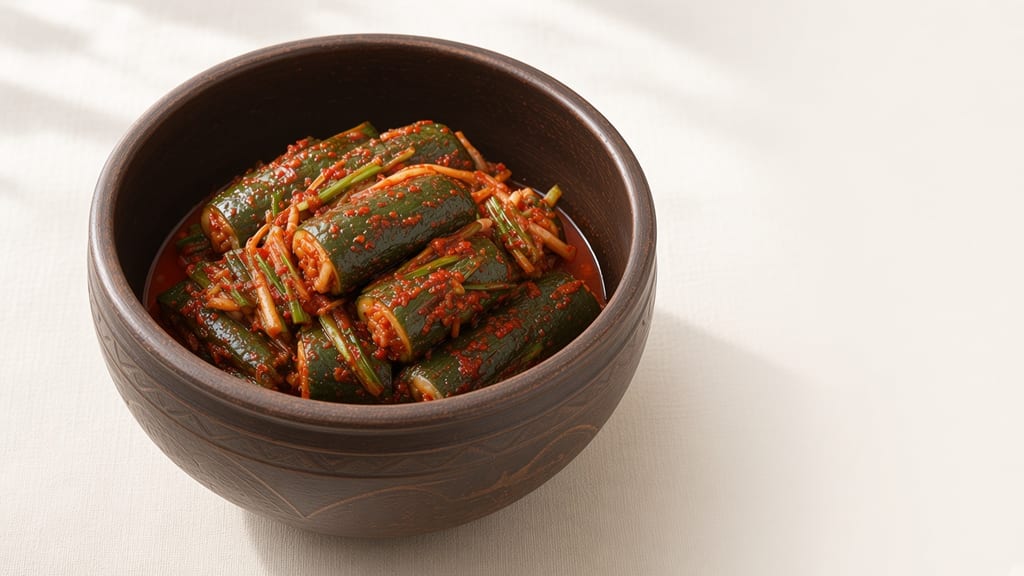
Hwanggwa damjeo is a cucumber kimchi from Yu Jung-rim's Jeungbo sallim gyeongje of 1766. Slit cucumbers are packed with chilli powder and garlic, scalded with hot salted water and sealed overnight.
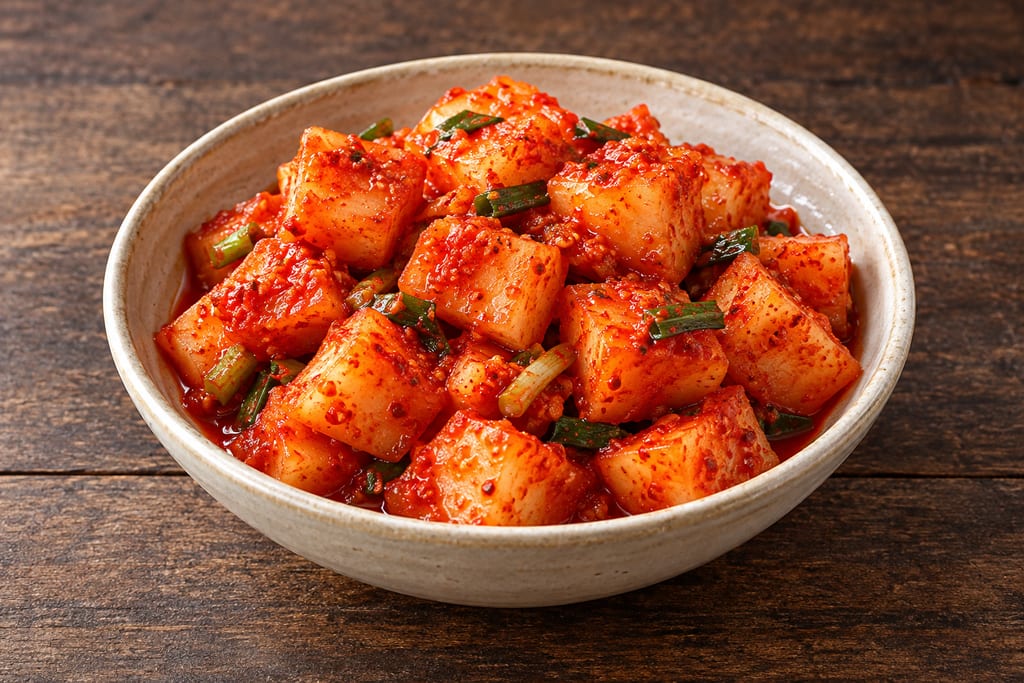
A radish kimchi cut into cubes and seasoned with gochugaru, fish sauce, garlic and ginger, eaten fresh or fermented a few days at room temperature.
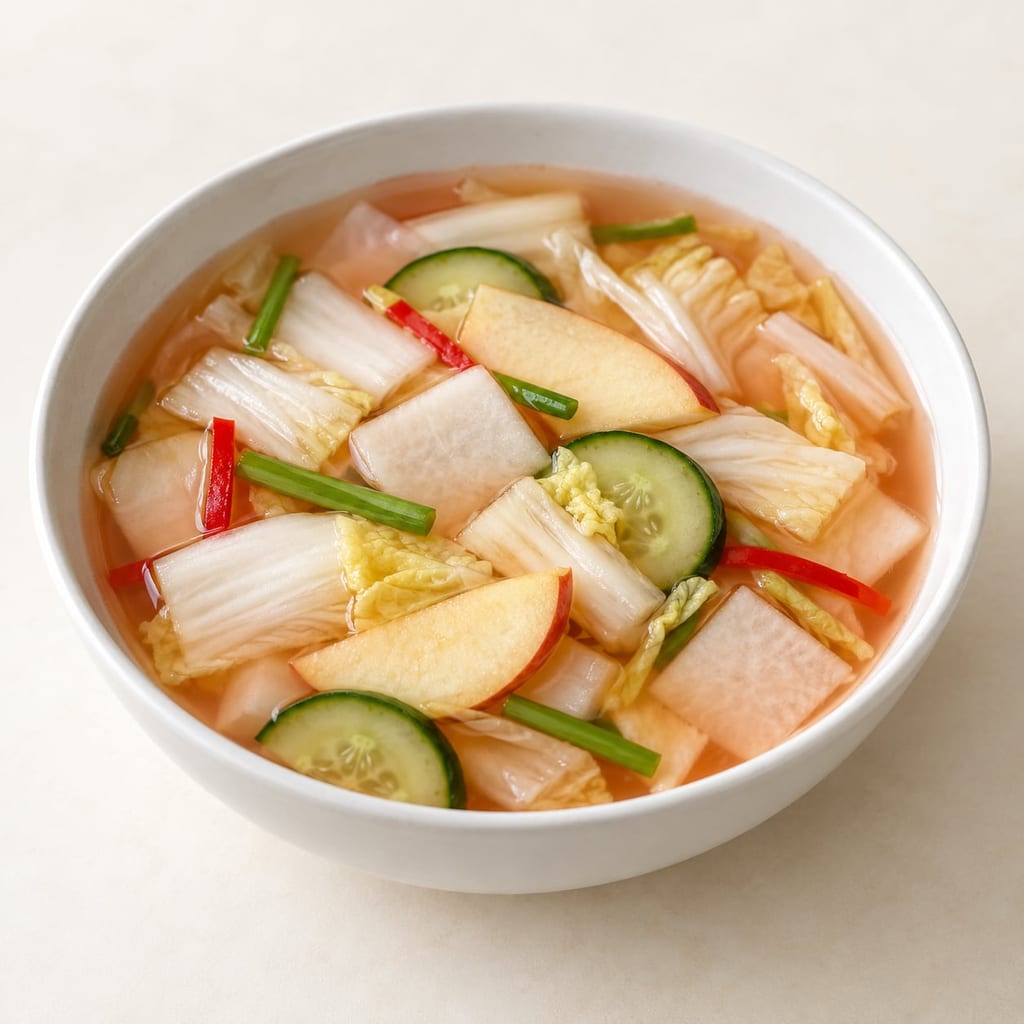
Napa cabbage and radish ferment in a rose-coloured broth with cucumber, apple, pear, alliums and chile.
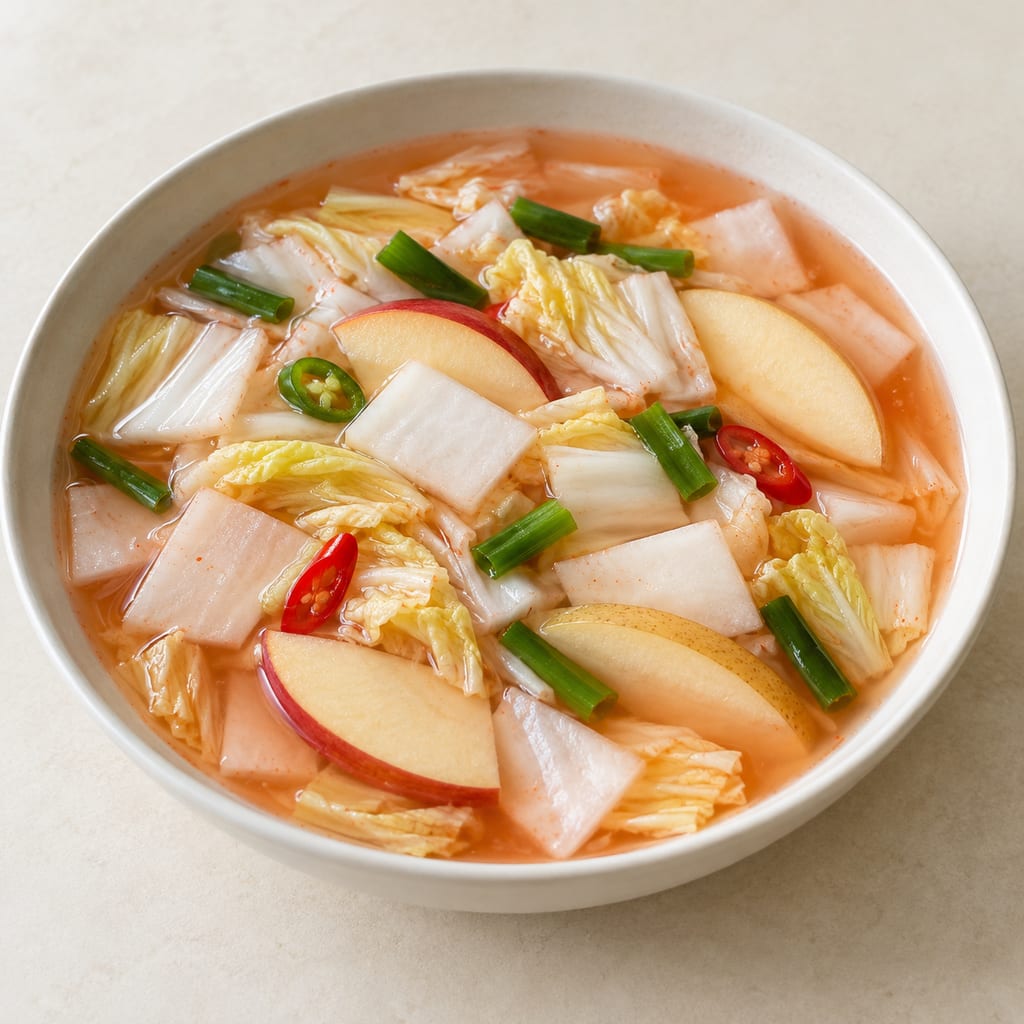
Cabbage-and-radish water kimchi with pear, apple and strained chili broth, following one Korean creator’s batch.
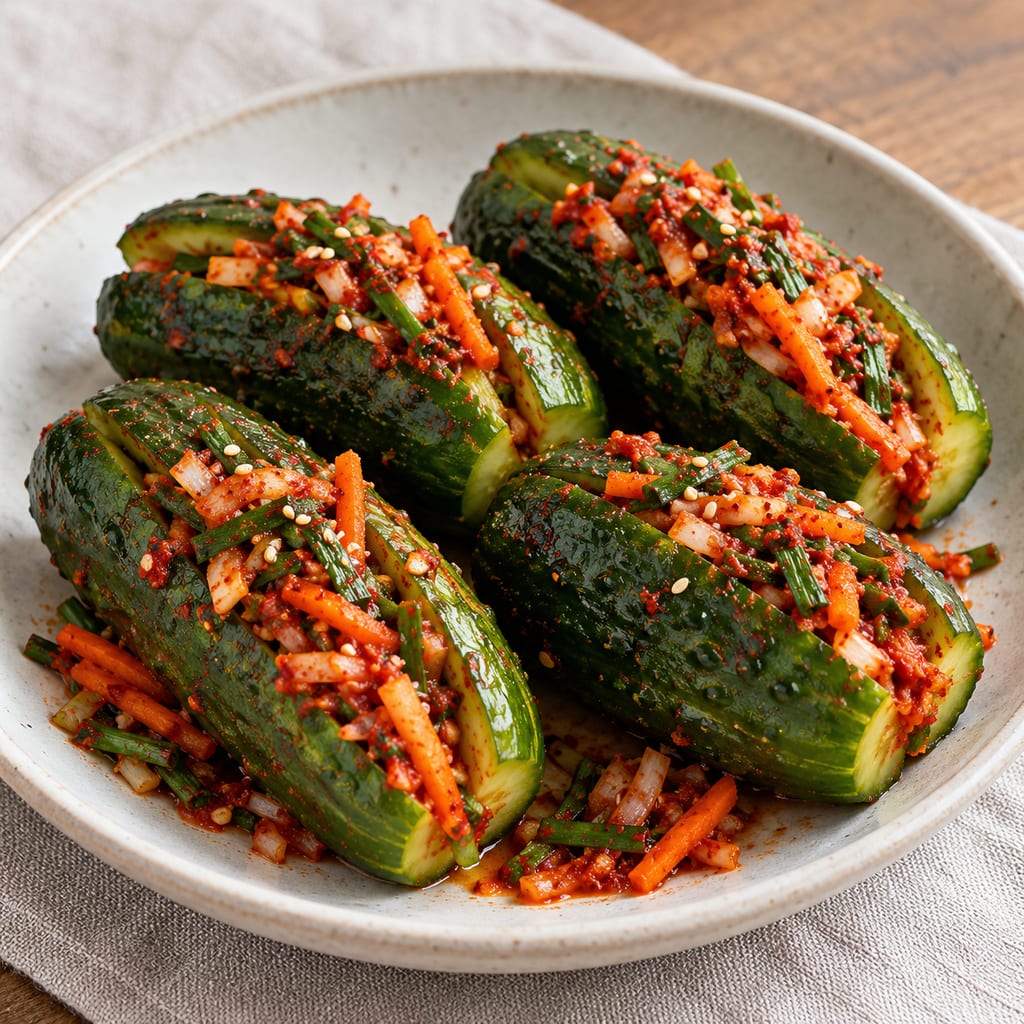
Oi-sobagi is a Korean stuffed cucumber kimchi: salted cucumbers slit and filled with a chive-and-chilli seasoning, eaten fresh or left to ferment.
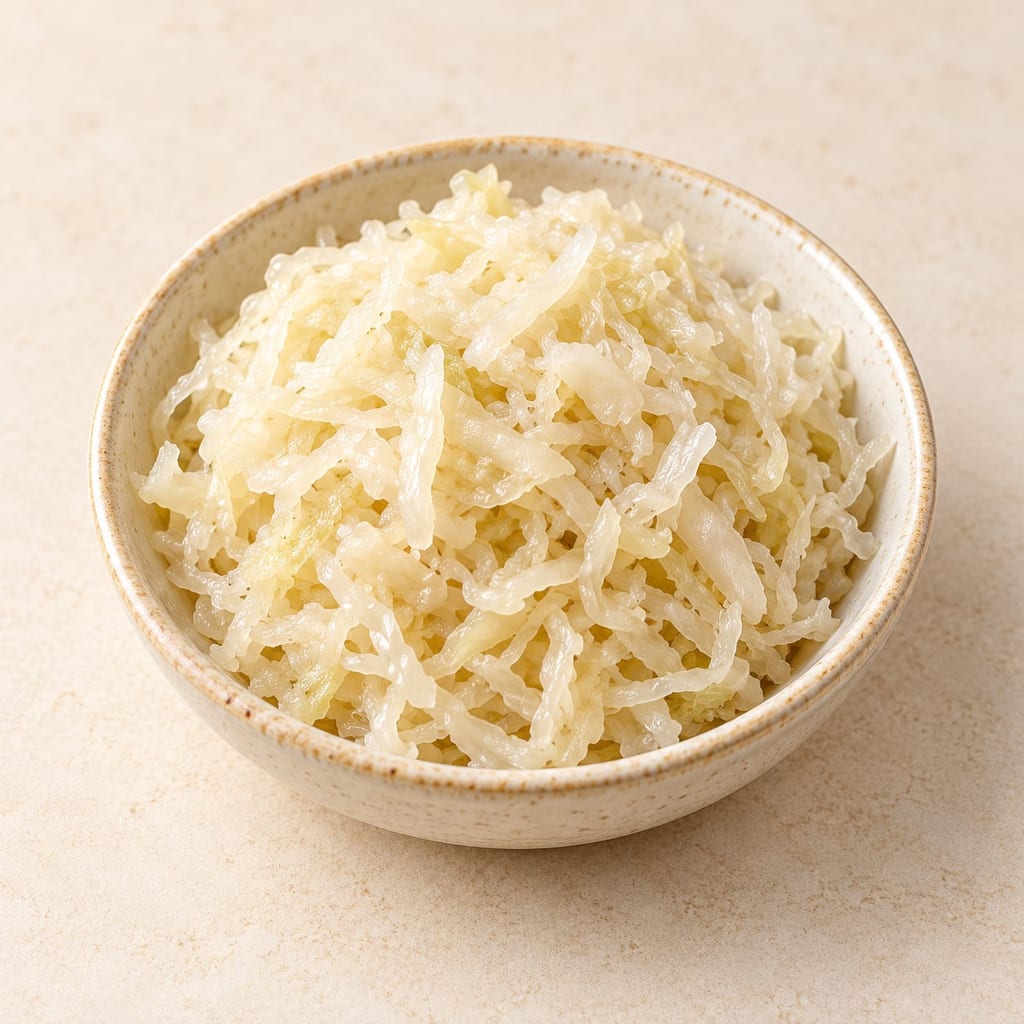
Finely cut cabbage fermented with salt in vats by natural lactic fermentation, a protected Alsatian product sold raw or cooked after fermentation.
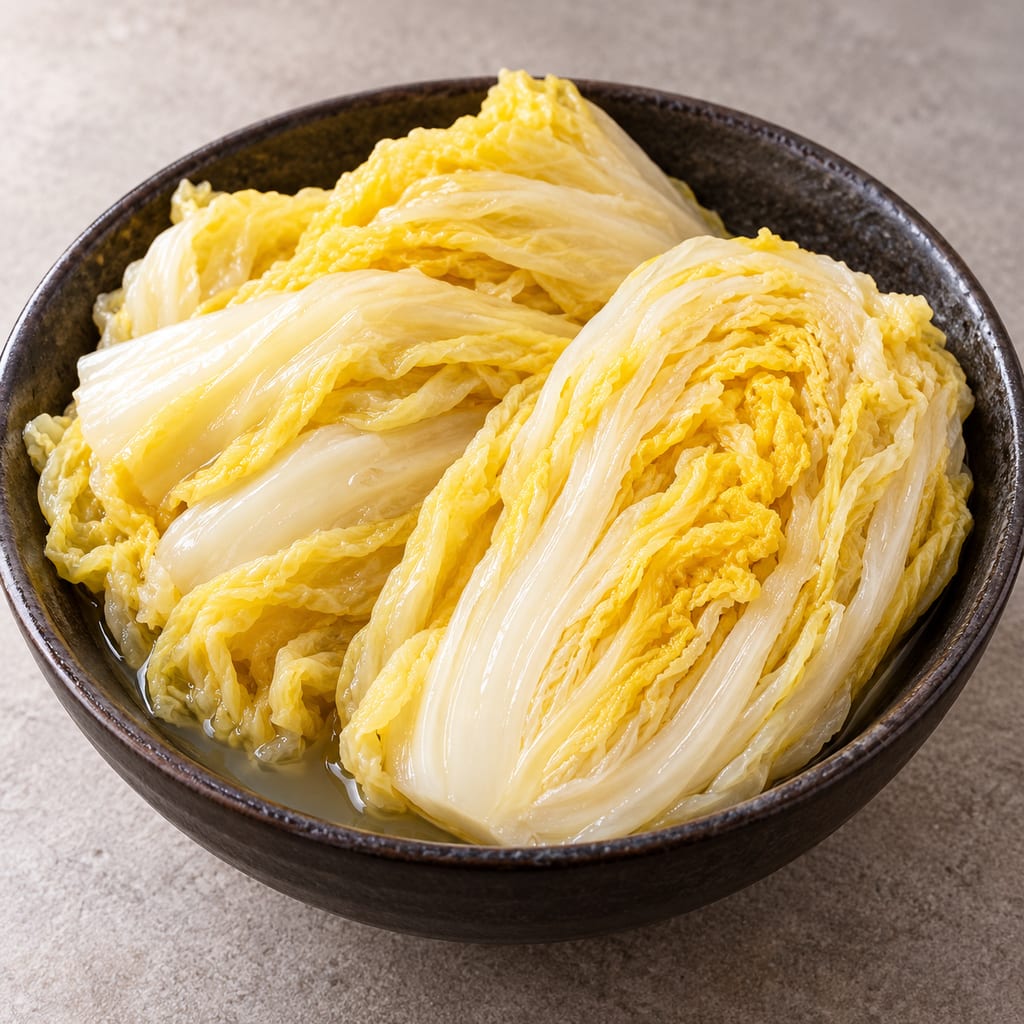
Napa cabbage fermented in a salt brine in Northeast China, traditionally in large ceramic or glass jars, until it turns sour.
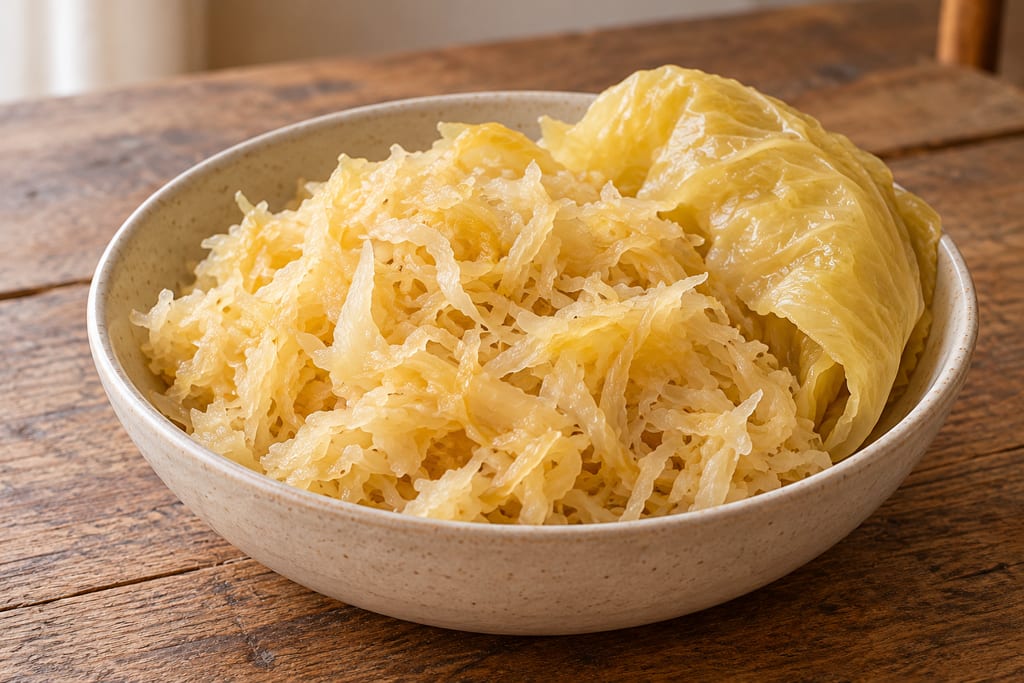
Serbian sour cabbage from the Futog area, made from the autochthonous Futoški cabbage population and registered as a protected product in 2008. It is a subset of general Serbian kiseli kupus.
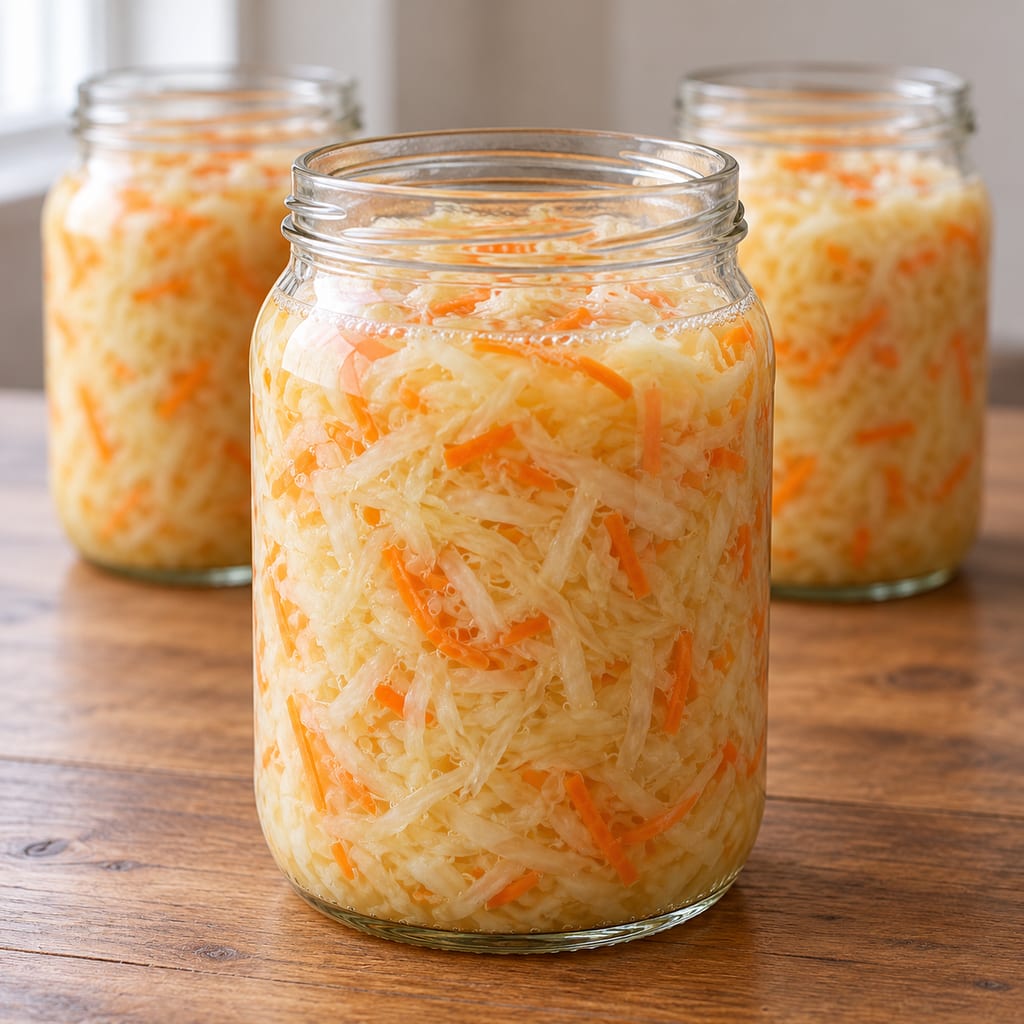
Shredded cabbage and grated carrot are salted to 20 g/kg, rested, packed into three jars and monitored during a creator-reported eight-day fermentation; measured temperature is not given.
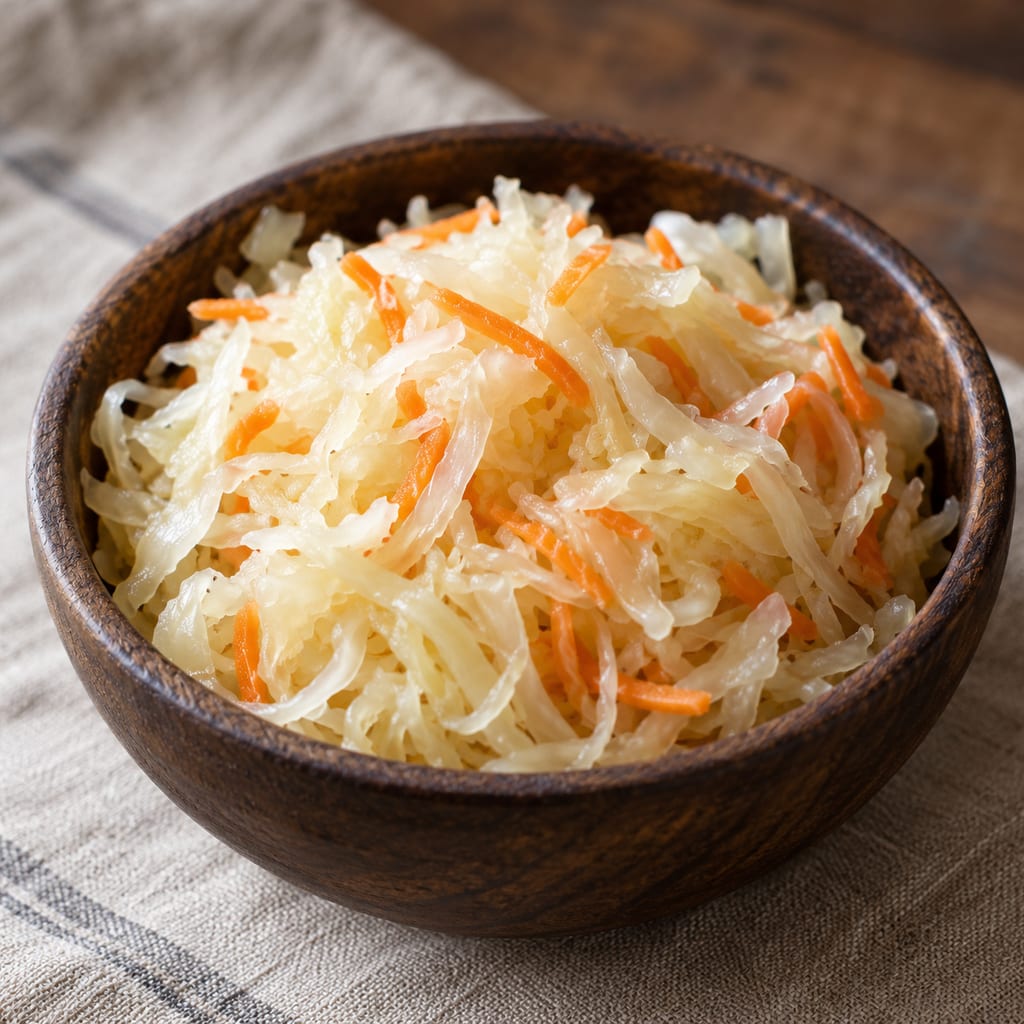
Kapusta kiszona z beczki is barrel-fermented cabbage from the Kołobrzeg area, entered on Poland’s List of Traditional Products in 2008. It is salted and fermented, with raw grated carrot added after souring.
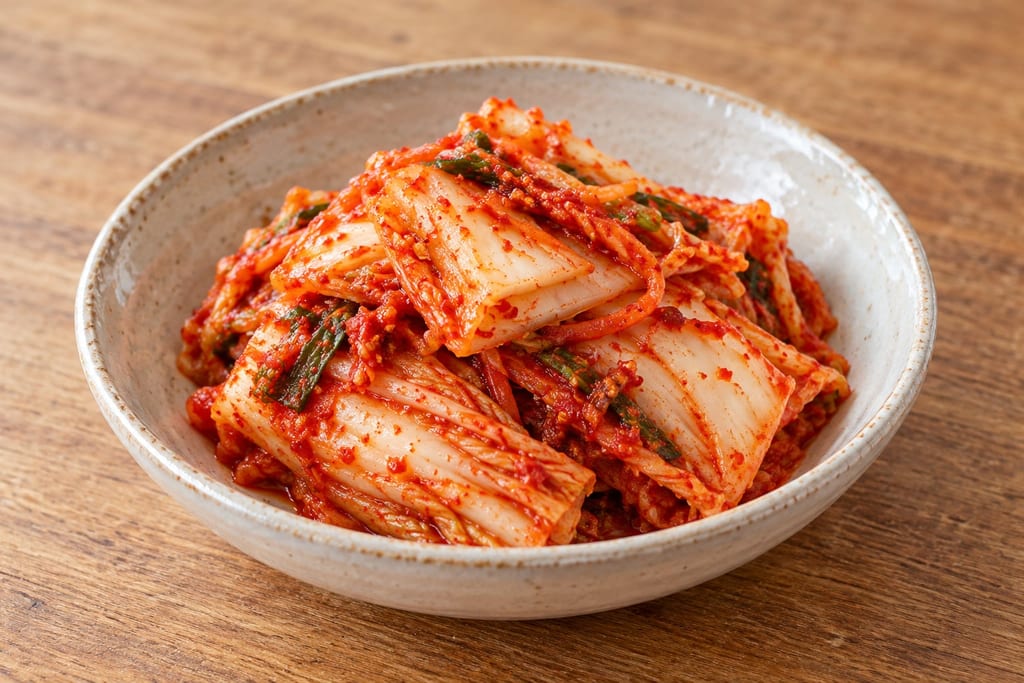
Kimchi is a Korean preserved vegetable food, most often cabbage, salted and seasoned, then fermented by the lactic acid bacteria that arrive with the vegetables. Some studies test added starter cultures, but a home jar is usually spontaneous.
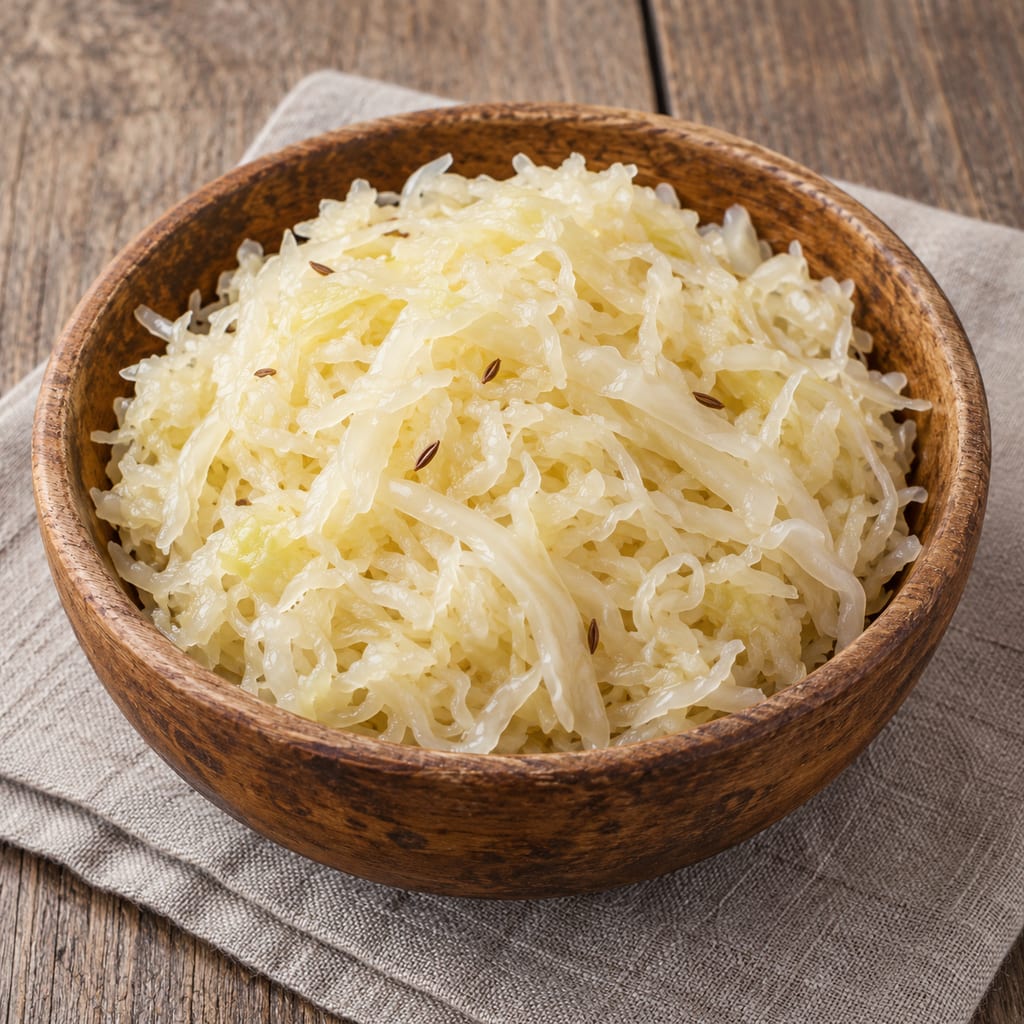
Kysané zeľí is Czech sour cabbage: shredded cabbage layered with salt and caraway and pressed in a wooden barrel. The regional account is descriptive and gives no validated salt ratio or endpoint.
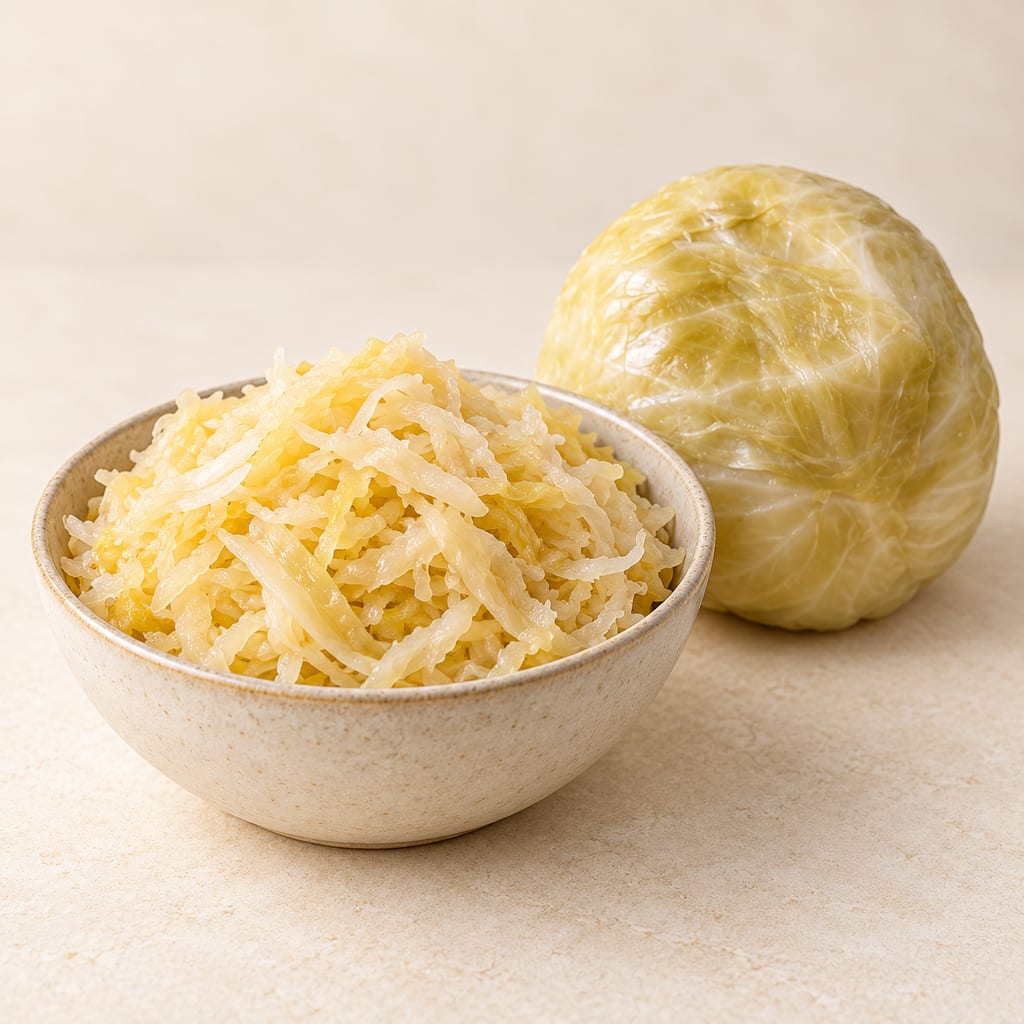
Protected Croatian sauerkraut from the Ogulin area: fresh white cabbage naturally lactic-fermented without preservatives, sold whole or shredded, from registered establishments.
No community contributions have been published for this entry yet.
Sign in to contribute. Published comments and photos are free to read.
MaangchiInspiration · Geography
Quick-fermenting dongchimi (radish water kimchi)Measured one-gallon ingredients, apple broth preparation, salting and fermentation time.
Cited in: Radish kimchi made for its broth; Botanical identity and Korean terminology; History and seasonal context; Why the apples are cooked; Why the seasoning is wrapped; Equipment; Method; What happens during fermentation?; Why the radish remains crisp; How this differs from traditional dongchimi; Eating and serving; Recognizing problems
University of Minnesota ExtensionSafety
Preserving food at home: FermentationGeneral guidance for vegetable fermentation, submersion and acidity monitoring; not validation of this recipe.
Cited in: Safety and storage
MaangchiCulinary background
Maangchi — Traditional DongchimiRelated traditional method.
Cited in: Botanical identity and Korean terminology; History and seasonal context; How this differs from traditional dongchimi; Eating and serving
Oregon State University ExtensionCulinary background · Method detail
Oregon State University Extension — Kimchi BasicsGeneral kimchi microbiology.
Cited in: Radish kimchi made for its broth; Botanical identity and Korean terminology; History and seasonal context; Why the apples are cooked; Why the seasoning is wrapped; Equipment; Method; What happens during fermentation?; Why the radish remains crisp; How this differs from traditional dongchimi; Eating and serving; Recognizing problems