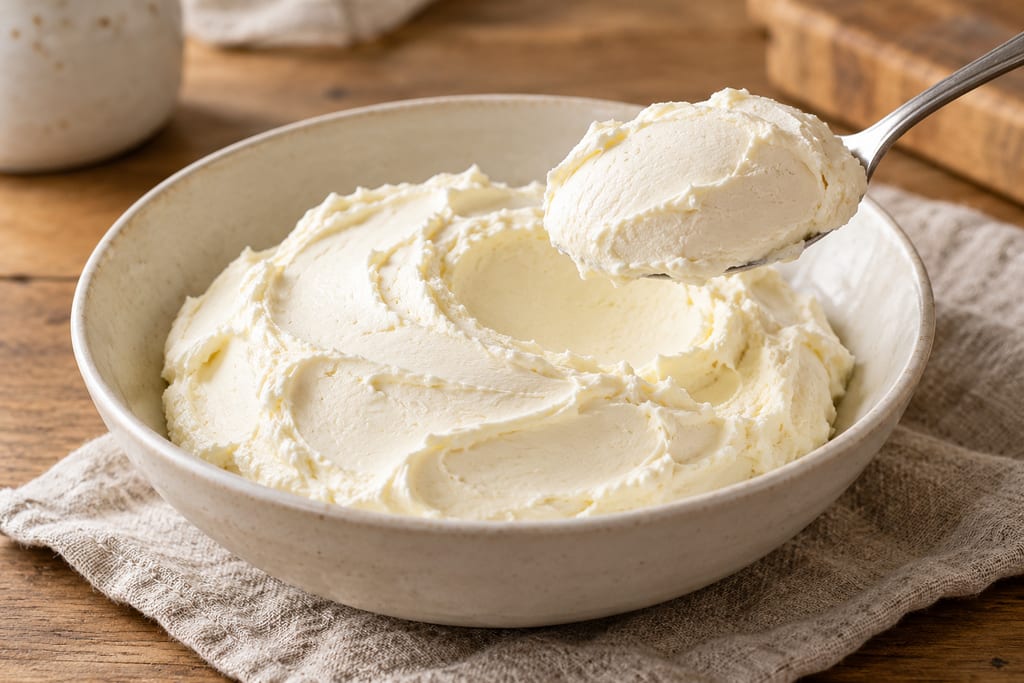
Mascarpone
A rich fresh cheese made by heating milk and cream in a double boiler and setting them with tartaric acid, or by culturing them with a crème fraîche culture.
 FermenteaWhere food goes to change
risotto · risotto all’onda
A northern Italian rice dish cooked by gradual additions of hot stock, then finished off the heat with butter and cheese for a loose, creamy sauce around distinct, tender grains.
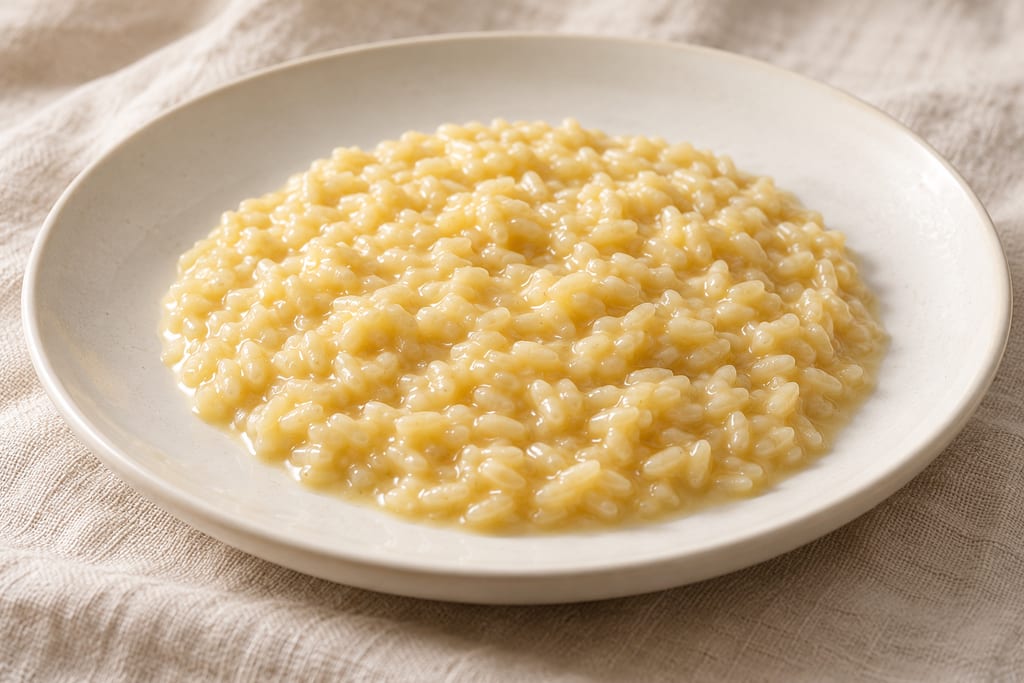
Risotto is both a way of cooking rice and the family of dishes made by that method. A measured amount of short- or medium-grain rice is toasted in a fat with aromatics, then simmered in flavorful liquid added gradually. The cook stirs as the grains soften and release surface starch into the liquid; butter and grated cheese are often mixed in off the heat at the end. The result should move softly when the pan or plate is tilted, with grains that remain distinct and pleasantly firm at the center.
This page gives a basic northern Italian style with onion, butter, dry white wine, stock and Parmesan. It is an adaptable foundation, not a claim to represent every local recipe or one official standard. The grain, broth, fat, cheese and additions vary by region, season and household. Saffron makes a Milanese version; mushrooms, pumpkin, truffle, seafood or other vegetables create their own named or home-style variations. A seasoning suggested by a condiment company, such as Goodlok's garums, is just a serving suggestion and does not define risotto or this method.
Risotto is served as soon as it reaches the desired texture. It is a first course in many Italian meals, but it can also be served as an appetizer, side dish or the main element of a meal with accompanying vegetables or meat. This basic quantity is drawn from a culinary teaching recipe that yields about ten small appetizer or side portions.
Rice reached Italy as an imported crop before it became a familiar northern staple. Historians of Italian rice describe cultivation taking root in the north during the fifteenth century. A 1475 letter from Galeazzo Maria Sforza to the Duke of Ferrara refers to sending sacks of rice for cultivation experiments; the historical account also cautions that rice was already being grown beyond Milan's formal limits. This was an agricultural expansion shaped by political authority, land and water, not the sudden invention of one dish.
The Po Valley's flat terrain, rivers, canals and irrigation systems made rice cultivation possible at scale. Local histories of the Baraggia district in Piedmont record cultivation from around 1500 and documents from the early seventeenth century about rice fields and their extension. Later reclamation, reservoirs and irrigation altered the landscape and supported the region's rice agriculture. These histories explain why rice became a regional crop, but they do not date the exact moment when risotto as a method first appeared.
Risotto became associated with northern Italy because this is where rice farming and rice cookery converged. Milanese, Piedmontese and Veneto recipes each developed local signatures. It is more accurate to speak of a regional field of rice dishes than of one single birthplace for every risotto. The names and traditions of particular dishes—such as saffron risotto alla Milanese—make claims that a generic risotto recipe should not borrow without evidence.
Risotto alla Milanese is a specific relative of the broader risotto family. Regione Lombardia's tourism account distinguishes an earlier, simpler 'riso col zafran' from the modern form, which it dates to the nineteenth century and describes with saffron and ox marrow. It presents the famous story of saffron first entering the dish at a sixteenth-century glazier's wedding as a legend, not as documented origin. The story links Milan's cathedral glass workshops with the dish's golden color, but the available record does not prove that a wedding prank created the recipe.
Saffron gives Milanese risotto a vivid yellow-gold hue and its recognizable aroma. The regional account notes that it is commonly paired with ossobuco. The dish also carries a local De.Co. designation, a municipal recognition used to identify local products and food traditions. These facts distinguish it from a plain basic risotto; they should not be projected onto mushroom or pumpkin risottos.
Home cooks sometimes simplify saffron risotto or use a different fat or stock. Those versions can be worthwhile meals, but the named Milanese preparation has its own documented associations and local interpretations. In this page, saffron appears as a variation rather than an ingredient in the base formula. This keeps a flexible recipe useful while giving its readers a route toward a specific regional version.
Risotto rice is selected for how its grains hold together while absorbing liquid and softening. Carnaroli is a common northern Italian choice; growers and protected-origin consortia describe it as compact and elastic, with grains that resist breaking and accept liquid during creaming. Arborio and Vialone Nano are other well-known choices, each with its own grain shape and cooking behavior. No variety is a magic guarantee: a packet's age, milling, harvest and exact cultivar affect the time and texture, so use the package as a guide and taste the rice as it cooks.
Starch is part of the explanation for risotto's sauce. Heat and water gelatinize the starches in the rice; stirring moves some of the softened surface material into the surrounding liquid, helping it thicken. The grains themselves should still have structure. Butter and grated cheese added at the end emulsify and enrich the liquid, creating a cohesive sauce that clings rather than a separate pool of broth.
Descriptions such as 'Carnaroli always releases more cream' are useful cooking shorthand, but the science is more complex. Studies of Italian rice varieties report differences in measured amylose content and show that the cooking method can affect the measured outcome. The grain's starch structure, cultivar, heat, water and handling all contribute to cooked texture. For the cook, a practical target is more reliable than an oversimplified starch rule: tender outside, a slight firm resistance inside and a sauce that flows gently.
The onion is cooked gently in butter until translucent rather than browned. It softens into the fat and perfumes the rice without making the dish taste roasted. Rice is stirred into the fat until the grains are coated. Some recipes call this toasting: it warms and dries the outside briefly, prepares the grains for liquid and helps distribute flavor. It is not a separate deep-frying step and should not turn the rice brown.
Dry white wine is added and stirred until much of its liquid has been absorbed. It contributes acidity and aroma, while the simmering stock supplies most of the cooking liquid. Keep the stock hot in a neighboring pan so each addition does not stall the rice's simmer. The basic teaching method begins with a larger first addition and then continues in increments; recipes and cooks differ about the size of each ladle. The useful cue is that the pan remains moist and active, never dry or flooded.
Stirring is steady but need not be frantic. It redistributes the rice, exposes grain surfaces to liquid and helps suspend released starch. As the rice cooks, taste it frequently near the expected finish. Add more hot stock if the center is still hard; stop when the grains are tender with a little resistance and the sauce moves. The final mantecatura—stirring in reserved butter and Parmesan off the heat—adds fat and cheese to the starch-rich liquid. Rest only briefly, then serve; a long wait lets the rice absorb the sauce and stiffen.
The ingredient quantities here follow a U.S. rice culinary classroom formula: 500 grams medium-grain or Arborio rice, 2 litres stock, 60 grams diced onion, 45 grams butter, 250 millilitres dry white wine and 85 grams grated Parmesan, with salt and white pepper to taste. It yields about two litres, or ten appetizer-size portions. For a northern Italian flavor, Carnaroli is a practical substitution; its cook time may differ from the U.S. Arborio specified in the teaching formula.
The stock can be chicken, veal, seafood or vegetable in the teaching source. Choose one that fits the rest of the meal; a vegetable stock makes a vegetarian base. Check the stock and cheese before salting, since both may already be salty. A hard grating cheese introduces dairy, and some commercial stock may contain allergens; check its label where relevant. The wine is part of the formula but can be omitted or replaced with a small additional splash of stock if avoiding alcohol, with a slightly different aroma.
To make a saffron variation, add saffron threads with the rice or during the early stock additions; the culinary classroom guide gives half a teaspoon as its Milanese variation. For mushroom risotto, it lists roughly 170–225 grams mushrooms, cooked with the onion. Pumpkin risotto uses about 300 grams diced squash with the onion. These are documented examples rather than a single combined recipe: do not add mushrooms, saffron and pumpkin together and call that a canonical version.
Risotto should reach the table as soon as it is finished. The ideal sauce is loose enough to spread into a shallow layer or move in a soft wave when the plate is tapped, while the rice remains visibly distinct. The Italian phrase 'all’onda' means 'in a wave' and describes that fluid but cohesive state. If it sits too long, rice continues to take up liquid and the sauce thickens; a spoonful of hot stock can loosen it briefly, but the texture is best immediately after the final stir.
In Italy, a risotto may be served as a primo, the first substantial course, and followed by vegetables or meat. Milanese saffron risotto is classically served alongside ossobuco, while mushroom or seasonal vegetable versions may stand on their own. Parmesan and butter in the base recipe make it rich, so the rest of a meal can be simple. The dish is also easy to vary at home: the rice technique stays similar, while a regional or seasonal ingredient changes the name and balance.
Because the rice itself is the central texture, the bowl or plate should not be buried under garnish. A small amount of the main ingredient—saffron, mushrooms or squash—can make the variation apparent. Freshly grated cheese is easier to disperse than a thick layer added at the end. If serving a vegetarian version, check that the cheese is made with a suitable coagulant and that the chosen stock contains no meat.
Risotto is cooked to order and served hot. If there are leftovers, transfer them promptly to a shallow container so they cool more quickly and put them in the refrigerator. The USA Rice culinary guide advises cooling cooked rice from 60°C to 21°C within two hours, then to 4°C within the next four hours; it recommends a covered, dated container and use within three days. For service it advises hot holding above 60°C and reheating to an internal temperature of 74°C. These are general cooked-rice controls, not a special property of risotto.
A shallow layer cools faster than leaving a large pot on the counter. Refrigerated risotto firms as the rice absorbs moisture, so leftovers will not have precisely the same loose sauce as a freshly made pan. Reheat a portion thoroughly with a little stock or water, stirring so it warms evenly; the method is for leftovers, not a way to regain the exact first-service texture.
Keep stock chilled until use, heat the portion used for cooking, and avoid leaving dairy-rich leftovers at room temperature for extended periods. Use ordinary kitchen cleanliness, keep raw ingredients away from cooked food, and follow food-safety advice for your location. The preparation is a cooked dish, not a preserved food, and its normal service depends on prompt eating rather than curing, drying or fermentation.
Rice cultivation was established in Northern Italy in the fifteenth century, with a 1475 letter recording rice sent from Milan to Ferrara for cultivation. This documents the crop's expansion, not the invention date of risotto. Regione Lombardia distinguishes earlier riso col zafran from the saffron-and-marrow form used in the nineteenth century; the famous glazier's wedding origin story is presented as legend.
Yield 10 appetizer portions
Contains dairy and may contain allergens from stock; check ingredient labels.
Serve hot. Refrigerate leftovers promptly in a shallow container and reheat thoroughly.
A regional rice-cooking family; the sources do not establish one origin place for all risotto.
A rich fresh cheese made by heating milk and cream in a double boiler and setting them with tartaric acid, or by culturing them with a crème fraîche culture.
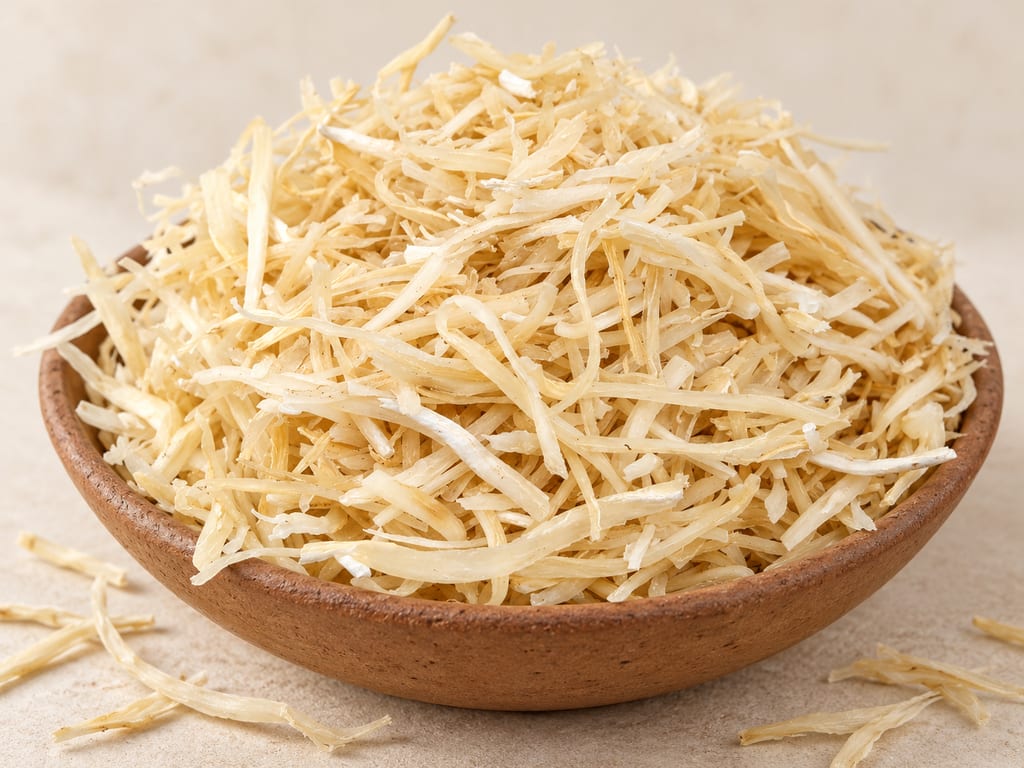
Abacha is a fermented cassava-strip preparation from southeastern Nigeria, sold wet or dried and later rehydrated for meals such as African salad.
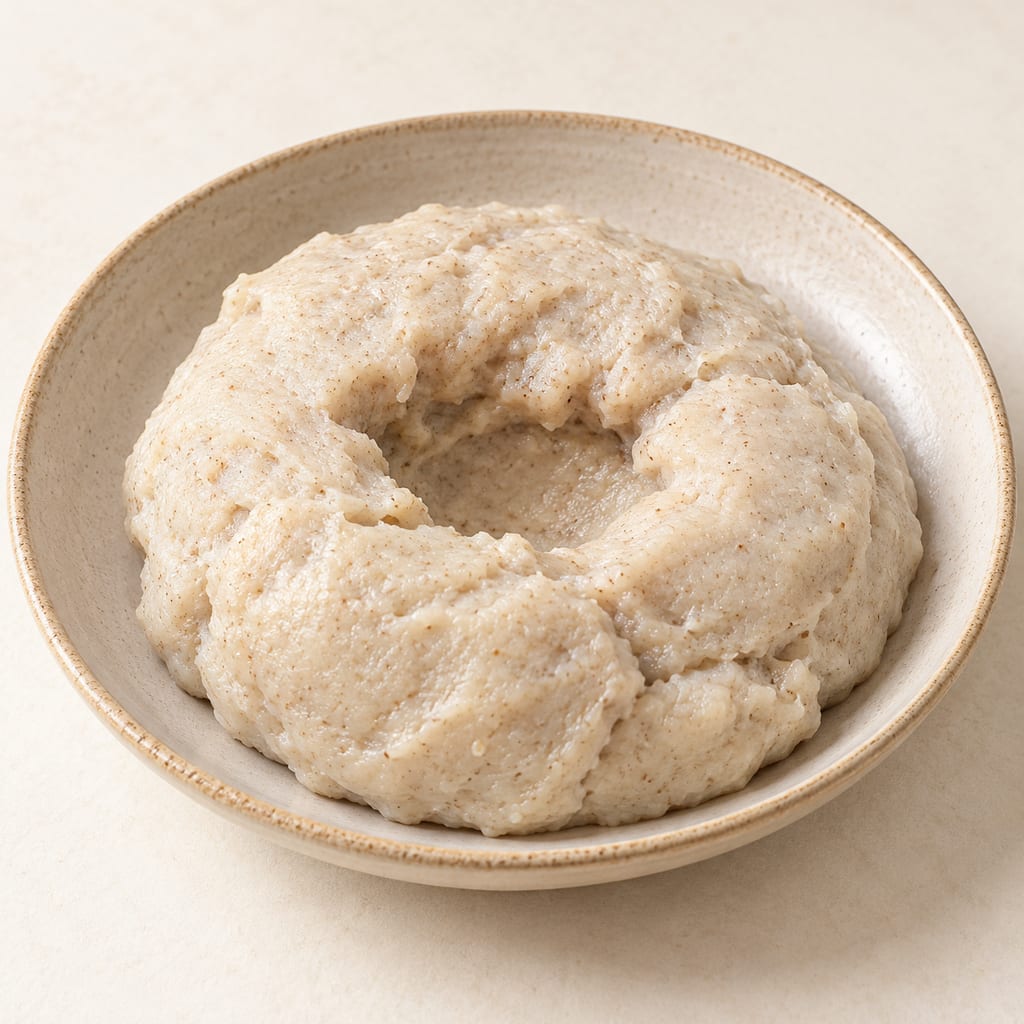
Aceda is Sudan’s firm cereal porridge, commonly made from sorghum and shaped into a smooth mound. Some versions use fermented dough; fermentation is not universal.
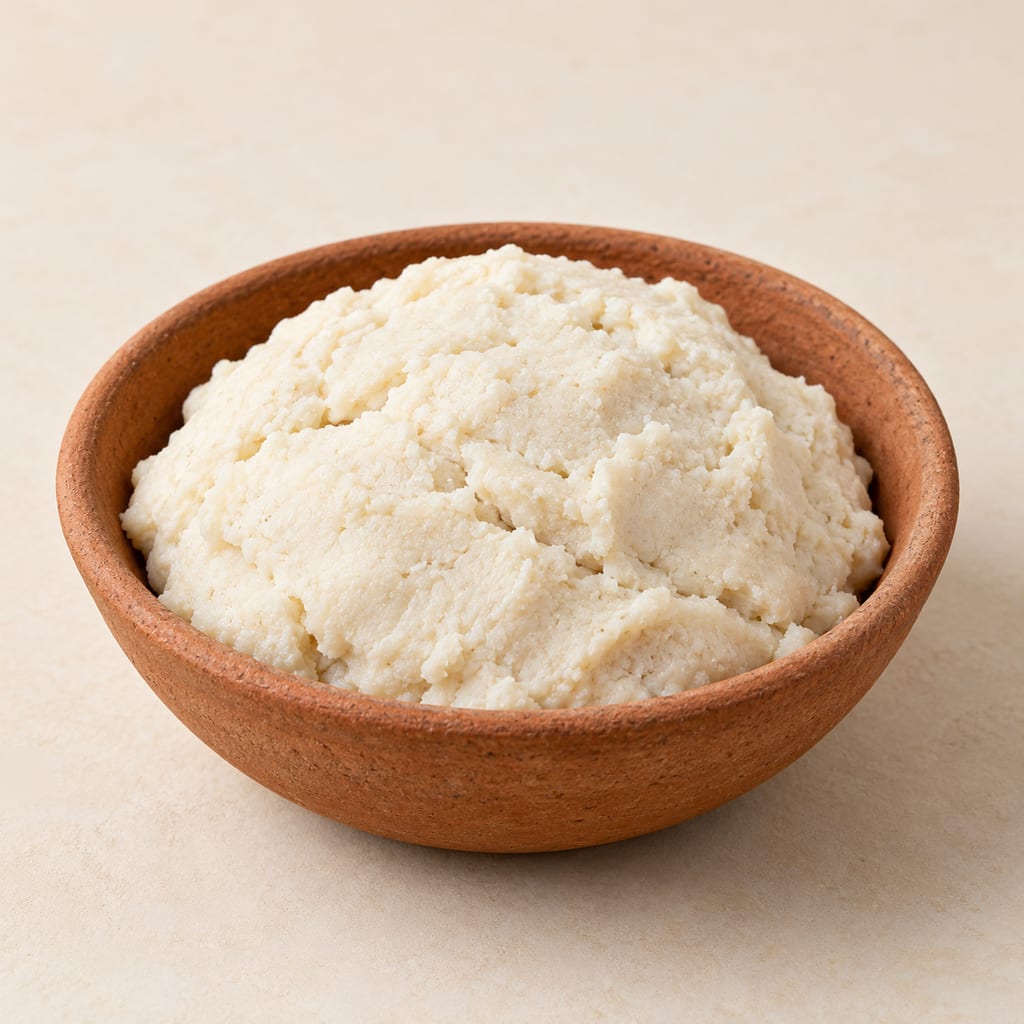
Ghanaian sour cassava dough fermented with traditional inoculum and drained during fermentation. It is used as a base for cooked foods such as banku and akple; process variants and safety outcomes differ.

Appam, or hoppers, are South Indian and Sri Lankan rice pancakes made from a fermented coconut-and-rice batter and cooked in a curved pan to a crisp lacy rim and a soft, spongy centre.
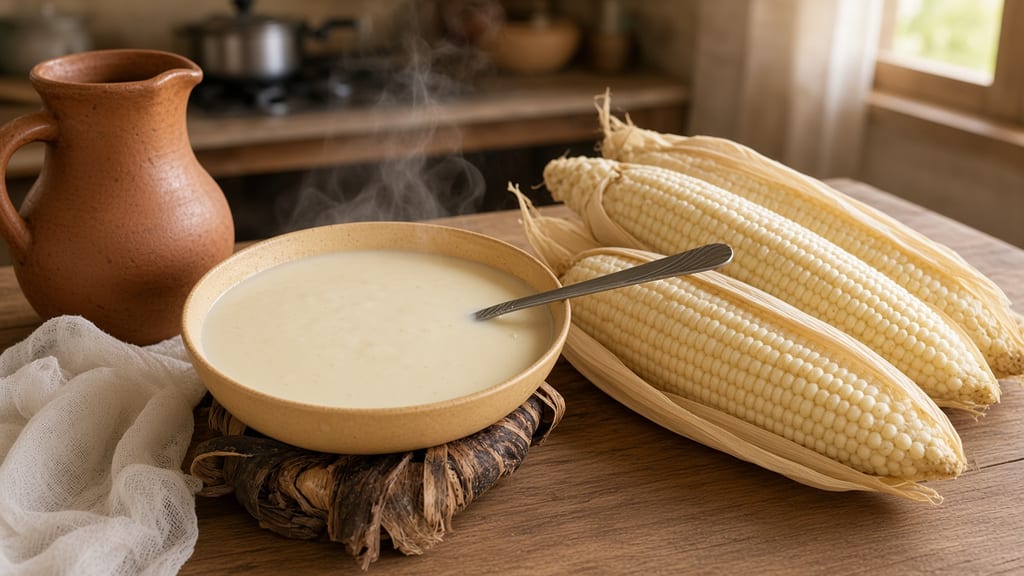
A hot, sour maize drink from Tabasco made from maize that is not lime-cooked. The ground grain sours for half a day, then makers strain it and boil it until thick.
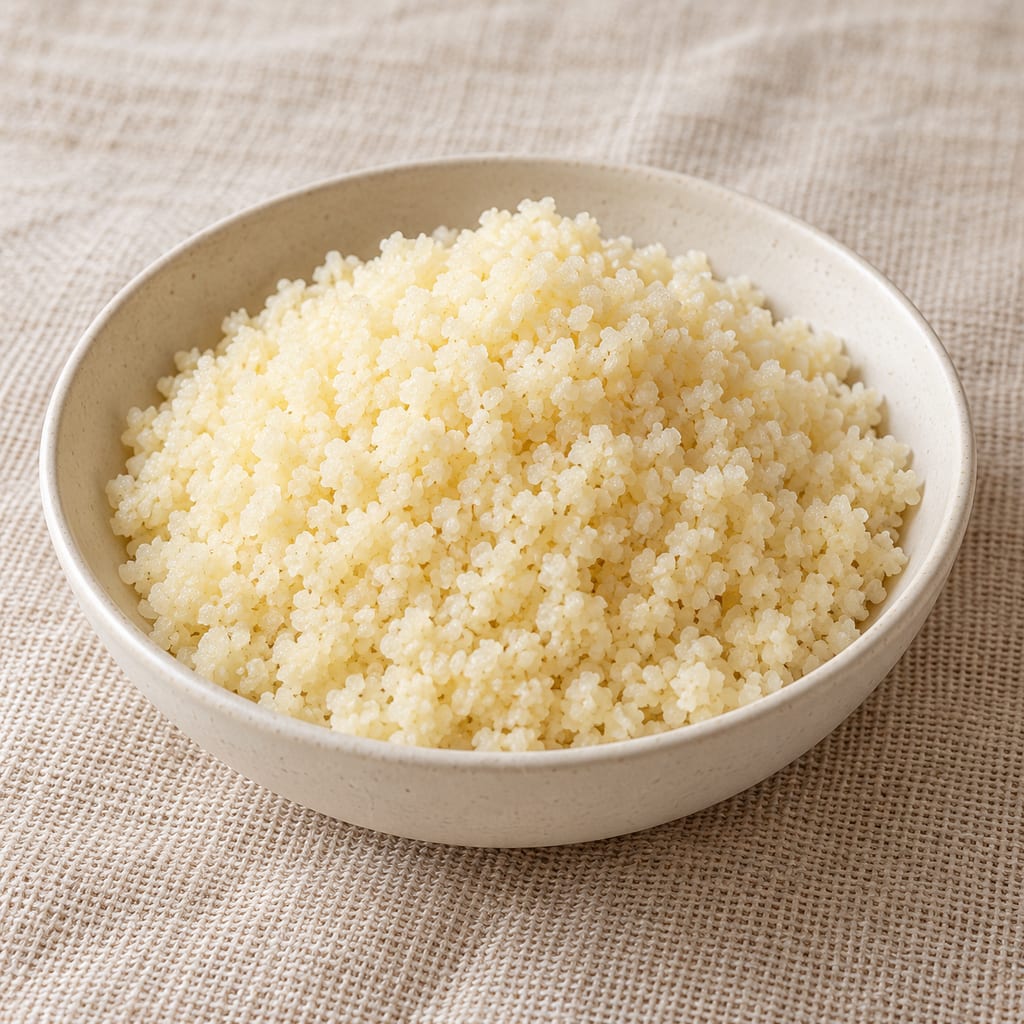
Ivorian cassava semolina: grated cassava is fermented overnight with a traditional inoculum, pressed, sieved into granules, dried and steamed. Documented in a 2006 field study; no sole original process is established.
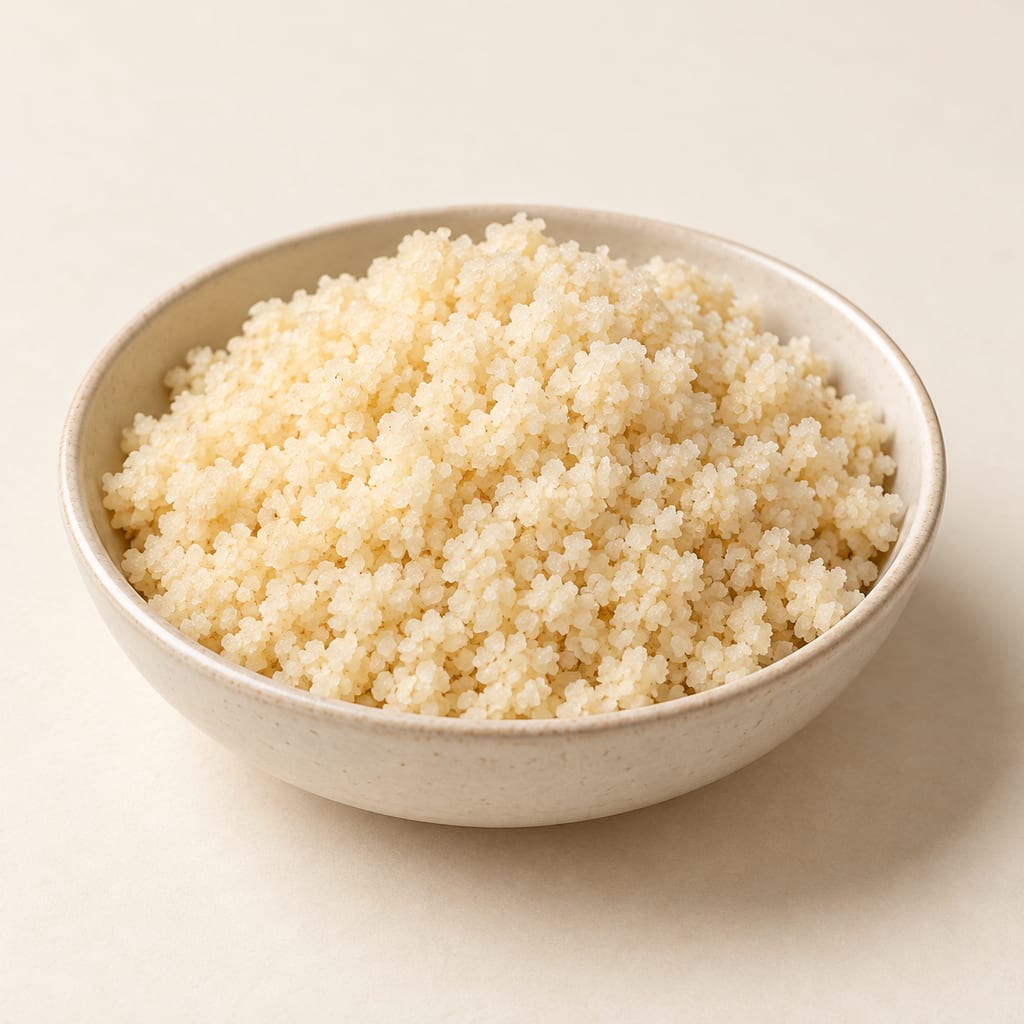
Attiéké is an Ivorian staple of grated cassava fermented with a traditional inoculum, then pressed, sieved, granulated, dried and steamed into fine couscous-like grains.

Crushed or milled barley cooked in water until the starch softens and the mixture thickens, the plainest way a northern household turned stored grain into a meal, here with apple and hazelnut.
No community contributions have been published for this entry yet.
Sign in to contribute. Published comments and photos are free to read.
USA Rice FederationMethod · Technique · Food safety
Part III: Cooking Rice — Basic MethodsBasic risotto ingredient quantities and method; hot stock in increments; stirring; cooked rice cooling and reheating controls.
Cited in: One method, many risottos; A Milanese saffron branch, and the story that grew around it; What each stage does; A measured base recipe and sensible variations; Serving it at its best; Rice safety, storage and leftovers
Acqua e SoleTechnique · Rice varieties
White Rice, Our Guide to the Cooking MethodsCarnaroli used for risotto, dry toasting, small additions of boiling broth, off-heat mantecatura, all’onda texture, no rinsing.
Cited in: One method, many risottos; Choosing the grain and understanding creaminess; What each stage does; A measured base recipe and sensible variations; Serving it at its best
Consorzio di Tutela del Riso del Delta del Po IGPIngredients · Rice varieties
Carnaroli Rice — Riso del Delta del Po IGPCarnaroli's compact, elastic grain and ability to absorb liquid during creaming make it suitable for risotto.
Cited in: Choosing the grain and understanding creaminess
IN-LOMBARDIA.IT / Regione LombardiaHistory · Variation · Geography
Milanese risotto recipeThe regional tourism source distinguishes earlier riso col zafran from 19th-century saffron-and-ox-marrow risotto; glazier wedding account is presented as legend; ossobuco pairing; local De.Co. status.
Cited in: A Milanese saffron branch, and the story that grew around it; A measured base recipe and sensible variations; Serving it at its best
Consorzio di Tutela della DOP Riso di Baraggia Biellese e VercelleseGeography · History
History — Riso di Baraggia DOPRice cultivation in the Baraggia area from around 1500; documented local records from 1606 and 1609; irrigation, land reclamation, DOP recognition in 2007.
Cited in: Rice, land and the northern Italian table
University of California eScholarshipHistory
Bitter Rice: A Cultural History of Rice in Modern ItalyRice cultivation in Northern Italy established in the 15th century; document of 1475 records rice sent to Ferrara; expansion beyond the Duchy of Milan.
Cited in: Rice, land and the northern Italian table
FoodsScience
Nutritional Properties of Rice Varieties Commonly Consumed in Italy and Applicability in Gluten Free DietRice varieties and cooking methods differed in measured amylose outcomes; supports avoiding a single simplistic starch rule.
Cited in: Choosing the grain and understanding creaminess
Centers for Disease Control and PreventionSafety
Food Poisoning: Symptoms and CausesGeneral food safety advice; not risotto-specific process validation.
Cited in: Rice safety, storage and leftovers