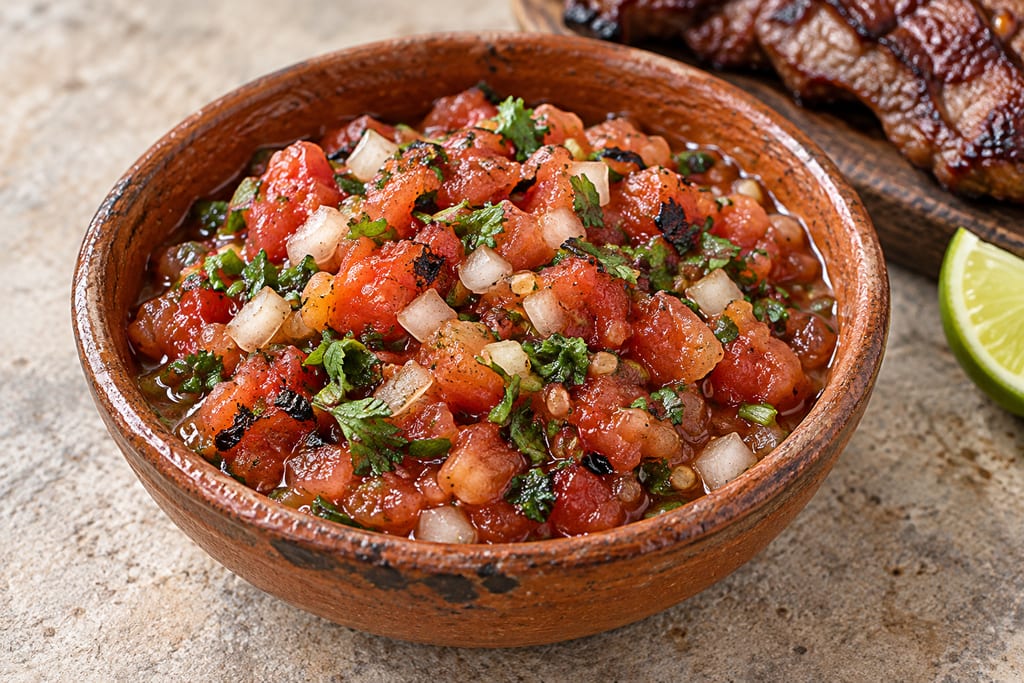
Chirmol (Guatemalan charred tomato salsa)
Chirmol is a Guatemalan salsa of charred tomatoes with onion, cilantro and lime, served with grilled meat and toasted chiles.
 FermenteaWhere food goes to change
Pebre is a Chilean condiment with many local versions. This partial fresh tomato version follows Chile Travel’s ingredients; vinegar is optional. Sources document picante heat and variants but no fixed proportions or precise origin.
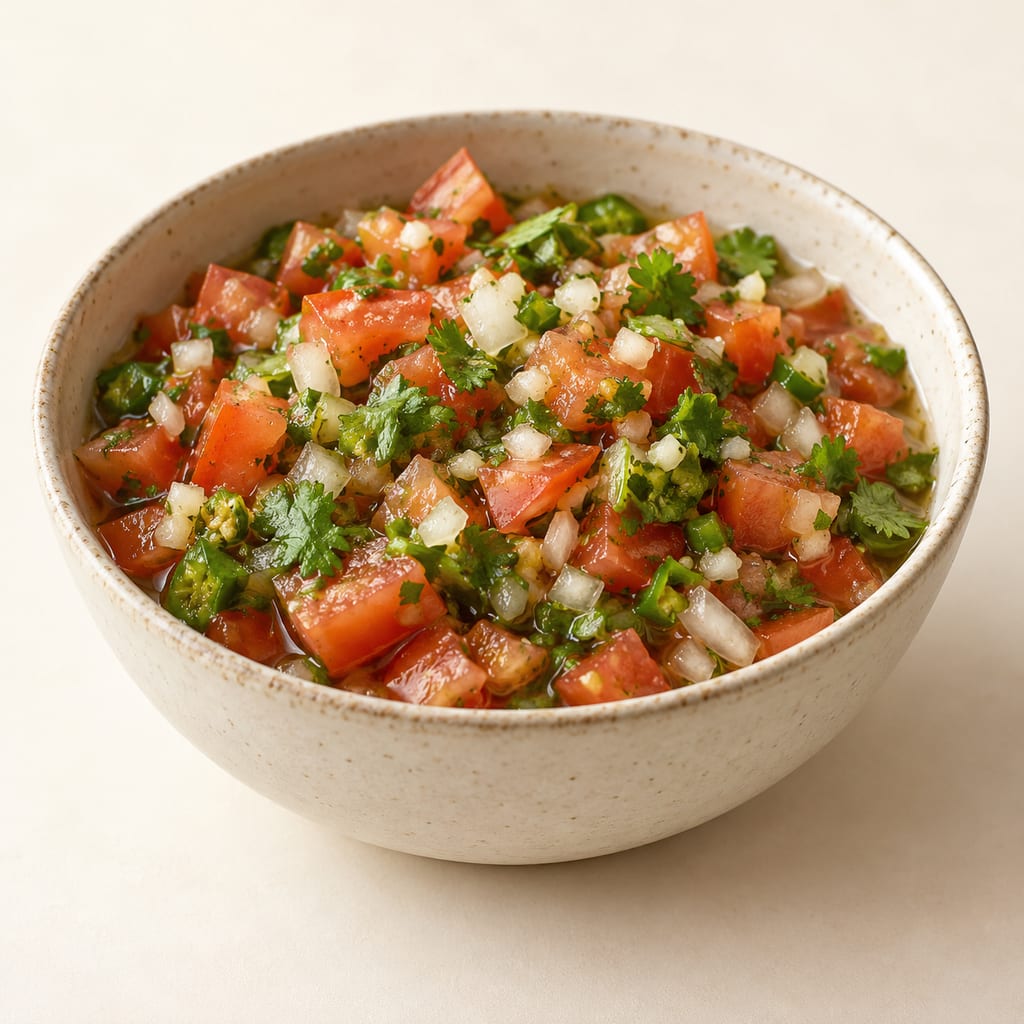
Pebre is not a single fixed formula. Chile Travel lists a tomato version with onion, cilantro, spicy ají, oil and salt, with vinegar optional. A 1957 account describes multiple finely chopped pebres and additional versions made with cilantro, nuts, cheese or other ingredients.
Chile Travel presents pebre as a Chilean table condiment. Oreste Plath’s chapter “Estampa del pebre” identifies its source as En Viaje, issue 290, December 1957. It records “peure” as a southern name and documents variants including pebre en piedra and chancho en piedra. This is evidence of the term and variety by 1957, not a claim about the first preparation or a precise birthplace.
The Chilean heritage documentation describes pebre as a fresh, strongly flavoured vegetable condiment, with heat from green or red ají, fresh or dried. Chile Travel likewise specifies spicy ají. Pepper variety and quantity vary; the sources give no standard heat measurement.
The cited descriptions treat pebre as a fresh condiment and provide no tested canning method, acidification target, pH limit or storage duration. This draft therefore makes no shelf-stability claim and does not turn the condiment into a preserve.
Pebre comes from the Latin piper, pepper. In Catalan the word still means pepper in general, while in the rest of Spain it names a sauce of vinegar, pepper, saffron and clove. The Chilean sauce took its name from its main ingredient, the ají chilli.
The Wikipedia article ties the Chilean sauce to Catalan engineers and masons who worked on Santiago's riverside walls and bridges along the Mapocho River under the Italian architect Joaquín Toesca. They made a simple sauce of coriander, oil, vinegar and salt, named after its chilli.
Oreste Plath's chapter "Estampa del pebre", first published in the magazine En Viaje in December 1957, describes a family of finely chopped condiments under the name pebre and notes the southern name peure. It also names the regional variants pebre en piedra and chancho en piedra, the stone-ground sauce with its own record in this database.
The Wikipedia article describes a far-northern Chilean pebre closer to the Bolivian llajwa, which shows that the name covers more than one sauce.
Pebre is most often eaten on bread. It is also served with meat or in a roll with choripán, the grilled sausage sandwich. It is chilled before serving, and its loose, spoonable texture lets it be spooned over food rather than cooked into it.
A chapter first published in En Viaje in December 1957 documents a family of Chilean pebres and regional naming and preparation differences. This is a dated written attestation, not evidence of the earliest origin.
The sources provide no validated preservation method, acidification target or storage duration; do not treat this fresh preparation as shelf-stable.
These sources document Chilean pebre and regional variants; they do not establish one precise birthplace for the condiment family.
Chirmol is a Guatemalan salsa of charred tomatoes with onion, cilantro and lime, served with grilled meat and toasted chiles.
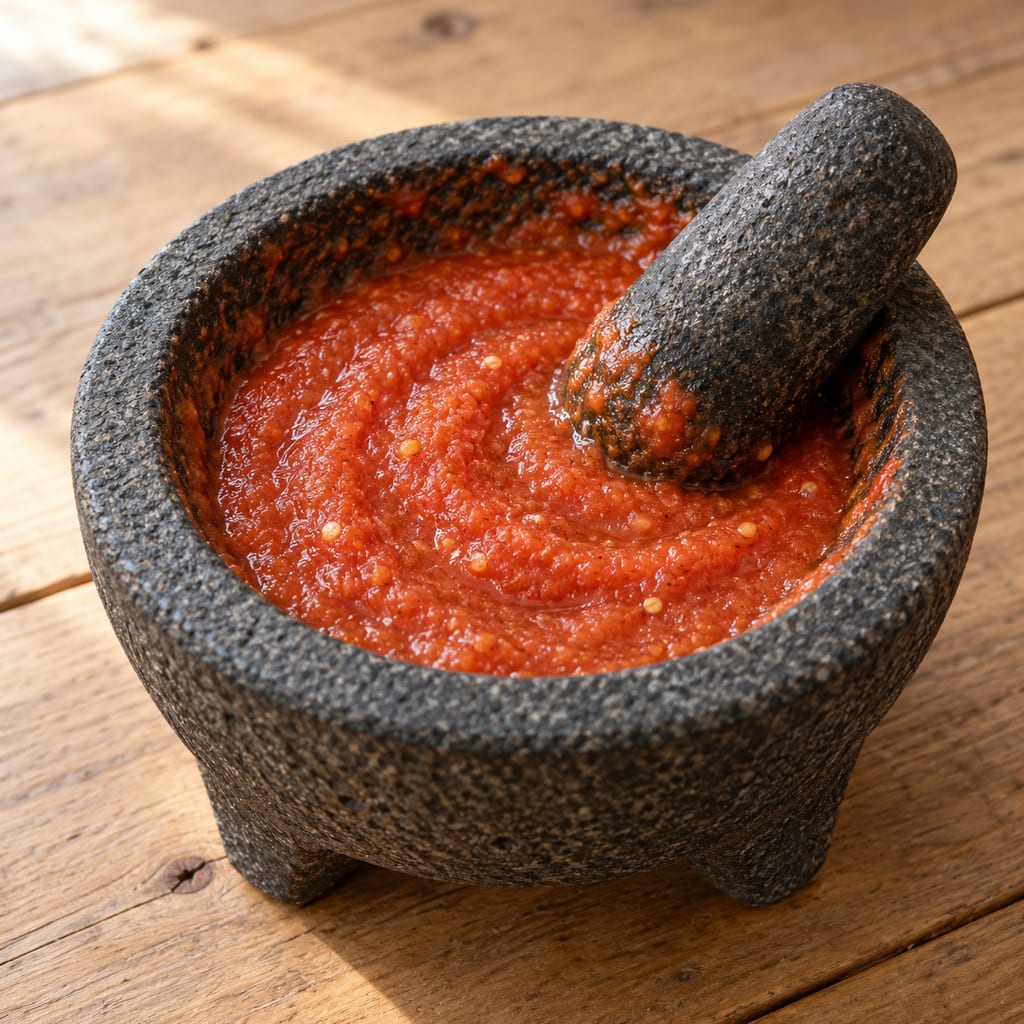
Chancho en piedra is a Chilean sauce of tomato, garlic, cumin and chilli, ground by hand in a stone mortar. Its name refers to the stone, not to pork.
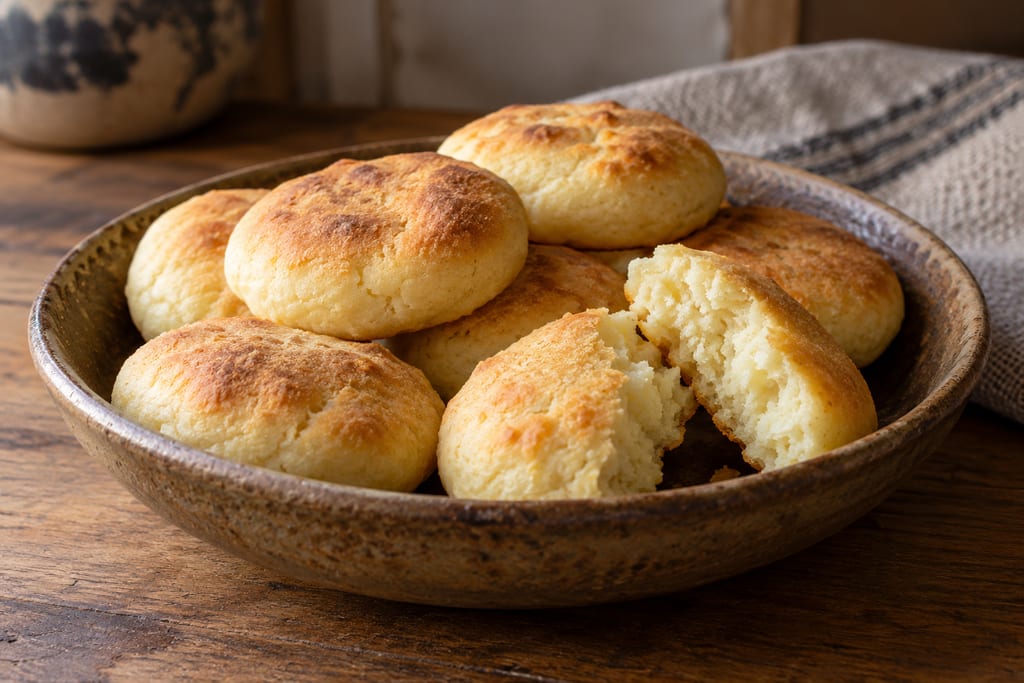
A baked Chiloé chapalele based on Gourmet's recipe: smooth cooked potato mixed with wheat flour, baking powder, sea salt and butter, shaped into 16 pieces.
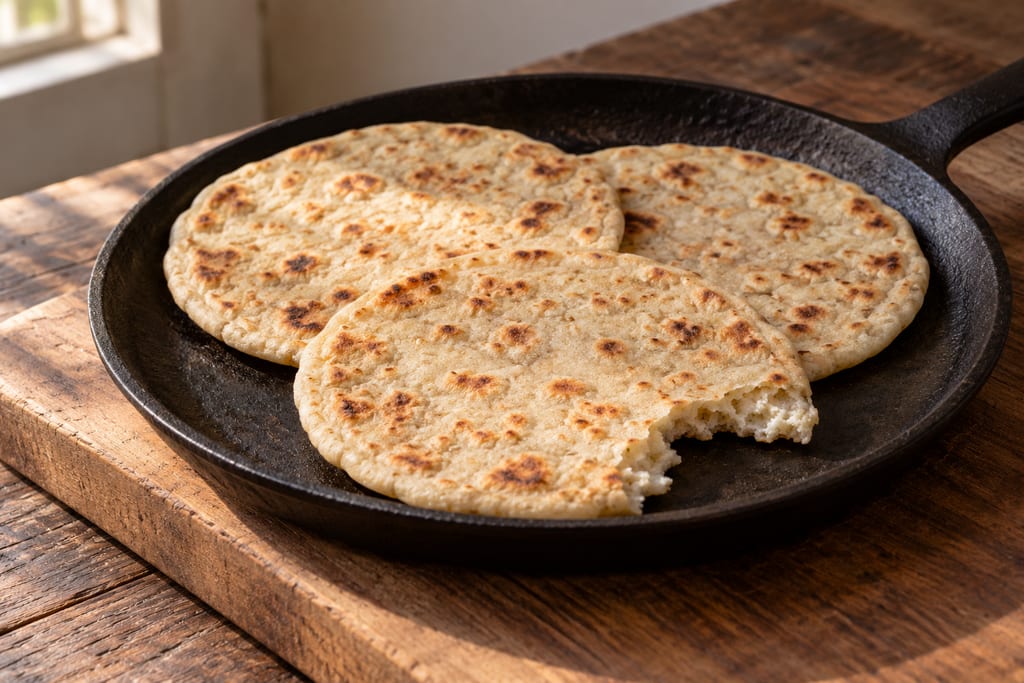
Six quick Chilean wheat flatbreads made with oil, baking soda and baking powder, then cooked in a dry skillet.
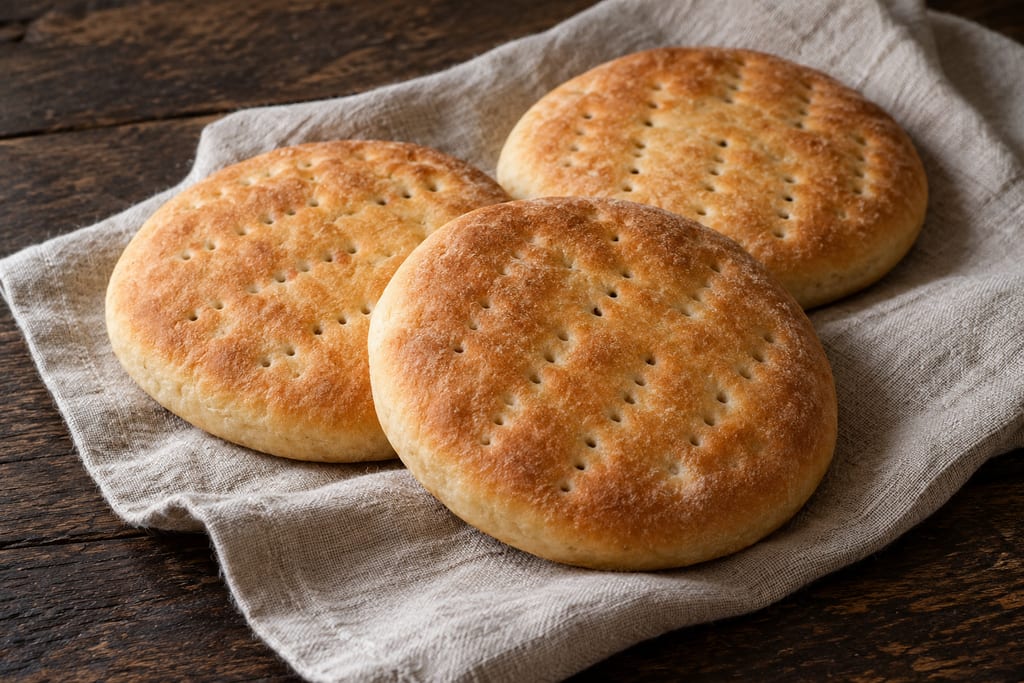
Round Chilean yeast breads made with shortening, rolled and folded, then cut, pricked and baked until golden.
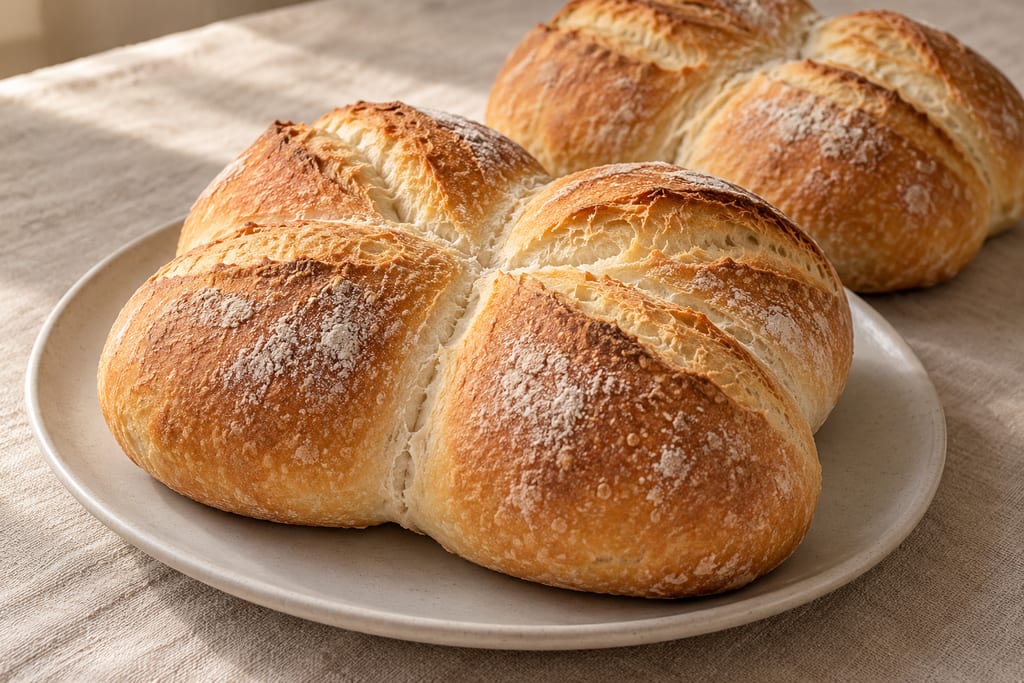
A lean Chilean wheat loaf shaped as two joined lobes, chilled overnight, then baked with steam for a crisp, deeply browned crust.
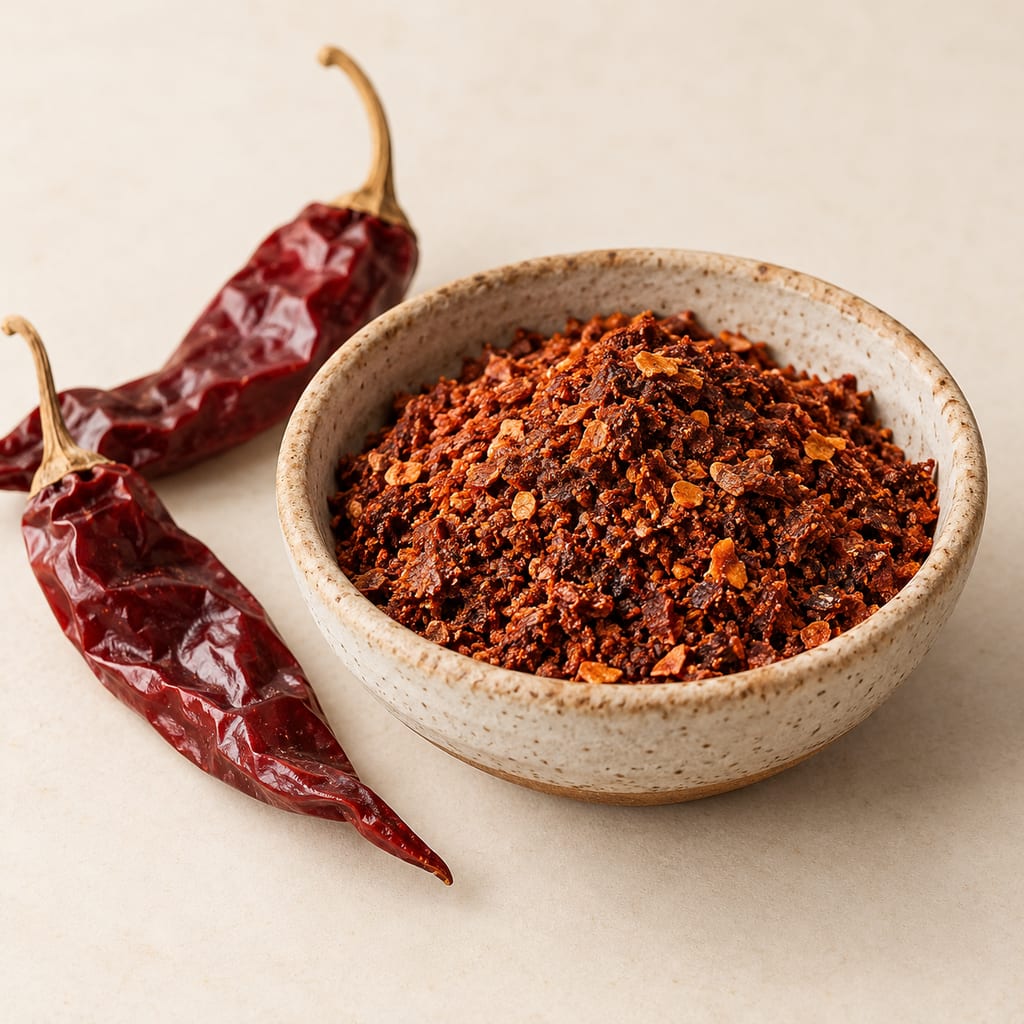
Merkén is the Mapuche seasoning of dried, smoked and ground ají cacho de cabra chile, sometimes with toasted coriander seed and salt, made in the Maule and La Araucanía regions of Chile.
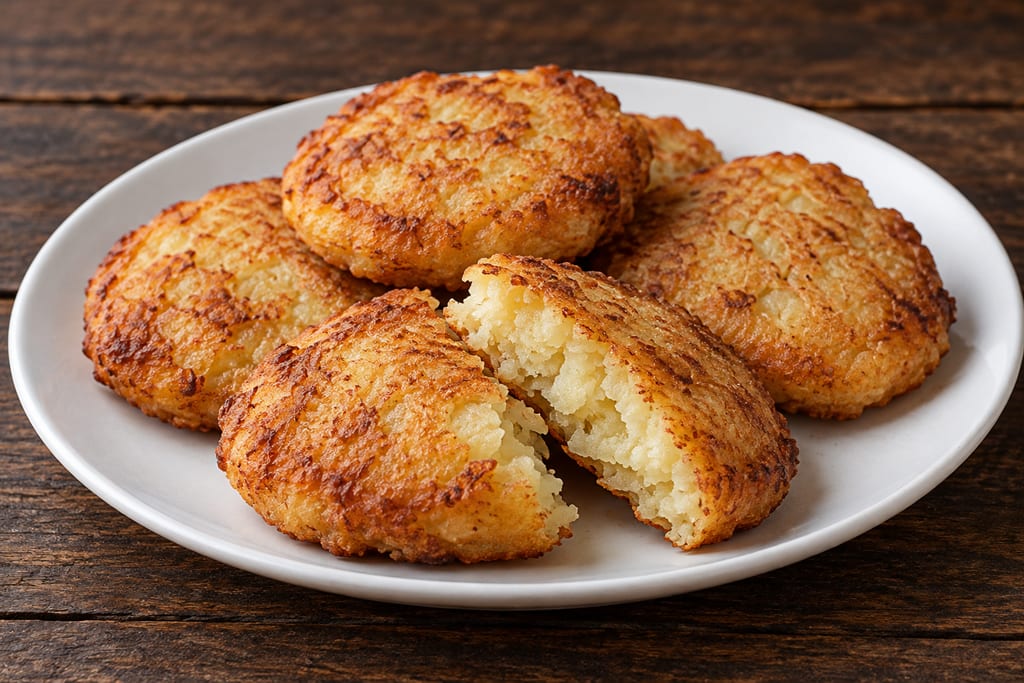
Chiloé potato cakes combine cooked mashed potatoes with drained raw grated potato; this measured version is fried and yields 20.
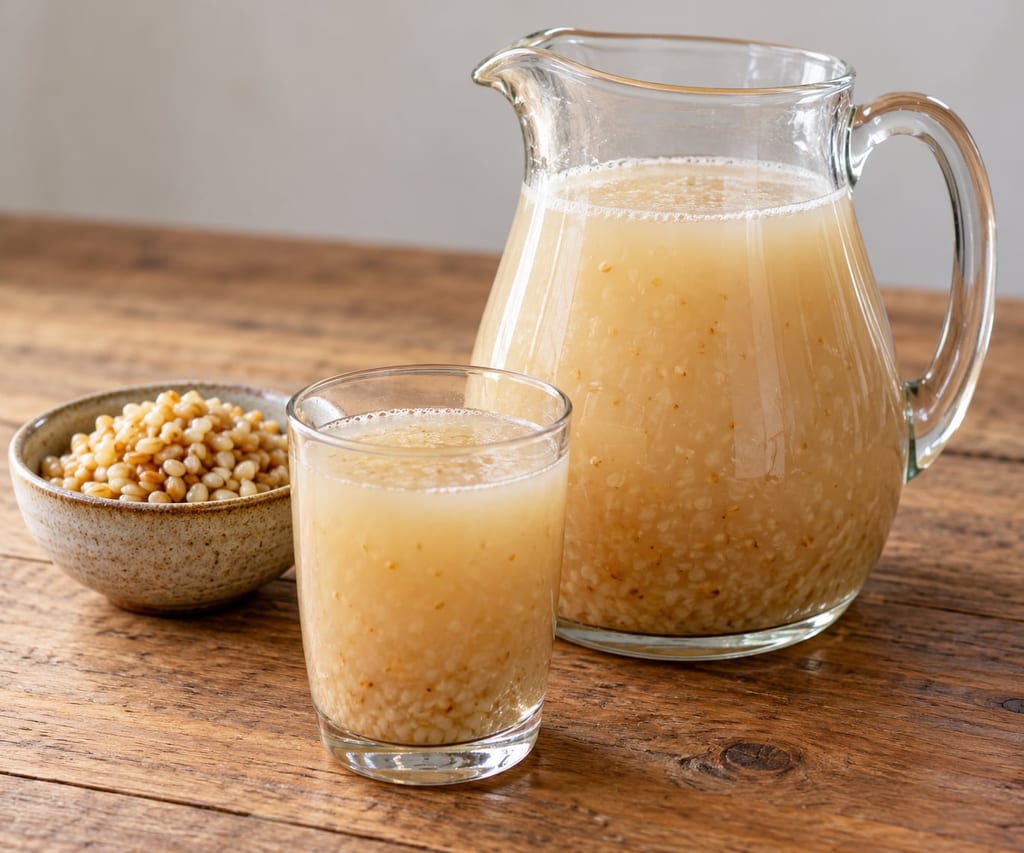
Muday de trigo is a wheat-and-honey fermented drink recorded from vendors at Feria Rahue in Osorno; this contemporary batch cooks and grinds the grain before fermentation.
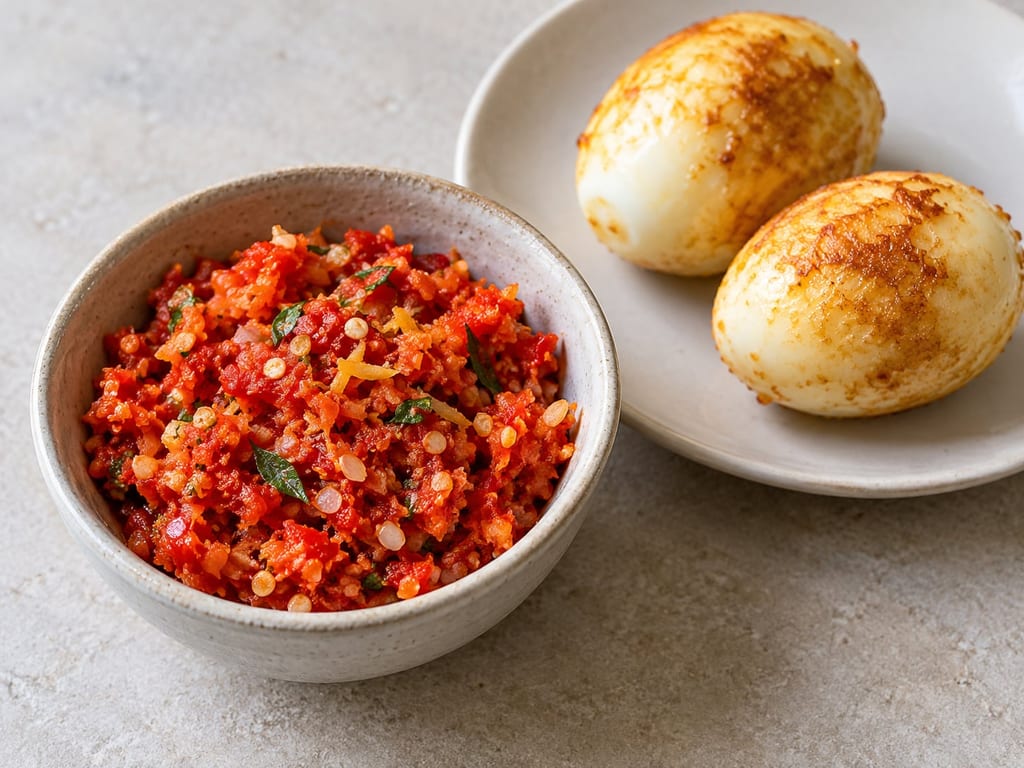
Ai-manas is described as a very hot chilli paste served with Timorese meals. One published version blends fresh chillies, shallots, garlic, Thai basil, ginger, lemon and salt, and serves it with eggs. Sources do not establish a standard formula, precise birthplace or earliest date.
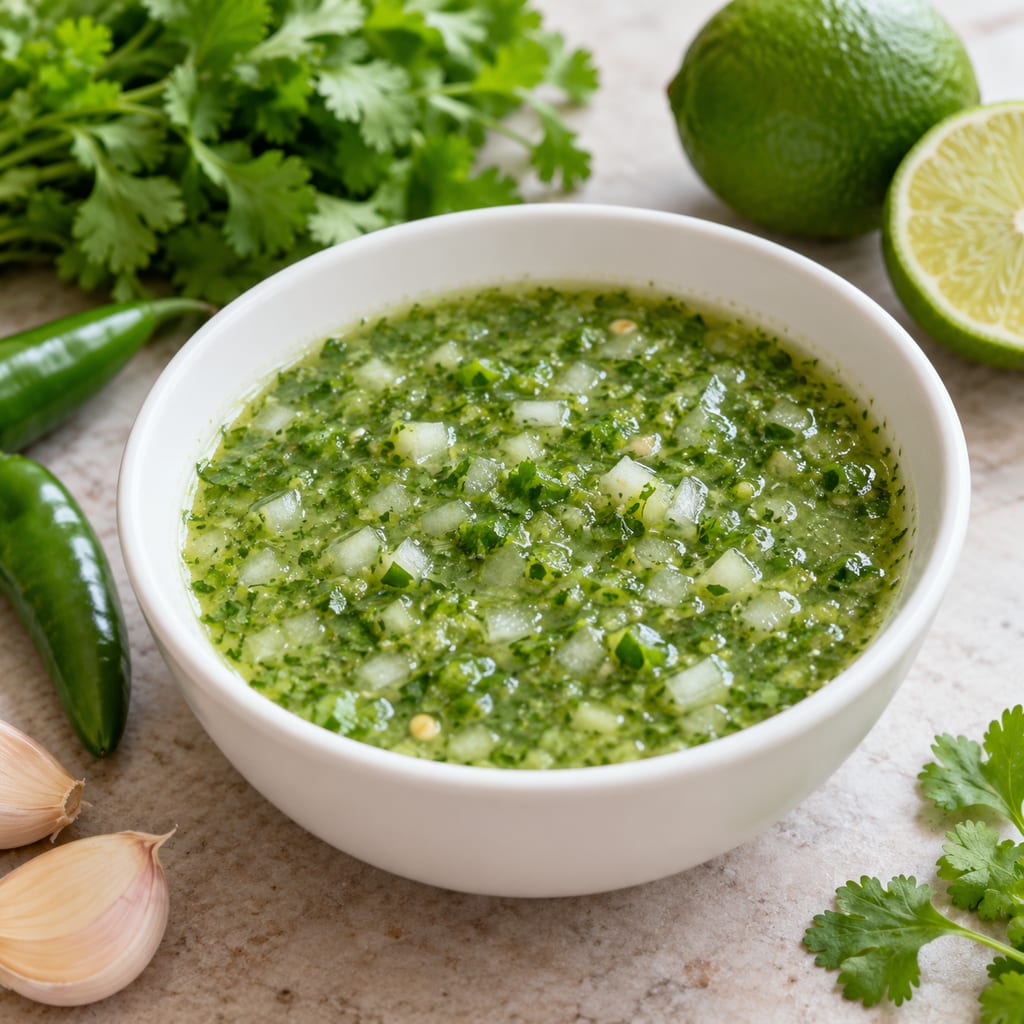
A fresh, uncooked Ecuadorian table sauce of hot pepper, cilantro, garlic and lime, served with most everyday dishes.
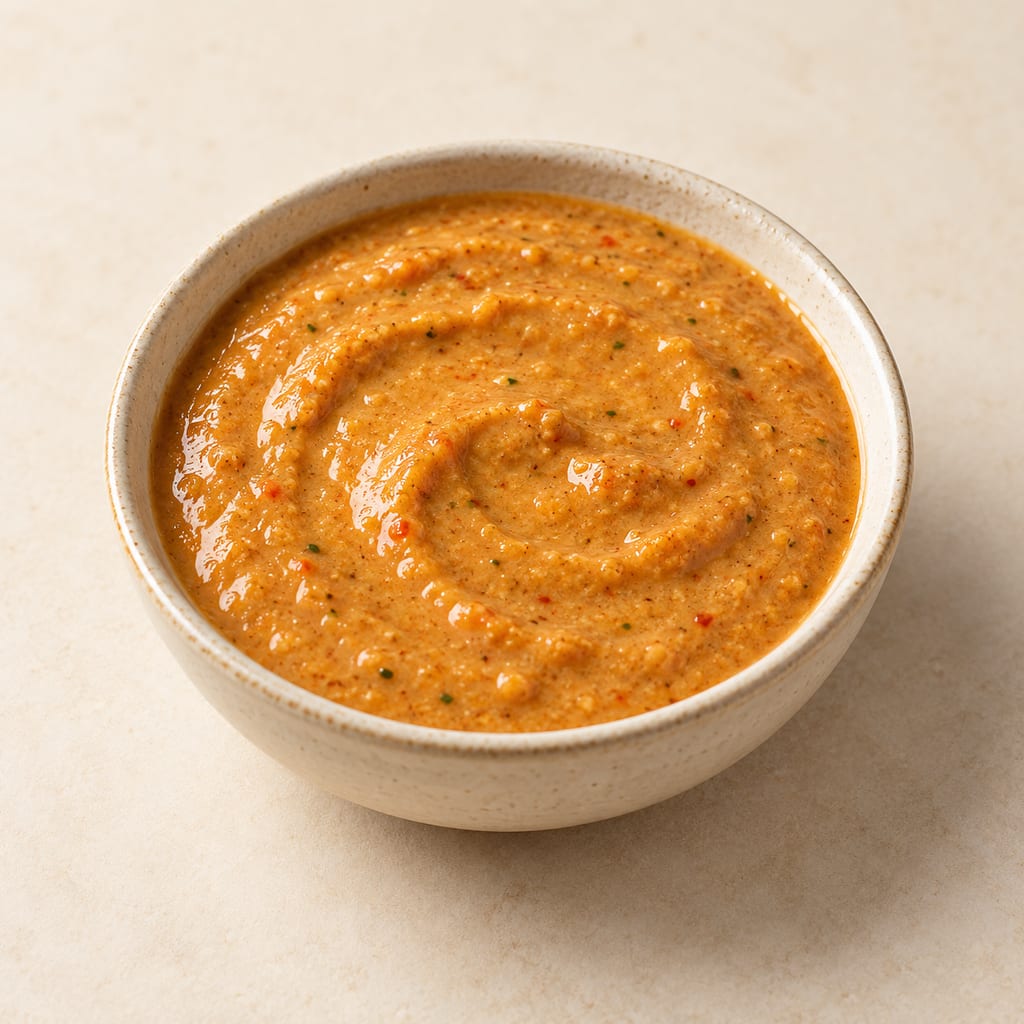
A spicy peanut hot sauce from the Popayán and Cauca region of Colombia, traditionally served with pipián empanadas and tamales.
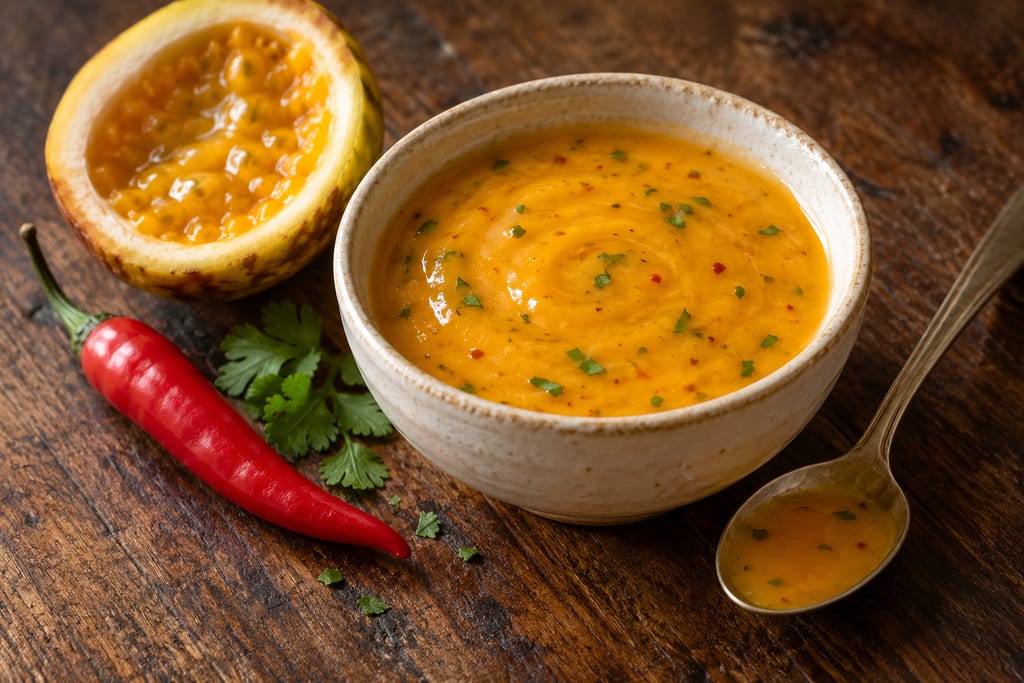
A contemporary Ecuadorian hot sauce that pairs passion fruit juice with boiled chile peppers, oil and lime.
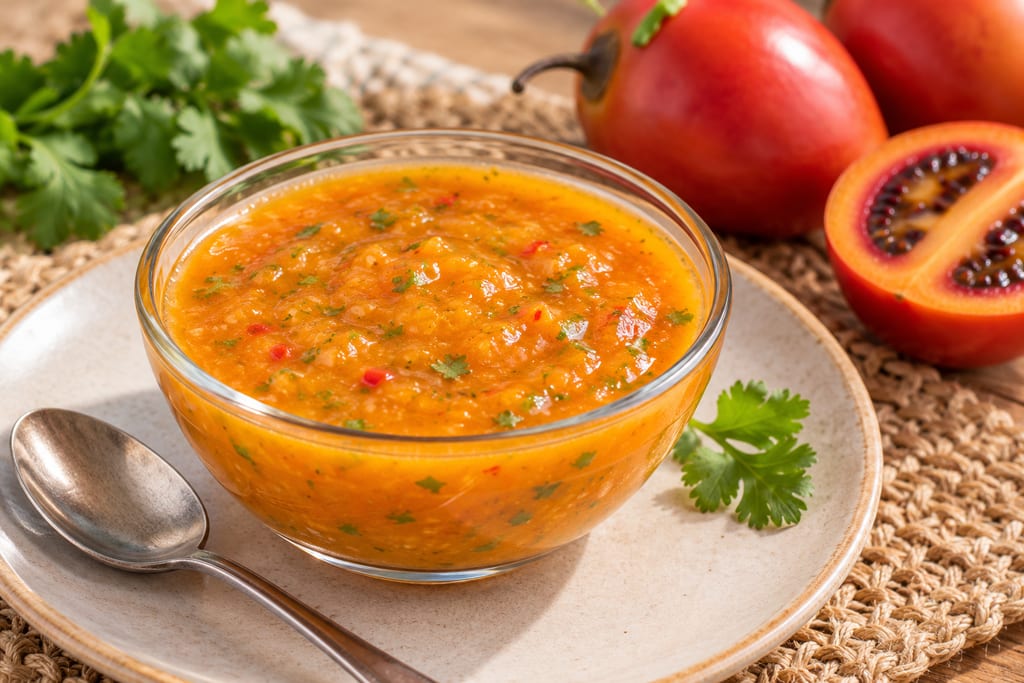
An Ecuadorian hot sauce built on tamarillo, a tart fruit that gives a sharper, fleshier base than ordinary tomato salsa.
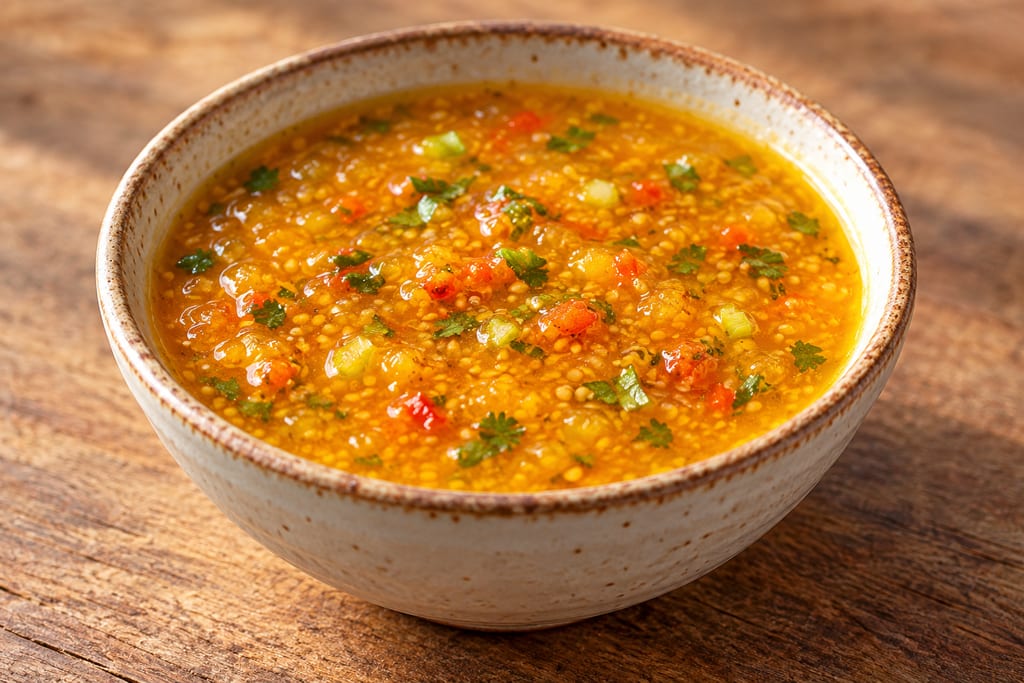
A sweet, tart and spicy Colombian sauce of uchuva, the yellow physalis fruit, with hot pepper, scallion, cilantro and lime.
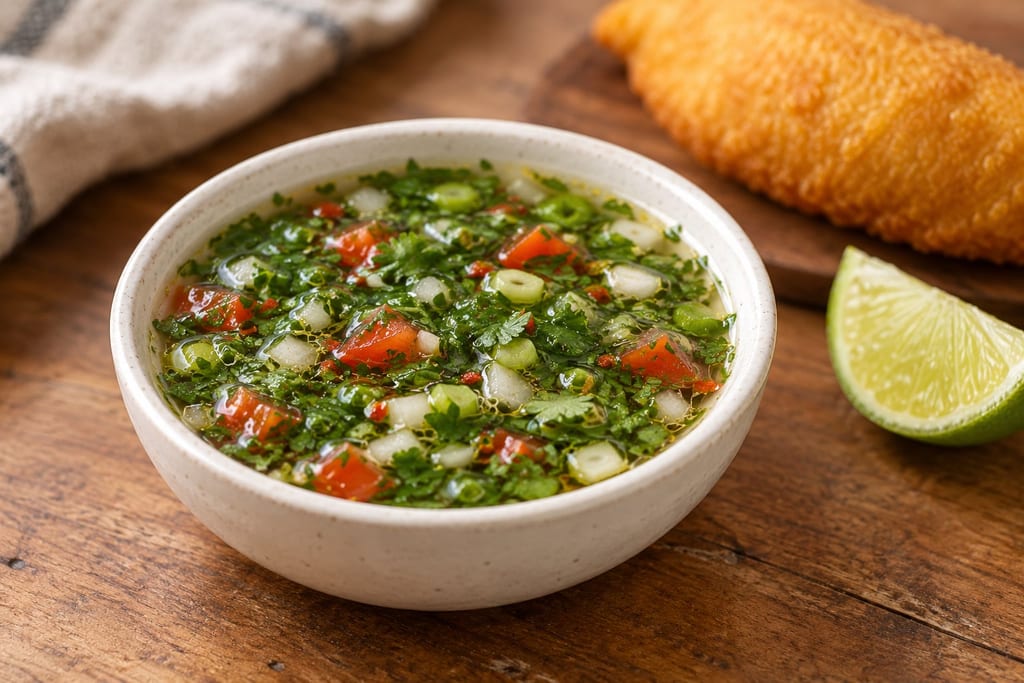
A fresh Colombian table condiment of chopped herbs, scallion and tomato in a vinegar and chile base, served beside fried and filled dishes.
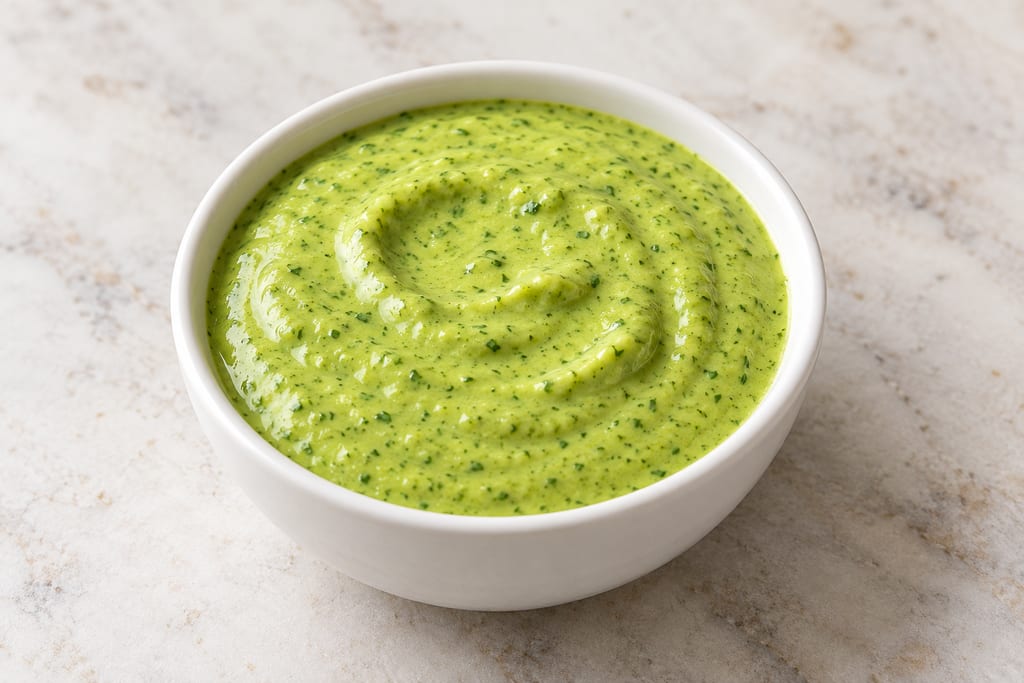
Ají verde is a Peruvian green sauce of coriander, chilli, onion and garlic in a mayonnaise or cheese base. It is best known through Peruvian restaurant cooking abroad.

Soft, spreadable Calabrian pork sausage made with a great deal of red chilli and fatty pork, stuffed into natural casings, sometimes smoked and matured while staying soft.

A way to add independent temperature logging to an existing food dehydrator without changing its built-in controls or protections. It is a monitoring method, not a rewiring plan.

Pleurotus cystidiosus is the abalone mushroom, a cultivated oyster-type fungus with dark brown caps that grows more slowly and is more demanding than other Pleurotus species.

A dark, balanced vinegar from Emilia-Romagna made by combining cooked or concentrated grape must with wine vinegar, then acetifying and refining it in wood under a protected specification.

A living dairy inoculum that starts controlled cream fermentation, developing acidity and aroma before sour cream or cultured butter is finished.

A small electric incubator holds jars at a selected temperature for yogurt and other documented warm food preparations. Controls, capacity and vessel arrangement vary by model.

Adygean salt is a seasoned table salt associated with Adygea and the wider North Caucasian culinary tradition. Salt is blended with garlic and a variable selection of herbs and spices; the exact mix depends on the named style and maker.

The African Caesar-group mushroom, Amanita masasiensis, is a wild ectomycorrhizal species of central and southern African woodlands, eaten locally. The genus contains deadly poisonous species, so identification needs care.
No community contributions have been published for this entry yet.
Sign in to contribute. Published comments and photos are free to read.
Chile TravelRecipe · Geography · Current use · Heat
Independence Day in Chile: Culture, Gastronomy and Traditional CelebrationsLists pebre as a sauce for seasoning food made with tomato, onion, cilantro, spicy ají, oil and salt; vinegar is optional.
Cited in: A family of condiments; Geography and history; Flavour and heat; Safety and limits
Ediciones Biblioteca Nacional / Biblioteca Nacional de ChileHistory · Geography · Variant · Method
Geografía gastronómica de Chile: artículos reunidos (1943–1994)The chapter “Estampa del pebre” identifies its original publication as En Viaje no. 290, December 1957, p. 32. It describes a family of finely chopped condiments, notes the southern name peure, and names regional variants including pebre en piedra and chancho en piedra. This establishes a mid-20th-century attestation, not the dish’s origin.
Cited in: A family of condiments; Geography and history; Safety and limits; Regional forms and the stone
Centro de Documentación de Bienes PatrimonialesGeography · Flavour · Heat · Current use
Los ingredientes de la cocina chilena tradicionalDescribes pebre as a fresh vegetable preparation accompanying asados and notes picante heat from fresh or dried green or red ají.
Cited in: Flavour and heat; Safety and limits
WikipediaHistory · Etymology · Variant · Serving
PebrePebre is chilled, made with coriander, parsley, onion, vinegar, oil, ají and usually tomato; eaten on bread, with meat or in choripán.
Catalan pebre means pepper; the Chilean sauce is linked to masons on the Mapocho walls under Toesca and named after ají.
A far-northern Chilean pebre resembles Bolivian llajwa.
Cited in: Where the word comes from; Regional forms and the stone; Eating it