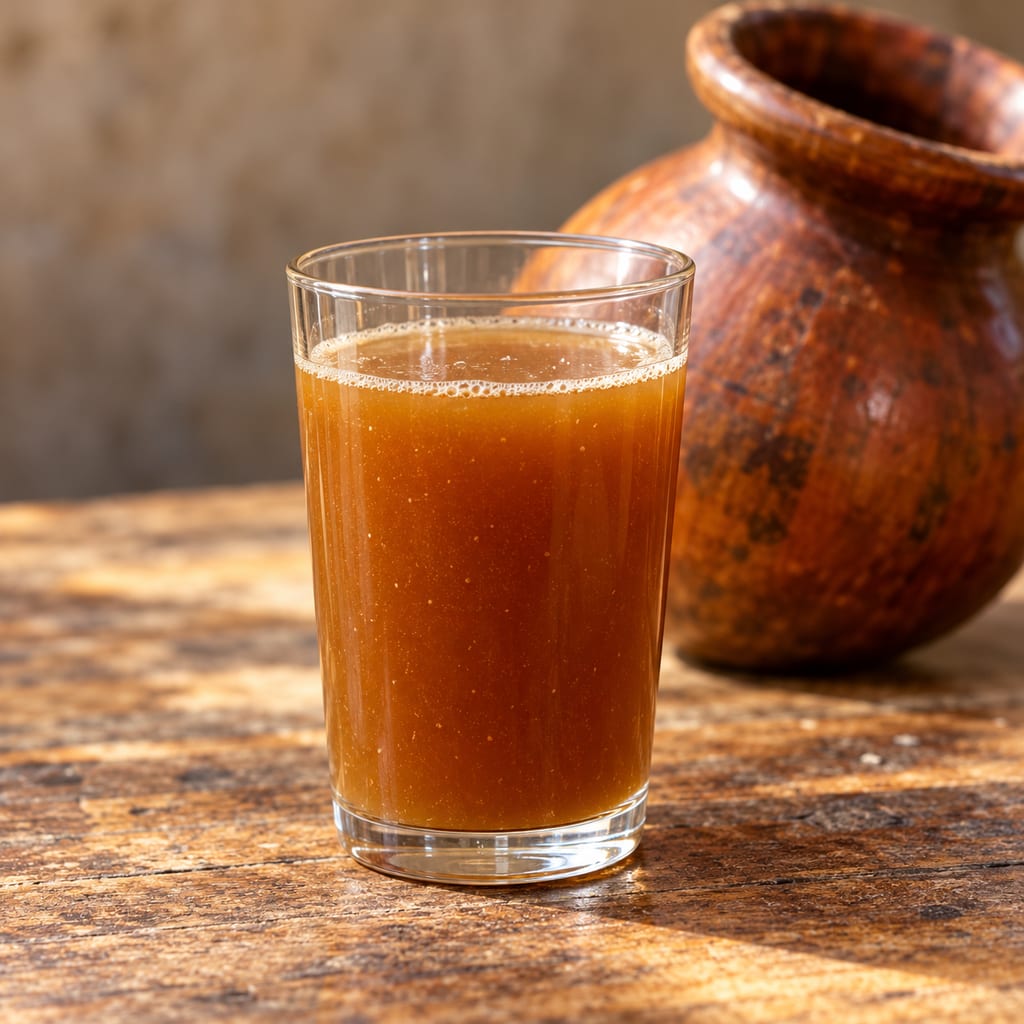
Brown maize tella from Mekelle
A darker Ethiopian maize tella, brewed from maize baked into a hot, dry kita pancake and then fermented in three stages with barley malt, gesho and water.
 FermenteaWhere food goes to change
Equipment · Jars, pots and crocks
Insira · insera · gan · gaanii · tella jar
An Ethiopian earthenware vessel used for stages of tella, a traditional cereal-based fermented drink. Sources describe clay insira jars alongside modern plastic alternatives and document washing and smoke preparation before brewing.
Tella is a traditional Ethiopian fermented beverage made from cereal ingredients, and its brewing jar is known as insira or insera. A review also records gan or gaanii for earthen fermentation vessels in some contexts. Names, vessel choices and methods are not uniform across Ethiopia, so these terms should not be read as a single standardized pot design. The studied vessel is a sizable clay jar with an accessible upper opening; a published study shows clay pots used for tella alongside plastic jars.
In the 2020 comparison conducted in Dessie and Kombolcha, researchers used 20-litre clay pots and 20-litre plastic jars. Those figures describe that experiment, not a universal capacity specification. The sources do not establish a standard profile, wall thickness, closure or manufacturing method.
Descriptions of tella preparation report repeated washing of the vessel with water and fresh grawa leaves, followed by smoke treatment. In one account, the clean vessel is inverted above smoldering splinters of weyra wood for roughly ten minutes. The literature describes this as customary preparation; it does not make the practice a general sanitation guarantee.
The jar is used through stages of brewing rather than only for storage. A review describes an initial mixture of gesho and water fermenting in a clay pot, followed by transfer or addition of further ingredients in a larger vessel during later stages. Household practice varies, and sources note that equipment, ingredients and process differ with region, community and economic conditions. Sources do not define one required lid or seal for every practice.
Plastic containers appear in contemporary tella production alongside traditional clay vessels. In the Dessie and Kombolcha study, researchers compared tella made in each material under local conditions. The findings describe that experiment only: they do not prove clay always produces a better beverage or that vessel material alone explains differences in every household or region. A later review likewise emphasizes variation in methods and the lack of a single national standard.
The evidence supports an earthenware brewing jar as a traditional form, but does not establish when it first came into use, a universal size or one exact shape. It also does not support burying the jar. This entry records documented material, names and preparation context while leaving uncertain dimensions and acquisition routes unspecified.
Country-level documentation of tella brewing; the comparison study specifically examined households in Dessie and Kombolcha. No more specific origin is claimed.
A darker Ethiopian maize tella, brewed from maize baked into a hot, dry kita pancake and then fermented in three stages with barley malt, gesho and water.

A pale Ethiopian maize tella, brewed from maize baked into a kita pancake at a gentler heat and then fermented in three stages with barley malt, gesho and water.
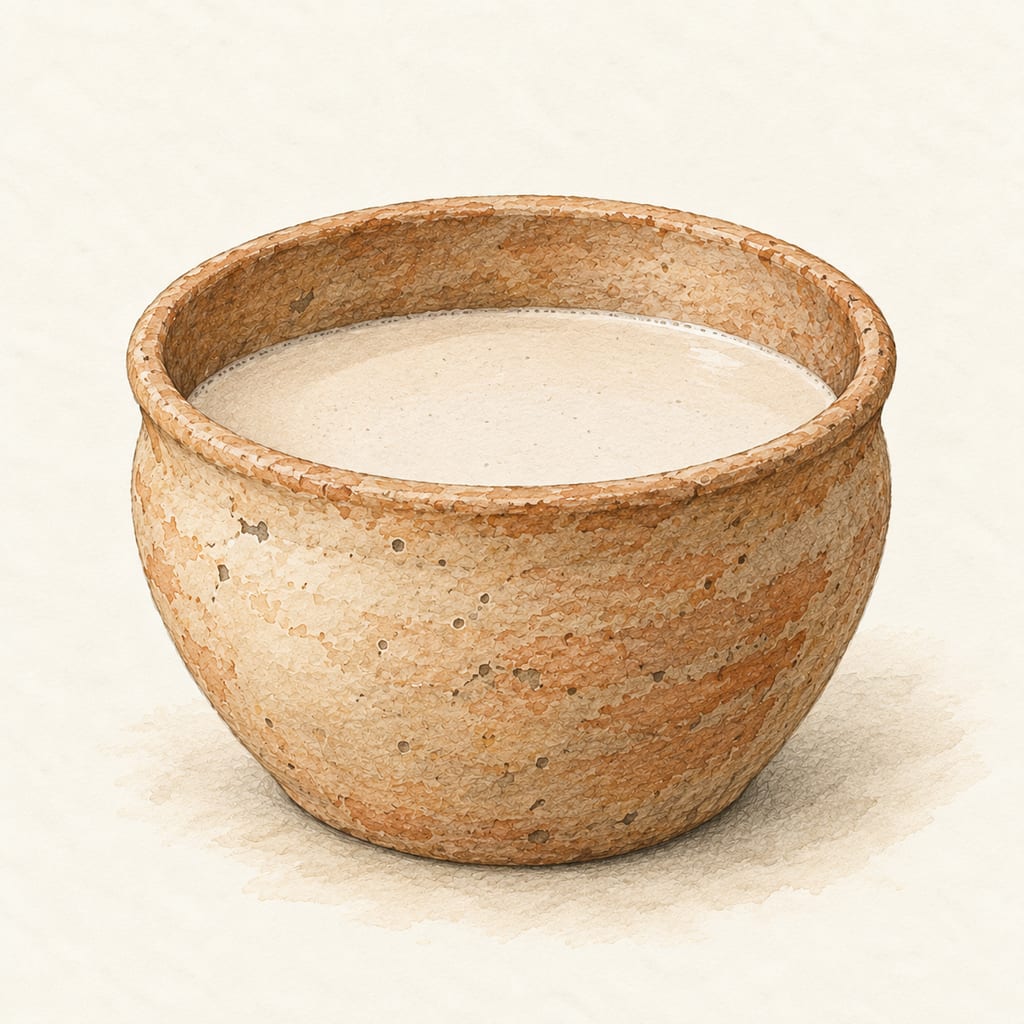
A wide-access vessel holds injera batter through successive fermentation stages. Ethiopian accounts describe clay vessels historically and metal, wood or plastic containers in contemporary kitchens.
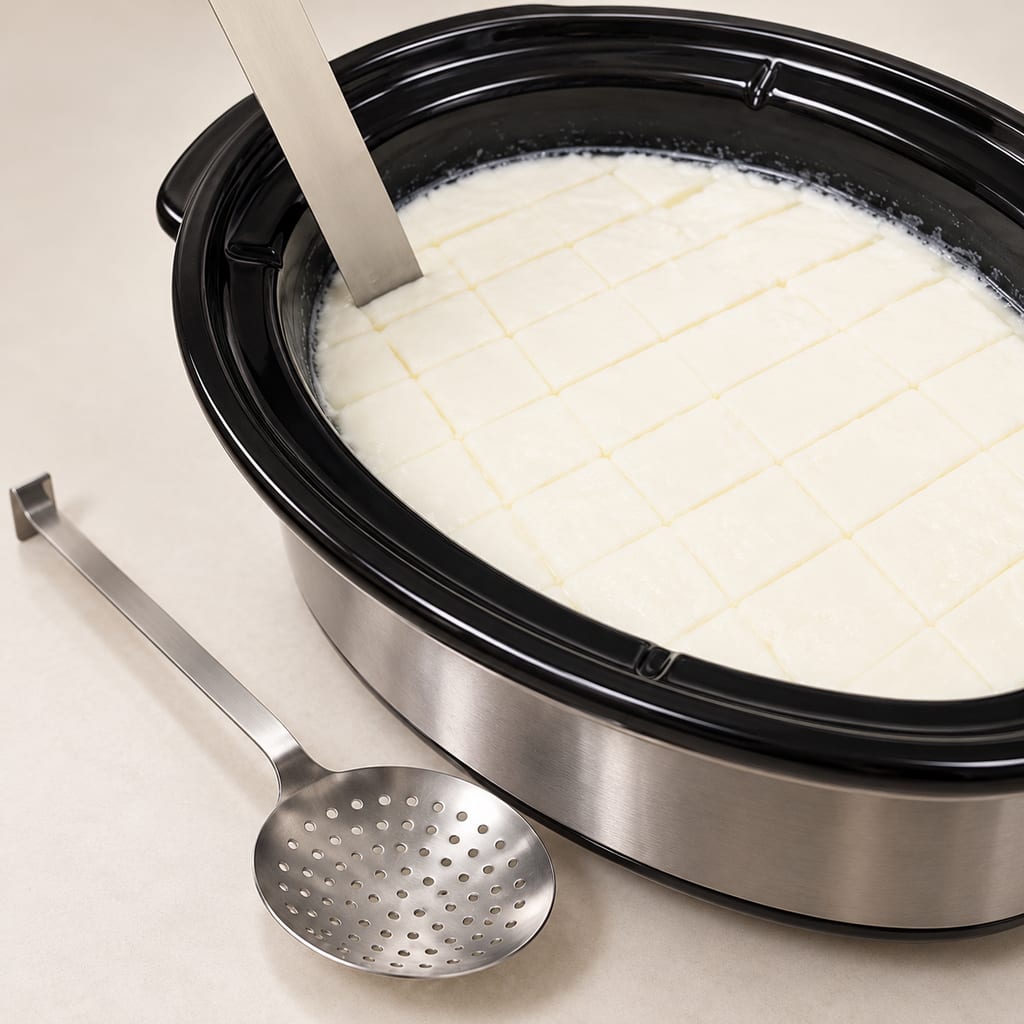
A curd knife cuts set milk into recipe-sized pieces; a perforated ladle lifts and moves curd while whey drains. The hand tools work at different moments in an open cheesemaking vessel.
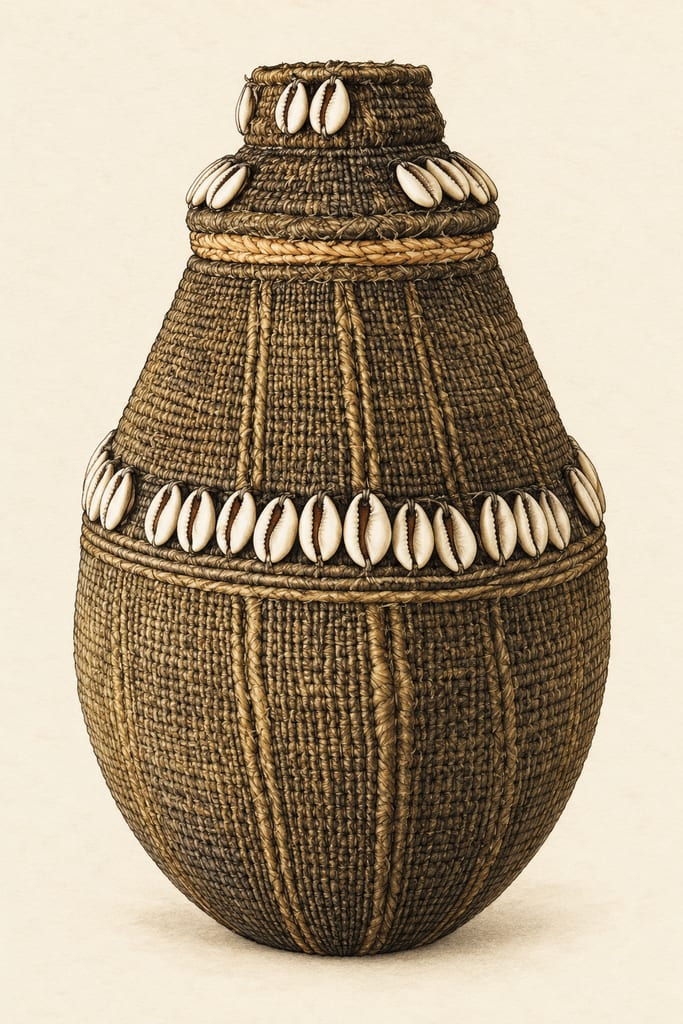
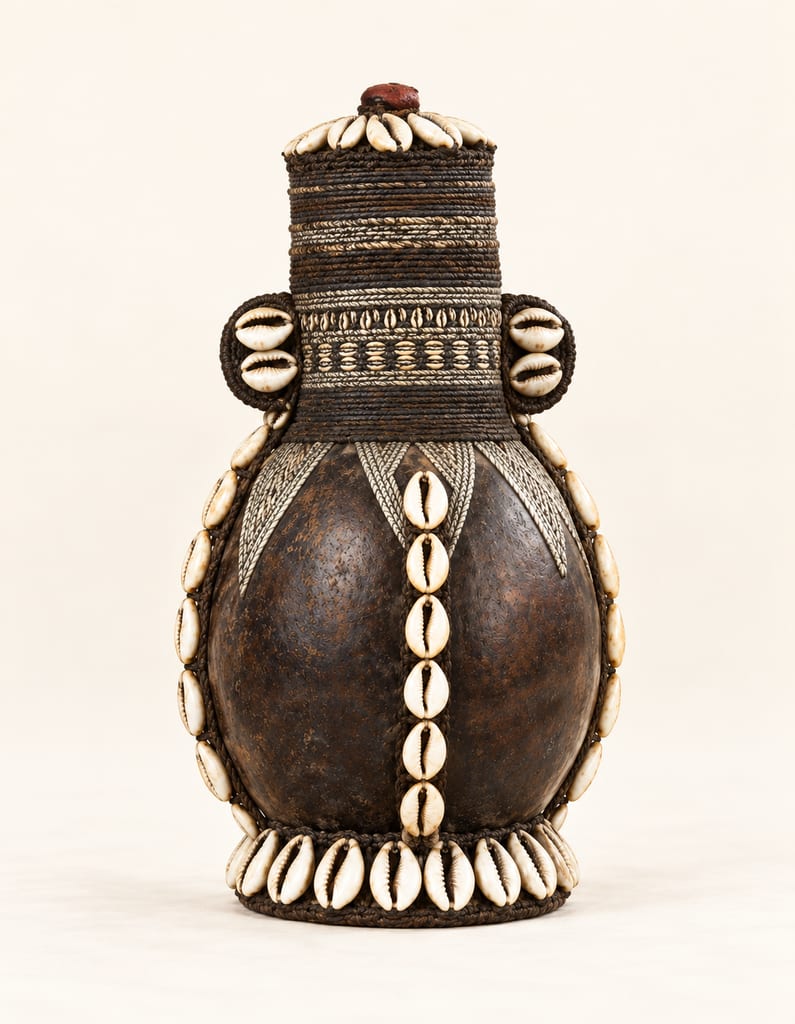
The Borana gorfa is a pear-shaped milk vessel used in southern Ethiopia to sour milk and churn it into butter. Sources document woven fiber and smoke treatment; one museum specimen also records gourd and cowrie-shell materials.
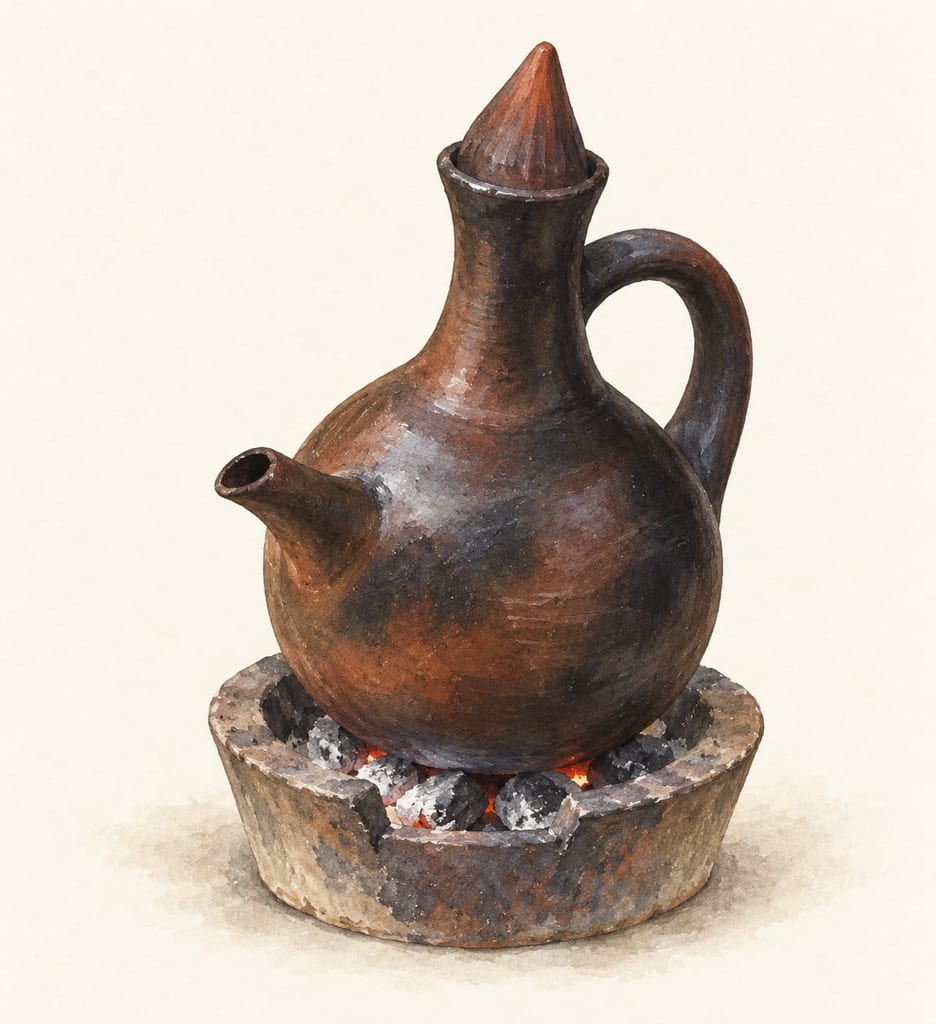
The jebena is an Ethiopian terracotta coffee pot, typically rounded at the body and narrow through the neck. It brews coffee over a fire and serves a communal ceremony; materials, profiles and household practices vary.
Ethiopian milk fermentation uses a family of vessels—calabashes, clay pots, fibre vessels and hollowed wood—whose interiors may be smoked before filling. Forms and roles vary by community and stage.
No community contributions have been published for this entry yet.
Sign in to contribute. Published comments and photos are free to read.
Journal of Ethnic Foods / Springer NatureMethod · Context
Preparation method and physicochemical characteristics of Tella: an Ethiopian fermented beverageTella is an Ethiopian cereal-based fermented beverage; vessels, ingredients and methods vary.
Traditional brewing uses clay insira pots; plastic buckets are also used more recently.
Containers may be washed with grawa leaves and water, then inverted over smoldering weyra splinters for approximately ten minutes.
The review describes multiple fermentation stages and no single national brewing standard.
Abyssinia Journal of Science and TechnologyMethod · Equipment · Image
Preparation and Quality Evaluation on Local Beverage (Tella) Prepared with Clay Pot (Insira) and Plastic Jar in North-Eastern EthiopiaThe study used 20 L clay insira pots and 20 L plastic jars in Dessie and Kombolcha.
It describes washing with water and grawa leaves and fumigating with weyra wood splinters for about ten minutes.
Its figure shows clay pots prepared for tella beside plastic vessels; findings are limited to those study settings.
The article's figure is identified as CC BY-NC 4.0; attribute it and retain the noncommercial limitation.
International Journal of Microbiology / WileyNames · Context
Ethiopian Indigenous Traditional Fermented Beverage: The Role of the Microorganisms toward Nutritional and Safety Value of Fermented BeverageThe review gives inséra as Amharic and gaanii as Afaan Oromo names for the earthen clay tella fermenter.
It documents washing with grawa leaves and smoking with weyra wood before preparation.