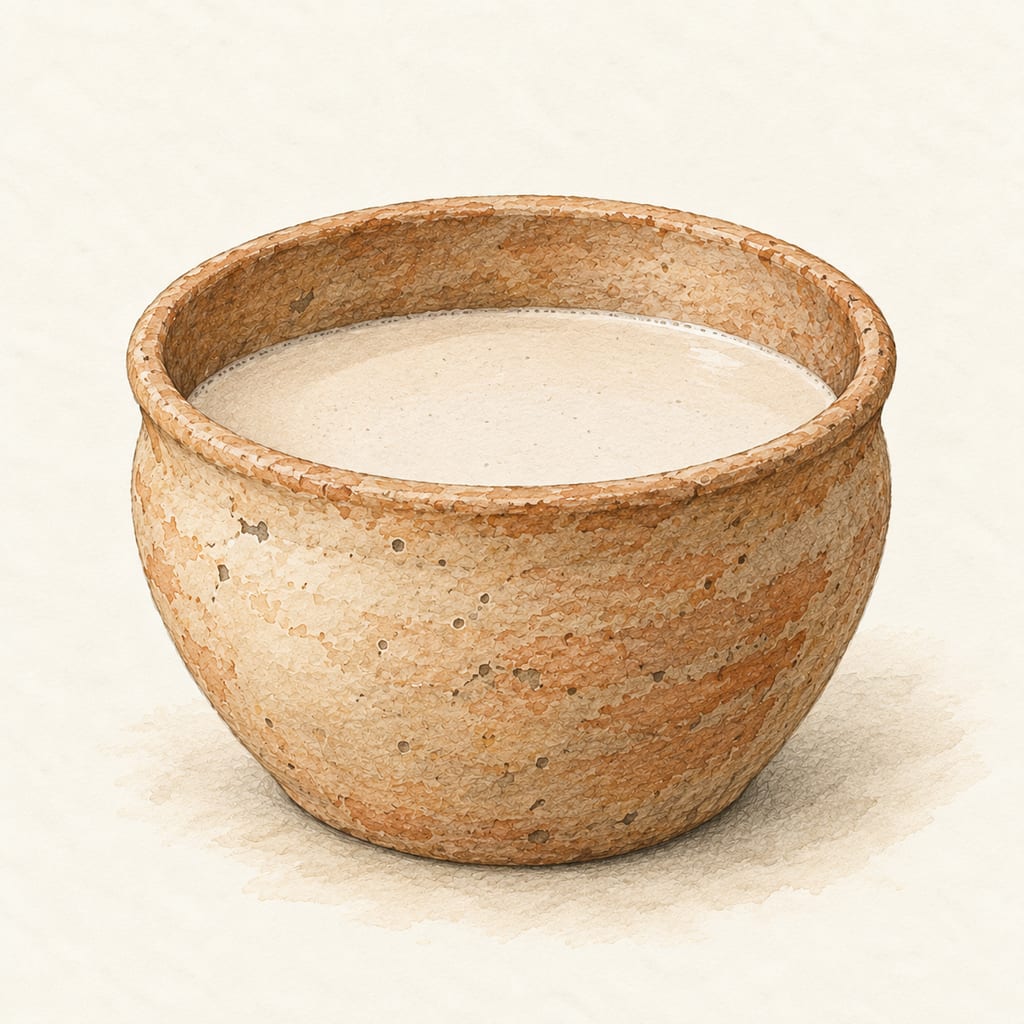
Bohaka injera dough container
A wide-access vessel holds injera batter through successive fermentation stages. Ethiopian accounts describe clay vessels historically and metal, wood or plastic containers in contemporary kitchens.
 FermenteaWhere food goes to change
Equipment · Jars, pots and crocks
djebena · jabena · Ethiopian coffee pot
The jebena is an Ethiopian terracotta coffee pot, typically rounded at the body and narrow through the neck. It brews coffee over a fire and serves a communal ceremony; materials, profiles and household practices vary.
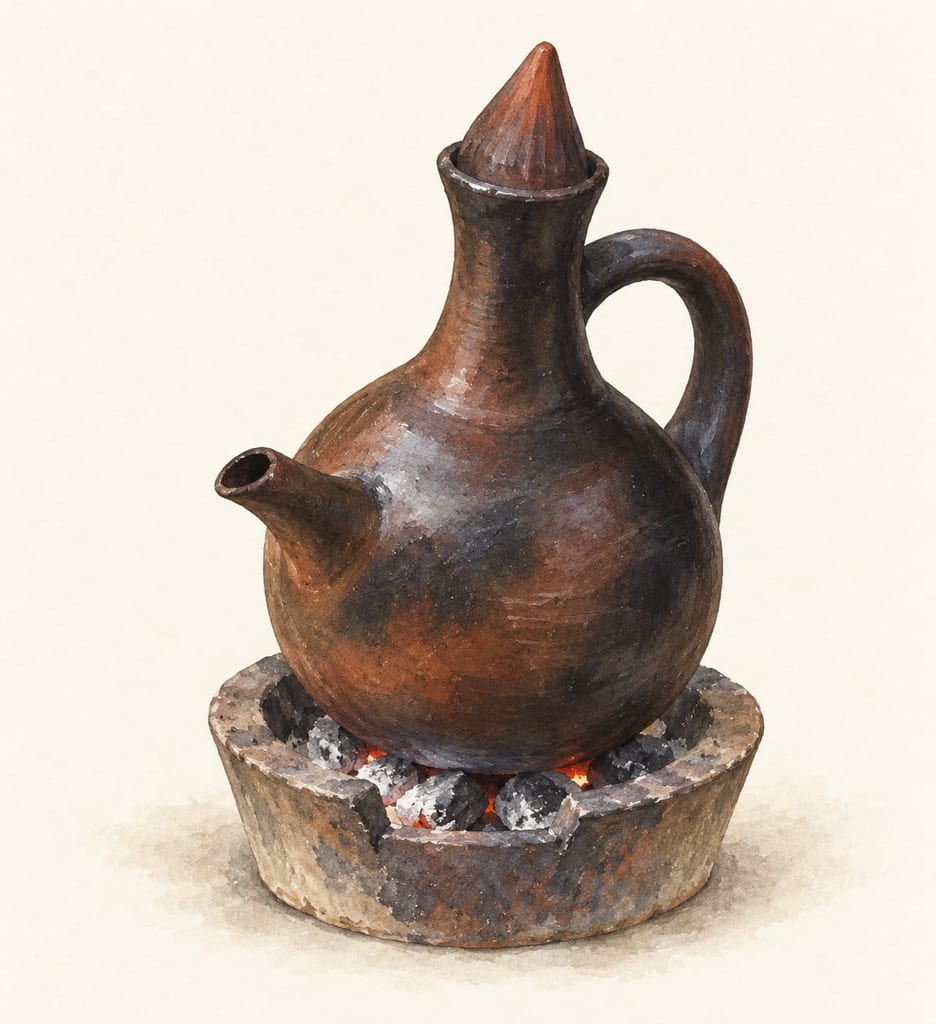
The jebena is an earthen coffee pot associated with Ethiopia's coffee-making and serving traditions. UNESCO anthropologist Éloi Ficquet calls it a terracotta cafetière with a rounded belly and long neck. A museum example from Addis Ababa, dated to about 1968, is also identified as a terracotta coffee pot used to boil freshly ground coffee and water. The object is recognizable by its bulbous lower body and narrowing neck, but photographs and descriptions do not prove one standardized profile.
Many modern descriptions add a handle and a small pouring spout to this basic outline. Eater writer Kifaya Ture describes spherical-bodied clay pots with a long neck and swooping handle, made in red or black clay; the 2023 Wikimedia Commons photograph shows one dark, rounded vessel with neck, spout and handle. These are individual examples. The sources do not supply universal dimensions, capacity, clay composition, glazing or potter's marks.
The jebena holds water and ground coffee while the brew is heated over a fire. In Ficquet's account, water goes into the terracotta pot and is set on the fire while the beans are ground; the grounds are added and the mixture is brought briefly back to a boil. The museum's object caption likewise identifies the vessel as a pot for boiling freshly ground coffee and water, with grounds settling so the brew can be poured.
That account does not turn the jebena into a filtered brewer. The coffee grounds remain in the vessel; settling and careful pouring separate the drink from much of the sediment. Ture describes tipping the pot toward a small matot stand so grounds settle into the body's curve before coffee is poured. This gravity-based arrangement depends on the pot's body, neck, spout and handling, rather than a paper filter or electric pump. Details vary among households and accounts.
Roasting and grinding happen before the jebena brews. UNESCO describes green beans roasted until fragrant and then ground in a mortar; the Phoebe A. Hearst Museum's separate object record describes a wooden mukecha and zenezena used for hand grinding. The pot is one element in a chain of work, not the whole coffee apparatus. A tray, small handleless cups, an incense burner or serving stand may accompany a ceremony, but those objects are separate and not built into every jebena.
Ficquet describes three successive services called abol, tona and baraka. After the first pour, water is added to the grounds left in the pot and reheated for another service; a later third service may follow. The coffee ritual is social as well as practical: guests share the aroma of roasted beans, and the order of serving can acknowledge age and respect. Practices vary by household.
Clay and terracotta are the recurring materials in the sources. Ture reports handmade pots in red or black clay, and notes that the pot is seasoned over a coal fire. Decoration may be incised or molded; the article says some patterns may indicate where a jebena was produced. That is a reported possibility, not a key for assigning every design to a place. UNESCO's and the museum's accounts do not give a single firing method or identify a workshop.
Form also adapts to handling. A rounded belly contains the brewing liquid and grounds, while the neck and pouring lip direct the stream. A handle provides a place to lift the heated vessel; some households use a straw matot to support it when it is tipped to settle grounds. These observations come from described examples, not a dimensional engineering standard. The linked reference image documents one pot at a charcoal brazier, while the hero illustration simplifies the same source-grounded material and form.
UNESCO describes coffee as present in Ethiopian daily life, from home gatherings to street-side service and public ceremonies. It records the ceremony as a place for visitors, conversation and hospitality, and discusses the names and successive services within that social setting. The dated Addis Ababa museum pot gives a specific twentieth-century material record, but it does not establish when the jebena was invented or how long one exact form has been used.
Eater's first-person account also describes the jebena among Ethiopian and Eritrean households and diaspora communities. This page focuses on the documented Ethiopian use named by the item and does not flatten regional and cross-border practice into a single design. A jebena is both a heating vessel and a familiar object through which coffee preparation and shared time are organized; the sources do not establish a single recipe, size or ceremonial script.
UNESCO describes present Ethiopian coffee ceremony practice, while the Phoebe A. Hearst Museum of Anthropology records a terracotta jebena-like coffee pot from Addis Ababa, ca. 1968.
Rounded body and long neck are recurring descriptions, not measurements or a universal pattern. The sources do not establish one shape or capacity for every maker or region.
Source →The ceremony and preparation sequence vary. UNESCO and first-person accounts describe related steps differently, so this equipment record does not prescribe one recipe.
Source →Country-level documentation only; this does not claim the vessel originated in Ethiopia or that every region uses one profile.
A wide-access vessel holds injera batter through successive fermentation stages. Ethiopian accounts describe clay vessels historically and metal, wood or plastic containers in contemporary kitchens.
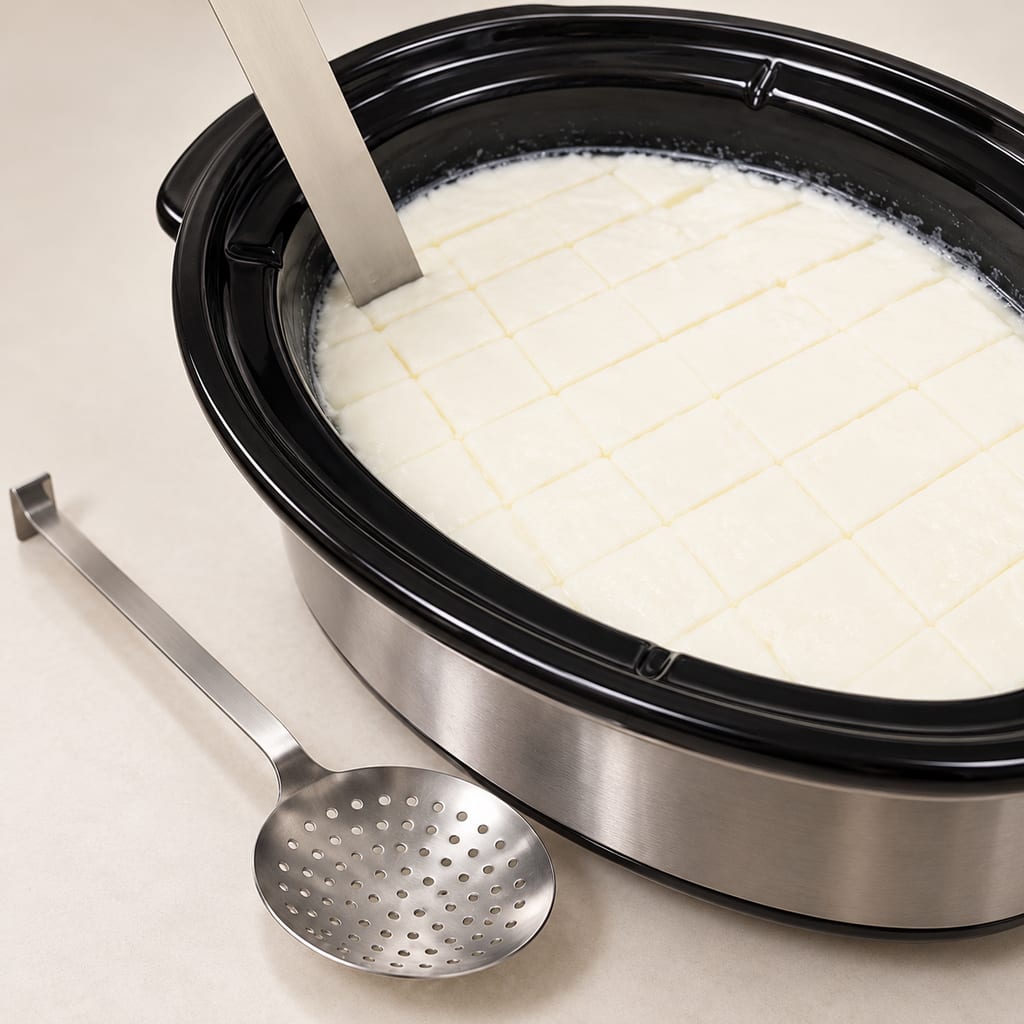
A curd knife cuts set milk into recipe-sized pieces; a perforated ladle lifts and moves curd while whey drains. The hand tools work at different moments in an open cheesemaking vessel.
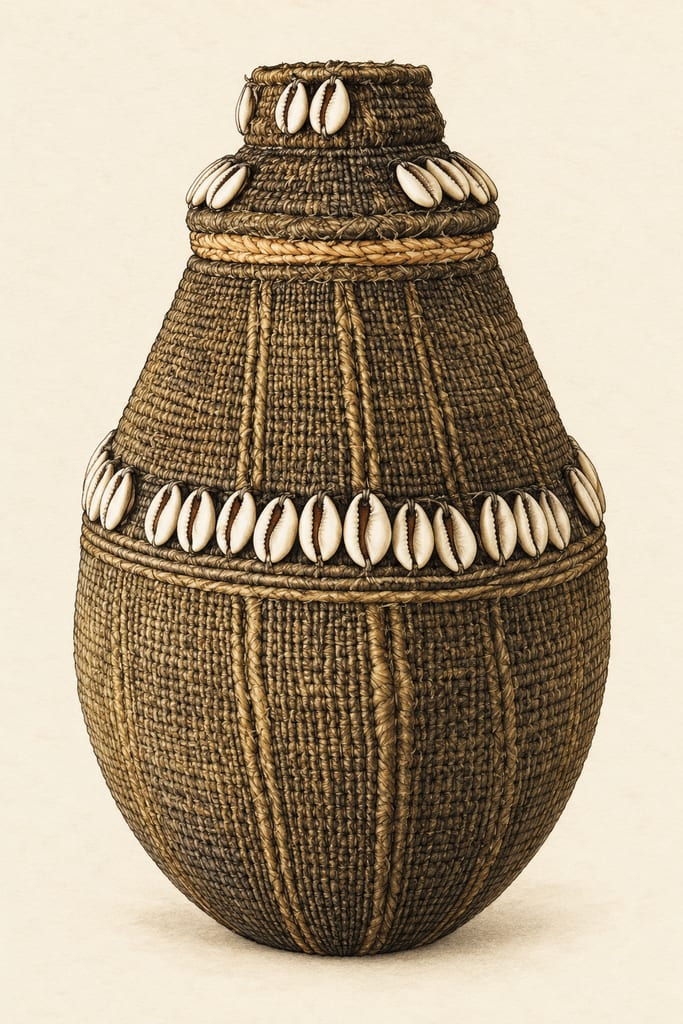
The Borana gorfa is a pear-shaped milk vessel used in southern Ethiopia to sour milk and churn it into butter. Sources document woven fiber and smoke treatment; one museum specimen also records gourd and cowrie-shell materials.
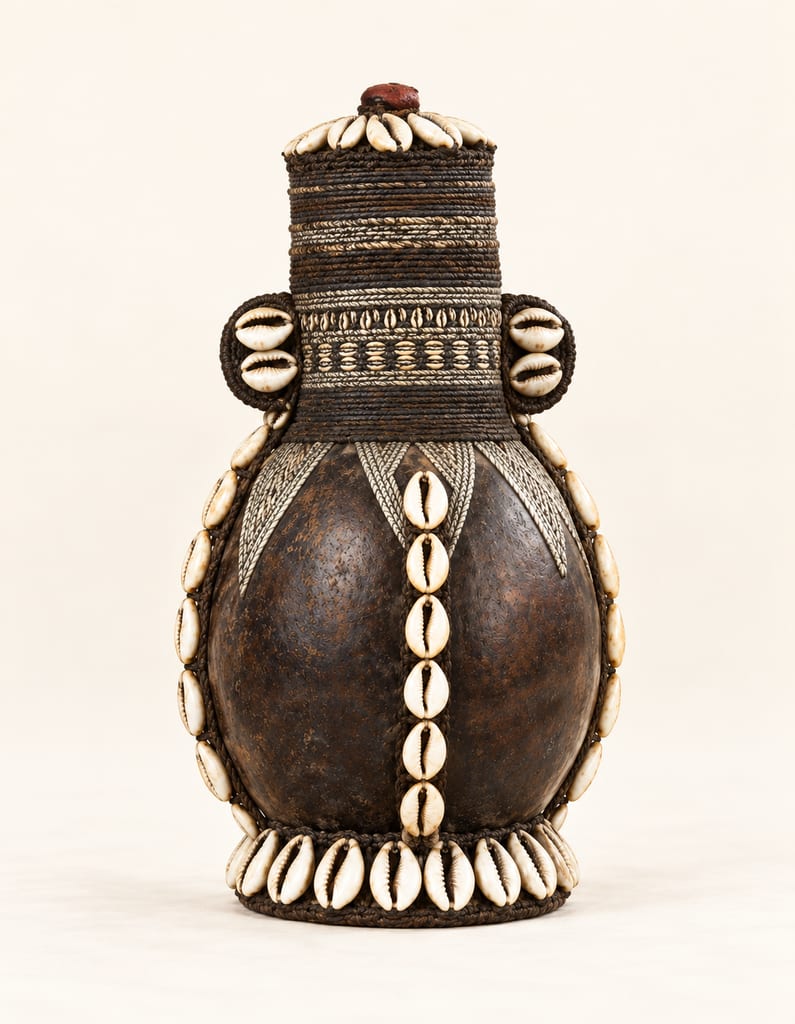
Ethiopian milk fermentation uses a family of vessels—calabashes, clay pots, fibre vessels and hollowed wood—whose interiors may be smoked before filling. Forms and roles vary by community and stage.
An Ethiopian earthenware vessel used for stages of tella, a traditional cereal-based fermented drink. Sources describe clay insira jars alongside modern plastic alternatives and document washing and smoke preparation before brewing.
No community contributions have been published for this entry yet.
Sign in to contribute. Published comments and photos are free to read.
UNESCO CourierEquipment · Method · Geography · History
Ethiopia, the home of coffeeFicquet describes the djebena as a terracotta coffee pot with rounded belly and long neck, filled with water and placed on a fire; ground coffee is added and briefly returned to a boil.
The article describes three successive coffee services, with water reheated over the remaining grounds for a second and later service.
The account describes coffee as part of everyday Ethiopian social life and documents the ceremony across households and public settings.
Cited in: A brewing pot with a distinctive profile; How the pot works; Part of a longer coffee ceremony; Material, making and variation; An Ethiopian record, across households and diaspora
Phoebe A. Hearst Museum of Anthropology, University of California, BerkeleyEquipment · History · Geography
People & Plants: Substances Online ExhibitThe museum exhibit identifies a terracotta jebena used to boil freshly ground coffee and water, with coffee grounds settling before pouring.
The exhibit dates its Addis Ababa coffee-pot object to about 1968, object number 5-8413; this is a dated example, not an origin date for the form.
The exhibit separately describes a wooden mortar and pestle for grinding coffee; those tools are not part of the jebena itself.
Cited in: A brewing pot with a distinctive profile; How the pot works; Part of a longer coffee ceremony; An Ethiopian record, across households and diaspora
EaterEquipment · Method · Culture
With an Ethiopian Jebena, You Can Actually Stop for a Coffee BreakTure describes a jebena with a rounded body, long neck and swooping handle, handmade from red or black clay; forms and decoration vary.
The personal account describes a matot as a small straw stand and explains how settling and tilting the pot help pour without disturbing grounds.
The article describes coffee preparation and repeated services as a communal household practice, while identifying variation in methods.
Cited in: A brewing pot with a distinctive profile; How the pot works; Part of a longer coffee ceremony; Material, making and variation; An Ethiopian record, across households and diaspora
Wikimedia CommonsImage reference · Equipment · Geography
File:Ethiopian traditional coffee pot (Jebena).jpgThe 2023 photograph is identified as an Ethiopian traditional coffee pot and shows one dark clay jebena on a charcoal brazier.
The file page lists the image as the uploader's own work and licenses it CC BY-SA 4.0; the photo informs this page's linked gallery and source-grounded illustration.
Cited in: A brewing pot with a distinctive profile; Material, making and variation