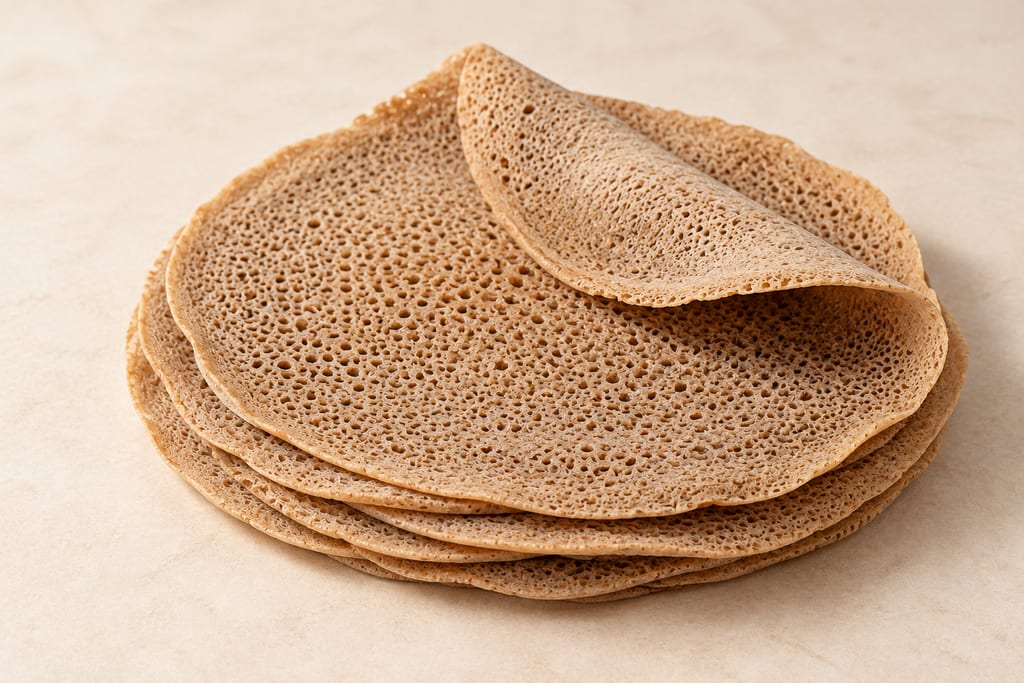
Teff injera with saved ersho and absit
A two-stage Ethiopian teff injera method begins with saved ersho, ferments the main batter beneath refreshed surface water, then adds cooked absit before a final warm rest and griddle baking.
 FermenteaWhere food goes to change
Equipment · Tanks and vats
A wide-access vessel holds injera batter through successive fermentation stages. Ethiopian accounts describe clay vessels historically and metal, wood or plastic containers in contemporary kitchens.
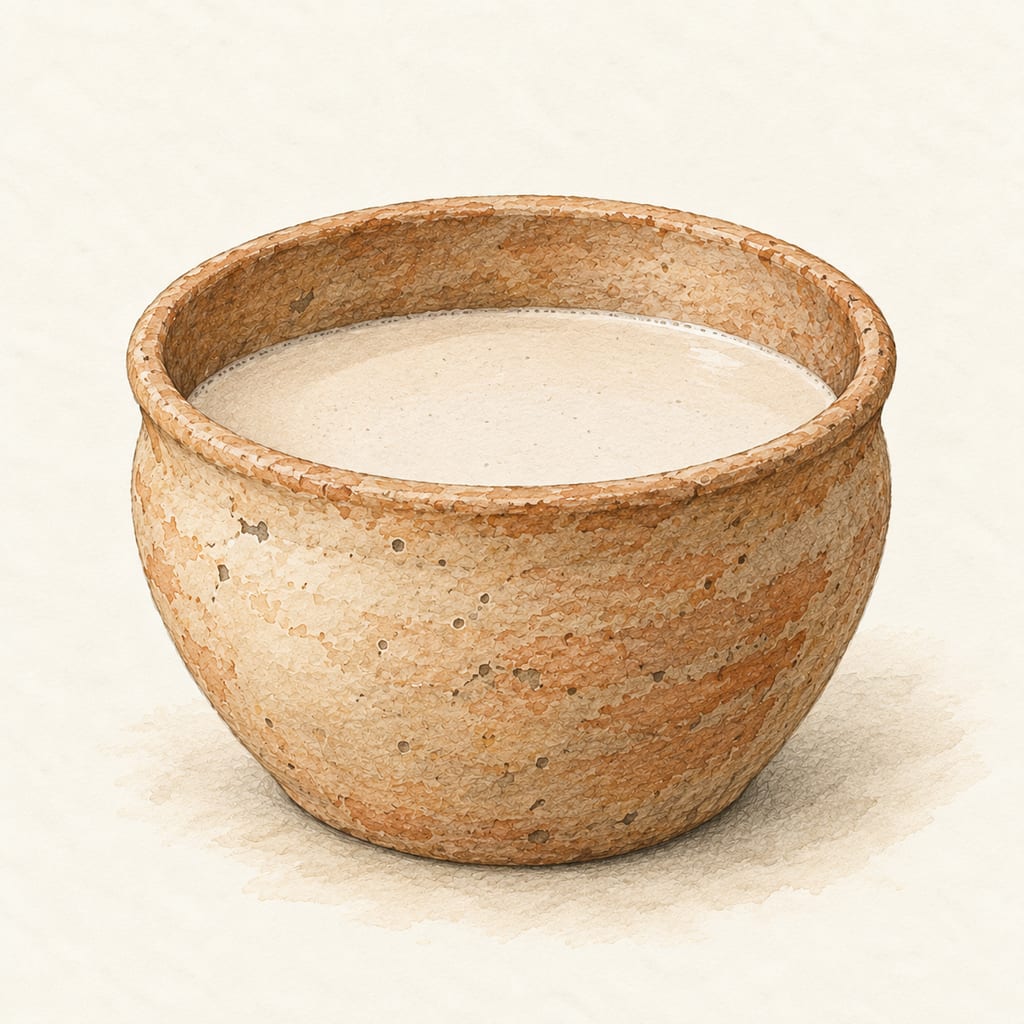
Bohaka is the name given in the supplied vessel atlas to a wide-access container used for injera dough. It belongs to the fermentation stage: the batter rests in it and is handled between successive stages. The mitad is the separate flat cooking griddle, while a mesob is a serving stand. Keeping these objects distinct matters because the container holds a living batter; the griddle cooks the finished rounds. The evidence does not establish a single standard shape, capacity or construction for every bohaka.
The vessel atlas records clay as a historical material and metal, wood and plastic as contemporary alternatives, without giving a date for the change or ranking the materials. A household account from Ethiopia documents flour and water mixed in a bucket and left to ferment, identifying the term balee for that bucket. Its photograph shows a broad plastic bucket with a separate lid while the batter is stirred. This is evidence for one modern household vessel and use, not proof that every Ethiopian dough container has that form or name.
Injera preparation uses fluid ersho, retained from an earlier fermented batch, as a starter. The vessel holds the flour-and-water mixture through successive fermentation stages. Laboratory research on teff injera dough identified lactic acid bacteria and yeasts among dominant organisms in the studied fermentation. Those findings describe the tested dough and do not make the container itself a defined starter culture. A vessel can retain material between batches, but no cleaning schedule or safety claim follows from that observation; the cited process review and study do not provide a general vessel-care protocol.
The feature established by these sources is access: the container can be mixed and worked through batter preparation, and the household photograph shows an open bucket with a separate cover. Neither study nor atlas gives capacity, dimensions, wall treatment or an exact vessel temperature. The vessel is associated with injera fermentation in Ethiopia, but the sources do not support assigning it a precise birthplace or claiming that one material produces better bread. The published injera preparations linked to this page give readers practical methods; this equipment record explains the holding vessel rather than replacing them.
The evidence locates injera preparation and the photographed household use in Ethiopia; it does not locate a precise origin.
A two-stage Ethiopian teff injera method begins with saved ersho, ferments the main batter beneath refreshed surface water, then adds cooked absit before a final warm rest and griddle baking.
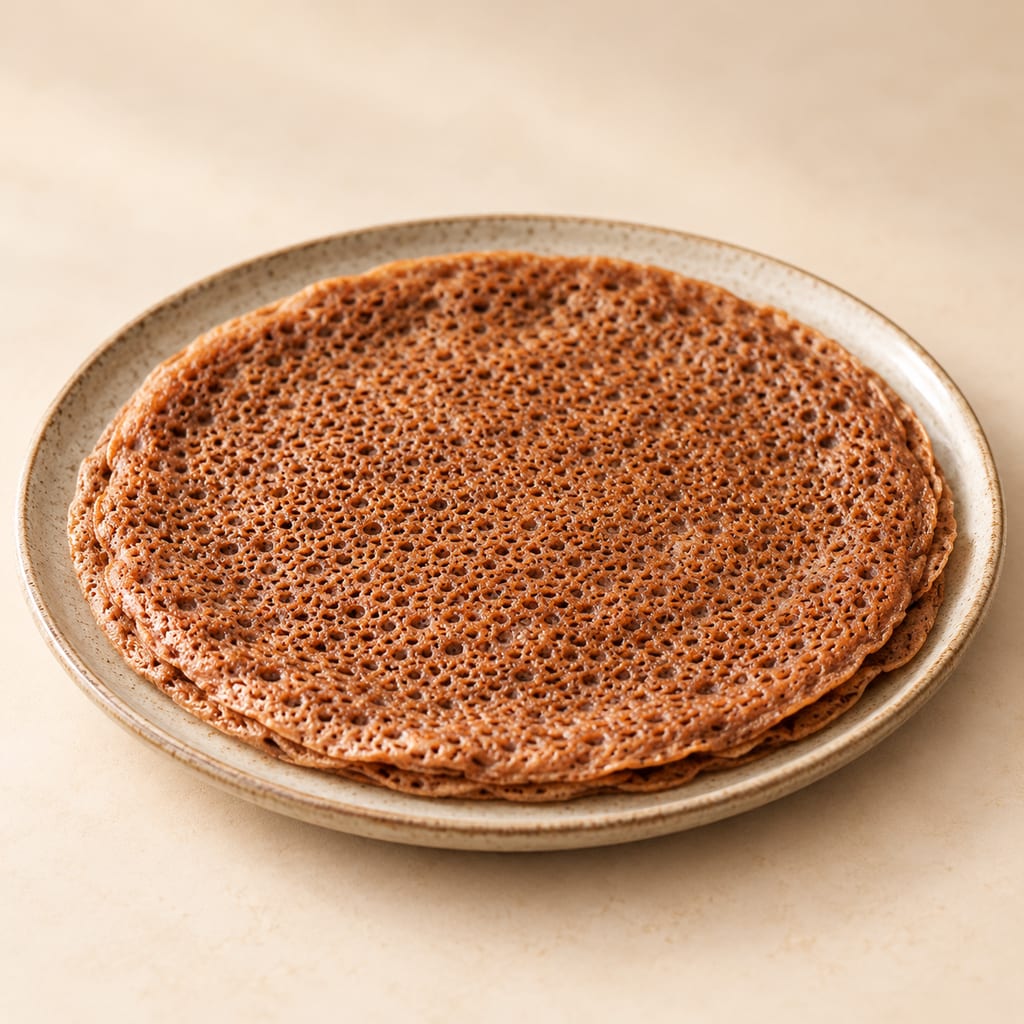
A modern home adaptation of Ethiopian injera using a 24-hour fermentation window. This method balances traditional souring with accessible ingredients like baking powder or starter cultures to achieve the characteristic porous texture.
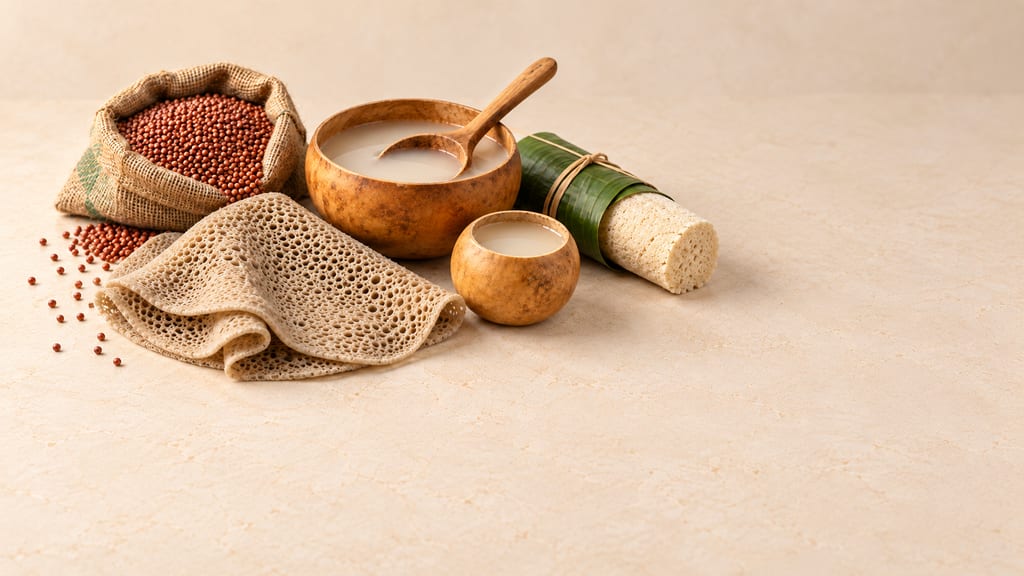
From sour breads and milk to savoury seeds, cassava staples and living beers, African fermentation follows the crop, the community and the work of transformation.
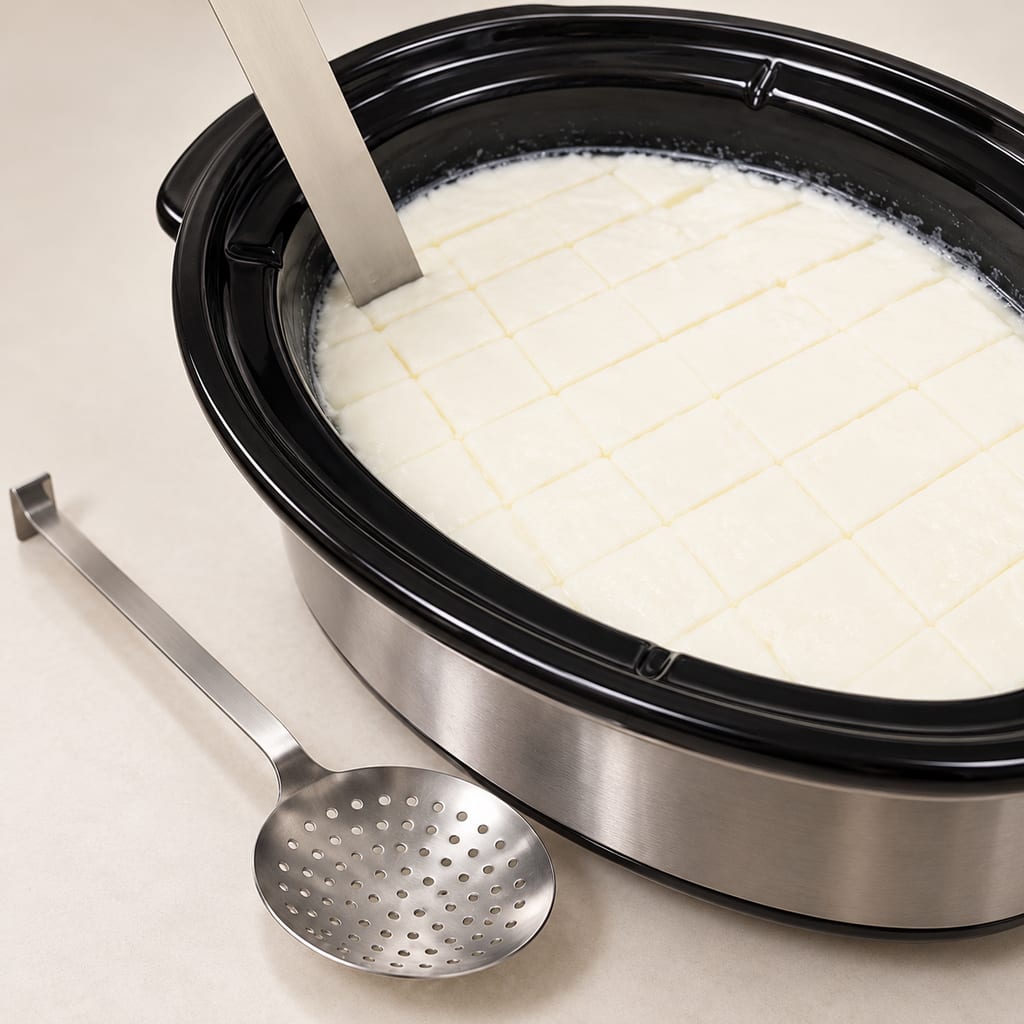
A curd knife cuts set milk into recipe-sized pieces; a perforated ladle lifts and moves curd while whey drains. The hand tools work at different moments in an open cheesemaking vessel.
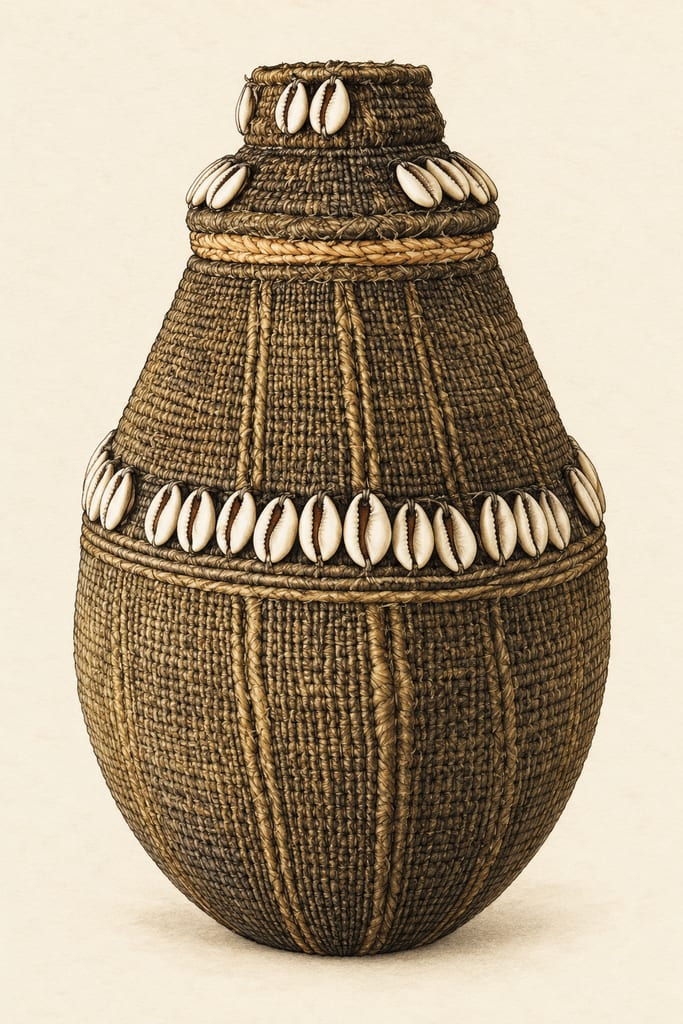
The Borana gorfa is a pear-shaped milk vessel used in southern Ethiopia to sour milk and churn it into butter. Sources document woven fiber and smoke treatment; one museum specimen also records gourd and cowrie-shell materials.
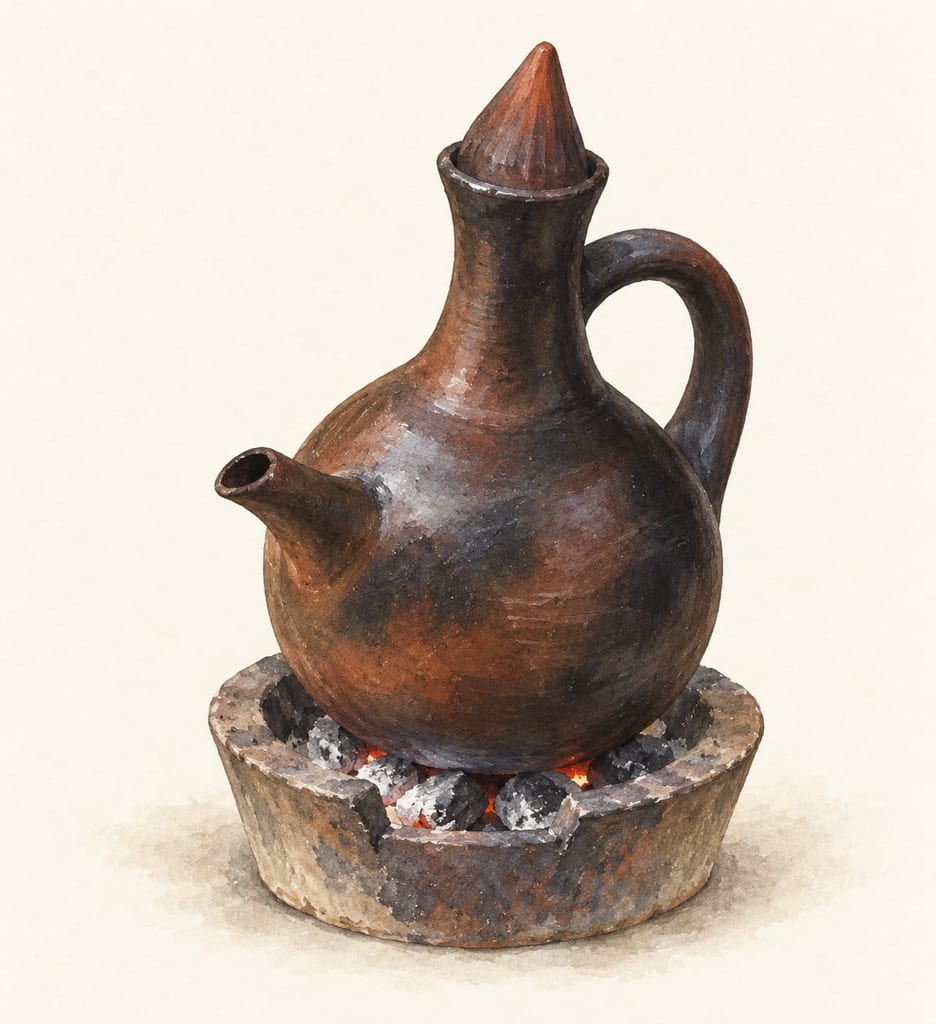
The jebena is an Ethiopian terracotta coffee pot, typically rounded at the body and narrow through the neck. It brews coffee over a fire and serves a communal ceremony; materials, profiles and household practices vary.
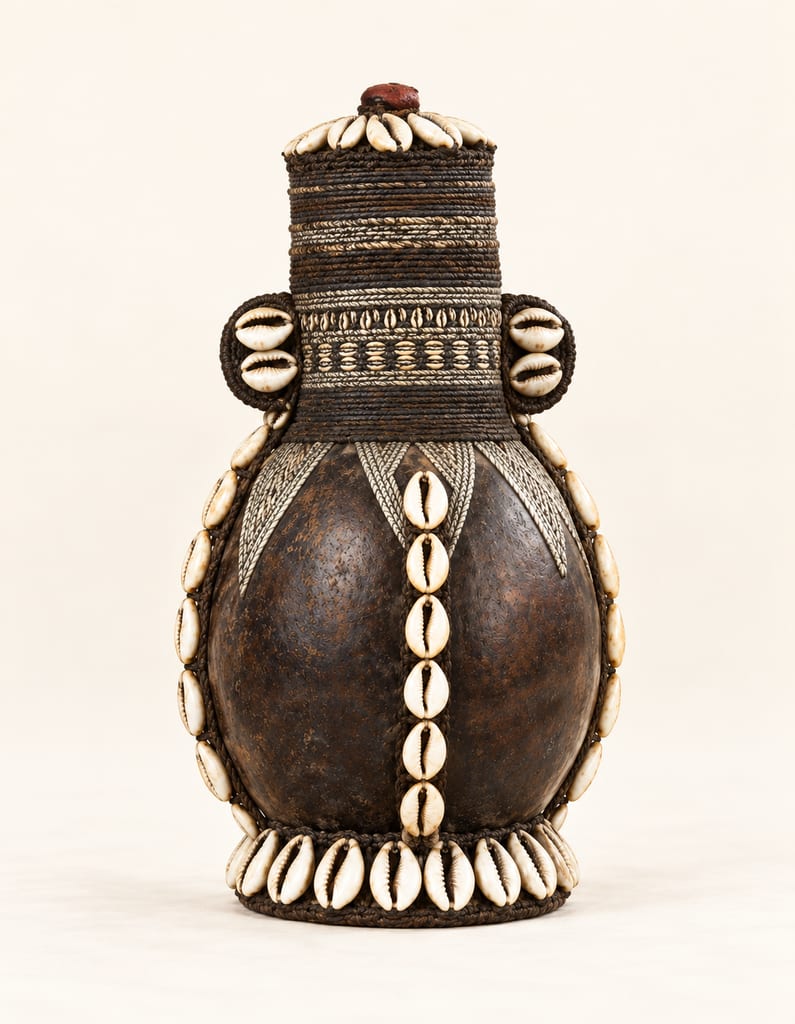
Ethiopian milk fermentation uses a family of vessels—calabashes, clay pots, fibre vessels and hollowed wood—whose interiors may be smoked before filling. Forms and roles vary by community and stage.
An Ethiopian earthenware vessel used for stages of tella, a traditional cereal-based fermented drink. Sources describe clay insira jars alongside modern plastic alternatives and document washing and smoke preparation before brewing.
No community contributions have been published for this entry yet.
Sign in to contribute. Published comments and photos are free to read.
Journal of Ethnic Foods; Satheesh Neela and Solomon Workneh FantaProcess · Terminology · Equipment
Injera (An Ethnic, Traditional Staple Food of Ethiopia): A review on Traditional Practice to Scientific DevelopmentsInjera uses water, flour and fluid starter retained from previously fermented batter, with successive fermentation stages.
The review documents process terminology and distinguishes fermentation apparatus from the cooking griddle.
Cited in: A vessel for batter, not a griddle; What happens inside; Use and limits
International Journal of Food Properties; 2023Microbiology
Isolation and identification of dominant lactic acid bacteria and yeast species from teff (Eragrostis teff) injera dough fermentationLaboratory research prepared ersho and teff dough and identified dominant lactic acid bacteria and yeasts in the studied fermentation.
Cited in: What happens inside
Spider Webs Unite; Marian Beth, 21 March 2011Use · Terminology · Image reference
If the dogs wake you up, it’s time to make Injera!A household account from Ethiopia documents mixing injera batter in a bucket called balee and leaving it to ferment.
The article includes a photograph of a person stirring batter in a plastic bucket.
Cited in: Materials and household use
