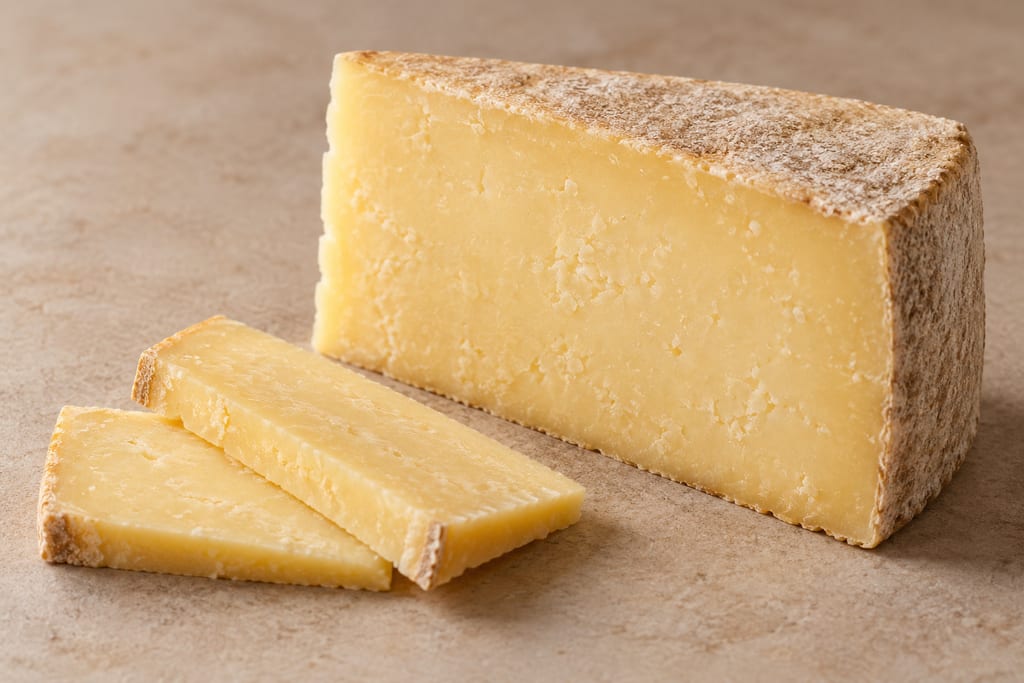
Cheddar-style cheese
A pressed cheese whose curd is cooked slowly, then cheddared: kept warm in slabs that are turned and stacked for hours before milling, salting and pressing.
 FermenteaWhere food goes to change
Equipment · Curd-cutting and ladling tools
curd-cutting knives · perforated ladle · curd knife
A curd knife cuts set milk into recipe-sized pieces; a perforated ladle lifts and moves curd while whey drains. The hand tools work at different moments in an open cheesemaking vessel.
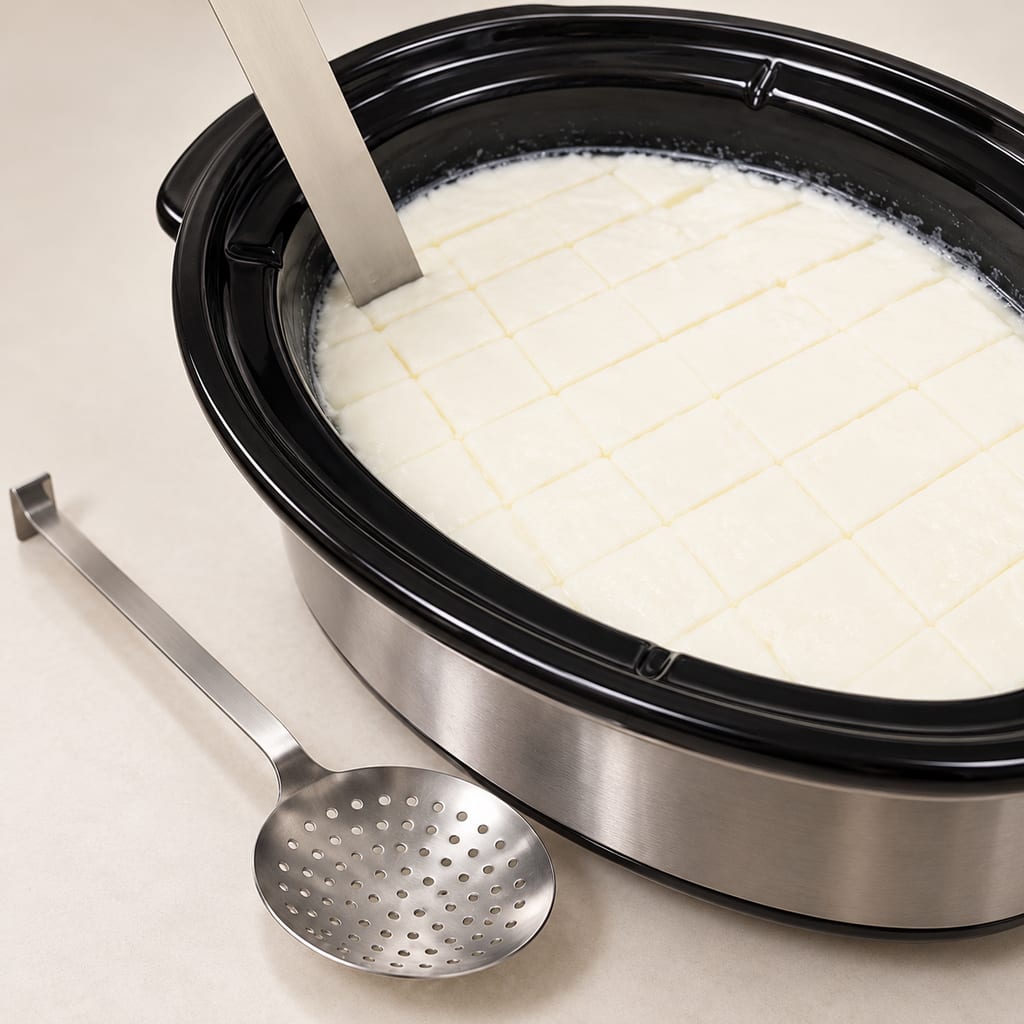
A curd knife divides milk after it has coagulated; a perforated ladle lifts and moves curd while liquid drains back. The knife’s long blade reaches across a vessel to make cuts. The ladle’s perforated bowl carries curd while whey passes through. They are related because both work inside an open pot or vat, but neither does the other’s job.
Charles O’Connor’s 1993 Traditional Cheesemaking Manual illustrates separate horizontal and vertical curd-cutting knives. It describes cutting a coagulum with knives or ladling it directly into containers or moulds. Those actions are alternatives in some methods: one breaks the gel into particles, the other transfers it whole.
Cutting opens a coagulated gel into particles from which whey can escape. Particle size therefore changes how quickly acid develops and affects the body and texture of some cheeses. The manual gives one to two centimetres as an example of a defined cut, not a standard for all curds.
The cited methods set different sizes. O’Connor’s Scamorza method cuts the set coagulum into one-centimetre cubes; its Cheddar method uses vertical and horizontal knives to form roughly 1.25-centimetre cubes. Halloumi instructions check the fresh break with a long knife, cut squares vertically, let them rest, then use a long spoon or ladle for the horizontal cut. That sequence belongs to the specific Halloumi method.
A perforated ladle can lift a piece of curd without carrying as much whey with it. In the East African Scamorza method, a spoon or perforated ladle dips a piece into hot water for a stretch test. In the Halloumi instructions, a long spoon or ladle makes the horizontal division after the vertical cut has rested.
Other regional methods use ordinary ladling. The manual describes Ayib in Ethiopia and Wara in Nigeria and Woagachi in Benin, where curd and whey are moved into a separate container or basket mould. These examples document the transfer function; they do not prove that every cheesemaker used a perforated bowl.
A knife is used only after the recipe’s coagulation check or timing indicates that the gel is ready. Halloumi instructions describe a clean break before cutting; O’Connor’s manual places cutting after a firm coagulum has formed. Disturbing a forming gel early changes the intended process. The blade does not determine the cut size: the cheese method does.
A modern slow-cooker mozzarella demonstration from Tucson shows a long, flat knife drawing a checkerboard into set curd. It makes the distinction visible: the blade cuts a still gel rather than stirring pieces already cut. It is one home method, not a universal cheese sequence.
The sources do not establish a standard blade length, ladle diameter or handle material. An inspected Halloumi photograph shows a stainless ladle, while the flat blade in the mozzarella demonstration is pale but its material is unspecified. Penn State Extension’s general home-cheesemaking guidance recommends food-grade stainless steel or sturdy plastic for utensils and says surfaces should be easy to clean and free of scratches, nicks or pits.
These are hand tools for curd that can be reached in an open vessel. Their care follows general food-contact hygiene rather than a special seasoning tradition. The evidence supports contrasting cutting, draining and transfer, but not a single traditional design, universal cut size or current maker for this tool pair.
Charles O’Connor’s 1993 Traditional Cheesemaking Manual illustrates horizontal and vertical curd knives and records regional methods using knives, spoons and ladles. Later cheesemaking instructions document these functions in home and supplier demonstrations; the dates are attestations, not invention dates.
Scratches, nicks and pits can harbour unwanted bacteria on food-contact surfaces.
Hazard sourceUse food-grade utensils and clean and sanitise them before and during cheesemaking.
Control sourceCut size is recipe-specific; the manual’s 1–2 cm example is not a universal target.
Source →A knife or ladle needs access to curd in an open vessel; a sealed bag must be opened before these hand tools can act.
Source →The manual describes Scamorza in parts of Tanzania and Kenya; its method cuts with a sharp knife and uses a spoon or perforated ladle for a stretch test. It does not establish one regional tool design.
Ayib is described as made in many parts of Ethiopia; one curd-separation option is ladling. The exact ladle form is not specified.
Wara is described as widespread in Nigeria; the documented method ladles curd and whey into basket moulds, without specifying a slotted ladle.
Woagachi is described in northern Benin; the documented method ladles curd and whey into basket moulds, without specifying a slotted ladle.
A published demonstration identifies contributor Kathy Love in Tucson and shows a long knife cutting set curd. This is a modern example, not an origin claim.
A pressed cheese whose curd is cooked slowly, then cheddared: kept warm in slabs that are turned and stacked for hours before milling, salting and pressing.
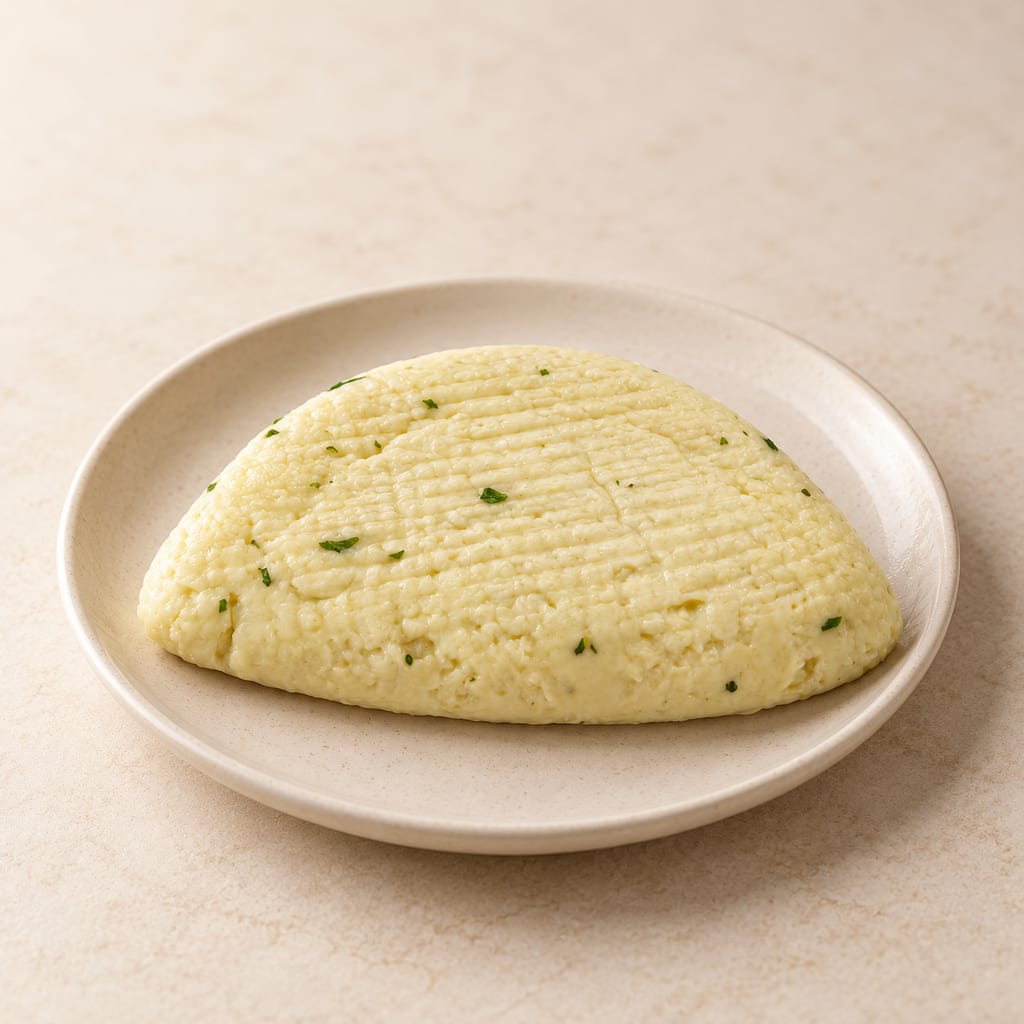
A firm cow-milk cheese cooked in hot whey, salted and folded with optional mint. This fresh halloumi keeps its shape when grilled or pan-fried.
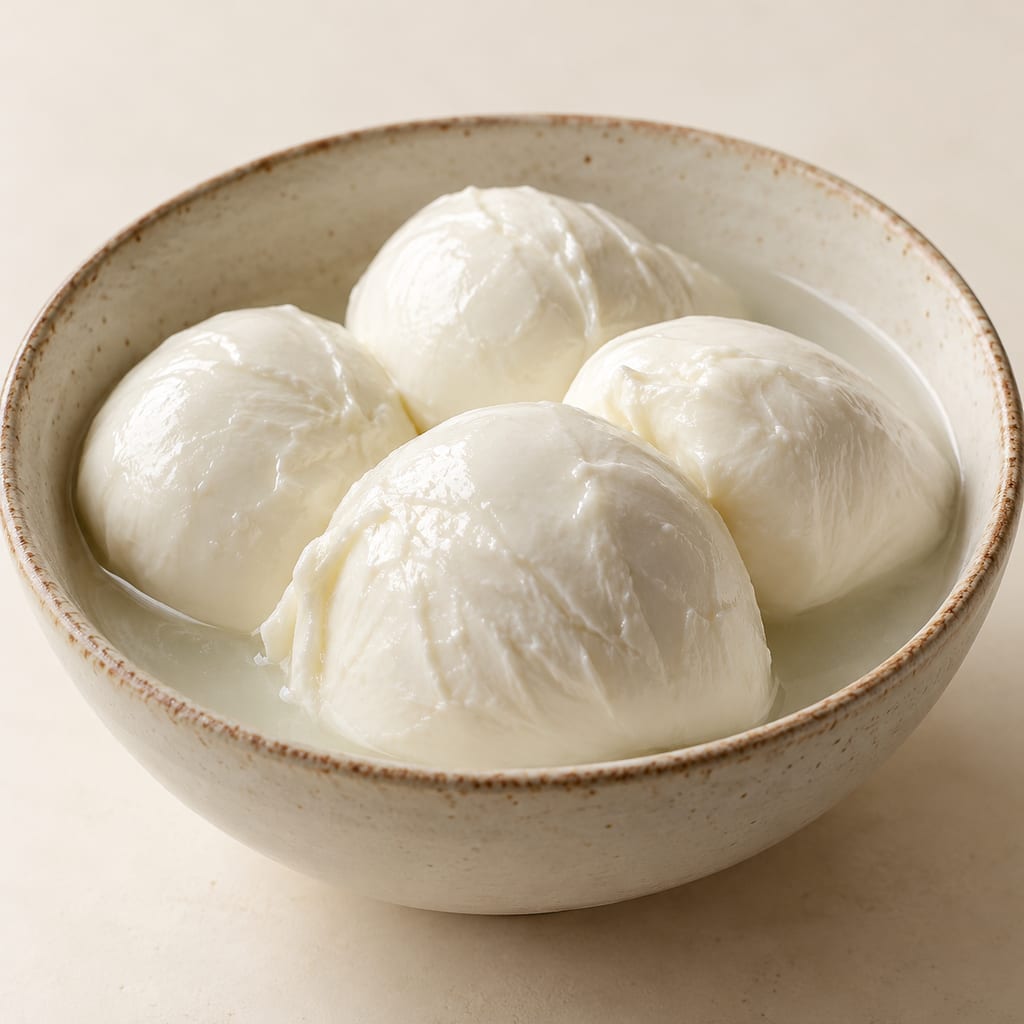
A stretched fresh curd made by acidifying cold milk with citric acid before adding rennet, so the curd can be stretched as soon as it has formed.
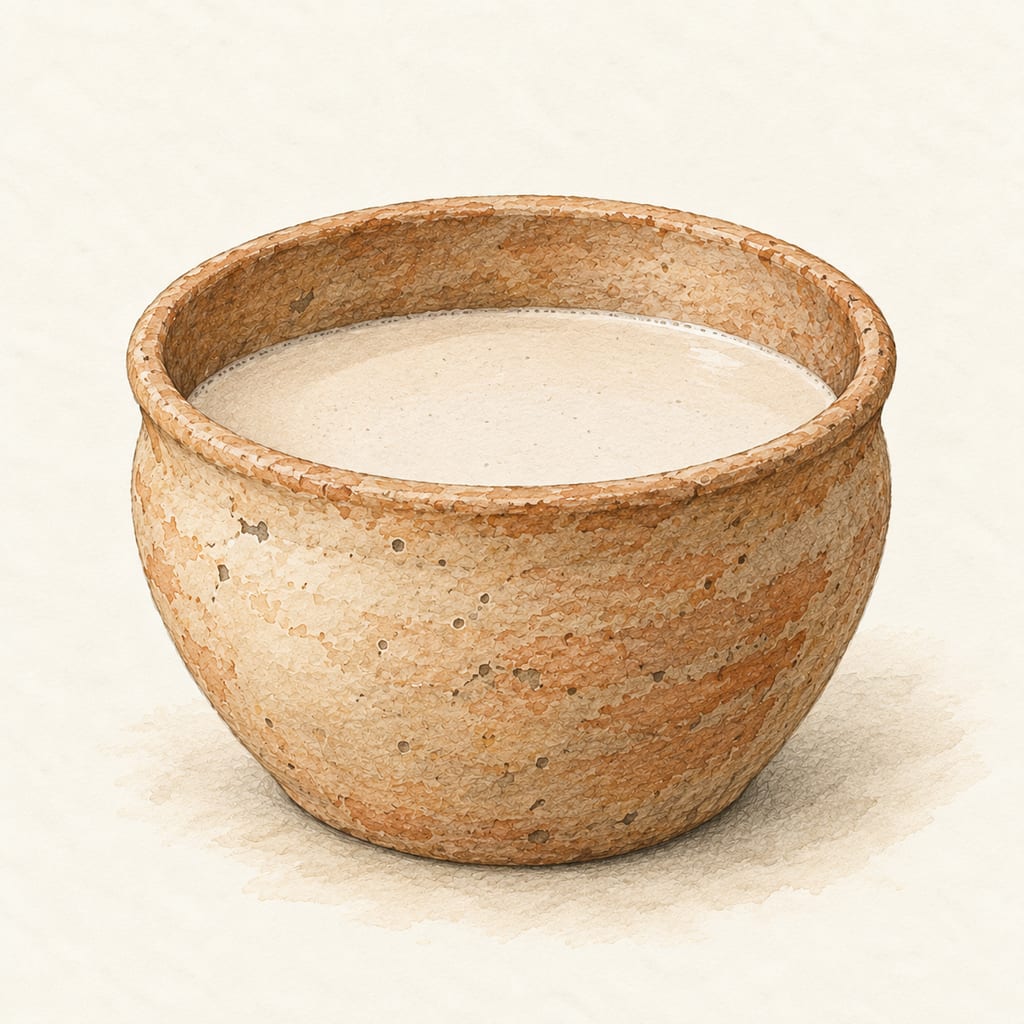
A wide-access vessel holds injera batter through successive fermentation stages. Ethiopian accounts describe clay vessels historically and metal, wood or plastic containers in contemporary kitchens.
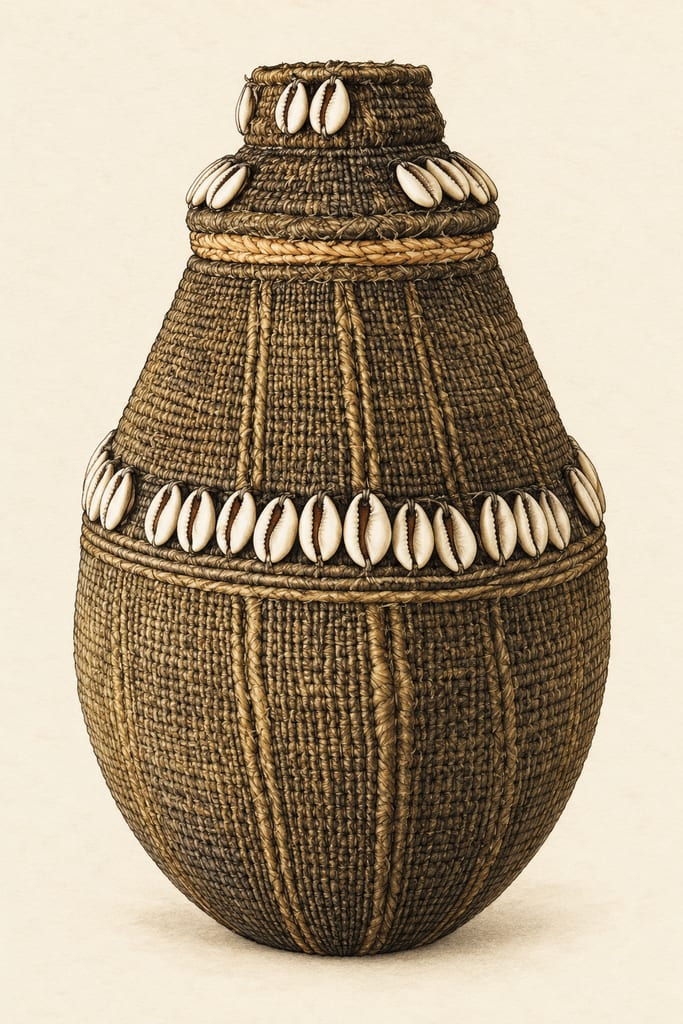
The Borana gorfa is a pear-shaped milk vessel used in southern Ethiopia to sour milk and churn it into butter. Sources document woven fiber and smoke treatment; one museum specimen also records gourd and cowrie-shell materials.
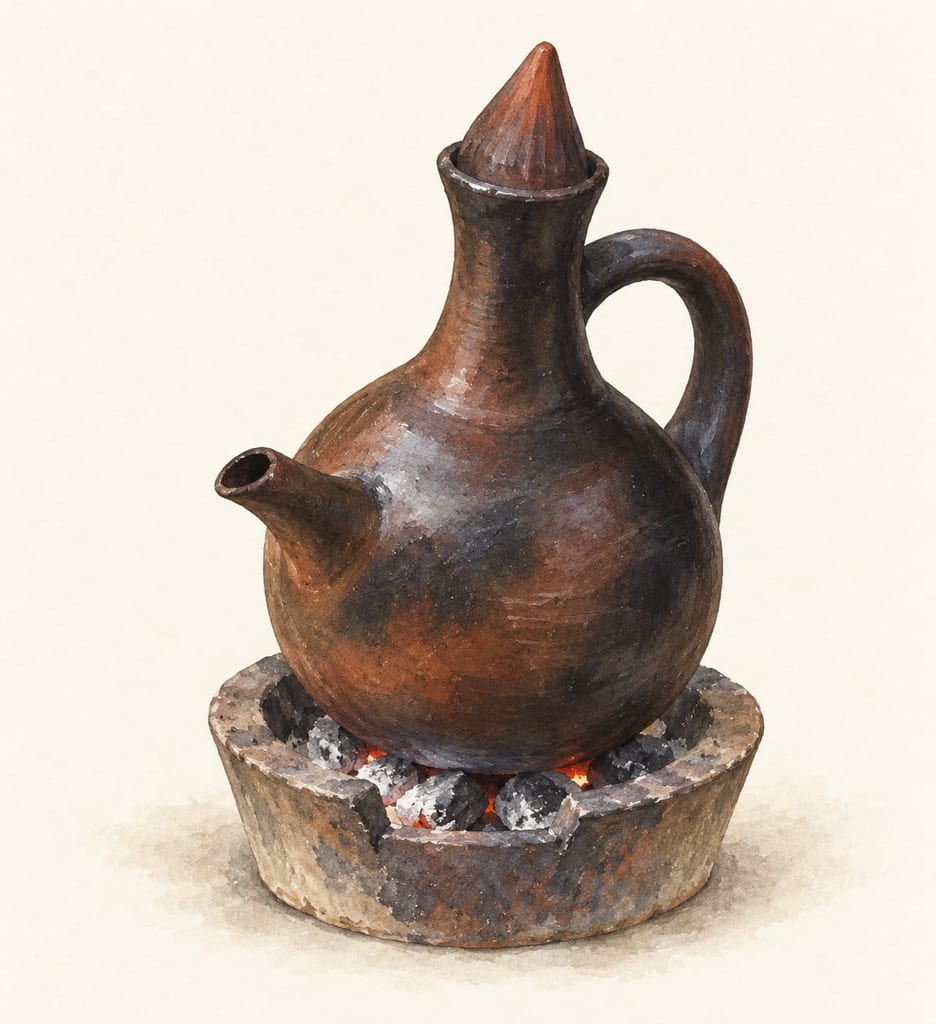
The jebena is an Ethiopian terracotta coffee pot, typically rounded at the body and narrow through the neck. It brews coffee over a fire and serves a communal ceremony; materials, profiles and household practices vary.
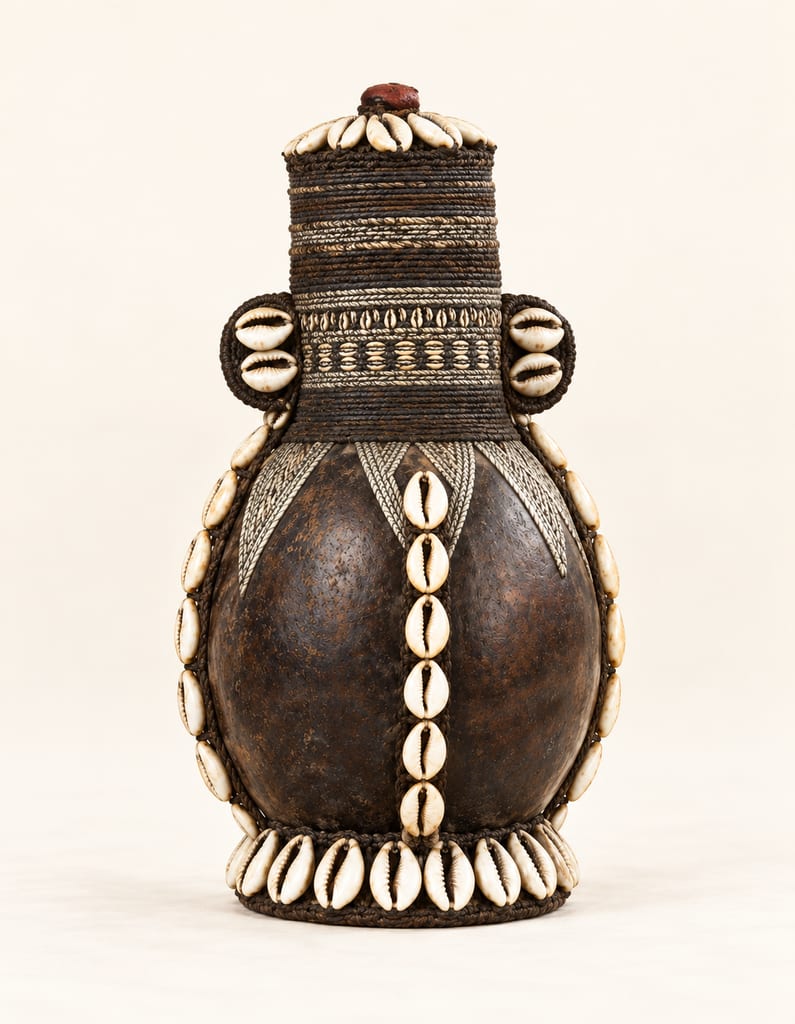
Ethiopian milk fermentation uses a family of vessels—calabashes, clay pots, fibre vessels and hollowed wood—whose interiors may be smoked before filling. Forms and roles vary by community and stage.
An Ethiopian earthenware vessel used for stages of tella, a traditional cereal-based fermented drink. Sources describe clay insira jars alongside modern plastic alternatives and document washing and smoke preparation before brewing.

Soft, spreadable Calabrian pork sausage made with a great deal of red chilli and fatty pork, stuffed into natural casings, sometimes smoked and matured while staying soft.

A way to add independent temperature logging to an existing food dehydrator without changing its built-in controls or protections. It is a monitoring method, not a rewiring plan.

Pleurotus cystidiosus is the abalone mushroom, a cultivated oyster-type fungus with dark brown caps that grows more slowly and is more demanding than other Pleurotus species.

A dark, balanced vinegar from Emilia-Romagna made by combining cooked or concentrated grape must with wine vinegar, then acetifying and refining it in wood under a protected specification.

A living dairy inoculum that starts controlled cream fermentation, developing acidity and aroma before sour cream or cultured butter is finished.

A small electric incubator holds jars at a selected temperature for yogurt and other documented warm food preparations. Controls, capacity and vessel arrangement vary by model.

Adygean salt is a seasoned table salt associated with Adygea and the wider North Caucasian culinary tradition. Salt is blended with garlic and a variable selection of herbs and spices; the exact mix depends on the named style and maker.

The African Caesar-group mushroom, Amanita masasiensis, is a wild ectomycorrhizal species of central and southern African woodlands, eaten locally. The genus contains deadly poisonous species, so identification needs care.
No community contributions have been published for this entry yet.
Sign in to contribute. Published comments and photos are free to read.
International Livestock Centre for Africa (ILCA)History · Cutting · Geography · Equipment
Traditional cheesemaking manualThe 1993 manual illustrates horizontal and vertical curd-cutting knives; cut size or ladling affects acid development, firmness and texture, with 1–2 cm as an example.
Its Scamorza method in East Africa uses a sharp knife for 1 cm cubes and a spoon or perforated ladle for a stretch test; its Cheddar method uses horizontal and vertical knives for roughly 1.25 cm cubes.
It describes Ayib in Ethiopia, Wara in Nigeria and Woagachi in Benin, with ladling; these passages do not specify a slotted ladle for each method.
Cited in: Two tools for different moments; Why the cut changes the cheese; Lifting and draining curd; Different recipes, different tool moves
New England Cheesemaking Supply CompanyCutting · Ladling · Equipment
Halloumi Cheese Making Recipe InstructionsThe method checks curd for a clean break with a long knife; cuts vertical squares, rests them, then uses a long spoon or ladle for the horizontal cut.
The inspected photo shows a stainless ladle over a perforated insert and cut curd; it does not establish a universal tool design.
Cited in: Why the cut changes the cheese; Lifting and draining curd; Materials and practical limits
New England Cheesemaking Supply CompanyDocumented use · Image reference · Geography · Equipment
Making Mozzarella in the Slow CookerThe page identifies Kathy Love in Tucson, Arizona, and its inspected photograph shows a long flat knife cutting checkerboard lines into set curd in a slow-cooker crock.
Cited in: Different recipes, different tool moves
Penn State Extension (reproduced by UC Agriculture and Natural Resources)Safety · Care · Materials
Home CheesemakingFor cheesemaking utensils generally, recommends food-grade stainless steel or sturdy plastic, smooth easy-to-clean surfaces free of scratches, nicks or pits, and cleaning and sanitising before and during use.
Cited in: Materials and practical limits