A family of vessels, not one standard pot
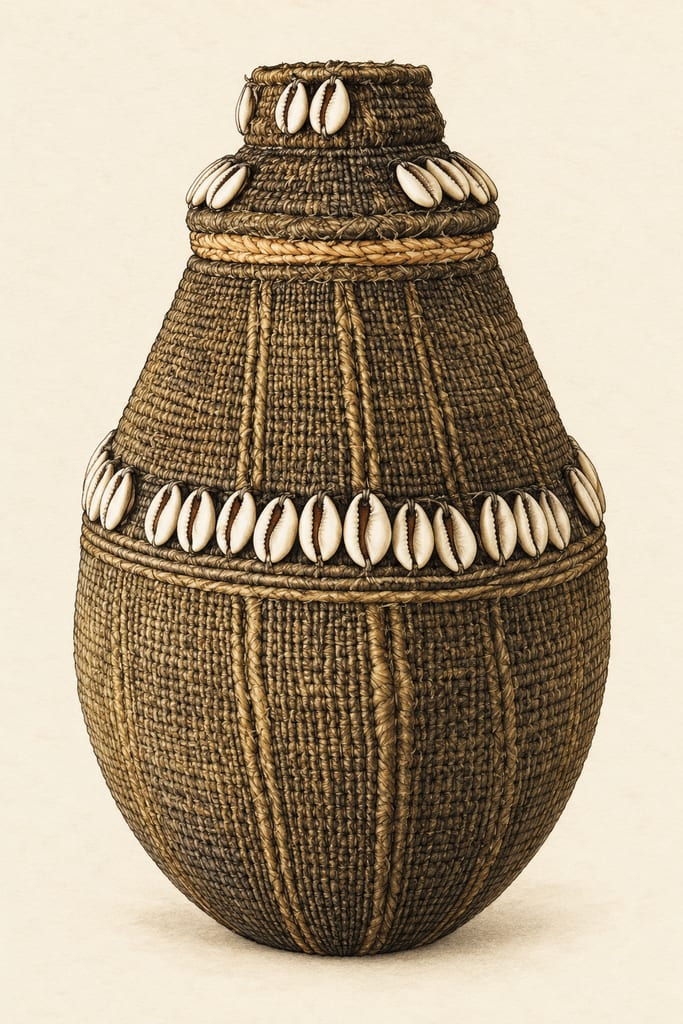
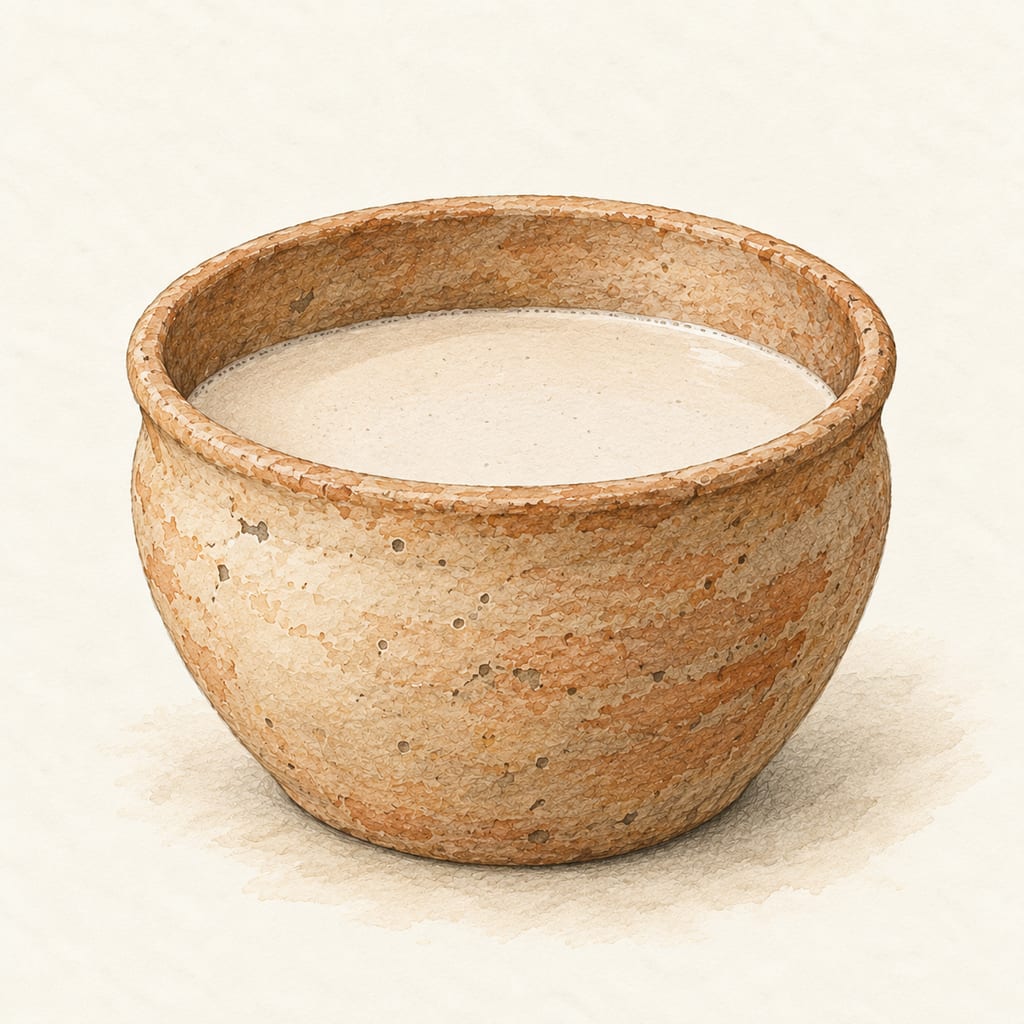
Milk fermentation in Ethiopia is associated with several vessel materials rather than a single canonical container. The documented forms include calabash or gourd, clay pots, woven grass or plant-fibre vessels, and hollowed wood. In Borana pastoral areas, a 2025 case study identifies the pear-shaped gorfa as a smoked container in which milk ferments naturally into ititu. That specific name and form belong to the Borana account; they should not be used as labels for every Ethiopian milk vessel.
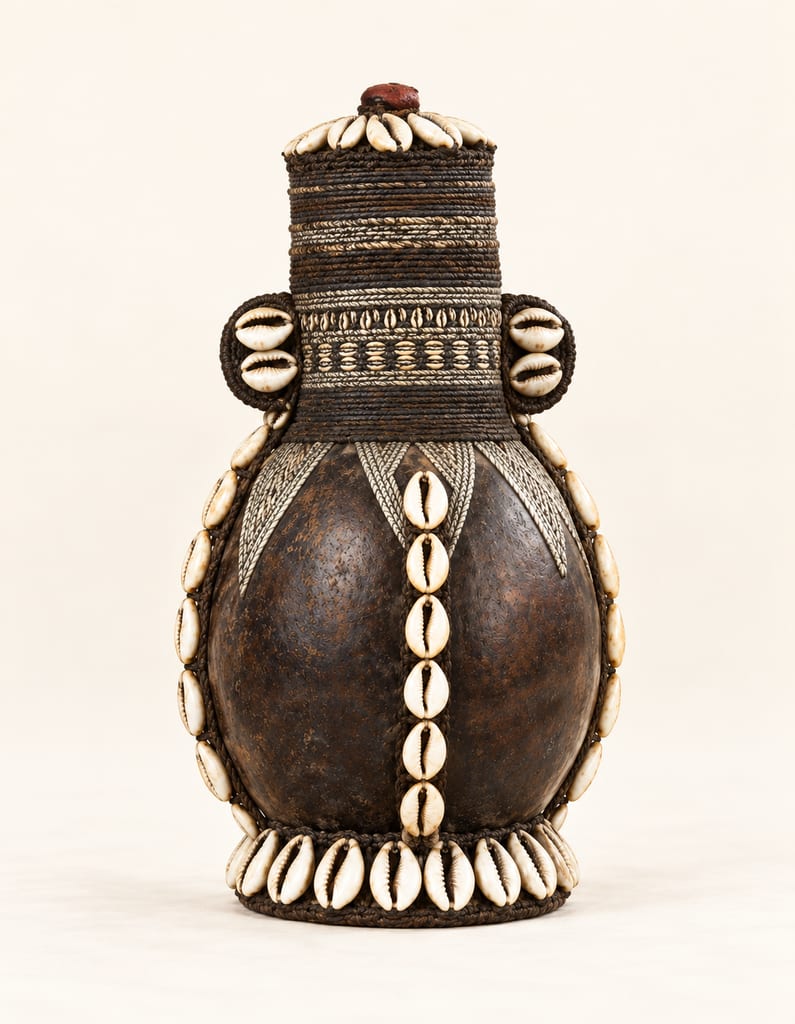
A decorated Borana chocho in the Tubman African American Museum collection illustrates why function needs to be stated carefully. Its record describes a composite of gourd, plant fibre, beads, cowrie shell and metal wire, used to store and serve milk to guests on special occasions. It is not identified as a fermentation vessel. Its appearance can help readers recognize one milk-related form, but it cannot establish the construction or use of gorfa.
Sources for this section
Smoking and preparing the vessel
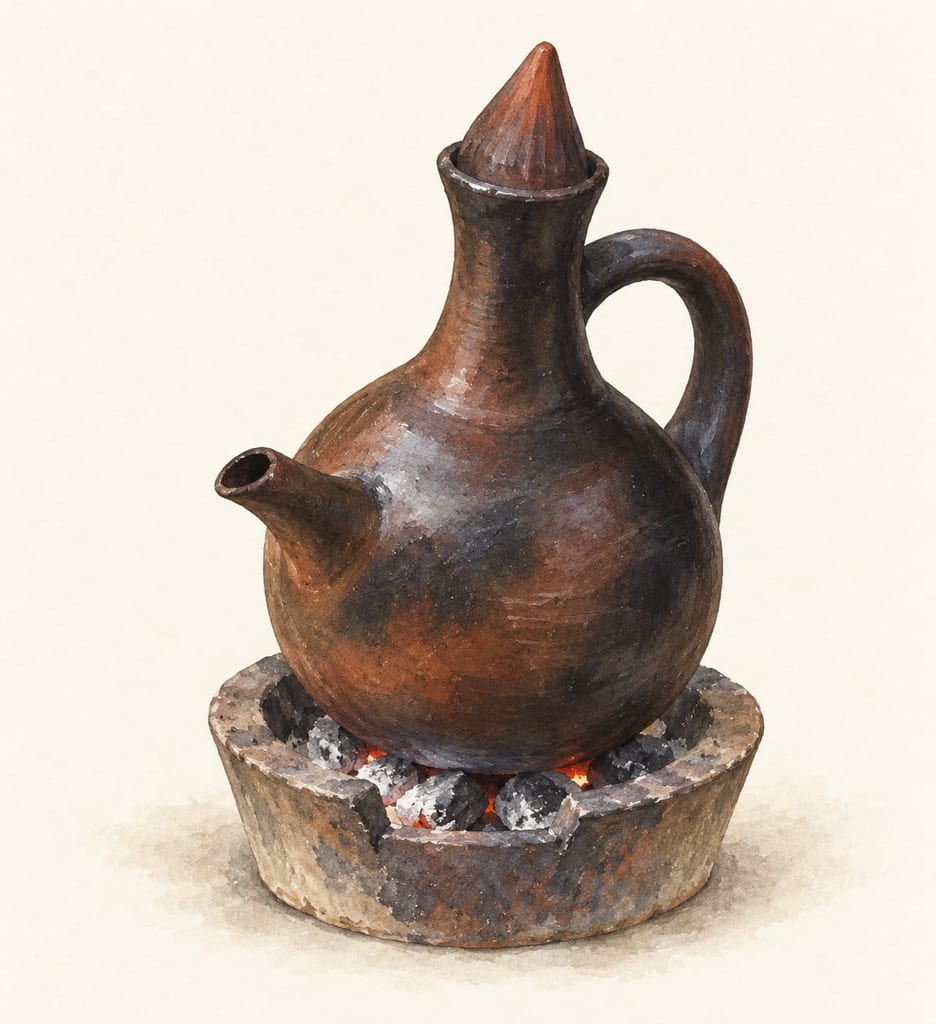
The FAO account describes washing Ethiopian irgo vessels with hot water, rinsing with cold water, then smoking them with chips of Olea africana or Acacia busia. In some described practices, hot chips are placed inside and swirled briefly with the lid on; in others, the vessel is inverted over the smoking chips until the smoke dies away. These are source-specific descriptions, not a universal instruction to reproduce or a single fixed design.
The study from Borana likewise describes smoked gorfa as part of the milk-fermentation practice. Smoking is culturally understood as helping to prepare the utensil, and can affect the vessel’s aromatic environment. The authors also make a practical limit clear: where hygiene is not standardized, smoking alone may not guarantee a safe product. A vessel’s smoke treatment is therefore not a substitute for clean handling or evidence that any particular batch is safe.
Sources for this section
How the vessels serve fermentation
In the FAO’s general account for southern and eastern Africa, milk is filtered into a smoked clay pot or bottle gourd and kept warm while it sours and coagulates. Fresh milk may be added daily, with or without removing whey, until the vessel is full. The account presents that as a broad regional outline, not a process shared unchanged by every community.
For Ethiopian irgo, the cited FAO chapter focuses on the vessel-cleaning and smoke treatment. Its Borana section describes hard fermented curd: whey is removed daily and fresh milk is added until the vessel fills with curd. The later Borana case study describes a different, specifically named ititu practice using a smoked pear-shaped gorfa; whey is removed every two to three days and fresh milk is added continuously. The case study reports a process lasting from seven days to three months. These distinct descriptions should remain distinct rather than being collapsed into one recipe.
Sources for this section
Materials, evidence and regional limits
Each material brings a different object form, but the sources do not supply a comparative engineering specification. The available descriptions do not establish common capacities, wall thicknesses, dimensions, or a universal lid. A woven exterior also does not prove that the whole liquid-holding wall is woven: some vessel constructions may combine fibre with a gourd or other lining, and the form must be verified for each object.
The page’s geography is anchored in documented Ethiopian use, including the Borana pastoral area in southern Ethiopia. The broader Horn wording in the record title does not mean that the Borana gorfa, the FAO vessel list, or the smoking methods can be assigned to every community in the region. Artifact records are equally specific: a museum object can document the materials and service role of that one vessel without proving its role in fermentation.
Sources for this section
History
The material records established household milk-processing practices and a 2025 Borana study, but does not date the origins of these vessel forms.
Equipment details
CapacityThe consulted sources give no capacity for the fermentation vessels.
SizeNo dimensions are supplied for the fermentation vessels in the cited process accounts. A separate 22 × 13 × 13 cm museum chocho object is documented for storage and service; those measurements do not describe gorfa or a generic fermenter.
PowerNo power These portable vessels require no powered mechanism; smoke treatment uses burning wood chips.
How you get oneNot established The cited sources do not document how a particular vessel is made, commissioned or acquired.
CareThe FAO account describes washing vessels with hot water, rinsing with cold water, then smoking them with wood chips before use. A 2025 Borana study records smoking as a common practice but cautions that it cannot by itself guarantee product safety; it does not give a complete standardized sanitation protocol.
Made of
- Calabash / gourd — Milk vessel
Used as a milk-fermentation vessel in the regional account; a Borana chocho object record identifies a gourd composite used for milk storage and service. - Clay — Milk vessel
FAO describes smoked clay pots in fermented-milk preparation. - Woven grass or plant fibre — Milk vessel
FAO lists these forms for Ethiopian irgo; this does not establish that every woven vessel has a liquid-tight woven wall. - Hollowed wood — Milk vessel
FAO lists hollowed wood vessels for Ethiopian irgo. - Cowrie shells, beads, plant fibre and metal wire — Decoration and construction of one documented chocho
The Tubman Museum object record describes one composite vessel, not a universal fermenting design.
Limits
The named materials and smoking practice are documented for Ethiopia and parts of southern and eastern Africa, but they do not establish a single vessel design across the Horn.
Source →The museum chocho record establishes storage and serving use for one object; it does not establish fermentation use.
Source →Smoke treatment is not a substitute for standardized hygiene and cannot alone guarantee safety.
Source →Places
Ethiopia
Documented use · Country evidenceDocumented Ethiopian use; the sources do not establish one origin for the wider Horn.
Borana pastoral area
Documented preparation · Region evidenceThe named gorfa/ititu account is specific to the Borana study area.