Smoked milk containers of Ethiopia and the Horn
Ethiopian milk fermentation uses a family of vessels—calabashes, clay pots, fibre vessels and hollowed wood—whose interiors may be smoked before filling. Forms and roles vary by community and stage.
 FermenteaWhere food goes to change
Equipment · woven-liquid-vessel
Smoke-treated dairy vessel
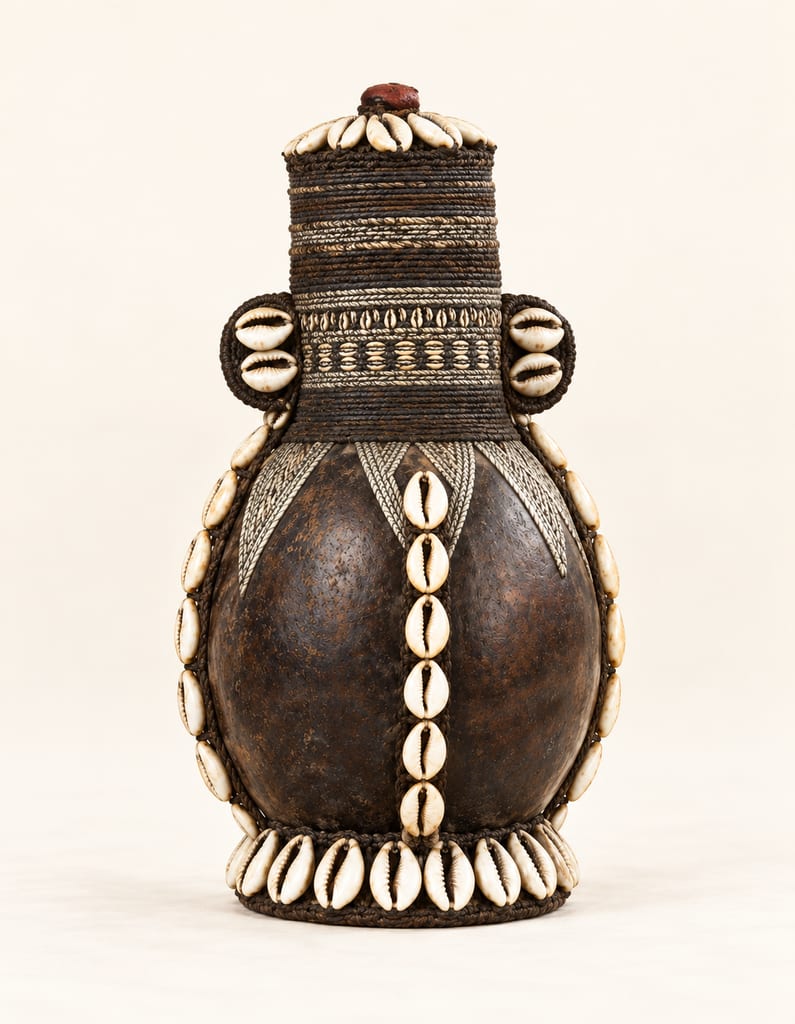
The Borana gorfa is a pear-shaped milk vessel used in southern Ethiopia to sour milk and churn it into butter. Sources document woven fiber and smoke treatment; one museum specimen also records gourd and cowrie-shell materials.
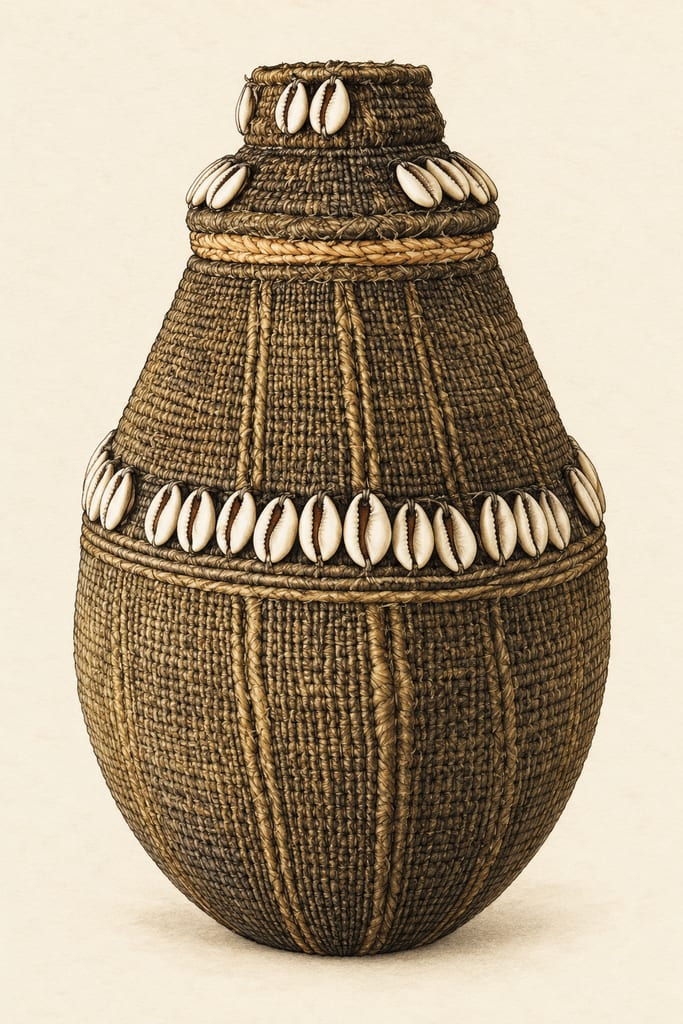
The gorfa is one named form within a broader Borana milk-container repertoire, not a generic synonym for every vessel used to smoke or ferment milk. A 1994 account of pastoral research describes it as pear-shaped and woven from root fibres of Asparagus species. The same account gives an average capacity of about two litres and identifies storage, souring and churning among its uses. A 2025 case study from the Borana pastoral area of southern Ethiopia likewise describes fresh milk stored in a traditional pear-shaped gorfa and left to ferment naturally at ambient temperature. Together, these sources connect the vessel's shape to everyday dairy work rather than to a single isolated recipe.
A woven container is well documented, although the surviving evidence does not establish one standardized pattern. The Spurlock Museum catalogs one 20th-century Borana/Borani specimen as plant fiber, gourd and cowrie shell, made through weaving, hollowing and sewing. Its photograph shows a lidded pear-shaped object with cowrie bands. The catalog lists the object under Kenya and does not name its maker; those details describe that museum object, not the place where every gorfa was made or a universal material recipe. The museum records dimensions of 24 cm high by 18 cm diameter for this specimen only.
In the historical Borana account, the gorfa is smoked and rinsed with milk just before fresh milk is put in for storage, and that preparation is repeated before the next batch. The account lists several charcoals used for smoking and suggests that smoke may seal the inner surface and burn away loose fibers, leaving it smoother. These are the source's proposed effects, not measured performance claims for every fibre vessel. The 2025 study describes smoking of containers with selected woods as a widely practised Borana custom and reports that people perceive it as helping quality and safety.
That perceived benefit needs a clear limit: the 2025 study cautions that smoking alone may not guarantee safety when hygiene practices are not standardized. Neither a traditional form nor a smoked surface proves that milk is safe. This vessel belongs to a broader dairy practice, and the field account is not a validated sanitation specification for a modern reader to reproduce.
The gorfa can hold milk as it sours and then serve as the vessel for churning. The 1994 description explains that after fermentation, a partly filled container is cradled and gently rocked by hand. It reports that a small plug in the lid may be removed briefly to release pressure, and that a change in the sound of churning can signal the formation of butter grains. The account describes butter removed with a wooden spoon and remaining buttermilk retained in the gorfa; a small amount could seed the next batch of soured milk. Those details belong to that documented Borana practice, not a universal design or operating instruction.
A separate, longer souring method in the same research added surplus fresh milk to a designated gorfa or larger amuyou vessel, while serum was periodically removed as curds formed. The 2025 study describes a related repeated addition-and-whey-removal pattern: fresh milk was added continuously, whey removed every two to three days, and the resulting ititu process lasted from a week to three months in the cases reported. Those ranges record variation across the study; they are not a standard schedule or a safety guarantee. Ititu names the fermented milk product rather than the container; its preparation is a separate subject.
The names matter because the Borana sources distinguish several containers by shape and job. In the 1994 account, the okole is primarily a sturdy milk-collection container; the gorfa stores and sours milk and is also used for churning; the golondi is a lidded, skin-enclosed wooden vessel carried by herders; and the larger amuyou is used for souring and churning. A separate 2016 field report also distinguishes gorfa from cicoo: both are described as lidded pear-shaped woven containers, but gorfa is cowrie-decorated and used for home milk fermentation, while cicoo is associated with carrying milk to ritual places or market. These neighboring objects are not interchangeable names for one universal vessel.
The broader equipment record on smoked milk containers covers a wider family of Ethiopian and Horn forms; this entry narrows the account to the Borana gorfa. The word korasuma in the research archive refers to a West Guji fumigation practice for milk containers, not to the gorfa itself. Keeping the container distinct from the smoke treatment and from the fermented milk ititu makes the links between equipment, practice and food easier to follow.
Written field studies document Borana gorfa practice in the late 20th and 21st centuries, and a museum catalogs one 20th-century object. These records do not establish when the vessel was invented.
Smoking alone does not guarantee microbiological safety when hygiene is not standardized.
The reported use is associated with Borana pastoralists in southern Ethiopia; it is not claimed as a universal Ethiopian vessel.
This records the museum's geographic metadata for one object; it does not establish the gorfa's origin, manufacture or general use in Kenya.
Ethiopian milk fermentation uses a family of vessels—calabashes, clay pots, fibre vessels and hollowed wood—whose interiors may be smoked before filling. Forms and roles vary by community and stage.
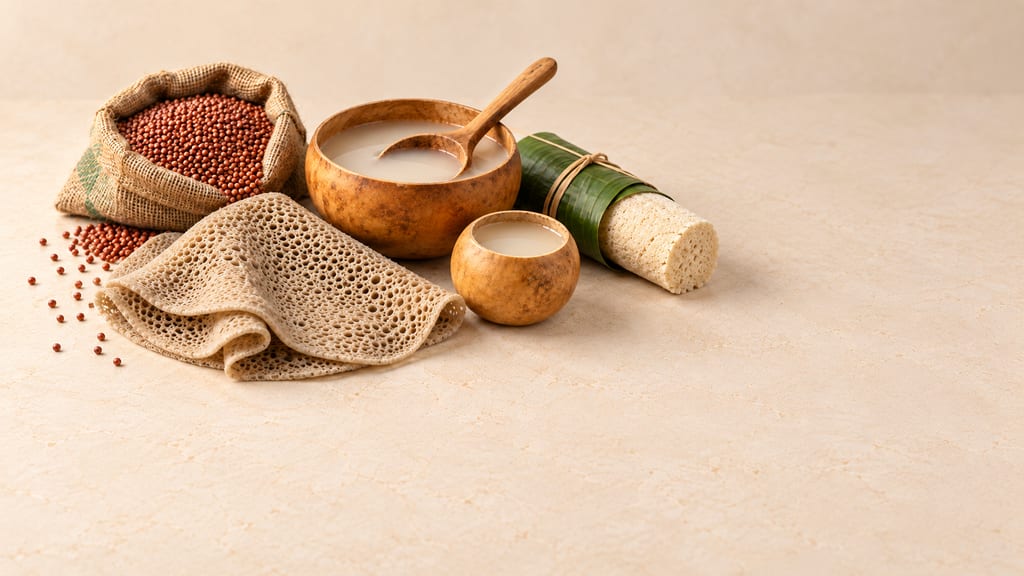
From sour breads and milk to savoury seeds, cassava staples and living beers, African fermentation follows the crop, the community and the work of transformation.
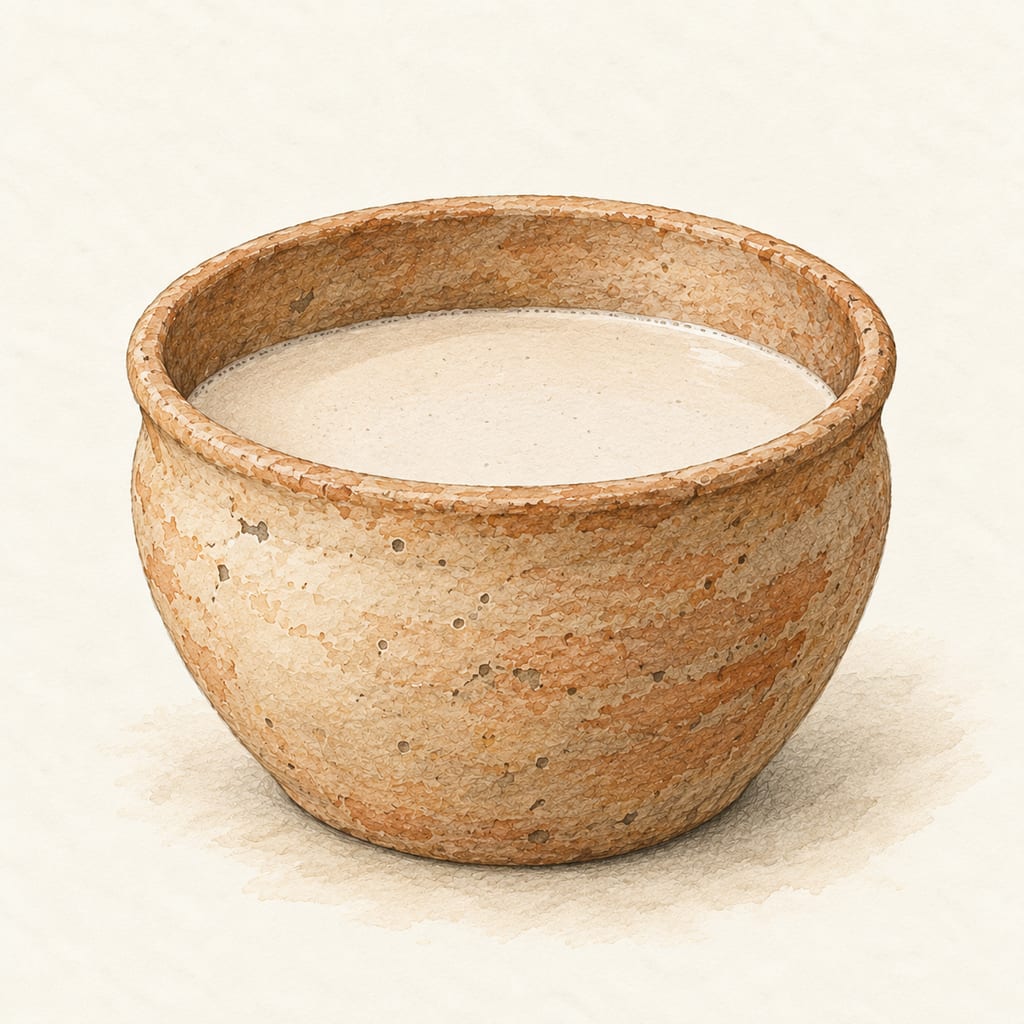
A wide-access vessel holds injera batter through successive fermentation stages. Ethiopian accounts describe clay vessels historically and metal, wood or plastic containers in contemporary kitchens.
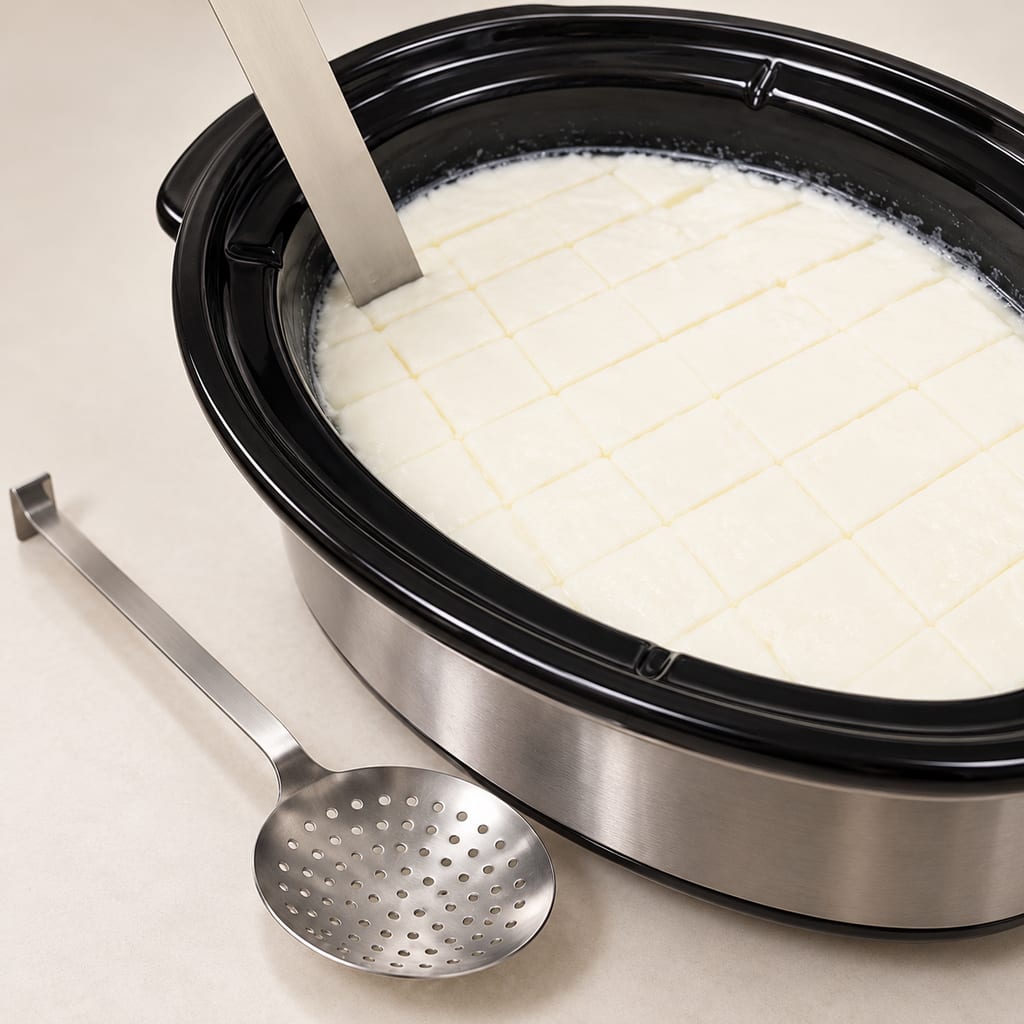
A curd knife cuts set milk into recipe-sized pieces; a perforated ladle lifts and moves curd while whey drains. The hand tools work at different moments in an open cheesemaking vessel.
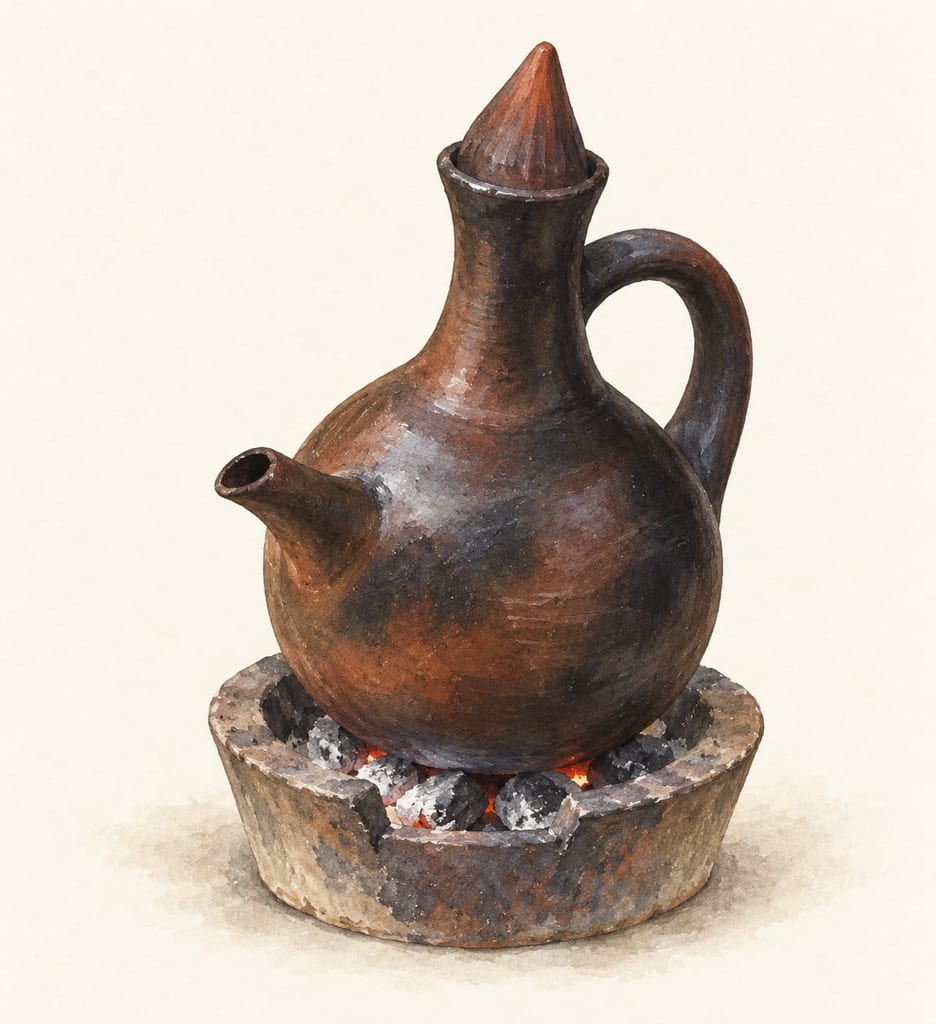
The jebena is an Ethiopian terracotta coffee pot, typically rounded at the body and narrow through the neck. It brews coffee over a fire and serves a communal ceremony; materials, profiles and household practices vary.
An Ethiopian earthenware vessel used for stages of tella, a traditional cereal-based fermented drink. Sources describe clay insira jars alongside modern plastic alternatives and document washing and smoke preparation before brewing.

Soft, spreadable Calabrian pork sausage made with a great deal of red chilli and fatty pork, stuffed into natural casings, sometimes smoked and matured while staying soft.

A way to add independent temperature logging to an existing food dehydrator without changing its built-in controls or protections. It is a monitoring method, not a rewiring plan.

Pleurotus cystidiosus is the abalone mushroom, a cultivated oyster-type fungus with dark brown caps that grows more slowly and is more demanding than other Pleurotus species.

A dark, balanced vinegar from Emilia-Romagna made by combining cooked or concentrated grape must with wine vinegar, then acetifying and refining it in wood under a protected specification.

A living dairy inoculum that starts controlled cream fermentation, developing acidity and aroma before sour cream or cultured butter is finished.

A small electric incubator holds jars at a selected temperature for yogurt and other documented warm food preparations. Controls, capacity and vessel arrangement vary by model.

Adygean salt is a seasoned table salt associated with Adygea and the wider North Caucasian culinary tradition. Salt is blended with garlic and a variable selection of herbs and spices; the exact mix depends on the named style and maker.

The African Caesar-group mushroom, Amanita masasiensis, is a wild ectomycorrhizal species of central and southern African woodlands, eaten locally. The genus contains deadly poisonous species, so identification needs care.
No community contributions have been published for this entry yet.
Sign in to contribute. Published comments and photos are free to read.
International Livestock Centre for Africa (ILCA), now part of ILRI; hosted by FAOForm · Materials · Capacity · Use · Care · Geography
The Borana Plateau of Southern Ethiopia: Synthesis of Pastoral Research, Development and Change, 1980–91Describes four Borana milk-container forms and identifies gorfa as a pear-shaped container woven from Asparagus species root fibers, with an average capacity around two litres.
Reports smoking and milk-rinsing before filling, including charcoal species in the historical account.
Describes hand rocking of fermented milk in a partly filled gorfa for churning, and reports washing, drying and smoking after a cycle.
Describes a separate longer fermentation and repeated whey-removal practice; this is contextual evidence from research of the 1980s, not a universal schedule.
Cited in: A pear-shaped vessel in the Borana dairy repertoire; Smoking and rinsing before milk is stored; Storage, souring and churning are connected uses; Distinguishing gorfa from neighboring forms
CAB International; hosted by International Livestock Research Institute (ILRI)Use · Geography · Safety · Process
Traditional milk processing in Borana pastoral area, southern Ethiopia: Practices, food safety, nutrition, and future pathwaysReports interview and focus-group findings from a Borana study area in southern Ethiopia: fresh milk is held in a smoked, pear-shaped gorfa and ferments naturally at ambient temperature.
Reports whey removal every 2–3 days and addition of fresh milk, with observed processes lasting from 7 days to 3 months and the product called ititu.
States there is no standard culture in the area and cautions that smoking alone may not assure safety where hygiene is not standardized.
Cited in: A pear-shaped vessel in the Borana dairy repertoire; Smoking and rinsing before milk is stored; Storage, souring and churning are connected uses; Distinguishing gorfa from neighboring forms
Kebede Amenu; ILRI Livestock-Fish Knowledge HubForm · Materials · Use · Culture
Traditional milk production, hygiene, processing and consumption in BoranaBased on a July 2015 qualitative investigation involving in-depth interviews, focus groups and informal discussions with pastoral women.
Describes gorfa and cicoo as lidded, pear-shaped woven plant-fiber containers; the report distinguishes gorfa by cowrie decoration and home fermentation use, and cicoo by transport to ritual places and market.
Reports that the report's observations also included modern plastic and stainless-steel market containers; these do not replace the traditional form described here.
Cited in: Distinguishing gorfa from neighboring forms
Spurlock Museum of World Cultures, University of Illinois Urbana-ChampaignObject record · Materials · Dimensions · Geography · Period
Gorfa, Milk Container (1971.12.0017B)Catalogs one object as Borana/Borani, East Africa > Kenya, 20th century; maker unknown.
Records gourd, cowrie shell and plant fiber, and weaving, hollowing and sewing.
Records this specimen as 24 cm high and 18 cm in diameter; these are not general dimensions.
The record states Reproduction: no; the linked image is attributed to the museum and retained as a link-only reference.
Cited in: A pear-shaped vessel in the Borana dairy repertoire; Distinguishing gorfa from neighboring forms