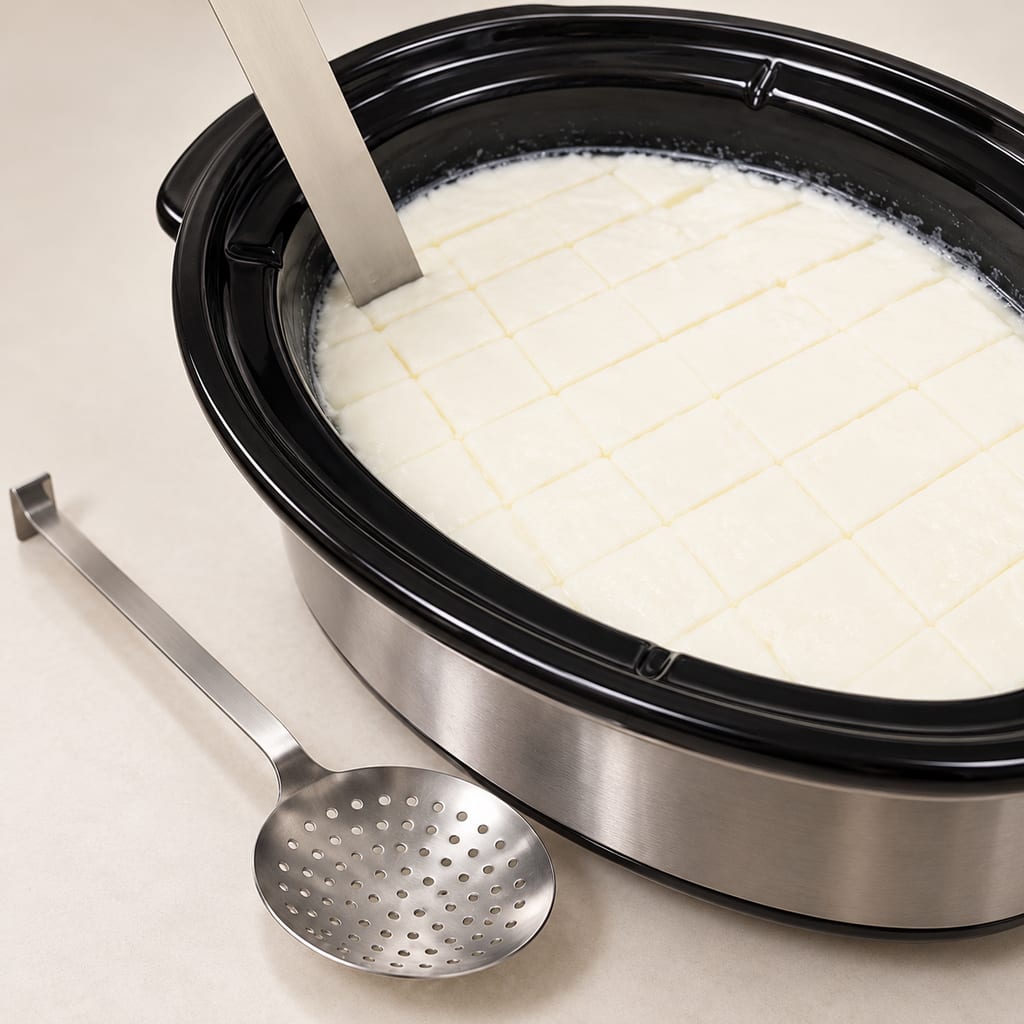
Curd knife and slotted ladle
A curd knife cuts set milk into recipe-sized pieces; a perforated ladle lifts and moves curd while whey drains. The hand tools work at different moments in an open cheesemaking vessel.
 FermenteaWhere food goes to change
quick acidified mozzarella · 30-minute mozzarella
A stretched fresh curd made by acidifying cold milk with citric acid before adding rennet, so the curd can be stretched as soon as it has formed.
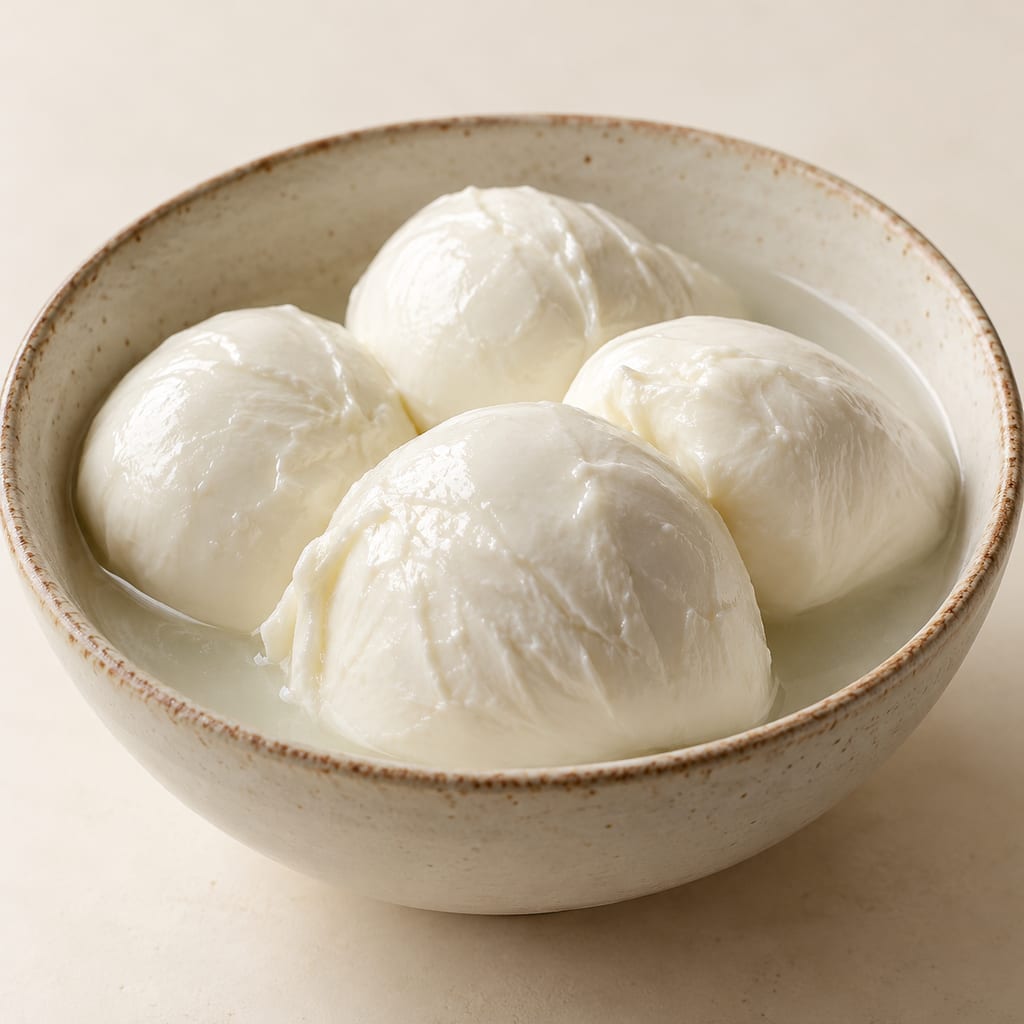
Quick mozzarella is a direct-acidified shortcut to a stretched fresh curd. Citric acid, diluted in cool water, goes into the milk before the rennet, so the curd is acid-assisted and can be stretched soon after it has set. The method is a modern home shortcut; the sources used here do not date it.
The older pattern for a stretched curd works differently. O'Connor's 1993 ILCA manual describes a culture that develops acidity in the milk before the curd is stretched in water at 80–85 °C (176–185 °F). The quick version replaces that culture stage with added acid. This page does not claim that the two give the same flavour or texture.
In the demonstration the slow-cooker crock is lifted out of its heating base twice. The first lift stops the heat before the rennet set, so the milk rests undisturbed for 15 minutes. The second lift stops the heat while the cut curds are stirred at 105 °F (41 °C). The source notes that the hot ceramic keeps giving off heat after each lift, and it does not record how far the milk overshoots.
The milk is pasteurised and homogenised. Penn State Extension states that ultra-pasteurised and UHT milk interfere with curd formation, and it does not recommend raw milk for home cheesemaking, so those are the milk types this route is tied to.
After draining, the curd is heated in short bursts in the microwave and kneaded between them, first for one minute and then twice more for 35 seconds each. Salt is worked in after the last heating, and the curd is stretched by hand.
The sources describe one cook's demonstration with one cooker and one batch. It is not a tested universal slow-cooker schedule. The temperatures are read from a probe in the milk, not from the cooker dial, and the source's own limits are kept in the notes above.
Ingredient quantities: not printed on the slow-cooker page; the linked recipe could not be read.
Yield: not printed.
Storage: not stated.
Temperature overshoot after lifting the crock: not recorded in the demonstration.
A modern direct-acidified shortcut. O'Connor's 1993 ILCA manual shows the older pattern for a stretched curd (scamorza), where a culture develops the acidity before stretching in 80–85 °C water.
Scaling: source batch only
The demonstration uses pasteurised, homogenised milk. Penn State Extension says ultra-pasteurised and UHT milk interfere with curd formation and does not recommend raw milk for home cheesemaking.
Hazard sourceRead the milk temperature with a probe in the milk rather than relying on the cooker setting
Control sourceThe source gives no storage time or safety statement; do not infer one.
where the photographed slow-cooker demonstration was made; not an origin
A curd knife cuts set milk into recipe-sized pieces; a perforated ladle lifts and moves curd while whey drains. The hand tools work at different moments in an open cheesemaking vessel.
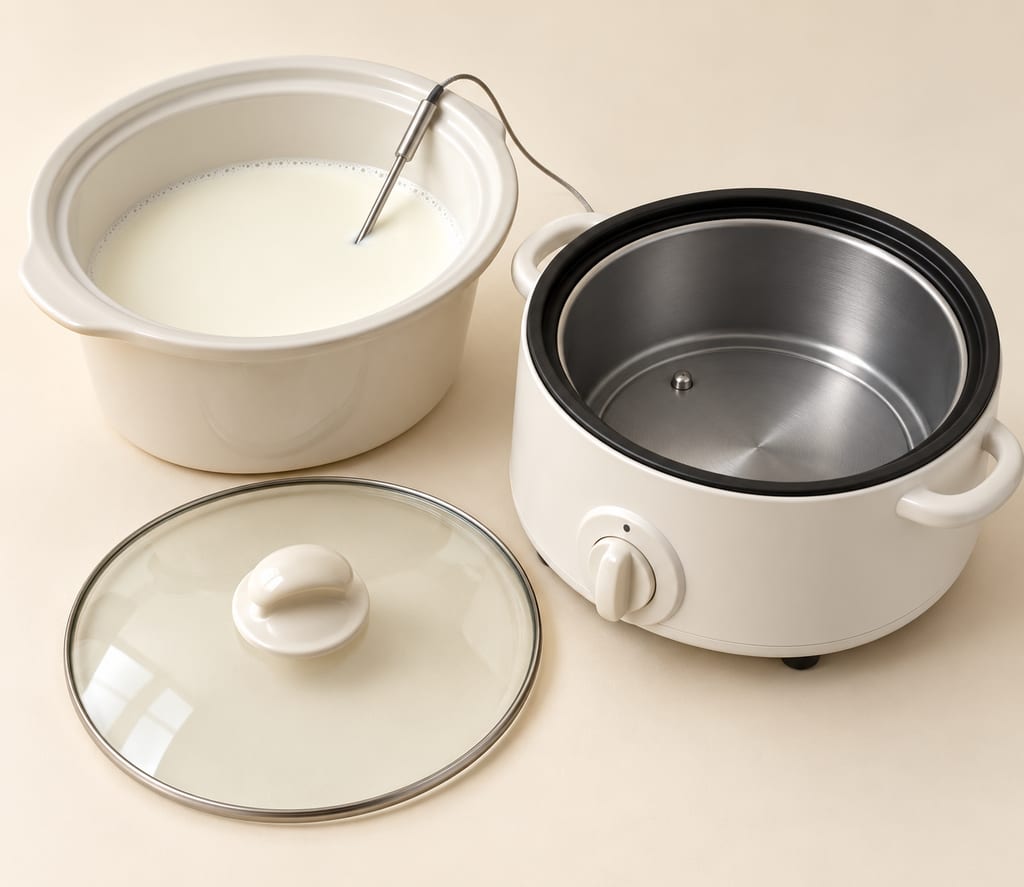
An electric slow cooker warms a removable heavy crock under a lid. Stored heat aids gradual cooking, but its settings are not a universal fermentation thermostat.
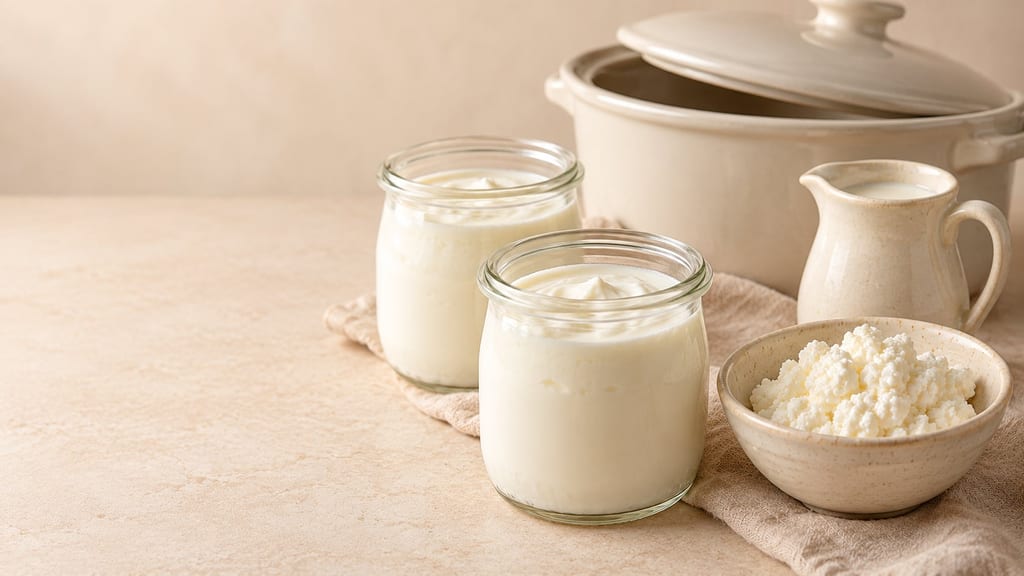
A slow cooker can heat milk for mozzarella, paneer, ricotta, mascarpone, quark and yogurt, but its heavy crock keeps heating after it is switched off. This is what each fresh cheese needs from it.
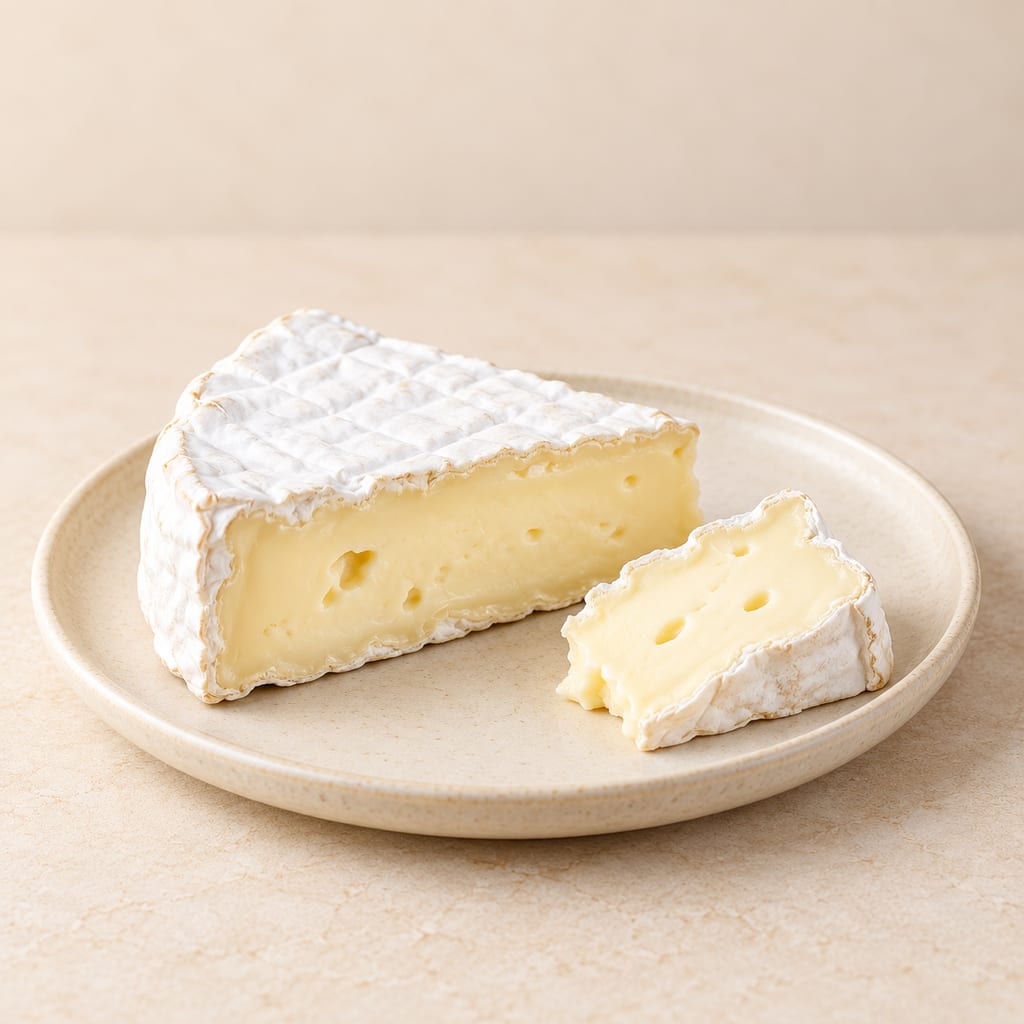
A cream-enriched Brie with a white bloomy rind and a softening center, made from pasteurized milk with lactic and surface cultures.
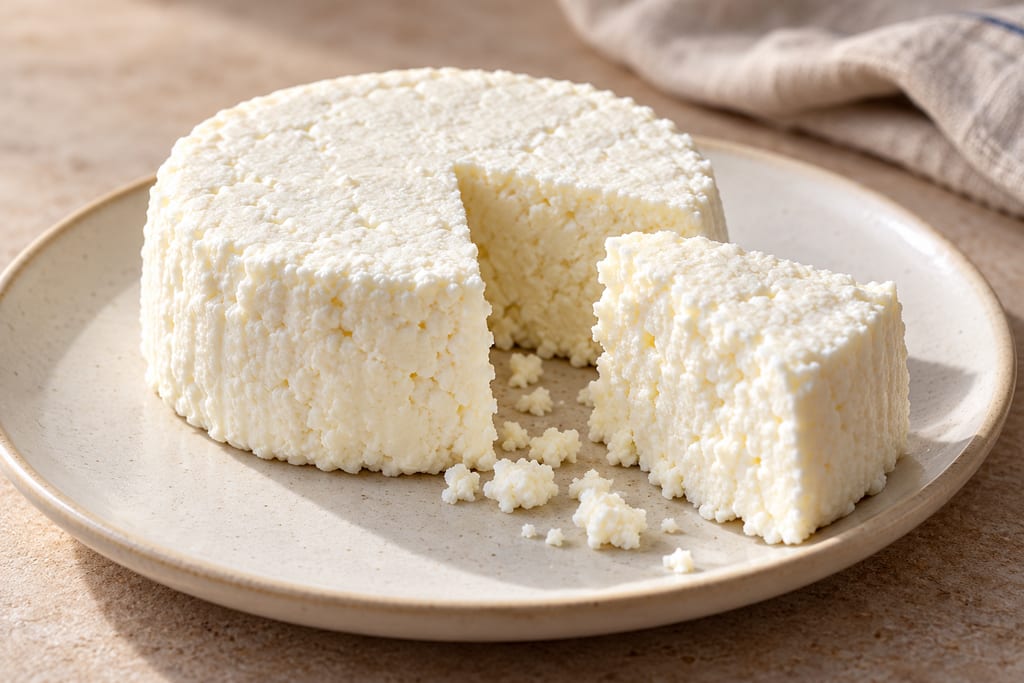
Cultured buttermilk, pasteurized milk, vinegar and rennet make this soft, crumbly queso fresco by a New Mexico home method adapted from Washington’s Abuela Project.
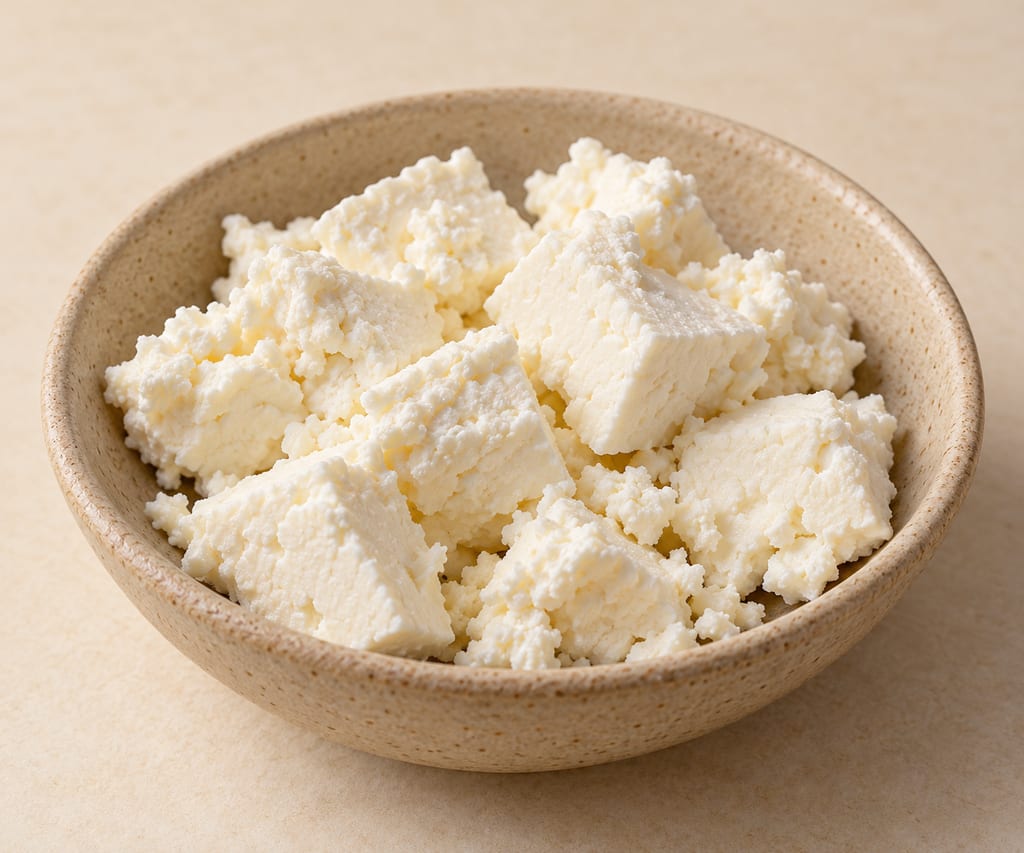
Whole milk set with a mesophilic starter and rennet makes a fresh, crumbly feta-style cheese. Its curds pass through hot salted whey before molding.
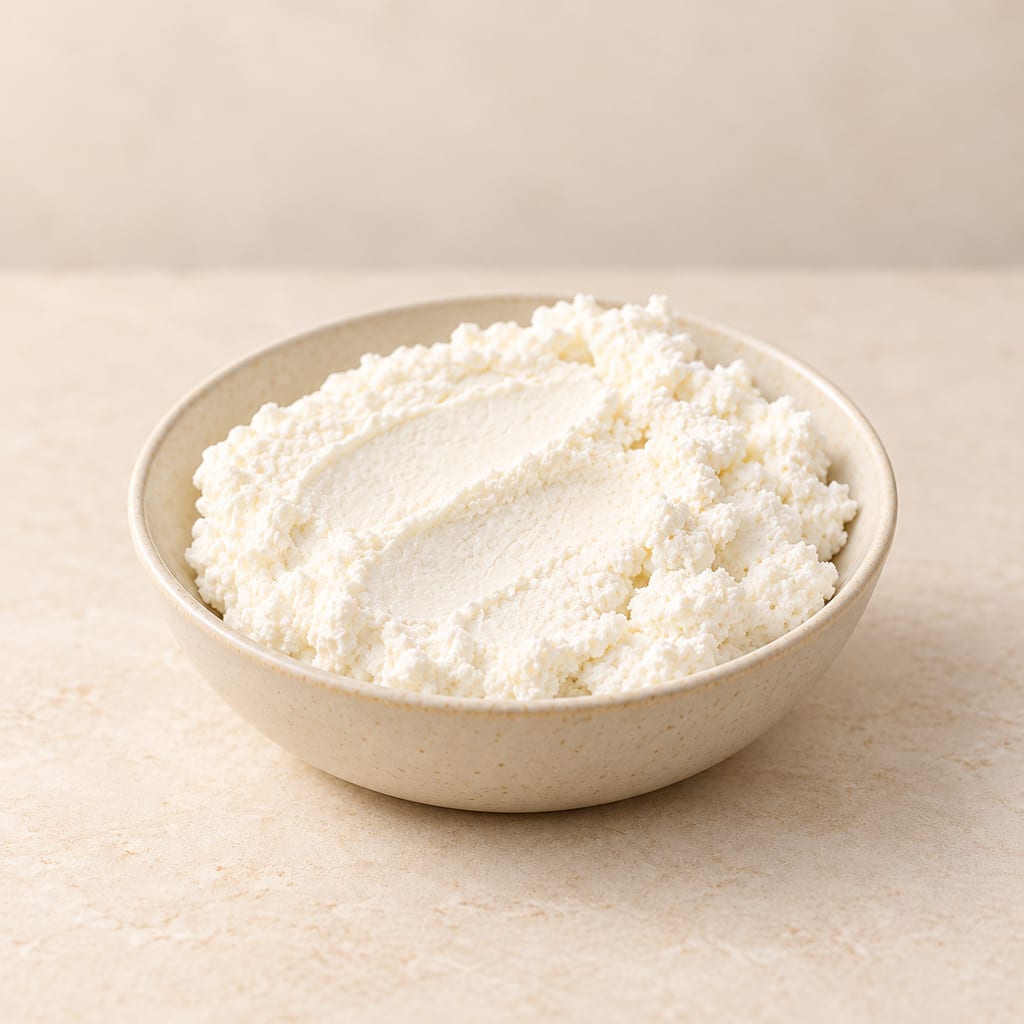
Fresh chèvre is a soft goat-milk cheese with a gently tangy flavour. This home method uses a combined lactic starter and coagulant, then drains the curd in cloth before salting and chilling.
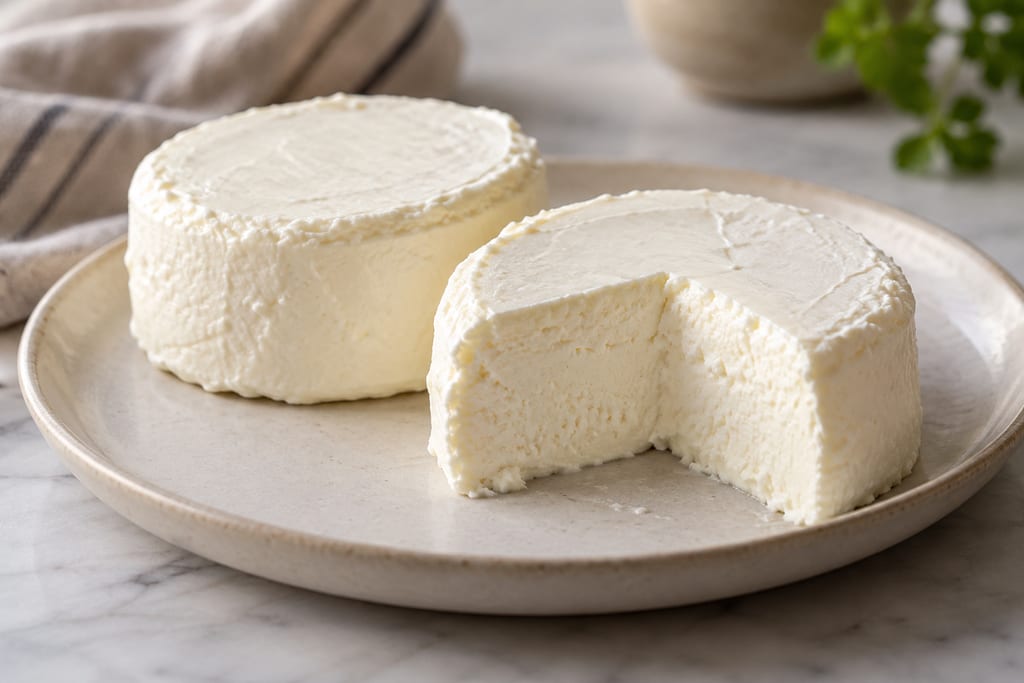
Pasteurized milk cultured with buttermilk or yogurt and set with rennet makes this soft, smooth Neufchâtel-style cheese, pressed into small forms and chilled.
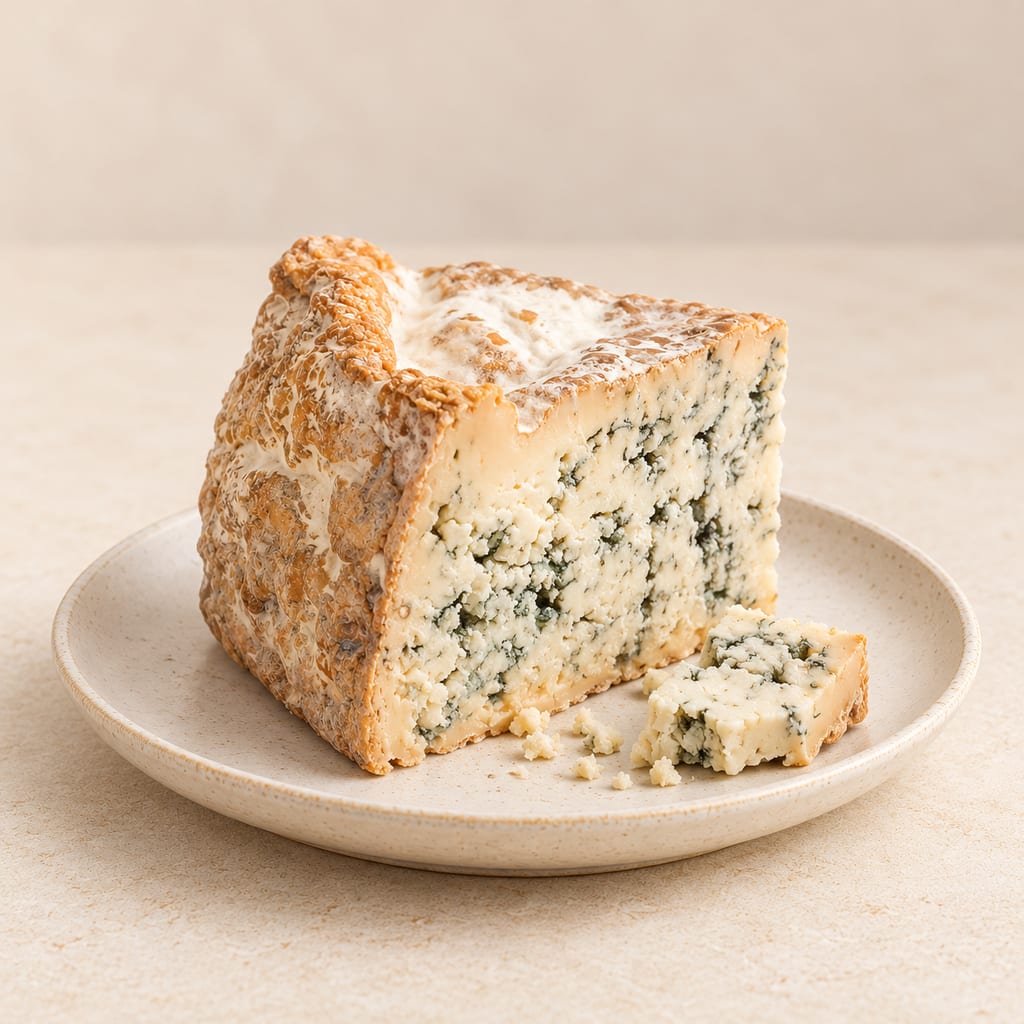
A moist blue cheese inspired by Cantabrian styles, made with pasteurized milk, a lactic starter and Penicillium roqueforti, then ripened in two stages.
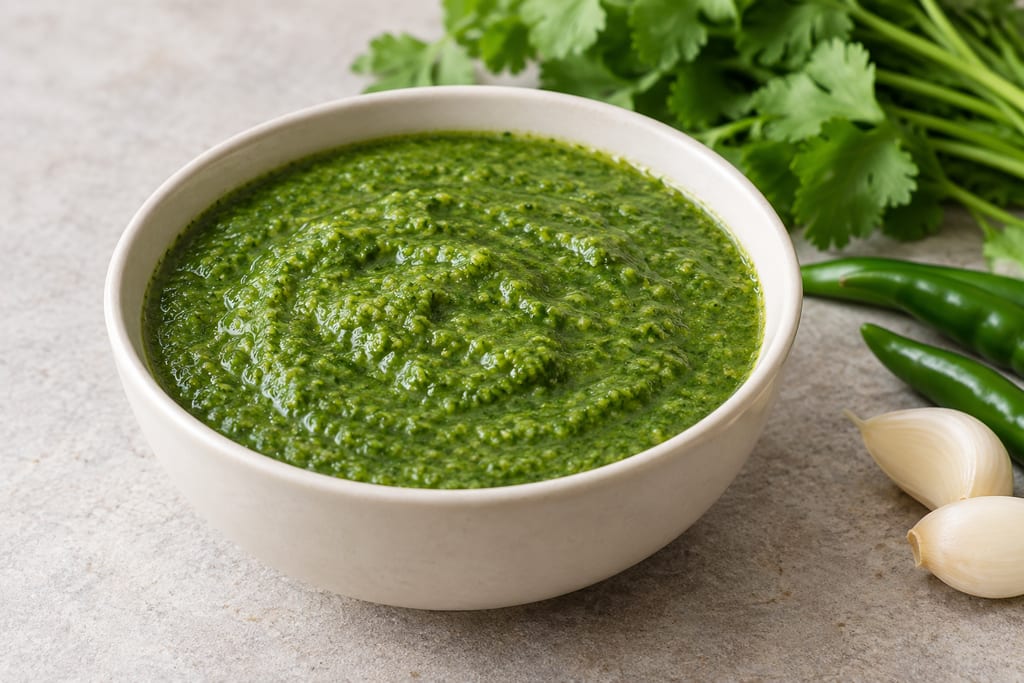
Afghan coriander chatni is a sharp, hot herb sauce with garlic and vinegar. A 2008 Afghanistan manual records green or red pepper and optional walnut; heat and household versions vary.
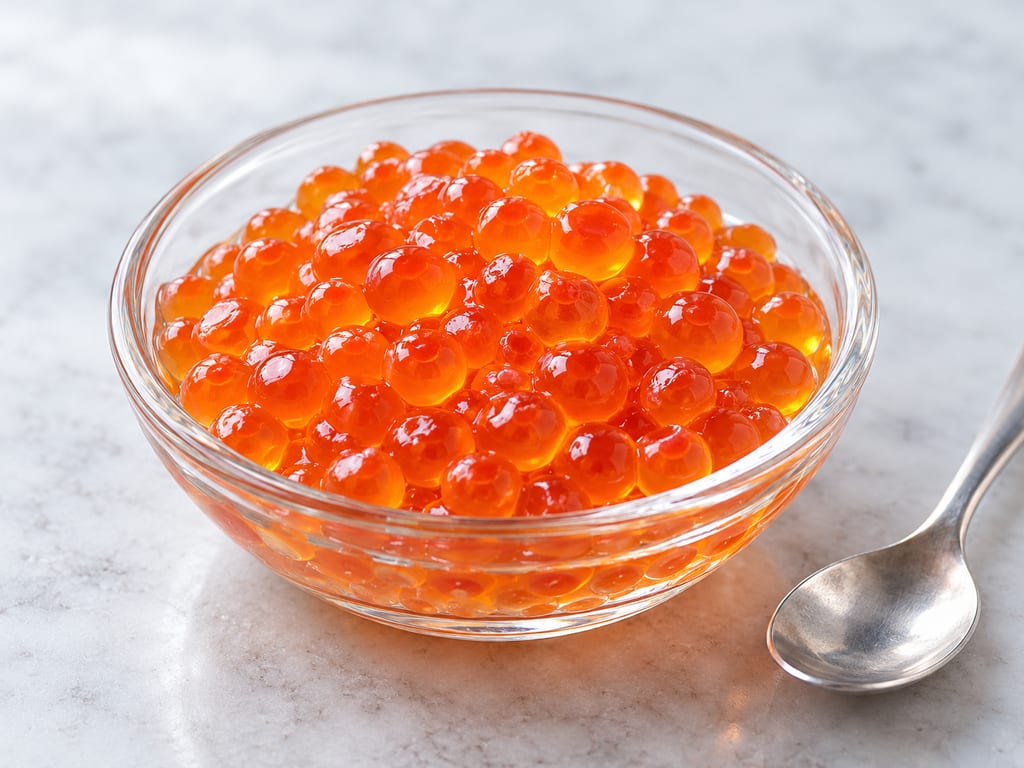
Salmon roe is separated from skeins and treated in two salt-water stages using a University of Alaska Extension formula.
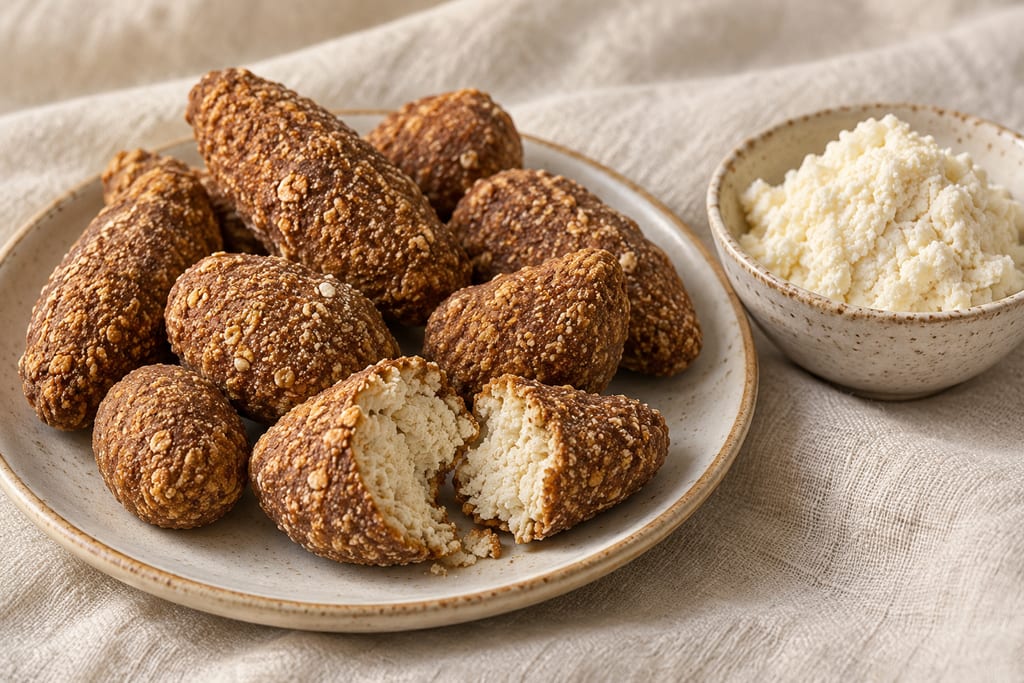
A two-stage Altai dairy preparation: sour chegen is heated into soft aarchi, then portions are drained, pressed and traditionally smoked into firm kurut.
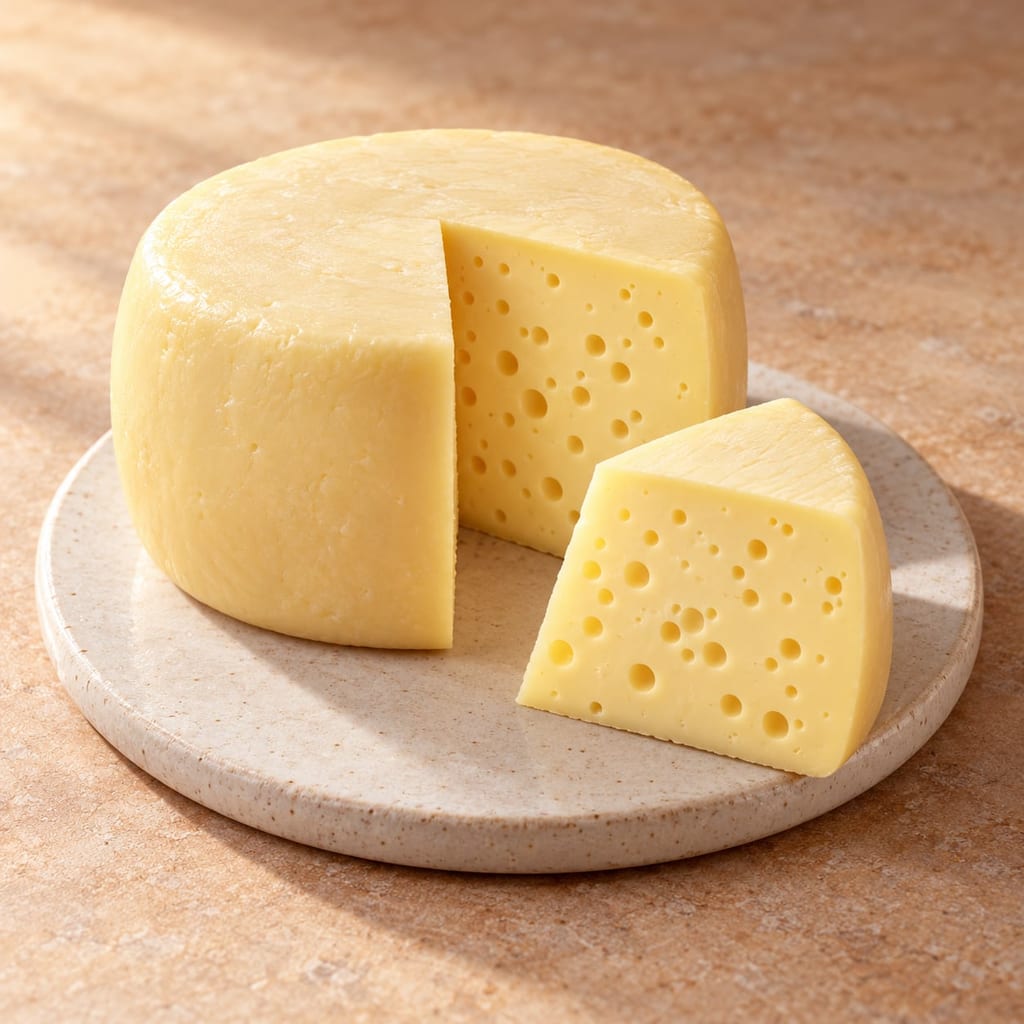
A washed-curd cheese with propionic bacteria, warmed by hot water in two steps and then held in a warm room for weeks so the bacteria can form its holes.

Beyaz peynir is a Turkish white cheese matured in brine. Sheep milk, alone or mixed with other milks, gives a close-textured cheese cut into blocks and packed in cans.
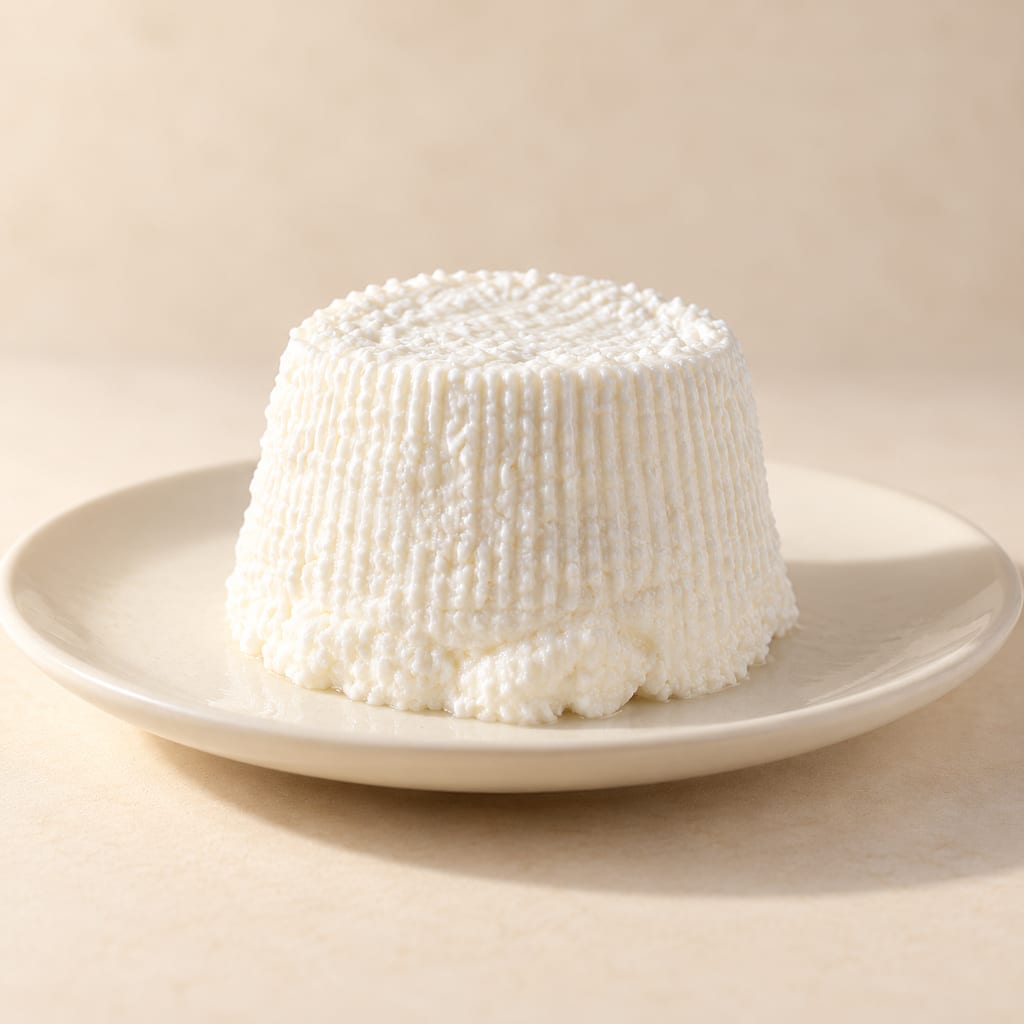
Corsican Brocciu is a whey cheese made by heating sheep's or goat's whey with whole milk and salt, then gently draining the flocculated curds. It is eaten fresh or salted and ripened as Brocciu passu.
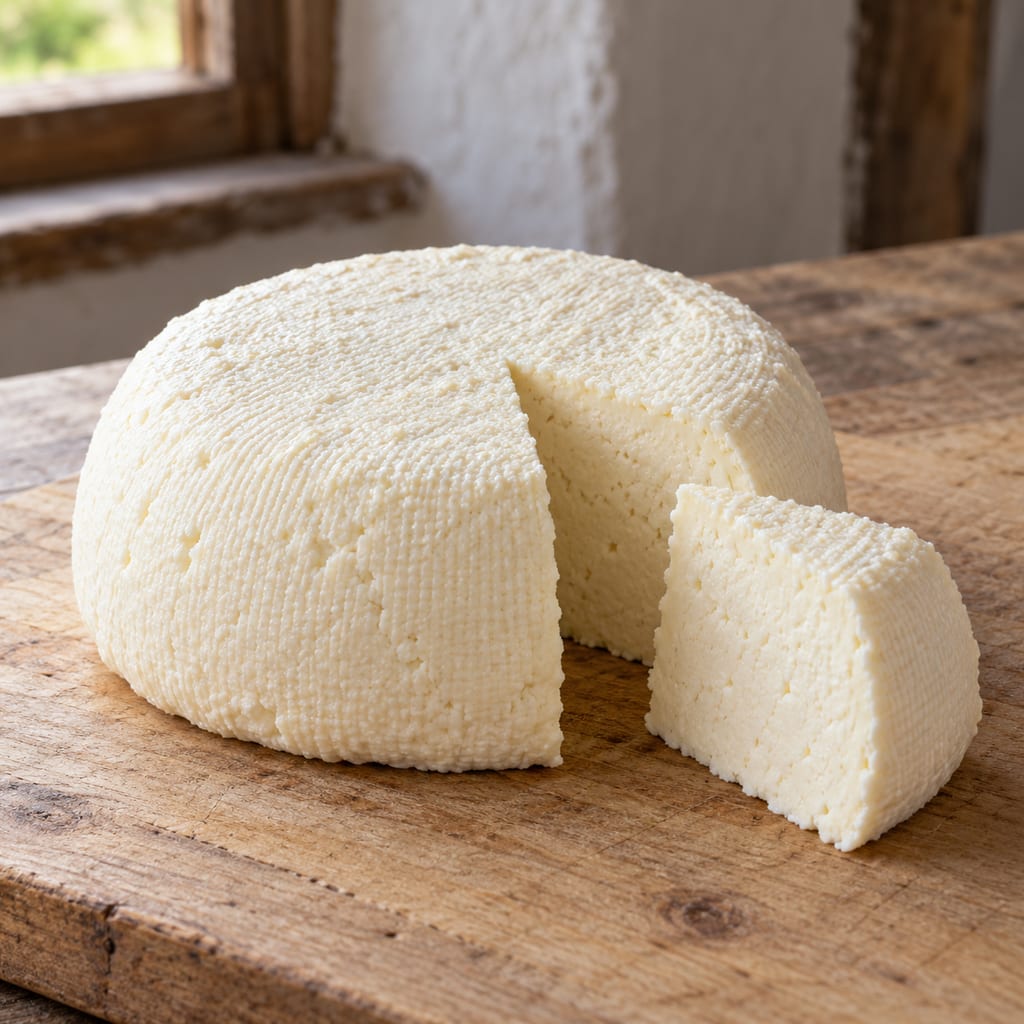
Budz is a traditional Hutsul rennet-set cheese made from sheep, cow or goat milk in the Ukrainian Carpathians, forming a fresh curd that can be eaten, smoked or processed into salted bryndza.
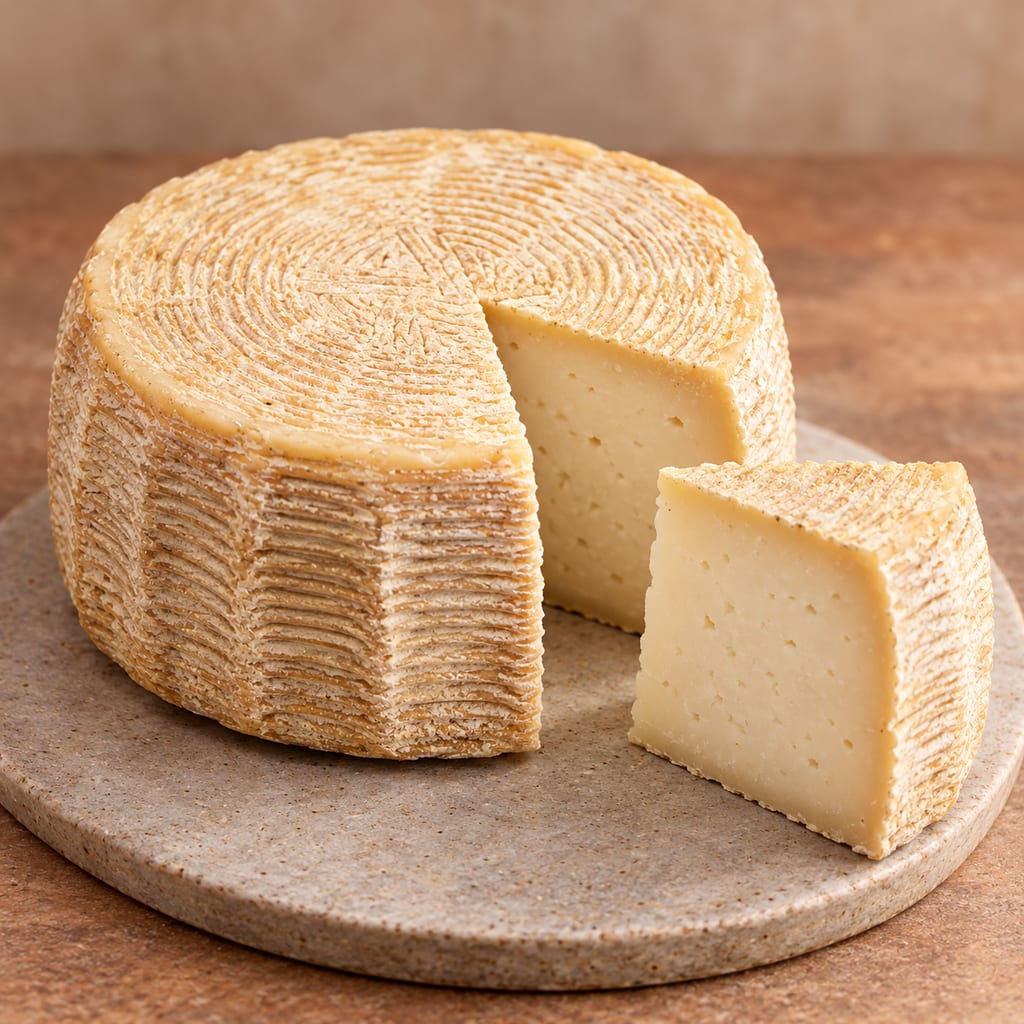
A scalded cheese moulded in baskets and re-cooked in its forms in hot whey, made alongside a ricotta from the same milk, then acidified, brined and aged for months.
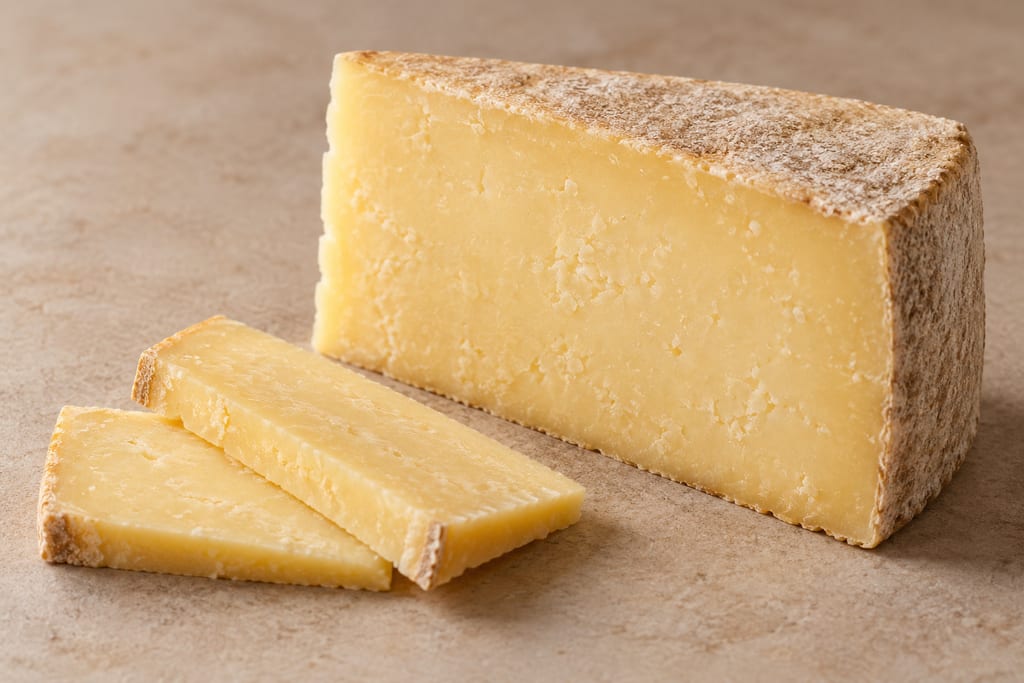
A pressed cheese whose curd is cooked slowly, then cheddared: kept warm in slabs that are turned and stacked for hours before milling, salting and pressing.
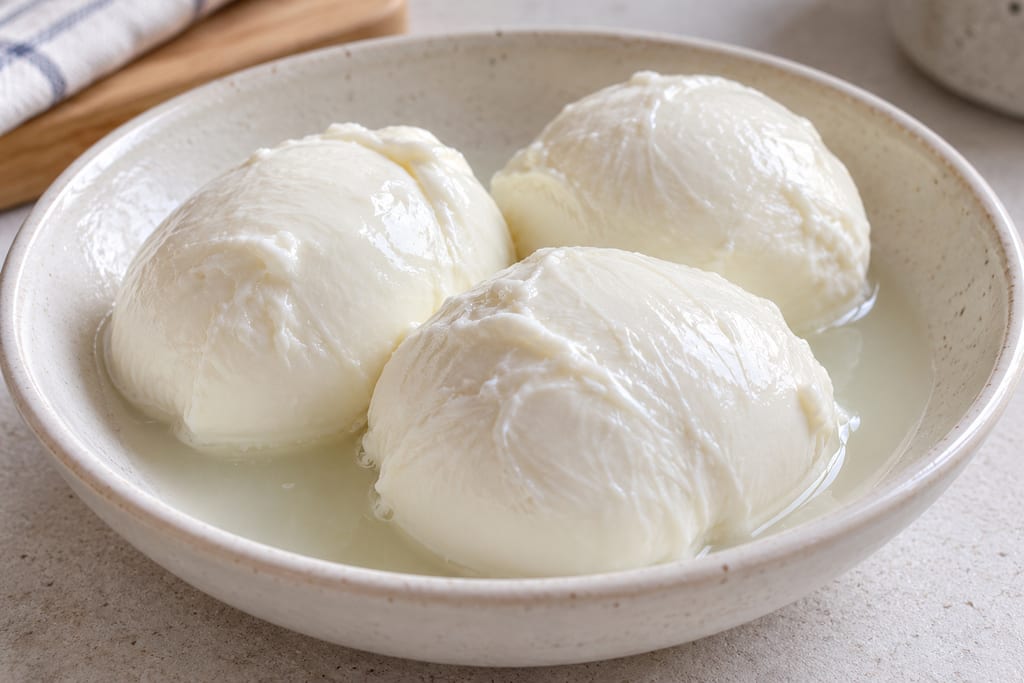
A quick fresh batch uses low-temperature-pasteurized whole milk, citric acid and rennet; the curd is warmed, drained and stretched in hot whey.
No community contributions have been published for this entry yet.
Sign in to contribute. Published comments and photos are free to read.
New England Cheesemaking Supply CompanyMethod · Equipment
Making Mozzarella in the Slow Cookeringredients
every step and temperature
probe setup
Cited in: A stretched curd without a culture stage; Why the crock leaves the heat; Stretching and reading the result; What the sources leave open
Penn State ExtensionSafety
Home Cheesemaking (Penn State Extension, K. E. Kaylegian)UP/UHT milk interferes with curd formation
raw milk not recommended for home cheesemaking
Cited in: Why the crock leaves the heat; What the sources leave open
ILCAHistory
Traditional cheesemaking manualscamorza culture-acidified stretched curd for comparison
Cited in: A stretched curd without a culture stage; What the sources leave open