C20G chèvre culture pack
A direct-set blend of lactic bacteria, a microbial coagulant and carriers for fresh chèvre, combining milk acidification and enzyme-assisted curd formation in one packet.
 FermenteaWhere food goes to change
Modern adaptation
Chèvre · Chevre
Fresh chèvre is a soft goat-milk cheese with a gently tangy flavour. This home method uses a combined lactic starter and coagulant, then drains the curd in cloth before salting and chilling.
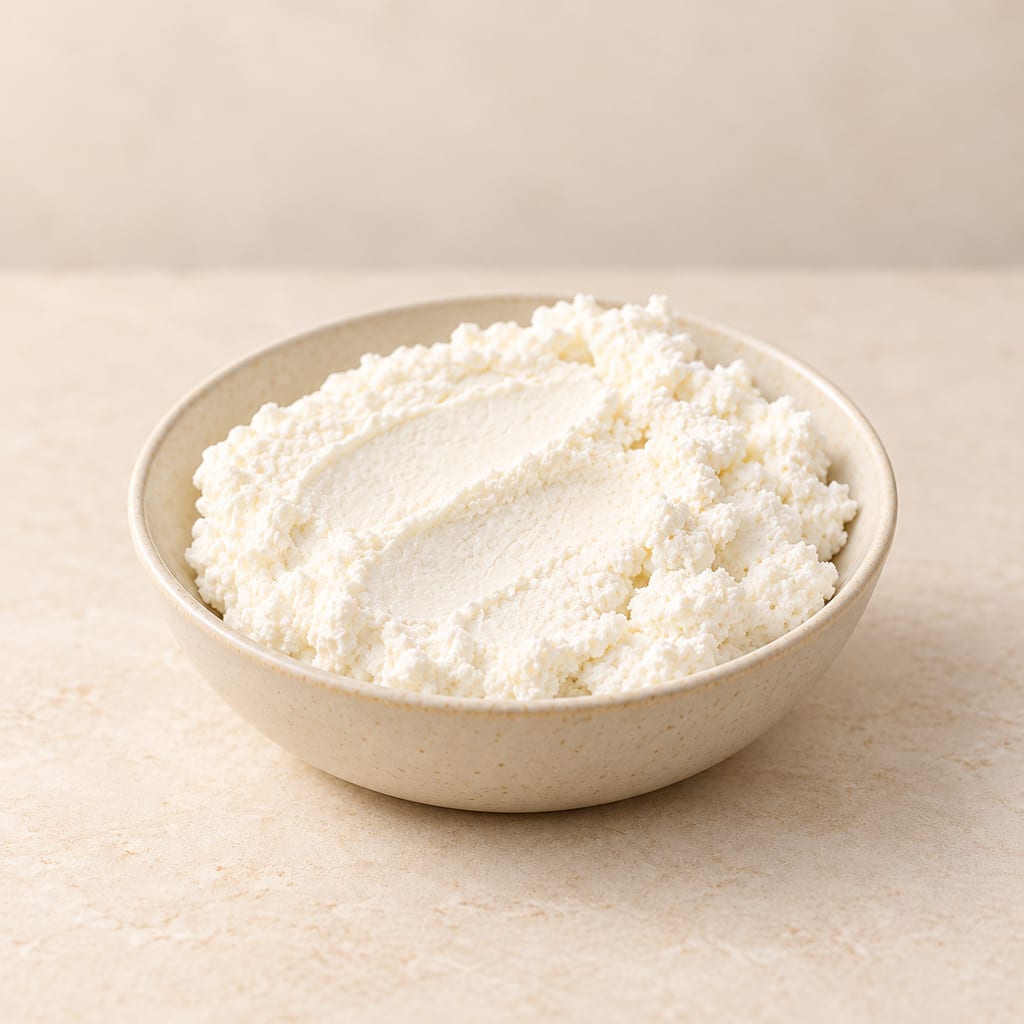
Chèvre is the French word for goat and, in a food context, a broad name for cheeses made from goat's milk. Fresh chèvre is the young, soft end of that range: a white curd that has been drained and salted, with no matured rind. It may be spoonable, spreadable or shaped into a small log. The exact body depends on how much whey remains. A moist cheese spreads readily and tastes milky and gentle; more drainage gives a firmer, drier curd whose acidity can seem more pronounced. This recipe makes one such fresh cheese using a premeasured culture-and-coagulant packet. It is a United States home adaptation built around that commercial product, not a reconstruction of a single French village method.
The term can mislead because French goat cheese is not one uniform cheese. The French goat-cheese organization ANICAP groups products into fresh, soft-ripened and aged forms. Some fresh cheeses keep a little whey and are eaten young; others are shaped and allowed to develop a rind or firmer interior. Chèvre in a supermarket may refer to a fresh log, a bloomy-rind cheese or a more mature lactic cheese. The method here stops at the fresh stage: it does not inoculate the surface for a rind, age the cheese in a cellar or define a protected regional type.
Goat milk brings its own flavor and composition to the curd. Its taste can be clean and mild or more characteristic depending on the milk, season and herd; the packet cannot make all milk taste identical. Dairy research on goat milk shows that fat, protein and casein levels relate to coagulation and curd firming. This helps explain why the same timed method may drain differently across milks. The recipe's one-gallon quantity, culture dose, temperatures and drainage times belong to the specific C20G method and should not be scaled or substituted casually.
Fresh goat cheeses have long belonged to household and farm cheesemaking because setting milk into curd and letting whey drain makes a compact food that can be handled and eaten in different ways. An agricultural extension handbook from 1992 describes French chèvres as a broad assortment made by salting fresh curds, forming them and allowing them to drain or mature for periods ranging from days to months. That span matters: the fresh cheese in this recipe is one point in a larger continuum, and the distinctive regional cheeses cannot be reduced to this packet method. The handbook's general account does not identify an origin date or prove that every French chèvre followed one common process.
French regional identities often belong to named, matured cheeses rather than to generic fresh chèvre. Pélardon, for example, is tied to the Cévennes. France's Ministry of Agriculture records several older names before the spelling Pélardon settled in the late nineteenth century, describes production professionalization from the 1970s, and notes protected designation status from 2001. Those dates and geography describe Pélardon, not the origins of all goat cheese and not this recipe. The cheese's regional story illustrates how a local product can emerge from a landscape, herd practice and marketplace, then later acquire formal recognition.
The sources examined do not establish when or where fresh chèvre first appeared. It would be tempting to use the age of goat dairying or the long history of cheese as a date for this particular style, but those are not the same evidence. The entry therefore leaves the earliest period unknown. Its documented modern recipe comes from an American cheesemaking supplier, while its cultural vocabulary and regional comparisons are French. Keeping these scopes separate lets the reader understand both the adaptation and the tradition without inventing a route between them.
The C20G packet combines two different functions. Its lactic starter organisms use lactose in the milk and produce lactic acid. The manufacturer's product sheet identifies mesophilic Lactococcus strains, including aroma-producing L. lactis subsp. lactis biovar diacetylactis. The packet also contains a microbial coagulant enzyme preparation derived from Rhizomucor miehei. That enzyme is a processed coagulant, not a living mould intended to grow on the cheese. The distinction matters: acidification and enzyme coagulation both help destabilize milk proteins, but they are not the same event and they do not create an aged mould-ripened cheese.
Milk proteins, especially casein, are dispersed in the milk with fat globules and water. Acid produced by the starter changes the chemical environment around the casein particles. Coagulant enzyme acts on casein as well, reducing the stability that keeps milk fluid. The particles aggregate into a delicate network that traps fat and water, forming a soft curd. A 2023 goat-cheese drainage study describes lactic acid, enzyme action and dissolved ions as contributors to the destabilization and aggregation of casein micelles. This recipe's quiet 6–12 hour set is not a rapid hard-cheese coagulation; the culture has time to acidify the milk while the curd forms.
The finished texture also depends on strain behavior and milk composition. The C20G packet is standardized for a stated gallon amount, and the supplier cautions that its dosing is designed around that cheese. The cheesemaking supplier explains that a longer drain can produce more acidity and a drier, less creamy cheese; it also describes seasonal changes in milk solids as one reason a familiar batch can turn dry. These are useful explanations of variability, not a license to alter the safety controls or assume a single adjustment fixes every result.
Sanitation comes first because the cheese is fresh and receives no aging period that could serve as a controlled maturation stage. The recipe calls for pasteurized goat milk, a clean pot, utensils, colander and draining cloth. The culture packet is sprinkled onto milk warmed to 68–72°F (20–22°C), allowed to hydrate briefly and stirred in. The relatively cool setting is suitable for a mesophilic culture. The milk is then left alone. Stirring after inoculation would disrupt the fragile structure as it develops, while steady conditions give the acidifying starter and coagulant time to produce a set.
After 6–12 hours, look for a coherent curd, a clean break and whey separation. These observations describe the structure, not the safety of the cheese. A curd that has not set as expected should not be made safe by simply extending the time without guidance; the formula gives a range, not an unlimited incubation. Once set, the curd is ladled rather than cut into small cubes. That preserves a soft, moisture-rich structure suited to fresh chèvre. The fine cloth supports the curd while gravity carries whey through its weave.
Draining is the main texture control in this recipe. About six hours produces a moist result in the supplier's directions; longer draining makes a drier and tangier cheese. During drainage, the casein network rearranges and contracts, expelling whey. The process naturally slows as the curd firms and the remaining liquid meets greater resistance. This explains why a cheese can lose whey quickly at first, then seem to change little near the end. It also explains why temperature, curd structure, milk solids and acidity affect the outcome alongside elapsed time.
Only after drainage is salt mixed through the curd. Salt seasons the cheese and affects how it eats, but the listed amount is a taste range, not a validated preservation control. Calcium chloride appears in the ingredient list for pasteurized milk, but no dose or step is given for it. The cheese is transferred to a covered container and refrigerated promptly.
Fresh chèvre can be eaten as soon as it is drained, while many other goat cheeses continue through a separate aging path. The French goat-cheese classifications distinguish fresh from soft-ripened and aged cheeses. Aging changes moisture, texture and flavor over time; a rind may be natural, ash-covered or mould-ripened depending on the distinct cheese. Pélardon demonstrates why those versions deserve their own description: it is a Cévennes product with a protected name and a documented regional history. The C20G recipe does not supply the conditions required to turn its fresh curd into Pélardon or any other appellation cheese.
Different starter-and-coagulant systems can also make fresh goat cheese. A cook may encounter separate mesophilic starter and rennet methods, or commercial packets that combine them in one dose. These approaches should remain distinct because dose, temperature, acid development and drainage instructions depend on the specific culture and recipe. The supplier notes that other starter choices can change aroma and texture. The record's packet method should not be swapped for a different culture or milk on the assumption that the results will match.
Milk itself varies by herd and season. Changes in protein, casein and fat can affect curd firming and whey loss; milk processing also matters. Ultra-pasteurized milk is excluded in the supplier's recipe. Raw milk changes the microbial starting point and the source's protocol does not validate its use here. Nor should cow's milk be treated as a direct stand-in: it produces a different cheese and may require a different method. A fresh cheese with herbs or spices is a serving variation after the base curd is made, not a change to the fermentation recipe.
Fresh chèvre is versatile because its soft curd can be spread, crumbled or shaped. Plain, it brings lactic tang and goat-milk character to bread, vegetables and salads. Herbs, pepper, honey or fruit can be added when serving; these should be understood as accompaniments rather than ingredients in the culture stage. A smooth, moist cheese suits spreading, while a longer-drained curd holds its shape more readily. The contrast with a mature goat cheese is clear at the table: fresh chèvre tastes milky and gently acidic, while drying and ripening can concentrate flavor and produce a rind or denser center.
The supplier's roughly one-pound yield is tied to its one-gallon formula; actual yield varies with milk composition and how much whey drains away. The finished cheese is highly perishable. The method directs prompt refrigeration, and the supplier recommends eating its cheese within about a week to ten days, while New Mexico State University's general guidance gives five to seven refrigerated days for soft cheeses. Those are not identical claims, so this record does not collapse them into a guaranteed storage life for every batch. Use clean utensils, maintain refrigeration and do not rely on smell, taste or appearance to establish safety.
Several normal differences have practical explanations. A softer curd can reflect more retained whey; a drier or more tangy cheese can reflect more acid development or longer drainage. Seasonal changes in milk solids may affect texture even when the measured steps are repeated. A packet culture that is old, warm-stored or clumped may not perform as specified; the manufacturer's storage sheet says it should be kept frozen and remain a free-flowing powder. These explanations help interpret quality without turning a failed or uncertain batch into a safe one. If milk handling, sanitation or refrigeration has been uncertain, the finished cheese cannot be cleared by its set or flavor.
Chèvre is the French name used for goat cheeses, which include fresh, soft-ripened and aged forms. Fresh chèvre has no rind and may be sold directly from its mould with some whey remaining. This American home method makes that fresh style with a commercial packet containing lactic starter and coagulant; it is distinct from the regional French cheeses aged with natural or bloomy rinds.
Yield 1 lb · Scaling: source batch only
Fresh cheese can carry Salmonella spp., Escherichia coli, Listeria monocytogenes or Staphylococcus aureus from milk or handling.
Hazard sourceUse pasteurized milk, wash hands, clean and sanitize food-contact equipment and draining cloth, and cool the finished cheese promptly.
Control sourceFresh cheese can be contaminated during handling. Use pasteurized milk, clean and sanitized equipment and cloth, and washed hands; refrigerate the finished cheese promptly.
C20G chèvre culture pack — Lactococcus lactis subsp. lactis, Lactococcus lactis subsp. cremoris and Lactococcus lactis subsp. lactis biovar. diacetylactis acidify the milk. The packet also contains a coagulant derived from Rhizomucor miehei; this is an enzyme preparation, not a mould-ripening stage.
Fresh cheese; no maturation humidity specified.
Commercial-packet home method published by New England Cheesemaking Supply Company; no birthplace claim.
Fresh chèvre is one of the French goat-cheese styles; this row does not identify the C20G formula as a regional French recipe.
A direct-set blend of lactic bacteria, a microbial coagulant and carriers for fresh chèvre, combining milk acidification and enzyme-assisted curd formation in one packet.
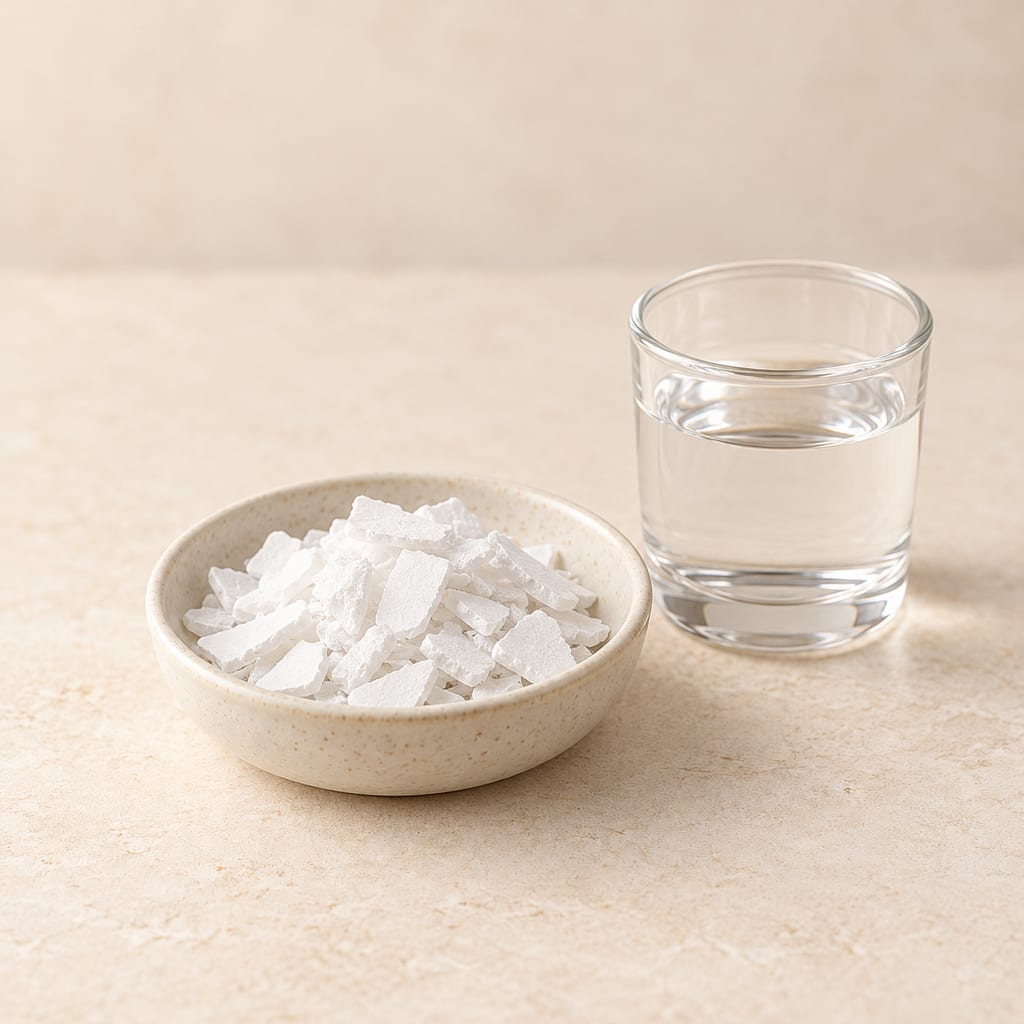
A soluble calcium salt used to support cheese curd formation, balance cheese brines, reinforce some plant tissues and adjust brewing water.
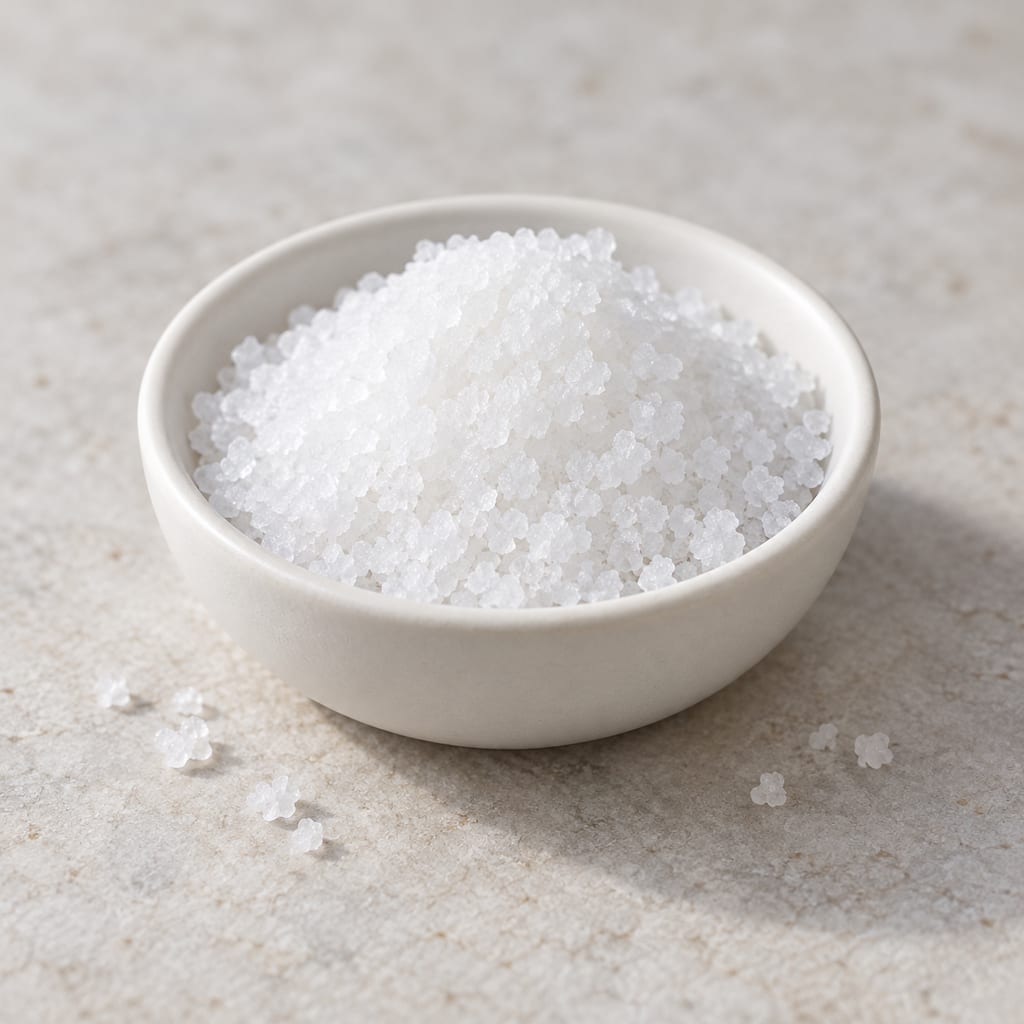
Food-grade sodium chloride selected for cheesemaking seasons curd and changes its moisture, microbial environment and rind; grain and application must suit the particular cheese.
Heat-treated milk from domestic goats supplies lactose, proteins and fat for cultured dairy and cheese; its heat treatment and composition affect how it behaves in the vat.
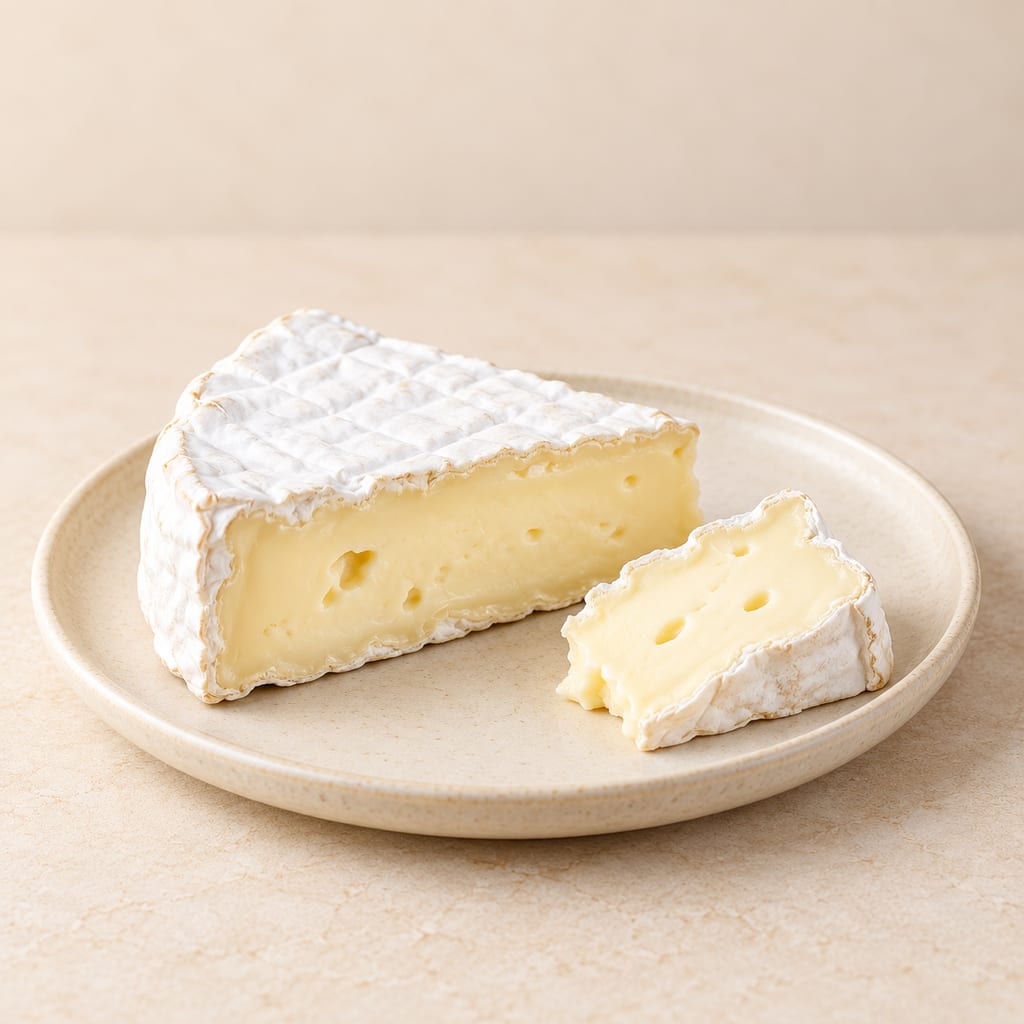
A cream-enriched Brie with a white bloomy rind and a softening center, made from pasteurized milk with lactic and surface cultures.
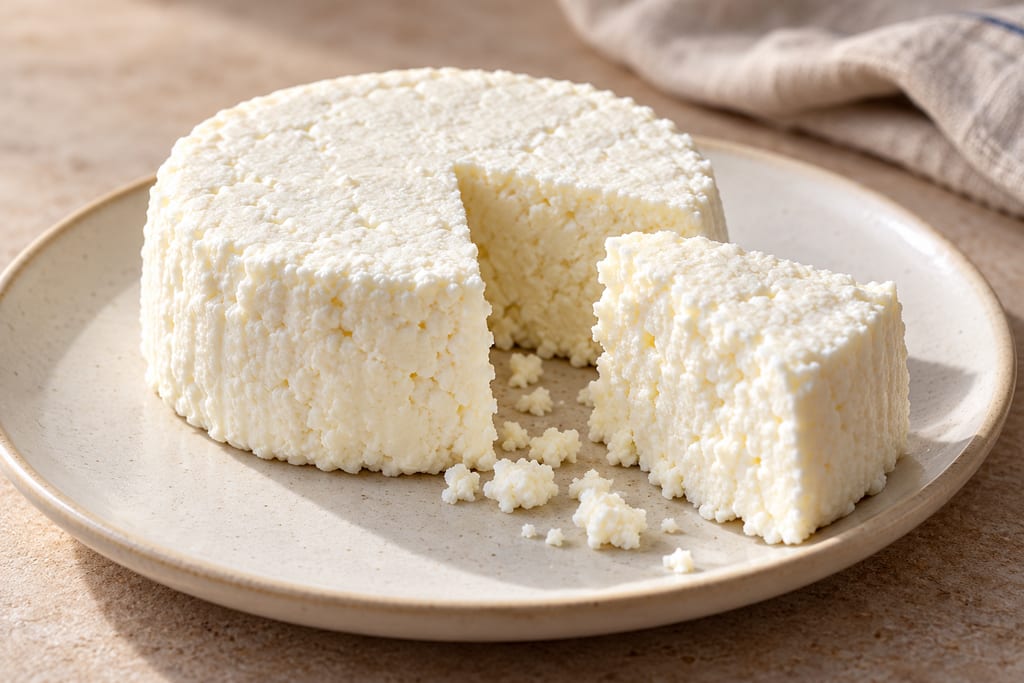
Cultured buttermilk, pasteurized milk, vinegar and rennet make this soft, crumbly queso fresco by a New Mexico home method adapted from Washington’s Abuela Project.
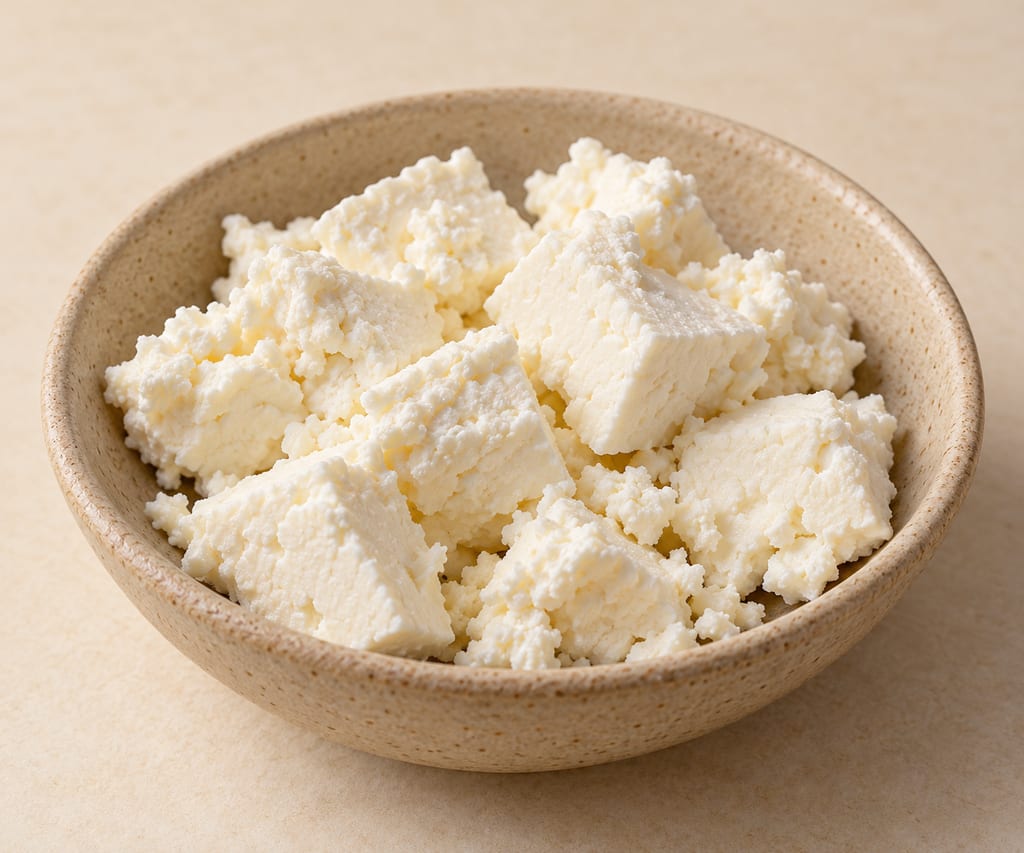
Whole milk set with a mesophilic starter and rennet makes a fresh, crumbly feta-style cheese. Its curds pass through hot salted whey before molding.
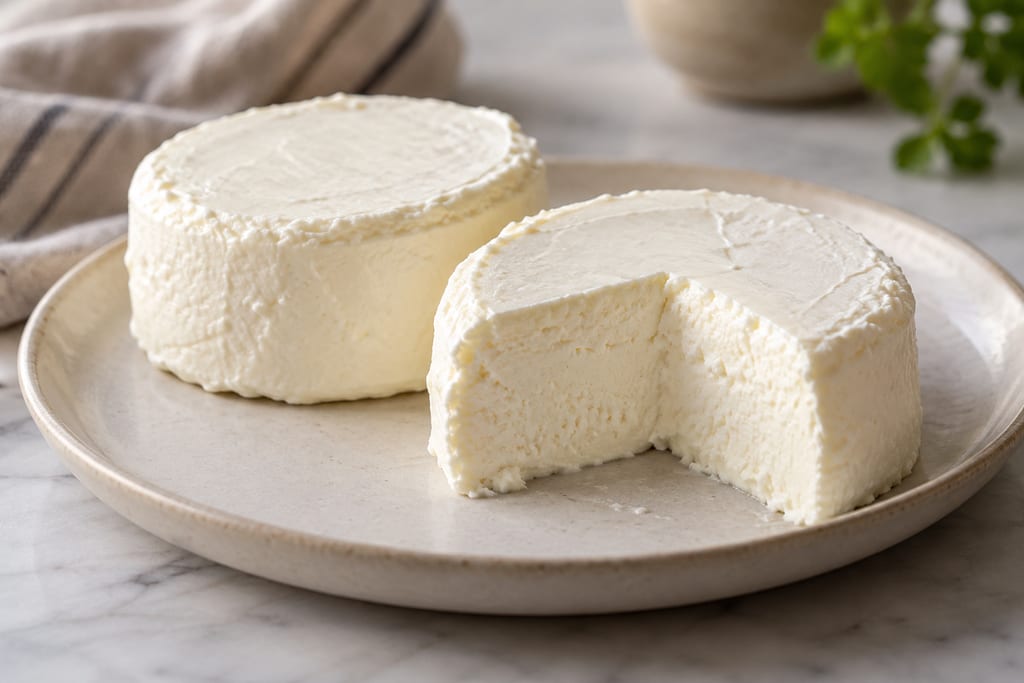
Pasteurized milk cultured with buttermilk or yogurt and set with rennet makes this soft, smooth Neufchâtel-style cheese, pressed into small forms and chilled.
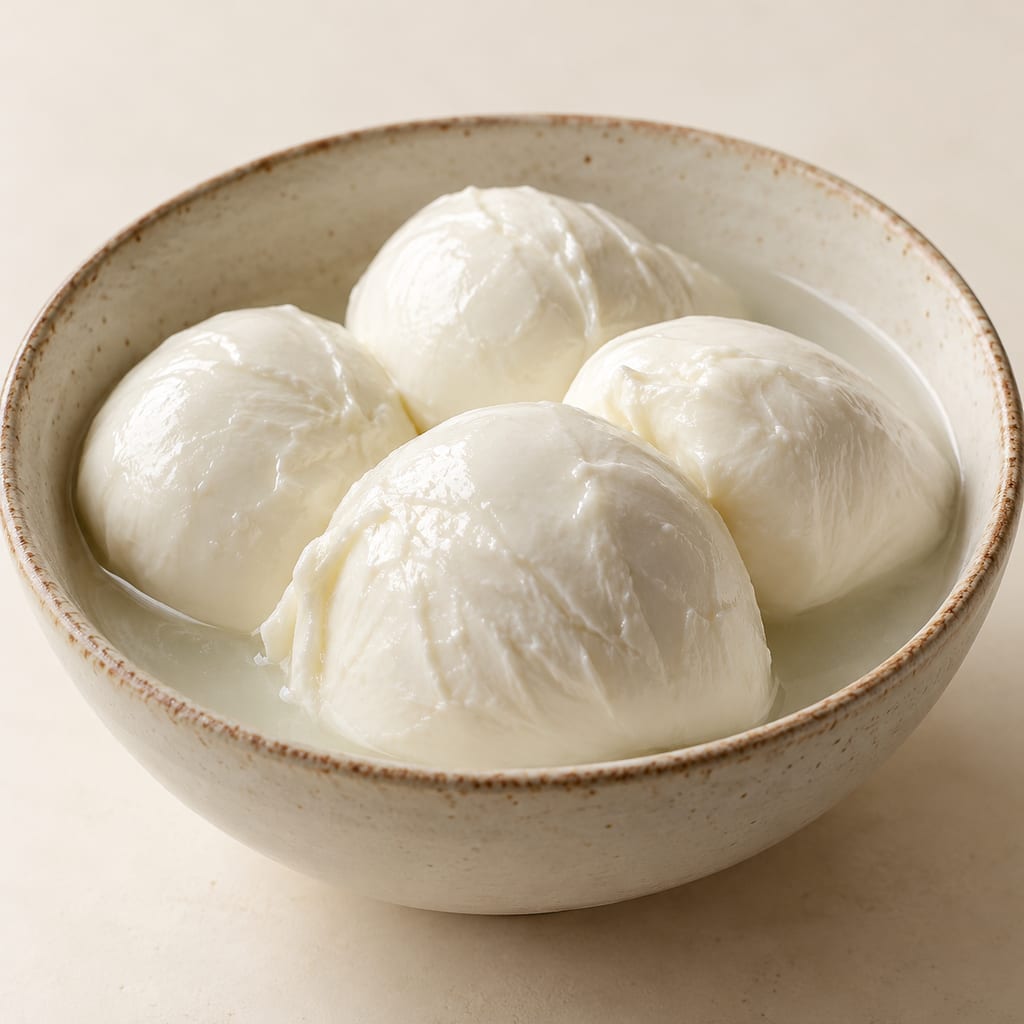
A stretched fresh curd made by acidifying cold milk with citric acid before adding rennet, so the curd can be stretched as soon as it has formed.
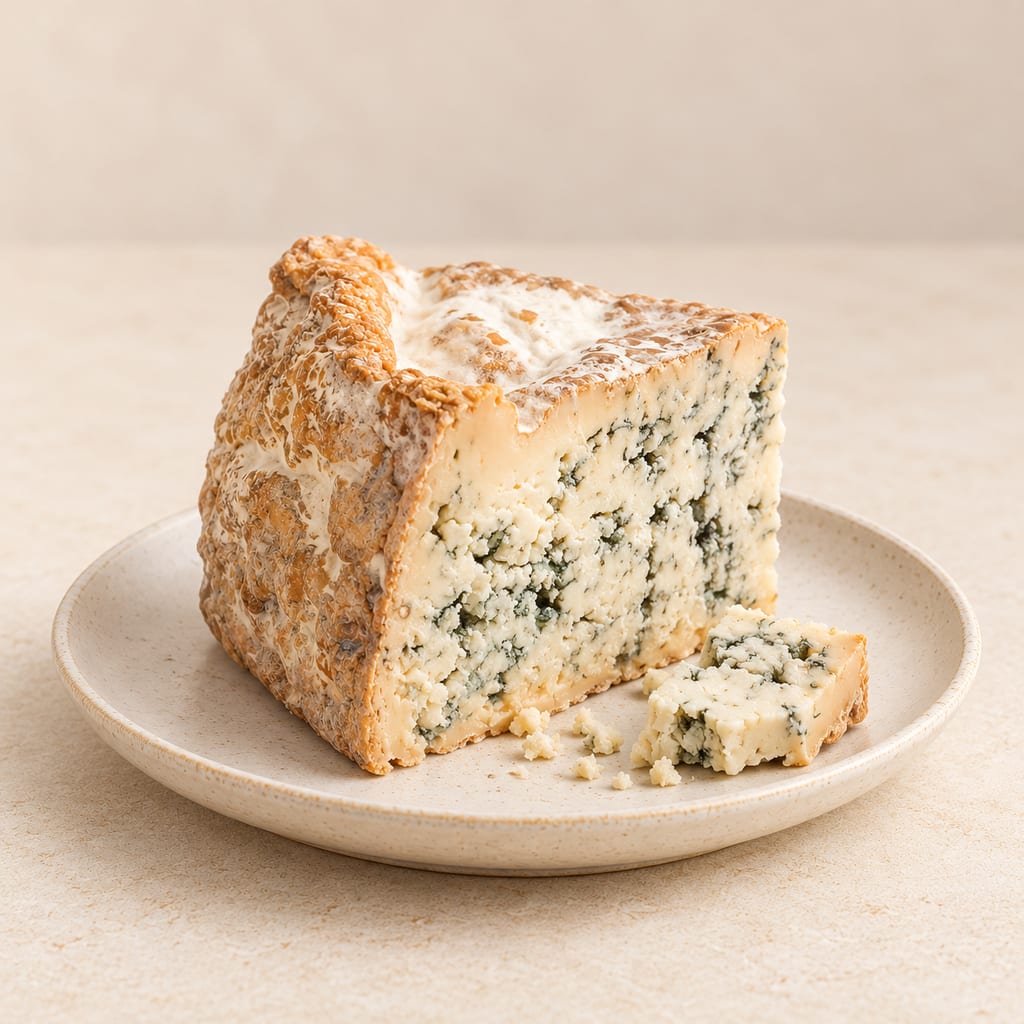
A moist blue cheese inspired by Cantabrian styles, made with pasteurized milk, a lactic starter and Penicillium roqueforti, then ripened in two stages.
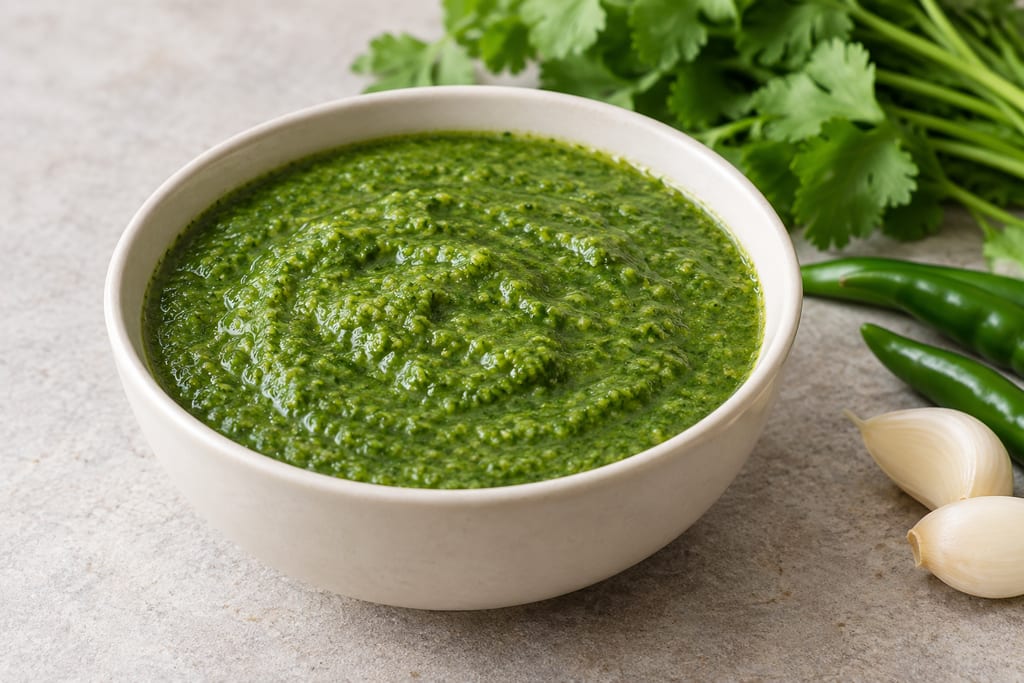
Afghan coriander chatni is a sharp, hot herb sauce with garlic and vinegar. A 2008 Afghanistan manual records green or red pepper and optional walnut; heat and household versions vary.

Salmon roe is separated from skeins and treated in two salt-water stages using a University of Alaska Extension formula.
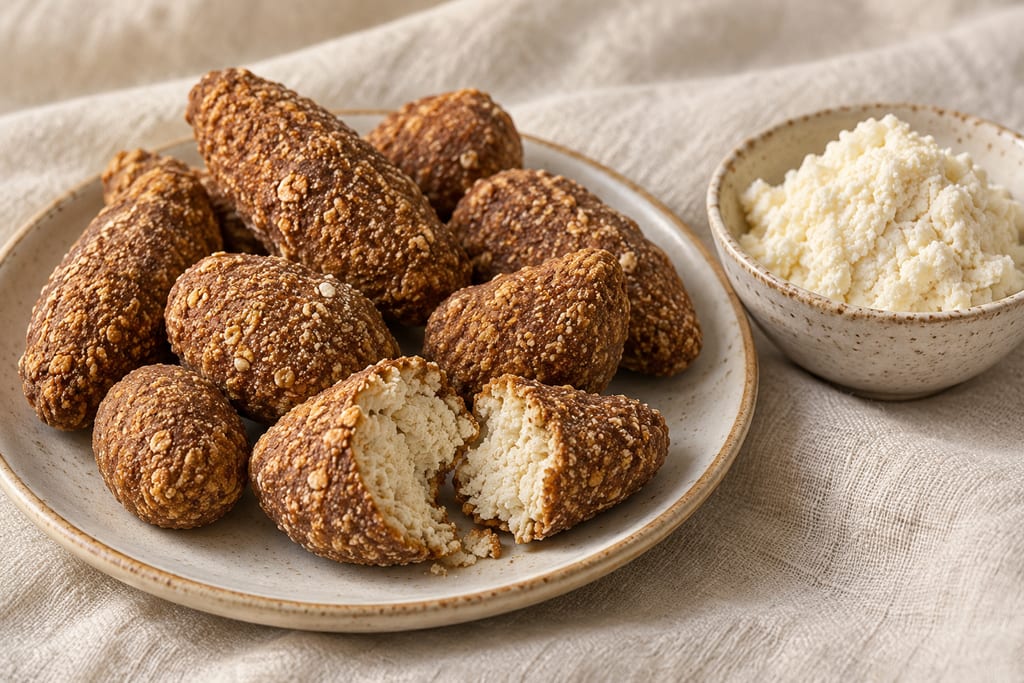
A two-stage Altai dairy preparation: sour chegen is heated into soft aarchi, then portions are drained, pressed and traditionally smoked into firm kurut.
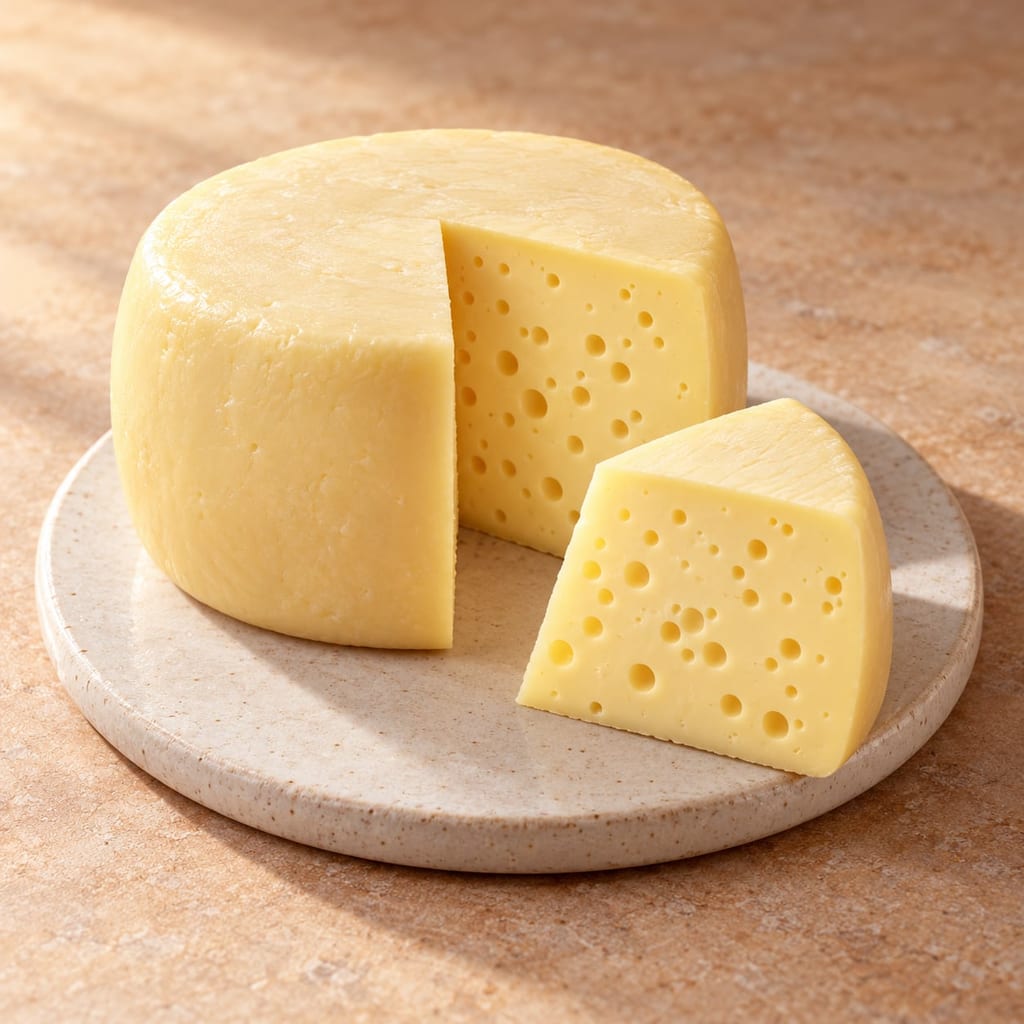
A washed-curd cheese with propionic bacteria, warmed by hot water in two steps and then held in a warm room for weeks so the bacteria can form its holes.
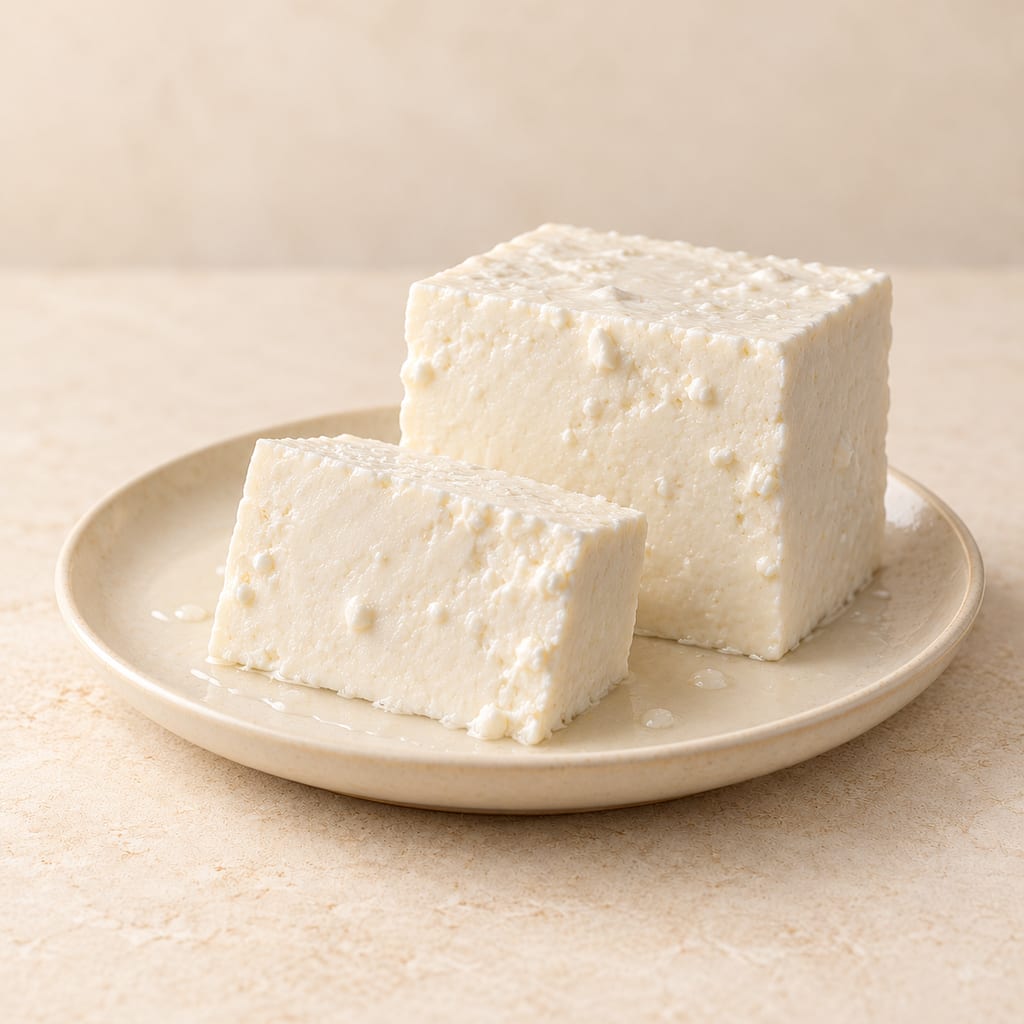
Beyaz peynir is a Turkish white cheese matured in brine. Sheep milk, alone or mixed with other milks, gives a close-textured cheese cut into blocks and packed in cans.
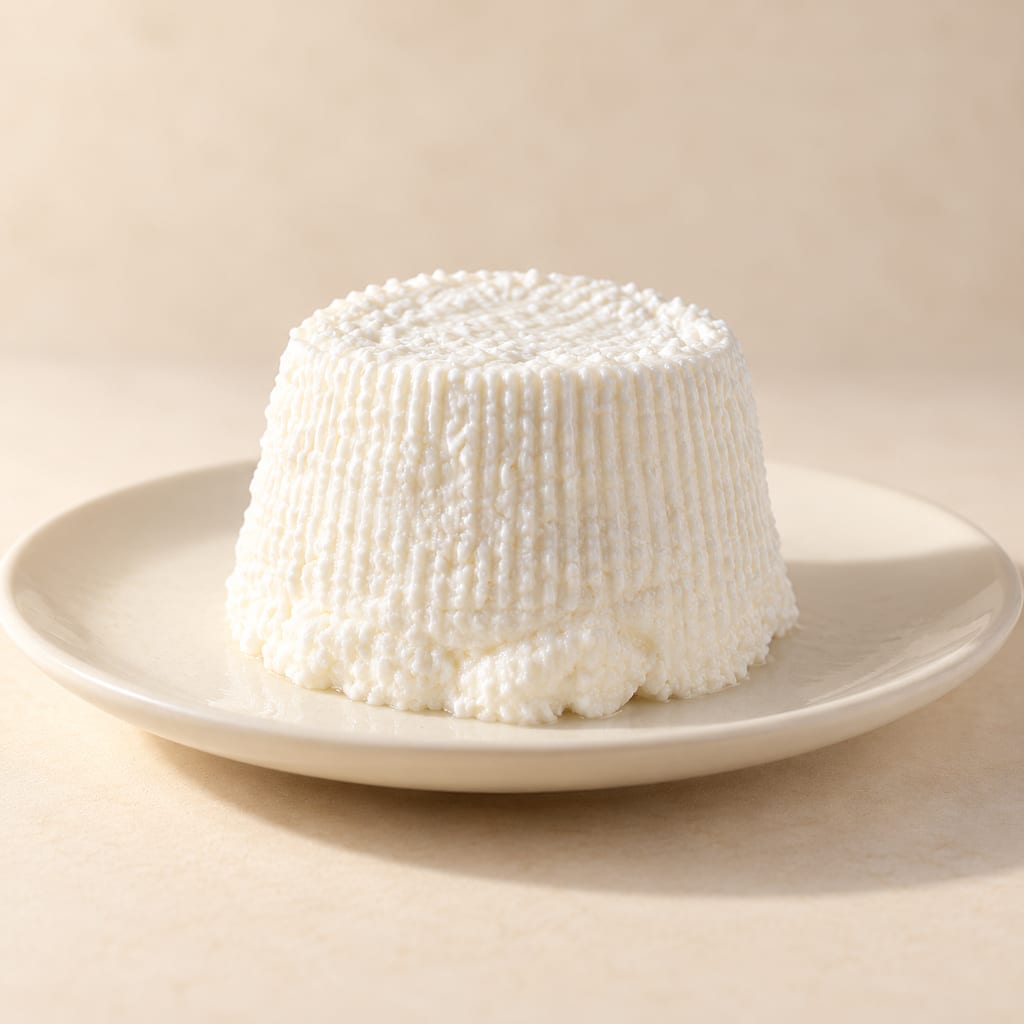
Corsican Brocciu is a whey cheese made by heating sheep's or goat's whey with whole milk and salt, then gently draining the flocculated curds. It is eaten fresh or salted and ripened as Brocciu passu.
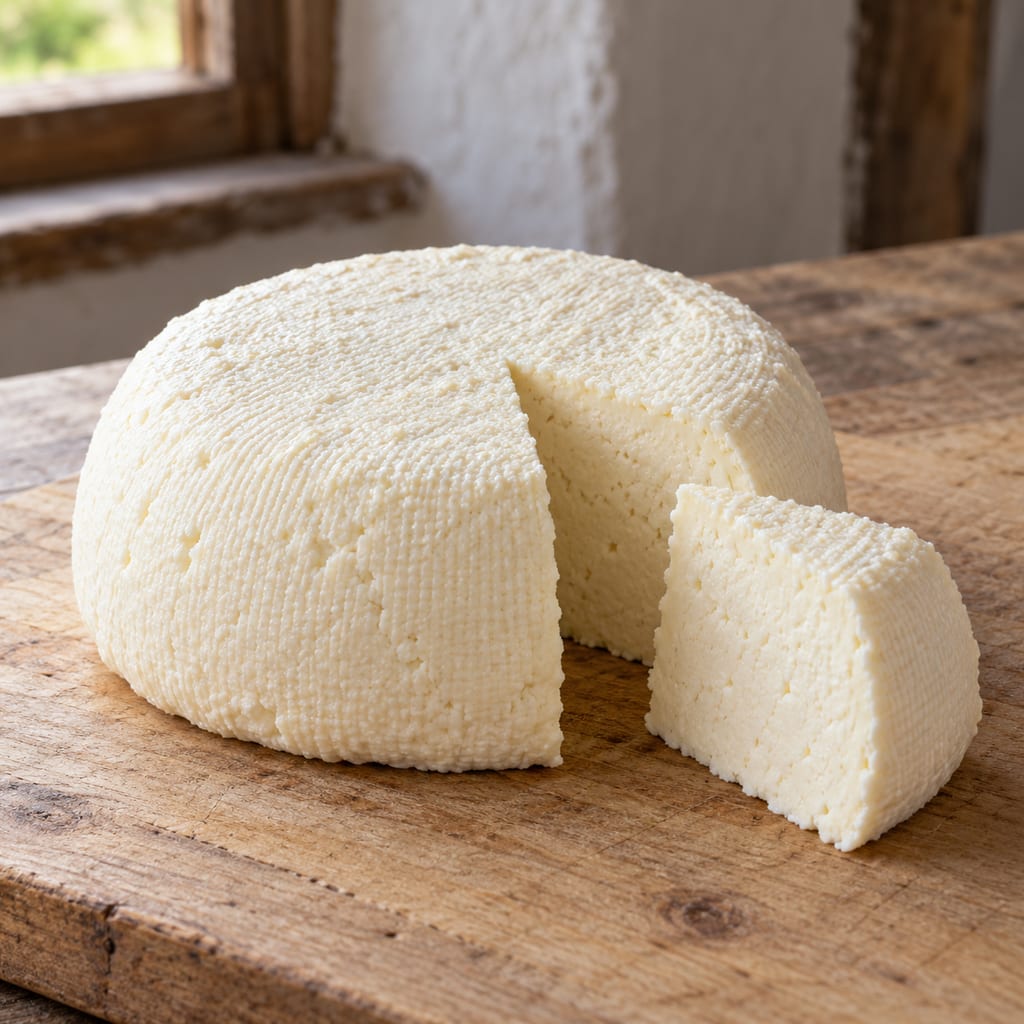
Budz is a traditional Hutsul rennet-set cheese made from sheep, cow or goat milk in the Ukrainian Carpathians, forming a fresh curd that can be eaten, smoked or processed into salted bryndza.
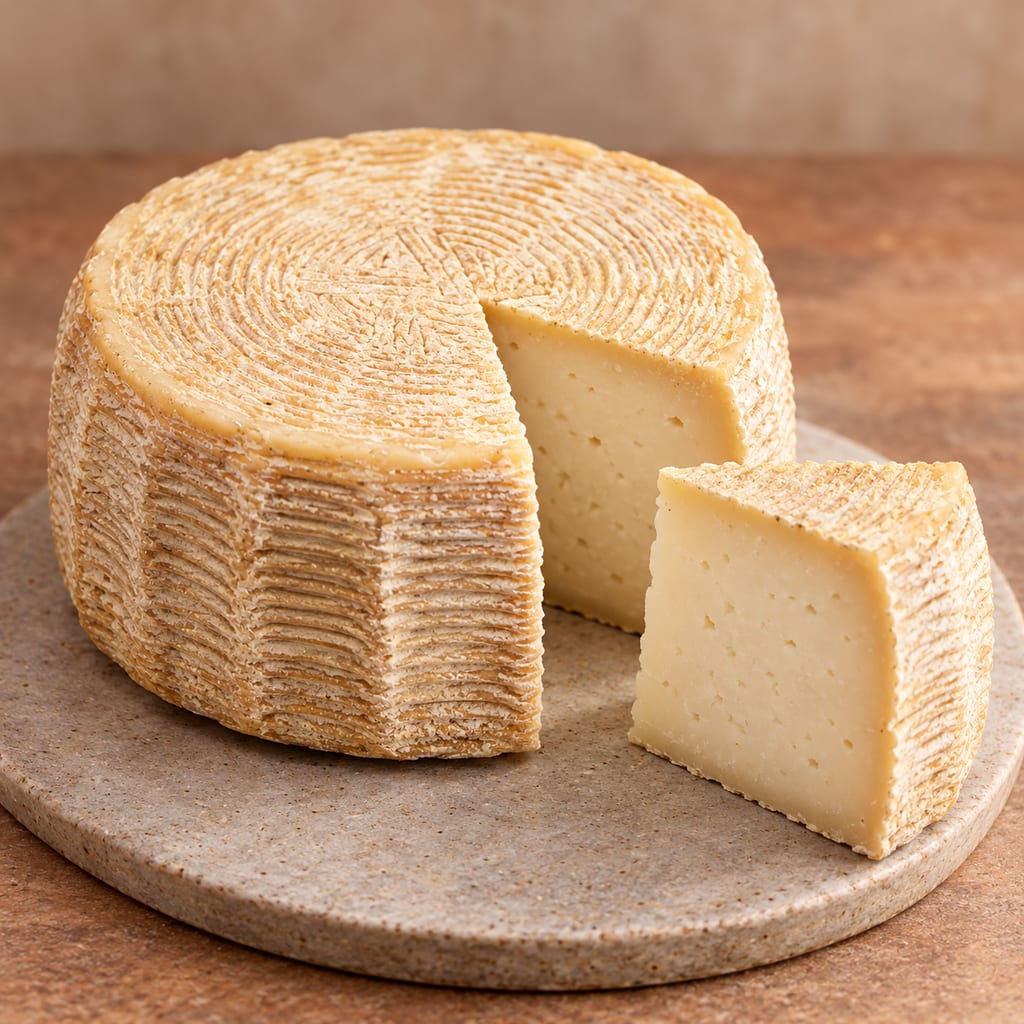
A scalded cheese moulded in baskets and re-cooked in its forms in hot whey, made alongside a ricotta from the same milk, then acidified, brined and aged for months.
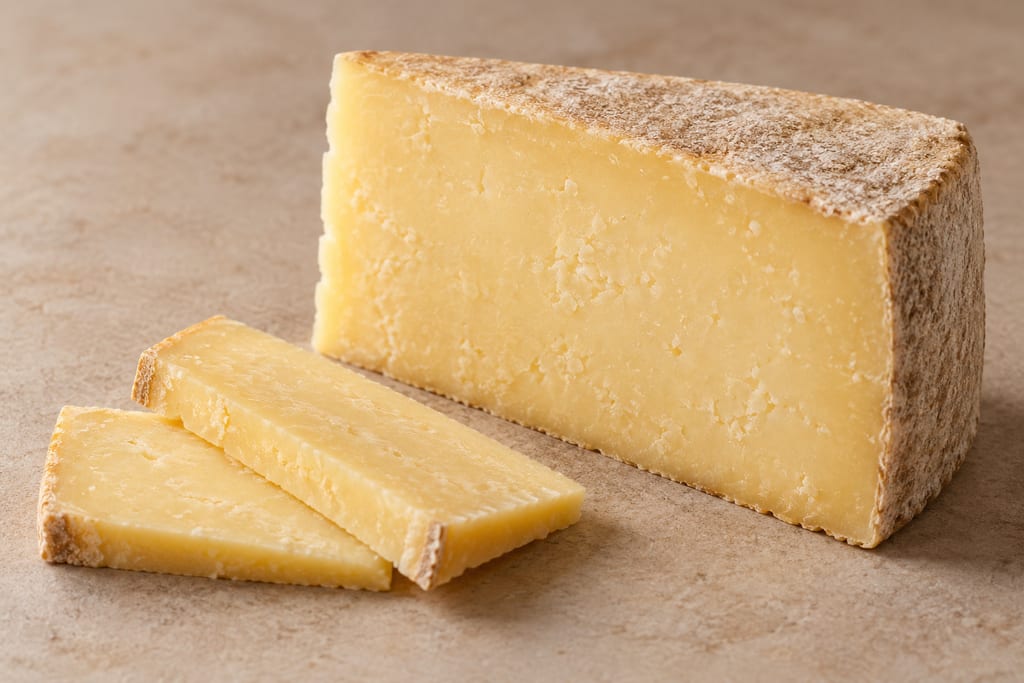
A pressed cheese whose curd is cooked slowly, then cheddared: kept warm in slabs that are turned and stacked for hours before milling, salting and pressing.
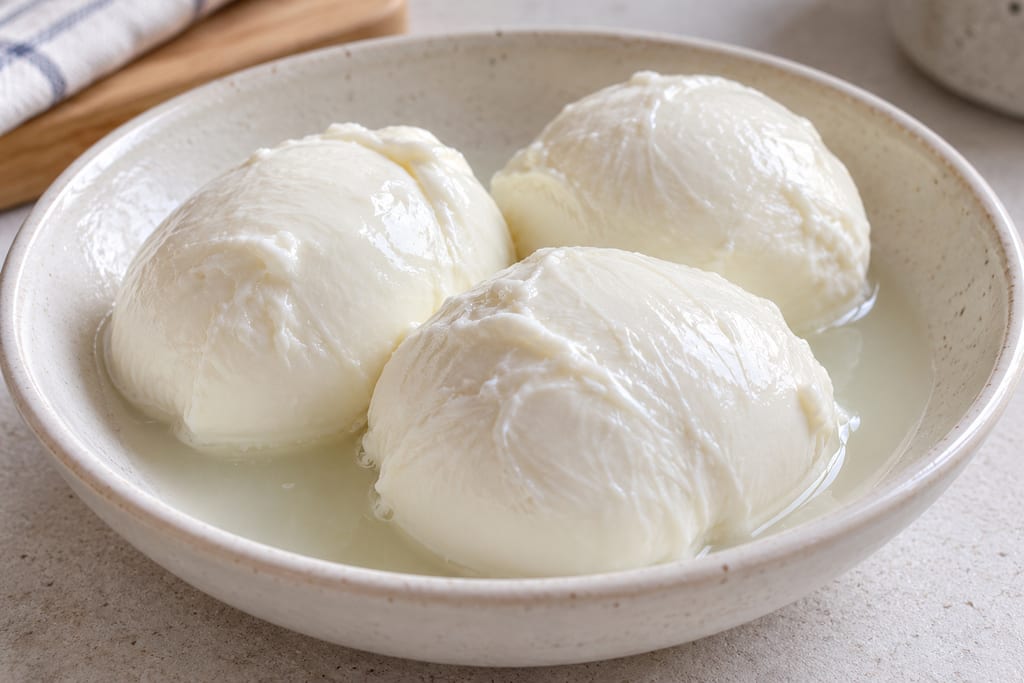
A quick fresh batch uses low-temperature-pasteurized whole milk, citric acid and rennet; the curd is warmed, drained and stretched in hot whey.
No community contributions have been published for this entry yet.
Sign in to contribute. Published comments and photos are free to read.
New England Cheesemaking Supply CompanyProcess
Chevre (Goat Cheese) RecipeOne-gallon formula, culture pack, room temperature, curd set, draining, salting, and yield.
Cited in: A fresh cheese, not one fixed French style; How a culture packet makes curd; Why the steps are quiet and gentle; Fresh, ripened and regional alternatives; Serving and reading the result
New Mexico State UniversitySafety
Making Homemade CheeseFresh-cheese pathogen context; not recipe validation.
Cited in: Why the steps are quiet and gentle; Serving and reading the result
Dairy ConnectionIngredient identity
NEC-C20G Chevre Starter Culture Product Description SheetC20G bacterial composition and fungal-derived coagulant; no live mould-ripening stage is described.
Cited in: How a culture packet makes curd; Serving and reading the result
ANICAPIdentity · History
The CheesesFresh French chèvre is rindless and distinct from soft-ripened and aged goat cheeses; fresh form may retain whey.
Cited in: A fresh cheese, not one fixed French style; A wide tradition with no single documented starting point; Fresh, ripened and regional alternatives
Journal of Food EngineeringScience
Whey draining of goat milk cheese: A model study using frontal filtrationIn lactic and enzymatic coagulation, acidification and casein destabilization form a network that traps fat and aqueous phase; gravity drainage expels whey and becomes self-decelerating.
Cited in: How a culture packet makes curd; Why the steps are quiet and gentle
French Ministry of AgricultureRegional variation · History
Le Pélardon AOP, le fromage des CévennesPélardon is a distinct Cévennes goat cheese with a name consolidated in the late nineteenth century, production professionalized from the 1970s, and PDO recognition in 2001.
Cited in: A wide tradition with no single documented starting point; Fresh, ripened and regional alternatives
University of Delaware / National Agricultural Library collectionHistory · Regional variation · Use
Chevres for Gourmet, National Goat HandbookA 1992 extension handbook describes the diversity of French chèvres as fresh curds salted, shaped, drained and optionally aged for days to months; this recipe is the fresh style, not that full range.
Cited in: A wide tradition with no single documented starting point
Journal of Dairy ScienceScience
Effect of composition on coagulation, curd firming, and syneresis of goat milkA study of 1,272 goat milk samples examined fat, protein and casein associations with coagulation and curd firming; milk composition varies in ways that matter to cheesemaking.
Cited in: A fresh cheese, not one fixed French style; Fresh, ripened and regional alternatives
New England Cheesemaking Supply CompanyProcess
Cheese Making Cultures FAQSupplier describes seasonal milk-solids changes and how longer acid development or drainage can produce a drier, tangier chèvre.
Cited in: How a culture packet makes curd; Serving and reading the result