
Rice koji
Rice koji is steamed white rice through which koji mold has grown. It carries the enzymes that turn rice starch into sugar, and it is the starting point of sake, sweet miso, amazake and shio koji.
 FermenteaWhere food goes to change
Built structures · Cellars, caves and ripening rooms
Toko-koji bed, tana and muro · 床麹法 · 麹室 · koji room
A Japanese koji-making work area may combine a broad toko bed, tana shelves for trays and an insulated koji-muro room. The terms describe distinct scales; sources document more than one working arrangement.
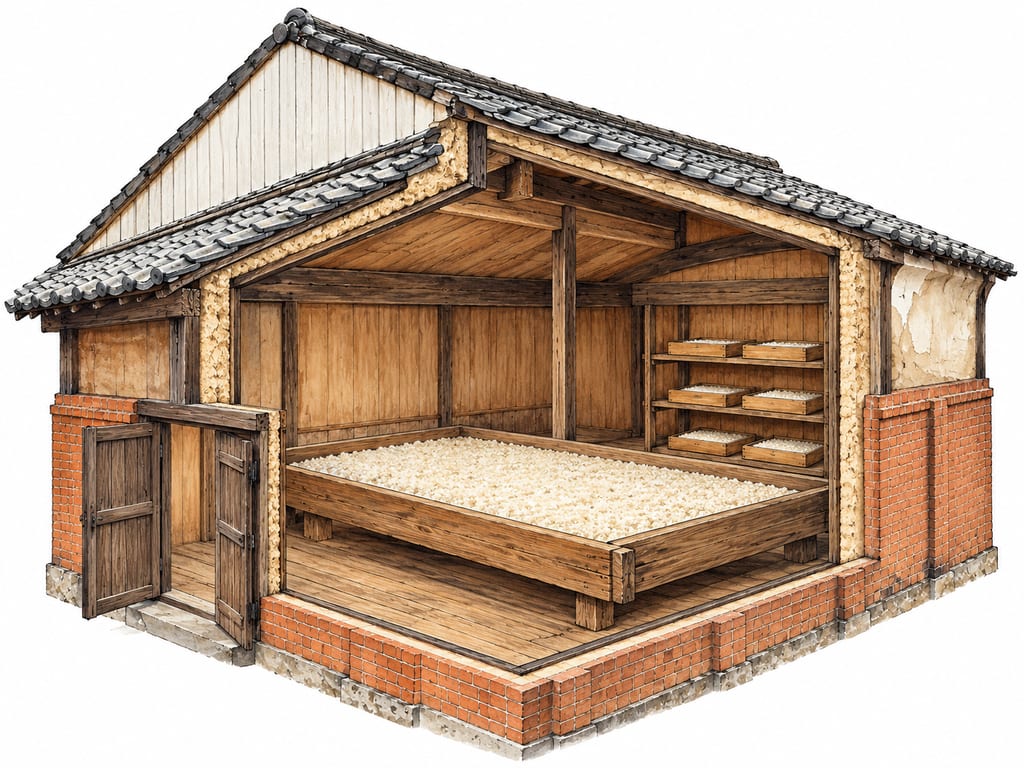
Toko, tana and koji-muro name different parts of a Japanese koji-making work area. The toko is the broad bed or table where steamed rice is handled. Tana means shelf: narrow tables set against a room wall can carry shallow trays after rice is moved from the bed. The koji-muro is the enclosing room. These terms should not be collapsed into one vessel or treated as three components found in every brewery.
The bed method and tray-based work are related but distinct arrangements. In toko-koji-hō, the batch is made on a large bed rather than divided into trays or boxes; some forms use one bed throughout, while another arrangement transfers the batch to a separate new bed. In tray-based work, the rice may first be handled on the toko and then divided into shallow trays on the tana.
Nada Sake Research describes the toko as a large table or bed. Its technical entry notes that some new-bed arrangements remove insulation and leave spaces between boards for airflow; other forms use a wooden or bamboo lattice set slightly above the surface. These are documented variants, not a checklist for every bed.
The bed method avoids the repeated division of a batch among small trays, while tray-based work allows rice to be arranged and managed in smaller lots. The source cautions that heat and moisture can build near the bottom of a bed, where the rice contacts the wood, so its form affects how the work is managed. The cited glossary gives no single standard construction or measurement for all toko beds.
The tana are narrow shelf-like tables used for trays in the later stages of tray-based koji making. Nada describes them against the koji-muro wall, with trays grouped on the shelves and covered with cloth. The source gives dimensions and spacing for its described arrangement; this page does not generalize those figures to every brewery.
The room makes the bed and shelf work possible in a protected environment. Japan’s cultural-heritage glossary describes the koji-muro as a closed, insulated chamber for keeping conditions steadier than the surrounding building. The Hakushika Memorial Museum of Sake documents rice husks and other insulation, including wall, ceiling and floor treatments and double doors, in one historical brewery. Those materials and details are examples from that building, not a universal design.
The technical and architectural references support the function and relationship of these features in Japanese brewing: a work bed, tray shelves where that method is used, and an enclosing room designed to protect koji cultivation. They do not establish one origin date for the combined arrangement, a standard room plan, or a universal list of building materials. A photograph of a particular brewery room should therefore be read as evidence for that building, not as a template for all koji-muro.
A specialist glossary calls the bed method the oldest of the described seikiku methods, but that comparative statement does not provide a dated attestation. The architectural and technical sources used here document forms and functions rather than an origin date.
A build is made where it stands: moving it means building it again.
Technical and heritage sources describe these forms in Japanese brewing; this country-level association does not identify a single town of origin.
Rice koji is steamed white rice through which koji mold has grown. It carries the enzymes that turn rice starch into sugar, and it is the starting point of sake, sweet miso, amazake and shio koji.
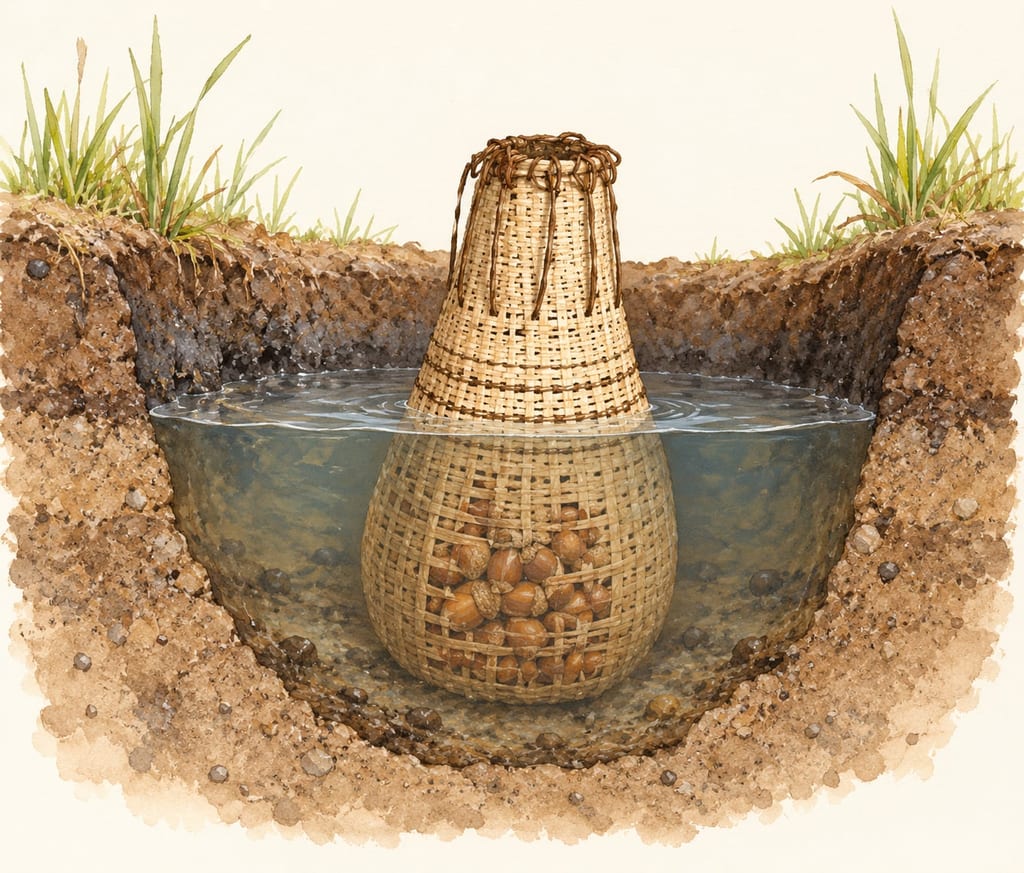
At Higashimyo in Saga, 155 round Early Jōmon storage pits were about 40–70 cm wide and 1 m deep. More than 700 baskets were recovered; Saga City interprets acorn soaking as a possible use, not a documented arrangement.
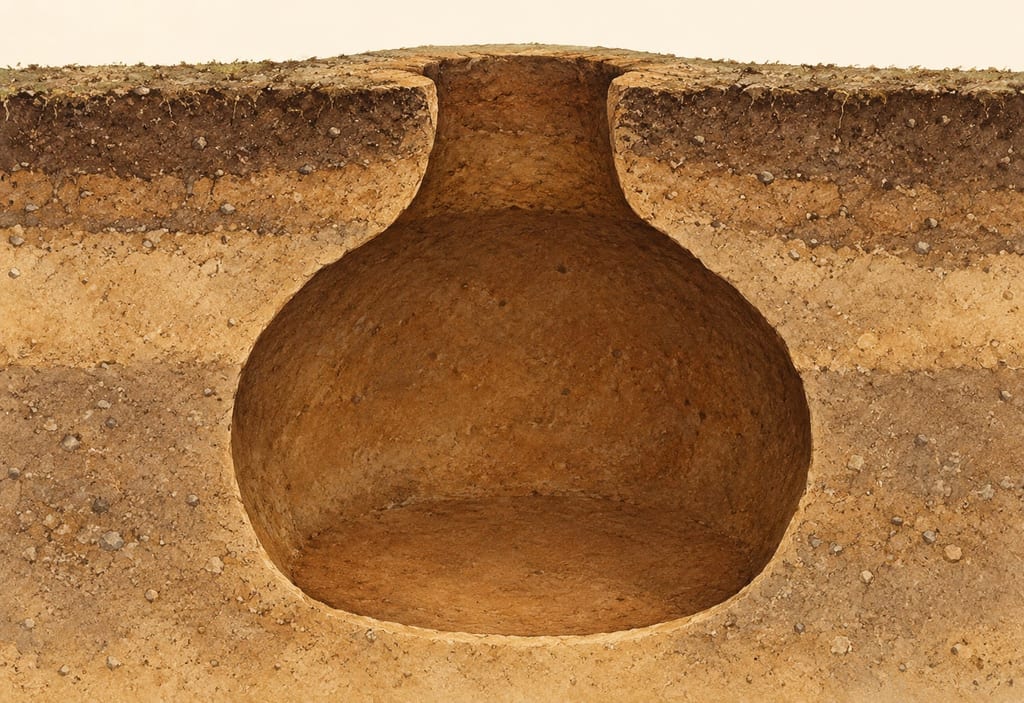
At Sannai Maruyama in Aomori, some Jōmon storage pits had a narrow mouth and broad floor, with larger examples reaching two metres deep; nuts or chestnuts are the proposed stores.
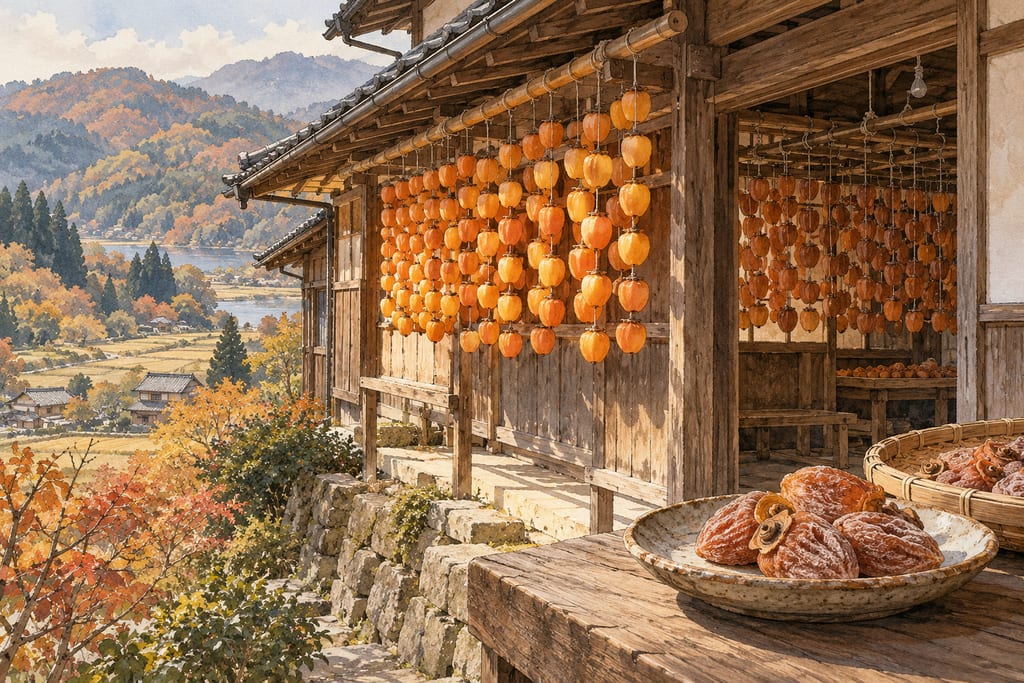
A wooden hut attached to a house in Shimane Prefecture, Japan, where persimmons are hung in the sun and wind and then dried indoors for hoshigaki.
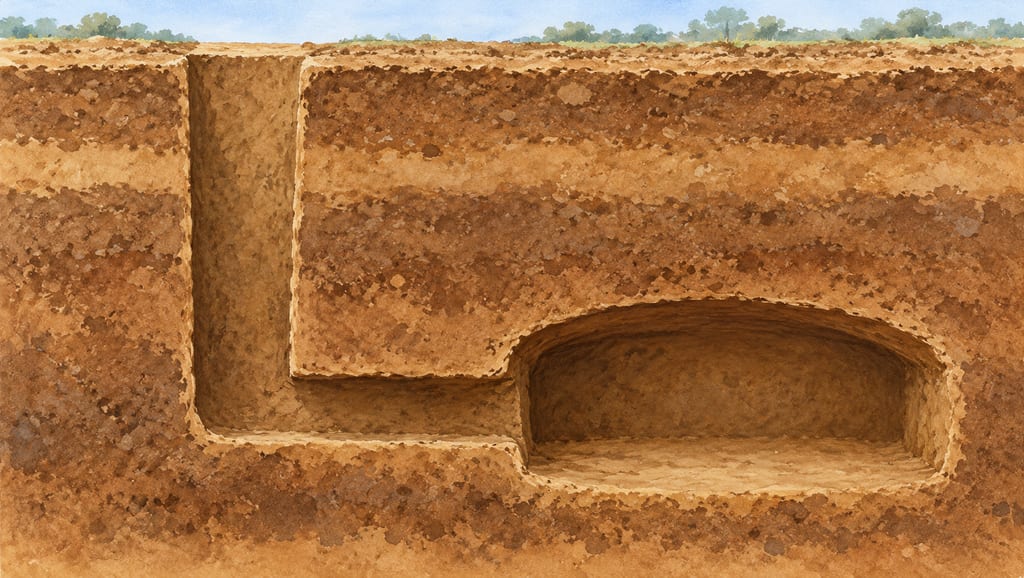
A source-bounded account of Edo’s subterranean kōji chambers: shafts led through narrow passages to low rooms cut into Kantō loam for cultivating kōji. Excavated examples vary by site.
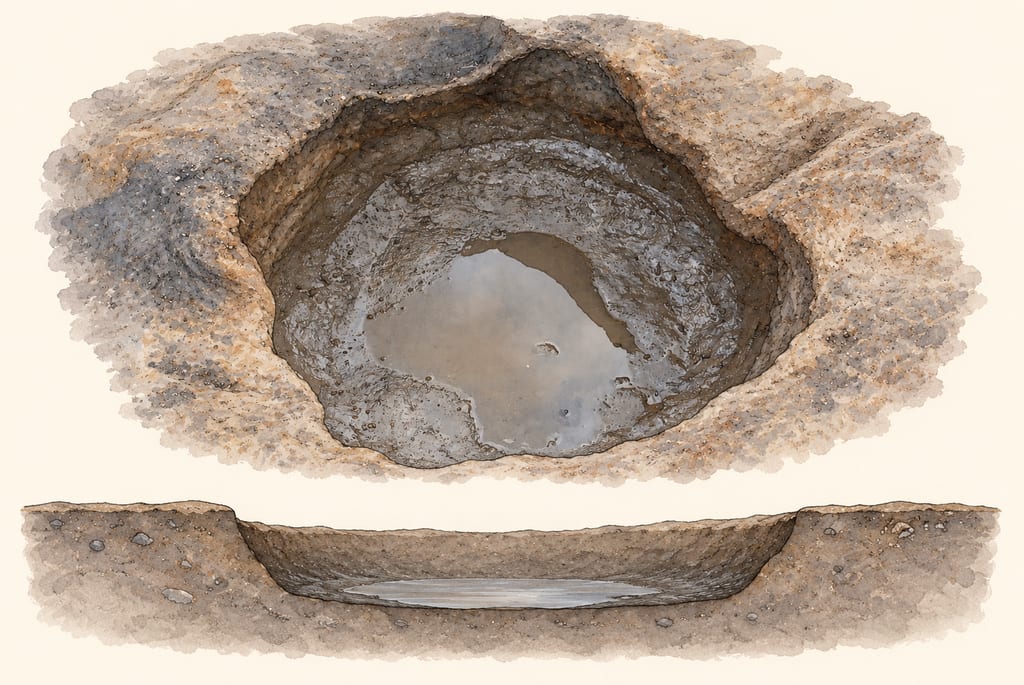
At Maeda Site in Aira, southern Kyushu, a late Middle Jōmon wetland held 72 pits associated with more than 100,000 acorns. The pits were dug in a groundwater-fed valley; their use may have included storage or soaking and sorting.
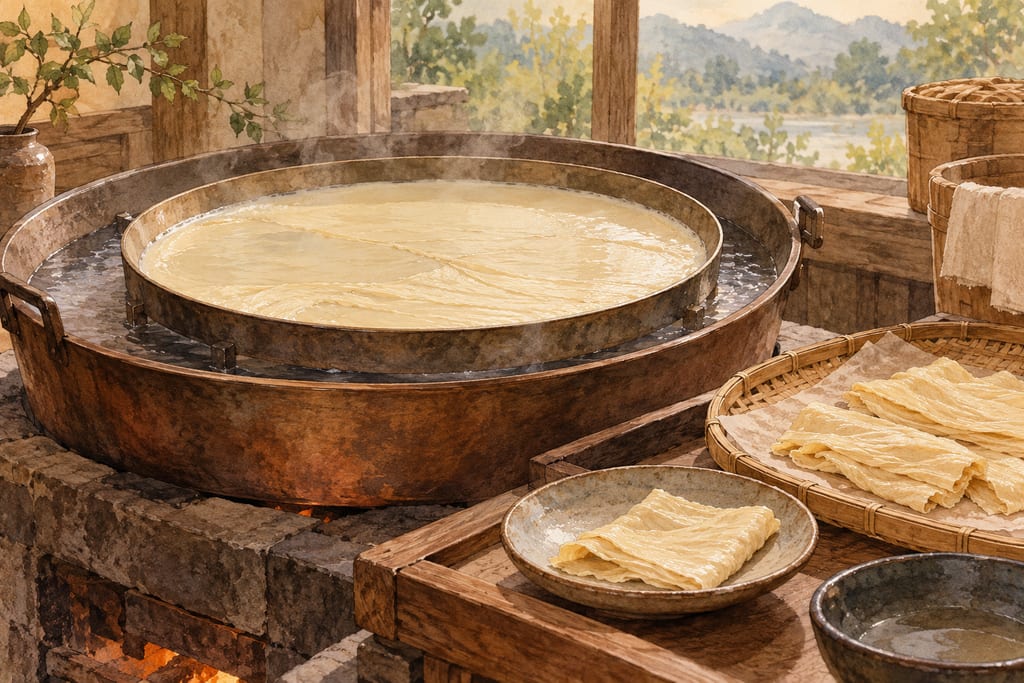
A wide shallow pan of soy milk standing in a controlled hot-water bath, so that the bath heats evenly while the open surface forms film after film of yuba.
No community contributions have been published for this entry yet.
Sign in to contribute. Published comments and photos are free to read.
Nada Sake ResearchTechnical description · Equipment form · Process
Toko-kōji-hōDefines the bed koji method as carrying the process out on large tables or beds without trays or boxes.
Describes variants using one bed throughout or transferring the batch to a separate new bed, and notes a wood or bamboo lattice variant.
Cited in: Three connected scales; The bed and its supports; What the sources establish
Nada Sake ResearchTechnical description · Equipment form · Process
TanaDescribes narrow shelf-like tana tables against a koji-muro wall, where grouped shallow trays are placed after transfer from the toko.
Notes that some rooms separate stages because the temperature conditions at the toko and tana stages differ.
Cited in: Three connected scales; Shelves inside an insulated room; What the sources establish
Explore Japan’s Cultural HeritageArchitecture · Function · Geography
KojimuroDefines koji-muro as a room for growing koji on steamed rice and describes it as a closed, heavily insulated chamber intended to limit outside-air effects.
Describes variations in brewery placement and notes that koji rooms occur in sake, miso and soy-sauce works.
Cited in: Shelves inside an insulated room; What the sources establish
Hakushika Memorial Museum of SakeHistorical architecture · Insulation · Function
Facilities and Functions of Sake Brewery BuildingExplains the koji room's place in a historical brewery layout and describes insulation on walls, ceiling and floor and double entrance doors in that example.
Identifies rice husks and other insulating materials in the historical brewery description; this is a site-specific example, not a universal specification.
Cited in: Shelves inside an insulated room
National Research Institute of Brewing, JapanTechnical definition · Process
Brewing TermsDefines koji-muro as the koji-making room and describes koji-buta as a traditional shallow rectangular stackable tray used in tray-based koji making.
Cited in: Three connected scales